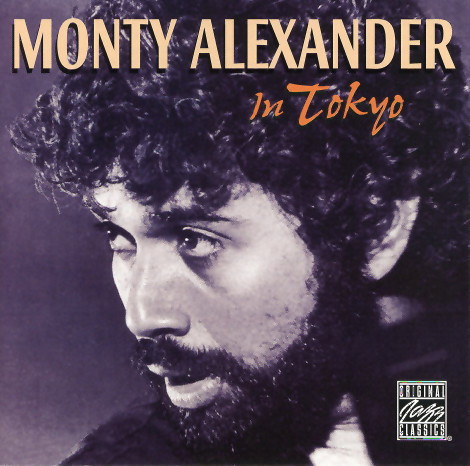
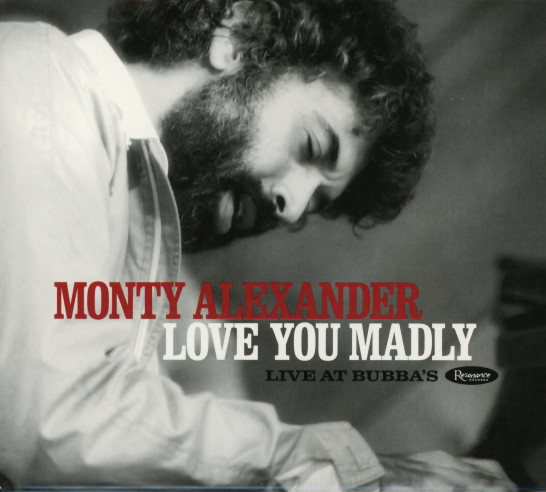
Over the years, especially during its earliest beginnings, many Jazz musicians were self-taught. Monty Alexander, however, seems to have taken it to another level.
He’s joined by bassist Andrew Simpkins and drummer Frank Gant on the closing video.
THE GIFT
Dear Friends,
Somebody up there likes me.
I really don't know any music; I have not attended any music school or jazz academy.
At an early age I had a few piano lessons which I discontinued as I disliked the experience and what was being told to me.
I don't read music and I never had believed or planned that I could have a career with music to earn a living.
Away from only observing others from a distance, my ability to play music on the piano is something I can only call a GIFT given by a benevolent Spirit. To this day I don't understand it. I am grateful for it.
I feel this gift is a spiritual experience combined with my mind harnessing the ideas coming from various sources. My biggest objective and challenge is getting out of my own way. I give my gratitude to the great Giver of gifts because even now, after having had pancreatic cancer and 2 strokes. I am still able to receive the gift of inspiration and play my musical stories in a joyful way.
I have discovered that this Gift has also been something good for others; others have said they have received enjoyment and upliftment and most meaningfully: healing.
Jamento - Monty Alexander 7 [Pablo 2310-826; OJCCD 904-2] was recorded in New York in 1978.
Since that time, in addition to his standard piano-bass-drums trio, Monty has promoted the music and especially the rhythms of Jamaica, his place of birth, in various settings under the rubric of Ivory & Steel, the Harlem-Kingston Express and with specialty albums devoted to the music of Reggae icon Bob Marley or those featuring Jamaican musician such as guitarist Ernest Raglin [who is also heard on Jamento].
You can check out the 100+ recordings that Monty made under his own name by visiting his page at Discogs.
The press release for Jamento - Monty Alexander 7 offered the following annotation:
“Monty Alexander's Jamaican heritage and its indelible influence on his music figure in this stimulating album. Equal in importance is the pianist's absorption of the jazz tradition.
Alexander brings together four musicians steeped in the sunny harmonies and irresistible rhythms of the Caribbean and two colleagues from the mainstream of modern jazz. The Jamaican felicities of Vince Charles's steel drums, Larry McDonald's percussion, Roger Bethelmy's drums, and Ernest Ranglin's guitar go hand in glove with the straight-ahead drive of drummer Duffy Jackson and bassist Andy Simpkins.
Alexander's compositions feature reggae, merengue, and mento rhythms. His piano improvisations reflect his admiration for the styles of Nat Cole and Oscar Peterson. Melding all of these elements, Alexander comes up with an approach that is unmistakably his own and likely to incite dancing as well as listening.”
Afro-Cuban rhythms, rumba, conga, son, mambo, salsa, songo, timba and Afro-Cuban jazz/Abakuá music are more commonly referenced in Jazz circles so there is more awareness of them. But reggae, merengue, and mento rhythms are equally as compelling, and thanks to Monty’s efforts, they, too, now have a place in the Jazz oeuvre.
Monty wrote these liner notes to Jamento - Monty Alexander 7 and I highly recommend the music on this recording as a starting point for developing a greater understanding and appreciation of how Jamaican rhythms work in a Jazz context. I’ve included a few videos following the text so you can enjoy listening to some music from the album.
“What I did on this album was to blend the rhythms and moods of Jamaica's calypso and Reggae with Jazz.
I got the best possible musicians from the same environment as the one in which I grew up. The players were: Ernest Ranglin, considered the best guitarist in Jamaica. The two drummers, Roger Bethelmy from Trinidad, and Duffy Jackson from the United States. The interplay of Roger and Duffy gave the music the kind of intensity I was looking for. Larry McDonald on conga drums is Jamaican. The steel drums were played by Vince Charles from the Virgin Islands, and the bassist was Andy Simpkins, also from the United States. One can see, thus, the combining of American Jazz forms and West Indian rhythm is amply illustrated by the mix of musicians from Jamaica, Trinidad, Virgin Islands, and America.
The tunes:
"Accompong" is the name of a town in the interior of Jamaica located in an area known as the Cockpit Country, that was established by runaway slaves called Maroons who revolted against the British slaveholders in the 1700s. This composition of mine is dedicated to their courage.
"Slippery" is a blues which utilizes the Reggae rhythm.
"Mango Rengue" is based on the Dominican rhythm, the Merengue.
"Jamento" is typical of the Jamaican mento which means slow and languorous, but still with an inner pulse. It was also referred to by the old time Jamaicans as "Brukins." I remember hearing this tempo and flavor being played by small calypso groups using homemade instruments.
"Weekend in LA." This is essentially a very simple melody with equally simple harmony and I tried to invest in it a different rhythmic approach which I felt gave it a completely different flavor from the way it originally had been done.
As I said at the outset, I have tried to put together in a way that each retains its own identity, American Jazz and Island (especially Jamaican) rhythms. I trust you will find it interesting and exciting."
“The thing about Monty's playing is that he has this kind of sparkle. It's definitely music to make you feel good. It's geared towards that. It's happy; happy and snappy. And I mean, those are corny adjectives, I know, but that's the feeling I get from Monty. I get the same feeling from listening to Wynton Kelly play. Joyful. Maybe that's a better word. His music is always very, very joyful. And I could hear Oscar Peterson's influence and also the influence of his roots, Jamaica. It's all there.”
- Kenny Barron, Jazz pianist
THE INFINITE FACETS OF THE BLUES: AN APPRECIATION
By Benny Green
“In 1978 when I was fifteen, I heard Monty Alexander's album, Montreux Alexander-featuring John Clayton, Jr. and Jeff Hamilton-on the radio. Because the music was so dynamic and energetically exciting, I bought the record so that I could listen more often. At the time, I was just beginning to discover and explore the personal sounds and approaches of various Jazz pianists and I was quite struck by Monty's bright, warm sound as well as by the highly infectious emotional breadth of his music.
Monty appeared at Keystone Korner in San Francisco with the Milt Jackson quartet later that same year and I got to hear and watch him in person for the first time. This was really something to behold; Monty was so vitally alert and, from the piano, he was engaged in the emotional expression of the band as a whole. His legs looked so lean and muscular and I remember marveling at how his right foot was steadily tapping, even on the brightest tempos. Monty at the piano was like a human love machine and I remember how blown-away I felt to take in his total musicality and pianism.
Once, many years later, I was staying at the same hotel as Monty and we had breakfast together. Monty asked me almost the identical question that John Clayton would ask me a few years later: "If you could play with anyone in the world, who would that be?"
On each occasion I told my elders that if I could play with anyone, it would be Ray Brown.
"I'm very happy to hear you say that, young man. Mr. Brown is golden and all of the young folks today are interested in that kind of music."
I've told Monty numerous times about occasions when I've been alone with a woman and wanted some music to relax our breathing and change the vibe in the room. I've told him more than once that I've played his rendition of the 1970s pop ballad, "Feelings." "Did it work?" followed by a knowing smile has typically been Monty's response.
Once I was in an airport with Monty and for some reason I had the blues that day. I'd said with a tone of resignation, "Sometimes, I feel that music is the only thing I really have," to which Monty responded, "GREAT! But don't say 'this is all I have,' say, 'I HAVE this!!!!'"
When Ray Brown died, the entire Jazz community was quieted. It was like we were all in shock to accept that he'd graduated the realm of our getting to be around him as we'd been. I telephoned Monty. His Jamaican culture had not "taught" him to mourn, but rather to celebrate. Monty once again gave me a powerful attitude adjustment and after speaking with him I felt empowered and inspired by the glory of Ray's life, rather than broken-down by wallowing in sorrow.
The soul and humanity that Monty breathes into each song he plays is a wonder. His depth of expressive soul and his nature of musical storytelling place him in his own league of piano-trio royalty, right alongside his inspirational heroes, Erroll Garner, Oscar Peterson and Ahmad Jamal.
I'm thrilled by the inclusion of my very favorite (although rarely performed] Monty Alexander original in this set, "Sweet Lady," which was also recorded by Oscar Peterson - the ultimate respect. This waltz carries that kind of magical rejuvenation from the heart, soul, imagination and hands of Monty Alexander that makes a spiritual transference from this beautiful man to the listener.
Monty's embrace of the infinite facets of the blues is profound. His Jamaican sunshine is transformationally healing. His name is synonymous with musical enchantment.”
The recent arrival of his Here Comes The Sun CDon an audio enhanced MPS disc [0212406 MSW] reminded me of what a swinga Monty Alexander is and how much I’ve always enjoyed his playing. In a way, the phrase “here comes the sun” can serve as a metaphor for the revelation that is Monty Alexander’s Jazz piano playing. In whatever the context, this guy really lights it up!
It’s hard for me to believe that I’ve been listening to pianist Monty Alexander for nearly half-a-century since I first caught him in performance at Shelly’s Manne Hole in Hollywood, CA as part of a quintet co-led by vibist Milt Jackson and tenor saxophonist Teddy Edwards in August, 1969. The group was recorded in performance and the music was later released as an Impulse LP entitled That’s The Way It Is. Ray Brown was the bassist and Dick Berk was the drummer on that gig.
Monty was relatively new to the scene at that time and his playing just gassed everybody. The best description I ever read of Monty playingis that “...it has an attitude that hovers between aggression and devil-may-care relaxation.” That description by Richard Cook and Brian Morton in their The Penguin Guide to Jazz on CD 6th Ed. continues to be true of his style of playing to this day.
“Monty Alexander is one of the finest practitioners of the standard jazz piano trio performing today.
What sets Mony apart from most of his keyboard colleagues is the enormous range of his musical interests. He not only has paid his dues as a performer but, perhaps more importantly, as a listener as well.
He brings the joy of celebration to his work: a celebration of his life in music and the music of his life. Delightful surprises abound in both the selection of his material and the execution of same.”
Benny Green, the esteemed Jazz writer and critic, offered these comments about Monty in his liner notes to vibraphonist Milt Jackson Soul Fusion [Pablo S-2310 804]:
“… Alexander is a past master in the art of placing his accompanying chords, and knowing exactly which rhythm to use in defining them.
Some of the exchanges between he and Milt sound so tight as to be telepathic, so perfect is the balance between them. [This is particularly true of the tunes played at slower tempos].
The essence of a performance at this tempo are the silences, and the shapes into which the played notes mould those silences. Alexander is marvelous at this.
It is the sort of thing that no orchestrator could ever achieve, and which classical musicians have trouble comprehending.
It is an intuitive art, born of an alliance between inclination and experience, and is one of those aspects of Jazz which distinguish it from all other forms of making music."
Here’s more from Richard Cook and Brian Morton on Monty’s style:
“There have been many attempts to hybridize jazz and Afro-Cuban music, but relatively few to bring the rhythms of reggae, ska and mento into a jazz context. Jamaican-born Alexander remains the prime exponent, using steel pans in his Ivory and Steel group and exploiting Caribbean backbeats to a jazz idiom influenced by Nat Cole and Oscar Peterson.
“..., Alexander has never quite decided whether he is a Jamaican homeboy, an enthusiastic norteamericano, or indeed a European. He has fronted a style of jazz in which swing is recast in Caribbean rhythms, signalled by the steel pans, but also marked out by great formal control. Alexander now has an impressive back-catalogue of (mostly trio) recordings which reveal an exuberant sensibility schooled - sometimes a little too doctrinairely - in the School of Oscar Peterson. Typical of that tendency, he has a tone which is both percussive and lyrical, heavy on the triplets and arpeggiated chords, melodically inspired in the main (i.e. no long, chordal ramblings), maximal but controlled.
The trio is the ideal context for Alexander's playing.”
Whenever I want to experience what Duke Ellington so aptly described as “The Feeling of Jazz” at its best, I play a recording by Monty Alexander.
Derek Jewel of The London Sunday Times wrote of Monty that: “His work is in a sense, a history of Jazz piano … and yet, he distills all these influences into his own style.”
Monty comes out of everybody who has gone before him and I mean everybody: from Earl “Fatha” Hines to Teddy Wilson to Nat King Cole to Oscar Peterson; the man is a walking encyclopedia of Jazz piano.
Here are more insightful quotations about Monty’s work from other Jazz critics:
“Jamaican jazz pianist Monty Alexander often gets compared to the great Oscar Peterson, but he brings his own bold, Caribbean-informed sensibility to everything he plays, and he is far more than just a Peterson clone.”
- Steve Legget, allmusic
Monty Alexander belongs to the same piano tradition as Gene Harris and Junior Mance. All have a firm command of the blues that can effectively be translated into the ballad realm. Monty Alexander has been cultivating this style and approach for over forty years, with fresh evidence on his new live recording. Alexander's .. is soulful orchestral piano playing, well conceived and thoughtfully executed. Long on intellect and emotion and short on cliché', Mr. Alexander perfectly distills his Caribbean roots into his interpretations of the American Standards.
- C. Michael Bailey all about jazz
“Audiences find Monty Alexander’s music instantly accessible, exciting and exhilarating, and they quickly warm to it and respond to it….”
- Mike Hennessey, Jazz writer/critic
“Monty plays – I mean plays – with Tatum’s grace, Peterson’s richness, Garner’s force, Nat Cole’s wit. And over all, the very real trio conception and brisk charts recall the tight structures of the early Ahmad Jamal trio
- Fred Bouchard, Downbeat
“The striking qualities of Alexander's playing are his intimate knowledge of the Jazz tradition, his reverence for the pre-bebop piano legacy, his prodigious technical facility, and his resilient connection to the cultural heritage of his native Jamaica.”
- Derk Richardson, columnist
“Monty continually creates very logical melodic lines and yet the constant surfacing of his improvisational surprises maintains interest no matter what musical context he presents to his listeners.”
- Jerry Dean, Jazz radio host
In the liner notes to the original MPS LP of Here Comes The Sun, the esteemed Jazz author and scholar Dan Morgenstern [who was the editor of Downbeat when he wrote these notes] had this to say about Monty and the recording:
“Have you met the real Monty Alexander? The question is not rhetorical. If you know this very gifted young pianist only from his previous recordings, this album might well be a revolution. To be sure, his prior efforts have been far from negligible - especially as far as technique is concerned - but they have tended to shroud the essence of Monty Alexander in rather pretentious studio arrangements.
Here you will meet a brilliant musician in a setting that gives him the freedom to express his jazz ideas in a way similar to what he has been doing so successfully in major jazz clubs throughout the United States for quite some time.
Monty Alexander was born on June 6, 1944 (a momentous date in world history) in Kingston, the principal city of the Caribbean island of Jamaica - the home of calypso music.
His musical talent revealed itself at an early age. He began to play the piano at 4, and from 6 to 14, he studied with several private teachers, obtaining a solid grounding in classical fundamentals.
With this equipment, he was ready to embark on a career in so called serious music, but while in school, he formed his own band with some class-mates, playing the popular music of his hometown: calypso and rhythm-and-blues. Then he heard Louis Armstrong and Nat King Cole, and decided he wanted to play jazz. There was, he says, "a small jazz clique" in Kingston, and he soon became a member of it.
Among the musicians he played with, guitarist Ernest Ranglan made a particular impression. "I still think he's one of the greatest jazz guitarists I've heard", Alexander says. "Cannonball Adderley and Freddie Hubbard know about him. I played my first jazz jobs with him. He's still active".
By the time he was 17, Alexander knew he had to leave Jamaica to develop his jazz wings. He headed for Miami, where a club owner was so impressed with his playing that he hired him on the spot.
Here he was heard by Jilly Rizzo, a close friend of Frank Sinatra and owner of clubs in Miami and New York. Jilly brought Monty to the big town, where he went on to a two-year engagement at the Playboy-Club.
Since then, mostly using the trio format he prefers, Monty Alexander has worked in such spots as Chicago's London House, Los Angeles' Shelly's Marine Hole, and Detroit's Baker's Keyboard, to mention a few, gaining fans wherever he went with his inventive, swinging keyboard artistry and engaging, pixieish personality.
In discussing his influences, Alexander will admit that "it all comes back to Nat (Cole)," but is quick to add that he has been "influenced by everything ... everybody's got a story to tell".
A list of his favorite pianists, however, is topped by Oscar Peterson, Ahmad Jamal and Art Tatum, and includes Fats Waller, Eddie Heywood, Erroll Garner and Wynton Kelly.
A broad spectrum for so young a musician, and his playing reflects it, showing surprising maturity and a grasp of the whole language of piano jazz. He has dazzling technique, but uses it for musical ends. He swings at any tempo. And he communicates the joy he derives from making music.
On this album, Monty displays many facets of his talent. Brown Skin Girl shows his Jamaican roots. This Dream Is Mine, his own composition, is a piano solo without rhythm section backing in a tender, wistful mood. Love Walked In is a great jazz standard done the Alexander way. So What is a modern jazz classic by Miles Davis on which the group stretches out. And Here Comes The Sun is a Beatles opus transformed in which Alexander reaches back as far as boogie woogie, while Where Is Love? from the musical OLIVER shows what he can do with a different sort of contemporary tune.
Alexander's companions on this album include the estimable bassist "Senator" Eugene Wright, perhaps best known for his long tenure with Dave Brubeck and a regular member of Alexander's trio for some two years. The nickname, Alexander says, perfectly fits his personality. "He's dignified, he's diplomatic, and he knows everybody. He is a beautiful person and a great musician". If Wright is the senior member of the group, drummer Duffy Jackson, barely 18 when the album was done, is the youngest. Son of bassist Chubby Jackson, he is a very talented young man from whom more will be heard. His work on Love Walked In is particularly outstanding, and his vocal interjections during the climax of Brown Skin Girl show that he has inherited some of his father's exuberant personality.
Montego Joe, a fellow Caribbean, is a rhythm specialist who has often worked in jazz contexts, has played and recorded with many outstanding artists, and has led his own swinging groups. Dig his fine work on Montevideo, an original by Chicago bassist-arranger Richard Evans.
This is a most enjoyable and musical album. Now that you have met the real Monty Alexander, you will want to hear more from him. And you will.”
- DAN MORGENSTERN, Editor, Down Beat
This 1971 recording heralded the beginning of Jamaican pianist Monty Alexander’s fruitful relationship with MPS, lasting over a decade and encompassing some dozen albums.
You can checkout Monty’s brilliance on the following video montage on which Love Walked In serves as the soundtrack.