Showing posts with label Ricky Riccardi. Show all posts

Wednesday, January 15, 2025

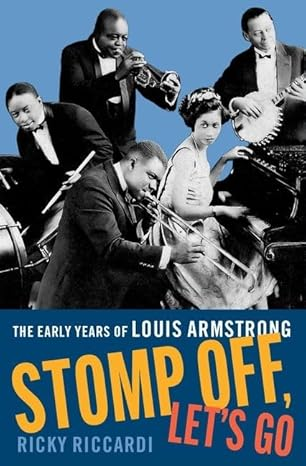
Stomp Off, Let's Go: The Early Years of Louis Armstrong by Ricky Riccardi

 © Copyright ® Steven Cerra, copyright protected; all rights reserved.

“Though Louis Prima recorded widely and well throughout the '30s, achieving great popularity and visibility, his name is often conspicuous by its absence from standard jazz histories. Dealing with him seriously means confronting one aspect of New Orleans jazz which chroniclers, almost as a point of honor, seem to find distasteful.


That, of course, is the matter of showmanship. The flamboyance of Prima's latter career, in which his identity as a trumpeter became almost totally subordinate to his role as a high-energy showman, seems to offend those who would represent Jazz as an art music of solemnity and unstinting high purpose. The Las Vegas image, the raucous sound of Sam Butera and the Witnesses, the risque badinage with singer Keely Smith—such make it all too easy to mistake this showbiz aspect of Prima for the creative substance, ignoring his past achievements and core musicianship.


Far from being exclusive to such as Prima, the idea of hot music as an arm of highly commercialized show business runs throughout the early years. It's present in the singing, dancing, and impromptu comedy skits of the dance bands, including those that prided themselves on their dedication to jazz. Its absence is a root cause of the failure of the great Jean Goldkette orchestra, an ensemble which either stubbornly resisted advice to "put on a show" or acquiesced in a manner landing somewhere between perfunctory and downright hostile.


For New Orleans musicians, especially, showmanship was—and remains—a fact of life. Was it not Louis Armstrong, above all, who understood the relationship between music and entertainment, and never wavered in his application of it, even in the face of critical hostility? "You'll always get critics of showmanship," he told British critic Max Jones. "Critics in England say I was a clown, but a clown—-that's hard. If you can make people chuckle a little; it's happiness to me to see people happy, and most of the people who criticize don't know one note from another.""

-

- Richard Sudhalter, Lost Chords: White Musicians and Their Contributions to Jazz, 1915-1945. [1999]


I had no idea that the reverse chronology that Ricky Riccardi, Director of Research Collections for the Louis Armstrong House Museum, used to write his Pops Trilogy wasn’t intentional until I read the following in the Acknowledgement that closes Stomp Off, Let's Go: The Early Years of Louis Armstrong - “It was never my intention to write the Armstrong saga in reverse chronological order, but it ended up being a blessing thanks to the sudden accessibility of several important sources that turned up in the last decade.”


Here Ricky’s statement of non-intent within the contents of the full extract:


“The more I learned about Armstrong, the more it seemed that everyone agreed about the greatness of his early years; it was after 1928 when the biographers, critics, historians, and fans disagreed regarding his later career path: did he sell out? Did he go commercial? Did he waste his talent? Was he nothing but an Uncle Tom? I knew my response — a resounding no to each of those questions — and sought to learn as much as I could about Armstrong's post-1928 career, interviewing friends of his and the surviving musicians in his band, and eventually listening to all 700+ reel-to-reel tapes compiled by Armstrong himself, now a part of the Louis Armstrong House Museum, where I have served as director of research collections since 2009.


The results were two books, What a Wonderful World: The Magic of Louis Armstrong's Later Years and Heart Full of Rhythm: The Big Band Years of Louis Armstrong, as well as a slew of CD, LP, and streaming reissues I co produced and/or wrote notes for, shining a big, broad spotlight on Armstrong's post-1928 career. I toyed with the idea of writing about his early years, but I felt that after his own Satchmo: My Life in New Orleans and the work of writers such as Gary Giddins, Laurence Bergreen, Thomas Brothers, Terry Teachout, Brian Marker, Gunther Schuller, and Robert O'Meally, there wouldn't be much more to add to the story.


If I had written about Armstrong's early years first and done the trilogy in strict chronological order, I would only have been able to rehash what had already been in print for many decades. It was never my intention to write the Armstrong saga in reverse chronological order, but it ended up being a

a blessing thanks to the sudden accessibility of several important sources that turned up in the last decade.”


These recently “turned up important sources” include:


[1] a copy of Louis Armstrong’s original typewritten manuscript for Satchmo: My Life in New Orleans as discovered by Michael Stearns the son of Monroe Stearns who served as the editor for Prentice Hall which published Louis autobiography,

[2] a 1960 draft copy of Lillian Harding Armstrong’s autobiography as told to Danish Jazz writer and historian Chris Albertson which allowed Lil’s voice to play a bigger role in the telling of Pops’ story,

[3] the acquisition of drummer Zutty Singleton's personal photo collection, some of which was used to populate the images used in Stomp Off, Let’s Go,

[4] Yoshio Toyama - “The Satchmo of Japan” - 1973 interview with Louis sister, Beatrice “Mama Lucy” Collins
[5] Bruce Raeburn at Tulane Hogan Jazz Archives “made available hundreds of interviews with Jazz pioneers,”

[6] Melissa Webster also at Tulane’s Jazz Archives “helped me access the research of the late Tad Jones who had been working on the definitive book of Louis Armstrong’s early years, 

[7] the research of James Karst about whom Ricky states: “ Since Tad Jones' passing, no one in New Orleans has made as many ground-breaking discoveries about Louis Armstrong’s early years,”

[8] access to the William Russell notes of the interviews he conducted for the 1939 book Jazzmen courtesy of the Historic New Orleans Collection.


All of which provided Ricky with a kind of primary-source-heaven to tell a more accurate and enhanced story of Pops’ formative years.


And what an inspiring story it is made even more so by Ricky’s wonderful ability as a storyteller. He never gets in the way and lets the story tell itself.


As Ricky unfolds it year-by-year we witness a heart rending example of a classic Horatio Alger rags-to-riches tale with an ascendancy replete with colorful chapter titles that include “Blessed Assurance [1912],” “Destined to be Great [1914-1915],” “The Memory of the Bullies and Trouble Makers [1916],” “Just Wasn’t My Time to Die, Man [1917],”  “Had to Eat [1917-1918], “Descending the Sky Like a God [1919-1920],” and “Big-Headed Motherf***ers, [1924 -1925].”


Ricky takes us on a journey that helps us understand the circumstances and influences that shaped the musician that Louis grew up to be. While doing so, he also stresses that his values as embodied in “Pops - The Musician as Entertainer” - never changed even if his repertoire did. 


Louis’s primacy as an entertainer is stressed over and over.


As early as the age of eleven, Louis was hamming it up with his friends as part of a Barbershop quartet the benefits of which were, as Ricky recounts it:


“Armstrong couldn't have known it at the time, but harmonizing with his friends developed his ear and provided an invaluable music education that would last a lifetime. Though he rarely liked to get into the nuts and bolts of music theory, in one interview from 1954, Armstrong shared advice he gave to a young trumpet player who struggled to improvise. "I said, 'Well, all you gotta do is think of you singing in a quartet and if somebody's playing the lead on a trumpet, you just play the second to every note he hits, the same as if you're singing a duet,'" Armstrong related. "He said he never thought of it that way. That's the only way to look at it."


Thus, for the rest of his career as both a vocalist and a trumpeter, Armstrong fell back on the lessons he learned in the quartet. When he needed to play or sing lead, he always had the melody front and center in his mind; when he needed to blend in an ensemble, it was never a problem; and even when he was improvising, the lead would be running through his head at all times, allowing him the freedom to create new melodies as if he was "singing a duet." Historians and critics have long debated whether Armstrong played like he sang or sang like he played but the truth is both were connected to the same soul. "You make the same notes, you know, like the horn," Armstrong explained about his singing. "That's why we could scat and do things like that I always would sing. I was singing before I played the horn, see." Armstrong's later bassist Arvell Shaw once said of him, "He would have been a singer regardless if he had played trumpet or not."


Although it may be hard to credit, as early as the age of thirteen, Pops was also an astute observer of trends in popular music, for example:


"It's a Long Way to Tipperary" achieved worldwide popularity after Irish tenor John McCormack recorded it in November 1914, a few months after the start of World War I. The Onwards choice of "Tipperary" is yet another example of men like Oliver and Perez playing the most popular songs of the era, a lesson not lost on Armstrong.” [Emphasis mine.]


Another feature of Ricky’s writing that I find to be particularly helpful is the way in which he summarizes certain milestones in Pops’ career. For example:


“The story of the Karnofskys buying a cornet for Armstrong would not be widely known until Gary Giddins published it in his 1988 book Satchmo. Thus, Finola's statement does seem to tie everything together: in late 1914 or early 1915, Armstrong returns to live with Mayann, works on the coal cart with Morris Karnofsky and selling newspapers for Charlie Wilson, falls under the spell of Joe Oliver at Pete Lala's, spots a cornet at Uncle Jake's pawn shop near the Karnofskys' new residence at 427 South Rampart, gets the Karnofskys to advance him the money for the instrument, and pays it off with funds earned from both the coal wagon and from selling newspapers.


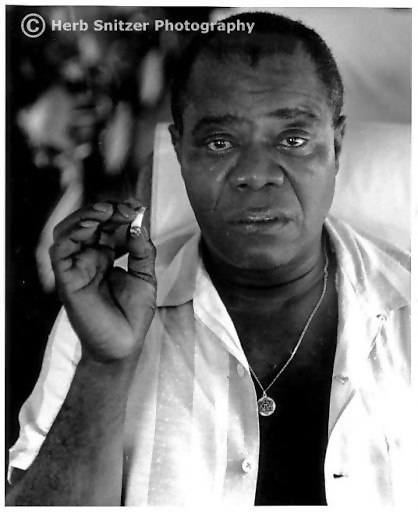
However it happened and whenever it happened, Armstrong never forgot the importance of the Karnofsky family in his early life. "As I said before I must have been born with talent," he wrote in 1969. "All that I needed was a little encouragement to bring it out of me. And they did thank God. I was just a kid trying to find out which way to turn. So that Mayann and Mama Lucy could feel proud of their Louis (me). Not trying to be too much, just a good ordinary horn blower. The Jewish people sure did turn me out in many ways." Armstrong would wear a Star of David around his neck for much of his adult life, a way of remembering the impact the Karnofsky family made on him.”


Or when in 1917, King Oliver joins the Original Creole Band for the grand opening of the Royal Gardens [to become more famous as the Lincoln Gardens] in Chicago, Ricky writes:


“Louis Armstrong was also at the train station that day to see Oliver off. He called it "a sad parting" but also summed it up as "that's Show Business for you." He had no time to sulk because he had to go to work. "The minute the train pulled out, I was on my way out of the Illinois Central Station to get back up on my cart, and continue to deliver my load of coal, when Kid Ory called to me," Armstrong recalled.


Ory told Armstrong he "had heard a lot of talk about Little Louis" and that the boys in the band "told him to go get Little Louis to take Joe's place," Armstrong recalled. "I went to see him and told him that if he got himself a pair of long trousers I'd give him a job," Ory said.


Louis was ecstatic and immediately ran home to share the news with his mother. "I had been having so many bad breaks, until I just had to make a beeline to Maryann," he wrote. "She was the one who had always encouraged me to carry on with my cornet playing, since I loved it so well." "Within two hours, Louis came to my house and said, 'Here I am. I'll be glad when 8 o'clock comes. I'm ready to go,'" Ory said. Looking back, Ory reflected, "There were many good, experienced trumpet players in town, but none of them had young Louis' possibilities."


Armstrong's whole life had seemingly been building up to this moment. Shooting off the gun on New Years Eve, learning the cornet in the Waif's Home, playing for Ory at the Labor Day parade, the encouragement of the Karnofskys, the lessons and mentoring of Oliver, the protection of Black Benny and Slippers, the countless hours of playing honky-tonks such as Pons's and Matranga's with the countless bullets sizzling past him, the excitement of the Brown Skin Jazz Band, the battles with Kid Rena, all of it had led him here.

He was ready.”


The last third of the book deals with developments in Louis’ life that led to his fame with more of Ricky’s excellent summations on hand. For example:

in 1919, Louis began an association with Fate Marable’s band on the Streckfus Mississippi River Steamboats and aside from his famous gravel voice which he got from a persistent cold while on the river boats, Ricky observes:


"There was a saying in New Orleans," drummer Zutty Singleton once said. "When some musician would get a job on the riverboats with Fate Marable, they'd say, 'Well you're going to the conservatory.'" Armstrong's three seasons with Marable represented his conservatory years in every sense of the word. He entered the world of the riverboats in 1919, armed with only a trout sandwich and a jar of olives, unable to read arrangements, too bashful to take a featured solo, derided for puffing when he blew, all while doing his best to ignore racist comments from ignorant passengers. By 1921, he was reading, soloing, singing, scatting, dancing, playing slide whistle and slide trumpet, doing comedy, coining slang, inspiring youngsters, and "descending the sky like a god" in the words of Jack Teagarden.”


As to where Louis’ career stood when he got the call in 1921 to leave New Orleans to join his beloved Papa Joe Oliver in Chicago at the newly renamed Lincoln Gardens, Rickey astutely puts it this way:


“Armstrong was leaving with a musical education that would get him through the rest of his career. "He was gathering knowledge all the time," Danny Barker said of Armstrong's New Orleans years. "When Louis went to Chicago, Louis was prepared."76 His cornet style now dipped into four separate buckets: the tone of Bunk Johnson, the fire of Joe Oliver, the high notes of Henry "Kid" Rena, and the harmonic knowledge of Buddy Petit. He had mastered their styles, mastered what was called "jazz," mastered the blues, which he played for countless hours in the honky-tonks.


But there was so much more to his musical upbringing than just blues and jazz: the experience of playing ragtime from the "red back book"; playing waltzes, rhumbas, foxtrots for dancers; learning Art Hickman and Paul Whiteman arrangements directly from the records; interpreting the latest pop music hits in every band he played in; singing and harmonizing with his quartet; scatting and playing slide whistle and slide cornet on the riverboat; instilling his heart into funeral marches with the Tuxedo and Excelsior Brass Bands; humming along with the Yiddish lullabies sung by the Karnofsky family; gobbling up the operatic stylings of Enrico Caruso, Amelita Galli-Curci, and Luisa Tetrazzini on his Victrola; reciting Bert Williams's comedic monologues; singing all those songs about "Katie" and her assorted body parts. Armstrong's goal was to be a complete musician, one who could master every style, and he achieved it by the age of 21.


When a friend spotted him at the train station and asked, "Where are you going, Dipper?" Armstrong responded with pride: "Yeah man, I'm going up to Chicago to play with my idol, Papa Joe."”


Ricky is also fond of setting up “surprises” in his narrative with transitional statements like -


“Oliver also occasionally took Armstrong out on the town to hear Chicago's other jazz bands. One night they ended up at Bill Bottoms's Dreamland Café, where the orchestra was led by violinist Mae Brady. Oliver pointed at the band's pianist and told Armstrong, "That there is Miss Lil."


Oliver couldn't have known it at the time, but that simple gesture would change the sound of twentieth-century music — and eventually drive Louis Armstrong out of his band.” [Emphasis mine].


He follows this provocative statement with the chapter entitled “The Hot Miss Lil [1922-23] which of course sets the stage for their union as a couple and the resulting landmark Hot Five and Hot Sevens recordings under Pops’ leadership which “changed the sound of twentieth-century music.”


In his closing chapters of Stomp Off, Let’s Go, Ricky discusses these recordings in a way that makes them an informal track-by-track annotated discography. But this is not just any annotated discography, this one is brimming with a staggering bunch of original insights like the following one about Cornet Chop Suey:


 “But two caveats must be mentioned when discussing Armstrong's ‘ideas’ on "Cornet Chop Suey"—they weren't improvised, and they might not even have been his to begin with.” [!]


Or this fascinating assessment of what the introduction to West End Blues may represent in terms of a broader perspective of Louis’ life:


“The "introduction" turned out to be an unaccompanied trumpet cadenza that would soon take its place as one of the most iconic moments of twentieth-century music. In about 13 seconds, Armstrong drew on nearly everything that had inspired him up to this point in his career: the blues he immersed himself in in New Orleans, the tone of Bunk Johnson, the chromaticism of Buddy Petit, the classical patterns shown to him by Lil Hardin, the high notes of Kid Rena and B. A. Rolfe, the operatic stylings of Enrico Caruso, the drama of everyday life itself, the strength garnered from working on the coal cart, the hunger forged from not knowing where his next meal was coming from, all coming together to service a composition by Joe Oliver.”


The concluding chapters are also full of interesting anecdotes including Louis and Bix Beiderbecke jammin’ in Louis’ Chicago hotel room when Bix was in town with Paul Whiteman’s Orchestra, Pops’ engrossing interest in the “sweet music” of the Guy Lombardo Orchestra and Armstrong’s time on the sweet music band headed up by Carroll Dickerson.


The closing Epilogue recounts the roles of Lil Hardin and King Oliver as the “architects of Louis’ stardom,” the incredibly nostalgic 1949 reunion with Captain Joseph Jones of the Colored Waif’s home in New Orleans and contains this poignant description of Louis’ New Orleans roots in the book’s closing paragraph:


“Armstrong may have never moved back to New Orleans, but the lessons he learned in that city were present every time he stepped on stage or in a recording studio.


‘You know, I never did leave New Orleans,’ he claimed in 1950. ‘Right now I keep the essence of New Orleans every time I play.’


“‘They say, 'Where would you live?'” Armstrong asked in a tape-recorded conversation made in 1965. "I said I don't care where, I'm born in New Orleans, that's my hometown. That's it. I don't care where, I'll go to Guadalupe, wherever it is— [I'm a] New Orleans boy, and that's it."


Thus, it was fitting that the last words he sang on stage at the Waldorf in 1971 was the phrase "Boy from New Orleans." Armstrong knew what it meant to miss New Orleans, to love New Orleans, to celebrate New Orleans, to be hurt by New Orleans, and to hate New Orleans —but through it all, he knew that in many ways, he was New Orleans, with all of its complexities.


And over 50 years after his passing, he's still New Orleans.”


Aside from being a totally delightful reading experience, Ricky’s Pops trilogy deserves to be cherished by every Jazz fan because with a nod to Dizzy Gillespie when asked about Louis’ influence on his playing: “No him, no us.”


My trilogy of the Jazz equivalent of The Greatest Story Ever Told is up on my bookshelf right next to The Bible and The Complete Works of William Shakespeare.


Where are you going to put yours?


For order information, go here.


Tuesday, June 1, 2021

The Real Ambassadors by Ricky Riccardi and Mosaic Records with an Introduction by Stephen A. Crist - Part 1

 © Copyright ® Steven Cerra, copyright protected; all rights reserved.


HIGH HOPES FOR BROADWAY


“In 1959, while Brubeck's manager was obsessively planning a tour to Australia and New Zealand, Dave and Iola Brubeck were intently focused on their dream of producing a musical on Broadway. This never came to pass, although music from The Real Ambassadors was recorded in 1961 and subsequently released as an album (Columbia CL 5850), and a concert version (with Iola as narrator) was performed at the Monterey Jazz Festival in September 1962.


Dave and Iola Brubeck conceived the idea in 1956 of writing a musical together." During the first couple of years, they shared their plans with only a select group of close associates. For instance, toward the end of 1957 Dave sent to George Avakian (the executive who had signed him to Columbia a few years earlier) "the story outline, the first act of the book, lyrics, and a list of the tunes," and asked for his advice "about where we

go from here." At that time, the show's working title was World Take a Holiday. He told Avakian, "It is still in the beginning stages, and will be rewritten and revised probably many times before we get a version we think ready for production."


During most of the next several months, the Quartet was on tour in Europe, Asia, and the Middle East. Shortly after their return, Dave mentioned to his brother Howard their plan to discuss it with the president of Columbia, Goddard Lieberson, and their hope "that he will show some interest in" their show. He also confessed his weariness from "this constant touring," and said he intended to concentrate on composition as his plan of escape from the itinerant lifestyle. The linchpin was the new musical: "If we can just see this first show in production, I will be encouraged to develop this field of writing."


Central to the Brubecks' vision for their project was a starring role for Louis Armstrong. By their own testimony, they designed the show around him. One week before Thanksgiving in 1958, Dave told his booking agent, Joe Glaser, who represented Armstrong as well, that he and Iola "have been working night and day on [the show] and have rewritten it." He dreamed of "owning a nightclub jointly" with Armstrong, "while the play is running on Broadway, with me performing the early part of the evening at the club and Louis coming in for one set after the show." After the Christmas holidays, Brubeck met with Armstrong in Chicago and evidently reported back to Glaser that Armstrong was interested in the show. One week after New Year's, however, Brubeck requested Glaser's "frank appraisal" and said he wanted "Louis to do the show only if he believes in it." The idea was for it to be produced on Broadway during the 1959-1960 season. Brubecks manager, Mort Lewis, was so optimistic about its prospects that he included an exit clause in the agreement for the November 1959 "Jazz for Moderns'' tour, in the event that Brubeck "cannot possibly make the tour this year because of the Broadway show."


As the year wore on, the Brubecks did their level best to get the show on Broadway. They reached out beyond their inner circle, initiated innumerable new contacts, and followed up every lead. In late March, their spirits were still high. Lewis told his colleague in Australia that the


Brubecks' show was "at present being submitted to a few Broadway producers," and "from the looks of things, it will be produced sometime soon." He confided, moreover, that "this very success may. .. mean the end of the Quartet as we know it." The same day, Iola informed her close friend, "This summer we will go to New York (all of us), and Dave and I will concentrate on trying to snag a producer to do our 'bang up' musical." With a light touch, she added, "We are proud of it, if we did write it ourselves."


Three months later, Dave went so far as to approach Jerome Robbins, the famous choreographer, whose work with Arthur Laurents, Stephen Sondheim, and Leonard Bernstein on West Side Story was all the rage around that time. In the draft of this remarkable letter, written in Oakland on June 20, Brubeck makes reference to his own use of "odd rhythm patterns," just days before the first Time Out recording sessions in New York:

To come directly to the point of this letter, I would like very much to talk to you and play for you some of the music I have written for a Broadway production starring Louis Armstrong and Carmen McRae. I have the assurance of Mr. Joe Glaser, Armstrong's manager, that Louis will be available to me for a Broadway production, as both he

and Louis have heard and approved of the score___I think you will be

interested in the manner I have treated the chorus and the dance. For example, I have superimposed rhythms in the crowd scenes to create a feeling of mass movement, and of tensions, of mass forces pulling against each other. In an "Around the World" ballet sequence I have employed odd rhythmic patterns based on the folk music of various countries of Europe, the Middle East, India and Africa.... The time is now ripe for a jazz show on Broadway, and I think mine is ready.... I plan to make some positive moves toward production this summer.


The second recording day for Time Out was July 1, less than two weeks after Brubeck penned this letter. In addition to the artist job sheet for that session (2:30-7:00 p.m.), there are two more pages with the same job number, for a three-hour session on July 2 (1:30-4:30 p.m.), marked "experimental takes." Eleven of the sixteen tunes listed are from The Real Ambassadors.™ This evidence suggests that the show was actually more important to the Brubecks in 1959 than was Time Out, At all events, they were deeply involved with its creation and promotion at exactly the same time as Brubeck's most famous album was taking shape. Paradoxically, although it never really got off the ground, The Real Ambassadors was the endeavor that occupied first place in Brubeck's affections and to which he devoted the greatest amount of time and effort — instead of the project that ultimately became one of the best-selling albums in jazz history.”

- Stephen A. Crist, Dave Brubeck’s Time Out [2019]


In addition to our Italian-American heritage, Ricky Riccardi and I share two other passions in common: [1] our general love of all things Jazz and [2] our respect and unending affection for the music of Louis Armstrong.


As the Director of Research Collections for the Louis Armstrong House Museum and the author of What a Wonderful World: The Magic of Louis Armstrong's Later Years and Heart Full of Rhythm: 'The Big Band Years of Louis Armstrong, Ricky has obviously taken his adoration of Pops a few steps further.


[The Louis Armstrong House Museum is based in Queens, New York which also places him closer to terrific Italian food than those of us who live on the Left Coast can generally access, but I won’t hold that against him.]


Among his recent services to the memory of Pops and his music are Ricky’s comprehensive and readable booklet notes to the recently released Mosaic Records set The Complete Louis Armstrong Columbia and RCA Victor Studio Sessions, 1946-1966 [MD7-270]. For order information on the set, please go here.


Included in Ricky’s narrative, are many original observations about the background to the development and recording of the music and lyrics to Dave and Iola Brubeck’s The Real Ambassadors which featured Pops along with Carmen McRae, Lambert Hendricks and Ross and the musicians from Dave Quartet and Louis’ All-Stars.


As frequent visitors to the blog will attest, The Real Ambassadors is a subject that is near-and-dear to the heart of the Editorial Staff at JazzProfiles and therefore any additional information is always welcome [scroll down to “Labels” in the blog sidebar to locate previous postings on the subject].


So we wrote to Ricky and to Michael Cuscuna at Mosaic and asked if we could include Ricky’s narrative on “the opera the Brubecks wrote for Pops” [a play on Louis’ reference] and both kindly gave their permission.


Having listened and re-listened to the music in this boxed set, enjoyed the booklet photographs and learned so much about the music of Louis Armstrong during these recordings from the later years of Pops’ career thanks to Ricky’s annotations, if you are a fan of Louis Armstrong, this set belongs in your collection. [I paid full price for my set.]


© -Ricky Riccardi/Michael Cuscuna/Mosaic Records, copyright protected; all rights reserved; used with the author’s permission.


THE REAL AMBASSADORS


SEPTEMBER 12, 13, 19 AND 20, 1961


"[George] Avakian's work with Armstrong brought him to new heights of popularity, but with that came an almost pathological scorn from many critics and even some musicians who now publicly stated their disappointment over Armstrong's musical choices, his smile, his showmanship and stage persona, his sense of humor, his trumpet playing, his commercial appeal, his lack of political activism and more. Much of these criticisms emanated in the United States, as Armstrong remained a God-like figure — and "ambassador of goodwill" -— overseas.


Finally, in September 1957, Armstrong could not keep quiet any longer and put his career on the line to speak out against President Dwight Eisenhower and Arkansas Governor Orval Faubus for the way they handled the Little Rock Central High School integration crisis. His comments drew severe criticism from many public figures, both black and white, and an astonishing silence from the jazz community — except for Dave Brubeck and his wife Iola, who were supremely inspired by Armstrong's stand. At a time when many young jazz musicians viewed the elder trumpeter as an out-of-date "Uncle Tom" figure, Brubeck — a Civil Rights advocate who performed with an integrated combo — saw something else: an American genius who broke down barriers for his race and who was America's greatest Ambassador of Goodwill. "I think that's what we really tried to overcome when we wrote THE REAL AMBASSADORS because before we got into this project we didn't really know Louis that well," Iola Brubeck recalled, "but we sensed in him a depth and an unstated feeling we thought we could tap into without being patronizing."


Soon after Little Rock, Dave and lola sat down and wrote a script and the score for what they envisioned to be a full-blown Broadway musical to be titled, World, Take a Holiday, a phrase that crops up in the song KING FOR A DAY.


Unfortunately, both Armstrong and Brubeck were too busy to tackle the project in 1957 or 1958 but both ended up in Chicago in late December 1958. Brubeck saw an opportunity, but found it difficult to get to Armstrong.


"...Louis' road manager wouldn't give me access when I wanted to discuss the project with him in Chicago, so I found out the number of Louis' hotel room, sat in the lobby until room service came and hollered, 'Hi, Louis' when the door opened. Louis invited me in, ordered me a steak and thought the idea was interesting. I gave him copies of the tunes to listen to on the road; and at the session, he was the first one in the studio and last guy to leave." Brubeck even managed to show him the song LONESOME, with Armstrong reciting the lyrics with great emotion.


Less than a week later, on January 2, 1959, the Brubecks watched Armstrong's appearance on the ABC television program You Asked For It. When host Jack Smith referred to him being called an "Ambassador of Goodwill," Armstrong responded with the following monologue:


"Say, Jack, I think you're wrong about ME being the ambassador. I think JAZZ is the ambassador. One might be the courier that takes the message over there, but it's jazz that does the talking. That's the good thing about our kind of music: it speaks in every language and it's understood by everyone that wants to listen. My horn and me have traveled from Sweden to Spain and when I played Berlin, a lot of them cats jumped down first to hear of Satchmo! Which proves that music is stronger than the nation. I don't know much about politics, but I know these people in foreign countries hear all kinds of things about America, some good, some bad. I'm pretty sure what comes out of this horn makes them feel better about us. One thing's sure: they know a trumpet ain't no canon! This horn is my real boss. It's my living and my life. I've got a lot of high notes in me that haven't been blown yet. Yeeaaah."


The Brubecks could not believe what they were hearing since many of those same themes were in World, Take a Holiday. They immediately turned on their tape recorder and began recording a series of "audio letters" to Armstrong, explaining why they wrote the musical with Armstrong in mind and offering demo performances of the original score. (These priceless recordings survive today at the Louis Armstrong House Museum in Corona, Queens and as part of the Brubeck Collection at the Wilton Library in Connecticut). Armstrong was thrilled, but they had a problem: "All of the producers I took it, thought it was great, but they'd give me all these excuses," Dave Brubeck recalled. "You weren't supposed to have a message. I forget the word they used, but it meant you weren't entertaining. We couldn't lecture the American public on the subject of race."


The Brubecks figured it might be easier to convince people of the merits of the play if they recorded the score first. Carmen McRae and Lambert, Hendricks and Ross agreed to participate, but Armstrong's punishing schedule didn't have any free time and Joe Glaser proved to be a tough negotiator. Two years went by before Glaser and Armstrong finally signed, Columbia Records agreeing to support the project after Brubeck's incredibly successful TIME OUT album and the popularity of the single TAKE FIVE, which reached number 25 on Billboard's "Top 100" in May 1961.


In the intervening years, Armstrong's real-life adventures once again almost eerily paralleled the Brubeck's late 1950s script, which seemed to predict Armstrong's future. In October 1960, the State Department sent Armstrong on a tour of Africa, the only State Department—sponsored tour of his career. In the Congo, Armstrong's mere appearance inspired a temporary halt to a civil war in Leopoldville as the trumpeter was carried into the stadium on a throne like a king. "Having been around the world numerous times, and as a representative of the State Department, this man with his trumpet is able to overcome barriers between peoples in a way beyond the capacity of polished diplomats," read a syndicated editorial published in November 1960. The Brubecks, who based their plot on Armstrong visiting Africa, being mistaken for an Ambassador and eventually declared "King for a Day," must have been shocked to see their fictional story play out as reality.


Brubeck was finally able to set up a series of sessions in September 1961. Armstrong recorded his numbers with Lambert, Hendricks and Ross on September 12 and his duets with Carmen McRae on September 13, in addition to a first pass at SUMMER SONG. He brought the All Stars with him for two separate sessions on the 19th and concluded with just Brubeck's rhythm section on the 20th, completing quite possibly the most challenging album of his career.


Due to time constraints, the finished album didn't include all the material Dave and Iola Brubeck wrote for the production. A finished copy of the complete World, Take a Holiday script survives, as does a scaled-down version prepared by Iola Brubeck for the only live performance of the work at the Monterey Jazz Festival. Taking a page from her book, the following section will not only discuss the making of the music but will also include plot summaries to provide better context for how the songs were sequenced.


The album's dynamic opener was EVERYBODY'S COMIN', a reworking of EVERYBODY'S JUMPIN' from TIME OUT. With lyrics by Iola, the song now served as an overture featuring Lambert, Hendricks and Ross alerting listeners to what they were about to hear and who they were about to hear from, with Armstrong joyously punctuating the message with various utterances of "Yes, yes!" On the previously unissued take 2, we even get to hear Armstrong respond with his horn, an always welcome sound that was eliminated as the takes went on.


At this point in the stage production, Iola wrote a touching description of Armstrong's character, "Pops": "The music which poured from his horn became his identity — his passport to the world — the key to locked doors. Through his horn he had spoken to millions of the world's people. Through it he had opened doors to presidents and kings. He had lifted up his horn, as our hero would say, and just played to folks on an even soul-to-soul basis. He had no political message, no slogan, no plan to sell or save the world. Yet he, and other traveling musicians like him inadvertently served a national purpose, which officials recognized and eventually sanctioned with a program called cultural exchange."


Indeed, the song CULTURAL EXCHANGE brings us directly into the politically charged environment of the "Jazz Ambassadors." In November 1955, the New York Times picked up on Armstrong's importance overseas, with Felix Belair writing, "America's secret weapon is a blue note in a minor key," adding, "its most effective ambassador is Louis 'Satchmo' Armstrong." The State Department paid attention and with prodding from Adam Clayton Powell, Jr., began sending jazz musicians overseas on official state department tours, beginning with Dizzy Gillespie's trip to Southern Europe, the Middle East and South Asia in March 1956 (the track references 1957; Iola apologized for the error in the liner notes). In Greece, students had recently stoned the U. S. Information Service office, but they cheered the arrival of Gillespie. All of that is described in the lightning fast intro to CULTURAL EXCHANGE by Lambert, Hendricks and Ross, originally named DIZZY DITTY. The previously unissued take 3 gives us a tantalizing glimpse at these three geniuses in action, discussing how to properly word "restored" and later, the titular "cultural," almost nailing it in this early attempt.


Eventually Armstrong ambles up to the mike (his part was recorded at a different session) to sing the pointed lyrics about how "The State Department has discovered Jazz / It reaches folks like nothing ever has." The Brubecks also got in a few comedic lines, such as "And when our neighbors call us vermin / We send out Woody Herman!" The lyrics also feature verbal responses from Trummy Young, who contributes some excellent moments throughout the album as a foil of sorts to the character of "Pops." Armstrong takes a full chorus of trumpet, playing the melody up an octave in jaw-dropping fashion. To illustrate the difficult nature of the material, we have included the previously unissued take 2, the first full take to be completed. Armstrong humorously messes up the lyrics twice and he sounds like he's still warming up on the trumpet, but he proved to be a fast learner, completing much of what's heard on the master on his very next attempt.


At this point in the script, Pops and his band were booked on an official State Department-sponsored tour, much to his unease. This was an especially autobiographical turn as Armstrong originally didn't want to do anything for the State Department, venting to a friend in 1959 that he was a musician, not a politician and didn't want to be pestered with questions on issues such as race. "I said, 'Well, what do you want me to tell these people when I go over there? It's all right? Bullshit!" Armstrong said. He knew there'd be questions about Russia and politics and that was something he did not want to discuss. "You see, I told them, you want to go through that kind of shit, have [United States Secretary of State John Foster Dulles] do the talking, we do the blowing, that's all. I ain't going to make no speech for shit." All of these quotes come from the middle of a six-month tour of Europe from 1959, Armstrong stating, "And then they ask me, 'Did the State Department send you?' And I say, 'You know no state department sent me over here. It's the fans.'"


Iola Brubeck took these private statements and accurately summed them up in her script: "For in addition to his undeniable musical gifts, he possessed a gift equally as rare — the ability to keep opinions to himself and observe in silence. He had taken great pains to create a dazzle-toothed, shimmering public image, which could possibly become tarnished if he were to speak what was on his mind." The only half-truth in the script was the line, "After all, through the years he had gained the admiration of not only the public, but the critics," since critics had been hammering Armstrong for decades.


But the line was mainly intended to cue GOOD REVIEWS, a cute number that serves as our introduction to Carmen McRae, humorously dissecting the role critics play on an artist's psyche. The session tapes reveal that at the September 13 session, Armstrong took the trumpet solo by himself but perhaps finding it to be a bit empty, Brubeck and producer Teo Macero had the entire All Stars band take the instrumental interlude on September 19, splicing it in as best they could to the earlier attempt. We've included take 7 from the first session, as well as an unissued insert with the All Stars doing their best to keep up the momentum of the playback. The session tapes also contain two hilarious, though unused tags that are being issued for the first time.


REMEMBER WHO YOU ARE gets us back into the ambassadors realm as it's based on a briefing Brubeck received before his 80-city, 14-country State Department tour of 1958, the government's not-so-subtle reminder to the musicians that they were representing the United States and shouldn't go off spouting any political opinions — even though many of the African American "ambassadors" still received inhumane treatment at home (both Armstrong and Brubeck dealt with resistance as the leaders of integrated combos, as well). The lyrics sung by Trummy Young more than hint at what Armstrong had to go through on a daily basis, giving nearly constant interviews to the press while overseas: "Never face a problem, always circumvent / Stay away from problems, be discreet / When controversy enters, you retreat." This one took 15 takes to complete, most of them breakdowns, but the complete takes did offer different trumpet breaks by Armstrong, including the excellent one heard on the previously unissued take 6. 


With MY ONE BAD HABIT, the shift of the production pivots, something that could be a little jarring when listening to the original LP. In Dave and Iola Brubeck's script, though, this was the formal introduction of McRae as Pops' new singer, "Rhonda." Perhaps realizing that satirical and pointed messages about politics and race weren't commercial enough, the Brubecks threw in a love story subplot, with Iola writing in the script, "From the moment the new vocalist joined the band, her predatory eyes had not wavered from their principal target: our hero." Dave Brubeck actually got the idea for the song from a backstage conversation with Ella Fitzgerald. Asked how she was doing, Fitzgerald responded, "Well, Dave, my one bad habit is falling in love." That's all Brubeck needed to hear, writing the song and giving Fitzgerald co-composer credit. McRae is at her sassiest here, an excellent showcase for her considerable talents, while Brubeck's quartet is suitably funky.


In the envisioned show — and on the album— McRae's sexy showcase would be followed by SUMMER SONG, Armstrong's tender reflection on falling in love in the August, if not quite September, of his years (and also a way of acknowledging that he was 21 years older than McRae). Even without any connection to the plot, the song inspired one of Armstrong's greatest vocals, as he brings the perfect blend of wisdom and warmth and even pathos that would infuse later works like WHEN YOU WISH UPON A STAR and WHAT A WONDERFUL WORLD. Dan Morgenstern was present when Brubeck first went over SUMMER SONG with Armstrong and remembered, "Brubeck was totally overwhelmed. As a matter of fact, tears came to his eyes when he heard Louis do this thing and the record of it is marvelous." Armstrong's friend Jack Bradley, who photographed the sessions, described it as "a lovefest, especially between Dave Brubeck and Louie. Dave would run up and hug and kiss Louie after every take. It was a wonderful session and it went well considering they didn't have time to rehearse."


Rumor always had it that Armstrong accomplished SUMMER SONG in one take, but the session tapes tell another story. With time remaining during the September 13 session devoted to Armstrong's duets with McRae, Brubeck called SUMMER SONG. Armstrong was somewhat unfamiliar with the melody and had to work some phrases out on his first attempt, but by the previously unissued take 2, he was able to turn in a beautiful rendition of the challenging song. Brubeck called an insert to iron out the ending, but still must have thought he could do better. On the final day of recording, Brubeck and Macero called for a SUMMER SONG remake in a higher key, now with the addition of Billy Kyle on second piano. We have included a complete sequence where Armstrong sings the hell out of it, but it breaks down twice, the first time due to a barely suppressed belch! Still, they carried on with insert takes, making it to the finish line, though Brubeck's comping is a little too busy at times. We have combined both of these previously unissued attempts into one track to create a super-sized document befitting this especially epic entry in the Armstrong canon.


One further attempt resulted in much of what became the master, as they made it through it in one shot, Brubeck simmered down a bit and nobody belched. As Chip Stern wrote of the issued take, "On his poignant performance of SUMMER SONG, you can hear the elder Armstrong accepting the inevitability of death and looking ahead towards his final peace, even as he casts a parting glance at all of his remarkable achievements." A prized possession in the Brubeck household was a copy of the score to SUMMER SONG, on which Armstrong wrote, "To Mrs. Brubeck, Am very happy. Satchmo Louis Armstrong." As Iola wrote in the original liner notes, "So are we."


After such a moving performance, the plot of the show dropped the love story and went back to the ambassadorial theme, with "Pops" triumphantly conquering his State Department tour, but, starting to "feel the power that was in his horn," he began spending his time on the plane daydreaming about what he would do if he was KING FOR A DAY. The result was one of Armstrong and Young's finest duets, thanks to the clever lyrics, the swampy New Orleans beat, and the hamming-it-up by the two pals (especially during the section about jazz royalty Duke Ellington, Count Basie, King Oliver and Earl Hines). Once again, Armstrong had to work hard, remarking after one take, "That was a real tongue twister." Brubeck asked, "Pops, what do you want to do next?" A game Armstrong replied, "I don't care, you call 'em." Brubeck said, "I was thinking of your lip." Armstrong answered, "It ain't the lip, it's the lyrics. You don't have to worry 'bout my chops." In the studio, Armstrong played a full chorus of melody up front, which was edited down to just 12 bars on the record. The musicians only made it all the way to the end through take 5, which is heard on the album, but we have included take 4 because of the extra trumpet playing at the start and the hilarious way it breaks down during the royalty section.”


To be continued in Part 2.