Showing posts with label Ross Russell. Show all posts

Monday, August 9, 2021

"Birdland" - From Ross Russell BIRD LIVES! -The High Life and Hard Times of Charlie 'Yardbird' Parker

 © Copyright ® Steven Cerra, copyright protected; all rights reserved.
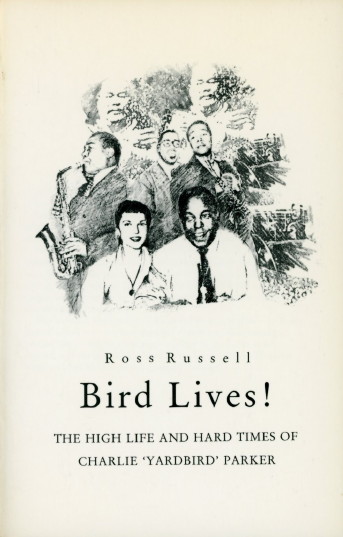

Bird Lives! - and certainly Charlie Parker's influence always will. This is his remarkable and moving story.


But Bird Lives! is more than the biography of a wayward musical genius. It is also the profound study of a towering talent poorly rewarded by a society that has too long brutalised its black membership.


Bird was ahead of his time in many significant ways. Poor, black, addicted to hard drugs, mentally and physically ill for long periods of time, his problems were similar to those of contemporary talents among minority groups. The result - the way he lived his life and fought his fight against an all too often indifferent society - is at once magnificent and harrowing.


Why should a white man tell this story? Firstly, because - as Ross Russell points out - no black man has done it yet. And secondly, because this particular white man was often in the centre of the turmoil: as President of Dial Records, he recorded some of Parker's work, and was for two years his personal manager.

- Quartet Books, Press Release


First published in 1973 by Quartet Books with a paperback edition to follow in 1976, Ross Russell’s BIRD LIVES! -The High Life and Hard Times of Charlie 'Yardbird' Parker is largely an anecdotal treatment of Charlie’s Parker’s life by Ross Russell, President of Dial Records and for two years the saxophonist's personal manager.


Given the immense amount of research on Parker’s life that followed its publication, it has been superseded somewhat by Stanley Crouch, Kansas City Lighting: The Rise and Times of Charlie Parker, Gary Giddins, Celebrating Bird; The Triumph of Charlie Parker, Chuck Haddix, The Life and Music of Charlie Parker, Robert G. Reisner, The Legend of Charlie Parker, and Carl Woideck Charlie Parker: His Music and His Life.


But because the later works have access to more sources, this should not be taken to mean Ross’ Bird biography lacks legitimacy. The Russell bio remains an enjoyable and interesting narrative written by someone who knew Charlie Parker for much of his professional life, interacted with him in a variety of settings and who was in a position to offer personal observations about Bird’s life and times from a first-hand perspective.


I’ve always been fond of the chapter in the book about the origins of the famous Jazz club named after Bird contained in Russell’s book and thought I would share it with you in the following blog feature.


“Early in 1949 Billy Shaw, having built up a strong position in the booking business and acquired a following of artists rapidly rising in popularity, resigned as vice president of the Moe Gale Agency and launched Billy Shaw Artists, Inc. With him Shaw took those who had been under his personal management. For each of his stars Shaw had a New Year's bonus, a booking in a desirable spot at better money, a new record contract. For Charlie he had a special plum—an invitation to the International Paris Jazz Festival. 


"Stay with me, Bird," he told Charlie, "and tend to the store. I'll put your name in lights all over the world."


Charlie set about the tedious business of securing passports, visas, and smallpox certificates with boyish enthusiasm. When he recorded next for Mercury he titled two of the sides Passport and Visa. They were not particularly good sides, but that wasn't his fault. Granz had restored the Quintet to grace but could not stop meddling with its personnel. To the pure sound of the five original instruments he added the rambunctious tailgate trombone of Tommy Turk, a recent crowd-pleaser on the Jazz at the Philharmonic tour. Ensemble lines were hopelessly blurred, and the quality of the music coarsened. It was like adding a tuba to a Beethoven quartet.


For the trans-Atlantic plane trip the Parkers joined Howard McGhee, Lips Page, Flip Phillips, Tadd Dameron, and others invited to the festival. Tall, thin, looking rather out of it, Doris was seen walking several paces behind the men, carrying the saxophone on its journey back to its homeland [Charlie played a Selmer alto sax and these were made in France]. The party arrived a day before the concerts, and Charlie at once made the round of Montmartre jazz clubs. French jazz musicians received him warmly. They were familiar with his style from records they had imported. Charlie was lionized; he sat in, jammed with French jazz musicians, lost sleep, and sampled the French heroin willingly supplied by new friends. He was bearded in his hotel room by a reporter for Melody Maker, the leading British music magazine. The writer had a lengthy list of questions on Charlie's analysis of bebop, his opinion as to whether it was actually jazz (British tastes were still mired in pre-war concepts), his evaluation of various traditional jazzmen, Louis Armstrong, Sidney Bechet, and others. Charlie was charmed by the Englishman's accent and studied it closely during the interview. To each of the questions he answered by reading a stanza from The Rubaiyat of Omar Khayyam. Finally the Melody Maker man gave up and wrote that Charlie Parker in person made no more sense than Charlie Parker the musician. English readers remained as ignorant as ever of the new style. When there-porter asked Charlie about his religious affiliation, Charlie replied, "I am a devout musician."


The concert took place in Salle Pleyel. Traditional jazz was represented by Sidney Bechet, the middle period by Lips Page. and the new wave by the Charlie Parker Quintet. Bechet was the hit of the festival. Playing nothing more harmonically advanced than seventh chords, sticking to such riverboat classics as High Society, filling the Salle Pleyel with his great skirling tone, the New Orleans veteran had the crowds dancing in the aisles. Lips Page was warmly applauded. Charlie's set was pure, definitive, almost private, too intimate for the huge music hall. It was warmly received by the avant garde clique and elicited from reviewers such comments as "formidable" and "Succès d'estime." [critical respect but not broad, popular support]


Charlie jammed after the concert at the Club Germaine, where author-musician Boris Vian was master of ceremonies. Jean Paul Sartre, then first reaching the height of his fame, visited the club, and Vian asked the existentialist philosopher if he wanted to meet Charlie Parker. "Yes, of course," Sartre replied. "He interests me." Introductions were arranged. Charlie told Sartre, "I'm very glad to have met you, Mr. Sartre. I like your playing very much," According to Vian, Sartre stared at Charlie with expressionless dark eyes. But he remained for two sets of the music. Such was the oblique encounter between two men who, despite wide differences in race and culture, were leading exponents of the existentialist way of life, one on a theoretical level, the other on a practical level.


When an admirer presented Charlie with a rose, he calmly ate the petals and stuck the stalk in his buttonhole. The next day Charlie met Charles Delaunay, son of the French painter, publisher of the world's first jazz discography (1938), and director of the French jazz magazine Jazz Hot. Charlie also met Andre Hodeir, then writing Jazz: Its Evolution and Essence. These cultured, intellectual men treated Charlie with the respect they felt was due an important artist. The reception given to jazzmen in Europe was far different from that prevailing in America. The music was taken seriously, not as mere entertainment. The critics who covered the festival for the Paris papers were the same critics who reviewed important recitals, symphony concerts, and operas. New jazz records were reviewed with the same seriousness as new books. In Europe dark skins were a mark of distinction rather than a cause for suspicion and contempt.


Charlie had a long talk with Kenny Clarke, who had established a permanent residence in Paris and was planning to become a French citizen. They had not exchanged anything more than a "What’s happening, man?" since the old days at Minton's. Clarke had matured, both as a man and a musician. He was doing well as a radio and recording artist. He conducted a school for young drummers, lived in a suburb of Paris with a beautiful woman, attended concerts and art shows. He had come to definite conclusions about the status of the black artist in America. America had no respect for the artist. There was no solution to the race problem in the foreseeable future. "Bird, you're slowly and surely committing suicide over there," Clarke told Charlie. "So are Billie Holiday and many others. Come over here and live. You can stay with me until you get straight. You may never make a hundred thousand a year, but you'll be around a long time and people will appreciate your music. Over here you will be treated as an artist. The French understand these things." Clarke asked Charlie to think it over carefully.


Charlie returned to New York with a new opinion of himself and his music, and a determination to return to Europe. His marriage to Doris was breaking up, and he was dating Chan Richardson again. Billy Shaw was delighted with the results of the trip and had the reviews translated and included in Charlie's press book. According to the agent, big plans were in the making. Shaw called them "colossal" but gave no hint as to their nature. For the present he wanted Charlie to reorganize the Quintet and mark time at the Onyx Club, where he could be pulled out on short notice. McKinley Dorham had left and the drummer's chair was open. Charlie hired a fast, young percussionist, Roy Haynes, and Red Rodney, a young trumpeter, excellent men who very nearly made good the loss of Miles and Max.


The Mercury contract was renewed under favorable terms. Granz had a new idea.* [* Norman Granz, Billy Shaw, and Charlie Parker himself are given various roles in hatching the Bird with Strings idea. Parker had toyed with the idea of a quasi-symphonic background for his improvisations ever since Dizzy Gillespie had divulged similar plans a year or two earlier. There was no doubt that Granz and Shaw welcomed the commercial possibilities of the format.]


For the next session he would back Charlie with a studio orchestra of strings and woodwinds. It would be the most impressive presentation of a jazz artist in the entire history of recording: Charlie Parker with Strings. On November 3 Charlie recorded in the Mercury studios with a chamber orchestra hand-picked from the best studio musicians in New York, among them Bronislaw Gimpel and Mitch Miller. The chamber orchestra consisted of three violins, viola, cello, harp, oboe, English horn, and a three-piece jazz rhythm section. Charlie was proud and pleased to find himself in such distinguished company. At once he began talking about his new group with "the cats from Koussevitsky's band" (the New York Philharmonic Orchestra, then under the direction of Serge Koussevitsky). Charlie recorded Just Friends, Everything Happens to Me, April in Paris, Summertime, I Didn't Know What Time It Was, and If I Should Lose You.


The ballads were well played, and the work of the men in the string and woodwind sections of a very high standard. Other aspects of the session were less favorable. The scores by Jimmy Carroll were glib and without distinction. Charlie was overawed by a display of musicianship that was nothing more than routine for good legitimate professionals. But he felt that he had achieved a peak, recorded his best session, and made jazz respectable.


Just Friends was the best of the several sides. The alto saxophone soars majestically over the lush background. Its tone is brilliant and its virtuosity compelling. Enough of the original melody remains to sustain the interest of the man in the street. But the strength that Charlie had drawn from Miles and Max, and the freedom that he had enjoyed within the intimate, flexible setting of the Quintet, so essential to inspiration and real improvisation, had been lost.
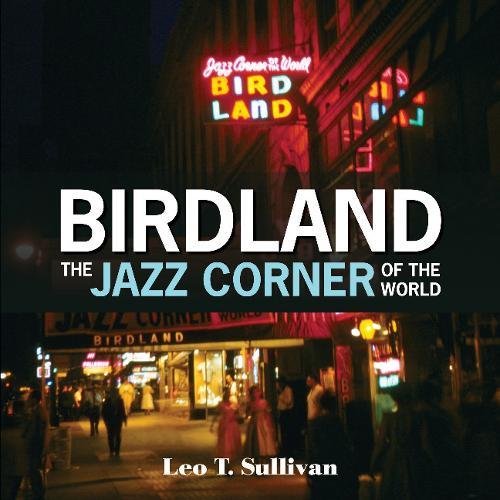


Soon after the Just Friends session Charlie was called into the Shaw office and given the news about a new Broadway jazz palace to eclipse all others. Licensing and financing problems had delayed its opening, originally scheduled for September, but now the obstacles had been overcome and all was ready for a gala opening the week before the Christmas holidays. The

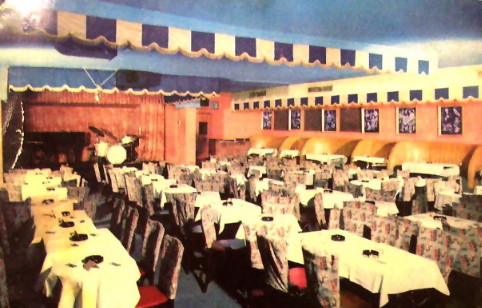
new club was located at 1678 Broadway, near Fifty-third Street, and Shaw suggested that they walk over and look at it. The new club, on which finishing touches were being applied by workmen, was impressive. Carpeted stairs led from Broadway to a landing with a checkroom and ticket booth. 


The club would operate on an admission policy, like the Roost. Another short flight led to the main room. The new club would accommodate four hundred persons. It would be the biggest and finest jazz club in the world. There were tables, booths, a big bar, and a bullpen. The booths were covered in imitation leather. The stage was large enough for a full-sized orchestra. There was a new piano. At the back of the room a sound studio had been installed behind thick plate glass. The well-known disk jockey Symphony Sid Torin had been engaged to broadcast his popular show nightly from the premises. Each night thirty minutes would be broadcast live from the bandstand. The walls were decorated with huge oil paintings in oval frames. 


They were larger-than-life portraits of the celebrities of the music world — Dizzy, Sarah, Eckstine, Torin, Max Roach, Bud Powell, and, occupying a place in the center, Charlie Parker himself. It had been drawn from an old publicity photograph showing him smiling boyishly over the curved end of a saxophone. "Well," said Billy Shaw. "What do you think?" "It's out'a sight," Charlie said. "Do I get to play in here?" "We're going to open with six bands. I'm booking the entire package. Naturally you'll be here. And we'll do better than that! Did you see the bird cages?"


Charlie could see a number of empty cages hanging from the ceiling. There were twenty or thirty of them.


"There will be tame finches in every one of those cages," Shaw told him. "And a talking mynah bird in the one over the bar. Birds," Shaw said. Shaw took Charlie affectionately by the arm and led the way back upstairs. They crossed to the opposite side of Broadway. Now Charlie was able to see the large sign slung from a crane and about to be jockeyed into place over the entrance. The neon letters said: "BIRDLAND. THE JAZZ CORNER OF

THE WORLD."


It was a signal honor for a jazz musician. When the owner of Birdland contemplated the idea of naming the club after a practicing jazz musician, there had been no one else to consider. Big names of the past no longer held any box office allure. Of the contemporaries none, not even Dizzy Gillespie, possessed Parker's charisma, or could lend the weight necessary to launch a club that would in fact be the Jazz Corner of the World for two decades. 


Parker had dominated jazz since 1940, when he first appeared with the Jay McShann Orchestra, prompting veteran jazzman Cootie Williams to remark that Parker's influence as an innovator had exceeded that of Louis Armstrong. In Cootie's words, "Louis changed all the brass players around, but after Bird all of the instruments had to change — drums, piano, bass, trombones, trumpets, saxophones, everything." Before Charlie's time jazz had been heard in ballrooms as a music for dancers. With his advent jazz had moved from the larger arena of the ballroom to the intimate setting of the lounge. There it was no longer danced to, but listened to, and for the first time taken seriously as a musical genre.


Charlie's accomplishments were many. He had revealed new dimensions in saxophone playing, enabling the horn to complete its evolution from a fattener of orchestral textures to the most expressive of instruments. Charlie updated the timeless blues song, and contributed some of its finest performances. He had metamorphosed the Tin Pan Alley ballad into a tightly knit, often recondite composition based on the idea of the Kansas City riff, a repeated melodic figure underlined by a strong rhythmic pattern. With perfect taste and intuition he had abstracted the body of music before his time, purging it of anachronisms and irrelevancies, and endowed it with a compelling vocabulary. Almost every post-Parker innovation has been based on something of his own, for example the free-form passages heard on Bird at St. Nicks that lead to John Coltrane, and other musical signposts that point to the modal, jet-stream style of Ornette Coleman and the expanded tonal idiom of Eric Dolphy. A saxophonist, he was the inspiration of Clifford Brown, the most promising trumpeter after Roy Eldridge, killed in his twenty-sixth year in an auto accident. Parker's music was the alpha and omega of Miles Davis's trumpet style and musical system. Even recent, controversial, iconoclastic improvisers — Albert Ayler, Archie Shepp, and Sonny Simmons — have their roots in Charlie Parker. Russell Procope, forty-year veteran of the Duke Ellington Orchestra and a fine alto saxophonist in his own right, said, "A Bird comes along once every century." 


As the Forties ended with the opening of Birdland, the queen of jazz lounges, Afro-American music was about to extend its horizons and make its influence felt in the rest of the world. As a counterpoise to European art music, and the popular forms based on that tradition, jazz brought the world a new set of musical values: fresh melodies, an intoxicating sound, and the irresistible kinetic qualities that flowed from its polyrhythms.


Birdland opened December 15, 1949. The club was packed to capacity. The press, the public, and the entertainment world had turned out to hear the greatest convention of talent ever booked into a nightclub: bands led by the guest of honor, Charlie Parker, by Lester Young, Stan Getz, Lips Page, Max Kaminsky, and a new singing star, Harry Belafonte. There were tame finches in the bird cages, except for the cage over the bar. The mynah bird had not yet been booked. [Ed. note: The birds had to be removed as they couldn’t tolerate the amount of cigarette smoke in such close quarters.]


Pee Wee Marquette, a midget, dressed in a custom-made white dinner suit, acted as master of ceremonies, cranking down the microphone stand to suit his tiny frame, haranguing the crowd with florid announcements delivered in a flat, nasal falsetto. Miss Diana Dale, the artist responsible for the garish likenesses of show business celebrities adorning the walls, was in charge of the hat-check concession. 


Behind the thick plate glass at the back of the club, in the brightly lighted radio booth, like a goldfish in an aquarium, basked radio's Mister Hip, Symphony Sid. WJZ had given him a midnight-to-four schedule, direct from the Jazz Corner of the World, in which hourly shows of jazz records alternated with live broadcasts directly from the bandstand, both interlarded with jivey commercials for Broadway clothiers, retailers of hi-fi equipment, the Colony Record Shop directly across the street, hip florists, barbers, even morticians. The one for Sunshine Funeral Parlors went:


"When Fate deals you one from the bottom of the deck, fall by the Sunshine Funeral Parlors. Your loved ones will be handled with dignity and care, and the cats at Sunshine will not lay too heavy a tab on you. Now I'd like to play a request, Cootie Williams's great record, Somebody's Got to Go."


For live broadcasts Sid's microphone cut directly into the Birdland public address system so that he could carry on a dialogue with the jazz greats of the world. On opening night he called out, "Bird, Bird—A gentleman just called in from the Bronx. . . . The gentleman wants to know if you'd play for him  - White Christmas?" It was like asking Heifetz to oblige with Play Fiddle Play. But it was Bird's night. With the saxophone in the low register, sounding richly like a tenor, Charlie played the theme of I'm Dreaming of a White Christmas, then stretched out in a long, loving improvisation. The yuletide favorite played as no one had ever heard before. Big, buttery and luscious, the melody notes that everyone could hum, bubbled from the saxophone like good home cooking. 


On those rare occasions when Charlie played straight, coloring the original notes with only the slightest changes of pitch and the faintest inflections of blue modality, he was a sumptuous player indeed, and one capable of powerfully affecting the square and the man in the street. Everyone listening who was past thirty knew the Bing Crosby vehicle that spun in record store doorways each Yule season and perennially sold hundreds of thousands of records. That night the case-hardened habitués — who else would be in a nightclub on Christmas eve? — experienced an involuntary moistening of the eye and thought back about Christmas eves at home, long ago, in better days, and reordered drinks. Thus ended the most turbulent decade in the history of popular music in America.”


Monday, January 8, 2018

"The Bebop Laboratory" - in Ross Russell - BIRD LIVES!

© -Steven Cerra, copyright protected; all rights reserved.


Since Ross Russell's Bird Lives! The High Life and Hard Times of Charlie (Yardbird) Parker was first published in 1973, there have been a number of book length treatments on the life and times of Bird including: , Chuck Haddix, Bird: The Life and Music of Charlie Parker, Robert Reiser, Bird: The Legend of Charlie Parker, Carl Woideck, Charlie Parker: His Music and His Life, Gary Giddins, Celebrating Bird: The Triumph of Charlie Parker, Stanley Crouch, Kansas City Lightning: The Rise and Times of Charlie Parker, Brian Priestley, Chasin' the Bird: The Life and Legacy of Charlie Parker and Ken Vail, Bird's Diary: The Life and Legacy of Charlie Parker. Also of interest might be Chan Parker's autobiography My Life in E-Flat. Recognition should be given to Orrin Keepnews first-rate treatment of the life and times of Charlie Parker first published in 1956 and included in The View From Within: Jazz Writings 1948-1987 [Oxford University Press].


I’ve always been interested in the gestation period that made possible the transition from the swing era to bop and Ross Russell chapter on “The Bebop Laboratory” contains so much detailed information on the subject that I thought it might be of interest to readers of the blog, especially as the influence of Bebop recedes further in the evolution of the music.


Russell’s descriptions and depictions of the formative years of bebop are about the "who, what, when, where and why" of the bebop laboratory and how it created this intriguing and exacting music.


“In New York jazz musicians looking for the action found it in half a dozen after-hours clubs uptown. The most famous of these was Minton's Playhouse, the laboratory in which musical experiments about to emerge as the bebop revolution began around 1941. In spite of its exotic name, Minton's was a drab sort of a place. A marquee extending from the entrance to the curbstone, the latter painted white and zoned as a passenger-loading area, gave the club a faint aura of prestige on otherwise dingy 118th Street. Inside there was the usual checkroom with its divided door and coat racks, a long bar, tables, a wall with mirrors, somewhat the worse for the wear, and a bandstand like those in many of the old Kansas City clubs of Pendergast days [an American political boss who virtual controlled Kansas City from 1925-1939] — cramped, large enough for a baby grand piano and a drum outfit, and, at a stretch, standing room for five or six musicians.


There was no decor of note. Minton's Playhouse was poorly lit, reasonably clean, attractively priced, and out of the way—the kind of place jazz musicians liked. As the word began to get around, taxicabs pulled up to the faded green awning with a frequency enjoyed only by the in-places of those years, taxis that discharged musicians easily identified by the trumpet and saxophone cases they carried. Had the management at Minton's thought to provide a guest book, it would have contained the name of every important jazz figure of the transition years.


The club was named after its owner, Henry Minton, a middle-aged man who enjoyed the slight distinction of having been the first Negro ("colored" was then the official expression) delegate to Local 802, the New York chapter of the American Federation of Musicians. Until late 1940 Minton ran the club by himself. It drew trade from the Hotel Cecil, whose lobby could be reached by a connecting door. In better days the premises had been the hotel dining room. Minton's Playhouse became a hangout for old-timers drifting in and out of the dance band business. There was no real music policy. The baby grand piano often went untouched for days. Business declined steadily until the owner bestirred himself to hire a new manager. His choice was Teddy Hill.


With great reliability and faint distinction, the soberfaced, dependable Hill had played the various saxophones in bands led by the immortal King Oliver and Louis Armstrong. He had written his share of arrangements, composed a few songs (but no hits), and learned the ins and outs of the dance band business. Finally, in mature years, Teddy Hill had become a bandleader in his own right.


Teddy Hill had never quite succeeded in any capacity, but he had been around and he knew a lot of people in the entertainment world and had ideas. "Why not," he told Henry Minton, "hire a house band and build up the jam session business? And," adjusting the dark gray felt hat that he wore in all seasons, indoors and out, to conceal the encircling bald spot on his head, "throw a Monday night feed for artists in the stage shows up at the Apollo? We could put a notice on the call board and invite everybody in the cast." Monday night was show business Sunday. At-liberty night. To Henry Minton the plan sounded worth a try.


"Celebrity Night" at Minton's Playhouse, its dinners hosted by Teddy Hill, quiet and hatted, soon became famous coast to coast. Wherever show folk or jazzmen might be working — at the Howard in Philadelphia or the Regal in Chicago or way out on the Coast at the Lincoln Theater in Los Angeles — the word was passed. Buffet-style dinners at Minton's mustered up all of the succulent dishes that artists had known from childhood, and could so seldom find on the road: barbecued ribs with real Creole sauce, panfried chicken, collard greens simmered with a hambone, sweet potato pie, candied yams, red beans and rice. Once in a while Hill gilded the lily and flew in a shipment of crawdads from Kansas City or Mississippi River catfish from St. Louis. He raised the price of mixed drinks from twenty-five cents to thirty cents. In 1941 Teddy Hill and Henry Minton were well into the soul-food business. The Playhouse had a new lease on life. Minton's became the place to go on Mondays in the early Forties. It was also the scene of the palace revolution that overturned jazz.


As architect of the music policy at Minton's Playhouse, Teddy Hill took a page from the book of the Kansas City club operators, hiring himself a rhythm section dressed up with a single horn, an open invitation to the jam-minded. Hill could see the ominous ripples troubling the surface of popular music. The old "jazz" of the Twenties, played by the men with whom he had worked, Oliver and Armstrong and the rest, was dead. Swing itself faced serious difficulties. There were new ideas afloat, new voices, a new generation of jazzmen who knew their instruments and could play. Those were the people Teddy Hill wanted to attract to the Playhouse, along with established stars.


To lead the house band at Minton's Teddy Hill hired the very man he had fired less than a year before, Kenny "Klook" Clarke, the drummer whose percussion work had disrupted the last Teddy Hill Orchestra. A year before he had lectured Clarke about "dropping bombs," telling the intransigent young drummer, "Keep your beat down on the bass drum where it belongs. People don't want to hear that kind of stuff. They want music they can dance to." The young drummer had merely glared at him. "Klook," Clarke's nickname, had arisen from the onomatopoetic klook-a-mop, a kind of double bomb, one of Clarke's favorite percussion figures. Now, months after he had fired Kenny Clarke, Teddy Hill thought about the bombs, the jagged, zigzaggy rhythms that somehow worked, and got in touch with the drummer and offered him the contract for the house band at Minton's.


"I was a little surprised when he sounded me," Clarke said later. "After we talked a while I knew what he wanted. In 1937 I'd gotten tired of playing like Jo Jones. It was time for jazz drummers to move ahead. I took the main beat away from the bass drum and up to the top cymbal. I found out I could get pitch and timbre variations up there, according to the way the stick struck the cymbal, and a pretty sound. The beat had a better flow. It was lighter and tastier. That left me free to use the bass drum, the tom-toms and snare for accents. I was trying to lay new rhythmic patterns over the regular beat. Solo lines were getting longer. Soloists needed more help from the drummer—kicks, accents, cues, all kind of little things like that."
Who else?


Klook suggested a pianist named Thelonious Sphere Monk, a heavy, bearlike, bemused young man who never appeared in public without his "shades" and was one of the first jazzmen to cultivate a goatee. Monk had begun his career as a piano player with a gospel group that worked the church circuit, had seen the Spartan interiors of hundreds of white frame Baptist churches in the South and Midwest, beat upon their tuneless pianos, listened to the hand-clapping, hosanna-shouting congregations as they joined in with the gospel lights he accompanied. Monk was soaked not so much in the brine of the ancient blues as the equally ancient Afro-American gospel song. To maintain his musical integrity during those endless road trips through the heartland of straight-laced Afro-American Monk jammed where and when he could.


Mary Lou Williams reported hearing him one night in a Kansas City after-hours club. Thelonious Monk wanted to get out of the gospel business and to play jazz, but on his own rather demanding terms.

When not on the road Thelonious Monk lived at home with a devoted, doting, permissive, widowed mother, that recurrent tragic heroine in the biographies of so many jazzmen. Mother and son, later a wife and alter-mother named Nellie, lived in a fourth-floor walk-up flat on San Juan Hill, in Manhattan's West Sixties. There was a small Steinway grand piano, acquired by the most exacting household economies, so that Thelonious would have a proper instrument upon which to compose and practice. He had already created several striking new compositions, Blue Monk, Epistrophy, and 'Round About Midnight, with its strange excursions into unlikely signatures. A large mirror attached to the ceiling reflected the keyboard and its action, and that of the strings and hammers.


Thelonious was self-taught from the age of six. Beyond the simplicities of the Baptist hymn book, he did not bother to read music. He played in what appeared to be an awkward style, fingers flat, splayed out on the keys. With Monk one had the feeling of music being crushed out of the instrument, like wine from grapes. Sometimes he hit all twelve keys at once, using the odd thumb to catch two at the same time. Monk held his head at an angle when he played, chin raised, eyes lost behind the dark shades, seemingly listening for the chords and their reverberations. In the privacy of his home he spent hour upon hour at the Steinway, practicing at any time of the day or night, unchallenged by neighbors, testing possible and improbable combinations of sound, peering up through the dark glasses at the mirror of the ceiling, locked into the architecture of the sounds that he roused and the narcissistic image projected by the mirror.


Monk's keyboard texture was thick, but he left a lot of air space between the chords, and the big chords fell at unexpected intervals. The rhythm seemed jagged, like a child hopping squares on the sidewalk, but it swung in the same way that Klook's off-center drumming swung. The chords were churchy and gospel-rooted, with a strong blues tinge, stretched into queer intervals and upper extensions. Monk's harmonic schema seemed to evolve from the midriff of the modes, the flatted fifths, leading him afield into whole-tone scales, a method akin to Charlie Parker's modular attack but with different results. When Monk and Klook worked together the music was disturbing and different, but it cooked. The bass drum coughed out its cannon shots. Sticks danced on the taut drum heads. The sizzle of cymbals insinuated pungent vibrations into every corner of the after-hours club. Caught up in this heady flux were the dissonant, chunky chords from the piano.


Minton's began as a dueling field for encounters between jazzmen of different persuasions. It ended as a bloody battleground where no quarter was asked or given, on which established reputations were demolished and new culture heroes elevated. At the first sessions, in the spring of 1941, when Charlie Parker was still on the road with Jay McShann, the old guard held the balance of power. The old guard could count on the services of a formidable array of improvisers, all famous as soloists with major orchestras: saxophonists Coleman Hawkins, Ben Webster, Chu Berry, Johnny Hodges, Benny Carter, and Willie Smith; trumpeters Lips Page, Cootie Williams, Charlie Shavers, Harry James, and Roy Eldridge; pianists Fats Waller, Teddy Wilson, Jess Stacy, and Mary Lou Williams. Nor were name bandleaders averse to taking a hand when the brawling got nasty. Duke Ellington, Andy Kirk, Count Basie, Artie Shaw, Lionel Hampton, and Benny Goodman all appeared on the bandstand at Minton's, lending their prestige and efforts to the mounting hue and cry of battle.


Occupying a middle ground between the musical left and right were figures of the transition, pianists Clyde Hart and Tadd Dameron, trombonists Fred Beckett and Dickie Wells, trumpeter Peanuts Holland, tenor men Dick Wilson and Henry Bridges, Jr., and three major figures respected by everyone in
the jazz community, Art Tatum, Lester Young, and Charlie Christian.

The brilliant array of jazzmen from the past, the middle period, and the future did not all appear at Minton's Playhouse on a given night. Sessions were informal and personnel unpredictable. Outside of the men in the house band, nobody got paid. On certain nights there might be a surfeit of saxophonists. On another, all of the trumpet men in the business seemed to be in town and would arrive at the same time; then the walls would shudder with lip trills and double B's.


There were so many names at Minton's that reputations didn't mean anything. Coleman Hawkins and Roy Eldridge had to put up or shut up like everyone else. Once a man had played through his bag and been topped, heard his best lines turned inside out, like the sleeves of an old garment, or used as a starting point for a better solo, there was nothing left except to bottle up and go. It was how you stood up to the challenge, how you responded under pressure, the musical ideas you created then that counted. The rest was mere chord-running, cliche-making, or empty virtuosity. In this witch's broth, sometime between 1941 and 1944, swing dissolved into the new jazz style, bebop.*


[* The word bebop was thought to be onomatopoetic in origin, like klook-a-mop, and in fact may have been derived from the latter. Others said it had been invented by the jivey, irrepressible Fats Waller. Nobody liked it much, least of all the new jazzmen. But it stuck.]

The winds of change sweeping the jazz community blew their hardest during the time of the AFM recording ban. Instead of a record-by-record documentation of the changes in jazz style — the result of the close supervision given by the major labels to the bands under contract — only a handful of imperfect artifacts survive. In May, 1941, amateur engineer Jerry Newman, using a portable turntable, glass-based acetate discs, and a bulky amplifier, recorded at Minton's and Monroe's. Although the originals were badly worn by private playings before their historic worth was realized, they nevertheless afford a dim, scratchy record of those stirring nights. Down on Teddy's Hill with its exhortations of "Go!" and "Blow!" give us some idea of the prevailing excitement and audience participation. There are several choruses, funky and wry, by Thelonious Monk that gave jazz piano a new dimension. The chief soloist is Charlie Christian, playing out the last weeks of his professional life, still in the superlative form that made him a star with Benny Goodman. (Christian succumbed to tuberculosis in March 1942.) The co-star is Kenny Clarke. That Clarke was indeed the founder of the new percussion style is evident. One hears a forcing beat, a delicious complexity of polyrhythms, and an unusual awareness of the needs of the soloist. There is also a bit of John Birks Gillespie, then twenty-three and trying his wings, not yet quite sure of himself or his style. Apart from Clarke's masterful drumming, there is nothing here up to the standard of the Wichita transcriptions or Hootie Blues, with their clear, positive declaration that something new had been added. As good as it was, the music of Clarke and Monk needed a horn.


Charlie Parker was on the bandstand at Monroe's on this and other nights that Jerry Newman recorded. Unfortunately, Newman's tastes in saxophonists ran to orthodox men, Benny Carter and Herbie Fields. Newman did not like Parker's jazz, an opinion in which he was not alone, It didn't seem to swing. The tone was too cutting. The flow of ideas was too rapid for the layman to follow. Newman didn't think of it as jazz at all, but rather as some kind of "Chinese music," as Cab Calloway scornfully called the new style. Newman's equipment, so laboriously lugged to the after-hours clubs, was switched off when it came Charlie's turn to solo. The most assiduous of amateur engineers, Dean Benedetti — whose method was the reverse, to switch off everyone but Parker — would not appear for another year or so.* [*After Jerry Newman's death, his effects would reveal a paper disc on whose faded soundtrack could be heard the unmistakable sound of Charlie Parker's alto playing Cherokee.]


Charlie Parker was not much in evidence at Minton's during its opening months. After leaving McShann, Charlie had established his base at Monroe's Uptown House, 133rd Street and Seventh Avenue, his old hang-out from Parisien Ballroom days. Monroe's was a cabaret with a floor show policy, but after the last show the stage was cleared and a small band led by Vic Coulsen took over. Jamming was encouraged and participating I jazzmen had a kitty to split for their night's work. The kitty was a big inducement for Charlie. On a dull night his share amounted to eighty or ninety cents, barely enough to buy a meal. On a good night, when Harlem numbers men dropped into Monroe's, his share might run as high as eight or nine dollars.


In the fall of 1941 the key men in the brewing bebop revolution began to discover one another. One night the musicians in the house band at Minton's were tipped off that a new saxophonist had arrived in town, a fellow called Bird, or Yardbird, that he was from Kansas City and played like Lester Young, only twice as fast, and on alto saxophone. Nobody believed this. Lester was the top man on saxophone. There had been no new statement on the alto since Johnny Hodges appeared with Duke Ellington ten years before.


Still, the story had to be checked out. One night Kenny Clarke and Thelonious Monk decided to see for themselves. On the bandstand at Monroe's they found a man younger than themselves, wearing sunglasses in sport frames, an unpressed suit and rumpled shirt, playing one chorus after another as if his life depended on it. The mordant tone, the precise articulation of the notes, the vehemence with which each was played, the breath-taking speed with which the horn was gotten over, these were all new to the idiom.


"Bird was playing stuff we'd never heard before," recalls Clarke, now an elder statesman of jazz and living in Paris. "He was into figures I thought I'd invented for drums. He was twice as fast as Lester Young and into harmony Lester hadn't touched. Bird was running the same way we were, but he was way out ahead of us. I don't think he was aware of the changes he had created. It was his way of playing jazz, part of his own experience. Bird didn't talk much. He was quiet and reserved, in fact rather meek. We laid a few dollars on him and got him to move from Monroe's down to Minton's. Teddy Hill refused to put another man on the payroll, so we decided to pool our money and give him an allowance. I invited him to the pad I shared with Doc West, another drummer and a good cook. We set him up to meals. He could really eat. He was thin and half starved. He was trying to live off the kitty at Monroe's.


"Pretty soon Minton's got to be a bad place for older cats. Dizzy began coming up regularly and that gave us the four key instruments — trumpet, alto, piano, and drums. That, plus a good bass, was the band of the future. One night, after weeks of trying, Dizzy cut Roy Eldridge. It was one night out of many, but it meant a great deal. Roy had been top dog for years. We closed our ranks after that.


"To make things tough for outsiders, we invented difficult riffs. Some of our tunes used the 'A' part of one tune, like I Got Rhythm, but the channel [bridge or release] came from something else, say Honeysuckle Rose. The swing guys would be completely hung up in the channel. They'd have to stop playing. After we closed Minton's we'd eat and play until the next morning at Monroe's. There wasn't any prospect that the music would ever come to anything. It was a way of letting off steam and having fun."


During this period of high creativity Charlie Parker was living a hopelessly disorganized life. He lived from hand to mouth, on cadged and proffered meals, in strange beds, and changed his address often. His clothing frequently gave the impression it had been slept in. More often than not, that was the case. Sometimes his horn was in hock, so that he was obliged to play on a borrowed instrument. For this reason he always kept his reed and mouthpiece detached from the saxophone and carried them in his pocket. Despite his lack of funds, Charlie had begun to experiment with hard drugs. They were as easily obtained in New York as they had been in Kansas City. Every Harlem block had its insinuating pusher, eager to encourage new habits and nurse them through their incubating period, on credit if necessary, especially if the user showed promise of success in the music business. Caps of heroin or morphine could be bought for prices ranging from fifty cents to three dollars, depending upon one's state of affluence. A cap of white powder, heated in an old teaspoon, converted into a colorless liquid, and injected into a vein, would produce a state of euphoria lasting twelve hours or more. That was enough to carry one through the essential part of the day. It was more important than food, or a decent room. And what a euphoria it was! Compared to heroin, the kicks derived from marijuana, from nutmeg floated on top of a soft drink, from benzedrine inhalers soaked in sweet wine were kid stuff.


Narcotics had always been as much a part of the jazzman's culture as gangsters, pimps, prostitutes, gamblers, and drunken customers who requested Sweet Adeline. Many jazzmen had given heroin a try and backed off, frightened by its powerful effects and the admonitions of those who had become hooked. Charlie had seen his share of junkies in Kansas City. He had first tried the drug there. It had been included in the various experiments undertaken with his teenage friend, drummer "L'il Phil," who had become a drug peddler and heroin addict. Returning to Kansas City from a road trip with McShann, Charlie heard the story of L'il Phil's tragedy. His friend had gone out with a territorial band for a tour of the Deep South. Ill with withdrawal symptoms, wandering about in a state of confusion, the drummer had become separated from his fellow musicians and left behind in a small Mississippi town, where he was arrested, hauled before a local court, judged insane, and remanded to an asylum. After months of useless treatment the sick man had been released — literally turned into the street. Ragged, penniless, suffering from amnesia, L'il Phil had wandered and begged his way through the South before turning up by chance many months later in Kansas City.


The deeply disturbing example of his old comrade did nothing to curb Charlie's persistent dabbling with drugs. Charlie's attitude was conditioned by the discovery that his physiology, uniquely resilient in so many ways, could tolerate heroin far better than most. Junkies were usually detached and on the nod. They had no appetite for food, and less for sex. They shunned alcohol as if it were poison. Charlie experienced none of these reactions. His appetites went unchecked. He could drink and he could eat like a horse and run after all of the women that interested him. At Monroe's, where the management stood drinks, he would start the night with two double whiskeys, and continue to down shots between sets. Nor was there ever a time when he could not play.


Drugs allayed the pressure he suffered from the lack of steady work, the public indifference to his music, his contradictory, indeed ridiculous role — a creative artist composing and improvising in a night club. Drugs screened off the greasy spoon restaurants and cheap rooming houses with their un-swept stairs and malodorous hall toilets. Drugs kept him out of the military draft: an army psychiatrist had taken one look at the needle marks on his arm and immediately classified him as 4-F. Heroin became his staff of life. The monkey on his back kept the outside world off it. Like all who meddled with drugs, Charlie believed that he could kick the habit at his own convenience.


He experimented with goof balls (phenobarbital) to decelerate his highs and alleviate withdrawal symptoms. The score became the most urgent task of each day. He learned the trick of borrowing small amounts of money, a dollar or two, sums too small to be remembered. His lifestyle was hardening into a mold he would never succeed in breaking. Except for a single factor, there was nothing to distinguish Charlie from hundreds of other Negro youths who had been drawn to New York City and were drifting aimlessly about the streets of Harlem, in imminent danger of being swallowed by the underworld. That factor was the saxophone.


Charlie had turned twenty-one. However precariously, he had established himself in the underground of the city of his dreams. He was dug in on the front line. He was learning to live from one day to the next, without a five-cent piece in his pocket, without the slightest concern of the morrow. A place to sleep, alcohol, drugs, sexual outlets, food — these were his material needs. These and a place to play amounted to the total fulfillment of his life. The prescored hype, the act, con, guile, the small loan and, above all, the mania to play harder and longer than anyone else were all the currency he needed. He had no welfare check, no unemployment insurance, no job, no money, but he was making out. And he was into fresh musical discoveries every night.


He was fast becoming a legend in the jazz underground. Musicians from traveling bands were steered uptown to hear him perform. They were amazed by his ability to improvise from any tune or sort of musical material. One night three notes were struck at random on the piano. Charlie immediately resolved them into a melody, clothed them in a harmonic pattern, and played several choruses ad lib. Another night a key on his saxophone broke. He sent the waiter to the kitchen for a teaspoon, and with the bent spoon and a rubber band from his pocket soon had the horn back in playing condition. Listeners went away shaking their heads. On the road they spread the word about the fabulous unknown alto saxophonist, a young Mozart spouting forth melodies by the yard at an obscure club in upper Harlem. The legend began to proliferate.


On bitter winter nights Charlie would drop into the Braddock Bar, a musicians' hangout next to the Apollo Theater. The bar operated on a two-for-one policy, and Charlie had discovered a way to cadge free drinks. If a customer ordered a whiskey, he would be poured two shots and a chaser. The second glass would sit on the bar and sometimes be overlooked in the general confusion of a busy night. Charlie would cruise up and down the bar, his pockets empty, downing "sleepers." The gambit was acceptable to those who knew him, but was not well taken by strangers. One night he was caught in the theft and called to account by a group of Harlem toughs. Either he would stand them all a round of drinks, or they would take him out the back entrance of Braddock's onto 126th Street and teach him a lesson. Charlie talked fast. He was getting nowhere until he remembered that the current attraction at the Apollo was the Jay McShann Orchestra. "Give me ten minutes," Charlie told the toughs. "You'll have your round of drinks."


Then he went to the stage door and sent a note in to Gene Ramey.
Luckily, the band was between stage shows and his old friend was available. Ramey appeared, shocked at what he saw. "Bird was thin and drawn. He looked like an unmade bed. It was six degrees below zero and Bird was wearing a T-shirt, no socks, and an expensive black overcoat. He was in a serious jam at the Braddock and needed two dollars to bail himself out of trouble." * [*Interview in Jazz Review, November 1960]. Ramey advanced the money and Charlie made good the round of drinks.


Later that night he was on the bandstand at Minton's, playing his solos with the black overcoat still on his back to conceal the fact that his only suit was in pawn. It was a beautiful coat, fleece-lined, with a fur collar. A lucky match for his size, 44-short, it had been purchased for a few dollars from an acquaintance who made a living as a shoplifter.


Despite his insecure way of life, perhaps because of it, Charlie married for the second time. He had been divorced two years after the birth of Leon by his first wife, Rebecca Ruffing, who had been awarded a weekly alimony of five dollars, a sum that Charlie paid reluctantly, intermittently, and then not at all. Charlie's second marriage was to Geraldine Marguerite Scott of Washington, D.C. A stunning girl, Geraldine loved the glamour of clubs and nightlife. The marriage survived on very uncertain terms. The Parkers had no real home other than hotel rooms and boarding houses. Geraldine was an in different housekeeper, and most meals were taken out. The liaison dissolved itself within the first year and Charlie went back to the old, irresponsible, nomadic way of life that he had been following since his middle teens. Charlie's future liaisons notwithstanding, no record was ever produced of his having divorced wife number two.


By mid-December Charlie's condition was cause for alarm. Fellow musicians realized that something practical would have to be done. Trumpeter Benny Harris undertook to get Charlie on the payroll of the Earl Hines Orchestra; tenor saxophonist Budd Johnson had given notice, and the leader was looking for a replacement. Harris began "preaching Bird" to Hines. One night, after closing at the Savoy, the trumpeter talked Hines into making a trip uptown and acted as a guide for a party that included Hines, Harris, Johnson, vocalist Billy Eckstine, saxophonist Scoops Carry, and Count Basie. They found Charlie at Monroe's Uptown House. He was in superlative form. Chorus followed upon chorus. If Charlie was high it didn't show, or at least Hines wasn't aware of it. The band leader was impressed. "He's fine," Hines told Harris, "but that's not going to help us much. This fellow plays alto saxophone. What I need is a tenor man."


After the set Harris brought Charlie to the table and Hines asked if he could play tenor. Charlie said that he could. Did he own a tenor saxophone? He did not. In fact, the alto he had that night was borrowed.


"All right," Hines said. "I'll buy you a tenor saxophone. You can join us tomorrow." Hines stripped a ten-dollar bill off the impressive roll carried by bandleaders on their talent scouting trips, told Charlie to buy himself a clean shirt, and wrote down the address of the studio in midtown Manhattan where the band was rehearsing for its next engagement.”