Showing posts with label Thad Jones Mel Lewis Orchestra. Show all posts

Thursday, April 16, 2020

The Thad Jones – Mel Lewis Orchestra: A Big Band Is Born


© -Steven Cerra, copyright protected; all rights reserved.

Who would have thought that a big band born twenty years [20] after their heyday would still be going strong almost fifty [55] years later?

Such is the case with The Thad Jones – Mel Lewis Orchestra which came into existence in February, 1966 at The Village Vanguard in New York City and still holds forth every Monday night in the same location as The Vanguard Jazz Orchestra.

Obviously, its personnel has gone through changes over the years, but the high quality of the band’s music hasn’t.

Of course, this is my interpretation of the band’s historical, shall we say, line of continuity.  Following this introduction, Bill Kirchner offers a much more accurate demarcation between the original Thad Jones – Mel Lewis Orchestra and the ones that came after it.

At its inception, the signature aspect of the band’s sound was the writing of Thad Jones, although Bob Brookmeyer, Tom McIntosh and Garnet Brown [all trombonists!] contributed charts to the band’s initial play book.

The band’s founders, trumpeter, composer and arranger, Thad Jones, and drummer, Mel Lewis, traveled widely divergent paths in coming together to form the band.

For years, Mel had been a first-call drummer with The Stan Kenton Orchestra, the Bill Holman Big Band, what has come to be known as the Terry Gibbs Dream Band, the Gerald Wilson Orchestra and Gerry Mulligan’s Concert Jazz Band.

Few big band drummers in the history of Jazz have ever been more successful than Mel who would cap his career with almost a decade-and-a-half of performing with the big band he co-led with Thad.

On the other hand, during this same time frame, Thad Jones had enjoyed an almost exclusive association with Count Basie’s big band [1954-1963] as a trumpet player and composer-arranger, although many of the charts that gave birth to the distinctive sound of the orchestra that he co-led with Mel were largely rejected during his tenure with Basie for the reasons noted below by Bill.

“Gave birth” may be a suitable metaphor for many aspects of the music of The Thad Jones – Mel Lewis Orchestra as one of Thad’s earliest and, by now, most famous compositions is entitled A Child Is Born.

Music has a way of sometimes capturing – The Ineffable – that which is beyond words and so it is with A Child Is Born. The miracle of human birth is beautifully captured in the melodic refrains of the song in a way that supersedes and transcends verbal expression.

Thad and Mel once said that the music of A Child Is Born should be played when every child is born.

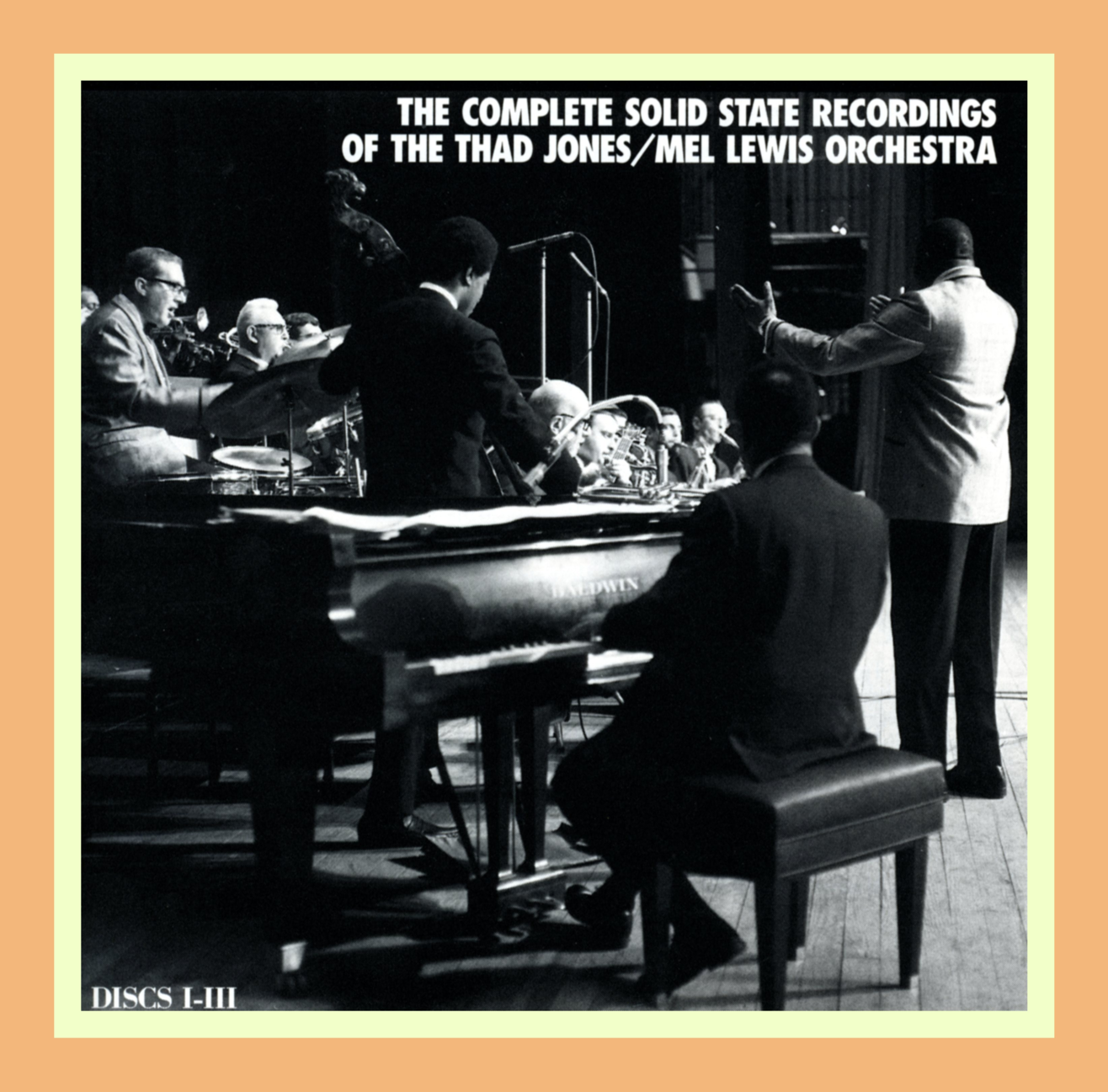
In 1994, Michael Cuscuna and his team at Mosaic Records gathered together the band’s first, half-dozen LP's and issued them as The Complete Solid State Recordings of the Thad Jones/Mel Lewis Orchestra [Mosaic MD-5-151].

Michael asked Bill Kirchner, the eminent Jazz musician, author and editor, to write the insert notes to the collection.

Michael and Bill were kind enough to grant us permission to reprint a portion of Bill’s insightful writings about The Thad Jones – Mel Lewis Orchestra’s origins and subsequent history.

© -Bill Kirchner/Mosaic Records; used with the permission of the author; copyright protected, all rights reserved.

"On February 12, 1966, The New York Times ran a review by John S. Wilson entitled "2 New Big Bands Here Appeal To More Than Old Memories." Wilson first men­tioned the reorganized Tommy Dorsey Orchestra and its new director Urbie Green, as well as such sidemen as Howard McGhee, Budd Johnson, Dave McKenna, Mousey Alexander, and Arnie Lawrence. "Most of these sidemen are successful freelance New York musicians," wrote Wilson. "And that makes the band's future questionable. When the band ends its run at the River Boat, will these men be willing to go on the road, or will Mr. Green have to fill in with less experienced musicians?"

The review continued:

“One band that is not likely to leave New York is The Jazz Band, an 18-piece group jointly led by Thad Jones, a former Count Basie trumpeter, and Mel Lewis, a drummer who has served with Woody Herman, Stan and Ben Goodman. Organized last Thanksgiving as a rehearsal band that met once a week, The Jazz Band gave its first public performance Monday night at the Village Vanguard in an enthusiastic atmosphere reminiscent of the great jazz days on 52nd Street. This all-star band — it includes Bob Brookmeyer, Hank Jones, Richard Davis, Snooky Young, and Jerome Richardson, among others — ripped through Thad Jones's provocative, down-to-earth arrange­ments with the surging joy that one remembers in the early Basie band or Woody Herman's First Herd. Those were young bands whose skills sometimes could not keep up with their desires. But these are old pros, having a wonderful time and rising to each other's challenges, even to such adventures as three-part improvisation. Because these musicians have regular jobs, they can only get together once a week. That will be on Mondays at the Vanguard for the next few weeks at least.”

What was obvious to everyone present at the Vanguard on the night of February 7, 1966 was that an exceptional ensemble had been born. What no one could have predicted was that the Thad Jones/Mel Lewis Orchestra would become one of the most acclaimed and innovative big bands in jazz history, that it would tour extensively throughout three continents, and that its offspring, the Vanguard Jazz Orchestra, would still be in residence on Monday nights twenty-eight years later.

Two events gave impetus to the formation of the Jones/Lewis band. One was the breakup of the Gerry Mulligan Concert Jazz Band (of which Jones, Lewis and Bob Brookmeyer were members) in 1964. The second was Count Basie's commissioning of Jones to write an album's worth of arrangements for the Basie band in 1965.

In his nine years as a Basie sideman (1954-63), Jones had contributed significantly to the Basie library (as is evi­denced in Mosaic's boxed sets of Basie's live and studio Roulette recordings), but this new commission resulted in his most ambitious writing for Basie. As far as we know, Jones wrote seven originals: The Second Race, The Little Pixie, A-That's Freedom, Low Down, Backbone, All My Yesterdays, and Big Dipper. Basie tried all of them and ultimately rejected all of them; apparently they were too difficult for the band, as well as too atypical of the band's style.


He did, however, allow Jones to keep the scores and copied parts. At that point (the fall of 1965), Jones and Lewis decided to make their move and called a rehearsal.

Most of the musicians they contacted were, like them­selves, active in the New York television and recording scenes. It was a period when all three television networks, plus the syndicated shows, had large orchestras with musi­cians on staff. Many of these players, and many others as well, also did record dates and jingles; it was quite com­mon for a busy recording musician to do two, three, or four dates a day, every day.

(Much of this work has disappeared, in New York and elsewhere. Most of the network staff jobs have been abol­ished, and record and jingle dates have considerably diminished in number, to a point where most recording musicians now consider studio work a secondary activity in their careers. As one musician, formerly very active in the studios, half-facetiously put it, "If you want to be success­ful in the studios nowadays, start a synthesizer cartage firm.")

A number of musicians on the early Jones/Lewis band were, as was Jones, on staff at CBS: Jimmy Nottingham, Jack Rains, Cliff Heather, and Hank Jones. Snooky Young and Jimmy Maxwell were at NBC, and Bob Brookmeyer, Bill Berry and Danny Stiles did the syndicated Merv Griffin show. Others, such as Jerome Richardson, Jerry Dodgion, Pepper Adams, Richard Davis, and Lewis were active in recording. And there were some talented up-and-comers: Eddie Daniels, Jimmy Owens, Garnett Brown and Joe Farrell. (Brown and Farrell had worked alongside Jones with George Russell the previous year.)

The rehearsals began in December, 1965 and although memories differ as to how frequently they occurred, the consensus is that they were held more-or-less weekly, usu­ally on Mondays, beginning at midnight and lasting until three or four in the morning. (Considering the busy sched­ules of these players, the late hours come as no surprise.) For the most part, the rehearsals took place at A & R Studios, 112 West 48th Street near Sixth Avenue (and next door to the famous musicians' bar Jim and Andy's). Occasionally, the location shifted to the second A & R stu­dio at 799 Seventh Avenue between 51st and 52nd Streets, or to Soundmixers at 1619 Broadway at 49th.


In exchange for free studio time, Thad and Mel allowed engineer Phil Ramone to use the rehearsals as practice sessions for his student engineers. One such engineer was Don Hahn, who in later years was to record several Jones/Lewis albums, including two in this collection. The rehearsals were recorded on 7 1/2 inch mono tapes; unfor­tunately, the tapes were placed in storage and were probably destroyed.

Though the rehearsals were private, there were a num­ber of invited guests. One was Manny Albam, one of the busiest composer-arrangers in New York during the fifties and sixties. Albam also served as "musical director" for the Solid State label and worked in the engineer's booth during most of the sessions heard here. Another guest was Dan Morgenstern, then New York editor of Down Beat. He recalls that even at the very beginning of its existence, this band was different, not only because of Thad's writing, but also for his use of the rhythm section. For contrast, Jones would at various times cue rhythm players in and out behind soloists. Occasionally, the entire rhythm section was pulled out, and a saxophone or trombone player would be left entirely on his own.

These practices became a source of pride to the band members. As Jerry Dodgion remarked with a chuckle, "It was supposed to be different."

Another invited guest was WABC-FM disc jockey Alan Grant, who, among other activities, was broadcasting live from the Half Note (at Spring and Hudson in the West Village) on Friday nights. One of those broadcasts had fea­tured the Thad Jones-Pepper Adams Quintet with Mel Lewis. After attending a rehearsal of the orchestra, Grant went to Max Gordon, owner of the Village Vanguard, and urged Gordon to book the band for some Monday nights.

New York's jazz clubs at that time were in economic doldrums. Birdland had recently closed for good, and some clubs were reverting to a weekends-only policy. The Vanguard was running Monday night jam sessions that sometimes were hosted by Roland Kirk (pre-Rahsaan). Probably the highlight of those sessions was the night when a 20-year-old Keith Jarrett sat in and dazzled everyone in the audience — including Art Blakey, who hired him.


Grant persuaded Gordon to book the Jones/Lewis band for two Mondays in February. To make the band financially affordable for the club, the musicians agreed to work for very little money. Each sideman's salary was $17; admis­sion at the door was $2.50. As much as can be pieced together, the probable personnel of the band that night was: Thad Jones, conductor, cornet or flugelhorn (he alternated between the two instruments during his years with the band); Snooky Young, Bill Berry, Jimmy Nottingham, Jimmy Owens, trumpets; Bob Brookmeyer, Garnett Brown, Jack Rains, Cliff Heather, trombones; Jerome Richardson, Jerry Dodgion, Joe Farrell, Eddie Daniels, Marvin Holladay, reeds; Hank Jones, piano; Sam Herman, guitar; Richard Davis, bass; Mel Lewis, drums.

The club was packed, the acclaim was instantaneous, and The Jazz Band (as it was then billed) was off and run­ning. Max Gordon extended the band's run indefinitely, and the sidemen's salaries were increased to $18. In March, the band played a concert at Hunter College in New York City, and in May, it began its recording career.

What was its impact? Of the big bands that emerged in the early-to-mid-sixties (the others being those of Quincy Jones, Terry Gibbs, Maynard Ferguson, Gerry Mulligan, Gerald Wilson, Buddy Rich, Kenny Clarke-Francy Boland, and Don Ellis), the Thad Jones/Mel Lewis band was, in this writer's view, the most influential. The Quincy Jones and Mulligan ensembles, though in more conservative ways prophetic of the Jones-Lewis approach, were relatively short-lived. Wilson's and Gibbs's groups were rarely heard outside of California except on records, and the same was true of Clarke-Boland in Europe. Rich, Ferguson and Ellis pose a different consideration: though they all led consis­tently well-drilled bands that were capable of fine performances, their groups were built around their leaders' flamboyant personalities more than on enduring music.

Thad Jones and Mel Lewis were, first of all, two of the most esteemed "musician's musicians" of their time. Neither was a "star," but both were unique instrumentalists whose skills were valued by leaders ranging from Basie, Kenton and Goodman to Gillespie, Monk and Mingus. They therefore had no trouble in assembling a band full of New York's finest jazz-oriented players, all of whom were first-rate ensemble performers and most, in addition, good to exceptional soloists.

As a composer-arranger, Jones perhaps more than any­one else in the sixties revitalized conventional big band writing; this is with due respect given to such contempo­raries as Oliver Nelson and Gerald Wilson. ("Conventional," by the way, refers to the standard trumpets, trombones, saxophones, and rhythm section instrumentation, thereby removing the work of Gil Evans from this discussion. Evans's methods and instrumentations were considerably less orthodox — for one thing, he eliminated the saxo­phone section from his writing.) Jones certainly drew from his long experience with Basie, but he had an affinity for the dense cluster harmonies of Duke Ellington and Billy Strayhorn as well. Combining these influences with the rhythmic and harmonic innovations of bebop, a profound melodic gift, and a subtle sense of humor, Jones rose in a few years from relative obscurity to a position as a preeminent jazz writer.


Above all, what made this band unique among big bands was its rhythm section. Richard Davis and Mel Lewis were highly in demand in New York recording cir­cles for all kinds of projects. Arranger-conductor Peter Matz, for example, used them on several Barbra Streisand albums and on numerous pre-recorded segments for televi­sion shows such as THE KRAFT MUSIC HALL and HULLABALOO. ("We were a team," Davis recalled emphatically.) Obviously, the empathy between these two was enormous, and com­bined with such pianistic wizards as Hank Jones and his successor Roland Hanna (and occasional "subs" such as Chick Corea, Herbie Hancock and Albert Dailey), the section coupled the precision of the best big band rhythm foundations with the inventiveness and flexibility of the best small groups. What Davis in particular did could be highly unorthodox ("Richard Davis would have been fired from any other big band for playing like that," a prominent jazz bassist once remarked admiringly). Yet everything he played worked, and even Jones's more conventional pieces took on a unique flavor.

In the beginning, of course, the rhythm section included a Freddie Green-style guitarist, Sam Herman, who was also the band's music copyist. As the band developed and the rhythm section became more daring, Herman played less guitar and more shaker (which, by the way, ain't easy). Eventually, the guitar was phased out, though Barry Galbraith, Sam Brown and David Spinozza were later brought in for studio sessions.

The Thad Jones/Mel Lewis Orchestra lasted thirteen years, becoming for many listeners the most admired big band of its time. It never became a full-time entity in the sense of the Ellington, Basie, Herman and Kenton ensem­bles, but the band nonetheless did a substantial amount of touring, including numerous trips to Europe and Japan and a triumphant tour of the Soviet Union in 1972. By that year, most of the early members had departed, though Roland Hanna, Pepper Adams and Jerry Dodgion remained until 1974, '77 and '78, respectively. The replacements included veterans of the caliber of Quentin "Butter" Jackson, Frank Foster and Walter Morris, as well as such outstanding young players as Jon Faddis, George Mraz, Gregory Herbert, Harold Danko, and Dick Oatts.

By the time the orchestra parted ways with Solid State (which was then being phased into the Blue Note fold) in 1970, they'd done the three studio albums and two live Village Vanguard sessions included in this set. They also backed up Joe Williams and Ruth Brown for the label and participated in a European all-star tour that yielded a double album for Blue Note called ja/z wave ltd.

The band recorded sporadically in the seventies for Philadelphia International (POTPOURRI), Nippon Columbia (Live in Tokyo and for A & M (SUITE FOR POPS, NEW LIFE and LIVE IN MUNICH). On a for-hire basis, they also recorded Thad Jones-arranged albums by Jimmy Smith (Portuguese Soul), organist Rhoda Scott and vocalist Monica Zutterland.

Thad and Mel also led the Finnish UMO Orchestra and the Swedish Radio Jazz Group on several recordings. They also worked frequently as a quartet, making one album for Artists House, later reissued on A & M.

In January 1979, Thad Jones, by all accounts without warning or explanation, left the band and moved to Copenhagen to lead the Danish Radio Orchestra. Mel Lewis, more than a little embittered, assumed sole leadership and proceeded to build a new library with contributions from alumni Bob Brookmeyer, Jerry Dodgion and Bob Mintzer, members such as Jim McNeely, Kenny Werner, Ed Neumeister, Earl Mclntyre, and Ted Nash, and other contributors (Bill Holman, Bill Finegan, Mike Abene, Rich DeRosa, Mike Crotty). Mel continued to play Thad's music; he even acquired the new charts that Thad was sending back to the U.S. to be published.

After a few years, Jones and Lewis achieved a grudging kind of reconciliation. One incidence of this occurred in 1985, when Jones returned to the States for a short time to lead the Count Basic Orchestra. In New York on a Monday night, Thad paid a visit to the Vanguard to see his former band. He went up to Mel and gave him a big bear hug; Mel's arms remained at his sides.

Thad Jones returned to Copenhagen, where he died of cancer on August 19, 1986 at age 63. On September 2, a memorial service was held at St. Peter's Church in New York City. Mel was asked to speak and gave a moving impromptu talk about his former partner. He couldn't resist quipping: "Thad left without saying goodbye — that's twice.”

Mel Lewis died in New York on February 2, 1990 at age 60 after a long battle with melanoma. Fittingly, his last gig was with his orchestra only three weeks before he died.


The band, now a cooperative called the Vanguard Jazz Orchestra, continues the Monday night tradition estab­lished a generation ago. It's a tradition unlike any in the entire history of jazz. But then, it was supposed to be different.”

The band traveled to Rotterdam in September, 1969 and was filmed on Dutch NPS television performing Jerome Richardson’s arrangement of his composition – Groove Merchant.

Wednesday, August 17, 2016

Thad Jones/Mel Lewis Orchestra - All My Yesterdays: The 1966 Debut Recordings at The Village Vanguard

© -Steven Cerra, copyright protected; all rights reserved.


Resonance Records Presents


Thad Jones/Mel Lewis Orchestra All My Yesterdays:The Debut 1966 Recordings at The Village Vanguard Deluxe 2-CD Set


Available on February 19, 2016 Celebrating the 50th Anniversary of the
Thad Jones/Mel Lewis Orchestra's Opening Night


Includes 92 Page Book with Essays & Interviews From All Living Members of the Thad Jones/Mel Lewis Orchestra including Garnett Brown, Eddie Daniels, Richard Davis, Jerry Dodgion, Marv "Doc" Holladay, Jimmy Owens, Tom Macintosh, Jim McNeely & John Mosca


In whatever the form - books, films and especially recordings - it’s nice to see Jazz fans, enthusiasts, academics and musicians documenting the history of the music, especially from a primary source or “I,” “We” or “They were there” perspective.


Resonance Records recent release of two CDs of the 1966 debut recordings at the Village Vanguard by the Thad Jones/Mel Lewis Orchestra serve as a classic example of such valuable documentation.


George Klabin, Zev Feldman and the fine team at Resonance Records deserve our gratitude and support for researching and issuing the double CD Thad Jones/Mel Lewis Orchestra - All My Yesterdays: The 1966 Debut Recordings at The Village Vanguard [HCD 2023].


© -Resonance Records and Mike Carlson Promotions, copyright protected; all rights reserved; used with permission.


Mike Carlson and his staff at MC Promotion sent along the following press release and since the editorial staff at JazzProfiles couldn’t improve upon it, we thought we’d present it to you “as is” to provide you with a description of what’s on offer in this magnificent gift to all Jazz fans.


New York, January 20, 2016


- Resonance Records is proud to announce the release of Thad Jones/Mel Lewis Orchestra - All My Yesterdays: The Debut 1966 Recordings at the Village Vanguard.


This first official release of these recordings capturing the Thad Jones/Mel Lewis Orchestra in their Opening Night performance at the legendary Village Vanguard in NYC on February 7, 1966, a performance that launched a tradition of successive Monday night appearances by the Thad Jones/Mel Lewis Orchestra that lasted twelve years and which continues today through the dedication of the band's musical heir, the Vanguard Jazz Orchestra. This combined fifty-year residency at the Village Vanguard will be celebrated by the release of this album.


The album includes recordings from March 21, 1966, as well as those from opening night. These recordings will be released as a deluxe 2-CD set on February 19, 2016, within two weeks of the 50th Anniversary. This is the first official release of this material endorsed by the estates of Thad Jones, Mel Lewis and the Village Vanguard, since some of the recordings were unofficially exploited via a limited bootleg in 2000. This Resonance Records release includes the best takes from the February 7th and March 21st performances, many of which were not on the 2000 bootleg.


Resonance Records, a multi-GRAMMY® Award winning label (most recently for John Coltrane's Offering: Live at Temple University for "Best Album Notes") prides itself in creating beautifully designed packaging to accompany previously unreleased recordings of music by jazz icons.


Such is the case for All My Yesterdays. This release includes over 100 minutes of music, with a 92 page book, and is presented in a 6-panel, eco-friendly digi-pak. This package is one inch taller than a standard CD to present the 2 discs and book (extensive books have become a trademark of Resonance Records's historic releases: Wes Montgomery In the Beginning includes a 55 page book; the upcoming 2016 Larry Young release In Paris: The ORTF Recordings includes a 68 page book).


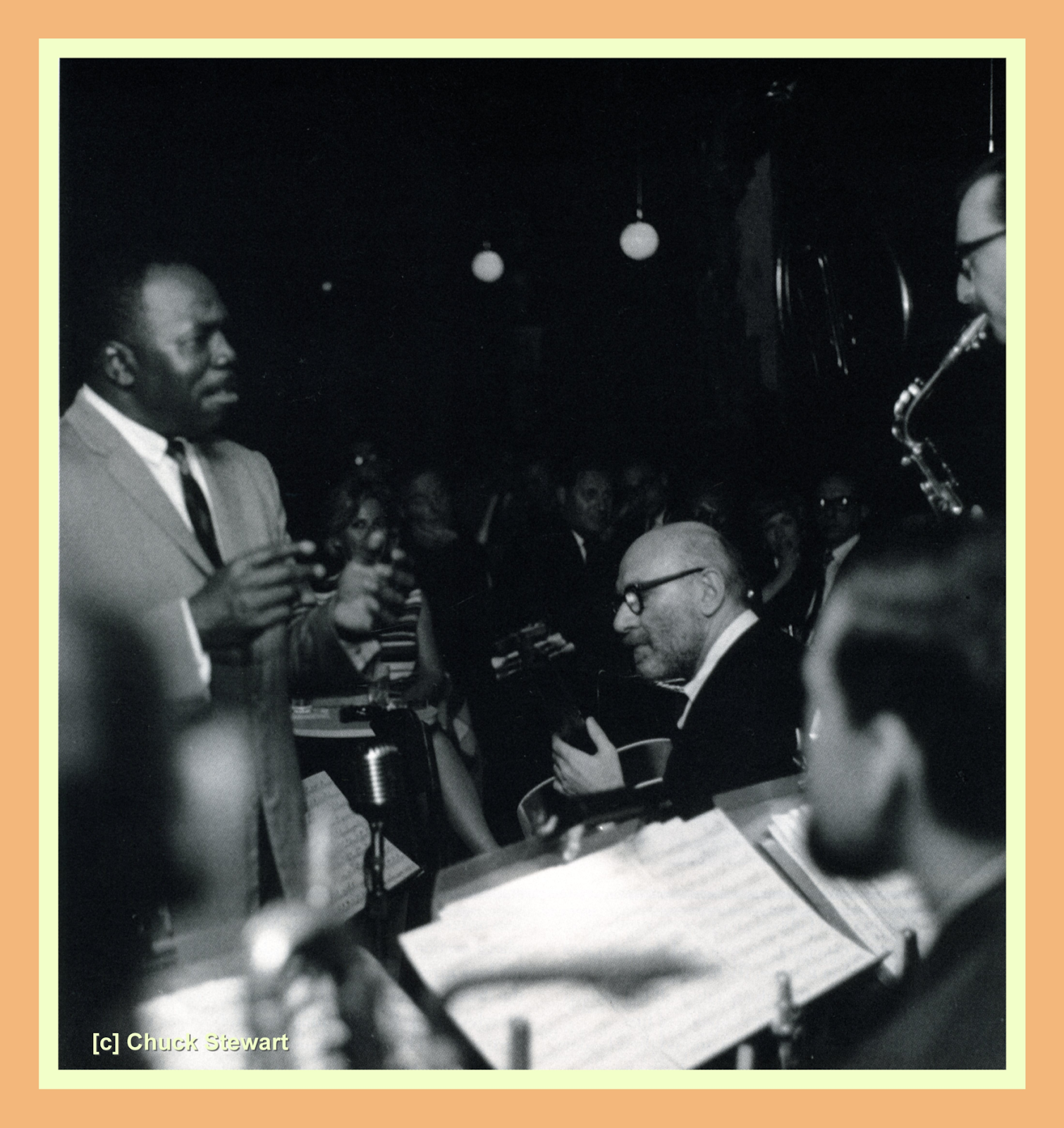
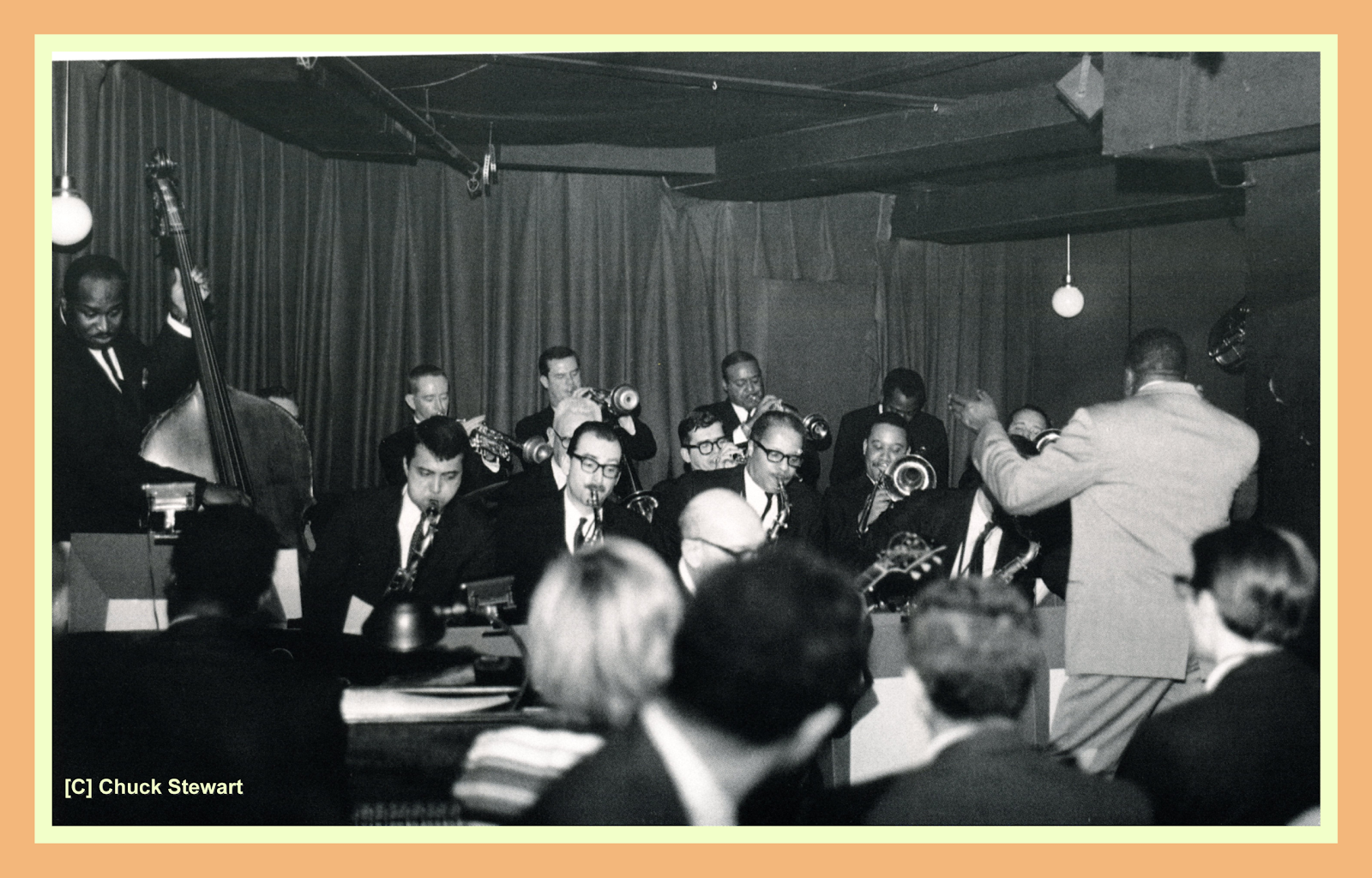
The All My Yesterdays book will serve as new reference material for Thad Jones/Mel Lewis fans providing rare, previously unpublished photos, historic essays, interviews and memoirs. Contributors include executive producer George Klabin who recorded the original tapes, producer Zev Feldman, associate producer Chris Smith (author of The View from the Back of the Band: The Life and Music of Mel Lewis), longtime Vanguard Jazz Orchestra arranger and pianist Jim McNeely, and trombonist/educator and current member of the Vanguard Jazz Orchestra John Mosca. All of the living musicians who played on these recordings contributed to the notes, recounting their personal experiences of the Thad Jones/ Mel Lewis Orchestra. Included are accounts from saxophonists Jerry Dodgion, Eddie Daniels and Marv "Doc" Holladay, trumpeter Jimmy Owens, trombonists Garnett Brown and Tom Macintosh, along with bassist Richard Davis. The pages display rare photos by Chuck Stewart, Raymond Ross, Ray Avery and Jan Persson.


During the same year that Miles Davis and John Coltrane debuted at the Village Vanguard with their newly constituted small ensembles, in early 1966 Thad Jones and Mel Lewis made an important statement by creating a modern big band. Thad and Mel recruited a dream lineup of talented musicians including the late pianist Hank Jones, saxophonists Pepper Adams, Jerome Richardson, Joe Farrell and trombonist Bob Brookmeyer. During a time of social distress in the mid — 1960s, the ensemble also made a social statement due to its diverse mix of races, ages and religions.


On a cold February evening in 1966, jazz fans lined up around the block waiting for the doors to open at the famed Greenwich Village club; a new big band formed by Thad Jones and Mel Lewis was about to perform. Max Gordon, founder of the Village Vanguard, invited the Thad Jones/Mel Lewis Orchestra to play that evening and for subsequent Monday nights. Inside the club was Resonance founder George Klabin, a 19 year-old self-taught sound engineer who had already established a reputation recording jazz music around New York City. Using a small cocktail table by the edge of the stage near the drums, he set up his 50-pound two track Crown tape machine and portable Ampex four-channel mixing board. He apportioned his six microphones among the various sections of the band (for the March 21, 1966 recording he used 10 microphones). Ahead of his time, Klabin captured astounding sound quality - he recorded directly to two-track, while mixing the sound live, adjusting the mic volume for each of the soloists on-the-fly. For this release, he transferred and re-mastered the audio using the original two-track tapes as the source.


While a student at Columbia University, Klabin was head of the jazz department at WKCR-FM, the college radio station. His colleague Alan Grant, a jazz radio announcer, asked him if he would record this new big band during their first gig at the Vanguard. Little did Klabin know that this group would become the renowned Thad Jones/Mel Lewis Orchestra who would perform every Monday night at the Village Vanguard for nearly 50 years under only three names: the Thad Jones/Mel Lewis Orchestra, the Mel Lewis Orchestra and the Vanguard Jazz Orchestra. As agreed, Klabin's recordings became a demo tape for the band, which secured them a record deal with Sonny Lester's Solid State Records, in exchange for Klabin's being given free rein to play the recordings on his radio show on WKCR-FM.


In his essay, Klabin recalls the magical feel of that evening in the packed, small club. He writes, "There is a palpable crackling energy in the room! This is the first time they have played this innovative stuff in public. Thad is the cheerleader, conducting, waving, shouting, clapping. You can hear it throughout the recordings. It's really special!"


One can hear this crackling energy in the room from the start. During the opening tune "Back Bone," a Thad Jones composition, players and audience members are clapping and shouting encouragement for each soloist. The recordings capture the atmosphere at the Vanguard without compromising the clarity of the music. One can hear people laughing and shouting as they listen to these innovative, cutting-edge arrangements and solos propelled by Mel Lewis's infectious, driving rhythmic force. The audience and musicians alike are electrified by the music of Thad Jones, who arranged and composed thirteen of the seventeen tunes heard on this album.


"Big Dipper" opens with a trumpet and alto saxophone exchange featuring Jimmy Nottingham and Jerome Richardson. This trumpet-alto sax conversation is followed by a brief piano solo by Hank Jones, after which the band roars in. There is a dazzling freedom to this music; you can hear the excitement in the room, not just from the energy of the music, but from the audience's reaction to it. The same holds true for the ballads, which include "All My Yesterdays," "Lover Man" and "Willow Weep for Me." Recordings from both evening performances (February 7 and March 21st) all convey the ebullient energy Thad, Mel and the band were expressing and the audience was feeling.


By the mid-'60s, Thad Jones had established himself as a noted composer, conductor and a top jazz trumpet player. From 1954-1963, he performed with the Count Basie Orchestra as featured soloist, arranger and composer for the band. As Chris Smith describes in his essay, Thad had a unique, sophisticated writing style that is "never completely absorbed on first listen - or hundredth, for that matter. It takes mature ears and repetition to process Thad's unusual inner voices, unexpected rhythms and crunchy harmonies . . . Simply, he heard things in his head that our ears and brains are still trying to process 50 years later. That is an undeniable mark of genius and one that should be consistently mentioned among the ranks of other 20th century composers such as Ellington, Strayhorn and Gershwin." Thad Jones originally wrote many of the compositions and arrangements heard on All My Yesterdays for the Count Basie Orchestra, but for whatever reason, Basie didn't use them. Thad left Basie in 1963 and became an in-demand studio musician in New York. But he'd always wanted the material he'd created for Basie to be performed, and not quite three years later, he used it as the foundation for the big band he formed with the celebrated big-band drummer — and his musical colleague — Mel Lewis.


Toward the end of 1965, Thad joined forces with Mel to assemble a rehearsal band to perform Thad's charts for which they enlisted the top players currently working in New York. After a couple of months of midnight rehearsals at Phil Ramone's A & R studios, on February 7, 1966, they launched the Thad Jones/Mel Lewis Orchestra at the Village Vanguard in the performances on this album. Regarded as one of the finest big-band drummers of his generation, Mel Lewis developed his solid, bedrock big-band driving style with the bands of Stan Kenton, Terry Gibbs, and Bill Holman. He supported the rhythmic journey of Thad's compositions with precision and musicality while propelling the band with fire and energy. Together Mel Lewis and Thad Jones created an environment of innovation, as they explored new musical territories that paved the way for big band music to come.


When All My Yesterdays producer, Zev Feldman, started working at Resonance Records in 2009, he learned about the existence of these Thad Jones/Mel Lewis recordings that label president, George Klabin made as a teenager. A fan of the band since his college days, Feldman was determined to produce an official release of this music in an expanded edition to honor the 50th Anniversary. He always felt it was unfortunate that in the 2000 bootleg release, many of the musicians were not credited and no one received compensation. It's been a long journey for Resonance to negotiate agreements with the families and estates of Thad Jones and Mel Lewis and to secure clearances from all living members of the orchestra and the heirs of those who had passed away. Resonance is pleased to release this music officially with blessings from all those involved in the recordings.


Feldman beams with excitement: "This is one of the most important large music ensembles to ever record jazz. Some of the greatest players from the New York jazz scene in the 1960s come out of that band. You can feel the excitement - these recordings capture a special energy. Since I started working at Resonance, this has been one of the albums that I've been most excited to release. It's also special and personal to George Klabin, so we all wanted to go above and beyond for this project."


To engross oneself fully in the musical experience of the Thad Jones/Mel Lewis Orchestra's All My Yesterdays, George Klabin suggests, "Put on a pair of good stereo headphones and immerse yourself in the atmosphere of those two nights. You will hear all the subtleties: Thad's shouts, the room sound, the musicians' camaraderie, encouraging each other and most of all the pure joy! Now you can be there, too."”


Tracks
Disc One - Recorded Feb. 7, 1966
1.    Back Bone (13:21)
2.    All My Yesterdays (4:22)
3.    Big Dipper (5:51)
4.    Mornin' Reverend (4:49)
5.    The Little Pixie (14:24)
6.    Big Dipper (alt take) (5:44)


Disc Two - Recorded March 21, 1966
1.    Low Down (4:38)
2.    Lover Man (5:24)
3.    Ah, That's Freedom (10:08)
4.    Don't Ever Leave Me (4:28)
5.    Willow Weep For Me (6:15)
6.    Mean What You Say (5:51)
7.    Once Around (12:44)
8.    Polka Dots & Moonbeams (4:02)
9.    Mornin' Reverend (5:49)
10.  All My Yesterdays (4:24)
11.  Back Bone (12:58)


Resonance Records continues to bring archival recordings to light. Some past releases include the critically acclaimed 2015 Grammy Award-winning John Coltrane release Offering: Live at Temple University (Grammy® for "Best Album Notes," Ashley Kahn), Wes Montgomery One Night In Indy & In the Beginning, Charles Lloyd Manhattan Stories and Bill Evans Live at Art D'Lugoff's Top of the Gate. Located in Beverly Hills, CA, Resonance Records is a division of Rising Jazz Stars, Inc. a California 501(c)(3) non-profit corporation created to discover the next jazz stars and advance the cause of jazz. Resonance Artists include Richard Galliano, Polly Gibbons, Tamir Hendelman, Christian Howes and Donald Vega.


For more information on Thad Jones/Mel Lewis Orchestra - All My Yesterdays: The Debut 1966 Recordings at the Village Vanguard, please visit:


Monday, May 23, 2016

Thad Jones/Mel Lewis Orchestra: A 50th Anniversary Celebration

© -Steven Cerra, copyright protected; all rights reserved.

This piece first appeared on the blog on July 5, 2011. I am re-posting it to celebrate the 50th Anniversary of the Band. The following excerpt by Ted Gioia and the video which appear at its conclusion have been added to the feature which originally posted as The Thad Jones - Mel Lewis Orchestra: A Big Band is Born


“From the mid-1960s to the late 1970s, the Thad Jones—Mel Lewis band stood out as the most celebrated and polished of the New York big bands. Started in late 1965 as a rehearsal band, the group secured a Monday-night gig at the Village Vanguard the following February  —a regular engagement that they would maintain, with few interruptions, for the next thirteen years.

The sidemen were paid a meager seventeen dollars for their services (increased to eighteen dollars after they proved their drawing power)—roughly the same, in absolute dollars, as the major big band leaders had paid their sidemen during the Great Depression.

Despite the low wages, Jones and Lewis attracted many of the finest New York players and writers to their band. The reed section featured Joe Farrell and Eddie Daniels and, in later days, Billy Harper and Gregory Herbert, playing alongside seasoned veterans such as Pepper Adams, Jerry Dodgion, and Jerome Richardson. The brass sections could rely on leader Jones, as well as (at various points in the band's history) trombonists Bob Brookmeyer and Jimmy Knepper, and trumpeters Snooky Young, Jon Faddis, Marvin Stamm, and Bill Berry. Drummer Lewis anchored a solid rhythm section that combined the elegant piano stylings of Thad's brother Hank Jones (and, in later days, Roland Hanna, Walter Norris, Harold Danko, and Jim McNeely) with the bass lines of Richard Davis (and, in the early 1970s, George Mraz).

The impeccable musicianship of the band was supported by an outstanding library of arrangements. Leader Jones brought with him a number of charts he had written for Count Basie. His writing spanned a wide range of moods, from the ten-derest lullaby waltz "A Child Is Born" to the hardest-edge New York workout "Central Park North." Bob Brookmeyer also contributed a number of major works, including a series of stunning reworkings of some of the oldest jazz standards such as "Saint Louis Blues" (composed in 1914), "Willow Tree" (from 1928), and "Willow Weep for Me" (written in 1932). Jones left the band in early 1979 to take on a position as leader of the Danish Radio Orchestra in Copenhagen. For the next decade, Mel Lewis continued to lead a big band on Monday nights at the Vanguard,playing his last gig with the group only a few weeks before his death in February 1990. But the ensemble overcame this blow as well, surviving in the form of the Vanguard Jazz Orchestra, a cooperative effort that maintained the once-a-week tradition at Manhattan's most venerated jazz nightspot.”- Ted Gioia, A History of Jazz, 1st Ed. [paragraphing modified]

Who would have thought that a big band born twenty years [20] after their heyday would still be going strong almost fifty [50] years later?

Such is the case with The Thad Jones – Mel Lewis Orchestra which came into existence in February, 1966 at The Village Vanguard in New York City and still holds forth every Monday night in the same location as The Vanguard Jazz Orchestra.

Obviously, its personnel has gone through changes over the years but the high quality of the band’s music hasn’t.

Of course, this is my interpretation of the band’s historical, shall we say, line of continuity.  Following this introduction, Bill Kirchner offers a much more accurate demarcation between the original Thad Jones – Mel Lewis Orchestra and the ones that came after it.

At its inception, the signature aspect of the band’s sound was the writing of Thad Jones, although Bob Brookmeyer, Tom McIntosh and Garnet Brown [all trombonists!] contributed charts to the band’s initial play book.

The band’s founders, trumpeter, composer and arranger, Thad Jones, and drummer, Mel Lewis, traveled widely divergent paths in coming together to form the band.

For years, Mel had been a first-call drummer with The Stan Kenton Orchestra, the Bill Holman Big Band, what has come to be known as the Terry Gibbs Dream Band, the Gerald Wilson Orchestra and Gerry Mulligan’s Concert Jazz Band.

Few big band drummers in the history of Jazz have ever been more successful than Mel who would cap his career with almost a decade-and-a-half of performing with the big band he co-led with Thad.

On the other hand, during this same timeframe, Thad Jones had enjoyed an almost exclusive association with Count Basie’s big band [1954-1963] as a trumpet player and composer-arranger, although many of the charts that gave birth to the distinctive sound of the orchestra that he co-led with Mel were largely rejected during his tenure with Basie for the reasons noted below by Bill.

“Gave birth” may be a suitable metaphor for many aspects of the music of The Thad Jones – Mel Lewis Orchestra as one of Thad’s earliest and, by now, most famous compositions is entitled A Child Is Born.

Music has a way of sometimes capturing – The Ineffable – that which is beyond words and so it is with A Child Is Born. The miracle of human birth is beautifully captured in the melodic refrains of the song in a way that supersedes and transcends verbal expression.

Thad and Mel once said that the music of A Child Is Born should be played when every child is born.

In 1994, Michael Cuscuna and his team at Mosaic Records gathered together the band’s first, half-dozen sides and issued them as The Complete Solid State Recordings of the Thad Jones/Mel Lewis Orchestra [Mosaic MD-5-151].

Michael asked Bill Kirchner, the eminent Jazz musician, author and editor, to write the insert notes to the collection.

Michael and Bill were kind enough to grant us permission to reprint a portion of Bill’s insightful writings about The Thad Jones – Mel Lewis Orchestra’s origins and subsequent history.

© -Bill Kirchner/Mosaic Records; used with the permission of the author; copyright protected, all rights reserved.

On February 12, 1966, The New York Times ran a review by John S. Wilson entitled "2 New Big Bands Here Appeal To More Than Old Memories." Wilson first mentioned the reorganized Tommy Dorsey Orchestra and its new director Urbie Green, as well as such sidemen as Howard McGhee, Budd Johnson, Dave McKenna, Mousey Alexander, and Arnie Lawrence. "Most of these sidemen are successful freelance New York musicians," wrote Wilson. "And that makes the band's future questionable. When the band ends its run at the River Boat, will these men be willing to go on the road, or will Mr. Green have to fill in with less experienced musicians?"

The review continued:

“One band that is not likely to leave New York is The Jazz Band, an 18-piece group jointly led by Thad Jones, a former Count Basic trumpeter, and Mel Lewis, a drummer who has served with Woody Herman, Stan and Ben Goodman. Organized last Thanksgiving as a rehearsal band that met once a week, The Jazz Band gave its first public performance Monday night at the Village Vanguard in an enthusiastic atmosphere reminiscent of the great jazz days on 52nd Street. This all-star band — it includes Bob Brookmeyer, Hank Jones, Richard Davis, Snooky Young, and Jerome Richardson, among others — ripped through Thad Jones's provocative, down-to-earth arrangements with the surging joy that one remembers in the early Basic band or Woody Herman's First Herd. Those were young bands whose skills sometimes could not keep up with their desires. But these are old pros, having a wonderful time and rising to each other's challenges, even to such adventures as three-part improvisation. Because these musicians have regular jobs, they can only get together once a week. That will be on Mondays at the Vanguard for the next few weeks at least.”

What was obvious to everyone present at the Vanguard on the night of February 7, 1966 was that an exceptional ensemble had been born. What no one could have predicted was that the Thad Jones/Mel Lewis Orchestra would become one of the most acclaimed and innovative big bands in jazz history, that it would tour extensively throughout three continents, and that its offspring, the Vanguard Jazz Orchestra, would still be in residence on Monday nights twenty-eight years later.

Two events gave impetus to the formation of the Jones/Lewis band. One was the breakup of the Gerry Mulligan Concert Jazz Band (of which Jones, Lewis and Bob Brookmeyer were members) in 1964. The second was Count Basic's commissioning of Jones to write an album's worth of arrangements for the Basic band in 1965.

In his nine years as a Basic sideman (1954-63), Jones had contributed significantly to the Basic library (as is evidenced in Mosaic's boxed sets of Basic's live and studio Roulette recordings), but this new commission resulted in his most ambitious writing for Basic. As far as we know, Jones wrote seven originals: The Second Race, The Little Pixie, A-That's Freedom, Low Down, Backbone, All My Yesterdays, and Big Dipper. Basic tried all of them and ultimately rejected all of them; apparently they were too difficult for the band, as well as too atypical of the band's style.


He did, however, allow Jones to keep the scores and copied parts. At that point (the fall of 1965), Jones and Lewis decided to make their move and called a rehearsal.

Most of the musicians they contacted were, like themselves, active in the New York television and recording scenes. It was a period when all three television networks, plus the syndicated shows, had large orchestras with musicians on staff. Many of these players, and many others as well, also did record dates and jingles; it was quite common for a busy recording musician to do two, three, or four dates a day, every day.

(Much of this work has disappeared, in New York and elsewhere. Most of the network staff jobs have been abolished, and record and jingle dates have considerably diminished in number, to a point where most recording musicians now consider studio work a secondary activity in their careers. As one musician, formerly very active in the studios, half-facetiously put it, "If you want to be successful in the studios nowadays, start a synthesizer cartage firm.")

A number of musicians on the early Jones/Lewis band were, as was Jones, on staff at CBS: Jimmy Nottingham, Jack Rains, Cliff Heather, and Hank Jones. Snooky Young and Jimmy Maxwell were at NBC, and Bob Brookmeyer, Bill Berry and Danny Stiles did the syndicated Merv Griffin show. Others, such as Jerome Richardson, Jerry Dodgion, Pepper Adams, Richard Davis, and Lewis were active in recording. And there were some talented up-and-comers: Eddie Daniels, Jimmy Owens, Garnett Brown and Joe Farrell. (Brown and Farrell had worked alongside Jones with George Russell the previous year.)

The rehearsals began in December, 1965 and although memories differ as to how frequently they occurred, the consensus is that they were held more-or-less weekly, usually on Mondays, beginning at midnight and lasting until three or four in the morning. (Considering the busy schedules of these players, the late hours come as no surprise.) For the most part, the rehearsals took place at A & R Studios, 112 West 48th Street near Sixth Avenue (and next door to the famous musicians' bar Jim and Andy's). Occasionally, the location shifted to the second A & R studio at 799 Seventh Avenue between 51st and 52nd Streets, or to Soundmixers at 1619 Broadway at 49th.


In exchange for free studio time, Thad and Mel allowed engineer Phil Ramone to use the rehearsals as practice sessions for his student engineers. One such engineer was Don Hahn, who in later years was to record several Jones/Lewis albums, including two in this collection. The rehearsals were recorded on 7 1/2 inch mono tapes; unfortunately, the tapes were placed in storage and were probably destroyed.

Though the rehearsals were private, there were a number of invited guests. One was Manny Albam, one of the busiest composer-arrangers in New York during the fifties and sixties. Albam also served as "musical director" for the Solid State label and worked in the engineer's booth during most of the sessions heard here. Another guest was Dan Morgenstern, then New York editor of Down Beat. He recalls that even at the very beginning of its existence, this band was different, not only because of Thad's writing, but also for his use of the rhythm section. For contrast, Jones would at various times cue rhythm players in and out behind soloists. Occasionally, the entire rhythm section was pulled out, and a saxophone or trombone player would be left entirely on his own.

These practices became a source of pride to the band members. As Jerry Dodgion remarked with a chuckle, "It was supposed to be different."

Another invited guest was WABC-FM disc jockey Alan Grant, who, among other activities, was broadcasting live from the Half Note (at Spring and Hudson in the West Village) on Friday nights. One of those broadcasts had featured the Thad Jones-Pepper Adams Quintet with Mel Lewis. After attending a rehearsal of the orchestra, Grant went to Max Gordon, owner of the Village Vanguard, and urged Gordon to book the band for some Monday nights.

New York's jazz clubs at that time were in economic doldrums. Birdland had recently closed for good, and some clubs were reverting to a weekends-only policy. The Vanguard was running Monday night jam sessions that sometimes were hosted by Roland Kirk (pre-Rahsaan). Probably the highlight of those sessions was the night when a 20-year-old Keith Jarrett sat in and dazzled everyone in the audience — including Art Blakey, who hired him.


Grant persuaded Gordon to book the Jones/Lewis band for two Mondays in February. To make the band financially affordable for the club, the musicians agreed to work for very little money. Each sideman's salary was $17; admission at the door was $2.50. As much as can be pieced together, the probable personnel of the band that night was: Thad Jones, conductor, cornet or flugelhorn (he alternated between the two instruments during his years with the band); Snooky Young, Bill Berry, Jimmy Nottingham, Jimmy Owens, trumpets; Bob Brookmeyer, Garnett Brown, Jack Rains, Cliff Heather, trombones; Jerome Richardson, Jerry Dodgion, Joe Farrell, Eddie Daniels, Marvin Holladay, reeds; Hank Jones, piano; Sam Herman, guitar; Richard Davis, bass; Mel Lewis, drums.

The club was packed, the acclaim was instantaneous, and The Jazz Band (as it was then billed) was off and running. Max Gordon extended the band's run indefinitely, and the sidemen's salaries were increased to $18. In March, the band played a concert at Hunter College in New York City, and in May, it began its recording career.

What was its impact? Of the big bands that emerged in the early-to-mid-sixties (the others being those of Quincy Jones, Terry Gibbs, Maynard Ferguson, Gerry Mulligan, Gerald Wilson, Buddy Rich, Kenny Clarke-Francy Boland, and Don Ellis), the Thad Jones/Mel Lewis band was, in this writer's view, the most influential. The Quincy Jones and Mulligan ensembles, though in more conservative ways prophetic of the Jones-Lewis approach, were relatively short-lived. Wilson's and Gibbs's groups were rarely heard outside of California except on records, and the same was true of Clarke-Boland in Europe. Rich, Ferguson and Ellis pose a different consideration: though they all led consistently well-drilled bands that were capable of fine performances, their groups were built around their leaders' flamboyant personalities more than on enduring music.

Thad Jones and Mel Lewis were, first of all, two of the most esteemed "musician's musicians" of their time. Neither was a "star," but both were unique instrumentalists whose skills were valued by leaders ranging from Basic, Kenton and Goodman to Gillespie, Monk and Mingus. They therefore had no trouble in assembling a band full of New York's finest jazz-oriented players, all of whom were first-rate ensemble performers and most, in addition, good to exceptional soloists.

As a composer-arranger, Jones perhaps more than anyone else in the sixties revitalized conventional big band writing; this is with due respect given to such contemporaries as Oliver Nelson and Gerald Wilson. ("Conventional," by the way, refers to the standard trumpets, trombones, saxophones, and rhythm section instrumentation, thereby removing the work of Gil Evans from this discussion. Evans's methods and instrumentations were considerably less orthodox — for one thing, he eliminated the saxophone section from his writing.) Jones certainly drew from his long experience with Basic, but he had an affinity for the dense cluster harmonies of Duke Ellington and Billy Strayhorn as well. Combining these influences with the rhythmic and harmonic innovations of bebop, a profound melodic gift, and a subtle sense of humor, Jones rose in a few years from relative obscurity to a position as a preeminent jazz writer.


Above all, what made this band unique among big bands was its rhythm section. Richard Davis and Mel Lewis were highly in demand in New York recording circles for all kinds of projects. Arranger-conductor Peter Matz, for example, used them on several Barbra Streisand albums and on numerous pre-recorded segments for television shows such as THE KRAFT MUSIC HALL and HULLABALOO. ("We were a team," Davis recalled emphatically.) Obviously, the empathy between these two was enormous, and combined with such pianistic wizards as Hank Jones and his successor Roland Hanna (and occasional "subs" such as Chick Corea, Herbie Hancock and Albert Dailey), the section coupled the precision of the best big band rhythm foundations with the inventiveness and flexibility of the best small groups. What Davis in particular did could be highly unorthodox ("Richard Davis would have been fired from any other big band for playing like that," a prominent jazz bassist once remarked admiringly). Yet everything he played worked, and even Jones's more conventional pieces took on a unique flavor.

In the beginning, of course, the rhythm section included a Freddie Green-style guitarist, Sam Herman, who was also the band's music copyist. As the band developed and the rhythm section became more daring, Herman played less guitar and more shaker (which, by the way, ain't easy). Eventually, the guitar was phased out, though BarryGalbraith, Sam Brown and David Spinozza were later brought in for studio sessions.

The Thad Jones/Mel Lewis Orchestra lasted thirteen years, becoming for many listeners the most admired big band of its time. It never became a full-time entity in the sense of the Ellington, Basic, Herman and Kenton ensembles, but the band nonetheless did a substantial amount of touring, including numerous trips to Europe and Japan and a triumphant tour of the Soviet Union in 1972. By that year, most of the early members had departed, though Roland Hanna, Pepper Adams and Jerry Dodgion remained until 1974, '77 and '78, respectively. The replacements included veterans of the caliber of Quentin "Butter" Jackson, Frank Foster and Walter Morris, as well as such outstanding young players as Jon Faddis, George Mraz, Gregory Herbert, Harold Danko, and Dick Oatts.

By the time the orchestra parted ways with Solid State (which was then being phased into the Blue Note fold) in 1970, they'd done the three studio albums and two live Village Vanguard sessions included in this set. They also backed up Joe Williams and Ruth Brown for the label and participated in a European all-star tour that yielded a double album for Blue Note called ja/z wave ltd.

The band recorded sporadically in the seventies for Philadelphia International (POTPOURRI), Nippon Columbia (live in tokyo and for A & M (suite for pops, new life and live IN MUNICH). On a for-hire basis, they also recorded Thad Jones-arranged albums by Jimmy Smith (Portuguese soul), organist Rhoda Scott and vocalist Monica Zutterland.

Thad and Mel also led the Finnish UMO Orchestra and the Swedish Radio Jazz Group on several recordings. They also worked frequently as a quartet, making one album for Artists House, later reissued on A & M.

In January 1979, Thad Jones, by all accounts without warning or explanation, left the band and moved to Copenhagen to lead the Danish Radio Orchestra. Mel Lewis, more than a little embittered, assumed sole leadership and proceeded to build a new library with contributions from alumni Bob Brookmeyer, Jerry Dodgion and Bob Mintzer, members such as Jim McNeely, Kenny Werner, Ed Neumeister, Earl Mclntyre, and Ted Nash, and other contributors (Bill Holman, Bill Finegan, Mike Abene, Rich DeRosa, Mike Crotty). Mel continued to play Thad's music; he even acquired the new charts that Thad was sending back to the U.S. to be published.
After a few years, Jones and Lewis achieved a grudging kind of reconciliation. One incidence of this occurred in 1985, when Jones returned to the States for a short time to lead the Count Basic Orchestra. In New York on a Monday night, Thad paid a visit to the Vanguard to see his former band. He went up to Mel and gave him a big bear hug; Mel's arms remained at his sides.

Thad Jones returned to Copenhagen, where he died of cancer on August 19, 1986 at age 63. On September 2, a memorial service was held at St. Peter's Church in New York City. Mel was asked to speak and gave a moving impromptu talk about his former partner. He couldn't resist quipping: "Thad left without saying goodbye — that's twice.”

Mel Lewis died in New York on February 2, 1990 at age 60 after a long battle with melanoma. Fittingly, his last gig was with his orchestra only three weeks before he died.


The band, now a cooperative called the Vanguard Jazz Orchestra, continues the Monday night tradition established a generation ago. It's a tradition unlike any in the entire history of jazz. But then, it was supposed to be different.”

The band traveled to Munich, Germany and performed at “The Domicile” on July 18, 1974 where the version of Don’t You Worry About a Thing” that accopanies the following video was recorded.