Showing posts with label Wes Montgomery. Show all posts

Thursday, November 23, 2023

11/24/2023 Record Day - Wes Montgomery and Wynton Kelly - Maximum Swing

 © Copyright ® Steven Cerra, copyright protected; all rights reserved.
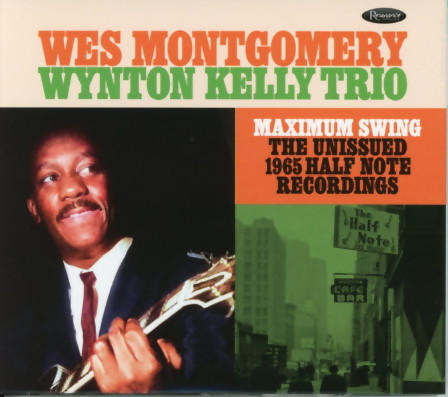


As noted in earlier features about  Cal Tjader: Catch The Groove - Live at the Penthouse 1963-1967 and "Ahmad Jamal - Live at The Penthouse 1966-68" [DDJD -006], “Black Friday” - November 24, 2023 - is a day to celebrate new releases, especially those involving the resurgent interest in vinyl editions with CDs of these albums generally following a few weeks later.


Since I’ve been the fortunate recipient of preview copies of new Jazz 

recordings by some of these accomplished Jazz legends to be released on the upcoming Record Store day, I thought it might be fun and helpful to share the information on the media releases which accompanied them to make you aware of what could be the cause of a lessening balance in your bank account come November 24th!


From Ann Braithwaite/Braithwaite & Katz Communications


WES MONTGOMERY AND WYNTON KELLY SMOKE AGAIN ON MAXIMUM SWING, NEW LIVE ARCHIVAL TREASURE DUE FROM RESONANCE RECORDS AS THREE-LP RSD BLACK FRIDAY EXCLUSIVE ON NOVEMBER 24, 2023


Resonance Celebrates Wes Montgomery's Centennial with First Legitimate Release of Hard-Hitting 1965 Dates at New York's Half Note, Site of a Storied Meeting Between the Guitarist and Pianist, Arrives on CD and Digitally Dec. 1


Deluxe Package Features a Comprehensive Essay by Jazz Historian Bill Milkowski, Remembrances from Ron Carter, Herbie Hancock, Bill Frisell, Mike Stern and Marcus Miller, and Previously Unseen Photos by Raymond Ross


Three Newly Curated "Wes Montgomery on Resonance" Digital Streaming Compilations Also Available on All Streaming Platforms
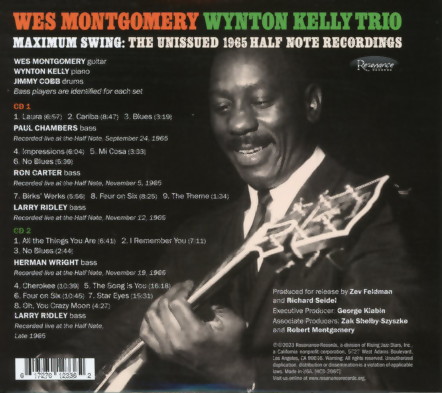


Resonance Records will observe the centennial of Wes Montgomery's birth on RSD Black Friday with the November 24, 2023 release of Maximum Swing, a collection of live performances — never previously released officially — by the guitarist and pianist Wynton Kelly's trio captured at New York's Half Note in 1965. The album will be issued as a two-CD set and digitally on December 1. RSD Black Friday releases will be available at independent record stores on Friday, November 24lh (visit recordstoreday.com for more information and to find nearby stores).


The limited edition three-LP set was mastered for 180-gram vinyl by Matthew Lutthans, captures a series of dates at the Manhattan club that were recorded in the wake of the famed Montgomery-Kelly date released by Verve Records as Smokin' at the Half Note. Unlike that classic recording, on which two June 1965 performances at the titular venue were augmented by three studio performances cut that September, the new set is 100% live.


Produced by Resonance co-president Zev Feldman — "the Jazz Detective," who was named producer of the year in DownBeat magazine's 2022 and 2023 critics' polls — and Richard Seidel, Grammy-winning, long-time Verve Records A&R/Producer executive — Maximum Swing features Kelly's working trio with bassist Paul Chambers and drummer Jimmy Cobb, whose work with the keyboardist dated back to the historic 1959 dates for Miles Davis' incomparable Kind of Blue. On some selections, Chambers' slot is taken by guests Ron Carter, Larry Ridley, and Herman Wright; an unidentified bassist sits in on five expansive tracks from late 1965 unearthed by Japanese Wes Montgomery discographer/archivist Yoshio Tokui.


The package includes a comprehensive essay about Montgomery and Kelly's Half Note collaborations by historian Bill Milkowski; remembrances by Carter and pianist Herbie Hancock, both of whom worked with the guitarist early in their careers; the great guitarists Bill Frisell and Mike Stern; and bassist Marcus Miller, who is Wynton Kelly's second cousin. Never-before-seen photos from the Half Note by Raymond Ross complete the collection.


Maximum Swing is Resonance's seventh Montgomery title, produced with the full cooperation of the musician's estate. Among the releases is 2017's Smokin' in Seattle, a live date recorded in 1966 at the intimate club the Penthouse in the titular city.


Feldman says of the new release, "Without question, the music here constitutes some of the most extended, elastic and SWINGING Wes Montgomery performances ever recorded. The greater part of these performances were originally aired on radio broadcasts hosted by Alan Grant for his WABC-FM radio show Portraits in Jazz. We hear Wes doing things he hasn't done on other recordings before, particularly all the extended solos he plays, where he stretches out far more than on his other recordings, even his other live recordings. Maximum Swing captures the vibrancy of the experience of hearing Wes live in this period."


Milkowski writes, "Wes's relaxed sense of rhythm and tempo, his melodic and harmonic intuition and cleanly articulated ideas were simply phenomenal, and even more exhilarating in a live setting, as we hear on these smokin’ tracks from the Half Note. And with amiable emcee Grant engaging the guitar great in casual banter during his intros and outros of the tunes - - it all blends with the sound of glasses clinking, the murmurs from audience members during and between songs, and enthusiastic applause at the end of tunes to create the feeling of really being there that eventful night at the Half Note."


Recalling his unanticipated stint subbing for Chambers behind Montgomery, Carter — the bassist in Miles Davis's Second Great Quintet — says, "There was not a lot of time to rehearse. I remember there were no music stands and I was trying to figure out how to hold the music up for the songs I didn't know; still it felt good to walk into a situation with the great Jimmy Cobb, the fabulous Wynton Kelly and this smashing guitar player Wes Montgomery. I knew of Jimmy from early on. I knew who they all were. I had known them from records and had contact with them occasionally in the course of various gigs and record dates, but to walk into that meeting place with all those guys and perform with them live on stage was astonishing for me. There were other guys they could have called for this sub gig, but I got chosen. No one in the band complained."


Hancock observes, "When he played in clubs and concerts, Wes seemed to go back to what he was playing at the beginning, which was more straight-ahead jazz, and as you can hear on these recordings, Wynton Kelly was the perfect partner for that. Wes and Wynton sure could both play the blues and in that jazz style of blues playing. It was funky, yet it balanced the technical side of jazz playing and sophisticated harmonization." Like a legion of other guitarists who acknowledged the influence of Montgomery's unique, trailblazing style-among them George Benson, Pat Martino, John Scofield, John Abercrombie, Lee Ritenour, Emily Remler, and Pat Metheny — Frisell and Stern offer kudos to the guitar great.


"Wes's music is so accessible," Frisell says. "There's so much joy in it, but then there's so much depth. It's just like he invented this whole thing. That's what's so inspiring to me — how he took everything around him and constructed his own world. Then he was able to show it to us in such a clear way. That thing you can't really describe, but you just feel the wonder."


"I love that on these recordings we hear Wes stretching out," says Stern. "He didn't get to do that on his studio records, or even the live ones like the original Smokin' at the Half Note. It's amazing how much he can keep your interest. It just keeps building. He built every solo. And in some ways, some ballads stayed in the same beautiful place. Maybe he didn't play as long, but when it was some blues or just swinging on something, some tune, 'All the Things You Are,' he just tore it up. And on this record, it was killing."


Summing up Kelly's contributions, both to Montgomery's live attack and his contribution to jazz, Miller says, "Of course, you hear everybody talk about how joyful his playing was. The way he swung was really joyful. I feel connected to him also because he had an extensive R&B background. He played on some R&B hits. Wynton probably learned a lot about grooving from that and you can hear that in his playing. He always found a way to throw the blues in there. And he always found a way to really, really make it swing."


Feldman writes of his label's latest landmark contribution to Montgomery's towering catalog, "At Resonance, working on these projects has been extremely rewarding for me personally, of course, but more importantly, it's allowed us to participate in casting light on Wes Montgomery's monumental stature in the history of jazz in general and jazz guitar in particular. I cannot begin to fully express the importance of his legacy.


Wes Montgomery on Resonance Digital Streaming Compilations


Another part of Resonance's celebration of Wes Montgomery's Centennial, the producers of Maximum Swing — Zev Feldman and Richard Seidel — have curated a series of themed digital compilations culled from the label's catalog of acclaimed archival Montgomery releases: Wes Montgomery Plays Ballads, Wes Montgomery Plays The Blues, and Wes Montgomery Plays The Great American Songbook. The three compilations will be available on all streaming platforms on Friday, September 8th.


Sunday, November 12, 2023

So Much Heart: HERBIE HANCOCK on Wes Montgomery


© Copyright ® Steven Cerra, copyright protected; all rights reserved.


“The first time I heard about Wes Montgomery, I was anxious to see what this guy sounded like; this guy everybody was raving about. Those people who were raving about him were right. He was amazing. I had a lot of experiences with him — I made some records with him; I heard him on the radio back then on the jazz stations, and I watched him play the magic that he played and that everybody borrowed from him from that point on. He changed the face of jazz electric guitar.


He had a beautiful way of playing in different settings, whether it was a small group setting of a quartet or a quintet or large-scale things with orchestral accompaniment. He made several records with large ensembles and he was able to bridge the gap between two views of what could be considered jazz. One was more related to the pop side of jazz and the other related to the more hardcore jazz. He just knew exactly what to do depending on the setting. And here's a guy who never studied guitar. He was self-taught. He didn't read music, but he sure had amazing ears, amazing fingers and an amazing heart.


Wes was known for his ability to play his improvisations and/or his melodies in octaves. He created this way of being able to do that and move around quickly on the guitar. As far as I knew, before Wes, nobody knew how to do that. Many guitar players tried to copy what he did. but most of them gave up. George Benson was able to get some of that. I mean, I'm sure he would say that Wes was a mentor for him and his basic style. And as a matter of fact, when George Benson first came on the jazz scene he was playing with Jack McDuff, the organ player, everybody was saying, "Oh. this young kid." which he was then, "This young kid is the next Wes Montgomery." To my ears, it sounded like he followed in the footsteps of Wes Montgomery, but I think the other guitar players quickly gave up the idea of being able to play that octave style the way Wes did it. It just seemed impossible to them. 


Maybe they tried it. I'm sure they all tried it. but they gave up.


I didn't spend very much personal time with Wes. When I saw him at clubs, it was usually because he was performing and it was only actually during the recordings that I made with him at Rudy Van Gelder's studio that I got to have some personal time with him. It wasn't very much because we

were concentrating more on the music that we had to do that day, but Wes was a very personable human, a person full of the kind of heart that you would expect from someone who plays with so much heart. Some musicians can be problems or their egos get in the way. Many times, it's actually an ego problem. But Wes wasn't that kind of person. He had a great humility and a great respect for all the other musicians. I never saw him get into anything like an argument or any kind of confrontation with anybody.


This is another reason the musicians respected him so much. It wasn't just because he was a musician and the talent that he had as an amazing guitar player, but as a human being. He had great humility and never tried to overshadow any other musicians. He just played himself and it was always amazing.


When Creed Taylor started making records with Wes, it marked a change in Wes's style, at least on record. On Creed's records, very often there was an orchestral background. This was not something that was heard prior to that on jazz recordings. There might have been some, but they were few and far between, but the orchestrations on Creed's records were modern for that time — the sixties and seventies.


There was a connection to popular music in that approach. Now this is not rock and roll, but more like the popular music that had evolved from the Great American Songbook and some of those songs were actually from the Great American Songbook, the style from the twenties and the thirties and the early forties. They were so beautiful, although there was a little controversy among musicians about Creed's approach. Many jazz musicians were very protective of the style of playing that evolved from Charlie Parker and Dizzy Gillespie. that very speedy and very amazing music from a technical standpoint. It was amazing music in itself, but it was also advanced from a technical standpoint, whereas those records that Creed made with Wes were considered by many jazz musicians to be easy listening music.


But whatever negative first impressions the jazz public or jazz musicians had, they quickly changed because they had to. It was just so beautiful that nobody could stay on the other side of the tracks of that. Many musicians not only began to admire it. but they also wanted to make records like that themselves.


When we recorded the records I did with Wes for Creed, it always began with the rhythm section with Wes playing live in the studio; the orchestra was overdubbed later. They were always done that way. Back then. Creed would usually hire what was considered the kind of Blue Note, go-to rhythm section. Ron Carter was often the bass player with Grady Tate on drums. I was not the first pianist in the beginning, but I did play on all or part of around five of Wes's records he did with Creed.


When he played in clubs and concerts, Wes seemed to go back to what he was playing at the beginning, which was more straight-ahead jazz, as you can hear on these recordings. Wynton Kelly was the perfect partner for Wes for that. Wes and Wynton sure could both play the blues and in that jazz style of blues playing. It was funky, yet it balanced the technical side of jazz playing and sophisticated harmonization.


Wes made some records with Wynton Kelly. They sure sounded tight, very much in the same pocket, in the same bag. Wynton and Wes were older than I am. Not much older, but older. Wynton was from the era before I came on the scene. My own harmonic approach to jazz was a little further advanced than Wynton's style, more like something that was influenced by Bill Evans, and so on the records Wes made with Creed Taylor, the style that I played was a style that was probably more closely related to the orchestrations that Don Sebesky demonstrated with what he wrote for the Wes albums — I mean closer than what Wynton did. But we had two styles. They were not opposed to each other, but they were certainly different styles we were playing. And whereas mine leaned kind of between a funkiness that came from my background being born in a Black neighborhood in Chicago, which is a blues town really, along with harmonies that grew out of composers like Maurice Ravel, whom I listened to a lot. as well as other composers like Stravinsky and many other more modern composers. That wasn't Wynton's bent. His was in a way kind of closer to the bone and maybe my style had some other ornaments that I put on the bones.


When Wes came on the scene, everybody was talking about him and they continued to talk about him for years because his playing continued to evolve into different settings as the harmonic structure and the focus of jazz recordings began to expand into the pop area, while still maintaining jazz roots, which was a new thing at that time. And those records he made in that way pioneered that direction and the jazz musicians loved it. It gave them kind of a doorway to being able to sell more records to a wider audience. And not just the selling of the records, but expressing themselves to a wider audience.


The musicians were more about the music than they were about the money. If you were worried about the money, you wouldn't be a jazz musician. That wasn't what we cared about. We cared about the music and that's what we wanted to share. I mean, it's always that. That's the heart of jazz and Wes Montgomery is an integral part of that heart.”


Excerpted from an interview conducted by Zev Feldman on May 26. 2023.


Friday, February 9, 2018

Wes Montgomery - In Paris: The Definitive ORTF Recording on Resonance Records

© -Steven A. Cerra, copyright protected; all rights reserved.


“In some ways, I think of Resonance as the house that Wes Montgomery and Bill Evans built, so we are deeply indebted to protecting those artist's legacies and we do whatever we can to ensure that any newly discovered music from them be presented in the best possible light, and of course, legally with all parties being compensated appropriately."
- Zev Feldman, Producer, Resonance records


Given the amount of self-production that goes on these days, I’ve heard some Jazz musicians wonder aloud about the value of the role of producers who represent commercial record labels.


Or to put it another way, are such producers even necessary? Are they little more than obstacles to the struggling artists who are trying to get their music to the listening public?


The older I get the more I try to see some merit in all arguments or, if you will, argumentative positions, but this record producer as a barrier, one who is trying to interpose themselves between the artist’s music and the buying public is one that I don’t give much credence to.


And neither would you if you had to entertain the amount of self-produced c**p posing as “artistic expression” [aka “music”] that comes into our offices everyday.


So many of these self produced recordings lack discipline, direction and design that one is tempted to discard them to the Goodwill bin when they are retrieved from the mailbox.


Even the best of them could be improved to some extent had there been an objective critic [not in the negative sense of the term] overseeing the project; someone with recording experience who could administer a modicum of taste, balance and objectivity to the proceedings.


Milt Gabler at Commodore, George Avakian and Teo Macero at Columbia, Dick Bock at Pacific Jazz, Lester Koenig at Contemporary, Alfred Lion and Francis Wolff at Blue Note, Bob Weinstock at Prestige, Lee Gillette at Capitol, David and Jack Kapp with Decca, RCA and Kapp, Orrin Keepnews at Riverside, Landmark and Milestone, Michael Cuscuna at Blue Note and Mosaic Records, Creed Taylor at Bethlehem, ABC Paramount CTI and Impulse, Norman Granz at Verve … the list is endless and deservedly so because these producers provided sound quality oversight, artist and repertoire matching, take selection, track sequencing et al, with some degree of objective criticism as a counter-balance to the artist’s involvement in making their recording.


The finished product becomes a collaborative effort between the artist who creates the music and the producer who is responsible for the financial and managerial aspects of making a recording. The latter includes the hiring of a project designer to oversee the proper packaging of the recording, the use of graphics and imagery, and the selection of writers who can create textual annotations of the musician and the music.


And then there are the more practical problems of marketing and distribution, promotional services and media releases; after all, now that The Act of Creation has occurred, how do you sell the recording?


Added to this is the role of producer as savior in the literal sense of a person who saves the Jazz artist from danger, or abuse, or from being taken advantage of or “ripped off.”


If you have ever wonder how all of this behind-the-scenes activity works in real time, enter George Klabin, Executive Producer, Zev Feldman, Producer and their talented team of “rainmakers” at Resonance Records as described and detailed in the following press release for -

Wes Montgomery In Paris: The Definitive ORTF Recording

“First official release of Wes Montgomery's one and only concert in Paris, France
on March 27, 1965 at the Théâtre des Champs-Élysées


Second Resonance release in partnership with France's National Audio-visual Institute (INA) with remastered high-resolution audio transferred directly from the original tapes Deluxe 2CD & Digital Edition available January 26, 2018


Los Angeles, CA [November 2017] - Resonance Records is proud to announce the first official release of Wes Montgomery - In Paris: The Definitive ORTF Recording which captures the jazz guitar legend in concert during his only tour of Europe on the night of March 27, 1965 at the Théâtre des Champs-Élysées in Paris, France. Considered perhaps the greatest live Wes Montgomery performance ever, In Paris is being released in partnership with the Institut national de l'audiovisuel (INA) with remastered high-resolution audio transferred directly from the original tapes, and will mark the first time the Montgomery Estate will be paid for this recording, which has been available as various bootlegs since the 1970s. This is also Resonance's second album released in partnership with INA in a series of ORTF recordings, following 2016's critically acclaimed Larry Young - In Paris:


The ORTF Recordings.


In Paris: The Definitive ORTF Recording will be released as a limited-edition, hand-numbered (of 3,000) 180-gram 2LP gatefold set exclusively for Record Store Day Black Friday Event on November 24, 2017. Mastered by LP mastering icon Bernie Grundman and pressed by Record Technology Inc. (RTI). The album features an all-star band with venerable post-bop pianist Harold Mabern, bassist Arthur Harper and bebop drummer Jimmy Lovelace, along with special guest tenor saxophonist Johnny Griffin (who played on another classic live Wes recording from 1962, Full House).
The beautifully designed CD package by longtime Resonance designer Burton Yount includes an extensive 32-page booklet with stunning archival photos from the actual concert by famed French music photographer Jean-Pierre Leloir; essays from Wes Montgomery scholar and director of jazz studies at Rutgers University in New Jersey, Vincent Pelote, the Chargé de Mission Pascal Rozat from INA, and Resonance producer Zev Feldman; plus interviews with pianist Harold Mabern and contemporary jazz guitar icon Russell Malone. The deluxe LP edition also includes a collector set of 6 Jean-Pierre Leloir postcards.


THE BACKSTORY:


European audiences had eagerly wanted to see Wes Montgomery perform live, but his severe fear of flying had kept him in the states, where he played in mostly local clubs in and around Indianapolis. This 1965 European tour was the only overseas trip he would ever make, just after his forty-second birthday, and three years before his untimely death. According to Harold Mabern, this rhythm section was a relatively new group, having only played a handful of gigs prior to their European tour, but they were very tight and had a great time. "Most of the stuff was spur of the moment; that's what made it fresh then, and it's still fresh now. That's why it sounds happy - because we were happy, and it was all about the music."


Feldman returned to France in 2012 to explore the Office of French Radio and Television (ORTF) archives, which  are overseen by the French National Audiovisual Institute (INA), and learned of countless recordings in their vaults documenting some of the greatest American jazz musicians who lived in - or visited - Paris in the 1960s, including Larry Young, Wes Montgomery and many others. "When we assessed what the ORTF archives had to offer, it was clear to us that the first never-before-released Larry Young material in nearly 40 years was a top priority. Then there was the legendary Wes Montgomery in Paris concert recording, which I knew had been only available as bootlegs for decades. In some ways, I think of Resonance as the house that Wes Montgomery and Bill Evans built, so we are deeply indebted to protecting those artist's legacies and we do whatever we can to ensure that any newly discovered music from them be presented in the best possible light, and of course, legally with all parties being compensated appropriately."


THE MUSIC:


This 10-track recording, captured a mere three months before the classic Smokin' at the Half Note (Verve 1965), starts off with Wes Montgomery's original composition "Four on Six." In the album notes, Vincent Pelote describes Wes' playing as shining with a "fiery solo that establishes the routine that Montgomery follows throughout this concert: single notes, followed by octaves, then those amazing block chords." Standing by him on the piano, Harold Mabern adds "crashing chords and Phineas Newborn-like runs up and down the keyboard."


The set consists of many familiar tunes Wes had recorded before on his iconic Riverside studio sessions including "Jingles" and "'Round Midnight" from The Wes Montgomery Trio in 1959, and "Twisted Blues"from So Much Guitar! in 1961, but at the 1,900 seat Théâtre des Champs-Élysées, we hear Wes stretch out like never before in front of a ravenous audience. Russell Malone commented in his liner note interview, "I thought I knew Wes, because I had listened to a lot of the stuff that he had done on Riverside, and some of the commercial outings. But when I heard him stretching out like that, I'm like, 'this man is on some other stuff here!' That Paris recording is so powerful…"


Harold Mabern's original composition "To Wane," a tribute to the great saxophonist Wayne Shorter, will knock your socks off with the lightening speed soloing. Mabern noted that he lifted the melody from Shorter's solo on "Alamode" from the 1961 Impulse! album, Art Blakey!!!!! Jazz Messengers!!!!!: "he started out with a very melodic, lyrical way of playing, and I took part of that and turned it into my song, and I called it 'To Wane,' meaning to wane like the moon."


Throughout this concert bassist Arthur Harper anchors the solidly swinging rhythm section and the re-mastering of the original tapes on this first-time, legally issued release, allows the contribution of the bass to be properly heard for the very first time. Jimmy Lovelace, a longtime fixture at Smalls jazz club in New York City, tastefully propels the band from the drum chair.


BOOTLEG RECORDINGS:


As mentioned previously, bootleg issues of this concert have been available since the 1970s, and in all these years the Montgomery family has never received any payments whatsoever. In Paris: The Definitive ORTF Recording is the only official and definitive release of this recording and marks the first time the Montgomery Estate and other musicians on the recording or their estates will be compensated. Resonance is on a mission to combat this serious bootlegging problem by reclaiming and releasing official versions of important jazz recordings where all rights are cleared and all parties are compensated accordingly. Resonance EVP/GM and producer Zev Feldman says, "We are honored to have had the trust and support of the Montgomery Estate for the past seven years and it's so gratifying to know that the family is finally being compensated for this recording after so many years of illegal copies on the market." Previous bootleg issues of this concert have not only had inferior audio quality and packaging, but have also mislabeled several song titles including "The Girl Next Door," "Jingles," "To Wane," and "Twisted Blues" (incorrectly titled "To Django," "Mister Walker," "To When" and "Wes' Rhythm" respectively).


"For five decades, one of my father's greatest live recordings has been available only by way of various bootleg releases from which my family has not received one dime. This is a tragedy. I'm so thankful that a record label like Resonance Records is around to stand up for what's right and protect the intellectual property and legacy of musicians like my father and many others." - Robert Montgomery (Son of Wes Montgomery and Representative of the Montgomery Estate)


"The Recording Academy is a fierce advocate for protecting creators and their intellectual property. The decades-long exploitation of recordings such as the live Wes Montgomery recording from Paris via bootleg releases is nothing short of a tragedy. We applaud organizations such as Resonance Records that seek to right the wrongs of the past and set a shining example of how to do justice to an artist's legacy." - The Recording Academy


"The Recording Industry Association of America® (RIAA) is a tireless proponent of protecting the rights of artists and their valuable intellectual property. The problem of illegal bootlegging - the distribution of unauthorized recording of live performances - has been a scourge on performers for decades, affecting artists of past and present - including icons such as Wes Montgomery and countless others. These unauthorized recordings rob performers of their ability to control their art, while the sale and distribution of those illegal recordings profits only the thieves - with nothing going to the creators. Today's vast legitimate music marketplace gives consumers a superior alternative to the black market of bootlegging.
We encourage fans to get their favorite tunes in ways that support and respect all music creators." - Brad Buckles, EVP, Anti-Piracy, RIAA


It's incredible to think that Wes only started playing guitar at the age of nineteen, and he had too short a window in his life to share his immense talent with the world. Guitarist Russell Malone eloquently said it's like he was "selected to come here and just mess up everybody's head. To shake up the world, and then once they were through, whatever or whoever is controlling, they say 'well done, that's enough, let's go.' He was a special person."


Personnel:
Wes Montgomery - guitar
Harold Mabern - piano
Arthur Harper - bass
Jimmy Lovelace - drums
*Special Guest Johnny Griffin - tenor saxophone (*"Full House", "'Round Midnight" and "Blue 'N Boogie/West Coast Blues")


Track Listing:

Disc One:
  • Four on Six (6:35)
  • Impressions (10:03)
  • The Girl Next Door (6:44)
  • Here's That Rainy Day (8:31)
  • Jingles (12:34)
Disc Two:
  • To Wane (11:09)
  • Full House (10:48)
  • 'Round Midnight (9:26)
  • Blue 'N Boogie/West Coast Blues (13:14)
  • Twisted Blues (13:43)


Friday, April 21, 2017

Wes Montgomery / Wynton Kelly Trio Smokin' in Seattle: Live at the Penthouse (1966)

© -Steven Cerra, copyright protected; all rights reserved.


Michael Bloom of Michael Bloom Media Relations is handling the public relations for the latest in Resonance Records continuing series of recently discovered classic recordings by Jazz Masters from halcyon days gone by and he sent along this information about:

Wes Montgomery / Wynton Kelly Trio Smokin' in Seattle: Live at the Penthouse (1966)

Previously unreleased live sets featuring jazz guitar icon Wes Montgomery with piano legend Wynton Kelly’s Trio featuring bassist Ron McClure & drummer Jimmy Cobb Recorded at Seattle’s Prestigious Jazz Club, the Penthouse, on April 14 and 21, 1966


Includes extensive book of liner notes featuring rare photos, essays by guitar icon Pat Metheny, Seattle Times writer Paul de Barros, producer Zev Feldman, original recording engineer Jim Wilke, plus interviews with Jimmy Cobb, NEA Jazz Master Kenny Barron and more.


Deluxe Limited Edition LP Released Exclusively for Record Store Day (April 22, 2017)


And Deluxe CD & Digital Editions Available on May 19, 2017


Los Angeles, CA (March 13, 2017)- Resonance Records is proud to announce the release of Wes Montgomery with the Wynton Kelly Trio - Smokin' in Seattle: Live at the Penthouse (1966) captured live at the Penthouse jazz club in Seattle, WA on April 14 and 21, 1966. Smokin' in Seattle marks the third commercially released live album of guitar icon Wes Montgomery with piano legend Wynton Kelly, recorded only seven months after their classic 1965 live album Smokin' at the Half Note, notably referred to by Pat Metheny as "the absolute greatest jazz guitar album ever made." Wynton's dynamic trio features the solid rhythm section of bassist Ron McClure -who took the place of long-time trio bassist Paul Chambers, then joined Charles Lloyd's "classic quartet" with Keith Jarrett and Jack DeJohnette following this stint with Wes and Wynton - and the legendary drummer Jimmy Cobb, an NEA Jazz Master most well-known for Miles Davis's Kind of Blue, Sketches of Spain and Someday My Prince Will Come albums.


Available on May 19, 2017 as a Deluxe CD and digital format, this archival treasure includes an extensive liner note book featuring rare photos by Lee Tanner, Chuck Stewart, Tom Copi, Joe Alpert and others; essays by guitar icon Pat Metheny, Seattle Times writer Paul de Barros, producer Zev Feldman, original recording engineer and Seattle Radio DJ Jim Wilke , and Ron McClure; plus interviews with Jimmy Cobb and NEA Jazz Master Kenny Barron.


Located in the heart of Seattle's historic district in Pioneer Square,the Penthouse jazz club was opened in 1962 by Charles Puzzo, Sr., and quickly became a destination for iconic jazz talents such as John Coltrane, Oscar Peterson, Stan Getz and The Three Sounds to name a few. Well-known radio personality,Jim Wilke, developed a working relationship with this legendary club, which in turn allowed him to air live broadcasts from the club every Thursday night using state-of-the-art equipment of that era. His weekly radio show, Jazz from the Penthouse, aired on Seattle's NPR affiliate, KING FM from 1962 through 1968, and has never been rebroadcast. When executive producer George Klabin learned of these recordings, he couldn't believe his good fortune to come across this thrilling 1960s material of Wes Montgomery with Wynton Kelly.


Producer Zev Feldman says, "The association between Wes Montgomery and Wynton Kelly is a critical part of the Montgomery legacy. Resonance has been releasing only the guitar icon's material from the 1950s thus far, so it's very exciting for us to be moving into Wes's 1960s discography with this incredible addition to the Montgomery canon from a cherished era. It's also the only known recording known of Wes and Ron McClure together, which I think is also cause for celebration. As usual, we've gathered all the rights to make it official and have created a dynamic package worthy of this timeless music."


"The experience of playing with those guys was like being baptized," says Ron McClure in his liner notes essay. "The music was joyous. It was buoyant. It was happy; positive - like they were as people."


By the time the 1966 Wes Montgomery with the Wynton Kelly Trio gig rolled around, Wes was on top of his game. His album Goin' Out of My Head (Verve) had shot up the Billboard R&B charts to No. 12, and within a year, the album would garner a 1967 GRAMMY® Award and sell nearly a million copies. At the ripe age of 43, Wes was at the pinnacle of his career. And just one year later, he would no longer be with us.


Wynton Kelly first collaborated with Wes Montgomery in 1962 with their album Full House (Riverside), also with Jimmy Cobb on drums (McClure joined Wynton Kelly's trio a few years later in 1965, replacing Paul Chambers), followed by the legendary Smokin' at the Half Note . And now we have Smokin' in Seattle, a new chapter in the storied collaboration of these two jazz giants.


Modern day jazz guitar icon Pat Metheny writes, "The news that another example of that band in action had surfaced was headline news for those of us in the hard-core Wes community. The incredible revelations contained in Resonance's previous releases of Wes's early work have been thrilling. This release adds yet another dimension to the almost impossibly brief ten years that Wes was the jazz world's most renowned guitarist, particularly to completists like me who want to hang on to and cherish every note Wes played."


This 10-track album is indeed a "smokin'" musical exchange between Wynton and Wes, swinging with fire-cracker energy. The Wynton Kelly trio opened each set of the 9-night engagement with a couple of tunes before Wes joined them on stage. The album opens with "There Is No Greater Love," an upbeat rendition of Isham Jones's well known jazz standard. Wynton glides through seven choruses filled with his trademark lyrical legato lines, with bluesy twists and turns along the way. His joyous playing is apparent from the start. In an interview with Kenny Baron included in the liner notes, he says, "Wynton was kind of in a class by himself. His touch, his feeling, his sense of time, sense of rhythm… For me it was just very, very unique." Often underappreciated as a player, despite his years with Miles Davis, Wynton remains an iconic figure, for jazz fans and next generation of jazz players.


"It's easy to hear why these two musicians relished playing together. Bluesy, soulful, linear swingers whose solos burst forward with natural, unpretentious vigor...," describes Paul de Barros in his essay. About Wes's spritely tune "Jingles," de Barros adds, "Montgomery comes out the gate loaded for bear, executing a slithering glide up the fretboard that elicits a cry of astonished approval from someone in the crowd." Wes and Wynton's playful banter continues with Wes's compositions "Blues in F" and "West Coast Blues," mixed in with Blue Mitchell's swinging bebop tune "Sir John" and Antonio Carlos Jobim's bossa nova "O Morro Não Tem Vez." The album finishes the musical journey with Sonny Rollin's "Oleo."

Jimmy Cobb remembers the band fondly, "Wes was a nice guy, man. He was a very comedic kind of guy. Like he would say funny things and do funny things…But he was a sweet guy. Wynton was also a sweet guy. So we all got along together pretty good. And the playing was exceptional for the four of us."


With the support and friendship of the Puzzo family and Jim Wilke, Resonance is proud to bring this remarkable, previously unknown recording to the public, now the second release in a series of Resonance releases recorded at the Penthouse, following the 2016 album, The Three Sounds featuring Gene Harris - Groovin' Hard: Live at the Penthouse 1964-1968 .


Previous Wes Montgomery releases on the Resonance label include rare historical discoveries from Wes captured in the 1950's, before his ascension to icon status -Echoes of Indiana Avenue (2012),In the Beginning (2015) and One Night in Indy (2016). The label is thrilled to add Wynton Kelly to their musical library and give him the royal treatment he so deserves.
The limited-edition, hand-numbered LP pressing on 180-gram black vinyl will be released exclusively for Record Store Day's event on April 22, 2017. The LP version has been mastered by the legendary Bernie Grundman at Bernie Grundman Mastering and pressed at Record Technology, Inc. (RTI), and features the same liner note material as the CD version.


Personnel:
Wes Montgomery – guitar*
Wynton Kelly – piano
Ron McClure – bass
Jimmy Cobb – drums

Track Listing:
  • There Is No Greater Love (7:56)
  • Not a Tear (6:29)
  • *Jingles (4:31)
  • *What's New (4:51)
  • *Blues in F (2:44)*
  • Sir John (8:10)
  • If You Could See Me Now (5:54)
  • *West Coast Blues (3:56)
  • *O Morro Não Tem Vez (6:15)
  • *Oleo (2:08)
You can located order information by visiting www.resonancerecords.org.