Showing posts with label Zev Feldman. Show all posts

Tuesday, July 22, 2025

Cinnamon Flower - The Expanded Edition - The Charlie Rouse Band

 © Copyright ® Steven Cerra, copyright protected; all rights reserved.
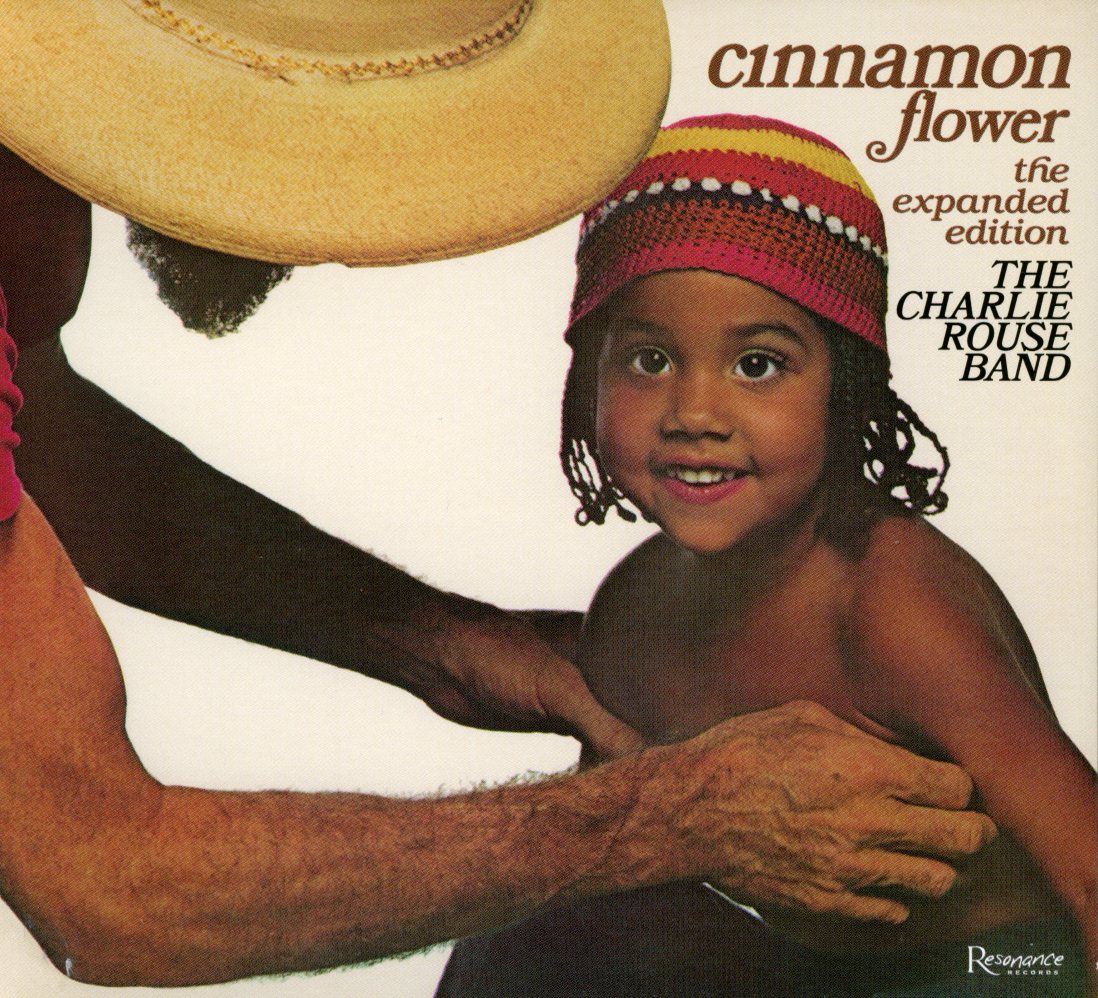

In addition to all the other sterling qualities that go into making a Master Jazz Saxophonist, Charlie Rouse [1924-1988] had something which all Jazz musicians strive for, whatever their instrument.


He had an instantly recognizable sound of his own.


Four bars of his playing and you knew it was Charlie Rouse.


As Richard Cook details in his Jazz Encyclopedia:


“Although Rouse did front eight albums of his own during a long career of playing, he is always remembered as the saxophonist in Thelonious Monk's quartet. This position came up after many years of work in the music; he joined Dizzy Gillespie's big band in 1945, worked in R&B hands, had brief spells with Duke Ellington and Count Basie, was on Clifford Brown's first record dates, and then led a hard-bop quintet called Les (Jazz) Modes [with French horn player Julius Watkins]. As that band was petering out in 1959, he sat in with Monk at a New York gig and went on to stay for the next 11 years. 


Where Johnny Griffin didn't change his style at all with Monk, and played in the same headlong fashion, Rouse, previously a typically fluent bop player, meticulously adapted himself to Monk's music: his tone became heavier, his phrasing more careful, and he seemed to act as an interlocutor between his leader and the listener. 


In the 1970s he studied acting for a time, and then found a new niche as a guardian of Monk's music in the group Sphere, which acted as a repertory band for the pianist's music [Kenny Barron, piano, Buster Williams, bass and Ben Riley, drums; “Sphere” was Thelonious’ middle name.]


He played a final tribute to his old boss a few weeks before his own death from lung cancer.”


Barry Kernfeld remarks about Charlie in his annotation about him for The New Grove Dictionary of Jazz:


“In the 1960s, Rouse adapted his style to Monk’s work, improvising with greater deliberation than most bop tenor saxophonists, and restating melodies often. His distinctive solo playing with Monk was marked by alternate reiterations of the principal thematic motif with formulaic bop runs.”


Orrin Keepnews who produced Charlie’s first album under his name - Takin’ Care of Business [Jazzland 919 JLPS, 1959], remarked that: “The trouble up to now has been that Rouse takes care of business so professionally and unflamboyantly, that it has been too easy for people to overlook him. Not fellow musicians: they’ve been aware for some time [and have accorded him the recognition of a full-fledged big leaguer].


With this by way of background you won’t want to miss -


THE CHARLIE ROUSE BAND'S BRAZILIAN SPECTACULAR

CINNAMON FLOWER GETS DELUXE REISSUE FROM RESONANCE RECORDS

AS A LIMITED-EDITION 2-LP SET, DELUXE CD & DIGITAL DOWNLOAD ON SEPTEMBER 19, 2025

Vibrant 1977 Album Featuring Tenor Man Rouse's Star-Studded Group and Engineered by Resonance Founder George Klabin Will Be Issued in Its Originally Released Version and, for the First Time, in Never-Before-Heard Undubbed Form

Deluxe Package Includes Detailed Liner Notes by Author James Gavin and an Intimate Recollection by the Tenor Player's Son Charlie "Chico" Rouse, Jr.


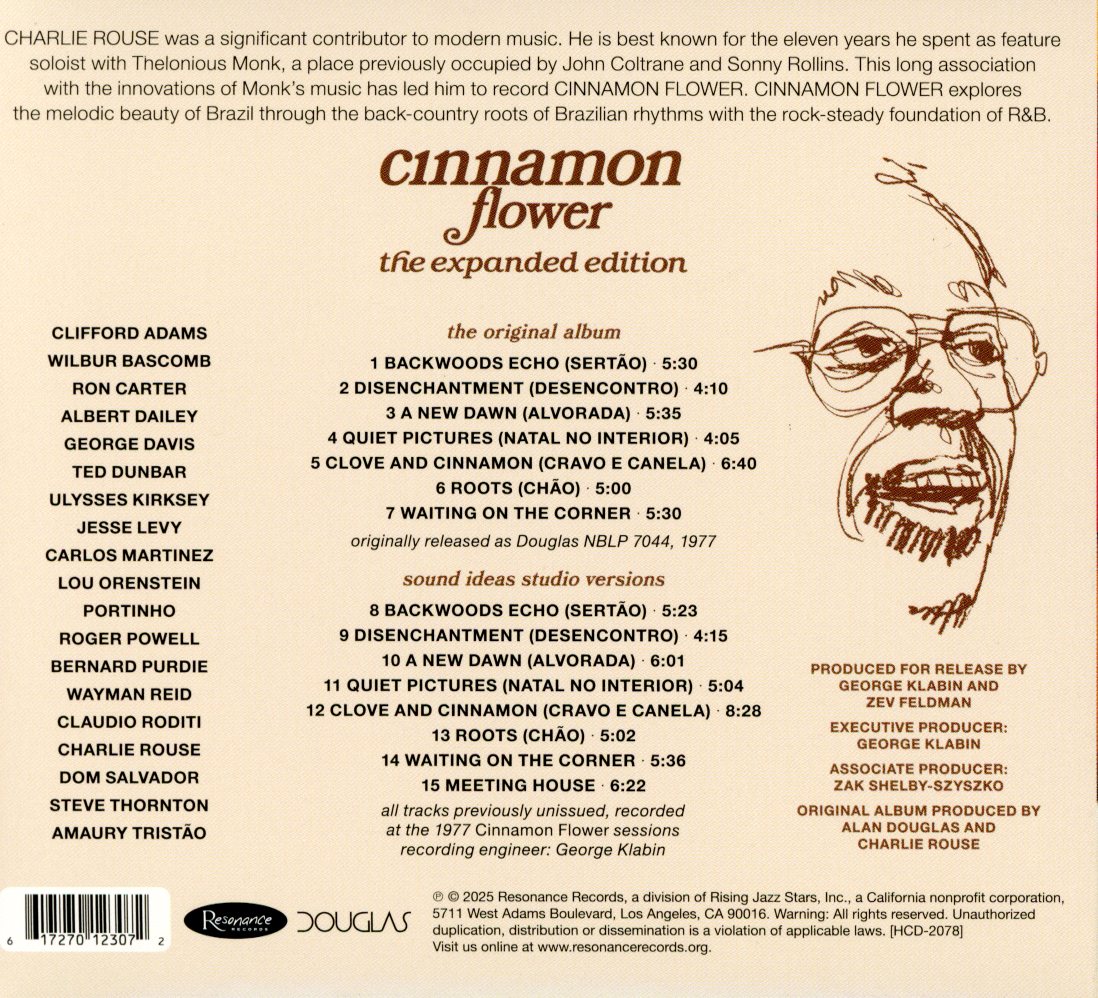
Brazilian jazz fans will receive a special treat when Resonance Records, the genre's leader in archival releases, will issue the Charlie Rouse Band's Brazilian jazz classic Cinnamon Flower as an expanded two-LP set, single-CD and digital download on September 19, 2025.


The LP package will be issued in a limited edition of 1,000 copies pressed on 180-gram vinyl; the set has been transferred from the original tape reels and mastered by Matthew Lutthans at The Mastering Lab. The first disc reprises the tenor saxophonist's album as it was released in 1977 by Douglas Records, the Casablanca-distributed imprint of producer Alan Douglas; the second LP presents the record for the first time in its original form, without Douglas' overdubbing, as it was engineered by


Resonance founder and co-president George Klabin, and includes an unreleased bonus track. The CD edition will also include both versions of the record and the extra track.


The '77 recording date featured Rouse, who had served as the tenor player in Thelonious Monk's combo for 11 years, playing potent Brazil-inflected music with elegance and soul. He had previously explored the Latin American country's sound on his 1962 Blue Note album Bossa Nova Bacchanal.


Rouse's 11-piece Cinnamon Flower band included such notables as trumpeter Claudio Roditi, pianist Dom Salvador, bassist Ron Carter, and drummer Portinho. Before the album was released, producer Douglas — known for adding instrumentation on posthumously released material by guitarist Jimi Hendrix — sweetened it with such additional players as soul drummer Bernard "Pretty" Purdie, keyboardist Roger Powell of Todd Rundgren's Utopia, and trombonist Clifford Adams of funk group Kool & the Gang.


Both packages include detailed liner notes by James Gavin, the author of widely praised biographies of Chet Baker, Peggy Lee, and Lena Horne, and an affecting remembrance of Rouse by his son, musician and educator Charlie "Chico" Rouse, Jr., who oversees the Rouse Estate. It reunites Resonance with Douglas' daughters Solo Douglas and Kirby Veevers, who worked with the label on its 2019 Eric Dolphy release Musical Prophet, which comprised Douglas' 1963 dates with the multi-instrumentalist.


Resonance co-president Zev Feldman says, "Many jazz enthusiasts know Charlie Rouse from the years he spent with Thelonious Monk, but he was much more than simply Monk's saxophonist. He had his own voice and his own style. He had an abiding interest in many musical genres and, as you can hear in this album, a particular affinity for Brazilian music."


The new edition is especially gratifying for Klabin, who racked up a long list of engineering and production credits before founding Resonance in 2008: "This music was originally recorded and engineered by yours truly at my Sound Ideas Studios in New York in the mid-70's. It remains one of my favorites because it combined great Brazilian music with great modern jazz and utilized only the very best players.


"We are pleased to release this memorable recording in two versions: the original, and as modified by Alan Douglas on his label. It is also a pleasure to present for the first time the track 'Meeting House,' written and performed by pianist Dom Salvador, which was not released on the Alan Douglas version."


Music historian Gavin notes, "Fortunately, Cinnamon Flower's original engineer, George Klabin, kept the unaltered tapes. Now, on his acclaimed jazz label Resonance Records, he is releasing the original unadulterated Cinnamon Flower for the first time. The Douglas issue is here too, allowing listeners to judge the difference for themselves. The heart of both versions is Charlie Rouse, a saxophonist whose uniqueness deserves reexamination.


"This Resonance release offers a fresh chance to revisit a musician who almost from the start was deemed 'underrated.' It's not too late for the prediction made in 1988 by Clifford Jordan, Rouse's tenor-playing peer, to come true: 'When someone dies, people stop and listen and realize that maybe he was a bit bigger than they thought. Now, people will start listening to Charlie Rouse."


Chico Rouse says, "I think now the album is going to be more appreciated than when it first came out because of the development and the exposure of Brazilian music here in this culture. I think that this record was a little ahead of its time. I hope that it shows a little bit about what my father was about in terms of being a soloist and having his own individuality, but being aware enough and strong enough to be able to take that and incorporate it into an ensemble to make the whole thing one whole."


Resonance Records is a multi-GRAMMY® Award-winning label (most recently for John Coltrane's Offering: Live at Temple University for "Best Album Notes") that prides itself in creating beautifully designed, informative packaging to accompany previously unreleased recordings by the jazz icons who grace Resonance's catalog. Headquartered in Beverly Hills, CA, Resonance Records is a division of Rising Jazz Stars, Inc. a California 501 (c) (3) non-profit corporation created to discover the next jazz stars and advance the cause of jazz. Current Resonance Artists include Tawanda, Eddie Daniels, Tamir Hendelman, Christian Howes and Donald Vega. www. Resonance Records.org


Saturday, November 2, 2024

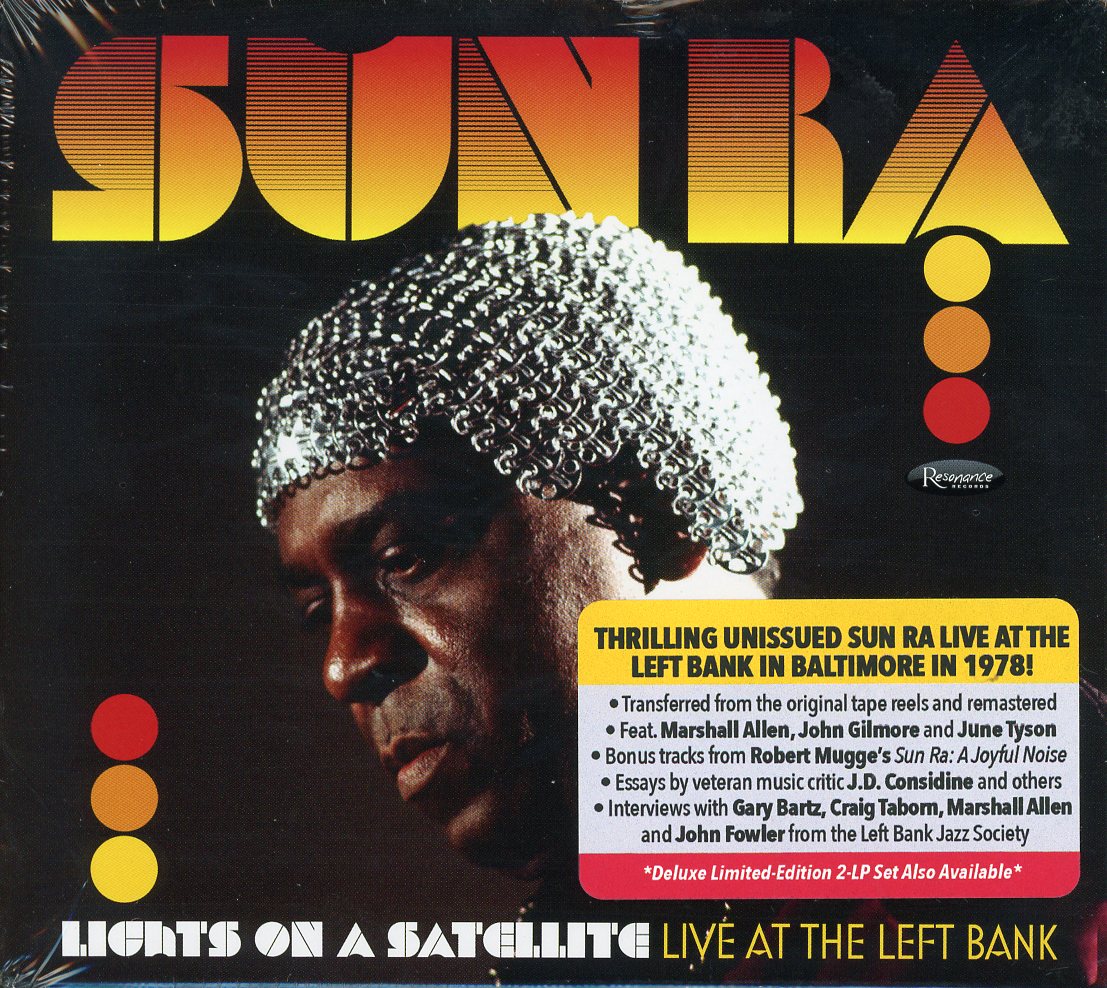
Sun Ra Lights on a Satellite: Live at the Left Bank - from Zev Feldman the Jazz Detective

 Copyright ® Steven A. Cerra, copyright protected; all rights reserved.


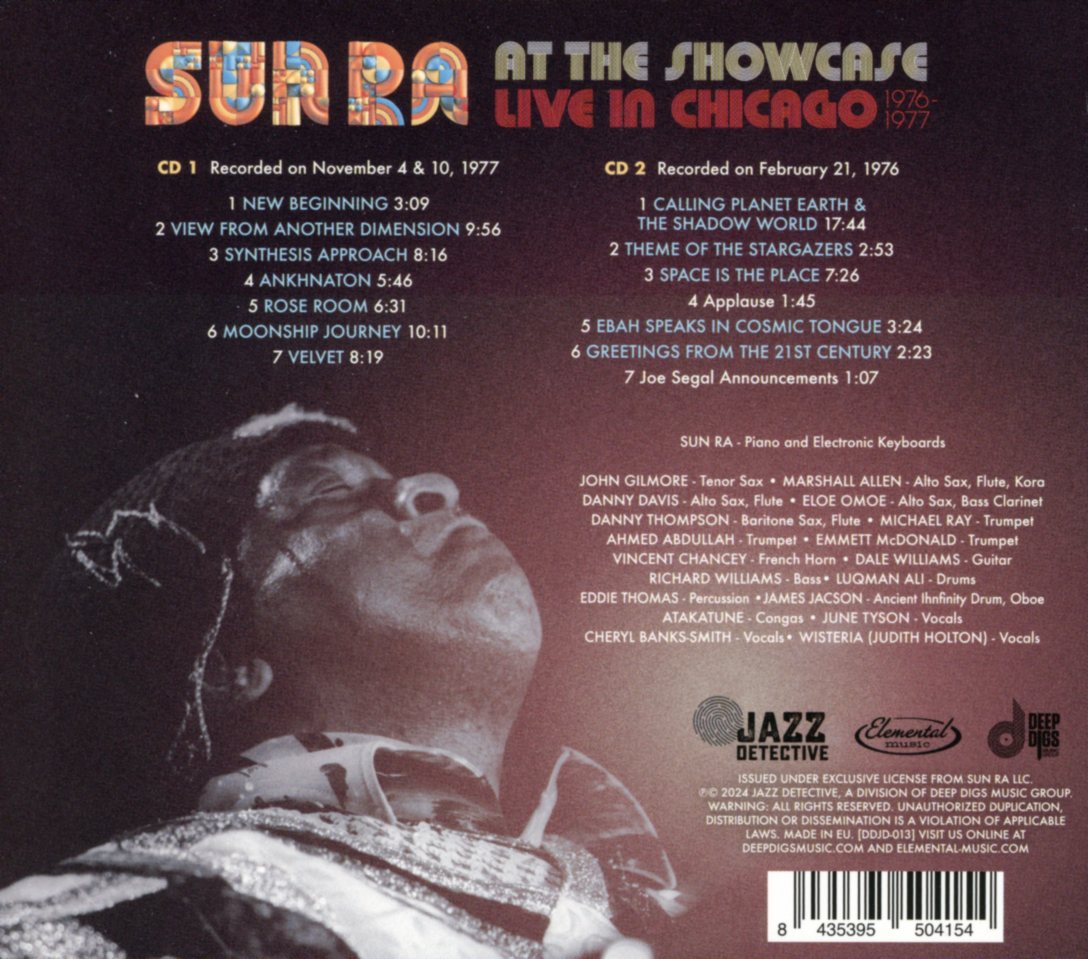
Some of you may recall that earlier this year in time for Record Store Day on April 20, 2024, Producer Zev Feldman in conjunction with project coordinator Irwin Chusid and Executive Producers Jordi Soley and Carlos Agustin Calembert of Elemental Records released SUN RA AT THE SHOWCASE: LIVE IN CHICAGO (1976-1977). 


You can visit my posting about this Sun Ra event by going here.


For Sun Ra fans there’s more exciting news as Zev is now partnered with - 


RESONANCE RECORDS TO PRESENT PREVIOUSLY UNHEARD SUN RA DATE LIGHTS ON A SATELLITE: LIVE AT THE LEFT BANK AS LIMITED 2-LP SET FOR Record Store Day - BLACK FRIDAY ON NOV. 29, 2024


A Collection of Thrilling 1978 Performances in Baltimore by Prophetic Bandleader's Arkestra 


It Also Arrives on Dec. 6 as Two-CD Set Deluxe Package Includes Additional Tracks Recorded by Filmmaker Robert Mugge, Notes by Critic J.D. Considine and Archivist/Band Member Michael D. Anderson, Interviews with Arkestra Icon Marshall Allen, Musicians Gary Bartz and Craig Taborn, and More


By way of context, “Sun Ra had a knack for being years ahead of the jazz world. The free jazz explorations of Cosmic Tones for Mental Therapy and electronics of Supersonic Jazz were daring moves for their time. Sun Ra's anticipation of later trends seems especially prescient when one compares his deconstructive sound collages from the 1950s and 1960s with the Art Ensemble of Chicago and other Association for the Advancement of Creative Musicians (AACM) efforts from the 1960s and 1970s. But by the 1970s, Sun Ra was already looking ahead again, anticipating the return to jazz roots of the 1980s and 1990s with sweeping excursions that spanned the whole history of the music.


Like Ellington, Sun Ra rarely featured his own piano work—although his few solo recordings, especially the magnificent Monorails and Satellites session from 1966, showed that he needed no accompanists to weave his richly textured musical tapestries. And though the Arkestra lacked the depth and cohesion of musicianship that characterized a Basie or Ellington, a Herman or Kenton, the band always boasted an inner circle of topflight players. Especially in tenor saxophonist John Gilmore, Sun Ra could draw on a rugged world-class soloist—one who anticipated and, in time, would influence John Coltrane. Gilmore's versatility was well suited for the Arkestra: he could contribute heated hard-bop solos or use the tenor to articulate piercing screams, guttural barks, and mournful cries. His affiliation with Sun Ra spanned some forty years, and he maintained his allegiance to the band even after Sun Ra's death in 1993.” Ted Gioia, The History of Jazz 2nd Ed. [2021]


Ann Braithwaite of Braithwaite and Katz offers more information in this media release about the forthcoming recording:


Resonance Records proudly presents Lights on a Satellite: Live at the Left Bank, a blazing set of previously unissued 1978 concert recordings by Sun Ra and his Myth Science Cosmo Swing Arkestra, as a limited two-LP set for RSD Black Friday, November 29.


Co-produced by Zev Feldman and Sun Ra archivist Michael D. Anderson (who also played drums on the '78 concert), the newly unearthed live session is an exciting successor to Sun Ra at the Showcase: Live in Chicago another archival find that Feldman issued on his Jazz Detective imprint for Record Store Day this April.


The new collection will also be released as a two-CD set on December 6.


Prophetic avant-gardist Sun Ra's big band is heard in blistering form — playing repertoire ranging from space age jazz to interpretations of "Somewhere Over the Rainbow" and jazz standards by Fletcher Henderson, Miles Davis, and Tadd Dameron — on a dynamic 12-track set recorded at a show mounted by the Left Bank Jazz Society at the Famous Ballroom in Baltimore, Maryland, on July 23, 1978. Those recordings are augmented by two tracks captured at the concert and featured in the classic 1980 film Sun Ra: A Joyful Noise by the acclaimed music filmmaker Robert Mugge, who also provided images for the new package.


The deluxe Resonance packages include an essay by noted jazz critic J.D. Considine (who attended the '78 show); reminiscences from Anderson, Mugge, Left Bank member John Fowler, critic Dan Morgenstern, and Arkestra veteran and latter-day bandleader Marshall Allen; and thoughts on Sun Ra's artistry from musicians Gary Bartz and Craig Taborn.


Feldman says of this newest discovery, "It was very exciting to learn from Sun Ra archivist Michael D. Anderson that these recordings from the Left Bank in 1978 even existed. Filmmaker Robert Mugge was also very kind to us by allowing us to borrow the music he had recorded for his film, which is presented here as bonus tracks. Also thanks to Mr. Mugge, we've included various high-resolution screen captures from his film that help capture the energy of what it was like to be there at the Famous Ballroom that night."


Anderson   recalls,   "When  we  played   in  the Famous Ballroom, it was incredible, being able to be in such a big place... .Especially [with] the [Arkestra] dancers. They were one part of the band that a lot of people miss because the dancers are just like instruments, but you have to see it. That's why when Mugge did this film — he was able to show the beauty of how they danced to the music."


Mugge — whose shoot at the Left Bank show was his maiden voyage as a music documentarian — remembers, "[It] went surprisingly well, our only unresolved question being, could we successfully record a large ensemble without multitrack recording equipment, or even the cables we needed to patch into the mixing board of Vernon L. Welsh's house PA system? But sound man Bruce Litecky improvised, coming up with usable audio by pointing one mike at the house PA speakers and another at whichever musician or vocalist was currently taking the lead."


Considine notes in his overview that the music at the '78 concert reached both veteran Sun Ra fans and new, younger listeners: "For the older, regular attendees, there was much of what they had gotten before. Sun Ra's arrangement of the Tadd Dameron chestnut, 'Lady Bird,' was a condensed history of mid-century jazz... .And for the younger, rock-raised newbies, there was the sonic splatter of Sun Ra's synthesizer against Dale Williams's probing electric guitar in the aptly titled 'Thunder of Drums.' There were African rhythms mixed with avant-garde improvisation, slapped electric bass driving classic swing cadences, and unabashed sentiment cheek-by-jowl against transcendental consciousness."


The Left Bank's Fowler remembers, "Sun Ra was a completely unique experience. And it was just a fun day. I mean, this was when he had all of the singers and the drummers and the dancers. There had to be 30 guys in the group. It was a real theatrical experience and a musical experience. Sun Ra was like nobody else."


Weighing Sun Ra's impact on jazz, saxophonist Bartz says, "Sunny confirmed that we need to be free as musicians. You can't get hung up into a genre or a style. If you study music, you study sounds and if you do, like any other study, are you just going to study one kind of a sound? Or are you going to study sounds, period. I don't study one kind of music. I study music. I got that from Sunny."


Pianist Taborn adds, "So many people revere him now. His approach was so comprehensive to the Black music experience as a whole. He delivered a commentary on so much of what had happened before and what was going to be happening that it applies itself across time. That's why I think his music has so much traction now 30 years after he passed."


Saxophonist and flutist Allen, who marked 66 years as a member of the Arkestra on his 100th birthday on May 25, reflects on Sun Ra's trailblazing methods as a bandleader: "When Sunny was playing, he'd play four bars, and if you didn't have the music, he'd switch it, he'd play another song, so you had to remember all this music. And then, when he played four bars, I'd come in. If I didn't, he'd switch the number, and by the time you found that number, he'd be in another one. Above all, you had to be sincere to do what he wanted you to do."”


Saturday, June 1, 2024

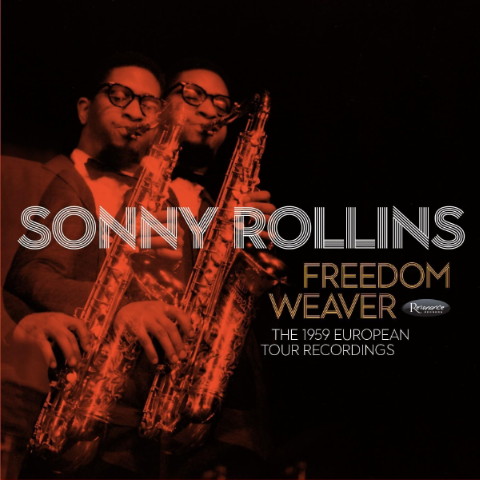
Sonny Rollins - Freedom Weaver

  Copyright ® Steven Cerra, copyright protected; all rights reserved.

“Freedom Weaver: The 1959 European Tour Recordings is the first official release of the ‘Saxophone Colossus’ Sonny Rollins’ European tour in 1959 with bassist Henry Grimes, and drummers Pete La Roca, Kenny Clarke and Joe Harris. Available previously only as a bootleg release, this is the first official release in cooperation with Sonny Rollins and is the first release on vinyl (a Record Store Day exclusive) as a limited-edition 180-gram 4-LP box set, and deluxe 3-CD set. Freedom Weaver includes an elaborate 56-page booklet with rare photos by Ed van der Elsken, Jean-Pierre Leloir, Bob Parent and many others; lead liners by jazz scholar Bob Blumenthal, and new interviews with Rollins himself, Branford Marsalis, James Carter, Joe Lovano, James Brandon Lewis and Peter Brötzmann.”

- From The Resonance Records website 


Well, I’m sure I’m not the first to exclaim that Zev Feldman, the Jazz Detective, has certainly outdone himself with his work on Sonny Rollins - Freedom Weaver: The 1959 European Tour Recordings [Resonance HCD 2065], so let me join the chorus of those who have extolled the release of this masterpiece while adding if you are a fan of the “classic period” of Sonny’s playing, run don’t walk to the nearer purveyor of such items and buy a copy - NOW!


I guarantee you won’t be disappointed.


The lead in annotation by the Resonance Records media relations department describes all the goodies on offer in this three CD set, so I won’t repeat the details here.


But I will add some personal observations before sharing information from the booklet that accompanies this set by Grammy-award winning writer Bob Blumenthal that will give you the back story and place this music within the broader context of Sonny’s storied career.


Zev’s continuing service to the Jazz community in unearthing rare recordings by Jazz masters from the second half of the 20th century allows the Jazz fan to go beyond the limitations imposed by the recording companies who had these stellar musicians under contract.


And while Zev and his associates are scrupulous in paying the appropriate fees and royalties to all concerned as well as honoring all the contractual obligations that were in existence when this music was made, the bottom line for us Jazz fans is that we get more recorded music to enjoy.


Put another way, whether its Wes Montgomery or Bill Evans or Cannonball Adderley, among many others, all of whom have passed [with the exception of Sonny], Zev’s releases honor their memory while at the same time adding to their discography.


The greatest percentage of Zev’s new found releases involve material that is recorded in performance [aka “live”] and as any musician will tell you, on any given night, the music can range from pedestrian to sublime depending on a variety of factors. After all, we are dealing with human beings creating improvisations on the spot and there is always an element of uncertainty in the quality of these outcomes.


To my ears, what is amazing about Sonny’s playing on Freedom Weaver is how consistently productive it is at the highest levels of creativity. “Drop the needle” anywhere and out comes Sonny Rollins at his very best in terms of tone, time, tune/song selection, chord substitutions, improvised lines, tempo, and trades with the drummer/s.


The sustained level of performance involving all these factors on all the tracks on these recordings is simply magical - the Jazz equivalent of hitting a home run.


What we have here is a magnificent collection of recorded Jazz by an iconic Jazz master, outstanding in its scope, its originality and its vision.


Bob Blumenthal offers a chronological overview of where this music fits in Sonny’s storied career and his own analysis of their significance in the following excerpts from the booklet notes that accompany the 3 CD set.


 Copyright ® Bob Blumenthal, copyright protected; all rights reserved.

ROLLINS IN EUROPE '59

“THERE ARE SEVERAL REASONS TO CELEBRATE THIS COLLECTION. It brings together in one place, with greatly improved sound and the approval of Sonny Rollins, music of the tenor saxophonist that has previously only been available in unauthorized bootlegs. It provides, in uncommon detail, a sense of what a European tour entailed for emerging jazz stars in the late 1950s. And, pending further discoveries (should they exist, producer Zev Feldman will no doubt be the one to uncover them), the final audio documentation of perhaps the most significant period in the development of one of the twentieth century's definitive musicians.

All artists blessed with both genius and longevity inevitably find their creations divided into periods. (Think Shakespeare, Beethoven, Picasso.) Sonny Rollins has made it easier than most to define and demarcate such spans by interrupting his career with significant removals from public performance. These sabbaticals, as they have come to be called, punctuate chapters in his ongoing evolution. Period One, documented by recordings made between 1948 and 1954, defined Rollins as a new jazz star. While he released several titles under his own name during these years, his most significant performances found him under the leadership of such fountainheads of modernism as Bud Powell (when Rollins was just shy of his 19th birthday); Thelonious Monk (who returned the favor by accompanying Rollins on the saxophonist's final 1954 session); and, on several occasions, one of which also included Charlie Parker, Miles Davis. The presence of the young saxophonist alongside such giants, not to mention the endorsement they provided by giving him a recording platform, made the jazz world in general, and his tenor sax contemporaries in particular, take notice. Sonny Rollins was already an emerging influence; but he was also a heroin addict who was determined to free himself from his drug dependency. Early in 1955 he checked himself into the federal drug facility in Lexington, Kentucky, effectively ending the initial phase of his career.

Rollins's return to performing and recording at the end of 1955 launched Period Two, a four-year stretch in which he became a working bandleader, a star (at least within the context of the jazz community) and one of if not the leading figure in the next phase of the music's evolution. This chapter in his history includes two distinct phases, defined roughly though not precisely by his move from sideman to bandleader. He had reappeared as Harold Land's replacement in the successful Clifford Brown/Max Roach Quintet, continued to work under Roach's leadership after Brown's death through the first half of 1957, and then briefly joined Miles Davis before striking out on his own. What gave his profile its greatest boost during this span were the recordings he made under his already existing contract with Prestige Records. The twelve-inch long-playing album had just emerged as a recording format, and independent jazz labels like Prestige took advantage by generating product at a rapid pace. Within a period of barely seven months between December 1955 and June 1956, Rollins recorded four albums now considered monumental statements: Worktime, Sonny Rollins + 4, Tenor Madness and Saxophone Colossus. These collections, all of which feature the quartet or quintet format, provide both brilliant music and an accurate sense of the ensemble environment in which Rollins found himself as a working musician.

Once his Prestige contract expired, Rollins became determined to move forward without attachment to a single record company. Some have come to call these the saxophonist's freelance years; yet a change in his approach far more important than any tied to record contracts was taking place. No Rollins performances from Period One had captured greater attention than those from June 1954 under the leadership of Miles Davis. The three compositions that Rollins had contributed to the session — "Airegin," "Oleo" and "Doxy" — had quickly become jazz standards; but equally influential were the stretches in the Davis and Rollins solo choruses where pianist Horace Silver dropped out and the horns were free to "stroll" without chordal support. Rollins included similar interludes in his great Prestige albums from 1956; but it was not until the spring of 1957, near the end of his tenure with Max Roach, that he attempted an entire session with just bass and drums in support. The resulting Contemporary Records album Way Out West, promoted as an all-star conclave of Rollins and perennial poll winners Ray Brown and Shelly Manne, became an instant classic, but it was no fluke. Rollins reveled in the harmonic freedom afforded by the absence of a comping piano or guitar, and in the months that followed produced two additional trio masterpieces, A Night at the Village Vanguard on Blue Note (primarily with Wilbur Ware and Elvin Jones) and Freedom Suite on Riverside (with Oscar Pettiford and Max Roach). This unintended triptych, even more extraordinary than the Prestige classics of 1956, defined what came to be Rollins's preferred working format, the one he chose to employ when he made his first European tour in February and March of 1959.

Rollins has explained that one needs the right bassist and the right drummer to make trio playing succeed. The accompanists on his three classic trio albums definitely met that requirement, and while he had growing doubts concerning the partners he brought along to Europe, listeners more forgiving than the intensely self-critical Rollins might feel that bassist Henry Grimes and drummer Pete La Roca also were correct choices. Grimes had quickly established himself as a rising bass star, one who sounded equally at home in support of Benny Goodman and Thelonious Monk. Substantial work with both Lee Konitz and Gerry Mulligan, each of whom also tended to work without chording instruments in support, and half of a Rollins album where the ensemble was completed by the underrated drummer Specs Wright (Sonny Rollins and the Big Brass: Sonny Rollins Trio on Metrojazz) provide ample evidence of his ability to excel in the strolling format. La Roca had made his recording debut on one track of A Night at the Village Vanguard, recorded with a different rhythm section at the matinee before Ware and Jones had arrived; and while his recording career had yet to take off, by the end of 1959 La Roca had emerged as one of the leading young percussionists of the period.

Saxophone Colossus: The Life and Music of Sonny Rollins, Aidan Levy's exceptional and comprehensive recent biography, details the exhausting nature of undertaking a tour of Europe without broad popularity and the support of a promoter like Norman Granz or George Wein. Between February 21 and March 18, Rollins performed in the Netherlands, France, Sweden, Switzerland, Germany and Belgium, including three separate stops in Paris. Venues included theaters, clubs, concert halls, television and radio studios. The pace was grueling to say the least, and Rollins's demanding standards led to disagreements and occasional physical confrontations with both members of his band. The tensions between Rollins and La Roca grew so severe that the drummer was sent home midway through the tour. Yet audiences were enthralled by the trio and the bootleg recordings that emerged became part of the growing Rollins legend. The titles with La Roca appear here for the first time in chronological order.

The opening track, "St. Thomas," finds the trio at the Nalen club in Stockholm on March 2, after earlier stops in the Netherlands and France. It is one of the strongest performances by the trio, with an elevated level of deep listening and responsiveness among the three musicians. The six tracks that follow, also from Stockholm, are taken from a March 4 radio broadcast and include spoken introductions by Rollins. They offer a sense of how sets were programmed over the course of the tour, mixing titles familiar from earlier Rollins recordings with those not already associated with the saxophonist (the first documented performance of Rollins playing "There Will Never Be Another You" and his only documented version of "Stay Sweet as You Are"). We hear the first of four takes of what appears to have been a tour favorite, "I've Told Ev'ry Little Star," a performance distinguished by Rollins stating the concluding punctuation of the main melodic phrase off-mic, as if delivered from the wings. "How High the Moon," heard on his most recent album Sonny Rollins and the Contemporary Leaders in the less common trio configuration of tenor sax, bass (Leroy Vinnegar) and guitar (Barney Kessel), receives an extended exploration in the more usual Rollins trio format. There is also the longer of two renditions of "Paul's Pal," one the most lyrical titles in the Rollins songbook.

A day later the trio was in Zurich for another radio broadcast. The five titles include "It Could Happen to You," which had appeared as Rollins's first unaccompanied saxophone recording on his Riverside album The Sounds of Sonny. While the relative brevity of the final three titles suggest the constraints of a broadcast performance, the trio hardly sounds inhibited. Three tracks from Laren, Holland on March 7, include another title not documented elsewhere by Rollins, the ballad "A Weaver of Dreams," while the four tracks from Frankfurt on March 9 include another Rollins one-off, "Cocktails for Two," a fourth and final version of "I've Told Ev'ry Little Star," and two titles that hark back to his recordings with Monk and Roach. Tensions that make the music crackle with energy proved insurmountable on a personal level, and La Roca departed the tour on the following day.

We get a sense that trouble had been brewing from the radio/television performance recorded in Stockholm on March 4, the same date as tracks two through seven of this collection's first disc. For this mini-set, La Roca was replaced by Joe Harris, best known for his years with Dizzy Gillespie's first big band. The teenage Rollins had known Harris, a Harlem neighbor who impressed with both his drumming and his example of a musician whose creativity had not been touched by drugs. While clearly a modernist, Harris had not been shaped by the more assertive examples of Art Blakey, Philly Joe and Elvin Jones. His presence gives the music a more contained though still loose feeling, and Rollins responds by slightly trimming his own in-the-moment responses, as can be heard most clearly in comparing this trio's "Paul's Pal" with the longer version recorded with La Roca on the same day. Also worth noting are the unaccompanied passages in "Love Letters," another standard that Rollins first visited while a member of the Roach quintet.

On a personal level, Levy's biography indicates that the happiest days of the tour occurred in France, especially two extended club bookings in Paris. Rollins enjoyed the city's lifestyle and the opportunity to share time with tenor giants Don Byas, Lucky Thompson and especially Lester Young. (Young would return to New York and die on March 15, while Rollins was concluding the final week of the tour.) No recordings have emerged from Rollins's time in the City of Lights, but we do have three extended performances from a March 11 theater concert in Aix-en-Provence. The drummer here is Kenny Clarke, Harris's predecessor in the Gillespie big band and the seminal modern drummer. Rollins and Clarke had recorded together before, most notably on the aforementioned Miles Davis strolling session that included "But Not for Me"; but this encounter of Newk and Klook (as they were respectively known) was a more extended meeting of two giants, with Grimes more than holding his own in support. Rollins was never inclined to show restraint, and hardly neglects his more recent history (quoting "Freedom Suite" at one point during "But Not for Me"); yet especially during the fours, there is a sense of respect for Clarke's presence and a determination to ensure that the drummer receive ample space to exhibit his own brilliance. In addition to the Gershwin standard and "Woody 'n' You," which Rollins had recorded in a brilliant version with Roach and Kenny Dorham, there is the only extant example of him playing Tadd Dameron's "Lady Bird."

Rollins began the tour dissatisfied with both the quality of his playing and what he considered the unjustified praise it had attracted. He was not one of the creators, he insisted in the Stockholm interview included on disc two, just someone at the experimental stage. There were a few more gigs once he returned to the US, including a West-Coast tour where the band became a quartet with the addition of the then-unknown trumpeter Freddie Hubbard. By the time of the Playboy Jazz Festival in September, Rollins had made a decision to withdraw. He played with Bob Cranshaw for the first time at that event, and was so impressed with the bassist that he told him that he wanted to collaborate again after he took a break. Cranshaw would wait for two years, during which Rollins did most of his playing on New York City's Williamsburg Bridge, to receive a call to participate in what would become Period Three of the Sonny Rollins odyssey.”

BOB BLUMENTHAL


Saturday, April 27, 2024

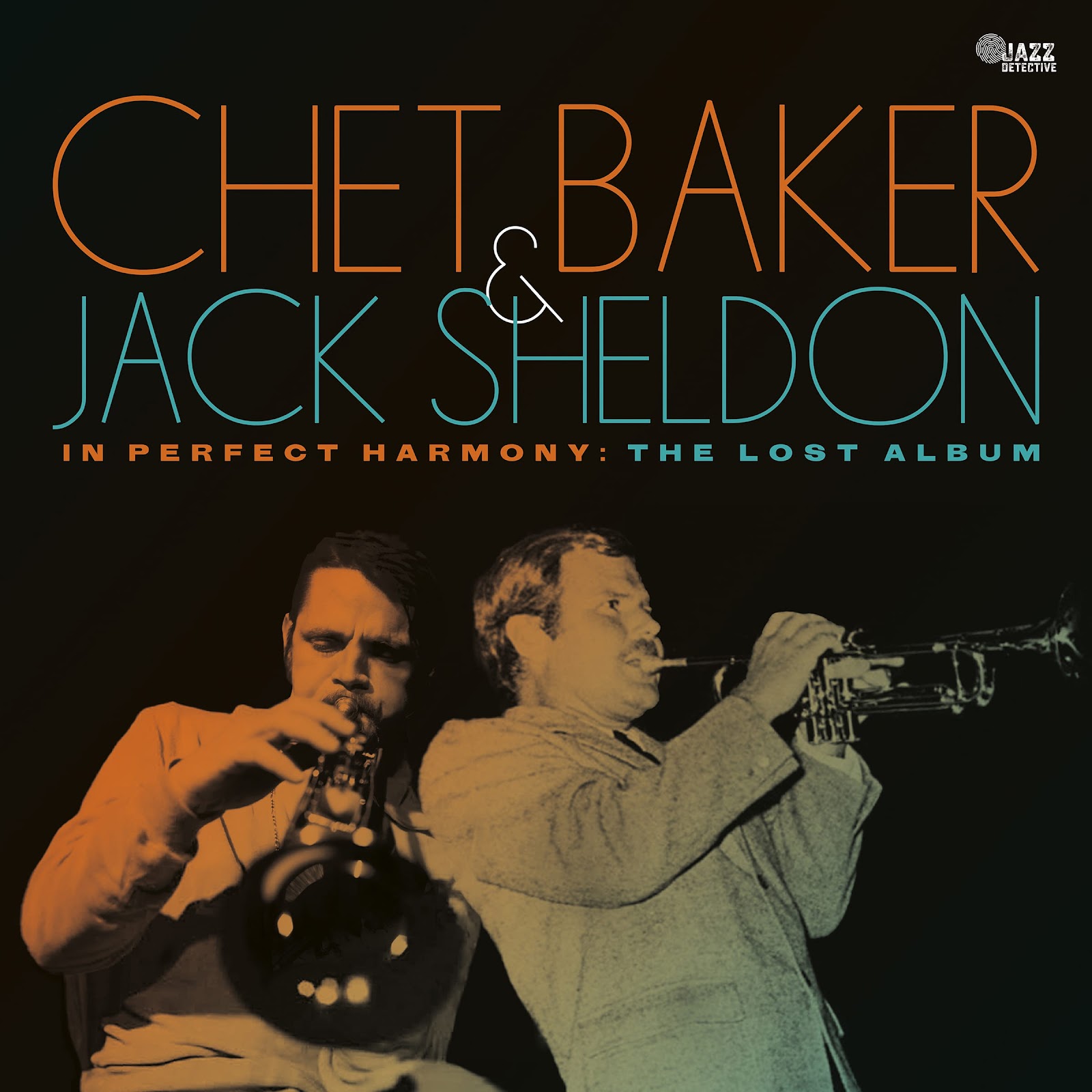
‘In Perfect Harmony: The Lost Album’ by Chet Baker and Jack Sheldon Review: Trumpeters in Tandem by Will Friedwald

 Though the two musicians were very different in both life and music, they came together in 1972 to record this excellent, newly released album.


By Will Friedwald

April 20, 2024 Wall Street Journal


Copyright ©2024 Dow Jones & Company, Inc. All Rights Reserved.

“Chet Baker and Jack Sheldon didn’t have much in common. The two trumpeters and occasional singers, who are heard together on the recently discovered, newly released “In Perfect Harmony: The Lost Album” (Jazz Detective, out now), both emerged from the West Coast jazz scene of the early 1950s, but that’s where the similarity ends. Baker has come to be seen as the ultimate moody loner, the original jazzman without a country, wandering across the globe in an endless tour of one-nighters, generally staying one step ahead of drug-enforcement police. Sheldon became a mainstay in studio orchestras, playing on “The Merv Griffin Show,” singing on “Schoolhouse Rock!” and rarely leaving the West Coast. Baker’s singing was quiet, reserved and understated in a way that many found irresistibly erotic, whereas Sheldon was a figure of fun, full of irrepressible humor and wisecracks galore—he even made an album of standup comedy. Baker was unrepentantly self-destructive, leading to his death in 1988 under mysterious circumstances at age 58, while Sheldon had a long, productive life and died at age 88.

And yet the two men were, in fact, close friends. Sheldon, who was two years younger, idolized Baker, though he was careful not to emulate the slightly older trumpeter’s lifestyle.

In the late 1960s and early ’70s, Baker was back in California, but not by choice: In 1966, he had been beaten and robbed, and his teeth were decimated to the point that he needed dentures and to relearn how to play the trumpet. Other than on a series of forgettable, pop-oriented albums, by the summer of 1972 he had barely played or recorded in years.

It was Sheldon’s idea that the two should do an album playing and singing together, as a means of easing Baker back into full-time performing. Sheldon approached the guitarist and producer Jack Marshall, who had opened a recording studio in Tustin, Calif. As Frank Marshall, the producer’s son, writes in the album notes, the two Jacks then assembled an excellent rhythm section with bassist Joe Mondragon (who is playing electric on at least a few tracks here), drummer Nick Ceroli, and Dave Frishberg, the Minnesota-born jazz piano giant who had only recently relocated from New York. To make Baker feel even more secure, Marshall himself also played on the date, giving the trumpeter something he virtually never had the luxury of working with, a full four-piece rhythm section. Sheldon and Marshall prepared 11 songs, totaling 35 minutes of music: seven songbook standards, one Sheldon original, two bossa novas, and a blues.

The finished album is excellent—though at times there isn’t enough of it. The most extreme example is the opener, “This Can’t Be Love,” which starts with Sheldon singing the first chorus rubato; then Frishberg subtly shifts it into tempo and Baker sings an uptempo chorus with Sheldon playing behind him. And that’s it. One yearns to hear the two trumpeters then start trading fours, but it ends there.

Elsewhere the album seems just right, even on the shorter tracks. “Just Friends” is Baker singing all the way through, here getting to do a jazzier second chorus, with Sheldon again playing obbligatos; although both tracks are only two minutes and change, “Friends” at least feels complete. “But Not For Me” is even better, opening with a charming intro in which Frishberg pays allegiance to Earl Hines and Teddy Wilson, again with Sheldon playing in support of Baker’s singing.

They never do actually sing together, but they play in tandem on several numbers, such as “I Cried for You” and Sheldon’s “Too Blue”—a quasi-comedic novelty with allusions to the blues.

The two Brazilian songs, “Historia de un Amor,” sung by Sheldon, and “Once I Loved,” where Baker takes the lead, are satisfying vehicles for the two. Throughout, the presence of a second horn challenges and inspires Baker to play more aggressively than he later would on most of his ’70s and ’80s recordings. The longest track, “When I Fall in Love,” finds Baker singing and then playing especially rapturously and Sheldon offering equally beautiful support.

“I’m Old Fashioned” and “You Fascinate Me So” are brief but highly copasetic features for Baker and Sheldon, respectively, each playing agreeably behind the other’s vocals.  The set ends with “Evil Blues,” from the songbook of Jimmy Rushing, with Baker playing, Sheldon singing, and Frishberg paying homage to Count Basie. 

We can’t be sure what Sheldon and Marshall’s plans were for the album—to sell the master itself to a label or merely to use it as a demo. Ultimately, neither happened; about a year later, Marshall died at age 51, by which time Baker, his chops and his confidence restored, had resumed his endless nomadic trek around the world. It remained for the guitarist’s son to discover the tape in a garage 50 years later. We can be very glad he did; it’s a remarkable collaboration by two uniquely gifted musicians, Chet Baker and Jack Sheldon, so different and yet in harmony..”


Thursday, April 25, 2024

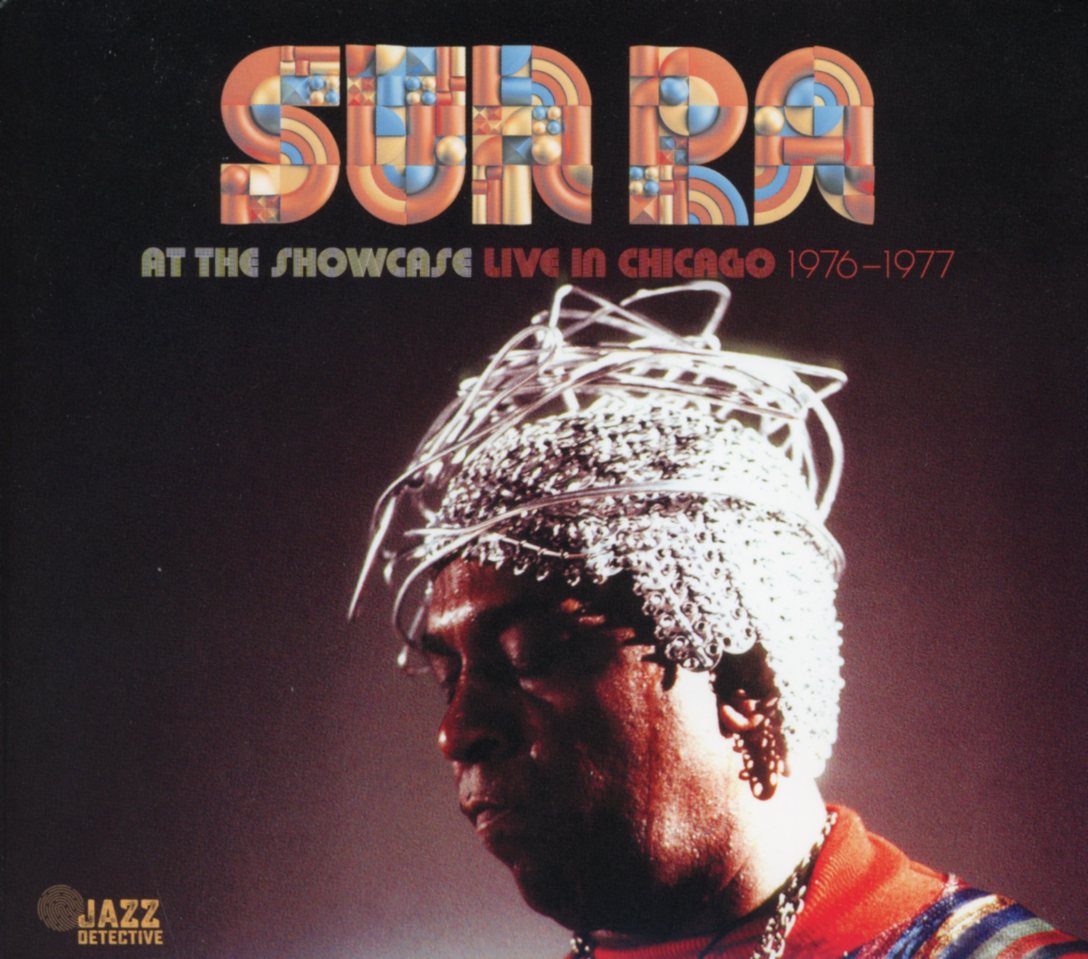
Sun Ra at the Showcase Live in Chicago 1976-1977 - from Zev Feldman the Jazz Detective

 Copyright ® Steven A. Cerra, copyright protected; all rights reserved.

“Stan Kenton was not the only 1950s big band leader who attempted to remake modern jazz in his own iconoclastic image. Sun Ra drew on an equally eclectic mixture of forward-looking jazz styles in the various recordings made with his large ensemble, the Arkestra — a band invariably described by the leader with one or more impressive descriptives attached (e.g., the Myth Science Arkestra or the Astro Infinity Arkestra). A certain extravagance permeated almost everything having to do with this artist.  Many jazz players are guilty of distorting or exaggerating the facts of their early years, but only Sun Ra went so far as to trace his origins back to the planet Saturn and claim descent from a race of angels. In truth, Sun Ra was apparently born with the more pedestrian name of Herman Blount in Alabama in 1914. He made his first forays as a pianist and composer during the Swing Era and worked for a time in the late 1940s in the Fletcher Henderson band. His visionary music, however, did not come into its own until the mid-1950s, when he

began recording extensively with his large band, first in Chicago and later in New York, Philadelphia, and other environs. The term "Afrofuturism" didn't exist back then, but with the benefit of hindsight, we can now see that this unconventional bandleader was laying down its foundations back at the dawn of the Space Age.


Sun Ra's coterie of fans came to expect the unexpected, and were seldom disappointed. The Arkestra’s lineup might include, on a given night, as few as ten musicians or as many as thirty. Dancers, costumes, slide shows, and other ‘extras' were frequently included with the price of admission. The Arkestra's music could be equally changeable. Elements of bebop, hard bop, and swing loom large on the band's mid-1950s recordings. But over the next decade, the Arkestra would embrace an even broader palette: swirling layers of percussion, spooky electronic effects, disjointed echoes of rhythm and blues, hints of Asian and African music, dissonance, atonality, at times aural anarchy. Sun Ra's jargon-laden talk of the cosmos and interplanetary music may have sounded like a half-baked script from a Cold War sci-fi movie, but his appetite for the new and anomalous truly spanned a universe, or at least several galaxies, of sounds.”

- Ted Gioia, The History of Jazz, 3rd Edition [2021]


Sun Ra

KEYBOARDS, BANDLEADER

born 22 May 1914; died 30 May 1993

“He was born Herman Blount in Birmingham, Alabama, although as every schoolboy knows, he was really from the planet Saturn. He learned to play piano by watching his sister, and subsequently toured with a Chicago band, around 1933, although he later returned to college in Alabama. For the next ten years he played in undistinguished groups in the Midwest, interrupted only by a brief and miserable spell in the armed forces. He then played in Fletcher Henderson's band in 1946. worked as a pianist in Chicago clubs, and bossed an occasional big band in the area, before forming a small group with saxophonist Pat Patrick in 1950 which eventually grew into a large ensemble. Blount had become fascinated by Egyptian studies, and he changed his name to Le Sony'r Ra, his legal name, although it would be shortened to Sun Ra for stage purposes. He called his group the Arkeslra and insisted that he was a communicator from another race, sent here to help a people in darkness. From this point, the Arkestra began enlisting musicians who would, in some cases, stay for decades: besides Patrick, these would include John Gilmore, Marshall Allen and Ronnie Boykins. Dressed in suitably elaborate robes, Sun Ra and his men began formulating stage shows which might have seemed vaudevillian but which would sustain their reputation as genuine mystics. A record label, Saturn, was established in 1956: its chaotic discography was, by the time of the leader's death, so large and convoluted that it ran to hundreds of pages and possibly thousands of recordings. The 50s music was largely in thrall to hard-bop conventions, but as time went on it took on more percussive devices, brought in Latin influences, started to take on free-form elements, and eventually involved electric keyboards. Sun Ra shifted the operation to New York in 1961, and this initiated his most radical period, with such records as The Magic City (1965) as confrontational and powerful in their way as anything made by Shepp or Ayler. The Arkestra had relatively little regular work, but they rehearsed almost all the time, and Sun Ra's men were extraordinarily loyal - 'They're in the Ra jail, the best in the world.'

In 1968 Sun Ra moved base again, this time to Philadelphia. In the 70s,the Arkestra shows became bigger and grander: there were singers, dancers and acrobats involved, and Sun Ra himself added synthesizers and such instruments as the rocksichord to his own stage paraphernalia. Later, he went further by reaching back, playing old Fletcher Henderson arrangements alongside such greatest hits of his own as 'We Travel The Spaceways'. The group travelled the world and was honoured at last, through persistence as much as anything else, although Sun Ra had always attracted an audience outside jazz by dint of his sheer strangeness. He welcomed believers and would expound at length on his other-worldly philosophies. By the late 80s, age was slowing him down and the Arkestra began to lose its zest, but it carried on all the same, and even after his death it still exists, currently under the leadership of Marshall Allen. Although, as a whole, Sun Ra's work was too sprawling and individual to really be any kind of a general influence, much of what he did was routinely ahead of its time and prescient of things which have happened in music since, whether in jazz, rock or wherever. And he is surely still out there, somewhere. 

- Richard Cook’s Jazz Encyclopedia 


“The tendency has been to treat all of the Arkestra's music after about the time of Space Is the Place [1973] in a general way, but it's not like it stopped developing. In fact, the advent of this sort of variety show framework, which also harkens to an earlier moment in jazz when elaborate floor shows included dancing and theater and comedy as well as diverse kinds of music, is in fact an important step in the evolution of Sun Ra's vision. And it was different in the mid-70s from what it had been earlier in the decade, when it was often dominated by drums, featuring long hand-drum sections and aggressive horn solos. Those components were still part of the program, but subsumed more fully into what might be best called the Ra Revue, a super entertaining sojourn through all the stages of Arkestra development, which were, in effect, a little primer on jazz, improvisation, and Afro-futurity. These recordings, drawn from two exceptionally wonderful stretches in Chicago separated by a couple of years, provide a loving view of the Ra Revue, waxed for the ages amidst the warmth of a city Sun Ra once called home.”


- John Corbett is a writer, producer, and curator based in Chicago. He is co-owner of Corbett vs. Dempsey, an art gallery and record label.


JAZZ DETECTIVE LAUNCHES PREVIOUSLY UNRELEASED

SUN RA AT THE SHOWCASE: LIVE IN CHICAGO (1976-1977)

AS LIMITED TWO-LP RECORD STORE DAY EXCLUSIVE APRIL 20, 2024

Will Also be Released as Two-CD Package on April 26, 2024


I've always thought of Sun Ra's music as the Jazz equivalent of a feast and wow did Zev Feldman ever serve up another banquet with this one. 


Preparing for the concerts with the vast amount of music performed, the large number of musicians that must be contracted and rehearsed and staging the supporting cast, the supplemental audio and lighting enhancements and the other visual accompaniments must have required staggering amounts of work on Sun Ra’s part. 


Sun Ra did not just put on a show, he put on a spectacle. 


Fittingly, Zev Feldman, the Jazz Detective, and his “partners in crime” - project coordinator Irwin Chusid and Executive Producers Jordi Soley and Carlos Agustin Calembert of Elemental Records - have matched Sun Ra’s stunning revues with a sumptuously packaged double CD extravaganza of their own.


According to Ann Braithwaite’s media release, their effort takes the form of storming performances captured live in 1976 and 1977 at the Jazz Showcase, Joe Segal's Storied Windy City Venue, including a lavish collection of Rare Photos, Notes by John Corbett, and Insightful Interviews with Sun Ra's Collaborators and Disciples, including Contemporary Arkestra Leader Marshall Allen.


Co-produced with Michael D. Anderson of the Sun Ra Music Archive, the Showcase album comprises high-energy, freewheeling performances by the 19-piece Arkestra, which features many of the band's notable soloists, including tenor legend John Gilmore, alto/flute master Danny Davis, baritone saxophonist Danny Ray Thompson, and veteran altoist/flutist Marshall Allen, who today leads the group at age 99. June Tyson, the Saturnian Queen of the Arkestra, contributes vocals to the set.


The richly annotated Sun Ra at the Showcase includes an in-depth essay by writer, musician, and label/gallery owner John Corbett; previously unseen photographs shot at the Showcase by Hal Rammel; and insightful interviews with Marshall Allen, Sun Ra collaborators Reggie Workman and Jack DeJohnette, saxophonist David Murray, pianists Matthew Shipp, Dave Burrell, Michael Weiss, Amina Claudine Myers, and guitarist and Sonic Youth co-founder Thurston Moore.


"Jazz Detective," says of this new archival release, "It is an enormous pleasure to bring to you my first collaboration with the Sun Ra estate celebrating the long-lasting legacy of the great Sun Ra. I've been listening to Ra's music for decades and find enormous inspiration and creativity in it. The road to this release began in 2022 when I reached out to my longtime friend Garrett Shelton, who in 2014 had worked with Irwin Chusid of the Sun Ra estate and archivist Michael D. Anderson on a Sun Ra centennial project. For a number of months, Michael and I worked together to find a meaningful recording that we could pair up on to release together. These recordings are an extraordinary find."


Corbett's introduction places the '70s dates in the context of the music's Windy City origins: "Sun Ra had a storied history with Chicago. It was, without hyperbole, the place where Ra was conceived. Herman Poole Blount was born in Birmingham, Alabama, in 1914, but Sun Ra came into existence in Chicago in the 1950s. In a city teeming with great musical talent and suitable venues for almost any venture, Ra had ample opportunities to hone his craft as an arranger and composer, to test his skills as a bandleader, to further his esoteric readings, to develop his unique performance persona, and to write a whole songbook's worth of original (in every sense) material. At the same time, he was free to experiment broadly and intensely. Chicago was where Ra imagined, assembled, and incubated his Arkestra."


Photographer Rammel, who witnessed the Jazz Showcase performances up close, recalls, "The mystery of how this richly orchestrated Arkestral music — its suite of songs, solos, clearly defined passages composed or improvised — unfolded was continually fascinating. Watching musicians listen to each other so intensely and react so effortlessly made traveling the space ways with the Arkestra a unique experience in all my years as a fellow traveler."


Marshall Allen, whose involvement with Ra's music has encompassed 65 uninterrupted years, says. "Sun Ra was a genius. He had the music inside his mind and his own way of playing it. of attacking every note. He was a good teacher and wrote beautiful music. Being in his band was like a dream. Once there. I found a place to stay. He wasn't just a musician. He was above all an innovator who could imagine the future."


Some of the jazz greats who played with Ra or witnessed him in live orbit speak about him with awe.


Bassist Workman says, "It's really hard to find words big enough to explain who Sun Ra was, because we are speaking about a very unique character, a learned man, and a very unusual mind. I had the chance to play with Sun Ra a couple of times. Either it was a session or it was some rehearsal or something like that. I was always very busy in those years, but tried to make time to see him. because being in his company was an important thing. It was quite an experience for me."


Drummer DeJohnette says, "Playing with Sun Ra was challenging. He never laid down any rules about how one should play. He'd just write the music and leave everybody else to use their own creative imagination to interpret the music."


Speaking of his first exposure to Ra's music at a 1973 date in Berkeley, saxophonist Murray remembers, "The band must've finished the gig at about 12:30 a.m. and we sat there talking to Sun Ra until about 3 in the morning. He spoke about many, many things. He was so mystical, and we were mesmerized. I hardly got a word in. I just couldn't believe this man could go on from one topic to another and connect all of them to mystical things, to the universe, to God. I had never heard anybody speak like that before. I love Sun Ra. his music and what he did."


Ra left his mark on later generations of pianists. Burrell says of an Arkestra live show he witnessed. 'They were playing with high energy, and I never heard such intense energy as when they walked up and down the aisle. From that time on, I knew that the Sun Ra phenomenon was intense and beautiful, and it inspired me to practice and be more serious about my own destiny." Weiss notes. "The writing is so interesting. It really comes from this big band language, but with all those exotic percussion and bells, and his interest in all these diverse keyboards was way before anybody else used that stuff." Myers says, "Sun Ra was one of the greatest creators, with his ensembles, because of his techniques on the piano, and also due to his compositions. Sun Ra was definitely an inspiration to me."


Shipp — who included Ra in his grouping of jazz keyboard originals in a 2020 essay. "Black Mystery School Pianists" — says, "I relate Sun Ra's imagination to what I call a cosmic musician, and that's what I get out of him. It's not even really jazz. He's trying to tap into the pure music of the cosmos."


Thurston Moore, whose adventurous music boasts a deep familiarity with Sun Ra's pioneering work and spirit, reflects on its meaning today: "'Greetings from the 21st Century' is Ra singing to the future a good two decades plus from where we live together now. Oh if only Ra could be here to butter our burning hearts with all the current crop of false idols running rampant in riots of war and desecration. What the world needs now...is Ra sweet Ra. Peace on Earth...and beyond the beyond -thank you for the music, Mister Ra."


If you are into Sun Ra’s music or looking for a way into it, you won’t want to miss this intriguing concert by the bandleader-composer-keyboardist-Afrofuturist.