Showing posts with label chet baker. Show all posts

Sunday, October 19, 2025

Konitz Meets Mulligan: Lee Konitz and The Gerry Mulligan Quartet

 © Copyright ® Steven Cerra, copyright protected; all rights reserved.


“Gerry Mulligan was also involved in the Birth of the Cool—you had quite a lot of contact with him over your career.

I always thought of him as an ally. He appreciated my playing, and I appreciated his, and especially his writing, very much. I played his arrangements with Claude Thornhill, and Stan  Kenton. The occasions that we had together, they were very fruitful. 


Was he an intuitive player?

Gerry was a great musician, also a great composer and arranger. My favorite playing of his was with the Birth of the Cool. He also recorded a free version of "Lover Man" with me and a trio with Peggy Stern that was very intuitive and really inspired. He was pretty much an intuitive player, but maybe too conscious of making an impression on his audience — and that means functioning other than intuitively.”

- Andy Hamilton, Lee Konitz: Conversations on the Improviser’s Art [2007]


“When the Kenton band was at the Palladium in Los Angeles, Gerry asked me to come and sit in with his quartet at the Haig on our nights off. I loved

the pianoless concept, and I have worked in many similar groups over the years. I had heard stories about Chet not reading, but I was never in a situation to check that out. I had also heard that he didn't know chord changes, but I remember seeing him at a piano, playing changes to tunes, so that wasn't true. On my recordings with the quartet, I actually rejected "Too Marvelous for Words" because it didn't seem to fit into Gerry's context. …  Looking back, Gerry and I didn't play that much together, but he was very encouraging to me in the early days, and I always felt he was an ally. We even got high together for the first time because we had that kind of close relationship.”

- Gordon Jack, Fifties Jazz Talk: An Oral Retrospective [2004]


“While all the other instruments during the great days of bop produced important musicians in addition to the leading representative on the respective horn, the alto saxophone had to wait for the start of the cool era for a considerable figure to emerge: This was Lee Konitz, who came out of the Lennie Tristano school. The abstract, glittering alto lines played by Konitz around the turn of the forties on his own and Lennie Tristano's recordings later became more singable, calmer, and more concrete. Of this change, Lee says that then "I played more than I could hear"... Konitz has absorbed and incorporated into his music many of the jazz elements since then - and some of Coltrane and of free jazz - and yet he has always remained true to himself. He is one of the really great improvisers in jazz.” 

- Joachim Berendt, The Jazz Book [1983] as quoted in Peter Ind, Jazz Visions: Lennie Tristano and His Legacy [2005]


“My [Gerry Mulligan] whole job, because we had left the piano off, was to establish always the sound of the chord progression that was moving through the piece, and to do that with my harmony line in relation to the bass line, which always had to be able to state something basic about the way the rhythm line moved—didn't have to just play roots of the chords that you always had to do on the bottom, but you could move through them in such a way that the implication of the chord was always there. So then, even though it wasn't obvious to the ear and it wasn't spelled out, the impression was there, and what we were doing was giving the impression of chord progression because of the way we were touching on those notes.”

- Gerry Mulligan with Ken Poston, Being Gerry Mulligan: My Life in Music, [2023]


“Most of the more casual generalizations about Lee Konitz - cool, abstract, passionless, untouched by bebop - were last relevant about 40 years ago. A stint in the Stan Kenton band, the musical equivalent of Marine Corps boot camp, toughened up his articulation and led him steadily away from the long, rather diffuse lines of his early years under the influence of Lennie Tristano, towards an altogether more pluralistic and emotionally cadenced approach. Astonishingly, Konitz spent a good many of what should have been his most productive years in relative limbo, teaching when he should have been playing, unrecognized by critics, unsigned by all but small European labels (on which he is, admittedly, prodigal). Despite (or because of) his isolation, Konitz has routinely exposed himself over the years in the most ruthlessly unpredictable musical settings, thriving on any challenge, constantly modifying his direction.” 

- Richard Cook and Brian Morton, The Penguin Guide to Jazz on CD, 6th Edition [2002]


“Stimulation of his colleagues by consistent application of his peregrine personality is very likely the most wicked weapon in Gerry Mulligan’s deadly arsenal. He has played probably in front of more groups that lingered on in a recurring state of instant disintegration behind him than any other major Jazzman. Not that Gerry plans it this way, he just seems to have been possessed rather frequently of or by an impish natural talent for annoying others to an extent that is much more often productive than destructive.


How this quality operated in his work with Lee Konitz, I have no way of knowing but I believe after hearing this record, that someone constructed a small conflagration under Lee when he sat in with Gerry’s quartet at The Haig in Los Angeles on the night of January 25, 1953. And since the expert at artistic arson, Gerry Mulligan, was present, I think we may have solved this minor mystery.”

- Daniel Halperin, original liner notes to Lee Konitz Plays With the Gerry Mulligan Quartet [PJM -406, 1957]


I enjoy combing the Jazz literature to glean new perspectives on something I’m writing about for the blog and such is the case with the lead-in quotations to one of my all time favorite recordings Konitz Meets Mulligan: Lee Konitz and The Gerry Mulligan Quartet [Pacific Jazz LP PJM 406 and Capitol CD CDP 7 46847 2].


Although issued in 1957, the recordings were actually made in 1953 and the playing on them by alto saxophonist Lee Konitz, baritone saxophonist Gerry Mulligan and trumpeter Chet Baker should be considered in the context of the relative newness of the “modern” - as distinct from - the Swing Era style of Jazz exhibited by the 12 tracks that make up the album. The version of Modern Jazz practiced by Konitz, Mulligan, Baker and others on the West Coast during the 1950s is often referred to as the “Cool School.”


Given the relative recency of Modern Jazz, a style that evolved largely during and directly after the close of World War II - an approach which relied on improvising on the harmony of a song rather than the previous Swing Era emphasis on the melody - it is amazing how accomplished the playing by the horns is on this recording. Kudos should also be shared with bassist Carson Smith and drummer Larry drummer for their smooth rhythmic backing, where again, a new, somewhat understated style of keeping the beat and insuring the forward motion - the swing - of the music was required.


Young musicians taking on the challenge of the latest Thing has been a part of the Jazz tradition since its inception, but this Modern Jazz stuff was complicated and it is remarkable how consummate the playing and the music is on this album.


“The Gerry Mulligan Quartet with Chet Baker, despite its prolific recorded output and its impact on jazz and the American public, lasted for less than one year. Ensconced as the house band at The Haig in Los Angeles and able to record at its own discretion for Pacific Jazz (as well as single sessions for two other labels), this revolutionary, pianoless quartet crafted its own repertoire and arrangements and built a solid, prolific legacy.


Midway through its existence, the quartet settled on its finest bassist and drummer, Carson Smith and Larry Bunker respectively. At this junction. Mulligan, who had formed this unit through serendipity, luck and circumstance, sought to expand his musical horizons beyond this foursome, which had been an unexpected and overnight success well beyond the bounds of the usual jazz audience. He assembled and recorded on Capitol Records a tentette that was an outgrowth of the famous Miles Davis Nonet, a group that also recorded for Capitol, and for which Gerry had been a player, composer, arranger and founding member.


Another diversion from the quartet grew out of that group. By January of 1953, when he recorded the tentette. Mulligan felt confident that his quartet was ready to record live at their Los Angeles home The Haig. Dick Bock started bringing down his portable tape recorder to capture the band for possible record releases. One night. Lee Konitz, who was then a member of the confining, pompous, ponderous Stan Kenton Orchestra, came to the club to sit in. Konitz and Mulligan had worked together in 1947 with Claude Thornhill's band and in 1949 and 1950 with Miles Davis’ Birth Of The Cool Nonet. And they would work together again in December of 1957 on a Gerry Mulligan Songbook recording.


The sequence of events in January of 1953 are not clear. The results are that Konitz sat in with the Mulligan quartet at The Haig for a night for six tunes and went into a studio with the quartet for three more tunes and also to the studio at Phil Turetsky's house with Joe Mondragon subbing for Carson Smith for two tunes and an alternate take. Because of liner note information given by producer Dick Bock, it was assumed that these three sessions took place in June of '53. But actually, several of the titles were released months before then. And in June, Konitz was thousands of miles away from Los Angeles earning his living with the Stan Kenton Orchestra.


Regardless of dates, this series of recordings was a major event. Lee Konitz had already become a major voice because of his rigorous training and experience with Lennie Tristano and because of several triumphant record dates that he had led including a version of George Russell's "Ezz-thetic" with Miles Davis. But on these sessions, Lee Konitz excelled and soared with an inspired fluency and lucidity that had never before been fully realized in his work.


Essentially, the Mulligan quartet with Baker provides with its own very distinctive identity a backdrop that highlights and inspires Konitz as the principal soloist. The Haig recordings start off this Compact Disc collection, and they include an previously unissued version of "Bernie's Tune" which was first discovered by and issued on Mosaic Records in 1983. As one might expect, the repertoire here is a set of standards that any professional musician should know. But what they do with it is something else again. The first two titles “Too Marvelous For Words" and "Lover Man" are especially stunning vehicles for Konitz.


"Almost Like Being In Love'.' Mulligan's "Sextet" and "Broadway" are by the same working quartet and Konitz and were recorded at a professional Los Angeles recording studio, while "I Can't Believe That You're In Love With Me" (another Konitz spectacular) and both takes of "Lady Be Good" were done at Phil Turetsky's homemade studio with Joe Mondragon in place of Carson Smith.


It may have been that after several months with Kenton. that Lee Konitz was starved to play some real creative music or it may be that Mulligan's creative atmosphere and Baker's raw. instinctive talent inspired Konitz to greater heights. Whatever the circumstances or motivations, this is one of the finest bodies of work by Lee Konitz, a consistent and immensely creative jazz artist. It is also a testament to the Mulligan-Baker quartet which was as vital and innovative as any New York band of its time.


Now on CD in complete form for the first time is the full encounter between soloist Lee Konitz and the Gerry Mulligan-Chet Baker Quartet. A rare and special musical occasion indeed.”


— Michael Cuscuna


Tuesday, January 21, 2025

Chet Baker by Bob Rosenblum

 © Introduction Copyright ® Steven Cerra, copyright protected; all rights reserved.


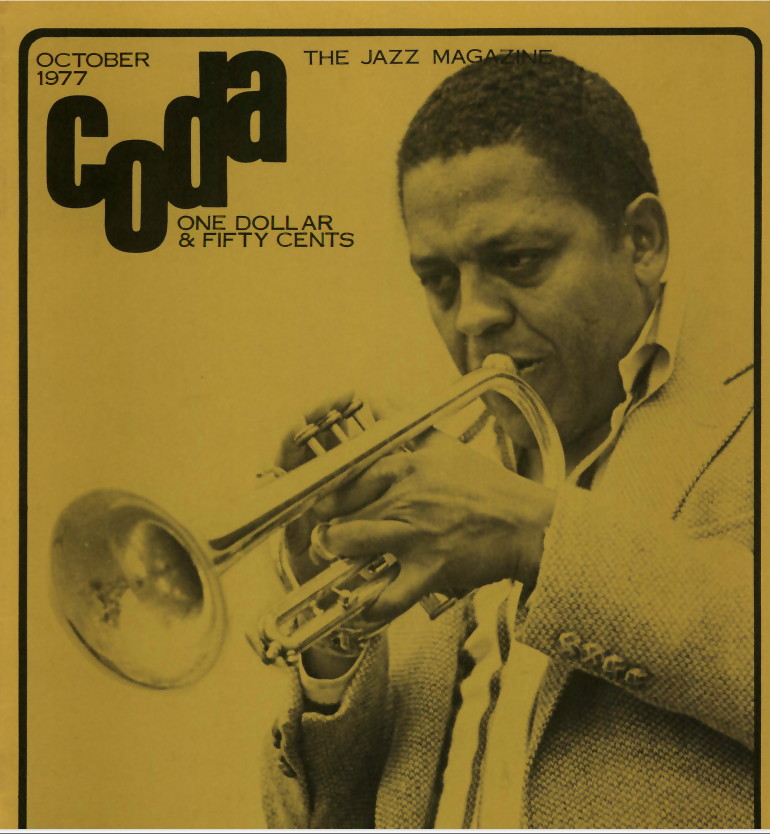
This piece on Chet Baker is in the October 7, 1977 issue of Coda - The Jazz Magazine. 


Bob tells me that as of January 13, 2025 it is also available on AllAboutJazz.com under the title of “Chet Baker: A Conversation in 1977.”


The 1977 date is significant because not much was being written about Chet at that time, certainly not in the form of an interview. Bob’s piece closes with a reference to Chet’s new contract with CTI, but it would be short-lived. Soon thereafter, Chet returned to Europe where he would perform until his death on May 13, 1988 at the age of 58.


The film about his life would come, but not until 1988 when Bruce Weber wrote, directed and produced the documentary Let’s Get Lost.


Although Baker would do a 1984 interview with Jerome Reece published in Musician Magazine, the biographies would have to wait until 1989 with the publication of Jeroen de Valk, Chet Baker His Life and Music [revised and republished in 2017], 2002 for James Gavin, Deep in a Dream: The Long Night of Chet Baker, and 2012 for Matthew Ruddick, Funny Valentine: The Story of Chet Baker.


© Copyright ® Bob Rosenblum, copyright protected, all rights reserved, used with permission.


“Back in the early 1950's, a young trumpet player whose personal appearance and demeanor was more that of an alley-way hood than of a suit and tie jazz musician, burst on the scene with a sound so gentle and lyrical that he nearly pulled the rug out from under many of the harder bebop trumpet players, and along with Miles Davis, set a style and standard for trumpet playing that was to permeate most of the decade, and create a fiery controversy whose smoke remains around us to this day. His name is Chet Baker.


Today more than 20 years later, after paying more dues than most of us would like to think about, Baker's face is drawn and tired, his eyes quietly resigned. He still has that boyish mischievous grin, he still plays gracefully and unpredictably, and the crowds still come out to catch the 47 year-old trumpet player's sermons.


Chet Baker was born in Yale, Oklahoma, on December 23, 1929 in "a little farming town with a few oil wells around". He moved to Oklahoma City when he was a year old, where he remained until he was 10. Then his father left for California to tie down a job with Lockheed while little Chet stayed with his Aunt. In a year Baker moved to California - a move that was to play an important part in both his development as a musician, and the direction jazz was to take in the coming years.


"I didn't start playing until I was 13. My father was a Jack Teagarden fan. He was a musician, but he gave up playing during the depression, shortly after I was born, because you couldn't make money playing music. People didn't have money to go out and listen to music, and didn't do much dancing in those days - or eating". One day his father brought home a trombone, and Chet tried to play it without much success. “It was too big, and I could hardly reach the bottom position. " Soon the trombone disappeared and a trumpet was in its place. In Junior High School, Chet began an instrument training class, but he had a lot of difficulty because, “I would rely too much on my ear, instead of the notes.”  "That's why he plays so damn good, " one prominent musician told me recently.


Eventually he found a place for himself in the high school band and played all the marches and other standard repertoire. His extracurricular time was consumed by playing in a dance band.


Chet joined the army at the age of 16, and was sent to Germany. Although originally assigned a clerk's position, he quickly managed to be transferred into the band. “I stayed there for a year - and it was the first time I got to listen to any jazz. They had V-discs coming over the armed forces network. Stan Kenton, Dizzy Gillespie - so I guess those were my earliest influences. Especially Dizzy. Before that I heard more of Harry James than anyone else - such tunes as

You Made Me Love You.


After being discharged at 18 he devoted more time to listening to other prominent trumpet players - Red Rodney, Miles, Fats and those on the L.A. scene at the time - the Condoli brothers, Kenny Bright. 


Although he played at a lot of sessions during this time, he felt he accomplished more while he was in the army so he re-enlisted directly into the 6th army band. “I played in the band all day, went to sleep in the evening, got up about 1 a.m., and went to this after-hours club called Jimbos in San Francisco. It didn't open until 2:30 a.m. So I'd go there and play until about 6. Then I'd race back for Reveille, play in the band, and go back to sleep." That routine continued for about a year, until they transferred Chet to Fort Huachuca, Arizona. “I stayed there for a couple of months before I decided it just wasn't happening. " The idea of being 70 miles out in the desert, roasting in the unbearable heat did not especially appeal to a young budding trumpet talent who thrived on urban life and the music it produced. He went AWOL, stayed away 32 days and turned himself in back in San Francisco, spent three weeks in the neuro psychiatric clinic and got a general discharge - unadaptable to army life.


After a year he got a regular gig in the Dixieland band of Freddie "Snickelfritz" Fisher. But it was only a few weeks later that he received a telegram informing him that there was an audition for trumpet players being held in L.A. by Charlie Parker. "When I got to this club, every trumpet player in L.A. was there. I got up and played two tunes and he stopped the audition and he hired me right on the spot. I was 22 at the time. "


Baker worked with Bird at the Tympani Club, Billy Berg's and did a few Canadian concerts before the great altoist returned east. "Bird was certainly a very strong influence on me. I had heard a lot of his records. He was a very nice man. He protected me any way he could. He didn't have a car, and I used to drive him around to places. He drank a lot of Hennessey cognac and did some other things too, but he didn't try to give me anything or even let anyone else give me anything in terms of drugs. He always looked out for the guys in the band too. When we worked for Billy Berg at the Five Four Ballroom, and if there were a lot of people and business was really good, he would talk Berg out of an extra $25 apiece for each of the sidemen. He was really a talker, man. Another thing that Bird was really good at was laying out the tunes - calling out the right tune at the right time by feeling out the audience. At the Five Four Ballroom they would dance. The first tune would be really fast, and the evening would be easy after that. It was a colored joint and I guess they are just more rhythmic than white people and they can feel the rhythms a lot better. Anyway, they loved to dance and they danced to Bird! And had a good time! And they didn't need a strong back beat, you know, oom pah, oom pah. If some people don't hear that they don't know where the beat is. After 50 years of jazz you still go to a club and see people clapping on one and three. I can't understand how people feel the rhythm in that way. They just don't know. You go into a black joint though and you won't hear people clapping on one and three. That's what I mean. "


As great as Charlie Parker was, he still was able to retain his modesty. "He didn't go into a prima donna bag while I was around. I don't think Bird was that way. I never ran into race problems with Bird at all. I think I was the only white guy in the band. I know even today blacks say jazz is the black man's music and Dixieland is the white man's jazz. But I've always tried to disprove that theory. But Bird didn't feel that way. He used to go down into Texas and he would sit in with western bands, if the time and rhythm were right. And he used to say, 'Some of those bands can swing like crazy.' And when he went back East he told Dizzy and Miles, 'You better look out, there's a little white cat out on the West Coast gonna eat you up, ' referring to me."


Another jazz giant that Chet respects and loves is Dizzy Gillespie. ''He's the one that got me the job at the Half Note last year when I came to New York. We were in Denver, and he was working there, so I went to see him. I told him I was on my way to New York and I was going to try to get myself together and play again and he said, 'Let me make a call' and we went to his hotel room and played cards and about a half hour later he got a phone call from New York, and they gave me two weeks just on his say so. He's a beautiful guy and the daddy of the modern trumpet players - I don't care what anybody says. No matter what you play, nine chances out of ten Dizzy's already played it. "


Baker didn't see Bird again until a few years later when he came to New York with his own group. At the time, Parker was leading a string orchestra in Birdland and conducting it with a Bermuda Short suit. “It was around that same time that he got a horse in the park and rode it right down 7th Avenue and through the front door of Charlie 's Tavern. There was kind of a panic there for a few minutes."


Chet's next collaboration was his most famous  - the Gerry Mulligan Quartet. He heard that Mulligan was auditioning men for his new group, and Baker was quickly chosen for the trumpet spot. Despite Baker's admiration for Mulligan, he found the baritonist rather hard to get along with. "The thing that gets on people's nerves and he was quite guilty of at that time was letting people know how wonderful he was. I've known other cats like that - who are really quite good at the things they do, but are quite good at letting people know that they know. People don't like to have you cram it down their throat all the time. He wasn't called Jeru for nothing - which means sort of like Jesus. He was really messed up with drugs, too, at the time. He's mellowed out quite a bit lately. But Gerry said things that could hurt you, and he didn't have much regard for people's feelings.


He was a wise man, and a great teacher with all his disciples down on their knees and it kind of went to his head. I saw that kind of thing in him, and I saw it in others and I told myself that it was so distasteful to me that I would never get into that trip. It's really an illness. Stan Getz is that way. You can never sit and talk to Stan. We played opposite Phil Woods at the Half Note, and he's that way too. He never spoke to me the whole engagement. One night during the week he said something like 'How ya doing Chet?', and that was all. Phil Woods thinks he's something, and cats in New York don't dig it at all. Lee Morgan was the only one that could get away with that. Last night a boy came up to me - a trumpet player - and he had tears in his eyes and he told me how much I meant to him. And that's kind of nice. So I know how guys like Mulligan and Woods get the way they are, I understand the temptation But you have to keep telling yourself we are all just men and women. We're all alike. "


The combination of Mulligan and Baker worked out beautifully on a musical level. Baker's talent for playing melodically, and Mulligan's sense of harmony, which is important for baritone players, gave the group a good feeling even though it didn't have a piano player. They were able to interweave the qualities of the two very different instruments almost effortlessly and completely spontaneously. The group got a job at the Haig in Los Angeles and in about a month people were lined up to get in.


"It was kind of a shock, because at that time the music I had been into hadn't received that kind of support. But here was a little group that was unheard of, and we made an album that did pretty well and we worked that club for eleven months. It only held 85 people, which is probably why we had people lined up."


Unfortunately things came to a fast halt when Mulligan was arrested on a drug charge, and had to spend 90 days in jail. During his confinement both Mulligan and Baker won the Down Beat Jazz Poll. So when Mulligan was back on the street, Chet and he began talking about starting the group up again. "All I wanted was $300 a week and he started laughing like I was asking for something outrageous. Up to this point all I was making was $120 a week, six nights a week. So that was the end of the group. Our original band never went on tour. $300 a week was nothing! And that's what really pissed me off. I worked for him for 11 months without asking for a raise, but after we both won the polls, I figured Jesus, it's time to get a little more bread. He was really kind of shitty about that."


In looking back, Chet Baker feels that West Coast music was "more subtle emotionally than East Coast. East Coast jazz is more straight down the middle, fiery, more soulful in a black sense. West Coast was the white man's answer. Most West Coast musicians were white so they're gonna play differently. Chet doesn't agree with many critics that East Coast music is really more emotional than West Coast, "unless you can get emotional about volume, or how many choruses somebody can play without getting tired, or how fast you can play or how many 8th notes you can string together without having to pause for breath."


In 1956 he went to Europe to meet a Parisian girlfriend. He ended up staying there for a year, tried a short comeback in the United States and returned to Europe in 1959 where he remained for almost five years. The European way of life appealed to Baker. The tempo was slower, the people more friendly. “I  was shown a great deal of respect and was very well treated wherever I went. Particularly in Italy where I fell in love with the people and the country and I wanted to live there for a while."


When Baker returned once again in 1964 he recorded several albums for Richard Carpenter, his manager at the time, with George Coleman. “I never got any money for any one of those albums - not even a statement. When I found that out I took my two boys and my wife, got a car and drove from New York to Los Angeles. I had to get away from Carpenter any way I could. He didn't pay the union, he didn't pay the car rentals, he didn't pay shit. Then he took the tapes I recorded and sold them to Prestige without my knowledge or consent. I didn't know he had made a deal until the albums were on the street. "


Chet was, according to a Down Beat jazz poll, the favorite trumpet player in the country. But he does not put much stock in polls. “I feel right now I can play twice as good as I could play when I won the Down Beat poll. And right now I'm 22nd or something in the poll. I'm twice as good now as I was then, so the whole thing is kind of dumb. Yeah, I played some nice things on that first Gerry Mulligan album. It was a different style - soft, melodic. I think people were wanting and needing something like that and it just happened at that time I came along with it and it caught on. But at the time, I don't think I was one half the trumpet player that Dizzy was, or Kenny Dorham. Clifford was around then, Jesus Christ! So it just didn't make sense to me that I should have won the poll. It was kind of a temporary fad kind of thing that was bound to work itself out. "


Chet has been through the dramatic experience of being right on top and suddenly falling completely out of the public's attention. He blames a lot of that on the fact that he spent so much time in Europe, 'Laying around, working three days a week and enjoying life, " and because of his lengthy involvement with drugs, and the bad publicity that came from many of his arrests. '1n 1970 I decided that playing the trumpet and singing were the only two things I could really do. If I couldn't find a way to make a living doing these things , then I was going to have to give them up. I did give up playing for almost two years from '70 to '72. I got on the methadone program, after spending time in California at my mother's house doing nothing but getting high. I realize now it is going to be a life of travelling and accepting what work I can and trying to prove I am a reliable person and can still play and entertain people. That's what I've been doing in New York for a year."


It was the constant pressure of going on the road that got him into drugs in the first place. “It's a complete withdrawal from society. You tolerate people in the hotel, but you are separate and apart from them. Being under the pressure of going into a club and realizing you are there for one reason and that is to make money, and there are pressures of meeting with newspaper people and critics.


In order to cope with all that crap you go to drugs. I regret having wasted so many years behind drugs - so much money. Of course, if it hadn't been for the drug thing I still would be on top with Miles and Dizzy. But I think there's some good to be gotten from everything, and paying all those dues has given me a lot of insight into a lot of things I wouldn't have known. However, I'm sure ignorance is bliss, so don't get strung out. "


Things are starting to look up for Chet. He has been working frequently at various clubs in New York City. He has signed with CTI Records, and has recorded an album under his own leadership, two others with Gerry Mulligan, and a fourth with guitarist Jim Hall. He is playing better than ever. His many harsh years in the world have weathered his boyish features, and laced his playing with soul. His playing is still quiet and introverted, but there is a sharp tang in his attack, and a distant cry in his ballad playing that brings chills to your very soul.


There has even been some talk about someone writing a biography about Chet and then making it into a movie. "But it would be just my luck that they would probably dub in the trumpet parts with Ruby Braff." - Bob Rosenblum


Saturday, April 27, 2024

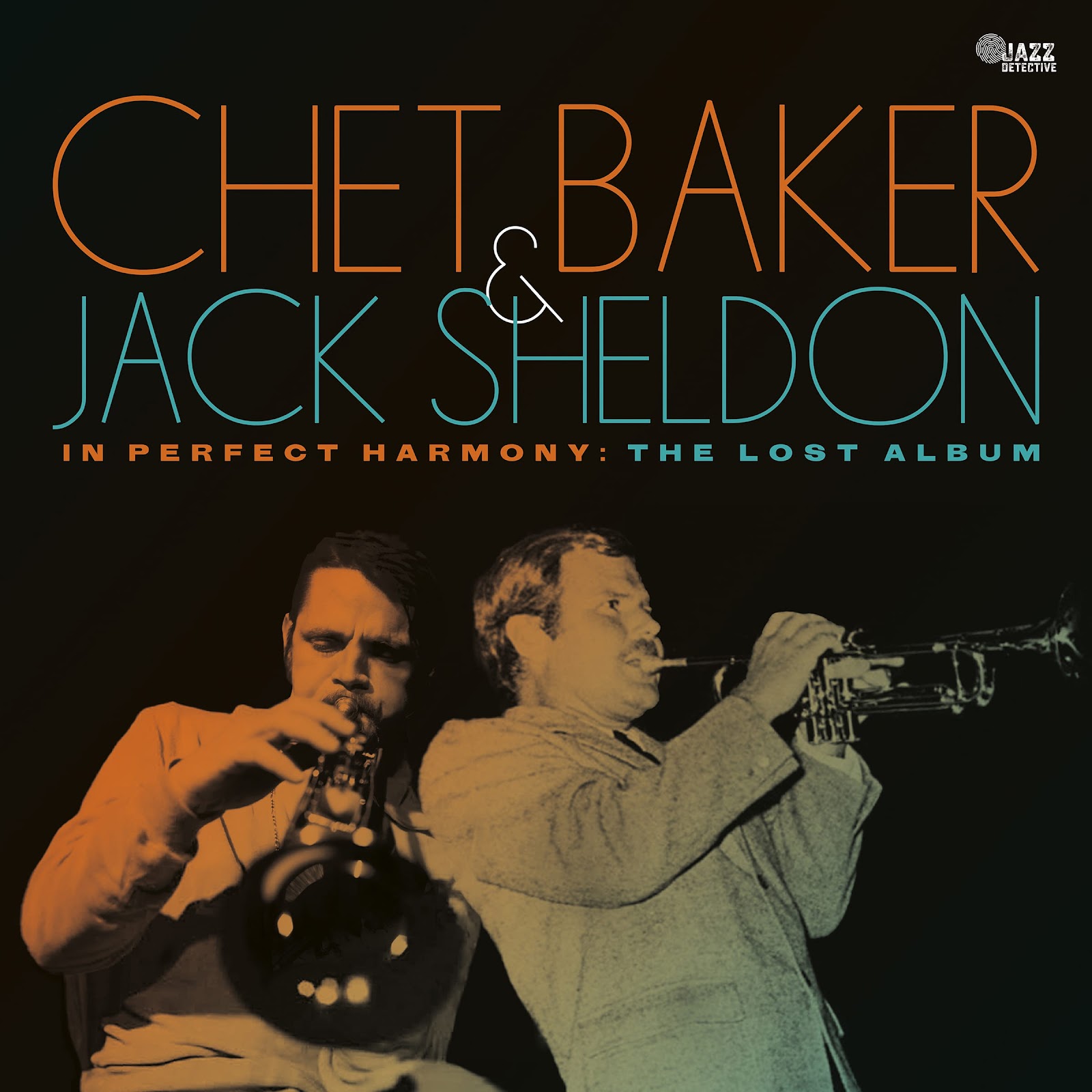
‘In Perfect Harmony: The Lost Album’ by Chet Baker and Jack Sheldon Review: Trumpeters in Tandem by Will Friedwald

 Though the two musicians were very different in both life and music, they came together in 1972 to record this excellent, newly released album.


By Will Friedwald

April 20, 2024 Wall Street Journal


Copyright ©2024 Dow Jones & Company, Inc. All Rights Reserved.

“Chet Baker and Jack Sheldon didn’t have much in common. The two trumpeters and occasional singers, who are heard together on the recently discovered, newly released “In Perfect Harmony: The Lost Album” (Jazz Detective, out now), both emerged from the West Coast jazz scene of the early 1950s, but that’s where the similarity ends. Baker has come to be seen as the ultimate moody loner, the original jazzman without a country, wandering across the globe in an endless tour of one-nighters, generally staying one step ahead of drug-enforcement police. Sheldon became a mainstay in studio orchestras, playing on “The Merv Griffin Show,” singing on “Schoolhouse Rock!” and rarely leaving the West Coast. Baker’s singing was quiet, reserved and understated in a way that many found irresistibly erotic, whereas Sheldon was a figure of fun, full of irrepressible humor and wisecracks galore—he even made an album of standup comedy. Baker was unrepentantly self-destructive, leading to his death in 1988 under mysterious circumstances at age 58, while Sheldon had a long, productive life and died at age 88.

And yet the two men were, in fact, close friends. Sheldon, who was two years younger, idolized Baker, though he was careful not to emulate the slightly older trumpeter’s lifestyle.

In the late 1960s and early ’70s, Baker was back in California, but not by choice: In 1966, he had been beaten and robbed, and his teeth were decimated to the point that he needed dentures and to relearn how to play the trumpet. Other than on a series of forgettable, pop-oriented albums, by the summer of 1972 he had barely played or recorded in years.

It was Sheldon’s idea that the two should do an album playing and singing together, as a means of easing Baker back into full-time performing. Sheldon approached the guitarist and producer Jack Marshall, who had opened a recording studio in Tustin, Calif. As Frank Marshall, the producer’s son, writes in the album notes, the two Jacks then assembled an excellent rhythm section with bassist Joe Mondragon (who is playing electric on at least a few tracks here), drummer Nick Ceroli, and Dave Frishberg, the Minnesota-born jazz piano giant who had only recently relocated from New York. To make Baker feel even more secure, Marshall himself also played on the date, giving the trumpeter something he virtually never had the luxury of working with, a full four-piece rhythm section. Sheldon and Marshall prepared 11 songs, totaling 35 minutes of music: seven songbook standards, one Sheldon original, two bossa novas, and a blues.

The finished album is excellent—though at times there isn’t enough of it. The most extreme example is the opener, “This Can’t Be Love,” which starts with Sheldon singing the first chorus rubato; then Frishberg subtly shifts it into tempo and Baker sings an uptempo chorus with Sheldon playing behind him. And that’s it. One yearns to hear the two trumpeters then start trading fours, but it ends there.

Elsewhere the album seems just right, even on the shorter tracks. “Just Friends” is Baker singing all the way through, here getting to do a jazzier second chorus, with Sheldon again playing obbligatos; although both tracks are only two minutes and change, “Friends” at least feels complete. “But Not For Me” is even better, opening with a charming intro in which Frishberg pays allegiance to Earl Hines and Teddy Wilson, again with Sheldon playing in support of Baker’s singing.

They never do actually sing together, but they play in tandem on several numbers, such as “I Cried for You” and Sheldon’s “Too Blue”—a quasi-comedic novelty with allusions to the blues.

The two Brazilian songs, “Historia de un Amor,” sung by Sheldon, and “Once I Loved,” where Baker takes the lead, are satisfying vehicles for the two. Throughout, the presence of a second horn challenges and inspires Baker to play more aggressively than he later would on most of his ’70s and ’80s recordings. The longest track, “When I Fall in Love,” finds Baker singing and then playing especially rapturously and Sheldon offering equally beautiful support.

“I’m Old Fashioned” and “You Fascinate Me So” are brief but highly copasetic features for Baker and Sheldon, respectively, each playing agreeably behind the other’s vocals.  The set ends with “Evil Blues,” from the songbook of Jimmy Rushing, with Baker playing, Sheldon singing, and Frishberg paying homage to Count Basie. 

We can’t be sure what Sheldon and Marshall’s plans were for the album—to sell the master itself to a label or merely to use it as a demo. Ultimately, neither happened; about a year later, Marshall died at age 51, by which time Baker, his chops and his confidence restored, had resumed his endless nomadic trek around the world. It remained for the guitarist’s son to discover the tape in a garage 50 years later. We can be very glad he did; it’s a remarkable collaboration by two uniquely gifted musicians, Chet Baker and Jack Sheldon, so different and yet in harmony..”


Monday, April 17, 2023

Chet Baker : Blue Room - The 1979 Vara Studio Sessions in Holland

 © Copyright ® Steven Cerra, copyright protected; all rights reserved.


“In February of 2O21, while I was working on another Chet Baker production with my partners Jordi Soley and Carlos Agustin at Elemental Music, I asked my colleague, Frank Jochemsen of the Nederlands Jazz Archief, if he could find any previously unissued Chet Baker recordings. Since Jordi, Carlos and I were already working with the Chet Baker Estate doing our best to contribute to Chet’s legacy with the Live in Paris release on Elemental, we've all been passionate about the prospect of finding other unissued Baker recordings.


My inquiry with Frank bore fruit, as he was able to find two previously unissued studio sessions in pristine condition from the KRO-NCRV archives recorded at VARA Studio 2 in Hilversum, the Netherlands on April 10 and November 9,1979 respectively. It was thrilling to find these two sessions where we can hear Chet in fantastic form with a great cast of supporting musicians. It represents a welcome addition to Chet’s discography, as he spent much of his time in Europe; a delightful find that we all felt strongly deserved a chance to see the light of day. I want to thank my dear friends, Jordi and Carlos, for being behind this production from the start and making it possible. Messrs. Soley and Agustin have championed the legacy of Chet Baker and they are passionate about supporting Chet’s music by continuing to seek out and issue these kinds of important unissued recordings. I'm very proud of this release and the way that we told the story of this important music.


I'd like to acknowledge and thank the acclaimed Dutch recording engineer Marc Broer for his meticulous attention to detail working from the original tapes.”

- Zev Feldman, Producer, Chet Baker: Blue Room - The 1979 Vara Studio Sessions in Holland [Deep Digs Music Group]


“I worked with Chet from '76 to '85 in different settings. I was young, so it was a formative experience to be with such an artist. He was a very quiet person, not an extrovert, so every word he said was as if God were speaking.


Chet was such a master of melody. When he was improvising, I tried my best to learn from him. I remember when we'd drive to a gig, we'd sing songs, bass lines. He'd sing bass lines to me. I'd improvise. We liked to sing. I could scat, so for hours we'd share tunes that way. He was one of the best teachers I ever had.”

-Jean-Louis Rassinfosse, bassist


If you ever wondered what made Chet Baker, a trumpet player of very limited technical ability who rarely ventured out of the middle range of the instrument, such a perennial favorite among Jazz fans, the following explanations by his bandmates during the heady days of the original Gerry Mulligan Quartet [1952-53] identify many of the ingredients that make up  Chettie’s “secret sauce.”


Bassist Bob Whitlock:


“Chet was one of those rare birds who learned to read music but never had any real training in harmony. Most of us play by ear, assisted by some knowledge of harmony and counterpoint, but since he didn't have the benefit of those tools, he was forced to do it all by ear, and therein lies his genius. Naturally, there is a price to pay with this approach. It requires the bravado to run through minefields and the courage of Hannibal, because the perils are endless. The reward comes in the form of refreshing vitality, breathtaking melodic invention, freedom from exasperating clichés, extraordinary sensitivity to shading and color, and a lyricism second to none. Not a bad trade-off if you are willing to take the risks, and Chet greeted the challenge like a gladiator.”


This description from drummer Larry Bunker provides some remarkable keys that also unlock some major characteristics of Chet’s playing.


“Sometimes he would come into work with his mouth all cut from having been in a fistfight during the day, but that was Chet. The paradox was that he could be incredibly sensitive in his playing. He was a more linear player than Gerry, probably because of his lack of technical knowledge about what he was doing; so much of it was a magical, intuitive thing. Even without piano harmony to guide him he could sail across the changes when they were merely implied. Some people thought he couldn't read music, but he certainly could, though not very proficiently. He had been in an army band, so he would have had to read marches, and in the few situations I was with him when he had to read, he did O.K. He couldn't read chord changes, though, and he didn't know what they were, except for that amazing ability he had that enabled him to hear where they went. Gerry was right on the money when he said, "Chet knew everything about chords; he just didn't know their names."


When other musicians realized that Chet didn't have any theoretical knowledge, they would sometimes try to get him at jam sessions by calling tunes in ridiculous keys that nobody was familiar with, hoping to trap him. They would try "Body and Soul" in G-flat, for instance, but it didn't matter at all, because they could have said Q-flat and Chet would still have been able to play it. After a while that all stopped, because the guys couldn't transpose that fast from their accustomed keys, so they were trapping themselves, but not Chet. They backed themselves into corners that they couldn't get out of, but he would just sail through all of it because he didn't have those kinds of constraints. His mental apparatus worked in a different way, and that was what was so amazing about him, the fact that he could do what he did with such limited theoretical knowledge.”


Taken together, you can literally spend a lifetime dissecting and applying elements from Bob’s and Larry’s elucidations to Baker’s vast discography. 


Especially if you do so with Chet’s better recordings. 


On some occasions, Chet did tour with set groups which, for example, featured pianists Richie Beirach,  Enrico Pierannuzi and Philip Markowitz, or guitarist Phillipe Catherine or bassist Ricardo Del Fra or drummer John Engels.


But like alto saxophonist Sonny Stitt, Chet was primarily a peripatetic musician during the last two decades or so of his career, often picking up local rhythm sections and recording with them to generate  his income. So although his recorded legacy is vast, because of issues with the level of ability of some of his accompanists, many of his recordings lack quality.


Every so often, select recordings capture Chet in his best form and when these come along, applying Bob’s and Larry’s insights into Chet’s playing can serve as a source to reveal Baker’s ear for nuance, melodic originality and constant surprises in his improvisations.


Such is the case with Chet Baker: Blue Room - The 1979 Vara Studio Sessions in Holland [Deep Digs Music Group] which is due out as a Limited Two LP set on Record Store Day, April 22, 2023 followed by a CG release on April 28, 2023 [ DDJD-008]. A major shout out goes to Zev Feldman, the “Jazz Detective” for making this music happen in a commercial format.


My comments are based on the double CD offering, a copy of which was received from Ann Braithwaite of Braithwaite & Katz Communications. Her always informative media release closes this feature.


This music on these recordings comes from three, separate dates featuring two different groups: [1] Chet with Phil Markowitz [p], Jean-Louis Rassinfosse [b] and Charles Rice [d] play on seven of the thirteen tracks; [2] Chet with Frans Elsen [p], Victor Kaihatu [b] and Eric Ineke [drums] perform on the other cuts [LP speak for “tracks”].


What immediately jumps out at you when you listen to these recordings is - “refreshing vitality, breathtaking melodic invention, freedom from exasperating clichés, extraordinary sensitivity to shading and color, and a lyricism second to none.” [from Bob Whitlock’s description of the virtues in Chet’ playing; emphasis mine].


Chet’s improvisations are like nothing you’ve heard before: he doesn’t play pat licks; there are no resting places; nothing is wasted - no throw-aways. Each interpretation is like a story in itself; each a fresh invention; each an ephemeral expression of beauty and precision. His playing is never cloying, or brittle or overly exaggerated. And, it inspires all the other musicians to bring their best playing to match Chet’s energy and enthusiasm.


In this regard, while I’ve been a fan of pianist Phil Markowitz for some time, I find his work here with Chet to be more introspective, impulsive and intriguing. He takes his playing in some new directions, no doubt spurred on, in part, due to Chet’s influence.


And what can one say about the big, bold tone of Jean-Louis Rassinforte - Le maître, en effet?! He centers the time so beautifully and because of all the space Chet leaves, his sound rings out and envelops the music in rich overtones. His playing is so resonant that it seems like the time is being carried forward on a cushion.


While not as familiar with the work of pianist Frans Elsen and bassist Victor Kaihatu, their playing on the four tracks laid down later in 1979 certainly reflect their quality as both accompanists and soloists. Drummer Eric Ineke’s solid time anchors the music within a pulsating groove which keeps the music rhythmically bright and exciting. 


Throughout these 1979 recordings, time and again, there are examples of what Larry Bunker noted as Chet’s “magical, intuitive” playing. “Even without piano harmony to guide him he could sail across the changes when they were merely implied.”


What’s more, many of the comments from the interviews with musicians who are featured on these recordings as contained in the marvelous booklet notes that accompany the set reaffirm the observations made by Bob Whitlock and Larry Bunker about Chet and his music.


For example: 


“As an accompanist, I really learned how to comp properly for someone who was in the very precise harmonic zone that Chet was in. He came from players like Charlie Parker and Clifford Brown. I'm not saying his sound was like Clifford's but his harmonic sense in terms of playing inside of a very strict set of changes was non-chromatic. Basically, if you played a wrong chord behind him, it was death and it was embarrassing for you. But also, it was death for him because it made him sound bad. So you really had to listen.” - Phil Markowitz


“Chet was a master of melody. …. Chet taught me to be strict with rhythm. For me the most important quality in Chefs playing was rhythmic placement. The soloist has to swing, not only the rhythm section. Chet’s placement of phrases was impeccable.” - Jean-Louis Rassinfosse


“With Victor's steady beat next to me, I felt very comfortable and, when Chet started singing, I felt he was telling me a story personally because I was playing with headphones on. An unforgettable moment.” - Eric Ineke


And other musicians interviewed in the booklet who are not on these recordings but played with or were influenced by Chet offered comments similar to Bob and Larry’s assessment of Chet’s playing.


Randy Brecker [trumpet]:


“He wasn't a powerhouse trumpet player, but boy, he got to the heart of the instrument like nobody else. You hear him and you want to take everything from his playing, his whole conception, his sound, his melodic content. He was really an improviser. He played off the melody and he played what he heard. To this day, I try to use all those elements. I try to keep him and five or six other trumpet players in the back of my mind when I play. I especially try to concentrate on playing less, rather than more. I am constantly using his example to try to get to the core of the matter, get to the essence.”


Enrico Rava [trumpet]:


“What made him special for me was the feeling that for him, every note was the last one; the feeling that he was really speaking directly from his soul, directly from his brain. There was no phrasing, no routine. It was always something different. It was pure beauty, all of his phrases. Beautiful, beautiful phrases all the time. And it was moving. It spoke directly to my soul. It was like Miles except Miles had a more dramatic sense. He built up a story, while Chet didn't. Chet just built little episodes of beauty.”


Enrico Pieranunzi [piano]:


“When I met Chet, everything turned upside down. I saw I had to cut to the essentials because Chet’s phrasing was so essential, so amazingly lyrical, musical, smart, logical. I began to feel that something was wrong with my playing. I had to change everything. I had to really go toward what was truly essential.”


The recording quality deserves special mention as it is simply outstanding. You feel like the musicians are in your living room playing just for you. As Frank Jochemsen, a producer for the Dutch National Jazz Archives and the researcher who located these recordings by Chet at the request of Zev Feldman who produced them for this release:


“As if this weren't enough: the music was recorded in the fantastic VARA Studio 2 [in Hilversum, The Netherlands] by the brilliant technician Jim Rip and, moreover, all this music is of high artistic quality and has never been released before!”


Chet’s recorded legacy is vast, but very uneven due to a variety of factors including the poor shape of his playing on some due to his drug addiction, the substandard rhythm sections on the horn-for-hire albums, and the inferior recording quality which plagues many of them.


Given this fact, if you are a fan of Chet’s in particular or a fan of good Jazz in general, you are not going to want to miss Chet Baker: Blue Room - The 1979 Vara Studio Sessions in Holland [Deep Digs Music Group] with Chet in great form backed by two quality rhythm sections recorded to the highest audio standards and complimented by a 23 page booklet that contains a great collection of photographs and is replete with interviews by those involved with making the music on these superb recordings.


Here’s more about these recordings from Ann Braithwaite’s media release.


"ARCHIVAL LABEL JAZZ DETECTIVE TO ISSUE BLUE ROOM, AN

UNRELEASED TREASURE BY TRUMPETER CHET BAKER, AS A

LIMITED TWO-LP SET ON RECORD STORE DAY, APRIL 22


Collection Produced in Partnership with Elemental Music and Dutch Jazz Archive KRO-NCRV, Also Available on CD and Digital Download April 28,

Presents Two Superlative Sessions Recorded for Dutch Radio in 1979,

Drawn from Tapes Unheard Since Their First Airing Extensive, Newly Commissioned Notes Include an Overview by Journalist and Chet Baker

Biographer Jeroen de Valk, Interviews with the Dates' Producers and Sidemen, and Tributes from Trumpeters Randy Brecker and Enrico Rava


Jazz Detective, the label founded in 2022 by GRAMMY-nominated archival producer Zev Feldman, will release Blue Room: The 1979 VARA Studio Sessions in Holland, a superlative, previously unreleased set of studio performances recorded in Holland by legendary trumpeter Chet Baker, as a limited two-LP set on Record Store Day April 22. The package will be issued as a two-CD set and digital download on April 28.


The collection — co-produced by Feldman and Frank Jochemsen and released in partnership with Elemental Music — comprises a pair of brilliantly played dates cut for Dutch radio KRO-NCRV in Hilversum, the Netherlands, by producers Edwin Rutten and the late Lex Lammen in 1979: an April 10 session with pianist Phil Markowitz, bassist Jean-Louis Rassinfosse, and drummer Charles Rice, and a November 9 session with pianist Frans Elsen, bassist Victor Kaihatu, and drummer Eric Ineke. Both occasions found Baker playing (and, on three tracks, singing) in exceptional form.


Blue Room's extensive booklet includes an overview by Dutch journalist Jeroen de Valk; essays by Feldman. Jochemsen and Rutten; interviews with sidemen Markowitz, Rassinfosse, and Ineke; and tributes from trumpeters Randy Brecker and Enrico Rava and pianist Enrico Pieranunzi. The collection is illustrated with photos by Veryl Oakland, Jean-Pierre Leloir, Christian Rose and others. The package was mastered for vinyl by the great engineer Bernie Grundman and Dutch engineer Marc Broer.


The album succeeds Jazz Detective's inaugural offerings, two volumes of widely-praised live performances by pianist Ahmad Jamal, issued as Emerald City Nights on Record Store Day's Black Friday last year. Feldman -who produced the Chet Baker Trio's Live in Paris for Elemental Music last year for label partners/executive producers Jordi Soley and Carlos Agustin Calembert --previously joined with Jochemsen to explore the Dutch archives for Bill Evans' Behind the Dikes (Elemental Music, 2021) and Another Time: The Hilversum Concert (Resonance Records. 2017) and Sonny Rollins' Rollins in Holland (Resonance Records, 2020).


Feldman says of the present package, "It was thrilling to find these two sessions where we can hear Chet in fantastic form with a great cast of supporting musicians. It represents a welcome addition to Chet's discography, as he spent much of his time in Europe; a delightful find that we all felt strongly deserved a chance to see the light of day."


Jochemsen — who unearthed the '79 sessions on a tip from radio producer Lex Lammen, who supplied the researcher with detailed notes before his death in 2018 — says, "These two sessions by Chet Baker were both recorded in 1979 in brilliant stereo for the radio program 'Nine O'clock Jazz.' As if this wasn't enough, the music was recorded in the fantastic VARA studio 2 by the brilliant technician Jim Rip and, moreover, all of this music is of high artistic quality and has never been released before!"


Rutten, who offers a track-by-track look at both '79 recording sessions, recalls fondly, "The beauty of being a jazz producer is that you can give yourself birthday presents even when it's not your birthday. Gifts in the form of the best jazz from the Netherlands and from way beyond....The first tones [of Baker's version of "Nardis"] started unwrapping my birthday present."


Baker's sidemen Markowitz, Rassinfosse, and Ineke reflect on the sometimes challenging task of supporting the notoriously eccentric Baker, but all walked away from the experience impressed by the high level of his performances.


"It was an incredible honor to play with him," says Markowitz, who supplied masterful support and solos. "I'm grateful for the lessons I learned with him back then...This recording is really great. Chet Baker's fans are going to be absolutely thrilled because he sounds unbelievable on this recording."


His session partner Rassinfosse. who worked behind Baker from 1976 to 1985, adds, "Chet's playing is amazing on these tapes. He was in very good shape. He had good chops on these recordings....Being able to record with Chet Baker was an honor. I learned half of what I know in music through Chet Baker."


Both Brecker and Rava offer thoughts on the deep influence Baker's playing had on their own styles with his acute melodic sense and economy of expression.


Brecker, who studied Baker's recording of "My Funny Valentine" when he was learning to play, says, "Boy, he got to the heart of the instrument like nobody else. You hear him and you want to take everything from his playing, his whole conception, his sound, his melodic content. He was really an improviser. He played off the melody and he played what he heard. To this day, I try to use all those elements. I try to keep him and five or six other trumpet players in the back of my mind when I play. I especially try to concentrate on playing less, rather than more. 1 am constantly using his example to try to get to the core of the matter, get to the essence."


Rava says the trumpeter's recordings with Gerry Mulligan were "my introduction to modern jazz. It was so beautiful, but also easy to understand. For a European, it had the logic of a Bach fugue with the soul of jazz....Chet created pure beauty. Doing what he did, everyone loved him. There was no way you could escape it. He was totally committed. He played music as if it was his last night in this world. Every note he played was essential. He taught everybody not to play too many notes; to play only the necessary notes."


Rava's countryman Pieranunzi. who backed the musician on his Italian dates of 1979, says, "When I met Chet, everything turned upside down. I saw I had to cut to the essentials because Chet's phrasing was so essential, so amazingly lyrical, musical, smart, logical. I began to feel that something was wrong with my playing. I had to change everything. I had to really go toward what was truly essential."


Summing up Baker's impact in his overview, writer de Valk says, "Almost 35 years after his passing, Chet Baker continues to reach our hearts and our heads. He touches our hearts with his mellow sound and melodic approach and enters our heads with his adventurous improvisations."”


For more information please contact:

Ann Braithwaite / Braithwaite & Katz Communications/ann@bkmusicpr.com