Showing posts with label gary burton. Show all posts

Tuesday, March 16, 2021

Getz and Gary: Stan and Burton - An Unusual Combination

 © Copyright ® Steven Cerra, copyright protected; all rights reserved.
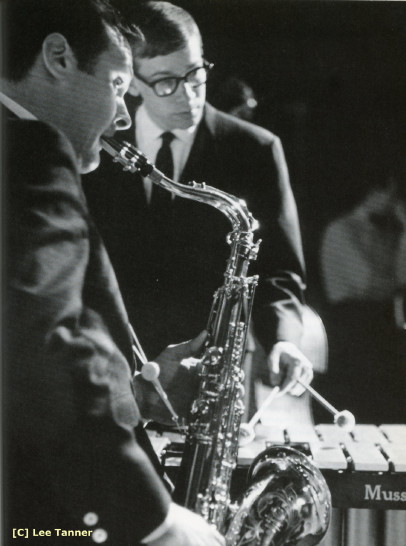

"I had been playing to impress other musicians, which is very common among young players... It was through Stan that I discovered who you're really supposed to be playing for. He changed my whole outlook."

- Gary Burton, vibraphonist who played with Getz from 1964-1966


“One of the most concisely accurate appraisals of Stan Getz was written by Don Gold in Down Beat about a previous Getz album. Gold spoke of "his infinite taste, richly flowing conception, and warm feeling. He can create moving ballad forms or exciting up-tempo patterns, characterized in both cases by long, lovely phrases."


There is also an increasing strength and fullness of tone in Getz's work in the past few years. The sound that, as one British critic once wrote, took on occasionally the quality of a whisper, has become more assertive without any loss of the lyricism that has been Getz's key quality. Lyricism and logic. Getz is able to really build an integrated improvisation that in retrospect is heard as a whole with all its parts clearly and almost inevitably inter-related. He doesn't just run changes on a song, but instead interprets the song while making it a personal message. He never lets technique take over for its own hollow sake.”

- Nat Hentoff, Jazz author and critic


Although it is not mentioned in David Gelly’s excellent biography Stan Getz: Nobody Else But Me [2002], after he left George Shearing’s quintet and before he joined Stan Getz’s quartet, Gary Burton spent time co-leading his own quartet with drummer-vibraphonist Larry Bunker. The Bunker-Burton quartet did make an in-performance recording at Shelly’s Manne Hole in Hollywood, CA and Larry actually toured for awhile as the drummer in the Getz-Burton Quartet which is documented in a recording of a concert that took place at Koseinenkin, Kaikan, in Tokyo, Japan on July 18, 1965.


All due credit to Roy Haynes’ work with Stan, but Larry playing with Stan, Gary and bassist Steve Swallow is filled with an energy and a magnetism that really sets the tone for the high quality of the music performed at this concert.


“The bossa nova made Stan Getz's fortune, but the years of its great success were by no means carefree ones for him. When the single of 'Desafinado* won the 1963 Grammy Award for the Best Jazz Solo Performance, and with Jazz Samba still figuring in the charts, Charlie Byrd began voicing loud complaints. He pointed out, with more than a little justice, that he had been the instigator of Getz's present success.


He had introduced Getz to bossa nova in the first place, devised the effective format of the Jazz Samba band, following their abortive first attempt, chosen the material, assembled the musicians and even picked out a studio. "All Stan had to do," he said in an aggrieved interview with Down Beat, "was come in and play." And yet he, Byrd, had received no share of the royalties, nor had his role been acknowledged in the Grammy citation. Creed Taylor replied to that last complaint by pointing out that the prize was for the best solo, and there was no guitar solo on the single, which seems a touch pharisaical [holier-than-thou or hypocritical], to put it mildly. Byrd finally went to law, securing a lump sum in respect of back royalties and a share in future profits, but it would not have hurt either Getz or MGM to have done the decent thing and paid up with good grace.


Then there was the question of Getz's continuing mood-swings and violent outbursts. These seem to have been both the cause and the result of his binge drinking. He would become sullen and argumentative, then hit the bottle, then start attacking people and smashing up the furniture, his usual target being Monica [Mrs. Getz]. Getz's biographer, Donald L Maggin, consulted a psychiatrist who treated Getz in later life. His opinion was that what Maggin called Getz's "psychic pain" stemmed originally from his mother, Goldie, who was severely depressed herself. Throughout his childhood he had tried to please her, attempting to relieve her depression, but the task had proved impossible, leaving him with profound feelings of failure, remorse and guilt. The violent outbursts represented attempts to break out of this doomed cycle. The drink and drugs may once have provided temporary relief, but now they only made matters worse.


In his book, Stan Getz: A Life In Jazz, Maggin provides copious, detailed and harrowing details of Getz's outbursts, based mainly on the testimony of his children and of Monica herself. On many occasions the police were called, and sometimes he had to be arrested for his own safety and that of his family. At least once he attempted suicide by gas. In the light of these events, his extraordinary 1954 letter to Down Beat from prison, in which he accuses himself of "degeneracy of mind" appears distressingly consistent. 


Yet to all outward appearances the family life of the Getzes ran on untroubled in its bustling, harmonious course. Monica became involved with the promotion of his career, even to the extent of occupying an office at Verve's New York headquarters for a while. It's difficult to say how much influence she had over his work, although she obviously felt she did. "Stan has not always been fair to his audience," she said in a Melody Maker interview. "I think he respects the people now, though. He tries to show this in the way he does his show and in the songs; the songs are so important... He's learned that the long, egotistical solos don't necessarily mean anything. They don't particularly communicate." The interview makes great play with the pop success of The Girl From Ipanema', comparing its appeal to that of The Beatles.


An effort was certainly afoot to consolidate Getz's position as a pop artist. In October 1963 he recorded the album Reflections, accompanied by a string orchestra conducted by Claus Ogerman, with arrangements by Ogerman and Lalo Schifrin. It includes new versions of both 'Early Autumn' and 'Moonlight In Vermont,' Henry Mancini's theme tune from Charade, the new movie starring Gary Grant and Audrey Hepburn), and, bizarrely, an Ogerman arrangement of 'Blowin' In The Wind'. Verve were so taken with this last item that they deleted the existing single of 'The Girl From Ipanema' and reissued it with 'Blowin' In The Wind' as the B-side, in place of 'So Danco Samba'. The whole album has a slightly unfocused feeling to it. There is rather too much echo on the tenor and the orchestrations tend to be over-busy. By far the best piece is a good, straight account of 'Spring Can Really Hang You Up The Most', with Kenny Burrell's guitar prominent in the accompaniment.


MONSTER OF A PLAYER


While all these developments were taking place, the Stan Getz Quartet continued as a going concern, playing concerts and clubs. Steve Kuhn left at the end of 1963 and Getz could find no immediate candidate for a replacement. The matter became urgent in January 1964 when the quartet was booked for a three-week tour of Canada, with Joao Gilberto as guest artist. Getz called his old comrade Lou Levy in Los Angeles for advice. Levy could not think of a pianist who might be up to the job, but mentioned a 21-year-old vibraphone player, Gary Burton, who had recently left George Shearing's quintet and was currently freelancing in New York. (Burton had in fact played in the orchestra on a couple of the Reflections sessions.) 


Whereas all the leading jazz vibraphone soloists used two mallets, one in each hand, to strike the keys, Burton used four, which enabled him to play four-note chords. No one had ever used a tinkling vibraphone as the main chord instrument in a rhythm section before, and the idea intrigued Getz. With the tour looming, he called Burton.


"The first two weeks went terribly," Burton later recalled. "I'd never really done much comping [playing chordal accompaniment to a soloist], and he was really particular about comping. He was used to the best and he hated what I was doing. So I'd try a little bit, and pretty soon he'd get frustrated with what I was doing and tell me to lay out for a chorus or more and let him play alone with bass and drums [Gene Cherico and Joe Hunt]. This went on for a couple of weeks, while I was frantically trying to figure out what to play, when to play, how to stay out of his way. And he didn't know how to tell me. All he could tell me was when he didn't like it. But by the third week things started coming together. I got the hang of how to play with him and he began to like the sound of things."


Burton had been hired for a three-week tour and assumed that their association would end when the tour was over. But Getz asked him to stay on for a further few weeks and he eventually stayed for almost three years. "As I got my own playing together, I began to pay more attention to what he was doing, and discovered this monster of a player," said Burton. "I had no idea that this man was such a major artist. I stood next to him and I would play what seemed to me some incredibly mechanical something-or-other, and he would just play the melody and the crowd would be practically in tears. He played that tenor like he was singing. He had this great ability to communicate with people, and I realized I had been taking the audience for granted. I had been playing to impress other musicians, which is very common in young players. You believe they're your true critics but, frankly, they're not. They're the most fickle and opinionated. They filter everything though their own preoccupations, tastes, preferences and so on. It was through Stan that I discovered who you're really supposed to be playing for. He changed my whole outlook."


A matter of days after returning from Canada, Getz took the quartet into Rudy Van Gelder's studio at Englewood Cliffs, NJ, to record an album for Verve. This was to be a purely jazz production, with no bossa nova within earshot. "Stan wanted to get the group on record, and he was worrying that bossa nova was burying his jazz identity," Burton recalled. The album, when it came out, was entitled Nobody Else But Me, though it had to wait 30 years to see the light of day. The last thing Verve wanted from Stan Getz in 1964 was an all-out jazz album.


The content of the album is obviously based on the programme they evolved during the Canadian tour, and it shows that, in this remarkably short time, Burton had managed not only to work out a way of accompanying Getz effectively, but had begun to contribute new material to the quartet's repertoire. It's also obvious he was already well advanced in the process of creating a whole new persona for the vibraphone in jazz. The most obvious difference lay in his consistent use of four mallets, enabling him to treat the vibraphone almost like an enormous piano. Unlike such distinguished predecessors as Lionel Hampton or Milt Jackson, he rarely if ever turned on the vibrator fans, which create the wavering vibrato from which the instrument gets its name. The resultant sound is clear and crystalline, perfectly suited to Burton's filigree style.


Nobody Else But Me, which was recorded in a single day (March 4th 1964) is a beautiful piece of work. Getz's own playing, especially on the ballads 'Here's That Rainy Day' and 'Little Girl Blue', bears out Burton's observation that he played the tenor saxophone "like he was singing", his voice rising through a vapour of soft vibraphone chords. By contrast, the version of 'What Is This Thing Called Love' rushes along so wildly, at 84 bars a minute, that it has the distinct air of a creature let loose after long confinement. In the two-bar break leading from his theme statement into his solo, Getz plays a rising phrase which takes him to altissimo D, way above the 'official' range of the instrument. Such occurrences are extremely rare in his playing, although it goes without saying that all the 'freak' notes are immaculately in tune.


At first, Burton had not been particularly impressed by the idea of working with Stan Getz. As a sharp young graduate of Boston's Berklee School of Music, he knew little about Getz, beyond the bossa nova and some old records from the 1950s. His first inkling that there was more to the man than he had imagined came when Getz gave him a copy of Focus, which impressed him immensely. Burton's composition 'Six-Nix-Quix-Flix' on this album shows the influence of Focus very clearly - in its mood, its melodic style and, in particular, its 6/8 time signature. A pretty, fluttering little piece, it is unlike any music Getz had so far played with a small band.


Burton's other contribution is an ingenious arrangement or adaptation of 'I'm Late, I'm Late', aptly titled 'Out Of Focus', cleverly orchestrated (if such a term can apply to a quartet) and full of tonal contrast. In a manner of speaking, Burton also contributed the number entitled 'Sweet Sorrow', written by his friend from Berklee days, Michael Gibbs. Once again Getz's openness to contributions by very young, largely unknown musicians is striking. 'Sweet Sorrow' is a spiky, abstract kind of piece, the kind of thing of which Monica presumably disapproved. She would, however, have loved this treatment of Gershwin's evergreen, 'Summertime', so different from all previous approaches to the tune, with an ostinato bass figure running under it all the way and Getz rising to heights of great passion and intensity. All told, Nobody Else But Me marks a high point in Getz's recorded work. It's a shame that the world had to wait until 1994 to enjoy it, especially since Verve did eventually release the results of a session, recorded a few months later, about which Getz was extremely unhappy. This was planned as a quartet album with the pianist Bill Evans, a promising idea on the face of it, but it simply didn't work. Even the best performance, 'My Heart Stood Still', has a rushed, stumbling air about it. Significantly, Getz solos much of the time with just bass and drums accompaniment. For some reason, too, his tone fails to bloom.


Getz/Gilberto was named Album Of The Year in the 1964 Grammy Awards, and The Girl From Ipanema' won Best Single. It made commercial sense for Astrud Gilberto to join the New Stan Getz Quartet (as the band was now being billed), to make a profitable touring package. Astrud and Joao Gilberto had been on the point of separating at the time of the Getz/Gilberto sessions, and they were now divorced. Pursuing his usual policy of making a pass at any presentable woman he met, Getz now instigated an affair with Astrud. It was by no means an idyllic relationship. The Girl From Ipanema turned out to be a tough cookie. By all accounts, when they were not either on-stage or in bed, she and Getz spent most of their time together squabbling and fighting. Nevertheless, Astrud and the quartet made an ideal combination and their recordings together have a blithe, insouciant charm that belies the off-stage hostilities.


The album Getz Au Go-Go, supposedly recorded live in May 1964 at the eponymous New York club, catches the partnership very well. It later emerged that little, if any, of the original live recordings went into the final version, which was mostly done in the studio, with 'live' effects added. Indeed three of the numbers ('Corcovado', 'Eu E Voce' and 'The Telephone Song') are by a different band altogether, without Burton but including a guitar (allegedly Kenny Burrell) and with occasional touches by a pianist who sounds suspiciously like Jobim himself. Could at least some of these be leftovers from the Getz/Gilberto sessions? The whole tangled affair has kept discographers busy for years, but the ease with which performances could be dubbed and spliced by the 1960s makes it unlikely that anyone will ever get to the bottom of it.


Whatever the case, the remaining seven tracks are by the quartet, three of them with Astrud. She sings 'One-Note Samba' in both Portuguese and English, with a wonderfully tricky contrary-motion part by Getz in the middle section of the song. She sounds even younger and more ingenuous in her native language than in English. Also included are two classic American songs transposed into the bossa nova idiom - 'It Might As Well Be Spring' by Rodgers & Hammerstein and Benny Carter's beautiful 'Only Trust Your Heart'. Apart from their undoubted charm, these performances mark a significant step in the incorporation of bossa nova into the jazz vocabulary. It very quickly became common practice occasionally to recast standard songs in the bossa nova idiom in the interests of variety, a practice that continues to this day.


Also included in GetzAu Go-Go are further versions of 'Summertime', 'Here's That Rainy Day' and 'Six-Nix-Pix-Clix', together with another Gary Burton original, a perky, quirkish little piece in 12/8 time called 'The Singing Song'. It's obvious from the freedom and relish with which Getz plays on this and other Burton tunes that the young vibraphone player had provided him with a challenge and stimulus in which he delighted.


JUST FRIENDS


Getz's exclusive contract with MGM/Verve allowed him to record, by agreement, as a featured guest with other artists on other labels. It was under this arrangement that he recorded for Columbia on May 25th and 26th 1964, first with Tony Bennett and, on the same day, with Bob Brookmeyer. The rhythm section was the same for both sessions, consisting of Herbie Hancock (piano) and Ron Carter (bass) - both members of the Miles Davis Quintet at the time - and John Coltrane's drummer, Elvin Jones.


The Tony Bennett session yielded only one number, a simple, grave version of 'Danny Boy', to which Getz contributes both obbligato and a restrained solo. Three further numbers - 'Clear Out Of This World', 'Just Friends' and 'Have You Met Miss Jones' - were recorded at a later session, and all four were released as part of Bennett's album Swingin' Till The Girls Come Home. Getz often said how much he enjoyed working with singers, and once admitted that he lived in hope of one day being called by Frank Sinatra, "like a bride waiting for the groom." His playing with Tony Bennett suggests that, had it happened, it would have been a memorable meeting.


The remainder of the two Columbia sessions saw Brookmeyer and Burton added to the line-up and resulted in enough material for an entire album, released the following year under the title Bob Brookmeyer And Friends. The customary Getz-Brookmeyer magic works again and all eight numbers are superb, from Brookmeyer's jaunty 'Jive Hoot' to Getz's luminous accounts of 'Skylark' and 'Misty'. Getz plays with great drive and intensity on the Gershwin number 'Who Cares?' Once again, he seems to be revelling in the opportunity to play up-tempo swing. One particularly attractive piece is 'Some Time Ago', a jazz waltz by the bassist Sergei Mihanovich, which was in the process of becoming a minor jazz standard. Getz and Brookmeyer share the theme between them and pick up one another's solo ideas in the easygoing way that typified their whole relationship.


The vogue for bossa nova was now winding down, but its connotations of youth, love and freedom were still potent enough for 'The Girl From Ipanema', sung by Astrud with the quartet, to be featured on the soundtrack of the movie Get Yourself A College Girl, starring Nancy Sinatra, among others. Perhaps the last great event of the bossa nova years was a concert at Carnegie Hall on October 9th 1964, featuring Getz's quartet with Astrud Gilberto and Joao Gilberto with his own new band. The bands played a set each, later released by Verve as Getz/Gilberto 2, and combined for the final three numbers. For some reason these remained unissued until 1989, when they appeared in a four-CD Verve compilation of Getz's bossa nova work, immaculate to the very last note.


The quartet with Gary Burton was proving to be both stable and immensely popular. It toured widely and wherever it went it drew packed houses and effusive praise from the critics. So it is strange that so little of its music was formally recorded, and even less of it issued at the time. Live recordings were made in concert halls from Canada to Japan, and in Europe there were full-length television programmes, too. The live recording that Verve chose to release was made in November 1966 in Paris, towards the end of the quartet's existence. Gene Cherico and Joe Hunt had departed by this time, Cherico replaced first by Chuck Israels and then by Steve Swallow, and Hunt by Stan's ideal drummer, Roy Haynes.


Despite slightly off-centre balance, the Paris recording justifies all the praise that was being heaped on the quartet. The playing is surprisingly broad, more expansive in gesture than before and almost violent in its sudden changes of mood and dynamics. Getz's ballad feature is a heart-stopping performance of 'When The World Was Young', which comes as close to passionate song as any instrumentalist ever has. Two bossa novas are included among the seven numbers, Getz's personal favourites 'Manha de Carnaval' and 'O Grande Amor', and Burton's 'The Singing Song' receives the workout of its life, with Haynes exploding delightfully in all directions. Burton's own feature is a sweet and completely non-subversive treatment of 'Edelweiss'.


PERIODIC MAYHEM


Apart from touring with the quartet, Getz undertook two major projects in the mid-1960s, both involving further collaboration with Eddie Sauter. The first was the soundtrack music to Mickey One, a film directed by Arthur Penn and starring Warren Beatty. Beatty plays the part of Mickey, a nightclub comedian ("I'm a Polak Noel Coward") down on his luck and being pursued by unnamed assailants. We never get to see the pursuers directly, and gradually the possibility dawns that they might be figments of Mickey's paranoid imagination. The sense of unreality is heightened by the fact that few of the characters actually have names; they are 'the Girl' or 'the Agent'. Penn cast Getz's tenor saxophone as a kind of musical doppelganger to Beatty's Mickey. "What is the sound of terror?" he asked in his notes to the subsequent album of the music. "The sound of loneliness, fear in the city?


For Mickey One, it had to be a sound that would express the central character and reflect his inner life." Getz and Sauter went to great pains to fulfil this brief. During the course of the film Getz can be heard imitating a rock'n'roll saxophonist and a street busker, multi-tracking duets and trios with himself and generally exercising the kind of skills he had not called upon since leaving the NBC staff orchestra.


Mickey One was chosen as the US entry in the 1965 Venice, New York and Rio de Janeiro film festivals, received much critical approval, and flopped miserably at the box office. Arthur Penn and Warren Beatty moved on to make their next movie, Bonnie And Clyde, while Getz and Sauter began planning another major work, a concerto for tenor saxophone and symphony orchestra.


Meanwhile, the periodic mayhem which was a permanent feature of the Getz family's domestic life was getting worse, although they were still managing to keep it out of the papers. Monica's Melody Maker interview, previously quoted, draws to a heart-warming close as follows: "At home, Stan doesn't practise his horn a great deal. We have five children, you know, and they love to be with him. If he's not doing something special with one of them, he enjoys swimming in our pool and playing ping-pong, or perhaps once in a while entertaining friends."


In December 1965, Getz appeared on-stage at Carnegie Hall with his right foot swathed in bandages, the result of "an accident at home", as it was reported. In a drunken fury, during a fight with Monica, he had smashed his foot through a plate glass door and severed an artery. After one of these outbursts he would be quite calm, even apologetic, but refused to accept that anything was seriously amiss. Yes, he'd admit, he could be short-tempered, but he was under a lot of stress maintaining the almost superhuman standards he set himself. Yes, he loved his wife and children. No, he was not an alcoholic... Monica, on the other hand, believed that drink was the cause of these violent episodes. She had discreetly sought professional advice and learned of a drug called Antabuse, which caused an allergic reaction to alcohol. Getz, asserting that he was not an alcoholic, refused to take it, so she determined to administer Antabuse without his knowledge, and against the guidelines specifically laid down for its use. This decision was to have far-reaching consequences.


The other collaboration with Eddie Sauter, the concerto, was to be part of a major concert at Tanglewood, the outdoor concert arena at Lennox, Massachusetts, which was the summer base of the Boston Pops Orchestra and their conductor Arthur Fielder. Also contributing music were the composers David Raksin, Alec Wilder and Manny Albam. The Getz quartet, augmented by guitarist Jim Hall, was to be included in some of the orchestrations. The Tanglewood Concerto is an ambitious work, and hugely accomplished from all points of view, but it lacks the vital spark that illuminates Focus. It is almost as though Sauter, that most judicious of orchestrators, had been overwhelmed by the forces at his disposal. The man whose arrangements for Benny Goodman have been compared favourably with the work of Richard Strauss suddenly becomes diffuse and hesitant.


Getz's first entry, which should have been riveting and memorable, floats by almost unnoticed. As pleasant music for a summer's evening it passes muster, but as a major work the concerto fails lamentably. Far better are Alec Wilder's 'Three Ballads For Stan' and even Albam's brisk recasting of 'The Girl From Ipanema', featuring Roy Haynes. It is said that one piece planned for the evening, Albam's setting of the Jewish lament 'Eli, Eli', did not arrive in time to be rehearsed, much to Getz's chagrin because he had planned it to be the climax of the whole concert.


This story reminds us that, like so many leading figures in 2oth century American music, Stan Getz was a characteristically Jewish-American artist, just as Sinatra was characteristically Italian-American, Crosby Irish-American, Bix Beiderbecke German-American, Armstrong and any number of great jazz musicians African-American, and so on. In the case of those from European origins, their American roots were rarely more than two generations deep and fragments of the old cultures still adhered to them, indelibly colouring their music.


Throughout Getz's recorded career, but especially in later life, it's possible to catch a distinctively Hebraic cast in the fall of a note or the sob of an exaggerated vibrato. It was reported that once, on a visit to Israel, he did play 'Eli, Eli', with such feeling that he reduced many in his audience to tears.”


Wednesday, October 30, 2019

The 1965 Stan Getz Quartet Tokyo Concert

© Copyright ® Steven Cerra, copyright protected; all rights reserved.


Highly regarded as a vibraphonist and percussionist, the years 1963 - 1965 were particularly busy ones for Larry Bunker as a drummer.


Although Larry’s years as a notable Jazz drummer dated back to 1953 when he took over for Chico Hamilton in the original Gerry Mulligan, as Larry explained it: “Work for Jazz drummers in Los Angeles usually went to Shelly Manne, Stan Levey and Mel Lewis. I got the rest.”


He made that remark on more than one occasion and at times I wasn’t sure if it was made in frustration or was just a reflection of the sarcastic side of his personality which did show itself from time-to-time.


Not one to sit on his hands [pun intended], during the decade of the 1950s, Larry was well on his way to becoming a vibraphonist of considerable talent and a versatile percussionist who would ultimately develop into a world class tympanist. He was also a capable pianist.


In my long association with his work as a Jazz drummer, first as a student, and later as a fan, what was especially evident was how fluid, powerful and controlled his drumming had become during the three years from 1963-65.


There are a number of examples of these qualities in his playing, but none better in my opinion than the solo he played on All God’s Children Got Rhythm as a member of the Stan Getz Quartet along with Gary Burton on vibes and Steve Swallow on bass at a concert that took place on July 18, 1965 at Kosei Nenkin Kaikan, in the Shinjuku District of Tokyo, Japan.


The music from this concert was recorded but never released commercially. A Jazz buddy in New Zealand sent me the music and when I played it for Larry a couple of years before his passing in 2005, he commented: “I really had it together in those days.”


When I asked him “Why?” he said: “You gotta remember, I was playing a lot of drums, back then - almost exclusively. I was on the road with Bill [Evans] for almost two years, then Gary [Burton] and I formed our own quartet and then I went out with Gary and Getz through the summer of 1965.”


For those Jazz fans who may not be aware of Larry’s talents as a Jazz drummer, I have included a Soundcloud audio file at the end of this posting along with a video of Stan Getz’s performing Con Alma, both from the unreleased music from the July 18, 1965 Tokyo concert at Kosei Nenkin Kaikan.”


Here’s more background information on this version of the Getz quartet and the music from the concert.


“When guitarist Jimmy Raney decided to leave the Stan Getz band in late 1963, Stan had difficulty finding a pianist to go with the Quartet on a three week tour of Canada in January 1964. He was persuaded by Lou Levy, the pianist, who was not available, to audition young vibraphonist Gary Burton-who he then hired. It was some time before the new quartet found its musical feet, although Verve did record the new quartet in April and May 1964. The April performances were never issued, but the six May tracks, with Astrud Gilberto’s vocal later dubbed in, and were issued on Verve V6-8600. "Getz Au Go Go".


In October 1964 a concert at Carnegie Hall, again with Astrud Gilberto was issued on Verve V6-8623, "Getz/Gilberto #2" but no further recordings by the Getz/Burton group were issued by Verve until 1994 when the company released "Nobody Else but Me" - Verve CD 5621 660-2. This was the group's studio session from 4 March 1964, recorded a few scant weeks after Burton became a member of the Getz quartet.


The group was also recorded in concert in Paris, France on 13 November 1966, with Roy Haynes on drums in place of Larry Bunker. French Polydor/Verve issued eight tracks spread over three Lp's. In 2002 six of those tracks were issued on French Gitanes Jazz CD 517 049-2 "Stan Getz In Paris", together with a previously unissued Stan's Blues.  But these albums have (so far) been the only commercial albums released of the Getz/Burton quartet. Gary Burton left the group to form his own quartet shortly after the 1966 European tour.


A number of unauthorized recordings have been made at various concerts of the group - but this recording is significant for several reasons. Firstly, the performance come from the mid-period in the life of the group, when it had really settled as a working band. Secondly, it is the first time (according to discographer Arne Astrup) that Getz performed both Sweet Rain and Con Alma and especially with this rendition of Con Alma the seeds of the magnificent performances of the two songs on Verve V6 8693 - Verve CD 815-054-2, "Sweet Rain" of March 1967, can be heard. And thirdly, for the most part the recording quality is very good.


Astrup notes that "parts of this very excellent concert was scheduled for release on Verve, but the album was never issued." One track, Waltz For A Lovely Wife, was issued on Italian Philology W 40.2 "Sweetie Pie" - an anthology of twelve 'pirate' Getz performances, but the Philology track is in less than ideal sound.


-W T Choy June 2002”


Thursday, August 15, 2019

Larry Bunker and Gary Burton [From The Archives]


© -Steven Cerra, copyright protected; all rights reserved.


As a young man, I had the good fortune to study drums with the late Victor Feldman and the late Larry Bunker, both of whom were superb drummers, vibraphonists and percussionists. 

During their busy careers, each worked in a variety of club, concert and studio contexts, mainly in the Hollywood-Greater Los Angeles area, although Victor is well-known for a road stint that he had with Cannonball Adderley’s Quintet and Larry achieved international fame for his year with pianist Bill Evans’ trio.

I became friends with each of them and socialized with them on occasion until Victor’s sudden and tragic death in 1987 at the age of 53. Thankfully, Larry was with us much longer having passed away in 2005 at the age of 77.

As he had envisioned it, Shelly Manne’s Jazz club – The Manne Hole in HollywoodCA – became a place where musicians congregated almost from its inception on November 4, 1960.


Much of this had to do with Shelly, himself; one would be hard-pressed to meet a nicer, warmer more affable human being. The atmosphere at the club was especially cordial to musicians, which was a good thing because there were nights during the earlier years of the club’s existence when musicians outnumbered patrons in the audience.

The location of The Manne Hole in what was then called "Mid-Movietown" on Cahuenga between Sunset and Hollywood Boulevards was also conducive to it becoming a gathering place for musicians.

One could easily walk to the club from Capitol Records on Vine Street or the NBC and RCA studios on Sunset Boulevard, and for musicians in general and drummers in particular, it was a 5-minute car ride from Local 47 of the American Federation of Musicians and Drum City and the Professional Drum Shop, all of which were located near or on Vine Street and Santa Monica Boulevard in Hollywood.

Additionally, Cahuenga Blvd. north of the club became an access road to the Hollywood Hills and Los Feliz areas and a service road that connected to the 101 Freeway West into the San Fernando Valley.  Then, as now, many of L.A.’s studio musicians lived in these areas and stopped off at Shelly’s to take in a set, have a beer and/or schmooze with one another on their way home.

In what has to be an act of supreme civility, the owner of the Union 76 gas station just down the street from The Manne Hole at the corner of Cahuenga Blvd. and Selma Street would close shop at 7:00 PM and go home to have dinner with his family.

With the first set at the club usually beginning around 9:00 PM, one could generally park at the closed gas station free-of-charge!

Since I went to high school in BurbankCA and Larry Bunker lived in the Los Feliz area, I often took Barham Boulevard past Warner Brothers studios and over the Cahuenga Pass to Larry’s place for a lesson, after which we’d sometimes head over to Shelly’s. [If I timed the traffic signals correctly, the trip could take about 10 minutes to reach Hollywood - those were the days!]

One autumn night in 1962, Larry and I were at Shelly’s following my lesson when Victor Feldman walked into the club during a break between sets carrying under his arm a “Not-For-Sale-Promotional-Use-Copy” of drummer Joe Morello’s It’s About Time [RCA LPM-2486].


This was Joe’s first album under his own name and in addition to Phil Woods on alto saxophone, John Bunch on piano and Gene Cherico on bass, it featured a then relatively unknown 19-year vibraphonist named Gary Burton. It also contains six tracks of Joe playing in a big band setting arranged and conducted by Manny Albam.

Larry would later give me this promotional copy of the Morello album and you can sample its music by clicking on this You Tube.


What with Joe Morello’s prowess as a drummer, and his marvelous playing on this recording, you’d think that Victor, one of the greatest Jazz drummers ever, would be raving about Morello.

Instead, he swung the conversation over to Burton – whom neither Larry nor I had ever heard – and carried on about Gary’s playing until the next set was about to begin. Victor got up to leave, smiled knowingly, handed the album to Larry with words to the effect that he was really going to enjoy Burton’s approach to vibes.

This passing remark turned out to be a complete understatement as the next time I got together with Larry, all he could talk about was Gary’s totally revolutionary approach to vibes. In addition to striking the vibraphone with the standard, two [2] mallets, Burton introduced the use of a four [4] mallet technique [2 in each hand] which enabled him to play “piano chords.”  


The result was a completely unique sound on the instrument, one that was almost mesmerizing upon first hearing.

Not surprisingly, in February, 1963, Larry and I sat in rapt attention as we listened to pianist George Shearing’s quintet in concert at the Santa Monica Civic Auditorium with none other than Gary Burton on vibes.

Of course, following the concert, I wanted to talk about drummer Vernel Fournier’s tasty brushwork; once again, all Larry could do was muse over Gary’s vibes playing in amazement.

Somewhat inevitably, given Larry Bunker’s tenacious personality, a few months later, Larry and Gary formed their own quartet!

Leonard Feather explains how this came about and the mutual admiration and respect that Larry and Gary have for one another in the following liner notes to the group’s first recording – The Larry Bunker Quartet Featuring Gary Burton [Vault LP-9005]:

Click on this YouTube to hear the group perform composer Mike Gibbs’ Panther Pause from the album:


© -Leonard Feather, copyright protected; all rights reserved.

"The music presented on these sides brings back an episode in jazz history of which too many observers were totally unaware; an all too brief moment that might have been permanently lost had not Larry Bunker been astute and foresighted enough to preserve it on tape.

The reason for the existence of this quartet (and, ergo, of the album) is a friendship between Bunker and Gary Burton that dates back to 1963.


"We met at a summer music clinic in Salt Lake City” Bunker recalls. "Gary was there as a member of the George Shearing Quintet. We immediately found we had a great deal in common. Having worked extensively as a vibraphonist myself, I was greatly impressed by both his conception and his technique. At the time he was only 20 years old but had already been working as a professional musician for three years.

"A few months later we got together in Los AngelesGary had left the Shearing group, but was writing some originals for an album George had planned.

"This was during the time when Shelly's Manne Hole was using various local combos to fill in between engagements by the big name groups. We decided it would be a great idea to go in with a quartet.

"Mike Wofford was a young pianist I admired; I worked with him in a group with Shorty Rogers at Shelly's around 1961. When Gary and I decided to form this quartet, Mike was still living in San Diego, but he came up to L.A. to make these gigs.

"Bob West was a young bassist who worked with Charles Lloyd and Sarah Vaughan. We'd played together before. So the whole thing fell into place, and we got a groove going."


The groove turned out to be so mutually stimulating that when their last couple of bookings were about to come up, Bunker decided to preserve the collaboration through a taped souvenir. He made arrangements with engineer Wally Heider to set up his equipment on the bandstand, got Bones Howe to oversee the operation, and was all set to go when history intervened: President Kennedy was assassinated.

Since nobody was in the mood to play, the project was postponed, but finally Bunker's ambition became reality. The results constitute a unique milepost in Larry's dual career as a studio and jazz musician.

Born in Long BeachCal.Nov. 4, 1928, Larry entered music professionally in 1948 after completing two years of Army service. His first job, a new switch on an old tradition, was with a bebop combo on a Mississippi riverboat. After gigging around California for a couple of years as a pianist, he picked up a working knowl­edge of vibes. During the 1950s he was constantly busy in a variety of jobs on vibes and/or drums, most notably with Howard Rumsey's Lighthouse All Stars, Gerry Mulligan, Art Pepper, Georgie Auld, and off and on for several years with Peggy Lee.

During the 1960s, though constantly in demand for commercial TV and movie work, Bunker has taken time out as often as possible to reaffirm his ties with jazz. He played in Mexico City with Bud Shank, worked at the Monterey Festival with Dizzy Gillespie, and most memorably, he says, spent a rewarding year as drummer with the Bill Evans Trio. In 1965 he and Gary Burton were reunited when they toured Japan as members of the Stan Getz Quartet. (Stan recorded a live album with that group; at this writing it is still unreleased.)


Gary, born Jan. 23, 1943, in AndersonInd., studied piano but was self-taught on vibes. After making his professional debut in 1960 in NashvilleTenn., he visited South America leading his own group. He first came to the attention of the jazz community when, shortly after his 19th birthday, he joined Shearing.

Speaking of Larry Bunker, Gary says: "We're the best of friends; we've played together a great deal through the past few years, and enjoyed all the musical experiences we've shared. I consider that my two best albums to date are The Time Machine and Something's Coming! It's no coincidence that these are the two LPs for which I had Larry fly to New York to play with me. He contributed an awful lot to them.

"Most studio drummers are not the sort of musicians you would rank among the greatest, because of the nature of their work. In the studios, though, Larry works as a percussionist rather than a drummer, and I think his jazz playing has remained fresher as a consequence."


The material selected for inclusion here, drawn from a wide selection taped in the course of a full evening, and chosen because they were the most successful and most representative of the short-lived quartet, comprises three popular stand­ards, one early jazz standard (Johnny Carisi's Israel) and three comparatively recent originals.

An immediate and comprehensive view of the quartet's individual and collective abilities can be found in the opening track, I Love You. There is endless variety in Gary's six-chorus opening solo, moving from a thematic statement to a chorus accompanied solely by Bob West, a contrasting chorus with Bunker's firm and sensi­tive backing, and an indication that even at this early stage of his career Burton was setting into his three- and four-mallet technique with great success. The two choruses by West are clean, clear and pure. Wofford follows with a long, well-constructed performance, winding up with a couple of choruses in which he trades eights with Bunker.

Sweet Rain (recently used as the title of a Stan Getz LP) and Panther Pause are both original works by one of Burton's preferred composers, Mike Gibbs.

"Mike is from Southern Rhodesia," says Gary, "but at present he lives in England. For a while he was in the United States and I met him when we were both studying at the Berklee School of Music in Boston. He was a trombonist originally, but has developed into a major creative talent as a writer. As a 'legit' composer he wrote a double woodwind quintet that won an award in a competition. He has continued to send me tunes, and I've recorded a couple on almost every album I've made."

The attractive, moderate waltz that separate Gibbs' two tracks is an original by Phil Woods, a saxophonist of such renown that his talents as a composer are too often overlooked.


All The Things You Are achieves an overall feeling of rhythmic variety not unlike that of I Love YouMy Foolish Heart is a two-chorus treatment of the standard pop song, the first played in a relatively orthodox melody style by Gary, the second no less sensitively delineated by Wofford.

Israel is best known as one of the works recorded during the classic 1949 Miles Davis session (the so-called "Birth of the Cool" date). Bunker and West contribute some of their most intricate and engaging solos on this track.

Summing up his feelings about the quartet, Larry Bunker recalls: "When I first heard Gary play, I couldn't believe my eyes or ears. He is a real virtuoso player—he's the Vladimir Horowitz of the vibes! With all due respect to the other great vibe men of the past, I feel that here is the criterion by which all physical achievements on this instrument will be judged in the years to come. I'm happy we were able to organize this group, if only briefly; and that we can present it to the public now as a record of an evolutionary stage in Gary's career."

When Gary signed his first recording deal with RCA he flew Larry to New York to be with on his Something’s Coming LP [RCA LSP2880] which also features Jim Hall on guitar and Chuck Israels on bass [whom Larry had just working with as part of pianist Bill Evans’ trio].  Producer George Avakian’s  provides more details about the evolution of this album in the following liner notes.

© -George Avakian, copyright protected; all rights reserved.

“One of the delights in the jazz field-or any part of the entertainment world, for that matter-is watching the development of a talented young performer.
Gary Burton, an astonishing virtuoso of the vibraharp (as musicians refer to the instrument which the public knows best as the vibraphone), is a case in point. A child prodigy, he discovered jazz in his teens and embraced it eagerly; by the time he recorded his first solo album at eighteen, he had played in numer­ous groups around the country and taken his own combo to South America.

Gary achieved considerable fame among musicians who marveled at his dazzling technique and originality of conception, and he kept broadening his musical horizons through study as well as many different kinds of playing. (As an example of his versatility and the universality of his musical appeal, it is interesting to note that the person who brought Gary into the RCA Victor family is Chet Atkins, the famed country music guitarist who also heads the company's operation in NashvilleTennessee.)


Early in 1963, Gary joined the George Shearing Quintet and toured the United States and Far East (where he found that Japanese jazz fans knew all about him from just two albums), until George broke up his group to take a much-needed rest in the fall of that year. At this point, Gary decided to stay in California and work with Larry Bunker, the drummer, who came East to make this album with him. Also on these recordings are bassist Chuck Israels, who had teamed with Larry in accompanying pianist Bill Evans in Hollywood a short time before, and Jim Hall, on guitar. (It almost seems that in any working combo over the past ten years that has achieved prominence and used a guitar, Jim has been the man - the original Chico Hamilton Quintet, the Jimmy Giuffre 3, the first edition of Sonny Rollins & Co., and the current Art Farmer-Jim Hall Quartet come most readily to mind.) With Gary, they form a musically homogeneous group that frequently rises to spectacular heights in meet­ing the demands of a musically stimulating program.

THE RECORDINGS

By the time this album is released, Gary will be on his own, leading a group for the first time in the big leagues of music. As the album was made at a time when he was formulating plans for this important step, it seemed appropriate to call it something's coming!

While two of the selections are designed primarily to let the boys have a chance to blow, as befits any high-spirited jazz album, the program also includes a fresh approach to playing two rhythms at once, a rather different variation on the blues, a fantastic free number, and re-conception of an already highly origi­nal composition. Even the ballad, Little Girl Blue, is singular in its lyricism and unexpected rhythm quality.

On Green Dolphin Street As this "straight down" version attests, the men hit it off admirably even though they had never worked together as a unit.

Melanie was written especially for this album by Mike Gibbs, a fellow student with Gary at the Berklee School of Music. The piece juxtaposes two opposing characteristics in an unusual way: a slow 3/4 rhythm against a double-time 4/4. Both of these time signa­tures are stated by Larry Bunker in a remarkably skill­ful performance, his right hand playing the fast 4/4 on the large ride cymbal while he plays the slow 3/4 on the bass drum and high-hat cymbals. The domi­nant signature is the waltz, which is played by the other musicians.

Careful. Continuing the unusual sound of the album, this Jim Hall composition is based on an extended blues form (sixteen bars rather than the customary twelve in the unexpected key of A). Jim's accompani­ment work here and in the later Little Girl Blue is exceptional.

Six Improvisatory Sketches. The title of this Mike Gibbs composition refers to the six short phrases written for the vibraharp at the beginning of the performance. The guitar, bass and drum parts are totally improvised, as is the rest of the piece after the opening statement. Even the convention of a re­statement is ignored; the piece simply stops as bass­ist Israels ends his solo. There is no set metric or harmonic form; the only pre-established factors are a steady 4/4 tempo and the basic tonality of B-flat as a departure point. Larry Bunker, an experienced studio musician who is at home with all the mallet and percussion instruments as well as being a fine jazz drummer, provides a creative and exciting back­ground to the entire piece, and the group again dis­plays exceptional cohesion and unity in rising to the challenge of the unusually free and open framework.


Something's Coming. Nowhere in Leonard Bern­stein's score for "West Side Story" is there a tune of an orthodox construction. This one is in an "A-A-B" pattern. Each phrase has an elongated structure, so Gary decided to extend it even further through the use of a free-time cadenza by guitar and vibraharp at the end of each major phrase. This device imparts a unique quality to the arrangement, which exploits the contrapuntal possibilities of guitar and vibraharp.

Little Girl Blue. This lovely ballad has long been a favorite of Gary's, and it is heard here in its rarely-played original context-as a waltz.

Summertime. Another free-blowing affair with ex­tended solos by everyone. As in Green Dolphin Street, Jim Hall is a standout.

George Avakian”

In 1964 and 1965, Larry and Gary rejoined forces as part of the Stan Getz’s quartet that toured Europe and Asia for a series of concerts. Steve Swallow was the bassist.

Wellington T. Choy, our friend in AucklandNew Zealand put together the following information about how this group was formed and the Getz quartet’s performance on July 18, 1965 at Kosei Nenkin Kwaidan, in the Shinjuku district of Tokyo, Japan.


© -Wellington T. Choy, copyright protected; all rights reserved.

STAN GETZ QUARTET : TOKYO CONCERT Live at the Kosei Nenkin Kaikan, TokyoJapan
Stan Getz                  tenor saxophone         Steve Swallow           bass
Gary Burton              vibraphone                 Larry Bunker             drums
Kosei Nenkin Kaikan, TokyoJapan 18 July 1965
1    JUST FRIENDS                                                                               5:52    
2. CHEGA DE SAUDADE                                                                             5:58
3      TONIGHT 1 SHALL SLEEP WITH A SMILE ON MY FACE                        5:38
4      WALZ FOR A LOVELY WIFE                                                               5:46
5      BLUES                                                                                            7:51
6      WHEN THE WORLD WAS YOUNG                                                       6:04
7      ALL GOD'S CHILDREN GOT RHYTHM                                                  6:18
8      LIKE SOMEONE IN LOVE                                                                   7:07
9      CON ALMA                                                                                       7:14
10      SWEET RAIN                                                                                  7:07
11      GRANDFATHER'S WALTZ                                                                 4:52
Add Carlos Lyra, guitar, vocal
12      CONTRA AMOUR                                                                             3:40

Total time : 73:36

Click on the following YouTube to listen to Con Alma from this concert:


“When guitarist Jimmy Raney decided to leave the Stan Getz band in late 1963, Stan had difficulty finding a pianist to go with the Quartet on a three week tour of Canada in January 1964. He was persuaded by Lou Levy, the pianist, who was not available, to audition young vibraphonist Gary Burton-who he then hired. It was some time before the new quartet found its musical feet, although Verve did record the new quartet in April and May 1964. The April performances were never issued, but the six May tracks, with Astrud Gilberto’s vocal later dubbed in, and were issued on Verve V6-8600. "Getz Au Go Go".

In October 1964 a concert at Carnegie Hall, again with Astrud Gilberto was issued on Verve V6-8623, "Getz/Gilberto #2" but no further recordings by the Getz/Burton group were issued by Verve until 1994 when the company released "Nobody Else but Me" - Verve CD 5621 660-2. This was the group's studio session from 4 March 1964, recorded a few scant weeks after Burton became a member of the Getz quartet.

The group was also recorded in concert in ParisFrance on 13 November 1966, with Roy Haynes on drums in place of Larry Bunker. French Polydor/Verve issued eight tracks spread over three Lp's. In 2002 six of those tracks were issued on French Gitanes Jazz CD 517 049-2 "Stan Getz In Paris", together with a previously unissued Stan's Blues.  But these albums have (so far) been the only commercial albums released of the Getz/Burton quartet. Gary Burton left the group to form his own quartet shortly after the 1966 European tour.


A number of unauthorized recordings have been made at various concerts of the group - but this recording is significant for several reasons. Firstly, the performance come from the mid-period in the life of the group, when it had really settled as a working band. Secondly, it is the first time (according to discographer Arne Astrup) that Getz performed both Sweet Rain and Con Alma and especially with this rendition of Con Alma the seeds of the magnificent performances of the two songs on Verve V6 8693 - Verve CD 815-054-2, "Sweet Rain" of March 1967, can be heard. And thirdly, for the most part the recording quality is very good.

Astrup notes that "parts of this very excellent concert was scheduled for release on Verve, but the album was never issued." One track, Waltz For A Lovely Wife, was issued on Italian Philology W 40.2 "Sweetie Pie" - an anthology of twelve 'pirate' Getz performances, but the Philology track is in less than ideal sound.

-W T Choy June 2002”

By the mid to late 1960’s [if not earlier], what Michael Cuscuna of Mosaic Records describes as – “… the fertile time for jazz; [with] fresh, original ensembles taking shape all over the county” – was over.


After their relatively brief time together, the Bunker and Burton “Marching and Chowder Society” went their separate ways with Larry essentially becoming a lifelong studio musician with occasional forays into performance Jazz and Gary actively leading his own quartet on the Jazz concert circuit while making occasional special appearances and recordings with Chick Corea, among other.


Larry and Gary's musical association certainly produced a wealth of great music which deserves either a first or a further listening to by Jazz fans, new and old.