The Gods who control media platforms in their infinite wisdom and power deleted the video from the original posting. Luckily, I was able to retrieve another version of the "Overture" to Nueva Manteca's tribute to this Gershwin operetta and amend it to the bottom of this post.
For background information regarding the PORGY AND BESS GOES LATIN phase of our continuing theme of Jazz interpretations of the Gershwin opera, the editorial staff at JazzProfiles thought these insert notes from Nueva Manteca which was released by the Dutch-based Latin Jazz group in 1994 [Lucho 7714-2] might prove helpful.
“The idea of performing the gorgeous songs from Gershwin's masterwork 'Porgy and Bess' in a jazz format has been realized often in a most convincing way. One only has to think of the deeply moving version by Ella Fitzgerald and Louis Armstrong with the Russ Garcia Orchestra or that other classic: The Miles Davis-Gil Evans collaboration. Remarkably enough a Porgy and Bess album has never been recorded in a Latin version.
George Gershwin himself loved jazz and greatly admired Thomas 'Fats' Waller and Art Tatum. He also had a deep interest in what we nowadays call 'World Music'. In 1932 he embarked for Havana, Cuba. Enjoying the good life, Gershwin found Cuba 'most interesting, especially for its small dance orchestras who play most intricate rhythms most naturally', as he wrote to a friend upon his return.
Inspired by his short visit to Cuba, Gershwin wrote the symphonic work 'Rumba'. According to his own words, inRumba“... [he] endeavoured to combine the Cuban rhythms with his own original thematic material.” On the title page of the score Gershwin instructed that the players of four of the Cuban instruments he had brought back from Cuba — bongos, gui'ro, maracas and claves — should be placed in front of the conductor's stand, visible to the audience.
In 1934 Gershwin made another field trip. This time he travelled from New York to Charleston, South Carolina. His purpose was to visit the setting of his opera 'Porgy and Bess'. He also wanted to meet the people about whom librettist, DuBose Heyward, had written. From Charleston, Gershwin took the ferry to Folly Island. This island belongs to the group of Georgia Sea Islands. The Afro-American inhabitants speak the Gullah dialect with a vocabulary comprising some four thousand words. This dialect seems of West African derivation.
Although Gershwin found himself in a totally foreign environment far away from the glitter of Broadway, he immensely enjoyed 'going native' and immersed himself in the social and musical life. He frequently attended prayer meetings, participating in the so called 'Ring Shout'. The Ring Shout is a shuffling dance in anticlockwise direction accompanied by complex rhythmic patterns beaten out by feet and hands. Ring Shouts are a familiar characteristic of the 'Sanctified' and 'Pentecostal' churches and are believed to be derived from West African dances. The term 'shout' possibly stems from an Arabic word 'saut', said to be used by West African Muslim pilgrims to indicate the procession around the Kaaba [sacred Black Stone] in Mecca [Saudi Arabia].
Gershwin's friends discovered that the summer of 1934 spent on the Sea Islands was to the composer more like a homecoming than an exploration. The big city songs and the pulse of New York had found their counterpart in the haunting spirituals and body rhythms of the Gullah People. Gershwin had come under the spell of World Music, his masterworks 'Rumba' and 'Porgy and Bess' being the lasting reflection of it.
SUITE PORGY AND BESS GO LATIN - All compositions by George Gershwin.
All tracks arranged by Jan Laurens Hartong except nos. 2 & 6. 'Summertime' arranged by Ben van den Dungen. 'Bess, you is my woman now' arranged by Ben van den Dungen and Jarmo Hoogendijk.
NUEVA MANTECA:
JAN LAURENS HARTONG Piano, leader
TOON DE GOUW Trumpet
JARMO HOOGENDUK Trumpet
BEN VAN DEN DUNGEN Saxophones
BOUDEWIJN LUCAS Acoustic bass, bass guitar
LUCAS VAN MERWIJK Drums & percussion, bata drum (Itotele)
MARTIN VERDONK Tumbadora, quinto, chekere, bata drums (Yia ami Okoukole)
NILS FISCHER Timbales, conga's, bongo's and bata drums
guest; ALAOR SCARES Brazilian percussion
The following video features the group’s unique Overture to their Latin Jazz version of Porgy and Bess:
For many years now, I have been a big fan of the music of Nueva Manteca, a Latin Jazz group based in … wait for it … The Netherlands.
With this feature, I thought I’d begin to share some of my reasons for this preoccupation using reviews of the group’s various CD’s as a focal point.
Perhaps the place to begin is by underscoring how well Nueva Manteca’s plays Latin Jazz, a point that is continually reinforced by the critical acclaim they receive from the music press in Central and Latin American countries and from Caribbean islands such as Puerto Rico, Guadeloupe and Martinique. These folks know what good Latin Jazz sounds like and Nueva Manteca consistently receives accolades by the critics for the quality of their performances.
“Quality” in this instance is twofold and pertains to the excellence of the musicianship in Nueva Manteca and the fact that the group understands the Latin Jazz traditions and incorporates its forms and rhythms into its music.
Much of the credit for Nueva Manteca’s authenticity goes to its leader and organizer, Jan Laurens Hartong, who also serves as the group’s pianist and chief arranger. Iin this regard, he is reminiscent of the role that Chucho Valdes plays in relationship to Irakere, the former Cuban band whose soloists included alto saxophonist and clarinetist Paquito D’Rivera and trumpeter Arturo Sandoval.
Whether it’s the Batá-drum medley at the outset of Jan’s arrangement of Wayne Shorter’s This is for Albert which includes a LaLubanche/Elegua, a Babalú-Ayé and a San Lazaro, Meta-Meta, a chart he concludes with a montuno based on a piano Curacao styled tumbao, or the siete por quatro montuno at the end of his arrangement of Speak Low or the Coda section to You And The Night And The Music - all of which appear on the groups 3rd CD - Bluesongo [Lucho 7706-2] - Jan’s considerable skill at blending the formats of Latin Jazz with the style of Bebop ranks him right up there with Dizzy Gillespie and Chucho Valdes as one of the foremost masters of Cubop.
When you listen to Nueva Manteca, you hear the excitement of Bebop joined with the exhilaration of Latin Jazz, especially as the latter is reflected in the Cuban Jazz tradition.
On Bluesongo, which was released in 1992, Nueva Manteca consists of Jarmo Hoogendijk and Toon De Gouw on trumpet [both play lead and both solo!], Ben van den Dungen on soprano and tenor saxophone, Jan on piano, Boudewijn Lucas on bass guitar, conga [tumbadora] and percussionist Martin Verdonk, drummer, percussionist and Batá-drummer, Lucas van Merwijk and timbales [timbalero], bongos and percussionist Nicky Marrero.
I will have much more to say about each of these musicians as well as other musicians who have been a member of Nueva Manteca in subsequent features on the group and its recorded music.
Jan Laurens Hartong offers this background information on Nueva Manteca in the insert notes to Bluesongo.
The Band
“With this new recording -our 3rd- (previous recordings are Varadero Blues and Afrodisia), we celebrate the 10th Anniversary of Nueva Manteca. In a sense, it also is a Cubop cumpleaños [birthday] as we strive to continue the work of the great Latin jazz pioneers. Since its inception [circa 1982], Nueva Manteca was fortunate to be able to build up a large following and to be invited by major Jazz Festivals. Things started to move fast when on the occasion of the International NOS Jazz Festival in 1989 the band was enriched by the permanent addition of percussion Maestro Nicky Marrero.
In 1990 we were featured in the International Mecca Jazz Fest and then in 1991 we were invited to play at the highly prestigious North Sea Jazz Fest. Meanwhile we had begun to travel abroad, playing the major Jazz clubs in Germany, In May of this year [1992] we flew to Curacao to participate in the International KLM Jazz Fest. In the month of June, two giants of Latin music were invited to come over and play with us - percussionist Giovanni Hidalgo and trumpeter Juancito Torres - at concerts that turned out to be major events in the lively European Latin scene.
The conception of Nueva Manteca is that of a collective wherein everybody has a strong personal input.
In that way, individuality and group sound can be synthesized. The various musical approaches and stylings reflect the background and interests of individual members of the band and the sound of the group as a whole reflects where we currently stand in the Jazz-Latino world of music.
Gracias to everyone for supporting us.”
Vernon Boggs gives the following overview of the broader context of Nueva Manteca’s music in these excerpts from the sleeve notes to Bluesongo.
Transculturation
In 1939 at the University de La Habana, Dr. Fernando Ortiz unveiled his brand new concept - Transculturation. Dr. Ortiz had spent more than thirty years studying the impact that Africans and Spaniards had made on Cuban culture. By the 1950's he began to clearly see that impact on Cuban popular music. Hence the fuller evolution of his earlier concept: musical transculturation.
Now let's move the clock ahead thirty-some years and go to the Netherlands; a place that makes many people think of windmills, dikes and wooden shoes. As we wind down one of its streets in Rotterdam, we are stunned by the sounds of "Bird", "Trane", "Dizzy" and many other jazz greats. Our curiosity forces us to pay closer attention. As we do, we hear the legacy of Arcano, Arsenic, "Machito", "Chano" and other Cubans too numerous to mention, imagine our surprise when we discover seven Dutch musicians jamming with a founding member of the New York City Fania All-Stars ... in clave! We are too dumbfounded and embarrassed to ask the usual how’s, why's and when. We go sit down and listen when suddenly Dr. Ortiz' words come back to us: musical transculturation.
Dutch plus jazz plus clave equals transculturation. No doubt about it. So just sit back and listen. If this band is an "Arfodisiac" for you, then it must be Nueva Manteca. Straight ahead descarga! [“Descarga” = a jam session in the tradition of Cuban music].
Vernon W. Boggs, New York
Author of Salsiology, Excelsior Music Publishing Company, New York.
Since its rhythms are responsible for so many of the distinctive sounds of Latin Jazz, here is a brief overview of how they are created.
Clave
While it may sound like a lot of clap trap to the uninformed ear, the Latin rhythm section is actually a well-oiled machine with everything in its place. When done correctly, the rhythms, counter-rhythms and accents played in combination by the conga and bongo drums, timbales and a variety of hand-held percussion instruments create a fluid, rippling foundation over which the melody glides.
While jazz rhythms are swung, most Latin jazz tunes have a straight eighth note feel. Latin jazz rarely employs a backbeat, using a form of the clave instead.
Most jazz rhythms emphasize beats two and four. Latin jazz tunes rely more on various clave rhythms, again depending on regional style.
Since the underlying “feel” of Latin or Afro-Cuban Jazz relates to the clave, perhaps a word at this point as to its meaning, role and its relationship with the instruments, compositions and arrangements
Clave in its original form is a Spanish word and its musical usage was developed in the western part of Cuba, particularly the cities of Matanzas and Havana. However, the origins of the rhythm can be traced to Africa, particularly the West African music of modern-day Ghana and Nigeria. There are also rhythms resembling the clave found in parts of the Middle East.
By way of background and very briefly, there are three types of clave.
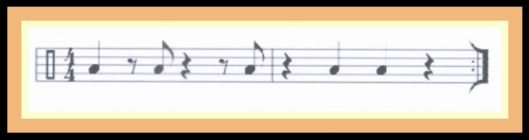
The most common type of clave rhythm in Latin Jazz is the son clave, named after the Cuban musical style of the same name. Below is an example of the son clave rhythm in Western musical notation.
Because there are three notes in the first measure and two in the second, the above is said to be in the 3:2 direction or forward clave. The 2:3 clave is the same but with the measures reversed [i.e.: reversed clave].
Another type of clave is the rumba clave which can also be played in either the 3:2 or 2:3 direction, although the 3:2 is more common. Here is an example of its notation:
There is a third clave, often called the 6/8 clave or sometimes referred to as the Afro Feel clave because it is an adaptation of a well-documented West African [some claim Sub-Saharan] 12/8 timeline. It is a cowbell pattern and is played in the older more folkloric forms of Cuban music, but it has also been adapted into Latin Jazz.
Below are the three major forms of clave, all written in a 3:2 position:
The choice of the direction of the clave rhythm is guided by the melody, which in turn directs all other instruments and arrangements.
In many contemporary compositions such as those recorded by Mongo Santamaria or the aforementioned Shearing & Tjader groups, the arrangements make use of both directions of the clave in different sections of the tunes.
As far as the type of clave rhythm used, generally son clave is used with dance styles while rumba and afro are associated with folkloric rhythms.
These clave rhythmic patterns must be strictly adhered to by the Latin Jazz percussionists to keep the music controlled and grounded, while at the same time, flowing.
To the uninitiated, Latin Jazz rhythm sections might sound more like controlled chaos, but when it all comes together properly it is a thing of beauty, especially as one’s ear becomes more informed.
The following video montages feature Nueva Manteca performing the title tune from their Bluesongo CD and the recording’s closing track - You and the Night and the Music. All of the clave patterns described above are used on these two tunes.
As described by Jan, Bluesongo is a blues inspired by a bass line from an old Ray Baretto recording. It opens with Nicky Marrero playing brushes on timbales. A premiere on record! Jarmo Hoogendijk has the first trumpet solo, followed by Ben van den Dungen on tenor sax. Toon de Gouw plays the second trumpet solo after which Boudewijn Lucas on bass guitar. Jan Laurens follows with a piano stop chorus leading into a Mambo section with a timbales solo featuring Nicky.
You and the Night and the Music is dedicated to Eddie Palmieri, a ground-breaking pianist who influenced me a lot. After the piano prelude, the head [the melody] is stated. Toon and Ben shared the solo spots. Jan and Boudewijn step on the gas for an accelerated vamp. After the Mambo part, Martin stretches out on tumbadora [congas]. The Coda section has the horns bursting into a Comparsa line. Here I attempted to include some of the “tipico’ formulas of the Santiago de Cuba tradition. Martin solos on quinto [ the smallest conga usually used as a lead conga in a three-drum set-up].
“Jazz and Latin music have cross pollinated with each other for quite some time. Some trace it back to Jelly Roll Morton's experimentations with what he called "the Latin tinge." Of course, none of this should be all that surprising. The Motherland, Africa, and its people have developed a rich heritage of musical and rhythmic styles which have made their way through Latin America and the rest of the world and continue to serve as inspiration for so many.
What is surprising is the manner in which gifted artists have decided to use this inspiration as a platform for their own creative endeavors. The permutations are quite plentiful, but often it comes down to the grafting of Latin rhythmic patterns onto a decidedly jazzy improvised mode of music. There are even current practitioners who have evolved a hybrid that almost hints at 20th century classical music with Latin flavors.
In the final analysis, the purest and most satisfying blends come with a thorough understanding of the Latin rhythmic elements (a complex and demanding feat in and of itself), which are then seamlessly utilized to complement the flavor of the melodic content. In other words, it should be about much more than playing a jazz standard and then deciding to do it with a mambo rhythm attached.”
- C. Andrew Hovan
Varadero is a resort town in Cuba’s Matanzas province and is also one of the largest resort areas in the Caribbean. It is situated on the Hicacos Peninsula, between the Bay of Cárdenas and the Straits of Florida, some 140 km east of Havana, at the eastern end of the Via Blanca highway.
It is also home to a highly regarded International Jazz Festival at which Nueva Manteca has been a featured group.
Led by pianist Jan Laurenz Hartong, the eight-piece band Nueva Manteca are a Netherlands-based Latin jazz outfit who produce a highly authentic distillation of Latin music and also embrace traditions such as Arabic, classical, Dutch Antillean and salsa. As Hartong told the press in 1996, ‘It’s the same situation as hearing a Korean violinist playing a Beethoven concerto. It’s already accepted in the jazz world. In the whole World Music development, a lot of people are digging into all kinds of cultures.’
Born in 1941, Hartong began playing dixieland piano at the age of 12, before progressing to bebop by 15, at which time he began to work professionally. He played alongside Jan Hammer and Joachim Kühn in a 1966 international jazz festival judged by Cannonball and Nat Adderley where he won a medal.
A fan of Latin music since his childhood, Hartong formed a 10-piece salsa band in Rotterdam in 1983. He also visited the music’s home in Cuba in 1984 and 1987, which led to him switching to a Latin jazz style and changing his group’s name from Manteca to Nueva Manteca.
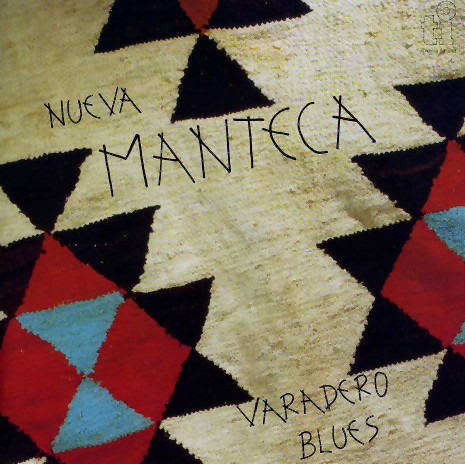
Nueva Manteca also included the famed beach in the title of one of its earliest CD’s - Varadero Blues[Timeless SJP 318]. The music on this 1991 CD consists mainly of Latin Jazz adaptations of songs from the Great American Songbook including Yesterdays, April in Paris and Just Friends, but it also brings forth Jan’s intricate arrangements of Jazz Standards such as Monk’s Round Midnight, John Coltrane’s Giant Steps and Lee Morgan’s beautiful ballad, Ceora. The group also offers treatments of Latin Jazz staples such as Macumbia by Francisco Zumaque. The CD gets its title from Jan’s original Varadero Blues.
This posting represents another of our continuing efforts to highlight the many Latin Jazz adaptations that form the themes for Nueva Manteca’s music.
Jan Laurens Hartong contributed the following insert notes to Varadero Blues[Timeless SJP 318] which further explain its musical mission of fusing the primarily rhythmic aspects and styles of Cuban music with Bebop and Hard Bop.
“Ever since Jelly Roll Morton's 'Spanish tinge' reference, musicians have been fascinated by the idea of Latin-Jazz fusion.
In the 1940's, Cuban trumpeter Mario Bauza, musical director of the legendary Machito orchestra, started it all by inviting leading Bebop musicians as guest soloists, notably Charlie Parker. It also was Mario Bauza who brought his friend Dizzy Cillespie into contact with the Cuban cultus drummer Chano Pozo, resulting in the creation of the classic Cuban Bebop composition 'Manteca'.
In the 1970's, after the Beatles Era, Latin music became all the rage under the name Salsa. Capitalizing on this development, a number of New York top musicians co-lead by the brothers Andy and Jerry Gonzalez took up again the musical thread of the past, extending it further. The SoundScape, a warehouse loft on 10th Avenue, became the center of Latin Jazz experiments for many years.
Mambo King Tito Puente formed his small Latin ensemble Heavily emphasizing the jazz idiom, In Cuba, after the Revolution, the musical world also got into turmoil: trap drums took a leading role in Cuban percussion and a group of progressive musicians from the Orquestra Cubana de Musica Moderna created the first prominent Cuban Latin Jazz band - Irakere. Soon the second generation followed : Grupo Afro Cuba, Proyecto, Emiliano Salvador quintet,
Inspired by these developments and by my own personal contacts, I formed a 10-piece group in Rotterdam in 1982 called 'Manteca', named after the famous CuBop song,
Its aim was to stimulate the Latin Jazz synthesis in Holland. Manteca succeeded to attain a top position in the Netherlands and also scored high internationally, performing at the First London Salsa Festival in 1986, In the course of time, the accent of our music had shifted more to Salsa dance music, In 1987, after returning from a second field trip to Cuba, I decided to change the band's musical direction, strongly inspired by the possibilities of using drums together with Latin percussion, A new band was created, a return to the original CuBop concept: the NUEVA MANTECA LATIN JAZZ SEPTET,
As for the music : we work as much as possible with our own arrangements and concepts, expanding our horizon, by sometimes including other Latin traditions as well. Check out 'Macumbia' and 'April in Paris'. We also strive at reviving fairly unknown or forgotten Jazz pieces in a Latin way, for example 'Ceora'. We'd like to dedicate this recording to the memory of the great CuBop pioneers. - Jan L Hartong”
The following video features Nueva Manteca’s arresting rendition of Lee Morgan’s Ceora.
“As indicated earlier, Nueva Manteca, inspired by the work of Jamal, generally approaches songs more as a 'compositional device' which allows for interpretations whereby the song becomes a story comprising edited musical scenes in the form of heads, intros, interludes, solo choruses, outros. Much like film editing. That way each musical scene contributes to the progress of the story of the song.”
Jan Laurens Hartong, Pianist and Founder of Nueva Manteca
There are three things you can always count on with each, new Nueva Manteca recording: [1] the highest quality in musicianship, [2] the best in Latin Jazz rhythms and [3] the application of Latin Jazz to a theme be it the sound track from Broadway Shows such as Porgy and Bess or West Side Story, the music of early Jazz as it might have been performed in Congo Square in New Orleans or Afro-Cuban themes centered around place such a Varadero Beach in Cuba [site of a Jazz Festival with the same name] or Yoruba-influenced catholic mass as in Afro-Cuban Sanctus.
Their latest efforts continues all of these themes in NUEVA MANTECA - CRIME! - live at Net Klooster, Woerden, The Netherlands, 2014 which is available through the Jazz Worldwide and Agency at www.jwajazz.nl.
As always, Jan Laurens Hartong, Nueva Manteca’s founder, pianist and principal arranger provides informative insert notes to each recording as noted below.
"With this recording Nueva Manteca makes you an offer you can't refuse."
A surprisingly big amount of the best film music has been written for Crime movies and TV series. The names of some of its greatest composers immediately come to mind: Ennio Morricone, Nino Rota, Dave Grusin. This 12 th Nueva Manteca album Crime! could also have been aptly titled 'Salsa y Suspenso’, instrumental Salsa that is. The crime movie genre heightens a viewer's mood and level of anticipation. Essential characteristic elements in its music are: suggestion, shock, surprise and suspense.
Some of these elements are also an essential aspect of the artistry of Ahmad Jamal whose approach appears at times to be similar to that of a film director.
As indicated earlier, Nueva Manteca, inspired by the work of Jamal, generally approaches songs more as a 'compositional device' which allows for interpretations whereby the song becomes a story comprising edited musical scenes in the form of heads, intros, interludes, solo choruses, outros. Much like film editing. That way each musical scene contributes to the progress of the story of the song. A good example of this filmic approach is our arrangement of The Godfather Theme. An opening melody is stated immediately after which comes a montuno vamp with a conga solo , followed by o return of the initial melody.Then comes the principal theme. An interlude precedes solo sections for trombone and piano and towards the end a new melody appears. It is the beloved refrain melody of the song Caruso, Italy's tribute to the immortal opera singer. All the different parts of the arrangement are edited and so combined to form a whole.
With this approach we have attempted to shed 'new light' on some of the best-known film music.
In addition to the aforementioned The Godfather Theme, Nino Rota's Michael's Theme is presented here as a cha cha cha, it's pensive mood beautifully rendered by our guitarist. A slow Guajira closes the arrangement.
Ciao City, an original composition, was inspired by the great TV series Boardwalk Empireabout the rise and fall of Atlantic City
The cop TV show of Baantjer was an instant success in Holland, its main title song "Circle of Smiles" made famous by harmonica virtuoso Toots Thielemans. If is here presented as a solo piano prelude after which the bond kicks in.
The 'sneaking up behind’ theme song of Baretta - one of the most famous police series of the 70's - challenged us to try some Latin Funk.
The gorgeous "Deborah's Theme" from Once Upon A Time In America is Morricone at his best. Reason enough to keep our version as basic and simple as
possible.
From the West Side Story comes I Like to be in America cast in a catchy arrangement by the inventive pianist Marc Bischoff who gave the melody an intriguing 6/8 twist.
Dave Grusin composed the wonderfully haunting theme song of Mulholland Falls, a crime movie which, strangely enough, never appeared in Dutch movie theaters. Here we used several different grooves for different parts of the 'O Sole Mio, the old immortal Neapolitan song is here performed in a fast-paced arrangement seasoned with contemporary flavor and contrasting nostalgic old-fashioned horn lines. A Cuban-style montuno vamp rounds it all off.
Tatort is a famous European police TV drama which is still running. It's 'in your face' theme song was composed by the nestor of German Jazz saxophone, Klaus Doldinger.
Finally, I extend my heartfelt thanks and deep appreciation to the band members whose unique artistry has made this music come to life”
Ilja Reijngoud, trombone
Ben van den Dungen, saxes
Ed Verhoeff, guitar
Jeroen Vierdag, bass
Nils Fischer, Latin percussion
Lucas van Merwijk, drums
The following video features the band on - what else? - The Theme From ‘The Godfather.”
What more could you ask for than new music from the supremely talented Latin Jazz Band - Nueva Manteca?
Based in Holland, the band has been together for over 25 years and is highly respected in Latin Jazz circles for the authentic way in which they perform Afro-Cuban Jazz rhythms and the consistently high quality of its musicianship.
Over the years of existence, Nueva Manteca has had some personnel changes, particularly on the front line which has changed from a two trumpet and sax format to the current configuration of trombone, sax and guitar.
However, throughout these changes, three musicians have remained to anchor the rhythm section: Jan Laurens Hartong, piano, Nils Fischer, conga and percussion and Lucas van Merwijk, drum set and timbales.
The band has always been tight with a driving, controlled pulse and its cohesive rhythm section is primarily responsible for this and for the lively and energetic sound of the band. One would be hard pressed to find musicians more knowledgeable of the conventions, forms and rhythms of Latin Jazz than Jan Laurens, Lucas and Nils. The are literally an Afro Cuban Jazz tower-of-power.
Having worked with Lucas for many years in other settings, Jeroen Vierdag on bass adds punch and punctuation to the Nueva Manteca’s rhythm section allowing the band to loosen up a bit while he “stays home” with the beat.
Ben van den Dungen has been with the band almost since its inception and his Coltranesque tone on both tenor and soprano sax adds a certain harmonic complexity to the band’s sound. Ben’s very modern approach to improvisation along with that of master trombonist Ilja Reijngoud and the electronic guitar stylings of Ed Verhoeff can be said to be responsible for much of the “sound of nueva” in Nueva Manteca.
You can locate order information about the new CD be going here. It is also available as an Mp3 download at Amazon and at CDBaby.
Here are Jan Laurens Hartong’s insert notes to the new recording.
CRIME
“Nueva Manteca has developed a reputation over the years for its ability to surprise its audience with refreshing different musical points-of-departure.
As so it is once again with its new project called Crime which consists of Afro Cuban arrangements of themes from famous crime and gangster music. Can you imagine the theme of the Godfather in a Cuban rumba Guaguancó? This approach creates music that you immediately recognize but have never heard played in this manner. A perfect combination of recognition and surprise!
NUEVA MANTECA - CRIME! was recorded in performance at Hef Klooster, Woerden, The Netherlands, 2014.
Jan Laurens Hartong, the group’s founder, pianist and primary composer-arranger contributed these inserts notes to the latest CD.
"With this recording Nueva Manteca makes you an offer you can't refuse."
A surprisingly large amount of the best film music has been written for Crime movies and TV series. The names of some of its greatest composers immediately come to mind: Ennio Morricone, Nino Rota, Dave Grusin. This 12th Nueva Manteca album Crime! could also have been aptly titled 'Salsa y Suspense' instrumental Salsa that is. The crime movie genre heightens a viewer's mood and level of anticipation. Essential characteristic elements in its music are: suggestion, shock, surprise and suspense.
Some of these elements are also an essential aspect of the artistry of Ahmad Jamal whose approach appears at times to be similar to that of a film director.
As indicated earlier, Nueva Manteca, inspired by the work of Jamal, generally approaches songs more as a 'compositional device' which allows for interpretations whereby the song becomes a story comprised of edited musical scenes in the form of heads, intros, interludes, solo choruses, outros. Much like film editing. In this way each musical scene contributes to the progress of the story of the song.
A good example of this filmic approach is our arrangement of The Godfather theme. An opening melody is stated immediately after which comes a montuno vamp with a conga solo , followed by a return of the initial melody. Then comes the principal theme. An interlude precedes solo sections for trombone and piano and towards the end a new melody appears. It is the beloved refrain melody of the song "Caruso" Italy's tribute to the immortal opera singer. All the different parts of the arrangement are edited and so combined to form a whole.
With this approach we have attempted to shed 'new light' on some of the best-known Crime film music.
In addition to the The Godfather theme, Nino Rota's "Michael's Theme" from Coppola’s film masterpiece is presented here as a cha cha cha; its pensive mood beautifully rendered by our guitarist. A slow Guajira closes the arrangement.
Ciao City, an original composition, was inspired by the great TV series BoardWalk Empire about the rise and fall of Atlantic City.
The cop TV show of Baantjer was an instant success in Holland, its main title song "Circle of Smiles" made famous by harmonica virtuoso Toots Thielemans, It is here presented as a solo piano prelude after which the band kicks in.
The 'sneaking-up-from-behind' theme song of Baretta - one of the most famous police series of the 70's - challenged us to try some Latin Funk.
The gorgeous Deborah's Theme from the film Once Upon A Time In America is Morricone at his best. Reason enough to keep our version as basic and simple as
possible.
From the West Side Story comes I like to be in America cast in a catchy arrangement by the inventive pianist Marc Bischoff who gave the melody an intriguing 6/8 twist.
Dave Grusin composed the wonderfully haunting theme song of Mulholland Falls, a crime movie which, strangely enough, never appeared in Dutch movie theaters. Here we used several different grooves for different parts of the song.
'O Sole Mio, the old immortal Neapolitan song is here performed in a fast-paced arrangement seasoned with contemporary flavor and contrasting nostalgic old-fashioned horn lines. A Cuban-style montuno vamp rounds it all off.
Tatort is a famous European police TV drama which is still running. It's 'in your face' theme song was composed by the nestor of German Jazz saxophone, Klaus Doldinger.
Finally, I extend my heartfelt thanks and deep appreciation to the band members whose unique artistry has made this music corne to life.
Many thanks also go to Michel BAM Grens initiator/producer/director/editor/grading/authoring and Jan-Willem Stekelenburg recording sound engineer for believing in us and making this production possible.
Hope you like our album as much as we enjoyed making it.”
Jan Laurens Hartong
Credits:
I like to be in America arranged by Marc Bischoff
The Godfather theme arranged by Jan Hartong in cooperation with pianist Piero Bianculli.