© Copyright ® Steven Cerra, copyright protected; all rights reserved.
Baritone saxophonist Ronnie Cuber calls them “New York City Cats.”
And anyone who knows Ronnie knows that he never says anything without emphasis, in this case, landing heavily on - CATS!
In Bop phraseology, the general meaning of a “cat” is someone who plays Jazz.
But in the context that Ronnie places the word - “New York City” - these are Cats who have made it on the biggest Jazz stage in the world.
And there are responsibilities that go along with being featured on this stage.
After all, the clubs in and around 52nd Street in New York city gave birth to modern Jazz. NYC was the home base of Charlie Parker, Dizzy Gillespie, Thelonious Monk, Bud Powell, Kenny Clark and Max Roach and many more innovators not only of bebop, but of the many other styles that followed it.
So there’s an expectation that Jazz musicians based in NYC and who perform there are a cut above. Not only are they required to have the superior skills to play in the modern Jazz tradition, but they are also the custodians responsible for maintaining and expanding it.
To make it in NYC, you have to be something else as a player because all the eyes of the Jazz world are on you, both domestically and internationally.
Although based in San Francisco, I fortunately worked for an international company with offices and clients in New York so over the years I was able to catch many of these “New York City Cats” in various club and concert venues.
During one of these business trips, I met the late Gerry Teekens, the owner of Criss Cross Jazz who would visit twice a year from his base in Holland to record many of the promising, young “New York City Cats.”
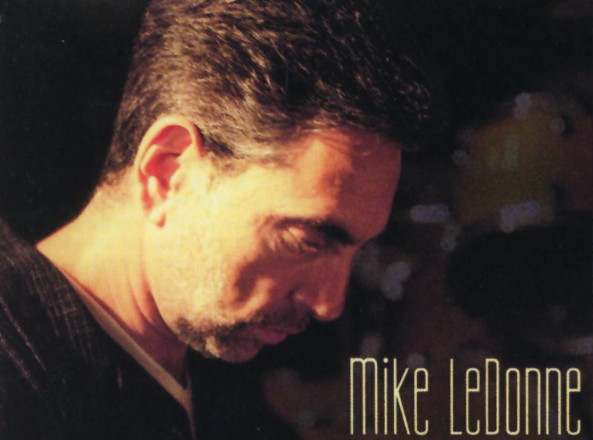
When discussing this subject with him one night over dinner, Gerry said to me: “The cat you need to watch out for is Mike LeDonne; he’s been there and back, almost like a return to the future kind of thing. He’s a real heavyweight and all the musicians respect him - and he really deserves it. He has it all together and he swings hard all the time”
When you read the details of Mike’s career in terms of who he has played with, then and now, as shared in the following interview, I think you’ll get a real sense of what Gerry meant by that remark.
One thing is for certain, when you are in Mike’s company you’ll meet many of the Jazz musicians who currently fall under Ronnie Cuber’s appellation of - “the New York City Cats.”
And another certainty as far as I’m concerned is that Mike LeDonne could hold his own with any Jazz musician from any era, anywhere; anytime.
Thanks to an introduction formed by guitarist Peter Bernstein, I reached out to Mike and asked him if he would be up for a conversation about Jazz that would feature on my blog.
He kindly gave one of the most comprehensive and well-thought out interviews ever to appear on this page - now entering its 13th year!
I was going to amplify and annotate some additional aspects of Mike’s career in this introduction, but after reading the following, I’m sure you’ll agree that there’s no need - Mike has put it all out there.
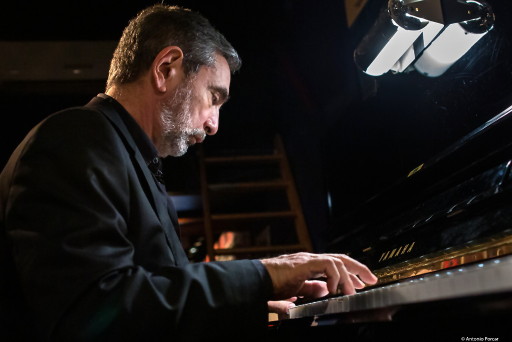
A Conversation about Jazz with Mike LeDonne
How and when did music first come into your life?
My father, Mickey LeDonne, was a jazz guitarist who was very influenced by the guitarist that played in the Nat Cole trio, Oscar Moore. He won the Major Bowes Amateur Hour, which was a radio version of America’s Got Talent back in the 30’s, when he was 17. His band, “The LeDonne Trio”, made recordings and film shorts and went on the road. The band was modelled after the Nat Cole trio but without piano. Instead they had a vibes player that could play 4 mallets. He never liked the road life so after getting married he settled in his home town of Bridgeport CT. I was hearing Jazz music while still in the womb. Our house slowly turned into a music store/teaching studio. It was called LeDonne’s Music Box and it is where I grew up. There was always a case of beer in the fridge in the back and plenty of guitars and amps set up for musicians to try out and jam with. It became a local musicians hang and I went there everyday after school and played all the instruments, heard all the stories and listened to my father’s records.
What are your earliest recollections of Jazz?
When I was 5 years old I started imitating these boogie-woogie records that my father had by ear on the piano. Even though he would play his records that went from Louis Armstrong to Wes Montgomery and Trane, I was more into R&B or what they called “Soul Music” like James Brown and Aretha Franklin as a kid. My first memory of being attracted to Jazz came one day at an outdoor party my parents had. My father rigged up a speaker outside and he was playing Miles Davis In Person Saturday Night at The Blackhawk. I didn’t know who Miles Davis was but the piano player stopped me dead in my tracks. That pianist was Wynton Kelly and even though I knew nothing about jazz I knew whatever he was doing was going right inside me and making me stand in front of the speaker and smile. I was probably 8 years old or so. There was another record that I loved to play whose cover really attracted me. It showed a man on a stage behind a Hammond Organ with a red spotlight on him, that man was Jimmy Smith and the record was Jimmy Smith Live at the Village Gate. The first track was I Got A Woman and it had a funky beat like the R&B I liked but I never heard anything like the sounds he was getting out of that organ. It caused me at age 10 to start fooling around on a Farfisa organ my dad had at the store which led to me getting my own Hammond B3 and Leslie speaker when I was 14.
For those readers who may not be familiar with your career, could you provide a brief overview of your background including your musical training, groups you have worked with as a sideman and groups you currently lead?
Around the age of 14, I noticed these music books in my father’s store by a man named John Mehegan. They had some nice jazz piano arrangements for beginners in them and even some transcribed solos. I started using them for my practicing and then we found out Mr. Mehegan lived only 20 minutes away in Westport CT so I started weekly lessons with him and stayed with him until I was 17 and ready to go to college.
There weren’t any colleges that had Jazz degrees back in the early 70’s except Berklee and a Berklee degree was only accredited in Massachusetts so I decided to add Saturday afternoon classes at Manhattan School of Music, which was only an hour away from Bridgeport, so I could study classical music and get prepared to audition for a wider range of schools. Two years at MSM got me together enough to be accepted into New England Conservatory in Boston. Once there I found out they had a Jazz Department and that Jaki Byard was the piano teacher. I decided to split my time between classical studies and jazz. This was the beginning of 4 incredible years studying with Jaki who taught me the entire history of jazz piano from James P Johnson through Bud Powell and his own modern and innovative concepts.
When I moved to New York I started going to Barry Harris’s classes and really learned about the language of bebop and there was a man that shared space in the same studios as Barry’s class named Nicholas “Rod” Rodriguez who wasn’t really a jazz musician but he taught piano technique and he wound up changing my life. Nick was an old Panamanian man who studied at Juilliard back in the 30’s to become a classical pianist but because he was Black was never able to pursue a career. He did however do things like sub for Jelly Roll Morton, play in the bands of Louis Armstrong, Don Redman and Coleman Hawkins. After all my schooling and training it was Nick that taught me how to really play the piano.
My career has been blessed with playing with many of the greatest masters from a wide spectrum of jazz eras. When I first came to New York in the late 70’s I was doing more traditional gigs with people like Panama Francis and the Savoy Sultans, Buddy Tate and Al Grey and Benny Goodman. I was the house pianist at the first Jazz Club in New York City called Jimmy Ryan’s where Roy Eldridge played and all kinds of musicians hung out and played. This was the real deal old school New York Jazz club where we played 6 nights a week 6 hours a night.
I later went on to start working with more Be Bop and Hard Bop masters like Art Farmer and Clifford Jordan, Milt Jackson and Sonny Rollins. I spent 11 years with Milt Jackson from 1988 until his death in 1999. During that same time I started playing with Benny Golson who I still play with until this day. There were also sporadic gigs that many other greats like Dizzy Gillespie, Stanley Turrentine, Curtis Fuller, Jimmy Heath, Slide Hampton, Harry Sweets Edison, Clark Terry, Donald Byrd, Cecil Payne, Bobby Hutcherson and George Coleman.
For the first 25 years of my career I played and recorded only on piano and then in the late 90’s a friend of mine who was playing with Jack McDuff, and who knew I had played organ, took me up to Dudes Bar in Harlem to hear Brother Jack. McDuff asked me to sit in and I played a tune with the band. His reaction was enthusiastic enough to cause me to go out and buy another B3 the next week. I got my chops back together at a steady gig in Harlem with an unsung hero of the tenor saxophone, Percy France, and drummer Joe Dukes who was the drummer with McDuff the night I sat in. From there I started a gig at a place called Smoke in New York City that was supposed to be for 5 consecutive Tuesday nights and wound up running for 20 years until Covid shut us down. This is when I formed my Groover Quartet with Eric Alexander, Peter Bernstein and Joe Farnsworth. I’ve also played organ with Lou Donaldson, George Coleman and David Fathead Newman and continue to play piano as both a sideman and a leader.
Many conversations about Jazz invariably turn to “impressions” and “favorites.” Okay, so let’s turn to “impressions; who were the Jazz musicians who first impressed you and why?
I already said how Wynton Kelly and Jimmy Smith were who attracted to Jazz as a kid. The first jazz records I remember buying as a teenager that were my own were McCoy Tyner's Sama Layuca and The Greatest Hits of Herbie Hancock on Blue Note. I also had some CTI records by Wes Montgomery, Freddie Hubbard and I remember I loved Walking in Space by Quincy Jones. My favorite tune on it was a song called Killer Joe by Benny Golson who I would later wind up working with for over 20 years. Ray Brown’s bass stood out to me on that record. I guess I was always attracted to the groove first, that was the main thing I needed to get into whatever music I was listening to.
Then I heard Charlie Parker, Thelonious Monk and Bud Powell and everything changed. That became my main focus, so much so that my nickname in college was “Bud”. I loved all kinds of Jazz but this particular kind of Jazz seemed even deeper and I wanted to figure out what it was all about.
When I moved to NYC I was doing a lot of traditional gigs and I found myself listening to older players like Earl Hines, Lester Young, a ton of Ellington, and Nat Cole. My life here in NYC allowed me to see so many giants and play with such a wide variety of masters my attention was on everything and everybody. I was able to see and hear Hank Jones play all the time which made a big impression on me and allowed me to see how to play Be Bop but still make Benny Goodman happy. I also discovered Cedar Walton who was another huge influence on me. I will never forget sitting in Bradley’s as a young man and hearing Cedar and Ron Carter burning up rhythm changes right in front of my face. Hearing Cedar with Billie Higgins was truly a thing of beauty. As life would have it, we wound up becoming good friends because we both shared the bandstand with the great Milt Jackson. I always loved Milt Jackson and his band with Cedar, Bob Cranshaw and either Billy Higgins to Mickey Roker was my absolute ideal of what this music is all about. To become part of that band was my ultimate dream come true.
I guess it was the time I spent with Jaki Byard that I learned to pay attention to all the directions in jazz throughout its history and see them as all being equally great. I remember seeing Earl Hines play live a couple of times and what he was playing was so unbelievable I went on an Earl Hines binge. Same with Teddy Wilson. Hearing Tommy Flanagan in New York showed me what music sounded like when it came from a place of total humility and honesty. I saw Phineas Newborn play once and I will never forget the effortless mastery he played with. Seeing Harold Mabern and George Coleman play countless times gave me a better understanding of the direction the music took after Charlie Parker. They also turned out to be 2 of my dearest and closest friends. At the end of the night on the weekend I would always wind up at Barry Harris’s Jazz Cultural Theatre and no matter what I had been to hear previously Barry seemed to top it and he’d do it, too, while playing a “sad” piano at 2 AM in the morning. Never made a difference to him.
On the organ there were many players that impressed me. In fact all of them did. Jimmy Smith got me going and then I got heavily into Don Patterson who bought a be bop aesthetic to the greasy organ thing. I also loved Shirley Scott and I got to lend Wild Bill Davis my organ once. I saw Melvin Rhyne a few times and got to hang with him. He was Milt Jackson's favorite organ player because he had the most varied language and the most understated delivery. He was a big inspiration to play my own ideas and not have to follow the usual path. But I have to admit I also love the greasiest organ players out there like Jack McDuff, Jimmy McGriff and Groove Holmes. Speaking of “greasy,” I also got to see Charles Earland a few times in NYC and he just blew me away. Most swinging organ player I ever heard. When I first heard Larry Young he wasn’t playing swing. He was playing in the Tony Williams “Lifetime” [trio] and I was a hippie teenager and I thought it was the greatest music I ever heard. It wasn’t until later I heard “Unity'' and the recordings with Grant Green. I love everything he did. But my main man, and the organ player that taught me to really “hear” the organ as a voice was Dr. Lonnie Smith who can do no wrong in my book.
Staying with your impressions for a while, what comes to mind when I mention the following Jazz musicians:
- Louis Armstrong
- The embodiment of this music whose every note projects its essence.
- Duke Ellington
- Incomparable genius of the highest order and the most prolific composer/arranger in the music’s history.
- Dizzy Gillespie and Charlie Parker
- Came along and changed everything forever. Bird and Diz have still never been outdone.
- Thelonious Monk
- A unique human being that created his own ingenious music and whose profound style of playing was highly misunderstood. He is the creator of the harmonies that created Be Bop and one of our greatest composers.
- Horace Silver
- Brought back foot tapping and finger popping by mixing the history, the blues and bebop together and taking us on a joyride into the future.
- Hank Mobley
- Unsung hero. Soulful and greasy, he left us with an incredible body of work and many ingenious compositions.
- Miles Davis
- Lyrical melodic genius deeply based in the blues with a sound like a human voice. Always creating music that became the next logical step forward and surrounding himself with musicians that could take him there.
- Ornette Coleman
- Soulful Avant Garde. Opened everything up and out but kept the blues as his foundation. Great composer.
In 1983, Len Lyons published his The Great Jazz Pianists made up of 27 interviews he had conducted primarily in the 1960 and 70s for various publications. What are your impressions of the following pianists featured in his book?
- John Lewis
- Elegant pianist with a beautiful sound who created something truly unique by blending classical and jazz elements together and, by picking just the right musicians, created one of the most successful bands in Jazz history.
- Dave Brubeck
- A top composer and unsung pianist who added some different time signatures to the pallet of jazz and helped popularize the music.
- Ahmad Jamal
- A truly unique genius of the piano who stands alone in somehow being able to resist the influence of Bud Powell. His dedication to his own vision, and his courage to refuse to go any other way than the way his imagination dictated, has given us a treasure trove of deeply, substantive and beautiful music.
- Oscar Peterson
- OP was a friend of mine and I can say without a doubt he was a warm and wonderful person besides being a terror on the piano. He could roar like a beast or play the most beautiful ballads with a touch that really defined the highest level of artistry.
- William “Red” Garland
- A unique stylist who mixed Texas soul with be bop. He created his own distinct sounding block chords and swing was as natural to him as breathing.
-- Bill Evans
- A man who played as if his body were a natural extension of the piano. Never a wasted note or unmusical moment. He brought Ravel and impressionism to the table and showed us that less is more.
- McCoy Tyner
- A holy man and an innovator of the highest order on the level of Bud Powell. That is to say that after McCoy Tyner jazz piano language would be forever changed. As he said, he allowed the creator to simply flow through him.
- Armando “Chick” Corea
- His recording Light As A Feather was a revelation to me as a teenager. I had never heard Fender Rhodes played like that before and his writing was incredible. Later on I discovered Now He Sings Now He Sobs and heard a very refined and brilliant touch that sparkled with clarity on the acoustic piano. His imagination and musicality place him in a league of his own.
- Herbie Hancock
- An innovative genius who seems to turn everything he touches into gold. If he only played with Miles Davis’s Quintet he would have done enough to secure his place in jazz history but he went on to do so many other very different things and all of them were not only completely successful but broke new ground.
- Cecil Taylor
- I have so much respect for artists that refuse to compromise their vision and art. Cecil Taylor had the courage to be extremely different and found music that was truly uniquely his own. He developed his music into a high art that is still based in the roots of the blues and shows a link to Ellington and Strayhorn as well as the African American composer Henry Cowell. I used to hang out with Cecil a little back in the day and found it interesting that his two greatest idols were Milt Jackson and Sonny Rollins.
Switching now to Hammond B-3 Organ, another keyboard instrument that you are closely associated with, what are your impressions of?
- Jimmy Smith
- The King who created all the sounds we all still use to this day.
- Don Patterson
- Added a be bop aesthetic in his right hand but kept all the grease and bluesy swing as well.
- Jack McDuff
- Super soulful and one of the most swinging of them all. He also showed a be bop influence and had some of the best bands and arrangements of all time.
- Jimmy McGriff
- Had his own unique kind of rhythm in his right hand. He is one of the best exponents of what is known as the “squabbles” sound, which was introduced by Jimmy Smith to sound like Erroll Garner, and could swing like nobody’s business. He also played some serious funk.
- Richard “Groove” Holmes
- Had the best Left Hand bass lines and pedals in the business. HIs version of Rifftide from his “Living Soul” recording was a huge influence on me and everybody has played his arrangement of Misty at one time or another.
- Mel Rhyne
- Best Right Hand lines and most unique bass lines ever.
- Lonnie Liston Smith
- All music all the time. Lonnie is a sound innovator and a true master of the organ. He brings the listener inside the music with him and lets you hear sounds you never heard before.
- Larry Young
- Brought the innovations of Trane and McCoy Tyner to the organ and in doing so innovated a new way of playing. He has become the major influence on most young organ players today.
- Shirley Scott
- Deeply soulful and swinging she taught me a way to play organ with a bass player. Her style of playing chord solos is totally her own and she had the courage to use the settings and sounds she heard and get away from the Jimmy Smith settings.
- Charles Earland
- The Mighty Burner was a big influence on me. His Left Hand and pedals rocked the house when I saw him and I loved his repertoire. His ability to turn a pop tune into a swinging jazz tune inspired me to focus on that for The Groover Quartet.
- Larry Goldings
- Love Goldings and always have. He’s got a gift for improvising that allows him to really develop his ideas in a very economical and highly musical way. He can get music out of anything, too. I remember when I first heard him he was playing one of the first Hammond clones by Korg. It wasn’t a very easy instrument to get used to and the sound was weird but I heard Larry get a lot of music out of that thing.
- Joey DeFrancesco
- Love Joey D., he was born to play the organ. He's a totally natural musician as seen by the ease at which he picks up other instruments like the trumpet and plays them at a very high level. He’s got all the organ players in him too as well as his own burning and masterful style. He can do it all.
-
Why did you decide to play both piano and organ and how difficult did you find it to make the switch from piano to organ?
When I was a kid we always had both a piano and an organ in our house so it was only natural that I would wind up playing both. Since I’ve been playing both from my childhood, there really was no transition period. I hear and play each instrument differently.
On your recordings for small combos, primarily quintets and sextets, you feature a number of original compositions. Who are the composers who primarily influenced your composing and arranging style over the years?
I am a Duke Ellington freak so he would be one of the first composers/arrangers I went to school on, but there are many others that I really love and have been influenced by. Horace Silver and Benny Golson are two biggies. Cedar Walton is another major influence for writing tunes that have a built in arrangement. I love the writing of people like Hank Mobley, Donald Byrd, Kenny Dorham, Lee Morgan and Jackie McClean. Ahmad Jamal gave me new insight about how to restructure tunes and have different sections contrasting a more open part and one with more changes. Or alternating playing the melody and then blowing over a vamp. McCoy Tyner is one of my favorites as well. And of course Herbie Hancock and Wayne Shorter are two writers that I admire immensely.
You have had a long association with a select number of bassists and drummers, Could you offer some commentary about what you hear in the playing of these bassists:
- the late, Dennis Irwin
- Dennis was my heart. He was such a sweet man and he had the biggest sound I’ve ever heard anyone get out of a bass. We went all over the world together and he was so much fun to hang with. He was a brilliant guy but he approached talking about the many subjects he knew about with humor and humility.
- Peter Washington
- Pete Wash is one of the nicest people I’ve ever known. A very serious musician who is limitless in his abilities. I remember when Kenny Washington took me down to the after hours jam session at the Blue Note to hear Peter play for the first time. We both looked at each other and said “he’s in there!”.
- Christian McBride
- I’ve known McBride since he was a teenager. I used to use him on trio gigs around NYC. We did a world tour together for Phillip Morris when they used to put together these first class tours. We went from NYC to Hong Kong; over almost 2 months together. He’s always been a phenomenal player and a very giving and positive person who has focused on the blues, having a huge sound and swinging hard. It’s been amazing seeing him ascend to dizzying heights in the music world. It couldn’t have happened to a nicer guy. I still see him as the teenager I met many years ago.
- John Webber
- Webs is truly a badass. He’s one of my oldest and dearest friends. He’s always been a man of few words but put that bass in his hands and he’s a beast. Huge sound and always swinging. One of his main influences was the great Bob Cranshaw who is someone I also spent a lot of time playing with and who knew where to put offbeats and fills. John is one of the greatest.
And some commentary about what you hear in the playing of these drummers:
- Joe Farnsworth
- Joe has risen to the top of the heap and can play any kind of music but his forte is swing. He’s also got great technique but never flaunts it and prefers to fire up in a relaxed way that allows him to play blazing tempos with ease. He is always in service to the music and has keen musical sensibilities in terms of reacting to and highlighting what’s happening around him. He’s also an exciting soloist who’s not afraid to try unique sounds.
- Lewis Nash
- Extremely musical drummer. Nash and I go way back and I have always loved playing with him because he not only has a great groove but he has a sixth sense about playing just the right compliment to whatever the soloist is playing. I’ve had so many moments while playing with him he’s playing the same thing I am at the exact moment I play it. It’s like he’s telepathic or something. And he’s one of the nicest people I know but he gets downright mean when he explodes into his solos.
- Kenny Washington
- Wash is truly my brother. We’ve been through thick and thin together. He was the best man at my wedding and I was the best man at his. We know each other like books and no one knows more about this music than he does. He’s got an encyclopedic knowledge of the tens of thousands of records he owns and he can sing you the solos from them in the key they’re in on the record. He’s a drummer with photographic memory and perfect pitch. His soloing is a thing of true beauty, I’ve rarely heard anyone put together the different elements of a drum solo in such a clear and profoundly musical way. He makes the drums into a melodic instrument. His love in life is to swing and play some “grease”. No one in the world can do what he does.
Could you please talk about your impressions of the following musicians you have recorded with:
- Tom Harrell [trumpet]
- The word genius gets tossed around a lot these days but I think Tom is the real thing.
- Ryan Kisor [trumpet]
- Incredible player who is at the top level as a soloist and could also easily play lead in any big band.
- Jeremy Pelt [trumpet]
- Beautiful sound and soulful player who really knows the history and is comfortable in any setting.
- John Gordon [alto sax]
- One of the best alto players I’ve ever heard who has a big heart and soul that comes through in every note.
- Joshua Redman [tenor sax]
- Wonderful down to earth human being and one of the best players of his generation. Josh has a very personal sound and style that is at once faithful to the history and pushing forward into the future.
- Eric Alexander [tenor sax]
- One of the smartest guys I know with a very unique personality and playing style all his own. He has developed his own language on the horn but never loses his roots in the most soulful players of all time.
- Gary Smulyan [baritone sax]
- I’m proud to say his recording debut was on my first date as a leader Bout Time. Gary has established himself as a true giant
of the Baritone Sax who has a sound that can knock you over and a mind that eats up chord changes like Pac Man.
- Peter Bernstein [guitar]
- I feel lucky to have witnessed his ascent in developing his own very distinctive style that is based on the classic sounds of jazz guitar but is not bound by it. His style has become very influential among young guitar players. He always brings his A game and he’s not afraid to play some blues.
- Steve Nelson [vibraphone]
- Steve has always had a very warm and soulful sound on both Vibes and Marimba. More than anyone I know his playing is a natural extension of who and what he is as a human being. That is to say there is no pretense or flash in him as a person or as a player, he couldn’t play a phoney note if he tried. His style of playing and writing are very personal and unique.
The Groover Quartet is your most recent group. Who are the other players in the group and why did you form it?
The Groover Quartet grew organically (pardon the pun) out of a steady gig on Tuesday nights at Smoke Jazz Club in NYC. I had already been playing piano gigs with Eric Alexander and Joe Farnsworth for several years, as well as doing a few organ gigs with them and Peter Bernstein, so when the gig came about at Smoke it made sense to do it with them. At first the owner Paul Stache told me he wanted to make it a gig for a number of organ players so he gave me the first 5 weeks, but when the 5 weeks was over he didn’t want us to stop. 20 years later we’re still there.
I should add that Paul was a huge fan of The Mighty Burner, Charles Earland, an organ giant that Eric had spent several years with. In fact, it was at a memorial Paul held at Smoke after Earland’s death where he heard me play the organ for the first time. My friend, and trumpet player extraordinaire Jim Rotondi, is the one that called me and asked me to come up there with him and play a tune. I always loved Charles Earland so it was an honors for me to do it and I remember we played an arrangement of Horace Silver’s Blowin The Blues Away that Eric and Jim used to play with The Mighty Burner.
As I got into having to play every week I began to see that the crowd was largely made up of students from Columbia University which is located close by. I had the feeling they would not relate to us playing old standards like All The Things You Are so I took a page from Charles Earland’s book and began arranging R&B tunes so that they swung and became good vehicles for soloing. With the luxury of a steady gig I was able to bring in all kinds of arrangements and original tunes and try them out in front of people to see what worked and what didn’t.
Week by week our repertoire grew and eventually we began recording for Savant Records. At first they were under my name alone but I wrote a tune for the late great drummer Tony Reedus, who had been playing with us for a while and suddenly passed away, called “The Groover”. That was also the title track from our first #1 CD. After that we kept the name The Groover Quartet. People think it’s a nickname of mine, and it has become one after all these years, but it didn’t start out that way. Since that recording I’ve been digging into the tunes of Earth Wind and Fire, The Spinners, Steve Wonder, and all the R&B I grew up on and turning it into a book of music that is now the size of an old Manhattan Yellow Pages. We’ve had several #1 CD’s, have traveled all over the world together, and people come from all over the world to catch us on Tuesday nights at Smoke.
Switching to the subject of “favorites:” - What are some of your favorite Jazz recordings?
Impossible to list because there are so many.
Even though this list is going to be long there is plenty that will be left out.
I’d have to start with Miles Davis in Person Live at The BlackHawk. I’d also add Miles Davis Relaxin (recorded the same day and year of my birth 10/26/1956) And the usuals by Miles, Kind Of Blue, Live at the Plugged Nickel, All the Columbia stuff, Four and More, Milestones, Walkin, Live at Newport, and all the Gil Evans stuff.
Charlie Parker with Fats Navarro and Bud Powell One Night at Birdland as well as Bird with Strings and Bird is Free.
Bud Powell The Amazing Bud Powell on Blue Note and The Genius Of Bud Powell volumes 1&2 on Verve.
Thelonious Monk Genius Of Modern Music Blue Note, Live at Town Hall, With John Coltrane, Plays Duke Ellington
Sonny Rollins - On Impulse, Blue Note Vol 1, Way Out West, Jazz Classics, Plays Bird, Live at the Village Vanguard, Saxophone Colossus, Tenor Madness
Kenny Dorham - Stage West, Showboat, Quiet Kenny, Whistle Stop Lester Young with Nat Cole and Buddy Rich, Pres, and Decca Basie. Everything by Duke Ellington including his early dates on Victor, his trio recording Piano Reflections and all of his Columbia Masterpieces recordings like Piano in the Background.
Bill Evans Everybody Digs and Portrait in Jazz. Also the live recordings from the end of his life called Last Waltz and Live at the Village Vanguard.
All the Wynton Kelly on Vee Jay like Kelly at Midnight and Kelly Great.
Hank Jones Solo Piano 1956 and Tip Toe Tap-dance plus all his Savoy recordings with Kenny Clarke.
Milt Jackson Bags and Wes, Live at Koseinenkin Hall and Bags and Trane, Ballad Artistry
Cannonball Adderley Somethin’ Else, and all the Quintet recordings especially Live in New York at the Vanguard.
Cedar Walton trio recordings on Red Records, Live at the Pit Inn, Eastern Rebellion with George Coleman
Red Garland In Bluesville, Reds Piano, Live at the Prelude, Soul Burnin.
Herbie Hancock, Speak Like A Child, My Point Of View, Maiden Voyage, Inventions and Dimensions, Dedication
Chick Corea, Light As A Feather, Tones For Jones Bones , Now He Sings Now He Sobs.
Bobby Hutcherson, Total Eclipse, Oblique, The Kicker, Solo/Quartet, McCoy Tyner The Real McCoy, Time For Tyner, Counterpoint, Inception, Reaching Forth, Sama Luyaca, Together, Atlantis
Wayne Shorter - Speak No Evil, Night Dreamer, JuJu, High Life
John Coltrane Blue Trane, Tenor Madness, Giant Steps, Coltrane Jazz, All the Impulse stuff like Ballads, With Duke Ellington, Coltrane, A Love Supreme, Crescent, Live in Europe.
Hank Mobley all the Blue note recordings like Workout, Another Workout, Soul Station, Straight No Filter, Far Away Lands
Lee Morgan - Candy, Charisma, Delightful Lee, The Procrastinator, Live at the Lighthouse, Sonic Boom, Search For A New Land
Jackie McClean Consequence, It’s Time, Jackie McClean Quintet on Blue Note, Jackknife
Donald Byrd Byrd’s Words, Off To The Races, Royal Flush, Blackjack,Fancy Free
Art Blakey -Live At Birdland, Three Blind Mice, Indestructible, Like Someone In Love, Ugetsu, Moanin,
Horace Silver - And the Jazz Messengers, Six Pieces Of Silver, Stylings, Further Explorations, Finger Poppin, Blowin the Blues Away, Horace Scope, Silver’s Serenade, Song For My Father, Tokyo Blues, In Pursuit If The 27th Man, Jody Grind,
Stanley Turrentine - Easy Walker, Sugar, Chip Off The Old Block, Mr Natural, Let It Go
Ahmad Jamal But Not For Me, Live At The Pershing, Chamber Jazz, Happy Moods, Count Em 88, Awakening, Blue Moon, It’s Magic, I Hear A Rhapsody
Jimmy Smith The Sermon, The Boss, Dynamic Duo with Wes Montgomery, Live at The Village Gate, Off The Top, Midnight Special, Back at the Chicken Shack.
Don Patterson Mellow Soul, The Boss Men with Sonny Stitt, Brothers 4, Soul Happening
Charles Earland Black Talk, Front Burner, Blowin The Blues Away, Leaving This Planet
Shirley Scott Queen of The Organ, Soul Duo, Hip Soul, Hip Twist, Soul Shouting, Blue Flames
Jack McDuff - LIVE!, Tough Duff, The HoneyDripper
Jimmy McGriff - The Worm, Bag Full Of Soul, Soul Survivor Groove Holmes - Misty, On Basie’s Bandstand, Living Soul
Wes Montgomery - Dynamic Duo, Live at The Half Note, Guitar On The Go, Boss Guitar, Movin Along, Bags Meets Wes, Portrait of Wes, Bumpin, Tequila, Road Song, Down Here On The Ground, Further Adventures
Freddie Hubbard - Red Clay, Ready For Freddie, Body And Soul, Blue Spirits, Backlash, The Hub of Hubbard, Hubcap, Hot Horn, Keep Your Soul Together, First Light
Woody Shaw - Little Red’s Fantasy, Rosewood, United, Casandranite Grant Green - Grant Stand, Matador, Street Of Dreams, Iron City
Art Tatum - Solo Masterpieces, 20th Century Genius, Private Session. Oscar Peterson - Duke Ellington Songbook, Affinity, We Take Requests, West Side Story, Anything on the MPS label.
Count Basie - On Decca, Breakfast Dance Barbecue, Chairman Of The Board, Atomic Basie, Live in London
Sonny Stitt And the New Yorkers, Sits In with the Oscar Peterson Trio, Stitt meets Brother Jack McDuff, Nightcrawler, Now,
Lucky Thompson - Everything with Milt Jackson like Skyline, Plays Jerome Kern, Offering, Sonny Lester Collection.
Barry Harris - Indiana, Bulls Eye, Luminescence
Max Roach - 3/4 Time, +4, Plays Charlie Parker
Earl Hines - 57 Varieties, Plays Duke Ellington
When Mike LeDonne is away from music, where will we find him and what will he be doing?
My life outside of music has become very busy for 2 reasons. I’m raising a wonderful disabled daughter named Mary and I started a non profit to benefit the entire community she is part of called Disability Pride NYC. Being someone who is used to creating things that have never existed before I decided to create a parade called the Disability Pride NYC Parade. The idea was to raise awareness, promote inclusion and increase the visibility of a community that has been shoved in the shadows for much too long. It’s both a fun day of celebration and pride and a civil rights march. We had our first parade in 2015 and have made it an annual event here in NYC that attracts 10,000 people. It’s a ton of work but it is so worth it when you see 10,000 disabled people coming down Broadway struttin’ their stuff and feeling powerful. When large numbers of people like that come together everyone takes notice including politicians who realize this is a huge voting block of people they need to take seriously. If people are interested in checking it out please visit our website at www.disabilitypridenyc.org.
Obviously, the pandemic has made future planning challenging at best, but when things do calm down a bit, what do you hope to be doing musically.
I want to do what I’ve been doing which is to keep improving as a musician and put a little swing out into the world because I feel it’s been getting lost. I love to hit pockets and that’s what I’ll be doing until the day I die.