Thursday, August 5, 2021

The Creative World of Stan Kenton -The Rock Years - Part 8

 © Copyright ® Steven Cerra, copyright protected; all rights reserved.


“Some of the wise boys who say my music is loud, blatant and that's all,” he said, “should see the faces of the kids who have driven a hundred miles through the snow to see the band . . . to stand in front of the bandstand in an ecstasy all their own.”


Mr. Kenton, a pianist who sometimes played solos with his orchestra, was a lanky 6 feet 4 inches, and had a flamboyant manner that did not diminish the musical turmoil he created. He conducted with great arm‐waving vigor, ending every selection with upstretched arms and an ecstatic expression. He had an unwavering belief in his own work, and was a tireless salesman for it, giving it such descriptive titles as “artistry in rhythm,” “progressive jazz” and “innovations in modern music.”

- The New York Times Obituary, August 27, 1979


Strictly speaking, the following piece is not specifically about Kenton 1970's music, but I chose it to conclude this eight-part look at Stan’s music from this decade for a variety of reasons.


It deals with the entire scope of the band’s 37 years history and in doing so provides a retrospective context for observing and understanding Kenton’s 1970s orchestra.


I also chose it because it’s written by Michael Sparke, the gentleman scholar who has done so much to secure the written history of Stan and his music and to help document the overall place of the band in the history of Jazz.


Another reason for its selection is that in its original format - as the insert booklet to the double companion CD to the definitive Stan Kenton: This Is An Orchestra [2010] - it is not as widely known as the book. Fortunately, copies of the CDs can still be ordered from Tantara Productions.


Instead of writing about the factors leading up to Stan’s death in 1979, I thought it would be more uplifting to close this look at the last decade of his band’s existence by memorializing it through these writings by one of his most ardent and objective fans.
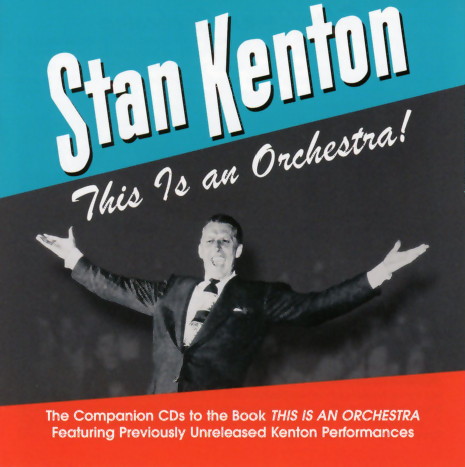


THIS IS AN ORCHESTRA!


“Ask a dozen Kenton fans which was Stan's "best" band, and chances are you'll wind up with twelve different answers, depending on the age and inclination of each individual. A much wider poll would be required to obtain any kind of consensus, but the probability is the winner would be one of the four bands represented on this "Companion" CD-set to the new book "Stan Kenton - This Is An Orchestra!" published in 2010 by the University of North Texas Press.


Despite all his enthusiasm and energetic promotion of his orchestra, Stan Kenton would never have become leader of one of America's top-grossing big bands had the product not been right. After seven years of non-stop growth and experimentation, Stan's 1948 Progressive Jazz orchestra captured the mood of the times and inspired the imagination of thousands of youngsters, who voted the band into top place in both the 1947 DownBeat and Metronome popularity polls. Never before or since has good music and mass appeal come together so closely, as proven by this DownBeat Awards broadcast, played in concert before a SRO audience at Chicago's prestigious Civic Opera House on February 22,1948,


This Is an important document in sound, In addition to Stan four stars from the band receive awards and are featured in special compositions showcasing their individual talents. The years 1946-48 belonged to Pete Rugolo, who wrote the bulk of the Artistry and Progressive Jazz libraries, from the jovial "Lover" to the classically-cryptic "Impressionism". Rugolo somehow captured the hearts and minds of America's youth while unleashing a form of symphonic jazz farther out than any band had ever gone before, and that was due in no small measure to Kenton's charismatic leadership, and the talents of the musicians Stan had chosen to form his orchestra, And very special among those stars was June Christy.


Though perennially popular among Kenton devotees, June never quite attained the A-star status or acclaim that made such singers as Ella Fitzgerald and Mel Torme household names, possibly due to the fact her career was cut short by illness. Certainly no other singer could have tackled Rugolo's abstract background to "Lonely Woman" with similar emotion and authority. As Bill Russo observed, "Christy was a very interesting person and thought about singing in ways I had never heard before. She really emphasized the meaning of the lyrics." And June herself was a firm believer in Kenton's motives, commenting, "I think Stan did a tremendous thing when he moved Progressive Jazz into the concert hall,"


Vital to the success of any jazz band, but particularly to the potentially monolithic Kenton organization, was the drummer, And in Shelly Manne, Stan found his perfect percussionist, who would never be surpassed; a man who possessed the skills and technique to implement Rugolo's intricate arrangements, but with the strength and suppleness to keep the band moving. Shelly could switch from artistic dexterity to swinging a big-band blockbuster with ease, a rare combination of talents. "I approached drums from a more melodic viewpoint in terms of doing more unorthodox things with colors, cymbals, mallets, hands," said Shelly, "according to what the melodic content of the piece dictated. When it came to my feature piece, I told Pete I had never liked machine-gun styled drum solos. I told Pete my ideas, and he put them in the music."


The Stravinsky influenced "Artistry In Percussion'' remains one of the finest compositions for orchestra and drums ever conceived, and was revived in 1972 to feature another of Stan's favorite drummers, John Von Ohlen, But throughout his writing, Rugolo exhibits his classical credentials melded with a strong jazz flavor. The dramatic content and sheer vitality of Progressive Jazz thrilled a generation of young Americans, and as Sonny Dunham said in 1948, "Stan Kenton seems to be on the threshold of a new and exciting combination of jazz and classical music."


That was certainly the intention, but Kenton subsequently came a cropper with Innovations, which took the music even further into the realms of abstract intellectualism. The financial losses forced Stan to adopt a more conciliatory line, leading to the "Bill Holman band" of 1955-56. (So-called because Holman's writing was the dominating force in the band's repertoire.) Progressive Jazz did not figure in Holman's vocabulary, but it certainly did in Bill Russo's, whose "Theme Of Four Values", featuring sparkling trombone from Bob Fitzpatrick's full-toned horn, provides a perfect link between the two eras.


There is unanimous consent among the musicians that Bill Holman was their favorite arranger. Bill had learned his lessons well, and his "teacher" was Gerry Mulligan. Holman has a lot to thank Gerry for, not least the probability that had Mulligan remained with Kenton longer, Bill's own opportunities would have been at best delayed. "Playing with Stan gave me the chance to associate with some of the inspiring people in that band," says Bill. "And Gerry Mulligan was a big influence on me when I started to write." In fact, everyone adored Gerry's charts - except Stan! The sudden switch in style to outright swing, plus an intense temperamental clash of personalities, proved too much, but the spirit, joy and enthusiasm with which the band tackles 'Young Blood" and "Limelight” is self-evident.


But it was Holman who became chief arranger, a role fully justified by the re-compositions of "standards" Bill wrote in 1955, as he shook himself free of any lingering Mulligan image to become his own man. And foremost among those arrangements were the charts written to feature the band's talented soloists, here Lennie Niehaus on “Cherokee.” Kenton was always impressed by musicians with extraordinary technique, like Skip Layton and Maynard Ferguson, and with his exceptional agility, fleetness and fluency, Niehaus was similarly gifted. Though some critics questioned his ability to express pain as readily as he asserted elation, Lennie's reliability and adroitness endeared him both to Stan and the fans, who rated him alongside the band's other top soloists Bill Perkins and Carl Fontana.


Holman gave Fontana a head start with his delicately structured orchestration of the lovely "Polka Dots and Moonbeams," and this is the finest improvisation I have ever heard Carl devise on this beautiful ballad, exquisitely performed and note-perfect in every respect. Nor was Fontana's incredible flair confined to slow tempos. Both "Intermission Riff" and 'Take the 'A' Train'' are upbeat head arrangements that benefit from Carl's full-bodied tone, incredible flexibility and solo eloquence. As Steve Voce commented, "Fontana's several disciples approached and even matched his speed and technical agility, but no one ever matched his sublime streams of improvisation." Those who appreciate the "straight jazz" Kenton music most will especially welcome these new performances, as by 1956 Stan was already re-asserting his authority over the music by introducing two French horns and tuba into the band, while reducing both the trombone and saxophone sections to four men each.


By 1961 the French horns were long gone, but in their place was a complete section of four mellophoniums. Also largely missing were the top-echelon solo-stars prevalent in previous Kenton bands. From now on Stan would recruit many of his musicians directly from the colleges and music-schools, often from North Texas, a University with which Stan had a close relationship, and to which he donated his entire music library on his death. Despite this lack of experience, the mellophonium orchestra remained a totally professional, high-precision unit, and one of Stan's most popular bands with the fans, too.


In the Sixties, ballroom dates were essential to a band's success, and Kenton carried an extensive dance library in addition to the concert book. Apart from Stan's own iconic ballads, the bulk of the dance charts were written by Lennie Niehaus, often mentioned by alumni as second only to Bill Holman for his sense of rhythm and swing. Unlike Kenton, Lennie also involved the soloists (Marvin Stamm, Gabe Baltazar, Sam Donahue), adding spice and variety to the orchestrations, "I think everything Niehaus wrote for the band could be considered dance music," opined Don Reed, "but they lent themselves to jazz as well, and they were fun to play. Lennie was a great guy, and very talented, too."


Off-stage, Jean Turner was a quite demure and rather reticent lady, but there were certainly no signs of shyness in her strong, bold, singing voice. She toured with the band for two years, but was not destined for the stardom many of the sidemen considered she deserved. "Jean was one of my all-time favorite singers," declared Bob Curnow, "and such a sweet, sweet lady" And John Worster opined, "Jean Turner was special. It was just unfortunate for her that Nancy Wilson hit it big on Capitol just the year before, because to me Jean was very similar - only BETTER!" Stan explained why it didn't happen; "She's an excellent musician, one of the finest singers we've ever had. But Jean was her own worst enemy, because she was a very timid person, and very reluctant to meet people, For example, if some disc-jockeys came into the place and were interested in meeting her, she wouldn't respond by being introduced to them, A lot of times she just sat on the bus wearing dark glasses until it was time for her to sing a few tunes, and then she'd get back on the bus and hide."


The concert arrangements by Johnny Richards of music from "West Side Story" were taped by Wally Heider at a band rehearsal which must have been held only hours before the Capitol recordings cut the same day. They are not alternate takes - the orchestral balance is totally different. Richards was a master musician, with a greater command of the subtleties and dynamics of a large orchestra than even Rugolo. Kenton loved the sense of power and drama that John brought to his music, and "Prologue" remains a highly complex orchestration even without the dramatic introduction present on the Capitol version. Johnny also loved ballad writing and his inspired interpretation of "Maria" emphasizes the richness of Bernstein's gorgeous melody. This is top-form Kenton, and the type of music for which he is best revered and remembered.


"Malaguena" wouldn't be Capitol-taped for another nine months, and this

first-ever recording of the iconic Holman masterpiece is unique, in that it is played at the tempo Bill originally intended. The slower rhythm means it lacks some of the fiery eloquence Kenton so adored, but has its compensations, emphasizing the majesty and grandeur of the melody, and allowing Sam Donahue more space to stretch out his solo tenor. Probably on balance Stan was right to up the tempo, but this version affords the listener a different and intriguing reading of the Holman classic.


Like a clap of thunder, Stan's piano announces the concert orchestra of the Seventies. Ballrooms no longer played a major role in people's lives, and the few touring bands that remained relied on the reputations of their ageing leaders to draw the fans into the concert halls. Later alumni might differ, but a consensus would agree that the best band from this last decade was that of 1971-73. And to supply the new music necessary to keep pace with the changing times, Stan relied primarily on three arrangers: Ken Hanna, Hank Levy and Willie Maiden. Each man could, and did, write outside his "box", but in the main Hanna wrote the ballads. Levy the "time" charts, and Maiden the swingers.


Ballads in the Seventies were very different from the dance charts of previous decades. These were concert arrangements every bit as much as the other material, played at a very slow tempo, and of extended duration. Most follow a familiar pattern, opening relatively softly and rising to a central crescendo, before subsiding to a softer conclusion. Kenton made the unlikely analogy of comparing these ballads (here, Hanna's skillful orchestration of Michel LeGrand's tuneful 'What Are You Doing The Rest Of Your Life") with a slumbering gorilla who awakens for a short stretch to demonstrate his strength, before returning to his state of rest. Hanna told me he thought the band reached its apex in early 1973, largely because of the presence of John Park, perhaps the last decade's only truly major, distinctive soloist. Older at 38 than most of the youngsters in the band, John was aware of his value, and would quietly tell his peers how he'd like them to back him during his feature solo "Street Of Dreams". With traces of Lester, Bird, Lee, even Ornette, but no one dominating influence. Park was his own man, his taste and technique unquestioned in an age of solo anonymity. To quote Dick Shearer: "Everyone respected John, and there were so many nights when he was in peak form, As a jazz soloist he was it."


Hank Levy represented the music of the future, a mixture of alternative time signatures with the rock influence that Kenton needed to please younger audience at college performances, Not all the musicians adapted easily to the different rhythms -Willie Maiden for one was implacably opposed - and Stan was fortunate after Von Ohlen left to find Peter Erskine, an exceptional 18-year old with a fondness for traditional Kenton music as well as the beat of his own generation. Erskine's drums dominate "Of Space And Time", a well-structured piece with a memorable theme and more compelling Park alto.


Of the three staff arrangers, the best-liked by the band and well appreciated by audiences was Willie Maiden, because his arrangements SWUNG, and were the most fun to play, "Willie was like one of a kind," said Dick Shearer. "Everybody loved his writing." Which isn't to say Maiden wrote simple things; in fact, some of his charts were the most complex in the book, but they were most always based on a 4/4 meter, and offered space for solo improvisations. "No Harmful Slide Effects" is typical of Maiden's work, swing-based but adventurous enough to satisfy both Stan and the fans who looked for something stronger than riff-based music. Not without reason has Maiden been referred to as the "Bill Holman of the Seventies."


Holman himself was certainly not on the Kenton staff, but every so often he would contribute to the book, usually a more meaningful concert work than some of the lighter music. "Malaga" is from Bill's "Spanish period", an original composition that deliberately sets out to capture the temper of his spirited "Malaguena", and which brings any concert to a rousing climax ; though Stan would always wisely lower the heat to close with something a little calmer, often the extended version of his famous Theme. "Artistry In Rhythm," the work that more closely personifies "Stan Kenton" than any other, whether played by the Forties Progressive Jazz or the seismic Seventies bands, remains today an evocative, emotional force. To paraphrase Stan's concluding comment from his famous 1952 "Prologue", This, by God, was an Orchestral”

— Michael Sparke, London 2010


Tuesday, August 3, 2021

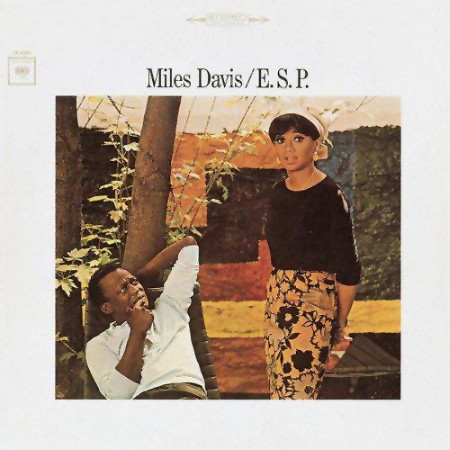
E.S.P. - Miles Davis

 © Copyright ® Steven Cerra, copyright protected; all rights reserved.


“This [1965-68] has always been an enigmatic period in Miles's career, a band and a set of relationships which didn't so much develop as go through a looping sequence of self-discoveries and estrangements. The leader himself often sounds almost disengaged from the music, perhaps even alienated from it, though one always senses him there, listening. Miles Smiles opens up areas that were to be his main performing territory for the next few years, arguably for the rest of his career. The synthesis of complete abstraction with more or less straightforward blues-playing (Shorter's 'Footprints' is the obvious example of that) was to sustain him right through the darkness of the 1970s bands to the later period when 'New Blues' became a staple of his programmes. 


After Miles Smiles, E.S.P. is probably the best album, with seven excellent original themes and the players building a huge creative tension between Shorter's oblique, churning solos and the leader's private musings, and within a rhythm section that is bursting to fly free while still playing time. Miles returns to his old tactic with Coltrane of paring away steadily, often sitting out for long periods or not soloing at all. It is simply that with Shorter he has a saxophonist who is capable of matching that enigmatic stance, rather than rushing off on his own.” 

- Richard Cook and Brian Morton, The Penguin Guide to Jazz on CD, 6th Ed.


“(The first incarnation of this Miles Davis Quintet (with George Coleman, Herbie [Hancock, Ron Carter and Tony Williams) entered the studio for the first time May 14,1963 before it was a working band. Studio albums were used to introduce new material into the Miles Davis songbook. Kind Of Blue gave us "So What" and "All Blues" and Someday My Prince Will Come gave us the title track and "No Blues." The live albums would be conceived as vehicles to capture the sound of his current quintet performing both the classic and recent material. This session gave birth to a new band and contributed two pieces, "Seven Steps To Heaven" and "Joshua,"

to Miles' live repertoire.


For the next 19 months, live recordings charted this band's extraordinary progress: In Europe (Antibes —July '63), My Funny Valentine and Four & More (both from Lincoln Center— February '64), In Tokyo (July '64 with Sam Rivers replacing Coleman) and In Berlin (September '64 with Wayne Shorter finally in place).


By January of 1965, the Quintet (now only 5 months old} had toured Europe and was just beginning to travel in the U.S. During the first part of the new year. Miles and the group enjoyed a two-week stay at San Francisco's Basin Street West. After finishing up the weekend, they found themselves in Hollywood at the Columbia Studios, where Irving Townsend was set to produce a new Miles Davis studio recording.


The idea of going into the studio with new material for the first time in 19 months must have stimulated the group. The first track recorded was Wayne Shorter's "E.S.P."


The album My Funny Valentine was released in May of 1965 to great acclaim. E.S.P was issued in November of 1965, when Miles began touring. again after a six-month recuperation from his first of many hip operations. The album did not get the hurrahs expected of a new Miles Davis Quintet studio recording. The momentum that the group had built up from 1964 had to start over.


The group was taped at the Plugged Nickel in December of 1965, but the 

tapes remained unissued for 11 years. Of the new material, only "Agitation" had made it into his book, but he was still playing "Stella By Starlight" and "My Funny Valentine" as well as other standards and blues associated with his earlier bands.


Still, E.S.P. summed up the form and rhythm experiments that the Quintet was developing from live performances into a compositional structure. Stop-and-go ("R.J.," "Agitation"), pedal points ("Little One," "Mood"), creating a "harmonic" direction from "suggestions" and implications ("E.S.P."), rhythmic suspension ("R.J.," "Eighty-One") and form modulation ("Iris"). The melodies themselves became more independent of the harmony, and thus strengthened the idea of improvising phrases (as Ornette Coleman) and not clichés.


Behind the success of My Funny Valentine, Columbia released the rest of the February 14,1964 Lincoln Center concert as Four & More in March of 1966 (barely 4 months after E.S.P.!). Prestige repackaged old sessions (For Lovers and Classics) and then went further by releasing a greatest hits compilation in December of 1966, making a total of six Miles Davis releases in 17 months.


No wonder E.S.P. confused the public. The music is light years ahead of anything previously released. The public was bombarded with Miles' accessible side, the romantic lover. The success of My Funny Valentine further imbedded that stereotype into the minds of the jazz public. Eventually. Miles would completely separate the studio recording process from the live performance process, but it took two incredible sessions to launch him on his way.”

— BOB BELDEN, insert note excerpts from E.S.P.


For fans of the classic Miles Davis Quintet [with John Coltrane on tenor sax, Red Garland on piano, Paul Chambers on bass and Philly Joe Jones on drums] and the classic sextet [subtract Garland and Jones and add Julian “Cannonball” Adderley on alto sax, Bill Evans on piano and Jimmy Cobb on drums], the six LPs that Miles made for Columbia from 1965 to 1968 are as perplexing as they are paradoxical. 


They are less straightforward and more puzzling, if not downright mystifying, to the snap your fingers and pat your foot Jazz fans who were accustomed to more easily relating to Miles’ post Bebop groups that played a style of Jazz based on a mixture of songs from the Great American Songbook and tunes from The Jazz Standards. And then there were all of the “romantic Miles” LPs that Bob Belden references in one of the quotations that open this piece.


In fact, to these modern Jazz fans, the music on the albums from the mid-sixties did indeed appear to require a form of extra sensory perception - that is a telepathic sixth sense - to experience what was going on in the music.


And yet, just as Miles had made the transition from the flying notes and quickly progressing chord changes of Bebop to the more expansive and lyrical Jazz of the classic quintet and sextet of the second half of the decade of the 1950s, E.S.P, Miles Smiles, Sorcerer, Nefertiti, Miles in the Sky and Files De Kilimanjaro marked Miles’ transition to an association with a band made up of younger musicians that was working its way out of one phase and into another in which time and harmony, melody and dynamics were being radically rethought. Or as Richard Cook explains it:


“The improvisations here would have been inconceivable a mere couple of years earlier; they don't so much float on the chords as react against them like phosphorus. Three years later, they fed directly into Miles's electric revolution and the beginning of what was to be (he long dramatic coda.”


Beyond the more technical treatment of the music on the recording contained in Bob Belden excellent notes, in combing through the Jazz literature to identify a more accessible explanation of Miles’ work on E.S.P., I was pleased to find the following treatment of both the band and the music on the recording by Gary Giddins and Scott DeVeaux in their work Jazz [2009] which is available in both a trade [commercial] and education [suggested listening guides] editions. Their narrative provides a comprehensive context for appreciating the significance of the album.


© Copyright ® Gary Giddins and Scott De Veaux, copyright protected; all rights reserved.


MILES DAVIS'S SECOND QUINTET


“After the back-to-back triumphs of Kind of Blue and Sketches of Spain, Miles Davis endured a slump of uncertainty. Coltrane, Adderley, and Evans had left to pursue their own careers, and Davis expressed contempt for the avant-garde. He continued to release effective records, including a reunion with Coltrane that produced a minor hit in "Some Day My Prince Will Come." But his music was caught in a bind, much of it devoted to faster and harder versions of his usual repertory, including "Walkin'" and "So What."


Then in 1963, once again, he produced magic. He turned to younger musicians who would surely have had important careers on their own but who, under Davis's tutelage, merged into a historic ensemble, greater than its very considerable parts. The rhythm section consisted of three prodigiously skillful musicians who valued diversity over an allegiance to one style of music: pianist Herbie Hancock, bassist Ron Carter, and seventeen-year-old drummer Tony Williams. Davis auditioned many saxophonists before temporarily settling on George Coleman, who played with facility and intelligence but lacked the drive and curiosity of the younger guys. In late 1964, Wayne Shorter, who had made his name as a saxophonist and composer with Art Blakey's Jazz Messengers, joined the band, a decision that changed his life and Davis's, and made this second

great quintet, a worthy follow-up to the 1955 group with Coltrane. This time, however, Davis took as much from his sidemen as he gave, drawing on their compositions (especially Shorter's) and sensibilities. These musicians were keenly interested in the avant-garde, and Davis adjusted his music to assimilate their tastes, as he struggled to make a separate peace in a confusing era.


Jazz was beset on one side by avant-garde experimentalism that estranged much of the audience, and on the other by rock, which had matured from a teenage marketing ploy to the dominant pop music. Davis would eventually inch his way to a fusion of jazz and rock, but first he adapted modal jazz to include elements of the avant-garde in a postbop style far more extreme than anything he had previously done. This approach, which also attracted other accomplished musicians caught between the conventions of modern jazz and the excitement born of the avant-garde, involved harmonic ambiguity, original compositions with new harmonic frameworks (rather than those built on standard songs), and a radical loosening of the rhythm section. Some of the tunes written by Davis's sidemen actually encouraged free improvisation (Ron Carter's "Eighty One" is a blues but also a minefield of open terrain). In the most advanced of these pieces, chord progressions were omitted while time and meter might evaporate and coalesce several times in the course of a performance.


Most first-rate rhythm sections work like the fingers in a fist. Coltrane's quartet, for example, achieved a fiercely unified front, devoted to supporting the leader. Davis's group was no less unified, but its parts interacted with more freedom, often rivaling the soloists. So much was going on between Hancock's unruffled block chords, Carter's slippery bass lines, and Williams's rhythmic brush fires that they all appeared to be soloing all the time. Davis gave them leave, enjoying the excitement they created, but he imposed a discipline that left space for the lyrical drama of his trumpet. Interestingly, on those few occasions when Davis failed to show up for a set in a jazz club, the other four musicians played in a more traditional, straight-ahead style. Free of chord changes, unapologetic about fluffs, and stimulated by his band's ceaseless energy, Davis became a more expansive trumpet player. He began to forage in the upper register at precipitous tempos, ideas spilling from his horn with spiraling confidence despite infrequent technical failings. He cut back on his signature ballads and began to jettison standard tunes and his classics. Between 1965 and 1968, he found his own way to be avant-garde.


"E.S.P."


The 1965 album E.S.P. was a critical event, but not a popular success. It represented the first studio recording by the new quintet, and the seven new compositions, all by members of the group, challenged listeners who expected to hear the tender, meditative Davis who incarnated jazz romanticism. This music is audacious, fast, and free. The title of the album (and first selection) emphasized the idea that extra-sensory perception is required to play this music. Shorter composed "E.S.P." as a thirty-two-bar tune, but its harmonic structure is far more complicated than that of "So What."


The melody is based on intervals of fourths (recalling the indefinite quartal harmonies of "So What" and "Acknowledgement"), and is married to a mixture of scales and chords in a way that offers direction to the improvisers without making many demands. The main part of the piece (A) hovers around an F major scale, while the B sections close with specific harmonic cadences that are handled easily and quickly—especially at this expeditious tempo. The soloists (Shorter for two choruses, Davis for six, Hancock for two) take wing over the rhythm, bending notes in and out of pitch, soaring beyond the usual rhythmic demarcations that denote swing. No less free is the multifaceted work of the rhythm section: the bass playing is startlingly autonomous, and the drummer's use of cymbals has its own narrative logic.


The public reception accorded E.S.P and succeeding albums by Davis's quintet (Miles Smiles, Sorcerer, Nefertiti) suggested the tremendous changes that had taken place in the cultural landscape in the few years since Kind of Blue and Sketches of Spain. They were received favorably and sometimes enthusiastically by musicians, critics, and young fans, but achieved nothing of the broader cachet enjoyed by his earlier work: there was nothing easy or soothing about these records. By 1965, rock and roll could no longer be dismissed by jazz artists as music for kids, and Davis was feeling the heat, not least from his disgruntled record company.”


Saturday, July 31, 2021

Ted Gioia on Revising His "The History of Jazz"

 © Copyright ® Steven Cerra, copyright protected; all rights reserved.


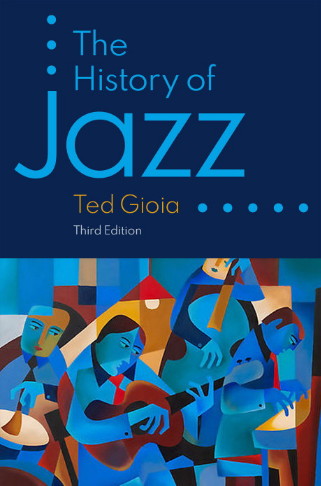
Ted Gioia's The History of Jazz has been universally hailed as the most comprehensive and accessible history of the genre of all time. Acclaimed by jazz critics and fans alike, this magnificent work is now available in an up-to-date third edition that covers the latest developments in the jazz world and revisits virtually every aspect of the music.


Gioia's story of jazz brilliantly portrays the most legendary jazz players, the breakthrough styles, and the scenes in which they evolved. From Louis Armstrong and Duke Ellington at the Cotton Club, Miles Davis's legendary 1955 performance at the Newport Jazz Festival, and Ornette Coleman's

experiments with atonality to current innovators such as Kamasi Washington and Esperanza Spalding, Gioia takes readers on a sweeping journey through the history of jazz. As he traces the music through the swamplands of the Mississippi Delta, the red light district of New Orleans, the rent parties of Harlem, the speakeasies of Chicago, and other key locales of jazz history, Gioia also makes the social contexts in which the music was born come alive.


This new edition finally brings the often overlooked women who shaped the genre into the spotlight and traces the recent developments that have led to an upswing of jazz in contemporary mainstream culture. As it chronicles jazz from its beginnings and most iconic figures to its latest dialogues with

popular music, the developments of the digital age, and new commercial successes, Gioia's History of Jazz reasserts its status as the most authoritative survey of this fascinating music.


The following interview with Ted was conducted by Natalie Weiner, NPR Music on July 15, 2021 for the station’s “Fresh Air” series and can be accessed on its site via this link.


Ted Gioia also has his own website which you can visit by going here.


It’s hard to imagine the Jazz World without the many books that Ted has written on the subject. His insights, commentaries, and well-founded opinions enrich any Jazz fan’s appreciation of the subject.


© Copyright ® Natalie Weiner/NPR, copyright protected; all rights reserved.


“For most contemporary music consumers, listening to jazz is a historical exercise. Miles Davis' Kind Of Blue is, at the time of writing, still No. 3 on Billboard's Jazz Albums chart 61 years after it was released, much to the chagrin of the artists making music in the same tradition today.


Ted Gioia, whose third edition of The History of Jazz was released in March, won't tell you to avoid Kind Of Blue. The esteemed music writer and historian has as much reverence for the classics as anyone, as is evidenced by the effusive, electric way he writes about them: "Is it going too far to see this Davis unit as the most impressive working combo in the history of modern jazz?" Gioia writes of Kind Of Blue's sextet, before a detailed description of each player's contributions.


But Gioia won't let you stop with jazz's highlight reel, captivating as it might be. His own version can be found in the 15 pages of recommended tracks at the back of the book, updated with this latest edition to reflect the past decade in jazz. Insisting on jazz's current vibrancy was one of the primary reasons Gioia wanted to revisit the book, originally published in 1997 and last revised in 2011. "I've always felt that the best way to look at music history is in the way that embraces its vibrancy and accordance for people living right now," he says.


The History of Jazz is an ambitious survey of the genre that was almost immediately recognized by critics from Terry Teachout to Greg Tate as among the most authoritative and thorough books of its kind. Since it was first published, Gioia's History has sold more than 100,000 copies to an audience that ranges from jazz history students to newcomers to the genre to aficionados; as a result, his impact on shaping jazz's narrative and canon can't be overstated.


Gioia spoke with NPR about what he's learned about jazz in the 24 years since he first published his exhaustive history, what's surprised him about the music's development, and what he thinks will never change.


Natalie Weiner, NPR Music: What is your process for writing a book like The History of Jazz?


Ted Gioia: The first rule I have is: you must control the narrative or it will control you. Before I write anything in a historical survey, I have to have a crystal clear idea in my head of what the structure is and where all the pieces are going to fit. If you start with just the empirical evidence, you'll never get from there to the finished book. I had to start with big picture questions: What is this music all about? What have been the profound changes in it? How has it impacted people's lives, and society and culture? When I start with the big questions, then I can structure it and bring in all those characters and songs. But that structure should be hidden from the reader. It should feel natural and obvious.


How do you start revising a book that covers such a vast topic? Did you have a specific idea of what you were going to add, or were you planning broader edits?


Whenever I do a revised edition, I go through the whole book and say, "Can I make this sentence better? Do we know more facts about this subject?" 

But a number of things were happening in the jazz world that really needed to be added. All of them were in embryonic form in earlier editions, but they're clearly more important now.


First of all, the expansion of jazz globally. It's always been the case to some degree, but right now the vibrancy and excitement of jazz scenes all around the world is remarkable. They've become very self-sufficient. I have some experience with England, for example, because I lived there for two years when I was younger, so I know what jazz musicians in England are like — or at least, I thought I did. When I was living in England, the jazz musicians were always very focused on what was happening in America. When I talk to jazz musicians in England now, they're so focused on the excitement of their local scene that they don't even need to worry about what's happening in New York.


Also, the growing role of women in jazz is one of the most significant trends we're seeing. It's a dramatic change from when I was coming up, and this requires me to not only pay attention to what's happening right now with women in jazz, but to look back at the history of the music and see what the antecedents were that prepared us for this shift. I had to make changes [to that effect] at several junctures in the book.


I saw a third trend that I thought was absolutely critical: Jazz seems to be returning to a dialogue with popular culture, to a degree that I had hardly believed possible when I wrote the previous edition of the History of Jazz. Look at all the popular musicians who have embraced jazz: David Bowie, Lady Gaga, Kendrick Lamar. Everywhere you look in the popular music scene, there's this dialogue, and to me that's tremendously exciting. Some of it might seem superficial, like with these Hollywood movies about jazz. I know jazz people make fun of Whiplash and La La Land, but with the Miles Davis movie, the Chet Baker movie, the Ma Rainey movie, Soul — everywhere you look in pop culture, jazz is used as a touchstone for excellence. We, as jazz musicians and jazz people, should be proud of that.


With jazz's re-engagement with popular culture, are there any noxious narratives about the music that you see being perpetuated?


Probably the thing that irritated me most was this idea that jazz was dead. But actually, as I dig into the music day after day and week after week, I see the exact opposite. My sense is that things are changing and evolving, and that there are new artists and things happening all the time. In revising a history of jazz, I want to do justice to that. The funny thing is, as I was working on the revised edition, more and more people started seeing this. All of a sudden, the same magazine that had written an article called "Jazz Is Dead" five years ago now comes with an article saying, "Jazz Is Coming Back."


I also wanted to deal with a myth about jazz that I've heard often. There's a view that the new generation of jazz musicians are all cold and lifeless — students who have learned to play jazz in a college classroom, and because they didn't pay their dues the way the old-timers did, their music falls short in some undefinable way. I don't think that's fair. The more I looked into this, the more it became clear to me that jazz musicians are getting jobs at universities and grants, but that's not changing how they play at all. They've adapted very little to the bureaucracy and strictures of academia and institutionalization, and they deserve credit for this.


In many ways, I think classical music is loosening up because of the entry of jazz into these institutions — the rest of the music ecosystem is adapting to jazz, the same way these pop stars are adapting to jazz. Jazz is a catalyst; it's a change agent.


There was a part about that in the book that I was surprised hadn't really changed from the first edition. You addressed that concern about conservatories, and even the risks that come from trying to document a history: "The only danger, and a very real one, is that our respect for the past comes to blind us to the demands of the future ... all agendas become suspect, and even the concept of a history of the music, with the sort of stately chronological unfolding that we associate with such narratives, is not beyond debate." How do those sorts of ideas inform your approach to creating a history like this one?


As a historian of jazz, it's tempting to buy into this model of the music progressing in an eternal Hegelian motion towards progress and greater and greater things. It's an easy way to write a book on the history of music, to say, "Each generation takes what the previous generation did and pushes it two steps forward." But that narrative doesn't do justice to the real life activities of jazz musicians. Jazz music is messy; the trends are complex and often go back and forth in surprising ways. Even in the midst of writing a history of jazz, I wanted to make sure people knew that fitting this thing into a historical progression could mislead them.


It also could have a negative effect on the music. If I form a student jazz band, and I view our job as to play the masterpieces of the past, I will teach those musicians in a very different way than if I believe I am teaching them to play music of the present moment.


That kind of begs the question of how you think the institutionalization of jazz — epitomized in some ways by how Wynton Marsalis has developed Jazz At Lincoln Center — and some of those institutions' insistence on the creation of a canon has impacted the music.


I view myself as a defender of Wynton Marsalis. He's attacked a lot, but often he's attacked for things that are beyond his control. He arrived on the scene at a moment when the jazz world wanted to dig into its history, wanted institutional support, wanted respect. He helped us do that. He deserves praise for that. On the other hand, if the only role of an institution in jazz is a historical one, turning it into a museum piece would do more harm than good. I tend to think that Wynton understands these tradeoffs, and that overall his impact is mostly positive on the art form.


The worst thing that could happen is for jazz to end up like the symphony orchestra, where you go to a concert and almost everything they play is 100 years old. I view it as part of my mission to deal with the history of the music in a way that prevents that from happening. My respect for the history must always be tempered with an understanding of how we use these songs and sounds to revitalize the music ecosystem we currently live in.


Returning to your point about the expanding role of women in jazz, as you went through your revision, was there a little bit of realizing, "Hey, maybe I missed something here"?


To some degree, I was sensitive to this issue even in the early stages of writing the book in the 1990s. But clearly, there was a need to dig deeper and to broaden what I did both for historical accuracy and also to understand the traditions and experiences that set a platform for what women are doing in the current day in jazz. To give one example, in the previous editions of the book I talk about John Coltrane but I don't talk about Alice Coltrane. In this edition, I was given the opportunity to do that. Part of the validation for this is that Alice Coltrane is having an influence now to a degree she didn't have 20 years ago. Part of it is Ted's getting wiser about how to write the history of the music, but the needs of the present day also change how we look at the past.


Is there anything that you cut?


There's very little that I cut — occasionally I would read a sentence I didn't like. It's rare for me to remove somebody from the history of the music. Mostly, I'm trying to expand my coverage rather than narrow it. That said, if the book becomes too bulky, it's no longer readable. If I ever do a fourth edition, I might set myself a rule not to expand it any longer. I don't want this to be a reference book that people just put on the shelf, I want them to be able to read it from cover to cover.


I mean, it took me a while to read it, but it was really easy to read — I was surprised by that.


The biggest challenge in writing a book of this sort is taking a complex historical situation involving thousands of musicians and recordings, and having it read smoothly like a story. My goal has always been to achieve that. Anything I can do to make the experience of jazz and music in general fun and exciting is a high priority for me. That may seem frivolous to some people, for a music historian. But to me, it should always be part of the equation.


As I get older, my attitude towards music and my vocation as a music writer has gotten stranger. I've become more mystical, more spiritual, more metaphysical. This presents a challenge to me, because I want to be a thorough, scholarly writer. I'm constantly battling with my instinctive feel that the music is magical, and needing to present this in a way that's analytical and suitable for a university press. Much of the battle in my advanced years is to rein in my own mystical tendencies and anchor myself in empirical reality. But still, anyone who reads my books will understand that for me, music is a strange and wonderful experience.


One of the most important things I did in my life was writing a book called Healing Songs, where I looked at whether music can enhance our health and well-being. I started that book with no predetermined notion of whether that was true, and the more I researched it the more I found that music is capable of doing things beyond our ability to explain them; as a music writer, that's sobering — but it needs to inform my practice.


The only time that I felt a little befuddled as I was reading was when I came to where it seemed jazz-funk and jazz-R&B fusion would fit. How do you go about determining what to include and exclude?


That's a fair criticism. Most of my books have been broad surveys. Every time, I realize that some people are going to get a whole section or chapter, some people are going to get just a paragraph, some in a sentence or part of a sentence, and some will be eliminated entirely from the narrative. I take that responsibility seriously, and work hard to do what is fair. But I can't promise that what I do is flawless, or that other people wouldn't have different priorities. When people come to me and say, "You left out such-and-such artist," I usually just nod my head, because I know more than anyone what I've left out.


Now, probably more than in 1997 when the first edition was published, it feels like the word "jazz" is increasingly fraught. As you were revising this, did you have any reservations about continuing to use it? Is it still a useful term?


I know people who dislike the word jazz because they feel it casts a negative light on the music. Frankly, I'm mystified. Even at the start, the word "jazz" was applied to the music with a positive intention. The first uses of the word jazz, more than 100 years ago, were in the context of describing something exciting, different, out of the norm, invigorating, exhilarating ... and people used it to describe the things in their life that were most transformative. It made sense to apply it to this music. I don't believe it's ever been applied negatively, and to those who want to abandon it, I caution them that it will be taken up by other people who will not respect it the way we do.


To that point, though, do you think there's a way in which the term has become so broad — even within the expansion of the music, and how it describes so many different sounds — that it becomes meaningless?


It's always hard describing things that are vibrant, alive and evolving. Something that's dead and never changes is easy to define. The fact that it's hard to define jazz and people will debate its meaning is a positive thing. 


The London scene has music that some might argue isn't jazz — but the fact that that argument is taking place is the healthiest thing you can imagine. Same thing in the 1940s when people were saying Charlie Parker wasn't jazz. That was great for the music. The day may come when people no longer argue about jazz and they're all in agreement; I fear that day, because it will mean that we're a fossil.


Do you feel like there's been a substantive shift in the way you look at documenting history, in your approach, since you published the first edition?


Absolutely. My process as a historian has changed dramatically since the '90s. I'm more interested now in how music changes the life of the listener than I was before. Previously, I had been fascinated with the performer. Nowadays I'm very concerned with what music is like for a listener or student or community or other stakeholders. My writing style has changed, and I'd like to think it has gotten freer and fresher. It's still going to be more of a historical survey than Ted Tellin' Tales, but my whole approach to writing about music has become livelier. Finally, my faith in music as a source of enchantment and catalyst for change in human life has grown dramatically since I did that first edition. That informs everything I do.


If I could truly understand what created something as amazing as Kind of Blue, or Louis Armstrong's Hot Fives, or made Buddy Bolden decide to start playing jazz, if I could really get to the heart of that and put it in a bottle, people would want to buy that right now. If instead I can make my history book that bottle, that would be my dream.”


Natalie Weiner is a freelance writer living in Dallas. Her work has appeared in the New York Times, Washington Post, Billboard and Pitchfork.

Copyright 2021 NPR. To see more, visit https://www.npr.org.