© -Steven Cerra, copyright protected; all rights reserved.

"He was an artist who paid a great price to be able to get out of himself some of the things that most disturbed him. He might have cheated a little, he might have stolen from some, he might have hurt many. But he cheated, stole and hurt himself more than anybody. And he did give us something far more wonderful than he took from us."”
- Frank Sandiford, a writer, on Charlie Parker
No one did more to help the cause of Jazz in the second half of the 20th Century than Orrin Keepnews.
And not only in the ways usually associated with him as a record producer for many Jazz labels that he either founded or was in some way affiliated with including Riverside, Jazzland, Milestone, Landmark, and the Fantasy - Concord Group.
Although not as well known, his writings about Jazz were numerous and well-informed.
Some of these were collected as a compilation and published by Oxford University Press as The View From Within: Jazz Writings 1948-1987.
Included among the essays in this work is Orrin’s first-rate treatment of the life and times of Charlie Parker which was first published in 1956, a year after Bird’s.
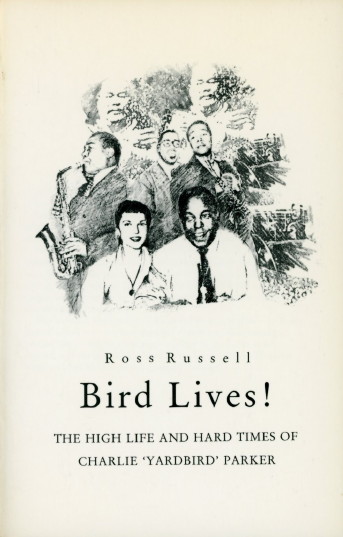
Since then, there have been a number of book length treatments on the life and times of Bird including: Ross Russell, Bird Lives! The High Life and Hard Times of Charlie (Yardbird) Parker, Chuck Haddix, Bird: The Life and Music of Charlie Parker, Robert Reiser, Bird: The Legend of Charlie Parker, Carl Woideck, Charlie Parker: His Music and His Life, Gary Giddins, Celebrating Bird: The Triumph of Charlie Parker, and Stanley Crouch, Kansas City Lightning: The Rise and Times of Charlie Parker, Brian Priestley, Chasin' the Bird: The Life and Legacy of Charlie Parker and Ken Vail, Bird's Diary: The Life and Legacy of Charlie Parker. Also of interest might be Chan Parker's autobiography My Life in E-Flat.
All of these biographies have something to commend them, not the least of which is that they were all written many years after Bird’s death which allowed for a broader perspective in which to assess his significance.
As the author Mark Bowden [Blackhawk Down and Hue 1968] has stated: “For a journalist interested in history, the sweet spot is about fifty years. Enough time has gone by for a measure of historical perspective, and yet there remains many living witnesses.”
The remarkable thing about Orrin Keepnews’ recounting and evaluation of the life of Charlie Parker is that despite its immediacy it stands up well in comparison to the latter works on Bird’s life.
See what you think.

Charlie Parker
1956
“Charlie Parker died quietly, shortly before nine o'clock on the evening of March 12, 1955, having been seriously ill for only three days. The doctor attending him had seen him no more than a half hour earlier and had expressed the opinion that he was much improved; and Parker was propped up in an armchair watching television when death came. He was not yet thirty-five years old, but considering that he had led a physically punishing life and had a poor medical history, it was not notably surprising that he should die so young. Described this way, then, it was the sort of death whose circumstances must have been duplicated countless times.
But it must also be noted that this man was very probably the most significant jazz figure of his time, that he died in the New York apartment of a wealthy and titled woman, that his body lay unclaimed in the morgue for two days, that the precise cause of death is still open to argument. With such additions, the passing of the man known as "Bird" (a nickname of at least three supposed derivations and no vital significance, but consistently used), can be seen as mysterious or even sinister, as part of a contradictory, colorful, seething legend about a foredoomed folk-hero.
Actually, there are rather unsensational explanations for most of the elements of "mystery" associated with Parker's death, but the really important point may be that most people have automatically elected to accept at face value the assumption—and this is true with anecdotes about his life as well as his death — that the weirder stories were the truer ones.
There is no question that Bird is going to be one of the larger-scale jazz legends; he was well on his way to that status long before he died. It cannot be denied that Parker himself, by his attitudes and by many of his quite verifiably non-standard activities, did much to help create and build the legend. But it is equally undeniable that a great many people (including many who knew him closely, in addition to those who merely knew of him as a public figure) seem to have shown a positive desire to turn him into legend as quickly as possible. In part, this tendency can be seen as no more than the very familiar urge to romanticize the "artist." Bird is just one, and certainly not the last, of a very long line of writers, painters, musicians, and what-have-you to be quickly converted into myth.
But it may also be that it is more comfortable to accept Parker as fiction, rather than as reality. It is not without importance that at this writing there are at least four people or sets of people reported at work on books about Bird and that, of the four, the only one that has been completed is a novel! (Its author is Ross Russell, who in the 1940s operated the independent jazz label, Dial, for which several of Parker's first important recordings were made. Russell, on the other hand, is today reluctant to reinvolve himself emotionally with the facts by discussing such rather strained circumstances as Bird's committal to Camarillo State Hospital in 1946, immediately following a Dial recording session in Los Angeles. For the record, the other three Parker works currently in progress are by his last wife, Chan, with a collaborator; by a musician-turned-writer friend who also helped handle Bird's business affairs in his last years; and, jointly with a professional writer, by a New York librarian who has doubled as a jazz night-club operator and promoted a number of public "jam sessions" that were among Parker's last appearances.)
The diversity of approaches to the man's life that can be assumed as forthcoming from such a list of potential authors is a fair clue to the diversity of opinion, fact, and pseudo-fact that currently exists about Bird. There is, by now, little argument about his position in jazz history: he was a (very possibly the) major force in the creation of current modern-jazz forms; his approach, his tone, insofar as possible his musical ideas have been followed, adopted, understood, imitated, aped, unintentionally parodied and misunderstood by performers on all manner of jazz instruments in a way that far transcends any cliche about "the sincerest form of flattery." Musically, there is near unanimity. But concerning the man, it is something else again.
The major problem faced by any researcher into Parker lore is a problem of overabundance. It is almost literally true that everyone involved with modern jazz in the '40s and thereafter feels, whether justifiably or not, that he really "knew" Bird and is entitled to make definitive, strongly felt statements. Asked for suggestions as to helpful subjects for interview, one musician, who actually did know Parker well, came up with a list of twenty-two names almost without pausing for breath, and then apologized that with a little thought he could make the list much longer.
And, no matter how many or how few sources are actually turned to, there is such a welter of conflicting report and reaction that it hardly seems possible that everyone is discussing the same man. Of course, to a great extent there is truth in that contradiction: few men are fully consistent; the sensitive creative artist is apt to be far less so than most and far more inclined to be reshaped over and over again by subjective pulls; and Parker, addicted to narcotics for a substantial portion of his life, could easily be considered to have been several men.

Do you accept French jazz critic Charles Delaunay's impression of him as a sort of Rousseauian Noble Savage: "a big, dreaming child; a natural inspired force . . . good-natured, shy and quite boyish, (with) curiously juvenile thoughts?" Or do you turn to other writers who have been impressed with the "searching clarity" of his comments on music and have quoted him as discussing with considerable insight why Bartok had become his favorite composer or the possible similarities of aim between his own work and Hindemith's? How much attention do you pay to friends' reports on how intelligently he could discuss philosophy or science? What valuation do you place on Chan Parker's conclusions that "he was very mature and wise about the world and life; just immature about himself," and that "Bird was a very gentle man, although he hid it much of the time"?
There are stories of his having been crudely cruel and openly contemptuous towards musicians he considered not up to his standards; but there are other stories to balance against those. Pianist Randy Weston recalls a night in the late 1940s — he was not yet even a professional and Bird had heard him play only once — when he was literally snatched up from the bar at one New York club, hustled over to another on Fifty-second Street ("where, of course, they treated Bird like a god when he walked in") and installed on the bandstand with Parker for almost an hour of playing with the band — "the most wonderful thing that could have happened to me."
And Bird's close friend, alto player and arranger Gigi Gryce, insists that his awareness of music was so strong that he could "hear right through to something good" in the most unlikely places. "We might be walking along and pass someplace with a really terrible rock and roll band, for instance, and he'd stop and say 'Listen to what that bass player's doing,' when I could hardly even hear the bass. And then he might go inside and play with that band and try to teach them things."
There are stories that can't be ignored of his borrowing money and even instruments and never returning them ("You had to pay your dues with Bird"), but Gryce, who says simply, "I lent him my horn plenty of times and always got it back," can tell of Parker's visiting him in Boston with a little money in his pocket, finding a bar in the "really poor" part of town and spending all he had on whipping up an impromptu party for the patrons there. "Of course, then he'd have to find someone to lend him the money to get back home. . . ."
Doris Parker, who met him in 1945 (when his impact both on musicians and on the jazz-listening public was at its first high point) and thus was with him both during that "up" period and the extreme "down" period that followed it rather closely, expresses deep, hurt surprise at a number of prevalent attitudes and stories. She is an admittedly prejudiced source ("To me he was Charlie, not 'Bird,' not the fantastic character . . . but the guy I loved . . . gentle, soft-spoken, withdrawn") but presumably not interested in whitewashing his memory ("Really, he did so many things that were bad, they don't need to manufacture any"). Commenting on an article in one of the shock-value men's magazines, a piece that claimed in reasonably lurid, if non-specific, anonymous-quote detail that Parker "may have had the most advanced case of satyriasis ever known," Doris has remarked: "This I find very hard to believe. For long periods of time I'd be with him twenty-four hours a day. ... At no time did I know Charlie to be vulgar about sex . . . and I can't believe he could ever change so completely." She similarly discounts stories about his inventing "new" ways of drug-taking: "Let's not let anyone kid about that. He didn't invent addiction — everything he did has been done many times before, even the destruction."
If the stories fail to balance, there is at least little difficulty in setting forth the basic facts of Parker's life (although there is some clouding at both ends). He was born in Kansas City, Kansas, and brought up in the larger city of the same name across the river in Missouri. The usually accepted birthdate is August 29,1920. There has been some claim that he must have been born earlier (trumpeter Harold Baker has been quoted as saying he recalls Bird playing with a Kansas City band in about 1931), but Doris reports that his mother verified the 1920 date. His mother bought him an alto saxophone when he was about eleven. He subsequently told interviewers that he had become interested in this instrument by hearing Rudy Vallee on the radio, but it's questionable that this should be taken seriously, particularly since it later seemed important to him to stress that he was not influenced by any of the noted horn players of his youth, Lester Young in particular. Parker has also spoken of taking up the baritone horn in high school because "it was loud and boisterous and dominated the band so much the judges could scarcely ignore it" in awarding prizes, another comment that can be taken as indicating more about Bird's later cynicism than about early motivations.
At about age fifteen he left school and decided to take up music professionally. As much as has ever been stated about his reasons was set forth in a 1949 Down Beat interview, in which he noted the necessity of earning a living and that music "seemed easy, looked glamorous, and there was nothing else around." But it doesn't call for much guesswork to add to this another reason, one that can be equated with his mother's motives in so readily buying a saxophone for an eleven-year-old presumable Rudy Vallee fan. This was Missouri; as in the Deep South, then and earlier, a great many Negro parents were more than willing to encourage any musical leanings in their children: however dubious its moral reputation, at least the entertainment business was one of the very few open avenues leading to other than menial jobs.
But if music "seemed easy" to young Parker, that decidedly was a wrong impression. It is clear that he was not much of a musician at the start. Bassist Gene Ramey, who came to know Parker very well in later years, has written that when he first met Bird, "he was barely fourteen years old (and) wasn't doing anything, musically speaking." Ramey wrote of one early humiliation when Parker began to play during a jam session with members of Count Basie's band. "Jo Jones, ... as an expression of his feeling, took his cymbal off and threw it almost the complete distance of the room. . . . Bird just packed up his horn and walked out." Parker himself has told of a similar incident at the High Hat club when "I tried doing double tempo on "Body and Soul." Everybody fell out laughing. I went home and cried and didn't play again for three months."

Parker's main reaction to all this, according to Ramey and others, was a "just you wait and see" kind of determination. Bird has noted that he had first seriously learned to read music at about this time, and Ramey has written of the "unbelievable" transformation that came about during his sixteenth summer, which was spent at a summer resort with George E. Lee's band, where a guitarist named Efferge Ware ("a great chord specialist, although he did no solo work") educated him on "the cycles — the relationship of the chords and how to weave melodies into them. . . . After which, of course. Bird expanded on his own. , . . After this sudden development in his style. Bird began to get lots of work."
There is a theory that Parker was a "natural genius." Gigi Gryce, for example, believes that he just "happened" to take up music, and would have made an important mark in any field. ("If he had become a plumber, I believe he would have been a great one.") In support of this, there is his late enthusiasm for painting. (I have seen an impressive sketch of his friend Baroness Nica Koenigswarter and have been reliably informed of highly interesting, more ambitious work.) The accounts of his rough start in music might seem to weaken this natural-genius theory, but under the circumstances perhaps the wonder is not that Parker did not play better, but that he played at all well.
He lacked any sort of formative jazz background: he had heard little if anything of the music of early jazz greats; it seems clear that the swing of the mid-'30s meant little to him musically; and his immediate reaction to the heavily vibrato-filled style of just about all jazz saxophonists of the time was simply, "I didn't like it." In addition, he had been introduced to narcotics almost as soon as to music. The accounts vary, but whether it was "an actor friend (who) told me about a new kick," or older musicians, or "a stranger in a washroom," the fact is that, by 1935, he was firmly addicted. Bird's own statement to writer Leonard Feather was that "It all came from being introduced to nightlife too early. When you're not mature enough to know what's happening — well — you goof."
Perhaps that doesn't really say it all, but there seems no need to get overly devious about a sensitive fifteen-year-old, working as a musician in the heart of Kansas City (then in its Pendergast heyday and probably the most wide-open town of all), trying to be as hard a guy as the next and accepting heroin as part of the "glamor" of it all. Very little is known about Bird's childhood. (Doris Parker, denying that he was particularly "close mouthed" about his youth, makes the point that "he didn't have much youth to talk about. What can you say about being 'hooked’ at fifteen? That rather limits the conversation.") It does seem reasonable to take the known teenage circumstances and add to them whatever you care to accept of the sexual-appetite stories and also his later strongly demonstrative affection for children — his own or those of friends — and conclude that he was looking for a warmth and acceptance he had been unable to find in childhood. Chan Parker has been quoted as saying, "He had been hurt early and he had been hurt bad. He was cynical sometimes as a result, but he was also sentimental. When he came home, whether he had much money or barely any, he'd bring presents for the kids."
As for the practical problems of addiction, Parker later commented forcefully that "any musician who says he is playing better either on tea, the needle, or when he is juiced, is a plain straight liar." For a Bird who was just learning his trade, this must have been true many times over.
Nevertheless, he was developing as a musician, accepted by that time at the plentiful jam sessions, and working briefly with Jay McShann's band, a top local group. Then came a now-cloudy unpleasantness involving his refusal to pay a cab fare. Apparently his mother refused to help him out, and he spent twenty-two days in jail, after which he abruptly left town — leaving his horn behind. One story places him briefly in Chicago in 1938, where (as singer Billy Eckstine has told it) he walked into the Club 65 during a "breakfast dance" and sat in, using a borrowed horn and looking "like he just got off a freight car, . . . but playing like you never heard." A short time later he was in New York, still without an instrument. For three months he was a nine-dollars-a-week-and-meals dishwasher at a Harlem after-hours spot; then he just "bummed around awhile." He had been in town eight months when some by-now-anonymous musicians bought him a horn (presumably after hearing what he could do on a borrowed alto at some session); shortly thereafter he was hired at Clark Monroe's Uptown House, soon to become known as one of the key breeding grounds for the new jazz.
This was in 1939, which seems to have been the year in which things really began to jell. On one subsequent occasion (during a Down Beat interview ten years later) he was inclined — or induced — to pin it down to a specific month (December 1939) and place (the back room of a Harlem chili house, where he was jamming with a guitarist named Biddy Fleet). Bored with "the stereotyped changes being used then," Parker is quoted as thinking "there's bound to be something else. ... I could hear it sometimes, but I couldn't play it." Then, while playing "Cherokee," "Charlie suddenly found that by using higher intervals of a chord [the difference between two pitches] as a melody line and backing them with appropriately related changes, he could play this thing he had been 'hearing' . . . and bop was born."
This somewhat technical version is a good deal more apocalyptic and less plausible than the way Bird told it on other occasions, when it was merely that he used to "hang around with Fleet at ... spots uptown" and "we'd play around with flatted fifths" and the like. But both ways of putting it have their merits. The assumption that Parker's new approach came about gradually jibes with accounts that trace at least some elements of his eventual style back to his Kansas City days. Both Jo Jones and Ben Webster have mentioned an alto player named Buster Smith, who played with Bennie Moten and then with Count Basie's earliest band, as being (in Webster's words) "the only man I ever heard to whom you could attribute anything Bird ever did." Jones has flatly called Smith "Charlie Parker's musical father."

Doris Parker recalls Bird telling her of "a tenor (?) player who influenced him greatly" at the start, and some of Bird's friends have cited mention of "a guy who played alto in an old band." Unquestionably, Parker's "modernism" did not suddenly spring into full-blown life one fine day; but on the other hand, the Down Beat sudden-flash account does have the virtue of dramatically indicating that, by the end of 1939, Parker had found himself. For by early 1940 he had returned to Kansas City and rejoined Jay McShann; and his sound on his first records with McShann, as well as stories of how he was a leading force in the band, make it clear that he had come a long way since he ran home and cried in 1935.
It does seem strange that Bird found himself during a period of rootless wandering and odd jobs, not even owning a horn most of the time, but it is simply a fact that must be accepted. It must also be kept in mind that he was certainly on narcotics at this time, that this was part of a period in which, as he once put it, he was "always on a panic." Pain, poverty and loneliness were among the ingredients — whether because of them, in spite of them, or both, Charlie Parker was about to become a focal point of the new jazz forms that were just beginning to take shape.
For many reasons, among them various personal jealousies and some musicians' tendency to supply interviewers with answers they think are the ones wanted, regardless of accuracy, the precise beginning of the music first known as "be-bop" will most probably always be shrouded in confusion, contradiction, and double-talk. It was not necessarily recognized by the participants as a glamorous period of creativity: as Thelonious Monk puts it, "Nobody was sitting there trying to make up something new on purpose. The job at Minton's was a job we were playing, that's all."
But at Minton's Playhouse, the number-one proving ground for bop, the job was at least one where men could play as they pleased, with a sympathetic club manager (ex-bandleader Teddy Hill) and a growing crowd of interested musicians eager to listen or to sit in. There, and at Monroe's and at other side-street Harlem spots, Monk could play as he had always wanted to; drummer Kenny Clarke, another member of the Minton's band, could work on the ideas that had been frowned on when he was with Hill's band; Dizzy Gillespie and guitarist Charlie Christian and so many others could come by. (Monk does not recall Parker having been there at the very start, nor that there was any single memorable moment when he first appeared; but he does say that Bird's ability and authority were immediately accepted as exciting and important additions.)
Their various new concepts were similar enough to merge — or perhaps it was something like the classic stories of inventors separately, but almost simultaneously, achieving identical results. Clarke has been quoted on this subject of mutuality, noting that he, Monk, and Gillespie would often end up at Monroe's after Minton's closed for the night: Bird had left the limited confines of McShann's rather routine Kansas City riff-and-blues outfit and returned to New York, and "we went to listen to Bird," although at first it was "for no other reason than that he sounded like Pres." ("Pres" — Lester Young — was perhaps the only no-vibrato sax man before Parker, and Bird had spoken of admiring his "clean and beautiful" sound, although disclaiming any influence from Young's jazz ideas, which "ran on differently" than his own.) But they found, Clarke added, that Bird also had something new to offer: "Things we'd never heard before—rhythmically and harmonically," and it aroused the interest of Dizzy and Monk because they "were working along the same lines" (my italics—O.K.).
Earl Hines's band was becoming a home for several members of the bop clique; men like Eckstine and Gillespie helped persuade Hines to hire Parker. The only opening was on tenor, so Bird played that instrument exclusively during the ten months of 1943 he spent with Hines. But, although there is a story that Ben Webster was moved to open admiration the first time he heard him. Bird was never at home with the tenor; and when he joined Billy Eckstine's big band in 1944, as one of several ex-Hines men involved in that musically ambitious but short-lived orchestra, he was back on alto for good.
After 1944 bop broke out into the open, beginning its rather brief, hectic, and heavily publicized period of more-or-less acceptance by the public. Parker was making his first important records with small groups for the small jazz labels and no one since Louis Armstrong's early heyday had ever had so overwhelming an impact on his fellow musicians. Parker was working on Fifty-second Street, first with Dizzy and then heading a group that included eighteen-year-old Miles Davis. He was, everyone around him agreed, playing wonderfully well. He was also living hard; but so were most of his coworkers, and so have most jazzmen of most eras, particularly when times are good for them and the clubs are crowded. When you spend each night working hard at playing what you want, when your work is being enthusiastically received, and when your setting is a place that does nothing but serve drinks all night long — well, the atmosphere is hardly conducive to sedate living, or to rationing either your emotions or your appetites.

There are stories of eccentric behavior (with the Hines band he had once missed a theatre show because he arrived early and was asleep under the bandstand throughout the performance), and it can be said with hindsight that Bird was close to a breakdown late in 1945 when he went to Los Angeles with a group that included Gillespie and vibist Milt Jackson. But the unanswerable question is whether he would have gone over the line at that time if Los Angeles had not turned out to be a terrible place to play. "Worst of all," Parker told Leonard Feather in an interview a few years later, "was that nobody understood our kind of music out on the Coast," in sharp and bitter contrast to the Eastern scene, where he and Dizzy were the newest of idols. And through it all there was the narcotics habit, which among other things is expensive, so that even when he was working regularly, he was painfully unable to "buy good clothes or a place to live."
It all came to a head on the night of July 29, 1946. At a record session for Ross Russell's Dial label, Bird, despite having drunk "a quart of whiskey to make the date," was beset by uncontrollable muscle tics. He cut only two numbers, one of them an almost incoherent "Lover Man." (Parker's later comment was: "Lover Man" should be stomped into the ground," but it was released, and an embarrassing number of listeners didn't seem to know enough to dislike it.)
Later that night he broke down completely, was arrested and then committed to Camarillo State Hospital. He was released seven months later, seemingly quite recovered: he was playing well on records made in February 1946. There are contradictory details concerning his release; although he worked for Dial again, there was some feeling that Russell had taken advantage of him by insisting that he sign a recording contract before agreeing to help gain his release, although, according to Doris's account, they later determined that he could have been released, and even sent back to New York by the state of California, without outside aid.
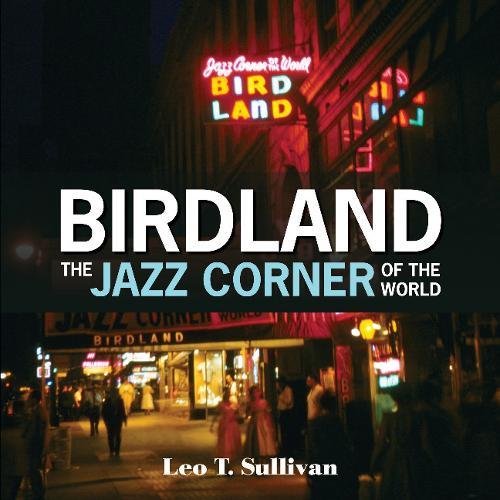
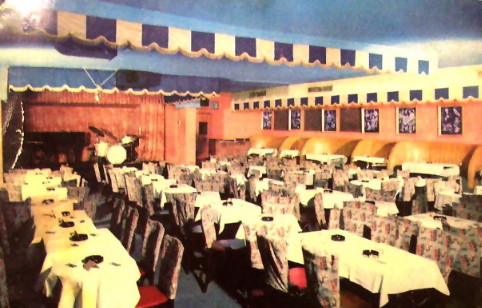
In any event, the next few years were successful and seemingly happy and stable, although by taking a long hindsight view again it is possible to say that the road was leading down towards its end. Bird was in demand at New York clubs, and was a big enough name to make it a commercially appealing idea for a club that opened in 1950 to be called "Birdland." He was in Paris and the Scandinavian countries in 1949 and '50, was featured on several of promoter Norman Granz's "Jazz at the Philharmonic" tours, and eventually recorded (for Granz's Clef label) an album with a rich string background. This, Doris Parker says, "had been one of Charlie's pet dreams . . . for so long."
But the with-strings recordings can be taken as marking another turning point. Although some have found these selections, especially a version of "Just Friends," among his most moving work, others considered them a sign that he was going "commercial"— always the most insulting word in jazz.
Bird had for some time been talking about the potentialities of the "variety of coloration" and "new sound combinations" offered by strings and other primarily symphonic instruments, and several friends were aware that he was deeply disturbed by the negative reactions. He went ahead with plans for a tour with a string group, but it was unsuccessful. Entering the '50s, he was moving into a period of personal confusion and erratic behavior.
Bookers and club owners were growing impatient with his unreliability; there was a falling out with the management of Birdland (in his last years he played in "his" club only twice; both times with disastrous results). He apparently was fighting to keep "straight" as far as narcotics were concerned, but there are conflicting reports as to how successful he was.
One prevalent self-cure among musician addicts has been to drink heavily as a sort of substitute (what medical authorities might say about the effectiveness of this is another matter), and it is a fact that Parker drank more heavily at this time than ever before, to the point where he was hospitalized by a serious ulcer attack. For the first time (except for the actual breakdown in 1946) his physical condition was affecting his playing, and although he was still vastly appreciated and widely copied by musicians, many of them placed him in a sort of emeritus status that didn't sit at all well with him.
Bird had left Doris, and Chan had borne him two children. Early in 1954, the girl, Pree, died of pneumonia. Many people consider this tragedy to have been the real finisher. Leonard Feather has called the next few months a "pattern of apparently intentional self-destruction." The immediate culmination came in September of that year, when he was booked into Birdland with a string group. The strings began playing one tune; Bird began on an entirely different one, screamed wildly at the musicians, and fired them on the spot. Later that night he drank iodine in an apparent suicide attempt.
There was one last attempt at regeneration, sparked by Chan. She rented a house in Bucks County, Pennsylvania; Bird attempted to stop drinking and for a while actually commuted to New York, over an hour away, almost daily for sessions with a psychiatrist. But this rather demanding routine didn't last too long. He went back to work, usually as a "single," backed by a local rhythm section. It was an oddly unreal existence; Baroness Nica Koenigswarter (in whose apartment he was to die), who came to know him well during his final months, insists that he was not moody — except when Pree was mentioned — but was for the most part quite cheerful, warm, and witty, But she also notes that he told her, "I've been dead for four years." And there were times when he would ride the subways all night long, alone.
There was no question but that he had deteriorated badly. Frank Sandiford, a Chicago writer who was a close friend for several years, tells of a night at The Beehive in Chicago, "just before he left . . . to go back East and die."
"It began with the owner begging me to go to the room behind the bar to get Charlie to go on the stand. It was a small room used to store cases of beer and other things. . . . Bird met me at the door by throwing his arms around me as though I were the only person left in the world to whom to plead for rest. He couldn't go on, he said. Didn't want to, was in no condition. He looked it. The house was packed. I reminded him that there were many people out there who had come just to hear him play. I opened the door and ... he glared at them. ‘They just came out here to see the world's most famous junky,’ he grumbled. I will always feel guilty about this, but I did get him to get up and face the crowd. He couldn't play. All he did was to make a few awful bleating sounds . . . spilling out his disgust, his fears, his frustrations. He made a pitiful figure. ... He was a beaten man and he knew it. That made it most painful."
Birdland tried him again, on March 4, 1955, but someone misguidedly arranged to have his group include pianist Bud Powell, who was far from fully recovered from his own mental illness. It was, according to eyewitnesses, a thoroughly painful experience, with a full-scale verbal battle between Bird and Bud on the bandstand the first night.
The following Wednesday, just before he was to leave for a Boston engagement, Parker stopped at the Baroness Koenigswarter's apartment. While there he had a bad coughing spell that brought up blood and left him breathing with difficulty. The baroness called a doctor, who asked a few briskly routine questions (including "Do you drink?,” to which Parker answered: "Sometimes I have a sherry before dinner") and recommended hospitalization. Bird refused insistently, and the baroness agreed to keep him there; she and her daughter could nurse him. He was very weak for two days, tried to eat only a few canned peaches during that time, couldn't retain even that, but drank great quantities of water from a jug at his bedside. He remained very alert, however. The doctor knew, if somewhat unclearly, who he was, and there was much discussion as to which of Bird's records would be most suitable to play first for the doctor. (Parker finally decided on "April in Paris," from the with-strings album.) He also talked, near the end, about the future: about forming a large new band "that would knock them all dead." "On that third day," Nica Koenigswarter says, "he seemed much better; then he died." (He died while watching the Dorsey Brothers' television program; he had always admired the Dorseys as technicians.) As the baroness recounts it, the doctor was called three minutes later; he immediately sent for the medical examiner; and thereafter it was out of her hands. She says she was most anxious that Chan not learn of Bird's death from the radio or newspapers, but it was more than a day later before she could locate Chan. (Bird had refused to tell her Chan's whereabouts, saying that he didn't want her or anyone else to know where he was until he was better.)
As for the cause of death: the baroness knew of no heart attack or pneumonia, which were mentioned by most newspaper accounts, and says that the doctor specified ulcers and cirrhosis of the liver. Doris Parker, on the other hand, says, "The district attorney told me they did a very thorough autopsy on Charlie and he died from lobar pneumonia and nothing else was mentioned." This mystery may never be fully clarified, but there is no doubt that it can be said, without excessive sentimentality, that Charlie Parker, like more than a few others before him, died of being a naked, inevitably unadjustable genius.
"Genius" has become a rather cheapened word in our times, but it tends to have its old, formal dignity when musicians talk about Bird. What might be called the omnipresence of music in his life is something on which several have commented. Gene Ramey has been quoted as saying, "Everything had a musical significance for him. He'd hear dogs barking, for instance, and he would say it was a conversation and ... he would have something to play that would portray that thought to us." Similarly, Gigi Gryce has noted his ability to "augment anything. You might be humming a couple of bars of something, without thinking about it, and in a couple of minutes he'd be giving it back to you so changed and developed you wouldn't even recognize it."
Yet, like many artists to whom creativity is, at least in part, a sort of natural function, he tended to minimize his own abilities. This might have been simply a not-uncommon urge toward perfection. "Basically, he was never satisfied with what he did," Doris has said. "There wasn't a record he didn't think could have been better." And Bird himself once answered a question as to what he'd recommend to anyone wanting to buy his three best records by saying, "Tell him to keep his money." Gryce, however, feels that he was bothered by his lack of formal training, that he thought, incorrectly, that the fact that he could write and arrange so readily without schooling did not just mean that it came easily to him, but rather than he wasn't doing it as well as he might. Yet, Gryce notes, he had a phenomenal ability to read, and even to transpose, music at sight.
The extent to which he was disturbed by imitators, or made unhappy by varying degrees of non-acceptance by the public, is hard to define and obviously was itself quite variable. Gryce believes that part of the unhappiness of his last years stemmed from a feeling of "What's the use? People didn't really dig him," and there is agreement that he felt his "disciples" were overdoing it to the point of stultifying their own creative potentials.
But any opinions about Parker must be looked at with an understanding that, to an amazing extent, people saw in him what they wanted to see. Take even so apparently simple a matter as whether he was more, or less, reliable during his best periods. Doris says, "When Charlie was on his feet, he made time" (i.e., showed up on time for engagements). But Gigi feels that he was simply unable to adjust to business routine — "he wanted to create like a painter, when he wanted to; not like a commercial artist working on schedule" — and that, when he was feeling best, he was most apt to get wound up in a session someplace and just neglect to show up for work.
Of one thing there can be little doubt: he had given up the fight towards the end. He spoke often about his death as close and inevitable ("I'm just a husk," he told Nica Koenigswarter); and in 1954 he sent Doris a poem, which he may have written but more probably had copied down (judging from the rather ornate style), and which he seems to have considered fitting. In part it sets forth a credo that might easily have been his own ("Hear the words! Not the doctrine. Hear the speech! Not the meaning. . . Don't look at the sun! Feel it!") and in part is concerned with dying ("death is an imminent thing"), though also with hope ("My fire is unquenchable").
There can also be little doubt that he was a tortured man, and there are several who emphasize the loneliness. One friend of the last years, Chips Bayen, never thought it unusual that he had long talks with Bird, and discovered only after his death that most people considered it something unique. Gigi Gryce puts the blame on Bird's position of eminence: "The pressure of being on a pedestal, which he didn't like at all." Gigi feels that he wanted and needed companionship, but that many musicians were wary of approaching him on a personal level: "People wouldn't talk to him because they didn't know what to say — but, really, all they had to do was say 'Hello.’”
Although so many writers of fiction have turned the concept of the artist as a soul in torment into something approaching a stereotype, it still seems the clearest way to sum up this man. The basic paradox must be that the same qualities that made him play as he did made him unable to find "normal" happiness and acceptance. Frank Sandiford calls him "a man of violently opposing urges: one towards greatness . . . the other towards defeat." In a letter, Sandiford tells of seeing him at his worst: ", . . when he would beg dimes and quarters, anything, from those that came to hear him play . . . sweaty and looking sick and tired [and trying] to keep his words together so as to make some sense. There were times when I would see him sneer, trying hard to believe in the cynical statements he made, when I knew he made them only to keep pain at a safer distance."
This is a friend speaking, of course, and perhaps being considerably more tolerant than, say, someone at whom the cynicism was directed or from whom the money was begged. But at the very least a man is entitled to have a friend speak the final words. And there is another portion of Sandiford's letter that seems a suitable epitaph for Bird (and probably for more than one other musician whose living presence was sometimes less than pleasant for those who knew and worked with him):
"He was an artist who paid a great price to be able to get out of himself some of the things that most disturbed him. He might have cheated a little, he might have stolen from some, he might have hurt many. But he cheated, stole and hurt himself more than anybody. And he did give us something far more wonderful than he took from us."”