Thursday, December 30, 2021

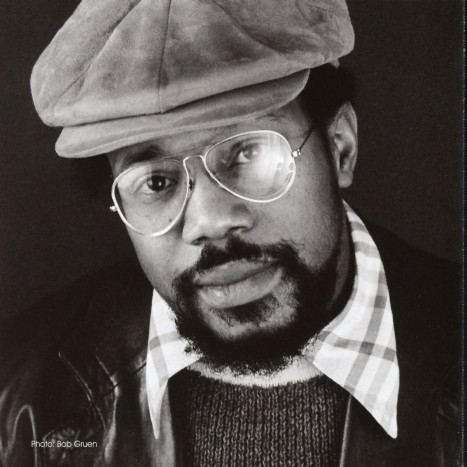
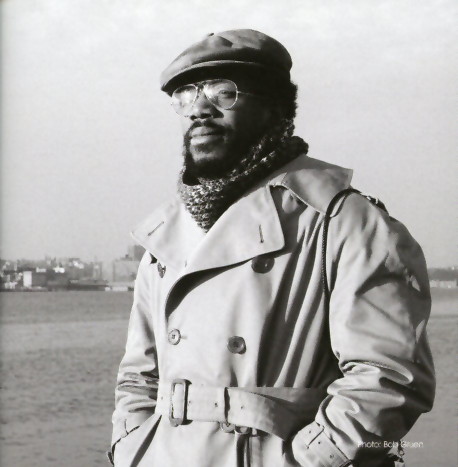
Locksley Wellington "Slide" Hampton - In Memorian

 © Copyright ® Steven Cerra, copyright protected; all rights reserved.
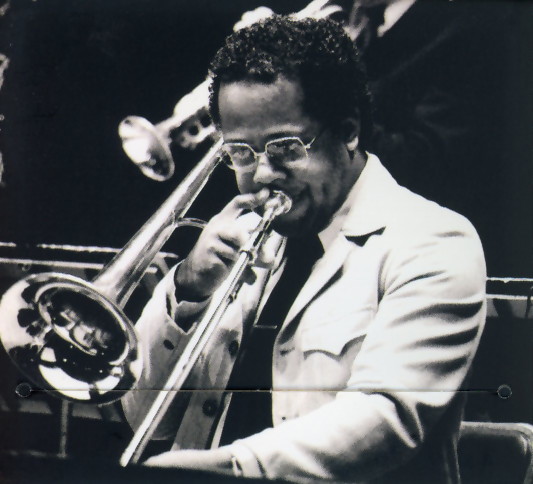

“Playing a trombone makes you realize that you’re going to have to depend on other people,” Mr. Hampton told The New York Times in 1982. “If you’re going to need help, you can’t abuse other people. That’s why there’s a real sense of fellowship among trombonists.”


“Mr. Hampton spent his entire life in music, beginning as a singer and dancer with a family band that included his parents and most of his 11 brothers and sisters. He began playing the trombone at age 12.


Even though he was right-handed, he played the trombone left-handed because the first trombone he received as a child was configured that way. His sisters gave him the nickname of Slide.


“I was hearing music every day from the time that I was born,” he said in a 2007 interview with the National Endowment for the Arts, “so I knew right away that my life would be in music.”

The Washington Post


“In 1960, he formed his own octet modeled after Miles Davis’, as he told DownBeat in a Jan. 19, 1961, interview. “Over the years, I have listened to a number of bands of different sizes that I liked,” Hampton said. “I suppose the Miles Davis Octet was a great influence on the type of should I would like to hear in my own group. For this group, I tried to get an instrumentation which would be between all the other sizes and yet get a little of each of these sounds.”

By 1962, he had solidified the band as the Slide Hampton Octet, which included Hubbard, George Coleman and Booker Little, touring the world and recording for several labels.

After touring with Woody Herman in 1968, Hampton remained in Europe, connecting with a community of expat jazz musicians including Art Farmer and Dexter Gordon. He returned to the U.S. in the late 1970s, teaching at a variety of universities and continuing his arranging and composing work and creating his World Of Trombones album, the ultimate salute to the trombone that included nine top-notch trombonists and a rhythm section.

Hampton won two Grammy Awards, the first in 1998 for Best Jazz Arrangement Accompanying Vocalist(s) for his arrangement of “Cotton Tail” performed by Dee Dee Bridgewater; the second in 2005 for Best Large Jazz Ensemble Album for The Way: Music Of Slide Hampton, The Village Vanguard Jazz Orchestra.

In 2005, Hampton was named an NEA Jazz Master.” DownBeat

This has been a year of goodbyes for many of the Jazz musicians associated with the Modern Jazz Era that followed World War II, one of whom was trombonist, composer-arranger and bandleader, “Slide Hampton” [4.21.1932 - 11.18.2021. Death is part of life, but it doesn’t mean I have to like it when one of my heroes passes away.


My first listening experience with Slide Hampton as both a trombonist and an arranger came on the 1958 and 1959 Roulette LPs by trumpeter Maynard Ferguson’s Big Band: A Message from Birdland and A Message from Newport. As usual, anytime one of Maynard’s Big Band was in action turned into an excitement-plus moment and this tradition started with these two “desert island” recordings.


My next recorded encounter with Slide’s work came about when drummer Vinnie Ruggerio hipped me to a 1962 octet LP on the European Philips label under Hampton’s leadership that has since been reissued on on CD as Jazz in Paris: Slide Hampton - Exodus [Gitanes 013 033 2].


Slide Hampton(tb,arr), Benjamin Jacobs-El(tb), Nat Pavone, Richard Williams(tp), George Coleman(ts), Jay Cameron(bs), Butch Warren(b), Vinnie Ruggiero(ds) made up he eight-piece band featured on this album, a format that Slide would return to often during his career.


Here’s more background on that album and on Slide’s career in general from a variety of sources.


“LOCKSLEY WELLINGTON HAMPTON WAS 27 YEARS OLD when, in the autumn of 1959, he left Maynard Ferguson's orchestra where he had made his name as an extraordinary trombonist and composer/arranger to launch his own octet. A wonderfully rhythmic and unique arranger, Slide came up with an unusual instrumentation for the octet: two trumpets, two trombones, tenor sax, baritone sax, bass and drums.


The group's first album, which was on the Strand label and is now a very rare item, boasted a trumpet section that consisted of Freddie Hubbard and Booker Little. In 1960, Slide's octet was signed to Atlantic Records where it recorded four albums over the next two years. In the studio, the ranks of the octet would often swell to 10 or 11 men with the addition of a third trumpet or second tenor sax or piano or congas, but the moniker usually remained.


Slide's record sales were lackluster, despite glowing critical reaction, and getting work for a group of this size proved extremely difficult. Before Atlantic recorded their fourth and final album with Slide, they released him from his contract to do one-shot projects for Charlie Parker Records (an album of mostly material from Porgy and Bess) and for Columbia's Epic label (Drum Suite feat. Max Roach).


The struggles of keeping this octet afloat proved too much; in a news item in the December 21, 1961 Down Beat, Jay Cameron bemoaned its financial woes. By 1963, it disbanded. Slide has continued to freelance as a trombonist and arranger. In 1968, he moved to Europe where he found more opportunities to write for large ensembles, but an assignment to do the charts for Dexter Gordon's Sophisticated Giant in 1977 enticed him back to the states. Since then, he has freelanced with the best of them and led his own World of Trombones (with nine trombonists!) and The Jazzmasters, a 12-piece outgrowth of the octet.”

MICHAEL CUSCUNA reissue of Drum Suite as a Mosaic singles CD MCD-1007].

JULY 2OO6


ORIGINAL  LINER  NOTES - Drum Suite [Epic LP - BA 17030]


ONE OF THE UNIQUE QUALITIES OF ANY SLIDE HAMPTON unit is that it always sounds as if it had several more members than it actually has. Hampton, who did his first major arrangements for the shouting, sometimes shrieking band of Maynard Ferguson, performs small wizardries of voicing that sometimes make it seem that he has even more men than Ferguson. Unlike Muzak, Hampton's arrangements have never been accused of putting live musicians out of work, but he can accomplish more with fewer men than anyone else who inhabits the no-man's land between small groups and big bands.


The impact of the Slide Hampton orchestra was never more forcibly demonstrated than the night in 1961 when a benefit for the late trumpeter Booker Little was held at New York's Jazz Gallery. Practically every jazz musician of consequence in New York was there (it was Sonny Rollins' first appearance before an audience since his retirement). Of necessity, everyone played with his own small group or a pickup band. Late in the evening, Hampton and his men came by between sets from the club they were working and played a then untitled number now called The Barbarians. The audience, which had listened in solemn attention to the modernist intricacies of the other musicians, suddenly reacted with hand-clapping and foot-stomping as if the Ellington or Basie band had arrived. Hampton was the success of the evening and made things that much easier for everyone who followed him. ….


As yet, these remarks have made no mention of Slide Hampton's considerable abilities


as a trombone player —- abilities which have been almost obscured by the attention given his band and arrangements. He did, however, win the Down Beat International Jazz Critics Poll as New Star on that instrument (tying with Dave Baker of the George Russell Sextet). Both It’s All Right With Me, which has not been played at such a breakneck tempo since Roach and Rollins first announced their partnership, and Stella by Starlight give ample indication why.


The chef d'oeuvre of the collection is Hampton's miniature five-part Drum Suite. In very short time, it skillfully manages to provide Roach with a surprising variety of moods, tempos and roles. The dexterity and sensitivity with which the drummer switches from one to the other, unveiling technical acumen that would be the envy of most men, while never forgetting that this is music, that he is part of an orchestra in which he has a definite position, is one of the delights of the set.


But for all the virtuosity and versatility of Hampton, Roach and Lateef, the first and lasting impression is of music not to be studied, but enjoyed. Which is why it is so gratifying to hear them together in this album.”

JOE GOLDBERG


Jazz in Paris: Slide Hampton - Exodus [Gitanes 013 033 2].


“It's not just because you've written and recorded a hit called Sister Salvation that you can fill a theatre like the "Théâtre de L'Etoile". That is, not when your name doesn't mean much to most people, fans or not, and you're fronting an octet, a formation that many feel to be particularly illegitimate; and especially not when the John Coltrane Quartet is due in town next week. That was a lesson that Slide Hampton learned to his cost, on November 10th 1962. One good thing did come out of it, however — apart from excellent coverage in the specialist press, that is, but print never kept the wolf from the door — and that was the chance to record in a Paris studio, fronting his own group, and playing his own arrangements. Not to mention doing so in a way that did full justice to his band. "Little by little, I've come to consider my current Octet like a big band resume’; an original resume’, where I've got all the notes on hand, from the deepest pitch to the highest: with this instrumentation I can catch everything, cover it all." said Slide Hampton to Francois Postif. For three years, with Maynard Ferguson, Slide Hampton had explored all the possibilities of writing for a big band ; his instrumental formula, even if it did neglect the piano, gave the lion's share to the brass: only two saxophones, tenor and baritone, for two trumpets and two trombones, particularly brought into the limelight on Exodus, an album throughout which the arranger pays tribute to the man he recognised as one of his mentors (apart from Duke Ellington), Gil Evans. 


"My big problem with forming this Octet," he went on, "was to get eight musicians together under the same banner, with a unity that followed my own ideas. I really don't need some musician where you could say, "Hey, that's so and so," when you hear him play a solo ; what I want is for people to say one day, "Hey, that's Slide Hampton's Octet" if they hear me on the radio." 


That was quite a programme, and part of it was a baritone sax player who wasn't an unknown for most of the Parisian fans, Jay Cameron. He'd been to Europe in 1947 — he wouldn't return to the States until 1955 — and belonged to the "modernist" faction of players in St. Germain-des-Pres, playing mainly with a group of pioneers preaching the faith, the group led by pianist Henri Renaud. The latter had played piano on the only record ever made under his own name by... Jay Cameron, an album that also featured Bobby Jaspar, Barney Wilen and Jean-Louis Chautemps. Here Jay Cameron takes only one solo, on Confirmation.

Definitely more voluble are George Coleman on tenor, remarkable on A moment's notice ; Richard Williams on trumpet ; bassist Butch Warren, whose solo on Star eyes is a pure joy ; and, of course, Slide Hampton on trombone, an instrument he played left-handed, even though he was a natural right-hander... fast, and with a full sound, Slide stands out brilliantly on I’ll take romance and Straight, no chaser.

Whatever his reasons — either the memory of his welcome by those who'd seen his Octet, or just his gratitude for this recording, made practically on the spot — when Slide returned to Paris, in February 1968 (with his Octet long gone), he was to stay for almost ten years.”

Alain Tercinet


Sunday, December 26, 2021

The Golden Age of Jazz - William P. Gottlieb [From the Archives]

 © -  Steven A. Cerra - copyright protected; all rights reserved.


“It was, to say the least, a dazzling period. Every time you turned around, particularly in New York, there was something new on 52nd Street or in Greenwich Village: the hectic three-piano boogie-woogie playing of Meade Lux Lewis, Albert Ammons, and Pete Johnson mixed with Joe Turner's blue shouting at Cafe Society; Billie Holiday glowing under the huge white gardenia in her hair; the subtle sound of John Kirby's sextet; the powerhouse bands of Woody Herman and Stan Kenton; the
"weird" concatenations of the emergent beboppers at the Royal Roost, at Bop City, and, eventually, at Birdland.


Bill Gottlieb landed in the midst of all this — intentionally, and with a fan's enthusiasm, as a writer; unintentionally (as he explains) as a photographer. The combination of the two talents put him in an unusual position. There were others around then who were writing on jazz (I was one of them). And there were others who were taking pictures. But no one else was taking pictures and getting the stories at the same time — a combination that gave Gottlieb's approach to his photography a distinctive, storytelling touch.”
- John S. Wilson, Jazz Critic for the New York Times


From Washington Post days I learned that I couldn't expect to get staff photographers to cover my music stories; it would have meant their working on their own time, late at night. To get me off their backs, Post photographers taught me to take my own pictures. That's what I've been doing ever since.
- William P. Gottlieb, Jazz author, critic and photographer


This piece gets its title from a book published by DaCapo Press in 1979.  It is a collection of 200 of William P. Gottlieb’s excellent photographs with brief annotations by Mr. Gottlieb of most of the important figures in Jazz during the 1930’s and 1940’s.


All of the photographs in Mr. Gottlieb’s book and the remainder of his vast collection has been donated to the Library of Congress and you can explore this treasure trove by going here.


William P. Gottlieb wrote about Jazz for the Washington Post, Down Beat and Saturday Review and his photographs appeared in countless Jazz anthologies. This book presents the best of his work from the 1930s and 1940s [aka “The Hot Music Era”].


How both Mr. Gottlieb’s career in Jazz and his book about the “Golden Age” came to be written are beautifully recounted in the following Introduction by the distinguished Jazz author and critic, John S. Wilson, and in Mr. Gottlieb’s own Foreword.


This is not a “looking back” book. What makes it so special was that Mr. Gottlieb was there to document aspects of the early years of Jazz while these were happening.


INTRODUCTION
by JOHN S.WILSON
Jazz Critic, The New York Times


“For most of us, the Golden Age of Jazz turns out to be the time when we first discovered the music — when we were hit or, more likely, overwhelmed by a shock of joyous recognition. In retrospect, nothing can ever equal the genius of the musicians who were playing then, when we first found the music, although we may admit to the unusual abilities of certain giants of an earlier age or, more grudgingly, of an occasional innovator who came afterward.


For Bill Gottlieb — and for me — the Golden Age of Jazz occurred in the late 30s and the '40s. It had to be a Golden Age when one could experience the constant sense of discovery that was possible then. It was a time when such then veterans as Jelly Roll Morton, Sidney Bechet, James P. Johnson, Fats Waller, and Willie "The Lion" Smith — masters of the music in the '20s — were re-emerging. It was a time when that unique institution, the big band, was at its peak: Jimmie Lunceford's magnificent mixture of show biz and hip jazz; Earl Hines' gloriously swinging Grand Terrace band; Count Basie honing a marvelous musical instrument out of the elements of a Kansas City jam session; Duke Ellington moving the greatest of all the big bands, his 1940-41 group, into the swampy, uncharted waters of extended composition.


It was a time when the past was being constantly restated—the so-called "Chicago jazz" of the late '20s by Pee Wee Russell, Bud Freeman, Wild Bill Davison, and other veterans of those Chicago days who became part of the Eddie Condon repertory company in New York; the earlier Chicago jazz direct from New Orleans, played by King Oliver and Louis Armstrong, which inspired Lu Watters and Bob Scobey and Turk Murphy in San Francisco; and the more direct line to old New Orleans provided by Bunk Johnson and George Lewis. And it was a time when so many new ideas came tumbling out on the jazz scene that they finally coalesced in a musical revolution—in bebop: Lester Young, followed by Charlie Christian and Jimmy Blanton, who were followed by Dizzy Gillespie and Charlie Parker and Bud Powell and by Thelonious Monk and Miles Davis.


It was, to say the least, a dazzling period. Every time you turned around, particularly in New York, there was something new on 52nd Street or in Greenwich Village: the hectic three-piano boogie-woogie playing of Meade Lux Lewis, Albert Ammons, and Pete Johnson mixed with Joe Turner's blue shouting at Cafe Society; Billie Holiday glowing under the huge white gardenia in her hair; the subtle sound of John Kirby's sextet; the powerhouse bands of Woody Herman and Stan Kenton; the "weird" concatenations of the emergent beboppers at the Royal Roost, at Bop City, and, eventually, at Birdland.


Bill Gottlieb landed in the midst of all this — intentionally, and with a fan's enthusiasm, as a writer; unintentionally (as he explains) as a photographer. The combination of the two talents put him in an unusual position. There were others around then who were writing on jazz (I was one of them). And there were others who were taking pictures. But no one else was taking pictures and getting the stories at the same time — a combination that gave Gottlieb's approach to his photography a distinctive, storytelling touch.


In this collection, there are innumerable examples of Gottlieb's inimitable personal touch — his view of the stunned admirer of June Christy; Dizzy Gillespie clowning through Ella Fitzgerald's performance under the questioning eye of her then husband, Ray Brown; the Ellington dressing room; the unusual views of Buddy De Franco intently picking something out on a piano and Sarah Vaughan relaxed in a card game; the remarkable pictorial projection of the vast and voluminous sound of Sidney Bechet on soprano saxophone.


Gottlieb was not there just shooting at random. He was always there with a purpose: there were articles to be written for The Washington Post, for Down Beat, for Collier's, and he saw his subjects in the contexts of those stories. The pictures that resulted are considered by many connoisseurs to be the best overall photographic reportage of this volatile period of jazz. And in this book, they are supplemented by Gottlieb's recollections of the people he was photographing.

It is a combination that brings these wonderfully vital, creative personalities back into living perspective, a combination of setting and sight that needs only the sound to make it complete. So, as you look at these pictures, get out those old records (many of them are available in reissues) and relive this Golden Age of Jazz. Or, if you missed it—by the accident of birth or because you were not paying proper attention while it was happening—discover it, just the way Bill Gottlieb and I and thousands of others kept discovering it time and time again while it was going on.”


FOREWORD
William Paul Gottlieb


“‘The Golden Age of Jazz?’ It must surely be those jumping years from the late 1930s through the '40s. Despite the Great Depression and World War II, this was a period of enormous musical achievement. During the first half of the era, big-band jazz — mostly under the name swing — reached its peak. During the second half, bop and other modern jazz forms developed. And during both halves, audiences had ready access to older styles, much of it played by legendary musicians who had started blowing way back when jazz first began.

The Golden Age had other distinctions: It was the first time that white audiences, in large numbers, began to recognize and appreciate hot music. And it has proved to be the only time when popularity and quality have coincided; when, for once, the most widely acclaimed music was the best music.


I stumbled onto jazz in 1936 while writing a monthly record page for the Lehigh University Review. I then went to work for The Washington Post, producing, among other things, a weekly music column — one of the first regular newspaper features devoted primarily to jazz. Simultaneously I performed as a disc-jockey on Washington's NBC outlet, WRC, and on an independent station, WINX.


Came the war and the army. While I was in service, my contact with jazz diminished but didn't end; many military bases had swingin' combos. And would you believe that at Yale University, where I received my cadet training, the Glenn Miller orchestra, led by Ray McKinley, played in the mess hall!


After the war I became a writer for the music magazine Down Beat. During the next few years I wrote about jazz not only for the Beat but for the Record Changer, the Saturday Review, and Collier's. Then in the late '40s I left music for other fields.


From Washington Post days I learned that I couldn't expect to get staff photographers to cover my music stories; it would have meant their working on their own time, late at night. To get me off their backs, Post photographers taught me to take my own pictures. That's what I've been doing ever since.


In this book it is the pictures that really count; the text is secondary and brief, though each chapter includes one or two extended vignettes of individuals whose personalities especially captivated me.


I interviewed and photographed almost all the outstanding instrumentalists and singers of the time. Pictures of more than 200 of them appear in these pages. An equal number must, for now, remain in my negative files.

Only a handful of the top musicians are missing. In some instances, their paths and mine never crossed. In a few cases, I let a big one get away: Jelly Roll Morton, for example. In 1939 I spent a considerable amount of time with this important pioneer of jazz. He was far past his prime and was holed up in a pathetic little upstairs club on U Street in Washington. Jelly would play for me and for occasional customers, continually interrupting himself with brave talk of how he'd one day get to New York City and reestablish himself as King. I never thought he'd get as far as Baltimore.


But damned if he didn't go to New York and make an historic batch of records for Bluebird/Victor. Though the sessions didn't restore his fortunes, they reminded jazz fans throughout the world that Jelly Roll Morton was indeed one of the great ones. Why didn't I take his picture any of the times I was with him? There was a problem: I hadn't yet learned to use a camera.


Then there's Fats Waller. He was flying from Detroit to play a Washington theater. By phone I made plans to have him appear with me on a radio show. He promised he'd join me soon after his plane landed. The time slot was fixed. The broadcast was publicized. Everything was set. Except Fats. Fats dreaded flying. To drown his fears, he guzzled Old Grand-Dad from takeoff to touchdown, arriving in no condition to face a microphone.


His factotum, saxophonist Gene Sedric, took Fats' place. The show turned out satisfactorily, but I foolishly was piqued and canceled my planned newspaper piece on Fats. That's another photo never taken! Two years later, before I had a second chance, Fats died. (Ironically, on a train!)


So, here is the Golden Age of Jazz without Fats and without Jelly Roll. But almost all of the other hot-music stars are here. They're presented in a way that should help you recall (or first learn about) a remarkable group of artists from a unique period in American music.”

Saturday, December 18, 2021

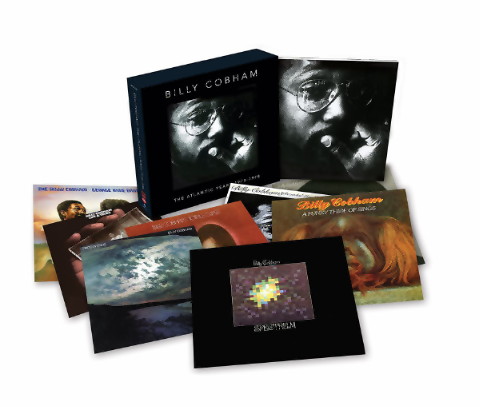
Billy Cobham: The Atlantic Years 1973-1978

 © Copyright ® Steven Cerra, copyright protected; all rights reserved.


“The 70s; what an incredible time for music. There were just so many possibilities as different genres began to merge, boundaries fell away and musicians were experimenting and pushing the limits of what was possible. And it was supported by audiences of enthusiastic fans, buying albums and attending concerts, helping to allow Billy Cobham to create this amazing catalogue of music in such an incredibly short amount of time; eight stunning albums in just four short years.”

-Pete Riley of Rhythm Magazine.


“You have to play it all very open and stick every stroke; no cheating, no pressing, no shortcuts.”


The attribution for this remark was a drummer who graduated as a Senior from my high school a couple of years earlier than me.


I had replaced him as the principal drummer and/or percussionist in all of the high school’s music groups: big band; Jazz combo; concert band and symphony [which was made up of musicians from both high schools in our city].


After graduation, The Senior Drummer in question had entered the US Marine Corps. Following six months of boot camp he had been selected for the USMC President’s Own Marine Marching Band and Chamber Orchestra based in Washington, D.C..


Home on leave and visiting us mere mortal Juniors, what he was referring to in the opening quotation was the manner in which the cadences that the USMC band used for marching had to be executed. Each drum stroke in each cadence had to be played, separately and distinctively.


Here’s a link to the USMC drum & bugle corps performing at the New York City 2019 Veterans Day Parade which features open stroking cadences.


Carried to extremes, you can get an idea of what this sounds like by checking out this link that features the Swiss Top Secret Drum Corps or this one.


Obviously with the drum heads tightened within an inch of their life, the use of large drums sticks and the very crisp and tight [“open”] sticking regimen, the snare drum cadences sound like firecrackers going off, or a string of firecrackers going off when a lengthy single or double stroke roll is played. 


The first time I heard Billy Cobham play drums, I was reminded of this explosive sound when I heard his snare drum, but why?


I mean, the guy is a Jazz-Rock drummer, where did he pick up on that sonority for his snare drum? And the interface between the snare and the bass drum also had an open drum cadence feeling to it when he was playing in-the-pocket Rock beats.


A little sleuthing found the answer.


Billy had a drum corps background both during his high school years and following that with four years in the US Army Band.


The crackling fulminations coming from Billy’s drum kit was further enhanced by the fact that he, like the iconic Jazz drummer Alan Dawson, was one of the early adopters of Fibes Drums. 


I found this information about Fibes online:


“The Fibes drum company, conceived from the words ‘fiberglass’ and ‘vibes’ , unveiled a product they deemed to be stronger than steel and lighter than wood. The tonal response of each shell (size for size) was reputedly identical and the internal vibratory response was superior, achieving a far greater sound than traditional materials.


The company manufactured acrylic shells in varying colors and finishes, and even offered chrome laminated acrylic.


Amongst the artists who used Fibes was Buddy Rich. Fibes made Buddy a chrome wrapped set in 1966 which was used for approximately a year, but Buddy used his Fibes snare alongside many of his later endorsements. Other noted endorses included Alan Dawson and Billy Cobham.”


Add big powerful open drum strokes to clear acrylic drum shells with a tonal response of each shell (size for size) … achieving a far greater sound than traditional materials and the resulting concatenation becomes a percussion eruption. 


Aside from these technical aspects of Billy’s drumming, the recordings in Billy Cobham: The Atlantic Years 1973-1978 are important for many reasons, not the least of which is the fact that they gave many of the young musicians who would go on to become icons of the Jazz-Rock style their start but also because they helped establish the synthesis of free Jazz, Jazz-Rock fusion and the use of electronic instruments that really took hold in Jazz in the 1970s. Some of the later albums even had healthy samplings of both Funk and Disco mixed into the music as both styles were very prevalent at the time.


Of course another reason for their significance is the music itself: bold; daring; totally different and new. These recordings represent a laboratory of experimental music, some of which is more successful than others. What is also of importance is the addition of unusual time signatures to the mixture of elements that make up Billy’s music on these albums. In those days, not many drummers could handle the first movement of the 'Solarization' suite, on the Total Eclipse LP with it's up-tempo meter that required the negotiating of its alternating bars of 14/16 and 13/16! 


Listening to these tracks today is like reaching back a half century to when “the world was young ''and everything seemed so fresh and new, full of the spirit of adventure.


Jazz-Rock fusion wasn’t every cup of tea, but for those who preferred this musical brew, Billy Cobham proved to be the perfect drummer to infuse the ingredients together


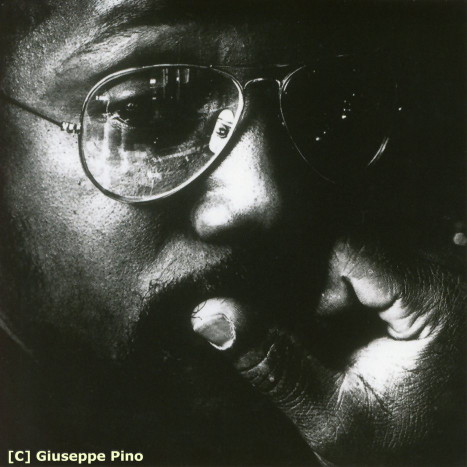
The Atlantic set comes with all eight Cobham albums each enclosed in a miniature “LP” sleeve with replicated cover art and liner notes. The listing of personal, tracks and other pertinent information are enclosed in a 56-page that also contains this narrative and annotations by Pete Riley of Rhythm Magazine.


“In the fertile musical ground of the early 70s, a young drummer was creating a buzz. Word on the street was that he had all of the individual attributes that other legendary drummers had; technical prowess, a pioneering sound, a musical compositional approach and a huge vocabulary of ideas but he had them all in one package. And he played with the power of a rock drummer but also had the speed and agility of a jazz drummer. The kit too was a hybrid of the two genres, expanded to include two bass drums, multiple toms and even a gong drum or mounted bass drum. And the ride cymbal was mounted on the left hand side; this was a kit that required no crossing of hands to play the hi-hat, it was played open-handed. And this was a different drummer.


Billy Cobham was astounding drummers everywhere. Born in Panama on the 16th May, 1944 his family settled in Brooklyn, New York in 1947. Soon he was playing drums in the Cub Scouts before moving onto the St Catherine's Queensmen Drum Corp. He later attended and graduated from New York's prestigious High School of Music and Art in 1962 and after a short spell of gigging around town joined the US Army, playing in their band until his discharge four years later. The development of his playing over this period was substantial and he was soon hustling for work around New York and earning the respect of renowned artists such as the Brecker brothers and Miles Davis, eventually joining forces with guitarist John Mclaughlin in the hugely successful Mahavishnu Orchestra.


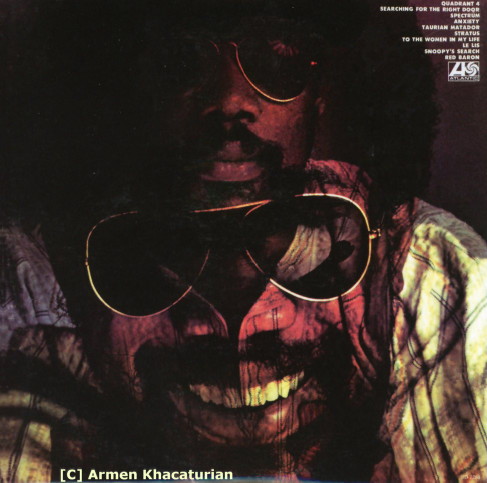
After his tenure with Mahavishnu, Billy knew the time was right to release his own album, so enlisting his Mahavishnu bandmate Jan Hammer on keyboards, along with Tommy Bolin on guitar and Lee Sklar/Ron Carter on bass, they collectively went on to create one of the seminal jazz/fusion albums Spectrum (1973).


'Quadrant 4' kicks off the proceedings. A ferocious double bass drum shuffle with a unique take on the blues form, Billy is clearly not impeded by the demanding role of the feet and displays tremendous independence around the kit with trademark single-strokes and over-the-bar line ideas in his phrasing and composing. Next he approaches the title track's 7/8 time signature with fluent ease and masterfully negotiates the unison figures, occasionally playing alternating sixteenth-notes on the bass drums to create a powerful undercurrent. ‘Taurean Matador' again gets the same occasional double bass drum treatment as well as Billy's unique penchant for riding on the china cymbal for a dry dark sound.


The drum solo over the vamp at the end of 'Stratus' sounds like Billy has just been given the green light after holding down the piece's unfaltering groove for the previous five minutes. And as the track fades the listener is left with the impression that Billy wasn't going to be stopping any time soon, a seemingly endless supply of vocabulary and ideas delivered with flawless execution.


Keen to maintain the newly established momentum, Billy quickly hit the studio the following year though this time with a completely new line up featuring John Scofield on guitar and George Duke on keyboards, as well as a horn section featuring the Brecker brothers Michael and Randy on saxophone and trumpet and Garnett Brown on trombone.


Crosswinds (1974) begins with the 'Spanish Moss' suite and a different sound is immediately apparent. The raw intensity and energy of Billy's debut is replaced by a more lavish sound harmonically. The intensity is of course still there on pieces such as 'Spanish Moss: Flash Flood' where the 17/16 time signature of the album's first track is now played at a fiendishly fast tempo with the band negotiating the additional sixteenth-note in each bar with impunity.


'Pleasant Pheasant' is the album's 'Stratus' with a funky and infectious feel though of course with the inevitable blistering single-stroke bursts around the toms. In the middle of the piece Billy takes a solo over the head [in this case, the melody] negotiating its hits and syncopations with a variety of ideas though making frequent and varied use of his own 'Cobham Triplet' motif, a group of four notes with the first two played at twice the speed of the last. And Billy masterfully combines this at any point within single-strokes to break up the flow of notes.


'Heather' is a beautiful piece that sees Billy take on a supportive role behind George Duke's expansive keyboards and Michael Brecker's soaring sax solo. While the title track 'Crosswind' has a slight swing feel with Billy choosing to leave the sixteenth-note movement of the main groove to the bass and keyboards, creating a more skeletal part that allows the other musicians a little more space.


With the cymbals virtually still ringing from the Crosswinds sessions, Billy and band headed back into the studio to record Total Eclipse, the band's second album of 1974. With a few personnel changes the core of band Michael and Randy Brecker and John Scofield remained. And they come out all guns blazing on 'Solarization', the first movement of the 'Solarization' suite, with it's up-tempo meter making the negotiating of its alternating bars of 14/16 and 13/16 even more demanding.


'Bandits' sees Billy playing what's probably one of the earliest examples of a live drum kit and drum loop combination. In this case it's an early drum machine/percussion synthesiser that Billy locks in with perfectly, along with overdubbing some tympani. 'Last Frontier' is a drum solo that starts out with Billy's unique cyclical movements around the kit with the right hand occasionally moving down the toms to feature Billy's early use of a gong drum or mounted single headed bass drum, its deep staccato sound effectively contrasting with the high tuned and resonant toms. Next follow some lightning fast single-stroke/paradiddle combinations around the drum kit, sometimes utilising the both bass drums beneath cymbal crashes to culminate in a display of virtuosity that's as impressive today as over forty years ago.


Recorded live, Shabazz (1975) showcases a band performing their repertoire with the confident swagger of a group of musicians with a respectable run of gigs under their collective belt. Tempos are on the rise and arrangements changed to accommodate the musicians' new-found familiarity with the compositions. And from the drum solo intro of 'Shabazz' the intensity is high, with its complex arrangement and varied feels from 6/8 to up-tempo 4/4 negotiated with fluent ease. Next up ‘Taurian Matador' has been treated to a new arrangement, and perhaps more significantly is now played in 7/8 instead of its original 4/4. The band are clearly enjoying the challenge of the odd time signature, and again its fast meter just seems to encourage the musicians further.


'Red Baron' offers the listener a chance to relax with its easy groove. However Billy's always ready to take some rhythmic liberties during the over-the-bar line phrasing of head, sometimes fitting in an unfeasibly high number of single-strokes in between hits and yet always nailing the next with an uncanny accuracy.


While the core musicians of Michael and Randy Brecker, keyboard player Milcho Leviev and guitarist John Scofield remained, A Funky Thide Of Sings (1975) saw the band's horn section grow to incorporate two saxes, two trumpets and two trombones as well as adopting a more funk back-beat approach to the compositions. In mainstream music, disco was everywhere and its influences were beginning to be felt in other genres with the simplicity of the four-on-the-floor feel, 2 and 4 backbeat and repetitive bass lines having an undeniable appeal. And whilst elements of this sound are present at various points throughout the album the opening track 'Panhandler' features their influence well.


The next track 'Sorcery' however harks back to the previous albums' more complex arrangements with its more elaborate head, but again the funky 2 and 4 feel is prevalent. The album's title track again has that underlying disco quality with a strong repeating bass line and 2 and 4 backbeat. Of course Billy still finds the ideal points in which to apply some of his signature single-stroke fills around the kit.


'A Funky Kind Of Thing' is a drum solo that sees Billy embracing some processing on the kit. The main effect is an eighth-note delay that Billy plays with throughout, sometimes in a call and response manner and other times locking in with it to create a thicker sound.


The opening and title track of Life And Times (1976) immediately has a sound reminiscent of Billy's first solo album; the tempos are up, the odd time signatures are back and the horn section is gone. '2.29' is essentially a jam over the fiendishly difficult rhythmic sequence of 7/8, 7/8, 4/4, 7/8 made all the more challenging with its breakneck tempo!


'Siesta/Wake Up/That's What I Said' affords the listener a chance to relax after the two previous tracks with its ballad-esque sound. Its space also allows the individual drums to be clearly heard and they sound a little less resonant than the earlier albums, though still with the snare and toms tuned for a cutting sound and response, though now with less of the singing open tone heard previously.


'Earthlings' sees a return to Billy's signature double bass boogie first heard on 'Quadrant 4' while 'On A Natural High' hints at the disco sound again with its upbeat eighth-notes riding on the china cymbal and hi-hats.


The album finishes with 'Natural Essence' a funky mid-tempo vocal piece in its original form with the re-issue including an alternative arrangement and recording, featuring a more up-tempo feel and horn section.


Live On Tour (1976) sees Billy reunited with keyboardist George Duke in a quartet also featuring John Scofield on guitar and Alfonso Johnson on bass. The smaller line-up clearly affords the band a little more flexibility, occasionally getting experimental on 'Space Lady' and the synthesizer accompanied drum solo of 'Frankenstein Goes To The Disco', but throughout Billy is absolutely on fire. The confident pocket is of course in evidence throughout but the playing seems more audacious than ever, with the single-strokes sounding stronger and faster and the album culminating with a stunning double bass drum groove in 6/8 on the piece 'Juicy'.


The title track of our final album Inner Conflicts (1978) is a drum solo that sees Billy playing to a sequencer in 7/8 with the drums heavily effected at times, while 'Searchin' For The Right Door' is another drum solo, though shorter this time. The drum sound is back to the more resonant singing tones we're familiar with, while Billy experiments with an even more dynamic sound than earlier solos with the strong single-strokes replaced by a more exploratory approach.


The 70s; what an incredible time for music. There were just so many possibilities as different genres began to merge, boundaries fell away and musicians were experimenting and pushing the limits of what was possible. And it was supported by audiences of enthusiastic fans, buying albums and attending concerts, helping to allow Billy to create this amazing catalogue of music in such an incredibly short amount of time; eight stunning albums in just four short years.


As these albums progressed, it is interesting to hear the influence that funk and disco had on Billy's music as the more experimental pieces sometimes made way for music that demanded a little less of the listener. However one thread that weaves its way through all of the albums is the undeniable force of Billy's playing. From swinging backbeat grooves to tour de force drum solos, any piece is but a few moments away from displaying some combination of masterful playing that serves to illustrate why he is one of the most highly regarded musicians and drummers alive today.”