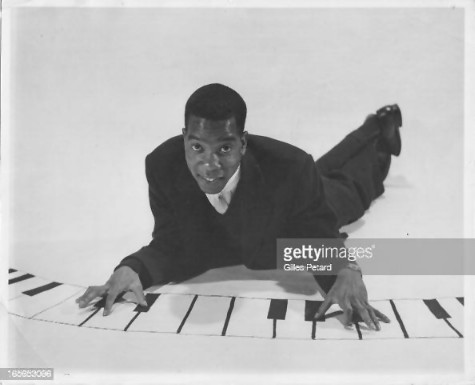
Thursday, June 16, 2022

The Four Freshmen: A Vocal Quartet with Quarter Tones [From The Archives]

 © -  Steven A. Cerra, copyright protected; all rights reserved.

I received so many requests to bring this feature up again, so here goes.

What's especially fun about this essay is that it "unlocks" the secret of how The Four Freshmen created their unique sound.


In retrospect, it’s amazing to consider having ever taken The Four Freshmen for granted.

Yet for many years, that’s exactly what I did.

I mean, as a Jazz vocal group, they were still right up there with The Pied Pipers, The Hi-Lo’s, and Mel Torme’s Mel-tones, but I was spoiled back in the days when The Four Freshman made their first, recorded appearances in the early 1950s.

Good vocal Jazz was everywhere, so one had a tendency in those days to expect marvelous music from a newly arrived group on the scene.

But somehow, The Four Freshmen demanded a closer listening and I kept going back and back and doing just that – listening more closely to the point when it finally dawned on me that something very special was going on in their music.

But what?

Why were The Four Freshmen above-the-line; why did I eventually come to view them as virtually being in a class by themselves?

The reasons for their uniqueness is in The Four Freshmen’s use of quarter tones and the manner in which they “voice” their chords as explained in the following excerpt from the insert notes to The Complete Capitol Four Freshmen Fifties Session, a nine-disc set issued by Michael Cuscuna and his team at Mosaic Records [MD9-203].

At least I had enough of a discriminating sense to jump on a copy of this set when it first appeared. It was issued in a limited edition of 3,500 and my copy is numbered “0079.”

The Mosaic set notes were prepared by Ross Barbour, one of the Freshmen’s founding members. In them, Ross not only describes what gave the group its distinctive sound, but also how the group got its start with the Stan Kenton Orchestra, an association that would continue for almost three decades, and ultimately came to be recorded by Capitol Records.

Ross’s annotations and remembrances are followed with an article by William H. Smith that also touches on the roots of the group and the reasons why The Four Freshmen successfully carry on to this day.

© -  Ross Barbour/Mosaic Records, copyright protected; all rights reserved.


“Bob Flanigan and Don and Ross Barbour are cousins. Our mothers were sisters. My brother Don and I are from ColumbusIndiana. Bob Flanigan is from GreencastleIndiana.

When we were just grade-schoolers, we would go to our mothers' family reunions and at noon the Fodreas would all stand and sing the Doxology before we ate. (Praise God from whom all blessings flow, etc.) In mother's family, there were 10 girls and two boys. They all sang in quartets, choirs and choruses. They sang harmony so right it made the rafters ring. It took our breath away.

The way they sang those notes made a different sound from playing those notes on a keyboard. I never understood why they were so different until I read an article in an old Barbershopper's newsletter. The harmonizer of September 1954, Paul Vandervoort of Hey wood, Illinois, wrote the article, and he got his information from The Outline of Knowledge Encyclopedia, and an article entitled "Sound Physics."

It seems that in about 1700, the musical scale was quite complicated. An octave had 20 or more notes in it. Between F and G, for instance, there was F sharp, G double flat and G flat. That was called the "perfect diatonic scale."

Johann Sebastian Bach came along and changed all this. He formed what is known as the "tempered scale" by choos­ing 12 of the 20-plus notes, and having his piano tuned that way. It was a lot simpler, but the beautiful quarter tones were left out. People's ears could still hear them and harmony singers knew how to use them to make what are called over­tones, but they were just not on a keyboard anymore.

Bob, Don and I were hearing those overtones or harmonics as kids, and we became addicted to them. We couldn't get enough. I sang in quartets in high school and in college, and I sang with the Four Freshmen for 29 years. I never got enough. I have been a Freshmen fan since I retired undefeated in 1977, and I still need to hear overtones.

In our early Four Freshmen days, we rehearsed without instruments. If a chord we sang couldn't stand up and say its name (I'm a D-ninth or I'm an F-seventh), we would change it until it did.

We used bass and guitar for our background, but they never played the exact notes we were singing. Our harmony could happen almost unfettered by the demand of a key­board — demand that would channel us back into Bach's 12 half-steps per octave.

If my note was a major seventh, I could sing it on top of the note — sing it sharp, you might say, so it and the tonic note became a little less than a half-step apart. That's what makes it buzz in your ear.

If we wanted a dominant seventh to ring, we'd sing it on the bottom of the pitch — especially if the voice leading was going down through that dominant seventh.

A major third should be sung brightly on top of the pitch, and a minor third should hang on the bottom.

We were singing those notes not because they were writ­ten and the piano said the pitch was "there." We sang them because they harmonized. They made overtones in our ears.

And we didn't discover some great breakthrough in har­mony. Good barbershop singers do it all the time; in fact singers have been doing it since at least the year 1700.


It may be that we were the first modern vocal group the world noticed who put the emphasis on harmony and over­tones, but we won't be the last. Other groups are bound to succeed in doing it because there is something in people's ears that needs harmony. That thing can make your hair stand up when a chord rings. It can make you shout right out loud!

That article about "Sound Physics" goes on to say that Handel, the great composer, "could not stand to hear music played in the tempered scale." He had an organ built that would play all the notes in the perfect diatonic scale. Boy! That would be a bear to play!

In 1947, Hal Kratzsch was 22, Bob 21, Don 20 and I was 18. We were all freshmen at Arthur Jordan Conservatory in Indianapolis. We'd all sung in vocal groups before and singing harmony parts came naturally to us.

Bob had been a member of a Greencastle vocal group that had a radio show in Indianapolis for a while. He went into the service out of high school, and played trombone through his army time in Germany, except when the dance band needed a bass player. He learned to play bass on the job. After the service he enrolled in A.J.C. in 1947.

Don played guitar through high school and a couple of years in Arabia with the Air Force. I had graduated from high school in the spring of 1947. Don and I came to college together that fall.

Hal, who was from WarsawIndiana, played trumpet in high school and in the Navy in the South Pacific. He came from the service to Indiana University for a year before trans­ferring to A.J.C.

Hal and I met in theory class. He had the idea of putting together a quartet. At that time, we thought a modern vocal group needed a girl to sing lead, so Hal, Don and I rehearsed with a girl named Marilyn for almost a month, before we found out that Marilyn's mom wouldn't let her go sing with three guys in late-night places.

When we got Bob in the group, our sound really started to take shape. Bob's lead voice has influenced generations... strong and clear.

Hal knew from instinct how to sing the bottom part, and he did it his way. He seldom sang the tonic, and often sang the ninth or passing tones through the chords. His pitch was so secure, we could stand our chords up on his note.

Don had such a wide range. We needed his upper regis­ter in his second part, and he came through with it so well and so strong. I was a natural baritone or third voice. It was more natural for me to sing harmonies than to sing melodies. It was up to us to fill in — to color — that large area between Bob and Hal.

With voices like these we could make rainbows of color chords, so we did. In the beginning we chose our own notes — made up our own individual parts, but we didn't do it straight through a song. On Poinciana, we would agree to sing "oh" in unison. Then "poin" was a chord to solve. After we had that one, then we went for "ci" and the notes had to flow from "poin" to "ci", then on to "ana." Okay, let's try it from the top. Are there any chords we can make stronger? Let's try making two chords out of "ci" — when I do this, you do that. Maybe a whole hour goes by and you haven't tried all the ideas. But you should keep trying because the next idea may just make all of you jump and shout.

We were trying to sound like Stan Kenton's vocal group, The Pastels. There were five of them and four of us, but that didn't stop us. Mel Torme had a five-part group with Artie Shaw's band called The Mel Tones. We tried to copy them, too. The way it turned out, we invented a sound by trying to get a five-part sound with four voices. (Other elements to our sound came about serendipitously. At a show in El Paso on December 8, 1951, Don broke a high E string on his guitar, and he didn't have a spare. Well, the show had go on, so Don replaced it with a third string and tuned it an octave lower. From that day on, Don's guitar didn't sound like other guitars. It was great for our sound. The lower string added a density to the range where we sang.)

We went on the road Sept. 20, 1948, working lounges (most of them dingy dives) around the Midwest for a year and a half, honing our music and our stage presentation.

In February 1950, we were working the Pla Bowl Lounge in Calumet CityIllinois. We'd work until 2:30 or 3:00 a.m. and then we would go to jam sessions. The 19th was a Sunday night — the end of our week. Mondays were off. We went to the High Note in Chicago for a session that began about 4:00 a.m. Monday. The place was full of the right people — Marian McPartland, Roy Kral and Jackie Cain, Jeri Southern, and one of our favorites, Mary Ann McCall. She was on stage singing with the Max Miller Trio. It was a song we knew so we got up there, too, and sang "dooooo" with her. It must have sounded pretty good because at the end of the song, Mary Ann said on the microphone, "Hey, Woody, we're ready to go." A guy at the bar stood up and said something back to her. We caught our breath. It was Woody Herman!

In the next few minutes, he and Mary Ann explained how Woody was going to put together a new band in a few months; he would call it "The Band That Plays the Music You Want to Dance To," or some such title. He wanted us four to play in the band, and sing as a quartet a half dozen tunes a night.

We loved the Herman Herds and the way Mary Ann sang. Oh! It seemed that life couldn't get any better. Just one month later, Stan Kenton had us reaching for the moon (our own record contract) and believing it was possible.


Stan heard us in the Esquire Lounge in DaytonOhio, on Tuesday, March 21. He was on tour with the Innovations Orchestra and some disc jockey friends brought Stan to hear us after his show. He must have understood that we didn't usually tremble and sound short of breath when we sang. He knew we were overwhelmed by his presence. It could be that our worshipping his every move triggered some of his devotion to our quartet.

He could tell we didn't know what we were doing. I heard him say in an interview one time that we were doing things by ear that were way beyond our musical education, but we were making sounds he liked to hear.

That night he planned for us to go to New York and meet him and Pete Rugolo. He would see that we made some good audition tapes for Capitol's executives to hear. He would talk those executives into signing us to our own contract, and we would begin making records. Stan made it happen just that way.

He'd later say, "You guys have gotta succeed, you can't fail. You're part of my ego!" Let me pause here in the story to explain that Stan had his managers handle our career. They found us work, and helped us choose uniforms. We received mail at Stan's 941 N. LaCienega address for two or three years, and we couldn't get him to take a penny for it. He didn't even want us to give him Christmas presents. The prestige he added to this quartet by just saying, "Stan Kenton likes the Four Freshmen," was priceless. The help­ful care he gave us year after year kept good things coming our way. I have said it before and it always sounds like I am bragging, but Stan treated us like we were his own kids. We were part of his ego.

On April 10, we left Green Bay on the 7:10 train to Chicago. We caught the 2:40 p.m. train to New York and tried to sleep that night, but we were too keyed up. None of us slept. Our dreams were coming true before our very eyes.

My diary says: "Tried to sing in the dining caboose, almost got thrown in the caboose, Yippee Ky-0-Ky-A."

We arrived in New York at 10:30 a.m. on April 11, full of youthful steam. We slept for an hour and a half at the Dixie Hotel before we went to Pete Rugolo's dressing room at the Paramount Theater. He was conducting the orchestra for Billy Eckstine.

We waited in the dressing room while Pete did the show. We could hear the show from there. Does life get better than this? When Pete came back, we sang a couple of tunes for him. Pete was pleased but surprised we sang for him since that's what we were to do the next day in the studio. Later that night, we went to Bop City to hear Lionel Hampton and the George Shearing group with Denzil Best.

The next evening (Wednesday April 12), we ate at the Automat and went to Pete's dressing room again, where we met up with Stan Kenton and his manager, Bob Allison, who gave us $65. This was travel money and we thought, at the time, it was from Capitol records. Now we know that Capitol didn't pay groups to go to New York to record audition tapes. That money must have come from Stan himself, just to make sure that the cost of the trip didn't leave us broke.

We were in good hands, and we were on our way!”
  
© -  William H. Smith/The Wall Street Journal, copyright protected; all rights reserved.

Four Freshman: A Vocal Group at the Top of Its Class

By WILLIAM H. SMITH August 20, 2008
The Wall Street Journal

“Widely known for basketball, the Indy 500, and a plethora of covered bridges, Indiana also proudly claims The Four Freshmen as its own. The legendary vocal/instrumental group will celebrate its 60th anniversary at a reunion, sponsored by The Four Freshmen Society, of band members past and present -- there have been 23 lineups to date -- at the Sheraton Indianapolis City Centre, Aug. 21 to 23. Commemorative concerts continue to air across the country during PBS fund-raising drives, and a highlight of 2008 will be the Freshmen's Oct. 25 performance before Russian fans at the prestigious Great Hall of the Moscow Performing Arts Center.

Although not the first successful vocal group, The Four Freshmen was, without question, the most innovative. Inspired by Artie Shaw's Mel-Tones with Mel Torme, as well as by The Pastels, a five-voice group with Stan Kenton, the Freshmen soon developed their own unique style of harmony -- singing a five-part sound with four voices and playing instruments as well. Every vocal group that followed -- except for those that sang with no or minimal chord structure -- was influenced by the Freshmen, including The Lettermen, Manhattan Transfer, Take Six, the Beatles and the Beach Boys. (At The Four Freshmen's Jan. 14 performance at Palm Desert, Calif.'s McCallum Theatre, I sat in the audience next to the Beach Boys' Brian Wilson -- one of the Freshmen's most enthusiastic fans, who listened to their records as a teenager and wanted to emulate their unique sound in his arrangements.)

The close harmony of this unique quartet had its genesis at Butler University's Jordan Conservatory in Indianapolis, when Hal Kratzch, along with Don Barbour and his brother Ross, formed "Hal's Harmonizers." In an interview at his home in Simi ValleyCalif., Ross Barbour recalled that "we tried a few lead singers, but it was only after our cousin Bob Flanigan, with his strong high voice, joined the group that we started getting that Freshmen sound." The four went on the road in 1948 as The Toppers, but the name was soon changed to The Four Freshmen. (Both Ross Barbour and Bob Flanigan, the only survivors of that quartet, received honorary doctorates at Butler this May.)


Stan Kenton heard the Freshmen in March 1950 at the Esquire Lounge in DaytonOhio, and gave them their first big break by introducing the group to his own recording label, Capitol Records. The Freshmen had developed their trademark sound by structuring chords much like the trombone section of Kenton's own band, and Mr. Barbour maintains that the success of one of their biggest-selling albums, "Four Freshmen and Five Trombones," can in a large way be attributed to Pete Rugolo, the arranger the quartet and Kenton shared.

The Four Freshmen's signature tune is "It's a Blue World Without You," released in 1952, a song that continues to send chills up and down the spines of audiences as soon as the first a capella chords resound. But the Freshmen gained their first national exposure when they appeared on CBS's "Steve Allen Show" on Christmas Day in 1950, and their popularity lasted not only through the decade that later gave birth to rock 'n' roll but into the mid-1960s -- the era of Bob Dylan and the Beatles -- and beyond. Despite this generational change, the Freshmen continued playing universities around the country and, according to Mr. Barbour, "the multitude of college kids remained loyal fans."

Over their 60 years of performing throughout the U.S. and abroad, the Freshmen have recorded some 45 albums and 70 singles, and have received numerous honors, including six Grammy Awards. Down Beat magazine awarded the quartet the Best Jazz Vocal group honor in 1953 and again, 57 years later, in 2000, an example of the quartet's timeless appeal. The present lineup placed No. 1 in this same category in the 2007 JazzTimes Readers Poll.

"The Four Freshmen have endured for the simple reason that they are top in their class," said Charles Osgood, anchor of "CBS Sunday Morning," when a profile of the group aired in August 1994. Steven Cornelius of the Toledo Blade put it this way in April 2005: "There is no Dorian Gray youth potion at work, just a healthy retirement system." When a member leaves, he is replaced with an equally talented musician.

The present lineup of this multifaceted, ultra-talented quartet of vocalists and instrumentalists now comprises Vince Johnson, baritone, playing bass and guitar; Bob Ferreira, bass voice, playing drums; Brian Eichenberger, lead voice, playing guitar and bass; and Curtis Calderon, singing second part, and playing trumpet and flugelhorn. Although the other three Freshmen joke about it, Mr. Johnson accompanies his bass with some of the best whistling since Bing Crosby.

Bob Flanigan -- introducing the current quartet on their recent DVD, "The Four Freshmen Live From Las Vegas" -- vows that "this group is the best Four Freshmen of all time." On the DVD, Mr. Flanigan, reflecting on his 44 years with the Freshmen, remembers all the "Bad roads . . . Bad food . . . Good and Bad Hotels . . . and millions of air-miles in DC3s to 747s."

Long live The Four Freshmen. May they never graduate!

Mr. Smith writes about jazz and the big-band era for the Journal

For tour dates and venues, go to www.fourfreshmen.com.”


Tuesday, June 14, 2022

Sonny Clark - The Blue Note Years by Steve Siegel

 © Copyright ® Steven Cerra, copyright protected; all rights reserved.


With previous features on pianist Wade Legge, the Great Day in Harlem Photograph “Mystery Man” - William J. Crump, drummer Frankie Dunlop, vocalist Jimmy Rushing, critic and author Nat Hentoff, and Jazz Party: A Great Night In Manhattan featuring the Miles Davis Sextet, the Duke Ellington Orchestra, the September 9, 1958 fest that Columbia Records put on at the Plaza Hotel for its executives and guests, trumpeter Dupree Bolton, and vocalist Helen Merrill, Steve Siegel has assumed the role of “unofficial” staff writer for JazzProfiles.

His latest effort is about pianist Sonny Clark [1931-1963], who had an early career on the West Coast with tenor saxophonist Wardell Gray, clarinetist Buddy De Franco and Howard Rumsey’s Lighthouse All-Stars before setting up shop in New York City where his career as a pianist and composer flourished before his death in 1963.

© -Steve Siegel copyright protected; all rights reserved; used with the author’s permission.

Sonny Clark – The Blue Note Years 

“Johnny Griffin on Sonny Clark:

I remember so well working with Sonny Clark, Philly Joe Jones and Wilbur Ware at the Bohemia in New York City in 1959. And before that recording the Blue Note album “The Congregation” with Sonny Clark, Paul Chambers and Kenny Dennis. Sonny was one of the great pianists coming up at that time. He played his ass off, always. It's a pity that he left the scene so early in his life. He had his own way of doing things. You know, most of the pianists at that time were really playing off Bud Powell's bag. Sonny was a little different. He used Bud's basis for power and attack on the piano, but he had another finesse and an exceptional technique, too. He was quite himself. —Johnny Griffin, Madrid, October 28, 1983.

The year 1957 was an important year in the history of Blue Note Records.  In March, Rudy Van Gelder made his first stereo recording and in May, Blue Note started recording all its sessions in both stereo and mono; though the releases continued to be only in mono until 1959. It was also the year that Van Gelder completed the acquisition of most of the high-quality recording and mastering equipment that became the technical basis of the famous “Van Gelder Sound." 

1957 was also Alfred Lion’s, Blue Note’s co-owner and Producer, most prolific year of the 1950s, yielding *49 sessions and turning out many LP's that were destined to become classics such as Coltrane’s Blue Train, Sonny Rollins' Live at the Village Vanguard, Jimmy Smith’s The Sermon and House Party, Johnny Griffin's The Congregation, Lee Morgan’s Vol. 3, and Hank Mobley's Hank Mobley Quintet - to name just a few. Another occurrence which was not considered big news at the time but proved to be an important acquisition for many future Blue Note sessions was the arrival in New York City of 25-year-old Sonny Clark, from California in the Spring of 1957. 

As we shall see, Sonny Clark was to spend so much time in Rudy Van Gelder's studio in Hackensack in 1957 and beyond, that Alfred Lion might have considered renting Clark a room in Rudy’s parents’ home, which doubled as his recording studio.

Clark had left California in February 1957, where he had spent the previous four years, bound for NYC. His meal-ticket for the trip east was as the accompanist for Dinah Washington; he arrived in NYC in April of 1957.

Though Clark did not record for Blue Note until June of 1957, we can assume that his reputation preceded him. Clark was making some noise in California through extensive work with Buddy DeFranco, a stint with the Lighthouse All-Stars and lending support to Sonny Criss on three of his albums. Despite his time on the West Coast, Clark's style was always more consonant with the East Coast boppers than the less aggressive sounds coming from many of the West Coast-based musicians in the early to mid-1950s. 

His reason for returning back east was related to Robert Levin for the liner notes for the Dial “S" For Sonny record:

Jazz is jazz wherever it's played. The whole thing has to do with the individual and his conception towards jazz. The thing is that my way of playing jazz is different from the way most of the fellows out West play. I'd rather work in the East because what is played here is closer to the traditional meeting of jazz. They're getting away from tradition out West - combining jazz with classical music and playing chamber music type jazz. What they play is really very good, but it's just not the way I want to play. That's why I came back East.

Beyond his reputation outside of NYC, Alfred Lion might have caught Clark at one of his infrequent club gigs or became aware of him from other musicians who heard Clark in Los Angeles or gigging around NYC.   

According to Roy Haynes who was the drummer on the sessions, Clark got his first recording date in NYC on a Sonny Rollins Riverside session when he replaced Hank Jones who was originally scheduled for the gig on June 11, 12 and 19, 1957. 

Clark's first Blue Note session occurred only four days after his final Riverside session - appearing at the June 23 Blue Note session that yielded the Hank Mobley Sextet album. His first session as a leader took place four weeks later on July 21 - Clark's 26th birthday, resulting in the Dial ‘S' for Sonny album with Curtis Fuller, Hank Mobley, Wilber Ware and Louis Hayes. 

To put into perspective Sonny Clark's value to Alfred Lion: From June 23 to December 15, 1957, (the date of Blue Note’s last session of 1957), Blue Note held *27 recording sessions. Seven of these 27 sessions did not employ a pianist (five Jimmy Smith sessions and the two Sonny Rollins' Village Vanguard sessions. Only one session utilized a pianist as a leader (Bud Powell) and five sessions employed five different pianists as sidemen. So that leaves 14 sessions where another pianist was involved. Sonny Clark was the pianist on all 14 of these – 10 as a sideman and four as a leader. Therefore, during this six-month period, no pianist entered the Van Gelder studio for a Blue Note session more than once, except Sonny Clark who entered it 14 times! 

In NYC, in 1957, there was no shortage of accomplished, world class jazz pianists who were available to Lion (though some had exclusive contracts with other labels). For a new arrival to NYC, the scope of Clark's work for the label during this six-month period was impressive - even more so if one considers that the leaders of the 10 sessions that Clark supported as a sideman had either requested Clark or approved of Clark at Lion's suggestion – Lion would not have forced Clark on any of these session leaders.

Pianist Michael Weiss: 

The decision to use Sonny as a sideman is almost entirely determined by the leader of the date. Alfred Lion would have to have some non-musical compelling reason to prevent a leader from using a sideman the leader wanted, especially if he was under contract to the label. Of course, with Sonny already under contract it's in Alfred's interest to have him appear as a sideman, if the leader is agreeable.

Of all the musicians that led a Blue Note session during this six-month period, only Jimmy Smith had more leadership sessions than Clark – five to Clark's four.

This clearly shows the respect as a musician that both Lion and Clark's fellow musicians had for him – and only after a few months in NYC.

Why Clark ended up being such an integral part of the Blue Note family, recording the five solo albums that were released in his lifetime, as well as being the pianist on multiple classic and near classic Blue Note recordings becomes self-evident when listening to his work. He was as perfect an accompanist for the type of music that Blue Note was putting out as existed in the jazz scene in NYC at the time. Why Clark accepted the grind of so many sessions might also have had something to do with the cost of his serious drug addiction. Rather remarkably though it appears that somehow his drug habit rarely, if ever, seemed to impact his ability as a leader or accompanist.

As an accompanist Clark seemed to have the uncanny ability to find the holes in the ensemble and put down appropriate chords and single note lines necessary to enhance the quality of all recordings that he was present on. Every note he played seemed to have a purpose and had a positive impact on the musical output of every ensemble he was currently recording with.  

Weiss:

Sonny Clark had a distinctive touch and sound on the piano. His chords were rich, his rhythm and swing were buoyant, the expressiveness and intent behind his attack and articulation were convincing. He was a rhythmically stimulating accompanist who knew how to support a soloist without getting in the way. I am sure all of these traits made him a valued asset to any group.

Pianist Sullivan Fortner:

As of late, there has been an unexpected resurgence of jazz pianists who are interested in Sonny Clark. What I’ve admired lately about Sonny Clark is his clarity of rhythm and melodic construction, but also his timing. It seems to me, his priority is always groove. He also never flubs… everything he plays is just right and it’s just what the doctor orders musically (he never plays more than what the music needs). He was also a hell of a comper. I remember once I asked (trumpeter) Roy Hargrove, if you could play like any pianist, who would it be? And he told me, “Sonny Clark.”

An example of that comping skill can be heard early in Clark's career on Serge Chaloff’s 1956 classic album Blue Serge – an album recorded in Los Angeles about a year before Clark's arrival in New York, with a rhythm section of Leroy Vinegar, Philly Joe Jones and Clark.

Chaloff’s technical mastery of the challenging baritone saxophone was complete. On Blue Serge all the elements that contribute to this mastery are on display. This album showed the oftentimes erratic Chaloff at his absolute best, performing on the baritone at a level never sustained for an entire album by any other baritone player on record up until that time. Chaloff could be musically overwhelming, using every bit of the baritone's almost two-octave range and varying his dynamics from pianissimo to forte, oftentimes within the same phrase. Many talented pianists of the day would have been hard pressed to add much to the proceedings or, at times, even be clearly heard over the rumbling baritone of Chaloff. Clark, with little or no prior rehearsal of the material, consistently manages to find the musical cracks in Chaloff's swirl of sound and adds sparkling filigrees of sound to the proceedings.

Pianist Pete Malinverni:

He plays nothing superfluous while elucidating the chord progressions in an elegant way. His touch is beautiful, too. He plays lines featuring slightly detached notes and uses dynamics in a way that many pianists forget to employ.

Perhaps Alfred Lion might have heard Clark's work on this Chaloff album. Regardless if he did or didn't, his work here could have served as a good “calling card” when he arrived in NYC.

On four occasions during the second half of 1957, Lion brought Clark into the Van Gelder studio to record as a leader.

For the July 21 session, a sextet was put together which included Curtis Fuller, Art Farmer, Hank Mobley, Wilbur Ware and Louis Hayes - all handpicked for the session by Clark. They laid down six tracks which were released as BLP 1570 – Dial “S" for Sonny. Of the six tracks, four were written by Clark. Five of the tracks were performed by the sextet, with the final track, Gershwin's “Love Walked In,” performed with the trio of Clark, Ware and Hayes.

On September 1, Clark returned to Hackensack. Lion must have liked the sound that the sextet format provided for Clark, for he again used that format with the same instrumentation – tenor, trumpet and trombone – as was present for Clark's previous effort but with only Fuller returning from BLP 1570. Now joining Fuller in the frontline were John Coltrane and Donald Byrd with the rhythm support of Paul Chambers and Art Taylor. Five tracks appeared on the release, BLP 1576, Sonny's Crib. It featured two more Clark originals: “Lulu's Back in Town" and “Sonny's Crib.”

This album might have served as a “test drive" of sorts for Lion, because exactly two weeks later, on September 15, he brought back Coltrane, Fuller and Chambers; with Coltrane adding Kenny Drew, Lee Morgan and Philly Joe Jones and recorded Coltrane's only Blue Note album as a leader and arguably Blue Note’s finest ever – Blue Train.

Clark was back in the studio on October 13 for a trio album. Evidently, Lion felt comfortable enough with Clark to give him the opportunity to perform with the ultimate “stand naked in front of the crowd and stretch out musically” format – a piano trio. Providing the support was the telepathic duo of Paul Chambers and Philly Joe Jones of the Miles Davis group. Lion and Clark seemed to be playing it safe commercially by recording all jazz and Great American Songbook standards – no Clark originals. The finished product, BLP 1579, was entitled Sonny Clark Trio.

Clark's final album in 1957 as a leader, took place on December 8. Joining Clark were Clifford Jordan, Kenny Burrell, Paul Chambers and Pete La Rocca. Three Sonny Clark originals were recorded and the album to be was actually assigned an album number – BLP 1592 – but was never completed nor ever issued. This album that never was, holds the distinction of being the only one in the Blue Note 1500 mono series to be issued a catalog number but never released. The three titles recorded that day eventually found their way onto two Japanese releases: Sonny Clark Quintets (1977) and Cool Struttin' Volume 2 (1983). 

As 1958 began, Clark returned to Hackensack on January 5 for a session that would yield what is considered by many to be his strongest Blue Note album, BLP 1588 - Cool Struttin'. (Though 1962’s Leapin' and Lopin', Clark's last album for Blue Note, has, in recent decades, gained much traction in the United States as Clark's best album.) 

Art Farmer, Jackie McLean, Paul Chambers and Philly Joe Jones joined Clark on four compositions, two of which were Clark originals.

The success of the Cool Struttin' album is perhaps based upon Clark and company's ability to take the precepts of hard bop which made it a viable, less complex and more listenable alternative to be-bop and combine all of those elements in a rather organic and natural manner. We find an album seeped in a blues feel though offering structural elements that mostly transcend your basic 12-bar blues. In essence, Clark encouraged the musicians to stretch out to more completely tell their musical stories. All the musicians seemed to lock in to Clark's ideas, producing true musical art and never crossing over into the self-indulgence that some hard bop albums of the era possessed, while straining for commercial appeal. 

Fortner:

Cool Struttin’ is one of those records I always go back to, not just to study, but to dance to with my girlfriend, or cook to. 

People music!

 Weiss:

I especially liked the way he infused his bebop vocabulary with blues- tinged ideas. Labels have never been good for a musician, but if the term “hard bop” could be exemplified by anyone, I think Sonny Clark would be a prime candidate. In addition to the obvious influence of Bud Powell, Monk also seemed to have left his mark. It’s tragic that Sonny died so young. I believe he was on the verge of building on his style in a significant way. I was attracted to Sonny Clark’s playing as soon as I heard him, and his influence on me is undeniable.

The remainder of 1958 found Clark still functioning as a critical cog in another busy year for Blue Note. Though not as involved in the whirlwind of activity that 1957 had provided, nonetheless Clark held down the piano chair at nine sessions - three as a leader and six as a sideman. 

Unfortunately, for reasons often speculated upon but never clarified, of the three sessions that Clark led in 1958, only Cool Struttin' was released in his lifetime. The other two sessions were not to be released in album form for two more decades - on Japanese releases.

His second session as a leader, which took place on November 16, was probably never intended to be released in album format. The idea was to record some easily recognizable jazz chestnuts suitable for casual listening, add a little funk to them suitable for dancing and release them on 7-inch 45 RPM vinyl for use in jukeboxes in Black communities. Six songs such as “Gee Baby, Ain't I Good to You" and “I'm Just a Lucky So and So” were recorded and released on three 2-sided 45 RPM records. 

In 1980, all six songs were compiled on the “B" side of an album, only released in Japan, titled The Art of the Trio with Clark, Wes Landers on drums and Jymie Merritt on bass. The “A" side contained three alternative takes from the October 1957 session that produced BLP 1579 - The Sonny Clark Trio.

Clark's final leadership session of 1958 took place on December 7 with Wes Landers again on drums and Paul Chambers on bass. This album was never released in the United States and was finally released in Japan in 1979, under the title Blues in the Night.

Clark's first stint with Blue Note ended in early 1959. On January 18 he appeared on three issued songs on Jackie McLean’s album, Jackie's Bag. His partners in the rhythm section were his old friends Paul Chambers and Philly Joe Jones.

Then on March 29, he walked into Rudy Van Gelder's Hackensack studio to record another album as a leader. Sidemen included Donald Byrd, Hank Mobley, Paul Chambers and Art Blakey. They completed six songs that day – enough to complete the album. But again, another session was shelved and any intended album was never issued until decades later. It was first released in 1979, in Japan, as My Conception and in the United States in 2022 with the same title.

Perhaps because of Clark's frustration with Lion's decision to hold back 16 accepted takes recorded at three sessions, he was not to appear on any sessions for Blue Note for 2½ years, until October 26, 1961.

The eventual release of those shelved recordings has made it clear to critics, historians, musicians and fans of Clark's work, that his complete body of work for Blue Note was consistently good and that Lion's failure to release them was probably not due to any decline in the quality of the output. Perhaps it was, as many have speculated, that Lion simply had too much good “product" on hand and some things simply were put on his “to do” list and eventually were lost to time.

With that in mind, who could blame Clark if he finally got to the point where professionally, he simply could no longer justify putting in the work necessary to produce quality recorded jazz, if the master tape might spend decades sitting in its container in the Blue Note archives.

During his hiatus from Blue Note, he continued to record elsewhere. On March 23, 1960, Clark went into the studio for Time Records with Max Roach and George Duvivier and turned out perhaps his best trio album, Sonny Clark Trio. Interestingly, four of the eight recordings on the album were compositions that Clark had previously recorded for Blue Note which hadn't been released. Three were new compositions and only one – “Sonny's Crib" - had been recorded for Blue Note and previously released. 

On October 26, 1961, Clark returned to Blue Note for the Jackie McLean Fickle Sonance session. Also present at the session were Blue Note’s new pairing of bassist Butch Warren and drummer Billy Higgins. Clark, Warren and Higgins were to appear together on a total of eight Blue Note sessions through August of 1962.

The following day, Clark, Higgins and Warren appeared on a Grant Green session. This was Clark's first studio meeting with Green, the first of many very productive sessions that Clark and Green would have over the next year for Blue Note. Unfortunately, much of this work was only released in Japan until finally compiled in a box set by Mosaic Records, MR5-133.

On November 13, Clark returned to Van Gelder's new studio in Englewood Cliffs, NJ for his final session as a Blue Note leader. With him were Charlie Rouse, Ike Quebec, Tommy Turrentine, Butch Warren and Billy Higgins. 

Of the six songs recorded, three were written by Clark, with Turrentine and Warren each contributing one. The other piece was the De Lange and Van Heusen standard, “Deep in a Dream.” Only on “Deep in a Dream" does Quebec appear, with Turrentine and Rouse laying out.

Leapin' and Lopin' is considered one of Clark's finest releases, regardless of his label. It also shows that Clark, though having only 14 months to live, had lost nothing as both a composer and as a pianist.

In 1962, Clark was called upon to appear at 13 sessions as a sideman and with regards to his work with Green, an equal partner. From the time of his return to Blue Note in late 1961 until his final session in late 1962, Clark shared six sessions with Green. 

Beyond his work with Green, in 1962, on June 25, August 25 and 27, Clark did three sessions with Dexter Gordon. Two albums were released as A Swingin' Affair and Go! – the latter considered by many to be Dexter's best work on Blue Note. Higgins and Warren joined Clark on both of these albums. The third album Landslide was first released in 1980.

Clark’s final Blue Note session took place on October 18, 1962, led by Stanley Turrentine, entitled Jubilee Shout!!!.

Malinverni:

Sonny Clark! He's been a huge influence on me. I call him "Jazz Mozart," because what he plays sounds simple, but "you try it!" Of course, I love the compositions and arrangements on the quintet records, but his trio recordings are the ones I listen to over and over again. He's sort of a "Bud Powell for mortals," in that what he plays addresses the tunes beautifully, but you can hear and transcribe everything he does. I regularly use him in my teaching and find that listening to and emulating him gives a young musician an effective and idiomatic language - which, of course, we've all done toward developing our own personal styles, as we broaden our listening to include all the greats who've come before us, in the way composers study the works of the past toward moving the art forward - our ultimate goal. 

On January 13, 1963 Sonny Clark died at the age of 31 of what was determined to be a heart attack but was most likely related to drug use.

He was my man. He just left too soon. You know, he let me down. I was really mad when he died. He taught me a lot, I really loved him. A very good young man, a very good person. We shared many things together - women, music, songs, everything, you name it. We were boys! 

- Curtis Fuller

*Some Blue Note discographies for 1957 list the two Monk/Coltrane, Carnegie Hall recordings as Blue Note sessions. They were not and were only released on Blue Note in 2005. Therefore, they are not included as Blue Note sessions in this article.

All album releases refer to the original LP releases in the United States and Japan.

Special thanks to Sullivan Fortner, Pete Malinverni and Michael Weiss for kindly taking the time to express their most erudite thoughts on Mr. Clark for this article.


Sunday, June 12, 2022

Dexter Gordon "Our Man in Paris"- The Blue Note Years Part 6

 © Copyright ® Steven Cerra, copyright protected; all rights reserved.


“Gordon feels that the absence of big bands today has cheated the younger musicians. "A pet peeve or gripe of mine is the lack of big bands, which are so essential for young musicians," he said. "The experience you get in a big band, you don't get anywhere else. It develops your tone, your intonation. The discipline that you get in a big band, you just don't get in a small group. Slurring, attacking, phrasing—in a small group it's at a minimum."


The sound that Gordon produces is strong proof of the validity of his preachment. Separated from his attack, which itself is quite varied and a formidable tool, it serves as a powerful means of communication. British writer Michael James has called Gordon's lower-register sound "cavernous" — and, to be sure, there are some beautiful formations in that cavern. 


His middle range can be lighter, toward Lester Young; or harder, toward Charlie Parker; the upper reaches contain that eerily beautiful wail that almost seems to emanate from his throat. Dizzy Gillespie's Blue 'N Boogie, recorded in early 1945, was Gordon's first small-group recording after he hit Fifty-second Street. His solo contains the "scream" that ten years later showed up in John Coltrane's work with the Miles Davis Quintet.


Some think that more than Gordon's sound was affected by his Hampton days. Michael James, in referring to the Savoy records Dexter made in 1945-1946 (Dexter's Deck, Long, Tall Dexter, etc.), wrote: "It is tempting to see in the early part of Gordon's career, especially his spell with Hampton, influences that helped to shape his style. The forthright, even-noted swing and square-cut turn of phrase to be heard on his 1945 and 1946 sessions for Savoy recall the regular melodic outlines of Hampton's improvisation rather than the shifting accents of Lester Young, or even the comparatively symmetrical patterns of a Chu Berry. It seems likely that he took Illinois Jacquet as an exemplar. Besides the strong tonal resemblance, Gordon was very ready to indulge in the repeated-note motifs that were part of Jacquet's stock-in-trade. 


Whether these similarities were coincidental or not, Gordon's achievement was to present, as early as 1946, a taste of Parker's harmonic richness in a framework that was no less than conservative in its attachment to the beat, and to do this in a way logical enough to make for a style that was individual, integrated and unfailingly cogent."

- Ira Gitler, Jazz Masters of the 40s


In 1955, Gordon recorded again for the first time in three years. Two LPs were done for Bethlehem, one with Stan Levey and the other under his own name, called Daddy Plays the Horn. The third album, Dexter Blows Hot and Cool, was for Dootone. In a 1961 Jazz Monthly article, Michael James commented on some of the performances on these 1950’s LP's; "All four demonstrate Gordon's quicksilver swing, his audacity in the upper register, his tonal power and the apt use he makes of inflection whenever he contrasts a sustained note with those complex, elbowing phrases he manages with so expert a sense of time,"

- Ira Gitler, Jazz Masters of the 40s


As Michael Cuscuna explains in the postscript to the CD release of Dexter Gordon: Our Man in Paris [CDP 7 46394 2] which was originally issued by Blue Note as an LP in 1963: “This album was supposed to have Kenny Drew on piano and feature a program of all new Gordon compositions. Due to various circumstances. Bud Powell replaced Drew. Since he would not play any new compositions, a set of standards and jazz classics was quickly chosen during the rehearsal. The result is one of Dexter Gordon's finest albums and some of Bud's best playing in the sixties.” 


This time around, the distinguished Jazz author and critic Nat Hentoff does the insert notes honors to Our Man in Paris which Maxine Gordon in her Dexter bio asserts “was to become one of Dexter’s most popular recordings and it remains a classic to this day.” In my opinion, Nat is at his descriptive best in terms of his description of the elements and ingredients that make Dexter’s style so distinctive.


“THE renascence of Dexter Gordon has been one of the most sanguine events in recent jazz history. After a brilliant early career with Lionel Hampton, the Billy Eckstine big band and Charlie Parker, the tall, forty-year old Californian slid into limbo during most of the 1950's. It was known that he was in California, but he had ceased to be a presence on the jazz scene. Musicians remembered him — as is indicated by his influence on the evolving styles in those years of Sonny Rollins anil John Coltrane — but most of the jazz public and the critics had either forgotten Gordon or assumed that his career had evaporated. As British critic Daniel Halperin noted when the resurgent Dexter played London in 1962, the second career of Gordon "has been an unusual transformation because usually, on the jazz scene, when they fade away they hardly ever come back. And there was a time when . . . Dexter Gordon was definitely near vanishing point."


The road back started in 1960 when Dexter Gordon wrote the music for and performed in the west coast edition of Jack Gelber's The Connection. The next year, Alfred Lion of Blue Note invited Dexter to return to New York for recordings. The albums since — Doin’ All Right (Blue Note 4077), Dexter Calling (Blue Note 4083), Go! (Blue Note 4112) — have firmly re-established Gordon as a major voice in jazz.


Dcxler is now based in Paris, where this album was recorded in May, 1963. Shortly after the session was made. Dexter was asked by a reporter for the French monthly, Jazz, whether he thought he was playing better today than at previous stages in his career. "Certainly," Dexter answered. "I'm much more lucid and have a stronger sense of equilibrium. My musical conception is much surer. I know where I'm going now. I am just as spontaneous as I used to be, but I know much more about music. I've traveled a long road in jazz ... I can't regain the time I've lost, but I've learned from ihe experience and it's not impossible to shape a future which will have profited from the time that was lost."


Dexter was once asked, "What would you like most to see printed behind your name?" His answer was: "I'd like to see something about the fact that I'm constantly searching for ways to improve." The persistence of that search has been evident in all of his recent Blue Note recordings, including this one. Alan Beckett, a critic for the British Jazz Journal, observed during a Gordon stay in London in 1962: ''As one of the first musicians to make constructive adaptations of Parker's harmonic developments to the tenor saxophone, and as one of the greatest influences upon many of the most productive musicians in contemporary jazz, his historical importance is very great. But he is not only a link, and although his recent records indicate that he has borrowed to some extent from his own disciples, his playing over here shows him to be a mature and consolidated stylist, from whose work great satisfaction can be derived."


In this Paris album, Dexter's colleagues have a long history as a unit in that city. Kenny Clarke, the key initial shaper of modern jazz drumming, has been an expatriate in Paris since 1956. Bud Powell has lived there since 1959. Pierre Michelot is one of the most respected bassists in Europe, and he has worked and recorded with a wide range of visiting American jazzmen —- among them, Coleman Hawkins, Dizzy Gillespie and Miles Davis. In 1959, Clarke, Powell and Michelot formed a trio, the Three Bosses, which worked together for a long time. This, therefore, is not a date with a pick-up rhythm section. Dexter is heard here in the context of a rhythm team which long ago learned to fuse each of its elements into a flowing unified whole.


From the start of Scrapple From The Apple, the sheer strength, the virility of Gordon's horn is unquenchably evident. His tone is assertive but warm; his beat is enveloping; and his conception indicates, as


French writer Demetre Ioakimidis notes that "Gordon has always emphasized swing and melodic development" in his playing. Now, however, there is increased, irrepressible confidence and more venturesome and diversified use of pitch and texture as expressive devices. Furthermore, he sets up and sustains a momentum in a performance such as Scrapple From The Apple that is fiercely, contagiously exciting. There are no hesitations, no skating on technical runs while ideas are being regrouped. Dexter plays as if he could hardly contain all he wants to say. Beneath the marked power, there is also the surge of even more latent force. But Powell's solo is fluent and well-organized, confirming a recent report by "Cannonball" Adderley that Bud, when he is stimulated by his musical surroundings, remains an absorbing pianist.


Willow Weep For Me illustrates what Alan Beckett has called Gordon's "gruff lyricism." In this performance, moreover, that lyricism is unusually incisive. This could be termed a dramatic reading of the ballad. There is no flaccidity in Gordon's ballad work. It contains as much surging strength as do his up tempo swingers, but the strength is disciplined into spare, penetratingly lucid patterns. The overall shape of Gordon's solo is remarkably cohesive, a further indication that while Gordon remains as spontaneous as ever, the increased emotional maturity and musical acumen of the added years have channeled that spontaneity into more memorable and more substantial shapes. There is also much more of a speech-like quality to his phrasing. This is not simply an exercise in technical fluency. Dexter's interpretation of Willow Weep For Me is in the vintage jazz tradition of telling a striking, personal story. The same is true of Bud Powell's statement which is also spare and tensile. Michelot has matured from his earlier recordings, and his solo in Willow Weep For Me is deep-toned, cleanly executed and imaginative.


Broadway, once a vehicle for Lester Young (the strongest early influence on Gordon's playing) is an intriguing, concise history of one major trend in jazz tenor playing. There are traces of Lester as well as signs of the later Gordon style which affected Rollins and Coltrane. In addition, annealing all these cross-influences, is the present Gordon who has absorbed these elements, including what he has chosen to adapt from his disciples, into a powerfully individualistic way of expression. Again, as in Scrapple From The Apple, there is the overwhelming presence of the man — the climate of crackling emotional excitement which never lets up but rather increases in intensity. Note too, in some of the exclamatory uses of pitch, how Gordon has found his own way into at least part of the terrain of the current jazz avant-garde. Throughout the track and the album, spurring the soloists and keeping the time crisply alive, is the superbly lithe drumming of Kenny Clarke. As for Bud, in addition to his own ebullient solo, listen to the echo of Count Basie he brings in at the close.


Stairway To The Stars is another aspect of Gordon's balladry. At first gentler and more introspective than Willow Weep For Me, the performance reveals the warmth and depth of tone Gordon can draw from the horn. And yet, the spine of the interpretation remains steel-like. It is this quality — a firm sense of direction and what I referred to before as sheer strength of emotion — which most instantly identifies anything Gordon does. And as is also characteristic, there is the sure, judicious choice of notes. The lesson of economy was one of the most valuable Gordon learned from Lester Young, and it is a lesson to which he has returned during his current renascence. Bud Powell's solo is almost song-like in its particular quality of lyricism and discloses an especially serene side of Powell's current work.


The final A Night In Tunisia is a summation of the renewed Dexter Gordon — the soaring assurance, the delight in improvising, the unflagging resourcefulness and the bursting ardor of his attack. Gordon has said that he is happier now than he has ever been before, and those high spirits are pervasively clear in this album. It is a happiness, however, which is not likely to lead to coasting. At the core of Dexter's commitment to music is a restless desire to learn and to express more of what he feels. As he told one British writer after having scored a notable triumph in London, "No, I'm not wholly satisfied at the moment; my career is just beginning."”

—NAT HENTOFF


Dan Morgenstern Sessions Notes from the Boxed Set Booklet -


(H) MAY 23,1963


“In Blue Note's history, Frank Wolff, while certainly significant, is usually viewed as that of a junior partner to Alfred Lion. In this instance, however, Frank was in the producer's chair and came up with one of the jewel's in the label's crown. This is a jazz summit meeting. Dexter was no stranger to fellow jazz masters Bud Powell (his junior by more than a year) and Kenny Clarke (his senior by nine) and indeed had recorded with both before. (Powell was on Dexter's second session as a leader, in early 1946, and Clarke was present three years later when Dexter recorded with Tadd Dameron for Capitol.) At this point in time, all three were at various stages of the expatriate experience. Dexter was at the threshold of what would become a long European sojourn; his love affair with Denmark had begun in the fall of 1962. Bud Powell was in his fifth year as a resident of France and 14 months away from his fateful return to America. Kenny Clarke, who'd first visited Europe in 1938 as member of the Edgar Hayes band, and again in 1948 with Dizzy Gillespie, spent much of the period from 1949 to 1951 in Paris, and in the fall of 1956 permanently settled in France He'd encountered bassist Pierre Michelot during his first Paris period. The Frenchman, born in St. Denis in 1928, started on piano at 7 but switched to bass in 1946 due to his growing interest in jazz. He soon became one of Europe's best jazz players, working and recording with compatriots and visitors, including Dizzy, Monk, Miles and Lester. In 1959, he joined forces with Powell and Clarke as the house trio and rhythm section at the Blue Note Club in Paris, where they were billed as "The Three Bosses." Needless to say, they were well equipped to provide for Dexter's needs.


OUR LOVE IS HERE TO STAY was George Gershwin's last completed song, introduced posthumously in the 1938 film "Goldwyn Follies." Our distinguished foursome takes it at an easy up-tempo, Dexter parsing the melody in his distinctive manner in the exposition, then moving into variations with a very mellow sound (he may have been experimenting with a softer reed at this date.) By the third chorus, Klook is getting with it, and things are warming up as Dex gets quotatious. Powell shows no hesitation in his two choruses, his phrases flowing with good ideas (as usual, we can hear Bud singing along with himself.) An auspicious beginning, although this track did not make it to the original album.


BROADWAY, a swing instrumental written for the Basie band by Henri Woode [composer of "Rosetta") and recorded in 1941 with a splendid Lester Young solo, starts off with Klook's hi-hat and snare stuff (like all great drummers, he has a distinctive sound.) Dexter states the theme, with Michelot's solid walk behind him, and then invents through six choruses; in the third, he quotes from his famous 'The Chase," then trots out some modal things. The way he clinches his fourth and fifth chorus is worth noting, and Klook certainly hears it, commenting approvingly, Dynamic contrasts are a feature of that fifth chorus, and in the next, Dexter encounters and gives chase to a stronger from paradise. Bud is unmistakably himself in his two-chorus solo, launching some strikingly percussive phrases. Dexter picks up on the last of these and then trades educated eights with the drummer, makes up a riff, restates the theme, and plays tag with Bud's echoes of Basie. Bud could still play happy music!


STAIRWAY TO THE STARS was originally an instrumental piece by Matty Malneck and Frank Signorelli, introduced in 1935 by Paul Whiteman as "Park Avenue Fantasy." Mitchell Parrish put words to it in 1939, and young Ella Fitzgerald made a memorable recording. After Bud's intro, Dexter makes love to the melody with an enveloping sound, adding some wry asides to remind us that, like all great artists, he remains the unmoved mover. Using the full range of the horn, he once again almost sings the last eight bars of the exposition, then launches seamlessly into variations that truly merit the often misused term "improvisation;" there's abstract thinking involved here. Bud uses space imaginatively in his 16 bars and Dexter returns with the bridge, building to an impassioned climax. Saxophone mastery!


A NIGHT IN TUNISIA opens with the "traditional" introduction, and Dexter

launches Dizzy's theme with a mixture of 4/4 and Latin from the rhythm section. The standard interlude and break follow, Dexter hoisting himself into his solo with some modal turns. Moving along like a jet-propelled steamroller, he uncorks a bit of "Summertime," some Coltrane licks, near-Eastern phrases, and some "freak" horn effects. By the third chorus, he's in the upper ranges and makes forceful use of repeated phrases. A recapitulation of the interlude sets up Bud's break — a terrific one — and a solo that hints at his affinity for Monk. Klook solos next, before a great recap of the theme and high-note cadenza. A great version of this oft-recorded jazz standard.


WILLOW WEEP FOR ME, Ann Ronnell's 1932 gem, was written while she was romantically involved with George Gershwin and makes wonderful use of one of his trademarks—the repeated note. Our men in Paris take it at a slightly brighter tempo than usually applied to this blues-ballad, opening with an arranged riff. Dexter soon turns to paraphrase, with an uncommon buzzy edge on his tone, and then just lets the ideas flow, with marvelous continuity and logic; it may have been Paris that made him think of "Darling, Je Vous Aime Beaucoup," and the Seine that brought "Ol' Man River" to his mind. Bud, to no great surprise, proves himself a great blues player. Michelot's solo spot shows off his fine sound and articulation (no piano fills behind him.) Dexter returns with a transformed bridge, brief theme recap, and the opening riff, perfect for fading.


SCRAPPLE FROM THE APPLE, Charlie Parker's contrafact of "Honeysuckle Rose," with an ad-lib bridge based on rhythm changes, opens with the standard introduction, then takes off at a fine clip — Michelot is a great time keeper. By his second chorus, Dexter creates a riff, repeats it, transposes it, kneads it; by the third, he's floating, by the fourth, he's smoking. The fifth highlights continuity, with some Prez stuff added; on the sixth, he has fun answering himself; on the seventh, Prez returns, with Sonny Rollins in tow; by the eighth, he's swinging like crazy, and on the ninth, he's riffing away, mixing in some modal stuff, and fashions a bridge to end all bridges—what a ride!!! One doesn't envy Bud, having to follow this eruption, but he shows that he can still handle a challenging tempo, if not quite like once upon a time, and that Bird-like left hand sparkles in the second chorus. (Let's not forget Bud's comping throughout the session.) A chorus of tenor and drum exchanges follows, with Klook in fine fettle, and we end traditionally.


This session closed with a trio version of LIKE SOMEONE IN LOVE, which can be heard on Bud Powell's own Blue Note boxed set.