Tuesday, August 9, 2022

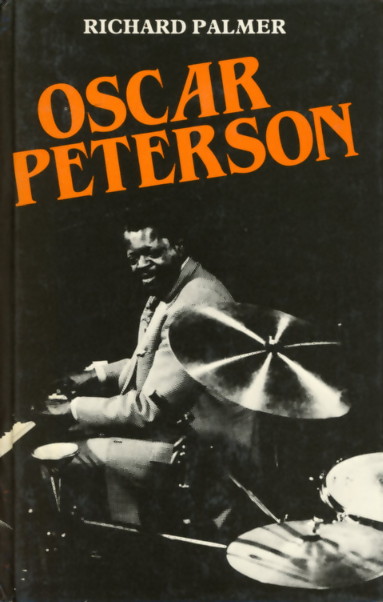
Oscar Peterson by Richard Palmer

 © Copyright ® Steven Cerra, copyright protected; all rights reserved.

Perhaps not as well known in the USA as their American counterparts such as Nat Hentoff, Gene Lees and Ira Gitler, among many others, England also has [and has had for quite some time] a bevy of established Jazz authors and critics who have contributed articles to continuing UK-based magazines devoted to the subject such as Jazz Journal, Crescendo International and Melody Maker along with writing regular columns in British newspapers and numerous individual book titles on various aspects of Jazz and its makers.


Some of these titles have been commissioned as part of collections such as the Jazz Masters Series which is composed of small folio editions on leading Jazz artists. These were published in the 1980s and we have previously included full representations of two of the books in this series: Alun Morgan’s Jazz Master Series - Count Basie and Steve Voce’s Jazz Master Series - Woody Herman. Links for both of these multi-part postings can be located in the blog archives LABELS located by scrolling down the sidebar of this page.


The Richard Palmer Jazz Master Series 93-page treatment [including a brief discography] of Oscar Peterson recently came to our attention while we were working on blog features about Oscar’s London House recordings on Verve and his later “Black Forest” recordings on MPS. Both of these pieces are also linked under LABELS.


In Part One: The Man and Part Two: The Career, Palmer offers an overview of the significant aspects of Oscar’s career up to 1984, the year of the book’s publication.


But what I found particularly fascinating was Palmer’s insightful treatment of two subjects which make up Part Three of his OP book: One - Peterson and Art Tatum and Two - The Peterson Style and I thought I would share his unique perspective on both of these subjects with you in the following excerpts.


PART THREE: THE MUSICAL ACHIEVEMENT


“In the previous sections I have traced Peterson's career from its Canadian inception to the present day. Such a chronological approach cannot, however, tell the full story. In the end, the most illuminating and enduring aesthetic judgments derive from a critical stance which, while recognising the importance of historical context, also stands free from it, able to assess the work in question in terms of its own purpose and its pure significance as art.


It seems to me especially important to make this point in a book about a jazz musician. Jazz criticism still suffers from a damaging naivety in both a fondness for an adolescently Romantic view of 'the artist' and an excessive respect for 'innovators'. Oscar Peterson's critical reputation and his 'image' have been twin casualties of this regrettable ethos. As 'an unglamorous cat from an unglamorous northern town (Toronto)',1 [Oscar to Leonard Feather in Satchmo to Miles]  Oscar has fallen foul of the facile cultural philosophy that bedevils much jazz polemic; and the fact that it is not possible to talk of a Peterson 'school' of jazz piano, as one can unarguably refer to a Monk, Powell, or Evans 'school', has greatly reduced his oeuvre in the eyes of those from whom greatness in jazz is indissolubly linked with major status as an innovator.


My own view is that although it is absurd to deny the central importance of such innovators as Armstrong, Ellington, Hawkins, Young, Parker, and Gillespie (to name only an obvious few), it is equally absurd to elevate originality as such into a primary criterion. In all art, history does not ask who did it first, but who did it best; and in attempting a critical evaluation of Peterson's music, I shall be arguing that he has the strongest possible claim to be considered under that latter, more decisive category. I start with an analysis of Oscar's musical relationship to Art Tatum.


Peterson and Tatum

“I'd go to bed at night, and it haunted me that someone could play the piano that well. (‘Oscar Peterson in Conversation with Andre Previn.’ An illustrated musical reminiscence broadcast on Omnibus, BBC TV, 11/12/1974 and14/9/1975]

- Oscar Peterson on first hearing Art Tatum


“I have yet to read an account of Peterson's work in any jazz encyclopedia or full-scale survey that does not place him firmly (and usually lukewarmly) in the category of Tatum's acolytes. As I have intimated several times along the way, I consider such a view neither just nor properly illuminating; and this section attempts, through a modicum of musical analysis, to get the matter of Peterson's pianistic relationship to Tatum into some kind of satisfactory perspective.


Most people are to some degree lazy; and critics are people too, even if some musicians do not always seem inclined to agree! So when a musician like Peterson talks with such awe, affection and admiration about a pianist like Tatum, as he always has, the temptation is to take such remarks at face value, and conclude that Peterson's own style is a direct reflection of Tatum's spell. To succumb to such a temptation may be readily understandable, but it does not make for very impressive criticism; and I contend that there has been less and less excuse for such a categorisation of Oscar's style the further one travels down the thirty-five years of his career.


Let us begin with direct comparisons. To play a Peterson version of a song alongside a Tatum performance of the same tune is invariably a salutary experience, showing that there is little close similarity. The locus classicus of this phenomenon is Oscar's declared 'tribute' to Art -the 1962 recording of Ill Wind, as compared with Tatum's version of the tune on the Solo Masterpieces collection.* [*The Peterson is on Verve V-8480, the Tatum on Pablo 2625 703.]


On the liner notes to the Peterson recording, Oscar comments: 'It's a musical reminder of the way (Art) would handle this type of thing. We used to discuss this at great length.' However, twelve years later Peterson, having played this arrangement at Andre Previn's request, argued a very different case:


“As I was playing that, I was thinking to myself, 'This really isn't Tatum.' You couldn't really say that was Art Tatum's style: it was more my reaction to that style.” (AP)


There is no doubt in my mind that the second of these two comments is much the more accurate. Even on the first chorus, delivered out of tempo, there is only one run that is bona fide Tatum, occurring at bars 22-24 of the theme statement, just before the bridge. (Peterson went on to reveal to Previn that the run in question was the only Tatum run he could consciously play.) The rest of this solo passage may be Tatumesque in a very broad sense - the use of lightning arpeggios, the clusters of densely-harmonised notes, the astonishing pirouetting across the entire range of the piano; but at a more detailed and profound level, it is quite distinct from its dedicatee's methods. It is Peterson's licks and familiar approach that dominate, not Tatum's. And when Ray Brown and Ed Thigpen enter, the performance removes itself from Tatum's shadow even more obviously. Brown's surging lines are of a kind that one never encounters on any Tatum performance, partly because Tatum's style would never have enabled a bassist to function so centrally or freely. I return to this point shortly.


There are two even more noteworthy differences. One, the track swings in an earthy fashion - something Tatum never did; and two, Oscar's reading is much more focused on the melody than was Tatum's wont. One way of putting it might be that Peterson's version is much easier to listen to: although the tune's harmonic structure is richly mined, Oscar and Ray keep the melody in the forefront throughout, and their reading has a logic that is comfortable to follow. Listening to Tatum's solo interpretation of the tune hammers home this point even more forcefully.


Tatum's is, naturally, a stunning performance. It begins with a prelude that has little to do with the tune's melody or harmonies, but which sets up the theme statement enchantingly. Then by the time Art reaches the bridge, he is already into rhythmic variations of a subtle and different kind, now slowing, now accelerating the tempo; and once into the development, he demands the strictest attention as he re-writes harmony and structure at will. To be sure, the melody keeps resurfacing in dazzling, tantalising snippets; but the constant shifts in tempo and key create a fantastic design that utilises the tune as mere clay. Throughout, despite such total transformation, the tune's underlying shape is implied, and the pulse is infallible: listening to Tatum invariably requires a metronome, if only to prove that he's right and your ears are wrong if you detect a dropped or muddied beat. But in essence Tatum's version is the ultimate in baroque, whereas Peterson offers a fundamentally Romantic treatment, naked and uncluttered in its impact for all its bravura embellishment.


That last distinction serves as a useful summary of their separate styles as a whole; and it throws into starker relief the lack of insight shown by the normally-incisive Martin Williams, who judged Peterson's version 'a feeble pastiche' of Tatum, inferior in harmonic imagination and woefully lacking in 'pianistic adventure'.2 [Martin Williams, ‘Oscar Peterson: A Possible Minority Opinion,’ Jazz Journal, 4/64].Not only does this pillory Peterson for qualities he is not attempting to incorporate into his performance: it blatantly ignores the things Oscar does do, and which so clearly illustrate a wide discrepancy in both purpose and execution.


In Chapter Five I stressed Peterson's intelligence and awareness as a group pianist. It would be hard to argue that context as Tatum's metier. He was above all a solo virtuoso; and on many occasions one has the impression that playing with others constricts him, somehow lessens his art. Oscar has related that Tatum, playing Tea For Two at an old-style 'piano party', got through four bass players in under three choruses. Bassists as accomplished as Red Callender and Ray Brown himself could not stay with Tatum once he started throwing in those chromatic progressions and lightning changes of key. Oscar and Andre Previn laughed about it together -


“Peterson: Can you imagine being in a group with Art Tatum? 

Previn: No. It's difficult for me to imagine being in a room with Art Tatum! (AP)”


- but underneath such loving awe, there is the implication that Oscar had long ago decided that such an approach was not one he wished to emulate. And it is certainly true that Tatum's few trio records are very much piano plus faithful rhythm support, rather than the close-knit and reciprocally-stimulating groups that Peterson had always had.


The distinction is even more pronounced when considering Tatum's work with other soloists. Significantly Roy Eldridge, who made a hatful of superb albums with Oscar, sounds distinctly unhappy on his meeting with Tatum, and the album is one-sided and unsuccessful. Even the date with Ben Webster, an undoubted gem, drew this comment from the tenorist when recalling the session:


“Well, really, I shouldn't have been on that album. Nobody should ever have recorded with Art, because he did everything himself. He could say it all better than anyone that ever played with him, and there was so much inside him that he could never be an accompanist.” 3 [Steve Voce, ‘It Don’t Mean a Thing,’ Jazz Journal, 3/67].


Listening to the album yet again, I am struck by the incisiveness of Ben's remarks. For in effect Tatum solos all the time: there is no real difference between the lines he plays over bass and drums and those he essays while Ben is playing. Webster handles the situation with triumphant common sense, breathing out his languorous improvisations with an infallible regard for the tunes' own structure, leaving Art to do what he likes underneath, in between, and over his work. It's a marvelous record; but the methodology is highly precarious, and a recipe for chaos in most players' cases. It is instructive to compare it with the several albums Ben cut with Oscar, where every member of the personnel works for each other and is absolutely on top of what's going on.


There can be no doubt that Peterson's awe and immersion in Art's work are genuine. As Benny Green once revealed, Oscar is one of the few musicians of his generation to consider Tatum superior in influence and talent to Parker, much though he admires the altoist. How, then, does one explain this reverence and the marked disparity in style evident on so many of their respective recordings?


Discussing American literature, Harold Bloom has written a book tellingly entitled The Anxiety of Influence. One of its theses is that young writers have to remove themselves from the ambit of a writer they greatly admire, lest that influence drown their own potential to find something distinct to say. The problem is very similar for young jazz musicians; and Peterson recalls his own solution in terms that virtually echo Bloom's:


‘If I'd just listened to Tatum, I'd have become much the same as several pianists I know in various parts of the world - Tatum reproductions. I remember hearing a young pianist play The Man I Love and Sweet Lorraine - both straight Tatum. Now, at that time, Tatum hadn't recorded I Got Rhythm; and this pianist couldn't play it. He couldn't play it for the simple reason that he had to wait to see what God was going to say about the tune before he copied it. And that's why I never copied Tatum... You see, if you admire any player that much, and you start emulating him, continually, it will just overwhelm you, and you negate any personal creativity you might have that will come forward. (AP)’


In other words, Peterson had to come to terms internally with the disorientating experience of hearing Tatum. Gradually he absorbed its

power and its multitudinous messages, and evolved a style that was his own.


In conclusion, another insight from literary criticism furnishes an ideal model for determining the nature of Tatum's effect upon Oscar and its artistic manifestation. Christopher Ricks has suggested that one can see Milton's greatest achievement as the collected works of Alexander Pope. This strange but brilliantly argued notion traces the overwhelming effect that Milton had on the young poet, which fired him with an awed love of Milton's work in particular and poetry's possibilities in general; and as a result he set about carving his own, independent path towards a comparable excellence. In no way do Pope's poems embody a direct, derivative Miltonic style; but the elder poet's aesthetic ethos and linguistic magnificence are permanent imbuing factors.


A similar case can be put forward concerning Peterson and Tatum. Art's comprehensive mastery of the piano ignited the young Peterson's imagination, and that original revelation continues to underscore all that Peterson does. Yet he does it in a fashion that is stylistically separate, where specific purpose and methods bear little direct resemblance. Just as Pope's verse displays a greater bread-and-butter debt to his Augustan predecessor, Dryden, than to the genius who first stunned him, so Peterson's work evinces in its lines, phrasing and general approach a clearer debt to secondary influences - Powell, Cole, Shearing and Hank Jones - than to the man who simultaneously exhilarated and humiliated him. And for my final section, I now turn to an attempt to summarise the main characteristics of the style Peterson evolved in such a way.


(ii) The Peterson Style


“I remember Oscar Peterson listening to Sonny Stitt, and someone was being kind of critical. He heard a lot of Bird cliches just then, he said. And Oscar said, 'Listen to that - he's taken a lot of Bird cliches, and a lot of faster Young cliches, and a couple of things of Diz's, and I thought I heard something of mine in there, I'm not sure, and he's just smashed them all together, and God, isn't it gorgeous?'And I really drank to that one.'”

- Maynard Ferguson


Peterson's style has often been termed 'eclectic'. In a jazz context, this adjective is invariably pejorative, implying the cobbling-together of others' ideas into a mish-mash that at best merely approximates an individual personality. 'Eclectic' also goes hand-in-hand with the failure to be a true innovator and major influence on others.


It is true that Peterson's playing employs a wide-ranging vocabulary that perforce makes use of other musicians' work. It is also true that he has not founded an identifiable 'school' of jazz piano. A number of pianists show an extensive knowledge of and response to his work  - Ross Tomkins, Monty Alexander, Tony Lee, Eddie Thompson, Bernie Senensky (a Peterson protege) and Brian Lemon; but it cannot be said that Peterson's style has been directly instrumental in influencing the course of jazz, either in terms of the piano, or the music's genesis as a whole.


In my view the best answer to these observations, if they are leveled as criticisms, is a curt 'So what?'. Peterson's electicism is not a cannibalization of others' licks and ideas, but the product of a profound and literate awareness of the roots of jazz and its most creative developments. If his playing displays an equal appreciation of the power of James P. Johnson and the subtle revolution in voicings effected by Bill Evans, that seems to me to be cause for celebration and admiration, not derogation. Peterson's style is arguably one of the most personal in jazz, as instantly recognisable as that of Dizzy Gillespie, Lester Young or Johnny Hodges. And the fact that his music covers such a vast idiomatic span is not best served by the parsimonious term 'eclectic': the word I have used several times during this book, 'encyclopedic' is both more accurate and properly complimentary. As a demonstration of this, I'd like to look briefly at the solo performance of Sweet Georgia Brown on the A Salle Pleyel album.


The introduction and theme are essentially pre-bop in their approach, except that some of the runs hint at Powell-like figures. These are fully developed in the three choruses following the theme, concentrated in the lower half of the piano and punctuated by boppish left hand at the very bed of the bass clef. Then dazzling stride is beautifully incorporated into the next two choruses, culminating in an astonishing unison passage that, set up by dark chords that dramatically break the rhythm, leads into two boogie-woogie choruses recognisably analogous to the old masters, yet done with a contrary-motion melodic attack that is entirely modern. The piece ends with two choruses which increase the already-ferocious tempo by a third, and signs off with a classic blues cadence.


Sweet Georgia Brown is an astounding performance. It is technically awesome, naturally; but the technique is simply the raw material, not the structure itself. The lines overflow with melody and a rich inprovisational logic, offering a mini-encylopedia of jazz piano styles while retaining an inviolate unity as an individual reading. And so the use of boogie-woogie and stride not only pay homage to Tatum, Waller and Wilson, demonstrating Peterson's pre-bop roots,* [*As the happiest proof of this, Clark Terry's Ain’t Misbehavin’ (Pablo 2312 105) is a treat. An album of Fats Waller's songs, it strongly features Oscar on piano, and his grasp of the style is lovingly masterly] but by being woven into a majestic tapestry that is the work of a modernist acquire a fresh and organic force. At all times, too, the interpretation is steeped in the earthy directness of the blues. And if it is among the most forbiddingly accomplished of all Oscar's recordings, the things that characterise it are to be found throughout his oeuvre.


The great innovators in jazz piano each added something central to its vocabulary. Earl Hines was the first to show that the piano could be used in jazz as if it were a horn - hence the term 'trumpet style' to define his radical, liberating use of the flashing right hand. Art Tatum brought a transcendent mastery of the piano's orchestral range that will never be repeated, plus a unique harmonic and rhythmic imagination that both anticipated bop and in some ways surpassed it. Thelonius Monk transformed traditional notions of harmonic structure and 'right' notes, and also, in his oblique fashion, set new trends in the way melody could be explored. Bud Powell, drawing on Monk and Tatum (and on Parker as well) developed a style that was commandingly original in its mixture of linear exploration and harmonic audacity. And Bill Evans became the idol of a whole generation of pianists for his ability to transform harmony from the inside of each chord, and for his outstanding lyricism.


Oscar Peterson learnt from all; and he does it all. Monk is not a pianist he admires;* [Peterson has always, however, regarded Monk as 'one of the greatest of all jazz composers'] but he absorbed that maverick's melodic innovations, developing an incisive and fetching way of re-working and exploring a melody: two notable examples are Maria from West Side Story, and Monk's own 'Round About Midnight, a solo performance to be found on the Freedom Song album. His embodiment of the others' contributions I have already gone into, although it is worth stressing the subtle but momentous effect Evans's work exerted on Peterson's ballad readings. A representative specimen is Who Can I Turn To on the first solo album, which Evans himself thought 'gorgeous, perfect'.5 [Leonard Feather, The Encyclopedia of Jazz: The Seventies, Quartet, 1976].He has used the cornucopian storehouse of jazz piano achievement as one constituent of his own art: the other major ingredients are his own imagination, an incomparable swinging drive, and a direct earthiness whose appeal is as profound as it is immediate.


Oscar Peterson is one of the handful of jazz stars whose eventual demise will mean the end of a noble and priceless style. Those who find him anonymous and mechanical have not, I suspect, listened to enough of his records, or with sufficient care. His style is straightforwardly Romantic in its vitality, warmth, lyrical strength and aspiration. It is pianistically supreme in its comprehensive intelligence and technical prowess, and profoundly durable in its organic variety. Oscar Peterson is one of the few absolute jazz masters, and he leaves no heirs.”

Friday, August 5, 2022

Earl Hines, Part 1 - Richard Hadlock

 © Copyright ® Steven Cerra, copyright protected; all rights reserved.


“Although the pianist would respond with delighted exuberance to, say, a perfectly tuned Steinway or Schiedmeyer grand, he was, in 1965, a veteran with over forty years experience of all kinds of pianos in clubs, ballrooms, theaters and concert halls throughout the U.S., Canada and Europe. As a result, he was philosophical about them, and even sympathetic. Like his friend Art Tatum, he believed it a duty "to make 'em sound as good as you can," and in this he was uncommonly gifted. His unique touch, powerful and tigerish, was in itself a tremendously valuable agent. In addition, his unparalleled rhythmic sense gave his performances an infallible, underlying strength.”

- Stanley Dance, insert notes to Earl Hines Live at The Village Vanguard, [Columbia Jazz Masterpieces CK 44197]


“Fast countermelodies, long lines of sixteenths, thirty-seconds, and sixteenth-note triplets (many suggesting ideas that were to come much later with Lester Young and Charlie Parker), harmonic adventures sometimes actually over Armstrong's head, brilliant use of double-time figures to increase tension, intelligent spacing of pauses for dramatic impact, and a mature sense of musical architectonics were some of the characteristics of Earl's work in late 1928 that amounted to a milestone in the annals of keyboard jazz.”

- Richard Hadlock, Jazz Masters of the 1920’s


Richard Hadlock [1927-2022] didn’t witness the birth of jazz in the early years of the 20th century. But he interviewed and befriended, studied and performed with some of the emerging idiom’s foundational artists, and it’s no exaggeration to say that he worked with pioneering New Orleans musicians who consorted with legendary trumpeter Buddy Bolden.


The longtime Berkeley resident has contributed to the jazz scene over the decades as a saxophonist, publisher, historian, educator and disc jockey who brings uncommon depth and free-ranging curiosity to all his undertakings, especially his long-running Sunday night KCSM show Annals of Jazz. An essential presence on the Bay Area airwaves since 1959, Hadlock was named on May 21, 2020 by the Jazz Journalists Association as recipient of the McPartland-Conover Award for Lifetime Achievement in Broadcasting.” [KCSM webpage]


Richard Hadlock has written jazz criticism for Downbeat, The Jazz Review, Jazz Quarterly, Metronome, as well as The New York Times and San Francisco Examiner. He hosts one of the longest running jazz radio shows, "The Annals of Jazz," on Station KCSM in San Mateo, California. He lives in Berkeley where he is an active musician.


First published in 1965, Jazz Masters of the 1920’s contains one of the most comprehensive essays about the work of pianist and bandleader Earl Hines [1903 -1983], another of the pioneers of Early Jazz that we are celebrating on JazzProfiles during the 100 anniversary of Jazz in the 1920s.


Some things to keep in mind as you read this piece: [1] Essays with this degree of documentation and musical analysis of the early pioneers in Jazz are relatively rare; [2] Phonograph records and radio were fledgling phenomenons in the decade of the 1920s so for most people, if you wanted to experience Jazz music you had to do so “live” by attending clubs and ballrooms; [3] Unlike present-day miniaturization and digitalization which makes possible compressed distribution methods [LPs, CDs, streaming, etc.] making and presenting music in the 1920 usually required larger “platforms” including bigger bands, bigger venues to accommodate larger crowds of listeners and dancers and concert hall extravaganzas and foiles. 


“No MUSICIAN has exerted more influence over the course of piano jazz history than has Earl Hines. With Hines, the last ties to ragtime fell away and a whole new concept of keyboard improvisation took shape. Earl accomplished all this while operating almost entirely outside New York City, and no major American pianist, jazz or otherwise, had done that before, either.


He was born Earl Kenneth Hines in Duquesne in [1905], a small town now part of Pittsburgh, Pennsylvania. His father, a crane foreman on the coal docks, maintained a comfortable home, and Earl grew up amid the usual middle-class trappings of the early twentieth century, including a parlor organ that his mother played frequently. The instrument intrigued Earl, and occasionally he pretended to accompany his mother on a newspaper "keyboard" spread out on a chair. The family noted his interest without much surprise, for Earl's father was a fair trumpet player and his uncle, Bill Phillips, played all the brass instruments. Earl experimented briefly with the trumpet, but it didn't take, although he learned to play a few tunes before giving it up. It was about 1914, when Earl was 9, that Mrs. Hines traded in the organ for a piano so that her son could begin serious keyboard studies. His first teacher was Emma D. Young of McKeesport.


Making swift progress, Earl moved on to other teachers and more advanced lesson books. He read from Czemy and acquired a liking for Chopin and Debussy. For six years. Earl was intensively trained in traditional piano techniques, most of which came quickly and easily to him. Dividing his time between sports and music, young Hines was rapidly acquiring the two assets that were to make him one of the most durable and flexible jazzmen of all time — brimming good health and a thoroughgoing command of the keyboard.


Hines has often protested that he went into jazz only because he could make more money faster than in other music. However, he was exposed to all kinds of music during his formative years. There was his father's brass band, the piano rolls of Zez Confrey and James P. Johnson, traveling show bands, and, of course, the classics. Aunt Nellie Phillips, with whom Earl lived in the city, favored light classics and frequently took her nephew to good shows or revues at local theaters, including Lew Leslie's Blackbirds and the Noble Sissle-Eubie Blake hit Shuffle Along. These events were Earl's first contacts with first-rate "rhythm" music, with which he was completely delighted.


While attending Schenley High School in Pittsburgh, the pianist formed a trio with a couple of friends who played drums and banjo. Together they worked out popular songs of the day, probably in the novelty-ragtime style that flourished just after World War I. When music jobs at night began to turn up, Earl accepted them without concern about how the hours might affect his schoolwork. After two years at Schenley, he dropped out for good and turned to music on a full-time basis.


A singer from Springfield, Ohio, named Lois B. Deppe was appearing at the Liederhouse in Pittsburgh about that time and had become dissatisfied with his accompanying pianist, who could not read. Earl took the job, bringing his own drummer with him as part of the contract. Deppe paid his new pianist $15 a week and board. They remained at the Liederhouse for about a year, adding instruments to the orchestra as business improved. By the time Lois B. Deppe and His Serenaders began touring Ohio and Pennsylvania in the early twenties, Earl found himself in a big band, struggling to be heard over a row of horn players. He discovered a time-honored way to make the piano stand out in a large group, simply by playing melody notes as octaves in the upper range of the keyboard. Allowing the natural ring of the octave interval to work for him, Earl was able to hold his own without losing the fast, light touch he had cultivated. This move alone set him apart from many "stomp" pianists, who relied more upon brute strength than finesse in their efforts to penetrate orchestral walls of sound.


The unique Hines style was beginning to take shape now. There were many influences along the way; some came from a pair of impressive local pianists, Johnny Waters of Toledo and a big-band pianist named Jim Fellman.

"Very few pianists were using right-hand tenths then," Hines recalls, "but Johnny Waters could reach twelfths and thirteenths and play melodies with the inside three fingers at the same time I tried for Johnny with my right and for Jim Fellman, who had a great left, with my other hand."


Pianists like James P. Johnson and Luckey Roberts passed through Pittsburgh with shows, and Earl was quick to hear the New York style and to pick up what he could use from it. In working out his octave style, too, Earl discovered that he could compensate for the inevitable loss of speed by borrowing some ideas from the dramatic syncopated phrasing of good trumpet players. He was particularly fond of trumpeters Joe Smith (who toured with Sissle and Blake) and, a little later, Gus Aiken (who toured with Ethel Waters and James P. Johnson). By 1922, records by singers Ethel Waters and Mamie Smith, along with their jazz accompaniments, were influencing young musicians like Hines all over the country. Playing for singers was one of Earl's specialties.


Deppe made a few records for Gennett at Richmond, Indiana, in the winter of 1923-1924, and Earl, who had joined the musicians' union a few months before, was included on the dates. They are among the rarest items on the collectors' market. Of the four band sides, one — Congaine— is a Hines composition. These recordings helped to promote the Deppe orchestra and its piano player as well. The entire group even appeared on radio (KDKA) at that time. Earl sometimes worked casual engagements booked by Deppe and occasionally put groups of his own together. His baritone saxophone player on one such occasion was Benny Carter.


The owner of Pittsburgh's Collins Inn, where Earl had worked frequently, operated another club, called Elite #2, in Chicago near Thirty-fifth and State, the heart of the South Side entertainment belt. He was unhappy with his local Chicago band and sent for violinist Vernie Robinson's quartet, complete with drummer, bassist, and Earl Hines, who happened to be in the group at the time. Earl arrived at the Elite #2 in 1924 and, after playing a month for Robinson, took over leadership of the band and stayed for a year.


There were several good pianists in and around Chicago at that time, including Jelly Roll Morton and Glover Compton, but the best of them — for Earl, at any rate — was Teddy Weatherford, who had a fast, flamboyant style and an adventurous left hand. Like a well-trained young boxer, Hines studied Weatherford's tricks, drew from them what he wanted, and finally conquered the established pianist in his own territory. Earl's essentially Eastern approach, rooted in a light but firm touch and impressive technical command of his instrument, was too much for the Chicago keyboard men, and the competition melted away. Teddy Weatherford left town in 1926 and never returned (and, his talent spent, died in India about twenty years later).


Earl moved to the larger and more celebrated Entertainer's Cafe in 1925, playing opposite Carroll Dickerson's excellent big band. Within a short time, he joined Dickerson's group, then began a series of Pantages vaudeville appearances that eventually took Earl and the band to California and back. They were on the road for forty-two straight weeks.


The Dickerson band was a carefully drilled outfit that specialized in flashy ensemble work and clean musicianship, goals wholly consistent with Earl's own. "Hot" solos were featured, of course, by jazzmen like trumpeter Natty Dominique, trombonist Honore Dutrey, and saxophonist Cecil Irwin.


When the band landed back in Chicago, Louis Armstrong, home again after a stint with Fletcher Henderson, was the man every bandleader wanted. Erskine Tate had him at that moment, but Dickerson and King Oliver, his former mentor, were making offers anyway. Louis was considering rejoining Oliver, but Hines and his friends argued that he should "go with the young guys" and not fall back with the "old" New Orleans men. As it turned out, Hines and Armstrong joined each other's bands and played two jobs for a while, dashing off after an evening with Tate to finish out the night with Dickerson. Tate's specialty was movie theaters, and the work called for a fast, versatile pianist. Teddy Weatherford had achieved much of his local fame in Tate's organization at the Vendome Theater, and Earl, too, became more widely known there. Musicians, though, were more interested in the sound of the Dickerson band at the Sunset Cafe, for there Armstrong was featured prominently and the sidemen — drummer Tubby Hall violinist-reedman Darnell Howard, and Hines were a few — seemed more in tune with the brand of jazz Louis was offering.


As the popularity of Armstrong grew throughout 1926, Hines found his own star rising as well. The Sunset's proprietor, Joe Glaser, decided that Louis was his real drawing card and arranged to edge Dickerson out altogether. In 1927, the band became Louis Armstrong and His Stompers, and Hines was appointed musical director. It was about this time, too, that Earl made his first recordings in Chicago.


In a set of four selections recorded with a group of old-guard New Orleans stylists and Armstrong, Earl seems somewhat ill at ease at the piano. Clarinetist Johnny Dodds, making his initial appearance on records as a leader, establishes such nervously fast tempos that even Armstrong sounds uncomfortable. Earl's solo contributions are brief and perfunctory, revealing a conservative left hand, which was either not completely developed yet or simply inhibited by an attempt to match the mood of the session, and an equally uninspired right hand, concerned largely with dashing off simple on-the-beat melodic fragments in octaves. Melancholy has the best Hines of the four Dodds titles; Earl's solo is marked by right-hand tremolos, a Jelly Roll Morton-like glissando or two, and a positive, declarative keyboard touch. But if this was a fair representation of Hines in April, 1927, the pianist must have made some major discoveries in the month that followed; for in May, Earl recorded Chicago Breakdown, probably the first good example of his unique artistry to be caught on wax. (Strangely, the recording was not issued until George Avakian discovered it in Columbia's vaults many years later.)


Chicago Breakdown is of considerable interest on several counts. The choice of a Jelly Roll Morton composition hints that Hines and Armstrong might have been more intrigued by the music and arrangements of Morton (whose finest recordings immediately preceded the Chicago Breakdown date) than is commonly supposed. The recording is valuable, too, as an only clue to the sound of the Dickerson-Armstrong band of 1927 and to the mutual benefits Earl and Louis derived from playing together regularly. It is unfortunate that Okeh chose to record Armstrong mostly with his old New Orleans friends in 1927, for the decision deprived us of hearing the more modern Sunset Cafe band and its two star performers during a highly creative period in their professional lives.


Earl's brief solo on Chicago Breakdown is a trifle stiff and stodgy, but many of the now familiar trademarks were already there — the sudden break in the regular bass rhythm; the crisp, clean treble-octave voicing; and the short, hornlike melodic phrases. In the ensemble portions, too, Hines cuts through the band sound in characteristic fashion, although he had not asserted himself in this way on the more traditional Dodds session a month before.


Musicians and sophisticated patrons flocked to the Sunset to hear Armstrong and Hines in 1927, but only Louis landed the record dates, which were aimed at a market of displaced Southerners in lower-income brackets. As an entertainer and a highly sophisticated modern musician, Hines had no place in these "down home" recording sessions. Furthermore, the New York pianists had pretty well cornered the solo recording field, so Earl failed to record again until May, 1928, several months after he had left Armstrong as a regular sideman.


The Sunset job finally ran out in the fall of 1927, but Earl and Louis, together with their closest friend, drummer Zutty Singleton, were full of confidence and enthusiasm. The three were regular visitors to after-hours clubs, open jam sessions, and private parties, where they always wound up playing and entertaining as a kind of miniature show. They decided to stick together as long as possible. The trio worked short jobs together in theater bands such as Clarence Jones's and occasionally sponsored dances of their own. In November, Lil Armstrong rented a ballroom called Warwick Hall and turned it over to the three musicians, who tried producing an original revue there. The new Savoy Ballroom opened at the same time just around the corner and wiped them out. It became painfully clear that outstanding musicianship, even combined with showmanship, would not automatically draw customers. Despite a devoted clan of followers (mostly of the non-spending variety), the triumvirate was soon at liberty again.


Earl made an exploratory trip to New York about this time, but nothing came of it. When Hines returned to Chicago in early 1928, Louis and Zutty had grown tired of the uncertain life and joined Carroll Dickerson, who now led the band at the successful Savoy. Earl, somewhat depressed, looked about for a secure job for himself and found a spot, just vacated by Glover Compton, with Jimmy Noone's five-piece band at the Apex Club. He spent most of the year there.


The Apex was a favorite hangout for musicians, and in the course of Earl's stint with Noone, young pianists Joe Sullivan, Jess Stacy, Casino Simpson, and many others were deeply affected by his now mature style. Noone was a New Orleans clarinetist and a bit on the conservative side, but, unlike Johnny Dodds, he was a master craftsman as well as a jazz artist, and Jimmy appreciated the advanced musical ideas put forth by Earl. Happily, Hines's work at this time has been preserved on records, permitting a clear picture of the pianist's progress through early 1928.


In May, the Noone quintet (alto saxophonist Joe Poston, banjoist Bud Scott, and drummer Johnny Wells were the other members ) recorded four good performances that effectively combined elements of New Orleans jazz, popular music of the day, honest entertainment, and brilliant musicianship into a highly personal band style. Earl was not yet in the proper setting for his talents, but the small group gave him a good deal of freedom, notwithstanding the jarring clang of Bud Scott's banjo. Indeed, on some selections, one might think it was Hines himself who led the band, for Earl moves right into the foreground alongside the alto and clarinet.


I Know That You Know, a display piece for Noone, suggests that Earl was not entirely comfortable with the breakneck pace established by the leader. The piano solo is neither inspired nor unusual by Hines standards, although Earl never lags behind. Every Evening is a stylized stomp played in the New Orleans manner, and heavy-handed stomps were never Earl's forte. However, his solo breaks away enough to show flashes of the arresting scuttling bass lines for which he was soon to become famous and a glimpse of the jagged-right-hand flights which were beginning to fall into place at this time. More satisfying is Sweet Sue, in which Earl embellishes the slow, straight melodic lead with a background chorus that is the high point of the recording. The impact of this passage comes largely from Hines's trumpetlike phrasing, complete with "vibrato" at the end of each phrase (achieved by right-hand tremolos) and natural "breath points" inserted just as they might be in a trumpet solo. The use of treble octaves is again important here, for it gives to Earl's short phrases the brassy authority needed to make them completely convincing. Four or Five Times has stomp overtones again, but Earl works independently of the idiom most of the way. There is, however, a slight heaviness in the piano bass line despite efforts by Hines to get under and lift the performance with his right hand.


Following an additional pair of Noone sides in June and a date with a dreary new singer named Lillie Delk Christian (Armstrong and Noone also participated in this one), Earl began a historic series of Okeh sessions with Louis and members of the Carroll Dickerson Savoy orchestra. In two hot June days, the old trio— Louis, Earl, and Zutty—reunited and, with trombonist Fred Robinson, clarinetist Jimmy Strong, and guitarist Mancy Cara added, finally recorded the kind of music that had been convulsing other musicians in Chicago for many months. Armstrong's was the overriding voice, but Hines placed such a high second that his name began to be mentioned along with Louis' whenever musicians got together.


Many of the musical devices and tricks on these recordings probably came from the Dickerson band, particularly on pieces like the elaborate Fireworks, which concludes with choruses borrowed from the perennial showstopper Tiger Rag. The ensemble effect is more that of a small orchestra than of a New Orleans band, reflecting the influence of arrangers Bill Challis, Don Redman, and Fletcher Henderson, among others. For Hines, who never had much use for old-time jazzmen or "back-room musicians" (as he once called Jelly Roll Morton), these were ideal small-band settings in which to stretch out and try some of the ideas he had been developing. One of the best demonstrations of Hines successfully matching wits with Armstrong occurs on Skip the Gutter, a relaxed traditional vehicle, where the two musicians trade two-bar and four-bar ideas without interference from the rest of the group. It is really a two-man affair all the way, as each tempts the other to extend himself a little further on successive breaks. Both handle double-time ideas with an easy, sure sense of pulse, and the match finishes a draw.


On Sugar Foot Strut, Earl plays with full solo force behind Louis' vocal instead of filling in with an ordinary accompaniment part. As in Noone's band, the pianist constantly pushed himself toward the front line, only reluctantly dropping back into the rhythm section when absolutely required to. This tendency can also be heard on Squeeze Me and on Hines's composition Monday Date. Now and then, as in Armstrong's monumental West End Blues, Earl retires to a more conventional supportive role, boosting the trumpet player with rolling bass tremolos and provocative treble harmonies, but it was not his nature to hang back for long.


Hines was and is a large, aggressive man who enjoyed the musical challenge of working with the gifted Armstrong but, like many Eastern-style pianists who came up in a world of ragtime, elaborate stage shows, and cabaret entertainers, lacked the deep identification with the blues that marked the work of the best New Orleans players. When inspired by Armstrong, the pianist occasionally came close to the idiom, but his later work was almost entirely devoid of the earthy, relaxed spirit so fundamental to successful blues playing. It does not follow, however, that the blues played no part in the Hines style, for he was perceptive enough to realize that good jazz phrasing must borrow something from the blues if it is to avoid academicism.


Now established as a leading pianist, Earl was asked to sit in on a July, 1928, Carroll Dickerson recording. The result is of special interest because it is the only recorded document of the excellent Savoy orchestra of that period. The two selections, Symphonic Raps and Savoyager's Stomp, are remarkably like big-band extensions of the Hines-Armstrong recordings — full of potential harmonic pitfalls, advanced scoring techniques, and dazzling solos. Although the current of influence must have flowed in both directions, these recordings underline the suggestion that part of Hines's unorthodox bravura style may have stemmed from the arranged music he played with the Dickerson orchestra.


Earl continued to work with Noone throughout the summer months of the year. The group's first batch of records had sold well, and they returned to the studios in August to try six more selections. Again Hines reverted to a more conservative style than he had shown on the Armstrong sessions. His attempts at understatement (Apex Blues) seem awkward and unnatural, while his more usual arabesques (Sweet Lorraine) are closer in spirit to Jelly Roll Morton than to Armstrong. Another Monday Date was recorded, and, unlike the Armstrong version of two months before, this one has Earl in an almost frenzied mood. Oddly, this solo suffers from an overabundance of zeal.


A splendid Hines solo in this final Noone series occurs on King Joe. Except for some barely audible timekeeping by the drummer, the rhythm section drops out for Earl's solo, and this simple device provides the pianist with exactly the kind of freedom he needs for his extraordinary rhythmic explorations.


In the fall of 1928, Earl began rehearsing with a group of friends and, apparently with no specific plans for making public appearances, building a small library of arrangements that all enjoyed playing. It was a natural thing for Earl to do, for his experience with Deppe and Armstrong, which had put him in direct command of two very different big bands, had left the pianist without much enthusiasm for serving as a sideman. He finally left Noone and was replaced by Alex Hill and, later, Zinky Cohen, two qualified Chicago pianists much affected by the Hines style.


By December, Earl had hit his full musical stride. In this single remarkable month, the pianist from Pittsburgh recorded fourteen titles with Louis Armstrong, cut twelve piano solos, and, on his twenty-third birthday, launched his own ten-piece orchestra at a leading Chicago ballroom. Of the Armstrong dates, ten are enduring expositions of Louis and Earl at their creative peak as a team. There could be no uncertainty now about the status of Hines; each performance affirmed and reaffirmed that a spectacular and influential stylist had been developed in South Side Chicago.


On tunes like Beau Koo Jack, Earl approaches his solo as if it were an extended break, with the rest of the band (again Dickerson men, with altoist Don Redman added) obligingly suspending all other sounds for that moment. In this happy environment, Earl demonstrated some new ideas. The octave melody phrases were now frequently replaced by streaking single-note lines, sometimes arching gracefully over four or eight bars in a continuous pattern bearing little or no resemblance to the pianist's famous "trumpet" style. In the tradition of all good Eastern pianists, Earl's bass figures were masterpieces of eccentric design and spontaneous wit. It was this feature of his style that made his rhythm men readily agree to drop out during the piano solos; a bass player, for example, courted disaster if he tried to follow Earl's rhythmic peregrinations. Hines, however, never lost the pulse, even when it was completely out of sight, and this remarkable ability had much to do with the success of his music. Broken rhythms were, of course, older than ragtime, but no pianist before Earl Hines — not even James P. Johnson — ever took so many chances in the heat of spontaneous improvisation without experiencing many failures. Hines seemed never to miss.


Other notable Hines-Armstrong titles are Save It, Pretty Mama, No, Muggles, Tight Like This, Hear Me Talkin’ to Ya, and St. James Infirmary. On Basin Street Blues, Earl plays celeste with his usual positive air.


Hines's ambition to be heard as a front-line instrument was given free play in one other Armstrong recording. It is a duet transformation of an old King Oliver tune called Weatherbird Rag, and the two jazzmen obviously had a merry time testing each other's strength without the normal restrictions imposed by a conventional jazz band. One need only to contrast this extraordinary collaboration with a rather hidebound Jelly Roll Morton-King Oliver duet recording of some four years earlier to understand how far Hines and Armstrong had helped to bring jazz in that short time.”


To be continued and concluded in Part 2.


Wednesday, August 3, 2022

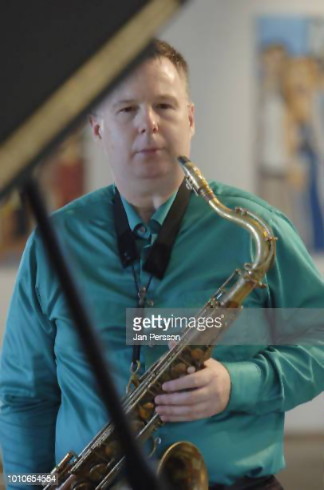
HARRY ALLEN by Gordon Jack


© Copyright ® Steven Cerra, copyright protected; all rights reserved.


“By the time I was in college I was around people who were really into Michael Brecker and John Coltrane. I loved the way they played of course but what I particularly like about the tenor is the sound of guys like Webster, Chu Berry, Zoot, Illinois Jacquet and Flip Phillips so that is what I gravitated towards.”

- Harry Allen, tenor saxophonist


Gordon Jack is a frequent contributor to the Jazz Journal and a very generous friend in allowing JazzProfiles to re-publish his perceptive and well-researched writings on various topics about Jazz and its makers.


Gordon is the author of Fifties Jazz Talk An Oral Retrospective and he also developed the Gerry Mulligan discography in Raymond Horricks’ book Gerry Mulligan’s Ark.


The following article was published in the July, 2017 edition of Jazz Journal. 


For more information and subscriptions please visit www.jazzjournal.co.uk


© -Gordon Jack/JazzJournal, copyright protected; all rights reserved; used with the author’s permission.


“Nicki Parrott’s 2010 release – Black Coffee – with guest appearances from Harry Allen is a CD I frequently return to.  Ms Parrott’s intimate delivery recalls the breathless charm of Peggy Lee and she clearly believes the old tunes are the best tunes with delightful performances of Dark Eyes, Don’t Smoke In Bed, Our Day Will Come, Just One More Chance, No Moon At All, Black Coffee and other gems of a similar vintage.  Quality standards like these are what Mark Crooks had in mind when he once told me they offered, ‘A hundred lifetimes of material to explore’.


 A brief glance at Harry Allen’s extensive discography reveals this songbook repertoire has frequently been an inspiration for him on many of his own recordings. Over the years he has devoted complete CDs to a re-examination of the works of Sammy Fain (1990), Billy Strayhorn (1993), Duke Ellington (1999), Cole Porter (2001), Henry Mancini (2002), Johnny Burke (2010), Hoagy Carmichael (2013), Johnny Mandel (2014) and Antonio Carlos Jobim (2015). Broadway shows, too, like Guys & Dolls (2007), South Pacific (2008)) and The Sound Of Music (2010) have all been successfully revisited. Themes from James Bond films (2010) show how well Harry has perfected the art of communication from even the most unlikely of sources.  Paying tribute to his encyclopaedic knowledge of popular songs, his long-time colleague, pianist Rossano Sportiello once said, “I’ve yet to find a tune Harry doesn’t know”.


His full, rounded sound on tenor reflects the influence of an earlier generation of performers like Ben Webster, Stan Getz, Buddy Tate, Paul Gonsalves, Lester Young and Scott Hamilton. We met at the conclusion of his November 2016 UK tour. He had been accompanied by Andrea Pozza (piano), Simon Woolf (bass) and Steve Brown (drums) and I began by asking about his latest release featuring Eric Alexander and Grant Stewart (tenors) and Gary Smulyan (baritone) - aka The New York Saxophone Band. “That band has actually been in existence for about ten years and I have been trying to get someone to record it for a long time. In 2006 Hans Zurbruegg the owner of Marian’s Jazzroom in Bern, Switzerland asked me to put together a four-saxophone band for a festival there. I thought doing all the arrangements might be too much work but I decided it was a great opportunity especially as I was being paid for the project. I started to get other work for the ensemble in the States and in Europe and I use whoever can make it but the guys on the CD are the ‘A’ Team – they’re the ones I call first.


“Phil Woods gave me Al Cohn’s Four Brothers chart from the 1957 reunion date with Zoot Sims, Al, Herbie Steward and Serge Chaloff.  It’s a great arrangement written for four saxes whereas Jimmy Giuffre’s Four Brothers was a big band chart. I’ve had the reunion album in my collection for years and on the CD we do The Red Door from that session which is my adaptation of the original – it wasn’t a transcription. I think three tenors and a baritone is a warmer sound than the conventional five-man sax section with two altos on top. I play the first tenor part mostly but the lead moves around on some of the arrangements. Incidentally on this tour I was joined by Olly Wilby and Dave O’Higgins (tenors) and Richard Shepherd (baritone) at London’s 606 Club where we performed material from the CD. We had a two-hour rehearsal before the gig and they proved to be great readers and excellent soloists. 


“I don’t like doing set-lists when I’m playing. You don’t know in advance what the feel is going to be at any given point of a performance - with the audience, the band or personally. I might spontaneously feel like playing a certain tune or maybe the audience might like a bossa-nova but if you put a list together you miss all that so I never do a set-list. I just go with what I feel at the moment and Andrea, Simon and Steve have all been able to respond to that. I had worked with them in 2015 here and in Spain so I was happy to have them with me again. During the tour I have combined playing with teaching at the Royal Academy. I did private lessons with most of the saxophone players and I taught some repertoire classes to different grades of students. I also taught a couple of Master Classes and I must say that the standard was very high. It reminded me of Juilliard in New York.” (Harry has a B.A. in music from Rutgers University).


I asked what tenor he used and if he had ever thought of playing the soprano. “I use a 1938 Selmer Balanced-Action. Most players use a Mark 6 or a Super Balanced-Action but I like the Balanced-Action better. The mechanism is simpler, they’re tougher and don’t break down so much. I tried a soprano years ago but I didn’t like it very much.  Some guys feel comfortable playing a lot of instruments but I don’t.” (Danny Bank who was probably the most recorded baritone player in history played all the saxes, flute, piccolo, clarinet, bass clarinet and oboe). “Every time I played the soprano or clarinet I really wanted to get back to the tenor – I just hear music through the tenor and by the time I graduated college it really was the only instrument for me. Anyway I spent so much time finding the right mouthpiece and the reeds I liked, I wouldn’t want to devote the same amount of time to another horn.


“Thanks to my father I heard a lot of good music when I was growing up. He was a drummer and worked quite a bit with Paul Gonsalves because they had been in high school together. There were always Ellington, Louis Armstrong and Ella Fitzgerald records in the house which is where I got my love of that music from. By the time I was in college I was around people who were really into Michael Brecker and John Coltrane. I loved the way they played of course but what I particularly like about the tenor is the sound of guys like Webster, Chu Berry, Zoot, Illinois Jacquet and Flip Phillips so that is what I gravitated towards.


“My first date as a leader was on the Progressive label in 1988 with Keith Ingham (piano), Major Holley (bass) and Oliver Jackson (drums).”(Keith was an old-boy of my school. He was awarded a scholarship to Oxford where he read Mandarin. He moved to New York in 1978). “Oliver was very good to me because he took me on several long European tours beginning around 1990 teaching me the ropes. That first trip lasted about ten weeks and we had John Coles with us on trumpet.  Oliver told promoters that they should remember me telling them, ‘You’re going to want this guy’. Even now most of my European tours can be traced back to him.”


Harry has performed on several recordings with Scott Hamilton and I asked if standing toe-to-toe with another tenor player created a feeling of competitiveness. “I think of music as a test to be the most musical. It’s not a competition to see who can play the loudest, the fastest or the longest.  My goal is always to play the best solo in the song. Incidentally, I should mention a great trio album that Scott recorded with Dave McKenna and Jake Hanna – No Bass Hit. I love that record partly because of Dave who is severely under-rated. He is one of the top five piano players of all time in my opinion. I wouldn’t turn down an offer to do something like that but I like working with a bass so it’s not something I’m dying to do. I’ve recorded a couple of Burt Bacharach tunes and I’ve considered doing a whole album because I like his material. Hal David’s lyrics are tremendous too. I’ve recorded Billy Joel’s New York State Of Mind and Stevie Wonder’s Isn’t She Lovely. I don’t know enough of their material to devote a whole CD to their work but I might consider it. 


Harry and Guitarist Joe Cohn had a long association for about 15 years. During that time they recorded no less than 13 CDS together and in 2006 they won the New York Nightlife Award for outstanding jazz combo performance. “If finances were not an issue I would love to work with a big band or an orchestra. About two years ago I performed Eddie Sauter’s Focus which was written for Stan Getz. I was invited to appear with a string ensemble from Boston – A Far Cry – who were absolutely great. They played better than the studio guys because when you really listen to it there are parts on the record where the strings are not really making it.  I spent a week in Boston rehearsing with them and I would love to do it again. My part just had chord symbols with the occasional measure or two of a melodic line because most of the tenor part is improvised.”  (Brian Schuth’s review in The Boston Musical Intelligencer said, ‘Allen’s fluency afforded many pleasures’. The strings on Stan Getz’s recording were the Beaux-Arts String Quartet supplemented by orchestral players who were unlikely to have been afforded the luxury of a week’s rehearsal time.) “The score is available commercially and my friend Jeff Rupert who is Head of the Jazz department at UCF has performed it once or twice.


”This may surprise you but about five years ago I was invited by a friend to a jam session at Ornette Coleman’s home in New York City. It was just the two of us with a rhythm section. We played for about three hours in his music-room and it was a fascinating experience although I find tonal music more rewarding.  We played free and I approached it the way I would any other kind of music. I listened to everyone and tried to fit in by playing something that made musical sense. Ornette probably didn’t know anything about me but I don’t think he came away thinking I was a guy who just played standards. I wasn’t a fish out of water and I was happy about that. We played three pieces, each lasting about half an hour. The first and last didn’t have a melody or harmony and the middle one started out as Body And Soul but quickly turned into something else. He talked a lot about music in between the songs and he was very nice to me.


“After this November tour, Jan Lundgren and I are performing a Tribute To Stan Getz and Jan Johansson in Oslo before I return home to New Jersey for a day then it’s off to Miami for a Jazz Cruise.  I’m at Birdland with Freddy Cole for five nights just before Christmas and on New Year’s Eve I will be playing in Arkansas with Judy Carmichael. I do a lot of travelling all over the States and I come to Europe four or five times a year and usually there’s a trip to Japan. I’ve been doing a lot of composing lately and I plan on doing a lot more.  My collaborator is Judy Carmichael who is a fine lyricist - she has added words to The One For You and I Can See Forever from my Four Saxophone CD.  We’re working on several projects together but I also want my playing career to keep on the way it’s going - I’m lucky to stay so busy”.”


SELECTED DISCOGRAPHY

As Leader

Tenors Anyone?  (Novus BVCJ-642 CD)

Here’s To Zoot (Novus BVCJ-648 CD)

Down For The Count (Swing Bros CMSB-28016CD)

The Candy Men: Harry Allen’s All Star New York Saxophone Band (Arbors Jazz ARCD 19450)


As Sideman

Nicki Parrott: Black Coffee (Venus VHCD-1041)

Freddy Cole: Singing The Blues (High Note HCD 7267)

Butch Miles: Cookin’ (Nagel-Heyer CD020)

Warren Vache’: Swingtime! (Nagel-Heyer GCD 059)