Tuesday, September 20, 2022

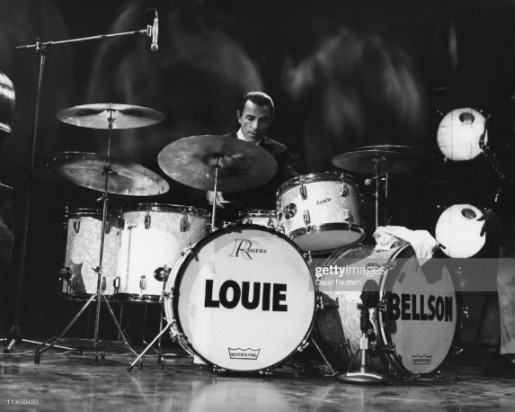
Part 3- Louie Bellson [1924-2009] - The Smithsonian Jazz Oral History Program NEA Jazz Master Interviews

 © Copyright ® Steven Cerra, copyright protected; all rights reserved.

Brown: We’re on tape 3. 


Bellson: So there were a lot of tense moments, but there were also, down South, a lot of wonderful people. In Mississippi, they had Duke and Strayhorn and I and a couple of others come to their house and stay there. They fed us. There were a lot of good people down there. They weren’t all crackers. I wanted to mention that, because it was nice to know that somebody’s thinking in the right direction. 


Brown: So you’re saying some white families invited you in, or black families invited you in? 


Bellson: Yeah, white families, too. 


Brown: So they were accepting of the fact that you were an integrated group. 


Bellson: Yeah. 


Brown:  Let’s talk about what that was like. You mentioned earlier in this interview about how Benny Goodman was a pioneer, but you yourself were a trailblazer in many ways, and you endured a lot of, shall we say, kinds of experiences that weren’t really the norm at that time. Separate but equal was the law of the land, and segregation was strictly enforced. But you seem to feel comfortable crossing color lines. So maybe talk about, what was it about your upbringing or your experiences that allowed you to have such a progressive view and such a humanitarian heart. 


Bellson: The upbringing had a lot to do with it. I was exposed to music. Like Duke used to say, “There’s only two kinds of music: good music and bad music.” I was exposed to good music. That’s what I thought of. The color line didn’t come into second thought. Even when I hired my own band, I didn’t hire anybody because of their color. I hired them for their musicianship and their artistry. When you think in those terms, you’re thinking of people. There’s a lot I can tell you about with Pearl coming up, too – that same idea. With Duke and all these other bands that I worked with, I felt comfortable working with the bands. Duke, Tommy Dorsey, Benny Goodman – the only band I never really worked with is Jimmie Lunceford’s. Cab [Calloway]’s band – I sat in with Cab’s band, with Cozy [Cole]. Cozy was like a brother to me. Having that kind of exposure – the Good Lord gives you a chance to live among your peers and know that you’re there because of music, for everybody to enjoy. Let the bad things – if they’re going to happen, let them happen, but know in your heart that shouldn’t have happened. It’s hard to express this sometimes in words, but you just said that Duke’s band was like a family. That was like my family here, my sisters and four boys. Duke’s band was just – that’s why they felt so good coming to my house, because we were all family. You can’t beat that family. That’s love, and love rules the world. 


When I first met Pearl – can I go into that? 


Brown: Sure. 


Bellson: I met – the Tizol family’s involved there too, because the room I occupied when I was with Juan Tizol – Harry James years – that’s the same room that Pearl occupied when she came to town. So that’s all I heard was Pearl Bailey, Pearl Bailey. You’ve got to meet Pearl Bailey. The chance came. I joined Duke’s band. We were playing at the Howard Theater in Washington, D.C. Pearl came in to play Cavacas Grill. Do you know about that? 


Brown: No. 


Bellson: That was a jazz club, Cavacas Grill. So Juan Tizol says, “We’re going to go watch Pearl, and you’re going to meet Pearl.” “Okay.” I met her that afternoon. She came backstage at the theater and said, “You coming tonight to watch?” I said, “Yep.” So I came into the theater. I was very impressed with her, very much, not only as a talent, but as a person. She was a giver, and you felt easy with her. Came the second night. Brought the flowers. Came the third night. Brought the flowers. Fourth night. Brought the flowers, and I walked her home. Before I said goodbye to her, I said, “I have something very important I want to tell you.” She said, “The answer is yes.” And we got married in four days. Isn’t that something? We ran into some problems. Married to her for 39 years. I remember one time we were playing in Chicago – playing the Regal Theater and the Howard Theater – the Regal Theater in Chicago – but before I met Pearl, she was telling me about, in Chicago she was at this Chinese restaurant. She went over with her hairdresser. She sat there talking for a long time, and then she said, “Don’t tell me the Chinese are going to shower down on me.” She said, “We waited there too long. Nobody was coming to our table.” So she finally caught the eye of the manager. She said, “Come here.” The manager came over and said, “Yes. What can I do for you?” She said, “Look. I came over here to pick cotton and you came over here to” – what was it now? – “you came over here to do laundry and I came over here to pick cotton. So give me your damn menu now, will you?” He brought the menu over. That’s some choice words, right? But overall we had a nice association. Pearl was an extraordinary person, in that everybody loved her. I don’t care who it was. If they see her on television, they felt like holding hands with her to say, we love you. So a lot of those things passed by us because of her. They didn’t think about her being black. They just thought of a person that we love, and let me touch you. I love the way you sing. I love the way you dance. The other things, we better let them go by. 


Brown: You had children, you and Pearl?


Bellson: We found out that she couldn’t have children, so we adopted two kids: Dee Dee, when she was four months old, and Tony, who just passed away a couple of months ago. My son. 51 years old. He got real sick. Dee Dee – that’s [a picture of] Dee Dee up in the corner there – she’s about 42 now. A good singer. She’s like her mother. Then after being married to Pearl for 39 years [Pearl died in 1990], I met another gem. I thought after Pearl I was going to not get married again. Just play my drums, write music, tour, write, compose, keep on doing it, until I went on a Duke Ellington cruise, which this young lady [Francine] was on that same cruise. When I saw her with a mini-skirt on – I told her later on – I said, “You need a lot of loving, and I’m just the guy that can give it to you.” 


Brown: Spoken like a true drummer.


Bellson: She a smart lady. You had a chance to meet her already. She’s a graduate of Harvard, MIT, and Earlham – three universities. She quit all those things just to come with me and sell CDs. Isn’t that something? That way we kept together, because she knew that I had a career, and she was willing to back me up. That’s Francine. For me to have two marriages like that – that’s a blessing. I look up every day and say, “Thank you Lord.” I’ve had a good time. 


Brown: Still having a good time. 


Bellson: I’m still having a good time. Yeah. That’s right. 


Brown: Let’s take a break. [recording interrupted. It resumes in mid-sentence] 


Brown: I’d like to return again to talking about your experience with Duke Ellington. You mentioned earlier that you were Billy Strayhorn’s roommate. I’m just wondering if you had some experiences to share there? You can tell us what it was like being close to Billy Strayhorn. You mentioned he’s a genius. Of course we all know that. 


Bellson: After that two weeks with Billy Strayhorn, I roomed with Duke. Billy Strayhorn went back home to do some composing or writing. He just came out with the band periodically. But I lasted one week with Duke, because he stays up all night writing music. In the morning when I got up at 9 o’clock, boom, boom, boom, [there’s a] knock on the door – no, 4 o’clock in the morning – [a] knock on the door. “Flowers for Mr. Ellington.” Duke’s busy writing, so I had to answer the doorbell. Flowers, telegram for Mr., flowers, telegram – all night long. I had to answer the door, and I wasn’t getting any sleep. So I finally told Duke – I said, “Duke, if you want a good, strong drummer, I’ve got to get out of here and get some sleep.” He laughed. That was another experience. 


Brown: Who else did you have for roommates during that two-year stint with Duke? Did you have any other roommates? 


Bellson: After that, I roomed with Tizol a couple of times, and Paul Gonsalves. No, pretty much alone then. 


Brown: I’m surprised the Duke even had a roommate. 


Bellson: Yeah, right. He laughed when I said, “If you want a good, strong drummer, you better let me get out of here right now.” 


Brown: Any other recollections about your experience with Ellington? Any other recordings or any other tours of note? 


Bellson: Recordings were always – they were very superstitious. Did you know that? Duke and Strayhorn were very superstitious. You never whistle in the dressing room. Never whistle. The color yellow is out. Blue is in. Blue is the color. Don’t ever buy him shoes, because that means he’s stepping out of your life. Willie Smith was the champion with being superstitious. He had so many, I can’t even think of all of them. One in particular was, he had a big coin. It looked like a silver dollar. That had to be put on the bureau. It had to be concise, right on the middle of the bureau, and measured on top, before he went to sleep. Then when he opened his alto [saxophone] case to take out his horn, he’d open up the case, look at his horn, and go “boom bam bam bam chim chim bang bang bang,” and close it. He’d wait a minute. Then he’d open it up again, look at his horn, “ram boom zing zam zing zing zam rrr rrr rrr rrr bang,” and close it. He did that about ten times. Then finally, he’d open it up, “R-boong.” He’d grab his horn. 


Brown: Every time? 


Bellson: Every time. 


Brown: Did you ever ask him what was going on? 


Bellson: He’d just say, “Ahhhh. That’s a secret.” Whatever he said, all I could tell was ram-boo-ings, ram-boo-ings, ram-boo-ings. I don’t know who ram-boo-ings was, but he had to be pretty heavy. But Duke was – never wore a shirt that buttoned down all the way. Button half-way down and slipped over. He was the first guy to make a necktie [from] the same material as his shirt, and make a bow-tie out of it. But he never put a shirt on that buttoned all the way down. That’s odd. Strayhorn was the same way. We could never tell – when they collaborated on an arrangement, we couldn’t tell where Duke left off and Strayhorn took over. That happened many times, but we couldn’t tell who did what. The story that I got from Strayhorn – he said that he joined the band as a lyricist, not as an arranger, before the band was getting ready to go to Europe. Strayhorn said he didn’t go to Europe with the band, but when he came back, he told Duke, “I write arrangements also.” He said, “You do?” He said, “Yeah. Here’s one arrangement.” It was Take the “A” Train. After Duke heard that, he put his arm around Strayhorn. He said, “You’re with me forever.” 


Brown: Did you ever see those two work together at the score, at the piano? 


Bellson: Yeah. A couple of times I did. 


Brown: What was that dynamic like? Was there much talking? What was it like? 


Bellson: Not too much talking. If Duke would get an idea, he’d say, “Strays” – we used to call him Strays – “Strays, do this.” Strays would pick up from him and continue. It was almost like they knew which way they were going before they did it. That’s unbelievable, but that’s true. 


Brown: Do you remember any particular pieces they were working on or any arrangements? 


Bellson: They never put a button on a measure. They never – [Bellson sings a cliched ending to a jazz piece]. Never. They did it with the old tunes, but some of the new stuff, they’d say, “Let’s figure out the ending – the last eight bars – on the record date.” They wouldn’t write it down. Duke would fill out the notes for him – or Strayhorn – they wouldn’t put anything on until later. That’s never been done before. 


Brown: Did Strayhorn have a name for Duke, other than Duke? 


Bellson: No. I don’t think so. I think he just called him Duke. I called Duke “Maestro.” 


Brown: Talk about that, how you came up with that title for Duke. 


Bellson: I don’t know. It just flowed one day. I said, “Well, Maestro, you sure played your buns off last night.” He said, “I like that. I like that. Maestro.” Then Pat Willard picked up on it. So from that [time on], I called him Maestro. I wrote a piece when I was in the band called Ortseam, which is maestro spelled backwards. I learned to do that from Duke’s band. They did that. That’s how they got titles.


Bellson: That experience with Duke – I listen to what Clark Terry says, “After playing with that band, I do everything like Duke would do it. I conduct my band [with] the same motions that Duke did.” Because he was so powerful that, when you spent a lot of time with him, that rubbed off on you, and you automatically did it. Clark says, “When I got my own band, I conducted the same way Duke could, because it was so right and so good that I just picked up on it and did it.” 


Bellson: Another thing about Duke’s band was, they never wrote a score. You see that manuscript paper here? That’s what we call – before the score happens, you jot down the original ideas on a score pad. 


Brown: A sketch. 


Bellson: Yeah. A sketch. Everything’s in the concert key. The copyist has to bring the trumpets up a tone. Trombones are okay in the bass clef. The altos, up a sixth. Tenors, up a tone and an octave. It’s all concert key. 


Brown: The Smithsonian has all his manuscripts, so you can see everything is in concert. 


Bellson: I’ve got some of those too. But Duke never liked to show people his ideas. He’d show certain people. He showed me how he voiced Caravan. One day he was – on an occasion he was up at the piano, he motioned to me, come here. I got up and sat down by the piano bench. This is Johnny Hodges. [Bellson sings the melody to Caravan.] Up chromatically. Here’s Procope. Here’s Paul [Gonsalves]. You put that all together. The wild thing about Duke’s band is, every individual was a soloist in that band, and yet collectively they sounded great together. They breathed a certain air in their horns. Where were you going to get another player like Harry Carney, that baritone sound? Lawrence Brown. Rex Stewart. Cat Anderson. Clark Terry. Russell Procope. Jimmy Hamilton. Where are you going . . . ? – Johnny Hodges, the poet. You could give those same notes to a band, a sophisticated band, a good band in L.A., guys who could read their butts off. It won’t sound the same. That air that came from those individuals, that God-given air. That’s it. Once you hear that, that’s it. I had to pinch myself many times. It got so intense that I said, am I really here? Yeah, there’s Duke over there, playing piano. Especially a performance of Diminuendo and Crescendo in Blue. You get to that last chorus, whew. That had to be a highlight. It reaches a point where you want to yell out something. Yeah, or something like that. I heard it now. I heard it. That’s the way Sam Woodyard kicked that band on that recording . . . Whew. Their bad night is anybody else’s great night. They never had a bad night. To them they called it a bad night, but it’s really intense. That’s what knocked me out so much. Those five saxophone players sound like ten, not necessarily in volume, but the fullness, the richness that came out of those horns. You had to hear it to appreciate it. I didn’t realize it, listening on record. But seeing it, sitting right next to those guys . . . 


Brown: You were with Duke from ’51 through early ’53. 


Bellson: Yeah. 


Brown: And you left. What were the circumstances of your departure? 


Bellson: Meeting Pearl. Because I couldn’t do both. When she was busy doing her things, and I became the musical conductor for her – and I had Don Redman as the bandleader. There’s a name. There was another genius. Him and Benny Carter wrote most of the tunes for Pearl. Don Redman. Again, there was a tiny man, but a genius. Chant of the Weed. 


Brown: Yeah, it goes all the way back to McKinney’s Cotton Pickers. 


Bellson: That’s right. He’s the guy that started the big band scene, like through Tommy Dorsey and Marie. He started that. He started the bands with the four trumpets and three trombones, and the four trombones, because there was always three trumpets and two trombones. Don Redman. And a beautiful guy. I spent six months out of the year with him every year. He came to visit us. We went out together. We wrote music together. I got to know who he – what Don Redman was like. Fabulous. What a humanitarian. What a genius. Fun. 


Brown: You mentioned Benny Carter. 


Bellson: Benny Carter’s the same way. Oh boy. If you say Benny Carter to Don Redman, Don says, “He’s the boss.” Or vice versa. If you go to Benny about that, “He’s the boss.” They both wrote most of the charts for Pearl. I remember one incident where Pearl liked the way Erroll Garner played, especially From this Moment – no. what’s the name? – For Once in My Life. The thing that Tony Bennett sings, only Erroll Garner does it up tempo. [Bellson sings the opening phrase of For Once in My Life at a brisk tempo.] She liked the way Erroll played it, so she called Benny Carter once and said, “Benny, get the record of Erroll Garner playing For Once in My Life and put all the notes that he played on the piano in the band.” Why did he do that? It was almost impossible to play, but we played it. A lot of rehearsing. Imagine picking out all those notes the same. It took a guy like Benny Carter to transcribe all those notes that Erroll Garner played. 


I took that arrangement on “The Tonight Show” with Doc Severinson once. Doc said, “I’m going to go ahead and warm up, Lou, in my little practice room. You got the rehearsal.” So I said, “Okay. Pick out For Once in My Life.” All the guys started sweating. “Gee whiz.” So Doc came running out of the dressing room. “What was that?” I said, “What?” “That arrangement. What is that?” I said, “Oh, I just finished playing that in Lima, Ohio, with a college band.” Which is a lie. He said, “You did what?” I said, “We just played it in Lima, Ohio, with a college band. They played the daylights out of it.” “Play it again guys.” They played it three or four times for Doc Severinson. He didn’t believe it. So I told him the history of that. He said to me, “No wonder.” Wow. We made him sweat. That’s interesting. That’s Benny Carter for you, and Erroll Garner. They could do it. “The Tonight Show” had a heavy band. They had Snooky Young, Clark Terry. They had Conte Candoli. They had Tommy Newsome, Pete Christlieb. They had a lot of heavies on that band, and they struggled with it. I finally laughed. Doc looked at me and said, “You’re kidding me that Lima, Ohio . . .” I said, “No. They didn’t play that. I wouldn’t put that on them.” 


Brown: They’d be having nightmares to this day. 


Bellson: We pull that out only on bands that thought they could play good. “Oh, you think you can play good? Okay. Let me hear you play this.” 


Brown: How big was the band that you had for Pearl Bailey? How large was it? 


Bellson: A regular big band: four trumpets – sometimes five trumpets – four ’bones, five reeds, piano, bass, and drums. Once in a while we had a guitar player. No percussion player. 


Brown: So you’re conductor, not drummer? You didn’t do both duties? 


Bellson: Oh yeah. I let Don do the conducting. I let Don do the tempos. I started the tempos off. He was good with it. He knew the tempos too. Then later on, when Don passed away, I took over as – leading from the drums, because Pearl’s television show – in 1972 she did 15 shows. That band – the trumpet section was Sweets Edison, Snooky Young, Cat Anderson, and Conte Candoli, and Johnny . . .  Ray Brown was the bass player. Joe Pass was the guitar player. Don Abney was the piano player. Jimmie Cheatham was one of the trombone players. It was an all-star band. All the violins and everything. 40 men. I conducted that whole show. I had a real problem playing drums. 


Brown: So your role was musical director? And conductor? 


Bellson: Yeah. 


Brown: So that lasted from 1953 until . . .? Was that your main musical focus? 


Bellson: That was after Pearl did Hello, Dolly. 1972, for the next 15 weeks, it was three heavyweights. The first show was Bing Crosby, Louis Armstrong, and Andy Williams. The second show was Tony Bennett, Lucille Ball, and Perry Como. Three heavyweights every show. We had Tina Turner on, Ethel Waters, Erroll Garner, everybody. Three heavyweights for 15 shows. And we can’t locate those tapes now. That’s a shame. They’re going to show up somehow, somewhere. They better, because otherwise it’s a – Ella was on. Sarah was on. Peggy Lee. Pearl did a “Kraft Music Hall once, and she had – her guests were Sarah Vaughan and Ella Fitzgerald. Pearl was right in the middle of them. They did a medley for 15 minutes. After they did that medley, Ella and Sarah walked toward me and said, “Your old lady can really sing.” I said, “I know that.” Pearl said, “I felt like I was in the middle of two Zildjian cymbals.” I told that to Armen. He got a big kick out of that. That’s a good description. They swung, too. That’s on tape. It’s on videotape. 


Brown: Let’s talk more about your career. Jazz at the Philharmonic. That’s 1954. 


Bellson: Yeah, right. 


Brown: How did that come about, and what was that experience like? 


Bellson: That’s when I got to – I owe Norman Granz a great thanks for having me play with all those great players, like Oscar Peterson, Ray Brown – of course I played with Ray before with a quartet – a trio and a quartet. That was one of the first times that Oscar had me on the bill with him almost every place he played. Because Ed Thigpen was first. Then I came over later. Norman would call me and say, “Lou, I’ve got a record date for you.” I’d say, “Who is it?” He said, “Art Tatum.” Oh my goodness. I said, “What’d you say again?” Art Tatum and Benny Carter and myself. No bass. Just a trio. You got a record of that? Kimery: A friend of mine made a copy, because I was looking for it, because I had to hear that. We had to hear that. 


Brown: We had to listen to it before coming to interview you. Art Tatum and Benny Carter and Louie Bellson. 


Bellson: I drove in with Benny Carter. We drove together. When we opened up the door at the studio in Hollywood, Tatum was sitting at the piano. He looked at us – he could see a little bit. Very little – he looked at us, and he said, “I hope you guys don’t play anything fast.” Benny Carter and I said, he hopes we don’t play anything fast. We hope he don’t playing anything . . . He did something on this record date – let me see if I can find it – I’m left with the blues in my heart. That song. Tatum is known for knowing almost every good tune that was written, but he didn’t know about that tune. So he told Benny Carter – he said, “Play the melody for me.” Benny played the melody for him on the alto. That’s not the chorus, right? That’s just the melody. After Benny played the melody, he was going to play the chorus for Art Tatum. Tatum said, “No, no. Norman, roll the tape.” He played all the right changes and went way beyond that. Tatum did. 


Brown: He never even heard of it. 


Bellson: Never heard it. So Benny Carter and I say, that’s Art Tatum. He and Oscar Peterson were two giants. Oscar overwhelmingly also, like Tatum. That tape we did with Oscar and John Heard is fabulous. We played Cute. You know what tempo they played it? It’s usually [Bellson sings the melody at a relaxed tempo]. Oscar played it [Bellson sings it at an extremely fast tempo]. 


Brown: How are you going to get your breaks in? 


Bellson: Then he turned around to me and laughed. Oh man. Then Sweet Georgia Brown is so fast, it’s unbelievable. Only he can play at those tempos. But I enjoyed working with Oscar, too. He was a giant musician. He could really play. Speaking of tapes, the next to last thing that Duke recorded was something we did out in California. I played drums. Joe Pass is on guitar and Ray Brown on bass and Duke. Just the four of us. You know about that one? He called it Duke’s Big Four. 


Brown: Oh yeah. I remember seeing that. [?] for Pablo. Norman Granz [?]. 


Brown: So you toured with Jazz at the Philharmonic? You went to Europe? 


Bellson: Yes. 


Brown: What was that like? 


Bellson: Fabulous. It was in every language a highlight. All the guys played well. I played – the drummers were Buddy Rich and myself. Ella Fitzgerald always closed the show, which she should. Who’s going to follow that? She was great. Playing for her, we took turns. I’d play the first half. Then Buddy would play the second part of the tour. The first part was, all the instruments played. The second part was always the guest artists, like Lionel Hampton, Buddy DeFranco, and Oscar and Ray Brown. A lot of music came out of that. Working with Dizzy [Gillespie] and Lester Young. 


Brown: When you have a group of musicians like that who come from so many different styles, what was not to like? To be the drummer and to be responsive to all those different types of approaches? 


Bellson: I think Norman was smart. The way he did it was, he delegated Oscar to be the “padrone,” so to speak, because there always has to be somebody that says, what do you want to play? What do you want to play? What key do you want to do it in? How do you want to begin and end it? That’s all. That’s all you need. The in-between comes from there. But that was good, because Oscar was the right man to do it. Being a piano player, he could sort out the key. When [?] would say, I’ll do one of my tunes in e-flat, and I’ll take the last two choruses. That’s it. With those kind of players, you could do that. But the key to it was Oscar being able to handle players like that. Once in a while somebody would – like Lionel would turn around – which he usually did – and say, “Wait a minute. I got it.” He’d go into another tune. So that’s okay. We followed him. But that was great. That gave Oscar a chance to shine too and gave the guys a chance to pick out what they wanted to play. Like with Coleman Hawkins, I remember a time he wanted to do Body and Soul. We know the key. Let him go. The other guys just sat around while he played it. Just let him have it. When you have – I think that Norman has the idea he’d never hire that group before, if it would jell. Like saxophone players: Lester Young, Coleman Hawkins, and Ben Webster. There’s different styles altogether, but yet Norman said they could play together, because they’re that great. It didn’t make any difference what style they were. They were in that era. Like Charlie Shavers and Roy Eldridge. Dizzy, Roy Eldridge, and Charlie Shavers. Or Dizzy and Sweets. Those combinations worked. You put them with anybody, and they worked. Norman knew that. 


Brown: Was this your first tour of Europe? 


Bellson: No, I did – wait a minute – I did Japan with him, and the States. 


Brown: When was the first time you had gone back to – or gone to Italy? 


Bellson: That’s another story. This is really, really a funny one. We got to Europe. Venice, Italy, was one of the dates. They got some material on me way before I got there. “Here’s an Italian drummer. His name is Luigi Paulino . . .” All the press was waiting to hear the kid with the two bass drums. They were ready for me. What happened was, the night before we played in – somewhere in Italy. I forget where it was – we had to cross the water to get to Venice to play that gig on a Saturday night. So the little Italian guy driving the truck was scared of Norman. Norman has these high, bushy eyebrows. That kid was afraid of him. So instead of telling Norman, “I didn’t pick up the drums at the Victory station” – because we had to go three hours by boat. I guess three hours by boat. We had to go a long ways – the car and then the boat – to get to Venice. And I didn’t have my drums with him. The kid forgot to tell Norman I didn’t have the drums. Oh man. Here I am, stuck, Saturday night in Venice. No drums. All the good drummers that would have gotten my stuff, they’re all busy working. The only guy that I could find was some old guy that hadn’t played for 40 years. He had a bass drum that you hit it once and it collapsed. The player collapsed. I got on a half brass cymbal. No hi-hat. And I had to play two shows like that. All the press are going like this. [Bellson speaks Italian]. An Italian gesture, like, what is this guy? Is he kidding? Where are his two bass drums? He sounds terrible. I’ve never been able to go back to Venice to redeem myself. You can imagine. Oscar and Ray – when it came time for my solo, I kept saying, “Come on. Keep on playing. Keep on playing.” Oh man. They got a half-brass cymbal, a foot-pedal that gave out on me after the first measure. The bass drum was lousy. No hi-hat. No ride cymbal. A pair of sticks. No brushes. You talk about being in a spot. When I hear the name Venice, I know they don’t want to hear my name – or maybe if I go there, I’ll come with my drum set and prepare it. That broke everybody up. Norman tried to tell the press what happened, but they weren’t going for it. The [?] said, “What happened? He sounded terrible.” I said, “Anyone would sound terrible on a set of drums like that.” That’s all I could find, because all the good Italian drummers were busy that night. It was a Saturday night. And two shows – we had two concerts to do. Ah. I don’t bring it up with every interview, because I feel it was terrible. Oscar and Ray, they were laughing. And Joe Pass. He said, “You keep that set with you. That was good.” “No thanks.” 


Brown: Did you ever make it to either Naples or Milano? 


Bellson: Yeah. 


Brown: So you got to meet some of your family back there? 


Bellson: Yeah. I met a lot of cousins on my mother’s side. Very little on my dad’s side, but my mother had a lot of cousins in Milano. I heard a lot of good players over there too, in Milano especially – northern Italy. 


Brown: How did your mother get the nickname Curly? 


Bellson: She had curly hair, and she’s little. We called her Puny too. She was about that high. And really could cook good. I’m telling you. 


Brown: Yeah, Duke . . . 


Bellson: Duke came to my house, and when he did, he ate a whole turkey by himself. Yeah, he did. I forgot to tell you that. Then he ate the dessert too. It was a cream – heavy cream. Like a yellow – we call it custard – Italian custard. He ate that on top of the whole turkey. Those guys could eat. 


Brown: Let’s take a little break here, because we’re getting up onto A Drum is a Woman, which is really important. [recording interrupted] 


The next hallmark in your career, or at least one of the ones in the mid-’50s, would have been the recording of Duke Ellington’s magnum opus, A Drum is a Woman. 


Bellson: Did they give me credit for doing that? Because most of that, Sam Woodyard did – most of that. I did My People


Brown: So that would have been the ’60s. 


Bellson: That was the ’60s. 


Brown: And then Sacred Concert as well. 


Bellson: Yeah. 


Brown: The first Sacred Concert was in the ’60s. 


Bellson: Right. Yeah. 


Brown: So after you left Ellington in early ’53, that was pretty much it until you came back to do those particular projects? 


Bellson: Yeah, right. 


Brown: Okay. So then in the mid-’50s – they’ll have to correct this one. We’ll send them a message that they need to correct this. They have you listed as recording A Drum is a Woman. I knew Sam was on that, but I didn’t know if you had participated as well. 


Bellson: I think I did a very little bit of A Drum is a Woman. I don’t know whether they give me credit. But I know Sam did most of it, Sam Woodyard. 

Sam was a great drummer. 


Brown: Then from ’55 to ’56 you were back with the Dorsey brothers? How did that come about? 


Bellson: Tommy Dorsey was very friendly with Jackie Gleason. Jackie Gleason wanted to do “The Honeymooners” for just 30 minutes and devote the other 30 minutes to the Dorsey brothers, Jimmy and Tommy. That band had – Charlie Shavers was in that band. That was a lot of fun. We did a whole season of shows. I’ve got some tapes of those. That was a really good band. 


Brown: Who else was in the band other than Charlie Shavers? 


Bellson: Let me see. Who else was in that band? He was the only big star. The other guys were all good players, but Charlie was the main key. Then I had a chance to go to Europe with Basie. Sonny Payne got sick. I recorded with Basie – did an album with him. Then we left for Europe. I was supposed to go into Birdland with my small band, but they canceled that out so I could help Basie out in Europe. That was six weeks there. Oh boy. That was a lot of fun. Thad Jones was in the band. Al Grey, Frank . . . 


Brown: Frank Foster?  Frank Wess?


 Bellson: Yes, both of them. Boy, what a band that was. The lead alto player was Marshall Royal. I mentioned Thad Jones, didn’t I?  Freddie Green – a time clock. Brown: 


Brown: So you played with Duke Ellington in the early ’50s and then you ended up playing with Count Basie. That must be a study in contrast. Compare and contrast that. What was it like working with Count Basie? 


Bellson: Great. He was trying to lose weight and not drink. He knew that I’d go to the grocery store every day and stock up, because afterwards, a certain time of year, the restaurants closed. So every night for six weeks I’d hear a knock on my door – bam bam. I said, “Who is it?” “It’s me, Base.” Come in. We’d start talking about our experiences. Boy, you talk about experience, right there. They were funny. He was a real comedian. I’m trying to remember some of the things he said. One thing he said was – this was way before he got married – he was going with this young girl, a happy girl, a really nicelooking girl. She was – Basie accompanied her quite a bit. There was another guy that she was interested in. His name was Olly. Olly was like 6'-6" and weighed 250 pounds, all muscle. So, she came in – his girlfriend – Basie’s girlfriend came in one day. Her eyes were all black. She had blood all over. Basie was in bed. He said, “Who did that? What happened to you? What’s the matter?” As he’s saying this, he’s taking his pajamas off and putting his clothes on. When he got fully clothed, she mentioned Olly’s name. When he heard Olly’s name, he took his clothes back off, put his pajamas on, and went back to bed. I laughed until I cried. I could just see him doing that. “Olly – why’d you mess around with that man’s wife?” That experience was – talking about life. His daughter was an invalid. He talked very highly about her, how loving she was. He was a very soulful man. He was very much like Duke, Basie was. Every night was – like Ellington’s band, every night was a pleasure. The band really swung hard. There’s some records out on – there’s all of Basie’s Europe, with me on there. What was it, ’62? Quite a few cuts on there by me – mostly – and Sonny Payne, and some with Butch Miles, another great drummer. He’s touring with the band now. All those young whippersnappers. They’re all good players. Working with Basie, him and Duke gave me that freedom. The wonderful thing about the two of those guys was that they’re both piano players and they never gave you like a 1-2, 1-2-3-4, which is really hard to grab the groove. They played the piano for about a chorus or two choruses until a groove is set. Boy, that makes a difference if you do it that way.  He always had little introductions, even on his recordings. 


Brown: Are you ready to wrap up? Okay. We’ll just go ahead. This is completing the  third tape of the first day of the Smithsonian Jazz Oral History interview with Louie Bellson at his home in San Jose. He is being interviewed by Anthony Brown and also Ken Kimery of the Smithsonian Institution. We’ll continue again tomorrow.  


Sunday, September 18, 2022

Allen Eager with Gordon Jack [From the Archives with Revisions]

 © Copyright ® Steven Cerra, copyright protected; all rights reserved.


It is always a pleasure and a privilege to have Gordon Jack as a guest writer on these pages.


Gordon Jack is a frequent contributor to the Jazz Journal and a very generous friend in allowing JazzProfiles to re-publish his perceptive and well-researched writings on various topics about Jazz and its makers.


Gordon is the author of Fifties Jazz Talk An Oral Retrospective and he also developed the Gerry Mulligan discography in Raymond Horricks’ book Gerry Mulligan’s Ark.


The following article was published in the November 2003 edition of Jazz Journal. 


For more information and subscriptions please visit www.jazzjournal.co.uk              


© -Gordon Jack/JazzJournal, copyright protected; all rights reserved; used with the author’s permission.


“Allen Eager’s interests ranged far beyond the narrow confines of jazz, which explains his frequent disappearances from the scene over the years. Lester Young described him as “the best of the grey boys” and Buddy Rich once said, “he could have been one of the giants if he just paid attention to his ‘thing’, instead of his other ‘things’”. In September 2001 over a long, leisurely lunch near his home in Oak Hill, Florida, he looked back on a colourful life which included playing with most of the major figures of the bebop era as well as excursions into the world of racing cars, skiing, horse riding and the ice cream business. Sadly, he died earlier this year and this is possibly his last ever interview. 


“I was about fifteen when I went to see Duke’s band at the Royal Roost and I was knocked out by Ben Webster who was a magnificent and gorgeous player. I wanted to ask him for some lessons so I went to the rooming house above Minton’s in Harlem where he was staying, and his room was so tiny that he opened the door without getting out of bed.  I could imitate him a little and had learnt his solo on Cottontail, which really impressed him because he called Ray Nance and some of the other guys and said, ‘Hey listen to this little white kid.’ He showed me some embouchure things and it was just great being around him and hearing him play. 


“A little later in 1943 I auditioned for Woody Herman and traveled to LA with the band. It was wartime and a lot of musicians had been drafted, otherwise he would never have hired me, because I couldn’t read very well and I didn’t know anything. Woody was fine to work for although he didn’t really mix with the band but none of the leaders did, they usually kept apart from the sidemen. It was when we were in California that I first heard 


Lester Young on record and I changed my conception completely. I altered my mouthpiece and started to play like Pres which all the white kids at the time did. The coloured guys apart from people like Paul Quinichette and Wardell Gray didn’t and I don’t know why.  I stayed in California for a couple of years and took over from Zoot Sims at a club called The Hangover when he got drafted.  Big Sid Catlett was the drummer and I stayed there for about four months sharpening my skills.


“When I went back to New York I started working in the clubs on 52nd. Street with people like Stan Levey, George Wallington, Al Haig, Max Roach and Curley Russell. My playing got honed nicely because I was working all the time but you have to keep doing it, you can’t drop out for long periods like I did later.  I remember when I was working at the Three Deuces, Billie Holiday used to come in with her dog Mister every night after her last set. She sat down right in front of the band and she was crazy about me, probably because I sounded like Lester. It was thanks to Leonard Feather that I got called for a date with Coleman Hawkins and I did the solo on Allen’s Alley because Hawk didn’t want to play on it (RCA (F) PM 42046). A month later in March 1946 I made my first record as a leader (SJL 2210). It was a quartet date and Bud Powell was supposed to be there, but when he didn’t show I used Ed Finckel. Another one of my early records was with Red Rodney and Serge Chaloff (C&B CD 102). We were all living together and I loved Serge’s playing, he was a great bebop player.


“One of the pianists I really liked working with was Monk and I used to hire him all the time. Everyone thought he was weird but I didn’t because he played the right changes with his own little rhythmical embellishments and he was always ‘there’. Years later he became successful when he had that group with Charlie Rouse who was a sweet guy and an excellent player. I liked him very much personally but his playing was a little one-dimensional, not very exciting but he certainly knew music.


“Like a lot of the young musicians then, I used to play at Don Jose’s studio on West 49th. Street with Zoot, Mulligan, Don Joseph and Jerry Lloyd. Everyone who could play in New York used to come at one time or another and the guys chipped in to hire the studio but the public wasn’t allowed in. That was around the time that Gerry and I became good friends. He had a small room in a brownstone on the West Side off Central Park West, and it was amazing to see him writing arrangements there without a piano. He had his own great sound on the baritone and I always loved the way he played. He could do no wrong as far as I was concerned and the funny thing is when I play baritone, my tone is like his and on alto I sound like Bird without really trying. 


“Gerry was always organizing and getting things together. Once when nobody had any money to hire a studio he took us all out to Central Park for a rehearsal and we just sat on the grass and played. By then, he and his girl-friend Gail Madden had moved into my parent’s place in the Bronx and Gail was pretty bossy and opinionated, always wanting to affirm women’s position in society. She was a strong, ‘women’s-libber’ type which was the kind of woman Gerry seemed to like. She played maracas and wanted to be on a record date with us but she didn’t kick the beat off into something better than it was, in fact she was a bit of a drag (Prestige OJCCD-003-2).  Jerry Lloyd was there and he was a fine trumpeter but very introverted and like Curley Russell he ended up driving a cab.


“I started living with Fats Navarro in Benny Harris’ flat in the Bronx towards the end of the forties. You know, someone recently sent me a CD with Fats and me but I haven’t listened to it at all. I’m afraid it will be embarrassing because I don’t feel that I was a good player. I don’t like listening to myself whereas Al Cohn, Zoot, Lester or Ben Webster just knock me out. When Fats and I were at the Roost with Tadd Dameron he used to bring new music in all the time but we never rehearsed, we sight-read on the job. 


Tadd was so talented and I never knew how I got the gig. I think they needed a token white guy and that was me although he must have liked my playing or he wouldn’t have hired me. I was there for a year or more and the club did fabulous business. The sad thing about Fats though is that just before he died, he was hardly working at all. 


“Bird and I used to play at the Open Door in Greenwich Village and I also used to hang out there with Tony Fruscella because we were living together for a while. In 1955 we did a record for Atlantic (JFCD 22808) and just like me, he was a free spirit but we were hardly playing at all at the time. I hadn’t worked in months and we both had to take our horns out of hock the day before the session which was a nice date, not great or anything but Tony always sounded good. He was a sweet player but a little strange and difficult to be with. I also worked quite a bit with Buddy Rich who was one of the great natural talents. He wasn’t a real swinger like Philly Joe but he had fantastic coordination, playing things that nobody else could even if they practiced for a hundred years. I was also very friendly with Miles who really liked the way I dressed. I introduced him to cars and clothes although I never found out what he thought about my playing. He was sure lucky with all those great players like Coltrane, Bill Evans, Red Garland, Cannonball, the list just goes on. Nothing since has come close to those albums like In A Silent Way, 

Kind Of Blue and Sketches Of Spain.


“It was around this time that I lost my cabaret card which meant I couldn’t work in Manhattan which stopped me playing for a while. I managed the occasional gig in New Jersey where they didn’t seem to check if you had one. The cards were issued at the discretion of the police department who were a corrupt bunch at the time and a few years later when I was going with a very rich lady, I hired a lawyer.  We had the whole thing thrown out by the supreme court on the basis that it was unconstitutional and that was probably my biggest contribution to music!  It was too late for people like myself and Billie Holiday who had been kept from working in New York for years. 


“In 1956 I persuaded my mother to give me the money to buy a couple of soft ice cream machines which were pretty new then. I took them with me to the French Riviera figuring I would make a fortune, but the French laws are very difficult for foreigners and I gave the whole thing up.  I was into this non-musical thing and I was completely broke so of course I went back to playing. I recorded with Jimmy Deuchar (Vogue LAE 12029) which wasn’t a very good date but he was real fine and I stayed in Paris for about eighteen months, often working with Kenny Clarke. I got to know Roger Vadim andLouis Malle and I had a little fling with a lady who had been married to Henry Fonda.  I also became very friendly with Rex Harrison’s son Noel, although his father didn’t like me because I called him ‘Rex’ when we were introduced, instead of ‘Mr. Harrison’. 


While he was making The Young Lions, Marlon Brando came to see me in one of those basement clubs on the Left Bank. He wasn’t really a jazz fan but we knew each other from New York and I asked him if he ever made a Western, would he use me as an extra because I loved horses?  In 1961 he made One Eyed Jacks which I loved but he never called me! When I got back to the States I took a band to Aspen, Colorado and when the job finished I stayed on teaching skiing and horse riding. My parents always had stables at the hotels they ran in the Catskills and I had become a pretty accomplished rider. 


“Ornette Coleman came to New York in 1959 and just turned the scene upside down. I couldn’t really get with it but I used to hang out with Don Cherry who was one of the great players and we got along really well. He could play free and on the changes too. This was when I started going with Peggy Hitchcock who was related to the famous Mellon family who were real ‘old money’. She was a millionairess several times over and we lived at her apartment on Park Avenue in New York.  Thanks to her, I had unlimited funds but I didn’t give up music completely although I was interested in many other things, especially automobiles. She bought me a 12 cylinder GT Ferrari and I took it to Germany to race at the Nurburgring and when I came back to the States, I won at Sebring in 1961, beating guys like Stirling Moss and Phil Hill. I also became friendly with the composer John Cage and around that time I went to live in Millbrook which is in upstate New York. One of Peggy’s brothers had a mansion there in 300 acres which is where I met Timothy Leary who was a psychologist from Harvard. He introduced acid to the world and that’s when the psychedelic movement really started. I had been getting high for years but acid was something else.  Occasionally guys like Mingus and Tony Williams came up to play but for most of the sixties and into the seventies, I was pretty inactive musically. 


“ By 1977 I wanted to get back into jazz but I couldn’t find any place to play, so I enrolled in the music course at the University Of Miami. They were all kids of course and nobody knew me but the standard was pretty good. I played in the third rehearsal band because I didn’t play flute or clarinet and I wasn’t a great reader. I remember once though playing a solo which the whole band applauded and that had never happened before. I stayed on in Florida because my mother had a condo on Miami Beach but I started to get a complex about my playing, because nobody was hiring me. I did come to Europe a few times and I played with Chet Baker in 1984 in Amsterdam at the Concertgebouw. (T. Sjogren in his Baker discography lists a private recording of this performance).  He had these complicated charts which came out during the concert and I had to sight-read them. 


The changes were difficult and I was expected to be at home with all this tough material but it was terrible.  I don’t think I coped very well because I didn’t know what was going on and we didn’t communicate at all.  Chet sounded great and he knew all the stuff and anyway, he had a great ear. Al, Zoot, Gerry and Stan Getz were all like that too because they could hear anything and play it. I have to really know a tune, which is why I am not in their league I suppose. I’m probably up near the top of the second division.


“Looking back on my career, it all came so easily in the beginning because I was an exotic-looking guy. People were attracted to me and that was my trouble. Everything came without trying and I never had to promote myself, but then heroin came into the picture and the gigs seemed to stop. Right now, I’m broke and I’m sick of living here and not working. I have no credit cards and I’m on Social Security - what the government calls ‘Assisted Living’. I really want to move to the West Coast where Dick Bank says he can get some work for me and Freddie Gruber, who is a great guy and a drum teacher there, says I can stay with him. I played in LA recently with Sir Charles Thompson and Barry Harris and everyone was surprised to see me. They treated me real well although I had trouble on the first couple of tunes but finally it all came back and I started to play. I know I could work at least once a week there which is more than I’m doing in Florida. 


I’m not as inspired as I was when I was younger but maybe I can turn my life around at least at the end of it, because I just want to play.” 


Acknowledgements: I would like to thank Dick Bank, Brian Davis, Jack Simpson* and Bob Weir for their help while researching Allen Eager’s career.


* For those living in Orlando, Florida, Jack’s radio show, ‘Jazz On The Beach’ can be heard on WUCF-FM.”


Friday, September 16, 2022

Benny Goodman - [From The Archives with Revisions]

 © Copyright ® Steven Cerra, copyright protected; all rights reserved.


As a teenager growing up in New England, listening to a stack of Benny Goodman Orchestra 78 rpm’s one wintry eve opened my ears for the first time to the World of Jazz. Benny’s sound on clarinet and the raw energy of the band so impressed me that I was hooked on The Sound of Jazz forever after.

Today, it’s difficult to imagine back almost 90 years ago to comprehend the impact that Benny’s band had on popular music in general and the big band era in particular. Suffice to say, that both would have been significantly poorer without his presence and his influence.

As was the case with a number of Jazz giants over the years, Benny had a personality that made him difficult to deal with and somewhat unpleasant at times. Notwithstanding the possible merit in any of the musician stories that have become associated with him, both pro and con, what is indisputable is the amount of marvelous Jazz that was produced under his leadership and the fact that he could play great, swing-style clarinet.

Richard Sudhalter [1938-2008], too, was a marvel who wrote about Jazz with an aplomb that could be as daunting as it wass inspiring, especially if you are trying to do it, too.

Given his musical talent, knowledge and intellect, it should come as no surprise that Richard was also a first-rate interviewer as the following chat with Benny Goodman will underscore.

It’s not every day that one gets to eavesdrop on a conversation involving two of their heroes.


- Richard M. Sudhalter


From Lost Chords: White Musicians and Their Contributions to Jazz, 1915-1945. [New York: Oxford University Press, 1999, pp. 553- 568]. 

[C] Copyright protected; all rights reserved.

“With the obvious exception of Artie Shaw, few major jazzmen of the early years were verbally articulate, and fewer still took time and trouble to record their views and experiences with posterity in mind. As several have put It. "We just didn't think that way; we were too busy playing and making a living so bother what anybody would think." This is regrettable: seen in retrospect, their personal views were often of surpassing importance.

Most are gone now, and the extent of what has been lost through their silence is made all the more evident in the wide-ranging observations of one of era's most significant players, Benny Goodman. Coming of age in the '20s early '30s, Goodman brought to bear a flawless mastery of the clarinet with an implicit understanding of the emergent hot jazz idiom. The result was a synthesis, drawing on such diverse precedents as clarinetists Jimmie Noone and Leon Roppolo, brass innovators Armstrong and (especially) Beiderbecke, and the aggressive energies of his Chicago coevals in forging a style which soon became an almost universal standard for his instrument. Goodman's career spanned six decades: at the time of his death, on June 20, 1986, he was still leading a band, still deeply affecting a brand-new generation of musicians barely to their twenties.

Late in 1980, American Heritage magazine commissioned a feature article based on informal conversations with Benny Goodman. At that time there was little in print that even attempted to penetrate the "King of Swing" facade that still formed the substance of his public image. Geoffrey Ward, editor of American Heritage, realized that and assigned the piece in hopes of getting at the man behind the clarinet.

Benny brought a surprising honesty to criticism of himself. He was keenly aware of the regard, for good and ill, in which he was held by colleagues, peers, and musicians who had worked in his many bands. He spoke of them without rancor, simply accepting that his relations with them were a result of who they were and, more important, who he was.

Goodman is often spoken of as a complex man. At the fundamental level he may be just the opposite, a man of simple, linear thoughts and emotions who early in life defined the direction in which he wished to travel and strayed little, if at all, from that course. There was in him little of the intricacy, the close-woven emotional and intellectual stitchwork, that characterized Shaw.

Goodman regarded himself above all as a player of the clarinet, and jazz as one of several options a virtuoso clarinetist could exercise. He differed in this regard from both Shaw, whose obsession was a broad musical Weltanschauung, and Pee Wee Russell, a single-minded jazz improviser for whom the instrument was chiefly a conduit, a means to an end.
He had his quirks. One of them was the clear and rigid line he drew between the way he dealt with people - in and outside music - whom he admired and viewed as peers, and his treatment of his employees, his sidemen. Since his death in 1986, the latter have come forward in ever greater numbers to tell bandroom tales about his parsimony, his sometimes cruel obliviousness to the feelings of others, his gaucherie. The truth of such accounts is not at issue here; rather, it is well to acknowledge that they represent only one part of the story, one way of viewing the man.

What follows is basically the text of the American Heritage article, with material deleted at the time of publication - due largely to the constraints of space - replaced.

Benny Goodman strolled down New York's Second Avenue one recent morning, covering the nine blocks between his apartment and a health club, where he swims each day, in about ten minutes. During that time no fewer than four strangers recognized him and vigorously shook his hand. They varied in age from near-contemporaries to youngsters clearly born long after Goodman's glory days. But all had much the same thing to say. "I just want to thank you," said one, who appeared to be in his late forties. "I can't imagine my life without you and your music." Indeed, it's difficult to imagine twentieth-century America - at least that part of it which had to do with entertainment - without Benny Goodman. No other jazz figure -not even Duke Ellington or Louis Armstrong- has come to mean so much to so wide a cross-section of the population as has this quiet-spoken, bespectacled jazz clarinetist.

Benjamin David Goodman was born in Chicago, May 30, 1909, ninth of twelve children of Russian-Jewish immigrant parents. His father worked hard. but it was clear from the outset that the Goodman siblings would have to learn quickly and well how to be self-sufficient in a tough, keenly competitive - and not always just - world. Young Benjamin received his first clarinet at age ten, and within four years he was playing it professionally around Chicago.

He couldn't have come along at a better place and time. Chicago in the early 1920s was full of a new music called jazz; its delirious charm spoke most forcefully to the young. Still in short pants, Goodman soon fell in with other youthful musicians who spent most of their time frequenting speakeasies and dance halls, listening to such jazz pioneers as the New Orleans Rhythm Kings and cornetist Joe ("King") Oliver, whose Creole jazz Band included clarinetist Johnny Dodds and, on second cornet, a legend-to-be, Louis Armstrong.
Things moved fast thereafter. His reputation spread quickly, especially after he started making phonograph records; by the time he arrived in New York as a member of Ben Pollack's orchestra, the word was out - a new and revolutionary clarinet talent was on the scene. He played a hot style comparable to others of his time - Pee Wee Russell, Don Murray, and fellow-Chicagoan Frank Teschemacher among them - but there was a difference. Young Goodman was clearly a clarinet virtuoso, fusing his jazz influences in a concept that rode on - but never lost itself in - blinding, seemingly flawless technique. Passages that might have seemed feats of execution for other reedmen lay easily under his fingers. He had tone, control, pinpoint accuracy - yet the capacity to remain logical and melodically appealing even at roller-coaster tempos.

He worked through a number of bands, playing as a peer with most of the top white jazz names of the day and a few of the black ones - though jazz, like the rest of the entertainment business of the late '20s and early '30s, was still rigidly segregated, at least in public. Goodman performed and recorded with Bix Beiderbecke, Jack Teagarden, Coleman Hawkins, Fats Waller, Bud Freeman, Red Nichols, Ethel Waters -and even on the final recording of the legendary "Empress of the Blues," Bessie Smith.

When the Depression hit, Goodman was firmly established in radio and recording studio orchestras, able - though not always willing - to play expertly any music put in front of him. There he stayed, until a combination of ambition and circumstance began to place him in front of bands rather than in them. His ultimate success as a bandleader has been attributed to any number of causes: astute management, the advocacy of such influential figures as his brother-in-law and sometime manager, John Hammond, excellent sidemen, fine arrangements by Fletcher Henderson and others - even, as Goodman himself contends, a large measure of determination and plain old good luck.
He reached the zenith of his popularity between 1936 and 1940, though he led several notable and highly regarded bands after that. His January 16, 1938, concert at Carnegie Hall was a music landmark - the first time an evening in that concertgoers' shrine had been devoted entirely to jazz. His bands were collections of stars and stars-in-the-making, including drummers Gene Krupa, Dave Tough, and Sid Catlett; trumpeters Bunny Berigan, Harry James, Ziggy Elman, Cootie Williams, and Billy Butterfield; and pianists Jess Stacy and Mel Powell. He was among the first to successfully bridge the color line by hiring pianist Teddy Wilson and vibraphonist Lionel Hampton and by refusing to appear any where even in the deepest South-without them.

His records still sell. Such Goodman anthems as "Let's Dance," "Stomping at the Savoy," "King Porter Stomp," "Roll 'Em," and, of course, "Sing Sing Sing" remain popular today, still found on jukeboxes, label-to-label with the latest rock-and-roll trifles.


Though Goodman's greatest triumphs are nearly half a century behind him, his name remains magic at the box office. A Carnegie Hall concert commemorating the fortieth anniversary of the 1938 triumph sold out within twenty-four hours. His influence on jazz clarinetists is unquestioned and universal: like Louis Armstrong on the trumpet, Goodman determined the very shape of a jazz approach to his instrument.

Perhaps the best question with which to start is the most obvious - and the hardest to answer. That is, why did it happen to you? Did you deliberately set out to become the most prominent popular musician and bandleader of your time?Oh no, no. Not at all. Goodness no. I started out as a clarinetist playing around Chicago, making a living, listening to other people like many musicians did. I heard Dodds and Noone and the others, all with a great deal of love and passion for what went on, a lot of respect for them. I enjoyed playing - and I found myself really making money at age fourteen or so, around the time I was playing with those fellows who later were known as the Austin High Gang. You know. Jimmy McPartland and Bud Freeman and the rest. I was never at Austin High myself. I played in theatres, at the Midway Gardens, places like that.

Several of those musicians have said you always seemed to be on a track slightly different from theirs.
Well, that's a good point. Some of the guys I played with in those days didn't go around learning more about their instruments from an intellectual point of view. All they wanted was to play hot jazz, and the instrument was just a means. I'd imagine that a lot of them criticized me - said my technique was too good. Something like that. But I've always wanted to know what made music. How you do it, and why it sounds good. I always practiced, worked like hell. And I think it was kind of a defense with me, too, a way of getting away - especially later from agents and business people and the rest. They couldn't talk to you if you were practicing.

So you were interested in the instrument for its own sake, not just in being someone who played hot jazz on it - Pee Wee Russell, for example.
Well, I was never a Pee Wee Russell kind of player. He was sort of a joke to me-although I appreciated what he did. Still, that that wasn't my point of view about music. Don't forget, the clarinet itself has a great history in classical music. You know, every one of the great composers - Brahms, Weber, Mozart- was associated with the clarinet and its players.

My teacher was Franz Schoepp, one of the best known in Chicago. I must have been about eleven. He had both colored and white students. I know Buster Bailey, for one, studied with him. He had a habit of keeping the preceding pupil there when you came in and having you play duets. I think that's how I got to know Buster. Schoepp was German, and he used all German editions of his books. One day I said to him, "Mr. Schoepp, why do you have everything in German? Why don't you have anything in English? We're here now." And he said, "Dummkopf! Pretty soon everything will be in German."

How did you become interested in music in the first place?
We always had a Victrola in our home. It was hand-wound, and we had all sorts of records to go with it. Caruso and people like that - but also Ted Lewis, who was a big thing in those days, and even the Original Dixieland jazz Band. My father was the one who was very much interested: he thought it was a very good idea for us to play music, whether we made a living out of it or not. He loved music himself, he discovered that the Kehelah Jacob Synagogue, not much more than a mile from where we lived, would lend instruments to youngsters and supply them with lessons, so they could play in the band at the synagogue. So we all went down, and my brother Harry, who was about twelve and the biggest of us, got a tuba. Freddy, who was a year older than I was, got a trumpet, and I wound up with the clarinet.

Where did you make your public debut?At the Central Park Theater, a Balaban and Katz presentation house on Chicago's West Side. They tell me I imitated Ted Lewis. All I remember is that because of the child labor laws, I couldn't perform onstage. So I played from the pit. I was still playing a C clarinet then [most conventional clarinets are pitched a whole tone lower, in B-flat] so the band had to transpose everything to my key.

You began working around Chicago, and on the Lake Michigan excursion boats, where you met the cornetist and pianist Bix Beiderbecke. He was a good six years older than you, an experienced pro of twenty. What do you remember about him?
I think my first impression was the lasting one. I remember very clearly thinking, "Where, what planet, did this guy come from? Is he from outer space?" I'd never heard anything like the way he played - not in Chicago, no place. The tone - he had this wonderful, ringing cornet tone. He could have played in a symphony orchestra with that tone. But also the intervals he played, the figures - whatever the hell he did. There was a refinement about his playing. You know, in those days I played a little trumpet, and I could play all the solos from his records, by heart.

How did you come to join the drummer Ben Pollack's dance orchestra?That came about in a funny way. I had a job at the Midway Gardens, which was across from Washington Park on the Near South Side. Gil Rodin, who was playing saxophone with Pollack and who later had quite a hand in the success of Bob Crosby's band, came in to see me. He began talking about glamorous California; Pollack was working at Venice, outside Los Angeles, and it sounded so great. The more he talked about it, the better it sounded to me. Go west - the idea of going
out there on a train, seeing places like Santa Monica, all beautiful hotels and glamorous people and places. it sounded too good to be true.

All I could think was, "Gosh, I've got to get out there some way." Later in the summer – it was '26, I guess- as soon as I got word that Pollack had an opening, I quit my job. My parents, of course, weren't nuts about having me go so far away, but I told them, "Look, I lost my job at the Midway Gardens. This other one [meaning Pollack's] is the only one I've got." There was no way they could object. I'd be making decent money - and, of course, I always sent money home. So off I went.

And when you got there, all of seventeen years old?
Oh boy. It was the sleaziest place. Rides, roller coasters, and all that. I just looked around and I thought, "What the hell did I come here for?" But there I was and the band was very good, after all.

What kind of a bandleader did Pollack turn out to be?
It's hard to say, but to me he always seemed to be doing something wrong. Instead of just letting things come his way in their natural order, he'd always be reaching for something that was inaccessible. He had the wrong managers. They were always telling him how great he was, encouraging him to make decisions which were just wrong. Mistakes. Like singing. Or ending his records in that silly, whiny little voice, saying, "May it please you - Ben Pollack."

He just wasn't the kind of guy to stop and reflect and ask himself, "What am I? Who am I? Where am I going and why?" No objectivity, no insight. And no sense of humor about himself. Wasn't able to think, "I'm doing well. I ought to treat these kids well - meaning us - "accept ideas from them and encourage their confidence. "

I'll give you an example of Pollack's capacity for going in the wrong direction -but one which actually wound up having a funny side to it. When the band came to Chicago from California, we were playing well, but in comparison with a lot of other bands of the day we didn't have a lot of instruments. Sure - saxophones and clarinets in our section, for instance, but nothing more. Now a band like Roger Wolfe Kahn's - they had a million instruments: all sorts of woodwinds, like oboes and flutes and things. And it looked sharp! Well, Pollack took one look at them and decided that we had to have all that stuff too. They cost a fortune at that time: a Lore’ oboe, for example, which probably costs about twenty-five hundred dollars now, was three hundred dollars then.

Well, being a kind of serious musician, I thought I'd better learn something about all this, so I went to a teacher named Ruckl, who used to play with the Chicago Symphony Orchestra. Nice guy-I went to him religiously for oboe lessons. After a couple of lessons, he sent me to buy the Lore’ method book. So I went and looked-and looked and looked. And I couldn't find any book for oboe by that name. So I went back and apologized and said, "I'm sorry, Mr, Ruckl, but all I could find was something for the 'hot-boy.' " Boy oh boy, did he laugh! Hautbois, of course, is French for "oboe." But I wound up playing it pretty well-even took a chorus on it on "Japanese Sandman."

You played New York for the first time with Pollack's band. What was that like?
When I first arrived, it seemed to me the most terrifying city in the world ... all those big buildings. I remember walking on Broadway, looking up at this huge, mountainous place - and being so lonely. But things started to clear up when I met a few people on the street whom I'd met before - all of a sudden there got to be a certain familiarity about the place, and the terror kind of evaporated. There was a lot of playing going on, and the New Yorkers, of course, were a completely different crowd from what I'd known. Red Nichols, Tommy and Jimmy Dorsey, Miff Mole, Adrian Rollini - they came down to hear us, and there was this intermingling. It was quite exciting, with a lot of mutual respect. And within the band, we were all very close.
Glenn Miller was in that band, writing arrangements. Another trombonist, Jack Teagarden from Texas, joined the band after you did.

Jack wasn't an easy guy to know. He drank quite a bit. I being a nice Jewish boy, didn't drink that much. Jack - well, he was a singular kind of guy. Had a vocabulary of about eight words and wasn't really interested in any more. But he was an absolutely fantastic trombone player, and I loved to listen to him take solos -although that almost got me into trouble with him at one point. The reed section used to sit in front, and the brass behind us, and when Jack would play. I'd hear these marvelous notes and I'd sort of wheel around in my chair to listen. He interpreted that wrong - he seemed to think I was giving him a look, putting him down. Well, one night he got a couple of drinks in him and came up to me and said, "What the hell are you turnin' around like that for?" He was ready for a fight - and it took me a little time, swearing on my word of honor, to convince him that I really meant well.

You and Pollack used to play clarinet and drum duets.

We did that on songs like- what was it - "I want to go where you go, Do what you do . . ." You know-"Then I'll Be Happy." Pollack had a fly swatter, and he'd lean over and be banging on the bass drum with it, yelling, "Take another one, take another one," and we'd keep on like that, generating a lot of steam. I must have enjoyed it, because I guess we did it a lot. Nobody else at the time was doing it.

How did you get started as a bandleader?
We were doing broadcasts somewhere in Brooklyn. Russ Columbo, the crooner, had a manager named Con Conrad, who had also written things like "Barney Google," "Margie," and "Ma, He's Makin' Eyes at Me." He heard about me, and told me Columbo wanted to get a band for a job up at the Woodmanston Inn. I got guys I knew - Gene Krupa on drums, Joe Sullivan on piano, Babe Russin on tenor sax - and we worked there for the summer, and I was the leader. Columbo sang and walked around with a fiddle under his arm, and everything seemed okay. It was a good little band - but Conrad wound up getting mad at me, because whenever we played for dancing, people seemed to really like it. I mean, we'd play "Between the Devil and the Deep Blue Sea," or some song like that, and all of a sudden the joint was rocking. He'd say, "Hey, wait a minute you guys aren't supposed to be the attraction here," and he meant it.

Did that experience spur greater ambition to lead your own band?

No, not really. I don't think so. All I knew was that I was bored as hell, playing in stupid little radio bands, playing for Pick and Pat and all sorts of other acts. I think the idea that was foremost in all our minds was that we wanted to play some kind of music. Good music. And we just grabbed any opportunity that presented itselfYou were then on the verge of great success, an extraordinary pattern of success and good judgment, even good luck. Still, a lot of people played good clarinet and a lot led good bands. But once things started happening for you, they never stopped. What's your explanation?Well, you can call it luck if you want to. But I'd go a little further, and say that there are, always have been, people out there who have just a little bit more than everybody else has got. In musicianship, in stamina. You can even call it a certain kind of integrity if you want to. The important thing, to me, has always been setting an example: an orchestra's got to follow what you do. If you're playing five shows a day - that's five shows - and they see you're not complaining but are instead up there really giving everything, they're not going to complain either.

Some people run a good store and some don't. I remember Glenn Miller coming to me once, before he had his own band, saying, "How do you do it! How do you get started? It's so difficult." I told him, "I don't know, but whatever you do, don't stop. just keep on going. Because one way or the other, if you want to find reasons why you shouldn't keep on, you'll find 'em. The obstacles are all there - there are a million of 'em. But if you want to do something, you do it anyway, and handle the obstacles as they come."

Didn't you also have doubts at the start? Weren't there times when you wanted to give up?Well, in a way, I guess. After we got the job at Billy Rose's Music Hall on Broadway at 54th Street - it's now the Ed Sullivan Theater - I had moments. It was tough as a son of a bitch. I couldn't pay any money. I didn't know, night after night, who was going to be there and who was going to send in a sub. Sometimes I'd stand outside the front door and think, "Shall I go inside or not? Maybe I should just get out." But even then, after we'd been there six or seven weeks, I was listening one night and remember thinking, "Gee, this is a pretty good band!" I think it was right after that that we got our notice.

Was that about the time you got a job on that late - night NBC radio show, Let's Dance? That proved to be a turning point for you, didn't it?
You know what I remember about all that? I remember the fact that we had to audition for the job - well, really it was an audition to audition - and I was worried. We had to be heard by some people from the ad agency that was helping put the show together - McCann Erickson, I think - and if they thought we were the kind of band they wanted, then we'd be able to audition for the show. I kept after this one guy to find out what time they were coming to the Music Hall to hear us because I had to get hold of the players and make sure they'd be there for that hour or so, nail them to their chairs if necessary. Think how it would have been if we'd had a band full of subs that night. Also, we had maybe fifteen special arrangements in the book -"Cokey," "Bugle Call Rag ," "Nitwit Serenade, " some of those. That meant we had to do our numbers and then get those people out of there, because we didn't have any comparable new material.

It went off fine. But toward the end of the set, I went over to the agency people and said, "Well, you know, nothing really happens after this." I have to laugh now-they were probably going home anyway. Anyway, to jump a little, when I got the call telling me we'd gotten the job, I didn't believe it. All I could think was "Well, this is the moment. Take advantage of it, because you're not gonna get too many chances like this."

As I recall, the show ran from 10:30 PM till 3:30 AM every Saturday night, sponsored by the National Biscuit Company. Your band alternated fifteen-minute sets with those of Ken Murray and Xavier Cugat, which meant that audiences in four time zones had a chance to hear the band several times on a given evening. During Daylight Saving Time the bands were broadcasting for six hours. On the strength of it, you made your first extended tour outside New York, a tour that would ultimately take you to the West Coast. Did you think history was about to be made?

History? I remember thinking, "Gosh, you sure have a lot of chutzpah. Lead a band, go on the radio . . . " And yet, if you have convictions, and a point of view, and all that energy, why not? If I have something I want to do, I make a business of doing it.

The tour had its share of disappointments - for example, a four-week run at Elitch's Gardens, in Denver, where the crowds wanted waltzes and the management demanded MCA withdraw the band at once.
You know, I remember thinking after Denver, "Oh well, that's the end of this goddamn thing." Meaning the whole business of leading a band. I was really down. Then we got to the Coast and were supposed to play at a ballroom in Oakland, across the bay from San Francisco. I remember walking in with Helen Ward, our singer, and seeing crowds of people, and saying to her, "Christ, Helen, we must be in the wrong place. What are all these people doing here?" Mind you, the place didn't hold all that many people - maybe fourteen or fifteen hundred tops - it was an intimate kind of place, really. But all the same, given my state of mind, I thought; "What's this? Is Benny Goodman really playing here?" But we went in and played, and my goodness, they really reacted. Went crazy. I suppose it prepared us for the Palomar Ballroom, outside Los Angeles.

What stays in my mind about the Palomar is just that we started quietly. Didn't know what to expect, and in any case I was trying not to take the whole business too seriously. Things went on kind of so-so for an hour, nothing much happening. All of a sudden I thought to myself, "Screw this-let's play. If we're gonna flop again let's at least do it our own way." I'd had enough by then. So we started playing Fletcher Henderson I s arrangements of "King Porter Stomp" and "When Buddha Smiles"-some of those. Half the crowd just stopped dancing and gathered round the bandstand. I knew things would be all right from then on.
Bunny Berigan, the trumpet player, was a potent force in the band at that point, wasn't he?
Absolutely. You know, he drank - not so much then, or at least it wasn't getting to him yet. But - well, you put up with certain things in certain people because of what they are. People today who follow jazz seem to have forgotten about Bunny, about just how marvelous he was. His tone, his beautiful sound and range, everything. Most of all, he had this ability to stimulate a whole band: he'd take a solo, and wow! He was so inventive that he'd just lift the whole thing.

We were supposed to be at the Palomar only a month, but the engagement was extended, and we were doing radio broadcasts at night. They came and asked me, "What time do you want to be on the radio? Do you want an 11:30 slot, or 12:30?" I told them I thought 11:30 would be good. The earlier the better largely because if it were any later Bunny would usually be wiped out.

Did the Palomar success make the going any easier for you when you finally headed back east?
I wouldn't say so. In those days, success was sort of local. You had to go out and make a hit, satisfy the patrons and the people, then do it all over again the next time. All bands started out that way-at first they'd always lose money.

Here's a question that's just a personal indulgence of mine. I've always wondered why Art Rollini always wound up playing fourth, and wasn't given more solo space. Any particular reason?That was simple. The others just were better saxophone players, played with more fire. But Schneez - that's what we used to call him - was a nice player. But that reminds me about when we hired Vido Musso. He couldn't read a goddamn note, but I didn't know that. We were in California, and one afternoon I told Hymie [Schertzer], "Why don't you rehearse the saxophone section. Go over some of the arrangements with [Vido] so he'll get an idea what they go like, and so forth." That night I came to the job, and Hymie looked a little disconsolate. I said, "Well, how did it go? Did you get through it?" He said, "Yeah, we got through four bars. He can't read a note. He can't even read the newspaper." So I said, "Well, just let him play." So he did: when it went up, he went up, and when it went down, he went down. He had a good ear, thank heavens.

Success followed success, and for the next several years, you were the hottest thing in the music business. How did the 1938 Carnegie Hall concert come about? Were you nervous?
A publicity man dreamed it up, and my first reaction was, "You must be out of your mind." Looking back on it, I sometimes think that the thing really made that concert important was the album that came out. I don't know what would have happened if the concert hadn't been recorded. People would have remembered it, sure - but not like this.

Tell you one thing: Playing a job at a place like the Madhattan Room of the Pennsylvania Hotel, where we were then, or most anyplace, we'd usually start kind of quietly. Play dinner music, so to speak. Warm up a little bit. It wouldn't be until later that the band really got rocking. But in a concert you had to hit right from the top, bang! Then, too, in Carnegie Hall the acoustics are special. The Madhattan Room, for instance, was very dead. You'd just blow like hell in there all the time. Carnegie, as you know, is very live, so I insisted we go in about two or three days in advance to rehearse there, just to get used to it. By the time I gave the downbeat on "Don't Be That Way," we were pretty confident. Mind you, I'd had my doubts: I had even tried to get Bea Lillie, for pete's sake, to come on first and warm up the audience by telling jokes. Obviously, if I'd felt cocksure that we were going to be a big hit I wouldn't have thought up something as dumb as that. Stupidest thing I could have done - and she was smart enough to say no.

The Carnegie concert has been discussed to death, and it's not my intention to dwell on it here. The only question I'd ask is about Jess Stacy. How did you happen to give him a solo at that point, so late in the program?Well, we used to let him play - sometimes when things were going a bit slow, it'd be "Jess, take one," and he would. But this was different. Here I was standing there, leading the band; and when Jess got maybe two minutes, two and a half, into his solo, with all this beautiful music coming out of the piano, I said to myself, "Of all the oddities, here's Jess playing with all these great stars sitting there - Harry James, Gene Krupa, Ziggy Elman - and in his quiet way he's stealing the show, taking the whole thing away from everybody, right before my eyes!" It was like Rachmaninoff was playing the piano. The sound, the touch, the tone quality.
Speaking of that, why didn't you give Jess more exposure, give him more to do? Seems you kept him under wraps a lot of the time.
Well, I thought he did a lot on records, behind vocalists and solos and things. He just - well, you know, there was Teddy. They were two different kinds of animals completely. Here was one, very facile and all over the keyboard, and there was never any kind of competition between them. Jess wasn't insecure about Teddy, or anything like that. In fact, sometimes a vocalist would be singing, and I'd say to Jess, "Come on, play more, play louder." Jess - you could always depend on him.
Of all the bands you've led, was that one your favorite?No. No - the Carnegie band had some stars, sure. And by this time the public was applauding solos and all that. They were aware who was playing what. Harry and Gene, Ziggy and others had public identities. But I think the band that played the Joseph Urban Room at the Congress Hotel, in Chicago, on our way back from the Palomar, was my favorite. The records we made then show it, too: that earlier band was more of a team effort. Less sensational. Everybody really pulling together. it had solidity, even some subtlety, the feeling of a small band. Not struggling: just playing to enjoy it.

Nate Kazebier played trumpet in that band, right? And Bunny had left by then?

Right. I remember Nate saying, "Jeez, I can't play Bunny's book." I said, "Sure you can. Don't worry about a thing; just play it. Forget whose book it was." But he kept protesting, saying, "I can't, I can't - he had a great habit of doing that and before you knew it he was playing it just fine. it's a matter of giving people confidence in a band: it's all you need - providing your people have some kind of talent.

While we're talking about individuals, I've always wondered why Bud Freeman didn't work out in the '38 band.
Oh, I think it was a matter of mutual feeling, chemistry. In the first place, I don't think he really liked big bands. He liked Tommy Dorsey's band, I think, because Tommy favored him so much, gave him chorus after chorus. Then he came to my band, and it was just a different kind of band. Dave Tough was in the band then, and I think that's the reason I got Bud. I mean, he played well enough took fine solos on "Lullaby in Rhythm," things like that. But you know Bud he's kind of funny, with that laissez-faire way of his. You know, like it's all beneath him somehow. He wanted to go to London and act, or some damn thing. And he's still doing it, isn't he?

Was there ever any open strife between you? And anger? After all, you'd known one another virtually since you were kids.
No, no. No strife or bad feelings. As I say, it was just never the right chemistry. My band just wasn't the right place for him. And you know, there was no throwing him off the path he'd set for himself.
You mentioned Dave Tough. What was it like, having him come into the band right after Gene?
Well, it's funny. His time-playing was quite different from Gene's, and I never thought he was as good for the band as Gene had been; but some people thought he was better. Certainly for the Trio and Quartet he wasn't as - well, he wasn't a showman. Not that I gave a damn about that: when Gene left, I sort of said to myself, "Well, that chapter is over. I'm not going to get somebody like that." I remember Buddy Rich auditioned for me about then, and I thought, "Now that's the last thing I want, to have another Gene inside of three weeks." Dave Tough you know, that was sad, the drinking and all. There we'd be, opening at the Waldorf -opening night at the Waldorf - and where was Dave? I'm sure that if it hadn't been for the drinking he'd have been another kind of person. More strength, everything.A lot of people have expressed the view that the band you had in 1941 or thereabouts, with arrangements by Eddie Sauter - the band that recorded for Columbia - was one of your greatest. How do you feel about that one?To tell the truth, I never liked that band as well as some others. To me it was - it was a rather affected kind of band. Good musicians - but with all respect to Eddie Sauter, he wasn't really a jazz man. Too involved, too fussy: you had to watch your P's and Q's so goddamn much you could never play.

Yet you have to admit that Sauter was a wonderful arranger, a fine craftsman.Of course, of course. I always liked him. But listen to the arrangements: "My Old Flame," for instance. Some rather strange things about it. Did you know that some of those pieces that wound up as instrumentals were originally modulations? "Clarinet A la King," for example. It was a modulation in another arrangement. And I said, "Eddie, what's this got to do with this piece? But I think it's so good: why don't you just take it out and make a piece out of it?"

"And Benny Rides Again"?
Awfully hard to play, and nobody could dance to it. it was edited a great deal, you know, but it was a very ambitious work, and a very good record, I thought. All those things he wrote - "Moonlight on the Ganges," "Smoke Gets in Your Eyes," "It Never Entered My Mind." Beautiful arrangements: it was always an event when a new one came, because you never knew what it was gonna be. It would be something provocative, or very interesting, or something, but it was never dull. That's a great asset for an arranger. But you had to have time to work all that out and decide what you were gonna cut, and so forth. And Eddie would get madder than hell if you cut anything

You had a high regard for Lester Young, didn't you?
Oh yes. You know, I gave him a clarinet. I'd just come back from Europe - you know, Selmers were only forty dollars apiece over there. Anyway, he came to see me when we were playing at the Waldorf, and I gave him this clarinet. Funny, you know: I always had the feeling that his playing was influenced by Bud Freeman.

Oh? He always denied that, citing Tram and Jimmy Dorsey.
Jimmy? No, I couldn't see that. I always thought it was Bud Freeman. The triplets, you know. The way he used his vibrato in those days. I loved playing with him: he was one with whom the chemistry was right, you know.

You'll pardon if I tread on some very familiar ground here, but there's one name I have to throw at you - for obvious reasons. Artie Shaw.
Well, why not? He was very talented, a very capable clarinet player. He had a quite different tone, you know, and idea, different from what other people had, but he was quite effective. And he really knew how to pick songs, musicians, things like that, very well. He had a hell of a band, but I don't think there was ever this competition that everybody talks about.
What about his playing?
Well, I always thought his tone was closer to a saxophone tone than a clarinet. But it was perfectly all right for him. I think it would have left you laughing if you were to play classical music with him, though he did play quite a bit of it, didn't he?

Speaking of classical music, why, at the height of your success as a jazz musician, did you begin to involve yourself heavily in playing classical music on the clarinet?
Well, it had actually started earlier. Somebody arranged for me to record the Mozart Quintet with a string quartet. I was playing somewhere in Wisconsin and drove to Chicago to do the recording. I got to the hotel about two or three in the morning, and to the recording studio at about nine. There were these four Frenchmen or Belgians who hardly spoke a word of English; well, we started to record the Mozart, and after playing for maybe five minutes, I started saying to myself, "What the hell am I doing here? This is nuts. I don't know this piece." I just wasn't prepared. So I excused myself, saying, "I'm sorry, gentleman. Thank you, but this was my mistake. I hope I didn't inconvenience you - but some other time, perhaps."

You didn't give up, though: there were soon concerts and records with prominent classical musicians - Igor Stravinsky, Bela Bartok, the Budapest String Quartet, and original works were written for you by Bartok, Paul Hindemith, Aaron Copland, Malcolm Arnold, and others. This is not a common course for a jazz musician to steer. Can you account for it?Well, sometimes I was just kind of overwhelmed with the greatness of some of that music. I'd ask myself, "How the hell can you improvise any better than that?" I mean, I've played all the choruses on "Lady Be Good" ninety million times. I'll always be able to play 'em, I think. I wanted something else to do, to give myself a challenge. It's a sense of - well, growing up, I guess. if I hadn't done it, I probably would always have regretted it, felt there was something I should have done. I mean, here we are on a stage and where is jazz? And what is jazz? What are you going to do, go out and play "Lady Be Good" again, forever and ever? How many times? Is somebody going to write the great jazz composition? I don't think so - and I never believed in that third-stream stuff. Either you play one thing or you play the other,

Is this a point of view you developed gradually, or did it happen all at once?
Hard to say. I was so brash in those days - I did things a more cautious head would never have done. One time, for instance, I decided, "Well, now I think I'll play with the New York Philharmonic." I wanted to do both the Mozart Concerto and the Debussy Rhapsody. And I prepared, worked very hard. When the time came, I was ready - played the Debussy then probably better than I do now. Sir John Barbirolli was conducting then, and the orchestra was giving him a hard time. They were a bunch of tough bastards, and Barbirolli had the misfortune of following Toscanini, so they really gave it to him. Well, we ran one of the works down, the Mozart I think. And at the end, you know how they go-tap-tap-tap with the bows, "very good," and all. All I said was, "All right, once more from the top." And we finished it, and the same business, "tap-tap-tap." And once again I said, "All right, now once again from the top." You know, thinking of it in retrospect, I think Barbirolli got a kind of vicarious kick out of it. He couldn't handle them that way at that point.

Did you ever entertain the possibility that you could have fallen on your face?
No, no. Not at all. Later you get -wiser.

That's in keeping with the way you've always approached things professionally. No doubts or hesitations. You've never, in a figurative or real sense, thought poor?No, never. I always wanted to do things with style. Don't care if it was clothes, or eating, or women. Or making music. Especially that. If you're going to do it, do it right. Don't take second class. You know - I'd rather have one or two good suits than a bunch of crappy ones. One of the things I think is wrong with a lot of what you see today is that it doesn't have that sense of style, of elegance. I don't know where it's gone.

For instance?
In the days we've been talking about, a band had to be dressed correctly: shoes polished, suits clean and pressed. Even your horn shining. You don't want to look like a bunch of ragamuffins. Even to this day, I don't like people walking on stage not looking good. You have to look good. If you feel special about yourself, then you're going to play special. We used to wear tails at the Pennsylvania Hotel on Saturday nights - it was no problem to put 'em on. I can't stand, have always abhorred, seeing a musician walk in for a job wearing some damn Taj Mahal jacket or whatever they call them. Look, what I mean is this: if an individual allows his own personal standard to be eroded, something of what he does is going to be compromised. It's a matter of detail, sometimes. When you start losing detail, whether it's in music or in life - something as small as not sending a thank - you note, or failing to be polite to someone-you start to lose substance.

What about the newer developments in jazz? Do you listen to any of it - and do you like what you hear?
I've tried. It's hard to generalize, but it seems to me that a lot of the avant-garde music nowadays - maybe not the innovators, but certainly the copiers - is really kind of rough to listen to. I think one problem is very basic: they don't tune up. I don't see how you can play if you're out of tune. A while ago, someone I know who's very knowledgeable told me to listen to this girl flute player. Sure enough, when she started to play she was a quarter tone out - she just wasn't a musician. And tone-let's face it, the old-timers, like Louis, Bunny, Bix, Sidney Bechet, Johnny Dodds-they had lovely sounds. Individual, but beautiful. it seems to come with their talent for improvising, their overall musicianship.

Were things of that sort really priorities in those days?
Sure. How can you have a real ensemble otherwise? I mean, how can a string quartet play together if they don't have some similarity of tone and concept?

Those are pretty demanding standards. Are they responsible, I wonder, for some of the friction that has existed over the years between you and various musicians who have worked for you?I think Gene Krupa expressed it as well as anybody. He always said about me and I don't think he was being kind, but really rather critical - "Well, you know, Benny expects a hell of a lot out of himself, and just naturally expects it out of everyone else, too. To do the best they can." When they let me down, I get irritated - although I know that it doesn't do any good. Might as well just go along with it. Also, it all depends how I feel: if I'm not playing well myself, I might blame anybody. If I'm playing extraordinarily well, I think everybody else is wonderful, too - until daylight hits. Then I say, "Well, this guy really wasn't much good."

What do you think of today's popular music?
I don't really stay that much in touch with it. All I'll say is that I can't imagine someone forty years from now reminiscing fondly about having heard Blondie, or even the Rolling Stones, or-what was the name of that group the other day - Clash. What could they say about it? "Remember the volume, the flickering lights? Remember when we got high?" I kind of doubt it.

And a final word in self-evaluation. Where do you think you fit?
I think I've done a lot in this business, whether through screwball methods or not I don't know, that has helped other bands. I made a kind of road for them, you might say. If I raised my price, they found out about it and raised theirs. But somebody had to start it, to make the first move. You have to have the courage and confidence in your own ability. You have to know what the hell and who the hell you are in this business. Music may change, but I don't think that ever will.