Showing posts with label Benny Goodman. Show all posts

Thursday, May 29, 2025

"B.G." - Whitney Balliett on Benny Goodman

 © Copyright ® Steven Cerra, copyright protected; all rights reserved.


Not always associated with the nascent development of Jazz in the 1920s, Benny Goodman was involved in many aspects of it, including a four-year on-again-off-again stint with Ben Pollack’s influential band from around 1926-1929.


During that period and continuing into the early 1930s, Benny worked both as a freelance studio musician, as well as, an independent Jazz artist who recorded with many different bands before making the move to head up his own big band in the mid-1930s, a decision that led to his claim to fame as The King Of Swing.


The following is from the long time New Yorker Jazz writer, essayist and critic Whitney Balliett”s Goodbye and other Messages, A Journal of Jazz, 1981 - 1990, a collection of shorter pieces done during this period “for those players who are gone, those who are here and those to come.”


“Benny Goodman sometimes gave the impression that he would live forever. Like most prolific virtuosos, he was difficult to keep in focus. He made a pass at retiring when he was forty, but he kept reappearing with a new group or a new recording. He was the first important jazz musician to play classical music—a seeming trespass that caused bewilderment and concern among the faithful of both persuasions. His image gradually changed from severity (rimless glasses, patent-leather hair, business suits) to geniality (horn-rims, tousled hair, tweed jackets). He disappeared into his own legend, which decreed that he was a monster—a penny-pinching, thoughtless martinet, who bullied his sidemen and hogged the solo space. It was often said after he reached fifty that his abilities had declined. Yet, however uneven he may occasionally have sounded (he was plagued by depression and back problems), he played almost as well at the end of his career as he had at the beginning.


But Benny died in June [1986], at the age of seventy-seven, and perhaps it is time to tally the results. There were a lot of Benny Goodmans: the pioneer jazz virtuoso who made the clarinet as important a solo instrument as the trumpet was in the thirties; the unwitting and perhaps unwilling musical evangelist who, in 1935, introduced the young of this country to their own great native music, aerating their Depression lives and making them dance like Shakers,- the tough Chicago boy who married a Vanderbilt; and the second-generation Russian Jew who became one of the most famous of the many Russian Jews who have graced American music for the greater part of this century.


Goodman was the ninth of twelve children. His father worked in the stockyards, and his mother was illiterate. He studied with the classical clarinettist Franz Schoepp, who also taught Jimmy Noone and Buster Bailey. He joined the musicians' union when he was thirteen and Ben Pollack's band when he was sixteen. He worked for Pollack on and off from 1925 to 1929, in company with Glenn Miller, Jack Teagarden, Bud Freeman, and Jimmy McPartland. From 1929 to 1934, when he formed his first big band, he scuffled in New York, playing in Broadway pit bands and doing radio shows, and recording with everyone from Bessie Smith to Enrique Madriguera and Ruth Etting. In 1934, his band became one of three bands chosen to play on a weekly three-hour NBC program called "Let's Dance." "If anyone were to ask what was the biggest thing that has ever happened to me," Goodman once told this writer, "landing a place on that show was it." A year later, at the behest of his booker, Willard Alexander, he took his band on the road. 


They played Pittsburgh, Milwaukee, Denver, Salt Lake City, and San Francisco without much success. But when they got to Sweet's Ballroom, in Oakland, the NBC show had begun to take effect, and there were lines around the block, and it was eventually the same at the Palomar, in Los Angeles, where they were held over for a month. They stopped at the Congress Hotel, in Chicago, on their way east, and stayed six months. They had the country jumping. Back in New York, they had a long engagement at the Hotel Pennsylvania, then went west again to do the Palomar and make a movie. They were at the Pennsylvania in the fall of 1936, and during the winter they made their uproarious appearance at the Paramount Theatre; the audiences, thoroughly worked over by Goodman's recordings and almost daily radio broadcasts, danced in the aisles, stood on their seats, and sometimes stayed through all five shows, In January of 1938, Goodman reached an apogee when, still the unwitting ground-breaker, he gave his famous Carnegie Hall concert. (It was a press agent's idea.) With the exception of Jess Stacy's "Sing, Sing, Sing" solo, the evening was not musically prepossessing, but the concert gave jazz a stature it had not had before.


By this time, the band included the trumpeters Ziggy Elman and Harry James, the pianist Jess Stacy, the drummer Gene Krupa, and the small-group specialists—the pianist Teddy Wilson and the vibraphonist, drummer, and singer Lionel Hampton. The personnel of Goodman's bands rarely remained fixed for more than a week. He constantly fired musicians, or they quit, offended by his capricious behavior. He had a particularly hard time with drummers. Here is an incomplete list of the drummers, stars and journeymen, who passed through his bands between the mid-thirties and the mid-forties: Sammy Weiss, Gene Krupa, Lionel Hampton, Dave Tough, Buddy Schutz, Nick Fatool, Harry Jaeger, Jo Jones, J. C. Heard, Sidney Catlett, Ralph Collier, Alvin Stoller, Howard Davis, Morey Feld, Buddy Rich, Louis Bellson, Lou Fromm, Tom Romersa, Don Lamond, and Cozy Cole. [By comparison], Duke Ellington used Sonny Greer from the mid-twenties to 1951.


For whatever reasons —perhaps it was an unconscious wish to keep the competition down within his band—Goodman never hired any first-rate trombonists or tenor saxophonists in the thirties. (Goodman could be inscrutable. In 1938, he borrowed Lester Young from Count Basie for a recording date, and in the course of six numbers allowed Young just one eight-bar solo.) This most famous of the Goodman bands was sandwiched between the frenetic trumpet playing of Elman and James and the heavy, here-we-go-down-the-pike drumming of Gene Krupa, with Goodman as its main soloist. The band never had the subtlety of Basie and Ellington and Andy Kirk. It was a very white band, and relied on bravado and muscle. It tended to shout when it played "Bugle Call Rag" and "King Porter Stomp," and to breathe heavily in slow ballads.


Goodman's next and most important band was altogether different. It began to take shape in the late thirties, after James and Krupa departed and Goodman switched from Victor to Columbia. He hired the lead trumpeter Jimmy Maxwell and, in the next year or two, the trumpeters Cootie Williams (from Ellington) and Billy Butterfield (from Artie Shaw), the guitarist Charlie Christian, the trombonist Lou McGarity, the pianist Mel Powell, and, in 1941, the bassist John Simmons and the drummer Sid Catlett. And the satiny arranger Eddie Sauter took over. But this graceful band didn't last long. Christian fell ill and died, Simmons and Williams left, Catlett was fired, Billy Butter-field went with Les Brown, and Mel Powell was drafted. The musicians'-union recording ban, which went into effect in the summer of 1942 and lasted almost two years, was the final stroke. Toying occasionally with bebop, which he never liked much, Goodman had a series of middling bands in the late forties. He had, by then, made close to a hundred recordings with his small groups, many of them among the finest of all jazz records. Then, crippled by the popularity of singers and by a thirty-percent wartime entertainment tax, the big bands began to fail, and in 1948 Goodman gave up his band. The most successful part of his career was over; it had lasted just thirteen years. For the rest of his life, he put together a seemingly endless succession of big and small bands for State Department tours, for night-club gigs and television shows, for recording sessions, and even for a fortieth-anniversary celebration of his Carnegie Hall concert. This reconstituted evening remains vivid only because he had three pianists shuttling on- and offstage (Jimmy Rowles, John Bunch, Mary Lou Williams}, a girl singer he had first heard a week or so before, and a finale in which he sat down and soloed with his feet up on one end of Lionel Hampton's vibraphone.


Goodman played a demanding instrument with almost unfailing beauty for fifty years — an extraordinary stretch, unmatched by any other jazz musician. Buddy DeFranco once explained why the clarinet is hard to play: "The clarinet's three registers — chalumeau, middle, and altissimo—are built in twelfths. If you press the octave key on a saxophone, you go up or down an octave, but on a clarinet you go twelve tones — from, say, low F to middle C. Saxophones have pads over the air holes. When you press a key, the pad closes the hole and you get a note. Clarinets have seven tone holes and no pads, and you have to close them with the ends of your fingers. So you have to have absolute finger control. If any air escapes, you get a terrible squeak or no note at all. Going from the middle register of the clarinet to the altissimo is very awkward because the fingering changes completely. That's the reason so many clarinettists seem to lose control when they go into the top register, why they tend to shriek." Goodman had a full, even tone in all three registers. But it never got in the way of his playing. It never came first, as it often did in the work of Pee Wee Russell and Edmond Hall and Irving Fazola. He was a melodic improviser, and his attack — the snapping runs, the quick, almost epigrammatic melodies, the carefully screened emotion, the rhythmic surefootedness—invariably implied that he knew where his solo would land long before it got there. Goodman's style changed little. In the thirties and the early forties, he would occasionally growl and carry on, but later he abandoned such emotional yawing and became almost academic. After he married gentry and became a Connecticut gentleman, his playing always had a press [seemed somewhat forced].”


Friday, September 16, 2022

Benny Goodman - [From The Archives with Revisions]

 © Copyright ® Steven Cerra, copyright protected; all rights reserved.


As a teenager growing up in New England, listening to a stack of Benny Goodman Orchestra 78 rpm’s one wintry eve opened my ears for the first time to the World of Jazz. Benny’s sound on clarinet and the raw energy of the band so impressed me that I was hooked on The Sound of Jazz forever after.

Today, it’s difficult to imagine back almost 90 years ago to comprehend the impact that Benny’s band had on popular music in general and the big band era in particular. Suffice to say, that both would have been significantly poorer without his presence and his influence.

As was the case with a number of Jazz giants over the years, Benny had a personality that made him difficult to deal with and somewhat unpleasant at times. Notwithstanding the possible merit in any of the musician stories that have become associated with him, both pro and con, what is indisputable is the amount of marvelous Jazz that was produced under his leadership and the fact that he could play great, swing-style clarinet.

Richard Sudhalter [1938-2008], too, was a marvel who wrote about Jazz with an aplomb that could be as daunting as it wass inspiring, especially if you are trying to do it, too.

Given his musical talent, knowledge and intellect, it should come as no surprise that Richard was also a first-rate interviewer as the following chat with Benny Goodman will underscore.

It’s not every day that one gets to eavesdrop on a conversation involving two of their heroes.


- Richard M. Sudhalter


From Lost Chords: White Musicians and Their Contributions to Jazz, 1915-1945. [New York: Oxford University Press, 1999, pp. 553- 568]. 

[C] Copyright protected; all rights reserved.

“With the obvious exception of Artie Shaw, few major jazzmen of the early years were verbally articulate, and fewer still took time and trouble to record their views and experiences with posterity in mind. As several have put It. "We just didn't think that way; we were too busy playing and making a living so bother what anybody would think." This is regrettable: seen in retrospect, their personal views were often of surpassing importance.

Most are gone now, and the extent of what has been lost through their silence is made all the more evident in the wide-ranging observations of one of era's most significant players, Benny Goodman. Coming of age in the '20s early '30s, Goodman brought to bear a flawless mastery of the clarinet with an implicit understanding of the emergent hot jazz idiom. The result was a synthesis, drawing on such diverse precedents as clarinetists Jimmie Noone and Leon Roppolo, brass innovators Armstrong and (especially) Beiderbecke, and the aggressive energies of his Chicago coevals in forging a style which soon became an almost universal standard for his instrument. Goodman's career spanned six decades: at the time of his death, on June 20, 1986, he was still leading a band, still deeply affecting a brand-new generation of musicians barely to their twenties.

Late in 1980, American Heritage magazine commissioned a feature article based on informal conversations with Benny Goodman. At that time there was little in print that even attempted to penetrate the "King of Swing" facade that still formed the substance of his public image. Geoffrey Ward, editor of American Heritage, realized that and assigned the piece in hopes of getting at the man behind the clarinet.

Benny brought a surprising honesty to criticism of himself. He was keenly aware of the regard, for good and ill, in which he was held by colleagues, peers, and musicians who had worked in his many bands. He spoke of them without rancor, simply accepting that his relations with them were a result of who they were and, more important, who he was.

Goodman is often spoken of as a complex man. At the fundamental level he may be just the opposite, a man of simple, linear thoughts and emotions who early in life defined the direction in which he wished to travel and strayed little, if at all, from that course. There was in him little of the intricacy, the close-woven emotional and intellectual stitchwork, that characterized Shaw.

Goodman regarded himself above all as a player of the clarinet, and jazz as one of several options a virtuoso clarinetist could exercise. He differed in this regard from both Shaw, whose obsession was a broad musical Weltanschauung, and Pee Wee Russell, a single-minded jazz improviser for whom the instrument was chiefly a conduit, a means to an end.
He had his quirks. One of them was the clear and rigid line he drew between the way he dealt with people - in and outside music - whom he admired and viewed as peers, and his treatment of his employees, his sidemen. Since his death in 1986, the latter have come forward in ever greater numbers to tell bandroom tales about his parsimony, his sometimes cruel obliviousness to the feelings of others, his gaucherie. The truth of such accounts is not at issue here; rather, it is well to acknowledge that they represent only one part of the story, one way of viewing the man.

What follows is basically the text of the American Heritage article, with material deleted at the time of publication - due largely to the constraints of space - replaced.

Benny Goodman strolled down New York's Second Avenue one recent morning, covering the nine blocks between his apartment and a health club, where he swims each day, in about ten minutes. During that time no fewer than four strangers recognized him and vigorously shook his hand. They varied in age from near-contemporaries to youngsters clearly born long after Goodman's glory days. But all had much the same thing to say. "I just want to thank you," said one, who appeared to be in his late forties. "I can't imagine my life without you and your music." Indeed, it's difficult to imagine twentieth-century America - at least that part of it which had to do with entertainment - without Benny Goodman. No other jazz figure -not even Duke Ellington or Louis Armstrong- has come to mean so much to so wide a cross-section of the population as has this quiet-spoken, bespectacled jazz clarinetist.

Benjamin David Goodman was born in Chicago, May 30, 1909, ninth of twelve children of Russian-Jewish immigrant parents. His father worked hard. but it was clear from the outset that the Goodman siblings would have to learn quickly and well how to be self-sufficient in a tough, keenly competitive - and not always just - world. Young Benjamin received his first clarinet at age ten, and within four years he was playing it professionally around Chicago.

He couldn't have come along at a better place and time. Chicago in the early 1920s was full of a new music called jazz; its delirious charm spoke most forcefully to the young. Still in short pants, Goodman soon fell in with other youthful musicians who spent most of their time frequenting speakeasies and dance halls, listening to such jazz pioneers as the New Orleans Rhythm Kings and cornetist Joe ("King") Oliver, whose Creole jazz Band included clarinetist Johnny Dodds and, on second cornet, a legend-to-be, Louis Armstrong.
Things moved fast thereafter. His reputation spread quickly, especially after he started making phonograph records; by the time he arrived in New York as a member of Ben Pollack's orchestra, the word was out - a new and revolutionary clarinet talent was on the scene. He played a hot style comparable to others of his time - Pee Wee Russell, Don Murray, and fellow-Chicagoan Frank Teschemacher among them - but there was a difference. Young Goodman was clearly a clarinet virtuoso, fusing his jazz influences in a concept that rode on - but never lost itself in - blinding, seemingly flawless technique. Passages that might have seemed feats of execution for other reedmen lay easily under his fingers. He had tone, control, pinpoint accuracy - yet the capacity to remain logical and melodically appealing even at roller-coaster tempos.

He worked through a number of bands, playing as a peer with most of the top white jazz names of the day and a few of the black ones - though jazz, like the rest of the entertainment business of the late '20s and early '30s, was still rigidly segregated, at least in public. Goodman performed and recorded with Bix Beiderbecke, Jack Teagarden, Coleman Hawkins, Fats Waller, Bud Freeman, Red Nichols, Ethel Waters -and even on the final recording of the legendary "Empress of the Blues," Bessie Smith.

When the Depression hit, Goodman was firmly established in radio and recording studio orchestras, able - though not always willing - to play expertly any music put in front of him. There he stayed, until a combination of ambition and circumstance began to place him in front of bands rather than in them. His ultimate success as a bandleader has been attributed to any number of causes: astute management, the advocacy of such influential figures as his brother-in-law and sometime manager, John Hammond, excellent sidemen, fine arrangements by Fletcher Henderson and others - even, as Goodman himself contends, a large measure of determination and plain old good luck.
He reached the zenith of his popularity between 1936 and 1940, though he led several notable and highly regarded bands after that. His January 16, 1938, concert at Carnegie Hall was a music landmark - the first time an evening in that concertgoers' shrine had been devoted entirely to jazz. His bands were collections of stars and stars-in-the-making, including drummers Gene Krupa, Dave Tough, and Sid Catlett; trumpeters Bunny Berigan, Harry James, Ziggy Elman, Cootie Williams, and Billy Butterfield; and pianists Jess Stacy and Mel Powell. He was among the first to successfully bridge the color line by hiring pianist Teddy Wilson and vibraphonist Lionel Hampton and by refusing to appear any where even in the deepest South-without them.

His records still sell. Such Goodman anthems as "Let's Dance," "Stomping at the Savoy," "King Porter Stomp," "Roll 'Em," and, of course, "Sing Sing Sing" remain popular today, still found on jukeboxes, label-to-label with the latest rock-and-roll trifles.


Though Goodman's greatest triumphs are nearly half a century behind him, his name remains magic at the box office. A Carnegie Hall concert commemorating the fortieth anniversary of the 1938 triumph sold out within twenty-four hours. His influence on jazz clarinetists is unquestioned and universal: like Louis Armstrong on the trumpet, Goodman determined the very shape of a jazz approach to his instrument.

Perhaps the best question with which to start is the most obvious - and the hardest to answer. That is, why did it happen to you? Did you deliberately set out to become the most prominent popular musician and bandleader of your time?Oh no, no. Not at all. Goodness no. I started out as a clarinetist playing around Chicago, making a living, listening to other people like many musicians did. I heard Dodds and Noone and the others, all with a great deal of love and passion for what went on, a lot of respect for them. I enjoyed playing - and I found myself really making money at age fourteen or so, around the time I was playing with those fellows who later were known as the Austin High Gang. You know. Jimmy McPartland and Bud Freeman and the rest. I was never at Austin High myself. I played in theatres, at the Midway Gardens, places like that.

Several of those musicians have said you always seemed to be on a track slightly different from theirs.
Well, that's a good point. Some of the guys I played with in those days didn't go around learning more about their instruments from an intellectual point of view. All they wanted was to play hot jazz, and the instrument was just a means. I'd imagine that a lot of them criticized me - said my technique was too good. Something like that. But I've always wanted to know what made music. How you do it, and why it sounds good. I always practiced, worked like hell. And I think it was kind of a defense with me, too, a way of getting away - especially later from agents and business people and the rest. They couldn't talk to you if you were practicing.

So you were interested in the instrument for its own sake, not just in being someone who played hot jazz on it - Pee Wee Russell, for example.
Well, I was never a Pee Wee Russell kind of player. He was sort of a joke to me-although I appreciated what he did. Still, that that wasn't my point of view about music. Don't forget, the clarinet itself has a great history in classical music. You know, every one of the great composers - Brahms, Weber, Mozart- was associated with the clarinet and its players.

My teacher was Franz Schoepp, one of the best known in Chicago. I must have been about eleven. He had both colored and white students. I know Buster Bailey, for one, studied with him. He had a habit of keeping the preceding pupil there when you came in and having you play duets. I think that's how I got to know Buster. Schoepp was German, and he used all German editions of his books. One day I said to him, "Mr. Schoepp, why do you have everything in German? Why don't you have anything in English? We're here now." And he said, "Dummkopf! Pretty soon everything will be in German."

How did you become interested in music in the first place?
We always had a Victrola in our home. It was hand-wound, and we had all sorts of records to go with it. Caruso and people like that - but also Ted Lewis, who was a big thing in those days, and even the Original Dixieland jazz Band. My father was the one who was very much interested: he thought it was a very good idea for us to play music, whether we made a living out of it or not. He loved music himself, he discovered that the Kehelah Jacob Synagogue, not much more than a mile from where we lived, would lend instruments to youngsters and supply them with lessons, so they could play in the band at the synagogue. So we all went down, and my brother Harry, who was about twelve and the biggest of us, got a tuba. Freddy, who was a year older than I was, got a trumpet, and I wound up with the clarinet.

Where did you make your public debut?At the Central Park Theater, a Balaban and Katz presentation house on Chicago's West Side. They tell me I imitated Ted Lewis. All I remember is that because of the child labor laws, I couldn't perform onstage. So I played from the pit. I was still playing a C clarinet then [most conventional clarinets are pitched a whole tone lower, in B-flat] so the band had to transpose everything to my key.

You began working around Chicago, and on the Lake Michigan excursion boats, where you met the cornetist and pianist Bix Beiderbecke. He was a good six years older than you, an experienced pro of twenty. What do you remember about him?
I think my first impression was the lasting one. I remember very clearly thinking, "Where, what planet, did this guy come from? Is he from outer space?" I'd never heard anything like the way he played - not in Chicago, no place. The tone - he had this wonderful, ringing cornet tone. He could have played in a symphony orchestra with that tone. But also the intervals he played, the figures - whatever the hell he did. There was a refinement about his playing. You know, in those days I played a little trumpet, and I could play all the solos from his records, by heart.

How did you come to join the drummer Ben Pollack's dance orchestra?That came about in a funny way. I had a job at the Midway Gardens, which was across from Washington Park on the Near South Side. Gil Rodin, who was playing saxophone with Pollack and who later had quite a hand in the success of Bob Crosby's band, came in to see me. He began talking about glamorous California; Pollack was working at Venice, outside Los Angeles, and it sounded so great. The more he talked about it, the better it sounded to me. Go west - the idea of going
out there on a train, seeing places like Santa Monica, all beautiful hotels and glamorous people and places. it sounded too good to be true.

All I could think was, "Gosh, I've got to get out there some way." Later in the summer – it was '26, I guess- as soon as I got word that Pollack had an opening, I quit my job. My parents, of course, weren't nuts about having me go so far away, but I told them, "Look, I lost my job at the Midway Gardens. This other one [meaning Pollack's] is the only one I've got." There was no way they could object. I'd be making decent money - and, of course, I always sent money home. So off I went.

And when you got there, all of seventeen years old?
Oh boy. It was the sleaziest place. Rides, roller coasters, and all that. I just looked around and I thought, "What the hell did I come here for?" But there I was and the band was very good, after all.

What kind of a bandleader did Pollack turn out to be?
It's hard to say, but to me he always seemed to be doing something wrong. Instead of just letting things come his way in their natural order, he'd always be reaching for something that was inaccessible. He had the wrong managers. They were always telling him how great he was, encouraging him to make decisions which were just wrong. Mistakes. Like singing. Or ending his records in that silly, whiny little voice, saying, "May it please you - Ben Pollack."

He just wasn't the kind of guy to stop and reflect and ask himself, "What am I? Who am I? Where am I going and why?" No objectivity, no insight. And no sense of humor about himself. Wasn't able to think, "I'm doing well. I ought to treat these kids well - meaning us - "accept ideas from them and encourage their confidence. "

I'll give you an example of Pollack's capacity for going in the wrong direction -but one which actually wound up having a funny side to it. When the band came to Chicago from California, we were playing well, but in comparison with a lot of other bands of the day we didn't have a lot of instruments. Sure - saxophones and clarinets in our section, for instance, but nothing more. Now a band like Roger Wolfe Kahn's - they had a million instruments: all sorts of woodwinds, like oboes and flutes and things. And it looked sharp! Well, Pollack took one look at them and decided that we had to have all that stuff too. They cost a fortune at that time: a Lore’ oboe, for example, which probably costs about twenty-five hundred dollars now, was three hundred dollars then.

Well, being a kind of serious musician, I thought I'd better learn something about all this, so I went to a teacher named Ruckl, who used to play with the Chicago Symphony Orchestra. Nice guy-I went to him religiously for oboe lessons. After a couple of lessons, he sent me to buy the Lore’ method book. So I went and looked-and looked and looked. And I couldn't find any book for oboe by that name. So I went back and apologized and said, "I'm sorry, Mr, Ruckl, but all I could find was something for the 'hot-boy.' " Boy oh boy, did he laugh! Hautbois, of course, is French for "oboe." But I wound up playing it pretty well-even took a chorus on it on "Japanese Sandman."

You played New York for the first time with Pollack's band. What was that like?
When I first arrived, it seemed to me the most terrifying city in the world ... all those big buildings. I remember walking on Broadway, looking up at this huge, mountainous place - and being so lonely. But things started to clear up when I met a few people on the street whom I'd met before - all of a sudden there got to be a certain familiarity about the place, and the terror kind of evaporated. There was a lot of playing going on, and the New Yorkers, of course, were a completely different crowd from what I'd known. Red Nichols, Tommy and Jimmy Dorsey, Miff Mole, Adrian Rollini - they came down to hear us, and there was this intermingling. It was quite exciting, with a lot of mutual respect. And within the band, we were all very close.
Glenn Miller was in that band, writing arrangements. Another trombonist, Jack Teagarden from Texas, joined the band after you did.

Jack wasn't an easy guy to know. He drank quite a bit. I being a nice Jewish boy, didn't drink that much. Jack - well, he was a singular kind of guy. Had a vocabulary of about eight words and wasn't really interested in any more. But he was an absolutely fantastic trombone player, and I loved to listen to him take solos -although that almost got me into trouble with him at one point. The reed section used to sit in front, and the brass behind us, and when Jack would play. I'd hear these marvelous notes and I'd sort of wheel around in my chair to listen. He interpreted that wrong - he seemed to think I was giving him a look, putting him down. Well, one night he got a couple of drinks in him and came up to me and said, "What the hell are you turnin' around like that for?" He was ready for a fight - and it took me a little time, swearing on my word of honor, to convince him that I really meant well.

You and Pollack used to play clarinet and drum duets.

We did that on songs like- what was it - "I want to go where you go, Do what you do . . ." You know-"Then I'll Be Happy." Pollack had a fly swatter, and he'd lean over and be banging on the bass drum with it, yelling, "Take another one, take another one," and we'd keep on like that, generating a lot of steam. I must have enjoyed it, because I guess we did it a lot. Nobody else at the time was doing it.

How did you get started as a bandleader?
We were doing broadcasts somewhere in Brooklyn. Russ Columbo, the crooner, had a manager named Con Conrad, who had also written things like "Barney Google," "Margie," and "Ma, He's Makin' Eyes at Me." He heard about me, and told me Columbo wanted to get a band for a job up at the Woodmanston Inn. I got guys I knew - Gene Krupa on drums, Joe Sullivan on piano, Babe Russin on tenor sax - and we worked there for the summer, and I was the leader. Columbo sang and walked around with a fiddle under his arm, and everything seemed okay. It was a good little band - but Conrad wound up getting mad at me, because whenever we played for dancing, people seemed to really like it. I mean, we'd play "Between the Devil and the Deep Blue Sea," or some song like that, and all of a sudden the joint was rocking. He'd say, "Hey, wait a minute you guys aren't supposed to be the attraction here," and he meant it.

Did that experience spur greater ambition to lead your own band?

No, not really. I don't think so. All I knew was that I was bored as hell, playing in stupid little radio bands, playing for Pick and Pat and all sorts of other acts. I think the idea that was foremost in all our minds was that we wanted to play some kind of music. Good music. And we just grabbed any opportunity that presented itselfYou were then on the verge of great success, an extraordinary pattern of success and good judgment, even good luck. Still, a lot of people played good clarinet and a lot led good bands. But once things started happening for you, they never stopped. What's your explanation?Well, you can call it luck if you want to. But I'd go a little further, and say that there are, always have been, people out there who have just a little bit more than everybody else has got. In musicianship, in stamina. You can even call it a certain kind of integrity if you want to. The important thing, to me, has always been setting an example: an orchestra's got to follow what you do. If you're playing five shows a day - that's five shows - and they see you're not complaining but are instead up there really giving everything, they're not going to complain either.

Some people run a good store and some don't. I remember Glenn Miller coming to me once, before he had his own band, saying, "How do you do it! How do you get started? It's so difficult." I told him, "I don't know, but whatever you do, don't stop. just keep on going. Because one way or the other, if you want to find reasons why you shouldn't keep on, you'll find 'em. The obstacles are all there - there are a million of 'em. But if you want to do something, you do it anyway, and handle the obstacles as they come."

Didn't you also have doubts at the start? Weren't there times when you wanted to give up?Well, in a way, I guess. After we got the job at Billy Rose's Music Hall on Broadway at 54th Street - it's now the Ed Sullivan Theater - I had moments. It was tough as a son of a bitch. I couldn't pay any money. I didn't know, night after night, who was going to be there and who was going to send in a sub. Sometimes I'd stand outside the front door and think, "Shall I go inside or not? Maybe I should just get out." But even then, after we'd been there six or seven weeks, I was listening one night and remember thinking, "Gee, this is a pretty good band!" I think it was right after that that we got our notice.

Was that about the time you got a job on that late - night NBC radio show, Let's Dance? That proved to be a turning point for you, didn't it?
You know what I remember about all that? I remember the fact that we had to audition for the job - well, really it was an audition to audition - and I was worried. We had to be heard by some people from the ad agency that was helping put the show together - McCann Erickson, I think - and if they thought we were the kind of band they wanted, then we'd be able to audition for the show. I kept after this one guy to find out what time they were coming to the Music Hall to hear us because I had to get hold of the players and make sure they'd be there for that hour or so, nail them to their chairs if necessary. Think how it would have been if we'd had a band full of subs that night. Also, we had maybe fifteen special arrangements in the book -"Cokey," "Bugle Call Rag ," "Nitwit Serenade, " some of those. That meant we had to do our numbers and then get those people out of there, because we didn't have any comparable new material.

It went off fine. But toward the end of the set, I went over to the agency people and said, "Well, you know, nothing really happens after this." I have to laugh now-they were probably going home anyway. Anyway, to jump a little, when I got the call telling me we'd gotten the job, I didn't believe it. All I could think was "Well, this is the moment. Take advantage of it, because you're not gonna get too many chances like this."

As I recall, the show ran from 10:30 PM till 3:30 AM every Saturday night, sponsored by the National Biscuit Company. Your band alternated fifteen-minute sets with those of Ken Murray and Xavier Cugat, which meant that audiences in four time zones had a chance to hear the band several times on a given evening. During Daylight Saving Time the bands were broadcasting for six hours. On the strength of it, you made your first extended tour outside New York, a tour that would ultimately take you to the West Coast. Did you think history was about to be made?

History? I remember thinking, "Gosh, you sure have a lot of chutzpah. Lead a band, go on the radio . . . " And yet, if you have convictions, and a point of view, and all that energy, why not? If I have something I want to do, I make a business of doing it.

The tour had its share of disappointments - for example, a four-week run at Elitch's Gardens, in Denver, where the crowds wanted waltzes and the management demanded MCA withdraw the band at once.
You know, I remember thinking after Denver, "Oh well, that's the end of this goddamn thing." Meaning the whole business of leading a band. I was really down. Then we got to the Coast and were supposed to play at a ballroom in Oakland, across the bay from San Francisco. I remember walking in with Helen Ward, our singer, and seeing crowds of people, and saying to her, "Christ, Helen, we must be in the wrong place. What are all these people doing here?" Mind you, the place didn't hold all that many people - maybe fourteen or fifteen hundred tops - it was an intimate kind of place, really. But all the same, given my state of mind, I thought; "What's this? Is Benny Goodman really playing here?" But we went in and played, and my goodness, they really reacted. Went crazy. I suppose it prepared us for the Palomar Ballroom, outside Los Angeles.

What stays in my mind about the Palomar is just that we started quietly. Didn't know what to expect, and in any case I was trying not to take the whole business too seriously. Things went on kind of so-so for an hour, nothing much happening. All of a sudden I thought to myself, "Screw this-let's play. If we're gonna flop again let's at least do it our own way." I'd had enough by then. So we started playing Fletcher Henderson I s arrangements of "King Porter Stomp" and "When Buddha Smiles"-some of those. Half the crowd just stopped dancing and gathered round the bandstand. I knew things would be all right from then on.
Bunny Berigan, the trumpet player, was a potent force in the band at that point, wasn't he?
Absolutely. You know, he drank - not so much then, or at least it wasn't getting to him yet. But - well, you put up with certain things in certain people because of what they are. People today who follow jazz seem to have forgotten about Bunny, about just how marvelous he was. His tone, his beautiful sound and range, everything. Most of all, he had this ability to stimulate a whole band: he'd take a solo, and wow! He was so inventive that he'd just lift the whole thing.

We were supposed to be at the Palomar only a month, but the engagement was extended, and we were doing radio broadcasts at night. They came and asked me, "What time do you want to be on the radio? Do you want an 11:30 slot, or 12:30?" I told them I thought 11:30 would be good. The earlier the better largely because if it were any later Bunny would usually be wiped out.

Did the Palomar success make the going any easier for you when you finally headed back east?
I wouldn't say so. In those days, success was sort of local. You had to go out and make a hit, satisfy the patrons and the people, then do it all over again the next time. All bands started out that way-at first they'd always lose money.

Here's a question that's just a personal indulgence of mine. I've always wondered why Art Rollini always wound up playing fourth, and wasn't given more solo space. Any particular reason?That was simple. The others just were better saxophone players, played with more fire. But Schneez - that's what we used to call him - was a nice player. But that reminds me about when we hired Vido Musso. He couldn't read a goddamn note, but I didn't know that. We were in California, and one afternoon I told Hymie [Schertzer], "Why don't you rehearse the saxophone section. Go over some of the arrangements with [Vido] so he'll get an idea what they go like, and so forth." That night I came to the job, and Hymie looked a little disconsolate. I said, "Well, how did it go? Did you get through it?" He said, "Yeah, we got through four bars. He can't read a note. He can't even read the newspaper." So I said, "Well, just let him play." So he did: when it went up, he went up, and when it went down, he went down. He had a good ear, thank heavens.

Success followed success, and for the next several years, you were the hottest thing in the music business. How did the 1938 Carnegie Hall concert come about? Were you nervous?
A publicity man dreamed it up, and my first reaction was, "You must be out of your mind." Looking back on it, I sometimes think that the thing really made that concert important was the album that came out. I don't know what would have happened if the concert hadn't been recorded. People would have remembered it, sure - but not like this.

Tell you one thing: Playing a job at a place like the Madhattan Room of the Pennsylvania Hotel, where we were then, or most anyplace, we'd usually start kind of quietly. Play dinner music, so to speak. Warm up a little bit. It wouldn't be until later that the band really got rocking. But in a concert you had to hit right from the top, bang! Then, too, in Carnegie Hall the acoustics are special. The Madhattan Room, for instance, was very dead. You'd just blow like hell in there all the time. Carnegie, as you know, is very live, so I insisted we go in about two or three days in advance to rehearse there, just to get used to it. By the time I gave the downbeat on "Don't Be That Way," we were pretty confident. Mind you, I'd had my doubts: I had even tried to get Bea Lillie, for pete's sake, to come on first and warm up the audience by telling jokes. Obviously, if I'd felt cocksure that we were going to be a big hit I wouldn't have thought up something as dumb as that. Stupidest thing I could have done - and she was smart enough to say no.

The Carnegie concert has been discussed to death, and it's not my intention to dwell on it here. The only question I'd ask is about Jess Stacy. How did you happen to give him a solo at that point, so late in the program?Well, we used to let him play - sometimes when things were going a bit slow, it'd be "Jess, take one," and he would. But this was different. Here I was standing there, leading the band; and when Jess got maybe two minutes, two and a half, into his solo, with all this beautiful music coming out of the piano, I said to myself, "Of all the oddities, here's Jess playing with all these great stars sitting there - Harry James, Gene Krupa, Ziggy Elman - and in his quiet way he's stealing the show, taking the whole thing away from everybody, right before my eyes!" It was like Rachmaninoff was playing the piano. The sound, the touch, the tone quality.
Speaking of that, why didn't you give Jess more exposure, give him more to do? Seems you kept him under wraps a lot of the time.
Well, I thought he did a lot on records, behind vocalists and solos and things. He just - well, you know, there was Teddy. They were two different kinds of animals completely. Here was one, very facile and all over the keyboard, and there was never any kind of competition between them. Jess wasn't insecure about Teddy, or anything like that. In fact, sometimes a vocalist would be singing, and I'd say to Jess, "Come on, play more, play louder." Jess - you could always depend on him.
Of all the bands you've led, was that one your favorite?No. No - the Carnegie band had some stars, sure. And by this time the public was applauding solos and all that. They were aware who was playing what. Harry and Gene, Ziggy and others had public identities. But I think the band that played the Joseph Urban Room at the Congress Hotel, in Chicago, on our way back from the Palomar, was my favorite. The records we made then show it, too: that earlier band was more of a team effort. Less sensational. Everybody really pulling together. it had solidity, even some subtlety, the feeling of a small band. Not struggling: just playing to enjoy it.

Nate Kazebier played trumpet in that band, right? And Bunny had left by then?

Right. I remember Nate saying, "Jeez, I can't play Bunny's book." I said, "Sure you can. Don't worry about a thing; just play it. Forget whose book it was." But he kept protesting, saying, "I can't, I can't - he had a great habit of doing that and before you knew it he was playing it just fine. it's a matter of giving people confidence in a band: it's all you need - providing your people have some kind of talent.

While we're talking about individuals, I've always wondered why Bud Freeman didn't work out in the '38 band.
Oh, I think it was a matter of mutual feeling, chemistry. In the first place, I don't think he really liked big bands. He liked Tommy Dorsey's band, I think, because Tommy favored him so much, gave him chorus after chorus. Then he came to my band, and it was just a different kind of band. Dave Tough was in the band then, and I think that's the reason I got Bud. I mean, he played well enough took fine solos on "Lullaby in Rhythm," things like that. But you know Bud he's kind of funny, with that laissez-faire way of his. You know, like it's all beneath him somehow. He wanted to go to London and act, or some damn thing. And he's still doing it, isn't he?

Was there ever any open strife between you? And anger? After all, you'd known one another virtually since you were kids.
No, no. No strife or bad feelings. As I say, it was just never the right chemistry. My band just wasn't the right place for him. And you know, there was no throwing him off the path he'd set for himself.
You mentioned Dave Tough. What was it like, having him come into the band right after Gene?
Well, it's funny. His time-playing was quite different from Gene's, and I never thought he was as good for the band as Gene had been; but some people thought he was better. Certainly for the Trio and Quartet he wasn't as - well, he wasn't a showman. Not that I gave a damn about that: when Gene left, I sort of said to myself, "Well, that chapter is over. I'm not going to get somebody like that." I remember Buddy Rich auditioned for me about then, and I thought, "Now that's the last thing I want, to have another Gene inside of three weeks." Dave Tough you know, that was sad, the drinking and all. There we'd be, opening at the Waldorf -opening night at the Waldorf - and where was Dave? I'm sure that if it hadn't been for the drinking he'd have been another kind of person. More strength, everything.A lot of people have expressed the view that the band you had in 1941 or thereabouts, with arrangements by Eddie Sauter - the band that recorded for Columbia - was one of your greatest. How do you feel about that one?To tell the truth, I never liked that band as well as some others. To me it was - it was a rather affected kind of band. Good musicians - but with all respect to Eddie Sauter, he wasn't really a jazz man. Too involved, too fussy: you had to watch your P's and Q's so goddamn much you could never play.

Yet you have to admit that Sauter was a wonderful arranger, a fine craftsman.Of course, of course. I always liked him. But listen to the arrangements: "My Old Flame," for instance. Some rather strange things about it. Did you know that some of those pieces that wound up as instrumentals were originally modulations? "Clarinet A la King," for example. It was a modulation in another arrangement. And I said, "Eddie, what's this got to do with this piece? But I think it's so good: why don't you just take it out and make a piece out of it?"

"And Benny Rides Again"?
Awfully hard to play, and nobody could dance to it. it was edited a great deal, you know, but it was a very ambitious work, and a very good record, I thought. All those things he wrote - "Moonlight on the Ganges," "Smoke Gets in Your Eyes," "It Never Entered My Mind." Beautiful arrangements: it was always an event when a new one came, because you never knew what it was gonna be. It would be something provocative, or very interesting, or something, but it was never dull. That's a great asset for an arranger. But you had to have time to work all that out and decide what you were gonna cut, and so forth. And Eddie would get madder than hell if you cut anything

You had a high regard for Lester Young, didn't you?
Oh yes. You know, I gave him a clarinet. I'd just come back from Europe - you know, Selmers were only forty dollars apiece over there. Anyway, he came to see me when we were playing at the Waldorf, and I gave him this clarinet. Funny, you know: I always had the feeling that his playing was influenced by Bud Freeman.

Oh? He always denied that, citing Tram and Jimmy Dorsey.
Jimmy? No, I couldn't see that. I always thought it was Bud Freeman. The triplets, you know. The way he used his vibrato in those days. I loved playing with him: he was one with whom the chemistry was right, you know.

You'll pardon if I tread on some very familiar ground here, but there's one name I have to throw at you - for obvious reasons. Artie Shaw.
Well, why not? He was very talented, a very capable clarinet player. He had a quite different tone, you know, and idea, different from what other people had, but he was quite effective. And he really knew how to pick songs, musicians, things like that, very well. He had a hell of a band, but I don't think there was ever this competition that everybody talks about.
What about his playing?
Well, I always thought his tone was closer to a saxophone tone than a clarinet. But it was perfectly all right for him. I think it would have left you laughing if you were to play classical music with him, though he did play quite a bit of it, didn't he?

Speaking of classical music, why, at the height of your success as a jazz musician, did you begin to involve yourself heavily in playing classical music on the clarinet?
Well, it had actually started earlier. Somebody arranged for me to record the Mozart Quintet with a string quartet. I was playing somewhere in Wisconsin and drove to Chicago to do the recording. I got to the hotel about two or three in the morning, and to the recording studio at about nine. There were these four Frenchmen or Belgians who hardly spoke a word of English; well, we started to record the Mozart, and after playing for maybe five minutes, I started saying to myself, "What the hell am I doing here? This is nuts. I don't know this piece." I just wasn't prepared. So I excused myself, saying, "I'm sorry, gentleman. Thank you, but this was my mistake. I hope I didn't inconvenience you - but some other time, perhaps."

You didn't give up, though: there were soon concerts and records with prominent classical musicians - Igor Stravinsky, Bela Bartok, the Budapest String Quartet, and original works were written for you by Bartok, Paul Hindemith, Aaron Copland, Malcolm Arnold, and others. This is not a common course for a jazz musician to steer. Can you account for it?Well, sometimes I was just kind of overwhelmed with the greatness of some of that music. I'd ask myself, "How the hell can you improvise any better than that?" I mean, I've played all the choruses on "Lady Be Good" ninety million times. I'll always be able to play 'em, I think. I wanted something else to do, to give myself a challenge. It's a sense of - well, growing up, I guess. if I hadn't done it, I probably would always have regretted it, felt there was something I should have done. I mean, here we are on a stage and where is jazz? And what is jazz? What are you going to do, go out and play "Lady Be Good" again, forever and ever? How many times? Is somebody going to write the great jazz composition? I don't think so - and I never believed in that third-stream stuff. Either you play one thing or you play the other,

Is this a point of view you developed gradually, or did it happen all at once?
Hard to say. I was so brash in those days - I did things a more cautious head would never have done. One time, for instance, I decided, "Well, now I think I'll play with the New York Philharmonic." I wanted to do both the Mozart Concerto and the Debussy Rhapsody. And I prepared, worked very hard. When the time came, I was ready - played the Debussy then probably better than I do now. Sir John Barbirolli was conducting then, and the orchestra was giving him a hard time. They were a bunch of tough bastards, and Barbirolli had the misfortune of following Toscanini, so they really gave it to him. Well, we ran one of the works down, the Mozart I think. And at the end, you know how they go-tap-tap-tap with the bows, "very good," and all. All I said was, "All right, once more from the top." And we finished it, and the same business, "tap-tap-tap." And once again I said, "All right, now once again from the top." You know, thinking of it in retrospect, I think Barbirolli got a kind of vicarious kick out of it. He couldn't handle them that way at that point.

Did you ever entertain the possibility that you could have fallen on your face?
No, no. Not at all. Later you get -wiser.

That's in keeping with the way you've always approached things professionally. No doubts or hesitations. You've never, in a figurative or real sense, thought poor?No, never. I always wanted to do things with style. Don't care if it was clothes, or eating, or women. Or making music. Especially that. If you're going to do it, do it right. Don't take second class. You know - I'd rather have one or two good suits than a bunch of crappy ones. One of the things I think is wrong with a lot of what you see today is that it doesn't have that sense of style, of elegance. I don't know where it's gone.

For instance?
In the days we've been talking about, a band had to be dressed correctly: shoes polished, suits clean and pressed. Even your horn shining. You don't want to look like a bunch of ragamuffins. Even to this day, I don't like people walking on stage not looking good. You have to look good. If you feel special about yourself, then you're going to play special. We used to wear tails at the Pennsylvania Hotel on Saturday nights - it was no problem to put 'em on. I can't stand, have always abhorred, seeing a musician walk in for a job wearing some damn Taj Mahal jacket or whatever they call them. Look, what I mean is this: if an individual allows his own personal standard to be eroded, something of what he does is going to be compromised. It's a matter of detail, sometimes. When you start losing detail, whether it's in music or in life - something as small as not sending a thank - you note, or failing to be polite to someone-you start to lose substance.

What about the newer developments in jazz? Do you listen to any of it - and do you like what you hear?
I've tried. It's hard to generalize, but it seems to me that a lot of the avant-garde music nowadays - maybe not the innovators, but certainly the copiers - is really kind of rough to listen to. I think one problem is very basic: they don't tune up. I don't see how you can play if you're out of tune. A while ago, someone I know who's very knowledgeable told me to listen to this girl flute player. Sure enough, when she started to play she was a quarter tone out - she just wasn't a musician. And tone-let's face it, the old-timers, like Louis, Bunny, Bix, Sidney Bechet, Johnny Dodds-they had lovely sounds. Individual, but beautiful. it seems to come with their talent for improvising, their overall musicianship.

Were things of that sort really priorities in those days?
Sure. How can you have a real ensemble otherwise? I mean, how can a string quartet play together if they don't have some similarity of tone and concept?

Those are pretty demanding standards. Are they responsible, I wonder, for some of the friction that has existed over the years between you and various musicians who have worked for you?I think Gene Krupa expressed it as well as anybody. He always said about me and I don't think he was being kind, but really rather critical - "Well, you know, Benny expects a hell of a lot out of himself, and just naturally expects it out of everyone else, too. To do the best they can." When they let me down, I get irritated - although I know that it doesn't do any good. Might as well just go along with it. Also, it all depends how I feel: if I'm not playing well myself, I might blame anybody. If I'm playing extraordinarily well, I think everybody else is wonderful, too - until daylight hits. Then I say, "Well, this guy really wasn't much good."

What do you think of today's popular music?
I don't really stay that much in touch with it. All I'll say is that I can't imagine someone forty years from now reminiscing fondly about having heard Blondie, or even the Rolling Stones, or-what was the name of that group the other day - Clash. What could they say about it? "Remember the volume, the flickering lights? Remember when we got high?" I kind of doubt it.

And a final word in self-evaluation. Where do you think you fit?
I think I've done a lot in this business, whether through screwball methods or not I don't know, that has helped other bands. I made a kind of road for them, you might say. If I raised my price, they found out about it and raised theirs. But somebody had to start it, to make the first move. You have to have the courage and confidence in your own ability. You have to know what the hell and who the hell you are in this business. Music may change, but I don't think that ever will.


Thursday, February 13, 2020

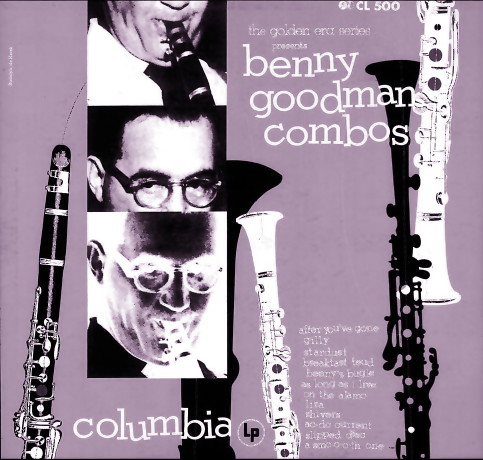
Benny Goodman Combos

© -  Steven A. Cerra, copyright protected; all rights reserved.


“Benny Goodman recorded prolifically throughout the great part of his more than six-decade career. The list of musicians with whom Goodman collaborated, and the quality of the music they made, are among the marvels of 20th-century music; they include Louis Armstrong, Bela Bartok, Fats Waller, Benny Carter, Fred Astaire, Bix Beiderbecke, Ethel Waters, Pee Wee Russell, Leonard Bernstein, Lester Young, Igor Stravinsky, Billie Holiday, and Arturo Toscanini.
What makes this list even more imposing is that Benny was not just a sideman playing in the background, but a featured artist whose artistic identity was broad enough to encompass all those diverse styles. When you add the musicians who were members of Goodman's bands, the magnitude of his accomplishment comes into focus. He was an American musician, exemplifying an amalgam of virtues that could only have happened on these shores.”
- Loren Schoenberg, musician, bandleader and Jazz educator


The above quotation is the introductory paragraph to Loren Schoenberg’s booklet notes for Mosaic Records 4 disc set, The Capitol Small Group Benny Goodman Sessions 1944-1955 [MD4-148].


Benny Goodman’s combos formed my introduction to small group Jazz beginning with his trio with Teddy Wilson on piano and Gene Krupa on drums and later his quartet when vibraphonist Lionel Hampton joined Benny, Teddy and Gene.


And there the matter stood until I stumbled across a copy of Benny Goodman Combos [Columbia Records CL 500].


Issued in 1955 as one of Columbia’s “Golden Era Series” the twelve tracks on this recording gave me a context for understanding the scope and significance of more of Benny’s small groups, and, when taken in combination with the those on the Capitol/Mosaic set, he sure had a lot of them.


The Columbia LP introduced me to Benny’s quintets, sextets and septets and also provided me with some of my earliest listening experiences to the playing of Jazz luminaries such as Count Basie, Red Norvo, Charlie Christian, Cootie Williams, Georgie Auld and Jo Jones.


All of which goes to reinforce the point made in Loren Schoenberg’s introductory quotation - “The list of musicians with whom Goodman collaborated, and the quality of the music they made, are among the marvels of 20th-century music….”


Here are the original liner notes to Benny Goodman Combos [Columbia Records CL 500] which offered so much knowledge to a young Jazz fan 60 years ago.


“Among the most enlightened musical groups of the last fifteen years have been the small combos led by Benny Goodman. Through innumerable changes in personnel the musical thought has remained about as constant as anything in popular music, and the musical attainment has continued on an astonishingly high level.


Goodman's spectacular success inevitably cued the public performances of other bands-within-a-band, but in almost every comparable group there was a delicately seedy atmosphere of the derivative, a feeling of "Hah! Goodman does it; so can-we." The fact was that they couldn't: only Goodman and his fluctuating crews of talented musicians were able to transmit high voltage chamber jazz effectively, and the selections in this group offer vivid testimony to the excitement of the greatest days of the swing era.


Any musical or philosophical dissection of the music of the Benny Goodman groups comes up against a very nasty problem — there is no adequate way to explain the electric qualities of music in performance, particularly when the music is of the highly informal and impromptu character in which these groups specialized. Giving undue weight to their development, one might say that they evolved from a search for new timbres and expressions within the framework of swing music.


Actually, they were the result of some blithely inspired talents getting together and having a whale of a good time. When the small combos came along in the late Thirties, Benny Goodman had already developed and polished to an unequalled glow one of the finest orchestras that ever drove dancers and listeners to a perspiring frenzy. After such plush pioneers as Paul Whiteman and George Olson brought syncopation out of the back rooms and made it more or less respectable, popular music was purveyed (on a large scale) primarily by orchestras of the hotel variety, where originality sickened and died with immodest haste.


Then along came Goodman, and with him the Dorseys, Glenn Miller, Glen Gray, Artie Shaw and others, to effectively dispense with the ricky-tick approach. A new drive entered commercial popular music, together with a new freedom. Swing allowed soloists a fine, freewheeling latitude within the well-defined limits of the arrangements sketched out by such inventive spirits as Fletcher Henderson. And all this richly satisfied the younger set, a depression-reared generation who heartily welcomed the blazing and affirmative sound of swing music.


But a practitioner such as Benny Goodman, who has constantly enlarged his horizons and experimented with all forms of music, could not be entirely content with such a set-up. Despite the unparalleled freedom allowed soloists in a swing band, the very nature of the orchestra made it a little top-heavy, and ruled out the more delicate and more intimate effects. Out of this dissatisfaction came the Trio, at first an intramural entertainment and later one the public clasped to its bosom with eager abandon. Then the Quartet followed, enlarging the tonal range and affording more complex metrical subtleties, and finally the Quintet, Sextet and Septet which offered a contradictory blend of musical anarchy and discipline that produced the memorable music in this collection. It is doubtful that this development was a conscious affair: after all, Goodman was leading a commercial band, a supremely successful one, and was not likely to tamper unduly with its organization. These groups were primarily a musicians' divertissement that fortunately happened to appeal to the public.


And the public, which has turned its back on new musical forms with appalling regularity and a sort of dogged rigidity, asked for more and, happily, got it, in performance and on records. Yet even here, experimentation continued. Within this collection, in addition to the constant variations in personnel, there is a continuing variation in instrumentation that changes the mood and approach with refreshing results. In fact, the personnel remains the same for only two pairs of numbers. Yet there is a truly marvelous similarity of thought and execution and a pleasingly lofty standard throughout. As an example of small-unit work in the peak years of the swing era, there can scarcely be a better example than this collection by Benny Goodman and his little band of not-too-serious thinkers.”


The following video features Benny’s 1945 sextet performing Slipped Disc with Red Norvo, vibraphone, Mike Bryan, guitar, Teddy Wilson, piano Slam Stewart, bass and Morey Feld, drums.

Sunday, February 2, 2020

Benny Goodman - Two Perspectives

© -Steven Cerra, copyright protected; all rights reserved.


“You know, I don't talk much about my childhood," he said. "Many times I've been asked to talk in depth about it. But I've resisted. I don't know why. I guess there are things that I simply want to block out. Probably because I never found it all that enjoyable. Growing up poor. Living in certain parts of Chicago. I'm not a great one for remembering."
- Benny Goodman in a 1975 interview given to Ira Berkow


This piece evolved after I read the following postscript by Gary Giddins to the republishing of his essay The Mirror of Swing in Robert Gottlieb, ed., Reading Jazz: A Gathering of Autobiography, Reportage, and Criticism from 1919 to Now. The compilation was produced in 1996 by Pantheon Books.


“*When I wrote "The Mirror of Swing," a couple of days after Benny Goodman died, I had heard many of the nasty Goodman stories making the rounds, but underestimated the depth of resentment. A few months later, John Lewis, Roberta Swann, and I produced an American Jazz Orchestra tribute to Goodman. More than two-thirds of the AJO had worked with Goodman at one time or another (an extraordinary statistic), and their recollections made the rehearsals memorably hilarious. Yet some stories were related with a naked hatred for what was described as the man's cruelty, cheapness, and vulgarity. Of course, virtually every one of them commenced with a statement of high regard for his musicianship. John Lewis, who does not traffic in gossip, mused one afternoon that throughout jazz history the most innovative and accomplished musicians on every instrument but one were black; his exception was the clarinet and Goodman.


My own limited experiences with Goodman were altogether positive. He graciously met with me in 1975, when I approached him for my own illumination, with no story or publication in mind; and he agreed immediately to lend his name and prestige to the initial board of advisers to the AJO. Still, Goodman was by all accounts a troubled and troubling man, which makes his untouchable status as a celebrity all the more remarkable. Despite the petty jealousies he exhibited and elicited, his private woes remained if not entirely private then confined to the grousing of musicians. I see no reason why they shouldn't be aired now. Yet it would be a shame if the contemporary thirst for pathographies (Joyce Carol Oates's sadly indispensable term) obfuscated Goodman's nearly impeccable public posture and the affection he inspired in the hearts of music lovers for more than half this century.” [Emphasis mine]


Benny Goodman was my introduction to Jazz.  If it weren’t for his music, I might have missed an entry into the joys of Jazz and have been relegated instead to the nascent rock ‘n roll that infected so many of my contemporaries.


And although I’ve had the pleasure of making many, different stylistic journeys through the World of Jazz over the past 60 years, Benny’s music still appeals to me today in a manner that is as thrilling and exciting as the first time I heard it.


In Reading Jazz: A Gathering of Autobiography, Reportage, and Criticism from 1919 to Now, Gary Giddins’ The Mirror of Swing essay [1986] is preceded by one written 50 years earlier by Otis Ferguson entitled The Spirit of Jazz.  At the time, Otis Ferguson was better known as one of America's finest film critics who also wrote about Jazz for The New Republic in the mid-thirties. (He was killed in World War II.) The Spirit of Jazz, with its vivid appreciation of Benny Goodman, appeared in December 1936.


The editorial staff at JazzProfiles thought that it would do its part in helping to ward off any obfuscation of Benny Goodman’s importance to Jazz by representing two perspectives of his significance in the form of excerpts from Ferguson and Giddins essays on these pages.


Otis Ferguson
The Spirit of Jazz.


“Benny Goodman was born in what he now refers back to as the Chicago ghetto twenty-seven years ago, and about twelve years later showed up in knee pants on one of the riverboats, to play in a small jazz band with Bix Beiderbecke, dead now and immortal (Go away, boy, Bix is reported to have said. Don't mess around with the instruments). But Benny Goodman had with him a clarinet of his own, which at that time must have been as long as he was, and he had a superior sense of music; he played with the band, all right. He played around all the time in those first days, studying under good men, mastering his difficult instrument, and going to high school a little, and after that forming a band with a few boys from some sort of conservatory he attended—historic names now, Bud Freeman, Dave Tuft [Tough], Muggsy Spanier. And at the age of sixteen he went to the West Coast to join the Ben Pollack orchestra, which is as historic as the deuce. He stayed with the organization about four years, playing it out every night, working alongside such men as that force on the trombone, Mr. Jack (Big Gate) Teagarden, learning. When he left Pollack, he worked here and there in New York, in pit and stage and radio bands, recording and later getting up a band of his own.


But that is all an interim period for most of us. The general public must have heard his music at one time or another, but there was no ballyhoo to announce where it was coming from. Then, less than two years ago, he started going to town for the general public, and reports came back from the Palomar in Los Angeles that you could not get within fifty yards of the stand, and afterward you could hear over the Congress Hotel's wire in Chicago that this might have been a sedate enough ballroom before, but now Benny was in and blowing the roof off, and they were yelling from the floor.


And this winter he is to be seen in the main room at the Pennsylvania Hotel. The room as you come in is spacious and warm with the air of moderately well-to-do living, people and tables filling the space around the floor and around the raised walk on all four sides, waiters and captains bustling in a quiet efficiency of silver and steam and flourish. But the far side of the room is the main side, where the boys sit high and easy in their chairs and Benny Goodman stands in front, quiet or smiling into the spotlight or tilting his instrument to the rafters as they rise to the takeoff. Sooner or later they will lead into one of those Fletcher Henderson arrangements of an old favorite, and the whole riding motion of the orchestra will be felt even through the thick carpets and the babble of the crowd, and those with two feet under them will move out onto the floor, because the music can be heard best when it is fulfilling its original simple purpose, coming through the ears and the good living wood underneath. As they get along into the later choruses, the boys will let out a little of that flash and rhythmic power which make these separate defined instruments into something indefinable, a thumping big band with the whole room under its thumb ("Got the world in a jug"); the floor will become solid with people, even some of the bare backs and stiff shirts will jolly up noticeably and perhaps do the truck a little (dear, dear).


And then, even with the final blast of the out-chorus still echoing in the hall, everything is suddenly natural and workaday. The men put up their instruments, stretch, look about them, file off at random; Benny stands leafing through his music to give out the numbers for the next set, recognizing as many people as is expedient, later going off to sit at a table somewhere: How's everything? That's fine. Himself, he's on the wagon tonight; he drinks with glum heroism at a glass of plain water. "A Scotch here and a soda there and where the hell are you in the morning? You know?" So now he feels better in the morning. He has a heavy voice coming from well down under the ribs and pleasant with the forthright lively concision of popular speech. Someone comes up, moving with vast importance, and desires that Benny should intervene with the Selmer people. They make clarinets and it seems they've got some conspiracy of imprecise mouthpieces as against the gentleman in question: if she plays good high, then she don't play good low; likewise vice versa. Benny says come around after, he'll see; then presently out of the side of his mouth: Never was one of the things that would play right by itself, you have to nurse it. You know a clarinet? What's he think I can do about a damn clarinet, drive me crazy. Benny Goodman looks sadly at the Scotch on the table and drinks his water.


By now a slight and quiet young man has detached himself from the gossip and joshing of the musicians hanging around in the back, and drifted over to the piano—on which he has only time left to run through two numbers, if that. In a place like this, where there are too many dine-and-dancers too sure that a young man sitting at an upright piano can't be anything to hush your mouth about, Teddy Wilson is as fine an artist at starting late and quitting early as he is at his music, which is the finest. He runs through a few chords. Anyone who wants to hear it a little can move over to the piano. Some do. Just playing to amuse myself is all, Teddy says.


Well, how about the Waller tune "Squeeze Me," Teddy; you used to play that pretty nice. Oh that? he says with his fine smile. I believe I forgot that one by now. He feels through the chords with unerring musical sense and listens for the turn of phrase in some backward corner of his mind—like the mind of any good jazz musician, it is a treasury and stuffed catalogue of all the songs the rest of us have thought lovely and then presently put aside for new toys. He finishes, repeats the last phrase. Hm, I knew I didn't have that one rightly any more, he says, shaking his head. But the song is back for us, the song never died at all. He starts the first chords over, and this time his right hand is released from concentration and free on the keyboard, and to get the pattern in music of those clear single notes without hearing the phrase as it is struck off, you would have to make some such visual image as that of a common tin plate scaled up into the sun, where there would be not only the flash and motion but the startling effect of flight, the rise and banking in curves, the hesitation and slipping off, and the plunge straight down coming suddenly. Wilson in his best mood of creation is something like that.


These nights he shows to better advantage when he comes out with the quartet. There, with something to work for, he really works and is fine in many ways. Remember that he is a Negro in a white man's world, a jazz player in a world where the thirst for music is so artificial it cannot attend with comfort anything not solemnized. And then see the quiet repose and lack of cocksureness, strut, or show, the straightforward and friendly absence of assumption that comes only from a secure awareness of the dignity of a person and of his work. But even if this were the place for over solemn pronouncements, there isn't the time. The stand is filling up again, the boys sucking on reeds, limbering up valves—doing whatever it is that musicians do with a sort of happy-go-lucky boredom. There is no more than time to say, as the first pop tune starts to go up in smoke, that memory may fade and the current musical note perish, but that fifty years around the recorded music of Mr. Teddy Wilson (now craftily surprised that the band came back so soon) should have established him where he belongs — not only great in jazz but among the best lyricists of any time or form.


Swing in, swing out, the band is up again and drawing the people out like the sun in the fable. With Krupa, Reuss (guitar), and the inspired quiet Stacy (piano) laying down a thick rhythmic base, it plays on through whatever songs are the demand of the day, making most of them sound like something. This is an organization in the line of the great jazz bands — Jean Goldkette, Fletcher Henderson, McKinney's Cotton Pickers, Ellington, Kirk, et al. — a little lighter than some of these but more beautifully rehearsed and economical, and with cleaner edges. The reed section, scored as such, is more prominent than in older hot bands, giving a fuller lyric quality; but the section (five men, counting Goodman) has a hard skeleton of attack and swing that supports any relative lightness of brass. The band as a whole gets its lift from the rhythm men and the soloists as they take off; it is built from the ground rather than tailored—thanks to the talent, ideas, and leadership of one man.


The recent spreading of interest in good jazz to some extent made Benny Goodman's current music possible, and to some extent was made possible by Benny Goodman's music. He got good men working together, got some ace arrangements of all the good tunes, new and old, and played them wide open though bands weren't supposed to be successful that way. It wasn't so much that he made the people like it as that he gave them a chance to see what it was like when done well (too many hot bands have sounded like a barnyard until they got going around 2:00 A.M.). And one of the important things about his show is that he went right ahead with the same method of getting good music when it came to the old color-line bogey. He would introduce Teddy Wilson as playing with the trio, and the people would bang hands for more (they say on some nights he even had to send the rest of the band home). So hotel managers would get the point almost painlessly: and could no longer say No beforehand, on the ground that people would not stand for it. And when the trio got Lionel Hampton to play the vibraphone, the balance between black and white was even (two of each), and still no kick. Stand for it? — the people stand up from their tables just to hear it better.


They play every night — clarinet, piano, vibraphone, drums — and they make music you would not believe. No arrangements, not a false note, one finishing his solo and dropping into background support, then the other, all adding inspiration until, with some number like "Stomping at the Savoy," they get going too strong to quit—four choruses, someone starts up another, six, eight, and still someone starts—no two notes the same and no one note off the chord, the more they relax in the excitement of it the more a natural genius in preselection becomes evident and the more indeed the melodic line becomes rigorously pure. This is really composition on the spot, with the spirit of jazz strongly over all of them but the iron laws of harmony and rhythm never lost sight of; and it is a collective thing, the most beautiful example of men working together to be seen in public today.


It isn't merely hell-for-leather, either. Gene Krupa, a handsome madman over his drums, makes the rhythmic force and impetus of it visual, for his face and whole body are sensitive to each strong beat of the ensemble; and Hampton does somewhat the same for the line of melody, hanging solicitous over the vibraphone plates and exhorting them (Hmmm, Oh, Oh yah, Oh dear, hmmm). But the depth of tone and feeling is mainly invisible, for they might play their number "Exactly Like You" enough to make people cry and there would be nothing of it seen except perhaps in the lines of feeling on Benny Goodman's face, the affable smile dropped as he follows the Wilson solo flight, eyes half-closed behind his glasses. There was a special feeling among them the first morning they recorded this piece, the ghost of the blues perhaps; and when the clarinet takes up, you will hear the phrases fall as clear as rain, with a sustained glow of personal essence that starts where command of the instrument (the tension of mouth, delicate fingering, etc.) leaves off. Then Hampton sings a chorus, his vibrant hoarse voice and relaxed emphasis so appropriate to the general color; and when they take up again, the instruments blend so perfectly as to be indistinguishable, singing in unison with a sweet breadth of tone that goes beyond the present place and time to some obscure source of feeling and native belief. The term "swing"—no more definable in words than the term "poetry"—is defined at its best in this piece, where the actual beats are lost sight of in the main effect, so that the inexorable and brute lift of the time signature as carried in Krupa's great drum seems fused in the harmony and melodic line of the song. And you may say of the excitement this thing starts in the blood only that these four men are quite simple and wonderful together, that they are truly swinging.


The quartet is a beautiful thing all through, really a labor of creative love, but it cannot last forever, and as the band starts again, you realize that even in jazz there are several kinds of musical appreciation. For if they'll agree to put on the "Bugle Call Rag" before the end of the evening, I'll be willing to say there's nothing finer. There is some hidden lift to this old band standby, with its twenty quaint notes from the "Assembly" call dropping the barrier to a straight-out progression of simple chords—and they are off, riding it with collective assurance and fine spirit, the men in their sections, the sections balancing, the soloists dropping back with care for the total effect. The guests are presently banked in a half-moon around the stand, unable to be still through it or move away either; and as it builds to the final solid chords, Krupa becoming a man of subtle thunder and Benny lacing in phrases, the air is full of brass and of rhythms you can almost lean on. The music seems more than audible, rising and coming forward from the stand in banks of colors and shifting masses—not only the clangor in the ears but a visual picture of the intricate fitted spans, the breathless height and spring of a steel-bridge structure. And if you leave at the end, before the "Good-Bye" signature, you will seem to hear this great rattling march of the hobos through the taxis, lights, and people, ringing under the low sky over Manhattan as if it were a strange high thing after all (which it is) and as if it came from the American ground under these buildings, roads, and motorcars (which it did). And if you leave the band and quartet and piano of the Goodman show and still are no more than slightly amused, you may be sure that in the smug absence of your attention a native true spirit of music has been and gone, leaving a message for your grandchildren to study through their patient glasses.


And exactly fifty years later, the brilliant and omnipresent critic Gary Giddins sums up Goodman on the occasion of his death. From Faces in the Crowd (1992).


© -  Gary Giddons, copyright protected; all rights reserved,
used with the author’s permission.


Gary Giddins
The Mirror of Swing


“While memories are fresh, it won't do to consider Benny Goodman, who died in his sleep on the afternoon of June 13, 1986, at 77, exclusively as a jazz musician. The emotions conjured by his name are unique to those few who transcend the specifics of talent and come to represent an era. If he wasn't the king of a musical idiom called swing, he was surely king of the Swing Era, an agreeable focus for Yankee pride at a time when music counted not only for art, entertainment, and sedative, but as a balm with which to weather terrible storms. Goodman will be remembered for his contributions to jazz, which are manifold, and he occupies an impressive historical niche as the first musician to enjoy hugely successful careers in three discrete fields (jazz, pop, and classical). Yet in his time Goodman was also a blessed and seemingly eternal presence in media culture who, through an unofficial contract between artist and public, reflected the nation's new vision of itself in the arts — earthy, democratic, and homegrown, and at the same time refined, virtuosic, and international.


The enormous sense of loss that attended his death was animated in part by the realization that an age had passed, and not just a musical one. (Other Swing Era titans are still with us, including the great progenitor Benny Carter and the great crooner Frank Sinatra, who inadvertently helped supplant big bands in the public affection.) Goodman came to prominence when America was making major discoveries about the nature of its cultural life, and proved an exemplary figure for national preening. He was in all important respects distinctively American, purveying an undeniably American music with at least the tentative approval of academics and Europhile upper crust, into whose circles he married. His connections put him in Carnegie Hall (a big deal in 1938) five years before Duke Ellington. The public took comfort in him, too. He was white, but not too white, which is to say Jewish, but not too Jewish; and serious, but not too serious, which is to say lighthearted, but sober. At the height of the Depression, he had perfect credentials for entertaining a suffering, guilt-ridden nation. Goodman was one of the 12 siblings born to penniless Russian immigrants in Chicago. He received his first clarinet at 10, in 1919, and had a union card three years later.


Everyone knows this story, or a version of it. As the favorite fable of the 1930s, it was internalized by Depression-bred children who went on to dramatize it for stage, screen, and radio countless times into the late 1950s, and occasionally ever since. It's told of Berlin, Gershwin, and Jolson, and with appropriate variations in ethnicity, of Armstrong, Crosby, Sinatra, Handy, Jim Thorpe, and Presley. Until Vietnam and the civil rights era, it was standard grammar school indoctrination, combining the American dream with melting pot diversity, cheerful tolerance, and a ready willingness to brave new frontiers. If nations were judged by the lies they told about themselves, this one just might guarantee salvation. Small wonder, then, that when an individual appears worthy of the crown, we bow our heads in gratitude. With few exceptions, however, only performing artists and athletes are able to pull this particular sword from the stone.


Few Americans have handled the role of cultural icon as well as Goodman. For more than 50 years, he endured as one of the nation's favorite images of itself. Several weeks before his death, a few musicians were sitting around trading anecdotes about him, causing one to remark, "At any given time somebody somewhere is telling a Benny Goodman story." Those stories are rarely kind, usually having to do with his legendary cheapness, absentmindedness, mandarin discipline, rudeness to musicians, and various eccentricities. But they never dented his media image, nor were they meant to. Americans usually come to resent the entertainers they've deified, yet Goodman remained virtually unblemished. Any real skeletons that may have resided in his closet rattled in peace. It isn't hard to understand why. Everyone could feel good about Goodman. You could send him anywhere, from Albert Hall to Moscow, and rest assured that he would comport himself with quiet dignity and spread Americanism in a manner the world would take to heart. Had he worn striped pants and a top hat, he could not more naturally have embodied everything America wanted to believe about its promise of tolerance and opportunity — those democratic underpinnings insufficiently embraced at home but glamorized for export to the rest of the world. …


Last summer [1985], as an unbilled performer at a tribute to John Hammond, he provided the highlight of the Kool Jazz Festival. It was anything but a middle-aged jazz audience that cheered him on when he came out and played "Lady Be Good" with George Benson, and then — seated, both legs levitating — layered climax after climax on "Indiana." Up to that point, the young white-blues crowd had greeted every jazz performer with impatient demands for the man of the hour, blues guitarist Stevie Ray Vaughan. When Goodman finished, that same crowd was on its feet.


When my review of that concert appeared, Goodman's assistant told me the Old Man was pleased and surprised by it, since he'd gotten it into his head that I considered him outmoded. I have no idea why. How could anyone think that? Goodman kept his faith until the end. Ultimately, he mirrored not only a chapter in America's cultural history, but the spirit at the core of a music that can only be enfeebled when nostalgia gets between musician and audience.


In 1975, I visited Goodman at his East Side apartment. He had been practicing Gounod's Petite Symphony when I arrived, and I asked him if he preferred improvising or playing written music. "Gee," he said, "I enjoy both. Listening to music is emotional. Sometimes you like something a lot, and another time you hate it. The whole goddam thing about jazz is emotional. I like to feel the excitement. If it doesn't come out as a wild endeavor — wild with restraint — it doesn't have it." Goodman had it in 1926, and he had it 60 years later.”