Tuesday, June 23, 2020

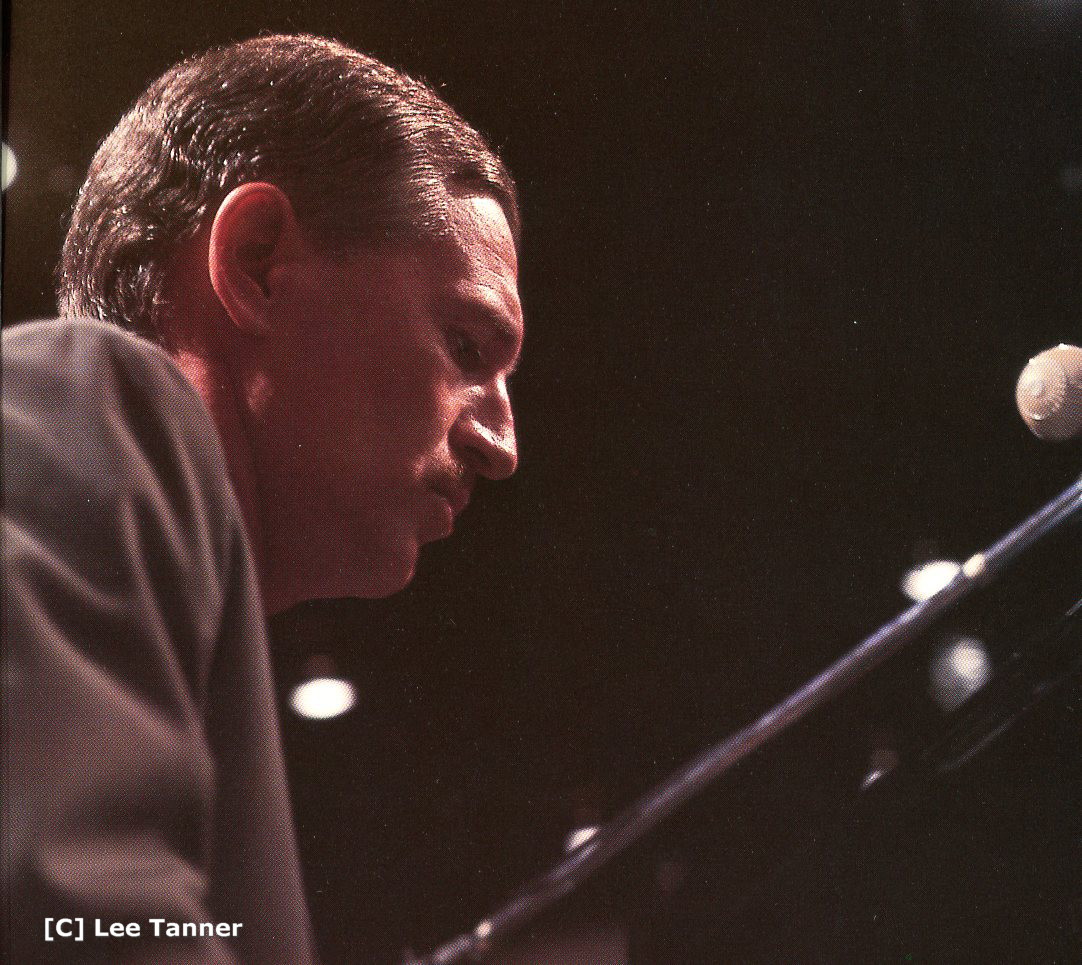
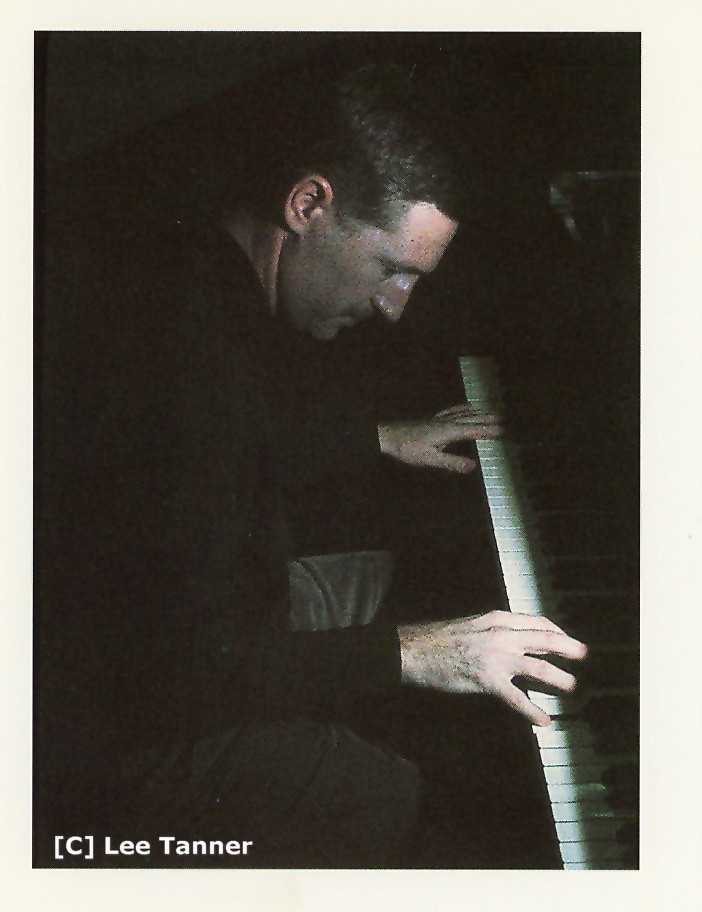
Ramsey Lewis "Soul Survivor" - The Barbara Gardner Interview

© -Steven Cerra, copyright protected; all rights reserved.


Signifyin’ and testifyin’ and other ritualistic elements of the Sanctified Church are important elements in helping Black people cultivate and interpret themselves as a collective community. They also enable the search for a deeper spiritual meaning and power in relation to the troubles, sorrows and pain of Black life.


Testifyin’ and signifyin’ sometimes are expressed in the music that’s played and sung in the Sanctified Church  [an association of holiness Christian churches headquartered in Nashville, Tennessee. The members and clergy of the churches are predominantly African-American. The official name of the body is The Original Church of God or Sanctified Church, General Body].


The music itself was given the casual name of “Soul Music,” and not surprisingly, it found its way into Jazz in the late 1950’s and early 1960’s with Cannonball Adderley, Horace Silver and a host of other “soul groups” emphasizing this influence because Soul Music’s pronounced rhythmic nature and straight-forward melodies were appealing to a broader audience.


However, many Jazz critics and Jazz purists dismissed Soul-inflected Jazz, in part, because of this wider appeal, or, if you will, due to its “commercialism” - a dreaded word in Sanctified Jazz World.


This background perhaps lends some clarity to the full title of this feature - “Soul Survivor: Ramsey Lewis Discusses Soul, Funk, Critics, Jazz As A Business, And Success with Barbara Gardner” - which appeared in the May 6, 1965 edition of Downbeat.


“To the embarrassment of Jazz's critical hierarchy, Ramsey Lewis will not close his piano top and go away. Seven years ago, he was typewritered and dismissed as a flash in the pan.


Today that flash glows steadily, and he has achieved some remarkable things as a jazz artist. He is the pivotal member of a tightly knit unit that has remained together since its inception. The group works steadily to expanding audiences, and its record sales run into five figures annually.


Ironically, the pianist — who is sometimes praised, sometimes damned as a purveyor of "soul" — has his roots deep in the European classical tradition. In 1941, when he was 6 and shooting up with the tall weeds on Chicago's west side, his older sister began studying piano, and Ramsey Emmanuel Jr. cried to go along.


Convinced it was a childish whim, the elder Lewis permitted his son to begin. Six months later his sister dropped out. Ramsey continued studying classical piano with the same teacher until he was 11. After high school, he attended Chicago Musical College and later studied music at DePaul University.


Lewis wanted to be a concert pianist then, and he never seriously considered popular music as a career even after he had begun playing dance dates on the city's west side with a seven-piece group called the Clefs. Eldee Young played bass and Isaac (Red) Holt was the group's drummer. Beyond the world of the west side, the Korean conflict was heating up, and by 1952 Uncle Sam had raided the Clefs and tapped three members, including Holt. The rest of the band drifted off. Lewis, at the time, was in his second year of college and clinging to his aspirations to "concertize and tour the world," as he jokingly remembers.


But first, he married.


"Now, I figured you get married . . . two people can live as cheaply as one and all that, right?," he laughed as he recalled this. "Are you with me? I could finish college.”


The wife would work full time, and I could work part time. You know . . . have my cake and eat it too! But I forgot about old Mother Nature. Jerrie got pregnant, and I had to get out of school and get a job."


He went to work as manager of the record department of Hudson-Ross music store. In addition, he and two other musicians went into rehearsal, and he began moonlighting as a part-time entertainer. This arrangement was soon altered.


"Eventually," he recalled, "my nighttime work overcame my daytime work. ... I couldn't get up to go to work."


End of management career in record department.


The original Ramsey Lewis Trio included bassist Young of the Clefs and Butch McCann on drums. Their major jazz-circuit debut was made as featured attraction with vocalist Bill Henderson at Chicago's Sutherland Lounge. Holt returned from the Army and became the trio's drummer. The group continued working clubs in the Midwest, attracting among their following a Chicago policeman (whose name Lewis has forgot) who was instrumental in securing the group a record contract. The first disc was cut and promptly shelved for months. A Chicago disc jockey, Daddy-O Daylie, heard them and finally persuaded the record company to release the record.


This first album was pompously packaged . . . the three men were tuxedoed in the cover photo. . . and titled Gentlemen of Swing. With plugs from Chicago disc jockeys, the trio gained a substantial following. They were booked into Chicago's SRO Room for six months. There followed two years in the city's Cloister Inn, interrupted once by a two-week engagement at New York's Birdland.


The most indelible memory Lewis has regarding New York is pragmatic; before Birdland, the group was enjoyed though officially unheralded at the Cloister, but after two weeks at the "jazz corner of the world," the trio returned to a blazing marquee announcement of that fact and a doubled salary.


New York still has not officially dealt with the Ramsey Lewis Trio. The three young, intelligent, healthy musicians went to the city not to prove themselves but to perform, not to seek acceptance but to entertain, not to apologize for their Second City origin but to meld naturally into the mainstream of professional jazz. This is an attitude New York has seldom dealt with graciously, even though in his case Lewis remembers that, individually, members of the New York jazz establishment were warm and very helpful.


Another characteristic the trio took to New York was a definitive solidarity, allowing little room for technical alteration and no place at all for any tampering with its style and approach. A prominent jazz saxophonist who had liked and lauded the trio in Chicago was frustrated when the unit went to New York.


"For me, it was kind of a drag, really," he said. "I dug him so much in Chicago, and his thing sounded exactly right then. So I went around telling all the cats, 'Man, look out for this group from Chicago.' But I don't know. When he came to the Apple, somehow it was different. It was still altogether, but it wasn't 'New York'."


Lewis still isn't New York, and, further, he does not consider such identification and acceptance essential. He has no idea of ever living there unless forced to do so because of musical demands. He summarized his view of the city: "There's a lot of good cats there — but New York is just another stop on the circuit to me."


ONE OF THE SIMPLEST METHODS of assessing the unknown is to relate it to a well-known. This technique was employed with the new Lewis trio. It often was tagged a copy or an offshoot of the other major Chicago trio, that of Ahmad Jamal.

"In a way, I was flattered because Ahmad is one of my favorite musicians," Lewis recalled. "I could understand how the comparison might come up. First, we're both piano trios, and then, in expressing our own ideas, we might have crossed tracks one way or another. .. not on the same track mind you. Ahmad loves to be lyrical and beautiful with his melodies, not too much embellishment. So do I.


"Still, nowhere can you sit down and listen to one of our records and say, This is like Ahmad.' Ahmad has a completely different concept about music. Often he will be light and suggestive where I like to lay it out and play with all the depth I can muster.

"Then, of course, our books are very different. I could never do his tunes, and he would probably not be comfortable with some of mine."


Lewis has gone through a wide range of influences. The pianist's father was a jazz enthusiast and tried to saturate his son with the sounds of Art Tatum.


"At first I didn't understand Art Tatum," Ramsey explained. "He was playing too much piano. Then I grew older, studied a little more, and grew to love Art Tatum — probably even more than my father."


The tall, lean musician sat back, stretched his legs and his memory to pull together all the early influences.


"Oscar Peterson was tremendously influential on me at the beginning," he said. "Then I went through a stage where John Lewis could do no wrong. Then Erroll Garner came into my picture and then Bud Powell. I guess all pianists go through a phase when Bud Powell is God. After that I started widening my scope and listening to everything. I fell in love with Horace Silver and so many of the really good current musicians. But I would say John Lewis and Oscar Peterson were my most lasting influences."


Perhaps it is the technical mastery and effective use of classical references that most attract Lewis to these particular artists. Often his own approach incorporates the hint of Old World dynamics and progression to a climax. Still, underlying all is the consistent fusing of powerful, contrasting dynamics, and earthy, straightforward projection. This is the quality that marks a performance as distinctively Ramsey Lewis Trio. And, loosely applied, this quality has earned the trio a reputation as a "soul group."


Surely the most recurring criticism leveled against the pianist is that there is something pretentious about his playing. One critic, within the space of 50 words, termed Lewis' contribution as "pop jazz . . . semiclassical schmaltz and stylized funk." Lewis' customary defense against such attack is to cite the evidence of his increasing night-club and record audience. This time, however, he minced no words in his assessment of critics.


"There may be a couple — not more — who really know what jazz is all about," he said. "Either the others know music pretty well and have no idea of how to give good criticism, or they know how to write a good critique but don't know anything about jazz. What really gets my goat is their arrogant stamp of finality . . . their this-is-it attitude. They could express their views, then leave it up to other people to do the same, you know."


When asked to give an objective appraisal of his work in connection with such criticism, Lewis differentiates between what he is trying to do and superficial commercialism.


"To me 'soul' represents depth and great feeling," he explained. "I know some pianists today where everything they play comes out, not with depth and feeling exactly, but downright funky. Now, when everything you do comes out funky, that's trying. . . that isn't really soulful."


He thought further and then continued, "I don't try to play funky all the time, but there's a certain depth and feeling I try to portray no matter what I'm playing."

Lewis rejects the idea that his group can be defined strictly as a soul group, explaining, "To me, Ray Charles is a soulful musician ... all the time. Not the piano playing so much, but his singing. He makes me feel the story he's telling. And he does it in a simple form ... all the time. Now, that's real soul."


Again Lewis paused cautiously in an effort to achieve the impossible — absolute clarity not subject to misinterpretation.


"I want to have the depth and feeling there always," he went on. "There's a certain amount of it that I got from playing in the church for years, and I can never get it out of my system. Still, in some tunes, I try to alter the character of the tune, project another mood other than outright funk . . . another kind of soulfulness that comes from way down inside. You see, often funk becomes a vehicle . . . just a combination of blue notes certain musicians learn and keep using to carry their ideas in ... to try and create soul. Well, if it's really soulful, it's there in the depth of everything you do — you don't need so much help to get it across."


FORTUNATELY, LEWIS FOUND two musicians with similar musical concepts. Young and Holt are more than fellow workers. They are major contributors to the unit's success.


"Our trio is a partnership," Lewis said. "Everything is literally split up in thirds. Salaries, expenses, organization responsibilities are divided equally. The trio uses my name only because when we first started, the guy who set up some things for us thought a person's name would be better than a group title.


"Musically, we're different from most trios because the pianist does not monopolize the music. We try to distribute the musical duties equally. In one given arrangement, I might have a melody, Eldee may have a countermelody, and Red will have a definite drum pattern designed to emphasize each segment. He's not just back there keeping time. He's there for a reason, to build the whole thing to a certain point.


"After you listen to a couple of our sets, you know that everybody is featured about equally. You don't go away with the feeling that the pianist is all right and maybe the bassist or the drummer would be if you could hear more of them. Everybody gets a chance to stretch out." He laughed. "In fact, the best proof I can give of that is that Eldee has come closer to winning many more polls than I have."


This complementary relationship has been building constantly since the inception of the trio and has yielded a solid bond of musical awareness of individual and group potential. It has precluded the possibility of group expansion, according to Lewis.


"Certain fellows have sat in, and it's just too hard for a fourth musician to feel what's happening," the pianist said. "The three of us really have a thing, and it's pretty tight. I don't think we could make another notch there."


The exception was the late vibraharpist Lem Winchester.


"Now Lem came close to fitting right into this groove," Lewis said. "He's about the only musician I can think of who seemed to be able to anticipate along with us, fill that little slot. Vocalists? That's another thing altogether."


The trio has recorded with other artists, more often with vocalists than instrumentalists. Argo, the company for which it records, has a penchant for tagging the group onto fledgling, waning, or one-shot performers on the label, perhaps hoping to infuse the material with a sales-booster shot.


The Lewis trio has worked in person with many outstanding vocalists. More than one have offered the group steady employment and the chance to team up as a vocal-instrumental unit. The offers do not appeal even slightly to the pianist.


"No good," he said. "There're only a couple I dig playing for under any circumstances, and I don't think I could make it as regular accompanist for anybody. So many singers are just not together with their music. Things like arrangements, keys, pace — these things just don't seem to mean that much to a lot of them. They just expect to walk right in and have everything fall into place. Well, it usually doesn't happen like that."


The implied need for attention to technique and training is most explicit in the preoccupation with rehearsals and study in the unit. They have recorded 16 albums for Argo, utilizing more than 100 compositions, many of which are originals. Most of these are by Lewis though Young and Holt are free to offer for rehearsal and possible recording any original material they feel is good for the trio.


"We try to consolidate our ideas for the group," the leader said. "But there's still room for individual expression outside the unit. Each man has his own record date in which he can do anything he wants to do. Eldee, for example, has many, many ideas of his own beyond the group. Eventually, we get everything worked out so everybody has had his say."


There is plenty of time for experimentation, for this is a relatively young group. In spite of its impressive track record, the average age of the trio members is less than 33. On May 27 Lewis will be 30.


There is a mundane solidarity in the lives of these three musicians who earn their livelihood in the razzle-dazzle of night life. Each man is married to a high-school or childhood sweetheart, and, aside from the extended tours, the performers continue to participate in community activities and civic affairs throughout Chicago.


Jazz is a business to Lewis, not a way of life. Currently his business is making possible a most agreeable way of life for his family.


"I admire Armstrong and Duke and Basie," he said thoughtfully. "But I can't see staying out on the road all my life. I want to get to the place where financially I can afford to stay home. I think I know my failings and my abilities. I wouldn't say that I'm so different from every other pianist and I know I'll make it; but I like to believe I have sort of an original style and a good chance."


Humility is admirable, but cold fact must tell the man that he has become an important, bread-and-butter commodity in at least two of the shops that guide the trio.


While Argo hedges a direct answer, the most casual survey of the company's recording activity in recent years reveals that the consistently selling trio is prime, valuable stock in the jazz department of a record company primarily and profitably pop and rhythm-and-blues based.


The group's personal manager, John Levy, molder of many stars, is currently struggling through a phase, unfortunately all too familiar in entertainment — artistic disenchantment resulting in the explosive or unexpected exodus from his fold of the money-makers. Ironically, while the time period between obscurity and stardom can be considerably shortened by a knowledgeable personal manager, frequently, the artist's mental grasp and business acumen develop by leaps and bounds. Once there, the artist finds he has "outgrown" the need for the same personal manager. Lewis has declined to join the stampede.


"You just don't forget," he stated. "On our second trip to New York, John Levy stepped into the picture, and I learned how important a real manager can be. And for us, John was the best. All we had to do was go to work. Before I saw the room, I knew it was all right. I knew the piano was right. He saw to it that that was part of the contract. . . . All the details, he handled. So now, we just can't walk out."

A rare loyalty in the music business.


The trio works continuously now, which indicates a growing audience and an entry into broader markets than those offered by jazz. They are on the road approximately 42 weeks a year, play Chicago four, and vacation the rest. That's a good year.


Ultimately though, the pianist has other ambitions.


"Ideally," he explained, "I would like to work six months a year, take a break for a couple of months, then seriously woodshed three or four months. I try not to draw only from jazz, maybe because I studied classics — but there's so much meat there and in folk music and naturally the old masters. I'd like to experiment with these ideas a while."


Until this is achieved, he travels, listens to records whenever he gets a chance, steals time from music for recreation with his family, and very occasionally plays tennis. Though the grind is tough, he said he still prefers the hubbub of night clubs to concert work because "usually concerts have so many artists or you're allotted only a certain amount of time. You go on cold. Now, it's a cinch you have to warm up. Before you know it, your time is shot and you often haven't done your best. So I guess I'd rather work night clubs until the right kinds of concerts come along."


This, too, is in the offing. Things could hardly be better now. . . . Well, yes they could. Take away the stings of the typewriters, and Ramsey Lewis will be a happier man.”



                                                                        

Monday, June 22, 2020

Thelonious Monk - Epistrophy (Live / Visualizer)


A surprise gig in 1968 by Thelonious Monk that was captured on tape by a school janitor is set for a July 31 release as Palo Alto (Impulse).
“That performance is one of the best live recordings I’ve ever heard by Thelonious,” T.S. Monk, the pianist’s son, said in a press release. “I wasn’t even aware of my dad playing a high school gig, but he and the band were on it. When I first heard the tape, from the first measure, I knew my father was feeling really good.”
While amid a three-week run at San Francisco’s Jazz Workshop, Monk received a call from Danny Scher, a student at Palo Alto High School, asking the bop progenitor to make an appearance at his South Bay school. There had been tensions among black and white students at the school, according to the release, and the nation still was grieving the assassinations of Martin Luther King Jr. and Robert F. Kennedy. The Vietnam War also was tearing at the country’s conscience at the time.
“I always looked at music as a way to put issues on hold or up to a mirror, whether they be political or social,” said Scher, who’d go on to work for concert promoter Bill Graham. “On October 27, 1968, there was a truce between Palo Alto and East Palo Alto. And that is what music does.”
Monk and his ensemble—tenorist Charlie Rouse, bassist Larry Gales and drummer Ben Riley—headed south that day in the Schers’ van and subsequently launched into the 47-minute, six-song set that constitutes Palo Alto. The release, while filling out a unique and resonant moment in American history, also marks the first album in a planned five-year collaboration between Impulse and the Monk estate’s Rhythm-A-Ning Entertainment to bring more of the pianist’s work to light. DB
Palo Alto track listing:
Ruby, My Dear
Well, You Needn’t
Don’t Blame Me
Blue Monk
Epistrophy
I Love You (Sweetheart Of All My Dreams)

Sunday, June 21, 2020

I Don't Worry About a Thing

Mose Allison,,,Your Mind Is on Vacation

Mose Allison - The Wayne Enstice - Paul Rubin Interview

© Copyright ® Steven Cerra, copyright protected; all rights reserved.


“I have a B.A. in literature from LSU [Louisiana State University]  The literary thing is also part of my background. I absorbed the blues feeling and played blues and boogie as a child and heard the blues — the way the blues sounded and everything — and learned it. Then after I got into college and started taking aesthetics and literature and so forth I got a different viewpoint. I looked at it from more of a conscious point of view and realized the possibilities there for a universal sort of statement — using the blues and the literary background, sort of blending 'em.”
- Mose Allison


“Though he's been called ‘the William Faulkner of jazz’ for his wry, incisively witty ditties delivered in a one-of-a-kind laconic style that he's been known for worldwide for more than 50 years, Mose Allison prefers to think of himself as having more in common with writer Kurt Vonnegut, whose grasp of existential absurdity was sublime. Indeed, there has always been a kind of philosophical, questioning bent to Allison's sardonic lyrics, along with an innate sense of Southern-ness to some of his imagery.  … 


The laid back Southern gentleman (he's from Tippo, Mississippi) [features] a quirky, herky-jerky block chording style that is part Monkish with bits of Albert Ammonsesque barrelhouse swagger thrown in for seasoning. ...
Like the Mississippi River, Mose just keeps rolling along.” 
- Bill Milkowski, insert notes to Mose Allison at the Great American Music Hall


“Laconic, laid back, sublime grasp of existential absurdity, philosophical questioning bent encapsulated in sardonic lyrics, Southern-ness imagery, quirky, herky-jerky block chording, Monkish bits and Albert Ammons’ boogie woogie:” if you read these comments by Bill Milkowski in a sort of connect the dots manner, you’ll pretty much arrive at what made the late Mose Allison’s style sui generis. 


One thing’s for sure, Mose was an American original: two bars of music and you knew it was him. His “voice” was as distinctive as Pops’, Ella’s, Billie’s or “King” Cole’s.


I always thought that the best comparison for Mose was the Hoagy Carmichael described in the following excerpt from Will Friedwald, Jazz Singing: America’s Great Voices from Bessie Smith to Bebop and Beyond [Da Capo].


“For years and years, Hoagy Carmichael epitomized the American singing songwriter, drenched in rustic ardor and at the same time producing remarkably urbane melodies, brought down to earth via his own extremely limited abilities as a performer and with a down-home twang that made him so much more appealing to middle America than any of the Eastern "Broadway" crowd. Carmichael's music opened the door for him as a vocalist and rather than being ashamed of this he reveled in it, never passing up an opportunity to remind the folks back home that he had written "Star Dust" and "Rockin' Chair." 


Born in 1927, vocalist-pianist-composer Mose Allison has fused urbane, witty lyrics, a countrified, catfish funky blues delivery, and a rollicking, eclectic piano style into a music of disarming appeal.


Allison's first public performance was as an aspiring eight-year-old singer-pianist competing in a contest in his native Tippo, Mississippi. He performed a passable version of Fats Waller's classic "Hold Tight" but did not take first-place honors. Undaunted, Allison continued to soak up the blues-drenched sounds of the Delta and drew on personal favorites, like Sonny Boy Williamson, Muddy Waters, and especially Percy May-field, to nourish his evolving musical conception.


In high school Allison learned trumpet and played piano with a dance band at gigs around Mississippi. During his college years he worked weekends with a rhythm-and-blues group. After graduation and a stint playing piano in the army, Allison traveled the Deep South and Texas with his trio. New York City was the inevitable next step, and in 1955 he moved north. Hired as a sideman in bands led by Gerry Mulligan, Chet Baker, Stan Getz, and Al Cohn and Zoot Sims, Allison soon earned a reputation as an excellent accompanist.


In the late 1950s Allison started recording his own material for the Prestige label on such classic albums as Back Country Suite [1957] and Creek Bank [1958].  His songs were wry, lyrical tunes that poked fun at the hard-luck-and-trouble brand of life and love but added an incisive, underlying message that probed the spiritual bankruptcy of American culture. His cool, dry delivery, stamped with an unmistakable rustic twang, reached an audience disaffected by the soporific Eisenhower years. 


At that time, Allison's piano style recalled various keyboard influences such as ragtime and boogie-woogie, as well as the modern conceptions of pianists Nat Cole, Erroll Garner, John Lewis, and Thelonious Monk. More recently, the sonatas and concertos of twentieth-century classical masters Aleksandr Scriabin, Paul Hindemith, and Charles Ives have encouraged clusters of dissonance in his playing.


Until his death in 2016 at the age of 89, Allison had been on the road for well  over half a century and recorded over seventy-five albums. Despite economic adversity and the fickle nature of the music business, he didn’t swerve from his own unpretentious repertoire or his down-home roots. He continued to perform such evergreen originals as the blithely cynical "I Don't Worry About a Thing ('Cause I Know Nothin's Gonna Be Alright)" and the mocking blues "Your Mind Is on Vacation." He has been celebrated in jazz circles since the 1960s, and his audience and demographic appeal broadened briefly in the seventies, when rock stars like Bonnie Raitt and Leon Russell recorded his material, In 1987 the Blue Note label released Allison's Ever Since the World Ended, featuring jazz notables Arthur Blythe on alto sax and Kenny Burrell on guitar. Mose Allison's wit has never been more caustic than on this album, and seldom has it been better received by the critics.


The following interview is perhaps one of the most candid that Mose ever gave in his long career and this is probably attributable to the well-prepared, insightful questions put to him by Wayne and Paul.


Recorded 1978 by Wayne Enstice [WE] and Paul Rubin [PR] and published in Jazz Spoken Here: Conversations with Twenty-Two Musicians [Da Capo]


WE: Mose, considering the humor and irony in a lot of your songs, do you feel any relationship to Mark Twain?


MA: That's been mentioned before. I've been related to Mark Twain a couple of times by different people, and I feel it's valid. It's flattering to me because I like Mark Twain. The irony I think, that's one of my main things. I don't have to search for irony — irony follows me everywhere. My life has been riddled with it, so that's one of my recurring themes; one of the things that motivates a lot of my songs is the ironic situation.


WE: Like "I Don't Worry About a Thing ('Cause I Know Nothin's
Gonna Be Alright)"?


MA: Yeah, that's the idea — contrarieties, ambivalence, and that sort of
thing.


PR: You majored in English, didn't you?


MA: Right. I have a B.A. in literature from LSU [Louisiana State University]  The literary thing is also part of my background. I absorbed the blues feeling and played blues and boogie as a child and heard the blues — the way the blues sounded and everything — and learned it. Then after I got into college and started taking aesthetics and literature and so forth I got a different viewpoint. I looked at it from more of a conscious point of view and realized the possibilities there for a universal sort of statement — using the blues and the literary background, sort of blending 'em.


WE: Underneath the humor in your lyrics there's usually some pointed content. Do you want your audiences to come away with a message? 


MA: Now, that's it. You just said it. That's exactly the sorta thing I aim for in a lot of my songs. It's humorous on the surface, but it has also a point to it. You smile, but it might hurt a little [laughter]. That's the sorta thing that appeals to me, you know. "Kiddin' on the square" I think is the phrase.


PR: Is it difficult to get a balance in your songs so the message doesn't get too overbearing or maudlin?


MA: Yes, it's definitely that. That's the reason I write so few songs, I suppose. It's a question of gettin' just the right phrase that has just the right connotations and tryin' not to go overboard in one direction or another. It's subtle, and it can get mediocre pretty quick, I suppose, if you go too far in one direction.


It's a cryptic sorta thing where you try to get a lot into a short phrase, and you use phrases and things that everybody can understand but on different levels. They have different meanings; like the sort of phrases that appeal to me that usually wind up as songs are things that you think you know what it means on the surface. But then if you think about it a little, it has other levels, other meanings as well. Words that have multiple connotations, that's the sort of thing that appeals to me. 


PR: Do your songs.cover a wide range of content?


MA: They fall into different categories. I have categories of songs, you know. I consider some of them as slapstick, pretty much out-and-out slapstick, you know, things like "Your Mind Is on Vacation," "Your Molecular Structure," those sorts of things. And there are other things that are more personal crisis sort of things, and then there's some that I consider public service songs [laughter],


PR: Do you ever have the urge to compose extended works? 


MA: Well, I've toyed with the idea off and on, writin', you know, fictional or biographical sorta things, but I think I actually get more out of just the short song, trying to get a lot into a compact phrase. I sorta go for economy and conciseness and that sort of thing. Actually it turns out that, like, the blues feeling and the blues structure, that lament and that short structure to the songs, actually I think is pretty much what I'm really best at. I don't like to get too stretched out, too wordy, because I feel like the most touching things are actually simple, and they hit you. You don't have to have a lot of word power behind 'em if you just get the right thing, you know, the right combination. So I tend more to short things.


WE: Would writing sonatas or poems be of interest to you?


MA: Well, you know, poems have become so nebulous. I mean, any-
thing's a poem now, almost. I consider some of my things as sorta poetic,
sorta like a poem. [The sonata's] actually too—I don't do anything that
strict, you know. Like, in my piano playin' I'm workin' more in, like, ebb
and flow. You start with some statement, and you work it, and you go in
different directions with it and so forth, but it's not in any structured
form. You sorta look for, you allow for, mistakes or accidents or things
that will throw you into somethin' that you didn't count on gettin' into in
the first place. That's behind the improvisation thing on the piano, you
know.


PR: Does the ebb and flow of your piano playing relate at all to your
background in boogie-woogie?


MA: Oh yeah, boogie-woogie is definitely a part. I started out playing
boogie-woogie when I was around ten, after I started picking out things
on my own. I took piano lessons for a while, but I didn't learn to read
music very well. I didn't enjoy the lessons, but when I started pickin' out
things on my own, that's how I started playin' boogie-woogie. It's that
eight-to-the-bar thing which is so prevalent now, you know. All the Latin
stuff and all the rock stuff is all eight-to-the-bar. So that's how I started
out with that eight-to-the-bar feelin'.


PR: Aside from boogie-woogie, were you influenced by the bop pianists?


MA: I was, but now I listen mostly to classical, so-called classical pianists.
I listen a lot to piano sonatas and piano concertos to get — you know, after
you learn somethin' you get the handle on it, and you know how it works
and everything, then you sorta just go on to somethin' else.
So I listen a lot to Hindemith and Carl Ruggles and Scriabin and Prokofiev and Ives and people like that, and I learned what to do with my left hand, I try to learn how to utilize both hands; that's what I'm doin' right now, tryin' to play two-handed. You know, the bop thing's a one-handed thing, and I went through that, but the last few years I've been interested in trying to improvise with both hands, which is somethin' that—I can work on it the rest of my life, I'm sure, without gettin' too far [laughter]. But it keeps me interested, and it changes your style up a little. So right now that's what I'm tryin' to do, you know, use both hands into the flow of the line.


WE: What's the relationship between your singing and your piano playing?


MA: They're interwoven, and I feel that they complement one another, but the singing is—there are different things you look for, different guidelines in the singing than the piano. With the piano you're dealin' with improvisation, and then the singing you're not dealin' with improvisation, you're dealin' with tone quality and texture and intonation and things like that. And then in my particular case, I'm concerned with inflections, tones, and texture, tryin' to get as open a sound as I can, you know, and puttin' the material across.


Since I wrote most of the songs and chose the rest of them very selectively, the content is there, so I don't even think about that. Sometimes I don't even think about what I'm singin', you know. I'm thinkin' more about tryin' to breathe right, tryin' to get the right sound in a note, and so forth, the right phrase and that sort of thing. And so there are two different techniques there, really.


WE: So when you're singing it doesn't affect your piano playing? 


MA: Well, I think that probably when I'm singin’ my piano playing maybe becomes simpler, more melodic as the result of following the vocal, you know. The instrumental numbers that I start the set off with are more pianistic, I suppose, and more improvisational, so there is probably a difference. If I listen to myself a whole set, a taped set or somethin', you'll probably notice that the piano playin' becomes maybe a little more melodic and a little more blueslike because of accompanying the vocal. 


PR: How were you first exposed to the blues?


MA: I was raised in the Mississippi Delta, which was a predominantly black society at that time, and there was a lot of blues. The grocery stores had jukeboxes with blues records in them; there were blues singers around. And just the whole pace and the cadence of the whole scene was sorta like where the blues came from. It's like one of the hotbeds, and a lot of top bluesmen came from that area: Muddy Waters, Johnny Hooker, and lot of people like that. So I got real familiar with the feeling of it at an early age.


PR: Blues numbers have a very definite structure, don't they? 


MA: Well, the blues I play, I don't stick to the twelve-bar structure. The lyrics are usually pretty well within the blues frameworks and the blues structures, although sometimes there's slight chord changes, like alternate melodic things. But when I'm playin' I don't stick to a twelve-bar structure. I stretch things out, you know, extend certain chords. If I had to stick with [the blues structure] all the time it would be limiting, so that's the reason I get away from it on a lot of the things. 


WE: What are you especially critical of in your singing and also in the work of other vocalists?


MA: Well, first of all let me say that I don't particularly enjoy listenin' to my own singing back. Sometimes if I really get it exactly right, I can get a certain amount of pleasure out of it, but a lot of my recorded vocal work I'm not really pleased with. But the thing that I look for and the thing that I admire and I try to achieve is a completely natural sound. That has to do with gettin' the air to come all the way up through your throat and out through your mouth without any contortions of any kind.


Singers sing from different places in their mouth. Some of them sing from the roof of their mouth, some of them sing from the top of their throat, and there's all sorts of ways of constricting the vocal sound that I don't like to hear. Also I don't like to hear any falsifications, I mean, any contortions or anything that's forced or strained.


So what I look for and what I like is an easy, flowing-type open sound, and that's not easy to get, you know. You have to always try to concentrate on it. I notice when I sing at night it usually takes me a little while to get my chest and throat open so that I really feel like the air is coming out right. And another thing I think about—you know, I was a trumpet player for a while, and when I sing I just consider my body as an instrument. I try to get a flow of air comin' from my body just the way you would put a flow of air through a horn or somethin'. So that's what I'm interested in. 


PR: Do you have to keep physically fit to do this?


MA: Yeah. There came a point where I had to start gettin' in shape, you know, because you can get run down pretty quick doin' this travelin' and playin' different places all the time. So I don't drink any whiskey, and I run three miles a day—not every day, but a few days a week if I can, if the weather's good and I can find a place to do it. And I do Chinese exercises, t'ai chi, which are good for centering and balance and so forth, and they have a flowing quality too. So I do a lot of things, and I try to watch what I eat and so forth. I'm a moderate health freak [laughter].


WE: Is there any comparison between the natural flow in singing and what a good storyteller does? 


MA: I think so, yeah. You know about Kenneth Patchen? He's a poet.
He's from the West Coast. He died recently, but he's one of my favorite poets, and he wrote a couple of novels that I really liked. His widow recently sent me a record that he made that hadn't been released or hadn't gotten around much, and it's him just readin' some of his stories. And I was very satisfied to hear that his voice was just as good as his writing is, and I admired his writing for years. I was wondering what he was gonna sound like; and his sound and the way he was breathing and everything I thought was perfect, you know, for what he's doin'. So it does have a relationship to just speech and tellin' a story.


PR: Jerry Lee Lewis grew up in the same area as you. Do you feel any relationship to his music?


MA: I never heard of him until some of his hits started comin' on the scene, I guess in the fifties or somethin'. I don't know, that's a little different thing. He's sort of like out of the country-rock thing, I suppose, and the way those guys played piano and sang didn't appeal to me that much, you know. I like some of the real pure country singers like Lefty Frizzell and some of those guys. Their sound appealed to me. In fact, Lefty Frizzell, I really liked the way he sang, some of the things he sang, 'cause he had some of the qualities I just described about what I like in a singer, you know, a very loose, noncontrived sort of thing. And I like Charley Pride a lot too. I like his sound.


So I like some of the country singers, but Jerry Lee comes from that heavy, sort of forced rock style that, you know, I always sorta categorize that as the "show biz thing." And I came up through the jazz scene, you know, so jazz players always felt the show biz guys were always making all the money [laughter] and the jazz guys were always tryin' to get work, so ...


WE: Where did you first break in?


MA: I played beginning in high school, you know. I played dances on weekends and things. In college I played with a dance band. I had a big Dizzy Gillespie-type band at the University of Mississippi; I wrote arrangements—bop arrangements and things. And when I went to LSU, I worked on weekends and so forth. So soon as I got out of college I had a group, mostly trios, sometimes quartets, and we would play sort of a rhythm-and-blues thing with whatever jazz we could get by with, playin' nightclubs and for dancin' and that sort of thing.


So for years I played down south, the Southeast, Southwest, Texas,
Louisiana, all around for about six years with that sorta format. I had a bass player then that played good, and we'd get a drummer, and we'd just go somewhere and get a job and play. I'd sing pop tunes if I had to, and I'd sing some blues, and we'd do some group vocal—type rhythm-and-blues things, things like the King Cole Trio, and bouncy things like Louis Jordan and his Tympany Five.


So that's what I did for about six years. I was always playin' jazz. And after six years of playin' in the clubs down south and everything I figured there was only so far you could go. So I went to New York and started playin' around and got to playin' with some of the jazz groups there. 


WE: Did anyone help you out when you got to New York? 


MA: Yeah. Al Cohn was my sponsor, sorta. I had met his wife in Texas, and she had heard me play, and she had recommended me to him. And so when I went to New York I had his number, and he sorta sponsored me around, and at that time, you know, it was sessions. I think that's all died out. I'm not sure, but at that time — it was in the late fifties during the jazz boom — there was a lot of jazz around, a lot of jazz records being made, a lot of clubs, a lot of bands, and a lot of sessions.


So you could go to a session every night, you know, somewhere. And there were some southern guys that had sort of a southern jam session down on East Thirty-fourth Street in a loft down there, and all of the Lester Young-type players used to come down there, like Zoot [Sims] and Al and those guys, and some of the hoppers like Phil Woods and different people, so I hung out there a lot. I played around, and I got to meet the big guys.


PR: We really enjoy your piano playing. Have you made a solo piano album?


MA: No, I haven't, but I was approached about that just recently. In fact, the guy who wrote the book Bird Lives, you know, that Russell, is doin' some things now, and he's interested in just piano players, and he's tryin' to get a lot of solo piano albums. [ Ross Russell, Bird Lives: The High Life and Hard Times of Charlie "Yardbird" Parker, New York, 1973]. He asked me about the possibility of doing one, but I couldn't do one right now because I'm still under contract at Atlantic Records. But it could happen, I suppose. 


PR: You couldn't suggest it to Atlantic? 


MA: I don't think they'd be interested. They've been tryin' to get me to go the other direction. They're interested mainly in an album with dubbed-in backgrounds.


WE: They want to make you more marketable? 


MA: Yeah, that's the idea. 


WE: How do you respond to that?


MA: Well, I respond by evading it [laughter]. I've been evading it now for years. I'll probably be doin' an album for them soon. It'll probably be not exactly what they want and not exactly what I want. Somewhere between the two.


PR: Have you been satisfied with your albums in the past? 


MA: No, not really. When you make a record, when you first listen to it, there are some spots that you might feel good about, and there are some spots that you feel awful about. You always feel that you could've done it better if you'd had more time and so forth or if the circumstances would've been better.


Most of the records I've made were done — you get your car, and you go into New York City, and you try to find a parkin' place, and you run up to the recording studio, and there's two or three guys there that you might never have seen before, and you got three hours to do so many tunes. So that's the way most of the albums were made, you know — it's a long way from being ideal.


So you never feel completely satisfied with a record, I don't think. You always feel like there's certain things you could've done better. And in fact, a lot of times you'll be playin' for twelve people in some insignificant cocktail lounge, and you'll get somethin' goin' that you feel is like your optimum performance or somethin', and when you try to get it in a recording studio it's hard to get the same sort of thing goin'. 


WE: Isn't part of the problem that recording studios are so antiseptic? 


MA: It's like an operating room, most places are. They have these hard surfaces and fluorescent lights, and you know, everything is completely antithetical to relaxing and openin' up, anything like that. So that's one of the things that you just have to learn to deal with in some sort of way.
I think that what should happen, you should be recorded secretly during your performances, and then you pick out what you like, say at the end of a week or something. But of course nobody's gonna take the trouble to do that, you know. They're all interested in investment return. They've got the studio, and they've got the technicians at the studio, so you have to go to them. Instead of bringing the technology to the music, the music has to go to the technology.


PR: Have you always had to compromise to some extent what you've wanted to do because of record company pressures? 


MA: Well, it's been the same thing all the way along. When I started out makin' records for Prestige, they didn't care what I did, because they were gettin' me so cheap it didn't matter [laughter]. So the first six albums I did, I could do anything I wanted to; in fact, the cheaper the better. They didn't care what I did. But as soon as it starts gettin' a little action and people start takin' notice, then they figure there's some commercial potential there. Then it starts, you know.


So then the idea's always to persuade you to do what they think is most accessible based on what sold best last year. They've got these charts and graphs and things. And it's actually very uncreative and very shortsighted, I think. I mean, I've been doin' it for twenty-five years, and I'm doin' better right now than ever before, and it certainly isn't because of the record company. Because they haven't done any promotion at all, you know. 
Atlantic has done no promotion. In fact, Atlantic offices around the country, a lot of 'em don't even know that I'm still with Atlantic [laughter]. I go to a town a lot of times, and people will call up and try to get a couple of albums from Atlantic, and they won't even know I'm with 'em. That's happened in several places.


So certainly I haven't gotten where I am as a result of record promotion. What I try to put across is that if I'm doin' well with what I do, why can't they just record that and promote it? But they can't see it that way, you know. They have their assembly line, and they have their routines, and they have their charts and graphs from last year and everything, and they have all these vice-presidents and people in charge of certain things, so everybody's got to — they have to try to redesign you, you know, like: "We're going to make you into a star" or that sort of thing. That still pervades the record business, I'm afraid. That whole thing. They're always trying to get you to do what they think is gonna be most successful, most commercial.


WE: Have you ever led larger ensembles?


MA: I have had a few, yeah, but mostly it's been trios. When I was workin' in the South, at first I sometimes had one horn or two horns, and I'd write out little charts for them, you know, but nothin' very extensive. The most arranging I ever did was when I was in college. I wrote an entire book for a fourteen-piece college band. Since then I haven't done anything like that.


WE: Would horns get in your way?


MA: I made one record with five horns, and I wrote all the arrangements. And it wasn't that they got in my way; it's just that when I got to the studio and these backgrounds came flooding in behind me, it made me force a little. I felt I had to compensate for it, which was a mistake, I decided later. And if I had it to do over again, I would know better how to do it. But since I was so unfamiliar with singin' with horn backgrounds, I was tryin' to sing like a lead trumpet player. I was forcin' it a little bit too much, whereas I should have sort of just gone on and relaxed and done my thing as I've usually done it and let the horns be a complement to it, you know.


PR: What kind of preparation do you go through for an evening's performance?


MA: There is no preparation [laughter]. There's no preparation really, no rehearsal, I've never rehearsed, I don't think, that I can remember [laughter]. But you allow for certain variables, you know. And you allow for the personalities of the other players, and you choose the other players either through having played with 'em on the job or else having been given a good recommendation from somebody you trust. So it's an accumulative thing. I don't carry the same players all the time, but I don't go around pickin' up guys like just anywhere either. So since I've been doin' it for twenty years, I know guys in all the areas of the country that I can rely on. And I keep track of the guys who do the best job, and I just keep usin' them whenever I can.


I actually like to play with different people sometime. It gives you a little different point of view on what you're doin', and it throws you into a little different gear. And just makin' allowances for different personalities — their strengths and weaknesses — it keeps it interesting, you know. 


WE: Do you have arrangements?


MA: No, no, I don't have arrangements. Only thing I have is like a book with the harmony in it and some of the bass lines and just the chords to the songs. If a bass player is with me long enough he learns 'em, but otherwise I just bring the book along. And there's no music for the drummer. The drummer has the freedom, you know, within certain limits, of doing it the way he wants to do it. I give him certain things that I don't want, and I tell him the sort of pace that I want and the sort of textures and things that I'm lookin' for.


PR: What kinds of other things would you tell a drummer? 


MA: Well, I just tell the drummer that I don't like a heavy two-beat and I don't like rim shots, and what I want is a flowing quality. And I don't like things that stick out—patterns that stick out. There's certain general things like that that I tell the guys, like the emphasis on a certain beat and things.


WE: Do you have a fairly large organization? A road manager? 


MA: I don't have anything [laughter]. I don't have a road manager [laughter]. I handle —- well, there's really no paperwork involved except just makin' up contracts. You know, I have contract blanks and a typewriter [laughter]. There are a couple of agents around that I work with that book things for me on an individual basis, but I'm not signed with anybody. And the clubs that I've worked over and over for years, I just deal directly with them, you know, just call them up or they call me. And a lot of the stuff, though, I have an agent in Washington, D.C., and another agent in L.A. that book me on certain things and certain places. So it's a loose operation.


WE: How about the clubs you work in? Do the owners try to rip you off?


MA: Well, let's put it this way: the clubs will rip you off if you let 'em. It takes a long time for you to really understand the mechanics of it, and when you first start out—at least when I first started out I was so enthused about playin', you know, I'd go in and play for nothin'. I did that for a long time. But eventually you start learnin' how to count, and then you start calculating what the person is taken in. And so finally you arrive at what you figure is your fair share of that, and then you just try to get it, that's all.


So you find out how big the room is, and so forth, or if it's a concert you find out who's producin' it and what's it goin' for. You just have to sorta look into it a little. But it's not that complicated. You can estimate pretty easily what somebody is gonna make out of somethin', so you just try to get what you figure would be your fair share. 


PR: Your reputation among young people has increased over the last five years. How do you account for that? 


MA: Well, I know one of the reasons is that they've learned about me through their heroes, through people doing songs of mine. You know, like John Mayall or Bonnie Raitt or people who have a big following. The Who did a tune of mine, and Johnny Rivers. A lot of people have done my stuff, and I think that's the way that a lot of young people heard of me first, and then that influenced them to find more out about it, I guess. 


PR: How would you characterize your level of success? 


MA; Well, I don't know. Right now I'm not a superstar, I'm not a big money-maker, but I'm doin' well. Whereas the first ten years I just barely got by. So you know, in the last ten years or so things have gotten a little bit better, year after year. And last year I did some concerts with Bonnie Raitt, and I did a couple of TV things, and I was astounded by the impact from the TV shots, 'cause it seems like people who live on the same block with me on Long Island and didn't know what I did all of a sudden knew what I did [laughter]. And my accountant didn't know; he'd never heard me. And he called me up — he'd seen the TV show. And you know, I had reactions from that all over. I guess it just shows, the TV thing puts you in a completely different bag. You know, it's the people who would never hear of you otherwise, they're exposed to you. It does a lot, I suppose, for your mass audience.


WE: Do you feel that you're involved in an important art form? 


MA: Yeah, I think so—possibly, potentially, I don't know. I can't say for sure, who knows? But I think that the music that has influenced what I'm doin' is possibly of universal significance. And I think it's a world music, 'cause it absorbs elements from any society. Like the jazz thing has absorbed elements from all over the world, and it's still absorbing elements and will continue to do so. Therefore, since the world is becomin' smaller and all the cultures are merging and everything, why, I think jazz is actually the music that signifies that, you know, in which that's worked out.”