Showing posts with label John Edward Hasse. Show all posts

Thursday, November 16, 2023

‘St. Louis Blues’: W.C. Handy’s Singular Song of Woe


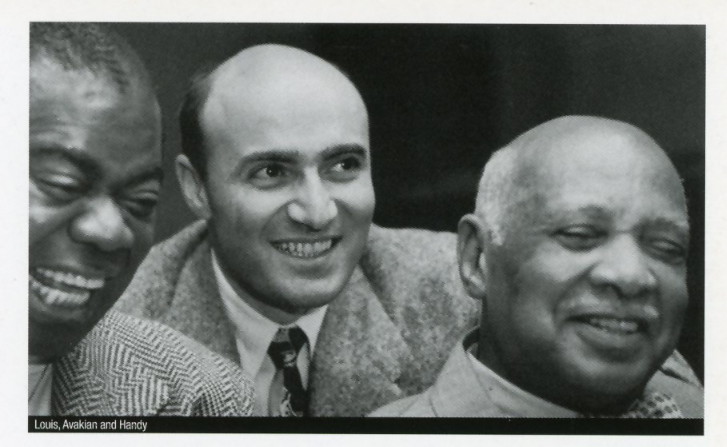
Today, Nov. 16th, is the 150th anniversary of the birth of W.C. Handy and JazzProfiles is proud to celebrate it with this piece by the distinguished scholar and curator, John Edward Hasse.

Born 150 years ago this month, the composer fused the pain of love with a rich musical form to craft the most enduring blues of all time.

By John Edward Hasse

Nov. 10, 2023 Wall Street Journal


“In 1893, cornetist W.C. Handy, broke and hungry in St. Louis, had reached a low point in his life. When he encountered “a woman whose pain seemed even greater” than his, he heard her mutter, “Ma man’s got a heart like a rock cast in de sea.” In 1914, now a successful Memphis bandleader, Handy drew on her words, he said, as well as on his imagination and his familiarity with African-American folk culture to write “St. Louis Blues.” “The wail of a lovesick woman for her lost man,” as Handy called it, the piece went on to become one of the most familiar, widely performed American songs of all time. Its opening lines became part of the soundscape:

I hate to see the eve-ning sun go down,

Hate to see the eve-nin’ sun go down.

’Cause my baby, he done left this town.

In respectable households in late 19th-century America, music such as the blues and ragtime were considered disreputable. The son and grandson of preachers who frowned upon secular music, Handy—who was born 150 years ago on Nov. 16, 1873, in Florence, Ala.—had studied classical music and conceded that he “took up with low forms hesitantly.”

As he traveled the South as an itinerant musician, Handy listened closely to the mélange of melodies in the air, began notating songs, and adapted some for publication. He titled his 1941 autobiography “Father of the Blues,” but he did not invent them. Instead, he was the first to notate, arrange, publish and popularize the idiom that previously existed only in aural tradition. He transmuted a fleeting form into something permanent. His songs primed the public’s ears for the down-home, country blues that record companies began issuing in the 1920s. The blues would become a mighty river that flowed through most styles of American music. As a form, its three-line lyric and 12 bars of music washed into country music, jazz, rock ’n’ roll and soul.

Handy gave the world a singular song: fresh, inspired and infectious. With its three themes, “St. Louis Blues” is much richer in musical form and contrast than expected. The first and third themes, both 12-bar blues, pique interest by offering breaks, and the final section includes some boogie-woogie bass figures. The remarkable second theme, a 16-bar strain, is in a minor key and in tango rhythm, a dance step that was wildly popular in 1914. The three different melodies, with their seemingly bent (or “blue”) notes, are singable and memorable.

With their slang and vivid imagery, the lyrics are catchy. While the tone of “St. Louis Blues” is lamenting, the act of singing such a blues provides catharsis for the singer and, by extension, the audience.

Handy promoted “St. Louis Blues” as both composer and publisher. In the 1920s, more than 60 jazz recordings were made of it, and the number increased in the 1930s. Ultimately, whether as a vocal or instrumental, “St. Louis Blues” became the second most recorded American song (“Star Dust,” by Hoagy Carmichael and Mitchell Parish, is first), with versions by artists as varied as Pete Seeger, Chuck Berry, Angela Brown, George Thorogood, Paul Robeson, Duke Ellington, Louis Armstrong (who made it a signature tune), Sun Ra and Stevie Wonder with Herbie Hancock. As of 2023, more than 2,200 recordings have been made in the jazz tradition alone and hundreds in other genres.

The piece, poet Langston Hughes wrote in 1941, “is sung more than any other song on the air waves, is known in Shanghai and Buenos Aires, Paris and Berlin—in fact, is heard so often in Europe that a great many Europeans think it must be the American National Anthem.” During World War II, when the Nazis denounced jazz, musicians evaded the authorities by masking the song as “La Tristesse de Saint Louis” (“The Sadness of Saint Louis”), “Das Lied vom Heiligen Ludwig” (“The Song of Saint Louis”) or the Czech protest “The Song of Resetová Lhota.”

The song has taken on many guises. In 1940 pianist Earl “Fatha” Hines recorded it as “Boogie Woogie on St. Louis Blues,” in 1944 Glenn Miller’s band transformed it into “St. Louis Blues March,” and in 1955 Perez Prado made it into a mambo. The original can be heard in at least 40 motion pictures, most notably the 16-minute “St. Louis Blues” of 1929, in which Bessie Smith, in her only screen appearance, sings with affective power and majestic sorrow.

In a scene from the documentary “Satchmo the Great” that was filmed in 1956, two years before Handy’s death, the camera captures a touching moment when Louis Armstrong performs “St. Louis Blues” in an overblown orchestral arrangement conducted by Leonard Bernstein, while in the front row the aged, now-blind composer listens transfixed to his signature composition, dabbing tears from his eyes.

The song’s many ideas, compelling contrast, evocative lyrics and plaintive mood—along with Handy’s energetic marketing—combined to make “St. Louis Blues” the most significant and successful blues of all time.”

Mr. Hasse is curator emeritus of American music at the Smithsonian’s National Museum of American History. His books include “Beyond Category: The Life and Genius of Duke Ellington” (Da Capo) and “Discover Jazz” (Pearson).


Wednesday, December 14, 2022

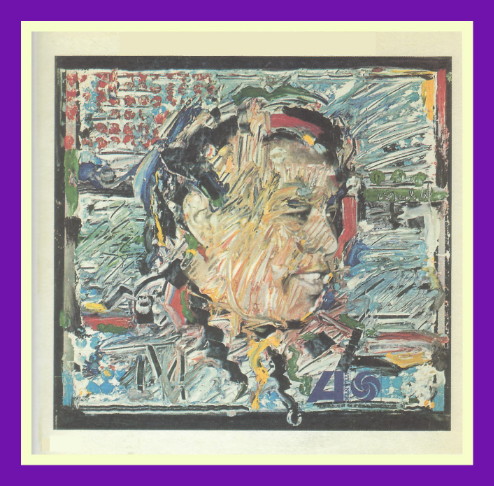
Cole Porter’s "Night and Day" - A Lasting Song of Longing by John Edward Hasse

 © Copyright ® Steven Cerra, copyright protected; all rights reserved.

Cole Porter’s Lasting Song of Longing


Written for Fred Astaire, Porter’s sensuous, extensively recorded ‘Night and Day’ heightens its passion with insistent rhythms and a surprising, extended form

By John Edward Hasse


Mr. Hasse is curator emeritus of American music at the Smithsonian’s National Museum of American History. His books include “Beyond Category: The Life and Genius of Duke Ellington” (Da Capo) and “Discover Jazz” (Pearson).
Appeared in the November 26, 2022, print edition as 'A Lasting Song of Longing'.

Cole Porter’s “Night and Day” stands as his most famous song, and deservedly so, a marvelous work of wit and tuneful innovation, of obsessive sexual longing.

During the first half of the 20th century, before the rise of singer-songwriters, popular songwriting was the collaborative work of lyricists and composers, but Cole Porter—along with Irving Berlin—was an illustrious exception, penning both the words and the music.

In contrast to many successful songwriters of the 1920s—Berlin, Jerome Kern, the Gershwin brothers, all New Yorkers of Jewish background—Porter was a WASP from small-town Indiana. He led an unusually privileged life, from his wealthy upbringing, to Yale, Harvard and Paris, where he lived for nearly a decade. Porter loved parties and decadence; was married but had many male lovers.

After more flops than hits, his ninth Broadway show, a farce called “Gay Divorce” (when gay meant cheerful), opened on Nov. 29, 1932. It proved successful, largely because of one song, “Night and Day,” which Porter wrote for the dancer and singer Fred Astaire. On Broadway, said Astaire, “Gay Divorce” became known as “The ‘Night and Day’ show.” It was to be Astaire’s final musical there before Hollywood wagered on him. The 1934 film version, starring Astaire and dancer Ginger Rogers, had to be renamed “The Gay Divorcee,” because Hollywood censors ruled that a marital split should not be seen as happy, but perhaps an ex-wife could be.

Porter told conflicting stories about where he got his inspiration for “Night and Day.” The most credible is that while living at the Ritz-Carlton Hotel in New York, he, atypically, got the idea first for the melody. When his friend, actor Monty Woolley, stopped by and heard Porter play just the tune, Woolley reportedly said, “It’s terrible!” Porter was not dissuaded and finished the lyric the next day, lying on the beach in Newport, R.I.

Porter chose a title that’s crisp and memorable—both day and night are universal, more so than romantic love—and plays on the phrase “by night and day,” which goes back at least to Shakespeare.

Porter’s gifts for clever, sensuous lyrics and rule-breaking music are on full display here. Right away, the song draws you in with its insistent rhythm, its spellbinding incessant note—B-flat—and its unusual opening simile: “Like the beat beat beat of the tom-tom.” The first theme begins with a string of 35 recurring notes, likely a record at the time. Maurice Ravel famously wielded unending repeats throughout his 1928 “Boléro” to create a hypnotic effect, but Porter’s degree of melodic repetition was novel in popular song.

To the tune of that repeating note, Porter’s first lines include “Like the tick tick tock of the stately clock . . . Like the drip drip drip of the raindrops.” Serving as “word painting,” the verbal and melodic repeats suggest continuity, perpetuity, even obsession. It’s a timeless, erotic song of aching desire: “Till you let me spend my life making love to you.”

Porter’s unconventional harmonic shift from the first to the second theme surprises the listener. His second delivers a gift: instead of the standard 32 bars, we get 48, heightening the lyric’s expression of passion.

Not long after “Gay Divorce” opened, Porter received a letter from Irving Berlin: “Dear Cole, I am mad about ‘Night and Day,’” wrote Berlin. “And I think it is your high spot.”

It soon became a popular standard and an international hit. By one account, within three months, 30-some artists had recorded “Night and Day.” Porter said that in a 1935 visit to Zanzibar, “all these ivory dealers from East Africa were sitting around in their burnouses and listening to ‘Night and Day’ being played on an ancient phonograph . . . the greatest surprise I ever had.”

“Night and Day” became a favorite of singers, dance bands, and instrumental soloists. In the jazz tradition alone, there are now more than a thousand recordings. Eminent among these, virtuoso pianist Art Tatum’s 1956 recording with saxophonist Ben Webster combines romance, swing, decoration and pure invention.

But “Night and Day” reaches its full potential when sung. In the song’s very first recording in November 1932, Leo Reisman’s dance band opens and closes with exotic colors, and Astaire sings both the first and second themes. Sinatra made five studio versions, notably a tender rendition from 1942 with Axel Stordahl’s orchestra, a brassy 1956 reading with Nelson Riddle’s swinging arrangement, and a lush 1961 recording with both themes, backed by Don Costa’s dreamy strings. Among pop performers, Sergio Mendes and Brasil ’66 turned it into a catchy bossa nova.

Even after nearly a century, at any hour of the day or night, surely someone somewhere is performing or listening, singing along, dancing, or making love to this singular song.”


Tuesday, April 26, 2022

Charles Mingus: A Jazz Giant’s Glorious Excesses by John Edward Hasse

 © Copyright ® Steven Cerra, copyright protected; all rights reserved.

Born 100 years ago this month, bassist Charles Mingus created music that was singularly bold, beautiful and original.


The following appeared in the April 19, 2022, Wall Street Journal.


—Mr. Hasse is curator emeritus of American music at the Smithsonian Institution. His books include “Beyond Category: The Life and Genius of Duke Ellington” (Da Capo) and “Discover Jazz” (Pearson).


“In a musical genre known for its outsiders and nonconformists, bassist-bandleader Charles Mingus cut a larger-than-life figure with his stocky frame, forceful independence, and volcanic temper. He was known for stopping performances to scold a musician or upbraid a loud audience. He could turn violent, once knocking a tooth out of his trombonist. “He was a man of excess,” said his widow, Sue Mingus.


However colorful Mingus’s life, it’s not the sensational aspects of his story that make him endure. Like singer Billie Holiday and saxophonist Charlie Parker, what makes Mingus matter is his music. The musical polymath Gunther Schuller called him “one of the greatest composers of the 20th century.” But even that encomium doesn’t adequately encompass him.

Born April 22, 1922, in Arizona and raised in Los Angeles, Mingus studied trombone, then cello, and finally switched to the bass. His stepmother took young Charles to her Holiness church, whose tambourines, handclapping and call-and-response left a big impression on the youngster, as did the classical music he heard at home. But when he encountered the music of Duke Ellington, it was his Road to Damascus moment.


Mingus polished his playing in Los Angeles and went on the road with the big bands of Louis Armstrong and Lionel Hampton. In 1951, he settled permanently in New York. In 1953, he performed in a legendary Toronto concert with bebop masters Dizzy Gillespie and Charlie Parker and joined the orchestra of his idol Duke Ellington, who nevertheless fired him after a week or two for unruly behavior.


By this time, he was a virtuoso jazz accompanist and soloist who freed his bass from providing harmonic underpinnings so he could play melody and countermelody.


Mingus increasingly became driven to compose—notably, beginning in 1955, as the maestro of his own Jazz Workshop. He was deeply influenced by Ellington’s music. Like his hero, Mingus didn’t write for anonymous trumpets, trombones and saxophones, but rather for his own pool of musical personalities, each with his own soundprint. “The seeming paradox of Mingus,” wrote critic Nat Hentoff, “is that so forceful a personality can create situations which so irresistibly propel his sidemen to be so fully themselves.” Like Ellington, Mingus wrote almost exclusively for his band, initially a quintet. He delighted in surprising listeners with sudden changes of tempo, meter and key.


But while Ellington was wont to rely on written scores, Mingus liked to introduce his musicians to new tunes by singing or playing the parts on bass or piano. His method worked because he honed his own brilliant ear and because he chose players with superb aural recognition and recall. Sometimes leading from only a half-completed score, Mingus went beyond Ellington in challenging his players to render emotional effects and to play with a high degree of spontaneity and unknowns (what’s the structure?), which he called “organized chaos.” His pieces have no fixed form and could vary markedly from performance to performance.


His music covers a wide range, from love to protest, from three-minute gems to 30-minute album sides. The aggressive “Haitian Fight Song,” like much of Mingus’s work, doesn’t politely invite you to listen; it grabs your ears and insists. A highlight of his 1959 masterpiece album, “Mingus Ah Um,” the electrifying “Better Git It in Your Soul” offers a driving 6/8 beat, collective improvisation and raucous gospel shouting that’s also part of “Wednesday Night Prayer Meeting.” There are also the sensuous Flamenco rhythms of “Ysabel’s Table Dance,” the warmth of “Peggy’s Blue Skylight,” and the Harlem rent-party fun of “Eat That Chicken.”


Angered by profound racial discrimination, he became a fierce civil-rights advocate. His “Fables of Faubus” mocks Arkansas Gov. Orval Faubus, who in 1957 ordered National Guard troops to block the integration of Little Rock’s public schools. In one version of “Fables,” Mingus and his longtime drummer Dannie Richmond cry out caustic lyrics, calling Faubus a fool, ridiculous and sick.

Mingus ingeniously blended improvisation and composition as well as tradition and innovation. Keenly aware of jazz history, he wrote pieces honoring such legends as composer-pianist Jelly Roll Morton and saxophonist Lester Young, the latter through the slow, haunting “Goodbye Pork Pie Hat,” which became a standard and is included on “Mingus Ah Um.”


His provocative 1971 autobiography, “Beneath the Underdog,” written mostly in the third person, mixes fact and fantasy and remains a riveting read. At the time of his death in 1979 — at 56, of ALS — he was working with singer Joni Mitchell on an album, “Mingus,” featuring her lyrics set to his music. Musicologist Andrew Homzy discovered “Epitaph,” Mingus’s magnum opus for 32 musicians, and Gunther Schuller conducted the two-hour work in 1989. For decades, Sue Mingus has worked tirelessly to keep his music and spirit alive, masterminding three ensembles: Mingus Dynasty, Mingus Orchestra and Mingus Big Band.


Because of its originality, boldness and beauty, there’s nothing like Charles Mingus’s music.”


Tuesday, June 22, 2021

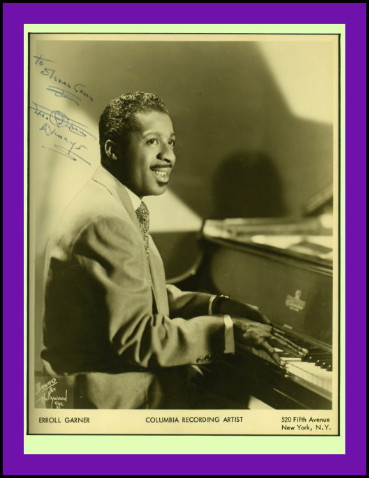
"The Rhythm, Romance, and Joy" of Erroll Garner by John Edward Hasse

 © Copyright ® Steven Cerra, copyright protected; all rights reserved.

Born 100 years ago, the jazz pianist created an exuberant, one-of-a-kind style that continues to garner followers.


The following appeared in the June 17, 2021, print edition of The Wall Street Journal as 'Erroll Garner at 100.'


“This week marks the centennial of pianist and composer Erroll Garner, one of the most visible and beloved American pianists of the 1950s and 1960s. A joyful, exuberant and inventive artist, he attracted a large international following of listeners smitten with his readily accessible sound.

Born into a musical family in Pittsburgh, by age 10 he was part of a kid group on radio. Entirely self-taught, Garner joined a line of master jazz pianists associated with that city: Earl “Fatha” Hines, Mary Lou Williams, Billy Strayhorn and Ahmad Jamal. By 1944, Garner was in New York, performing in nightclubs.

Though he never learned to read music, he made no apologies: “Hell, man, nobody can hear you read.” Garner boasted matchless musical memory: He could play a piece after a single listen. Though his stature was diminutive—he would sit on phone books to reach keyboard height—his fingers were long and his handspan wide.

Garner shaped a signature style unlike any other. His ambidexterity and stunning sense of time enabled him not only to render and develop different rhythms in each hand, but also to play his two hands out of sync with one another. Garner often lagged his right hand slightly behind the swinging beat.

Concertizing with his preferred format of bass and drums, he would teasingly improvise a rhapsodic, free-form introduction—prompting the audience to wonder “What’s this tune?”—and even confound his sidemen. In a 1964 performance for the BBC, Garner roams through stride piano, boogie-woogie and a dash of dissonance—seemingly stumping bassist Eddie Calhoun —until, after 62 seconds, he finally breaks into “Honeysuckle Rose.” Such introductions were miniature spontaneous compositions.

Then with the drive of an engine, he’d strike a steady pulse in the left hand, often strumming guitar-like chords, while his right alternated between percussive single notes, chords, and octaves rendered with dazzling precision. His flying virtuosity suggested a third hand. While his ballads could be as flowery as a romantic garden, in pieces such as “I’ll Remember April” from his celebrated album “Concert by the Sea,” he seemed to be playing not a piano, but a full band, replete with solo lines, comments from the brass section, and full ensemble. “I love fullness in the piano,” Garner said. “I want to make it sound like a big band if I can.” In performances such as “Where or When,” from 1962, he employed the entire keyboard from low to high.

He dramatically varied his volume with split-second timing. In noisy nightclubs, drummer Kelly Martin recalled, Garner would play “softer and softer until finally his hands were actually just above the keyboard.” That would shush the loudmouths.

If you watch him in concert, you see a musician at one with his instrument—an extension of his musical mind and ultra-nimble fingers. Enabled by his spatial sense and muscle memory, while playing he might be smiling at his audience or looking at his sidemen instead of at the keys. You can instantly see and feel the wholesale, infectious joy he radiated to his listeners. Like classical musician Glen Gould and jazzmen Keith Jarrett and Bud Powell, Garner was wont to vocalize as he played piano: He emitted a low sound somewhere between grunting and humming.

To compose his nearly 300 pieces, he’d record them and then have another musician transcribe them. His “Misty” became a standard beloved especially by vocalists, for example Johnny Mathis and, in this 1964 concert, Sarah Vaughan. It played a pivotal role in Clint Eastwood’s thriller “Play Misty for Me.”

From 1955, the ebullient “Concert by the Sea,” recorded live in Carmel, Calif., was a masterstroke of marketing and packaging, the title and album cover evoking freshness and relaxation. You have to take “by the Sea” poetically, for the concert took place neither outside nor adjacent to the Pacific Ocean, but in a school auditorium a half-mile away. The album became a record-breaking bestseller. You can see why in this remarkable reading of the Ellington-Tizol standard “Caravan.”

In 1960, Garner and his longtime manager Martha Glaser sued music giant Columbia Records, charging that it didn’t fulfill its agreement to issue new albums and then released older material without Garner’s consent. The upshot was that Garner and Glaser started their own record company, Octave Records, liberating him from corporate control and striking a blow for artists’ rights.

A heavy smoker, Garner contracted lung cancer and died in 1977 at age 55.

In September, to mark his centennial year, Mack Avenue Music Group and Octave Music will issue “Liberation in Swing,” an impressive boxed set of 189 Garner tracks. An accompanying coffee-table book samples his surprising visual art and offers insightful essays by singer Cécile McLorin Salvant, drummer Terri Lynne Carrington and Thelonious Monk biographer Robin D.G. Kelley. This lavish package looks to be a contender for jazz gift of the year.

A century after his birth, Garner’s originality, stunning technique, masterly but accessible musicianship, and disarming ebullience continue to offer generous rewards to attentive listeners.

—Mr. Hasse is curator emeritus of American music at the Smithsonian Institution’s National Museum of American History. His books include “Beyond Category: The Life and Genius of Duke Ellington ” (Da Capo) and “Discover Jazz” (Pearson).


Saturday, June 5, 2021

Nelson Riddle: American Music’s Artist Behind the Scenes - by John Edward Hasse

 Copyright ©2020 Dow Jones & Company, Inc. All Rights Reserved. 

Appeared in the June 2, 2021, print edition of The Wall Street Journal as 'Nelson Riddle’s Backstage Brilliance.'


Few members of the general public know how important an arranger is to music. But Nelson Riddle, born 100 years ago today, was lauded by Ella Fitzgerald and Frank Sinatra and became a household name to lovers of the Great American Songbook.


“Arrangers rank among the most neglected people in the music business. Few lay people could name even one. If listed at all, credits for arrangers are often in small print. All but invisible, they rarely appear onstage or in movies or videos. Even books on jazz and American popular song often give arrangers short shrift. The craft is a little known one that, at its best, becomes art.


For several decades, Nelson Riddle, born 100 years ago this week, reigned as one of popular music’s leading arranger-conductors. His work scoring for singers cemented his place in musical history. Ella Fitzgerald applauded him as a “singer’s arranger”; none did more splendid work than Riddle.


What does an arranger do, anyway?


Usually an arranger begins with certain specifications: the name of the song; the key; and perhaps the size and instrumentation of the ensemble. But within these bounds, the arranger may have considerable leeway, deciding on the tempo (a ballad? a medium bounce? a “killer”?); the degree of reference to, or departure from, the original song; the spirit and “feel” (sweet or sharp? droll or solemn? nostalgic or hip?); the overall architecture (include the verse or just the chorus? insert a transitional passage?); the number of instruments that play at any given moment (should the trumpets drop out here?); the volume (softer here?); which instruments state the melody (saxophones? strings?) and which take solos at what points; changes in the original piece’s harmony, melody and rhythm; and Much as each painter contemplating an assemblage of household objects would render a still-life uniquely his or her own, each arranger who tackles, say, Gershwin’s “Summertime” perceives its artistic possibilities in an individual way.


Born to music-loving parents, Riddle took lessons on both piano and trombone, which became his favorite instrument. Like fellow New Jersey native Frank Sinatra, Riddle came up through big bands, in vogue during the 1930s and 1940s. He worked with Nat King Cole on the 1950 hit “Mona Lisa,” and the following year, Capitol Records—known as a singer’s label—hired him as staff arranger and teamed him with Cole full time. The two would create classics like “Unforgettable,” “Pretend” and “Smile.”


In 1953, Capitol coupled Riddle with Sinatra—they recorded “I’ve Got the World on a String” and several others. Riddle quickly became Sinatra’s foremost collaborator over the course of 200-plus tracks. The singer would choose the songs, work out the keys with pianist Bill Miller, and give Riddle some ideas. Then Riddle would retreat to his home writing studio.


Their LPs “In the Wee Small Hours” (1955) and “Songs for Swingin’ Lovers!” (1956) became all-time classics of American music. From the latter, Cole Porter’s “I’ve Got You Under My Skin” stands as one of the most celebrated and delectable fruits of their collaboration; Sinatra himself called it “Nelson Riddle’s shining hour.” You can hear his trademarks: a distinctive introduction, unusual colors (for example, bass clarinet paired with celeste), instrumental lines that stay out of the singer’s way, and catchy rhythmic punctuations. A layered-trombone segue inspired by Stan Kenton’s “23 Degrees North, 82 Degrees West” precedes a glorious, erotic trombone solo by Milt Bernhart. Achieving Sinatra’s desired level of perfection required no fewer than 22 takes.


Riddle paid close attention to dynamics—the degree of loudness and softness. “Frank accentuated my awareness of dynamics by exhibiting his own sensitivity in that direction,” wrote Riddle in his method book “Arranged by Nelson Riddle.” To judge his backdrops for yourself, try listening closely to the orchestral accompaniment, tuning out as much of the singer as you can.

In the 53-track “Ella Fitzgerald Sings the George and Ira Gershwin Songbook,” a matchless treasure of American culture from 1959, Riddle added inventive contrast and nuanced color to Fitzgerald’s lines. Lush and romantic here, as in “The Man I Love”; snappy and swinging there, as in “I Got Rhythm.” In “Love Is Here to Stay,” Riddle effectively marries a jazz band with a string orchestra, using a repeated nine-note riff to help make the song fresh.


Beyond his vocal “charts,” Riddle scored such Hollywood movie musicals as “Carousel,” “High Society” and “Guys and Dolls.” In the 1960s and ‘70s, he wrote for such TV shows as “Route 66,” “The Untouchables” and “Batman” and for a number of films. In the 1980s, he enjoyed a boost when rock singer Linda Ronstadt engaged him to orchestrate three discs of popular standards. He died in 1985, before their final album, “For Sentimental Reasons,” was released.


Riddle’s charts are so accomplished and influential that they are now studied in colleges and conservatories. I think that would reinforce his quiet pride in his undersung profession.”


—Mr. Hasse is curator emeritus of American music at the Smithsonian Institution. His books include “Beyond Category: The Life and Genius of Duke Ellington ” (Da Capo) and “Discover Jazz” (Pearson).


Tuesday, May 18, 2021

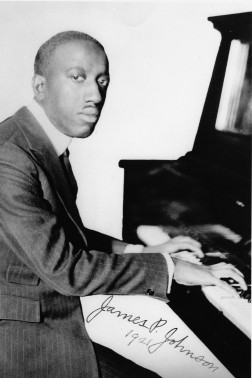
James P. Johnson - Carolina Shout by John Edward Hasse

 The following appeared in the May 15, 2021 edition of the Wall Street Journal. If you click on the highlighted “Carolina Shout” title in the body of this piece, it will link you back to a performance of the tune played on a piano roll on YouTube.

Copyright ©2020 Dow Jones & Company, Inc. All Rights Reserved. 

Setting a New Jazz Standard

“Released 100 years ago this month, James P. Johnson’s ‘Carolina Shout’ raised the bar of musicianship for pianists like Duke Ellington


“In May 1921, James P. Johnson, a 27-year-old piano wizard now largely forgotten, released a composition that shook up pianists across the nation. His “Carolina Shout” became a test piece among professional pianists and set new standards of virtuosity and musicianship.

Johnson (1894-1955) spent his early years in New Jersey and moved to Manhattan when he was 14. He listened intently to church hymns and to ring shouts, dance music whose call-and-response patterns traced back to West Africa. Born with perfect pitch, he played and sang for school assemblies and minstrel shows, studied classical piano, attended New York Symphony concerts and idolized cabaret and sporting-house pianists. By age 18, he himself was playing at casinos, brothels and cabarets and was winning piano-playing contests.

Even as a youngster, he looked up to those he called the ragtime “ticklers.” “They had lots of girlfriends, led a sporting life and were invited everywhere there was a piano,” Johnson said in a 1953 interview. “I thought it was a fine way to live.”

When he was coming of age, the soundscape in homes and public places was radically different from today’s. At home, you couldn’t turn to radios, TVs, computers or mobile phones. Your phonograph records could hold only three to five minutes per side and sounded feeble on hand-cranked machines. In restaurants and bars, you had no jukeboxes or background music on P.A. systems. The king of music-making machines was the piano. It was an essential element in middle-class homes, even if nobody played it well.

Led by Johnson, New York pianists developed a style that took advantage of the instrument’s large melodic range and capability to sound multiple notes at once. He called it “orchestral piano—full, round, big, widespread chords and . . . a heavy bass moving against the right hand.” Johnson’s one-man-orchestra sound is still unmatched.

By 1917, the year when ragtime’s foremost composer, Scott Joplin, died, when ragtime music was fading out and jazz recordings were coming in, Johnson had started composing. In 1921, he cut a player piano roll of his creation “Carolina Shout” that mesmerized untold numbers of pianists and confirmed his arrival as a musician of the first rank. Johnson was later dubbed “the father of stride piano,” the flashy style named for its large left-hand leaps between the low and middle sections of the keyboard.

Joplin had preferred a measured approach, urging “Never play ragtime fast.” Under Johnson’s massive hands and serpentine fingers, stride was like Joplin ragtime on steroids.

Like piano ragtime, “Carolina Shout” used multi sectional form and syncopated right-hand rhythms against a steady left hand. But it left ragtime behind by featuring call-and-response patterns, blue notes, a brisker tempo, more themes, more intricate rhythms and a more propulsive feel. Playing the trickster, Johnson threw the listener off by reversing the expected left-hand oom-pah, oom-pah in favor of pah-oom, pah-oom. Or even oom-oom-pah—known as a “broken bass” line. When Johnson plays such lines, it not only beguiles my brain but pleasurably provokes my patting foot.

Johnson rooted “Carolina Shout” deeply in such African-American folk and dance traditions as the old ring shout and, he said, “Southern set or square dances. . . . I find I have a strong feeling for these dances that goes away back.”

Such aspiring pianists as Duke Ellington, Joe Turner and Johnson protégé Thomas “Fats” Waller learned to play “Carolina Shout” by slowing the piano roll way down. For two decades, “Shout” stood as a must-play at parlor socials, rent parties and piano “cutting contests.” Johnson and his song influenced a long string of pianists, including George Gershwin, Count Basie, Art Tatum, Erroll Garner and Thelonious Monk.

The secret to Johnson’s keyboard skill? Ingenuity, discipline and lifelong dedication. “In practicing technique,” he said in that 1953 interview, “I would play in the dark to get completely familiar with the keyboard. To develop clear touch and the feel of the piano, I’d put a bed sheet over the keyboard and play difficult pieces through it.”

In the late 1920s, he set a new standard for sensitively backing singers, notably Ethel Waters and Bessie Smith. His best-known piece was “The Charleston,” the 1923 dance song that became an emblem of the Roaring ’20s. He also wrote nearly 300 other works, including Broadway musicals, a rhapsody, a one-act “blues opera,” a concerto, symphonies and ballets—but had limited success with his classical works.

During 15 years of piano lessons, none of my teachers ever mentioned “Carolina Shout.” I wish they had. It’s such an American classic that colleges and conservatories ought to require that all piano majors learn it. Now that would be a righteous, rhythmic addition to the canon.”

—Mr. Hasse is curator emeritus of American music at the Smithsonian’s National Museum of American History. His books include “Beyond Category: The Life and Genius of Duke Ellington” (Da Capo) and “Discover Jazz” (Pearson).


Monday, November 9, 2020

"Mood Indigo" - A Sapphire of Tonal Brilliance by John Edward Hasse

Copyright ©2020 Dow Jones & Company, Inc. All Rights Reserved. 


A Sapphire of Tonal Brilliance


A departure from his swinging dance music, Duke Ellington’s Mood Indigo softly conveys an intimate, ruminative and melancholy mood.


By John Edward Hasse

Oct. 16 - 17, 2020 edition of the Wall Street Journal 


“In the fall of 1930, if you were listening to a radio broadcast from Harlem’s hottest night spot, the Cotton Club, you might have heard something surprising. From just the first four notes of its opening chorale, you’d realize here is something fresh. You’d never forget its ravishing timbres, languid beat and poignant feeling. The song was Duke Ellington’s resplendent “Mood Indigo.”


By then, the composer-bandleader had shaken up the music world with his jazz band, which sounded unlike any other because of its imaginative harmonies and kaleidoscopic sonorities. He didn’t write for nameless trumpet, trombone or clarinet players, but for the signature sounds of his trumpeter Arthur Whetsel, his trombonist Joe “Tricky Sam” Nanton and his clarinetist Barney Bigard, mixing their colors like a master painter. Ellington didn’t compose for the instrument, but for the man behind it.


Projecting urban sophistication and breaking barriers for Black musicians, Ellington had reached a new peak of popularity, thanks to the reach of radio and recordings. But one piece raised his renown to new heights—“Mood Indigo,” one of the most original and memorable musical miniatures of the 20th century. It would become his best-known composition, a career milestone, a hit, a standard, and a classic.


In late 1930, he made three recordings of the composition. The first and second, on Oct. 14 and 17, featured his band pared down to a septet. For the third, on Dec. 10, he used his full ensemble of 12 players and added an orchestral accompaniment that showcased the diaphanous, haunting solo of trumpeter Whetsel and the gentle, flowing sound of clarinetist Bigard.

Departing from swinging dance music, “Mood Indigo” softly conveys an intimate, ruminative and melancholy mood. It launched a new avenue for Ellington: quiet pastel pieces, some, like this one, denoting his favorite hue, blue: “Azure,” “Blue Light,” and “On a Turquoise Cloud.”


Jazz band arrangements typically contrasted three families of wind instruments — the trumpet, trombone and sax sections. True to form, the maverick Ellington rejected this norm, instead combining here a single trumpet and trombone — each using a mute and avoiding vibrato—with a clarinet. He placed the trumpet in its usual register, above the other instruments, put the trombone slightly below, in its high range, unexpectedly gave the clarinet smoky low notes, and assigned the instruments unusual harmonies. “The resulting tone colors,” observed composer Gunther Schuller, “had never been heard before in all of music history.” Even experienced musicians must have wondered “What was that?”


The song’s authorship is disputed. Ellington’s star clarinetist Bigard said that he developed the second theme based on a melody written by his New Orleans teacher Lorenzo Tio Jr., and that Ellington wrote the first. (Publisher Irving Mills, a known credit-grabber, listed himself as co-author, but it’s not clear if he contributed.) Neither Ellington nor Mills was scrupulous in giving credit to band members who contributed melodic ideas, and Bigard said he received only $25 for his role. Decades later, he sued and won a share of royalties.


Despite — or perhaps because of — its singularity, “Mood Indigo” became a national hit, Ellington’s first. Not only did critics and the public embrace “Mood Indigo” — so did musicians. A quintessential standard, it ranks 16th among jazz tunes in its number of recordings: more than 1,300. By the late 1930s, the song was used as the theme of 16 different radio shows.


“Mood Indigo” came to be a staple of Ellington’s repertory. To keep the piece novel, he — and later composer/arranger Billy Strayhorn — would periodically fashion a new orchestration. Strayhorn’s striking 15-minute concert version for the 1950 album “Masterpieces by Ellington” even goes into waltz time. Clarinetist/saxophonist Russell Procope commented, “a new arrangement would freshen it up, like you pour water on a flower, to keep it blooming. They’d all bloom — fresh, fresh arrangements.”

No fewer than 10 orchestrations of “Mood Indigo” lie among the roughly 100,000 pages of Ellington’s unpublished music at the Smithsonian’s National Museum of American History. One manuscript puzzled catalogers until they realized that the title “Ogidni Doom” was “Mood Indigo” playfully spelled backward.

In 1931, slangy lyrics were added, opening with:


You ain’t been blue—

No, no, no—

You ain’t been blue,

Till you’ve had that mood indigo.


Mitchell Parish, a staff lyricist for Mills, credibly claimed in a 1987 interview that he wrote the words to “Mood Indigo” but never got a byline or a royalty. “Mood Indigo” also became a popular-song standard, interpreted by singers ranging from Ella Fitzgerald and Nina Simone to Dr. John and Annie Lennox


If you listen to just one vocal rendition, however, it should be Frank Sinatra’s, from his landmark 1955 album “In the Wee Small Hours.” Cradled by Nelson Riddle’s lush orchestra, Sinatra—a wizard with words—vivifies the lyrics and summons the song’s 3 a.m. loneliness as only he could.


But because of the unique sonorities that Ellington’s band conjured in performance, the piece will always belong to the maestro. Its mark on music having lasted for 90 years, who’s to deny that the matchless “Mood Indigo” just might prove indelible?”


—Mr. Hasse is curator emeritus of American music at the Smithsonian Institution’s National Museum of American History. 


His books include “Beyond Category: The Life and Genius of Duke Ellington” (Da Capo) and “Discover Jazz” (Pearson).


Appeared in the October 17, 2020, print edition.