Showing posts with label thelonious monk. Show all posts

Monday, November 15, 2021

"Monk" - Whitney Balliett

 © Copyright ® Steven Cerra, copyright protected; all rights reserved.


The Boston Globe stated: “Balliett’s genius for pictorial description (which helps make him a gifted writer of profiles) extends to the music itself. No one writes about what they listen to anywhere near as well.”


Although he played drums during his college days and was a member of a band, Whitney was not a studied musician. He had no formal training in theory and harmony so during the 40+ years he wrote Jazz profiles for The New Yorker magazine he had to fall back on his other gifts when describing the music - his gift for “pictorial description.”


In many ways, this made Whitney’s Jazz writings more accessible to the majority of Jazz fans since they, too, for the most part, lacked procedural training in melody, harmony and rhythm - the building blocks of music.


As a result, "Balliett comes as close as any writer on jazz—perhaps on any musical style — to George Bernard Shaw's intention to write so that a deaf person could understand and appreciate his comments. This volume approaches indispensability." Choice reviewing Balliett’s American Musicians.


The editorial staff at JazzProfiles thought it might be fun to share some briefer pieces from the pen of our ideal - Whitney Balliet - to give you an appreciation of his “ … genius for pictorial description.” This is the first in a series of six continuously running featuring Whitney’s sui generis pictorially descriptive approach to writing about Jazz which is marked by what Gary Giddins has labeled “writerly attributes: insight, candor, observation, discernment, delineation, style, diligence and purpose.”


These are all drawn from Goodbyes and Other Messages: A Journal of Jazz 1981-1990 [1991].


Monk [Thelonious]


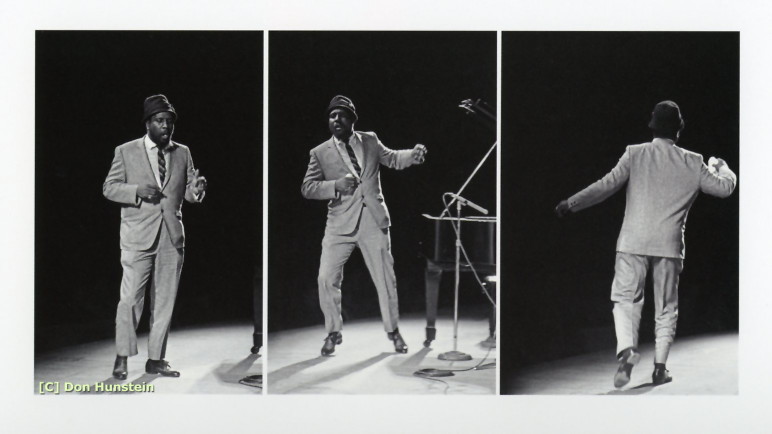
“The pianist and composer Thelonious Monk, who died last week [February 17, 1982], at the age of sixty-four, was an utterly original man who liked to pretend he was an eccentric. Indeed, he used eccentricity as a shield to fend off a world that he frequently found alien, and even hostile. A tall, dark, bearish, inward-shining man, he wore odd hats and dark glasses with bamboo frames when he played. His body moved continuously. At the keyboard, he swayed back and forth and from side to side, his feet flapping like flounders on the floor. While his sidemen soloed, he stood by the piano and danced, turning in slow, genial circles, his elbows out like wings, his knees slightly bent, his fingers snapping on the after-beat. His motions celebrated what he and his musicians played: Watch, these are the shapes of my music. His compositions and his playing were of a piece. His improvisations were molten Monk compositions, and his compositions were frozen Monk improvisations. His medium- and up-tempo tunes are stop-and-go rhythmic structures. Their melodic lines, which often hinge on flatted notes, tend to be spare and direct, but they are written with strangely placed rests and unexpected accents. They move irregularly through sudden intervals and ritards and broken rhythms. His balladlike tunes are altogether different. They are art songs, which move slowly and three-dimensionally. They are carved sound. (Monk's song titles— "Crepuscule with Nellie," "Epistrophy," "Ruby, My Dear," "Well You Needn't," "Rhythm-a-ning," "Hackensack"—are as striking as the songs themselves. But none beat his extraordinary name, Thelonious Sphere Monk, which surpasses such euphonies as Stringfellow Barr and Twyla Tharp.) His improvisations were attempts to disguise his love of melody. He clothed whatever he played with spindly runs, flatted notes, flatted chords, repeated single notes, yawning silences, and zigzag rhythms. Sometimes he pounded the keyboard with his right elbow. His style protected him not only from his love of melody but from his love of the older pianists he grew out of—Duke Ellington and the stride pianists. All peered out from inside his solos, but he let them escape only as parody.


Monk hid behind his music so well that we know little of him. He was brought from North Carolina when he was little, he eventually settled in the West Sixties, and he lived there until his building was torn down. He married the Nellie of his song title, and he had two children, one of whom became a drummer. He began appearing in New York nightclubs around 1940, but he achieved little recognition until the late fifties. (He was often lumped with Charlie Parker and Dizzy Gillespie; however, he did not have much in common with them outside of certain harmonic inventions.) Part of the reason for Monk's slow blooming was his iconoclastic music, and part was the fact that he was unable to perform in New York night clubs from 1951 to 1957 — the time when Charles Mingus and the Modern Jazz Quartet and Gerry Mulligan were becoming famous. (The police had lifted his cabaret card, because he had been found sitting in a car in which narcotics were concealed.) But when he returned to the scene, he suddenly seemed to be everywhere — on record after exceptional record, at concerts and festivals, at the old Five Spot and the Vanguard and the Jazz Gallery. He filled us with his noble, funny, generous music.


Then, in 1973, he vanished again. There were rumors that he was ill and had been taken in by his old friend and mentor the Baroness Nica de Koenigswarter, who lives in a big house in Weehawken, New Jersey. The rumors turned out to be true, and this is what the Baroness had to say about Monk before he died: "No doctor has put his finger on what is wrong with him, and he has had every medical test under the sun. He's not unhappy, and his mind works very well. He knows what is going on in the world, and I don't know how, because he doesn't read the newspapers and he only watches a little telly. He's withdrawn, that's all. It's as though he had gone into retreat. He takes walks several times a week, and Nellie comes over from New York almost every day to cook for him. He began to withdraw in 1973, and he hasn't touched the piano since 1976. He has one twenty or thirty feet from his bed, so to speak, but he never goes near it. When Barry Harris visits, he practices on it, and he'll ask Monk what the correct changes to 'Ruby, My Dear' are, and Monk will tell him. Charlie Rouse, his old tenor saxophonist, came to see him on his birthday the other day, but Monk isn't really interested in seeing anyone. The strange thing is he looks beautiful. He has never said that he won't play the piano again. He suddenly went into this, so maybe he'll suddenly come out." 


But Monk must have known he wouldn't. His last public appearance, at the Newport Jazz Festival of 1976, was painful. His playing was mechanical and uncertain, and, astonishingly, his great Gothic style had fallen away.”


Thursday, May 6, 2021

Blumenthal on Thelonious [From the Archives]

© -  Steven A. Cerra, copyright protected; all rights reserved.


“He dealt in phrases with odd shapes, placed into odd niches on the bar line, stressed in odd places. Melodically, he created tight, stark nuggets that served as seeds for complete musical statements once cultivated through his surprising use of modulation and accent. Monk's strong, aggressive touch produced tones of hornlike boldness on the piano, and his rhythmic patience highlighted the rich overtones this attack produced.


When he worked with horns, this tonal character carried over to the rough-edged ensembles he preferred to bebop's characteristic unison lines. And there was Monk's dense and pungent harmonic palette, which Andre Hodeir likened to an acid bath when applied to popular material. These various techniques functioned so integrally as to seem inseparable.


These attributes of Monk’s music, so familiar to us now and more central to the ongoing evolution of Jazz with each passing day, took an uncommonly long time for the public to grasp.”
- Bob Blumenthal, Jazz writer, columnist and critic


During the many years that he wrote about Jazz for The Boston Globe, CD Review, The Atlantic Monthly, Downbeat and numerous other publications, Grammy-Award winning author, columnist and critic Bob Blumenthal became one of my most consistent teachers about all-things-Jazz


For his long affiliation with it and studied application of it, Bob knows the music.


Equally important is his ability to communicate this knowledge and awareness in a writing style that is clear, cogent and concise.


Bob’s a mensch and a mentor.


My first awareness of Thelonious Monk’s music was based on the LPs he recorded for Orrin Keepnews at Riverside Records from approximately 1955-1960. The significance of these recordings was that they helped make the Jazz public of that period aware of Monk’s genius, such that Thelonious career was set on a path that would lead to fame and fortune.


The Riverside albums were a renaissance of sorts for Monk who, although he was one of the originators of modern Jazz along with Charlie Parker, Dizzy Gillespie, and Kenny Clarke and others from the Minton's Playhouse days of the early 1940’s, had largely become a forgotten man by the end of that decade.


In 1994, Blue Note Records issued a boxed set of the music that Thelonious had recorded for the label under his own name and as sideman on a 1957 date with Sonny Rollins as the leader. The set also includes the five tracks that were recorded by John Coltrane's wife Naima at the Five Spot in NYC during Coltrane's tenure with Monk's quartet in 1958.


This reissued set provided a sort of missing link in my quest to appreciate the early years of Monk’s music.


And if that wasn’t enough, wouldn’t you know that the insert notes to the four CD’s that make up Thelonious Monk: The Complete Blue Note Recordings [CDP 7243 8 30363 2 5] were written by none other than … you guessed it … Bob Blumenthal.


Bob has kindly granted the editorial staff at JazzProfiles permission to use the introductory portion of his Blue Note annotations on these pages.


© -  Bob Blumenthal, copyright protected, all rights reserved; used with the author’s permission.


“Thelonious Sphere Monk inherited his striking name, yet it is doubtful that the collective energy of all the slogan-makers could have devised a more appropriate appellation. Never has a moniker so perfectly reflected someone's music. "Thelonious" announces imposing complexity and originality with roots in tradition, "Monk" signals abrupt angularity, and the rhythmic impact of the two in juxtaposition is indelible and unique. The rich internal detail was frequently lost on others in the past, who tended to fashion the first name as "Thelonius," mirroring the confusion that surrounded Monk's music (fortunately, misunderstandings of both types have diminished over time). Most revealing of all, though, is "Sphere," with its intimations of rounded, three-dimensional completeness, of a self-contained planet pursuing its own course in the musical universe.


That sense of fullness, together with Monk's brilliant use of sound, silence, dissonance, rhythmic surprise and melodic cogency, marked the music in this collection from its initial appearance as something exceptional. For many, musicians as well as listeners, it was also somewhat undecipherable when first released on a series of 78 rpm records taken from the six sessions that form the bulk of this collection. At the time, Monk was considered the jazz world's primary enigma, the farthest out of the far out. He was said to be one of the fountainheads of bebop, its "high priest"; yet his music did not sound like bebop. The breathless, arpeggio-driven virtuosity of bop that was already becoming cliche when Monk recorded his first sessions as a leader was replaced in his music by a concept of space that was poetic. He dealt in phrases with odd shapes, placed into odd niches on the bar line, stressed in odd places. Melodically, he created tight, stark nuggets that served as seeds for complete musical statements once cultivated through his surprising use of modulation and accent. Monk's strong, aggressive touch produced tones of hornlike boldness on the piano, and his rhythmic patience highlighted the rich overtones this attack produced. When he worked with horns, this tonal character carried over to the rough-edged ensembles he preferred to bebop's characteristic unison lines. And there was Monk's dense and pungent harmonic palette, which Andre Hodeir likened to an acid bath when applied to popular material. These various techniques functioned so integrally as to seem inseparable.


These attributes of Monk’s music, so familiar to us now and more central to the ongoing evolution of Jazz with each passing day, took an uncommonly long time for the public to grasp The uniqueness of his music was reinforced by the eccentricities of his personality. He may have been the "genius of modern music," as Blue Note proclaimed when it first reissued some of the enclosed performances on 10-inch IPs in the early '50s; but to many he was a mad genius, given to wearing odd hats and sunglasses and with what his wife Nellie once described as a "marvelous sense of withdrawal." When he cut his first session as a leader in October 1947, he was five days past his 30th birthday, a point at which too many of the music's innovators had exhausted both their creative and biological spans. By the time of his sixth and final Blue Note date as a leader in 1952, he was nearly 35 and, thanks to public indifference and his willingness to take a drug possession rap for a friend, seemingly even further from the acclaim that would put him on the cover of Time Magazine little more than a decade later and elevate him still further in the years following his death in 1982.


Of course, Monk was nothing if not patient. At the time of his first Blue Note session, he had been a key figure in the emergence of the modern style for years; yet all he had to show for his efforts on record were four titles cut in 1944 with Coleman Hawkins and some samples of the already legendary jam sessions at Minton's taped at the club and issued under Charlie Christian's name. As a composer he fared better, with Hawkins, Cootie Williams, Dizzy Gillespie, Kenny Clarke and Bud Powell already having introduced several of his most famous compositions. The three sessions he led for Blue Note in a span of 38 days in 1947, which included 10 of his compositions, might be viewed as one of the greatest bursts of creative energy in history if Monk had not been waiting to unleash this brilliant music for a decade. On record at least, he began fully formed and more than ready.


Monk was born on October 10, 1917 in Rocky Mount, North Carolina and was named after his father. (His son, the drummer T. S. Monk, is actually Monk III.) His family moved to New York City in 1923, occupying a house on West 63rd Street in the San Juan Hill neighborhood that would remain Monk's home for much of his life. His musical career began typically enough for an African-American youth of the time: piano lessons at 11, rent parties and amateur contests three years later, and regular work in church, where he accompanied his mother. Despite excelling in math and science at Stuyvesant High School, Monk dropped out in 1934 to accompany an evangelist on a tour that ultimately took him to the Midwest. Mary Lou Williams, one of his earliest champions, heard him at the time and later reported that he displayed a fluid swing piano technique, with touches of Teddy Wilson.


Back in New York by 1936, Monk studied briefly at Juilliard and began taking the diverse gigs that are a young musician's lot. He also quickly immersed himself in the Harlem after-hours scene, landing a job in the house rhythm section at Minton's Playhouse in 1940. This was the period during which young musicians began developing a more technically advanced approach that went beyond the conventions of swing music, in clubs like Minton's and Monroe's Uptown House. At Minton's, Monk and his rhythm section mate Kenny Clarke jammed with such sympathetic contemporaries as Charlie Christian, Dizzy Gillespie and Charlie Parker.

The pianist also began introducing his compositions to the sessions, and encouraged a second generation of even younger players, especially his protege Bud Powell. These efforts continued when Monk moved with Clarke to Kelly's Stables in 1942.


Gillespie and others have verified that Monk participated actively in the give-and-take of these sessions, and the music that evolved from this period expressed, especially in its harmonic approach, certain aspects of Monk's thinking. The rapid tempos and arpeggiated melodies generally identified with bebop are far removed from Monk's aesthetic, however, and he quickly distanced himself from the center of bop activity. Although he did some work with Lucky Millinder, Coleman Hawkins and both the early combo and big band of Dizzy Gillespie, much of his time in the remainder of the '40s was spent organizing his own groups, often with young players like the teenaged Sonny Rollins. A few jobs cropped up, but his bands spent much of their time rehearsing in Monk's kitchen (where he kept his piano), even after he began recording for Blue Note.


The notoriety of his accompanists was less important to Monk than their ability to learn his music correctly. He had little tolerance for complaints about his music's difficulty - he famously told Sahib Shihab at one of the Blue Note sessions, "You a musician? You got a union card? Then play it!" - his insistence on writing little down and forcing players to use their ears only heightened the challenge. Most responded surprisingly well, whether they turned out to be giants like Art Blakey and Milt Jackson, or obscure journeymen who would be totally forgotten if not for their role in the documentation of Monk's music.


Saxophonist Ike Quebec, a Blue Note leader and adviser to label owners Alfred Lion arid Francis Wolff, was


instrumental in bringing Monk to their attention when they expressed interest in documenting modern jazz. His input is most obvious on Monk's initial session, recorded on October 15, 1947, where Quebec takes composer credit on two of the four titles and where his 17-year-old cousin Danny Quebec West is the alto saxophonist. The other saxophonist, tenor man Billy Smith, is similarly unknown, while the remaining sidemen proved to have greater longevity. Trumpeter Idrees Sulieman, born Leonard Graham in 1923, worked in various big bands and combos before moving to Europe in 1961 and is still playing in 1994. Bassist Gene Ramey (1913-84) was a colleague of Charlie Parker's in the Jay McShann orchestra and became one of the most widely recorded players of the period. Art Blakey (1919-90), soon to be identified as Monk's perfect drummer, would begin his own career as a leader for Blue Note before the year was out. …”


At this point, Bob begins a session-by-session analysis of the tunes and musicians that make up the music on the four Blue Note CD’s and concluded his essay with the following observations about the importance of Monk’s music on Blue Note in the evolution of Monk’s own career and to the development of modern Jazz in the 1950s and beyond.


“Some might consider the lengthier tracks with Rollins and Coltrane extraneous additions to what otherwise would be a perfectly acceptable set of "complete" Blue Note Monk. Given that Monk's music grew and expanded, though, sounding ever more clearly in the ears of musicians and listeners, these later performances strike me as essential complements to the groundbreaking sessions of 1947-52.


They take us into the future, where Monk becomes more and more central to jazz of the late 20th century and where, in the years following the issuance of this collection, he will no doubt assume his rightful place as one of the greatest contributors to American culture.”


- Bob Blumenthal

Monday, October 5, 2020

‘Palo Alto’ by Thelonious Monk Review: A Jazz Titan Goes to High School - Larry Blumenfeld

 ‘Palo Alto’ by Thelonious Monk Review: A Jazz Titan Goes to High School

A previously unreleased recording of the pianist’s 1968 concert in a California school auditorium shows his quartet in fine, freewheeling form.

By Larry Blumenfeld

Sept. 26, 2020 7:00 am ET Wall Street Journal

“In the fall of 1968, a sixteen-year-old Jewish kid named Danny Scher had a dream. He wanted to bring the renowned Thelonious Monk and his quartet to play a benefit concert at his high school in Palo Alto, California.”

So begins a liner note by Robin D.G. Kelley, Monk’s definitive biographer, for “Palo Alto,” a previously unreleased recording of that concert, out now. (The music is available on CD and vinyl through the Impulse! label, and digitally through Legacy Recordings.)

Since Monk’s death in 1982, the influence of his compact yet essential body of compositions has grown with each passing decade; once considered radical, they are now elemental to modern jazz. Even so, Monk’s piano playing—his jarring rhythmic displacements, clotted chords, flat-fingered runs and spiky dissonances on “Well, You Needn’t” here, for instance—still sounds distinct. “Palo Alto” enlightens as it delights, opening a window into how Monk challenged his bands and himself, endlessly refreshing his unusual yet accessible compositions. Plus, it comes with a good story.

Mr. Scher, who would go on to a career as a promoter with rock impresario Bill Graham, was, in 1968, the red-headed kid who spun jazz records during lunchtime at “Paly,” as his school was known. Having already presented pianist Vince Guaraldi, vocalist Jon Hendricks and vibraphonist Cal Tjader in fundraisers for the campus International Club, he hired Monk’s quartet for $500. His motivation was pure: Along with Duke Ellington, who he’d later bring to the school, Monk was his idol. He sold concert-program ads along his paper route in predominantly white, upscale Palo Alto. He put up posters in mostly Black, less affluent East Palo Alto, where a campaign was afoot to rename the municipality Nairobi, after the capital of Kenya. He was no doubt aware of a larger context for such cross-promotion: the recent assassinations of Martin Luther King Jr. and Robert F. Kennedy, and the turmoil surrounding race.

What Mr. Scher likely didn’t know is that Monk, who four years earlier had appeared on the cover of Time magazine, was deeply in debt (the pianist probably welcomed a chance to earn extra money in the middle of his two-week engagement at San Francisco’s Jazz Workshop). Critics had begun turning on the pianist, acknowledging his importance yet calling his quartet “predictable” because he mostly stuck to his existing compositions while other marquee jazz stars, such as Miles Davis, restlessly transformed their music.

After the concert, Mr. Scher placed his reel-to-reel recording in a box, where it remained for decades. If not for a school janitor who agreed to tune the piano if he could record the show, this release wouldn’t exist. It’s not a perfect document—Monk’s piano bench creaks through some passages—but the music sounds clear and affecting nonetheless.

Monk’s quartet here—with tenor saxophonist Charlie Rouse, his sideman for a decade by then, along with bassist Larry Gales and drummer Ben Riley, who joined Monk in 1964—was his most cohesive band, then at the height of its powers. Perhaps owing to the informal nature of the gig, the group seems particularly uninhibited. The music sounds ebullient.

Monk almost never began a set with a ballad, but he opens here with one of his own: “Ruby, My Dear,” played at a medium tempo and punctuated by a succinct and deeply satisfying piano solo. Compared to “Live at the It Club”—a landmark album documenting this group four years earlier on a Los Angeles bandstand—the extended versions here of Monk’s “Well, You Needn’t” and “Blue Monk” sound looser, more creative. On “Well, You Needn’t,” Monk builds propulsion and drama with each chord, and Gales plays a long and playful bowed section. On “Blue Monk,” the band seems less beholden to blues syntax than to organic call-and-response phrasing. “Epistrophy,” which Monk co-wrote with drummer Kenny Clarke, exemplifies both the percussive nature of his pianism and his band’s masterly sense of time.

The most gripping moments of this recording find Monk alone at the piano, playing songs he didn’t write. On the Jimmy McHugh and Dorothy Fields classic “Don’t Blame Me,” he grounds his left hand in stride-piano’s bounce, rains down elegant arpeggios with his right and, in between, wrings maximum emotion from single notes. His closer, a solo rendition of “I Love You Sweetheart of All My Dreams,” a 1928 song made famous by Rudy Vallee, lasts just one deeply affecting minute. As its final crashing chord evaporates into overtones the auditorium erupts in applause, to which Monk says, “We have to hurry back and get to work, you dig?”

And so he did. East Palo Alto didn’t change its name. The identity of that Palo Alto janitor remains a mystery. Yet thanks to him and to this performance before an unlikely interracial audience in a high school auditorium, we have 47 minutes of rare pleasure, and a corrective to Monk’s long-ago detractors. He never grew predictable. He just dug deeper into these tunes to innovate.”

—Mr. Blumenfeld writes about jazz and Afro-Latin music for the Journal.

Copyright ©2020 Dow Jones & Company, Inc. All Rights Reserved. 

Appeared in the September 28, 2020, print edition as 'A Jazz Titan Goes to High School.'


Tuesday, September 29, 2020

Monk Goes to School

 The media release company Crossroads sent this promotional material to me and I thought it would be nice to share it - “as is” - with the readers of this blog. The podcast features T.S. Monk and Danny Scher talking about how it all came to be.


If you do not have one of the subscription services offered through each link, click on the YouTube icon to hear the podcast, et al.


New Podcast Tells Story of Thelonious Monk’s 1968 Visit to Palo Alto


featuring, T.S. Monk, Danny Scher, and Grandmixer DXT.


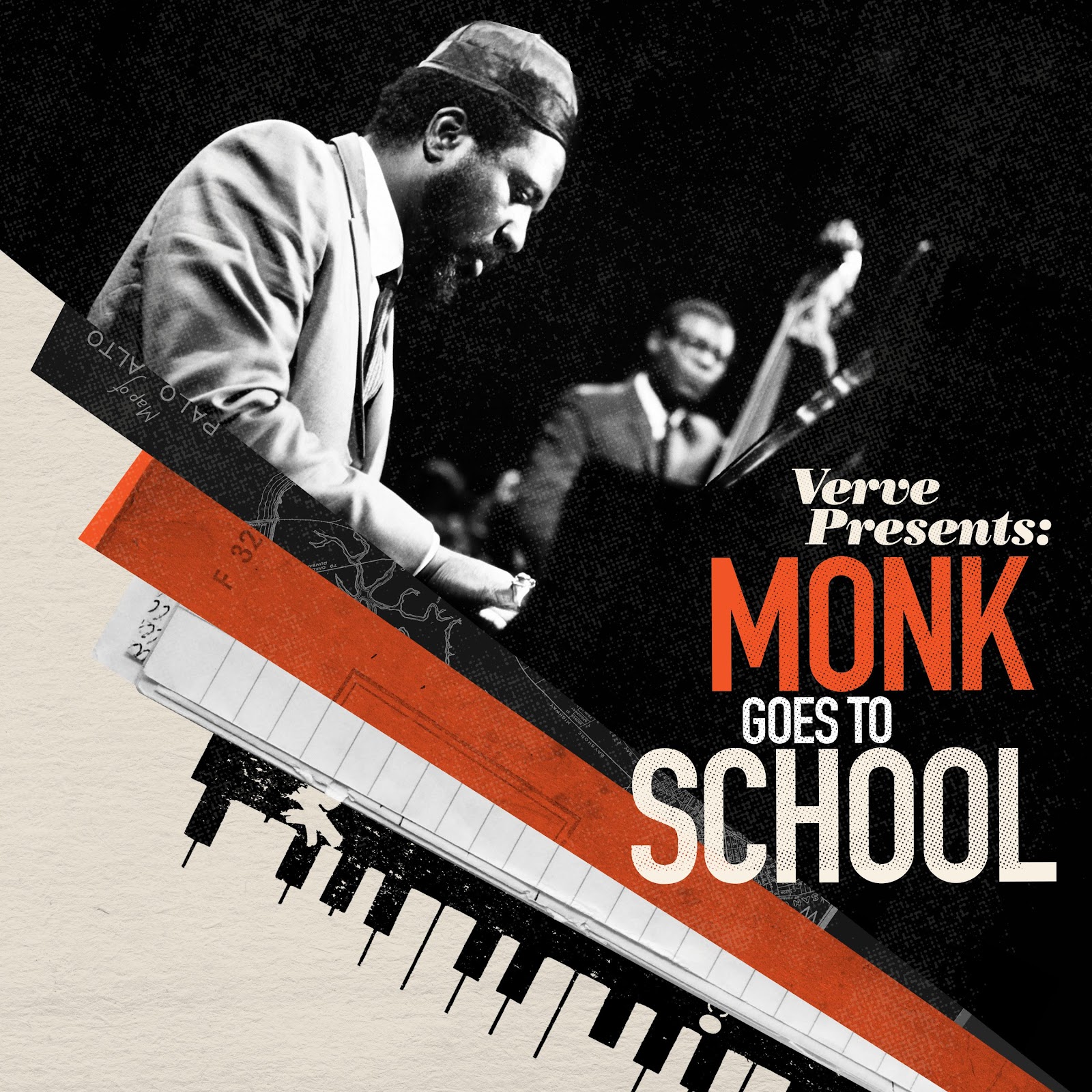
Verve Presents: Monk Goes To School

Listen Here: https://theloniousmonk.lnk.to/monkgoestoschoolPR


Verve/Impulse! Records and podcast creative studio PopCult are pleased to announce Verve Presents: Monk Goes To School, an innovative podcast that tells the story of Thelonious Monk’s storied visit, concert, and subsequent recording at Palo Alto High School in 1968. The Podcast is available on all major platforms, including Apple Podcasts, Spotify, Amazon, Pandora, and more. Listen to the podcast HERE.


The album Palo Alto was released on September 18 and is available here: https://theloniousmonk.lnk.to/paloaltoPR


In the fall of 1968, a sixteen-year old high school student named Danny Scher had a dream to invite legendary jazz pianist and composer Thelonious Monk and his all-star quartet to perform a concert at his local high school in Palo Alto, CA. In a series of twists and turns, against a backdrop of racial tension and political volatility, that concert was recorded by the school’s janitor and finally released in 2020.


Verve Presents: Monk Goes To School tells this story in innovative detail, interweaving the voices of Danny Scher, Thelonius Monk’s son T.S. Monk, monk biographer Robin D.G. Kelley and engineer/mixer Grandmixer DXT with narrator Anthony Valadez from KCRW.


The podcast is unique in that there is no hosted interview segment – it takes the listener on an immersive journey featuring the voices of the cast, sound design and music clips from the record throughout.


PopCult Founder/Creative Director Dennis Scheyer says, “Once we heard the story of how the record came to be we felt that it deserved more than the usual ‘interview-based’ portrayal. It’s the kind of show we created our company to produce, and Verve fully supported us.”


Recorded entirely “at home” with high-quality microphones across the United States, this podcast deftly weaves through multiple voices, telling this story of Thelonious Monk, the unexpected concert, and of course, uses the music to illustrate this important part of musical history.


EVP of Verve/Impulse! Jamie Krents says, “We’re thrilled to collaborate with PopCult on Monk Goes to School. This podcast brilliantly captures the real story of the Palo Alto recording, and puts it in historical context with brilliant narration from all the key players.  Impulse! and Verve Records have such a rich history of music that we’re very excited to continue to illustrate in partnership with PopCult.”


PopCult Partner, Strategy and Marketing Lars Murray says, “We were excited to help Verve establish a leadership position among labels by creating a high-quality narrative podcast that integrates their music seamlessly and tells a great story about a landmark release. Verve demonstrated that a label's access to licensed music is a huge advantage in podcasting.”


Palo Alto – Thelonious Monk

  1. Ruby, My Dear

  2. Well, You Needn’t

  3. Don’t Blame Me

  4. Blue Monk

  5. Epistrophy

  6. I Love You Sweetheart of All My Dreams


About Impulse! Records:

For nearly sixty years, Impulse! Records has stood as a label of musical integrity and lasting cultural significance. Known as the “house that Trane built” in honor of its best-selling artist John Coltrane, the label produced music exciting in its experimental charge, and spiritual in its priority. Sonny Rollins, Quincy Jones, Max Roach, Ray Charles, Alice Coltrane, Keith Jarrett, Charles Mingus, Sun Ra, and Pharoah Sanders were but a few of the legendary musicians who helped define the label's sound and message. To this day, Impulse! continues to proudly wear its distinctive orange-and-black color scheme, and be home to the new vanguard of creative musicians including Shabaka Hutchings and his groups Sons of Kemet, Shabaka & the Ancestors, and the psychedelic jazz trio The Comet Is Coming. 


Monday, July 6, 2020

Thelonious Monk’s Little-Known ‘Liaisons’

© -Steven Cerra, copyright protected; all rights reserved.


The following piece by Larry Blumenfeld appeared in the June 10, 2017 edition of the Wall Street Journal. More of Monk’s recorded music is always a treat, but I was particularly excited about the release of this music because it features Monk’s short-lived association with the rhythm section of Sam Jones on bass and Art Taylor on drums. Given the space that Monk gives to a rhythm section, it’s always interesting to listen to how they do their thing in terms of laying down a pulse for Monk Music.

Earlier that year, Sam and Art had participated in the February 28, 1959 NYC Town Hall performance of Monk’s music as scored for a larger group by Hal Overton.

I was also intrigued by Paris-based tenor saxophonist Barney Wilen’s appearance on some tracks along with Charlie Rouse who was on the front-end of a 10-year association with Monk in the tenor sax chair of Thelonious’ quartet.

“Pianist Thelonious Monk was born in Rocky Mount, N.C., on Oct. 10, 1917. The centenary of this moment will likely inspire a wave of celebratory concerts and recordings. Since Monk’s death, in 1982, the influence of his compact body of compositions has grown with each passing decade; once considered radical, they are now as elemental to modern jazz as are Bach’s to classical music. The characteristics of his piano playing — jarring rhythmic displacements, clotted chords, flat-fingered runs and spiky dissonances — still sound distinct even as they shape our ideas of contemporary music’s possibilities.

The first commemoration of Monk’s centenary comes early, a posthumous gift from the master himself. Thelonious Monk: Les Liaisons Dangereuses 1960 (Sam Records/Saga), available as a deluxe double-CD or LP set, contains Monk’s studio recordings for the soundtrack of Roger Vadim’s French film of the same name. This music has never been available outside the context of the film. The master tapes of Monk’s soundtrack were discovered in 2014, in the archives of Marcel Romano, the French promoter who introduced Vadim to Monk’s music. Romano, who had brought Miles Davis to director Louis Malle to score “Ascenseur pour l’échafaud,” also managed French tenor saxophonist Barney Wilen, who here joined Monk’s quartet for several takes.

Vadim’s adaptation of Pierre Choderlos de Laclos’s 18th-century novel embraced a story of bourgeois infidelity and seduction as transposed to 20th-century France, with a jazz soundtrack. (Cocktail-party scenes featured Duke Jordan’s tunes played by Art Blakey and the Jazz Messengers, later released on the Fontana label.) Though commercially successful in France, the film is memorable now mostly for its nudity and risqué tone. Monk’s music—recorded in Manhattan, in the summer of 1959—is, however, timeless musical expression that documents a significant moment.

The list of classics recorded in 1959—as transformative a year as jazz has known—includes Miles Davis’s “Kind of Blue,” John Coltrane’s “Giant Steps” and Ornette Coleman’s “The Shape of Jazz to Come.” It was also a heady time in Monk’s career. Months earlier, he had played a landmark large-ensemble concert at Town Hall. His working quartet had just recorded a fine album with cornetist Thad Jones and, shortly before this soundtrack session, had played the Newport Jazz Festival to rave reviews. This quartet, excellent though short-lived, included bassist Sam Jones, drummer Art Taylor and tenor saxophonist Charlie Rouse, who had just begun a decade-long association with Monk.

Yet as Monk’s biographer Robin D.G. Kelley observes in an insightful liner note, Vadim had “approached Monk at the absolute worst time.” A dizzying professional schedule along with some setbacks, especially the loss of his cabaret card following an unjust arrest, had left Monk in the grip of severe emotional instability. He was, as Mr. Kelley writes, “overcommitted, tired, and ill.” Thus, Monk wrote no new compositions or arrangements; these tracks seem more the stuff of a jazz-club performance or record date than a movie score.

Still, Mr. Kelley writes, “Monk chose the repertoire based on his understanding of the story, and played around with the tempos in order to capture the character’s emotional state or circumstance.” Indeed, the always-inventive Monk here emphasizes the emotional content of his music. A version of “Crepuscule With Nellie,” used for opening credits, contains noticeably pregnant pauses. Four versions of “Pannonica,” two as solo piano, reveal subtly shifting shades of feeling. For a scene in which the innocent Marianne and her seducer, Valmont, meet in a church, Monk, perhaps as irony, played a straightforward version of the Rev. Charles A. Tindley’s hymn “By and By (We’ll Understand It Better By and By),” which he likely learned as a teenager while playing for a traveling Pentecostal preacher.

Nothing sounds revolutionary in these tracks, yet they reveal Monk during a dynamic year, in the midst of turmoil, seeming relaxed, playful and at the top of his game. His version of “Well, You Needn’t” bristles with the particular energy afforded by this brief rhythm-section alliance with Jones and Taylor. “Rhythm-a-Ning” is notable for Monk’s differing interplay with each saxophonist. An improvised blues, originally untitled, listed here as “Six in One,” sounds like a sketch of what Monk recorded three months later as “Round Lights.” Here also is the only known studio recording of Monk’s “Light Blue” (two versions, in fact). On the second, a 14-minute version credited as “Light Blue (Making Of),” Monk implores Taylor, against his protestations, to “keep on doing what you’re doing”—to extend a three-beat pattern that forms a countermelody. Whether Monk was thinking about advancing Vadim’s cinematic tale or simply telling his own story is anyone’s guess."

—Mr. Blumenfeld writes about jazz for the Journal. He also blogs at http:// www.blogs.artinfo.com/blunotes.


Tuesday, March 10, 2020

Max on Monk

Max on Monk

© -  Steven A. Cerra, copyright protected; all rights reserved.


The “Max” in the title of this piece does not refer to the more obvious connection to Thelonious Monk – drummer, Max Roach – but rather, to one of the more original, urbane and erudite perspectives in Jazz writing, that of, Max Harrison.

To attribute to Max his comments about Monk in the opening sentence of the following essay “… his singular originality was enough to ensure a hostile reception” – would be to put the matter lightly as Mr. Harrison’s musings always seemed to inflame passions wherever and however they were expressed.

Perhaps the strong reactions from some Jazz fans engendered by Max’s opinions had to do with the fact that he generally knew what he was talking about and wasn’t afraid to express his views very directly.

He’s not always easy to read, but if one is willing to make the effort, one usually comes away from Max’s essays well-rewarded with more knowledge and a totally different “take” on Jazz and its makers.

Here’s a sampling.

© -  Max Harrison/Jazz Journal, copyright protected; all rights reserved.

“If his singular originality was enough to ensure a hostile reception, it still is ironic that for many years comment on Monk centered around his supposed incompetence as a pianist. On his best days his public perfor­mances demonstrated, with a clarity which no recording ever could approach, that this musician was, in his highly individual command of the instrument and absolute control of his especial musical resources, as remarkable a virtuoso as, say, Earl Hines. The two transcendent techniques were, obviously, quite different, and in Hines's case the dazzling texture of his music, although shaped by an eminently characteristic melodic and rhythmic invention, was firmly rooted in the scale, arpeggio and chordal formations that have always provided the basis of tonal keyboard music.

In sharp contrast, Monk's pianism, strictly in accord with other aspects of his work, if it did not lead us to go quite so far as Andre Brassai, who wrote "awkwardness means greatness and lack of skill means talent and these things are signs of genuine creativity" (i), still had little connection with established conventions, and was of a purer, more directly musical order. His strength lay not in complex executive feats but in a deployment, at once sensitive and vividly incisive, of some of the basic elements of jazz: time, metre, accent, space. This is why, with minor exceptions like the Dutchman Stido Astrom, his influence was not on other pianists but on players of other instruments: the lessons he offered were purely musical, not arising of necessity out of the keyboard.

Certain of Monk's recorded solos, or sections of them, consist of rhythmic variations on the thematic line with shifting metres and evolving patterns of accentual displacement. When he first appeared, in the 19408, such a method seemed dangerously radical in comparison with the then usual system of basing improvised lines solely on the chordal harmonisation of the theme, not on the theme itself. That was because people who listened to Monk had never heard Jelly Roll Morton, and people who knew of Morton's use of motivic development wished to hear nothing of Monk. To both, of course, thematic varia­tion was an essential process.

Much was made of Monk's harmonic innovations, and his pungent, hard-biting sonorities were the aspect of his language which aroused nearly as much adverse criticism as his playing. Yet this shows how right Stanley Dance, a tireless advocate of progress in jazz, always a friend of the latest development, was to complain of the jazz audience's frequent "inability to appreciate the joy of the musician in expression through harmonies rich and strange", of listeners' "narrowed sen­sibility which does not permit them to perceive, through its subtlety and complexity, the inner integrity of much of the later jazz" (2). Certainly in Monk's harmony, and perhaps more immediately than in his exceptionally subtle rhythm, we apprehend a needle-sharp in­telligence which rigorously avoids the commonplace.

Yet however striking this music may be on rhythmic and harmonic planes, it is always informed and directed by the requirements of melody. If the melodic construction is often severe in its economy this is because Monk knew precisely what he wanted to say and how to say it, because he had full command both of his ideas and their means of communication. Thus is explained much of the immense temperamental drive and magnetic cogency of his finest work—again, not fully conveyed on any recording. In his most representative moments all effort was devoted to the true expressive aim, none wasted on mere decoration. Such control is an authentic sign of mastery, but naturally Monk could not bring it off every time; indeed, he was in the same situation as a sculptor for whom one false stroke could ruin the whole statue.

In fact it is misleading to discuss the separate aspects of Monk's work too much in isolation. All elements of rhythm, melody and harmony interact so closely that it is unrealistic to consider one without the others. Monk did not offer an assemblage of easily identifiable trade marks in the manner of a popular soloist: his improvisations are new wholes, not just accumulations of pleasing objects. He was, in short, a composer, not simply because he wrote many 'tunes', or even themes, but because the compositional mode of thinking is evident in everything he did. One instance is his accompanying of other improvisers, for, instead of providing the normal type of chordal support, he often set modified fragments of the theme beside—not behind—the soloist's line in such a way as to give extended performances a closer-knit feeling of thematic reference. A different illustration is his treat­ment of popular songs like Smoke gets in your eyes, where he abstracts and rearranges the components to a quite drastic extent.

Just as Monk's pianism was unusually direct in its musicality, so his recordings, for all their self-consistent idiosyncrasies, have a curious air of objectivity. Even when the choruses follow the conventional AABA pattern of four eight-bar phrases, they are in the tradition of 'com­positions for band', like Morton's Cannonball blues or Bix Beiderbecke's Humpty Dumpty, rather than jazz versions of mere songs. As such, pieces like Epistrophy or Criss cross are altogether foreign to the world of pop­ular music in a way that, for example, even masterpieces of transmuta­tion such as Coleman Hawkins's Talk of the town or Charlie Parker's Embraceableyou can never quite be. And, with a few exceptions like the train piece Little roo tie-too tie, his works never attempt to establish a particular atmosphere, as does Mood indigo by Duke Ellington, or to suggest a specific place, like Tadd Dameron's Fontainebleau.

They are, rather, investigations of perfectly specific musical ideas, such as the minor seconds idea of Mysterioso or the diminished fifth ideas of Skippy, which arise out of his unusually acute awareness of the expressive weight of a given melodic interval or rhythmic or harmonic pattern (3). If, however, there remains, even in the most violent

passages, a kind of detachment, a feeling of objective exploration, it should not be imagined that all Monk offers is a series of abstractions. It is his achievement that in following such a path he created jazz which balances the rival claims of surprise and inevitability. Such music, to quote Brassai again, is "a rebellion against the misdeeds of a mechanised civilisation" (i), but also shows the artist, at an extreme pitch of technical and psychic tension, coming to terms with violence and disorder in the self and in the public world; indeed, that presumably is what its reconciliation of opposites is really about.

Monk's best jazz has, then, a more substantial intellectual content than most, and, while it would be naive to imagine that lessens its power to move us, this world is not the easiest to enter. The private, self-contained nature of his music, its strange, mineral toughness, make it hard to grasp, and help explain the disproportionate popularity of a relatively untypical piece like Round about midnight. It may also account for undue emphasis on the humour in his work. A sharp wit, as ever manifesting itself in directly musical terms, is clear in such things as his caricature of Tea for two, with sophisticated bitonal harmony countered with deliberately stiff rhythms. But whenever we saw Monk at the piano he presented that admirable and, in the jazz world, rare spectacle of a serious artist wholly possessed by the urgency of the matter in hand, the creation of music. Humour was evident in his eccentric platform demeanour—away from the instrument—which, however offhand, clearly aimed if not to amuse then at least to dis­concert. This may be regarded as a characteristically oblique com­ment on the social isolationism and outright rejection of the audience practised by other musicians of his generation, such as Charlie Parker. With typical parochialism, the jazz community believed the boppers' attitude to be unique, and uniquely reprehensible, while, as Monk's very dryness implies, it was a mild gesture compared, say, with the cubist painters' hermeticisation of content several decades earlier in protest against a commercialised academic tradition.

It is a deceptive simplification to say that we get the art we need and deserve, yet it may be that Monk was a little like the court jesters of old, who clothed their home-truths in just sufficient foolery. Whenever we saw him, the stiff-limbed, ungainly movements and bland smile appeared to be those of a buffoon, yet the harsh rhythms and acidulated dissonance of the music he played us said something altogether different (4).”

Jazz Journal, June 1961, as quoted on pages 28-31 of Max Harrison, A Jazz Retrospect, New York: Crescendo Publishing, 1976.

Footnotes:

1   Andre Brassai: Graffiti (Stuttgart, 1960).
Stanley Dance:  'Towards Criteria' in Jazzbook 1947 edited by Albert McCarthy (London, 1947).
3  Certain of these "specific ideas" are helpfully illuminated by some of Andre Hodeir's treatments of Monk themes, which are in effect musical   instead   of  verbal   commentaries.   Instances   are   his variations on Mysterioso titled Osymetrios /and // (American Philips PHM2OO-O73)   and   his   atomisation   of Round  about   midnight (American Epic LN3376).
4  Further reading: Lucien Malson: Les Maitres du Jazz (Paris, 1952; rev. ed. 1972); Gunther Schuller: 'Thelonious Monk', Jazz Review, November 1958; Max Harrison: 'Thelonious Monk' in Just Jazz 3 edited by Sinclair Traill (London, 1959); Grover Sales: 'Monk at the Black Hawk', Jazz, Winter  1960; Nat Hentoff:  Thelonious Monka List of Compositions Licenced by B.M.I. (New York, 1961); Nat Hentoff:  The Jazz Life (New York,  1961); Andre Hodeir: Toward Jazz (New York, 1962); Wilfrid Mellers: Music in a New Found Land (London, 1964); Max Harrison: entry on Monk in Jazz on Record edited by Albert McCarthy (London, 1968); Jack Cooke: entry on Monk in Modern Jazz: the Essential Records 7945-70 edited by Max Harrison (London, 1975).