Friday, January 22, 2021

Phil Woods - Part 3 - The Smithsonian Interview

 © Copyright ® Steven Cerra, copyright protected; all rights reserved.
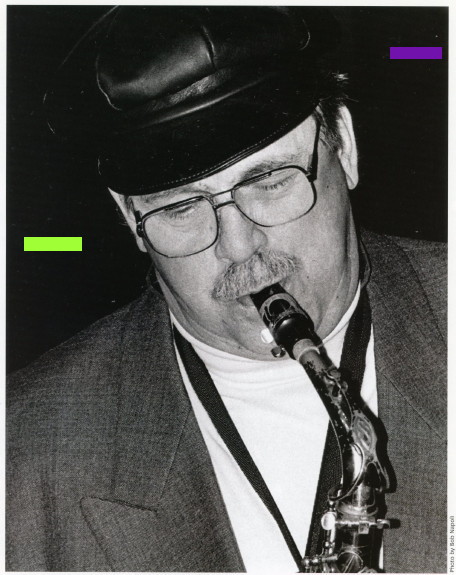


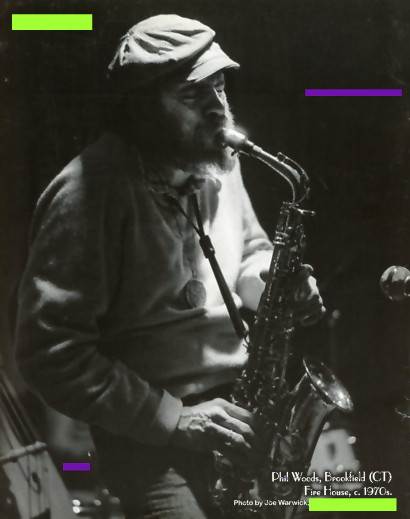
When alto master Phil Woods declares that he has "played with them all," it is a statement of justified pride.


He is approaching his 80th birthday in November of this year, and has spent more than 60 years as a working musician, achieving world-wide recognition as one of the greatest jazz saxophonists of all time. The list of his idols, influences, mentors and colleagues is a "Who's Who" of jazz legends: Lenny Tristano, Dizzy Gillespie, Johnny Hodges, Charlie Parker, Benny Carter, Quincy Jones, Oliver Nelson, Gene Quill, Clark Terry, Al Cohn and Zoot Sims, to name only a few.


From his upbringing in Springfield, Massachusetts to his roots in the Delaware Water Gap region of Pennsylvania and all of his travels in between, the story of Phil Woods is a remarkable account of high personal achievement in performance, composition, recording and jazz education.


In 2007, Phil was awarded the coveted Jazz Master designation by the National Endowment for the Arts, the highest honor that our nation bestows on its jazz musicians. The Smithsonian Jazz Oral History Program was established in 1992 by the Smithsonian's National Museum of American History and has documented to date the stories and experiences of more than 100 historically renowned jazz figures.


The following interview of Phil Woods was conducted on June 22-23, 2010 by Marty Nau and Ken Kimery of the Smithsonian Oral History Program (www.smithsonian.org). Phil passed away on September 29, 2015.


This is the third of a multi-part feature.


[MNJ: Those were two important seeds which were planted in you.


[PW]: Yes. Bird and Diz are the yin and the yang of modern music, and they were friends that took time out to nurture my talents. I never forgot that. I think of them a lot when I teach or when I play. How lucky I am to have known these men, and people like Quincy. I mean, I knew everybody -I know everybody - and I played with them all.


[MN]: I speak for a lot of saxophone players. We're quite envious.


[PW]: Well, you should be, because that was the critical time. That was a pivotal era in American history, when the music had not quite changed so much. I mean, you still had to be able to play for fire-dancers and sword-swallowers and strippers, and wear a suit and tie, and belong to the union and work for scale. You had to cut a show, and be able to read. You had to know something to be a musician, to get a gig. It meant something.


I don't want to put anyone down but that all changed with the arrival of Bill Haley and the Comets and the Beatles, who I love. There came a period when the guitar became the thing, you know? It was discovered that by playing three chords badly you could make a million dollars and play in Yankee Stadium. Our dream was to maybe make fifty bucks a week playing for strippers six nights a week, and that was fine. There was no such thing as the kind of numbers that are now bandied about. Then the corporations jumped on it, and not only the small mom and pop grocery stores were wiped out by the corporations but the little record companies, the small ones where records were done with love, you know? There was a whole thing that got swallowed up when the numbers got so big. And now it's gotten exponentially worse, I think. They're aiming at younger and younger audiences and making more and more money, you know...


[MN]:  Totally market driven.


[PW]: It's all market driven, thank you. Yes, exactly. We all know that but the music goes on.


[MN]: Right.


[PW]: It will survive. I don't mean to be a downer about it but it does exist.


[MN]: You're a realist.


[PW]:... and young people have to deal with it. It's something I never had to deal with. There was still a market for what I did.


[MN]: After Charlie Parker, what about another important saxophone player in your life; a comrade and a friend, Gene Quill.


[PW]: Oh, Gene Quill, that was my man. Yeah.


[MN]: I love the stuff that you did with him.


[PW]: Yeah, well, we were brothers. We met at Teddy Charles's, Teddy Cohen his name was. He was from Springfield, Massachusetts. He played drums up there and was not a very good drummer. But he was the first guy to leave Springfield and come to New York. He went and the next thing we knew he was recording with Chubby Jackson, a tune called "Father Knickerbocker." He played the vibes solo on it and became very well known. Teddy's still living, he's still around. He used to have jam sessions at his loft on 50th Street, between Broadway and 7th Avenue, right at the subway stop there. I went to one of the jam sessions; I wanted to see what was going on. I was kind of a new kid in town. I couldn't give you the exact year but it was early fifties. I climbed up the stairs and I heard the introduction to "Robin's Nest." I said, "Hey, I know that," and I sat down. Teddy knew I was from Springfield so he was kind. He said, "Hey, you want to play?" I said, "No, I just want to check it out, see what's going on." I listened to everybody playing and started to feel a little more confident; maybe I'll play a little.


So I started to take my horn out when I heard this alto player. He said

[Phil mimics in an impatient, clipped cadence] "What do you want to play?" I said, "Uh, your choice, sir" And he said, ""Donna Lee,' fast." I said, "Kick it off, bro," you know? [Both laugh} He kicked it off and we hit the head and it sounded like one alto. That was Gene Quill. We immediately fell in love and played all night, had breakfast, and then went back to the bar. That's something that's always amazed me about jazz music. I think it's the only industry in the world where even if somebody plays better than you, you will nurture him and help him. Like when Cannonball came to town. Now, here was a guy who was messing with me and Jackie McLean's gig, and Gene's, but we never tried to dissuade him. That's a corporate mentality, you know. If somebody knows more than I do, well then, I won't let him compete with me, man. That's not good. But in jazz and music and the arts you help somebody. If they play better than you do, that's not a threat; that's something you can learn from, so help them. It helps everybody.


I've always loved the sense of humor part of jazz. I loved Joe Venuti and what all those guys did. Quill would always say, "How's your career?" That's why I use that line, "How's your career?" [MN laughs] It's kind of silly in jazz but that was Quill's thing. Or, he'd be at a bar and there'd be a young guy drinking and Gene would say, "Well, what are you killing yourself over?" [Both laugh] Well, I had heard him play with Art Mooney's band up in Springfield, Massachusetts when I was a kid. He had a couple of years on me but he was very young then. I remember hearing him when I was just starting to play the alto. He played a solo on "Stars and Stripes Forever," like a jazz arrangement and I said, "Whoa." So, I sort of knew who he was but then we became tight. Anyway, I remember one time he played with the Johnny Richards band and he just played a blazing solo. I think it was on “Tappan Zee," one of his featured tunes; faster than hell, a brilliant solo. He could play fast, man; and a great clarinet player, too. As he came off the bandstand to go back to the dressing room, somebody at a table said, "Gene Quill, all you're doing is imitating Charlie Parker." Gene whipped around and handed him his horn, and said, "Here, you imitate Charlie Parker."


[MN]: Not so easy.


[PW]: Not so easy. That's all you're doing? Here, [chuckles] you want to try it?


[MN]: Especially back then.


[PW]: Yeah, especially back then. But Gene couldn't handle success; he burned himself out. He went back to Atlantic City and had a lot of health problems and didn't quite make it. But I think of him a lot, we were brothers.


[MN]: Phil, earlier we didn't get the name of your parents and your brother, just for the record.


[PW]: Oh yes. My mother's name was Clara Mary Markley Woods, and my father was Stanley Joseph. My brother was Stanley Joseph, Jr. My namesake uncle was Phil Markley, who was a representative up in Boston. He was a politician, a good man. He and my dad had a business together and were very close.


[MN]: Were you lucky enough to have your parents around for a long time?


[PW]: Yes, they both lived well into their eighties. They knew me when I was with Dizzy and they got to know Quincy and Dizzy. They were very proud of me. In fact, they came to see me when I was with Jimmy Raney, the guy who discovered me when I made that record for Prestige. Ira Gitler was the producer and Ira told Bob Weinstein to get Phil Woods, he's really good. Charlie Parker had just died, so every record label was looking for an alto player. Jackie McLean and I... we were both very close.


In fact, when I was working at the Nut Club playing for strippers, Jackie was on the scene playing down there. He was doing a play called The Connection. Bird had just died - we both loved Charlie Parker. Jackie and I were sort of next in line, you know? We loved Charlie Parker but we thought maybe we'd get some gigs and we could feed our kids.


One time, Jackie came to my gig and said, "Follow me, come with me." He took me to the Bohemia, Oscar Pettiford's band was there, and this fat alto player was sitting in. We're at the back of the stage and we're listening to this alto player play. We looked at each other and, without rehearsing, we just said, "Oh, sh-t," [Both laugh] because it was Julian "Cannonball" Adderley.


It's another one of those stories where, when someone better than you comes along, you nurture them. We just heard this guy and said, "Oh my god, so much for that [Laughs]; it looks like we're still in trouble," you know?


[MN]: There seemed to be plenty of work for everybody back then, though.


[PW]: Well, yes. Once again, everybody was dancing to the same beat, if you knew the songs, you know? I mean, Jackie, me, all the musicians of that era, we were walking Real Books [fake book - “fake” = uncopyrighted versions]. We didn't use Real Books-, there used to be little index cards. We knew all the songs. Harvey LaRose gave me the four Hit Parade songs of the week; those were all Harold Arlen, Duke. I knew every pop song; I knew every fake book. Very rarely do I find a song that I don't know and when I do, I learn it. That's half the fun. I'm still discovering some nuggets - being able to record a Wayne Shorter tune that he recorded once that nobody ever played, like "Infant Eyes," just for an example.


[MN]: You were telling the Gene Quill story ... "Here, you imitate Charlie Parker"... As jazz musicians, do we have to worry so much about getting our own voice? Doesn't it just happen if you work hard at it?


[PW]: I think so but Dizzy used to always say, "Steal." He was into Roy Eldridge when he came up. I asked him once, "How did you get from that to Dizzy Gillespie?" He said "Steal." He said, "I came from Roy but then I absorbed it." He was really very humble about his contribution. He always used to defer to Yardbird and, well, in a way, he was correct. He always called Charlie Parker "Yard" We called him Bird but Dizzy always said "Yard." He said, "Yard gave us the vocabulary." You know, the way of talking, the vernacular as it was, the rhythmic thing. That's all Charlie Parker; Bird could turn the beat upside down. You'd think he'd be upside down but he wasn't. And the way of phrasing [sings to imitate a fast Parker solo] and all the chromaticism, because music prior to that was all diatonic, more or less. I mean, there was chromaticism, a little bit, but only to get from one note to another. But he really got into using all 12 tones, and being able to point out the ones that were the really important ones in the harmony and the ones that were not, the passing tones. But to make them part of the phrase, which the French composers and Stravinsky were also doing. Music kind of developed as our ears grew, you know?


But, to find your own voice, I think you have to listen to everybody. I'm still listening to everybody. What amazes me is how the music travels when I hear, like, the cats from Venezuela. What a rich country, but they've got their music education. Do you know, they have the best orchestras in the world? I mean, the kids. You've got to check that out. Venezuelan musical culture is the strongest in the world. The kids are given instruments when they're young and all through school. They have the best players in the world in Venezuela.


[MN]: Wow.


[PW]: People keep putting them down because of that weird boss they have but, man, their culture is [chuckles] a killer. Whenever we try to cut back on budgets, the arts are the first thing to go. It's just ridiculous...


[MN]: They should be the last things to go.


[PW]:... because the jury is back. If a kid learns a little bit about music and art, and learns a language, he's going to be better at whatever he decides to do. I don't think that everybody who takes up a saxophone is going to change the world, but it's going to make you a better citizen. I've always kind of envied people who don't have to play for a living, who play for the fun of it. That's a pretty nice thing to have as a hobby. That's a great thing, not to have to depend on it. There were times when I was envious of that; it's a nice luxury to just enjoy the music and not worry about having to make a living doing it.


[MN]: In the sixties, you became involved in the studio scene.


[PW]: I got very busy in the studios, yes, because all the arrangers were still in New York: Quincy, Billy Byers, Elliot Lawrence, Al Cohn, Manny Albam, Johnny Richards. The list of the writers is long; I'm leaving half of them out. Sauter, Finegan, Finkle ... most of the writers were in New York and a lot of the soundtracks went down there. All of the jingles were done there so I would be working all day and all night. I got so busy that Jerome Richardson finally said, "Why don't you get a flute, man. You don't have to get very good at it. You already can play the clarinet; you get another double, that another 25 percent. If you get three doubles, you're going to get your root pay plus seventy five percent" Twenty five for the first and 50 percent for your, whatever it is, you know, it almost doubles your bread. By that time I had a couple of kids so I bought some cheap flute. I forget what it was; it wasn't a Haynes, that I know. I took it home, put it together, blew a couple of notes, and I fell into a dead faint. [MN laughs] Ahhhhhhhh! Oh my god. 


That's not what I took up the saxophone for. I loved playing the clarinet; I generally loved the two instruments. But I detested ... I said, this is obviously not for me, man; I was not a natural, you know? So I took the flute and paid my bar tab at Jim and Andy's with it. Jim Koulavaris gave it to his daughter, and to this day she's one of the great flute players in the world.

[MN]: No kidding?


[PW]: Yes, Annie Koulavaris.


[MN]: It wasn't meant to be.


[PW]: Yes. But, nevertheless, with one double I was busy, busy, busy, busy. In the sixties I was doing all kinds of stuff. But in jazz, I mean, me and Quill never went through the Lincoln Tunnel; we never got out of town. We were just a local band. We were hot but we never quite made it. We never got what Jay and Kai got as far as recognition. It was not bad but it came more after the fact than at the time. We were headliners at the Village Vanguard; we opened for Carmen McRae when she was new in town. Quill and Phil were still pretty hot, but only in the New York area, we didn't travel well. I remember doing a gig in Long Island somewhere; I think the Cork and Bib. The announcer gets up and says, "Here he is now, Phil Anqulll." [Both laugh]


[MN]: He put the two names together.


IPW]: Yeah. So, I was getting a little bored. You must remember that in 1959, I went to Europe with the Quincy Jones band. There was a show called “Free and Easy.” We were in costume; it was a remake of “St. Louis Woman,”

with songs by Harold Arlen, score by Quincy Jones and Billy Byers. The show only lasted about six weeks, and then Quincy said, "The flight's going home Saturday if you want to go home with a failed show. If you want to stay in Europe, I'll try to book it." So, to a man, we all said, "Yeah, we'll stay" I'm trying to imagine if that would happen today. I mean, the first thing the cats would say today is, "How much is the pay?"


[MN]: Right.


[PW]: We didn't say that. We had Clark Terry and Budd Johnson; these guys were established family men and all that and they were willing to stay in Europe with Quincy Jones because they wanted to play his music. Quincy took a bath. He lost a lot of money on that tour. People put him down today because he's so rich, you know, because he's doing so well. But I remember when he was nearly suicidal because he had lost so much bread. I remember living in Paris and I didn't have enough money to feed my kids. I called Quincy and said, "I'm busted, man. I don't have enough to get my kids' dinner" He said, "Come to town. I'll give you half of what I have." He had 300 francs and he gave me 150. You don't forget that kind of thing.


So, I got a chance to get familiar with the European thing. That band was very important. We opened for Basie's band at the Olympic Theatre in Paris, one of the primary venues for music - Jacques Brel, the "Little Sparrow," Edith Piaf. It was a famous music room. Basie was kidding, but a little serious, when he said, "Quincy, you're not bringing that band home, are you?" [Both laugh] Basie's band would say, "Man, these guys are good." We were good. We didn't use music stands; we didn't pull out a sheet. That's another thing. With Dizzy's band, we never pulled out the music. I remember doing a one-nighter up in Boston, at George Wein's famous jazz club, the name eludes me. I remember we had Al Haig playing piano at that time with Dizzy's band and we were hung up. We were all on the bus waiting to get up to go to Boston and Al was having union problems. Dizzy's waiting; we're waiting and waiting and waiting. Finally Dizzy sees Wynton Kelly walking by. He says, "Hey kid ..." He Shanghai’s him and puts him on the bus; it was "later" for Al Haig, man, we're off to go to Boston.


Anyway, the driver couldn't find Boston and we ended up in Providence. I mean, here you are with a major act like Dizzy Gillespie's Big Band and you can't find Boston, Massachusetts? We finally pulled up to the club at 9 o'clock. We were supposed to start at 8:30 or something, we were a half hour late. We just got off the bus, went and sat down, and started playing, [laughs] No music? What music? We had the book memorized from the Mideast tour and the South American tour plus a lot of gigs in between, Berlin and stuff like that. That's when you know you have a band. That's when you've got to take the Real Book and all of that written music and take it off the page. It's got to be an intrinsic part of your playing. You might want to glance at it as a reminder but you're not really reading it, you know it. You digest the intent and what the music's all about. That's kind of a lost art because nowadays there are not many ensembles that play that much together.


So, anyway, in the sixties I was selling beer and cigarettes and doing television. I did a Kraft TV show with Sal Mineo called The Drummer Man, and got a contract with Columbia Records, I think it was. That's where the Quill and Phil with the baritone, with Sol Schlinger...


[MN]:  What, Altology? 


[PW]: Altology.


[MN]: We were listening to that in the car on the way up. Great record.


[PW]: Three saxes, right?


[MN]: It sounded like four. 


[PW]: No.


[MN]: It could have been three.


[PW]:I think it was just three, two altos and a bari. It was strange. We did a couple of Bill Potts pieces. Anyway, the studio scene was swinging and TV was swinging - the Steve Allen Show -and we'd do jingles and record dates.

Every record date, whether it was a jazz date or a pop date, would use a big band; that was the ideal formation. You might have three or four reeds and just a couple of brass but it was always an ensemble. It wasn't done with three cretins with an EWI [laughs; EWI = electronic wind instrument]. You know what I mean? You had players playing instruments. The major singers, like Ella and Billy Eckstine, would have an orchestra and sometimes added strings. So, there was a lot of work, a lot of work, man. But by '68 it got to be kind of funny. In the sixties, I also had a school in New Hope, Pennsylvania called Ramblerny. It was a performing arts camp. Jose Limon was in charge of the music department. Lambertville [just across the Delaware River from New Hope in New Jersey] had the Lambertville Music Circus which on Monday nights would have jazz. New Hope was a pretty hip town, for writers more than musicians, but it was a very cultured town. I was there for about four or five years, between 1961 and '67, I think. The best year we had was when we had Richie Cole, Mike Brecker and Roger Rosenburg in the sax section, three of the greatest players ever. Unfortunately, Mike didn't last, but I remember Mike when he was a kid. I had a band there and I loved it. My kids got free tuition and Chan was teaching jazz singing and so I loved that. Every summer we'd have it; it was a two-month course.


[MN]: You were also a quarterback during this time, weren't you?


[PW]: Yes, I was a quarterback, me and Chris Swanson. Well, Manny Albam was an arranging teacher one year, and then Chris Swanson came on board; he lived in New Hope. So, yeah, we had teams. I used to be able to throw a pretty good ball. I still love football.


[MN]: You tell a story where you threw a bomb to Michael Brecker.


[PW]: To Michael Brecker, yes, and he caught it and broke his finger.


[MN]: Ugghh.


[PW]: One of the most picture-perfect passes and it was to win the game. Mike reaches up and misses it.


You know, it was like the movies.


[MN]: Now, how many people know that story?


[PW]: Not many. Mike broke his finger but he came to work the next morning for rehearsal. He had a splint on but he still played. It didn't slow him down, man. [laughs] We said, "Oh my god, our ace tenor man is messed up." He said, "Nah, I'm here. Pops, I'm with you." [laughs]


[MN]:  That's great.


[PW]: We did a lot of gigs; we were pretty hot. And all the ballet dancers loved to hang out where we rehearsed, at what we called "The Bird's Nest." It was the perfect thing for young jazz musicians, being in a performing arts camp. You'd learn that that little girl practicing her ballet steps at the bar, and this person doing musical comedy, they're all just as good as you are. You're not special because you're a musician. They got used to the allied arts as part of being a well-bred, cultured human being. We're all in it together; as a young artist, don't be a snob. All too often we think we're great.

But, as I say, there's nothing wrong with having all the chicks hanging out at rehearsals, [both laugh] Guys always play better.


That school went belly up after a few years. Joe Roccisano was there. Joe was from my hometown of Springfield, Massachusetts. He got the Phil Woods Scholarship at the same high school I went to. Technical High School. He was married to Joe Lopes's daughter. And Joe Lopes was the guy who prepared me for Julliard, because he was a clarinet player. Springfield had a lot of good musicians, and Joe Lopes was one of them. We just lost Joe not too long ago. Joe Roccisano died at the 42th Street subway station going home. He had a band called Rock Bop in New York and they used to work at the Blue Note every Sunday afternoon. He always had a little problem with his heart and he just dropped, man. He had just fallen in love and was going to get married but died at the 42nd Street subway station. It was so sudden; it just broke everybody's heart. Bill Charlap had to go identify the body and all. It was very sad. It ain't all fun, you know, and it ain't all fair either. He was a great alto player; I want to make sure people remember him.


So, anyway, the business was getting weird. Quincy left, and everybody was moving to the West Coast because that was where the gigs were. The record business had changed completely. It was now, you know, the three cretins with an EWI, and a lot of guitars. It changed and the gigs were falling apart. I remember, I said to Chan, "Let's go to Europe; let's go back," because we spent that year in '59 and '60 in Europe and we loved being based in Paris. I said, "I can't make the studio scene anymore. I want to play jazz" So, we packed up our matching luggage and our 24 cardboard cartons and moved to Europe.”


To be continued in Part 4.


Thursday, January 21, 2021

"Azure" - Phil Woods Quintet

Phil Woods - Part 2 - The Smithsonian Interview

 © Copyright ® Steven Cerra, copyright protected; all rights reserved.


When alto master Phil Woods declares that he has "played with them all," it is a statement of justified pride.


He is approaching his 80th birthday in November of this year, and has spent more than 60 years as a working musician, achieving world-wide recognition as one of the greatest jazz saxophonists of all time. The list of his idols, influences, mentors and colleagues is a "Who's Who" of jazz legends: Lenny Tristano, Dizzy Gillespie, Johnny Hodges, Charlie Parker, Benny Carter, Quincy Jones, Oliver Nelson, Gene Quill, Clark Terry, Al Cohn and Zoot Sims, to name only a few.


From his upbringing in Springfield, Massachusetts to his roots in the Delaware Water Gap region of Pennsylvania and all of his travels in between, the story of Phil Woods is a remarkable account of high personal achievement in performance, composition, recording and jazz education.


In 2007, Phil was awarded the coveted Jazz Master designation by the National Endowment for the Arts, the highest honor that our nation bestows on its jazz musicians. The Smithsonian Jazz Oral History Program was established in 1992 by the Smithsonian's National Museum of American History and has documented to date the stories and experiences of more than 100 historically renowned jazz figures.


The following interview of Phil Woods was conducted on June 22-23, 2010 by Marty Nau and Ken Kimery of the Smithsonian Oral History Program (www.smithsonian.org). Phil passed away on September 29, 2015.


This is the second of a multi-part feature.


“So, anyway, that was my modest beginning. All I did was practice 26 hours a day; I got thoroughly hooked on music. I went away to the Thousand Islands on a summer gig with a drummer, his name was Ray Chase and even his watch didn't keep time, you know what I mean? [MN laughs] He had a ratchet and gongs, and a big Chinese cymbal. And he'd have a couple of pops, and he'd want to play "The World is Waiting for a Sunrise" at what he thought was very fast. It was awful. But it was a summer gig and it paid for my—. That following year, I entered Manhattan School of Music as a clarinet major for a summer course.


[MN]:  They didn't teach saxophone at the time, did they?


[PW1: No, no, no. Saxophone was not, no. It was the yeomen of the military bands, that's what the saxophone was, according to one of the orchestration books. "Yes, the saxophone, a yeomen of the military bands," I never forgot that. That's classic.


[MN]: I remember that.


[PW]: And then I transferred to Julliard. I didn't care for the Manhattan School, the clarinet teacher and I didn't hit it off. But I do remember being in the middle of Manhattan, going to Manhattan School of Music which was in East Harlem, in the Latin section, Puerto Rican section. I went to classes and I loved education. I loved just learning about music, man, it was all part of the same thing. I didn't want to learn bebop, I just wanted to be a musician. I remember getting a shaved ice on the street. You know, they shaved the ice and put some raspberry syrup or something on it. I'm standing in the middle of Lenox Avenue and I just yell, "Yaaayyyyy!" I'm in New York and I'm having a shaved ice and I'm learning music. I never forget that joyous feeling of music-making. To this day, I think that if it's not a joy, if it's not fun, I want no part of it. That's almost 70 years later, 65 at least, and I'm still a very joyful player. I love what I do, you know? I love it. It gets more precious the older I get.


[MN]: You're a very passionate player, too. How do you keep that passion?


[PW]: Well, because it gives me such joy! I love doing what I do. I'm the luckiest man in the world! I do what I love to do, and I'm a success at it. I fly business class all around the world; I eat well; I love good wine; I love women. I just love the joy of visiting new countries and getting used to different civilizations, different ways, different forms of government, and how people live. I just love the exploration that goes with the discovery of traveling. I always tell young students: if you ain't got the fire in the belly ... I mean, if you've got a choice between being a brain surgeon and a tenor man, I'd go with the brain surgery, man. I think music is only for those who don't have a choice. I didn't have a choice. Once I found that sax, I was hooked. I mean, in the good way. That was what I wanted to be virtually instantly, it depends a lot on your first teacher, and I had Mr. LaRose who brought me right into the American Songbook.


So, then I moved to Julliard and no, there was no saxophone major at Juilliard when I went there. I entered in 1949, I believe. I think Joe Allard came in in 1950. But when you're in a conservatory or a college or university, changing majors can be a problem. So I always stayed with the clarinet because the clarinet had access to more music. I went to the library and started with scores, started at A and went to Z, and learned about classical music. I heard the formation of the Juilliard String Quartet. I went to alt the rehearsals of Stravinsky's "The Rake's Progress." I heard one of the first performances of Charles Ives's "Concord Sonata." I saw John Cage lecture. I used to go to the composer's forums at Columbia College, where Vladimir Ussachevsky demonstrated the first taped musique concrete [music constructed by mixing recorded sounds, first developed by experimental composers in the 1940s], the abstract kind of music that was prevalent in those days.


One of the great things about American culture is that the military always carries music with it. In fact, the reason the French love jazz so much is because of James Reese Europe and the great New York Infantry Band. It was a black band and they played marches. They played them with a New Orleans-kind of beat. The French fell in love with that. I think the reason why some of the best music in the world comes from Japan and Germany and Italy and Venezuela is the international aspect of American music. 


America's only original inventions are baseball, Mickey Mouse and jazz, you know? That's the only really original stuff that we've done.


We used to have the Voice of America all during the war. We seem

to love to make war, and we've always had a good band with us to entertain the soldiers and the officers. So, a lot of people around the world got to listen to the Voice of America with Willis Conover, which always played the latest jazz, I think from midnight to two o'clock in the morning. It traveled all over but especially in Russia and Iron Curtain countries. Even after the war there was always a propaganda Voice or America or Radio Liberty. There would be a lot of |azz because even at the seat of government they realized that jazz was an important thing. The only drawback was that we never had a Voice of America or Radio Liberty for Americans. We didn't educate our own people about the importance of jazz. That work is still going on.


[MN]: We're kind of paying for it now, aren't we?


[PW]: Yes, we are, we are; of course we're paying for it. We always will because it's all mixed up with race. Anything that the blacks did has got to be inferior. There's still that racism going on. But we're a very young country, you know. Other countries have gotten over all that nonsense to a degree. Yeah, [chuckles] we're paying for it.


[MN]: Now, if I could ... there's a lot to chew on from when you first started talking to now, and it seemed to all start from kind of a non-interest in the saxophone until it actually got in your hands and you took that first lesson.


[PW]: No, I would play clarinet all day long and then at night I played the saxophone all night. I'd do my exercises and I'd listen to Charlie Parker. No, 1 knew that I was basically a saxophone player. But I was at the conservatory level, I'm competing with—, I didn't think I was worthy, you know? I was twelfth in line for the training orchestra, but that was fine. I found after a couple of years in New York ... I mean, I was raised a Roman Catholic, and all of a sudden I find out there's no God. I was shocked but I got over it, you know what I mean? The sophistication of all my friends in New York; discovering how to drink and smoke and carry on, and all that. But the sax was the primary. I did a lot of gigs that put me through school, but after my second year I realized I was not going to be a clarinet player, no way, although I was a good one. But I knew I'd never make a living at it. It could be a nice double, and it always was. But no, sax was still primary.


[MN]: But, at the very beginning, when your uncle left it, it was something that you ...


[PW]: Oh no, I was going to melt it down. It was just a thing to please mom. No, without Harvey LaRose and that first couple of lessons ... But it was relatively quick, within a couple of months. I mean, I loved doing it. When I was a kid, 12,13 years old, I used to march around the dining room table doing long tones and scales, arpeggios. I'd count 50 laps then I'd take a break.


[MN]: Is that right?


[PW]: I'd do 50 laps of long tones and I'd do 50 laps of scales and 50 laps of arpeggios. Then I'd put the records on and transcribe all the heads and analyze the solos. I'd work on those. I had a piano and I'd go to the piano and figure out what the chords were. And I learned -I taught myself Debussy, "Maid with the Flaxen Hair," and I got the Bartok "Micro Cosmos." I mean, I worked at being a musician. I didn't want to be a clone. I was no Charlie Parker but I wanted to be a good musician. And I always wrote. I wrote charts for my high school band. I wrote charts for a band called Carmen Ravosa and his Rhythmaires. We used to rehearse at Carmen's house. His brother later became mayor of Springfield. I mean they were highly placed. I remember when I had my first record by Charlie Parker, "Koko," and I brought it to rehearsal. I said, "Wait 'til you guys hear this!" I put it on and they said, "Oooo, that's terrible, you like that?" I remember I quit the band and I went home in tears saying, "You're wrong! This is the greatest music in the world!" And I was right and they were wrong.


But I knew it as soon as I heard the first notes; I knew that Bird was great, that this was the new music, t was perched historically at that great period

when jazz was still relatively new. It came from the dance bands, the big bands. There were plenty of gigs; everybody was dancing to the same beat. But I knew there was more to it, and the exploration and the education took a lifetime. I'm still working on it. But that's the passion I think you hear. I'm still making discoveries about music; I don't think you ever really know music, or know anything about art. It's the voyage; it's the journey, the getting there. There's always some stuff somebody has found out, and it's up to you to pry it out, get it into your psyche, and turn it into your thing. I'm still discovering a lot of stuff that I didn't know.


[MN]: So, you're easily inspired, aren't you?


IPWJ: Yes, I am. I work at it though. I work at inspiration. I think it's 90 percent perspiration and a little inspiration. I do all my writing at the computer. I mean, I work at the keyboard to get the ideas and all that but then I go right to the computer and orchestrate. I find it a great convenience to be able to hear it while I'm writing. I don't think you can create at the computer but for orchestration, it's great.


[MN]: Did Johnny Hodges instill in you that if you don't have a sound you don't have anything?


[PW]: Oh yeah, but Benny Carter, too. You know that whole early tradition of the alto saxophone. I mean, if you go to the movies and you hear an alto, somebody's kissing or somebody's dying. [Both laugh] It's a very romantic or perilous instrument, you know what I mean? But it always signifies something very deep, especially the alto.


[MN]: Now, you're in New York City. Do you have a memory of a big gig or a big break that maybe started the ball rolling more?


[PW]: Well, I started to work Monday nights at Birdland with Jimmy Chapin. His son became a very successful pop singer [Harry Chapin]... The dad was a great drummer and he had a Jazz band. Billy Byers was the trombone player, I was the alto player, Don Stratton was the trumpet player. We used to work Monday nights. I moved to Brooklyn which is where the Goodsteins, the people who owned Birdland, were from and they kind of took me under their wing. They used to bring me food and stuff like that, as a kid trying to make my way. I was hired to do the Birdland All-Stars in 1956. But, you know, I actually did my first recording in 1954, with Jimmy Raney. Ira Gitler sort of discovered me. Oh, Jimmy discovered me at a gig in Brooklyn at a place called the Pink Elephant in Brighton Beach. Prior to that, I worked at Tony's Bar on Flatbush Avenue with a guy named Chasey Dean, who was at Juilliard with me. He would always get the gig and he'd always use me. He was a good tenor player, and a very good clarinet player. So, I was starting to get a reputation in New York.


My first band was with Charlie Barnet. Charlie Barnet had the first mixed band: six alcoholics, six junkies, and six potheads. [Both laugh] I played fourth tenor on the band. We did a tour of tobacco warehouses, and then the next year a tour, and a few months later he toured again and I was put on lead alto. You see, he liked what I did on alto. So, some of that journeyman work led to my getting a good reputation in New York, and it led to getting the Monday nights at Birdland. I remember playing with Neal Hefti on a weekly basis. I remember Pee Wee Marquette coming up to me saying, "Give me a quarter." I said, "Whaddya mean, give you a quarter. Why?" He said, "Because I make you look so pretty on your ballad feature" I said, "Get out of here," you know? So, I go back to work and then I stand up to play my ballad and all the lights go off and the microphone is dead. 


[MN laughs] I said, "Here's a dollar." [Both laugh] Yeah, the reality of show biz.


Birdland would do a tour every year of the best players in jazz, and there was always a young band on the tour also. I played with Kenny Dorham, Conti Candoli and Al Conn; we played with Sarah Vaughan's rhythm section. The tour also included Count Basie's band, Lester Young, the Bud Powell trio, Al Hibbler, Sarah Vaughan and her trio. I remember showing up in front of Charlie's Tavern. He said, "You know, the bus is going to leave at 9 o'clock for the tour." I show up and, man, there are all my heroes. Oh my god, you know? What do I do? Where do I sit on the bus? If you sit on the wrong seat, somebody from Count Basie's band is going to pull a leg out of your ass. I mean, there was a certain pecking order. I heard a voice from the back of the bus say, "Back here, Phil!" It was Al Cohn. He had a seat over the wheel in the next to the last row, the bank head in the back and then the last two seats. We sat right behind Lester Young and Bud Powell on that tour.


Now, it's the middle of March, I believe and we  get through the Lincoln Tunnel and we're going through Jersey. I don't know where we're going but it seemed like we're driving for hours, and I said, "Gee, Al, I've got to go to the bathroom, man." He said, "You have to go?" "Yeah," I said, "I have to go real bad." He said, "Well, go up to the driver. I wouldn't say 'I have to go the bathroom,' that's a little Massachusetts Catholic, you know what I mean? Tell him you have to make a pee stop." I said, "Pee stop? Okay." So, I went up to the driver and said, "Puh-puh-pardon me, sir. Uh, are we going to be making a pee stop?" He said, "You have to go to the bathroom?" [Both laugh] I said yeah so he opened the door. It's the middle of March; snow and sleet are pouring in; I'm trying to hold onto my Johnson, and holding onto the door, and the pee is hitting me in the face and, man. But I got good at it. I learned how to do that.


[MN]: They don't teach you that in school.


[PW]: They don't teach you that at school; not at Julliard, no, or Berklee for that matter. Even a jazz school doesn't have that course. But, I mean, these cats ... Basie's band would get their itinerary and it could be a six-week tour, eight- week tour. They'd go out for a while, you know? This tour was a long tour; we went everywhere. Basie's band could tell you where they were going to be eating, where they were going to be sleeping, who they were going to be sleeping with, where they were going to get the best chicken dinner, how much it was going to cost. I mean, in every town they had it covered. Talk about an overview; I mean, the itinerary in their life was clear. They knew exactly where they were going to be [chuckles] and not only on this continent but when they went to Europe, too. After years and years of travelling you get your chops. That amazed me in those days.


So, that was my big break. Quincy Jones heard me on that tour and hired me for the Dizzy Gillespie band that was going to the Mideast on a State Department tour. I was invited because they couldn't send an all-black band as a representation of America. I mean, even though that was the reality, they had to get some white faces ... so I was hired to play alto. There were a few of us: Frank Rehak, Marty Flax and myself, the three white guys on the Dizzy band, a result of tokenism. But, man, it was the chance to play with the world's greatest players, you know?


We flew from Idlewild to Dublin to Rome; we picked up Dizzy in Rome. Quincy rehearsed the band in New York, but Dizzy was on tour with Norman Granz' "Jazz at the Philharmonic" tour so he never met the band. We picked him up at Rome airport, Fiumicino. I remember we were sitting on the plane while they're refueling it and we're smoking. The plane was off on the tarmac, we're not at the terminal. It was in the middle of the night and it was hot. So they opened the plane doors, and we heard a trumpet [Phil sings] "I just found joy, I'm as happy as a baby boy ...", "Sweet Lorraine," which was Dizzy's wife's name. And here comes Dizzy on a baggage cart. They threw down a rope ladder and he clambered up and off we went. Our first stop was in Baghdad for gas. Our first gig was in Abadan, Iran, where they do all the oil. I mean, in Iran we could hear them shooting at each other, at Iraq, right across the river, even then back in '56. We went to Beirut; we went to Damascus in Syria; we went to East and West Pakistan, before Bangladesh, Karachi and Dakar; we went to Istanbul and Ankara in Turkey; we went to Athens, Greece.


[MN] A lot of hot spots.


[PW] Pretty much all of the trouble spots, yeah. But, I thought it was great.

I mean, what a great thing, to send jazz to kind of cool down the hotspots, you know what I mean? And it worked. That's when I discovered the power of American music. People were listening to the radio, the older people that had radios; not so much in the Mideast but in Greece and in Turkey and the more enlightened locations. Beirut was the most pristine; a beautiful, a duty-free port, a wonderful city, great. And they paid so many dues in the past it was incredible. But, yeah ...the power of the State Department. Then the following year we went to South America.


[MN]: In 1958?


[PW]: '57. It was part of the same tour, same year. In 1958, I had left the band. [In 1957] We went off to Guayaquil, Quito, Ecuador, where you could buy a shrunken head in the hotel lobby gift shop. They were not real, but... [MN laughs] Now, where else did we go? We went to Rio; I remember Rio and meeting Jobim. He was in the front row. Milton Nascimento was just a little kid. And they remember that, because Dizzy was the first cat to kind of get into the Latin crossover thing, with Chano Pozo.


He was the best leader; everybody knew who was in charge when Dizzy was around. He became a dear friend. I loved him and I think he loved me. We got along very, very well. I worked with him for years and years. We'd hang out. I remember the first time in Abadan, Iran. We no sooner landed than Frank Rehak, who was a pretty wild guy, got right to the opium den. He came back with some of the best smoke I've ever, ever... I didn't know that much about it but they said it was good, you know? So, it's the first rehearsal; I'd never met Dizzy, and we're rehearsing in Abadan, Iran. It's outdoors; there are no dressing rooms, just a little stage. Frank brought some of his "goodies" and we're underneath the stage and a pipe is being passed around. All of a sudden everybody disappears. I'm holding the pipe, and here comes Dizzy. He said, "What have you got there?" I said, "It's not my pipe." Yeah, that's good, that's a good line, Phil. That'll get you off the hook. He said, "Young man, do you realize this is a State Department tour?" I said, "Yyyyyyyeah." He said, "You could be jeopardizing my gig, and every man on the band. I mean, it could be the end of detente, the end of world peace." He had me going. I knew I was going to get sent home. He gave me like about 10 minutes of this tirade. I mean, "You gotta be kidding ... jeopardize every man ... blah blah blah"Then he said, "Is it any good?" I said, "Birks, I'm no expert but it's the best grass I ever smoked." And he said, "Then give me some before I fire your white ass." [Both laugh] But that's the kind, I mean


[MN]: He was fun.


[PW]:... He was fun. He wasn't a drug addict. I mean, he'd smoke a little bit, but that was about it. He was just messing with me, man, you know? But I never forgot that. He liked to laugh, too. I said, "You son of a gun, you really got me that time." And he continued to do that.


[MN]: You learned a lot from him, didn't you?


[PW]: Yes, I learned a lot. School is always open with people like Dizzy. Let's say the plane is late; we're stuck at the airport for an hour. Well, we'd all be around the bass and Dizzy would say, "Do this [Phil taps out a rhythm] and I'd say, "I can't do that, I'm a white guy," and he'd say, "Yeah, you can do it, you can do it," you know? I remember Dizzy Gillespie and Art Blakey kidnapping me one time a few years later. I'm playing for strippers, you know? I'm working downtown, and, I mean, I'm not making any progress; I'm playing at weddings. I had graduated from Juilliard. I didn't get my diploma but I did my four years, let me put it that way. I didn't make my final exam but that's a long other story. So,... they kidnapped me because I was in a maudlin groove. I was drinking too much; I was not content with my existence; I was not making any progress. They threw me in a cab and took me to Dizzy's house. They said, "What's your problem?" I said, "Oh man, I'm just not getting anywhere." And they said, "Well, if you clean up your act a little bit, stop drinking so much, you might be somebody" I said, "You think I can play?" They said, "Yes you can play, but you've been behaving like an asshole" I said, "Yeah, but I'm a white guy" And Dizzy said, "Time out, BIG time out here." He said, "Woods, Charlie Parker didn't play this music for black people or for red people or for green people. He played it for everybody. If you can hear it, you can have it"


[MN]: That's a great thing.


[PW]:I thought that was a great... And he said, "You know, you can't steal a gift. Bird gave it to us. You can't steal a gift" I never forgot that night.


[MN]: There's a whole lot in that statement: "If you can hear it, you can have it."


[PW]: A whoooole lot in that and it changed my life. I stopped drinking in excess. I mean, I didn't become perfect but I went up another notch. If these guys think I'm pretty good, okay, bring it on. Let me get into it and stop messing around. I got back on track; I went back to work. I was working at a place called the Nut Club in the Village, but I was still not all the way there. I'm not happy with the reed, and the mouthpiece, and the horn. I'm at that stage of the saxophone, "Oh this goddamn horn is kicking my..." you know? I've got to get a new horn, a new reed, a new mouthpiece, a new ligature, a new strap. And I'm playing "Harlem Nocturne'' and "Night Train" every night, man, three shows for strippers, with Nick Stabulus and Teddy Kotick. Gil Evans used to come to sit in. We played jazz in between shows but during the shows you'd play for the sword-swallower and the fire-eater and all that. As they walked in the door, the customers were given a wooden hammer to beat the crap out of the table for their favorite

stripper. I worked there for six months, and it was really not quite what I had in mind. I'm playing a little jazz but it's becoming too much like a job.


Then somebody said, "Hey Phil, Bird's across the street jamming." I said, "Oh, really." So, man, I ran across Sheridan Square to a joint called Arthur's Tavern, it's still there. And there was the great Charlie Parker, on a bandstand that was about as big as three or four card tables, a little teeny stage. And there was a piano player playing on a little teeny piano; he was about 90 years old and his father was on drums. His father had a couple of pie plates and a little snare drum. And there's Charlie Parker and he's playing on a baritone sax. I later found out it belonged to Larry Rivers, who was a great painter, one of the guys, but not a very good saxophone player. I don't know what Bird was doing with it but there he was. I said, "Mr. Parker, perhaps you'd like to play my horn" He remembered me from the cherry pie days. I mean, he knew who I was; he knew who all the young guys were. He said, "That'd be good, Phil, this horn is kicking my butt, man"

So, I ran across Sheridan Square back to my gig, my "Harlem Nocturne"-10-times-a-night gig, and my horn that I didn't think was working, and my mouthpiece I didn't like, and all that. I grabbed it and came back and sat right next to Bird. I handed him the horn and he played "Long Ago And Far Away." I'm listening to him play my horn and it occurs to me there's nothing really wrong with this saxophone, you know? [MN chuckles] It seems to sound pretty darn good. The reed's working, the mouthpiece is working, even the strap sounded good, man. [Both laugh] Then Bird said, "Now you play," and I said, "Oh my god."


You know, when I run across young students and I ask them to play something, they say, "Oh, I'm too shy." And I always say, "Shy is the enemy, man, you've got to get over it. When you get an opportunity, when the door knocks, man, you've got to answer it in full regalia and give it your all" I mean, I was young but I knew that. So, when Bird said, "Now you play," I gave it my best shot because I'd been around the block a little bit. He leaned over and said, "Sounds real good, Phil" [Phil pats his chest] "Be still my heart... be still my heart!" I mean, between what Dizzy said to me about "Get your act together," "You can't steal a gift," and when Bird said, "Sounds real good” ... two giants that changed the whole planet and they thought I was worthy. So now I've got to really get my act together. That was a great lesson. But those lessons are no longer available. You don't get that on the college level. I mean, you might meet a great teacher, don't get me wrong, but not a person of that caliber: a poll winner and a guy who's changing the world of music, you know what I mean?


[MNJ: Those were two important seeds which were planted in you.


[PW]: Yes. Bird and Diz are the yin and the yang of modern music, and they were friends that took time out to nurture my talents. I never forgot that. I think of them a lot when I teach or when I play. How lucky I am to have known these men, and people like Quincy. I mean, I knew everybody -I know everybody - and I played with them all.


To be continued in Part 3.


Wednesday, January 20, 2021

Phil Woods Quintet - Live From Nick Laren's Jazzcafe

Phil Woods - Part 1 - The Smithsonian Interview

 © Copyright ® Steven Cerra, copyright protected; all rights reserved.


“Perhaps the professor emeritus of bebop saxophone, as it has endured from one century to the next. He got his start in his early teens, even taking a lesson or two from Lennie Tristano, before going to Juilliard in 1948. When he came out, he had already mastered a formidable bebop style on the alto saxophone: fast, lean, sweet-sour on ballads and with the blues always hovering in the background, it was a sound which soon drew parallels with Charlie Parker, although Woods's kind of emotion had nothing of Parker's tragic power.” 

- Richard Cook’s Jazz Encyclopedia


When alto master Phil Woods declares that he has "played with them all," it is a statement of justified pride.


He is approaching his 80th birthday in November of this year, and has spent more than 60 years as a working musician, achieving world-wide recognition as one of the greatest jazz saxophonists of all time. The list of his idols, influences, mentors and colleagues is a "Who's Who" of jazz legends: Lenny Tristano, Dizzy Gillespie, Johnny Hodges, Charlie Parker, Benny Carter, Quincy Jones, Oliver Nelson, Gene Quill, Clark Terry, Al Cohn and Zoot Sims, to name only a few.


From his upbringing in Springfield, Massachusetts to his roots in the Delaware Water Gap region of Pennsylvania and all of his travels in between, the story of Phil Woods is a remarkable account of high personal achievement in performance, composition, recording and jazz education.


In 2007, Phil was awarded the coveted Jazz Master designation by the National Endowment for the Arts, the highest honor that our nation bestows on its jazz musicians. The Smithsonian Jazz Oral History Program was established in 1992 by the Smithsonian's National Museum of American History and has documented to date the stories and experiences of more than 100 historically renowned jazz figures.


The following interview of Phil Woods was conducted on June 22-23, 2010 by Marty Nau and Ken Kimery of the Smithsonian Oral History Program (www.smithsonian.org). Phil passed away on September 29, 2015.


This is the first of a multi-part feature.


Marty Nau [MN]: Okay, this is Marty Nau here with the Smithsonian interviewing Phil Woods, a certain dream of mine come true. And Phil, for the national record ...


Phil Woods [PW]: Yes, sir.


[MN]: ... for the Smithsonian they'd like to have you state your full name.


[PW]: Gene Quill, [laughs] No, I'm Phil Woods. I was born in 1931, November the second, which means today I'm 78 but I'm very happy to say I have the body of a 77-year-old man.


[MN]: I noticed that immediately.


IPW]:I was born in Springfield, Massachusetts. I had one brother, seven years older. Any other facts you'd like to have?


[MN]: Well, could you talk about your parents?


[PW]: My parents. Well, my dad was reported to be a violin player when he was a kid. Music was very important in our family. My mom loved music. There were four or five sisters; and on my father's side, there was an uncle who played saxophone. One of my mother's sister's husbands played saxophone, and I was given the sax in the will when he died. So, music was an integral part of our life in those days.


Of course, in those days, everybody was dancing to the same beat. We all knew who Irving Berlin was. I remember taking rides with my mom and dad. They loved the movies and when we'd go away on vacations and stuff we would sing songs. We knew the score to The Wizard of Oz, "Over the Rainbow" and "Blue Skies" and what have you. It wasn't like music has become, where the youngest kid is up here with his iPod listening to some kind of garbage music, and grandma's listening to Lawrence Welk, and mom and dad are listening to Dick Powell or Bing Crosby or something. Everybody was listening to the same sort of stuff. It was part of the woven fabric of American life. It was the American songwriters, you know, Irving Berlin. I mean, where would Charlie Parker be without Jerome Kern?


As the popular music progressed so did music, from the traditional Irving Berlin kind of basic harmony up to Jerome Kern and Cole Porter. It became more sophisticated. That was part of my life, although nobody played an instrument in my family. Mom and dad always nurtured the arts.


My mom subscribed to the Book-of-the-Month Club. I remember her reading Seven Pillars of Wisdom by D. H. Lawrence, and I remember she was reading Mein Kampf, you know, because he was very popular in those days. [MN laughs] I mean, others would say, "Oh, your mother read Mein Kampf'' and I would say, "Yeah!" It was part of history, you know? The culture was important but not overly. We were lower middle class. My dad was into advertising. He used to buy sides of farms up in New England and put ads on the side of the barn. I remember he was always into commercial advertising. When television first came out and we'd complain about the commercials, he'd say "Well, that's who's paying for the show, god darn it!" [MN chuckles] You know? So, he was aware of the fact that the dollar is important. As he got older he'd say, "Did you make a buck? Did you make a buck?" He was always concerned about that.


My parents were very supportive. My dad and mom said, "Do whatever you want" When I said I wanted to be a musician, they said, "Pursue whatever you want, but just do us a favor. Be good at it." Don't mess, don't jive. If you're serious, be serious. They never said [with a distasteful tone] "a musician," although at times, as life went on, they were maybe not quite so sure, with some of my peccadilloes. But they were always very supportive of what I did. I loved them very much. After my dad did the advertising thing, he had his own sign company. Then he was a fire commissioner in Springfield for 16 years. He was always helping people, I remember that. If a fire went beyond three alarms, they'd call my dad and he'd wake me up. So, I've always had an affinity for firemen. My older brother became a fireman when he got out of the Navy after the Second World War. I used to work very much in support of the local volunteer fire department, which made it ironic when my house burned down, [chuckles] The fire department said, "Oh, not Phil's house," you know? I still continue to support the firefighters. I think those are our heroes, as 9-11 certainly proved.


I went away to New York to study with Lennie Tristano right after high school. I graduated from high school when I was 15; I skipped a grade. I discovered the saxophone when I was 12 years old. I've got to talk about my first teacher, which was Harvey LaRose. I had this uncle, Norman Cook was his name, and there were rumors about him of nefarious dealings with Amazon tribes and digging gold in Alaska and the Klondike and prospecting for oil. I mean, he was into all kinds of stuff.


[MN]: Hmmm.


[PW]: But he had a saxophone and at the time he was very sick. In fact, he was dying of cancer. He lived downstairs from where I lived with my mom and dad. He lived downstairs with my grandmother and my mother's sister. He was the husband of my mother's sister, Phyllis. I discovered this case underneath my grandmother's wicker chair in the living room. So I opened it up and, man, there was a shiny gold saxophone. I said, "Whoa" you know, because at that time, it was during the Second World War, and I was into making toy soldiers. You know, melting lead and all that, and making them and painting them and doing all that. I think when I saw the saxophone my first instinct was to melt the sucker down, you know, [MN chuckles] and make a golden horde of warriors.


My nefarious intent was misunderstood to mean I had an interest in music. So when this cat died I was given the saxophone, which I proceeded to put back in the closet and go about melting lead. I couldn't melt the saxophone at that point, you know. my mother would have killed me. So, after about three, four, five, six weeks my mother said, "Well, Phillip, what are you going to do with this saxophone?" I said, "I don't know. Mom." She said, "Well, you know, your uncle went through a great deal of trouble to leave it to you" And even at that tender age of 12, I realized that dying could be construed as a great deal of trouble, which is one of the reasons I'm saving it for last.


[MN]: [chuckles] Yes.


[PW]: So, okay, I got the Yellow Pages, and I go to "Drum Shop - Saxophone Lessons - Mr. Harvey LaRose." I called the drum shop and I said, "Can I speak to the saxophone teacher, please? Mr. LaRose?" I said, "Hello Mr. LaRose, I'm ..." you know, I made an appointment for a lesson. And Mr. LaRose said, "You got it?" And I said, "Yes. Should I bring the saxophone?" And I could hear this kind of thing, a sigh, a yawn of disgust. He said to himself, "Oh, I've got a live one here." He said, "Young man, it would be a good idea to bring the saxophone to your first saxophone lesson."


[MN]: That would be nice.


[PW]: I didn't know! I had no idea. I thought you had to be anointed. I thought you had to learn to read music. I didn't know that you could just start playing it. So, I went and started playing it. He would give me the first lesson, but I was just pleasing mom. Okay, great, and I put the horn back in the case and went about my business. I'd put it back in the closet, and then I'd go for a lesson a week later. To make a long story short, as they say, I could play the lesson without even trying. I didn't think it was any big deal. And if I had gotten a teacher, one of those straight-laced cats who would say, "Hey, how dare you? You're playing by ear." Mr. LaRose recognized the fact that I must have a fair amount of retention, and I had a good sound. I always had a good tone. I mean, I was built—. That's what I'm here for. I finally decided that was my Kismet -I was meant to be a saxophone player. At that time I didn't know, but I had a teacher that recognized the fact that I could play without even trying. If I tried I could really be something. He didn't yell at me, and within a year I was hooked, man.


He started to give me the four pop songs of the week. You know, in those days they used to have a little three-page thing, you would have four songs from the Hit Parade that week. Now they're all standards, mostly good tunes. There would be an E flat part, a B flat part, a concert part, and then a bass clef part and piano accompaniment. Mr. LaRose played alto and clarinet, primarily - no flute - violin, guitar, piano. He arranged. He taught all of those instruments and arranging, and played with all the big bands. He was not an improviser but what a teacher, man. I'd say within a year, a year-and-a-half, I'd get these four pop songs of the week and I would play the songs and Harvey would accompany me at the piano. Gradually he'd tell me, well, this is a G-seventh here, and here's what you can do; here's a scale, you can play on that. You don't have to play the melody. He'd say, "It's good to play the melody but you can enhance it, you can decorate," and eventually I got into improvisation.


The first jazz pieces I ever played were Benny Carter transcribed solos, and he would accompany me. He would teach me the chords of all of Benny Carter's oeuvre. They were only transcriptions of his solos but they had piano accompaniment and he wrote out the chords for me again. This was getting a little more complex than just playing a song. These were jazz solos by "The King." One week, he gave me a Duke Ellington song called "Mood To Be Wooed." That was Johnny Hodges's feature for that season; you know, every year the book would change because Duke was always writing new music.


There were a bunch of us kids in Springfield; they used to call us The Springfield Rifles. There was Hal Serra on piano, who is still around in New York, I just had lunch with him. Sal Salvador was on guitar, he later went with Stan Kenton. Joe Morello was our drummer. I think everybody knows who Joe Morello was but, in case you were asleep, he played with Dave Brubeck and did the first drum solo in "Take Five," Paul Desmond's song. And Chuck Andrus was on bass. Chuck later played with the Woody Herman band with Nat Pierce. So, that was our kid band, we were pretty good. Hal played piano and he lived right up the street from me, and I used to look over his shoulder. I was into Kenton and big band stuff and he taught me about Artie Shaw and the Gramercy Five and the Benny Goodman Sextet. I got to learn about small group stuff. And then we heard our first Charlie Parker records, and that's all she wrote, pun intended. That really reinforced it. I mean, I knew when I heard Bird that there was some stuff happening.


Meanwhile, Mr. LaRose had given me this solo on "Mood To Be Wooed," and we went to hear Duke's band. Johnny Hodges stepped forward, and all the lights went down to blue, and Johnny came on and played "Mood To Be Wooed," and I said, "Ah, that's how it goes!" That also reinforced; to see someone play live, there's nothing like that. And then our first Charlie Parker records, of course. We all got hooked on bebop. Hal started to take lessons with Lennie Tristano, the great guru from Chicago, the blind pianist who recorded the first "free jazz" He did the first completely improvised music; he was the first cat, as far as I know. In fact, I'm pretty sure, historically, that it would bear me out, that he played the first what they call "free jazz." I like to play expensive jazz, [MN laughs] but that's another story, [chuckles]


So, we'd go to New York City from Springfield, Massachusetts. It's about a three-hour bus ride, and then we'd take a subway out to Long Island, I couldn't tell you exactly where. We'd take a bus to Mr. Tristano's house - he was always Mister, of course, in those days - and take a lesson. It was only for a summer; I took about six or seven lessons and I realized that I had a lot to learn. I wasn't quite ready for what Lennie was putting down because it was pretty advanced stuff. But I took his lessons to heart. A lot of it was playing the piano, and I've always played the piano. From watching Hal play, I'd go home and try it out. I think any musician worth his salt has to come to terms with a keyboard.


You also have to come to terms with the "Big City," and going to New York from Springfield to take a lesson with Tristano was a chance to come to terms with the big city. New York was the center of jazz at that point; it still is as far as I'm concerned. After the lesson we would go to Romeo's on Broadway for some spaghetti, and you knew it was fresh because it was sitting in a big silver 18-gallon pot in the window. Al dente was not in our vocabulary at that time. Then we'd go to Main Stem Records and buy the latest shellac - the latest Bud Powell, Dizzy Gillespie - whatever was hot, we bought it. Then, if we still had a dollar left, we'd go to 52nd Street and you could get a Coca-Cola for a buck and we'd sit there all night. Our bus went back to Springfield at four o'clock in the morning. We'd be the first ones in line for the Three Deuces or the Spotlight, or whatever. That whole 52nd Street scene was nothing but clubs. At four a.m. we'd get on our bus and go back home. When I hear kids at school say, "We're going out on a field trip," I say you don't know what a field trip is, man, until you've had a lesson with Tristano, had spaghetti at Romeo's, and went to Main Stem to buy Charlie Parker records and then went to 52nd Street, you know? I mean, wow! At 15,I said, "Whoa, this is great."


We went for a lesson one time at Mr. Tristano's house and he said, "Are you kids going down to 52nd Street tonight?" We said, "Yes, why do you ask?" He said, "Well, I'm opening for Charlie Parker and I thought maybe you'd like to meet him." And, you know, to myself I said, "Yeah, I've always wanted to meet God!" This time we held back on the records, we held back on the pasta so we'd have two dollars; we could buy two Coca-Colas and really relish the evening. Tristano's trio opened up the evening's festivities. Somebody had to come get us because Lennie was blind. I think it was Arnold Fishkin, who was the bass player, who came and got us and took us behind the curtain. I mean the 52nd Street clubs were just speakeasies. They were just narrow little cellars; there was no backstage, no dressing rooms, nothing like that.


We came around the back of the bandstand and there was Bird sitting on the floor. The great Charlie Parker, the man who was changing the planet. He had a big cherry pie, and he said "Hi, kids! Would you like a piece of cherry pie?" And I said, "Oh, Mr. Parker, cherry's my favorite flavor." [Both laugh] And it is! But I didn't know what else to say! He said, "Well, you sit down here, boy, and I'll cut you a big slice." He took out his switchblade - bing boom bang - and handed me a big piece of cherry pie. I said, "Oh my God, I'm in heaven." I mean, he was so kind, I never forgot that. That was one of the most important lessons, along with coming to terms with the city and with the new music and getting the latest shellac which I would take home and transcribe all of the heads and analyze the solos. But the kindness; I mean, here was one of the greatest musicians in the world. Accessibility. There was no presidium. There was no, "We're mere mortals and you're ...," you know? "Want a piece of pie?" I always remember that.


That's something that I've always tried to be, kind, even in my curmudgeonly way. I try to share what I know with a young musician, and not dissuade him. I might give him a hard time, of course. But if he can't get beyond my hard time he'll never make it in the biz, so, you know, you give him some reality. But I only saw the good part of Bird. Of course, with the journalists, the only thing that made the headlines was the bad news. You never heard about the sharing part.


So, anyway, that was my modest beginning."


To be continued in Part 2.


Tuesday, January 19, 2021

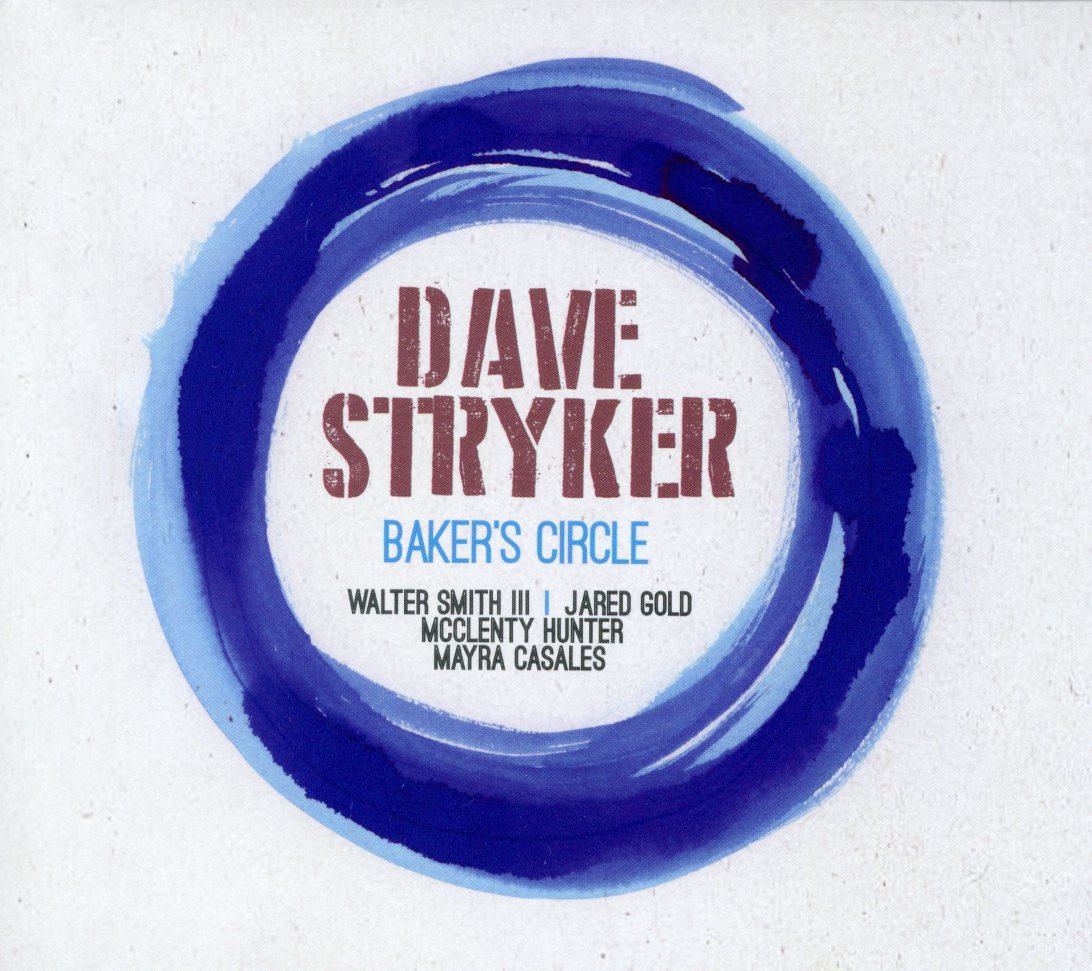
Dave Stryker - Baker's Circle

 © Copyright ® Steven Cerra, copyright protected; all rights reserved.


“RAY BROWN once defined a bassist's greatest assets as "good time, good intonation, and a big sound." While agreeing that this is a solid, workable definition, Bill Crow would add another factor.


"If you have those qualities," he explained, "and don't find out how to relate them to the musicians you're playing with, you'll still not be contributing much to the group. That may seem like a simple-minded statement of something everyone should know, but it's surprising how often poor contact between musicians is the principal difficulty in playing well together.


Bill Crow made those comments in a 1963 Downbeat interview and guitarist, composer and bandleader Dave Stryker has taken the caveats contained in them to heart by always putting together bands that work well as a unit because the individual members listen to one another and play as a group.


Dave Stryker has been around the music business for a long time and it shows in many aspects of his latest recording [if truth be told - in all his recordings] - from the other musicians associated with the project, to the song or tune selection, arrangement and track placement.


On Dave Stryker Baker’s Circle [Strikezone 8821], he’s given the music and the way it is performed on it a lot of thought which is not only drawn from his professionalism but also from his experience.


Dave does what Dave does best - he’s a straight ahead groove merchant: he just plants his feet and brings it, one compelling rhythmic chorus after another. He rides the rhythm section the way a master surfer rides the wave; always in the curl allowing the tidal current to propel him forward.


Nothing in Dave’s music is forced or strained and before you know it, it engulfs you in what Duke Ellington referred to as - “The Feeling of Jazz” - a feeling of elation and well-being complimented by warm emotions and generous helpings of finger-popings and foot tappings.


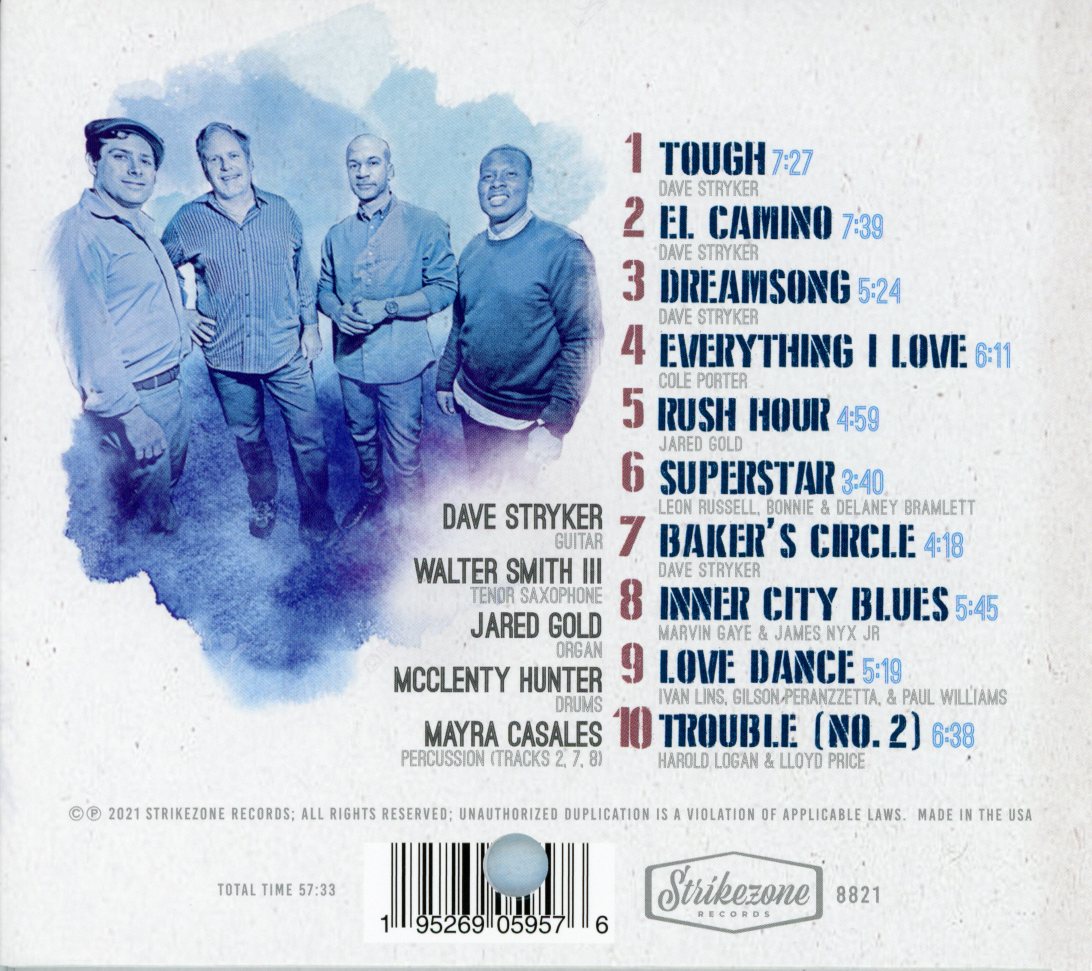
Helping to generate The grooves on Dave Stryker Baker’s Circle are some old friends - Jared Gold on organ and McClenty Hunter on drums. They are joined by two new associates - Walter Smith III on tenor saxophone and percussionist Mayra Casales who infuses Latin Jazz rhythms on three tracks.


Jared plays a pivotal role in the music as his comping adds rhythmic riffs but he can also join Dave and Walter as a third “voice” in enhancing both the melody and the harmony. Jared also provides some funky bass lines that add grease to McClenty’s engine room as his drums propel the music forward.


Dave puts all of these musical elements to good use in developing fresh takes on standards such as Cole Porter’s Everything I Love, Leon Russell’s Superstar and Marvin Gaye’s Inner City Blues, as well as, the four originals he brought to the date one of which - Baker’s Circle - also serves as the name for the recording.


Jared Gold’s Rush Hour, Ivan Lins’ Love Dance and Harold Logan and Lloyd Price’s rhythm and blues workhorse Trouble [No. 2] - a tip-of-the-hat to the late tenor saxophonist and Dave’s old boss Stanley Turrentine - complete this musicfest of jammin’ sounds and grooves.


Trouble [No. 2] is the last of the ten tracks and it could be said of it that it was placed so to end the party - because that’s what this record is - a party, a celebration, a bash. It also features a magnificent introduction to the tenor sax playing of Walter Smith III who channels some of Stanley Turrentine along with Joe Lovano and a hint of Tina Brooks while adding a big dash of his own voice to what has to be the most refreshing tenor saxophone sound heard on a Jazz recording in recent memory.


All of this made possible by Dave Stryker’s musicianship and experience which he brings to bear to create a recording that has a play through quality about it: the ten tracks just flow nicely one-to-the-other, stopping here for a little chop-busting, there for a new take on a standard, and everywhere for surprises. And when it's over, you can’t wait to listen to the whole thing again.


Above all, this group jells as a band that plays TOGETHER and the proof of it is everywhere apparent in Dave Stryker Baker’s Circle.


Jim Eigo of Promotional Jazz Services is handling the PR for the CD and he sent along the following media release for the CD which is due out on March 5, 2021. If you want the music sooner it’s available now via this link to bandcamp.


“After last year's successful big band outing, Blue Soul, guitarist Dave Stryker is back with his hard-driving, deep-grooving B3 organ group on his new recording—Baker's Circle. With the addition of cutting-edge tenor player Walter Smith III, Baker's Circle features Stryker's originals as well as a couple Eight Track gems and a tip of the hat to his former boss Stanley Turrentine. Along with Smith III, this fresh recording features Dave's working band of Jared Gold on organ and McClenty Hunter on drums and adds Cuban percussionist Mayra Casales to three tracks as well.


Baker's Circle starts with three Stryker originals. The hard-hitting "Tough" leads off with exciting sobs by the whole band. Casales’ congas join in on the latin groove of "El Camino" followed by the bluesy 7/4 of "Dreamsong." Cole Porter's "Everything I Love" is a medium swinger after which Gold's burning "Rush Hour" shows why Walter Smith III is considered one of the best of his generation. And Dave adds his Eight Track fingerprint to Leon Russell's "Superstar" and Marvin Gaye's "Inner City Blues."


Says Stryker: "Composer and educator David Baker was in my corner from the time I met him at a jazz camp when I was 17 till he hired me to take over as guitar professor at Indiana University a few years ago. I used to see him standing outside the Music School on a circular drive waiting for his wife Lida to pick him up. I named the song ‘Baker's Circle' in his memory."


Baker's Circle closes with "Trouble (No. 2)," a grooving shuffle originally recorded by Stryker's former boss, the great Stanley Turrentine. This caps a diverse program that showcases Stryker at his best — modern playing with the groove and soul that comes from years of experience.”