Monday, January 25, 2021

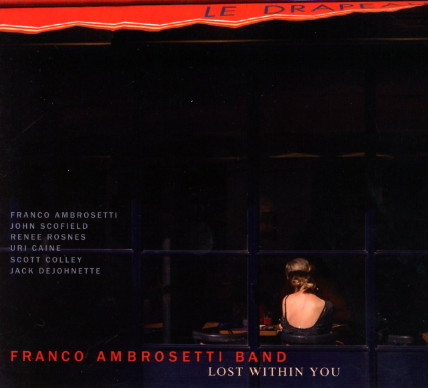
Franco Ambrosetti - Lost Within You

 © Copyright ® Steven Cerra, copyright protected; all rights reserved.


Ithaka

BY C. P. CAVAFY

TRANSLATED BY EDMUND KEELEY


As you set out for Ithaka

hope your road is a long one,

full of adventure, full of discovery.

Laistrygonians, Cyclops,

angry Poseidon—don’t be afraid of them:

you’ll never find things like that on your way

as long as you keep your thoughts raised high,

as long as a rare excitement

stirs your spirit and your body.

Laistrygonians, Cyclops,

wild Poseidon—you won’t encounter them

unless you bring them along inside your soul,

unless your soul sets them up in front of you.


Hope your road is a long one.

May there be many summer mornings when,

with what pleasure, what joy,

you enter harbors you’re seeing for the first time;

may you stop at Phoenician trading stations

to buy fine things,

mother of pearl and coral, amber and ebony,

sensual perfume of every kind—

as many sensual perfumes as you can;

and may you visit many Egyptian cities

to learn and go on learning from their scholars.


Keep Ithaka always in your mind.

Arriving there is what you’re destined for.

But don’t hurry the journey at all.

Better if it lasts for years,

so you’re old by the time you reach the island,

wealthy with all you’ve gained on the way,

not expecting Ithaka to make you rich.


Ithaka gave you the marvelous journey.

Without her you wouldn't have set out.

She has nothing left to give you now.


And if you find her poor, Ithaka won’t have fooled you.

Wise as you will have become, so full of experience,

you’ll have understood by then what these Ithakas mean.


C. P. Cavafy, "The City" from C.P. Cavafy: Collected Poems. Translated by Edmund Keeley and Philip Sherrard. Translation Copyright © 1975, 1992 by Edmund Keeley and Philip Sherrard. Reproduced with permission of Princeton University Press.


Before Jazz became elevated to THE ARTS, it remained for many years something to be played and listened to as a form of entertainment.


It was to be enjoyed and savored and not interpreted and analyzed to the point of distraction.


In recorded form, it was sometimes relegated to the role of easy listening, background music; something you put on to accompany you while you made dinner, or while enjoying a glass of wine with a friend or, with the advent of audio portability, while sipping an iced tea as you relaxed in the chaise lounge on the patio with a crosswords puzzle on your lap and a boom box at your side.


The form of Jazz used for purposes of rest and relaxation was usually music played at a slow tempo featuring ballads from the Great American songbook and/or original compositions with themes designed to be played quietly in a measured sort of way. 


Your ear was “in-and-out” of the music; sometimes listening attentively; sometimes, abstractedly. The sonority of the music took you on a journey; it revealed itself slowly, each time affording different delights depending on where your ear happened to fall.


This “easy listening music” could be orchestral or played by small groups or voiced by a single instrument.


Jazz performed this way need not sound apathetic; you can play quietly and still play with intensity. Put another way, Jazz can be played softly and still burn.


Surprisingly, or perhaps not, over the years, quiet Jazz recordings become some of the most often played in a collection because they fit many circumstances and don’t demand our constant attention.


Yet, it would be wrong to think of music performed in this manner as somehow being less prized than Jazz which is upbeat and energetic.


In a way, we know balladic Jazz better because it unfolds slowly and grants us more time to appreciate its artistry. 


Sadly, there isn’t a lot of quiet beauty Jazz being recorded these days. The emphasis seems to be more on Jazz played at explosively fast tempos, or Jazz which showcases incredible instrumental technique or Jazz that incorporates elements from World Music, or Jazz that emphasizes that artist’s original compositions, or - [fill-in-the-blank].


Which brings me to Franco Ambrosetti’s Lost Within You which is due out on CD on Unit Records [UTR 4970] on January 29, 2021 as both a CD and a download and which it’s press release lovingly describes as a “beguiling ballads album.” You can watch a trailer about the recording by going to www.unitrecords.com.


It is an enchanting recording and an appealing one, as well, especially for all the reasons described above. The music envelopes you, it wafts over you and you feel it along with hearing it. It doesn’t demand your attention, it requests it. But once you’ve given it permission to enter your mind, you’ll find yourself enamored and engaged in Jazz that is designed to bring beautiful melodies and inspired solos quietly into your consciousness.


Ambrosetti explains how the conception for Lost Within You came about:


"As a young man, my goal was to play fast," recalled the Lugano native. "Then slowly but surely I started to discover ballads, and Miles Davis was one of the great inspirations for that. From listening to Miles play ballads I started to understand and I was able to go inside the ballad and play these long notes that he was playing. Miles showed me how you stretch the notes out like you're really singing or crying, and I think I can express my feelings better that way."


Ambrosetti's "less is more" approach to ballads has served him well for five decades. 


The sleeve notes for the recording are by Bill Milkowski who is an experienced and knowledgeable observer of the Jazz scene both past and present. We asked Bill if we could share his annotations with you as part of this blog feature and he graciously consented. 


© Copyright ® Bill Milkowski, copyright protected; all rights reserved; used with the author’s permission.


“At 78, Franco Ambrosetti is easily the most elegant man in the room. Poised, refined, charming, conversant in five languages - one being the language of jazz - he is the very embodiment of 'suave.' A man of means who carries himself with an abundance of confidence and grace rather than swagger, he also happens to possess a remarkable gift for conveying heartfelt emotion through his horn. And like one of his role models, Miles Davis, the iconic Swiss trumpeter-composer and bandleader is indeed a beautiful singer of songs, as he so capably demonstrates on Lost Within You, his third recording for Unit Records and 25th overall as a leader.


“Concentrating strictly flugelhorn, Ambrosetti digs deep on a beguiling program of ballads, pulling heartstrings on poignant pieces like Horace Silver's "Peace" and McCoy Tyner's "You Taught My Heart to Sing," the delicate Bill Evans-Miles Davis composition "Flamenco Sketches" and the enduring classic, "Body And Soul." Accompanied once again by an all-world crew of pianist Uri Caine, bassist Scott Colley, guitarist John Scofield and drummer Jack De-Johnette (all of whom appeared on his 2019 Unit Records outing, Long Waves) and joined on five songs by pianist Renee Rosnes, Ambrosetti imbues these nine tunes with a golden tone, his signature lyricism and a depth of feeling that comes directly from the heart. Mastering ballads, said Franco, is something that came much later in his career.


"As a young man, when I was playing in my father's quintet at age 23, my goal was to play fast," recalled the Lugano native. "I loved Clifford Brown and I just wanted to play a lot of notes. I grew up on bebop, it was in my DNA, so I had absolutely no fear and no problem playing fast notes. But my father used to tell me, 'You play a ballad in a very correct way, but I miss the feelings. There's nothing from the inside.' But then slowly but surely, I started to discover ballads, and Miles Davis was one of the great inspirations for that. From listening to Miles play ballads I started to understand and I was able to go inside and play these long notes that he was playing. Miles showed me how you stretch the notes out like you're really singing, or crying. And I think I can express my feelings better that way."


 Ambrosetti's "less is more" approach to ballads has served him well for five decades. That refined approach was particularly evident on 2018's lavish orchestral production, The Nearness of You. and it plays out in sublime fashion again on Lost Within You,


The collection opens on a delicate note with Jack DeJohnette in a rare turn on piano, providing a sparse intro to Horace Silver's aptly-titled "Peace." His notes resonate and hang in the air before Franco enters at the 1:30 mark, joining in a stark piano-flugelhorn duo. Bassist Scott Colley emerges at the 2:43 mark and guitarist John Scofield makes his presence felt with a potent solo at the 4:42 mark as DeJohnette comps forcefully behind him before launching into his own soulful solo. Franco's graceful, warm-toned solo culminates in a stirring cadenza.


With Rosnes on piano and Colley on bass, Ambrosetti fairly sings the Cy Coleman-Joseph McCarthy torch song "I'm Gonna Laugh You Right Outta My Life," a tune popularized by Nat King Cole in 1955. Renee and Scott each deliver heartfelt solos on this elegiac number.


The program shifts to a more buoyant mood with Franco's Latin-tinged "Silli in the Sky," a piece he had originally written for a theater production of Harold Pinter's "The Lovers" that his actress wife Silli performed in. Scofield's flowing guitar solo here adds bite to the proceedings, spurring Franco to some daring flights of his own. Then on Dave Grusin's "Love Like Ours," he takes his time, emphasizing those Miles-influenced long notes on an especially lyrical reading of the romantic number previously recorded by Diane Schuur, Steve Tyrell and Barbra Streisand.


The wistful "Dreams of a Butterfly" opens with a fragile ascending figure that Ambrosetti doubles with pianist Ce before DeJohnette settles into an insinuating New Orleans flavored "Poinciana" groove on the kit. Franco delivers some of his boldest playing on his solo here while Caine contributes a brilliant solo. The inspiration for this Ambrosetti original came from a Jorge Luis Borges story. As the composer explained, "There was a man who dreamt to be a butterfly. And when he woke up, he didn't know whether he was a man that dreamt to be a butterfly or the other way around. And this gave me inspiration once I sat at the piano and I came up with this opening line, which is like a Butterfly that flies."


Their relaxed take on Johnny Green's "Body and Soul," a Broadway show tune popularized in a 1930 Louis Armstrong recording before Coleman Hawkins put his enduring stamp on it in 1939, opens with a light salvo from DeJohnette before Franco enters with heart-wrenching long tones from his flugelhorn. As the 11-minute piece develops, DeJohnette showcases his inimitable loose swing factor and remarkable instincts on the kit, spurring Ambrosetti, Caine and Colley to some spirited stretching in their respective solos.


Benny Carter's "People Time" is a melancholy number performed with graceful restraint by the trio of Ambrosetti, Caine and Colley. Uri offers a magnificent solo here while Franco alternately pulls at heartstrings with long burnished tones and invigorates with daring intervallic leaps and flurries into the high register.


Rosnes brings a luminous quality to a zen-delicate reading of "Flamenco Sketches," the innovative modal closer from Miles Davis' 1959 classic. Kind of Blue. That tune was the result of some impromptu magic in the studio, as Ambrosetti explained. "Jack had played piano on Horace Silver's 'Peace', which was the last tune of the first day. And as we were packing up to go home, he started to play 'Flamenco Sketches.' And just like that we decided to record it. Jack left the piano to go to the drums and Renee sat down at the piano, and it happened in one take."


They open the McCoy Tyner-Sammy Cahn tune, "YouTaught My Heart to Sing." on a tender note before shifting to a lightly swinging feel for Scofield's solo section. The piece then alternates between swing and ballad feels behind searching, expressive solos from Scofield and Rosnes. Franco's golden long tones put an exquisite bow on the proceedings.


Throughout the three days of sessions, the leader was very mindful of letting intuition play into the proceedings. As he explained, "Musicians of this caliber, you want them to play what they are. We think the same way so I trust them completely."


Trust and communication were the watchwords of this enchanting collection of ballads by Ambrosetti, one of Europe's living jazz masters, and his world-class crew.”


  • Bill Milkowski


Bill Milkowski is a contributor to Downbeat. Jazziz and Absolute Sound magazines. He is also the author of Michael Brecker: Ode to a Tenor Titan [Globe Pequot/Backbeat].


Perhaps the following excerpt from ANTJE HÜBNER Hubtone Press Release is a fitting way to encapsulate and conclude what’s on offer in Franco Ambrosetti’s Lost Within You.


“The leader imbues each of the nine tunes on Lost Within You with a golden tone, his signature lyricism and a depth of feeling that comes directly from the heart. Combining all of those inherent qualities with a masterful sense of storytelling, he is able to pull heartstrings throughout the affecting program.”


If you are looking for a Jazz recording that compliments and complements your quiet time moods during your metaphorical  “Ithaka journey,” you might want to bring the music on Franco’s Lost Within You along with you.


Franco Ambrosetti Band - Lost Within You - Interview

Sunday, January 24, 2021

Brazilian Fire Victor Feldman Quartet Featuring Tom Scott

Victor Feldman - Blindfold Test with Leonard Feather

© -Steven Cerra, copyright protected; all rights reserved.


Regular visitors to these pages are by now familiar with the personal and professional relationship I had with Victor Feldman during his and my formative years on the West Coast Jazz scene in the late 1950’s. He was my teacher and my friend.


Victor, who passed away in 1987, was best known as an excellent pianist, vibraphonist and composer [he penned Joshua and Seven Steps to Heaven both of which were recorded by Miles Davis]. He also performed with alto saxophonist Cannonball Adderley’s quintet and recorded with trombonist J.J. Johnson’s quartet, before resettling in Los Angeles and becoming a fixture in the West Coast Jazz scene and a mainstay in the southern California studios.


What most musicians in the States were not aware of is what a brilliant career as a drummer Victor Feldman had before coming to the USA in 1956 to perform with Woody Herman’s Band primarily as a vibraphonist.


Woody knew. He knew he had a Buddy Rich-quality drummer in Victor and every night he would feature him in what was essentially a 10 minute solo on drums and congas on Mambo the Most [The Mambo swept the USA as a dance craze during Victor’s time on Woody’s Band although I would challenge anyone to dance to the stuff that Victor was laying down during his time in the solo spotlight].


Victor’s comments about drummers in England and Europe should be taken in this context - he knew what he was talking about. The fact that calf-skin drum heads were still in wide use in abroad should also be kept in mind [American drummers had already made the switch the plastic heads which held the tension better and as a result got a sharper more crackling snare drum sound].


At the time of Vic Feldman's last Blindfold Test (Down Beat, Dec. 22, 1960) he had been with the Cannonball Adderley Quintet for a couple of months. The association with Adderley, which lasted for nine months, was priceless in two respects.


It gave Feldman the most significant musical experience of his adult career, one from which he emerged an even better musician; and it earned him a degree of acceptance among jazz fans and critics that would have been hard to come by in any other surroundings.


For his latest test, I included a couple of items with special relevance for him: the Kenny Drew track includes his rhythm section teammates from the Adderley quintet; Woody Herman was his first employer after he arrived in this country almost six years ago; the Jazz Couriers, of course, include musicians he knew and worked with in England. He was given no information about the records.


The Records


1. Richard “Groove” Holmes. That Healin' Feelin' (from Groove on Pacific Jazz). Holmes, organ; Ben Webster, tenor saxophone; Lawrence Lofton, trombone. No bass.


“The organ player might have been Shirley Scott, but it sounded a little more to me like a man playing. I notice a Fender bass in there; that could have been Monk Montgomery. I don't know who was on tenor or trombone. The trombone player sounded as though he was very much influenced by Bill Harris. I think they got a groove for what they were trying to do. It came off well. Four stars.


2.  Woody  Herman. Panatela  (from The Fourth Herd, Jazzland). ZootSims, tenor saxophone;  Nat Adderley, cornet; Eddie  Costa, vibes; Al Cohn, composer,   arranger. Recorded  Aug. 1, 1959.]

I think that was Woody Herman's band, and the tenor player on the first chorus sounded a lot like Zoot. The trumpet sounded like Nat Adderley. The arrangement ... I don't know . . . sounds a little like Al Cohn.


I didn't like the recording; it was sort of echo-y. I don't know if that's the band Woody's been traveling with, because it sounds like they just got together for that date. The vibraphone player sounds like the one who plays with Buddy Rich — Mike Mainieri — I'm not sure. I've heard so many better, really swinging records by Woody. Two stars.


3. Kenny Drew. The Pot's On (from Undercurrent, Blue Note). Drew, piano; Sam Jones, bass; Louis Hayes, drums; Hank Mobley, tenor saxophone; Freddie Hubbard, trumpet.


I'll start with the rhythm section: I think the bass player's Sam Jones, the drummer sounds like Louis Hayes — I'm not sure, and the piano sounds like Barry Harris — here I'm not sure because I've heard him play much better than that.

I worked with Sam and Louis with Cannonball. Being with that group did me a world of good musically. The tenor player played like Sonny Stitt used to play, but I'm sure it's not Sonny. Could be Hank Mobley. The trumpet ... is there a trumpet player named Freddie Greenwood? The record was swinging . . . played well. Four stars.


4. Curtis Fuller. Chantized (from Boss of the Soul-Stream Trombone, Warwick). Fuller, trombone; Walter Bishop, piano; Stu Martin, drums; Buddy Catlett, bass.


I don't know who that is. Could be Benny Green on trombone. If it is Benny, he sounds a little bit like Curtis Fuller. I thought it was kind of uninteresting because of the melody . . . the line . . . the rhythm all the way through. Some pieces can have the rhythm all the way through and be interesting, but this was monotonous.

The soloists didn't have much to say. Coltrane can do this kind of thing and make it interesting. Two stars.


5. Cannonball  Adderley. A Foggy Day (from Cannonball EnRoute, Mercury). Adderley, alto saxophone; Nat Adderley, cornet; Sam Jones, bass; Jimmy Cobb, drums; Junior Mance, piano. Recorded,1957.


That was Cannonball and Nat Adderley. The record must be two or three years old; I think Sam's on bass, and the piano player could have been Junior Mance. I don't know the drummer; it didn't sound like Louis. I enjoyed listening to it ... it was good . . . not exceptional.


The group has changed. Nat and Cannon both play differently now — like all musicians, the longer we play, the more we hope we improve. They're much greater now, yet the standard and the feeling are still there. Now they have more excitement and group feeling. They had more when I was with them than they do here. Three stars.


6. The Jazz Couriers. Whisper Not (from Message from Britain, Jazzland). Ronnie Scott, tenor saxophone; Tubby Hayes, vibes; Kenny Napper, bass; Phil Seamen, drums; Terry Shannon, piano. Recorded in London.


Sounds like an English group. The tenor player sounds like Tubby Hayes, but he didn't take a long-enough solo for me to really tell. The ensemble playing sounded like Tubby. The vibraphone player . . . that threw me a curve . . . gets a very nice sound. I don't know anyone in England who sounds like that. There's a vibraphone player in this country, whom I heard a couple of years ago, who's very good — Bobby Hutcherson — but I don't know how he sounds now.


The recording ... the general sound ... the drums ... the whole rhythm section . . . make me believe that it is an English or a European group.


Quite a few musicians, orchestrators, and arrangers I've spoken to here feel that they record better in England. I don't agree. The difference is partly the recording and partly the performance. The weak point of English jazz is the rhythm sections. They don't have the same environment musicians do here. They don't see these musicians all the time in person and talk to them and discuss things as they can here.


Drummers in England play in clubs which are underground and very damp, so they have a terrible job tuning their drums; it really makes a difference. Rhythm is improving though. There are a couple of wonderful bass players — Kenny Napper — in fact, that could have been him here — and Lenny Bush. I heard some good drummers, too, when I was there a couple of months ago. I recognized Terry Shannon on piano. Two stars.


7. John Coltrane. Every Time We Say Goodbye (from My Favorite Things, Atlantic.) Coltrane, soprano saxophone; McCoy Tyner, piano.


That was John Coltrane playing soprano sax, and the piano player was McCoy Tyner. It's a very pretty tune; I like the changes Tyner plays. All I can say is that it was pleasant. The saxophone sounded out of tune on a few notes.
I hate to be unenthusiastic, but I think this deserves three stars.


Source:
Downbeat Magazine

February 1, 1962

Saturday, January 23, 2021

Phil Woods / Michel Legrand And Orchestra– Images 1975 (full album)

Phil Woods - Part 4 - The Smithsonian Interview

 © Copyright ® Steven Cerra, copyright protected; all rights reserved.


When alto master Phil Woods declares that he has "played with them all," it is a statement of justified pride.


He is approaching his 80th birthday in November of this year, and has spent more than 60 years as a working musician, achieving world-wide recognition as one of the greatest jazz saxophonists of all time. The list of his idols, influences, mentors and colleagues is a "Who's Who" of jazz legends: Lenny Tristano, Dizzy Gillespie, Johnny Hodges, Charlie Parker, Benny Carter, Quincy Jones, Oliver Nelson, Gene Quill, Clark Terry, Al Cohn and Zoot Sims, to name only a few.


From his upbringing in Springfield, Massachusetts to his roots in the Delaware Water Gap region of Pennsylvania and all of his travels in between, the story of Phil Woods is a remarkable account of high personal achievement in performance, composition, recording and jazz education.


In 2007, Phil was awarded the coveted Jazz Master designation by the National Endowment for the Arts, the highest honor that our nation bestows on its jazz musicians. The Smithsonian Jazz Oral History Program was established in 1992 by the Smithsonian's National Museum of American History and has documented to date the stories and experiences of more than 100 historically renowned jazz figures.


The following interview of Phil Woods was conducted on June 22-23, 2010 by Marty Nau and Ken Kimery of the Smithsonian Oral History Program (www.smithsonian.org). Phil passed away on September 29, 2015.


This is the fourth of a multi-part feature.


"So, anyway, the business was getting weird. Quincy left, and everybody was moving to the West Coast because that was where the gigs were. The record business had changed completely. It was now, you know, the three cretins with an EWI, and a lot of guitars. It changed and the gigs were falling apart. I remember, I said to Chan, "Let's go to Europe; let's go back," because we spent that year in '59 and '60 in Europe and we loved being based in Paris. I said, "I can't make the studio scene anymore. I want to play jazz" So, we packed up our matching luggage and our 24 cardboard cartons and moved to Europe.”


I had a two-week gig at Ronnie Scott's club in London, and then I had a couple of German workshops. In those days, the radio orchestras would bring in famous players from all the different countries and put together a special project, and I had a couple of those. We flew to England and did Ronnie Scott's and then we planned to head to Amsterdam because we didn't think we could afford Paris. In fact, I bought a Fiat 1500 for delivery in Amsterdam. But when I was working at Ronnie Scott's, a guy by the name of Jean Louis Ginibre, who was the editor of Jazz magazine in Paris, came to London. He had heard I was in London, knew who I was, and said, "You know, you've got to come to Paris." And I said, "Well, we're thinking of..." and he said, "Come to Paris. My wife's going to start booking" That was Simone Ginibre, who became George Wein's right-hand lady, girl Friday-Saturday-Sunday-and-Monday. I was her first client.


So, we went to Paris and drove around the Arch of Triumph with Jean Louis and Simone Ginibre. Simone's maiden name was Simone Chevalier and she used to sing with Bud Powell at the Blue Note in Paris. For seven years, she sang with Bud Powell and she did the same set for seven years. She'd have to write it out every night for Bud because he couldn't remember what she was going to sing. [Both laugh] She was great. When they had kids, she missed the business so she started booking. Jean Louis came and got me and Chan and we went to Paris. He put a band together for me: Daniel Humaire on drums, Henri Texier on bass and George Gruntz on piano. It became the European Rhythm Machine.


[MN]: Later, George Gruntz was replaced by Gordon Beck.


[PW1:... and Ron Mathewson replaced Tex. But we always had Daniel on drums. Man, you know, from playing jingles and all that stuff, all of a sudden I'm playing every major festival in Europe because of Jean Louis' influence and Simone booking us. Right off the bat we started recording for Pathe, the French label. We did a thing called Alive and Well. It was received very well and, man, I was off and running; five years of headlining and stuff. I've always been very grateful to the European culture that remembered me from '59 and knew my work. They keep track, and it isn't like you're passe because you're over 30, you know what I mean? They don't rip a building down because it's old; they don't make a parking lot out of it.


Europeans are maybe not hipper than Americans but they're certainly more aware of the culture. I don't think the average Frenchman wants his daughter to marry a tenor man or an alto player or a trumpet player. But they realize the importance of these people within the culture; that the culture needs an alto player and a tenor player and a trumpet player, you know? It's not weird, because jazz is loved in Europe as an original American art form. To this day, I make more money in Europe than I do in America. At this point in 2010, there are not a lot of gigs or tours in America. I still do well because I am who I am and I have a name so I get a gig. It's not like it used to be but Europe is still pretty good. They still pay money and give you respect; they give you a room, a suite, and fly you first class and feed you well.


[MN]: I heard you say in an interview one time that when you went to Europe, you felt like you were let out of a cage.


[PW]: Yes, well, at that point after being in the studios for the sixties and all that, all of a sudden I'm playing with my own jazz quartet. I had the first electric sax, I had the baritone, I was using a ring modulator at one point. Gordon was writing a lot of suites and stuff with the band, and Daniel was an exciting drummer. We felt we were taking it up a notch.


[MN]: If you asked me, the music you played over there you hadn't really played before or since. In other words, you really got into an avant-garde thing. A lot of people who don't know Phil Woods as well as I do are surprised by those years, I think.


[PW]: Yeah, well, I was surprised too. [Both laugh]


[MN]: But they were great.


[PW]: Yes. It was a chance to experiment and I got it out of my system.  I took it as far as I could at that level, and then I left Europe. For some odd reason, I moved to L.A. I always wanted to have a house with a pool. I'll never want that again! You spend all day worrying about the pH factor, you know? [laughs]

[MN]: I was at a clinic of yours and you started the clinic by saying, "If you don't learn anything today, don't get a house with a pool."


[PW]: Don't get a house with a pool ... But when I went to L.A., I started a real avant-garde band. That's when I had the ring modulator with Pete Robinson and we were really out, really out.


[MN]: I have that record.


[PW]: Very out, very out. But that's when I found out that I was not an L.A. guy. I remember Donte's, the famous jazz club in the valley, wanted me. They heard I was in town. So, I gave them a pretty stiff price. I mean, I was used to five years in Europe; I wasn't going to work for scale. I remember the club owner saying, "Stay here long enough, and we'll get you for scale," and I said, "I'm out of here" By that point, my marriage to Chan was kind of on the rocks, and I had met and fallen in love with Jill Goodwin, my present wife, who happens to be the sister of my drummer. Bill Goodwin.


[MN]: Who, I think, is one of the great drummers.


[PW]: Yes, he is. He plays a song.


[MN]: I think he's one of the great drummers.


[PW]: Yes, I think you're right. I think Steve Gilmore is one of the great bass players. We've been together 35 years, which is another whole story. So, I said, "I've got to get out of here," and Jill said, "Well, I want to get out of here, too." She was coming off a divorce. We were both single and looking to go to the East Coast. I was actually heading back to Europe since my return to America hadn't worked out. The year I was in LA. I made three thousand dollars in that year. I used to make more than that in a night in Europe with my own band. So I was going back to France, I thought.


We drove to New York; I gave Jill a ride. She went and stayed with Chuck Israels who was a good friend of hers, and I stayed with Jerry Dodgion. He got a call from Michel Legrand's manager who said, "Jerry, I got Eddie Daniels for the first week, Michel is doing an album in the second week and we need a good player" Jerry said, "Well I'm working but Phil Woods is here. You want to talk to him?" He said, "Phil? Oh, yeah. Sure." So I got the gig to play with Michel Legrand the second week. We did an album called Live at Jimmy's; I played "You Must Believe In Spring." At that time, Jill had hepatitis, I didn't know when my divorce was going to happen, and I didn't know where I was going to live. But the record led to forming a company called Gryphon Productions, which was Michel Legrand, Nat Shapiro and Norman Schwartz. We did an album - Michel Legrand wrote a thing called Images for me - and that won a Grammy.


As irony would have it, I was presented with the award by Benny Goodman, who hated me when I went on his band in Russia in 1962. In fact, somebody once asked Zoot, "What's it like to tour Russia with Benny Goodman?" Zoot said, "Any tour with Benny Goodman is like being in Russia" [Both laugh] As Benny handed me the Grammy, he said, "I wondered what happened to you, kid!" And I said, "Sure you did." [Both laugh]


[MN]: Now, real quick though, back to that solo you played, "You Must Believe In Spring"...


[PW]: People ask me what's my favorite solo and I say the most important solo to me was "You Must Believe In Spring" because I was on the edge of the precipice. I had five fantastic years in Europe but now my marriage was falling apart, I had a couple of kids (I was very upset about that), I had a new woman who I loved, I didn't know where I was going or what I was going to do. But from that one gig with Michel Legrand ... I mean, there I was heading back to France and my career was saved by a Frenchman. The irony of it all; I've always lived with that. I said, "Man, it's weird, but somebody up there loves me, somebody is looking out for me" because it all worked out really well. Chan and I came to terms, the family is okay behind the divorce, and Jill and I are having a wonderful 35 years together.


I did a record for Joe Fields called Musique Dubois, with Richard Davis and Allen Dawson and Jackie Byard. It was a good record, but it didn't—. I mean, after having my own band for five years, I was hearing something else. I ran across Bill Goodwin at the Blue Note - we were staying at his house in the Poconos here; that's how I happened to end up in the Poconos — and I said, "We've got to get a band." We were jamming a little bit in the Poconos, Gilmore, Goodwin and I, and Mike Melillo, who was the first piano player. That became the first quartet and here we are 33 years later. From that "let out of a cage" feeling of being in Europe with a sort of an avant-garde thing, I realized that my strength is in playing songs. That's really what I love to do. I can go this way and that way and all that, but the way I really like to go is I want to write more tunes.


But, I had a certain thing I heard. I wanted a band that was really a band, you know? The European Rhythm Machine was full-out; all the stops were out. But I wanted to be able to go other ways, too. I wanted to break out the clarinet again and do some exotic stuff, because I loved the way Goodman played the ballads. It reminded me of the Ellington kind of sound. I liked playing obscure ballads, adding another horn. I had Harry Leahey on guitar in the beginning and that was good. We did Live At The Showboat and it won a Grammy also. Both albums, Images and Showboat, which were recorded back to back on RCA, won Grammys and were taken off the market within a year. You wouldn't do that to any other music; you wouldn't do it to Polish music, to Italian music, to French music. But the jazz market didn't compete with what Bill Haley and the Comets were selling. I mean, they say your records don't sell, and then you win a Grammy for them, and they put the little silver thing on the front of it that says "Grammy Winner" Then, they just take them off the market. You can buy that Showboat record now but you'll pay $60 for it as an import from Japan.


[MN]: Exactly. I've scrolled down eBay, believe me.


[PW]; Yes, I know, I know. I had to buy it myself. I said, "That's more than I made!" [Both laugh]


[MN]: Now, it's interesting that you mention Musique Dubois because you see that record a lot differently than most of your listeners do.


[PW]: No, no. I don't say it's a bad record. I'm just hearing something else.


[MN]: Okay.


[PW]:I was looking for quicker musicians in the studio. I was looking for quicker results. It came off okay but it took a lot of work to get the guys to get it off the paper because it was all new music. They would play great but it was still a jam session as far as I was concerned.


[MN]: Well, I get you.


[PW]:I mean, it wasn't what I was hearing.


[MN]: Your playing is very driven on that as well as on Live at Jimmy's.


[PW]: Yeah, yeah ... whatever. I need a break. [Recording stopped, then resumes] What was the first one I did? I was a good friend of Phil Ramone's and he got me the gig with Billy Joel, "Just The Way You Are," and with Phoebe Snow. I did Phoebe Snow and Billy Joel in the same session. It was just me and Phil in the studio. He had the changes on the back of a match-book cover. The Billy Joel thing is like a pop song, and Phoebe Snow was okay. He also got me an Aretha Franklin gig ... [sings da da da da da]


[MN]: "Somewhere."


[PW]: "Somewhere," which really came out nice, I think.


[MN]: It was beautiful.


[PW]: I love that record. But the Billy Joel, really, all of a sudden it's the biggest selling record in history, and, wow, I've heard my solo all over the world. In fact, my solo is in the piano music. I made a grand total of $300. 


[Both laugh] Billy got a lot more than that. In fact, I ran across a lawyer from California who asked, "Did Billy Joel take care of you?" I said, "What do you mean? No, I didn't get a cufflink, a chocolate, nothing." He said, "That's strange because Billy was going to send you a check." And then it came out a little later on, right after this guy said it, that Billy Joel's manager ripped him off, stole all his bread. I mean, he really took a hit from the manager. Billy Joel's a pretty good guy, and I've got a feeling that Billy said, "Send Phil a check because he's an important part of the record," and the manager said, "Oh, sure," and, you know, stuck it in his own pocket.


But I was in the middle of Warsaw and I heard it in a Polish hotel, a guy was playing my solo. Every time I'd hear it I'd go up and say, "Nice job on my solo," and they'd say, "Oh my god, it's him!" [Both laugh] But the best one though is... I'm working this gig somewhere and here comes a young saxophone player, 17, 18, whatever. He's got his horn and he comes backstage. He said, "Can I talk to you?" I said, "Sure, young man." He said, "Are you the guy on that Billy Joel record?" I said, "Yes, I am." He said, "Have you done anything on your own?" [chuckles] I said, "A couple things," you know, Dizzy, Quincy, Sass.


I just saw Donald Fagen. We were both given the ASCAP Wall of Fame Award. I'm on the Steely Dan Wall of Fame. I'm on "Dr. Woo," which was supposed to have been written as a reflection of a saxophone player's career, I don't really know. I flew out to L.A.; they put me in the Beverly Wilshire Hotel. I immediately invited all the alto players, including Joe Roccissano and Joe Lopes, my friends from Springfield, and everybody else. I had oysters and lobster and champagne. I ran the biggest rock 'n' roll-style party of anybody that Steely Dan - and Steely Dan had a lot of guest soloists - but I beat them all by running up the biggest tab ever. When I went to the studio, it was just the engineer and me; I never met Donald Fagan or Walter Becker, the leaders. I'm in and out in about 20 minutes. Let me preface this by saying, it was coming up around Thanksgiving, and I said, "Man, this is like stealing." I mean, what a piece of cake, you know? I'd been partying for three days and worked for 20 minutes and I made a lot more than $300 and I'm going home.


So I get the red-eye out of LAX, and I'm on the plane ready to go, and a dreaded voice comes up from the cabin: "Ladies and Gentlemen, it seems like the fog is going to keep us here until morning ..." It's midnight, and we're not going to leave until daylight, and I said, "Oh my god." I'd been partying so hard. And then he said,"... but the bar's going to be open" and that free booze, I couldn't possibly squeeze it down. I'd already partied my ass off for a week. And I'm sitting next to this big black lady who proceeded to get totally smashed. I'm sitting in this plane for six hours before we could take off and she's rattling in my ear. I missed my connection in Chicago; I missed Thanksgiving; I was, like, two days late, and I said, "Easy bread, huh?" [Both laugh]


[MN]: Spoke too soon.


[PW]: Never count your royalties until the chickens come home, baby. Some easy bread! But the Billy Joel thing -I got more attention, but I never felt like using it in my publicity. The people that had been following my career, and I go way back before Billy Joel, I mean, the people that were buying Quill and Phil and my early Prestige stuff... I could never say, "Phil Woods - Billy Joel's alto player" I could've played "Just the Way You Are," I probably would have brought more people in, but I could never sell out. I mean, I got that far without selling out. It really seemed pretty silly too, so I never used it. It makes a great story, but as a career thing, no. It never interested me.


What I was really sorry about is... Norman Schwartz was my manager at the time and he didn't know who Billy Joel was. But around that period people like Mike Brecker, Randy Brecker, the young soloists - if they did a date with a pop star, and there was a lot of that because pop was happening. They were using jazz stars and I guess I was one of them. But the prescribed way of dealing with a thing like that would be to ask for a point. If they took a tune off the LP and it went single, you'd get a point. You don't get anything on the LP but if one of the tunes is a hit, you'd get a point. "Just The Way You Are" sold like three billion records. That's a lot of points, man! I'm sorry we didn't ask for a point, because I could have saved a lot of time, and three billion pennies is a significant amount of bread.


[MN]: That's a lot of pennies.


[PW]: Three billion pennies adds up.


[MN]: That's a pile of copper.


[PW]: But, if I'd done that, the money would have been spent and I wouldn't have this wonderful story to tell, [laughs] And it's a good story, you know? But, I would only do a pop thing if I felt I could contribute something. The Billy Joel thing was a Tin Pan Alley song; the "Dr. Woo" thing, I loved that band, I still do; and the Aretha thing, and Phoebe, I mean, it was all music to me. I'm a professional musician. I never consider myself above it all - great artist, I don't stoop to - you know. I like the challenge of playing, of being able to contribute, and I still do that. There's a Japanese singer who can barely sing but they gave me a whole lot of money to play on his album, and the tunes were great. He couldn't sing very well but the arrangements and everything were good. I did them and they were the biggest selling thing in Japan.


[MN]: Any opportunities that you turned down in the seventies that we don't know about, that...


[PW]: Earth Wind and Fire. I wish I had done that thing with Earth Wind and Fire because that's one of my favorite bands, I didn't know who they were and my idiot manager said, "They don't have enough money." But I think I would have gladly—. I mean $300 for Billy Joel, that's not a lot of money either, man. Earth Wind and Fire would probably have paid twice that. It was a mistake; I was misguided by my management. So, I never had a manager again.


[MN]: Was the Paul Simon thing after Billy Joel?


[PW]: The Paul Simon thing was around the same period. Phil Ramone called me and said, "I need you to play one minute of bebop, fast." I said "What key?" He said, "B flat." I said, "Okay." [Both laugh] If it's a rock 'n' roll thing it could have been in B, and he said, "I need some 'I Got Rhythm,' fast," I said "B flat?" He said, "Yeah." If he'd have said B natural, I would have said, "Call [David] Sanborn," [chuckles] who's a great player, by the way, and a dear friend. But yeah, they were all recording, and I'm sitting in the studio, and he said, "All right... Woods!" They're all packing up and I went in there [makes some alien-sounding, alto-impressionistic sounds, very fast] and I'm gone. I made five, six hundred bucks. It was cool.


[MN]: And for the people who might not have heard that solo, it didn't quite sound like what you just scatted. It's a pretty unbelievable solo, I recommend it...


[PW]: I played every lick known to man [both laugh] I played all my licks. In fact, I gave my complete B flat reprise.


[MN]: Who needs all 12 keys?


[PW]: Who needs all 12 keys - greatly overrated! [MN laughs] Those sharp keys, anyway. I like being a working musician, you know? And I've never had a hit record. I think that was the downfall of Cannonball. The European Rhythm Machine opened for Cannonball's first tour of Europe. He was doing "Mercy, Mercy" and all that stuff, you know, the stuff that was the hit in the States. He was doing his Las Vegas act and European audiences couldn't use it. I saw him get booed. He learned a lot and he never did that again. But he wasn't aware of the European audiences. The European audiences know a lot more, and they don't want to hear your pop stuff. We opened and we'd get a great reception and his band, not so much. So, I think having a hit record is a kiss of death in this business, because that's what people are going to want to hear.


[MN]: Right.


[PW]: Or, if you play a great solo. I mean, if I'd gone out on the road with Billy Joel, I probably would have made a lot of money but they would have wanted me to play that exact same solo, [chuckles] A friend of mine did an arrangement on that solo and we play it when I do a clinic.


[MN]: Eric Doney.


[PW]: Eric Doney did it.


[MN]:  That's a wonderful arrangement.


[PW]:  It's a great little thing, and it goes into one of his things. But that's years later that I can do it. I never would have thought of it myself.


[MN]: It's a great kind of looking back.


[PW]: Yeah, it's fun now.


[MN]: Well, I say unless you have any more, we could break for today.  What do you think?


[PW]: I wouldn't mind.


[MN]: Unless you've got some more steam and want to keep going.


[PW]: No, I think that's a good day's work, don't you think?" 


To be continued in Part 5.