Saturday, February 20, 2021

Herbie Hancock: Into His Own Thing by Brooks Johnson

 © Copyright ® Steven Cerra, copyright protected; all rights reserved.
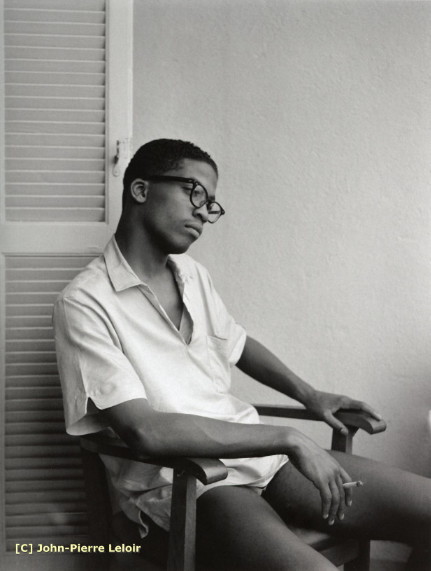

It’s hard to believe that this interview was published half-a-century ago in the Jan. 21, 1971 edition of Downbeat.


Herbie was just finishing his first decade on the Jazz scene.


But then, as now, Herbie’s ability to articulate what’s happening in the Jazz World in general and in his music in particular is straightforward and full of insights.


“Herbie Hancock had been doing SRO business all week at the Cellar Door in Washington, D.C., and it seemed inconceivable that things could get any better. The crowds were receptive and the group—consisting of Eddie Henderson, trumpet, fluegelhorn; Julian Priester, trombone; Benny Maupin, tenor sax, flute; Hancock, keyboards; Buster Williams, bass; Billy Hart, drums— really swung. It was Saturday night and the Cellar Door was as jammed as I had ever seen it, but there were two people present in the audience who probably helped to inspire the group to even greater heights than usual: Dizzy Gillespie, seated in a chair on the aisle, and Bill Cosby, seated on the front stairs. It was just that crowded.


As expected, the group really let it all hang out on "Fat Albert Rotunda." There are magic moments in a jazz listener's life when a certain combination of factors produces a truly memorable experience. It was after this performance, the last set of an exceptionally fine week, that I interviewed Herbie Hancock. I had been particularly impressed with the way in which the rhythm section seemed to work, and the thought struck me that they played so well together and got so much out of three pieces that there did not appear to be that much need for anything else. I was curious why Herbie wanted the sextet sound and feeling; thus my first question to him and the start of a rather revealing interview.


Brooks Johnson: One of the first questions that comes to mind, particularly when I heard the trio work, and the way it was swinging, is what are your basic motivations for performing with a group consisting of six pieces?


Herbie Hancock: Well, when I did the sextet album, I liked the sound of that particular combination of instruments. So right then and there, I decided that if I got a group together, it would have to be that. In using this instrumentation, I've got the same flexibility a small group has and yet I have a vehicle for getting orchestral colors the way a large group might. I've got three horns—that's almost like a lower limit for making what we call harmony. You can do it with two instruments, but three is the least comfortable number of instruments for getting harmonic colors. Let me explain that just a little bit: The three instruments being trombone, fluegelhorn and alto flute for the ensemble, I can use, I get a chance to experiment with woodwind color, which a saxophone will not give you. And then the fluegelhorn has enough of a trumpet quality, yet enough of a more blending quality because of its mellowness so I can use it with the alto flute. It sort of overlaps in sound, and then the trombone gives it a little brassiness. This way, I get a chance to really use different kinds of colors, not just because of the harmony I can use, but because of the instruments that I have.


B.J.: Now, assuming that you had a concept in mind, or a type of sound you wanted, I'd like to know when you started to choose your personnel, and let's review them individually, by what criteria; what were you looking for, what did you hear? Let's start with Billy Hart—what attracted you to him?


H.H.: Well, actually, I'd heard him with Wes Montgomery and Jimmy Smith. That alone didn't convince me that he would be the right drummer for my band. It was just that I had to have a substitute drummer one day, and Buster Williams told me to call Billy Hart—he said he's out of sight. I said OK. I really didn't know he was going to work out.


When he swings, when we're doing a thing that's supposed to swing, he swings hard. And when we're doing things that are... well, I guess I can break it down by saying the scope of the band is very broad. We do things from finger popping, swinging things through things that are more like rock or rhythm and blues, on through impressionistic-type things, and then on up to very far out things. So we cover a very wide area, and I want to have somebody who can do all of that—just play music for the sound of the music, not a guy that can play a bossa nova, and he can play a rock beat, and he can play this or that, not that, but a guy who has a style that encompasses everything. Now that applies to all the guys in my band.


B.J.: What particular quality do you hear and feel most from Buster Williams?


H.H.:  His walking style.  When he walks on the bass, he places the note - in exactly the right place in the beat so that he really swings. His musical conception is what really knocks me out.


B.J.: How about Julian Priester—he's a recent addition to the group, right?


H.H.: Right. Julian is probably more steeped in tradition, I think, than the other guys in the group. He worked with Max Roach quite a few years ago, and with Lionel Hampton and Duke Ellington. But he knows the trombone. He just brought up, a couple of days ago, his bass trombone, and he's going to bring an alto trombone in addition to a tenor trombone, so he's going to play all of those on the gig. It was funny, the first few days he worked with us, I didn't know whether he was going to give me what I needed.


B.J.: And Eddie Henderson?


H.H.: Well, there's a certain lyrical quality about Eddie's playing that is the kind of thing I was looking for. He doesn't just play the changes and run chords off the changes. He constructs melodies that stand alone without the changes, and builds them a lot on composition.


B.J.: We talked earlier about the particular use of the fluegelhorn. Do you want to elaborate on that and how it brings in the certain tone quality and texture that you're looking for?


H.H.: The fluegelhorn has a sound that to me is somewhat between a trumpet and possibly a French horn. It's sort of a mellow trumpet because of the construction of the horn itself. It blends better with the alto flute and the trombone — better than the trumpet does. We use the trumpet when we need a lot of pure power. But on the other things, we use the fluegelhorn because it blends better with the other instruments.


B.J.: The saxophone player is Benny Maupin. What is it that particularly recommends him, or his playing, to you?


H.H.: Well, Benny plays pure sound. He gets inside of the music that's going around and grabs out the core. You know, he uses the chord changes only as a point of reference in most cases, and I mean a point. You hit that point and he goes off someplace else and comes back and hits that point and goes off someplace else. In addition to that, his style—all the guys' styles broaden the scope of the band.


B.J.: OK, now you have five talented musicians and yourself, which makes six. Now you've had it both ways — as a side-man, part of a rhythm section, you had a studio thing, and now you have your own group. Can you point out the things that you dig that are special and peculiar about having a group?


H.H.: I get a chance to play my music and, as a group, we get a chance to evolve the music. You can't do that at a recording session that is a one-time thing — you have to play tunes over and over in different settings on different occasions. Subsequently, the tune will change shape depending on the individual feelings of the musicians who are playing it.


B.J.: What are some of the problems about being a leader?


H.H.: Well, I'm responsible for paying the guys and making sure that they work so l can keep a hand. That's one rough thing, because I have to worry not only about my family, I have to worry about six families— I have to be aware they're there, and if I'm going to keep a band, I have to make sure that we're working so that they can feed their families as well as I feed mine. Secondly, I guess the leader, depending on the I guys in the group, can run into problems with personality, and I guess it's up to the leader to really keep the situation open enough so that personality conflicts don't erupt, keep some kind of harmony in the band.  It's kind of rough.


Also — well, this isn't much of a problem with this band — a bandleader could run into the problem of not allowing enough of the personality of the individual players to be present in the music. They have to all feel that they are responsible for doing the best they can. If they don't feel the responsibility, if they don't feel that they're really contributing, then they may feel that they're sort of dead weight in the band—just holding an instrument and not serving a real function. So their personality has to be present in the music.


B.J.: What about the experience or the influence that your stay with Miles Davis might have had? For example, what things about Miles, as a sort of group leader, do you yourself think were worthwhile salvaging in terms of bringing together your own group?


H.H.: One thing I just mentioned — the openness of the music. With Miles' band we were all allowed to play what we wanted to play and shaped the music according to the group effort and not the dictates of Miles, because he really never dictated what he wanted. I try to do the same thing with my group. I think it serves this function that I just mentioned-—that everybody feels that they're part of the product, you know, and not just contributing something to somebody else's music. They may be my tunes, but the music belongs to the guys in the band. They make the music — it's not just my thing — that's one thing.


Miles showed me some other things, even the construction of the music. I used to bring tunes to Miles and he would take things out and put different bass notes on certain chords and extend certain phrases, and put spaces in there that I hadn't even conceived of. It's kind of hard for me to describe exactly what he does, but he uses certain devices in order to make the tune more meaningful and make it — actually, make it slicker. Miles really knows how to make a tune slick, and I learned a lot about that from watching how he goes about making a tune. He doesn't put too much in it or too little, you know, and none of his stuff is commonplace.


B.J.: There seems to be a trend in music, probably exemplified by your band, toward playing music that a lot of people can relate to. It's not so far removed that the listener can't get into it. Would you care to address some remarks to that — what do you think the trend is and the feeling is in terms of, say, just as a music, and in terms of the audience returning to the clubs?


H.H.: Well, let's start with my group. I personally have always been involved with a variety of music from things that I did with Miles to the things I did with Wes Montgomery to the things that Mongo Santamaria got involved with, and so I've had a chance to experience firsthand a broad scope of things. One thing I wanted the group to be involved with is the whole, total picture of music. I think everybody in the group enjoys that as well as I do. This keeps the group interesting to its members and keeps the music interesting to the audience. Now that's just part of the picture.

Another part is that when we play, we're not playing for ourselves, purely. We are conscious of the fact that there are people out there. It has nothing to do with the people who are paying to hear us or whatever it is. It's just the fact that the people are there and they are part of the surroundings that produce the music. We're just a vehicle that the music comes through, so the audience plays a definite part — we don't try to shut them out of the musical situation.


B.J.: They're part of the whole catalytic process then, and the creation on any given night to some degree reflects whatever is coming from the audience itself?


H.H.: Right. To get into the other more general question you were asking about the direction of jazz today. There was a time when you could say that there was a direction in jazz, and the people who didn't follow that direction usually stood alone, you know. But there was a general direction that everybody went in. Not so much today. I think there are many directions happening in jazz, and you can't pin it down to one. There is what's called the avant-garde; there's what's called the jazz-rock idiom; there's what's called I guess you'd have to say a post-bebop flavor to music. Then there are some groups that are involved with total theater — involving not just music but some visual things too. Right now, I'm thinking of the AACM in Chicago, the Association for the Advancement of Creative Musicians, and it's really hard to pin it down.


There are certain people like, for example, Miles Davis, Tony Williams, Cannonball Adderley and myself who have gotten into using electronic instruments— you know, electric bass, electric piano and exciting instruments like the bass clarinet in my band, and in Miles' band, he's got Airto Moreira. he's a Brazilian, playing all kinds of Brazilian instruments. And in Cannonball's band, he's got the electric bass and sometimes they even play guitar. The bass player, Walter Booker, plays guitar sometimes, and Joe Zawinul plays the electric piano.


But these groups are influenced by things that are happening in rock, and we've found ways to use some of the things we've heard in more commercial aspects of black music that can be employed to expand our horizons. But that's not the only direction that the groups that I've mentioned are going in. Miles is still as far out as he's ever been—farther out, if anything. The same thing with my band, and Cannonball's too. In addition to that, there are also the more lyrical-type things that we also do that may be linked with impressionistic flavor, if anything.


B.J.: My feeling is that the thrust or partial thrust of some of the music is going to bring a lot of the people back in—people like myself, who are used to hearing changes and things like that. Do you think this is going to continue to be the case?


H.H.: Well, we don't play changes the way we used to anymore. But we are, in most cases, aware of the changes. In most cases, we're not just playing a melody and then just going off and playing whatever we feel at the moment. There usually is a chordal basis that underlies whatever direction that we go in.


B J.: There is a common denominator that has some substance and some form that runs through all music, and I think the audience eventually picks it up. There's got to be a certain common denominator of familiarity. But too often the avant-garde went beyond the range of familiarity for listeners and even in some instances, musicians as well.


H.H.: Could be. On the other hand, I think that since our involvement in the avant-garde, the music in that particular direction is really beginning to take shape. It's not amorphous anymore, I mean, the sound is not totally unfamiliar to the musician anymore, so that certain things have been established, even in the avant-garde. There are certain things that are part of it. One thing seems to me to be the energy that comes out of the rhythm section. You take a guy like McCoy Tyner, and Elvin Jones or Freddie Waits or whoever he uses on drums. Even though they may start out with a song, and after the song is played, they leave the changes and just play what you might call a through-composed piece — it just goes straight ahead — the energy level sustains the interest of the audience. There are ways of using dynamics in playing your melodies no matter how jagged or how weird they'll be that can stimulate some inner feelings within yourself as a listener that, even though you may not he able to relate to the notes or the chords or the sounds that are being played in a way that you're used to relating to them, you still react because that emotional element is there. It can be quite a shock to walk into a club and hear some music that you’ve never heard before, but you are totally stimulated by.


B.J.: So the person should listen for and feel for, not the familiarity of the changes, but look to the energy, the dynamics as a source of familiarity as opposed to looking for the progressions and things like that?


H.H.: Actually, the person shouldn't listen for anything. The person should just go in there and listen to whatever is going on and then make his decision. He should try not to walk in with criteria in his arms, but just walk in empty-handed and listen to whatever's going on. If it feels good, he digs it  —doesn't deny it — but if it doesn't feel good, familiar or unfamiliar, nobody should object if he is not able to accept it. But so much of what's happening today in the most modern aspects of jazz does feel good — I think even more so than in the past.


B. J.: Let me ask you this, then, in some note of closure. What — either primary or secondary, defined or undefined — goals or objectives do you envision for your group? What is it you want to accomplish?


H.H.: Well, I'd like to bring more people into listening to my music, so that whatever direction we might take in the future, they might have an easier time following that direction. I think that the material we're using now should help that situation. In other words, part of what I want lo do is find that part of my musical being that relates to the most people because I'm a "people,” too, you know, so part of me is part of them, and there must be some part of me that they understand just as there is a part of them that understands. You know, we're all really the same, and I'm searching for that part of my musical experience that relates to them. If they can grasp that, then as the group takes further musical steps, that can be a reference point. As has happened in the past with any performer, Miles started out playing a certain way and he evolved, but he gathered his audience in the beginning, and as he evolved, the reference point was the first point. It's just like arithmetic: you learn the first lesson, then you learn the second one, then the third. You might have a hard time jumping in there on the ninth lesson to begin with, without knowing the first lesson. That's not always the case, but once you can grab onto the moving train, you're on the train.


B.J.: Is there anything you want to say in closing? Anything you want to make sure we get in?


H.H.: Well, I guess the main thing is that jazz is not dead. The music has continued to evolve. I think it's better now than it's ever been—I really do.”


Friday, February 19, 2021

Loie - Ike Quebec

IKE QUEBEC by Gordon Jack

© Copyright ® Steven Cerra, copyright protected; all rights reserved.


Gordon Jack is a frequent contributor to the Jazz Journal and a very generous friend in allowing JazzProfiles to re-publish his perceptive and well-researched writings on various topics about Jazz and its makers.


Gordon is the author of Fifties Jazz Talk An Oral Retrospective and he also developed the Gerry Mulligan discography in Raymond Horricks’ book Gerry Mulligan’s Ark.


The following article was published in the February 6, 2021 edition of Jazz Journal. 


For more information and subscriptions please visit www.jazzjournal.co.uk


© -Gordon Jack/JazzJournal, copyright protected; all rights reserved; used with the author’s permission.


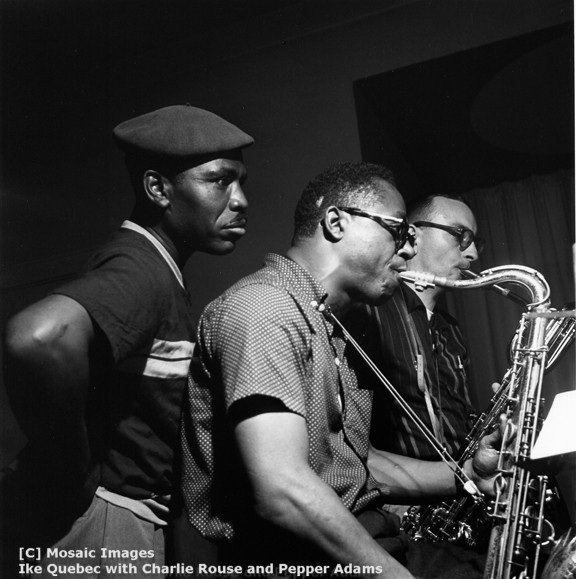
“Tenor-man Ike Abrams Quebec is a somewhat forgotten figure these days but from the mid forties until the early sixties his distinguished Gene Ammons by way of Coleman Hawkins and Ben Webster approach graced a number of recordings with people like Roy Eldridge, Cab Calloway, Trummy Young, Grant Green, Jimmy Smith and Bennie Green.


He was born on 17 August 1918 in Newark, New Jersey and began his show-business career during the late 1930s as a dancer with a travelling show named Harlem On Parade. He mastered the piano but decided not to persevere after hearing Teddy Wilson (“He was saying so much that I turned to the tenor”) which is when he joined a local band The Barons of Rhythm. They played Count Basie, Jimmie Lunceford and Andy Kirk material and Bobby Plater wrote the band’s theme-song The Jersey Bounce. The Barons never recorded, disbanding in 1941 when the USA entered the war. They should not be confused with a Basie band of the same name however that had a residency at the Reno club in Kansas City in 1935/36.


He began playing at Minton’s Playhouse where he became friendly with Thelonious Monk, Bud Powell and Kenny Clarke. He co-wrote Mop Mop with Clarke which was recorded by one of his early influences Coleman Hawkins in 1943. In the early forties he worked with Frankie Newton, Roy Eldridge, Benny Carter and Ella Fitzgerald’s orchestra under the direction of Eddie Barefield. His first recording date took place in November 1943 with Eldridge who generously gave him a whole chorus on The Gasser. It’s a theme-less romp on Sweet Georgia Brown where he produces some big-toned Ben Webster-like lines. In 1944 he appeared with Trummy Young on a triple-bill at the Yacht Club on 52nd. Street with Coleman Hawkins’s sextet and Billy Eckstine’s orchestra. That was the year he joined Cab Calloway’s band as principal tenor soloist following in the footsteps of Chu Berry and Illinois Jacquet. He was to remain with Calloway off and on until 1951.


His first recording as a leader took place in July 1944 for Blue Note, a label he was to have a long relationship with both as a performer and A & R man. He was accompanied by Milt Hinton and J.C.Heard from the Calloway band together with his friend Tiny Grimes who had been working with Art Tatum. Roger ‘Ram’ Ramirez whose Lover Man was famously introduced to the jazz world two months later by Billie Holiday was on piano. The date produced one of Quebec’s originals Blue Harlem which became a juke-box hit thanks to regular air-play on Fred Robbins’ Robbins Nest radio show. Grimes opens the slow theme-less blues with the distinctive down-home sound he made all his own over the years and once again Ike’s two choruses would convince many they were listening to Ben Webster. Incidentally J.C. Heard gets close to Jo Jones’ rhythmic time-feel on the session which is probably why Ike selected him for all his own recording dates during the 40s. 


Two months later he was again in the Blue Note studios fronting a band that featured two more Calloway colleagues – Jonah Jones and Tyree Glenn with arrangements by Buster Harding. The trumpeter has his moments especially on Mad About You and Tyree Glenn has some fine Jack Teagarden-like trombone on Hard Tack but the leader impresses throughout  especially on a rhapsodic If I Had You. He was always a master ballad performer and his ravishing tone is a reminder of what he once said, “From the time I started on tenor, sound became very important to me. No matter how foxy a man’s ideas were, if he didn’t sound good he wasn’t saying anything to me”. 


In July 1945 Ike Quebec’s Swing Seven with Buck Clayton who was in the army at the time and Keg Johnson (Budd’s older brother) recorded three standards together with Cup-Mute Clayton, jointly credited to the leader and the trumpeter. I Found A New Baby is given a brisk work-out with the soloists sounding perfectly relaxed despite the 80 bars to the minute tempo. I Surrender Dear is another ravishing ballad feature for Quebec which he climaxes with an emotional cadenza. Three weeks later he was back in the studio for a quintet date with Johnny Guarnieri and Bill De Arango performing a toe-tapping Girl Of My Dreams with delicate Teddy Wilson-inspired piano from Guarnieri.  After some fleet De Arango guitar on Quebec’s own Jim Dawgs based on I Got Rhythm, the leader really digs in for two extrovert J.A.T.P type choruses clearly inspired by the hard swinging rhythm section. 


Throughout the nineteen-forties Quebec was one of the most heavily featured artists with Cab Calloway and nearly everything the band recorded had one of his solos. Here is a small selection: For A Little Bally-Hoo, Russian Lullaby, St. Louis Blues, Frantic on The Atlantic, 9.20 Special, The Great Lie, I Can’t Give You Anything But Love, Rosemarie and One O’Clock Jump. On these titles he often adds a little touch of Illinois Jacquet to his more customary Ben Webster approach. Apart from those already highlighted, Shad Collins, Quentin Jackson, Hilton Jefferson, Rudy Powell, Sam ‘The Man’ Taylor, Panama Francis and Cozy Cole were just a few of the notable sidemen who passed through the band while Quebec was there. Gerald Wilson and Buster Harding wrote many of the arrangements.


The band was frequently resident at the Zanzibar which Billboard advertised as “The flashiest Sepia Night Club on Broadway since the Cotton Club”. In August 1944 the Ink Spots followed a Calloway booking at the club. Orville ‘Hoppy’ Jones who provided the memorable bass-talk heard on so many of their hits collapsed on stage and died a little later. Towards the end of the decade Quebec who had recorded extensively for Blue Note became something of a talent scout for the label. Although essentially from the earlier swing school himself, he persuaded Alfred Lion and Francis Wolff to take a chance with contemporary talents like Thelonious Monk, Bud Powell and Tadd Dameron. He was particularly friendly with Monk whose first date as a leader in 1947 featured Ike’s nephew Danny Quebec West on alto - his only recording. 


He recorded with Kansas Fields early in 1952 and a year later he performed with vocalist Carl Davis for a run-of-the-mill rhythm’n’blues session which produced Get Your Business Right and I’m Leaving You Today. Apart from appearing at the Cafe Bohemia in 1955 little else was heard from Ike Quebec for most of the fifties because like so many performers of his generation his heroin addiction precluded regular work as a performer. A 1957 survey of over 400 New York jazz musicians conducted by Nat Hentoff revealed that 16% were regular heroin users and more than half smoked marijuana. He served two short sentences at Rikers Island Prison and for most of the decade he seemed to earn a living driving a cab in Manhattan. However by the late fifties he was able to re-establish his relationship with Alfred Lion as an A & R Man at Blue Note, often driving the recording artists who were his friends to the studio. He supervised dates for Dexter Gordon and Jackie McLean who both went on to appear frequently for the label. Leo Parker too benefitted from Quebec’s recommendation. Ike co-wrote Blue Leo with Parker who recorded two fine albums for Blue Note in 1961. He was negotiating a third before his untimely death the following year at the age of thirty seven.


Quebec began his come-back as a Blue Note artist with a series of short tracks for the juke-box market which took place between July 1959 and February 1962 when no less than 26 titles were recorded. Tenor dates with organ backing were becoming the order of the day and the material had Ike in quintet settings with Sir Charles Thompson, Eddie Swanston or Earl Vandyke featured at different times on organ. These sessions showed that his artistry and powerful sound had lost nothing during his absence from the studios and served to re-introduce Ike Quebec to a public that had all but forgotten him. With the success of those performances the next few years represented a flurry of recording activity for him. His first extended jazz date took place a year later on a Jimmy Smith led-group including Blue Mitchell and Jackie McLean. Smith had never heard of him but after the first tune he apparently ran to the control-room to tell Lion how “excited and thrilled” he was by what he had just heard. It’s a blowing session with everyone able to stretch out but the solo spotlight falls on Quebec when Mitchell and McLean sit out on Old Folks and Time After Time. Once again he proves what a consummate balladeer he was.


His November 1961 album Heavy Soul featured Milt Hinton, Al Harewood with organist Freddie Roach who had been recommended by Quebec and was making his recording debut. The stand-out track here is Quebec’s sensitive reading of Bing Crosby’s 1933 hit Brother Can You Spare A Dime. It became a theme for the depression years and Yip Harburg’s evocative lyric (not heard here of course) was one of the finest ever protest songs summing up the devastating social scene of the time. Two weeks later he was back in the studio with the same group performing three of his signature ballad readings – It Might As Well Be Spring, Lover Man and Willow Weep For Me. He has that old-warhorse Ol’ Man River all to himself for four fluent, foot-tapping up tempo choruses clearly inspired by Shirley Scott-like chords from Roach


A week later with Grant Green, Sonny Clark and Sam Jones he revisited Count Basie’s Blue And Sentimental in an emotional performance that recalls Herschel Evans’ famous 1938 solo. The guitarist is a perfect foil throughout with his light, delicate touch. Together they create a suitably late-night mood on Blues For Charlie recalling Ike’s 1944 hit Blue Harlem with Tiny Grimes. In July 1962 he recorded five titles with Bennie Green, Stanley Turrentine, Sonny Clark, Milt Hinton and Art Blakey which for some reason were not released until 1982 when Blue Note made them available. Ike has some typically soulful outings on See See Rider, B.G’s Groove Two and especially his own I.Q. Shuffle. Green worked with some very fine tenor players over the years and it’s a pity that this is the only example of him performing with Quebec. They were stylistically very close and although influenced by the bebop revolution they were essentially veterans of the swing era who would have made a perfect combination. 


In October 1962 he decided to join the Bossa Nova bandwagon with his Bossa Nova Soul Samba. Ted Gioia has pointed out in his definitive Jazz Standards that nearly everyone at New York’s Local 802 was recording a Bossa Nova album at the time. Coleman Hawkins had dipped his toe in the water and Stan Getz’s Jazz Samba was constantly on the air-waves. Quebec who admired Getz probably thought “Why not me?” The subtle charm of the idiom is a perfect fit for his under-stated performances. He ignores the Jobim, Gilberto and Bonfa classics of the genre preferring to concentrate mostly on his own material. Blue Samba is a delightful marriage of jazz music’s oldest and most basic harmony (the blues) with the Bossa Nova which had become known as The New Thing. Ike rarely indulged in contrafacts but Me’ N You is a clever reconstruction of You’d Be So Nice To Come Home To. Dvorak’s Goin’ Home and Liszt’s Liebestraum are given totally fresh looks with the Bossa’s delicate rhythm. He was in physical difficulties at the time but Alfred Lion said “Ike played just beautifully and kept the session going”.


These Blue Notes releases should have been the prelude to a new and successful career but three months after his Bossa Nova album Ike Quebec died from lung cancer on 16 January 1963.”


Selected Discography

As Leader:

The Complete Blue Note Recordings Of Ike Quebec And John Hardee – Mosaic MD3-107.

The Complete Blue Note 45 Sessions Of Ike Quebec – MD2-121.

Ike Quebec All-Stars – Classics (F) 957CD.

Ike Quebec Four Classic Albums – Avid Jazz AMSC1322.


As Sideman:

Cab Calloway Club Zanzibar Broadcasts (1944-45) – MCPS CD 6.

Bennie Green – Mosaic Select MS-003.

The Incredible Jimmy Smith – Open House/Plain Talk – Blue Note CDP7-84269-2CD.


While researching the career of Ike Quebec I would like to acknowledge the help received from John Bell, Bob Weir and the Jazz Institute, Darmstadt Germany.


Thursday, February 18, 2021

Sidney Bechet

© -Steven Cerra. Copyright protected; all rights reserved.


The editorial staff at JazzProfiles often learns along with its readers regarding the musicians featured on these pages.


Such was the case with Sidney Bechet [1897-1959], about whom we knew very little other than he was one of the early makers of the music and about whom many Jazz musicians had a high regard.


Perhaps it was because Sidney left for France [he lived there from about 1925-1932] so early in his career and was out of the American public’s eye [ear?] during some of the important, formative years of Jazz [Thankfully, before he left town, he did make some wonderful recordings with Louis Armstrong and Earl “Fatha” Hines].


Even after his return, it seems that Sidney’s music never did catch on here and Bechet relocated to France in 1950 after performing as a soloist at the Paris Jazz Fair. His performance at the fair resulted in a surge in his popularity in France. After that, Bechet had little problem finding well-paid work in France. He died there in 1959.


In searching out information about Sidney Bechet, this fine essay by Martin Williams, the distinguished Jazz author and critic, proved extremely helpful as a starting point about Bechet’s music and his importance to Jazz.


Rough and ready and somewhat of a rogue, Sidney would have been the perfect symbol of the USA Jazz Age run riot had he not spent so much of the Roaring Twenties in another country.


Sidney Bechet: First and Last


“Sidney Bechet's earliest recordings come from mid-1923, and they offer a fully developed musician. Fully developed not only because he played with power and authority, but also because we know from his biography that by then he had been a star soloist for some years, and because the elements and resources of his style can be heard on those records, elements that changed very little over the years. Yet Bechet did some of his most challenging recording work in 1957, two years before his death, collaborating with French pianist Martial Solal, effectively interpreting, ornamenting, and improvising on a repertory of standard songs which few of his New Orleans contemporaries would have undertaken in the first place, and which none of them, not even Jimmy Noone, could have handled so confidently.


By the time of those 1923 records, Bechet had taken up the soprano saxophone, had mastered that difficult instrument, and had come to prefer it to the clarinet. At a time when jazz saxophonists were apt to be shallow, fleet-fingered, slap-tongued virtuosi, Bechet's work must have come as a revelation of eloquence, depth, and elegance of musical phrase. On Kansas City Man Blues,, he even used some horse whinneys (derived no doubt from New Orleans cornetist Freddy Keppard) and brought them off with dignity. And within a few months, Bechet had recorded not only passionate slow blues and faster stomps, but an exceptional ballad solo on Old Fashioned Love. There is no question of Bechet's rhythmic verve, confidence, and swing as a jazz player. He understood the relaxed, legato New Orleans phrasing that Armstrong's predecessors introduced so tentatively and that Armstrong himself elaborated so brilliantly. And although there was an occasional fleeting echo in Bechet of the clipped accents of the previous decade, it diminished over the years.


The year of Bechet's earliest recordings is the year in which New Orleans Negro jazz began to be recorded regularly, but Bechet's soprano saxophone style already represents an important step within that music. He based his work on that instrument on a combination of the lead style of the cornet or trumpet and on the clarinet's obbligato in the New Orleans ensemble. Bechet therefore needed to take the lead voice in the polyphonic ensemble, and he gave problems to trumpeters throughout his career. There are two 1924-25 recordings of Cake Walkin* Babies which also feature the young Louis Armstrong. On the first (labeled the "Red Onion Jazz Babies") Bechet is uncannily responsive in polyphony and all poised excitement in his breaks. On the second (by "Clarence Williams Blue Five") Bechet's breaks again are statements in controlled excitement, but the climax of the performance is awarded to Armstrong in solo.


A 1938 session involved Bechet's lead with Ernie Caceres's baritone saxophone in obbligato, and it is particularly successful on What a Dream. Trumpeters were usually wise not to compete with him (but, alas, some of them did), and this is quite evident in some 1940 duets with cornetist Muggsy Spanier. Spanier did not push the limits of his resources but remained his simple self, and some of the resultant interplay between the two horns is exceptionally effective.


A unique expression of sympathetic, integrated New Orleans polyphony can be heard on Blues of Bechet. By an early example of overdubbing (done before the days of tape and therefore done on successive acetate discs by means of full studio playbacks) Bechet himself plays variously clarinet, soprano and tenor saxophones, piano, bass, and drums.


We owe Blues of Bechet to Bechet's 1940-41 association with Victor records and his various pick-up groups which were given the unpretentious collective name of the "New Orleans Feetwarmers." There were some earlier 1932 Feet-warmers recordings, but I confess that they seem to me to have more uninhibited energy than ensemble swing or musical success. However, Bechet evidently did find the atmosphere inspiring at least for the first half of Maple Leaf Rag. And in the opening section of Shag he offered the first non-thematic use on records of the I Got Rhythm chord progression.


The 1940-41 Feetwarmers series contributed the plaintive re-make of Nobody Knows the Way I Feel This Morning. And it offered Blues in Thirds with Bechet in the company of Earl Hines, a pianist whose relative sophistication was, of course, no deterrent. Between them, Hines and Bechet also worked out a beautifully paced arrangement of Hines's fine little piece.


The Feetwarmers series also offered at least one ensemble which works because of a subdued trumpeter (I Ain't Gonna Give Nobody None of This Jelly Roll, with Gus Aiken). The Ellington pieces Bechet did for Victor (The Mooche, Stompy Jones, Old Man Blues, Mood Indigo) may not all be among the best of the series, but they do remind of one of the great losses in the recorded repertory: it was Bechet's passionate presence in Ellington's early Kentucky Club orchestra that helped the pianist find his way as a bandleader and composer, and no aural evidence of that historic association has survived.


Bechet's Victor When It's Sleepy Time Down South has a lovely non-thematic half-chorus on soprano saxophone. Such improvisation was of course not at all beyond his inventive powers; he is equally inventive on Sweet Sue in the Spanier duets, and there is a 1947 showpiece treatment of Just One of Those Things. Indeed, Bechet seems to have loved Cole Porter (he also left us a strong Love for Sale and an eloquently simple reading of What Is This Thing Called Love?), and that, in turn, reminds us of his—and Porter's—understanding of major-minor relationships. Bechet also loved Puccini, and that should not surprise us either.

Bechet recorded intermittently for Blue Note in 1939 and regularly in 1944-45. The results included his affecting showpiece Summertime and his slow blues clarinet masterpiece, Blue Horizon.


Sidney Bechet was not always the sublime soloist he was at his best, of course, and there was a banal, turn-of-the-century sentimental streak in him that occasionally showed in his choice of showcase material (Song of Songs) or in the trite, bravura endings he was so fond of. And if, on the whole, his ornaments and his inventions do not show the sustained originality and imagination of an Armstrong, nor of Armstrong's best successors, one should not expect that of him. He was true to the limits of his style and truly creative within them.


He was an eloquent musician, a musician whose range could encompass the fundamental passion of Blue Horizon, the elegant simplicity of What Is This Thing Called Love?, and the unpretentious invention on Sleepy Time Down South. And he was a pioneer jazzman who could collaborate, late in his career, with Martial Solal with singular success especially on It Don't Mean a Thing, Rose Room, and The Man I Love.


My praise of his eloquence, as well as my occasional reservations about his taste, is ultimately subjective of course. And I will conclude my comments even more personally. It has been said that Bechet's strong, constant wide vibrato is an acquired taste. For me, it was a taste I willingly acquired without thought as a teenager. And it was one night in 1949 or 1950 in Philadelphia when I saw Bechet play, and watched as the man, the instrument, the sounds, the emotion—all of these became by some magic process one thing, one aesthetic whole. I think it was then that I was first in touch with the essential miracle of music.”