Monday, December 13, 2021

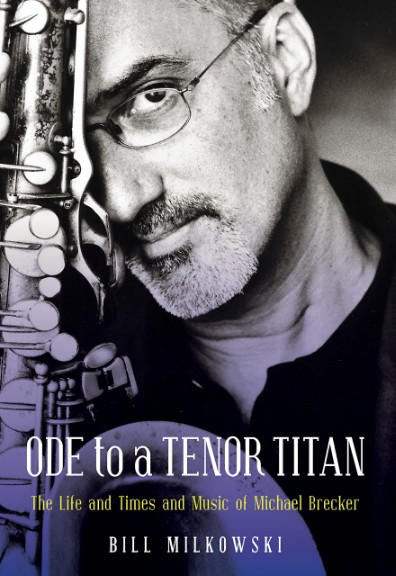
Ode to a Tenor Titan: The Life and Times and Music of Michael Brecker by Bill Milkowski - An Appreciation

 © Copyright ® Steven Cerra, copyright protected; all rights reserved.

For Jazz fans of a certain age [mine], the focus on the music has been the styles that developed from approximately 1945-65.


The elements of free Jazz, Jazz-Rock fusion and the use of electronic instruments that really took hold in Jazz in the late 1960s and early 1970s generally left this generation cold [not me].


As the music progressed into the 1970s to form a synthesis of these new elements, this 1945-65 generation regressed almost to the point of developing a reverie for the older forms of Jazz while shunning these new directions.


Enter Michael Brecker and the Jazz musicians of his generation who, rather than reject this synthesis, flat out embraced it and made these new forms their own while establishing a place for them in the history of the music.


If you are interested in the details of this transition, look no further than Bill Milkowski’s Ode to a Tenor Titan: The Life and Times of Michael Brecker [Backbeat Books 2021].


Bill’s Brecker Bio offers a variety of illuminating perspectives on Michael’s career while at the same time documenting the development of the trends in Jazz that came to characterize the music in the last quarter of the 20th century.


In chronicling Michael’s career from his arrival on the New York scene in 1970 until his death in 2007, Bill’s Brecker Bio also treats us to a look at many of the other major artists who shaped the Jazz Rock fusion of this era because Michael played with just about everyone and anyone of importance.


Ode to a Tenor Titan follows Michael's story from growing up in Philadelphia, finding his tenor sax voice during his brief stint at Indiana University, making his move to New York City in 1969, and taking the Big Apple by storm through the sheer power of his monstrous chops. A commanding voice in jazz for four decades, Brecker possessed peerless technique and an uncanny ability to fit into every musical situation, whether it was as a ubiquitous studio musician (more than nine hundred sessions) for such pop stars as Paul Simon, James Taylor, Bruce Springsteen, Todd Rundgren, Chaka Khan, and Steely Dan; playing with seminal fusion bands like Dreams, Billy Cobham, and The Brecker Brothers; or collaborating with the likes of Frank Zappa, Charles Mingus, Pat Metheny, and Herbie Hancock. But his biggest triumphs came as a bandleader during the last twenty years of his career, when he produced some of the most challenging, inspired, and visionary modern jazz recordings of his time.”


Since “everyone comes from someone” in Jazz, it was certainly obvious to anyone with a listening knowledge of Jazz that Michael “came from” tenor saxophonist John Coltrane for as he explains in Chapter 1: Becoming Michael Brecker:


“[As he recalled in a 2004 interview at the Newport Jazz Festival,] The first Coltrane album that I bought was Live at Birdland, which was a pretty bizarre record for a fledgling listener because the music was so intense and absolutely riveting. A lot of it was modal music with long solos. And I'd never heard drums play with that kind of intensity and crashing. And Coltrane was playing in a style and with a sound that I was not accustomed to. I didn't like the record at first, but I began listening to it every day until finally after listening to it over a period of probably months, I began to understand what was going on. From there, I started buying other Coltrane records and became really interested in his music, to the degree that it became an enormous influence in the direction that I chose for a life's endeavor. Coltrane's music was both spiritual and certainly intellectual, technically highly developed, emotional and immensely creative and courageous. Put all those things together, plus the phenomenon quartet, which was one of those groups where the sum is greater than the whole, and the power of that group literally kind of propelled me into choosing music as a livelihood."


But it would be a mistake to assume that Michael was little more than a John Coltrane clone for as Ravi Coltrane, the son of Michael’s biggest role model and inspiration and himself a fine tenor saxophonist delineates:


“I think Michael came about at a very unique time in music and was able to really utilize everything coming out of the late '60s and early '70s in the jazz and funk-rock scenes. He absorbed so much at a prime time and just got ahead of the game really quickly because he was a focused musician and very diligent about how he practiced. And clearly, he worked out a ton of shit on the saxophone and was able to kind of take it to another place. He also had a very distinguishable sound. And there was a point in the '80s where that sound became THE sound among aspiring saxophone players. There were so many younger players trying to play like Michael then. We used to call them the Breckerheads. But I always thought Michael's thing always sounded most genuine — because it was his shit! And, obviously, his influences were not only John Coltrane but Joe Henderson as well. But he put a lot of shit together and worked it out, all over the horn, and was able to play in a variety of styles of music with a kind of proficiency that made him one of the best of the best. And I think it was his curiosity and passion and the profoundly deep connection he had to the music that really set him apart from other great saxophone players on a similar technical level.” [Emphasis mine]


In an era which has as one of its socio-cultural keynotes the concept of “cultural appropriation,” one has to be careful about making assertions, but although the comes-from-influences of Coltrane and Henderson are certainly apparent in the early Brecker style [as are Stanley Turrentine, Junior Walker and King Curtis], they were soon superseded by “ a kind of proficiency that made him the best of the best.”


Tenor saxophonist Joe Lovano expressed Michael’s genuineness this way in the following excerpt from an interview he gave Bill Milkowski:


“Mike was a true virtuoso on his horn. I remember being down in his basement studio in Hastings [New York] just trying out these wooden mouthpieces that Francois Louis, the Belgian mouthpiece maker, had made for him. This was probably around 2004. I drove Francois up to Mike's pad, and we went down to his basement studio, and you should have heard him try these mouthpieces, man. He was like Heifetz or something the way he played the harmonics and the overtone series on the horn from the lowest register to the highest register. And that's how he would practice. He would play from the bottom of the horn to the upper extensions and really feel all the overtones and undertones within that. Mike lived in that world. He was constantly searching, constantly evolving, and he had a deep passion and a lot of love in his playing.”


Aside from his innate talents and abilities, it was Michael’s practice regiment that set him apart and helped him become a true virtuoso; a practice regiment that Anders Ericsson and Robert Pool describe as “deliberate practice, … the gold standard, the ideal to which anyone learning a skill should aspire” in their book “Peak: Secrets from the New Science of Expertise” [Eamon Dolan, 2016].


Not to distract from the focus on Bill’s Brecker Bio but briefly, deliberate practice “ draws a clear distinction between purposeful practice — in which a person tries very hard to push himself or herself to improve — and practice that is both purposeful and informed. In particular, deliberate practice is informed and guided by the best performers' accomplishments and by an understanding of what these expert performers do to excel. Deliberate practice is purposeful practice that knows where it is going and how to get there.


Deliberate practice is characterized by many traits - “Deliberate practice develops skills that other people have already figured out how to do and for which effective training techniques have been established. The practice regimen should be designed and overseen by a teacher or coach who is familiar with the abilities of expert performers and with how those abilities can best be developed.”


Michael was lucky to have two marvelous teachers in Vince Trombetta and Phil Woods who early on instilled another of Peak traits: “Deliberate practice takes place outside one's comfort zone and requires a student to constantly try things that are just beyond his or her current abilities. Thus it demands near-maximal effort, which is generally not enjoyable.”


Fortunately for Mike, he arrived in New York during the 1970s, a time in which lofts with plentiful space were available for inexpensive rates which allowed him to “deliberate practice” incessantly both alone and with many other musicians who would later become bandmates and/or stars in their own right in the burgeoning Jazz-Rock Fusion scene including Billy Cobham, John Abercrombie, Don Grolnick, Peter Erskine, Steve Khan, Mike Manieri, Bob Mintzer, Hal Galper, David Sanborn, Jan Hammer, Alex Blake, Barry Rodgers, Jack Wilkins, Lenny White, Dave Holland, et al.


“In their freewheeling loft jams, the saxophonists tended to hone in on latter day Coltrane. "That was the period of Trane that we were most affected by and were emulating," said Liebman. "And us being young guys, as is always the case, you want to emulate what you hear around your environment. And Ascension is the record that stands out as 'Let's do that!' Meaning, play group improv with as many horns as possible at the same time, even with a couple drummers ... no basic heads, no melodies, no chords, just completely free association and a lot of energy, which, of course, is a big component of it. And Michael was very much a part of that."


Liebman added, "If you were a young musician in New York at that time, you had to deal with Trane; you couldn't avoid it. Why would you? You had to deal with Coltrane's oeuvre, his work and his language. So, we were all enamored by that and really affected by it. Trane was everywhere, and the immensity of what he did was on everybody's mind. And when you hear tapes of some of our jams from back then, you really hear the personalities coming out between me and Michael and Steve Grossman and Bob Berg. It was the beginnings of what would become our way of being stylistic; playing a vernacular that's known and putting it together in your own way." …


According to Bill, Randy Brecker confirmed that the sessions at Liebman's and other lofts around New York at that time were, indeed, happening around the clock. "There were sometimes three sessions going on at once in that building on 19th Street on each floor, as well as other lofts around town where cats would go to play at any hour. Liebman's loft became a main focal point mostly for free jazz jams. The bebop and Miles-infused fusion jams were over at Gene Perla's loft, who shared a space with Jan Hammer and Don Alias in Lower Manhattan on Jefferson Street near the Fulton Street Fish Market just off the East River. I had gone to Berklee with Gene one summer and met Jan at the Vienna Jazz Competition in 1966, so I was over there jamming quite a bit, too, along with a lot of people who were under the electric Miles wing.


"And then you had the big band rehearsal spaces like Lynn Oliver's uptown on 89th and Broadway and downtown at Tom DiPietro's place Upsurge on 19th between Fifth and Sixth Avenues, where the Chuck Israels [Jazz] Orchestra and Joe Henderson Big Band used to rehearse. I went to those places as well. There were so many places to play then."


"It was a special time to be in New York," Michael told [Lorne Frohman in a 2004 Distinguished Artists interview] "That's when the so-called boundaries between what was then pop music and jazz were becoming very blurry. And those of us who experimented with combining R&B rhythms with jazz harmony began to develop a music that was a fusion, if you'll excuse the word, of various elements. The music was fresh, exciting, powerful, and exhilarating. We really had no word for it; at the time it was loosely referred to as jazz-jock."


Bill’s description of Michael’s work in the 1970s includes his time with Horace Silver’s and Billy Cobham’s Bands, the Chicago and Blood Sweat & Tears inspired Dreams with a front line of Randy and Michael along with brass instrumentalist Barry Rodgers, the music of Michael’s best friend pianist Don Grolnick, and early iterations of the Brecker Brother Band, among many other musical associations during this period. But what is patently obvious was the lack of a recording under Michael’s own name.


This “preternaturally gifted player whose facility seemed super human, who was modest to a fault and universally beloved by fellow musicians” asserted that he just wasn’t ready to issue an album under his own name.! This was not to happen until 1987!!


In the meantime, we are treated to Bill’s annotations and discussions about a whole host of recordings that Michael made with other musicians and groups among them The Brecker Brothers, Steps and Steps Ahead, Billy Cobham, Hal Galper, Don Grolnick, Claus Ogerman, Jaco Pastorious, among many others.


As a point in passing, I along with some others friends, used the annotated discography provided in Bill’s Brecker Bio as a read-along, play-along platform to better familiarize ourselves with the points about Michael’s style and music that Bill makes in his book, to fill-in-the-gaps of Michael’s music that was new to us, as well as, to reconnect with Brecker recordings already in our my collections.


Of particular poignancy, largely because I was unaware of this fact, is Bill’s description of the dark side of Michael’s heroin addiction in the 1970s and how he “turned his life around and became a beacon for countless others to lead clean and sober lives.”


Also unknown to me:


“By the end of 1977, Mike and Randy took out a ten-year lease on a downtown space that would become a popular haven for them and other like-minded musicians to put together new projects and experiment with impunity. Seventh Avenue South, as it was christened, would also become a notorious den of iniquity for those people who were interested in doing the wrong thing right. Coke fiends and fusion fans rubbed elbows at the downstairs bar and in the upstairs performance area, and the lines flowed like champagne. After all, it was the '70s.”


By the 1970s, Jazz had pretty much been abandoned by the national press. There was Downbeat and a few other specialty magazines and some newspapers offered the occasional column about Jazz, but the music had lost much of its following to Rock and this was reflected in the lack of coverage in news outlets.


Bill’s Brecker Bio offsets some of this obscurity with his accounts of Michael’s activities in New York, Japan and the international Jazz festivals such as Montreux in Switzerland during the 1970s and beyond.


On a more personal level, if you love “Love Stories,” Michael’s marriage to Susan Neustadt will tug at your heartstrings and Mike’s association with Darryl Pitt will make you wish that every prominent artist could have such a caring and competent manager. The scientifically curious side of Michael as manifested in his adoption of the EWI [the electronic wind instrument] reveals another side of the Brecker Genius. Others have played the EWI; no one has ever played it like Michael and Bill goes into a graphic, yet very readable, description as to why this is so. 


Thankfully, by 1987, we have Michael creating and issuing recordings under his own name and all nine of these are fully annotated by Bill.


The book contains a full discography of Michael’s recordings and concludes with an Appendix of “Testimonials to a Tenor Titan” by David Sanborn, Dave Liebman, Joshua Redman, Chris Potter, Joe Lovano, Bill Evans, Ravi Coltrane, Branford Marsalis, John McLaughlin, Tim Ries, Steve Slagle, Bob Mintzer, Adam Rogers, Chris Minh Doky, Ben Wendel, Chris Rogers, David Demsey, Rick Margitza, Michael Zilber, Bob Reynolds and Franco Ambrosetti.


Of course, throughout the book, Bill includes comments by many of the musicians who worked closely with Michael over the years, not the least of which were brother Randy, Pat Metheny, Herbie Hancock, John Patitucci, Jack DeJohnette, McCoy Tyner, Mike Stern, Peter Erskine, Jeff “Tain” Watts, Mike Mainieri and Antonio Sanchez among many, many others.


The word “tragic” is all-too-often associated with the word “genius” and, unfortunately, this turns out to be the case with Michael whose death from multiple myeloma in 2007 deprived the Jazz World of a singular voice and a very special human being. 


“Michael Brecker was a player of tremendous heart and conviction, and a person of rare humility and kindness. His story is one for the ages.”


In the dedication he entered in the review copy he so graciously sent me Bill wrote:


“Steven - Hope you enjoy reading this sad and beautiful tale of the great Michael Brecker. He was a friend and a hero to me. I put my heart and soul into this one. All the best! Bill Milkowski.”


With the reading of each page in this definitive work, it shows Bill; it shows.


Taking on the responsibility of writing the biography of someone with the astounding abilities and legacy of Michael Brecker is no easy task. Bill Milkowski’s biography is fittingly the equal of the man and his music that it chronicles.


The book is available through all retail and online booksellers.


Saturday, December 11, 2021

MEMORIES OF DAVE FRISHBERG by Joe Lang

 © Copyright ® Steven Cerra, copyright protected; all rights reserved.


MEMORIES OF DAVE FRISHBERG


By Joe Lang


Joe Lang is one of my Jazz buddies and he has a particular affinity for vocal Jazz. You may recall his earlier piece on Frank Sinatra on these pages which you can locate by going here.


The recent passing of pianist, composer and vocalist Dave Frishberg prompted this essay by Joe which he has kindly allowed us to post as a blog feature. 


Dave was a rare talent who had the ability to write lyrics to his composed melodies. Combining them required immense patience.


Musicians with sensibilities like Dave are a thing of the past as is the socio-cultural environment that helped create them.


But it’s nice to have in memoriam articles like this one by Joe that helps explain why artists like Dave Frishberg were so special.


© Copyright ® Joe Lang: copyright protected; all rights reserved, used with the author’s permission.


“Upon hearing about the passing of Dave Frishberg, I felt two emotions, sadness that he was no longer with us, but relief that he no longer had to live with the dementia that plagued the last years of his life.


Frishberg was a giant talent.  He was one of our best songwriters, whether he was writing words and music or words only, was an exceptional jazz pianist and an engaging vocalist who, despite a limited range and less than classic voice, was able to put over a lyric with the best of them, especially when singing, his own material.


I first encountered Frishberg as one of the house pianists at the original Half Note in the 1960s.  He played with the featured performers like Ben Webster, Roy Eldridge and Al Cohn and Zoot Sims.  He also backed Anita O’Day, who could be a difficult lady to accompany, and caused Frishberg much agita.


Although he started writing songs during the same period, it was not until Blossom Dearie began to sing his lyrics to Bob Dorough’s melody on “I’m Hip” that he began to be recognized for his songwriting.  Dearie also added Dave’s “Peel Me a Grape,” a song originally written as special material for Fran Jeffries, and first recorded by O’Day, to her repertoire.


It was in 1970 that Frishberg recorded his first vocal album, Oklahoma Toad, one that was mostly forgettable except for the inclusion of what became one of his most popular songs, “Van Lingle Mungo,” one of the many tunes by him that reflected his love for baseball.


In the mid-1970s, he recorded a few albums for Concord Jazz that were mostly older jazz tunes.  It was the release of Live at Vine Street on the Fantasy label in 1984 that he turned his attention to his own songs, and those beyond the folks who caught him in club performances started to become familiar with his superlative songwriting talent.


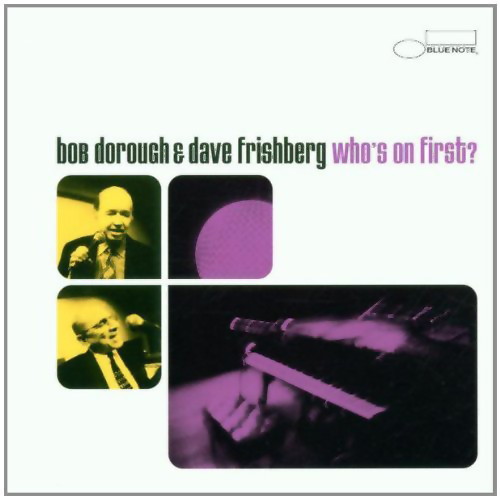
In subsequent years, he recorded extensively, primarily as a vocalist, performing many of his wonderful songs, as well as many standards and jazz tunes.  From 1993 on, he recorded primarily for Arbors Records, several of the albums being duo efforts with Rebecca Kilgore with whom he worked frequently in Portland, Oregon where both resided.  One exception was a Blue Note duo album with Bob Dorough titled Who’s on First? that was recorded in 2000.


His catalog of songs is impressive.  In addition to those previously mentioned, he produced such gems as “My Attorney Bernie,” “Dear Bix,” “Sweet Kentucky Ham,” “El Cajon,” “Zoot Walks In,” “Wheelers and Dealers,” “Let’s Eat Home,” “I Want to Be a Sideman,” “Dodger Blue,” “Another Song About Paris,” “Do You Miss New York,” “Marilyn Monroe'' and “You Are There,” the last of which has a haunting melody by Johnny Mandel.  One of his most clever songs, “Foodophobia,” was one that he never recorded, but fortunately it was included on an early album by Susannah McCorkle, The People That You Never Get to Love.  He also wrote songs for the Schoolhouse Rock television series, with “I’m Just a Bill,” probably his best-known creation.


I was privileged to see him in clubs many times, including Gulliver’s in Lincoln Park, the Village West, Michael’s Pub with Blossom Dearie, and the Oak Room at the Algonquin Hotel with Jessica Molaskey.  


When I went to Gulliver’s to see him, he was speaking with the owner, Amos Kaune, inside the entrance.  I had brought along four mix tapes that I had made of lesser-known songs by a variety of great but mostly lesser-known singers that I thought Amos would like to play as background music between sets.  Dave took a look at them and asked how he could obtain copies of them.  I just told him to give me his address and I would mail copies to him.  A few days after I had mailed them to him, I received a couple of tapes back from him of one of his favorite singers, Elis Regina, the great Brazilian singer.  A nice gesture of thanks from a nice man.  By the way, he was so wonderful to see that evening that I returned the next evening with my then teenaged older son who also dug him the most.


The last of these mentioned gigs resulted in Frishberg’s last recording, At the Algonquin.  As part of the program, Frishberg sang two songs about Dorothy Parker, “Will You Die?” and “Excuse Me for Living,” written for a Portland theater group production about the Algonquin Round Table.  Frishberg is at his sardonic best on these songs, and it would be interesting to hear the rest of the material written for that show.


One other Frishberg sighting is worth a mention.  In 1979, there was a celebration of Hoagy Carmichael’s 80th birthday at Carnegie Hall at which I was lucky enough to have the seat next to Carmichael.  One of the performers was Frishberg, and Carmichael, who was not familiar with him, leaned over to ask me who he was.  Well, after Frishberg sang and played “The Old Music Master,” “Baltimore Oriole,” “Memphis in June” and “Old Man Harlem,” Carmichael knew who he was and responded to Frishberg’s performance with great enthusiasm.


I first heard about Frishberg’s difficulties [with his health] a while ago.  Recently I was speaking to Judi Marie Canterino who was married to Mike, the gentleman who was responsible for turning the Half Note into one of New York City’s premier jazz clubs.  I mentioned Dave to her and she said that she was going to call him.  When we spoke a few weeks later, she told me that she had called, spoke to his wife, and after some hesitation she agreed to put Dave on the phone with a caution that he probably would not know who Judi Marie was.  When Judi Marie said hello to him and identified herself, he responded with “I loved the Half Note.”  That was the extent of their conversation, but when Dave’s wife took back the phone, she told Judi Marie that it was the first time in quite a while that he responded to anyone in that kind of coherent manner.  It certainly provided a poignant moment for Judi Marie, and I choked up a bit when she related it to me.


Over the years, I find myself drawn back to Frishberg’s songs continuously.  His lyrics are full of wit, passion, tenderness, irony, nostalgia and creative genius, and his music is original and instantly appealing.  Whether they are done so winningly by him or others like Pinky Winters and Ronny Whyte, or Carol Fredette and Connie Evingson, both of whom devoted albums to his songs, his songs continue to sparkle like the gems that they are.  


Dave, you may be gone, but your legacy will forever bring smiles to those who listen to your songs.  R.I.P.”


Thursday, December 9, 2021

Sons of Miles - "Barney Wilen: If You Are Good At It, Do It" by Mike Zwerin [From the Archives]


© -  Steven A. Cerra, copyright protected; all rights reserved.


Here’s another profile from the 41 chapters in Mike Zwerin’s fine series Sons of Miles which he posted to Culturekiosque Jazznet. 

“After a solo with Miles Davis' band in the Club Saint Germain during the winter of 1958, 21-year-old Barney Wilen unhooked his saxophone, came to the bar, ordered a double and said: "You know what Miles just said to me? He said: 'Why don't you stop playing those terrible notes?'" Not having a low insecurity threshold, Wilen immediately went back to the bandstand to play some more of whatever you call them. It would take more than words to kill Barney. 

His healthy ego can be traced in part to inheritance. His father, an American, was a dentist before becoming an inventor. He collected big royalties on patents covering flippers, goggles and other underwater gear just before the demand for them went way up.

Born in Nice in 1937, Barney grew up "right in the middle of that F. Scott Fitzgerald French Riviera scene. My father was Suzanne Langlen's tennis manager for a while." The family left to escape the war but "we were on the first boat back after it was over."

In addition to his father's strong personality, Wilen can look back much further on his French mother's side of the family for ancestral inspiration. Talking about ancient relatives, he said: "Pierre Josef de Tremblay was Richelieu's secretary. And the Michaux brothers were counsellors to Czar Nicholas during the Napoleonic wars. These were the guys who had the brilliant idea to burn down Moscow.

"Blaise Cendrars, the poet, who was a friend of my mother's, was the one who convinced me to be a musician," Wilen continued. "My mother used to hold regular literary teas to bring people together. I remember particularly various friends of Marcel Proust and Consuelo de Saint-Exupery [widow of the writer/airman] and so on. 

"My father wanted me to be a lawyer or go into real estate and he you might say ‘sequestered' the alto sax my uncle Jesse had given me just before I was going to take part in a contest sponsored by the Hot Club de France. I hustled like mad and eventually found a baritone sax, which I had never played before. 

"Everybody said I sounded like Gerry Mulligan. Gerry was big that year, so I didn't mind. Our band won the contest. 

"'Do what you want,' Cendrars told me. 'Don't think about what other people say. If you like it and feel you can be good at it, do it.'"

In the early 1950s, teenager Wilen opened a youth club featuring jazz. Family connections combined with energy and talent coaxed help from the city of Nice, and from his father's friend Jacques Medecin; then a journalist. After that he was the mayor of Nice and since then he's been in and out of exile in Uruguay. 

Playing every night, he got better fast. Wilen, which comes from Wilensky and is "either Polish or Russian, I'm not sure," moved to Paris in 1957. He was one of the few European born players that Americans were willing to play with. He accompanied Art Blakey and Thelonious Monk on the soundtrack of Roger Vadim's film "Les Liaisons dangereuses," and was very strong being featured with Miles on the soundtrack of Louis Malle's movie, "Lift to the Scaffold." 

Inherited money and a multi-talented free spirit occasionally took Wilen away from jazz. After hearing some recorded pygmy music in the Musee de l'Homme in Paris, he arranged financing, put a team of filmmakers, technicians, journalists and musicians in four Land Rovers and left in 1970 to "go to Africa and look for and record these people."

Moving back and forth several times with revolving personnel, the project preoccupied him for a total of six years. Because of an accumulation of problems like the war in Biafra, a plethora of land mines, a period in prison, some bad planning and intense social pressure, they never did record (or find) the pygmies. "All the pygmies seem to have left by the time we got there," Wilen said.

He was the model for the central character in a six-part story called "Barney," about a jazz musician, which ran in the French adult comic magazine "A Suivre" (To Be Continued). The story was collected into a hard- covered album. 

The hero is insecure, a "loser," a scowler, a womanizer, moody, strung out on heroin, and usually needs a shave. It is neither flattering nor, according to Wilen, accurate. When he asked: "Why me?" the editors replied: "Because you're the rockiest jazz musician we know."

Wilen described himself as a "putter together." Although he worked regularly, and his name was well known in French jazz circles, his reputation gradually faded as a new generation of fine players came of age. His pale, emotionally drained face did not smile easily. Despite an impressive reserve of positive energy, he tended to duck his fate. 

He moved back to Nice. He put together, managed and played with a punk rock band called Moko. He also put together a "Jazzmobile" organization, which, like its New york namesake, took music to people in outlying districts on flatbed trucks. 

Then he brought the same concept to Paris, renamed "Zapmobile" because of trademark restrictions. The debut concert, called "Me and My Friends," was played on the Avenue des Champs-Elysees. Followed by a month-long series of concerts on a barge. 

Wilen also put together a musical comedy, a series of sketches about "looking for Charlie Parker's saxophone." The project was not helped by the fact that he'd been "dodging finance companies who were after me for 200,000 francs for three years as an aftermath of my last theatrical production. 

"But I'm not worried," he said at the time. "I've been existing more than living lately. I've got nothing to lose - no houses, no automobiles, no major appliances. The moment I do accumulate some belongings they seem somehow to go suddenly down the drain."

PS: Barney Wilen had accumulated more and more critical success and musical knowledge and by the mid 90s, he was stronger than ever and he had a wonderful band with the Franco/Americano Laurent de Wilde on piano. So Barney had become so strong once more that when he died just shy of 60 it was a shock. A loss. 

Going suddenly down the drain one way or another seemed to be his karma.” 

Tuesday, December 7, 2021

"Shirley Horn: The Art of the Slow Ballad" - by Mike Zwerin

 © Copyright ® Steven Cerra, copyright protected; all rights reserved.


The late Paris-based jazz musician and International Herald Tribune writer Mike Zwerin posted a 41-week series entitled Sons of Miles to Culturekiosque Jazznet. In this series, Zwerin looks back at Miles Davis and the leading jazz musicians he influenced in a series of interviews and personal reminiscences. Here is the Shirley Horn piece in that series. It was published on September 17, 1998 so add 20+ years to any math in the article.


“PARIS - Shirley Horn's grandmother told her that empty barrels make the most noise.


"Space is a valuable commodity in music," Horn said. "Too many musicians rush through everything with too many notes. I need time to take the picture. A ballad should be a ballad. It's important to understand what the song is saying, and learn how to tell the story. It takes time. I can't rush it. I really can't rush it."


She put on a dark pair of dark glasses: "Is this going to take long?"


Toots Thielemans, who was in the room, stopped doodling on his harmonica and said: "They're going to have to invent a new turntable at a slower speed for Shirley's ballads."


Time is redefined in Horn's presence. Toots paused. Somebody's small child in the hotel suite stopped fidgeting. It was like "slow" was infectious. We waited for slow room service with unusual patience. We were all six of us in Horn's time zone. I stopped thinking about the hot lunch awaiting me at home.


"I speak slowly," she said. "There's a place in Paris where I'd like to work one day. It's called the Slow Club."


Two dreams-come-true, Shirley Horn is a Sarah Vaughan who does not overwhelm you with everything she knows at once, and a pianist with the sophistication of a Herbie Hancock who does not sacrifice all 10 fingers on the harmonic altar. Yes indeed.


She is an entertainer who can, without hype, be called an artist. She continues the line of singer/pianists that runs from Fats Waller through Nat (King) Cole. Her album "You Won't Forget Me" was a sure-fire hit from the get-go.


Major league soloists including Miles Davis, Buck Hill, Branford and Wynton Marsalis and Toots Thielemans confirm the accolades musicians like Quincy Jones, Ahmad Jamal and George Shearing have for decades bestowed upon her. With a triumphal stand at New York's Village Vanguard, the album and more work in general than she wants to handle, Horn was finally forced - she considers travel a plague - to graduate from the in-hiding hometown-heroine role she has played to the hilt for decades in Washington, DC.


Once upon a time, the phone rang while she was feasting with her family on organically raised chicken on her mother-in-law's farm in Virginia. Her mother-in-law took it and said: "Man says he's Miles Davis."


To make the fairy tale short, she went to New York where Davis told the owner of the Village Vanguard that Miles would not work there unless Shirley Horn was on the same bill. Miles is Miles, she worked. Lena Horne was in the room.


So was Sidney Poitier, who told Horn: "I really enjoyed your music."

She started piano at four, studied composition at Howard University at 12 and at 18 was awarded a composition scholarship by Juilliard. There are not many credits to her career. It has been a slow career.


She studied with no famous teacher, and worked with no prestigious leaders. She's always led her own trio. Never been a side person. Her name came up increasingly in musicians' conversation throughout the 1980s but bringing up her daughter came first. Horn was a grandmother before she began to appear in upscale East Side New York clubs like Michael's Pub and The Blue Note.


She was in Paris for two (sold-out) concerts, to promote her new album, and to discuss the next one, a collaboration, with Toots.


"I love Shirley," Toots said, followed by a chin-dropping grin. "She plays good for a girl. She plays good for a boy too."


A jazz impresario once accused her of being a cocktail piano player. "Not pianist, piano player," she emphasized the condescension, trying not to look too hurt. When I asked her if a cocktail piano player was actually such a bad thing to be, she replied, hesitating: "No."


For a minute it looked as though it was going to hang there like that, the classic interviewer's nightmare. Toots, however, to the rescue: "It depends on who's drinking the cocktails."


Horn laughed: "I love Toots."


Me too. Saved by the harmonica player. Toots has no trouble with words.


"Are we almost through?" she asked.


For many musicians, music is therapy, never to be explained. They may try, with distaste or desperation, because it is expected of them. Melodious metaphors do not come naturally to these people, and the music is the metaphor to begin with so why bother?


On the other hand, there are those who speak better than they play. Explanations can be a substitute for substance. The talkers spout hot quotes and put judgmental jewels on the table because they believe, not totally in error, that's what the media wants.


An interview with Keith Richards is an example of the latter - Shirley Horn the former. Her defenses are even more difficult to break down because she appears to choose not to speak. It's not even out of a sense of duty, she's playing hide and seek: "Do you have many more questions?"


Horn's minimalist interviews are in perfect harmony with her music. It is astounding how much speed she can inject into a slow tempo, how much drama there can be between two beats.


She's all ellipses. Hungry propelling silences are the body of her work... the good-old three-dot Walter Winchell transitions keeping you on the edge until the next tidbit. With her, it's not like waiting for something to happen. Her ellipses do not, as in the dictionary definition, represent omissions or quick transitions.


Imagine her singing: "cause his...is...is the only...music..." The spaces hang out there on hold...you begin to wonder if it's terminal...certainly a strange place to end a song. Maybe she's forgotten the words...or just being weird...with that impish smile...toying with us...until the full impact of that effortlessly stretched, dramatically shaded blank space brings a gasp when the phrase is finally resolved at the last millisecond. "...that makes me dance."


Toots and Horn ran down material for their upcoming album of sad songs titled "Tears." Fascinated by such fine musicians at work, I was amazed to discover that four hours had flown by slowly since I arrived. When I put on my coat at 6:30 P.M., Horn said: "Are we finished already?"


They studied a menu from a Belgian mussels restaurant downstairs where she had dined several days before. "My dear," Toots asked Horn affecting an aristocratic tone. "How did it come to pass that you have this menu?"


"This!?" she looked at it in mock horror, and then at me. "I took it, she continued. "Yes, Shirley Horn stole a menu. See? You wait long enough, you finally learn some truth about me."”


Monday, December 6, 2021

Bob Dorough: A Hillbilly Bebopper on a Geezer Pass

 © Copyright ® Steven Cerra, copyright protected; all rights reserved.


While the editorial staff at JazzProfiles completes a commissioned writing assignment, we hope you will enjoy one more week of Mike Zwerin's posts from his Sons of Miles Culturekiosque Jazznet series.


The late Paris-based jazz musician and International Herald Tribune writer Mike Zwerin posted a 41-week series entitled Sons of Miles to Culturekiosque Jazznet. In this series, Zwerin looks back at Miles Davis and the leading jazz musicians he influenced in a series of interviews and personal reminiscences. Here is the Bob Dorough piece in that series. It was published on April 22, 1999 so add 20+ years to any math in the article.


“Bob Dorough may just be the only 75-year-old hillbilly singer, composer and bebop piano player with a ponytail and a seven-album record deal. And just how many of his kind would you say have worked with Lenny Bruce, Miles Davis and Sugar Ray Robinson?


For many years he flew around the United States paying a senior citizen tariff he calls "a geezer pass." He worked with his buddy the late bassist Bill Takas as a duo. They enjoyed working alone together and, frankly, anyway, they could not afford a drummer. This did not bother Dorough all that much because, as that other hillbilly jazzman Chet Baker once said: "It takes a very good drummer to be better than no drummer at all."


But it appears that his scrimping days are over. His album, the first of the seven, "Right on My Way Home," was released by Blue Note, and "Schoolhouse Rock," his educational production dating back to the '70s, was newly packaged into a 4-CD box by Rhino Records.


The kids who once loved his voice singing "My Hero Zero" over animated cartoons on Saturday morning television are now in their 30s happily paying music charges in the jazz clubs Dorough appears in. They elbow each other with nostalgia.


A club called Birdland in the theater district on West 44th Street was packed two nights running last year when Dorough made one of his rare New York City appearances. (Notable names dropped in, including the filmmaker Robert Altman, the artist Al Hirschfeld and actor Gary Goodrow.) Dorough had worked regularly at the Village Gate and the musicians hangout Bradley's, but they both closed.


He likes to "harbor stray animals" on his farm in Pennsylvania's Pocono Mountains, a 90 minute drive from the city. The area reminds him of the hills, rivers and creeks near his home town of Cherry Hill, Arkansas. He had been "scoring heavy advertising bread" recording jingles like "Sing a Can of Beer," so he bought the place.


With nothing urgent to go for in New York, it was perhaps a bit too easy to get into the habit of lying back with the philosophy expressed in a song he wrote with Fran Landesman: "I've Got a Small Day Tomorrow (and there's a car I can borrow)." His voice has been compared to "Nat King Cole doing a Louis Armstrong impersonation."


Dorough somehow manages to wear his heart on his sleeve, laugh, wink, keep his tongue in his cheek, sing and finger two-handed bebop piano at the same time. "In the old days," he said, with his old-day Arkansas Traveler twang: "I was a bebop student trying to learn 'Half Nelson' like everyone else."


He ran jam sessions with people from Detroit, including Thad and Elvin Jones, in his East 75th Street four-flight walk-up. Financially, Dorough had fallen on what he calls "evil days."


He was working at Henry Le Tang's Times Square tap dance studio for $3 a class. One day, Le Tang said "I've got a five dollar gig for you." He jumped at it. Le Tang introduced him to the boxer Sugar Ray Robinson, who had retired from the ring and was building a song and dance act. Tap dancers are like drummers with legs and Dorough could handle that just fine.


When Le Tang said "play 'Green Eyes' for Sugar Ray," he knew exactly what to do. Afterward, wiping his brow, Robinson said: "You're going on the road with us." Dorough "took it as a command."


They traveled with Robinson's hairdresser, valet and road manager; playing theaters in Detroit, Washington, Philadelphia and the Apollo in Harlem on the same bill with attractions like The Dominoes. "I toured our continent on Count Basie's bus, hung out in Louis Armstrong's dressing room, and I met 'Fatha' Hines in Providence."


Wearing a smile that somehow combined lechery with childlike enthusiasm, Dorough recalled: "Oh, all those beautiful dancing girls. It was wonderful." Robinson took his revue, billed as "The Champ," to Paris with Dorough as musical director. They sailed over first class (doing their act to sing for their supper as it were en route) on the Ile de France.


But they bombed in Paris ("Larry Adler stole the show"), and when Robinson and his retinue sailed back (second class), Dorough stayed in Paris to work at the Mars Club for the French franc equivalent of $11.65 a night. It went a long way in Paris in the '50s. He sighed: "I was in pig heaven."


Back in the USA, Lenny Bruce was "a jazz lover but an autocrat too" and after not too long a period of time, Dorough decided to stop accompanying "A Sick Evening With Lenny Bruce."


After hearing Dorough's vocalese version of Charlie Parker's "Yardbird Suite," Miles Davis called "out of the blue" and said: "I want you to write a Christmas song for me." Dorough took that as a command also. He wrote the anti-Yuletide lament "Blue Xmas," which Miles recorded. One thing for sure - he was taking orders from some sharp cats.


Little Brother Montgomery taught a young white singer named Elaine (Spanky) McFarland about the blues and she started the rock group Spanky and Our Gang, with Dorough producing. Their "Sunday Will Never Be the Same" was a hit.


In addition to advertising exposure and rock hits came a commission to set the multiplication tables to a back-beat. An agency account executive he knew came up with the challenge: "My little boy can't memorize the multiplication tables, but he sings along with Jimi Hendrix and the Rolling Stones."


Dorough had taken an elective called "The New Math" at Columbia University - he knew about the commutative law and he liked the Stones too and he soon realized that he knew more about rock than the account executive. It led to the successful body of work called "Multiplication Rock" including "Little Twelve Toes" ("If man had been born with six fingers on each hand, he'd also have 12 toes, or so the theory goes").


The premise was expanded to "Schoolhouse Rock," including grammar, America (history and civics) and science - Dorough producing once more. Dave Frishberg wrote a song in the American history department that began: "I'm just a bill, yes I'm only a bill, and I'm sitting up here on Capitol Hill."


A folky grammar song by Lynn Ahrens explained: "A noun is a person, place or thing." And Dorough sang his "real rocky" science number called "Electricity." All of which might or might not explain why Bob Dorough has been inducted into the Arkansas Jazz Hall of Fame.”


Saturday, December 4, 2021

Dave Frisberg - 1933-2021 - The Washington Post Obituary

 © Copyright ® Steven Cerra, copyright protected; all rights reserved.


“Frisberg isn't much of a singer, but he is an excellent pianist and a very fine songwriter, and one can forgive the quality of the vocals on his own records, where he sometimes sounds like an older and jazzier Randy Newman. 


He studied journalism in college and after military service made his way to New York in 1957, where he worked as an intermission pianist in clubs before accompanying the likes of Ben Webster, Bud Freeman and Bobby Hackett. He arranged a beautiful album for Jimmy Rushing, The You And Me That Used To Be (RCA, 1972), by which time he had moved over to Los Angeles and begun making his own records, which subsequently emerged on Concord and Fantasy. His songs are a long drink of American wry, and beautifully pitched: they include 'My Attorney Bernie', 'Peel Me A Grape', 'Blizzard Of Lies', 'Quality Time', 'Do You Miss New York?' and his lyric for Bob Dorough's tune 'I'm Hip'. 


He has done his best to disprove the contention which a supply sergeant in the air force gave him: 'Jazz is okay, but it ain't got no words.'”

- Richard Cook’s Jazz Encyclopedia


Steve Larson concludes the brief annotation he wrote on Dave Frishberg for the Barry Kernfeld, ed, New Grove Dictionary of Jazz by noting that “Frisberg’s broad experience is reflected in his eclectic musical style and the wry wit of his lyrics.”


The following obituary by Matt Schudel, which appeared in the November 18, 2021 edition of The Washington Post, does justice to both by way of explanation.


“Dave Frishberg, a jazz pianist and singer-songwriter whose playful lyrics and inventive melodies about romantic languor, annoying hipsters and too-slick lawyers became standards beloved by wry sophisticates and who also gained an unlikely following among the Saturday-morning cartoon crowd with his whimsical look at how legislation is passed, “I’m Just a Bill,” died Nov. 17 at a hospital in Portland, Ore.


The death was confirmed by his wife, April Magnusson, who declined to specify the cause.


Mr. Frishberg began his career as a versatile pianist who wrote advertising jingles on the side. In the early 1960s, while working with such jazz stars as saxophonist Ben Webster, drummer Gene Krupa and singer Carmen McRae, he began to write songs in a distinctive style that set him apart from other composers of the time.


“They are new American songs,” jazz critic Whitney Balliett wrote in the New Yorker in 1986, describing the broad musical and emotional terrain covered by Mr. Frishberg. “Some are extremely witty, some are extremely funny. Some are fits of nostalgia. Some are lamentations. Some are cautionary. Some are highly satirical. Some are love songs in disguise.”


Shimmering moonlight and kisses in the rain never show up in Mr. Frishberg’s lyrics. Instead, he was more likely to take a sardonic view of the demands of love. When singer Fran Jeffries asked him to write a slinky song in 1962, Mr. Frishberg came up with his first well-known song, “Peel Me a Grape,” which is suffused with a feeling of haughty allure:


Pop me a cork, French me a fry …

Chill me some wine, keep standing by

Just entertain me, champagne me

Show me you love me, kid glove me

Best way to cheer me, cashmere me

I’m getting hungry, peel me a grape.


The song has been recorded by more than 80 performers, including Anita O’Day, Dusty Springfield and Shirley Horn, and it became a signature tune of cabaret singer Blossom Dearie and, more recently, jazz star Diana Krall.

Mr. Frishberg ignored musical fads and changes in technology, preferring to use pencil and paper to piece the words and music together, while sitting at his piano. “I write songs as if we were in 1936,” he once said.


“In the pop and jazz sphere,” New York Times critic Stephen Holden wrote in 2011, “the level of craftsmanship in Mr. Frishberg’s songs is equaled only by that of Stephen Sondheim. Every phrase is chiseled, each word sealed into place.”


He usually wrote both the music and lyrics, but he sometimes collaborated with other songwriters, including Johnny Mandel. In 1966, Mr. Frishberg added words to a tune by jazz musician Bob Dorough and came up with “I’m Hip,” which remains a timeless put-down of pompous trend chasers:


Like dig, I’m in step

When it was hip to be hep, I was hep

I don’t blow, but I’m a fan

Look at me swing, ring-a-ding-ding

I even call my girlfriend Man, 'cause I’m hip


Mr. Frishberg updated the lyrics over the years, adding a new line near the end — “Better show this to Quincy” — as if the self-congratulatory hipster were tight with music producer Quincy Jones.


In another of his songs, “My Attorney Bernie,” Mr. Frishberg satirized a Hollywood stereotype who’s “got Dodger season boxes and an office full of foxes.” (He also managed to rhyme “ventures” with “counterfeit debentures” in that song.) He strung a series of insincere clichés together for “Blizzard of Lies,” a rueful look at modern life: “You may have won a prize, won’t wrinkle, shrink or peel, your secret’s safe with me, this is a real good deal.”


Few of Mr. Frishberg’s songs were written in the first person or delved into his personal experiences. “Every song you hear today is about the way the songwriter feels … about some great epiphany,” he told the Record newspaper of Bergen County, N.J., in 1994. “Those kind of songs are boring. They really are.”


At times, Mr. Frishberg cultivated a wistful, retrospective mood, as in “The Dear Departed Past,” where he longs for a time “when basketballs had laces” and “when every sky was bluer … when every friend was truer.” He once composed a song, “Van Lingle Mungo,” that consisted entirely of the names of 37 long-retired baseball players, dropped like jewels into a lilting Brazilian rhythm.


After years as a sideman in jazz groups — which inspired his tune “I Want to Be a Sideman” — Mr. Frishberg began to perform as a singer in the 1970s, always accompanying himself on piano. He had a reedy, nasal voice with little resonance or range, but he became an engaging and laconic interpreter of his own songs. He was nominated for four Grammy Awards and often appeared in concerts, clubs and cabarets.


Yet, of the all the songs he wrote, the one probably best known to the public was composed for the children’s educational television series “Schoolhouse Rock!” “I’m Just a Bill,” sung exuberantly by Jack Sheldon, offers a whimsical look at how legislation is passed:


Well, it’s a long, long journey to the capital city,

It’s a long, long wait while you’re waiting in committee.

But I know I’ll be a law someday.

At least I hope and pray that I will,

But today, I am still just a bill.


David Lee Frishberg was born March 23, 1933, in St. Paul, Minn. His father, a Jewish immigrant from Poland, owned a clothing store, where his mother was the bookkeeper.


Mr. Frishberg took an early and eclectic interest in music, listening to an older brother’s boogie-woogie jazz records and to the comic operas of Gilbert and Sullivan. He was 8 when he began to study classical piano.


“Then one day I put a Mozart piece into conga rhythm — da da da-dum, da da da-dum,” he recalled to the New Yorker in 1986. “I played it at my lesson, and I was bawled out. I couldn’t believe that doing such a thing was wrong, so I quit practicing and eased out of the lessons.”


He continued to play piano and began working professionally while still in high school. He took music courses at the University of Minnesota, where he majored in journalism. After his graduation in 1955, he spent two years in the Air Force in Utah and began to write advertising jingles for radio. He moved to New York in 1957 and was soon working with notable musicians. During the 1960s, he appeared regularly in jazz clubs and was the pianist for several years in a much-admired group led by saxophonists Al Cohn and Zoot Sims.


In 1971, Mr. Frishberg moved to Los Angeles to write for a short-lived TV comedy sketch show, “The Funny Side,” hosted by Gene Kelly. He wrote for other television productions and spent two years as a pianist with Herb Alpert and the Tijuana Brass. By the time he made his first return visit to the East Coast, he had written “Do You Miss New York?,” a widely recorded song with a bittersweet tone of regret: “Do you miss the scene? The frenzy, the faces. And did you trade the whole parade for a pair of parking places?”


To escape the congestion and high prices of Los Angeles, Mr. Frishberg moved with his growing family to Portland in 1986. He stopped performing after a mild stroke in 2014. Three years later, he published an autobiography, “My Dear Departed Past.”


His marriages to Stella Giammasi and Cynthia Wagman ended in divorce. In addition to Magnusson, his wife of 20 years, survivors include two sons from his second marriage.


When Mr. Frishberg began to write songs, he received encouragement from Frank Loesser, the composer and lyricist of the stage musicals “Guys and Dolls” and “How to Succeed in Business Without Really Trying.”


Loesser and Johnny Mercer were the songwriters he admired most because they “knew that good lyrics should be literate speech that says something in a lyrical way,” Mr. Frishberg told the New Yorker. “They knew that good lyrics come up to the edge of poetry and turn left.”