Monday, February 28, 2022

Bill Evans - The Ralph J. Gleason Interview

 © Copyright ® Steven Cerra, copyright protected; all rights reserved.


Pianist Bill Evans [1929-1980], who went on to become a world- renown Jazz musician, gave very few lengthy interviews early in his career. He was by nature, shy and retiring and just finding his way in the music when he talked at length with San Francisco Chronicle columnist Ralph J. Gleason in 1960.


Given it’s rarity for the time, it is a shame that, outside of the newspaper readership, it went largely unrecognized until 2016 when it appeared as part of Toby Gleason’s efforts to get his father’s interviews published collectively in book form.


You can find the interview with Bill in Conversations in Jazz: The Ralph J. Gleason Interviews which is available directly from Yale University Press. Order information is available here.


Bill Evans

FEBRUARY 5, 1960


“Just 11 months before his conversation with Ralph Gleason, Bill Evans had made music history as part of the famous Miles Davis band that recorded Kind of Blue — often lauded as the greatest album in the history of jazz. Evans played a key role in shaping the aesthetic vision behind this seminal album, and one could hardly imagine Davis achieving its distinctive sound without this pianist's presence in the band. Yet even before the Kind of Blue session, Evans had left the Davis combo to strike out on his own.


At this stage in his career, Evans had gained recognition among jazz insiders as one of the most provocative pianists on the scene, but his name recognition among the general public was almost nil. Yet he was about to embark upon a period of extraordinary creativity. His trio with bassist Scott LaFaro and drummer Paul Motian redefined the role of the rhythm section in jazz. LaFaro's death in a car accident on July 6, 1961, put an end to this remarkable band, but the albums the trio made before his passing rank among Evans's finest works. His subsequent 1960s albums include Undercurrent, a collaboration with guitarist Jim Hall, Conversations with Myself, a Grammy-winning project that was one of the first jazz albums to experiment with overdubbing, and Alone, a solo piano project that would earn another Grammy for Evans.


In the liner notes for the latter project, Evans remarked on the irony that he made his living as a public performer, but his most cherished moments of music making came when he was simply playing without an audience. 


Gleason shows in this interview his skill in penetrating through Evans's shy demeanor and getting the artist to open up about his music and aspirations.


Ralph J. Gleason RJG:  Have you ever explored the reasons why you're in jazz?


Bill Evans BE: I don't know. I never thought about it that much. In fact, like I said to someone the other night, Lord knows why we're doing this because there's so many rough spots on the road. It was not like an ambition where you sit down and say, "Well, I'm going to be a jazz musician and then I'll buy a book of hot licks." I can remember when I was in college, my theory teacher said, "Why in the world are you going into jazz? I can't understand it." I said, "I don't know," but I just knew I was going to and I could have gone the other way.


RJG: What attracted you first?


BE: Well, there was a stock [arrangement] of "The Lambeth Walk" that I picked up when I was about nine. And "The Big Apple." And then, some records started knocking me out when I was 12 or 13, typical things like "Well Git It." I didn't hear too much jazz then, but fortunately there were a couple of very hip people, young guys in my hometown (one very tragically met an early death) and they turned me on to a lot of things like Fatha Hines and stuff like that. Also, what Bird and Diz were doing then, that was kind of a revelation when I finally got with that. It was a funny thing, but the first couple of things I heard, I don't know whether it affected you the same way, but I didn't really know what was happening, it was really a flash.


RJG: After Hines, did any other piano player strike you with any particular force?


BE: I just listened to more or less what you might call the jazz mind wherever I could hear it, in any horns or in arrangements of music . . . musical thinking, let's say. After that I liked Nat Cole very much, and when I finally heard Bud Powell on Dexter Gordon's sides he knocked me out because he had much more of a feeling of form in his soul. He would really bring it to a conclusion and go into the next thing and he had a feeling ... I don't know, but I really liked him more than anybody, I guess. Then just everybody I heard I would listen to. A whole mess of musicians, local musicians, just anybody, wherever you go, because by that time I was going to all the clubs and sessions in different cities. I was near New Orleans when I went to college so I spent a lot of time around the French Quarter and there was a real mixture of all kinds of odd influences there. There's modern musicians and then going all the way back.


RJG: When you were still in school, was there any indication that you might not go into jazz?


BE: I don't think so. I started to realize that I was going strong in that direction I think maybe when I was about 15. J started to get interested in learning about how it's built, the theory of music and so on, so that I could begin to make my own lines. I don't think there was any doubt in my mind when I graduated from college. I was 20 then and I really knew that I wanted to go out there. But that doesn't mean that I didn't have a real strong interest, participating interest, in some other kinds of music like classical music, or whatever you want to call it, 'cause I have and I've spent a lot of time with it since then. In fact, I learnt an awful lot from that kind of music.


RJG; You used a very interesting expression a moment ago, Bill, the jazz mind. How would you describe the jazz mind?


BE; I don't know, lemme think a minute. There's a particular attitude, I think, sort of an instantaneous response or something like that. It's just sort of a direct thing, and this immediately imposes, I think, a closed area within which you have to work, an area in which you develop the facility, you know. It's just like if you pick up a ball and you know how to throw, you don't have to think about throwing it. In jazz it would all have a certain similarity because it has to be within a certain area of facility and knowledge, and that's the difference because your feeling sends out sort of a motivation and that has to be answered without so much figuring and tearing apart. There has to be a real facility to answer that motivation.


RJG: Would this indicate, then, that the more you were to apply deliberate thinking to writing something in jazz, deliberate planned thinking and rewriting and so forth, the more you would dilute the thing that you were producing?


BE: I wouldn't say dilute, because that would be a qualitative thing. I don't think it affects the quality, but it affects the character, and when you write, I think the character of the work is different. It can't be the same. So the jazz mind, to me, would be the player, it would have to be the player, it could never be the writer. The writer could write jazz by learning from the players and then composing. Then the form and the texture and so on would have a different character and would be maybe much more perfect in its structure because the guy would have time to ... I think George Russell does wonderful work like that because he really absorbs, I think, the feeling of what everybody is doing and yet he's strictly a composer and he composes things that sound as if they could be improvised almost. It always has to depend on the jazz player, though, because I think if the jazz player vanished and then the composer started to go off on his own, he would end up again with a cerebral kind of thing. The only thing that gives the thing roots is the essential thing that he hears in the jazz players.


RJG: What about the things, for instance, that Gunther [Schuller] and John [Lewis] and Andre Hodeir have been doing?


BE: I don't know anything about Andre Hodeir. I've heard some of the things that John Lewis did and I've played some of the things that Gunther's done. I hardly know what to say about that. I just performed a piece of Gunther's that he wrote for the Modern Jazz Quartet. I performed it with the Baltimore Symphony not long ago and I really didn't get a great deal of musical satisfaction out of playing the thing. I didn't really feel that I was playing something that I believed in that much and yet there's maybe nobody I respect more than Gunther Schuller as a musician. But as a participant it wasn't that satisfying to me. I could listen to it and know there's so much there I don't know about and I know that Gunther hears everything he writes because it all sounds musical to me, but I don't know how it relates to jazz playing that much. I think I might if I studied his pieces more. I really haven't studied them. As far as contributing to the language or something like that, he may have a way of developing ideas which could be of use in jazz or something like that, I don't know.


RJG: Has it ever struck you that there's a possibility of exclusion or a possibility of a barrier between the sort of thing that John and Gunther are working towards, and the sort of music that Miles [Davis] represents?


BE: Yeah, there's some kind of a big difference there. Miles seems to be always moving towards more simplicity. Now I don't know whether that will be the way he goes, 'cause he's always changing and he may just start changing and go the other way. But it seems the opposite so far with Gunther, at least. I mean he's dealing with real complex, compositional techniques and instrumentation and sounds and form and everything. There's quite a difference there because no jazz group could simulate a composition of Gunther Schuller's in any way.


I think Charles Edward Smith hates to bring this into any jazz discussion, but there are sociological implications, I think, in jazz playing and the philosophy that's behind it. I think any group effort takes on a different significance from an individual effort because there's a lot of different factors involved and that might be one big difference. I mean there's nothing more degrading to me than to think of 70 or 80 musicians who have become almost machines serving this one thing. It's a respectful thing, it's a wonderful testimony to people that they'll go this far to serve somebody's mind, but somehow it bothers me. I think if they're going to do that they should also be making music on their own. Like myself. Maybe that's why I went into jazz, because I love both and I love to play both, but somehow you have got to have your own identity as well, in an expressive way, even if it's on a much lower level, or inferior level. It's you. That may be the big difference and maybe that's the change that's happening,


RJG: Is it a problem to perform in both of those frameworks, one after another?


BE: Not if you're trained for it, it's just like anything else. If you have the ability or facility to do it, you can do it. It's just the difference between talking to one person and then turning your head and talking to another person. It's the same thing; you just change your attitude or your feeling. Maybe not too many people have the time or the opportunity to develop a fair degree of ability in both.


RJG:  How did it come about that you worked with Miles?


BE: It was just another one of those things that all fits together, you know. He said he heard me a few times in the last couple of years before I worked with him. I guess Red [Garland] had wanted to leave or something; anyhow, I was around, worked a weekend in Philadelphia with him and then he asked me to stay.


RJG: Had you any inkling that something like that might be in the wind or did it come as a surprise to you?


BE: It came as a complete surprise. In fact, things were going very slow up till then. I'd been in New York about five years and different little things would happen, but actually not too much. I'd wanted to get a trio going for about three years and I just couldn't. I didn't try too hard because I don't believe in pushing too much, but I talked to a few people and presented it to a couple of booking offices and everything and nothing happened at all. Then I went with Miles and I think that's helped tremendously to get this thing going.


RJG: When you work a weekend with a. group and then the leader says stay with the group, what is it like? Do you rehearse? How do you fit in?


BE: Well, in this case I was a fan of Miles' band so I was familiar with a lot of the things that they did and as it turned out we never did have a rehearsal, ever. But I knew most of the things they were doing. I learned the rest on the job and Miles would show me little things that I didn't know, and so on. Actually, I was pretty frightened, you know. This was the band that I idolized and I had them way up out here someplace.


RJG:  How long were you with the group altogether? 


BE:    About eight months.


RJG: Does Miles, as a leader or as a fellow player, structure the thought of the people that are with him? Does he discuss the music at all?


BE: No, we very seldom talked ... in fact, I don't think we ever talked in this way about music. We got together on some tunes a couple of times just before a date, or on a date or something, but not, ... he was never in any way analytical or philosophical and anything. I never thought about things this way 'til I was about 21.


RJG: Is it more emotionally rewarding when you're in a club with people close to you or on a stage at a concert?


BE: I think it was most rewarding to me when we recorded, maybe, because the piano was that much better. We had some terrifically bad pianos in clubs. It was, I think, one of the reasons I left, even. We had some ridiculous pianos. The thing about working in a club is you're playing so much that it takes that nervous edge off. You just can't be on edge that much so pretty soon you forget about that and you just do your work and it begins to have a more solid kind of performance feeling. It might not always be at such a high level, but at least it has a sort of solid thing and then the highs come every once in a while.


RJG:  What are they like?


BE: It just happens, I think. You're playing and then all of a sudden you know that something special is happening. You never know. I remember one night Miles was playing the blues and he sounded like he was a little distant or something and it played all the way through. I thought to myself while he was playing, "I hope you don't stop playing with this feeling," and he finished up with about four bars of the most beautiful, just about the most beautiful idea I think I've ever heard. That was it. You know, the whole solo was nothing, and I was afraid he was going to go out with it, but he didn't, he capped it with this one thing, and that was it.


Coltrane is just impossible, he's always got a million things going, you never know what he's going to do.


RJG: It's curious how he alternately excites an audience to a great pitch or leaves them absolutely cold. There seems to be no middle ground for him.


BE: I don't know what his personal playing problems are in that respect, but I'm sure that when it's happening for the audience, it's probably happening for him, too. It's really hard to get up there and do it all the time, it's a killing schedule. No concert artist in history would even . . . they'd have a nightmare about a schedule like jazz players have. It's something.


RJG: Does the audience reaction to your performance, either emotional or vocal, have any effect on what you do?


BE: Sure, you can't help it, really. It's a two-way thing. I would hate to think that if there was no response that I wouldn't feel like playing or something like that, because that's not true. But response is a great thing, the audience can definitely inspire you. Some concerts I've played have been surprising that way because sometimes you think nothing is happening and then you get this tremendous response. It's as if the people are giving a lot more than you, it makes you feel ashamed sometimes, you know, but that's the way it is. Sure, an audience has a lot to do with it, at least the consciousness of an audience, because you're communicating with somebody. When I'm playing I like to feel that I'm enjoying what I'm doing, and the trouble with me lately is that I'm not enjoying it too much. I still have to be the foremost authority about my own playing, but I hope that if I relate to people, then my music, what I'm doing, will relate to people and they'll respond, or like it or be moved in some way. There's another thing, too; there are certain kinds of music which do not move people to express themselves out loud. There are certain kinds of, say, religious music, where people are moved inside and they may never express it outwardly, so you can't always depend on just noise as meaning a response.


RJG: A number of fans and some musicians that I know seem to have a definite spiritual feeling about jazz music.


BE: I think it's there, without a doubt, just because it represents a person, and that's part of a person.


RJG: Would you say that there are certain types of jazz music that are in a sense religious?


BE: I think so, sure, definitely. Maybe the difference is that jazz doesn't single out any particular part of our character that much, or make so much of any particular part, but just sort of speaks in everyday language and represents the whole person. Naturally there's going to be a spiritual side and practical side and maybe some humor.


RJG: Do you think it's possible for a musician to play jazz part-time or does it require a total commitment artistically?


BE: Well, no, I don't think so. It just depends. I mean, if you get satisfaction from something, why shouldn't you do it even if you only do it a little bit? The only thing is, if you are really going to try to make your living at it, or you want to be in some way meaningful in the profession, it just requires a great amount of time because there is no shortcut to the tremendous amount of experience necessary in just learning your instrument and learning music. Because it's a skill, it's not an intellectual thing at all. It's intellectual only in the sense that you use your mind to learn the skill, but it's not intellectual in conception. That's why it takes practice. You can think about a golf swing, but eventually you have to swing that club without thinking about it. That's just the way it is. But I'd say, no, everybody ought to enjoy it as much as they can. If they want to be part-time, why not? I think a lot of people could have that fun.


RJG: Yet in order to really make a contribution, it requires at least the investment of the time.


BE: It requires an awful lot of things and it ends up the most important thing is the intangible, which is your whole person, and that's the hard part. I don't know, maybe I do everything for music. I live my life for music, in a way. It's almost as if it's made me want to be a good person just for the sake of music.

RJG: Has it been a source of satisfaction to play jazz on your own, with your own group and your own scene?


BE: I think it will be, more and more. It has been, except that I'm so dissatisfied so far with what I've been doing. But it takes time, I'm sure it's what I want to do. I'd much rather be in this situation. I figure if I weren't playing with my own group or something like that, I would certainly have rather stayed with Miles, because that was a great experience.


RJG:  Is the piano your main instrument? Do you play other instruments?


BE: I play the flute, but I haven't played it much lately. I played it pretty good by the time I got out of the army. And I tried violin when I was a kid, but I couldn't make it, I couldn't stand the sound I got. I tried it for about five years, just couldn't stand it. But I wouldn't say I play anything besides piano.


RJG:  Do you practice much?


BE: Well, I guess. . . let's say till I was 28 I did an awful lot of practicing — I call it practicing, somebody else wouldn't. At least I spent a lot of time at the keyboard and thought about different things and played a lot of music, read through a lot of literature and so on. But this last year or so I haven't done nearly as much, I don't know why, maybe I'm getting old. I haven't done as much . . .


RJG: Who would you say has been the most important musician in your life?


BE: Oh, probably Bach. I don't know, because he was kind of a late comer in my life, but I suppose . . .


RJG:  What about the most important influence in your playing?


BE: I suppose Bud Powell, but, like I say, there's really so many. It's more a process of developing, a thinking process that you feel strongly, and being able to do it. But I think probably Bud Powell.


RJG:  What pianists today interest you?


BE: Well, there are some guys that I really love to listen to. I might not approach them as a student, but just as a listener, you know. For instance, I like to listen to Sonny Clark, I like to listen to Tommy Flanagan or Red Garland, and I don't know how many others I could mention. Probably anybody that can play I enjoy listening to. There may not be that much in what they're doing that I could learn from. I might learn from Lennie Tristano, who I wouldn't enjoy listening to that much, so there's a difference there. I love to listen to John Lewis play. He's one of my very favorite pianists.


RJG: How about Ahmad Jamal?


BE: Yeah, I enjoy listening to him very much. I've heard some criticism of Ahmad Jamal, that he's a cocktail pianist and everything. The environment that has given Ahmad his background is a real world and his music is just as real as anybody's as far as I'm concerned, much more real than some who feel that they're really arty because I think they're just pretending and he's not. It's a real thing he's doing.


RJG: The only pianist you mentioned you might learn from was Lennie. Are there any others?


BE: I'm sure I could learn from Monk, but his personality is so strong that it seems to me he is the only person that can do what he does. I wouldn't want to imitate his idiosyncrasies because I couldn't, he's lived his unique life. Still, I think there's quite a few musical things I could learn from him. I've played quite a few of his songs or tunes or whatever you want to call them, and I have an idea of the way his mind runs. What he does with them is so much him that it's even getting to the point where there are some songs I don't want to play anything but the melody on because I feel that it's, you know, that's it... some ballads I hardly want to mess with. I might put a couple of things in, but basically I just like to play the melody.


RJG: Do you find it interesting or surprising or curious that you yourself are now an influence on other pianists?


BE: If that's true I'd be surprised and I guess I'd be flattered, but I don't know how true it is. Just a couple of times some people have mentioned to me that they've heard some people trying to do some things that I might have done, but I don't know if that's true. I never really felt that original, to tell you the truth. At least if there's any originality, it's only maybe in the fact that I've worked with the materials in my own way, but I don't think the materials are that different.


RJG: Do kids come up to you and talk to you about taking up jazz music?


BE:   Yeah, sure, every once in a while. 


RJG:  What do you tell them?


BE: Well, I usually just tell 'em that I don't teach, but I would be happy to get together with them if they want to talk sometime. So we usually get together once and I tell 'em the way I believe, which is that if you're going to do it, you're going to do it. And maybe if they want to, if they really lack some theoretical knowledge, I'll suggest that they go to a conservatory because it's very well organized there. I think you get a much broader and better and thorough musical training in a conservatory than you would get from any so-called jazz teacher. I'm talking about a good school. Then how you apply musical principles to jazz, depending on your experience and how much you participate, is up to you and how your life goes and everything. There's no way to teach, so that's the way it usually ends up.


That was the question up at Lenox last year. I finally tried to teach. I've been avoiding teaching all my life. There's a lot of participation. The students play nine hours a week in small ensembles and, I think, almost nine hours a week in large ensembles, and there's all kinds of discussions constantly, sessions, everybody's talking about jazz. They get private lessons, but it's more sort of just being with somebody who's a professional and you can work out some things. It's more like that. It's a very intensive jazz experience, and I think they will feel the fruits of it for years. I will, too, because it was very stimulating for rne, too. I don't know whether I'm going to teach again because I felt if I teach a specific thing, then I'm teaching style and if I don't teach a specific thing, all I can say is, you got it, and then what am I there for?


So I tried somehow to get in the crack there. I really don't know how well I did. What's left is to teach musical principles. Either I would teach the mechanics of the piano, which I tried to give a little to everybody because most people lack that, or I'd teach musical principles, which takes a much longer time and then I would say, go to the conservatory. Or else I'd teach specifics, which are style, and I don't want to teach that, and then most people resisted that up there. But you can't circumvent everything, which is what some people want to do. There was really a great amount of talent. It was almost scary. There was so much talk about originality — too much, you know, it was fear almost, it was a fear of doing anything that was the same as anything else. I never really strive for that kind of originality - avoiding anything anybody's done — because that's the only way I've learned, in a way.


RJG: This striving for originality at all costs, which goes all through jazz, particularly at the moment for the younger guys, do you think this leads to a certain unnaturalness?


BE: It could, yeah, I think so, I don't know. The thing that I look for as the most essential ingredient in my music, to quote a composition teacher I once had, is "melodic impulse." This melodic impulse I think is the most essential ingredient, and that comes from a mass experience, an experience of — there is where it gets social again — all music, all players, everybody, all of your experiences and all of your relationships with people and things. Now if you're striving for originality by cutting yourself off from all these things, I don't see how it can have a real strength or have a real quality of communication or meaning for other people. Take someone like Coltrane, as opposed to Cecil Taylor. Coltrane has set his mind to the task of progressing with allegiance to the tradition, and whatever he does will fit over what is heard by the greatest amount of good musicians. I don't know whether this is true, but it seems as if Cecil Taylor would ignore that allegiance, you know, and just go off. Well, there's a difference in philosophies there, but one is, in a way, a much more socially responsible philosophy, to me. To relate to other people as much as possible. I guess that's my attitude about it. To sort of find this melodic impulse by working in tradition or working within a language that I've learned, to hear through experience or something like that.


RJG:  Has it been rewarding to you, then, to go back to men from the 1930s?


BE: I haven't really done that consciously. I don't seem to have a real impulse to do that because I really played with a lot of those musicians. I've been working professionally with good musicians since I was 14. I was lucky when I started. I played with musicians much better than myself. Good musicians in my hometown have been an influence, men very capable of having made the so-called big time, or maybe developed into much greater musicians than they are. Anyhow, they helped me a lot.


RJG: How about guys who are still playing today successfully, like Ben Webster and Harry Edison?


BE: Well, I've worked with Ben Webster and worked with Harry Edison and they're great, I love 'em, but they were more of an influence on me about 15 years ago ... 10 to 15 years ago. Ten years ago I worked with Harry Edison. I worked with Buck Johnson and a whole mess of good musicians like that around New Orleans, a lot of good musicians. I've really had personal contact with influences like that. I feel like if I wanted to be a Dixieland pianist I could be one. I've had a little experience there. I know that I'm far from being a good Dixieland pianist because there are such subtleties in every style that you don't realize until you get into it. I'm not that interested in developing those subtleties.


RJG:  Have you ever gone back and played old records?


BE: Not too much. I've played a lot of older styles because we had to play a lot of Dixieland around New Orleans and I played a lot of Dixieland in New Jersey on jobs, for that matter. In a way I guess I've played almost everything that you could play as a professional musician. I've played with polka bands and the whole works, bar mitzvahs, society bands in New York, I've played with some of the best society jobs in New York and worked with some of the best men and learned all that repertoire, played all the mambos, cha-chas, peabodies . . . but that music isn't too much of a challenge. It's a challenge for a certain type of feeling, but there's not too much of a musical challenge there.


RJG: You were at Lenox the summer Ornette [Coleman] was there. What is your reaction to him?


BE: I enjoy him. I tried to play with Ornette one day at Lenox and it wasn't really successful for a number of reasons. I enjoy listening to it, but I don't know how much I could fit in or anything like that. I don't hear anything wrong in his conception, I think he's very natural. I don't think he's trying to be far-out. I think maybe Don Cherry might be reaching farther away from himself than Ornette is, but it's alright because he's got a steadying influence there in Ornette. The rest of the group now is perfect. Billy Higgins and Charlie Haden, I don't think any one of those guys could be replaced or changed without really hurting the group. But I don't hear anything unnatural in Ornette's playing.


RJG: The tendency to always be looking for something new in jazz is one of the criticisms that Ornette has inadvertently acquired.


BE : I don't understand that business. There are so many motivations, there's jealousy, and there's fear. I know there's a lot of musicians that are probably just afraid. They are saying, well, if this is it, I know I'm far from it, so they may be afraid. Anyhow, no one person is that much of an influence. I mean Dizzy and Bird and so on played a composite of people. It wasn't just like one person came along and then everybody copied them or something, not at all. Ornette plays some old-time licks, you listen to him. In fact, I was sitting with Percy Heath the other night down there listening to him. He played something that sounded like about 1910, but maybe in a different place and with a different key. He's definitely right out of everything, only he's moved to put these things in different places. Somebody was telling me Ornette was playing with somebody and every time this guy would hit a change Ornette would play something and it would scare this guy so he said to Ornette, "What are you playing that for? Can't you hear what I'm playing?" And Ornette said, "I was surprised because it was what he was playing that was making me hear what I was hearing." But he hears that way. He probably has terrifically sensitive ears and hears all these separate things and it just fits in there.


RJG:  Do you have an active interest in other arts?


BE: I've never really been able to appreciate visual art very much. I probably would like a calendar picture as well as a Rembrandt. Especially, in modern art, I really don't know what's happening. I sort of see something but, I don't know, I don't respond too much. I don't really get a strong feeling. There's nothing that even begins to approach music as far as my own responses are concerned. I used to do a lot of reading, just fun reading, when I was younger and then when I went through certain growing-up problems. I read a lot of philosophy, psychology, and religion because I was going through those problems. I was looking for an answer which was not there and when I realized it wasn't there I sort of lost interest.


RJG:  You mean the answer is in music, not in books of philosophies?


BE: Well, it is for me. But even before I did it, I responded to music much more than anything else. I don't know what it is.


RJG:  Do you think some people are just made that way?


BE: Well, I would say it's more my own limitation. I'm limited to music. I think almost everybody responds to music very strongly at some level, which you can see easily enough, but maybe I just closed my mind to other things or something. I think lately it's opening up a little more because I actually begin to appreciate painting a little more. I just sort of walked with my eyes in one direction for quite a while.


RJG: I'm sure you've had the experience of people liking something that you did that you weren't satisfied with or that their response was out of proportion to your own.


BE: Yeah, it makes you wonder a little bit, but like I said before, you have to be your own authority. I don't think the people are wrong either. As a professional musician and as a practitioner in the art, you're going to produce even when you're not satisfied with what you're producing, but you're still producing at a certain level. There might be this much difference to the listener and to you it's a tremendous amount of difference because you're always hoping to take another step. I used to sometimes feel like I should put people down or something because I'd say I know it's no good, but I don't think that's true anymore.


RJG: How about the reverse of it, when you do something with which you are almost thoroughly satisfied. Does that always get through?


BE: It doesn't seem to happen all the time, but I think one of the reasons is that sometimes the feeling that I enjoy most is a quiet feeling and it might just evoke a quiet response, like I was talking about before. But I think when things are really happening, it will communicate.


RJG: Dizzy said one time that there were only four or five times in his entire life that he had been thoroughly satisfied with what he played.


BE: I don't think that's unusual, though, among musicians because I know Coltrane said he hardly likes anything he's ever recorded. I think he might like one thing. I know I have a hard time mentioning maybe three. I guess that's what you have to be satisfied with. I've heard artists, musicians, people in general talk about this a lot. I was tremendously unhappy with my first record. I don't know if I can explain how unhappy I was, but after about a year I began to tolerate it and now I think it was pretty good. It was as good as I could do at that time, in fact, maybe better. The same way with my second one. I was pretty unhappy with that at first, but I grew out of that quicker than the first and now I've just made another one which I'm almost happy with, and I think this is a bad sign.


RJG:  You think you're weakening? 


BE:    Yeah, I really do, getting much more tolerant about myself.


RJG: What do you want to do with your music now? Do you have a definite concept of what you want to accomplish?


BE: No, I don't. That bothers me a little bit sometimes and then sometimes I'm glad because I feel, well, then I can go in any direction. Lately I've been more satisfied I think, and more sure that what I'm doing is exactly what I want to do. I don't know where the heck I want to go and sometimes I feel I almost could be a disappointment to people.


RJG:   Do you feel a responsibility to them, then?


BE: I do, yeah. I feel a responsibility. I don't know how. Somehow to be ... to do good work, I suppose that's it. It's pretty hard because I'm really a lazy person. If I hadn't been interested in music I couldn't have forced myself to do it all, I just couldn't. I've never been able to force myself to do things. It's hard for me to teach because I can't tell a person to be interested, or you have to go out and play jobs for 10 years and live fully for music. How are you going to do that? Because I wanted to do it, that's the only reason I ever did it.


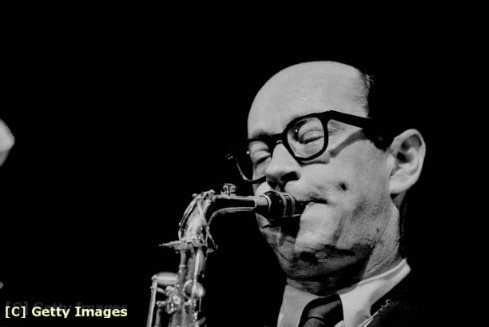


Thursday, February 24, 2022

Tommy Flanagan - A Bebopper of Gentlemanly Distinction - [From the Archives]

 © -  Steven A. Cerra, copyright protected; all rights reserved.


“One of the piano masters of Detroit, he played on many major recordings in the late '50's but thereafter sought an accompanist's security behind Ella Fitzgerald and Tony Bennett. Emerged as an undimmed creative spirit in the 1970's and 1980's, a bebopper of gentlemanly distinction.”
-Richard Cook and Brian Morton in The Penguin Guide to Jazz on CD

Tommy Flanagan's discography falls largely into two categories: [1] those recordings on which he appeared before he became known as one of the finest accompanists in the business, backing Tony Bennett and, more memorably, Ella Fitzgerald in her great 1960s resurgence and [2] those he made after his tenure with Tony and Ella. On all of them, Flanagan's bop vocabulary is uplifted by his beautiful touch.

To put it another way or, the other way,, Tommy’s fabled delicacy is always complemented by a fine, boppish attack that can be very blunt and straightforward.

“Tommy Flanagan” is also the always-surprising answer to one of modern Jazz’s most enduring trivia questions: “Who played piano on John Coltrane’s first LP for Atlantic - Giant Steps?”

Most people assume that the answer is Coltrane longtime associate, pianist McCoy Tyner, and they always seem a bit puzzled to think of Flanagan’s wonderfully lyrical style in association with Coltrane’s piercing, “sheets of sound” approach.

Actually as noted by Richard Cook and Brian Morton in The Penguin Guide to Jazz on CD:

“Throughout the 1970's and early 1980's, Flanagan explored aspects of harmony most closely associated with the late John Coltrane, often stretching his solos very far from the tonal centre but without lapsing into the tuneless abstractions that were such a depressing aspect of Coltrane's legacy.”

I’ve always thought of Tommy as a cross between two other Detroit pianists - the hip, Bud Powell-inspired bop phrasing of Barry Harris and the beautifully crafted melodicism of Hank Jones.

Tommy’s playing strikes me as something that has always been conscious that music is very precisely mediated by time, place and specific contexts.


There may be another reason for its distinctiveness as Gene Lees surmised in this following piece on Tommy which appears in Jazz Lives: 100 Portraits in Jazz:

“It has often struck me that musicians who learn another instrument first seem to bring the influence of that instrument to the one on which they finally settle as their life's work. It will probably not surprise you that Oscar Peterson played trumpet as a child, or that Bill Evans played flute and violin. Tommy Flanagan began studying clarinet at the age of six, and I do believe I hear its mellow influence in his lovely, flowing, gracefully legato piano work.

Tommy worked in his early days in Detroit with Milt Jackson and with Thad and Elvin Jones. One of his influences was the third of the Jones brothers, Hank. Others were Bud Powell, Teddy Wilson, and Art Tatum. And after he moved to New York in 1956, Tommy sometimes substituted for Bud Powell at Birdland. In the next few years, he worked with just about everybody of stature in the New York jazz world, including Oscar Pettiford, Miles Davis, J.J. Johnson, Sweets Edison, Sonny Rollins, John Coltrane, and Coleman Hawkins.

Tommy is a soft-spoken and self-effacing man, and one of the gentle and generous accompanists. Ella Fitzgerald hired him as her pianist and music director for many road tours. He worked for her in 1956, from 1963 to '65, and from 1968 to 1978. For a time, in 1966, Tommy was Tony Bennett's music director.

In recent years, he has been working more with small instrumental groups, where his elegant abilities as a soloist are on more advantageous display.”

In his essay Jazz Pianists of the 1940s and 1950s which graces Bill Kirchner [Ed.], The Oxford Companion to Jazz, the late pianist and Jazz scholar Dick Katz summed it up this way:

“Tommy Flanagan, a fellow Detroiter, is now one of the most esteemed pianists in the world. He played on some of the most historic records ever made, including Sonny Rollins's Saxophone Colossus (Prestige) and John Coltrane's Giant Steps (Atlantic). Tommy was definitely a Powell disciple, but he also listened closely to Nat Cole, Hank Jones, Al Haig, Art Tatum, and Teddy Wilson to forge his own wonderful musical personality. As with the other Detroit talents, this type of lyricism — "playing the pretty notes," as Charlie Parker was quoted as saying — is a salient feature of his playing.”

You can hear Tommy playing those “pretty notes” on the following video tribute to him. The tune is More Than You Know which is from his 1986 CD Tommy Flanagan: Nights At The Vanguard [Uptown UPCD27.29]. George Mraz is the bassist and Al Foster is on drums.


Tuesday, February 22, 2022

Ted Gioia on Paul Desmond

 © Copyright ® Steven Cerra, copyright protected; all rights reserved.


The following is from the Third Edition of Ted Gioia’s The History of Jazz [2021] a must volume that any serious Jazz fan should have on their bookshelf. 


For as Jonathan Yardley in The Washington Post declares on the book’s back jacket:


"If you are looking for an introduction to jazz, this is it. If you know and love jazz well, this is your vade mecum [a reference book kept constantly at hand]. Me, I expect to be reading around in it for the rest of my life... [It is] the definitive work: encyclopedic, discriminating, provocative, perceptive and eminently readable. With its publication, it can no longer be said that the literature of jazz falls far short of the music itself."


When I was first learning about Jazz, I never realized that there was a group of alto sax players who approached the instrument in a way that was totally different from the legendary Charlie Parker.


That’s because I first experienced Jazz in California where the likes of West Coast Jazz or “Cool School” alto saxophonists was commonplace. 


Bud Shank at the Malibu Inn or Lighthouse Café, Lennie Niehaus with Stan Kenton’s Orchestra, Art Pepper performing with “The Rhythm Section” on Contemporary Records, or Paul Desmond in various club, college and concert venues with Dave Brubeck’s quartet - all were readily accessible to me on a regular basis.


Charlie Parker? Well, he was “just” legendary because he was dead by the time I discovered Jazz and it was only much later that I sought him out via records he made primarily on Norman Granz’s various labels which were all ultimately subsumed under Verve. Of course, once I got into him, Bird was a revelation.


Given my preference for the music of the classic Dave Brubeck Quartet, I heard more of alto saxophonist Paul Desmond’s work than the other West Coast alto saxophonists and in time, for all the reasons mentioned in the following excerpt from Ted’s book, Desmond became one of my favorite Jazz musicians.


“For a time in the 1950s, a West Coast alto style was taking form, a more mellifluous alternative to the astringent Parker-inflected lines of the other coast. Art Pepper, Bud Shank, Lennie Niehaus, and Paul Desmond, among others, exemplified this warm, dulcet-toned approach. In time, the styles of these players diverged. 


Of this group, Paul Desmond stayed truest to the ultra-cool aesthetic. He had little interest in adopting a flashier style, jokingly referring to himself as the "world's slowest alto player." On the surface, Desmond’s solos appeared to offer a lush romanticism, but only careful listeners were apt to catch their richer implications. Desmond carefully avoided excesses of sentimentality with a range of devices: witty references to other songs and solos, playful call-and-response motives, oblique references to an odd assortment of substitute chords and modes, even quasi-aleatory [elements of random choice] exercises in translating phone numbers into musical phrases using intervals relating to each digit—a steady stream of melodic surprises linked by Desmond's exceptional skills in thematic improvisation. 


A single solo from the Dave Brubeck Quartet's twenty-fifth anniversary reunion tour finds Desmond celebrating these old acquaintances with a snippet of "Auld Lang Syne"—followed by allusions to "52nd Street Theme," "The Gypsy," "Taps Miller," "Drum Boogie," and "Organ Grinder's Swing"—all in the context of a complex piece that shifts back and forth between 3/4 and 4/4. The next night, in a different town, Desmond no doubt initiated the process all over again, drawing on still other sources in his artfully constructed saxophone stream of consciousness. Yet these clever asides were never forced, and Desmond somehow made the cerebral and the plaintive coexist in the same solo, even in a single phrase. For much of his career, Desmond served as an appropriate foil for Brubeck. Their collaborations were experimental in the best sense of the term: open to new sounds, but never (as with so many progressive works) in a doctrinaire manner. 


After the breakup of the Brubeck Quartet, Desmond's music became even more introspective and delicate. His guest pairings with Chet Baker and Jim Hall, and his final quartet recordings with guitarist Ed Bickert, are neglected gems of the improvisational arts, jazz performances that bespeak a serene mastery as rare as it is affecting.”


Desmond also made a series of recordings under producer Creed Taylor’s supervision for the A&M label and one of my favorites is Summertime from which the following YouTubes are drawn: Theme from Lady in Cement, Samba with Some Barbecue, Ob-La-Di, Ob-La-Da and Autumn Leaves - all featuring Herbie Hancock on piano when he was still a session player and all arranged by Don Sebesky.


Sunday, February 20, 2022

Ornette Coleman - The Jazz Musician Interview

 © Copyright ® Steven Cerra, copyright protected; all rights reserved.


Almost from its inception and throughout much of his career, many Jazz fans have found his music to be confusing and/or controversial, if not both.


In looking for a way to represent Ornette’s approach on these pages, I searched for a piece that contained his conceptualization of Jazz as explained in his own words. I think the following comes as close as any that I’ve researched in doing just that.


The interview was conducted by Quincy Troupe and appeared in the November 1981 edition of The Jazz Musician. Ornette died on June 11, 2015.


Ornette Coleman is one of the most influential musicians to emerge in the post-bebop period. The possibilities he opened up for improvised music in the late fifties and early sixties, when he scrapped the conventions of Western harmony and pitch for a conception that was both a leap into the future and a recovery of the blues past, show no signs of being exhausted, and the implications of his more recent work, involving symphonic composition, free-funk, and the "harmolodic" system, are now being

worked on by a new generation of musicians, many of whom are alumni of his bands.


Born in Fort Worth, Texas, on March 9,1930, Coleman has been an enigma for many years inside and outside the music world. Loved and respected by many, he has nonetheless been maligned for his ideas and innovations, particularly in his first decade of public life. Even more than John Coltrane, Cecil Taylor, and Eric Dolphy, Coleman served as a magnet for the charges of charlatanism that raged in the free-jazz wars of the Sixties, but his formidable talents as both instrumentalist and composer have made his place in the history of instrumental music secure. Only Louis Armstrong, Charlie Parker, Miles Davis, and Coltrane have had a more dramatic effect on the practice of jazz.


His conversation resembles his music in its disregard for linguistic convention and for the liberating effect it can have. A certain amount of editing has been done on the transcript, but the greatest number of conceptual knots have been left untied. Coleman understands how things harden and ultimately die of the sense people make of them (see his discussion of method below). His inventions have always tended to subvert the usual dead verities. His first classic band, a quartet with Don Cherry on trumpet, Charlie Haden on bass, and either Billy Higgins or Ed Blackwell on drums, simultaneously developed and obliterated the parameters of bop. 


When this quartet broke up, Coleman was fugitively audible for the remainder of the Sixties with a trio, occasional R&B band, or string quartet. He had begun to simplify his playing style (see his distinction between "improvisers," whose strength is in their lines, and "players," who communicate through their sound). In the early Seventies, he was even less available to the public, appearing occasionally with a quartet and even more occasionally with a symphony orchestra, as in his long piece, The Skies of America. In the middle of the decade, he began working with an electric R&B band, Coleman-style, called Prime Time, with which he recorded the seminal Dancing in Your Head and the (hopefully) soon-to-be-released Fashion Faces, and with which he has begun to concertize this year. Coleman has never had trouble making great music, but liaison with the material and economic world has run from shaky to nonexistent. Even in his absence, his influence has been extraordinary and undiminished. Currently managed by Sid Bernstein (of Beatles-at-Shea-Stadium fame), he is with us again.

It's said that the desert camel can feed on the thorn-bush when water keeps the thorns green and alive, but that when that plant dies the dry and darkened thorns lacerate the camel’s tongue, and he dies. Through a subtlety of disposition that combines an almost childlike naivete with a percipience more acute and truthful than that of the conventional intellect, Coleman has succeeded in keeping his music alive, nourishing, and unpredictable. 


This interview took place in the offices of Sid Bernstein in New York City, on July 22, 1981.


MUSICIAN: Let Me begin by asking you: Do you think that your absorption of bebop was and is one of the difficulties people have in understanding your music?


COLEMAN: I didn't make my first record until I was twenty-eight or twenty-nine but I'd been playing bebop since the late Forties. It got dated for me, at least the style of it. I had figured out where I wanted to go, myself, musically. The reason I was having problems was I was trying to do that — go someplace else musically — more than trying to prove to someone how that involved bebop language. So, many musicians didn't approve of me playing like that, and at the same time I wasn't having any jobs to prove that I was someone that people wanted to hear. Whenever I went to a jam session, I would try to play the bebop line, but when I got ready to solo, I would play exactly the way I'm playing now, today, which is exactly how I played when I first picked up the horn. Musicians thought I had bebop all screwed up the way I was playing the lines, but I had figured out that most bebop songs were lines interpreting standard songs by using standard changes, but with more advanced lines, you know? I understood that it — bebop playing — was a method, and when I understood that method and had really absorbed it, I found that I could keep the method in my mind and still play independent of it. The method for playing bebop had become stronger than the creativity of bebop. With Charlie Parker, Bud Powell, and Thelonious Monk, bebop was their expression. It wasn't a method to them. It was their expression, it was what they did. And everyone else, including myself, was playing their method, and I had learned their method, the method of bebop, very well; I could play and sound like Charlie Parker note for note. I realized that regardless of how advanced I was going to play bebop, I was still only going to play it from the method. So I banned the idea that I was going to be a very successful bebop player. I accepted the fact that, okay, now that I've observed and absorbed this, now where to go? And then I remembered when I first got my horn I was playing ideas without having to relate to anything. I thought that maybe if I did this I would, perhaps, find something.


MUSICIAN: Did you find something?


COLEMAN: I started with the saxophone, especially the alto. I found out when I played an idea the way I was approaching it — which was outside of the way people were telling me to approach it — I didn't have to transpose the notes to sound right with the piano. The piano key — like a C concert piano — would put the alto in A; therefore, A-minor and C are the same sound when you're inter-changing your method of using them. That's the first signal I got about how I was approaching the saxophone. Instead of thinking of the alto as a transposing instrument, I started thinking of it as a concert instrument. For instance, if you're in the key of C in the piano, that makes your alto A natural, because there are six above to get the same pitch, right? But yet you have the same notes without worrying about that pitch. That's what I was doing: I was playing everything in what I thought was concert. I later found out I was only playing in the concert key of alto, not the concert key of piano. I realized then that melody not only is something a person thinks of to manipulate on the instrument, but it almost by design is a hard sound according to the instrument you're playing it on. Melody, right? A person playing an African thumb piano and a person playing an electric piano are going to have two different ideas about melody, only because of the instrument they're playing.


MUSICIAN: Because of the technique involved?


COLEMAN; Yeah. And the instrument. I started analyzing the difference between the alto sax being in its own concert key as opposed to transposing. Then I came up with the term "harmolodic," which I call the harmony, the melody, the time, and the rhythm all having equal positions. I got involved in writing music. You see, I finally realized that the method set up the musical patterns in bebop, so that if you had a particular song that you liked, a standard, for instance, like "Laura," you'd say A-major 7 to E-minor 7 to B minor. And if you played those voices without playing the melody, you would resolve the voices according to how you heard your horn sound through those voices. I said, well, if that's the way the standard song is played, then what would happen if the instrument became that itself? In other words, if the sound of the instrument was what you were making, the voices sound like more than the melody you were trying to play. I started playing ideas as if I wasn't playing the saxophone — it was just an instrument, but not an instrument that you had to transpose on, you know? I found that I was having much more trouble playing with piano players and other musicians because I would be in one unison and they would be in another. I started understanding the complex voicings of how and why musicians choose certain instruments to play, and it has a lot to do with how they've been related to concert instruments. I'd been playing sometimes with piano players where the piano would be so out of tune that I'd have to play out of tune in order to be in tune with their out-of-tuneness. It only brought me back to that same problem of playing non-transposed sound, you know? So I started writing music that people could play with me so they could understand how that sound was.


MUSICIAN: How did musicians and people respond to you and your ideas then?


COLEMAN: I found a lot of negativeness in the community I was playing in, black and white. They were all saying that this wasn't the way music and the saxophone were supposed to be played. And they weren't seeing it as really putting me down; they really believed from where they were at that I was wrong. I didn't try to show them that they were right or wrong. The only thing I tried to do was see if I could find a way to bring the sound of what I was playing to where they could get something out of it, and I knew, given the chance, it would work.


MUSICIAN: Do you think it might have had something to do with the fact that you wanted to be Ornette Coleman rather than Charlie Parker during the bebop era?


COLEMAN: I met Charlie Parker; I liked him and I enjoyed his songs. But I wanted to have the experience of him hearing what I had done, because by the time we met, in 1951 or '52, I was really into what I did later on my own records. But I couldn't have any attitude about what I was doing — especially with Charlie Parker — because no one had ever given me any attention to think of it as something that was valuable to them. I had always made compromises just to play bebop. But it kept working against me, because regardless of how long bebop has been around, it still didn't reach a success level commercially the way Louis Armstrong was a success. And bebop today, despite critical acclaim, has still never gotten any real big musical play in the way that fusion music has.


MUSICIAN: How did you and Charlie Parker interact?


COLEMAN: I was around twenty-one or twenty-two when I met him. I met him in Los Angeles at a club he was playing on Eighth Street and Normandy. He was only playing standards; he wasn't playing any of the music he had written. But when I heard him playing standards, it blew my mind because I didn't expect it and because I understood so well the method he was using to play his ideas. What I remember about him, though, was the fact that he knew very well he was the musician of the era; it was in his attitude toward himself and whatever he played; he knew exactly what he was doing: He was in total control. I got the feeling from him that he didn't have any problems with his talent, you know? I didn't know then what his personal life was — I later found out that it was pretty bad —  but then he was at ease. I got the feeling from him then that I later got from myself; that he hadn't found the outlet, business-wise, that would have brought him to a wider public. I felt that he was still being limited. He and I had the same problem: The money people don't know you, hardly any of them are aware of this music because it isn't commercially viable to them.


MUSICIAN: What has made you commercially "unviable"?


COLEMAN: I found out that I was constantly being limited by the term 

"Jazz." This was around 1976. By this time I was writing symphonies, music for string quartets, woodwinds, etc., but the critics were always telling me how "great" a "jazzman" I was. But I was into other things. This limitation bothered me. I thought about how every time I played in public I was always writing a new musical program. I thought this was my duty to an audience — to write new material every time I played in public  —because I thought they wanted to hear something they'd never heard before. Then finally, at the Public Theater in New York this summer, I went out and played something I already recorded and got a big response from it. I said, "Oh, this must be the way." I'd never had the experience of someone liking my old music in public because I had never played it. I didn't realize I could play my own music and get the response I got at the Public this summer. Most of that music was off of Dancing in Your Head, which I recorded in 1976. It became clear to me that I could play music I wrote twenty years ago and music I wrote yesterday and have people that knew the old stuff and people who wanted to hear the new stuff enjoying both things.


MUSICIAN: You and Coltrane and Miles Davis have had a tremendous impact on contemporary instrumental music. But in terms of the "fusion" movement, I think you and Miles have created two different but similar musical languages that are both fusionistic and futuristic at the same time.


COLEMAN; Let's start with Trane, because I always had a good experience with him. He used to come and visit me a lot and I, him. About three or four months before he passed he sent me a check and a note and said that he had finally found it, and thanks very much. I never got to see him again. Let me say it this way. The improviser, the person that's called the improviser, has been the maverick of musical expression in the modern civilization that we call the Western world. The improviser is known as the jazzman, and he's been the one who says, "Just give me the horn and put me in front of the people and I will take this horn and do something better than what you can prepare or compose in a structured way." But for me, the improviser has become less and less interesting, because of the method and style of what improvising is; it is bogged down, for the most part, in some personal, social background. Take Albert Ayler. (Now, I knew Albert very well, and Albert was a musician that really was very gifted, one who did not relate to any form but his own. What happened to the kind of music — free-form — that Albert was associated with is that it became connected with the racial phenomenon that took place in the sixties. Critics started saying that this was black expression, a kind of social, black expression of, perhaps, rage. Right? But when ‘Trane started playing this music it brought the critics back to thinking of it just as music. They didn't do this with Albert Ayler. With ‘Trane it was a musical expression, which it was. It was just more demanding to listen to, more so than bebop. The music of the sixties really stretched out; the improvised form had never gotten so individual as it was in the sixties, and the kind of music. I was playing — even the writing sounded like it was being improvised. I started trying to let the themes finally become improvised. I started trying to let the themes finally become even freer than improvising. I was trying to get more free than the structure of improvising had previously allowed. But then that too was becoming a method.


MUSICIAN: Are you saying that people run the danger of becoming the method in any kind of music, or expression, even if it's supposed to be new?


COLEMAN: That's what I'm saying. I have always wanted to move forward. For instance, in 1962 I hired a rhythm and blues band, a string quartet, and my own trio, and performed an original work at Town Hall. I started playing with them not thinking of fusion or anything, but because I wanted to have more color to improvise from, to get away from thinking about improvising, the more voices I had to inspire me, the freer I felt I could be from improvising. I went from there to writing for string quartets and symphonies because if I could create enough sounds in unison, then the listener could see the difference and growth between where I started from and where I was then.


MUSICIAN: And where was that, where were you going then?


COLEMAN: I realized that the multiple expression could be translated into sound where you could hear and sense more than one thing at once. I assumed that I could write a musical idea that would interject more than one particular direction, where musicians and the audience could have more intake, and that this would be more enjoyable to do. I went and bought myself a trumpet and a violin and I started playing those instruments. I started putting those things into the music I was writing. Back to your earlier questions about fusion: By this time ‘Trane had passed, and Miles came out with this rock band that sounded just natural to me. This was in the early Seventies, and by this time the music was moving toward fusion.


MUSICIAN: What were some of the other changes that were taking place in the music during this time?


COLEMAN: Well, in most music, pop, etc., time is dominated by the drums. In the music I was starting to play, every instrument, every person had the right to dominate.


MUSICIAN: Every instrument?


COLEMAN: When I heard fusion it only made me realize that Miles and the people playing fusion had taken the roots of the drums and used it as a form of improvising with whatever melodies they were playing. I had always been doing that, but not in a systematic way. It was then that I realized that it had always been the improviser that had stood out as the jazzman. But understand; the improviser and the player are two different people. I've always wanted to be a player, myself.


MUSICIAN: What's the difference between an "improviser" and a "player"?


COLEMAN: Okay. For me, Johnny Hodges was a great player, rather than an improviser. Charlie Parker was a great player, you know? But I think Johnny Griffin was and is a great improviser. I think Jackie McLean is like that — a great improviser.


MUSICIAN: What would you say about Coltrane?


COLEMAN: I think that Coltrane was about half and half. Great improviser, great player.


MUSICIAN: Where would you put yourself ?

COLEMAN: Like I said, I think I'm more of a player.


MUSICIAN: What would you say about Miles Davis?


COLEMAN: I think he's more of a player than an improviser, though he can be a great improviser, too.


MUSICIAN: That's interesting. What about Julius Hemphill and Arthur Blythe?


COLEMAN: I think they're really improvisers. I think that that's a group of musicians that whether they are backed by instinct, or by sweat, it comes out that way — more like improvisers, rather than like players. I think the trumpet player Olu Daru is a great improviser. But you understand that improvising, to me, is almost self-annihilating. I mean, you know your limitations. As a player you don't really know your limitations that way, because the construction of playing is like architecture — you are always building, you know? Where improvising is like the person who's always putting furniture in, who's always putting this and that in, and sometimes you only get a jumble of stuff that doesn't relate to anything.


MUSICIAN: Do you think "improvisers" can become "players"?


COLEMAN: Yes. I think I was an improviser once.


MUSICIAN: Dancing in Your Head has real funk in it, heavy funk, almost honky-tonk and gutbucket in places.


COLEMAN: You see, all the things I grew up with back in Fort Worth, Texas, affect the things that I play. There was honky-tonk, blues, and funk there, so it comes out naturally in the things I play. That's why I am a "player," because when I picked up my horn, I didn't think about improvising; I thought about playing, I've always thought about playing. I have always tried my best to stay clear of having a particular style. For some reason, improvising doesn't have a style, but a style has improvising.


MUSICIAN: Are you saying you don't want, ever, to have an identifiable style?


COLEMAN: Yeah. I wouldn't like to have a style.


MUSICIAN: But there are musicians — Coltrane, Blythe, yourself — that as soon as I hear them, I know who they are.


COLEMAN: I know, but that's pitch. When I hear your voice, I know that's you. I think that what you're talking about is the character of a person's breath marks. It's in their pitch, in the pitch sound. I don't think that makes the sound better, though. Look at Paul Quinichette and Lester Young. The only way you can tell Quinichette and Lester apart is that when you hear Lester you get an emotional experience from that sound, and from Quinichette, you get a remembrance; he's just making you remember where you heard that particular emotion from. But it sounds just like Lester. I can play like Charlie Parker all the way down to his sound because I know the things to avoid and the things to touch to create that sound. And I am sure someone that wished to repeat the things I'm playing could do it if they really wanted to. The only thing different in the way I'm playing is that I don't use any structure to play that way.


MUSICIAN: Do you think it's very difficult for some other alto saxophonist to duplicate your sound?


COLEMAN: When someone plays ideas in logic, in the same logic as I would, it's much easier to do. But when you play the same idea without that logic, it's harder. And that is what I'm trying to do; to play logical ideas without using logical terms.


MUSICIAN: How would you explain the "harmolodic" theory?


COLEMAN. What instrument do you like? What is your favorite instrument?


MUSICIAN. I like saxophone, trumpet, bass, guitar; I like most of the musical instruments.


COLEMAN: Okay. Let's say we use a string instrument, like the guitar. On the guitar you've got six strings. When you want to make a sound you pluck the strings and they vibrate, right? But there's an order that's already there, on the instrument; the order that is designed and made is already there. So if you play something that makes you feel good, you think it's you, but all you're doing is playing something that's already there. In "harmolodic" theory, or music, I suggest to everyone: Don't think that just because there is something you want to play, and the instrument that you want to play it on, you have to put your mind to working out something only to make mistakes until you find out what you're really doing. The thing is to acknowledge the fact that the instrument is going to respond the way you approach it, right? So, basically, the only way you can approach any instrument is to find the relationship between the sound you want to hear from it and the place you have to put your mouth and fingers to bring about that sound. Now, the only thing that keeps you from doing that is the method that's already there on the instrument, how that instrument was built to play in the first place. So in "harmolodics" what happens is that the particular method, the sounds that you want to play, or the ideas, say on a guitar, might be trumpet ideas in your mind. So what I tell the person is that whatever instrument you want to play, just think of the music that you want to play more than how you want the instrument to sound. Once you find the place to put your fingers and carry the sound to the next sound, you will find yourself playing in a sequence. And most all Western music is written in sequences. When you start learning music, you find out these sequences are called chords, they are called keys, and they are called changes; they're called lots of things. The thing to realize in "harmolodics" is that you want to manipulate it — the idea on the instrument — and then you find out the limitations of the instrument.


MUSICIAN: So the musician takes the initiative on the instrument, bends it, so to speak, to his will, to what he wants to do with it?


COLEMAN: Right. If you brought me an instrument I'd never seen, never played, I wouldn't try to figure out what the traditional role for playing that instrument has been, but I would try to figure out what I could do with it just from knowing it's already built to play whatever it is designed to play.


MUSICIAN: You were saying earlier that the drums have dominated the time in music at one point, and that you wanted everyone in your band to have the chance to dominate. Could you talk about that a little more?

COLEMAN: The word "dominate" is not the right word. In classical music, in a symphony orchestra, you sometimes have thirty to forty different instruments. Now, imagine if those thirty or forty instruments were playing their own line, you'd hear many different ideas, right? But those thirty to forty instruments have been designed to only play, basically, four different voices, which we call in the Western world the bass, treble, tenor, and alto voice. What I mean by "domination" is that the rhythm concept is the only free movement in sound that doesn't have to have a strict pitch to be heard. In Western music, what's called the tempered scale, there is a strict pitch. If we're in the key of C, you'd have to produce that C and I would, too. Because of that strict pitch, musicians have been limited rhythmically. Whereas in the drums, Eddie Blackwell, Buddy Rich, always played the rhythm as if it was as valuable as the note. A lot of drummers don't do this. They play notes over rhythm.


MUSICIAN: What about young drummers?


COLEMAN: The person, for me, that has taken the drums to a more advanced place is Denardo.


MUSICIAN: Your son Denardo?


COLEMAN: Yeah. Now Denardo, for some reason, can play a set of drums the way African people play talking drums. On a talking drum, you can reproduce the actual melody, with the sound, and independent of the rhythm at the same time. Denardo uses the concept of what talking drums must have done before drums had to establish a regular sense of time.


MUSICIAN: I remember when I first met you in Los Angeles back in 1967, you were getting a lot of bad press for using Denardo, because he was so young.


COLEMAN: Yeah, I know. When I met you I was playing at Shelly's Manne Hole in Hollywood, and I remember Shelly Manne saying Denardo should go and become a "garbageman," or something like that. All that time, Denardo was not only playing freer than any drummer I had played with outside of Billy Higgins and Eddie Blackwell, but he was also inspirational to play with. The first thing I recognized when I heard him play was the way he saw the time, the way he saw keeping the time. He sounded to me like he had been listening to a lot of drummers, and although he had a teacher teaching him about reading and everything, it seemed to me that this hadn't affected the way he already wanted to play; it seemed to me that he already had his own concept of how he wanted to play, even way back then. He really enjoyed playing. I never tried to tell him what not to do, or what to do; the only thing I have ever talked to him about was how good he could get doing what he believed he could do best. He has perfected how to play the drums as if he was singing.


MUSICIAN: Could you talk a little about your present band?


COLEMAN: The band that I have now has two guitars, two drummers, and two basses. You see, I couldn't afford to have an orchestra, which is what I would prefer to have. The guitar is the most popular social instrument, especially to white people; it's what the tenor saxophone is for most black Americans. Anyway, the guitar takes up a lot of the string section. Having two of them usually means you use one for the rhythm and one for the melody. What I have done in my band is that the structure and the playing both interweave. For instance, if I give a melody to one of the bass players, I'll say I want to play the harmony equivalent, and I'll give the guitar that number. Everyone is playing a lead that's equivalent to the same results, so we don't reach a climax by someone being at a certain place at a certain time. That's the difference between "harmolodic" music and arranged music; the musicians don't have to be at a certain place with some rule reaching some climax. It can happen instantly and according to the way the mood and feeling of whatever we're playing dictates.


MUSICIAN: Does Denardo play saxophone lines on the drums, and do you play drum lines on your saxophone, violin, and trumpet?


COLEMAN: That's what I'm saying. I think he plays the vocal concept and the rhythm concept. That's what he does. And I do, loo.


MUSICIAN: So everyone is playing all kinds of different parts and voices at the same time?


COLEMAN: Right. Everyone's also playing what they think would be best if they had their own band.


MUSICIAN: How do you approach rehearsals, and how is new music brought in and introduced to the band?


COLEMAN: What, happens is that all of these guys have their own music, right? And, they would probably like to have their own band if they had the same outlet that I have. At rehearsals, I will write out a musical idea. I'll play it on the saxophone and then I'll have them play on their instruments the equivalent of what I played. Then I'll write it out. But the main thing that happens is the motive of the idea. Ideas are very interesting, but it's the motive behind the idea that's very stimulating. So if you get hung up in playing an idea, it might be outdated and not stimulating at all. For me what makes a musical motive is when everyone gets excited about how it affects them. If I brought in a new musical idea, it has no validity other than for it to be manipulated on the instruments. But when someone else shares in it, then it becomes really musical. And that is one of the great things about having a band: playing the music, exploring new frontiers of musical consciousness.


MUSICIAN: What kind of music are you composing today and how long is it?


COLEMAN: I am writing a piece of music, a long piece, for what I call the oldest musical language, and that's what it's called: The Oldest Language. The music will be for about 125 musicians, and for as many non tempered musicians as I can get into it. More than half of it is written. I think it would be at least two hours, maybe three, when it's performed. But I haven't thought about where I'm going to play it, or how I'm going to make the time to play it. If I get it done, I will play it somewhere.


MUSICIAN: What instruments are you writing for in this music?


COLEMAN: The talking drums. The sitar. The kind of instruments African people play, instruments that Arabs play. Basically, string, wind, brass, and probably some other instruments made out of some form of metal.


MUSICIAN: I know you're going to have Denardo's drums in this, right?

COLEMAN: Oh yeah, right. Denardo's drums will be there, too. But the thing that I'm more interested in is having the experience of hearing the musicians express how these sounds are going to affect how they play as an individual. That's the result I'm looking for, that's my motive behind doing this. And what I hope to bring about is, shall we say, some form of medicine in the music.


MUSICIAN. Medicine? Could you explain?


COLEMAN: What I would hope for is that some kind of healing medicine would be incorporated in these sounds, coming from these ancient instruments. I would like to try and bring about some kind of medical sounds that could actually cure depression, cure whatever it could. I think that some certain people outside of doctors do this now, already, but it's done in such a camouflaged way, you know?


MUSICIAN: So you think music can cure?


COLEMAN:  Oh, Yes.


MUSICIAN: Why did Shannon Jackson call you a "magician"?


COLEMAN: Well, maybe he was using that word for describing how I think. I don't think of myself as a musician, or composer, but as a human being that has the same problems everyone else has, in that I have to figure out how to do my share in this human state we call living. I think that maybe Shannon was giving his philosophy about how he thinks I think about things I believe in. You see, I believe that immortality is distance, and that things take up more than just one-dimensional aspects of our living. I think that what we call the earth and human beings and the way we live and die is distance, you know?


MUSICIAN; What do you think about the connection between your music, Blood Ulmer's, Shannon Jackson's, and "punk" music?


COLEMAN: Well, I think that everybody can logic. But I don't think the label, necessarily, has to be transcribed. When someone says "punk rock," when you use any term that is nonmusical, you're really talking about a person, or a group of people. It's much easier to label a group of people than it is to label music. I saw the movie The Decline of Western Civilization. It's a "punk" movie. And what I got from it was that a lot of rich white kids that have grown up with human ideas are now using music to express violence. So if that is the particular signal they enjoy being stimulated by, then they will, or must eventually grow out of that, because violence usually leads to death.


MUSICIAN: You have no animosities toward critics, no hostilities?


COLEMAN: No, I don't have any. I always say I don't have any enemies, period.


MUSICIAN: What about the experiences you had in Morocco and Nigeria?


COLEMAN: When I went to Morocco, there was a festival they were having, a festival that had been handed down for the last six thousand years, and their music was as old or older than that. It was really beautiful. The same thing in Nigeria. I guess for some reason in a society like America, where the people haven't figured out a way to grow closer together, that basically it's the goodness of being a human being that transcends the structure of what someone doesn't want you to be or have. My outlook for being born in America and being an American person, I feel the same way as any person that's born in America, and being an American person, I feel the same way as any person that's born — that where you are born has something very important to do with what you are born to live as, and that you don't have to imitate any race, or to force your race on another person, but to find a way to better the conditions of why you were born. These are some of the things my trip to Africa taught me, that I could be myself, because I didn't have nobody else to be.”