Saturday, December 3, 2022

The Search for Roy DuNann

© -Steven Cerra, copyright protected; all rights reserved.


For those Jazz fans who came of age with the LP, the name Rudy van Gelder is a familiar one as the engineering force behind many of the classic Blue Note, Prestige and Savoy Jazz recordings from the 1950s and 60s. Because of his skill, Rudy was able to give those recordings a unique sound while capturing the brilliance of many iconic performers and performances.

Those of us on the Left Coast shared a similar indebtedness to Roy DuNann and his audio engineering work at Les Koenig's Contemporary Records.


The editorial staff at JazzProfiles spent the time looking for a source for this piece on Roy because we thought it was the least we could do to keep the information available on the internet about a recording engineer who brought so much pleasure into the lives of so many Jazz fans through his skill and his devotion to high standards.


Given many of today’s recording techniques with their emphasis on loudness to the point of distorting the music [let alone also helping to destroy the ears of its listeners], it's certainly interesting to contrast this approach with that of the recording style used by Roy DuNann.


Ironically, the humble and self-effacing Mr. DuNann, who did so much to preserve the audio quality of the music on so many of the 1950s Contemporary Records that he recorded wasn't even a Jazz fan!


Our thanks to the writer Thomas Conrad whose initial quest to know more about the pioneering and resourceful Mr. DuNann led to this article which was originally published in the April 2002 edition of Stereophile.

© -Thomas Conrad/Stereophile, copyright protected; all rights reserved.


The Search for Roy DuNann By Thomas Conrad


I don't remember the year, but I remember the moment when I first became intensely curious about Roy DuNann. It must have been about 1975, right after I moved to Seattle. I bought a Sonny Rollins LP called Way Out West, took it home, cued it up on my Thorens turntable, dropped the tonearm, and suddenly I was in a room with Rollins and Shelly Manne and Ray Brown. It was a shipping room with records stacked on shelves all around the musicians, but I wouldn't know that until many years later.


The song was, improbably, I'm an Old Cowhand, and it began with Shelly Manne striking a woodblock in the right channel, and the blows carried in a perfectly defined acoustic space that included me. Then Rollins' tenor sax came in, so real in the left channel that I believed I could walk up and touch it. Deadpan, Rollins bit off the notes of Johnny Mercer's cowboy melody, the details of his pronunciation audible in his reed, now raspy, now clarion-clear.


The label was Contemporary, and the back of the album jacket said, "Recorded at Contemporary's Studios, Los Angeles. Produced by Lester Koenig. Sound by Roy DuNann." What made the sound truly astonishing was the recording date: March 7, 1957.


I found other Contemporary albums, and discovered some extraordinary music, such as Art Pepper Meets the Rhythm Section and Sonny Rollins and the Contemporary Leaders and Teddy Edwards' Teddy's Ready. The sound of these albums had a naturalness and sense of space that I had never heard before — except in live music. And that purity of sound was achieved in the very early days of stereo, in 1957 and 1958 and 1960. Who the hell was this Roy DuNann?


It was not easy to find out. Lester Koenig, owner of Contemporary and producer of all of its sessions, died in 1977. He had typically provided voluminous liner notes for each album, but none of them talked about recording techniques or the engineer. Reliable reference works and histories, such as Jazz: The Essential Companion by Carr, Fairweather, and Priestley, and the scholarly West Coast Jazz by Ted Gioia, never mention DuNann, though the latter repeatedly affirms the historical importance of Lester Koenig and his label.


The most comprehensive reference work of all, The New Grove Dictionary of Jazz, contains no entry on DuNann, though it covers the Contemporary label in detail, even praising Koenig's "high standards" and "concern for quality" — without ever mentioning sound. It was easy to find references to Rudy Van Gelder. Van Gelder's quantity certainly exceeded DuNann's, since he engineered hundreds of famous sessions for the Blue Note label in the 1950s and '60s, and has remained active to the present day. But the quality of Van Gelder's early recordings, with their fuzzy pianos and flat soundstages, is not in the same class with Roy's.


The only people with whom I could share my enthusiasm for DuNann's work were jazz engineers and producers. Jim Anderson knew about Roy DuNann. He's one of the most respected engineers on the current scene, responsible for the lick-your-ear sound of Patricia Barber's recordings, and he absolutely lit up (over the phone) when I mentioned DuNann. Anderson remembered his college days at Duquesne, when he first heard some of the DuNann Contemporaries in a friend's dorm room and was stunned by their "beautiful golden round bloom."


Joe Harley knew all about Roy — or rather, Roy's sound. Harley is the producer of several dozen sonically exceptional recordings for labels like AudioQuest and Groove Note and Enja. He had been a DuNann fan since he was in high school in the late '60s. But, like everyone else who admired Roy's work, Harley mused, "I wonder whatever happened to him. I wonder if he's still alive." Harley was the first to tell me that DuNann's last known whereabouts were Arizona.

My respect for DuNann's achievements reached a new level in spring 2001, when I received a batch of Contemporary titles on the JVC XRCD label. They included classics like Art Pepper + Eleven, André Previn's West Side Story, and, yes, Way Out West.


For the XRCD reissue program, JVC engineers Akira Taguchi and Alan Yoshida micromanage every element of the mastering and manufacturing processes in order to get the highest-quality transfer from the original master tape. In its XRCD version, Way Out West was sublime. Another title in the batch was Art Pepper Meets the Rhythm Section, and it made me laugh out loud. No recording from January of 1957 had any right to hit me in the face like that — Pepper's alto fiercely alive and dancing on air, Paul Chambers' bass hitting deep and hard. I had to find Roy DuNann, and ask him how he'd done it.


It was not easy. There was, as far as I could discover, not a single DuNann living in the state of Arizona. There were DuNanns in southern California, but no Roys. Fantasy, Inc. in Berkeley, California, current owner of the Contemporary catalog, couldn't help.


The breakthrough came by way of Bernie Grundman, the well-known mastering engineer who runs the BGM mastering studio in Los Angeles. I learned from Joe Harley that Grundman had briefly worked under Roy at a Phoenix recording studio in the mid-1960s. When I reached Grundman, he had some interesting things to say about Roy, and one stopped me cold. He said that Roy had moved to the Seattle area many years ago because his children lived there. "I'm pretty sure he's still in Seattle...if he's still alive."


I called Seattle Directory Assistance and got his number immediately. A high, clear, rather inflectionless voice answered on the second ring. I asked to speak to Roy DuNann.


"Speaking."


"Is this Roy DuNann, the audio engineer?"


There was a moment of silence. "I used to be."


I suddenly did not know what to say next. "I've been looking all over for you," I finally told him.


"I've been right here," he responded in his dry, logical engineer's voice.


Roy DuNann lives about 20 miles from me, up a long, curving, gravel driveway in a log-cabin house surrounded by tall conifers and leafy trees, in Bothell, Washington, a northern suburb of Seattle. On a Saturday afternoon in the late summer of 2001, I sat with him and his wife, Dorothy, around their dining-room table while Roy talked into my portable Sony tape recorder.


Roy and Dorothy are both 81. Dorothy is neatly turned out in sweater and slacks, with beautiful hair and a warm smile. The fact that someone from a magazine (even one whose name she does not know) is there to write about Roy makes her smile frequently. Roy is more skeptical — virtually no one has asked him about his work at Contemporary for at least three decades — but willing to make his best effort to remember those years because, on the phone, he has agreed to do so. Roy is compact and light on his feet, with hearing aids in both ears, dressed in clean jeans and a western shirt. His blue eyes sparkle with alertness. He gathers his thoughts before he answers each question, and a smile plays around the corners of his mouth when he encounters certain memories.


Roy was born in Oakland, California, and went through high school in Piedmont, an Oakland suburb. He got interested in electronics in the early 1930s, when he was in junior high school. The fact that he was a ham radio operator plays into this story in several ways.


"That's probably one thing that blew out my ears — wearing headphones all the time," Roy speculates in his matter-of-fact tone. He attended the University of California at Berkeley but joined the Navy before graduating. "Pearl Harbor came along shortly after I signed up," he remembers. Along with 10 other American hams, Roy was sent to England to learn about a radical new technology called radar.


After the war, one of Roy's Navy buddies (Warren Birkenhead, also a ham) got him a job with a young company in Los Angeles called Capitol Records. Roy's first job was in quality control — not with recordings, but with the Packard-Bell 78rpm record players (including one crank-up model) that Capitol was providing to record stores for demonstration purposes. They needed a QC guy, Roy relates, because the Packard-Bells "had many problems." All day, Roy "listened to one chorus of Peggy Lee and some test tones."


He was rescued by Capitol's decision to set up its own recording facilities. Capitol had been using independent studios, but by 1947 they were selling a lot of records, and they wanted their own. They needed some technical types to outfit the new studio and set it up for them, and Roy and his friend Warren Birkenhead were drafted.


More than 50 years later, when I talked to Bernie Grundman, he remembered Roy as a "natural engineer" who "could look at a circuit and intuitively know what change to make to create a desired response." Roy's experience at Capitol was typical of a pattern that applied to his entire career. He was given a challenge, not because he had prior experience in technologies like radar or recording, but because, somewhere up the chain, someone believed that this "natural engineer" would figure it out. Through rare engineering instincts and old-fashioned American ingenuity, Roy always did. But these are not virtues Roy would claim for himself. He is the most humble of men, genuinely puzzled by the interest in his work of so many years ago.


Roy and Warren set up four lathes for lacquer mastering in Capitol's new studio on Melrose Boulevard in Hollywood. They designed an innovative system connecting two lathes with a 12" aluminum bar, which could record two originals simultaneously. Roy remembers that, even before they were finished setting up the studio, Capitol acquired an Ampex single-track tape recorder, serial no. 3.


The first engineer whom Roy saw use a lot of mikes for a session was John Palladino. Roy "thought it would be fun" to work in the studio because he liked country and western music, and Capitol had artists under contract like Tex Ritter, Tex Williams, and, later on, Tennessee Ernie Ford. From Palladino, Roy "picked up how to mike different things" and also how to operate Capitol's 10-channel tube console.


In those days, Roy emphasizes, "The engineer did everything. I set up the studio, put the chairs out, put the mikes out, punched the “Record” button on the tape machine, mixed the session, edited the tapes, cut the master...everything. The console had nothing in it but mixing controls. We did very little modification of the signal in any way except volume-wise. The final tape would be it — you couldn't modify it. Except with a scissors."


Roy became Capitol's studio manager, and in the days before engineers were identified on record sleeves, he did hundreds of sessions. He recorded Nat "King" Cole, Frank Sinatra, Dean Martin (including That's Amore), Peggy Lee, Kay Starr, Jo Stafford, and Stan Kenton. He says, "I never heard anything louder than standing out in front of the Kenton band. No wonder I developed hearing problems."


Capitol rented its recording facilities to other labels, and also cut masters for them. One was a Dixieland label called Good Time Jazz, owned by Lester Koenig. "Lester was a very fussy guy, a perfectionist, and he thought Capitol was the best mastering facility," Roy remembers. It's easy to understand why Koenig would want to hire Roy away from Capitol, but it's more difficult to understand why Roy would accept the offer. But life as studio manager for a large label was becoming stressful. "The business guys" at Capitol were starting to come around the studio too much. Roy liked Lester and liked Dixieland — almost as much as Tex Ritter.


Almost immediately after Roy went to work for Koenig in 1956, two things changed. Koenig decided to begin recording modern jazz, and he decided to set up his own studio. Roy knew little about the former and a lot about the latter, but his experience at Capitol had not prepared him to set up a studio in the absence of money and space. Once again, he had to figure it out.


Koenig had an office in a little building on Melrose Place, a short street off Melrose Boulevard, and in the back was a little shipping room where "a couple guys worked shipping out Good Time Jazz records." Right off the shipping room, across a narrow hall from one another, were two tiny offices, one vacant, one occupied by a publicist who wrote a monthly newsletter. In a corner of the shipping room was an Address-O-Graph machine, for the newsletter.


"Lester decided he wanted to try recording jazz groups in the shipping room," Roy remembers. "There were records stacked all over the place on shelves. We needed a little control room so we could listen on loudspeakers without feedback into the studio. So we set it up in the office across from the publicist's. Lester had a German friend who had worked at Telefunken with an engineer named Neumann. This friend had brought a Telefunken condenser microphone with him from Germany. It was named after the most famous German World War II U-boat, the U-47. Later there was a Neumann U-47, of course. It may have been the same microphone.


"The recording studios at the time were using broadcast microphones — RCAs, Western Electrics — ribbon-type dynamic mikes. This Telefunken really sounded different. Lester liked it so much he bought a few condenser mikes out of Germany and Austria, including a couple of Austrian AKGs, C-12s, that were really expensive. Lester had these AKGs and Telefunkens when I got there. They were about all he had. He was using them when he was still recording in other studios. He would bring them with him to the sessions."


Roy explains that "Lester wanted to set up the studio as cheap as possible, and make it sound as good as possible." Lester's expensive condenser mikes had high output because of the tube preamps built into their heads. When Lester took them into a recording studio (like, for example, Capitol's, which was set up for a variety of microphones, primarily dynamic), the signal coming off Lester's mikes had to be attenuated so that they did not overload the equipment.


"So," Roy continues, "it was my idea — why attenuate the microphones and then amplify the signal again? Why don't we just take the signal out of the microphones and run it through variable attenuators, and we wouldn't need any amplifiers? So that was the original console. Nothing to it. I probably had eight attenuators. That was before they had sliders, even. Couldn't find any decent sliders. Didn't even want one. We did all our mixing by turning knobs. We went from the attenuators right into the tape machine — no other equipment."


Forty-five years later, Bernie Grundman reflected that "Roy was making the best sound in the business by cutting corners. It was such a clean signal path. All the gain that was needed for the mixing function came right off the microphone preamps. Roy could mix like that, on the fly."


The 45-year-old picture begins to clarify: In a tiny shipping room, whose acoustics are a miraculous accident, often in the middle of the night after the musicians have finished their regular gigs, Roy DuNann goes to work. The drums are in one corner. There are no baffles, but a piece of acoustical material is draped on wires about 4' over the drummer's head. The musicians are as far apart as they can get, which is not far, and those superb microphones are up close on each instrument in order to minimize leakage. Forty-five years later, Joe Harley says, "Simple is better." You cannot get any simpler than this.


Today, few would be interested in the purity of the DuNann sound if the music were not so strong. Lester Koenig had taste. He brought the hottest jazz musicians on the West Coast into his "studio," and also matched them up with the best East Coast players, like Sonny Rollins, when they were in town. He created conditions in which they were able to do some of their finest work.


Koenig even had the vision to record Ornette Coleman when Coleman could not get a gig anywhere in California. Coleman's historic first two albums, Something Else! and Tomorrow is the Question, were recorded by Roy for Contemporary in 1958 and 1959, respectively.


Among the many ironies and paradoxes attached to Roy's career is the fact that modern jazz was for him, at best, an acquired taste. At one point I asked him a rather breathless interviewer's question: "What was it like, in 1958, to come in and set up a session for some new musician you didn't know, and hear Ornette Coleman play like that? Jazz was changed forever from that moment. It must have been incredible. You were there, Roy. What did you think?"


In his inflectionless voice, Roy said immediately, "I would have sent him home."


"You would have sent him home."

"Yeah. I got so I could listen to a lot of the jazz stuff and know where one chorus was going to end and the next one begin. It was important for knowing where to make a splice. But with Ornette, you couldn't tell where you were. It just started out and it ended. It wasn't music at all for me."


Shortly after Roy started at Contemporary, Koenig bought a very early Ampex two-track recorder. Roy remembers, "We put up two Altec coaxial speakers in the control room, and we started hearing things come out of two different speakers."

Koenig wanted to begin cutting his own stereo masters for stereo LPs, and bought one of the very first Westrex stereo cutting heads. In a Los Angeles junk store, Roy found a Western Electric cutting lathe that had been used on the Al Jolson film The Jazz Singer in the 1920s, and bought it for $200. He convinced a colleague from his days at Capitol, Howard Holzer, to come over to Contemporary, and together they set up the lathe in what had been the publicist's office. The publicist moved "down the street."


Their first stereo masters cut with the Westrex head "sounded terrible," and technical assistance from Westrex was not helpful. So Howard and Roy built their own 100W tube amplifier.


"Those tubes would get red-hot," Roy remembers. "Fiddling around with condensers and resistors and coils and whatnot, we were able to EQ this terrible-sounding signal so that the finished track sounded almost like the original."


Reverb was added during mastering, with a 4' by 8' EMT reverb plate that stood in the shipping room "in the big padded box it came in." Many years later, some CD reissues of Contemporary recordings sounded oddly dry and sterile because they used the masters as-is, with no reverb added. For JVC's XRCD series, Akira Taguchi added the reverb digitally.


Another step that Roy took during mastering was to roll back the 6dB high-frequency wide-curve boost that he had tweaked into the Ampex during recording. Long before Dolby, Roy was figuring out his own methods for reducing tape hiss.


Contemporary began putting out some of the first stereo LPs on the West Coast. It is only with the perspective of history that we now recognize them as some of the best-sounding LPs ever made. Contemporary also started doing mastering for other people — at first, just for friends. One of Howard Holzer's friends was Herb Alpert, who was just starting a label called A and M to record his band, the Tijuana Brass.


Roy left Contemporary and moved to Phoenix in the early '60s. His first wife's asthma was an important factor in the move. Once again he set up a studio, this time for "a guy with money who wanted to get into the music recording business." But the studio, called Audio Recorders, ended up doing radio commercials.


It was here that Bernie Grundman went to work when he got out of the army, because he knew Roy's Contemporary recordings and "idolized" him. Grundman relocated to Los Angeles, briefly worked at Contemporary himself, then moved over to A and M to run the rapidly growing label's mastering studio. Howard Holzer also worked at A and M by this time, and the two of them persuaded Roy to move back to Los Angeles and join Alpert's label. Roy was put in charge of equipment: finding it, maintaining it, rebuilding it.


He did not record any sessions for A and M — by this time he wore hearing aids in both ears. Over the years, while he cared for the equipment used to record groups like the Carpenters, those late nights in Lester Koenig's shipping room faded into the shadows of history for almost everyone, including Roy.


When his first wife died, he retired and moved to Seattle because all three of his children lived in the area. He met Dorothy at a square dance and married her in 1987.


It seems fitting that Roy DuNann's hearing aids are remote-controlled, with adjustable EQ and balance, and directional mikes. But he cannot hear today what makes his Contemporary recordings so special. When he left Contemporary, he took none of the LPs with him. He was unaware that there had been audiophile reissues of his albums, such as the Analogue Productions LP of Way Out West. He had never heard of the JVC XRCD series. Roy is embarrassed when extravagant praise of his work is read to him. When I point out that, over and over, such audio authorities as Joe Harley and Jim Anderson mention how Roy's recordings "put you in the room" with the musicians, Roy just smiles.


“It doesn't compute. We never tried for anything like that. We just tried to balance the instruments, to keep separation so people would think it was stereo."


Roy's modesty cannot obscure his achievement. Eric Dolphy once said, "When you hear music, after it's over, it's gone in the air. You can never capture it again." Until the mid-'50s, that was pretty much true. Music, especially improvised music, is a very different art form from painting or literature. Its preservation beyond the moment is dependent on its delivery system — the recording. Charlie Parker died in 1955, and those of us who never heard him live will never know much about what he sounded like.


But thanks to Roy DuNann — thanks to his genius for mixing on the fly at 3am, thanks to his intuitive respect for a clean signal path, thanks to his willingness to set up the studio fresh for each session, thanks to his constant fussing over his equipment, checking, tweaking, rebiasing — we possess vivid knowledge of what Sonny Rollins sounded like when he was 27. And Art Pepper in his prime. And Ornette Coleman as he sounded before he came East and turned New York on its ear.


Before I put away my Sony portable recorder and gather up the CDs spread over the dining-room table, I read Roy and Dorothy a quote from Bernie Grundman: "Roy did a lot for this industry. He showed us all how good it could be. His best recordings are not just good for their era. They are some of the best-sounding recordings of all time."


Roy shakes his head, but Dorothy, smiling to hear her own convictions confirmed, says, "I always knew my Roy was smart."


Sidebar: A Selected Roy DuNann Discography


Originally released on Contemporary, reissued on JVC XRCD
Barney Kessel/Ray Brown/Shelly Manne, The Poll Winners, JVCXR-0019-2 (1957)Art Pepper, Art Pepper Meets the Rhythm Section, VICJ-60087 (1957/1997)Art Pepper + Eleven, Modern Jazz Classics, VICJ-60245 (1959/1998)Andr;ae Previn/Red Mitchell/Shelly Manne, West Side Story, JVCXR-0209-2 (1956/2000)André; Previn/Leroy Vinnegar/Shelly Manne, My Fair Lady, VICJ-60216 (1956/1998)Sonny Rollins, The Contemporary Leaders, VICJ-60244 (1958/1998)Sonny Rollins, Way Out West, VICJ-60088 (1957/1997)
Originally released on Contemporary, reissued on the Fantasy/Original Jazz Classics
Ornette Coleman, Something Else!, OJCCD-342-2 (1958)Ornette Coleman, Tomorrow Is the Question, OJCCD-342-2 (1959)Bob Cooper, Coop! The Music of Bob Cooper, OJCCD-161-2 (1957)Curtis Counce, Sonority,* CCD-7655 (1956–58)Curtis Counce, You Get More Bounce with Curtis Counce, OJCCD-159-2 (1956–57)Teddy Edwards, Teddy's Ready!, OJCCD-748-2 (1960)Victor Feldman, The Arrival of Victor Feldman, OJCCD-268-2 (1958)Hampton Hawes, All Night Session, Vols. 1–3, OJCCD-638-2, -639-2, -640-2 (1956)Hampton Hawes, Four!, OJCCD-165-2 (1958)Barney Kessel, Easy Like, OJCCD-153-2 (recording date uncertain)
* Not in Original Jazz Classics series




Thursday, December 1, 2022

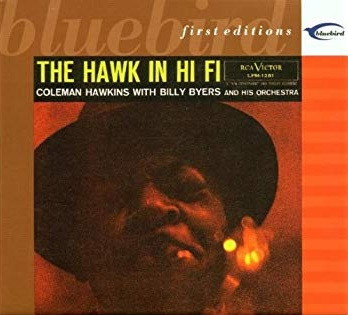
Coleman Hawkins - The Hawk Flies in Hi Fi

 © Copyright ® Steven Cerra, copyright protected; all rights reserved.


Given the phenomenal audio enhancements made possible by today’s digital electrical technologies, it seems almost impossible to remember back to the mid-1950s when analog high fidelity recordings or - Hi Fi - were all the rage.


But if you compare these to what went before them - 78 rpm shellac records - Hi Fi was a considerable reproductive enhancement in sound quality.


The “highs” were more sparkling and the “lows” were more booming and the music was given a more fuller sound due to the broader range of dynamics made possible by this “new” technology [which, ironically, was soon to be superseded by stereophonic sound!].


From a Jazz perspective, one immediate benefit of Hi Fi sound quality were recordings made featuring Jazz musicians performing with string sections. These formats were all the rage during the late 1940’s and early 1950’s as witnessed by those albums with strings cut by Charlie Parker, Don Byas, Clifford Brown, Dizzy Gillespie and Buddy DeFranco.


Some of these “with strings” efforts were more successful than others and the better outcomes were largely the result of an arranger’s knowledge of how to write for strings and the ability of string players [who were generally from a Classical music background] to phrase these arrangements with Jazz inflections.


The trick was to make the strings sound fuller and the phrasing to be more implied than stated. Of course, the other key was to use the string setting to make the soloist sound good especially when playing ballads.


I always thought that one of the more successful “with strings” collaboration was the one between arranger Billy Byers and legendary tenor saxophonist Coleman Hawkins.


The music of this Jazz alliance was released on The Hawk in Hi Fi: Coleman Hawkins with Billy Byers and His Orchestra [RCA Victor LPM 1281; RCA Spain 74321580562] which was recorded at three different sessions in New York City in 1956.


The following liner notes from the original LP will provide you with more background on Coleman, Billy and the music on this landmark recording. They were written by John S. Wilson the music critic for The New York Times for four decades and also an occasional host for a Jazz radio program which was broadcast in NYC and environs.


Luckily, in an era of YouTubes, we are fortunate to have a number of samples from the music on and I have appended a couple of these at the close of Mr. Wilson’s notes.


“COLEMAN HAWKINS is one of those rare figures on the jazz scene—a man who had to invent a means of jazz expression for his instrument. Before Hawkins took his place in Fletcher Henderson's saxophone section in the mid-Twenties, the tenor saxophone had no individuality as a jazz instrument. Hawkins single handedly made a place for it. As Benny Goodman once said. Hawkins "invented the tenor."


In as robust and vigorous an art as jazz, it is not enough simply to break new ground. As an originator. Hawkins briefly set the pace and the style for tenor saxophonists. But by his originality he had opened the floodgates, shown how it could be done, and soon the challenges from other inventive tenor men were coming thick and fast. A less flexible musician than Hawkins could have been buried under this avalanche, forgotten except as an outdated pioneer. Hawkins, however, is of that breed of men who require a challenge as much as they need air and food. 


For the past twenty years, as tenor styles have changed and the approach to jazz has been revolutionized, Hawkins has faced up to a constant challenge. The fact that he has met this challenge eagerly and gladly is reflected in the pliant quality of his playing today. When the gauntlet is down. Hawkins is at his best, as he was when he returned from a long stay in Europe in 1939 to find that both he and his charging, chopping, gut deep style of playing were considered passe. His answer, Body and Soul, is still a classic performance and a model for tenor men. In planning the program for this album. Billy Byers had Hawkins' challenge-susceptibility in mind. 


Byers himself is a somewhat unusual figure on the jazz scene. Only 28 when he wrote and conducted these selections, Byers had already had a jazz career and two studio careers and was embarking on his second career in jazz. He was a West Coast studio trombonist when he was 16 and later —after spells in both Harvard and the Army—a sideman with Georgie Auld, Benny Goodman and Charlie Ventura. He retired from jazz when he was 22 to devote himself to arranging and playing on top TV shows. By 1955 Byers felt he'd been retired long enough. He got back into jazz, mostly as a trombonist at first, then taking on more and more writing and conducting assignments.


Byers first got to know Hawkins' work well in the early Forties. He was an admirer of that work but he noticed that as Hawkins gigged his way around the jazz circuit a repetitious pattern was settling on most of his performances: Hawkins plays the melody. Hawkins plays jazz. Hawkins plays an ending. For this RCA Victor session, Byers was determined to break down this pattern and to face Hawkins with the kind of challenge to which he responds by setting him in three different kinds of groups. 


As Byers had hoped, it brought out three different aspects of Hawkins—the creative Hawkins, the stomping Hawkins and the thoughtful Hawkins. First there was a mixed ensemble— a single trumpet (Jimmy Nottingham), four trombones (Urbie Green. Fred Ohms. Jack Satterfield. Tommy Mitchell), an oboe, two flutes, strings and a rhythm section made up of Hank Jones, piano. Barry Galbraith. guitar. Milt Hmton. bass, and Osie Johnson, drums. 


Hawkins had known Byers as a trombonist but not as an arranger and at this first session he seemed curious to find out about this side of Byers. He plays on these numbers with a reserve, a delicacy that is not always associated with him. Much of this, of course, was his response to the framework in which Byers set him. On I Never Knew, for instance. Byers sets the scene with a solo flute (Julius Baker) before the rhythm section and the rest of the ensemble creeps in underneath for sixteen bars — all this before Hawkins finally bursts into view in the release. On this first chorus, Hawkins is glimpsed only briefly but on the second chorus, as the tempo increases, he takes charge and is off on one of his richly embellished solos. Notice the apt delicacy of Osie Johnson's cymbal and brush break after Hawkins' solo, just before the strings return.


On Dinner for One, Byers brings Hawkins on after a brief string and reed introduction, setting a medium tempo for him with Hawkins playing with an unusually light, fluid tone. There are charming examples of Hank Jones' light, lilting piano on both releases. On There'll Never Be Another You and Little Girl Blue, short, thoughtful trombone solos by Freddie Ohms set off Hawkins' playing.


Next, Byers faced Hawkins with a more familiar challenge—a big. shouting band with lots of loose blowing space for the Hawk to take flight in. This band is made up of five trumpets (Nick Travis. Ernie Royal. Berme Glow. Chuck Kidde. Lou Oles). four trombones ( Green. Ohms. Satterfield and Chauncey Welsch), five saxes (Sam Marowitz. Hal McKusick. Al Cohn. Zoot Sims. Sol Schlinger) and the same rhythm section as before.


His Very Own Blues, a Hawkins composition, leads out of a pretty Hank Jones opening to a riff played by Hawkins and the trumpets, which is very reminiscent of his work in the mid-Forties. As he gets off on his own, he is his familiar, jabbing, angular self, constantly pushed by the band and driven to top it as the band builds in back of him. 39"-25"-39", allegedly a descriptive title, turns Hawkins and the trumpets loose at the same pace.


The Bean Stalks Again, another riff-based piece but at a moderate tempo this time, leads off with a muted trumpet chorus by Chuck Kidde. There is a typical bit of Hawkins ingenuity as he picks up the riff under Kidde, takes it down, kneads it, swings it and builds it back up again before Kidde takes the figure quietly on out. I'm Shooting High also pairs Hawkins and Kidde and gives Hank Jones a brief moment in the spotlight on the second chorus.


Byers' final challenge to Hawkins is double-edged —a band made up of a big string section (fifteen pieces), a legitimate woodwind quartet, rhythm section, but no brass, plus, as one of the selections. Hawkins' most famous number. Body and Soul. Many of the changes in jazz in the past seventeen years, and the changes in Hawkins, are summed up in the differences between this Body and Soul and Hawkins' 1939 version. He challenges his old self from start to finish —and particularly at the finish as he deliberately sets out to outdo his old cadenza.


Throughout these pieces with the string section Hawkins plays meditatively, often with great deliberation. Notice the quiet blend he achieves with the strings and woodwinds near the end of The Day You Came Along and the smooth, melodic quality of his playing on his own tune. The Essence of You, as he comes in after the strings have set the mood. Other high points: Hank Jones' lovely piano passages on both The Day You Came Along and Have You Met Miss Jones and. on this number, the lift that is given to Hawkins' playing by the brilliance and polish of the string section led by Gene Orloff.”                                                                                                 —JOHN S. WILSON


Saturday, November 26, 2022

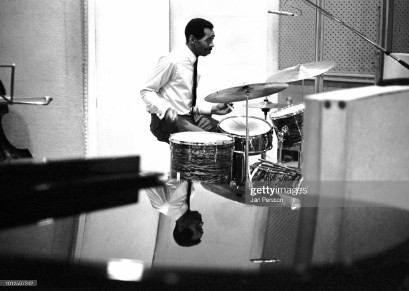
Philly Joe Jones (1980) by Larry Kart

 © Copyright ® Steven Cerra, copyright protected; all rights reserved.


“Philly Joe Jones, a leading modern-jazz drummer, died of a heart attack Friday, August 30, 1985 at his home in Philadelphia. He was 62 years old.

Mr. Jones was a hard-hitting drummer who gave a spacious sense of swing to his ensembles. His combination of deep-toned tom-tom and bass drums with subtle swirls of cross-rhythm on cymbals was widely imitated. He was a member of the trumpeter Miles Davis's influential mid-1950's quintet, with the bassist Paul Chambers, the pianist Red Garland and the saxophonist John Coltrane.


Joseph Rudolph Jones adopted the name Philly Joe to distinguish him from the pioneering jazz drummer Jo Jones.” 

Jon Pareles, 9.3. 1985  NY Times Obit


“Born Joseph Rudolph Jones, Philly Joe Jones was an exciting, explosive drummer and his influence on modern jazz is legendary.


Considered a superb timekeeper, Philly Joe Jones’ techniques are studied by jazz students throughout the world. Whether his influence was through subtle technique or hard-driving aggression, Philly Joe was versatile, often playing on a minimal drum kit, and adapting his drumming style to create many moods and sounds. His contribution to some of the most important jazz recordings in history elevated the role of drumming in modern jazz and changed the course of jazz music forever.”

- Philadelphia Music Alliance, Walk-of-Fame


W. A. Brower: [“Following a demonstration on the drum set} - That last segment of the drum solo you just played - after the cymbal potion - seemed to flow out of the creative use of rudiments [there are 26 major drum exercises that fall under this classification]. Is this something you got out of studying with Cozy Cole, that real strong rudiments foundation that allows you to branch off like that.


Philly J.J.: “Yeah, that’s Cole’s idea of how you should be a rudimental drummer - they help you in developing your hands. It’ll help you develop your mind, too - as long as you know all the rudiments. Like I said earlier, it’s like a bag of tricks that you can reach into when you need them.” So if it’s something I want to say, I can use the rudiments to say it. Most drummers who don’t know anything about rudiments have a hard time saying what they want to say. It’s just a conversation. Most of the great drummers are rudimental drummers, you know. All the great ones I know went through the rudiments. That don’t mean you have to sound like a boy scout when you play them. And you can make them sound - I can make them do anything I want to.”

- W. A. Brower, June 10, 1985 interview with Philly Joe Jones, Howard University Oral History Project; transcript of audio track of a video tape recorded in the studios of WHMM-TV on the campus of Howard University 


“This thesis explores the life of drummer “Philly” Joseph Rudolf Jones, one of jazz’s most renowned, unknown figures. As the drummer for the Miles Davis Quintet/Sextet and a later incarnation of the Bill Evans Trio, Joe achieved worldwide fame and success. Yet, his life story has always been told in the footnotes of the towering figures he performed with: John Coltrane, Bud Powell, Charlie Parker, Thelonious Monk, etc. Jazz history books recognize Joe’s contributions and nearly all provide a space, albeit a small one, to recognize his accomplishments.” 

- Dustin E. Mallory, Jonesin’: The Life and Music of Phily Joe Jones, Rutgers University Graduate School, May 2013, Thesis Director, Dr. Lewis Porter. Here’s a link to the entire thesis.


By way of introduction, Philly Joe Jones was one of the greatest of the hard boppers. His contributions to the art of jazz drumming are immeasurable. He was a virtuoso with a pair of brushes, and a genius at turning the rudiments into fluent musical ideas. 


More than any of his peers, it was Philly Joe’s time feel that defined the idea of swing in the 1950s. In retrospect, he would prove to be the strongest link in the chain between Max Roach, Art Blakey, and Roy Haynes, and the Elvin Jones/Tony Williams school that was soon to emerge.


The editorial staff at JazzProfiles has previously written extensively about Philly in some of the earliest feature for the blog dating back to 2008 and you can find them via these links: The Wonder of Philly Joe Jones, Part 1 and The Wonder of Philly Joe Jones, Part 2.


In the coming weeks, we plan to bring up additional feature about Philly Joe Jones on these pages to build the archive links so as to create a centralized point of  information about this outstanding musician.


In this regard, the following  essay on Philly JJ  can be found in Larry’s Jazz in Search of Itself [New Haven: Yale University Press, 2004]. We asked Larry for his consent to post it to the blog and he very kindly said “Yes.”


At its conclusion you’ll find some YouTubes with audio tracks that exemplify Philly Joe Jones’ unique style of Jazz drumming.


© -  Larry Kart: copyright protected; all rights reserved; used with the author’s permission.


“THERE are drummers who have had a greater influence on the course of modern jazz — Max Roach, Elvin Jones, and Tony Williams come to mind. And there are others who have more successfully parlayed their skills into commercial gain. But, from the first moment I heard him, back in 1955 with Miles Davis, no drummer has given me greater pleasure than Philly Joe Jones.


For one thing, Jones has the rare distinction of having invented a new concept of swing — one that may seem to have been superseded by later developments but one that is, in fact, as timelessly beautiful as the concept of time laid down by jazz's first great percussionist. Baby Dodds. Until Jones came along, jazz rhythm had become increasingly fluid, achieving in the cymbal-oriented work of Roach and Kenny Clarke a remarkable gliding ease. But Jones disrupted that evolution by switching the emphasis back to his snare drum, which chattered away like a machine gun, creating a stiff-legged, irresistibly compulsive drive that, as Miles Davis once said, "could make a dead man walk."


A fairly high volume level usually went along with that style, which obscured one of Jones's key virtues — the remarkable delicacy and precision of his playing. Listening to him is like watching someone weave lace out of barbed wire, as every accent, no matter how angular or explosive, becomes part of an exquisitely balanced design. In that sense Jones resembles a great dancer more than he does other drummers, and the ways in which he introduces the maximum amount of rhythmic obliqueness while still retaining his cool make him one of the most intriguingly graceful jazz percussionists. His left hand — the one controlling the stick that attacks the snare drum — is a study in itself, as it opens and closes, loosens and tightens with the rapidity of a snake's tongue. And often that always functional litheness will

ripple through his entire body, leaving him frozen for an instant in a pose Fred Astaire would have admired.


But of course it is the sounds Jones produces that matter most, and here he is unique, too. The tonal range he gets out of his kit is unusually compact when compared, for example, to Roach's tympanilike spectrum of timbres, and he seems to be constantly striving for a "back-to-basics" effect. It's a dry, all-rhythm approach to drumming that could support a jazz soloist of any era, and it certainly suits the band (tenorman Charles Bowen, pianist Sid Simmons, and bassist Andy McGee) that Jones is leading now. And even though neither Bowen nor Simmons is in the same class as the men Jones once played behind (John Coltrane, Sonny Rollins, and Bud Powell, to name a few), their relative ordinariness is not disturbing because it allows one to concentrate that much more on the masterly patterns of a masterly drummer.


Philly Joe Jones died in 1985.”


Tuesday, November 22, 2022

Early Jazz Ingredients - The Brass Bands in Big Towns

 © Copyright ® Steven Cerra, copyright protected; all rights reserved


“When I made my first visit to New Orleans, many years ago. The first thing I did was rent a car and drive to Buddy Bolden’s home. That’s how much I revere this building and what it represents. This was nothing short of a jazz pilgrimage and the Bolden residence on First Street was my destination.

I learned back when I was a teenager that Buddy Bolden was honored as the first jazz musician. But no recordings have survived (or perhaps were even made), so how much faith could I put in these legends? But the more I studied the early history of the music, the more convinced I was of Bolden’s central role in the music’s origins.


He was the pioneer who put all the ingredients together. He was the visionary who grasped the potential for combining (1) the syncopated rhythms of ragtime, (2) the bent notes of the blues (almost unknown in other major US cities back then), (3) the impassioned inflections of African-American church music, and (4) the instruments of brass bands and other traditional New Orleans ensembles. Even today, jazz continues to rely heavily on all four of those things, and Bolden was the mastermind who showed how they could fit together in a world-changing sound.”

- Ted Gioia, “The Scandalous Destruction of Jazz Landmarks in New Orleans,” Substack, 11.11.2022.


“A principal aspect of the first social and geographical settings of jazz, not yet fully documented, is the use of syncopated music at Negro funerals. Most historians, like many novelists who have been concerned with the colorful sociological roots of the music, have placed this custom almost exclusively in New Orleans. It would be more accurate to estimate that rhythmic funerals were taking place, some years before the turn of the century, all over the South, and indeed, wherever there was a substantial Negro population.”

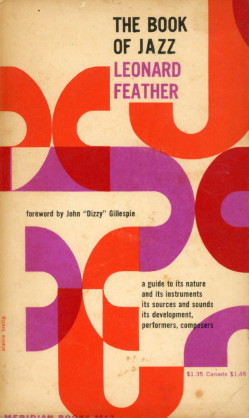
- Leonard Feather, The Book of Jazz


“As a former colony, New Orleans followed the French fashion in military bands closely and became justly famous for them. …. What is the explanation for the pre-eminence and frequency of Negro bands in New Orleans? In addition to the close ties with France and the general popularity of brass bands, New Orleans had a special kind of organization to give them employment and an unusual tradition that welcomed their presence on a wide range of occasions. This combination helped to produce the first bands that began to swing…..

The special kind of organization was the secret society….

These secret societies, far more numerous than similar white organizations, laid the economic foundation for the Negro brass bands by offering intermittent but frequent employment for musicians. ….

More particularly, there was a tradition that led to the employment of brass bands at Negro funerals. With the mild exception of the Irish wake, there is nothing in the United States like a New Orleans funeral.”

- Marshall Stearns, The Story of Jazz


The last sentence in the above quotation from Marshall Stearns takes the more common view that the New Orleans Jazz Funeral with its employ of the city’s  brass bands was unique to the Crescent City.


Leonard Feather’s assertion in the quotation just above it and throughout the following article is that syncopated brass band funeral processions were also happening in other cities, as well as, New Orleans and was one of the early ingredients in the development of Jazz elsewhere in the country at the same time that it was evolving in NOLA [today’s more common nickname for New Orleans].


In this centenary decade, the editorial staff at JazzProfiles has been attempting to look back and highlight some of the developments and individuals that helped to formalize Jazz, both artistically and commercially, beginning in the 1920s or, in some cases, even earlier in the 20th century.


Of the four ingredients listed in the above quotation by Ted Gioia, author of The History of Jazz and numerous other books on the subject, I think that the one that often gets overlooked in discussions about the evolution of this music is #4 “the instruments of brass bands and other traditional New Orleans ensembles.”


There is a bit of irony in this oversight because if you attend any American high school or college football game on an Autumn Friday or Saturday night, that brass band marching to the syncopated rhythms laid down by the drum corps is still very much in full view.


Indeed, if you are not certain of what syncopated rhythm means, just listen to the cadences the band’s drummers are laying down as the band marches in formation onto and off the field.


They have a two-beat feeling to them because they are based on the two feet - left-right, left-right - steps of the band members.


Brass bands in full flight generate lots of energy and excitement which is also a characteristic of Jazz. Is it no wonder, then, that Jazz appealed to the younger set of the “Roaring Twenties” as part of their efforts to dispel the misery and gloom of the preceding World War I years?


Brass bands are rarely talked about, let alone recognized as an important element in the formative years of Jazz, but there is an excellent treatment on the subject in the distinguished critic and author Leonard Feather’s The Book of Jazz [1959] and I thought I’d share it with you.


The chapter heading in Mr. Feather’s book is entitled Big Towns and Brass Bands which implies that New Orleans was but one of the many cities in the USA where Brass Bands played the syncopated ragtime music that would eventually be called Jazz. This is somewhat contrary to the “accepted wisdom” on the subject which views New Orleans as the sole birthplace of Jazz. As you will note from interviews conducted by Mr. Feather, many musicians feel that - “the New Orleans legend presents a one-sided story.”


Written in 1959 when most of the originators of the music were still alive and many were still performing, Mr. Feather’s interviews can be considered primary sources which sadly, are far and few between in the case of the principals associated with Early Jazz.


“People don't realize," says the trombonist and bandleader Wilbur De Paris, "that in the early days brass band and orchestral playing were very closely related. The musicians I remember from my childhood were mainly brass band men, because there weren't many jobs for strictly orchestra men." To De Paris, "orchestra" in this context refers to the dance band. Born in 1900 in Crawfordsville, Indiana, De Paris, who toured with his musician father from infancy, can recall many of the groups that played in the brass band style, in many parts of the United States, during his childhood. The conventional instrumentation included one or two cornets, a clarinet, a trombone, guitar, bass and drums. Their polyphonic interpretations, according to Louis Armstrong and others who heard them, had some qualities in common with the jazz of the later day.


The Negro bands played at picnics, rode in advertising wagons and frequently marched through the urban streets. White musicians were developing bands along parallel lines. Jack "Papa" Laine, who formed his first band in 1888 and claims to have been one of the first to perform ragtime, led the Reliance Brass Band, which played for parades and carnivals. The most widely publicized of the brass bands were all led by trumpeters or cornetists. The most powerful, both in the strength of his legend and in the reputed clarity and carrying power of his horn, was Charles "Buddy" Bolden, born in 1878 in New Orleans. Bolden, with whom music may have been a sideline (his other activities included the editing of a scandal sheet and the operation of a barber shop) organized what was possibly one of the first real jazz bands around the turn of the century. According to the tangled evidence available, Bolden played traditional themes that combined ragtime with brass band music in the first primitive statements of jazz; beyond any doubt, too, he played the blues, Bolden's fate, as it turned out, was neither fame nor fortune, but dementia praecox. He ran amuck during a parade, was committed to a state hospital and spent twenty-four years there, dying in 1931. Some of Bolden's contemporaries in brass were Freddie Keppard's Olympia Band, the Original Creole Band, and the Eagle Band, with Mutt Carey and Bunk Johnson.


There were many other areas far from New Orleans where this primeval jazz was being performed by brass band musicians. Asked whether he could recall some of them, Wilbur De Paris replied, "I've always felt that though New Orleans was a focal point of the South, most of the large cities in various parts of the country also made their contributions and helped to set styles. For instance, the type of trumpet playing that came to be identified later with Bix Beiderbecke was quite common in the Midwest among Negro musicians. I came from Indiana, and I can name half-a-dozen trumpet players who were playing that style. Charlie Hart, one of the trumpet men in a road show called 'Old Kentucky', was one; another was Frank Clay of Indianapolis, who led a military band as well as a theater pit orchestra. Then there were the Wolfscale Brothers, and Roy Pope, the Hoosier cornetist; and there were clarinetists like King Phillips, who wrote the King Phillips Rag and the Florida Blues. These were a blend of brass band and orchestra men, and they played dances; and they played jazz.


"There was a whole other school that should complement the New Orleans school, and that was the school I came up in. Basically, these men were better, musically and technically, than most of the New Orleans musicians. They got their foundation from amongst the teachers, Italian and German, across the country, throughout the Middle West. They were equivalent to jazz, and this wasn't necessarily the same thing that we know as ragtime. Jazz was growing up in different parts of the country without one part necessarily knowing what the other part was doing  —that is, aside from these musicians that I came up with. We knew what was going on in other parts of the country because we traveled a lot, but a lot of people didn't know about New Orleans at all until much later."


A principal aspect of the first social and geographical settings of jazz, not yet fully documented, is the use of syncopated music at Negro funerals. [A recreation of one of these ceremonies, with the band playing solemn music on the way to the graveyard and stepping into a lively march on the way back, was presented as a prologue to the motion picture, Pete Kelly's Blues, released in 1956.] Most historians, like many novelists who have been concerned with the colorful sociological roots of the music, have placed this custom almost exclusively in New Orleans. It would be more accurate to estimate that rhythmic funerals were taking place, some years before the turn of the century, all over the South, and indeed, wherever there was a substantial Negro population.


Eubie Blake, a veteran ragtime pianist and composer, recalls that in the late 1880s and early '90s, when he was a child in Baltimore, funerals of this kind frequently took place. "Joe Blow would die, and maybe he belonged to some society, so they would get the money together and have a band for his funeral. Those fellows couldn't read, but they sure played ragtime on their horns on the way back from the graveyard—tunes like Bunch of Blackberrries. Those trombone slides would be going like crazy. My mother said that nothing but low people followed the parades, and she used to whip me because we played ragtime coming back from the graveyard.


"The bands in Baltimore had all the regular instruments, and they had alto horns, or peckhorns as we used to call them, and euphoniums. Charlie Harris was one of the fine musicians who played in those bands; in fact, he was my teacher, and sometimes when I was a kid and those fellows used to get $2 to go out and play an excursion, they would give me a dollar and I would play second cornet to Charlie.


"There were dozens of fine musicians who played ragtime in the parades and at the funerals. Trumpet players like Pike Davis and Preston Duncan; a musician named Emil Daverage, who played the euphonium. We called the music ragtime, whether it was a piano or a band playing. We never heard the word 'jazz’ until many years later, long after I came to New York."


W. C. Handy, the cornetist and band master later famous as the composer of St. Louis Blues, attests to the growth of jazz-related forms in many southern states during the 1890s. Born in 1873 in Florence, Alabama, he toured as a young man with Mahara's Minstrels, as cornet soloist and musical director. The following conversation took place in 1957 between Mr. Handy and the author:


Mr. Handy, when you were a young man, did you hear anything about the New Orleans musicians that jazz historians are writing about today, such as Bunk Johnson and Buddy Bolden?


No, I didn't hear about them, but I had associations with others; my best trombone player was from there, and I carried New Orleans musicians with me when I had a band in 1896 and '97 all over the United States.


Did the jazz musicians come from New Orleans, then, or from all over the South, or all over the country?


From all over the country. Fewer of them were from New York than any place. You could get them from Philadelphia, but you got your best musicians back in the '80s and '90s from Shreveport, Baton Rouge, Vicksburg, Jackson, Mississippi and Louisiana. Alabama had some, also Florida and Tennessee.


Don't you think that jazz and ragtime and the blues all had something in common and overlapped to some degree?


I think they are separate things in this: ragtime you played as it was written, but in jazz you had improvisation. And ragtime had very little melody — it was mainly rhythm. The blues had a good melodic line. But they did sometimes overlap.


Who were some of the musicians that you associated with Jazz, and where did they come from?


It would depend on what you call jazz.


I would like your interpretation of the word.


Well, I played with a fellow in Bessemer, Alabama, and they called him Lard Can Charlie and he made good jazz out of a lard can. See what I mean? I played with another fellow in Huntsville, Alabama. He played with a long iron pipe and the people would rather dance with him playing that iron pipe than with him playing string bass. So I've played with many novelty musicians. We had an E Flat comet player with Mahara's Minstrels, Elmore Dodd from Nashville, who filed his mouthpiece down so he could make an E Flat cornet sound like a piccolo, and that was a sensation. Even in the minstrel days we played music similar to jazz, but we didn't call it jazz. We called it faking. Just pick up a piece like A Hot Time in the Old Town Tonight and sporting house songs and put any interpretation we would want to put, but we didn't call it jazz — we didn't know anything about that word.


When did you first hear the word "jazz" used?


Not until I went to Memphis, after I had written the Memphis Blues. A book came out called The New Negro—J. A. Rogers wrote an article about me and this new music called jazz and gave me credit for it.


How about the early songs that you documented — did they come from New Orleans?


When I lived in Bessemer, Alabama in 1892 or '93, we used to sing a song, Careless Love, and they claimed that song came from New Orleans. But I moved to Kentucky, along the Ohio River, where I found that the governor's son had been killed over an unhappy love affair and the Negroes made up a song called You See What Careless Love Has Done. So Loveless Love floated down the Ohio River with roustabouts and down the Mississippi to New Orleans. Can you see what I mean? So much of our folk music just drifted on down the river — like Joe Turner. Joe Turner started in Memphis and I kept it alive, but it could have gone on down to New Orleans and been called something else, but the same tune in New Orleans was called Gain' Down the River 'Fore Long.


Do you think anything equivalent to jazz or ragtime was being played up here in the East around the turn of the century?


Well, some of our singers in certain illiterate churches were breeders of what we call jazz today. They put in their music, in their singing, something that instruments do today. So that when a boy got to be able to play clarinet or trumpet, he put into his music the same thing they put into the shout songs— not the spirituals.


Do you think this went on in churches all over America?


I wouldn't say all over America, but wherever slavery was practiced.

The Southwest, too, undoubtedly was a proving ground for the same syncopations and improvisations that had begun to prevail in other regions by the turn of the century. All around Texas, Oklahoma and neighboring states there were parade bands patterned along the traditional ragtime lines: a typical group was one in Oklahoma City that included Jim Bronson on clarinet, Andrew Rushing on trumpet (his son, born in 1903, is the ex-Basie blues singer, Jimmy Rushing), Millidge Winslett on trombone and George Sparks on peckhorn (E Flat horn).


The seldom-discussed role of the East in the creation of jazz is emphatically confirmed by one of Duke Ellington's early piano idols, Willie "The Lion" Smith. Born in 1897 in Goshen, New York, Smith recalls hearing jazz from early childhood and contests the theory that all its developments had drifted up from New Orleans, whose musicians were, he says, unknown to him and his contemporaries during the period up to and including World War I. The following conversation with "The Lion" took place recently in New York;


When and where do you remember hearing the first jazz played?


Well, they always played jazz. We had a famous club in New York called the Clef Club. That was the greatest club in the world.


How far back did that go?


Oh, man! That goes way back before the first World War; I was a member then and am still a member.


Were there any equivalents around here of the Bunk Johnsons and King Olivers of New Orleans?


Yes, we had guys around that could play the hell out of a horn. We had a trumpet player that was with me by the name of Major; later he was with the first Mamie Smith band. He was a pistol. We had another guy that gave everybody a fit in New York; his name was Jack Hatton, He was a cornet playing fool. He did all that growling like Bubber Miley and those guys tried to do later. Of course, that was long before phonograph records. There are musicians around who are 75 to 80 years old who used to be tops. We always had jazz bands; we had them at a place in Brooklyn called Goners. The guy who played piano there was called Kid Griffith and he wore tight pants ... a little, short good-looking guy. They had a jazz band—they had to have jazz bands. This was before the first war. I had a jazz band at LeRoy's before the war, too. It was a 12-piece band, and who do you think was singing there with me—Mamie Smith. Talk about jazz bands—My God! They had better guys playing jazz than a lot of these guys trying to play it, because those guys knew what they were doing.


Did you ever hear about the musicians from New Orleans?


I never heard of the guys—never heard of them. There were only two guys I saw from the West. One was a guy by the name of Johnny Williams, whose wife poisoned him. He was a better cornet player than Louis Armstrong ever thought about being, and anybody in the West will tell you that. He was from out West, but not from New Orleans. The only guy I knew to come from New Orleans was Louis Armstrong and the only time I saw him was when I went out there.


How about this legend about New Orleans' being the birthplace of jazz?


It's the writers. If you don't think I know what I'm talking about, just look in those books these fellows have written, and see guys like Danny Barker and all of them talking about the bands on the Mississippi riverboats. Man, they've got riverboats all over, right here in Haverstraw, New York. Ever since I can remember, there's been jazz played.


The kind of rhythmic qualities that came to be known as jazz were growing up all around the country, then?


That's right. Now you're hitting it. The rhythm — you know I've associated myself with synagogues and Baptist churches all my life and they had the greatest rhythm you ever heard.


How about the blues? Was that always around?


Always the blues, ha! hal


That wasn't always in the South, either?


No, sir. Here's one that'll kill 'em. The blues comes from the brickyards in Haverstraw, New York, where those colored people worked in the brickyards. They sang blues all day. Men older than I will tell you that.


Luckey Roberts, another ragtime pianist numbered among Duke Ellington's first influences, came to New York from Philadelphia in 1898 as a child actor in Uncle Tom's Cabin. Roberts' earliest recollections concern ragtime musicians, particularly pianists, who were active in the East and had converged on New York from at least a dozen states:


"There were some great piano players. There was Dude Finley from Florida, and One Leg Shadow, and One Leg Willie. They played all over the country. And Jack the Bear, whose real name was Jack Wilson; he was around Pennsylvania and Ohio. And Bud Howard out of Detroit—and did you ever hear of Benden Boots? He played fine piano and was out of Baltimore. Then of course Pike Davis and Preston Duncan on trumpets; Pike was one of the best attack men I ever heard. He came from Baltimore in one of the first groups that started reading music."


The "One Leg Shadow" mentioned by Roberts is Walter Gould, possibly the oldest living ragtime pianist. Born in Philadelphia in 1875, he told Rudi Blesh of even earlier performers: "Old Man Sam Moore was ragging the quadrilles and schottisches [both are forms of dancing] before I was born. He was born 'way before the war. He doubled on bass and piano." Now living in Albany, New York, "Shadow" in his eighty-third year is vocal and alert, as stubbornly convinced as most of his Eastern contemporaries that the New Orleans legend presents a one-sided story. "I begged Blesh not to believe all that stuff about everything happening in New Orleans," he said recently. "You know what started everybody believing that? Louis Armstrong and King Oliver coming from there, that's what did it. And yet when there were dozens of great musicians in the East, you couldn't find but two or three good piano players in the whole of New Orleans."


Evidently Gould's plea to Blesh did not go completely unheeded. The latter's first book, Shining Trumpets, placed a heavy accent on New Orleans; his second, four years later (They All Played Ragtime, 1950) receded a little from this position ("Eastern ragtime has as long and honorable an ancestry as the others ... it focused at first in Virginia and the Carolinas and then spread up into Maryland and down the coast into Florida, Georgia and Alabama."). By 1953 Blesh, at a seminar attended by jazz experts and anthropologists, spoke of Mississippi and Eastern Texas origins, of an Eastern Seaboard style that "didn't just start with Ellington and Henderson but came from something else," and added that he was "trying to deal with the assumption that jazz began only in New Orleans. I used to think so; I once wrote along those lines. I don't think so any longer."


Leonard De Paur recalls: "My mother, who was born around 1887, was completely conversant with jazz as it was practiced by nomadic bands such as the Jenkins Orphanage Band from Charleston, South Carolina. I remember when I was a child there these kids used to come up as far north as Trenton and just play on the street corners in the most nondescript uniforms you ever saw — some sort of jacket with brass buttons and pants with stripes. They would just stand around in a circle and the leader was somebody who could dance like hell—he didn't have to have any talent more than the ability to say 1, 2, boom! and then go into a routine of his own which would highlight the performances. But they did move around all over the country and they played the most positive ragtime you have ever heard. 


My wife was from Charleston and she said she had known about this orphanage organization as a child there and my mother, when she first saw them, said, 'Oh, my God, there's Jenkins' Orphanage Band! I haven't seen them since I was a little girl.'


"This was strictly low-brow stuff—right-thinking people who went to church with starched neck bands on Sunday didn't admit to the existence of this type of thing, but there was an element which really lived on this music; and they played funerals — on the way and back from the graveyard in South Carolina. Even if the graveyard was right around the corner, they would have the band travel all over town advertising this funeral with this band doing what we now call tailgate trombone.


"But the boys who chronicled the development around New Orleans did a much more effective job than the people who were East, and it also seems that the whites were more aware of its value around New Orleans and they really did a job of promoting. There are evidences of this kind of activity that go back to the very time it was supposed to be incubating in New Orleans. I've heard Hall Johnson, in whose choir I used to sing, make the same comment. He came from a very literate family; he's from Georgia, and he knew of the existence of jazz very far back, and he is over seventy now. New Orleans just happened to get the publicity."


Eubie Blake told the author recently: "I'm 74 years old, and when I was a kid, around ten or eleven, this kind of music was already around then. I was playing it myself in Baltimore from 1898, and we called it ragtime." Blake, who came to New York soon after the turn of the century, confirms that jazz, both in its ragtime piano form and in musically similar brass interpretations, was a firmly established entity at that juncture, and that the musicians from New Orleans were practically unknown until about 1915, when Freddie Keppard visited New York with the Original Creole Band.


The picture that emerges from a synthesis of the statements cited in the preceding pages, of the recollections and revelations of ragtime historians and musicians from various centers, and of the constantly documented histories of the New Orleans musicians, can only point to one conclusion. Jazz, which by the first World War was an acknowledged and organized facet of the music scene, and which for many years has been localized and pinpointed by writers to a degree clearly at variance with the facts, is a child neither of Louisiana nor of Pennsylvania, owing no more allegiance to the Confederacy than to the Union. Jazz simply was born in the United States of America.”