The late Paris-based jazz musician and International Herald Tribune writer Mike Zwerin posted a 41-week series entitled Sons of Miles to Culturekiosque Jazznet. In this series, Zwerin looks back at Miles Davis and the leading jazz musicians he influenced in a series of interviews and personal reminiscences. Here is the Gerry Mulligan piece in that series. It was published on September 24, 1998 so add 20+ years to any math in the article.
“PARIS - Jackie McLean was looking for the common tone, to be able to move between all 12 tonal centers with total freedom and under complete control. The listener should know nothing about this. In order for this to work, the force must be emotional not technical.
One night, during his two weeks at the Magnetic Terrace here in Paris, he felt he got pretty close to something he's been searching for for a long time. But those breakthroughs come and go and maybe don't really come at all and after a few days had passed he was no longer so sure. Anyway he's still playing and trying.
McLean is among the few remaining evergreens with enough will and force to motivate themselves night after night despite age, a demanding métier, prejudice, tangents and contrary trends. His alto-saxophone style combines the solid texture of Sonny Rollins's tenor and the fluidity of Bud Powell's piano - shorthand, but true enough as far as it goes. His angular-phrased tough, seductive, sound is as unmistakably recognizable as anybody active today. He calls it "sugar free."
Which may or may not have Freudian implications because he grew up on Sugar Hill, once a noble corner in Harlem which then soured into drugs and shoot-outs. "The streets were clean when I was a kid there," he said, at once proud and sour about it.
"Duke Ellington, Nat Cole and Don Redman lived in the neighborhood. People cared about our neighborhood."
McLean, who was born in 1932, heard Charlie Parker at the age of 14 and "the first time that name came out of my mouth I knew at that moment I was going to be a musician." Five years later, he joined Miles Davis.
Looking back, he wondered: "How did I do it that fast?" He was fast and furious in his early 20s. "When I was strung out on dope my horn was in the pawn shop most of the time and I was a most confused and troublesome young man. I was constantly on the street, in jail, or in a hospital kicking a habit.
"The New York police had snatched my cabaret card and I couldn't work the clubs any more except with [Charles] Mingus who used to hire me under an assumed name. [He can be heard already moving between tonal centers on Mingus's record 'Pithecanthropus Erectus' in the '50s.] The thing that saved my life was a Jackie McLean Fan Club started in 1958 by a guy named Jim Harrison. I didn't have a big name or anything but he collected dues and he'd rent a hall once a month and present me in concert."
McLean played the saxophonist - four years at $95 a week - in the first Living Theater production of the "The Connection," an off-Broadway milestone which cast a new perspective on the nature of make-believe.
The junkie hustling the audience in the lobby turned out to be an actor, the hostile woman in the mezzanine was part of the cast. Some of the actors were addicts, but you weren't sure who. Actors playing characters on stage never looked the same again. "I fell in love with theater then and there," McLean said. "Even my saxophone playing became a lot more theatrical after that."
Remembering how lean and mean he looked in those days, like an early James Dean, and seeing him turn 60 with a girth approaching the late Sydney Greenstreet, it was astonishing how the lust to take risks can be, if anything, greater 35 years later. There has never been and there certainly was not now anything approaching fat or phlegmatic about this man's head.
The following is a story about the old days told without punctuation during a run to a pharmacy to buy a cornucopia of homeopathic medicines (similar runs were once made for cough syrup or a lot worse):
"Sonny Rollins and me were sitting in this club and suddenly the door opened and it's Sonny Stitt and he said 'okay I've been waiting for this,' and he had an alto under one arm and a tenor under another and it was like 'High Noon' or something and he said 'you're both hot stuff from New York and you both think you can play well I'll take on both of you up on the killing stand come on get up there on the killing post both of you.'"
Those were tough and competitive times and survival was day-to-day. Stitt did not survive, while McLean and Rollins were still picking up steam, combining honed intelligence with renewed energy at an age when most men are well into retirement.
It may or may not be coincidence, but both had strong wives who managed their careers. McLean said his wife Dolly "stood up when other women would have crumpled, or killed me. For years, she was the one who worked day jobs to keep us and our three kids together. I really owe her."
Both McLean and Rollins also paced themselves by retiring from full-time playing for years during their middle age. Rollins periodically left for such places as India, upstate New York and the Brooklyn Bridge [sic, it was the Williamsburg Bridge] which connects Manhattan and Brooklyn] to meditate. McLean joined the faculty of the highly rated Hartt School of Music of the University of Hartford in Connecticut in 1970, and he became chairman of its African-American music department.
The department was established, he had a National Endowment for the Arts grant for his chair and he could afford to bring in guest lecturers when he was away. So he "came back on the scene for real. My original mission is still the same. I intend to try and continue to be significant on the instrument.
Not just 'Jackie McLean, oh I remember him.' But to be at the forefront of the horn. I'm ready to kick the doors down."”
The late Paris-based jazz musician and International Herald Tribune writer Mike Zwerin posted a 41-week series entitled Sons of Miles toCulturekiosque Jazznet.In this series, Zwerin looks back at Miles Davis and the leading jazz musicians he influenced in a series of interviews and personal reminiscences. Here is the Sonny Rollins piece in that series. It was published on July 30, 1998 so add 20+ years to any math in the article.
Sonny Rollins: Saxophone Colossus
“PERUGIA, Italy - Sonny Rollins held or, it sometimes seemed, was held by a press conference during the Umbria Jazz Festival. No fan of the conferential format, he had obviously resolved to be patient with impertinent questions.
Asked how he feels about the growing number of jazz festivals, he answered with the evident: ''They are putting a lot of musicians to work. This is a good thing.''
Rollins was one of the monsters, a quick-witted player with big ears and sturdy roots. More than a spinner of tales, he was an inventor of improvisational language. His robust sound is an immediately recognizable franchise. History, however, has at least temporarily passed him by. You can sense an underlying bitterness along with his considerable intelligence and deep-felt spirituality (he studied in India and Japan for three years).
He adjusted his dark glasses, reflected for a beat, and added: ''We try and make it easier for our children so they won't have to pay the dues we did. This may hurt them in the long run. It has occurred to me that maybe young people are not suffering enough. Don't get me wrong, I'm just saying you reap what you sow. There are so many distractions - Internet, video games, CD-ROM, TV. It's become easier to escape responsibility. As you may have guessed, I'm an anti-technology person.'' He drained a glass of water and said: ''So shoot me.''
He lives with his wife on an isolated farm in upstate New York. Most days he retires to his studio to practice, compose and meditate while she handles the business and the necessities of life. He limits his appearances; this concert in Perugia was rather an event. He and his wife remained mostly in their hotel room, though, relying on room service. From what he said and the way he said it, it would seem that he is more concerned with being in touch with himself than with contemporary music or events.
''Too self-critical'' to listen to his own albums, in recent years he hasn't listened to much music by others either: ''There's so much music in my mind, there's no room for more. I'm trying to create my own music.''
Asked about whether he often thinks about death, the 65-year-old ''Saxophone Colossus'' said he believes in reincarnation. He is trying to live a better life this time around. ''Death is easy,'' he said. ''Living is hard.''
While on the subject, he cited the fabled 1950s quartet with Max Roach, Clifford Brown and Richie Powell (Bud's brother) and said he had been ''terribly shattered'' when Richie Powell and Brown were killed in a car crash. He has summoned Brown's spirit for inspiration ever since. In high school he rehearsed with Thelonious Monk after class, and he played with Miles Davis while still in his teens. He summons their spirits too.
''I think about these people all the time. Since I was blessed to have played with them, and since I am one of the few players from that era remaining, I feel a responsibility to keep my music on as high a level as possible in their honor. So I have an added burden. I must represent them as well as myself.''
''Every now and then,'' he said, he dreams about John Coltrane, which is interesting because, while not exactly competitors, they were rivals. Saxophonists felt somehow obliged to make a choice between them, to sound like one or the other; like the choice between Coleman Hawkins and Lester Young in the '30s.
Folklore has it that Lester ''defeated'' Hawkins in a cutting contest during a jam session in Kansas City. True or not, after that Lester became the prime influence on the following generations (Stan Getz, Dexter Gordon, Branford Marsalis). One of the few successors to have successfully tamed and knit Hawkins's full tone, breathy vibrato and songlike phrases into bebop, Rollins suffered a similar ''defeat'' after recording the classic ''Tenor Madness'' with Coltrane in 1956 (their only track together). Of course all of this is oversimplified. But still.
Trane's ''sheets of sound'' were more modern, free-wheeling and seductive. Rollins continued to develop, restructure and recapitulate themes - very 19th century and very hard to do, like some sort of improvised sonata form. At the same time, as his luck would have it, there was a general decline of melody in popular music. Rock songs were often mere riffs; Miles Davis pared melodies down to three or four notes; melody played no part whatsoever in rap. Sound-bit listeners did not have the patience to wait for melody to recapitulate.
And somewhere along the line, Rollins lost his consistency. Now he'll do what Sonny Rollins used to do, but often overdo it. His melodic fragments can be more fragmented then melodic. Still capable of producing goose-bumps, he can no longer be relied on for it. On stage in Umbria, for example, he took the audience on a tour of Calypso hell in the eye of a hurricane of self-parody on his hit ''St. Thomas'' before reaching full prime-time stride on ''Long Ago And Far Away.''
Meanwhile, back at the conference. Instead of replying ''none of your business,'' he decided to deal with a question about his political preferences; about Bob Dole passing up the opportunity to address the NAACP:
''The problem is beyond racism. It's consumerism. We are destroying our planet to acquire more material goods. Racism is part of this - more goods for me, less for you. And as a black person, racism affects me personally. But consumerism affects my descendents and the entire planet.
''Politicians are only concerned with immediate growth and profit. I don't think I'll vote this year. This business about the lesser of two evils is out of date. I don't want to vote for the evil of two lessers. I'll make my contribution with music. I think it is possible for jazz to reach people on a deeper level than entertainment. We should work to make it more than merely diversionary.''
He finally snapped in response to a question about O.J. Simpson: ''What does that have to do with anything?''
The late Paris-based jazz musician and International Herald Tribune writer Mike Zwerin posted a 41-week series entitled Sons of Miles toCulturekiosque Jazznet.In this series, Zwerin looks back at Miles Davis and the leading jazz musicians he influenced in a series of interviews and personal reminiscences. Here is the Roy Haynes piece in that series. It was published on October 29, 1998 so add 20+ years to any math in the article.
Roy Haynes: No Beats to Waste
"Stan Getz liked my beat, he loved to play with Roy Haynes," says Roy Haynes, who likes the sound of his Third Person.
Positive subjective judgments sound more objective from that perspective. In his case, the sound itself implies stature. Lester Young told him: "You should be called the Royal of Haynes." Roy Haynes is the only drummer to have played with (not all at the same time) Louis Armstrong, Lester Young, Charlie Parker and John Coltrane.
Others also tend to refer to him with both names, running them together, syncopated - Royhaynes, accent on the "Ro." It sounds like him. Dorothy Donegan says he's getting to look more like Count Basie drummer Jo Jones every day. Which means to say royal, clean, crispy.
His discreet, flexible tatoo controls the time and space and the dynamic of whatever formation he's part of. He's compact, energy-packed, confident. He chooses his shots. He's a warrior, the battle plan is his: "Remember Town Hall a few years ago? You were there. I put Michel Petrucciani in the pocket. I'm known for putting cats in the pocket. That's what I do." (The "pocket" is the place where the pool-ball of tempo should be shot.)
It started in 1944 at the age of 18 with Frankie Newton and Sabby Lewis in his hometown Boston. His style eventually became so pervasively subversive that, without being known as a leader, or even a "star," he is behind certain key elements common to an eclectic list of people including Art Pepper, Sarah Vaughan, Chick Corea, Thelonious Monk, Eric Dolphy and Gary Burton (Larry Coryell, Steve Swallow and Roy Haynes were the rhythm section for Burton's mid-'60s groundbreaking jazz-rock fusion efforts). From 1961 to 1965, he was Elvin Jones's principal substitute with the John Coltrane Quartet.
Trane described his time as "spreading, permeating." Leaving Charlie Parker to form his own band, Max Roach advised his boss: "Hire Roy Haynes."
The British critic Brian Priestly wrote: "Roy manages to be intelligently insistent and provocative in accompaniment without overpowering the soloist." Jazz Hot magazine put him on its cover when he arrived in Paris in 1954 with Sarah Vaughan. (Roy Haynes was impressed with a culture interested in the drummer, not the star.) "Roy Haynes should be immortalized," said Sonny Rollins. "I can dig his statue somewhere, like the one of Sydney Bechet in Antibes."
Although universally acknowledged as a prime mover by soloists, leaders, critics and other drummers, the general public has never truly appreciated his stature. When I asked him why he thought that was, he looked at me with astonishment: "You think I'm not appreciated? Man, you must be getting out of touch, living here in Paris.
"I was giving a lecture for a workshop in Massachusetts and when they announced 'Roy Haynes,' the kids shouted - kids are so hip these days - they shouted 'Yeah yeah yeah' and cheered and applauded. They just went crazy. I got a standing ovation for just standing there. I hadn't even played yet. It just happened. Boom!"
After hearing him in Chicago one night, a reporter from Down Beat magazine said he didn't know he could play like that. Haynes did not consider this a compliment: "You know, I'd been doing it for a long time. And he wanted to know where I'd learned it. Man, a lot of drummers copped my important stuff. I was there first."
He had the distinct impression that the reporter was surprised he could do an Elvin Jones impersonation so well. But Roy Haynes knew for a fact that Elvin had been listening to him play that way back in the '50s, before anybody else was doing whatever you call it - "spreading the rhythm," "suggesting the beat," "elastic," "melodic," "permeating."
This is the way the most advanced drummers like Jeff (Tain) Watts (with the Marsalis brothers) and Jack DeJohnette play now. Any credit withheld from him is not the drummers' fault, they all admit their debt to Roy Haynes. But it's been going on so long and it just got to him this time. He couldn't resist telling the reporter: "I think you should talk to Elvin about that."
"I'm an uncrowned king," he says, head held high. "I don't have to win any polls to know that." He does not win many. "I'm cool, I know. I've been to the mountaintop."
Along the way, he began to dress like royalty - custom-made suits, Italian shoes, sharp hats. Esquire magazine put him on their best-dressed list. Along with Miles Davis, one of only two African Americans, and only two jazzmen. The New York Times referred to him as "the dapper drummer." he started to suspect that he was better known for his clothes than his drumming. It got to be a "mixed blessing, still is. If I have a hole in my sock, some girl will say: 'Hey, I thought you were supposed to be well dressed.'
"I have a 10-speed bike, quite a few grand-children, and two Doberman pinschers. I have an original 1974 Malcolm Bricklin car. You know, he was De Lorean's buddy. I win prizes with it. I live in Freeport on the south shore of Long Island, not far from where Guy Lombardo used to live. I don't work a lot. I don't have to. I've made myself comfortable. It's good for the mind to play music, but now people are asking me to back up singers and do all-star tours with a whole bunch of horn players. That stuff is not good for the mind. I need time to think and dream. I'm a dreamer.
"Some agent called and asked me to lead a sort of Art Blakey ghost band, he even suggested I get some of the guys from the Jazz Messengers. His point is it would make a lot of money, and he does have a point. But why should I do that? It doesn't mean anything. This cat has got to be joking. Man, I played with Bird, with Trane, I played with Billie Holiday. Art Blakey used to admire me.
My career is catching up with me. I call my own shots. I only play on Roy Haynes dates. I'm the leader. I do what I want to do when I want to do it. When I play, it has to mean something. Let it float like a balloon. I'm talking about jazz. Other people did it, but Roy Haynes did it and did it and did it.
"I don't like to pin compliments on myself, but..." Yes he does: "...But I'm one of the last innovators from the '40s who's still out there saying something new. I couldn't really be myself with Trane or Getz because my job was to accompany them. They came first, that was my role. And it was cool. They didn't need a drummer juggling between his right and left feet and hands getting in their way. But my kids are grown up, my mortgage is paid and now I don't have to worry about making anybody sound good but myself.
"I have a good band now. Young guys, they play the way I like. Anybody else wants me to play with them, it has to be somebody I respect, somebody who wants to take risks like I do. Guys like Pat Metheny" on "Question And Answer," with Dave Holland, bass, Geffen Records. Dig it. This is my religion. It's what I believe in. I don't waste beats. Roy Haynes has no beats to waste."”
Gordon Jack is a frequent contributor to the Jazz Journaland a very generous friend in allowingJazzProfilesto re-publish his perceptive and well-researched writings on various topics about Jazz and its makers.
Gordon is the author of Fifties Jazz Talk An Oral Retrospectiveand he also developed the Gerry Mulligan discography in Raymond Horricks’ bookGerry Mulligan’s Ark.
The following article was published in the November 23, 2021 edition of Jazz Journal.
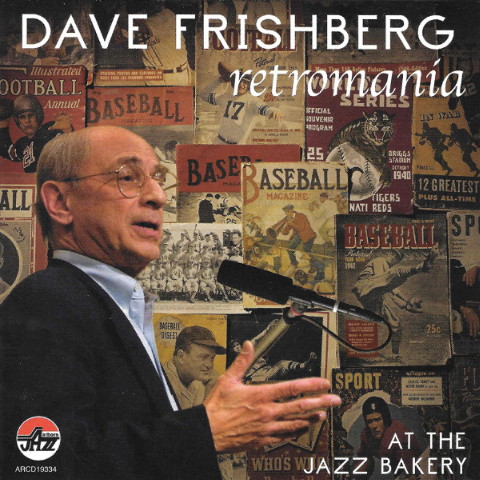
“Long before he became recognised as a high quality song-writer, Dave Frishberg had served time in the fast-lane of the jazz world accompanying Carmen McRae, Anita O’Day, Ben Webster, Gene Krupa, Al Cohn and Zoot Sims. He celebrated those days with his 1992 recording of I Want To Be A Sideman which opens with a satirical nod to In The Mood. Rosemary Clooney with Count Basie and Susannah McCorkle both covered it a little later.
He was born in St. Paul, Minnesota on 23 March 1933 and during the war years he listened to recordings by Benny Goodman, Artie Shaw, Count Basie and Bing Crosby. Art Tatum, Teddy Wilson, Albert Ammons and Pete Johnson became very influential too but his horizons were really expanded when he first heard Charlie Parker’s Ornithology. After graduating from the University of Minnesota, he served two years in the military before moving to New York in 1957. He began working at a local radio station (WNEW) writing continuity material for $65 a week. Tiring of his day-job he joined Kai Winding’s four-trombone group which played “slick, smooth arrangements” mostly by Winding. In the early sixties Blossom Dearie introduced him to Bob Dorough which resulted in a life-long friendship. Their first collaboration was I’m Hip with Dave’s lyrics (which came first) and Dorough’s music.
In 1962 he wrote Peel Me A Grape. He was working with Dick Haymes’s wife the glamorous Fran Jeffries at the time who wanted something new along the lines of Whatever Lola Wants. She thought Dave’s original was cute but she declined to use it. Anita O’Day liked it and she introduced it on her album with Cal Tjader. It has been recorded more than 80 times and possibly the most famous version is by Diana Krall who gave it her seal of approval in 1992. The title actually comes from a Mae West quote in her 1933 film I’m No Angel. From 1962 to 1964 he worked with Gene Krupa’s quartet at the Metropole and on one disastrous occasion the great Benny Goodman sat in. Turning to Dave he said “Sweet Lorraine in G”. Benny started in F and things went downhill pretty fast after that. He had a happier time with Ben Webster who told him he was one of the few pianists “who could emulate Ellington’s time-feel”.
In the early sixties he began a ten year engagement as one of the house-pianists at the Half Note – “the hippest place in town”. He worked there with Webster, Roy Eldridge, Richie Kamuca and Jimmy Rushing along with the Al Cohn and Zoot Sims team who frequently held court at the club. Frishberg said at the time “if you were a piano player doing jazz work in New York in those years, you couldn’t ask for a more nourishing, more rewarding experience than to play with Al and Zoot.”
In1971 he moved to Los Angeles to work on an NBC television show titled The Funny Side hosted by Gene Kelly. He was also invited by Bob Dorough to provide new material for an ABC educational series called Schoolhouse Rock. Dave wrote several themes for the show including the ever popular I’m Just A Bill sung by Jack Sheldon. The latter might be the most well known of all his compositions because it was frequently heard on the show which ran from 1973 to 1984 and 1993 to 1996. He wrote jingles and worked on shows like Charlie’s Angels and Mary Tyler Moore Survives The Seventies as well as finding time to travel with Herb Alpert’s Tijuana Brass. As a composer of memorable themes these were particularly productive years. His love of baseball was reflected in titles like Van Lingle Mungo, The Sports Page, Play Ball, Dodger Blue and Matty. He had issues of Baseball Magazine dating back to 1911 and in 1984 he became a member of the Society for American Baseball Research (SABR). He once said “the older I get, the more I’m convinced that everything really used to be better” and that outlook was revealed in nostalgic themes like Sweet Kentucky Ham, One Horse Town and The Dear Departed Past – each a deeply felt hymn to the past. His own favourite was one of his lesser known songs You Are There, which was a collaboration with Johnny Mandel. His albums Dave Frishberg Songbook Volume 1 (1981), Dave Frishberg Songbook Volume 2 (1982), Live At Vine Street (1984) and Can’t Take You Nowhere (1986) were all nominated for Grammy Awards.
After battling illness for several years Dave Frishberg died at a hospital in Portland, Oregon on 17 November 2021. He is survived by his wife April Magnusson and two sons.”
The late Paris-based jazz musician and International Herald Tribune writer Mike Zwerin posted a 41-week series entitled Sons of Miles toCulturekiosque Jazznet.In this series, Zwerin looks back at Miles Davis and the leading jazz musicians he influenced in a series of interviews and personal reminiscences. Here is the Max piece in that series. It was published on January 14, 1999 so add 20+ years to any math in the article.
Max Roach From Hip Hop to Bebop
“On July 14, 1988, Professor Max Roach, who has been called the Duke Ellington of the drums, stopped by his office during a lunch break while conducting his summer Jazz Studies Program for the University of Massachusetts in Amherst. He found a telephone message from a certain Dr. Hope in Chicago.
Roach did not know anybody named Hope in Chicago. He had been negotiating to appear at the Chicago Jazz Festival and he thought that it must have been something to do with that. But Dr. Hope said: "Professor Roach, you have been awarded a $372,000 MacArthur Foundation Fellowship. All we need is your Social security number."
"I'm still in a state of shock," Roach said a month later in his upper West Side apartment overlooking Central Park. "I didn't even apply. There was no warning. They don't tell you why they chose you. And they won't say who was on the committee."
The John D. and Catherine T. Mac Arthur Foundation awarded 31 fellowships that year. The smallest was $150,000. Roach's figure was close to the biggest. Former recipients included the composer Milton Babbitt, choreographer Merce Cunningham, poet John Ashbery and writer Irving Howe.
The award is paid over five years and passed on the recipient's heirs should he or she die before the period is over. No reports or projects are required. Nominees, according to the foundation brochure, should "meet rigorous standards of excellence in their work, well beyond professional competence, even if such work is in its earliest stages. They must show great promise for future work. Although committee evaluation has to be based on achievement, the fellowship is not intended to be a reward but rather to foster new accomplishment... to provide hitherto unavailable opportunities."
An extraordinarily fit 64, Roach had been creating his own opportunities with remarkable resourcefulness. Building on the innovations of Kenny Clarke, he became the measure of excellence for bebop drumming. He worked with Ellington, Dizzy Gillespie, Charlie Parker and Miles Davis, and co-led a legendary quartet with the trumpeter Clifford Brown.
He rendered obsolete the old joke about a jazz quartet being "three musicians and a drummer." The critic Rafi Zabor wrote: "Over no other instrument has the influence of one man been as decisive as Roach's over drums for the past 30-odd years."
Roach explains the philosophy behind it: "I always resented the role of a drummer as nothing more than a subservient figure. The people who really got me off were dealing with the musical potential of the instrument."
In recent years he had worked solo, in duo, with his quartet, with a "double quartet" (four strings added) and with his percussion ensemble, M'Boom, and he wrote for and performed with multimedia projects.
Since he had already managed to do all this within, or despite, the capitalist system, you could wonder what kind of five-year plan he had for the additional $75,000 a year.
He explained by way of a brief biography: "My family moved from South Carolina to Bed-Stuy [the Bedford-Stuyvesant ghetto in Brooklyn] in 1928. Although the crash came a year later, and although the people were poor and disenfranchised, they had a lot of pride. Nobody was slick, everybody was honest. People went to church.
"I used to take musical instruments home from elementary school. There were some music teachers there - we all learned instruments. A lot of us got started in public schools. Charlie Parker and Bud Powell, for example. But now there are no more music teachers in public elementary schools. It's like (Senator) Moynihan said, 'benign neglect.' Just let it rot and fester.
"I'd like to use some of the MacArthur prestige and money to at least begin some of the statistical research necessary to present a plan to the city fathers to build a kind of cultural complex in Bed-Stuy. I'd like to build what I call an 'oasis.' It should be a pleasure to look at and to be in. I'd like to give something back to that community. Also, I'd like to have the time to work on my autobiography."
Roach is many things besides a great drummer: Civil, civic-minded, generous, healthy, intelligent, literate are appropriate adjectives. He said: "I've been through the whole mill. I've done everything everybody else did. I don't know if it was my parents prayers or what, but I gave up everything a long time ago. I don't smoke. I don't drink. I'm trying to take care of myself in my old age."
There was an ironic twist to the last sentence because in no way could he be described as old. There was also a hint of an unconscious plea not to be considered corny because he does not smoke or drink. You wondered if there wasn't somebody somewhere who wanted to make a film about a jazz giant who has not died some sort of tragic early death? He just came into a great deal of money - that might grab a producer somewhere.
After Roach had taught full time in Amherst from 1973 to 1979, Bruce Lundvall, president of CBS Records, who had just signed Dexter Gordon and Freddie Hubbard, called Roach and told him, "The water looks pretty good in New York now." So Roach went there and recorded two albums for CBS, both of which, unfortunately, "fell flat on their faces."
But he was weary of only relating to students, no matter how talented; he wanted to deal with his professional peers and they were in New York. He became an "adjunct professor" and proceeded to horrify the sort of people who hold on to the past for dear life when he recorded duos with the avant-garde musicians Archie Shepp, Cecil Taylor and Anthony Braxton.
"You used to play with Charlie Parker. How can you work with those guys?" he was asked by those who should know better.
"I answered this way," Roach said. "A person like an Anthony Braxton is more like Charlie Parker than a person who plays like Charlie Parker. Bird was creative and different and looked inside himself. He knew what Johnny Hodges and Benny Carter and the rest of them had laid down. That was the foundation. Bird built on that foundation.
"Now you have people like Phil Woods who preserve the tradition. And then there are people who push forward, who perpetuate the continuum by trying out things. Cecil Taylor is more like Art Tatum than a guy who plays like Tatum. It may not always come off, but that's what creativity's about. Anyway, by now people accept me for what I am."
In 1985, Roach won an Obie award for his music written for three Sam Shepard plays revived at New York's La Mama theater. After that Roach collaborated with the choreographer Alvin Ailey on "Survivors," a tribute to Winnie and Nelson Mandela.
Roach was preparing to record with the son of an old friend from Bed-Stuy, a young rapper by the name of Fab V Freddie. Roach considered rap "what took place after they removed the cultural enrichment programs from all the Bed-Stuys of the country." Through rap he began to putter with electronics, and he has bought a computer. He wanted to call the record "From Hip-Hop to Bebop."
Or was it the other way around? It can be hard to keep track of Max Roach and that's not only his charm but his great strength.”
“Rhyne immediately sounds different from the prevailing Jimmy Smith school of organ players. Instead of swirling, bluesy chords, he favors sharp, almost staccato figures and lyrical single-note runs that often don’t go quite where expected. … He has a way of voicing a line that makes you think of the old compliment about ‘making the organ speak ….’”
- Richard Cook & Brian Morton, The Penguin Guide to Jazz on CD, 6th Ed.
“Mel Rhyne is certainly among the best Jazz organists. He has fluent ideas, good time, and a clean, light touch. In his hands, the controversial instrument never becomes overbearing or cloying.”
- Dan Morgenstern, Director, Institute for Jazz Studies, RutgersUniversity
"Melvin's very unique because he's got his own thing. He really doesn't play typical organ. The organ just happens to be his instrument but he doesn't use it in the common way. Like any jazz player, he plays his lines, which are really subtle and personal. It's not like he's pulling out all the stops and doing the organ thing. He's unique, like a Hank Jones of the organ, a really subtle player."
- Guitarist, Peter Bernstein
"Melvin's got great time. I noticed that the first time I played with him, that his time does not move. Not only that, his choice of bass notes is always right. In fact, just his choice of notes period, the way he constructs his lines. There's nobody around playing organ like that. He's playing just as good as he did or better than on those classic Wes Montgomery sides. It's a pleasure to play with him because his time is so steady, which is something that doesn't happen all the time and that can be very hard on the drummer. But let me tell you, it's a gas to play with Melvin Rhyne."
- Drummer, Kenny Washington
Mel Rhyne passed away on March 5, 2013. Always one of my favorites, I wanted to remember him on these pages with a re-posting of this piece from the blog archives [12.4.2010]. I am posting it again because the videos accompanying both pieces were deleted due to copyright issues. Fast forward to 2021 and what a difference the 8 years make as they are now available again through YouTube.
And making music in the context of Hammond B-3 Organ Jazz trios is also “a gas” as I can attest from personal experience.
After playing drums professionally for about 12 years, I went into a different line of work, married and began raising a family.
I did keep a set of drums around and played the odd gig now and again, which is how I happened on to an organ-trio gig that began in the Spring in 1970.
It’s easy to remember the year as April and May of 1970 witnessed the titanic seven game professional basketball battle between the New York Knicks, who were co-led by center Willis Reed and guard Walt Frazier, and the Los Angeles Lakers, co-led by center Wilt Chamberlain and guard Jerry West.
The Knicks won the best-of-seven series in seven games, much to the disappointment of Lakers fans who, at the time, were looking for the team’s first NBA title since it had moved to Los Angeles from Minneapolis a decade earlier.
The venue for the gig was an upstairs room [some referred to it an “attic”] at Woody & Eddy’s, a well-established restaurant and bar that was located at the corner of San Gabriel Blvd. and Huntington Avenue in San Marino, CA [think “the Beverly Hills” of the San Gabriel Valley; northeast of Los Angeles].
For whatever reasons [probably increased patronage = selling more booze], the owners of Woody & Eddy’s had decided to turn the upstairs room into a Sunday afternoon Jazz club. The gig lasted from , ending just-in-time [good name for a song] for the evening supper crowd.
The call for the job came from an old high school buddy who played what musicians sometime refers to as “arranger’s piano.” The fact that he was [and still is] primarily an arranger may have something to do with this “choice” of styles.
“Arranger’s piano” usually consists of soloing with chords instead of playing hornlike phrases with the right hand and accompanying chords or intervals with the left.
When my pal called me for the gig, he mentioned the name of a tenor saxophonist/vocalist who would be joining us, the length of the gig and the “bread” involved [money].
When I asked him who would be playing bass he said somewhat evasively: “You’ll see.”
Upon showing up early at Woody & Eddy’s in order to set-up my drums, I suddenly understood “who” the bass player was going to be when there before me was a gleaming Hammond B-3 organ with its bass keyboard foot pedals.
From the first downbeat, we jelled as a trio and the huge sound coming from the Hammond helped to envelope everyone in an atmosphere of musical merriment [the early afternoon glasses of Chardonnay may have also had something to do with the salubrious effect brought on by the music].
Almost instinctively, and perhaps in no small measure due to the presence of the Hammond, our repertoire became - The Blues.
Also somewhat curatively, my arranger- piano friend’s keyboard limitations were more than offset by the Hammond’s suitability to chords and chording.
Using the “stops” [devices that alter the sound texture] on the Hammond and locked hands [playing the same phrase in both hands at the same time], he pounded out explosive chords while the sax player sang “Goin to Kansas City” and I laid down heavy backbeats with rim shots on the snare drum.
My Slingerland Radio King snare drum really got a workout on this gig and I got extra “pop” out of it by using [very large] 1A drum sticks that had been recommended by Ron Jefferson [a drummer who had worked with organist Richard “Groove” Holmes; he was also pianist Les McCann’s regular drummer].
Luckily, too, I had remembered to bring along my 20” K-Zildjan ride cymbal and its harmonic overtones blended in perfectly with the sound of the Hammond, the tenor sax and the blues-drenched atmosphere of the music.
The most fun was watching my buddy dance his feet on the organ foot pedals which produced driving bass lines that soon had the upper floor walls of the club figuratively “breathing in and out” with their pulsations.
It was one of the best times I had ever had on a gig from every standpoint.
But it appeared that it was all going to end all-too-soon when the tenor player called in during the week to share the news that he and his wife had just celebrated the birth of their first child.
While we were delighted for he and his wife, the bad news was that he was no longer going to make the Sunday job at Woody & Eddy’s.
At this juncture, however, serendipity intervened with the result that a good gig was about to become a great one.
For obvious reasons, I had been listening to the three, superb organ-trio albums that the late guitarist Wes Montgomery made for Riverside Records before that label was besieged by financial woes and Wes made the jump to Verve Records and subsequent fame and fortune.
While listening to these sides, it dawned on me that since my earliest days in music, one of my closest friends was a guitarist who had recently gotten back into town after going on the road with Buddy Rich’s “new” big band.
To make a long story short, I telephoned him, he said that he’d love to make the gig and after we played our first song together, we knew something special was happening.
The Management at Woody & Eddy’s did as well and extended our time at the upstairs room through the Summer of 1970. They even supplied and staffed the bar in the attic room so that the patrons didn’t have to [dangerously] go up and down the stairs to replenish their tankards [there was an elevator, but for some reason, no one ever took it as it negotitated the one flight slower than a hospital lift].
To top it all off, the guitarist taught us all of Wes’ original compositions from the Riverside albums.
I got to play on Fried Pies, Jingles and The Trick Bag, the latter becoming a solo vehicle for me until some of the early dinning patrons in the below restaurant complained to the ownersabout “the racket coming from upstairs.”
The organist on these, three classic organ-guitar trio LPs that Wes made for Riverside was Mel Rhyne.
Unlike my arranger-piano friend, Mel played the organ like a piano, foregoing the instrument’s theatrical effects in favor of a legato style of phrasing his solos. One thing they did have in common was a love for the instrument’s foot pedal keyboard, although Mel employs it in a more understated fashion.
After Mel made the Riverside LPs with Wes, he retired to the relative obscurity of the Jazz scene in his native Indianapolis and later moved to Milwaukee, WI where he had a prosperous career and where he was rediscovered in the 1990s by Gerry Teekens at Criss Cross Records.
All you need to know about the “disappearance” and reappearance of Mel is contained in the following insert notes by Lora Rosner from Mel Rhyne’s first Criss Cross CD which is appropriately named Melvin Rhyne: The Legend [Criss Cross Jazz 1059].
You can locate more about Mel’s Criss Cross Recordings by going here.
Here's Mel with he along with guitarist Peter Bernstein and drummer Kenny Washington performing Wes’ The Trick Bag as its soundtrack.
More of Mel with Peter and Kenny can be found at the conclusion of Lara’s notes in a video tribute to Jazz guitarist Peter Bernstein which uses as its audio track Billie’s Bounce from Melvin Rhyne’s Mel’s Spell Criss Cross CD [1118].
"Legend" is derived from the Latin verb "legere", meaning "to collect, gather or read" and the word has come to mean "things to be read or collections of stories about notable figures"; legends are both such people and the lore that surrounds them. When a musician makes a historic contribution or is part of a historically significant group, an undying interest in the personality and the documents he has left behind, combined with a lack of current information will often engender tales of his recent activities and past achievements which are created to satisfy and feed the public's curiosity and hunger for such news. While Mel Rhyne is too modest to feel comfortable being called a legend (Teekens' title), the legend of his whereabouts and his slim recorded output from 30 years ago are now happily supplemented and brought up-to-date with fresh recordings by this brilliant, original voice on the organ and master of his instrument at the peak of his powers.
Mel Rhyne (born 10/12/36) is best known as the lyrical, inventive, understated organist and longtime associate of Wes Montgomery who complemented the guitarist so beautifully on four of his Riverside LPs, including his first and last for the label: Wes Montgomery Trio; Boss Guitar; Portrait for Wes; Guitar on the Go. Wes' Riverside recordings document the period of his first maturity and the core of his purest, most inspired, small group playing (10-9-63). Wes and Rhyne both played with great imagination and a certain disregard for convention; they also shared great respect for one another. Wes loved his "piano player's touch." Mel has a good left hand from learning boogie woogie from his father as a child, which made playing basslines easier when he began playing organ in the mid-50's in order to get more work as a sideman.
One of the first jobs he did on organ was with Roland Kirk, another highly original, maverick performer grounded in the roots of jazz and the blues. While he later became a fan of the John Coltrane Quartet with McCoy Tyner, a devotee of Red Garland and a student of great organists like Milt Buckner, Jimmy Smith, Wild Bill Davis and Jackie Davis, his earliest musical education was based on listening to Nat Cole, Art Tatum, Oscar Peterson and Erroll Garner records.
People interested in jazz history know that Chicago had DuSable H.S., Detroit had Case and Sam Brown taught at Jefferson High in south Los Angeles. Russell Brown was the open-minded band director and free spirit at Crispus Attucks, the only high school in Indianapolis' black neighborhood, who encouraged the jazz activity and featured the talents of many famous Indianapolites: J.J. Johnson; Slide Hampton; Leroy Vinnegar; Larry Ridley; Buddy Montgomery; Mel Rhyne; Freddie Hubbard; Virgil Jones; Ray Appleton - to name a few. Many young musicians took night school classes at the city's numerous clubs and after-hours joints such as the Turf Bar, the Hub-Bub, the 19th Hole, the 440 Club and of course the Ebony Missile Room where Wes Montgomery often held forth, drawing young talent and music lovers to him like a magnet.
From 1959-64 Rhyne played and toured with the guitarist except when Wes had the chance to work with his brothers as part of the Mastersounds. The difficulty of transporting an organ contributed to the group's demise but the final deathblow came when Riverside went into receivership and Creed Taylor, Wes' new manager, led him off into a world of large orchestras and more commercial music where Rhyne would have felt superfluous and out-of-place.
In 1969 Rhyne moved to Madison, Wise, to work with guitarist John Shacklett and his brother Ron Rhyne on drums and also appeared on Buddy Montgomery's This Rather than That (Impulse). Early in his career, Mel had backed great acts like T-Bone Walker, B.B. King, the Four Tops, Aretha Franklin and Arthur Prysock, but after working with Wes he only wanted to play jazz. Buddy Montgomery persuaded him to move to Milwaukee in 1973, a town with enough jazz activity at the time to keep him working and stimulated. Last year Herb Ellis asked him to play the B-3 on Roll Call (Justice) and a few months ago Milwaukee native, trumpeter Brian Lynch who has known Mel since 1974, asked the organist to appear on his third CD for Criss Cross.
A few weeks before his record date Lynch heard guitarist Peter Bernstein at the Village Gate and was so taken with his playing that he asked him to be on the date as well. Bernstein predictably gains the respect of every great musician he works with; Jimmy Cobb first asked Peter to work with him in April '89 when he was all of 21 and the guitarist recently led his own quartet featuring Cobb for a standing-room-only week at the Village Gate. Lou Donaldson thought he was listening to a Grant Green record the first time he heard Peter play, subsequently featured him on his CD, Play the Right Thing (Fantasy). Peter's playing incorporates the best qualities of Wes Montgomery and Grant Green. He's an expressive soloist whose horn-inspired lines draw much of their power, beauty and effectiveness from his soulful time.
Criss Cross producer Gerry Teekens was so pleased with the results of Lynch's date that he asked Rhyne to do an impromptu trio recording the next day and Mel was quite happy to have Bernstein and young veteran Kenny Washington with him again in the studio. Although Organ-izing (Jazzland) was issued under Rhyne's name in order to capitalize on the organ fad of the time, the LP (1960) was a thrown-together session of four blues featuring horns, organ, piano and bass which limited his role as an organist; he had no idea he was the leader of the date. It seems hard to believe but The Legend is Melvin Rhyne's first recording as a leader; the world has waited long enough and so has Rhyne. His stunningly original ideas, impeccable taste and time, humor and unique sound make this CD special from its opening moments.
After so many years of imposed silence Rhyne bursts onto CD with a performance of Eddie "Lockjaw" Davis' Licks A-Plenty which conveys his youthful exuberance and enthusiasm and sheer delight in making music. While the title is an apt description of the head, a good name for the solos (especially Rhyne's) might be "Expect the Unexpected." The rhythmic shapes of his lines are irregular and unusual and have an arresting vocal quality. He plays with his audience setting up riffs which he deconstructs with subtle amendments, sly timing or the big sound of surprise when he pulls out a few more stops during a shout chorus. A drummer of Kenny Washington's caliber is needed to keep up with the organist's utterances. Bernstein can't help but respond to Rhyne and his solo reflects some of Mel's rhythmic originality. In his discreet comping Pete defers to Mel the way Mel deferred to Wes. The atmospheric Serenata is played much more slowly than usual and shows off Bernstein's beautiful sound and feeling for melody. He learned the tune in the studio without music. Mel told me that he thought Peter did a marvelous job; he was particularly happy with the trio's pleasing contrast of sound.
Dig the relaxed feeling and great solos on Savoy which is surely one of the highlights of the session. Mel digs in with a strong, dense sound and makes a blistering statement on The Trick Bag. Bernstein is an extension of Rhyne's lyricism and taste on a soulful Old Folks (gorgeous intro). Next Time You See Me was a 1958 hit for Frankie Lymon and many singers have done it since. Rhyne phrases the melody the way a vocalist would. True to his bebop roots and his own inner voice, Rhyne reinterprets Groovin' High at a brisk pace. Contributions from guests Brian Lynch and Don Braden brought the session to a close.
Melvin hopes to record again in the near future which will no doubt be eagerly anticipated. He is very happy with everyone's efforts and the music on The Legend. I'm sure all you listeners will agree with me -- it's been worth the wait!
Thanks are due to Ted Dunbar and Prof. David Baker for their invaluable insights on the Indianapolis scene. Enjoy!
LoraRosnerJacksonHeights, NY March 1992”
Peter Bernstein with Mel and Kenny on Billie’s Bounce.