Showing posts with label Richard Cook. Show all posts

Wednesday, September 15, 2021

Blue Train - John Coltrane Keeps His Promise

© Copyright ® Steven Cerra, copyright protected; all rights reserved.
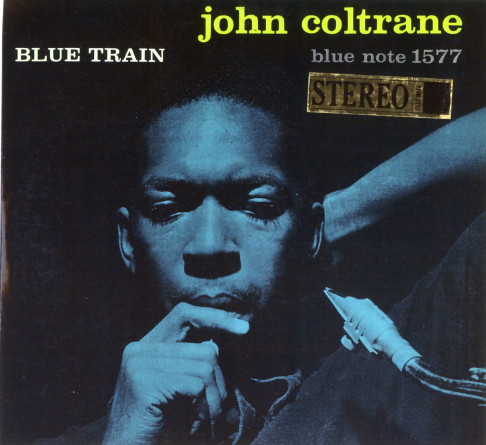


JOHN COLTRANE has often been called a "searching" musician. His literally wailing sound—spearing, sharp and resonant that seems to suggest (from a purely emotional standpoint) a kind of intense probing into things far off, unknown and mysterious. Admittedly such a description is valid only in a personal way but "searching" remains applicable to Trane in view of actual fact. He is constantly seeking out new ways to extend his form of expression — practicing continually, listening to what other people are doing, adding, rejecting, assimilating — molding a voice that is already one of the most important in modern jazz.


John's "sound" as mentioned in the lead is rather unique. It is certainly his most obvious trademark (similar to Dexter Gordon, his earliest and strongest influence) but has meaning apart from just a "different sound." His way of thinking is at one with his tonal approach. His ideas often seem to run in veering, inconsistent lines appearing at first to lack discipline but, like Miles Davis and Thelonious Monk (two of his closest musical associates, both of whom have been labeled by some as "eccentric" and/or "poorly equipped" instrumentalists) John is aware and in control of what he is doing. What may appear to be suddenly rejected is used, rather, as a basis for further exploration.


Trane feels that working with Miles and Monk have been "invaluable musical experiences." His employment with each of these giants has provided him with an education


Miles, and now Monk (being of this school themselves) have never inhibited John's musical sense of freedom. He is able to experiment while on the stand with no fear of being called down and with a good chance of being congratulated.


John, though highly self-critical, has broad and varied tastes when it comes to others. His favorites are many [but especially Miles and Monk]; Miles ("His style of playing is very interesting to me. He has a very good knowledge of harmonics and chord structure. I used to talk with him quite often."), and Monk ("He plays with a whole range of chords. I had never heard anything like it before and I've learned a lot from him.").

- Robert Levin, liner notes to Blue Train [BN LP 1577] 


As developments outlined in the following pieces indicate, the title of this feature could just as easily have been “the accidental making of Blue Train, one of the greatest albums in Jazz history,” or something to that effect.


Along with Giant Steps, which John would record for Atlantic two years later in 1959, Blue Train recorded in 1957 for Blue Note - Coltrane’s only album for that legendary Jazz label - came about so casually that it could have just as easily not come about at all.


Here’s the back story from Richard Cook’s The Biography of Blue Note Records [2001] with a more technical analysis of the music to follow from Lewis Porter, John Coltrane: His Life and Music [1999].


The year 1957 was the one that saw Blue Note's recording activity really explode. No less than forty-seven sessions were recorded for release during the course of the year. Considering that the company was still basically being overseen -including all matters pertaining to A&R, recording, packaging and distribution - by the original two-man team, the pace was extraordinary. It was not, though, the label's finest year in terms of quality: if anything, a look through the session book for the year suggests that a sense of routine was already starting to set into the company's activities. But the strongest Blue Notes of the year were good enough to rank with the greatest jazz albums of the era.


A few players who'd already recorded as sidemen were offered their first Blue Note dates as leaders: Curtis Fuller, Sonny Clark, Clifford Jordan, John Jenkins. But the most important 'debut' of Blue Note's year was the sole record to be issued on the label under John Coltrane's leadership, Blue Train.


The existence of the album offers one of the most tantalising might-have-beens in jazz. At the beginning of the year, Coltrane, already attracting great attention through his work with the Miles Davis Quintet, paid an informal visit to the Blue Note offices around seven o'clock one evening, ostensibly to ask Alfred Lion for some of his Sidney Bechet records (Coltrane had not yet recorded on the soprano saxophone, an instrument which had been all but outlawed in modern jazz). Lion was there on his own, Wolff having left for the day. The two men talked about the possibility of a record deal, but with Wolff - the man who looked after the contractual side - absent, there was not much more than talk. Still, Lion sensed that he was on the verge of a deal with the saxophonist.


The chronology here is a little difficult to figure out. The meeting took place either late in 1956 or early in 1957, but Coltrane signed a deal with Prestige early in 1957 and made his first date for them as a leader on 31 May. On 6 April, though, he participated in the Johnny Griffin Blue Note date A Blowing Session. Did he discuss the earlier proposition with Lion once again at that session? Either way, the first office meeting concluded in somewhat bizarre circumstances. Lion offered Coltrane a small advance for the making of at least one record, which Coltrane took and agreed to. Just as things were about to be even further formalised, the cat which resided in Blue Note's office leaped out of the window and into the street (they were not very high up). Concerned for its welfare, Lion ran to the window, looked out, and saw the animal being shepherded into a taxi by a woman who'd just opened the door of the cab. Alarmed that someone was trying to steal his cat (the second time a feline had played a part in Blue Note history, after the incident with Bud Powell!), he ran down into the street, and apparently managed to recover the animal. But on his return, Coltrane had disappeared. The contract remained as no more than a handshake agreement.


However, even though he had a new deal with Blue Note's great rival, Prestige, Coltrane didn't forget his promise. On 15 September he led a top-drawer Blue Note line-up through five compositions at the Van Gelder Hackensack studios. Blue Train has acquired an enormous reputation through the years, and after A Love Supreme and Giant Steps it is surely Coltrane's most renowned and frequently encountered record. It sits in collections which otherwise have none of Coltrane's Prestige or later Impulse! recordings, the most convenient and tolerable example of the first period of a difficult musician.


It's not hard to see why the album has been so successful. As the sole Blue Note by one of the most famous musicians in jazz, it has always staked a comfortable place in browser bins. For once, Reid Miles did little messing around with Frank Wolff's cover shot, cropping closely in on Coltrane's head and shoulders: he looks down, apparently lost in thought, saxophone hanging off his sports shirt, his left hand caught in the crook of his neck, his right raised to his lips as if he is musing on an imminent question. The title, Blue Train, almost suggests a kind of mood music, bolstered by the warm blue tint which Miles put on the photograph.


The music is beautifully delivered. Bob Porter's adage about Blue Note having two days of rehearsal where Prestige had none is borne out better by Blue Train than by any other session. As big and powerful as many of Coltrane's Prestige recordings are, none has quite the precision and polish of his Blue Note offering. Even so, the album is, in many ways, a high-craft, functional hard-bop record. Coltrane brought four original compositions to the date, of which at least two - A Moment's Notice and Lazy Bird - became frequently used parts of the jazz repertory. But there's a sense of impeccable routine about the music, which perhaps prophesies the way hard bop would go. In the notes to the latest reissue of the record, Curtis Fuller, who plays trombone on the record, says that 'I've been with younger musicians trying to work out that tune ["A Moment's Notice"]. And I tell them that that's just how we did it ... on a moment's notice.' That prosaic summary says much about the occasion.


The opening four minutes of the record are still electrifying. The stark, sombre blues theme of the title piece is elaborated through Coltrane's opening solo, beginning with long notes but quickly departing into a characteristic labyrinth where the chords are ransacked for many-headed motifs and trails of melody. It's a quite magisterial statement which Van Gelder captured in a sound more handsome than Coltrane had hitherto been blessed with. Yet from there, the performance becomes almost a matter of playing the blues until its end. Lee Morgan and Curtis Fuller were plausible choices for the front-line roles, and ones which the leader was responsible for, yet neither does anything other than, well, play the blues. Morgan, still finding his way, could be excused (what might Kenny Dorham have made of the role?), and the dyspeptic Fuller sounds far better as an ensemble colourist than as a soloist. It is always Coltrane himself one waits to hear. Paul Chambers and Philly Joe Jones are men he knew well, and they play with exemplary attention, although pianist Kenny Drew is again perhaps too bland a presence. All that seems forgotten once one hears the proud beauty of the tenorman's interpretation of I’m Old Fashioned and the fast, controlled excitement of Lazy Bird.


In the currently available CD edition of Blue Train, the originally issued version of the title track, take nine, is placed alongside take eight - with the added complexity that Drew's solo on take eight was the one featured on the familiar version, thanks to some tape splicing at the time of the first LP release. Some may be shocked that Lion's Blue Note would do such a

thing, but as Tony Hall remembers Alfred telling him, it was not an uncommon practice for them to adopt, particularly where an ensemble head was much cleaner than on a take where the solos were hotter. Since the advent of tape mastering, jazz had become no more immune to post-production than any other kind of recorded music, and while such matters are often thought to have grown up in the sixties and seventies, it was a convention that started early. One of the more famous examples in fifties' jazz was Thelonious Monk's Brilliant Corners date for Riverside, where a finished version of the title piece had to be spliced from three different takes.”


Lewis Porter, John Coltrane: His Life and Music [1999]:


“Just a few months after Coltrane [1957 Prestige – PRLP 7105, Prestige – 7105, Prestige – LP 7105], the Blue Note label got special permission from Prestige to produce the second album under John's leadership. According to Orrin Keepnews and Michael Cuscuna, Coltrane had agreed to do this album before signing with Prestige. Blue Train was recorded during his stint at the Five Spot, on September 15, 1957, and released that December. It quickly gained status as the best display of Coltrane's talents as a player and composer to date — all but one of the five tunes were his, and Blue Note paid for rehearsals.


The title piece is a haunting blues, basically a riff. The barrage of notes in his extended solo helps to create the urgency of a man spilling out his innermost feelings. (The first take, issued in 1997, has a much shorter, but still effective solo.) Locomotion is another blues riff, this time in AABA form— twelve-bar blues, blues again, eight-bar bridge, and blues again. Lester Young had used this structure in 1947 on D. B. Blues, which Coltrane probably knew. Coltrane was to reprise this structure on Trancing In.


On Moment's Notice, Coltrane is preoccupied with placing changing harmonies under a repeated note in the melody. That's interesting, because Dizzy Gillespie had done something like it on Con Alma, which had been in his repertory since 1954, when he recorded it with Latin percussionists. This exercise of finding different chords to harmonize the same note forces one to find some unusual chord connections, and I would suggest that sequences like these led partly to the unusual chord sequence of Giant Steps. In Con Alma the first two chords under each note are a major third apart, paving the way for Coltrane's exploration of roots moving by thirds in "Giant Steps." 


The chords to Coltrane's Lazy Bird, have the composer's cryptic comment "Heavy Dipper" under the bridge. The title of this piece is evidently a play on Lady Bird by Tadd Dameron, the much admired composer with whom Coltrane had in fact recorded in November 1956. This leads one to look for connections, but Dameron's piece is a sixteen-bar form without repeats and Coltrane's is a thirty-two-bar AABA. I suggest the following relationship: Take Dameron's sixteen-bar chord progression, transposed from C to Coltrane's key of G, but make each chord last half as long, so the whole progression takes eight measures. Now you basically have the A section of Lazy Bird—it becomes exact if you make the substitutions shown in parentheses:


For the bridge, Coltrane used a variation of the bridge of the standard tune Lover Man, which he had arranged for Jimmy Heath's band nine years earlier.


The coda may be seen as a very extended version of Dameron's original "turnaround" (which brings the piece back to the beginning). Coltrane's fresh and bubbling solo here is particularly full of what Barry Harris calls "[dominant] seventh scales."


On Blue Train Coltrane impresses as a player and as a writer. When Davis took Coltrane back into his group at the end of the Five Spot engagement, he was getting a powerhouse of a saxophonist who played with charisma and authority. And he was getting a powerhouse of a person, with a renewed vision of what he could accomplish in life.”



Tuesday, August 3, 2021

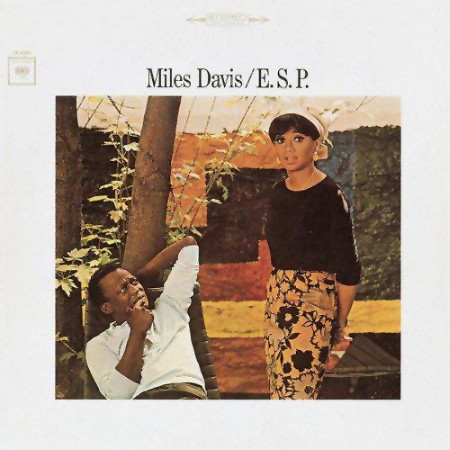
E.S.P. - Miles Davis

 © Copyright ® Steven Cerra, copyright protected; all rights reserved.


“This [1965-68] has always been an enigmatic period in Miles's career, a band and a set of relationships which didn't so much develop as go through a looping sequence of self-discoveries and estrangements. The leader himself often sounds almost disengaged from the music, perhaps even alienated from it, though one always senses him there, listening. Miles Smiles opens up areas that were to be his main performing territory for the next few years, arguably for the rest of his career. The synthesis of complete abstraction with more or less straightforward blues-playing (Shorter's 'Footprints' is the obvious example of that) was to sustain him right through the darkness of the 1970s bands to the later period when 'New Blues' became a staple of his programmes. 


After Miles Smiles, E.S.P. is probably the best album, with seven excellent original themes and the players building a huge creative tension between Shorter's oblique, churning solos and the leader's private musings, and within a rhythm section that is bursting to fly free while still playing time. Miles returns to his old tactic with Coltrane of paring away steadily, often sitting out for long periods or not soloing at all. It is simply that with Shorter he has a saxophonist who is capable of matching that enigmatic stance, rather than rushing off on his own.” 

- Richard Cook and Brian Morton, The Penguin Guide to Jazz on CD, 6th Ed.


“(The first incarnation of this Miles Davis Quintet (with George Coleman, Herbie [Hancock, Ron Carter and Tony Williams) entered the studio for the first time May 14,1963 before it was a working band. Studio albums were used to introduce new material into the Miles Davis songbook. Kind Of Blue gave us "So What" and "All Blues" and Someday My Prince Will Come gave us the title track and "No Blues." The live albums would be conceived as vehicles to capture the sound of his current quintet performing both the classic and recent material. This session gave birth to a new band and contributed two pieces, "Seven Steps To Heaven" and "Joshua,"

to Miles' live repertoire.


For the next 19 months, live recordings charted this band's extraordinary progress: In Europe (Antibes —July '63), My Funny Valentine and Four & More (both from Lincoln Center— February '64), In Tokyo (July '64 with Sam Rivers replacing Coleman) and In Berlin (September '64 with Wayne Shorter finally in place).


By January of 1965, the Quintet (now only 5 months old} had toured Europe and was just beginning to travel in the U.S. During the first part of the new year. Miles and the group enjoyed a two-week stay at San Francisco's Basin Street West. After finishing up the weekend, they found themselves in Hollywood at the Columbia Studios, where Irving Townsend was set to produce a new Miles Davis studio recording.


The idea of going into the studio with new material for the first time in 19 months must have stimulated the group. The first track recorded was Wayne Shorter's "E.S.P."


The album My Funny Valentine was released in May of 1965 to great acclaim. E.S.P was issued in November of 1965, when Miles began touring. again after a six-month recuperation from his first of many hip operations. The album did not get the hurrahs expected of a new Miles Davis Quintet studio recording. The momentum that the group had built up from 1964 had to start over.


The group was taped at the Plugged Nickel in December of 1965, but the 

tapes remained unissued for 11 years. Of the new material, only "Agitation" had made it into his book, but he was still playing "Stella By Starlight" and "My Funny Valentine" as well as other standards and blues associated with his earlier bands.


Still, E.S.P. summed up the form and rhythm experiments that the Quintet was developing from live performances into a compositional structure. Stop-and-go ("R.J.," "Agitation"), pedal points ("Little One," "Mood"), creating a "harmonic" direction from "suggestions" and implications ("E.S.P."), rhythmic suspension ("R.J.," "Eighty-One") and form modulation ("Iris"). The melodies themselves became more independent of the harmony, and thus strengthened the idea of improvising phrases (as Ornette Coleman) and not clichés.


Behind the success of My Funny Valentine, Columbia released the rest of the February 14,1964 Lincoln Center concert as Four & More in March of 1966 (barely 4 months after E.S.P.!). Prestige repackaged old sessions (For Lovers and Classics) and then went further by releasing a greatest hits compilation in December of 1966, making a total of six Miles Davis releases in 17 months.


No wonder E.S.P. confused the public. The music is light years ahead of anything previously released. The public was bombarded with Miles' accessible side, the romantic lover. The success of My Funny Valentine further imbedded that stereotype into the minds of the jazz public. Eventually. Miles would completely separate the studio recording process from the live performance process, but it took two incredible sessions to launch him on his way.”

— BOB BELDEN, insert note excerpts from E.S.P.


For fans of the classic Miles Davis Quintet [with John Coltrane on tenor sax, Red Garland on piano, Paul Chambers on bass and Philly Joe Jones on drums] and the classic sextet [subtract Garland and Jones and add Julian “Cannonball” Adderley on alto sax, Bill Evans on piano and Jimmy Cobb on drums], the six LPs that Miles made for Columbia from 1965 to 1968 are as perplexing as they are paradoxical. 


They are less straightforward and more puzzling, if not downright mystifying, to the snap your fingers and pat your foot Jazz fans who were accustomed to more easily relating to Miles’ post Bebop groups that played a style of Jazz based on a mixture of songs from the Great American Songbook and tunes from The Jazz Standards. And then there were all of the “romantic Miles” LPs that Bob Belden references in one of the quotations that open this piece.


In fact, to these modern Jazz fans, the music on the albums from the mid-sixties did indeed appear to require a form of extra sensory perception - that is a telepathic sixth sense - to experience what was going on in the music.


And yet, just as Miles had made the transition from the flying notes and quickly progressing chord changes of Bebop to the more expansive and lyrical Jazz of the classic quintet and sextet of the second half of the decade of the 1950s, E.S.P, Miles Smiles, Sorcerer, Nefertiti, Miles in the Sky and Files De Kilimanjaro marked Miles’ transition to an association with a band made up of younger musicians that was working its way out of one phase and into another in which time and harmony, melody and dynamics were being radically rethought. Or as Richard Cook explains it:


“The improvisations here would have been inconceivable a mere couple of years earlier; they don't so much float on the chords as react against them like phosphorus. Three years later, they fed directly into Miles's electric revolution and the beginning of what was to be (he long dramatic coda.”


Beyond the more technical treatment of the music on the recording contained in Bob Belden excellent notes, in combing through the Jazz literature to identify a more accessible explanation of Miles’ work on E.S.P., I was pleased to find the following treatment of both the band and the music on the recording by Gary Giddins and Scott DeVeaux in their work Jazz [2009] which is available in both a trade [commercial] and education [suggested listening guides] editions. Their narrative provides a comprehensive context for appreciating the significance of the album.


© Copyright ® Gary Giddins and Scott De Veaux, copyright protected; all rights reserved.


MILES DAVIS'S SECOND QUINTET


“After the back-to-back triumphs of Kind of Blue and Sketches of Spain, Miles Davis endured a slump of uncertainty. Coltrane, Adderley, and Evans had left to pursue their own careers, and Davis expressed contempt for the avant-garde. He continued to release effective records, including a reunion with Coltrane that produced a minor hit in "Some Day My Prince Will Come." But his music was caught in a bind, much of it devoted to faster and harder versions of his usual repertory, including "Walkin'" and "So What."


Then in 1963, once again, he produced magic. He turned to younger musicians who would surely have had important careers on their own but who, under Davis's tutelage, merged into a historic ensemble, greater than its very considerable parts. The rhythm section consisted of three prodigiously skillful musicians who valued diversity over an allegiance to one style of music: pianist Herbie Hancock, bassist Ron Carter, and seventeen-year-old drummer Tony Williams. Davis auditioned many saxophonists before temporarily settling on George Coleman, who played with facility and intelligence but lacked the drive and curiosity of the younger guys. In late 1964, Wayne Shorter, who had made his name as a saxophonist and composer with Art Blakey's Jazz Messengers, joined the band, a decision that changed his life and Davis's, and made this second

great quintet, a worthy follow-up to the 1955 group with Coltrane. This time, however, Davis took as much from his sidemen as he gave, drawing on their compositions (especially Shorter's) and sensibilities. These musicians were keenly interested in the avant-garde, and Davis adjusted his music to assimilate their tastes, as he struggled to make a separate peace in a confusing era.


Jazz was beset on one side by avant-garde experimentalism that estranged much of the audience, and on the other by rock, which had matured from a teenage marketing ploy to the dominant pop music. Davis would eventually inch his way to a fusion of jazz and rock, but first he adapted modal jazz to include elements of the avant-garde in a postbop style far more extreme than anything he had previously done. This approach, which also attracted other accomplished musicians caught between the conventions of modern jazz and the excitement born of the avant-garde, involved harmonic ambiguity, original compositions with new harmonic frameworks (rather than those built on standard songs), and a radical loosening of the rhythm section. Some of the tunes written by Davis's sidemen actually encouraged free improvisation (Ron Carter's "Eighty One" is a blues but also a minefield of open terrain). In the most advanced of these pieces, chord progressions were omitted while time and meter might evaporate and coalesce several times in the course of a performance.


Most first-rate rhythm sections work like the fingers in a fist. Coltrane's quartet, for example, achieved a fiercely unified front, devoted to supporting the leader. Davis's group was no less unified, but its parts interacted with more freedom, often rivaling the soloists. So much was going on between Hancock's unruffled block chords, Carter's slippery bass lines, and Williams's rhythmic brush fires that they all appeared to be soloing all the time. Davis gave them leave, enjoying the excitement they created, but he imposed a discipline that left space for the lyrical drama of his trumpet. Interestingly, on those few occasions when Davis failed to show up for a set in a jazz club, the other four musicians played in a more traditional, straight-ahead style. Free of chord changes, unapologetic about fluffs, and stimulated by his band's ceaseless energy, Davis became a more expansive trumpet player. He began to forage in the upper register at precipitous tempos, ideas spilling from his horn with spiraling confidence despite infrequent technical failings. He cut back on his signature ballads and began to jettison standard tunes and his classics. Between 1965 and 1968, he found his own way to be avant-garde.


"E.S.P."


The 1965 album E.S.P. was a critical event, but not a popular success. It represented the first studio recording by the new quintet, and the seven new compositions, all by members of the group, challenged listeners who expected to hear the tender, meditative Davis who incarnated jazz romanticism. This music is audacious, fast, and free. The title of the album (and first selection) emphasized the idea that extra-sensory perception is required to play this music. Shorter composed "E.S.P." as a thirty-two-bar tune, but its harmonic structure is far more complicated than that of "So What."


The melody is based on intervals of fourths (recalling the indefinite quartal harmonies of "So What" and "Acknowledgement"), and is married to a mixture of scales and chords in a way that offers direction to the improvisers without making many demands. The main part of the piece (A) hovers around an F major scale, while the B sections close with specific harmonic cadences that are handled easily and quickly—especially at this expeditious tempo. The soloists (Shorter for two choruses, Davis for six, Hancock for two) take wing over the rhythm, bending notes in and out of pitch, soaring beyond the usual rhythmic demarcations that denote swing. No less free is the multifaceted work of the rhythm section: the bass playing is startlingly autonomous, and the drummer's use of cymbals has its own narrative logic.


The public reception accorded E.S.P and succeeding albums by Davis's quintet (Miles Smiles, Sorcerer, Nefertiti) suggested the tremendous changes that had taken place in the cultural landscape in the few years since Kind of Blue and Sketches of Spain. They were received favorably and sometimes enthusiastically by musicians, critics, and young fans, but achieved nothing of the broader cachet enjoyed by his earlier work: there was nothing easy or soothing about these records. By 1965, rock and roll could no longer be dismissed by jazz artists as music for kids, and Davis was feeling the heat, not least from his disgruntled record company.”


Thursday, January 23, 2020

Richard Cook's Jazz Encyclopedia

© Copyright ® Steven Cerra, copyright protected; all rights reserved.


How this for a subtitle?

“THE TUNES, THE TANTRUMS, THE LICKS, THE SPATS, THE CATS, THE TRAGEDIES, THE GREATS, THE NOT-SO-GREATS AND THE JOY OF JAZZ”

Welcome to the world of Richard Cook and his Jazz Encyclopedia about which the newspaper The Independent, in choosing it as one of its “Books of the Year” described it as “erudite, lively and up to date,” and asked [somewhat facetiously] “ Where else could you find Buddy Bolden and Jamie Cullum almost side by side?”

Other comments about the book went like this - 

'Slightly different and seriously useful, this is a jazz book to own'
- BBC MUSIC MAGAZINE

'I take my hat off to Richard Cook ... extraordinarily comprehensive and also retains plenty of wit, personality and variety right the way through to Zurke, Zwerin and Zwingenberger'
- JAZZWISE

'Reading Cook is like sitting down with someone ready to share
his extensive knowledge and to air his views... Above all, he
conveys a strong sense of the adventure of it all'
- WIRED

'Fascinating snippets [that] wouldn't appear in any other jazz A-Z but his ... for aficionados and newcomers alike'
- JAZZ UK

“Whatever you want to know about jazz, this brilliant A to Z guide has the answers, guiding you through everything from trad to free, boogie woogie to swing, bebop to scat, and telling you the entertaining, sometimes tragic stories of the people behind the music - from Louis Armstrong to John Coltrane, Django Reinhardt to John Zorn, and everyone in between.”
- Penguin Books publicity annotation

Until his death in 2007 at the relative young age of 50, Richard D. Cook had been writing about music since the 1970s.

In his Obituary for The Independent, fellow and co-author Brian Cook said of Cook:

“Cook wrote with an accuracy and consistency of judgement that made him one of the most perceptive and admired commentators, not just on his beloved jazz, but on a whole range of other "sonics" (as he liked to put it), and not just in Britain but internationally. Though his fabled impatience was part of an Englishness cultivated quite without irony, it was also a measure of Cook's utter rejection – in life and music – of the sub-standard. He had an unerring nose for the ersatz and fudged, and though his opinions were strong, sometimes too strong for those who prefer a more liberal rhetoric, he was anything but a bully. He was very happy to see his few loose deliveries driven into the covers, his more controversial assertions batted straight back at him … 

In a decade that elevated style over substance and put old-fashioned musicianship at a discount, Cook always looked for substance and often found it in unexpected places. He wrote as trenchantly about Abba as he did about the improvising ensemble AMM, and his passion for singers, female singers in particular, enabled him to write perceptively about Nina Simone, Joan Armatrading and the soul diva Anita Baker …

The largest of his writing projects was The Penguin Guide to Jazz on CD, co-authored with Brian Morton, now in its eighth edition (and retitled The Penguin Guide to Jazz Recordings). Other books followed, including a "biography" of the Blue Note label in 2001, and in 2006 a study, It's About That Time, of Miles Davis. The year before, Richard Cook's Jazz Encyclopedia, its title a reflection of his authority, was published by Penguin…….

He was endlessly curious, almost hyperactively busy and, for all the Eeyorish gloom he affected when talking about the English weather – too wet in winter, too hot in summer – the Jockey Club, Surrey's batting and bowling statistics, phenomena like Nu-Jazz, he maintained an exuberant optimism.”

In his INTRODUCTION to his Jazz Encyclopedia, Richard Cook’s suggests that: “Whether one is in search of timeless, immortal art or the high spirits of a musician simply having fun, jazz has it both ways. I might even suggest that it is unrivalled at delivering both of those extremes within the same piece of music.”

He also goes on to stress the following point:
“ … not … every musician herein receives unstinting praise. I've attempted to be as honest as I can in writing each entry. Jazz writers are often (despite what some musicians think) afraid to be critical, because of a saintly belief that the benighted jazz player has it so tough that words of dissent are somehow dishonourable. This ignores the point that a jazz writer's first responsibility is to the jazz audience - the people who buy CDs and pay for concert tickets - rather than jazz musicians.”

And this is the way Mr. Cook approaches the subject in his delightful and informative Jazz Encyclopedia, never taking the music or himself too seriously.

Here’s the rest of what he has to say in his INTRODUCTION to a book that belongs on every Jazz fan’s library shelf.

“Considering that, for a large part of its existence, jazz was the popular music of choice in Western society, it's surprising what a complicated, obscure and often plain bewildering matter it is. Like most British people under 50,1 grew up with the sounds of pop ringing helplessly in my ears, and while there was some jazz mixed in with it - my cousin had a 45 by The Temperance Seven early on - it was hardly a pressing part of the culture by the middle 6os. I had to make my own way into the music, and it was a long and difficult journey. Because I started collecting records from an early age, going to jumble sales looking for 78s,I inevitably began finding discs by musicians such as Jelly Roll Morton, whose 'Dr Jazz Stomp' was one of my early favourites, and from there I embarked on a precipitous voyage of discovery. In my early teens, I didn't know anyone else who liked jazz, and I didn't know how to find out about it. The few accessible books on the subject seemed to talk in code, fascinating though it was. There was no jazz on television that I could find, and not much on the radio, although I thank Humphrey Lyttelton, Charles Fox, Brian Priestley, Peter Clayton and Steve Race for their efforts. I couldn't really understand how what Morton played had somehow turned into what musicians such as Albert Ayler were playing.

Many years later, that progression seems straightforward enough to me now. But it's not hard to understand how most find jazz a very awkward conundrum. The evangelist in me feels infuriated when I hear someone saying, if only facetiously, 'Why can't they play the tune?' The pragmatist just smiles and shrugs. Most of us just want to be entertained by music. But jazz is entertaining, whether it's Louis Armstrong scatting his way through 'Heebie Jeebies' or Charlie Parker hurtling around the curves of 'Ornithology'. As listeners, we can linger over Billie Holiday's mythopoeic pain or be drenched by Cecil Taylor's marathon improvisations, but they are just a small part of what is a jostling and superbly crowded idiom. Whether one is in search of timeless, immortal art or the high spirits of a musician simply having fun, jazz has it both ways. I might even suggest that it is unrivaled at delivering both of those extremes within the same piece of music.

Making sense of it all is a challenge for any listener, no doubt of that. Like the grand  history of Western classical music, jazz has its own genealogies, and its onward march can be studied by any willing student. But one curiosity of the music is the way its various stylistic schools have all remained current, at least since earlier approaches began to be 'revived' in the 40s: jazz is as subject to the whims of fashion as any other kind of music, yet if you live in a major city, it won't be hard to find musicians playing in the style of traditional or swing or bebop or free jazz somewhere on the same evening. Once upon a time, these various styles created warring factions of fans, but today the jazz audience is much more of a United Nations. Since the music has, since the end of the big-band era at least, prospered far away from mass audiences, there is an unspoken bond within the jazz listenership which has always tended to foster an us-and-them feeling. We treasure our elitism, while grumbling about jazz's marginalization within an increasingly unsophisticated culture.

But if you want to join in the fun, all you really need is a sympathetic pair of ears. Many popular jazz musicians - such as Louis Armstrong, Ella Fitzgerald, David Sanborn, Billie Holiday, Herbie Hancock, George Benson - aren't even regarded as 'jazz' by many of their admirers. There's no point in pretending that jazz is simple and undemanding: it isn't. Absorbing the music of Parker or Taylor can be the greatest challenge a listener can set him- or herself. But, to return to the top of the page, jazz was, during the swing era at least, a music admired and danced to and listened to by an audience in the tens of millions. The principles which fired that music - for more detail, you might like to turn to the entry on 'Jazz', under the letter J - remain good for everything which came before it, and most of what has come after. Jazz spread around the world very quickly - there are recordings from almost every territory on earth which was able to make records and which, by the 30s and 40s at least, showed some trace of jazz in their popular music - and its stature as an international musical practice continues to evolve. American players far from home often had the complaint that, away from the US, they couldn't find a swinging rhythm section to work with; but that old sore has been largely healed. I won't perpetrate the familiar nonsense about music being a 'universal language', but, as a musical procedure at least, jazz is more universal than most.

The convenience of an A to Z format doesn't hurt in the task of trying to sift through something which has a cast of thousands and far, far more foot soldiers than generals. An enduring fascination of this music is the way it can accommodate so many individuals, even within relatively strict parameters (another cliched idea, that jazz is mainly about 'breaking down barriers', is a further nonsense. If it were, all the barriers would have disappeared long ago). Jazz has a modest genius count: you might like to use the fingers of each hand to count them, but that's probably as many as you'll need. That doesn't prevent every instrument in every style from throwing up musicians who can be identified with just a few bars of their playing. Perhaps the classical aficionado can pass a blindfold test and spot different interpreters of Beethoven's Appassionato. They surely cannot have the jazz fan's legerdemain in hearing and enjoying the dramatic differences between Earl Hines, Hampton Hawes, Andre Previn, Tommy Flanagan, Willie 'The Lion' Smith, Diana Krall and Oscar Peterson, all of whom recorded piano versions of 'Between The Devil And The Deep Blue Sea', and all of whom (well, Previn might give a few problems, and Diana sings too, so that's a slight cheat) are easily identified.

This book celebrates as many of these players as I felt it was sensible to include. Inevitably, some will ask why X was included when Y is absent. It is entirely my choice, and I am sure there have been unfair and neglectful omissions. American musicians necessarily dominate, and since I have grown up in the environment of British jazz, there are probably more UK musicians included than are justified by their overall eminence. There should probably be more from Italy, France, Australia, Denmark and other jazz-loving countries with healthy communities of players. But I drew the line where I did, and there it is for now. It is, perhaps, the individuality discussed above which has largely been the deciding factor in including a musician or not.

Which is not to say that every musician herein receives unstinting praise. I've attempted to be as honest as I can in writing each entry. Jazz writers are often (despite what some musicians think) afraid to be critical, because of a saintly belief that the benighted jazz player has it so tough that words of dissent are somehow dishonourable. This ignores the point that a jazz writer's first responsibility is to the jazz audience - the people who buy CDs and pay for concert tickets - rather than jazz musicians. To read some reference works on the music, you'd think that jazz is stuffed with godlike figures who never played a bad gig or made a dull record in their lives. I've done my level best to avoid both that starting point, and what I would call the one-of-the-finest school of jazz writing. This is where so-and-so is 'one of the finest bassists/trumpeters/bandleaders/composers in Britain/ the world/Dixieland/jazz' (delete as applicable), and can recur so frequently that the reader starts wondering just who isn't one-of-the-finest. Whoever they are, good for them: jazz is and should be full of vulnerable, inconsistent and unpredictable human beings, and that's another thing that makes it fascinating.

Along with the artist entries are those which cover musical terminology, jazz jargon, venues, festivals, writers, record labels, and whatever other matters seemed appropriate in an A to Z of jazz. I've often discussed a musician's career on record, because jazz has been documented by gramophone recordings for almost its entire history, to an amazingly comprehensive degree, and we can only guess at the abilities of those musicians who, through their own choice or the intercession of fate, chose not to make records. Most of the artist entries conclude with the listing of a single CD (in a few rare instances, a vinyl LP) which seems to me to be especially characteristic of the artist in question - although that doesn't necessarily mean it's either their very finest work or, in some cases, even a good record. If you wish for more information, I would point you in the direction of the rather useful Penguin Guide To Jazz On CD.

I've tried to avoid making the artist entries slavishly biographical, since such an approach is rarely fun to read: if you must know exactly who played with whom and for how long, consult The New Grove Dictionary Of Jazz, a peerless factual resource which I am happy to acknowledge. Instead, I've attempted either a lightning sketch or a more detailed and considered portrait. At the same time, please excuse me if there are any errors of fact.

Finally, I hope that the contents herein will also raise an occasional smile as well as offering some measure of enlightenment. For a music which is so full of laughter and sheer joy, it's surprising how so many jazz reference works aspire to being solemn, worthy and unswinging.”
R. D. Cook