Showing posts with label bob belden. Show all posts

Tuesday, August 3, 2021

E.S.P. - Miles Davis

 © Copyright ® Steven Cerra, copyright protected; all rights reserved.
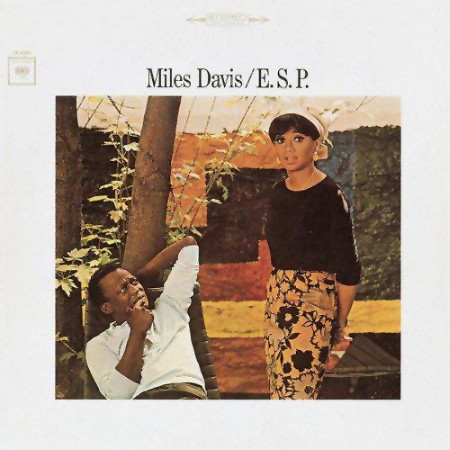


“This [1965-68] has always been an enigmatic period in Miles's career, a band and a set of relationships which didn't so much develop as go through a looping sequence of self-discoveries and estrangements. The leader himself often sounds almost disengaged from the music, perhaps even alienated from it, though one always senses him there, listening. Miles Smiles opens up areas that were to be his main performing territory for the next few years, arguably for the rest of his career. The synthesis of complete abstraction with more or less straightforward blues-playing (Shorter's 'Footprints' is the obvious example of that) was to sustain him right through the darkness of the 1970s bands to the later period when 'New Blues' became a staple of his programmes. 


After Miles Smiles, E.S.P. is probably the best album, with seven excellent original themes and the players building a huge creative tension between Shorter's oblique, churning solos and the leader's private musings, and within a rhythm section that is bursting to fly free while still playing time. Miles returns to his old tactic with Coltrane of paring away steadily, often sitting out for long periods or not soloing at all. It is simply that with Shorter he has a saxophonist who is capable of matching that enigmatic stance, rather than rushing off on his own.” 

- Richard Cook and Brian Morton, The Penguin Guide to Jazz on CD, 6th Ed.


“(The first incarnation of this Miles Davis Quintet (with George Coleman, Herbie [Hancock, Ron Carter and Tony Williams) entered the studio for the first time May 14,1963 before it was a working band. Studio albums were used to introduce new material into the Miles Davis songbook. Kind Of Blue gave us "So What" and "All Blues" and Someday My Prince Will Come gave us the title track and "No Blues." The live albums would be conceived as vehicles to capture the sound of his current quintet performing both the classic and recent material. This session gave birth to a new band and contributed two pieces, "Seven Steps To Heaven" and "Joshua,"

to Miles' live repertoire.


For the next 19 months, live recordings charted this band's extraordinary progress: In Europe (Antibes —July '63), My Funny Valentine and Four & More (both from Lincoln Center— February '64), In Tokyo (July '64 with Sam Rivers replacing Coleman) and In Berlin (September '64 with Wayne Shorter finally in place).


By January of 1965, the Quintet (now only 5 months old} had toured Europe and was just beginning to travel in the U.S. During the first part of the new year. Miles and the group enjoyed a two-week stay at San Francisco's Basin Street West. After finishing up the weekend, they found themselves in Hollywood at the Columbia Studios, where Irving Townsend was set to produce a new Miles Davis studio recording.


The idea of going into the studio with new material for the first time in 19 months must have stimulated the group. The first track recorded was Wayne Shorter's "E.S.P."


The album My Funny Valentine was released in May of 1965 to great acclaim. E.S.P was issued in November of 1965, when Miles began touring. again after a six-month recuperation from his first of many hip operations. The album did not get the hurrahs expected of a new Miles Davis Quintet studio recording. The momentum that the group had built up from 1964 had to start over.


The group was taped at the Plugged Nickel in December of 1965, but the 

tapes remained unissued for 11 years. Of the new material, only "Agitation" had made it into his book, but he was still playing "Stella By Starlight" and "My Funny Valentine" as well as other standards and blues associated with his earlier bands.


Still, E.S.P. summed up the form and rhythm experiments that the Quintet was developing from live performances into a compositional structure. Stop-and-go ("R.J.," "Agitation"), pedal points ("Little One," "Mood"), creating a "harmonic" direction from "suggestions" and implications ("E.S.P."), rhythmic suspension ("R.J.," "Eighty-One") and form modulation ("Iris"). The melodies themselves became more independent of the harmony, and thus strengthened the idea of improvising phrases (as Ornette Coleman) and not clichés.


Behind the success of My Funny Valentine, Columbia released the rest of the February 14,1964 Lincoln Center concert as Four & More in March of 1966 (barely 4 months after E.S.P.!). Prestige repackaged old sessions (For Lovers and Classics) and then went further by releasing a greatest hits compilation in December of 1966, making a total of six Miles Davis releases in 17 months.


No wonder E.S.P. confused the public. The music is light years ahead of anything previously released. The public was bombarded with Miles' accessible side, the romantic lover. The success of My Funny Valentine further imbedded that stereotype into the minds of the jazz public. Eventually. Miles would completely separate the studio recording process from the live performance process, but it took two incredible sessions to launch him on his way.”

— BOB BELDEN, insert note excerpts from E.S.P.


For fans of the classic Miles Davis Quintet [with John Coltrane on tenor sax, Red Garland on piano, Paul Chambers on bass and Philly Joe Jones on drums] and the classic sextet [subtract Garland and Jones and add Julian “Cannonball” Adderley on alto sax, Bill Evans on piano and Jimmy Cobb on drums], the six LPs that Miles made for Columbia from 1965 to 1968 are as perplexing as they are paradoxical. 


They are less straightforward and more puzzling, if not downright mystifying, to the snap your fingers and pat your foot Jazz fans who were accustomed to more easily relating to Miles’ post Bebop groups that played a style of Jazz based on a mixture of songs from the Great American Songbook and tunes from The Jazz Standards. And then there were all of the “romantic Miles” LPs that Bob Belden references in one of the quotations that open this piece.


In fact, to these modern Jazz fans, the music on the albums from the mid-sixties did indeed appear to require a form of extra sensory perception - that is a telepathic sixth sense - to experience what was going on in the music.


And yet, just as Miles had made the transition from the flying notes and quickly progressing chord changes of Bebop to the more expansive and lyrical Jazz of the classic quintet and sextet of the second half of the decade of the 1950s, E.S.P, Miles Smiles, Sorcerer, Nefertiti, Miles in the Sky and Files De Kilimanjaro marked Miles’ transition to an association with a band made up of younger musicians that was working its way out of one phase and into another in which time and harmony, melody and dynamics were being radically rethought. Or as Richard Cook explains it:


“The improvisations here would have been inconceivable a mere couple of years earlier; they don't so much float on the chords as react against them like phosphorus. Three years later, they fed directly into Miles's electric revolution and the beginning of what was to be (he long dramatic coda.”


Beyond the more technical treatment of the music on the recording contained in Bob Belden excellent notes, in combing through the Jazz literature to identify a more accessible explanation of Miles’ work on E.S.P., I was pleased to find the following treatment of both the band and the music on the recording by Gary Giddins and Scott DeVeaux in their work Jazz [2009] which is available in both a trade [commercial] and education [suggested listening guides] editions. Their narrative provides a comprehensive context for appreciating the significance of the album.


© Copyright ® Gary Giddins and Scott De Veaux, copyright protected; all rights reserved.


MILES DAVIS'S SECOND QUINTET


“After the back-to-back triumphs of Kind of Blue and Sketches of Spain, Miles Davis endured a slump of uncertainty. Coltrane, Adderley, and Evans had left to pursue their own careers, and Davis expressed contempt for the avant-garde. He continued to release effective records, including a reunion with Coltrane that produced a minor hit in "Some Day My Prince Will Come." But his music was caught in a bind, much of it devoted to faster and harder versions of his usual repertory, including "Walkin'" and "So What."


Then in 1963, once again, he produced magic. He turned to younger musicians who would surely have had important careers on their own but who, under Davis's tutelage, merged into a historic ensemble, greater than its very considerable parts. The rhythm section consisted of three prodigiously skillful musicians who valued diversity over an allegiance to one style of music: pianist Herbie Hancock, bassist Ron Carter, and seventeen-year-old drummer Tony Williams. Davis auditioned many saxophonists before temporarily settling on George Coleman, who played with facility and intelligence but lacked the drive and curiosity of the younger guys. In late 1964, Wayne Shorter, who had made his name as a saxophonist and composer with Art Blakey's Jazz Messengers, joined the band, a decision that changed his life and Davis's, and made this second

great quintet, a worthy follow-up to the 1955 group with Coltrane. This time, however, Davis took as much from his sidemen as he gave, drawing on their compositions (especially Shorter's) and sensibilities. These musicians were keenly interested in the avant-garde, and Davis adjusted his music to assimilate their tastes, as he struggled to make a separate peace in a confusing era.


Jazz was beset on one side by avant-garde experimentalism that estranged much of the audience, and on the other by rock, which had matured from a teenage marketing ploy to the dominant pop music. Davis would eventually inch his way to a fusion of jazz and rock, but first he adapted modal jazz to include elements of the avant-garde in a postbop style far more extreme than anything he had previously done. This approach, which also attracted other accomplished musicians caught between the conventions of modern jazz and the excitement born of the avant-garde, involved harmonic ambiguity, original compositions with new harmonic frameworks (rather than those built on standard songs), and a radical loosening of the rhythm section. Some of the tunes written by Davis's sidemen actually encouraged free improvisation (Ron Carter's "Eighty One" is a blues but also a minefield of open terrain). In the most advanced of these pieces, chord progressions were omitted while time and meter might evaporate and coalesce several times in the course of a performance.


Most first-rate rhythm sections work like the fingers in a fist. Coltrane's quartet, for example, achieved a fiercely unified front, devoted to supporting the leader. Davis's group was no less unified, but its parts interacted with more freedom, often rivaling the soloists. So much was going on between Hancock's unruffled block chords, Carter's slippery bass lines, and Williams's rhythmic brush fires that they all appeared to be soloing all the time. Davis gave them leave, enjoying the excitement they created, but he imposed a discipline that left space for the lyrical drama of his trumpet. Interestingly, on those few occasions when Davis failed to show up for a set in a jazz club, the other four musicians played in a more traditional, straight-ahead style. Free of chord changes, unapologetic about fluffs, and stimulated by his band's ceaseless energy, Davis became a more expansive trumpet player. He began to forage in the upper register at precipitous tempos, ideas spilling from his horn with spiraling confidence despite infrequent technical failings. He cut back on his signature ballads and began to jettison standard tunes and his classics. Between 1965 and 1968, he found his own way to be avant-garde.


"E.S.P."


The 1965 album E.S.P. was a critical event, but not a popular success. It represented the first studio recording by the new quintet, and the seven new compositions, all by members of the group, challenged listeners who expected to hear the tender, meditative Davis who incarnated jazz romanticism. This music is audacious, fast, and free. The title of the album (and first selection) emphasized the idea that extra-sensory perception is required to play this music. Shorter composed "E.S.P." as a thirty-two-bar tune, but its harmonic structure is far more complicated than that of "So What."


The melody is based on intervals of fourths (recalling the indefinite quartal harmonies of "So What" and "Acknowledgement"), and is married to a mixture of scales and chords in a way that offers direction to the improvisers without making many demands. The main part of the piece (A) hovers around an F major scale, while the B sections close with specific harmonic cadences that are handled easily and quickly—especially at this expeditious tempo. The soloists (Shorter for two choruses, Davis for six, Hancock for two) take wing over the rhythm, bending notes in and out of pitch, soaring beyond the usual rhythmic demarcations that denote swing. No less free is the multifaceted work of the rhythm section: the bass playing is startlingly autonomous, and the drummer's use of cymbals has its own narrative logic.


The public reception accorded E.S.P and succeeding albums by Davis's quintet (Miles Smiles, Sorcerer, Nefertiti) suggested the tremendous changes that had taken place in the cultural landscape in the few years since Kind of Blue and Sketches of Spain. They were received favorably and sometimes enthusiastically by musicians, critics, and young fans, but achieved nothing of the broader cachet enjoyed by his earlier work: there was nothing easy or soothing about these records. By 1965, rock and roll could no longer be dismissed by jazz artists as music for kids, and Davis was feeling the heat, not least from his disgruntled record company.”


Saturday, December 10, 2016

Sonny Rollins: The Man by Bob Belden

© -Steven Cerra, copyright protected; all rights reserved.


This interview appeared in the August 1997 edition of Down Beat. Sonny Rollins is still going strong and performing in concert halls all over the world, but, sadly, Bob Belden died of a heart attack in 2015 at the age of 58.

Sonny has been “The Man” for an awfully long time.

There aren’t many Jazz musicians left from the era when modern Jazz originated after World War II.

“There's something about the sax that makes it impossible for saxmen to resist talkin' shop in each other's company. When a colossus like Sonny Rollins starts talkin', be ready for an in-depth lesson in saxology. Rollins, who won double honors in the 1997 DownBeat Critics Poll as Jazz Artist of the Year and Tenor Saxophonist of the Year, took up the horn 50 years ago. He's had a long career, as both a sideman and leader, onstage and in the recording studio—a portion of which is represented on two new boxed sets, the two-CD Silver City (Milestone) and the six-CD The Complete Recordings (RCA, due out this summer). Needless to say, what he knows about the instrument could overload the "hang" capacity of even the hippest sax enthusiast. We caught up with Rollins in May as he was preparing to embark on a two-week tour of Japan. What follows is an edited version of what happens when two sax lovers really start talking.

Bob Belden: What drew you to the saxophone?

Sonny Rollins: What really drew me to the instrument was Louis Jordan.

Belden: The Tympany Five?

Rollins: Right, the Tympany Five. I used to hear them over my at uncle's house. He had a lot of these old country blues records. I didn't like all of them, but the Louis Jordan Tympany Five, that really struck a chord in me. So that began my liking the saxophone. I had always liked music, but I think that kind of made me conscious of that particular instrument, and I began to recognize that instrument when I heard it. I would have been around six to seven years old.

Belden: Did you have an instinct for a particular horn?

Rollins: When I first began to see Jordan (not in person, but I saw pictures of him), he had a really great King Zephyr, So some years later, when I got my first tenor, which I think was probably in 1944 or something like that, I got a King tenor.

Belden: When did playing the saxophone become a social event for you?

Rollins: Well, the music came first. Because when I was a kid, about 11... my father was in the Navy, and in the summertime I used to go down to Annapolis, where he was stationed at the academy there. There was a girl. She was older than me, actually, but I had big eyes for her. She worked at the academy. So anyway, one day Erskine Hawkins was playing there, and I went there and saw the band and everything, and then I saw this girl, Marjorie Brown, up there sort of with the musicians. And I got really crushed, because I knew, well, hey, that's…

Belden: That's where her interests lie.

Rollins: Really. Why would she mess around with a little squirt like me, you know? I wanted to be like my idols. I wanted to be like Louis Jordan. I wanted to be like Coleman Hawkins. I wanted to be up there. I wanted to be a musician playing, you know?

Belden: When did you first hear Coleman Hawkins?

Rollins: Well, I heard Coleman Hawkins, I guess, around the time of that record, "Body and Soul." I would imagine I probably heard him around the late '30s. There were some older guys on my block who were into Duke Ellington and all these people. So I sort of got a really good education, you know, as a kid growing up and liking jazz. We used to always go and listen to all these records. I'd listen to Ben Webster and all those guys, and really got a good insight into him. But I liked his playing a good deal. I thought that Coleman was really an important figure. And I liked his demeanor, sort of the pride and dignity with which he carried himself.

Belden: Did you have an instinct for discerning that one particular musician attracted you more than another musician? Then would you study this particular person more?

Rollins: I listened first a lot to Louis Jordan, before I really even knew about Coleman Hawkins. Then when I found out about Coleman Hawkins, I was attracted, I think, to his sound (he had that great sound), and then it just seemed like he knew so much music. Just his mental thing and intellectual approach really got to me.

Belden: Because there was a moment... I don't know how you would describe the style of playing before Hawkins, but it seems to me like harmony wasn't as important as the motion, I guess.

Rollins: Exactly. Coleman had so much of that harmony down pat, and he really had it to a high art. A lot of young guys don't even really like Coleman Hawkins today. I mean, they know of him and they respect him, but I think they don't relate to him that much. But the thing I liked about him was, as you said, the harmony. I mean, the harmonic concept was so advanced. Somebody told me the other day, as a matter of fact, that Coleman was a real big fan of Art Tatum.

Belden: Do you feel that the '40s were a good time for a musician, as opposed to maybe 10 years prior or 10 years later?

Rollins: When I was coming up, I was sort of coming right around the time of the small group. As I said, I liked Louis Jordan and the Tympany Five, and then I was just getting in there while Hawkins was doing a lot of his small-band work, all of the wonderful work that those guys were doing, and of course leading right into bebop with Charlie Parker and Dizzy and those small bands.

Belden: Hawk had the first bebop session.

Rollins: That's right! In fact, do you know a guy named Scott Devoe? He's an author who is writing a book about the birth of bebop and the years before bebop. But at the center of the book is Coleman Hawkins. It's a very interesting book. He sent me a manuscript, and I endorsed it because I thought it had a lot of interesting facts in there about how Hawkins was actually a much more important figure in bebop than a lot of people recognize. So I would say, yeah, Hawkins was a very important man and he was playing a lot of chords and stuff.

Belden: Bird played chords on the saxophone.

Rollins: Yeah, I think Bird came very much out of Coleman.

Belden: Were you much into Lester Young?

Rollins: I was. You know, what happened was that one day on my block one of these older guys that was really into music. He came down the street, and he said, "Who's the greatest saxophonist?" We all said, "Coleman Hawkins." He said, "No, Lester Young." So then we said, "Oh, Lester Young; who's this guy?" And then I began listening to Lester Young. So, yeah, I got into Hawkins first. But when I heard Lester Young, of course, he's completely phenomenal, also. So, yeah, I began listening to Lester after Hawkins, but once I heard him, I realized I was in the presence of greatness.

Belden: During this time, was there any perception that what these musicians were doing was considered art?

Rollins: Well, I think Hawkins is the one that gave me the sense that this is something beyond even the feel-goodness of music. Not that there's anything wrong with the feeling-good aspect of music.

Belden: In the '40s, did the musicians develop a sense of artistry about what they did?

Rollins: Well, I think that's probably true. There are some other social implications. For instance, Charlie Parker, I think, was one of the people who really wanted jazz to be looked at as an art music rather than as an entertainment music. That was one of the things that attracted us in our crowd to Charlie Parker, because there was a certain dignity he had about playing, about the music. So there was a social element that came in there also. People wanted to be accepted as the artists that they were.

Belden: I was going to mention a parallel of [singer/actor/political activist] Paul Robeson to Hawkins.

Rollins: Well, Paul Robeson was one of my heroes. As a boy, we used to go to a lot of Paul Robeson's rallies and so on. As you know, he was quite a political figure, as well. So, Paul Robeson was really one of my early, early heroes.

Belden: I think Hawkins might have been the first of the jazz musicians to get that kind of acclaim at that time.

Rollins: I wouldn't argue with that at all. I think Hawkins had the same kind of dignified demeanor and so on.... Yeah, that might have been one of the things that attracted me to his playing. But I also saw him a lot, because I used to live uptown. When I saw him in person, he was always a guy who was sharp, he always had a big Cadillac and all this stuff. He carried himself in a very dignified manner, which was not always the case with well-known musicians.

Belden: This period was where you became known in the jazz world. Outside of your own desire to succeed, was there someone who made things a little bit easier for you?

Rollins: Well, I would say that I just got a reputation, word-of-mouth, you know; well, there's some young guy uptown who can play this kind of stuff. Then, I worked with Babs Gonzalez and recorded. But also, when I was in high school, the latter stages of high school, I was rehearsing with Thelonious Monk's band every afternoon. So Monk was very important.

Belden: In 1949 and '50, you started making records. How does the recording process today compare with those early dates?

Rollins: You know, in those days, when we recorded, there were two takes, maybe. I mean, I'm trying to recall, but I know we didn't do 10 takes on one song. Maybe we'd do two takes on a song, and I would say that would be the norm.

Belden: So when you went in to make a record, you were just documenting where you were at at that moment?

Rollins: No. I myself didn't think anything about that. I didn't think much about that. Actually, I was just so much in heaven to be there, playing with these guys, and to be playing and then making a record.... I mean, I was just trying to represent myself in a good way. I didn't think much beyond the actual fact of, "Well, we're making a record," and that was it. Who knows if people would even hear the record? You know what I mean. There wasn't this kind of media exposure like there is now. You would have to go and hunt up jazz records. So, I mean, so what?... I made a record with J J. Johnson. Who knows how many people would even hear that record besides the true jazz people, you know? Or maybe it might not even be heard at all. So I didn't think of anything beyond just appearing in the studio and having a chance to make a record.

Belden: With RCA, did that period see a change in your methodology?

Rollins: In a way, it was. Because at the time that happened, you see, I had signed a long-term agreement with RCA. So I think this was different than when I'd go in to do a Blue Note recording or something, and I'd make one record, or make two records, and that would be it until the next time Al Lion called me up again. [Laughs.] When I went with RCA, that was a sea change, because then I was signed to do, I think it was six LPs.

Belden: Of which, eight eventually came out.

Rollins: Yeah.

Belden: You had a big deal at the time. DownBeat reported it as, for that time, a pretty good amount of change.

Rollins: Yeah, it was a lot of money. It was a pretty nice contract.

Belden: Do you ever pick a tune because it has a feeling on the horn?

Rollins: I pick a tune, and then it sometimes has a feeling on the horn after I pick it. Or I pick a tune because I like it, and then if I'm lucky, it has a feeling on the horn.

Belden: Do you ever get into a phase where you'll play a certain tune a lot, and then eventually it disappears from your repertoire?

Rollins: Well, "Three Little Words" would be one of those songs. There's a song I used to play, "I'm Old Fashioned." I really used to play it over and over, and really liked it. And then, finally, it just seemed like I couldn't get anything going on it any more, so I stopped playing it. I tried to play it recently because it's on a compilation album they put out, and I just couldn't get into it. So, yeah, I have phases where there are certain songs which I get into, and then that's it. After a while, then you want to do something else, for some reason. I don't want to say that I've gotten everything out of this song. I hate to say that you can get everything out of anything. So let's just say that maybe my approach to the song finally reached its limit, and maybe I would have to approach it in a different way.

Belden: From '69 to '72, you were absent from the scene. Did you rest a during this time?

Rollins: Well, I wouldn't quite say "rested." I had gotten burned, I would say, by a lot of record companies, so that I was sort of afraid to get involved with the record people. I didn't want to have anything to do with the people at record companies. Also, one of the companies that I was with, ABC, I had one record for them.... I'd made several, but one of the records I'd made for them, they said, "Gee, Sonny, we can't sell this record; this is too..."

Belden: East Broadway Rundown.

Rollins: Right!

Belden: Of course. That's the one that sells the most.

Rollins: Yeah, so I mean, I had just gotten really [disenchanted] with record companies and these shyster people. Not just the companies, there's a lot of agencies. As most musicians are, I was at the mercy of these unscrupulous agents. So, I just got away from the business world for a while. I mean, that's the period when I went to India, and so on and so forth. So, I had sort of gotten away from the industry. I mean, I never stopped playing. I always had my horn wherever I went. And I never stopped playing myself, but I just got away from the business end of it.

Belden: So you signed with Milestone. Do you feel you've had a comfortable relationship?

Rollins: Well, you see, I had recorded for Orrin Keepnews when he had Riverside in New York. So as Orrin tells the story, I was doing a solo concert at the Whitney Museum one day, and he was there, and he says to me, "Well, gee, Sonny, why don't you start recording again?" At that time, he was with Audio Fidelity. So, then I went with him, and then shortly after that he turned the label into Milestone.... I mean, they went with the Fantasy people. Then I stayed there, and after I started producing my own things, then Orrin got out of the picture—but I just stayed out there with the company. And 25 years passed by.

Belden: You've managed for a long time to have total say over your recordings. Is that something that, when you had the opportunity, you knew this was the time to do it?

Rollins: Well, I became very self-conscious about recording around the '70s. I wanted to do a lot of takes on everything and try to put out the best representation of what I could do. Of course, I was doing that in the '60s also, so I shouldn't say that. I mean, when I was with RCA, I had access to the RCA studios up on 24th Street, and I used to go by there 24 hours a day, you know, whenever I wanted to, and practice. Then, I also was able to do a lot of different tracks. I remember I was up there with George Avakian, who was producing me at that time, and I had the option of doing as many tracks as I wanted — he deferred to me. So that was something I started doing before. But in the '70s, I also wanted to have that kind of control. I always wanted to have control, of course, over what I did, for one thing because I wanted to make sure that what came out was the best representation of Sonny Rollins, and I thought I knew what that is. Now, I might not be perfect in that. Some people hear things in my playing that I don't hear, you know. But nevertheless, I felt that I wanted to be able to have the final say in what came out. So it was something that I had always been trying to do, and I did get that amount of autonomy at Milestone, yeah.

Belden: Is there something you haven't done yet as a recording artist or as a soloist?

Rollins: Well, I hope so. Because if not, I would probably head for the graveyard. I mean, I hope there's a solo that I haven't played yet. As a matter of fact, I am trying to get to something that I haven't done before. So as far as soloing, yes, I hope there is. As far as context, yeah, there's a lot of playing situations that I haven't been in yet — many of them. I mean, actually, it's endless.

Belden: You've done some orchestral stuff.

Rollins: Right. I did do one orchestral piece. In fact, I think I might do that again. There's been some talk about doing that again next year. So we may revisit that piece, which is OK.

Belden: The album The Bridge [recorded in 1962] was an incredibly influential record.

Rollins: Yeah, I like The Bridge a lot. A lot of people like that.

Belden: The sound of jazz at that time was harder, much harder, and The Bridge has an airier texture to it.

Rollins: Mmm-hmm. I think so. Yeah, I think it was.... Well, remember, when I made The Bridge, I was sort of away from the jazz scene for a while, so I probably didn't reflect anything really that was happening around me so much. I mean, it was strictly coming from me and the group, you know.

Belden: What is your response to the release of bootleg recordings?

Rollins: The reason why I have been so much against bootleg records is because I always viewed it as a way that unscrupulous people are profiting off of the poor, beleaguered musicians; I've never looked at it in an artistic way. Because most of these records, nobody gets paid. So I always view the whole industry as people that are just ripping off the artist. Now, that puts me in a very funny position, because I feel that way; at the same time, when I hear something by somebody that I like that was previously unrecorded, I mean, it really knocks me out. If I heard something by Art Tatum that was never released, I'd probably turn flips. So as a listener, it puts me sort of in an ambiguous position.

Belden: You recently played [the big pop venue] Tramps in New York. Is this...

Rollins:... a trend? [Laughs.]

Belden: Is this a sign of a new direction?

Rollins: Well, the thing is this: As you know, for career reasons I decided a long time ago that I wanted to play concerts because it would just be more prestigious, it would be better for jazz as a whole, not just for Sonny Rollins.... It would be better for the business if jazz musicians of some repute would do concerts, wouldn't have to play clubs all the time. So anyway, I decided to just have a concert career, and that's what I've been doing for quite a while now. However, I have been in the habit of playing the [pop-oriented club] Bottom Line in New York; I used to go down there once a year or something like that.

Belden: And the Beacon occasionally.

Rollins: Right. Well, the Beacon [concert hall] is sort of a big house.

Belden: Do you like concerts because the environment is so much more your environment?

Rollins: Yes, that's part of the reason. And the conditions, the backstage conditions are much more pleasant [at] these things, they make a difference. Being able to have a nice dressing room and all this stuff... I believe in that, even though there are always going to be people that say, "Well, gee, why not the good old conditions of being in a smoke-filled, whiskey-drenched nightclub? Boy, you guys were really playing music then." You're always going to get people who say that, or say, "Well, gee, Billie Holiday was great because she was a dope addict." I mean, this kind of mentality is going to be around all the time.

Belden: When did you really make the complete transition to concerts from the club environment?

Rollins: Well, I would say that outside of the fact that I played the Bottom Line annually for some years, I have been playing concerts probably since the late '70s. So I would say that at least 20 years, give or take a few years maybe.

Belden: So, in a sense, there were environments where you were playing that you would consider as intimate as any club in New York. Yet people seem to mis-perceive that as not playing in clubs.

Rollins: Well, you have to remember: When I did those [engagements at clubs like Bogarts, Rockefellers, the Bottom Line, Great American Music Hall], I did it for, like, one night or two nights at the most. So most people conceive of a club as like six nights a week. If I go to a place [like] the Roxy, I'll play there for two nights. I don't believe I played at the Roxy for more than that. I didn't play at the Music Hall for more than two nights. Bogart's, those places, maybe one night. Those clubs were one-night, two-night places, That's why the perception was also given credibility: "Well, he's not really playing clubs, because he's not there six nights a week." Right?

Belden: Yeah, exactly. You can play concerts all over the world; would you want to play clubs all over the world?

Rollins: Right. Well, I wouldn't want to play clubs all over the world, either. Jazz needs some dignity. It needs to be looked at as a serious, important art form. And if you're going to be playing in nightclubs, I don't care what you say, you're not going to get that kind of respect for it. Not that the respect is even the thing that's going to put jazz over the top — I don't know. But it's just the idea that if you're just playing nightclubs, it just diminishes the music in some kind of way. At this time, in 1997,I think it's just not enough to be playing nightclubs. It's just not enough, you know. It wasn't for me 20 years ago. It's not proper. If you want to do it, OK. But you shouldn't have to do it.”