Showing posts with label Scott DeVeaux. Show all posts

Tuesday, August 3, 2021

E.S.P. - Miles Davis

 © Copyright ® Steven Cerra, copyright protected; all rights reserved.
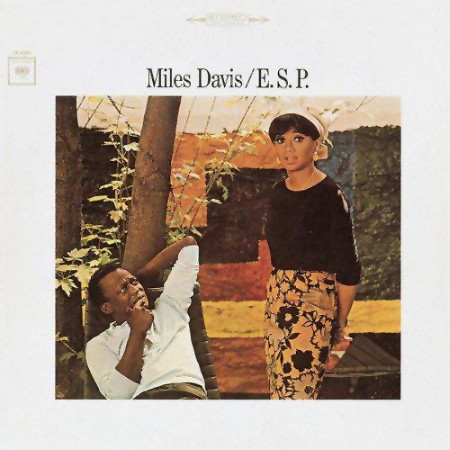


“This [1965-68] has always been an enigmatic period in Miles's career, a band and a set of relationships which didn't so much develop as go through a looping sequence of self-discoveries and estrangements. The leader himself often sounds almost disengaged from the music, perhaps even alienated from it, though one always senses him there, listening. Miles Smiles opens up areas that were to be his main performing territory for the next few years, arguably for the rest of his career. The synthesis of complete abstraction with more or less straightforward blues-playing (Shorter's 'Footprints' is the obvious example of that) was to sustain him right through the darkness of the 1970s bands to the later period when 'New Blues' became a staple of his programmes. 


After Miles Smiles, E.S.P. is probably the best album, with seven excellent original themes and the players building a huge creative tension between Shorter's oblique, churning solos and the leader's private musings, and within a rhythm section that is bursting to fly free while still playing time. Miles returns to his old tactic with Coltrane of paring away steadily, often sitting out for long periods or not soloing at all. It is simply that with Shorter he has a saxophonist who is capable of matching that enigmatic stance, rather than rushing off on his own.” 

- Richard Cook and Brian Morton, The Penguin Guide to Jazz on CD, 6th Ed.


“(The first incarnation of this Miles Davis Quintet (with George Coleman, Herbie [Hancock, Ron Carter and Tony Williams) entered the studio for the first time May 14,1963 before it was a working band. Studio albums were used to introduce new material into the Miles Davis songbook. Kind Of Blue gave us "So What" and "All Blues" and Someday My Prince Will Come gave us the title track and "No Blues." The live albums would be conceived as vehicles to capture the sound of his current quintet performing both the classic and recent material. This session gave birth to a new band and contributed two pieces, "Seven Steps To Heaven" and "Joshua,"

to Miles' live repertoire.


For the next 19 months, live recordings charted this band's extraordinary progress: In Europe (Antibes —July '63), My Funny Valentine and Four & More (both from Lincoln Center— February '64), In Tokyo (July '64 with Sam Rivers replacing Coleman) and In Berlin (September '64 with Wayne Shorter finally in place).


By January of 1965, the Quintet (now only 5 months old} had toured Europe and was just beginning to travel in the U.S. During the first part of the new year. Miles and the group enjoyed a two-week stay at San Francisco's Basin Street West. After finishing up the weekend, they found themselves in Hollywood at the Columbia Studios, where Irving Townsend was set to produce a new Miles Davis studio recording.


The idea of going into the studio with new material for the first time in 19 months must have stimulated the group. The first track recorded was Wayne Shorter's "E.S.P."


The album My Funny Valentine was released in May of 1965 to great acclaim. E.S.P was issued in November of 1965, when Miles began touring. again after a six-month recuperation from his first of many hip operations. The album did not get the hurrahs expected of a new Miles Davis Quintet studio recording. The momentum that the group had built up from 1964 had to start over.


The group was taped at the Plugged Nickel in December of 1965, but the 

tapes remained unissued for 11 years. Of the new material, only "Agitation" had made it into his book, but he was still playing "Stella By Starlight" and "My Funny Valentine" as well as other standards and blues associated with his earlier bands.


Still, E.S.P. summed up the form and rhythm experiments that the Quintet was developing from live performances into a compositional structure. Stop-and-go ("R.J.," "Agitation"), pedal points ("Little One," "Mood"), creating a "harmonic" direction from "suggestions" and implications ("E.S.P."), rhythmic suspension ("R.J.," "Eighty-One") and form modulation ("Iris"). The melodies themselves became more independent of the harmony, and thus strengthened the idea of improvising phrases (as Ornette Coleman) and not clichés.


Behind the success of My Funny Valentine, Columbia released the rest of the February 14,1964 Lincoln Center concert as Four & More in March of 1966 (barely 4 months after E.S.P.!). Prestige repackaged old sessions (For Lovers and Classics) and then went further by releasing a greatest hits compilation in December of 1966, making a total of six Miles Davis releases in 17 months.


No wonder E.S.P. confused the public. The music is light years ahead of anything previously released. The public was bombarded with Miles' accessible side, the romantic lover. The success of My Funny Valentine further imbedded that stereotype into the minds of the jazz public. Eventually. Miles would completely separate the studio recording process from the live performance process, but it took two incredible sessions to launch him on his way.”

— BOB BELDEN, insert note excerpts from E.S.P.


For fans of the classic Miles Davis Quintet [with John Coltrane on tenor sax, Red Garland on piano, Paul Chambers on bass and Philly Joe Jones on drums] and the classic sextet [subtract Garland and Jones and add Julian “Cannonball” Adderley on alto sax, Bill Evans on piano and Jimmy Cobb on drums], the six LPs that Miles made for Columbia from 1965 to 1968 are as perplexing as they are paradoxical. 


They are less straightforward and more puzzling, if not downright mystifying, to the snap your fingers and pat your foot Jazz fans who were accustomed to more easily relating to Miles’ post Bebop groups that played a style of Jazz based on a mixture of songs from the Great American Songbook and tunes from The Jazz Standards. And then there were all of the “romantic Miles” LPs that Bob Belden references in one of the quotations that open this piece.


In fact, to these modern Jazz fans, the music on the albums from the mid-sixties did indeed appear to require a form of extra sensory perception - that is a telepathic sixth sense - to experience what was going on in the music.


And yet, just as Miles had made the transition from the flying notes and quickly progressing chord changes of Bebop to the more expansive and lyrical Jazz of the classic quintet and sextet of the second half of the decade of the 1950s, E.S.P, Miles Smiles, Sorcerer, Nefertiti, Miles in the Sky and Files De Kilimanjaro marked Miles’ transition to an association with a band made up of younger musicians that was working its way out of one phase and into another in which time and harmony, melody and dynamics were being radically rethought. Or as Richard Cook explains it:


“The improvisations here would have been inconceivable a mere couple of years earlier; they don't so much float on the chords as react against them like phosphorus. Three years later, they fed directly into Miles's electric revolution and the beginning of what was to be (he long dramatic coda.”


Beyond the more technical treatment of the music on the recording contained in Bob Belden excellent notes, in combing through the Jazz literature to identify a more accessible explanation of Miles’ work on E.S.P., I was pleased to find the following treatment of both the band and the music on the recording by Gary Giddins and Scott DeVeaux in their work Jazz [2009] which is available in both a trade [commercial] and education [suggested listening guides] editions. Their narrative provides a comprehensive context for appreciating the significance of the album.


© Copyright ® Gary Giddins and Scott De Veaux, copyright protected; all rights reserved.


MILES DAVIS'S SECOND QUINTET


“After the back-to-back triumphs of Kind of Blue and Sketches of Spain, Miles Davis endured a slump of uncertainty. Coltrane, Adderley, and Evans had left to pursue their own careers, and Davis expressed contempt for the avant-garde. He continued to release effective records, including a reunion with Coltrane that produced a minor hit in "Some Day My Prince Will Come." But his music was caught in a bind, much of it devoted to faster and harder versions of his usual repertory, including "Walkin'" and "So What."


Then in 1963, once again, he produced magic. He turned to younger musicians who would surely have had important careers on their own but who, under Davis's tutelage, merged into a historic ensemble, greater than its very considerable parts. The rhythm section consisted of three prodigiously skillful musicians who valued diversity over an allegiance to one style of music: pianist Herbie Hancock, bassist Ron Carter, and seventeen-year-old drummer Tony Williams. Davis auditioned many saxophonists before temporarily settling on George Coleman, who played with facility and intelligence but lacked the drive and curiosity of the younger guys. In late 1964, Wayne Shorter, who had made his name as a saxophonist and composer with Art Blakey's Jazz Messengers, joined the band, a decision that changed his life and Davis's, and made this second

great quintet, a worthy follow-up to the 1955 group with Coltrane. This time, however, Davis took as much from his sidemen as he gave, drawing on their compositions (especially Shorter's) and sensibilities. These musicians were keenly interested in the avant-garde, and Davis adjusted his music to assimilate their tastes, as he struggled to make a separate peace in a confusing era.


Jazz was beset on one side by avant-garde experimentalism that estranged much of the audience, and on the other by rock, which had matured from a teenage marketing ploy to the dominant pop music. Davis would eventually inch his way to a fusion of jazz and rock, but first he adapted modal jazz to include elements of the avant-garde in a postbop style far more extreme than anything he had previously done. This approach, which also attracted other accomplished musicians caught between the conventions of modern jazz and the excitement born of the avant-garde, involved harmonic ambiguity, original compositions with new harmonic frameworks (rather than those built on standard songs), and a radical loosening of the rhythm section. Some of the tunes written by Davis's sidemen actually encouraged free improvisation (Ron Carter's "Eighty One" is a blues but also a minefield of open terrain). In the most advanced of these pieces, chord progressions were omitted while time and meter might evaporate and coalesce several times in the course of a performance.


Most first-rate rhythm sections work like the fingers in a fist. Coltrane's quartet, for example, achieved a fiercely unified front, devoted to supporting the leader. Davis's group was no less unified, but its parts interacted with more freedom, often rivaling the soloists. So much was going on between Hancock's unruffled block chords, Carter's slippery bass lines, and Williams's rhythmic brush fires that they all appeared to be soloing all the time. Davis gave them leave, enjoying the excitement they created, but he imposed a discipline that left space for the lyrical drama of his trumpet. Interestingly, on those few occasions when Davis failed to show up for a set in a jazz club, the other four musicians played in a more traditional, straight-ahead style. Free of chord changes, unapologetic about fluffs, and stimulated by his band's ceaseless energy, Davis became a more expansive trumpet player. He began to forage in the upper register at precipitous tempos, ideas spilling from his horn with spiraling confidence despite infrequent technical failings. He cut back on his signature ballads and began to jettison standard tunes and his classics. Between 1965 and 1968, he found his own way to be avant-garde.


"E.S.P."


The 1965 album E.S.P. was a critical event, but not a popular success. It represented the first studio recording by the new quintet, and the seven new compositions, all by members of the group, challenged listeners who expected to hear the tender, meditative Davis who incarnated jazz romanticism. This music is audacious, fast, and free. The title of the album (and first selection) emphasized the idea that extra-sensory perception is required to play this music. Shorter composed "E.S.P." as a thirty-two-bar tune, but its harmonic structure is far more complicated than that of "So What."


The melody is based on intervals of fourths (recalling the indefinite quartal harmonies of "So What" and "Acknowledgement"), and is married to a mixture of scales and chords in a way that offers direction to the improvisers without making many demands. The main part of the piece (A) hovers around an F major scale, while the B sections close with specific harmonic cadences that are handled easily and quickly—especially at this expeditious tempo. The soloists (Shorter for two choruses, Davis for six, Hancock for two) take wing over the rhythm, bending notes in and out of pitch, soaring beyond the usual rhythmic demarcations that denote swing. No less free is the multifaceted work of the rhythm section: the bass playing is startlingly autonomous, and the drummer's use of cymbals has its own narrative logic.


The public reception accorded E.S.P and succeeding albums by Davis's quintet (Miles Smiles, Sorcerer, Nefertiti) suggested the tremendous changes that had taken place in the cultural landscape in the few years since Kind of Blue and Sketches of Spain. They were received favorably and sometimes enthusiastically by musicians, critics, and young fans, but achieved nothing of the broader cachet enjoyed by his earlier work: there was nothing easy or soothing about these records. By 1965, rock and roll could no longer be dismissed by jazz artists as music for kids, and Davis was feeling the heat, not least from his disgruntled record company.”


Saturday, November 14, 2015

The Book of "Jazz" Times Two

© -  Steven A. Cerra, copyright protected; all rights reserved.


"This is without a doubt one of the best books on jazz ever written. Gary Giddins and Scott DeVeaux have achieved a monumental feat by creating a history of jazz that will appeal to academicians and aficionados alike. Thoroughly researched and carefully documented, yet written in an entertaining and enjoyable narrative style, this is truly a book for jazz lovers of all backgrounds. By telling the story of jazz in its full cultural, musical, political, social, economic, and historical context, Giddins and DeVeaux have given us one hell of a kick-ass book!"           
-David Baker, Distinguished Professor and Chair of the Jazz Department, Indiana University

"Gary Giddins and Scott DeVeaux's Jazz cuts through the gibberish, racial politics, and ideology that typify so much of contemporary jazz criticism. This excellent book, which not only addresses musical theory but provides insight into the history of the art as well, will serve the general reader but can also be used to stimulate discussion groups and jazz workshops."                                        
 -Ishmael Reed, author of Mixing It Up: Taking On the Media Bullies and Other Reflections

"Like no other history, Jazz involves the reader right from the start in an active listening role. The parsing of the selected recordings is brilliantly done, and this feature alone makes the book a must, for beginners and seasoned fans. But there's much more, all imbued with the coauthors' love for and understanding of the music, in all its many facets-and as a living, still evolving language."
-Dan Morgenstern director of the Institute of Jazz Studies, Rutgers University, and author of Living with Jazz

"In an innovative departure from previous approaches to the history of American jazz, this eagerly awaited new text by Gary Giddins and Scott DeVeaux offers a unique combination of cutting-edge historical scholarship and experienced journalistic perspectives. This book is destined to become an important resource, one that confronts crucially important musical and social issues in depth-and with passion."
-George E. Lewis, Case Professor of American Music, Columbia University, and author of A Power Stronger Than Itself: The AACM and American Experimental Music

"This extraordinary book is the one we've been waiting for-an exhaustive, multi-disciplinary, judiciously crafted history of jazz and its culture. It is sure to become the industry standard, cherished by students as well as aficionados, who may dispute its judgments but will surely keep it close at hand as an essential reference."
-Krin Gabbard, author of Hotter Than That: The Trumpet, Jazz, and American Culture


Gary Giddins and Scott DeVeaux are the co-authors of Jazz which is available from its publisher, W.W. Norton, in both a trade and a commercial edition. The title of this feature is meant to reflect this duality of authorship and format.

Each version of Jazz offers a distinct reading experience, so much so that I urge you to consider adding both volumes to your Jazz library.

By way of background, the esteemed Jazz critic Gary Giddins is also the author of Visions of Jazz, winner of the National Book Critics Circle Award; Bing Crosby: A Pocketful of Rye, Rhythm-a-ning Jazz Tradition and Innovation in the 80’s, and Celebrating Bird: The Triumph of Charlie Parker. He teaches at the Graduate Center, City University of New York and lives in New York City.

All four of Gary’s books have been reviewed on JazzProfiles and you can get to these previous posts by simply clicking on the above book titles.

Scott DeVeaux is a nationally recognized Jazz scholar and winner of the American Book Award for The Birth of Bebop: A Social and Musical History. Scott has taught Jazz history at the University of Virginia for more than twenty-five years. He lives in Charlottesville, Virginia.

As befits writers on the subject of Jazz of the caliber of Messrs Giddins and DeVeaux, both editions are graced throughout with photographs by the acclaimed photographer, Herman Leonard.

The format of the trade edition of Jazz provides the reader with a more traditional narrative or chapter-by-chapter reading experience. Jazz fans have a tendency to become very argumentative [combative?] about what is included in comprehensive treatments on the subject [just ask Ken Burns, the director of the PBS documentary on Jazz] so it is important to note that what this book is and what it is not is clearly explained by the authors in the following excerpts from its Introduction.


“One of the great pleasures of looking into jazz — beyond the excitement and variety of the music itself — derives from its relative historical newness. To the generations born after the Vietnam War, it may seem like an old story that predates rock and hip-hop and their grandparents. But following its contours today, in the early years of the twenty-first century, is like what it might have meant to pursue Shakespeare in 1650, when you could still meet people who saw the plays as originally produced and even worked or hung out with the guy who wrote them. The pioneers of jazz, including its preeminent soloist (Louis Armstrong) and composer (Duke Ellington), worked into the 1970s and beyond. Innovators of later jazz styles and schools are with us now. Young musicians, creating tremendous excitement at this moment, will be acclaimed as tomorrow’s masters. In other words, the dust of history has by no means settled on jazz. The canon of masterpieces, far from fixed, remains open to interpretation, adjustment, and expansion.

Jazz is designed to impart a narrative arc that traces the development of jazz from nineteenth-century musical precursors to the present, while offering a few ways to understand that arc. It differs from most jazz histories on at least three counts. First, we do not treat jazz as music in a vacuum, perpetuating itself as a baton passed from genius to genius; we see it, rather, as a reflection of broader cultural, political, social, and economic factors, and attempt to line up the crucial moments in its progress with historical events that it reflected and influenced.

Second, this book requires neither musical knowledge nor ability (only a predisposition for the enjoyment of music and the imagination to feel its expressive power), but it always keeps one eye firmly cocked on illustrative jazz masterworks. To that effect, we include seventy-eight Listening Guides that analyze a broad range of recordings with mostly nonmusicological descriptions of what happens from one passage to the next. Most of these records are recognized classics, while others are fairly or very obscure. We have programmed all seventy-eight selections on four CDs, which can be ordered from the Norton website (www.wwnorton.com/books/recordings -for-jazz). We strongly recommend this collection, not least for the new transfers, which in most instances are superior to those in commercial release.

Third, we emphasize a rudimentary understanding of basic jazz techniques and structures as a corrective to the intimidation many people feel when confronted with improvisation. Toward that goal, we have front-loaded the book with two chapters on basic musical elements and how they function in jazz. The idea is to provide a musician’s-eye view of what happens on the bandstand, and to enable the listener to participate more knowingly in the now of jazz creativity. These facets, which are amplified in the glossary, are demonstrated with four classic recordings (part of the CD set and analyzed more closely in succeeding chapters): Louis Armstrong's "West End Blues" (1928), Billie Holiday’s "A Sailboat in the Moonlight" (1937), Charlie Parker’s "Now's the Time" (1953), and Miles Davis’s "So What" (1959).

Finally, a word about what this book is not: it’s not an encyclopedia of jazz—such works exist and they are invaluable. A book like this makes choices every step of the way. Just how many choices are possible became especially evident to us as we spent more than a year choosing our musical examples and debating which aspects of the story to emphasize and which to omit, usually for reasons of space or coherence—including most jazz made beyond the borders of the continental United States. If you have a love of jazz, some of your favorites are not mentioned at all or only in passing. We know that of a certainty, because some of our own favorites were relegated to limbo. Mea culpa, Carmen McRae, Art Pepper, et al.!”


What set’s the commercial or, if you will, textbook edition of Jazz apart in explained by the authors in these excerpts of its introductory, Plan of the Book:

The Plan of the Book

“Each part of Jazz opens with an introductory overview of the period in question and its music; a timeline, situating important jazz events within a broader context of cultural and political history; and dynamic photographs that capture the mood of the era.

PART I: MUSICAL ORIENTATION This first part introduces the vocabulary necessary for discussing the basic rudiments of music and demonstrates, by recorded examples, how those rudiments function in jazz. "Musical Elements and Instruments" analyzes timbre; rhythm, polyrhythm, and swing; melody and harmony; and texture. "Jazz Form and Improvisation" delves into the area of formal structure, chiefly the twelve-bar blues and the thirty-two-bar A A B A popular song—forms that recur throughout jazz history. It provides a musician’s-eye view of what happens on the bandstand, along with examples of essential jazz lingo like trading fours, rhythm changes, grooves, and modal improvisation.

This is the most technical section of Jazz. But we have attempted to clarify these points on our website ("Jazz Concepts"), with video and audio recordings by the Free Bridge Quintet, a band affiliated with the University of Virginia, that address each musical concept — from scales and blue notes to contrasting timbres of instruments to performance techniques. In addition, two pieces have been written specially for this book by the quintet's trumpeter, John D’earth — a twelve-bar blues and a thirty-two-bar song form — that put many of these concepts into action.

When a head is accompanied by the audio icon (>), that means you can go to "Jazz Concepts" online to hear and see examples of what the section describes—brass instruments, reed instruments, trumpet mutes, homophonic texture, major scales, harmonic progressions, and so on. We suggest that you absorb this material and listen to the examples with the expectation of returning to them periodically as you progress through Jazz.

The four main parts of Jazz, described below, cover the broad sweep of the music's history and its major figures, as illustrated by seventy-seven recordings, analyzed in laymen's terms in Listening Guides. Again, you don't have to know how to read music to enjoy the guides—only how to read a clock.

PART II: EARLY JAZZ (1900-1930)
PART III: THE SWING ERA
PART IV: MODERN JAZZ
PART V: THE AVANT-GARDE, FUSION, HISTORICISM, AND NOW

Within the chapters, key musical terms are highlighted in the text in boldface; these can also be found in the glossary at the back of the book, and most are demonstrated in the online "Jazz Concepts." Throughout the text, new terms are occasionally defined in the margin, or old terms redefined. When one such term is accompanied by an audio icon, that means you can hear an example of the concept being defined in "Jazz Concepts."

Each chapter ends with a list of suggestions for additional listening, including the date of the original recording. For three musicians whose careers span several parts, we provide a chronology at the end of his respective chapter—Louis Armstrong (Chapter 6), Duke Ellington (Chapter 8), and Miles Davis (Chapter 14). And each historical part (II-V) ends with a summary describing and outlining in detail the main style points of that era's music, along with lists of its major musicians.

In addition to the glossary, appendixes include a list of selected jazz musicians (with birth and death dates), categorized by primary instrument; a primer on musical notation; an essay on building a collection of jazz recordings; a filmography; and a bibliography.

The Art

We are very proud of the design of Jazz, and hope you will enjoy the black and white photographs—especially the work of the brilliant Herman Leonard, considered by many to be the greatest photographer ever to focus his camera on jazz. A protege of Yousuf Karsh, Leonard is distinguished in his work by his total control of light. In the late 1940s, the peak of his jazz period, he brought his equipment to clubs, blocked out the natural light, and created his own chiaroscuro effects, emphasizing the excitement of the music and the milieu — through reflected highlights and his signature use of cigarette smoke. Leonard's New Orleans studio was destroyed by Hurricane Katrina, and he moved to California, where he died in 2010. In 2013, the William J. Clinton Presidential Library honored him with a five-month exhibition of his jazz photography. Leonard shot almost all of the full-page photographs that introduce each chapter.

The Listening Guides

Jazz provides a comprehensive overview of the music through seventy-seven selections, combining acknowledged classics (Miles Davis's "So What," Coleman Hawkins's "Body and Soul," Louis Armstrong's "West End Blues") with several unusual but illuminating tracks, ranging from Wilbur Sweatman's "Down Home Rag" (1916) to Cecile McLorin Salvant's "John Henry" (2013). Each selection is introduced by a passage in the text, designated with a listening icon (icon = earphones), that sets the scene for the work. This is followed by a Listening Guide (carrying the same icon), in which significant musical moments are linked directly to timings along the left.

1.  Below the title of the piece, you'll find basic information about the recording: the musicians, original label, date of recording, and style and form of the piece.
2.  The "What to listen for" box offers some key points to help orient your listening.
3.  All boldface terms are included in the glossary at the back, and most are featured in audio and/or video demonstrations online ("Jazz Concepts").
4.   Occasionally a music example is provided to illustrate a distinctive melody or rhythm.

TOTAL ACCESS to Recordings and Digital Media

This book offers some exciting.digital features to enrich and reinforce your study of jazz. First, you have instant access to all seventy-seven recordings streamed from StudySpace or your teacher's Coursepack, as well as an Interactive Listening Guide (iLG)—combining text, visuals, and music—for each selection. (wwnorton.com/total-access/jazz2).

•   "Jazz Concepts" audio and video demonstrations, prepared under the direction of Scott DeVeaux and recorded by John D earth and the Free Bridge Quintet, give you an intimate look at each instrument and walk you through the main musical concepts discussed in the book. The basic elements of music theory are brought to life through clear, simple examples. In addition, these superb musicians show how improvisation works in different tempos, grooves, and meters, and how the concepts specific to jazz (breaks, trading fours) are put into practice in a jam-session-style performance.

•   Author Insight Videos, engaging interviews with Gary Giddins and Scott DeVeaux, elaborate on important points made throughout the book. These are specified in the "Multimedia Resources" list at the end of each chapter.

•   You also have access to a mobile-compatible ebook, integrated with music, iLGs, and video; chapter and listening quizzes; and flashcards and outlines for review.

•   Available for separate purchase is a DVD containing all seventy-seven works in mp3 format as well as iLGs.
For Instructors

For Instructors

•   Coursepacks for Blackboard, WebCT, and other course management systems include playlists that stream all seventy-seven recordings featured in the text; an Interactive Listening Guide for each recording that integrates text, visuals, and music; a tablet-compatible ebook; author videos; over 100 "Jazz Concepts" audio and video recordings; listening quizzes, and more. Download free from wwnorton.com/instructors.

•   An Instructor's Resource Disc includes photographs from the book, PowerPoint bullet-point outlines, author videos, and "Jazz Concepts" audio and video demonstrations. Order or download free from wwnorton.com/ instructors.

•   An Instructor's Manual (by Ryan P.Jones, University of Wisconsin at Eau Claire) provides chapter outlines, teaching strategies, sample course syllabi, suggestions for reading and viewing, and questions and prompts for class discussion and research papers. Download free from wwnorton.com/instructors.

•   A Test Bank in Microsoft Word and Exam View format (by Nathan Bakkum, Columbia College, Chicago) offers hundreds of multiple-choice, true/false, short-answer, and matching questions as well as essay prompts for each chapter, covering both text and repertory. Download free from wwnorton.com/instructors.

•   A Discography (by jazz critic Ted Panken) provides recording information for all pieces mentioned in the book, and additional selections as well. Download free from wwnorton.com/instructors.”

For academicians and aficionados [to use a phrase from David Baker’s opening quotation], does it get any better than Jazz? With this book, especially in its interactive format, Jazz education and appreciation has gone from near total obscurity to near total revelation in my lifetime.

Availability and affordability have not always been aligned factors in terms of information about Jazz as in the past it usually required an extensive record collection and a small library of specialized books in order to acquire an overview on the subject of Jazz.

The trade and commercial editions of Jazz, either singly or in combination, remedy this problem by making the broad sweep of the music during the first 100 years of existence available to fans, teachers and students of Jazz between the covers of one book with an interactive dimension that provides samplings of the music via online digital files [or a CD, if you prefer].

Over the years, in countless conversations with family members and friends who didn’t know the first thing about Jazz, I wished for a book like Jazz that would easily exemplify what I was trying to explain to them about the music.

In such circumstances, the examples, exhibits, exercises, explanations, definitions, descriptions and myriad other “teaching tools” contained in Jazz would have been invaluable.

There’s nothing not to like about Jazz: you get double doses of two of the best writers on the subject; impeccable research; marvelous photographs; new insights, observations and points-of-view about the stylistic development of the music, all of which enhance your understanding of the music’s growth and development. Additionally, the authors’ listening recommendations will help move your ears in new directions.

With the upcoming holiday gift giving season, you can’t go wrong putting both editions of the Giddins-DeVeaux Jazz at the very top of your wish list.

Thanks to the generosity of Susan Gaustad, Senior Developmental Editor, and the nice people on her staff at the publishing house of W.W. Norton, both of my wishes have already been granted.

Now if I can just get my wife to give me back the copy of the interactive edition!