Thursday, October 14, 2021

Bill Evans - Romantic Agony - Whitney Baillett

 © Copyright ® Steven Cerra, copyright protected; all rights reserved.


Written as a 1985 New Yorker review upon the issuance of a boxed set of Bill Evans’ Riverside recordings and newly discovered recordings of a Paris concert by his last trio, Whitney’s essay also offers a concise distillation of many of the qualities that made the late pianist Bill Evans’ music unique and as such we wanted to include it on these pages as part of the editorial staff at JazzProfiles efforts to represents as much as possible about Bill in the Jazz literature.


Boxed sets and newly discovered or never-before released recordings have become quite commonplace in the 30+ years since this essay was published but both were a “big deal” in 1985 [especially before the onslaught of CD ressiuses that began in the late 1980s]. 


Equally important is Whitney’s refusal to contribute to the Bill Evans hagiography that has grown up around the Bill Evans Legend since his death in 1980. Objectively and subjectively, Balliett does his usual job of pointing out the singular features that made Evans’ contributions to Jazz unique, as well as, those that were perhaps more mundane.


This brief essay is elegantly written and offers more of what the Boston Globe once described as Whitney’s “pictorial descriptions [which makes him a gifted writer of profiles].”


“Balliett comes as close as any writer on Jazz -perhaps on any musical style - to George Bernard Shaw’s intention to write so that a deaf person could understand and appreciate his comments.” - Choice Magazine


Romantic Agony


“Bill Evans, who died in 1980, at the age of fifty-one, became the most admired and influential pianist since Bud Powell. He continues to be celebrated. Elektra Musician has issued—in a two-L.P. set called "Bill Evans: The Paris Concerts"—selections from a pair of concerts Evans gave in one evening in Paris in November, 1979. And Fantasy has brought out "Bill Evans: The Complete Riverside Recordings,” a blunderbuss album made up of a hundred and forty-six numbers (on eighteen L.P.s) set down between 1956 and 1963, when Evans moved from Riverside to another label. (The album is misnamed; Evans made a good many other Riverside records, as is made clear in the exhaustive album booklet.)


When he played, Evans sat back a couple of feet from the instrument, his back bent completely, his forehead almost touching the keyboard. He kept his hands flat, and during the last decade of his career they rarely strayed from the two middle registers, as if they were invisibly hobbled to middle C. This abject, prayer like posture suggested several things: that Evans was paying homage to his instrument, to his music; that he was so enfeebled by drugs that he couldn't sit up straight (his addiction, reportedly conquered during much of the seventies, was an open secret); that he was overpowered by shyness. The last was probably true, and it had a strange effect on his playing, which was always, as I wrote in these pages when Evans first appeared, "a contest between his intense wish to practice a wholly private music and an equally intense wish to express his joy at having found such a music within himself." His music seemed to be withdrawing, to be bowing out, slipping away. His diffidence was such that he had to be persuaded to make his first solo recording, and he then waited two years before making another. 


By his own admission, Evans was a slow learner with medium gifts who had to work very hard for everything he achieved. He was pleased by the facility of young players, but he most admired those who made their way inch by inch. He gave as an example Miles Davis's slow but spectacular progress from imitative bumbler in the mid-forties to lyrical innovator in the late fifties, when Evans briefly worked for (and influenced) him. 


Evans' constant inner struggle made him difficult to listen to, whether on records or in the flesh. His playing demanded concentration of a sort not usually found among jazz audiences, who like to take easy emotional gifts away with them. His music was lucid and orderly, but it had a contemplative, rarefied, almost abstract quality, which kept its emotional content at various removes from the listener. This was particularly true during the last ten or so years of his career, when his playing became so pallid and secretive that it seemed to have lost its emotional center. All of which makes his famous, sparkling "All About Rosie" solo that much more startling. Delivered in the midst of a George Russell piece at a 1957 Brandeis University concert, it seized you immediately, and remains one of the classic recorded jazz piano solos.


Evans' style was a distillation of Bud Powell and Lennie Tristano. He had been trained as a classical pianist, and his style also reflected his admiration for Chopin and Grieg, for Debussy and Ravel and Scriabin. His right-hand single-note melodic lines were short and rhythmic and beautifully shaped. They had a smooth, logical flow that needed no decorative devices. The first note in each phrase, generally struck a fraction ahead of the beat, pulled the notes that came afterward, and by themselves the lead notes formed one melody while the secondary notes formed another. Evans would often conclude a solo with a chordal passage, which suggested the "locked hands" parallel chords of Milt Buckner or the harmonic piles of Art Tatum. 


These chordal layings-on occupied Evans increasingly in his last years, and he would sink into them, his ad-lib flags unfurled, his loud pedal engaged. He worked hard at a Nat Cole kind of touch, but he was never a pianistic player. He rarely used either end of the keyboard, and one sometimes wondered if he wouldn't have been a brilliant guitarist. (Red Norvo once pointed out that many musicians end up on the wrong instrument.) He was a romantic who kept his edges firm, who attracted apologists, as Martin Williams' notes to the Fantasy album attest. He had none of Bud Powell's tough, bitter edge and none of Lennie Tristano's mathematical directness. His slow solos bloomed, and his fast ones wheeled like terns.


The "Riverside Recordings" album chronicles in massive detail Evans' progress from flashy bebop pianist to his studied lyrical self. Twenty-five of the numbers are with three different small groups, which include Jim Hall, Zoot Sims, the young Freddy Hubbard, and Cannonball Adderley, and not a great deal happens. Seventeen selections are solo piano, thirteen of them previously unissued. These are often ad lib or done in implied rhythms, like "All the Things You Are," which is almost abstract, and "I Loves You, Porgy," which Evans played again and again. They are Evans at his most private. 


The remaining hundred or so numbers in the album were done by six different trios. Three were put together solely for recording, and three were working groups. The most famous trio had Scott LaFaro on bass and Paul Motian on drums, and it existed from late 1959 until the summer of 1961, when LaFaro was killed in an automobile accident. LaFaro, in his mid-twenties, was an admirer of Charles Mingus and a brilliant bassist, whose methods are best heard in the work of Michael Moore. Dancing, crowded, passionate melodic lines poured out of him, and he quickly and probably unwittingly became the dominant voice, forcing Evans in on himself and making the group his own. Evans, of course, wanted the trio to be three equal voices, not a piano with bass-and-drums accompaniment, but LaFaro's imaginativeness wrecked this idealistic notion. Evans, reportedly bereft when LaFaro was killed, apparently didn't fully realize LaFaro's strength. Or did he? Listen to the solo numbers Evans made not long after LaFaro's death and to the new trio, with Chuck Israels on bass. Evans holds forth, he sparkles, he swings ("Show-type Tune," "Ev'rything I Love," "Stairway to the Stars"), and much the same is true of the last quartet in the album. (Larry Bunker, a less assertive drummer than Motian, had come in.)


It has been said that the "Paris Concert" L.P.s mark a return to Evans' outgoing brilliance of the late fifties, that they are the beginning of a new period in his playing. (His final trio had Marc Johnson on bass and Joe LaBarbera on drums.) To be sure, he moves around more on the keyboard, and he is adventurous harmonically ("Gary's Theme," "Laurie"), but what seems new is a long-windedness ("Nardis"), an absorption with sound (Noelle's Theme"), a kind of pianistic pomposity. Perhaps the struggle within him was at last over, and the extrovert had come forth.”






Wednesday, October 13, 2021

John Coltrane -Three Forms of An Early Original Composition

 © Copyright ® Steven Cerra, copyright protected; all rights reserved.

For someone who would go on to compose blockbuster original tunes like Giant Steps, Moment’s Notice, Blue Trane and the myriad themes he penned for his 1960s Impulse! recordings led by A Love Supreme, John Coltrane’s writing in the 1950s exhibited a lighter more straight ahead format that made them fun to blow on in a variety of settings.


In the chapter entitled Coltrane’s Music 1955-1957 from his seminal John Coltrane: His Life and Music Lewis Potter provides the following context for one of John’s earlier less motivic and less modal efforts:


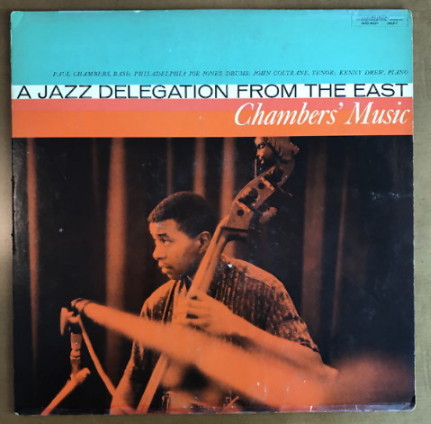
“This was only one of many valuable opportunities that came Coltrane's way as a side person. He also was able to unveil some of his original compositions, beginning at his first sideman date led by his quintet mate Paul Chambers—with Philly Joe Jones on drums too, and pianist Kenny Drew Sr.—in Los Angeles in March 1956. 


Here, he recorded "John Paul Jones," a rhythmically intricate blues theme that he apparently named for himself, Chambers, and Jones. 


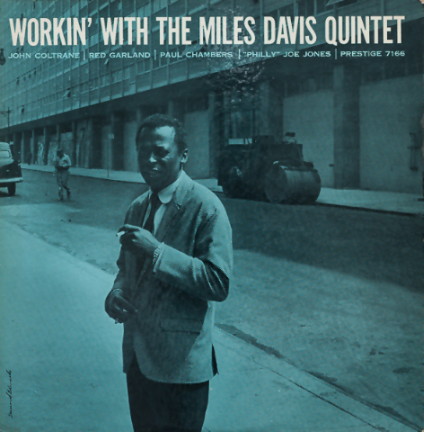
It surfaced again at a Davis session for Prestige in May, under the title "Trace's Blues." In Coltrane's notebook he uses the original title (Simpkins, 

276].


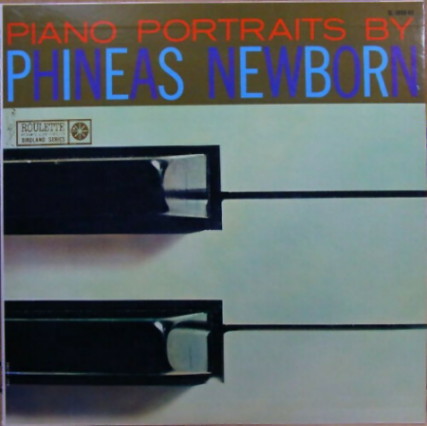
Pianist Phineas Newborn recorded it in 1959 as his own "(Blues Theme) for Left Hand Only."


I thought it might be fun to depart from a text-based blog feature and share three videos featuring the three versions of this tune by Coltrane so that you can relax and enjoy the music itself instead of an analysis of it.


Tuesday, October 12, 2021

Nueva Manteca - "Bluesongo" [From the Archives]

 © -  Steven A. Cerra, copyright protected; all rights reserved.


For many years now, I have been a big fan of the music of Nueva Manteca, a Latin Jazz group based in … wait for it … The Netherlands.


With this feature, I thought I’d begin to share some of my reasons for this preoccupation using reviews of the group’s various CD’s as a focal point.


Perhaps the place to begin is by underscoring how well Nueva Manteca’s plays Latin Jazz, a point that is continually reinforced by the critical acclaim they receive from the music press in Central and Latin American countries and from Caribbean islands such as Puerto Rico, Guadeloupe and Martinique. These folks know what good Latin Jazz sounds like and Nueva Manteca consistently receives accolades by the critics for the quality of their performances.


“Quality” in this instance is twofold and pertains to the excellence of the musicianship in Nueva Manteca and the fact that the group understands the Latin Jazz traditions and incorporates its forms and rhythms into its music. 


Much of the credit for Nueva Manteca’s authenticity goes to its leader and organizer, Jan Laurens Hartong, who also serves as the group’s pianist and chief arranger. Iin this regard, he is reminiscent of the role that Chucho Valdes plays in relationship to Irakere, the former Cuban band whose soloists included alto saxophonist and clarinetist Paquito D’Rivera and trumpeter Arturo Sandoval.


Whether it’s the Batá-drum medley at the outset of Jan’s arrangement of Wayne Shorter’s This is for Albert which includes a LaLubanche/Elegua, a Babalú-Ayé and a San Lazaro, Meta-Meta, a chart he concludes with a montuno based on a piano Curacao styled tumbao, or the siete por quatro montuno at the end of his arrangement of Speak Low or the Coda section to You And The Night And The Music - all of which appear on the groups 3rd CD - Bluesongo [Lucho 7706-2] - Jan’s considerable skill at blending the formats of Latin Jazz with the style of Bebop ranks him right up there with Dizzy Gillespie and Chucho Valdes as one of the foremost masters of Cubop.


When you listen to Nueva Manteca, you hear the excitement of Bebop joined with the exhilaration of Latin Jazz, especially as the latter is reflected in the Cuban Jazz tradition. 


On Bluesongo, which was released in 1992, Nueva Manteca consists of Jarmo Hoogendijk and Toon De Gouw on trumpet [both play lead and both solo!], Ben van den Dungen on soprano and tenor saxophone, Jan on piano, Boudewijn Lucas on bass guitar, conga [tumbadora] and percussionist Martin Verdonk, drummer, percussionist and Batá-drummer, Lucas van Merwijk and timbales [timbalero], bongos and percussionist Nicky Marrero.


I will have much more to say about each of these musicians as well as other musicians who have been a member of Nueva Manteca in subsequent features on the group and its recorded music.


Jan Laurens Hartong offers this background information on Nueva Manteca in the insert notes to Bluesongo.


The Band


“With this new recording -our 3rd- (previous recordings are Varadero Blues  and Afrodisia), we celebrate the 10th Anniversary of Nueva Manteca. In a sense,  it also is a Cubop cumpleaños [birthday] as we  strive to continue the work of the great Latin jazz  pioneers. Since its inception [circa 1982], Nueva Manteca was fortunate  to  be able to build  up a large following and  to be invited  by major Jazz Festivals. Things started to  move fast when on the occasion of the International NOS Jazz Festival in 1989 the band was enriched by the permanent addition of percussion Maestro Nicky Marrero.


In 1990 we were featured in the International Mecca Jazz Fest and then in 1991 we were invited to play at the highly prestigious North Sea Jazz Fest.  Meanwhile we had begun to travel abroad, playing the major Jazz clubs in Germany, In May of this year [1992] we flew to Curacao to participate in the International KLM Jazz Fest. In  the month of June, two giants of Latin music were invited to come over and play with us - percussionist Giovanni Hidalgo and trumpeter Juancito Torres - at concerts  that turned out to be major events in the lively European Latin  scene. 


The conception of Nueva Manteca is that of a collective wherein everybody has a  strong personal input.  


In that way, individuality and group sound can be synthesized. The various musical approaches and stylings reflect the background and interests of individual  members of the band and the sound of the group as a whole reflects where we currently stand in the Jazz-Latino world  of music.


Gracias to everyone for supporting us.”


Vernon Boggs gives the following overview of the broader context of Nueva Manteca’s music in these excerpts from the sleeve notes to Bluesongo.


Transculturation


In 1939 at the University de La Habana, Dr. Fernando Ortiz unveiled his brand new concept - Transculturation.  Dr. Ortiz had spent more than thirty years studying the impact that Africans and Spaniards had made on Cuban culture. By the  1950's he began to clearly see that impact on Cuban popular music. Hence the fuller evolution of his earlier concept: musical transculturation


Now let's move the clock ahead thirty-some years and go to the Netherlands; a place that makes many people think of windmills, dikes and wooden shoes. As we wind down one of its streets in Rotterdam, we are stunned by the sounds of "Bird", "Trane", "Dizzy" and many other jazz greats. Our curiosity forces us to pay closer attention.  As we do, we hear the legacy of Arcano, Arsenic, "Machito", "Chano" and other Cubans too numerous to mention, imagine our surprise when we discover seven Dutch musicians jamming with a founding member of the New York City Fania All-Stars ... in clave! We are too dumbfounded and embarrassed to ask the usual how’s, why's and when. We go sit down and listen when suddenly Dr. Ortiz' words come back to us: musical transculturation.


Dutch plus jazz plus clave equals transculturation. No doubt about it. So just sit back and listen. If this band is an "Arfodisiac" for you, then it must be Nueva Manteca.  Straight ahead descarga! [“Descarga” = a jam session in the tradition of Cuban music].


Vernon W. Boggs, New York

Author of Salsiology,  Excelsior Music Publishing Company, New York.


Since its rhythms are responsible for so many of the distinctive sounds of Latin Jazz, here is a brief overview of how they are created.


Clave


While it may sound like a lot of clap trap to the uninformed ear, the Latin rhythm section is actually a well-oiled machine with everything in its place.  When done correctly, the rhythms, counter-rhythms and accents played in combination by the conga and bongo drums, timbales and a variety of hand-held percussion instruments create a fluid, rippling foundation over which the melody glides.


While jazz rhythms are swung, most Latin jazz tunes have a straight eighth note feel. Latin jazz rarely employs a backbeat, using a form of the clave instead. 


Most jazz rhythms emphasize beats two and four. Latin jazz tunes rely more on various clave rhythms, again depending on regional style.


Since the underlying “feel” of Latin or Afro-Cuban Jazz relates to the clave, perhaps a word at this point as to its meaning, role and its relationship with the instruments, compositions and arrangements


Clave in its original form is a Spanish word and its musical usage was developed in the western part of Cuba, particularly the cities of Matanzas and Havana. However, the origins of the rhythm can be traced to Africa, particularly the West African music of modern-day Ghana and Nigeria. There are also rhythms resembling the clave found in parts of the Middle East.


By way of background and very briefly, there are three types of clave.


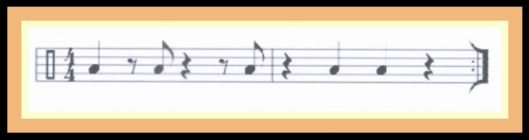
The most common type of clave rhythm in Latin Jazz is the son clave, named after the Cuban musical style of the same name. Below is an example of the son clave rhythm in Western musical notation.


Because there are three notes in the first measure and two in the second, the above is said to be in the 3:2 direction or forward clave. The 2:3 clave is the same but with the measures reversed [i.e.: reversed clave].


Another type of clave is the rumba clave which can also be played in either the 3:2 or 2:3 direction, although the 3:2 is more common.  Here is an example of its notation:


There is a third clave, often called the 6/8 clave or sometimes referred to as the Afro Feel clave because it is an adaptation of a well-documented West African [some claim Sub-Saharan] 12/8 timeline.  It is a cowbell pattern and is played in the older more folkloric forms of Cuban music, but it has also been adapted into Latin Jazz.


Below are the three major forms of clave, all written in a 3:2 position:


The choice of the direction of the clave rhythm is guided by the melody, which in turn directs all other instruments and arrangements.


In many contemporary compositions such as those recorded by Mongo Santamaria or the aforementioned Shearing & Tjader groups, the arrangements make use of both directions of the clave in different sections of the tunes.


As far as the type of clave rhythm used, generally son clave is used with dance styles while rumba and afro are associated with folkloric rhythms.


These clave rhythmic patterns must be strictly adhered to by the Latin Jazz percussionists to keep the music controlled and grounded, while at the same time, flowing.


To the uninitiated, Latin Jazz rhythm sections might sound more like controlled chaos, but when it all comes together properly it is a thing of beauty, especially as one’s ear becomes more informed.


The following video montages feature Nueva Manteca performing the title tune from their Bluesongo CD and the recording’s closing track - You and the Night and the Music. All of the clave patterns described above are used on these two tunes.


As described by Jan, Bluesongo is a blues inspired by a bass line from an old Ray Baretto recording. It opens with Nicky Marrero playing brushes on timbales. A premiere on record! Jarmo Hoogendijk has the first trumpet solo, followed by Ben van den Dungen on tenor sax. Toon de Gouw plays the second trumpet solo after which Boudewijn Lucas on bass guitar. Jan Laurens follows with a piano stop chorus leading into a Mambo section with a timbales solo featuring Nicky.


You and the Night and the Music is dedicated to Eddie Palmieri, a ground-breaking pianist who influenced me a lot. After the piano prelude, the head [the melody] is stated. Toon and Ben shared the solo spots. Jan and Boudewijn step on the gas for an accelerated vamp. After the Mambo part, Martin stretches out on tumbadora [congas]. The Coda section has the horns bursting into a Comparsa line. Here I attempted to include some of the “tipico’ formulas of the Santiago de Cuba tradition. Martin solos on quinto [ the smallest conga usually used as a lead conga in a three-drum set-up].


Monday, October 11, 2021

Nueva Manteca - "Varadero Blues" [From the Archives]

 © -  Steven A. Cerra, copyright protected; all rights reserved.


“Jazz and Latin music have cross pollinated with each other for quite some time. Some trace it back to Jelly Roll Morton's experimentations with what he called "the Latin tinge." Of course, none of this should be all that surprising. The Motherland, Africa, and its people have developed a rich heritage of musical and rhythmic styles which have made their way through Latin America and the rest of the world and continue to serve as inspiration for so many.


What is surprising is the manner in which gifted artists have decided to use this inspiration as a platform for their own creative endeavors. The permutations are quite plentiful, but often it comes down to the grafting of Latin rhythmic patterns onto a decidedly jazzy improvised mode of music. There are even current practitioners who have evolved a hybrid that almost hints at 20th century classical music with Latin flavors.


In the final analysis, the purest and most satisfying blends come with a thorough understanding of the Latin rhythmic elements (a complex and demanding feat in and of itself), which are then seamlessly utilized to complement the flavor of the melodic content. In other words, it should be about much more than playing a jazz standard and then deciding to do it with a mambo rhythm attached.”

- C. Andrew Hovan


Varadero is a resort town in Cuba’s Matanzas province and is also one of the largest resort areas in the Caribbean. It is situated on the Hicacos Peninsula, between the Bay of Cárdenas and the Straits of Florida, some 140 km east of Havana, at the eastern end of the Via Blanca highway.


It is also home to a highly regarded International Jazz Festival at which Nueva Manteca has been a featured group.


Led by pianist Jan Laurenz Hartong, the eight-piece band Nueva Manteca are a Netherlands-based Latin jazz outfit who produce a highly authentic distillation of Latin music and also embrace traditions such as Arabic, classical, Dutch Antillean and salsa. As Hartong told the press in 1996, ‘It’s the same situation as hearing a Korean violinist playing a Beethoven concerto. It’s already accepted in the jazz world. In the whole World Music development, a lot of people are digging into all kinds of cultures.’ 


Born in 1941, Hartong began playing dixieland piano at the age of 12, before progressing to bebop by 15, at which time he began to work professionally. He played alongside Jan Hammer and Joachim Kühn in a 1966 international jazz festival judged by Cannonball and Nat Adderley where he won a medal.


A fan of Latin music since his childhood, Hartong formed a 10-piece salsa band in Rotterdam in 1983. He also visited the music’s home in Cuba in 1984 and 1987, which led to him switching to a Latin jazz style and changing his group’s name from Manteca to Nueva Manteca.


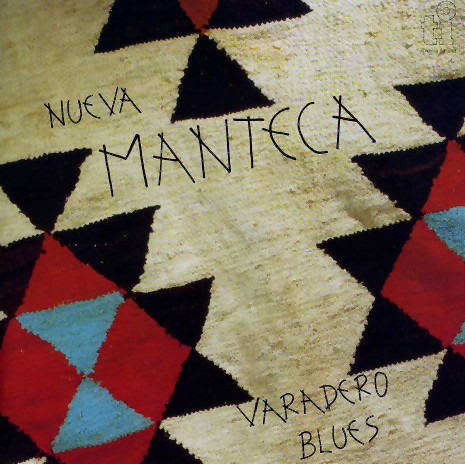
Nueva Manteca also included the famed beach in the title of one of its earliest CD’s - Varadero Blues [Timeless SJP 318]. The music on this 1991 CD consists mainly of Latin Jazz adaptations of songs from the Great American Songbook including Yesterdays, April in Paris and Just Friends, but it also brings forth Jan’s intricate arrangements of Jazz Standards such as Monk’s Round Midnight, John Coltrane’s Giant Steps and Lee Morgan’s beautiful ballad, Ceora.  The group also offers treatments of Latin Jazz staples such as Macumbia by Francisco Zumaque. The CD gets its title from Jan’s original Varadero Blues.


This posting represents another of our continuing efforts to highlight the many Latin Jazz adaptations that form the themes for Nueva Manteca’s music.


Jan Laurens Hartong contributed the following insert notes to Varadero Blues [Timeless SJP 318] which further explain its musical mission of fusing the primarily rhythmic aspects and styles of Cuban music with Bebop and Hard Bop.


“Ever since Jelly Roll Morton's 'Spanish tinge' reference, musicians have been fascinated by the idea of Latin-Jazz fusion.


In the 1940's, Cuban trumpeter Mario Bauza, musical director of the legendary Machito orchestra, started it all by inviting leading Bebop musicians as guest soloists, notably Charlie Parker. It also was Mario Bauza who brought his friend Dizzy Cillespie into contact with the Cuban cultus drummer Chano Pozo, resulting in the creation of the classic Cuban Bebop composition 'Manteca'.


In the 1970's, after the Beatles Era, Latin music became all the rage under the name Salsa. Capitalizing on this development, a number of New York top musicians co-lead by the brothers Andy and Jerry Gonzalez took up again the musical thread of the past, extending it further. The SoundScape, a warehouse loft on 10th Avenue, became the center of Latin Jazz experiments for many years. 


Mambo King Tito Puente formed his small Latin ensemble Heavily emphasizing the jazz idiom, In Cuba, after the Revolution, the musical world also got into turmoil: trap drums took a leading role in Cuban percussion and a group of progressive musicians from the Orquestra Cubana de Musica Moderna created the first prominent Cuban Latin Jazz band - Irakere. Soon the second generation followed : Grupo Afro Cuba, Proyecto, Emiliano Salvador quintet,


Inspired by these developments and by my own personal contacts,  I formed a 10-piece group in Rotterdam in 1982 called 'Manteca', named after the famous CuBop song, 


Its aim was to stimulate the Latin Jazz synthesis in Holland. Manteca succeeded to attain a top position in the Netherlands and also scored high internationally, performing at the First London Salsa Festival in 1986, In the course of time, the accent of our music had shifted more to Salsa dance music, In 1987, after returning from a second field trip to Cuba, I decided to change the band's musical direction, strongly inspired by the possibilities of using drums together with Latin percussion, A new band was created, a return to the original CuBop concept: the NUEVA MANTECA LATIN JAZZ SEPTET, 


As for the music : we work as much as possible with our own arrangements and concepts, expanding our horizon, by sometimes including other Latin traditions as well. Check out 'Macumbia' and 'April in Paris'. We also strive at reviving fairly unknown or forgotten Jazz pieces in a Latin way, for example 'Ceora'. We'd like to dedicate this recording to the memory of the great CuBop pioneers. - Jan L Hartong”


The following video features Nueva Manteca’s arresting rendition of Lee Morgan’s Ceora. 


Saturday, October 9, 2021

"Why Duke Ellington Avoided Music Schools" (1945)

 © Copyright ® Steven Cerra, copyright protected; all rights reserved.


"Fascinating.... Full of excellent writing."

- The New York Times Book Review


"An astounding book. An extraordinary leap in jazz studies and in the history

of race and culture in this century."                                    

-The New York Times


"One of the best teaching tools jazz has ever had.... Excellent."

- The Washington Post Book World


"A splendid view of both the man and his art."                          

 - The Economist


"The best interviews, reviews, and essays about Ellington...in an extraordinary volume for fans and scholars alike."                                                       - - Playboy


"Truly amazing....An absolute must."                                     

- David N. Baker, author of New Perspectives on Jazz


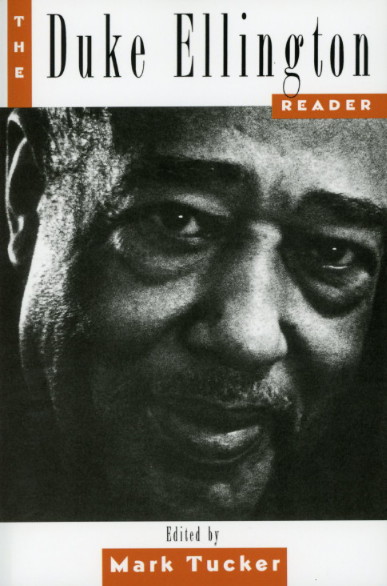
Duke Ellington is universally recognized as one of the towering figures of 20th-century music, both a brilliant composer and one of the preeminent musicians in jazz history. From early pieces such as Mood Indigo, to his more complex works such as Black, Brown and Beige, to his later suites and sacred concerts, he left an indelible mark on the musical world.


In  The Duke Ellington Reader, Mark Tucker offers the first historical anthology of writings about this major African-American musician. The volume includes over a hundred selections—interviews, critical essays, reviews, memoirs, and over a dozen writings by Ellington himself—with generous introductions and annotations for each selection provided by the editor. The result is a unique sourcebook that illuminates Ellington's work and reveals the profound impact his music has made on listeners over the years. Mark Tucker is Associate Professor of Music at Columbia University and author of Ellington: The Early Years.


This mid-forties portrait of the famous musician at home in Harlem has the standard ingredients of a personality piece: descriptions of Ellington's clothes, his taste in furnishings, even his breakfast preferences. Yet it also contains revealing statements by Ellington about the training of young musicians, the process of composing, and the relationship of jazz to "serious" music.


The piece, by an unidentified writer, appeared in the New York newspaper PM, published from 1940 to 1948. [Source: "Why Duke Ellington Avoided Music Schools," PM, 9 December 1945.]


“It was around 4 p.m. when we reached Duke Ellington's apartment on St, Nicholas Ave. the other day. The building he lives in has an old, ornate, rather dilapidated facade. The halls are narrow and dark, with tile floors.

Mr. Ellington was just getting up, the maid said. Would we wait? We said we would, and walked through an entrance hall painted a stark, gleaming white.

A small spinet piano stood against one wall of the hall. Fluffy yellow scatter rugs were on the floor. One set of French doors led into a bedroom with modern furniture in it. Another opened into the living room, also modern. One wall was lined with shelves of books.


When the Duke appeared he was wearing a red and orange flowered dressing gown with a yellow bath towel over his head. He ducked into the living room to ask if we wanted breakfast and we noticed the gold cross, which he always wears, on a chain around his neck.


"Four o'clock is a good time for breakfast," he said, "I always eat this time, I'm up all night writing."


He went away to take a shower, then returned a few minutes later immaculate in gray trousers, full and pleated around his fairly ample girth, and pegged in at the ankles. A white sport shirt was monogrammed in blue. The initials were E.K.E., for Edward Kennedy Ellington. The Duke won his nickname through the dandified dress he wore when he was a schoolboy in Washington.


We asked him about the following statement Mark Schubart had made in

the New York Times after the Duke's last concert at Carnegie Hall:

"There are those who seek in Mr. Ellington's music a growing affinity between jazz and serious music. Actually, the unmistakable style and distinction of his work is based on and derived from the jazz idiom only, and employs an instrumental technique utterly different from that of symphonic music."


The Duke listened to the quotation with a smile.


"I guess serious is a confusing word," he said. "We take our American music seriously. If serious means European music, I'm not interested in that. Some people mix up the words serious and classical. They're a lot different. Classical music is supposed to be 200 years old. There is no such thing as modern classical music. There is great, serious music. That is all.


"Critics are a funny bunch of people. They use words to their own advantage. They live in one world and we live in another. We don't understand what they are talking about. I don't think the public does, either. All music critics think jazz musicians are trying to get into the symphonic field. Ninety-nine per cent of the jazz people aren't interested in symphony techniques at all.


"Jazz is like the automobile and airplane. It is modern and it is American. I don't like the word jazz but it is the one that is usually used. Jazz is freedom. Jazz is the freedom to play anything, whether it has been done before or not. It gives you freedom. I remember in the old days when I was struggling to write something entirely new. I would try something that hadn't been done before. I felt like an intruder in a new land. No  — more like an illiterate.


"I'm not the offspring of a conservatory. I've avoided music schools and conservatories. I didn't want to be influenced away from what I felt inside. Back in 1915,1920 when I was getting started in Washington, there were two schools of jazz. There were the disciplined jazz musicians who played exactly what was written. They had all the good work. I got kicked out of a couple of those bands.


"Then there was another group of musicians that didn't know music. Some of them could only play in one key. But they played precious things. I was in between. My greatest influence came from the ragtime piano players. I was trying to play ragtime. That's what I was trying to do, but it came out a little different.


"I wouldn't have been a good musician if I'd gone to a conservatory and studied in the usual way. I haven't the discipline."


In that case, we said, why had he recently established three scholarships for graduates of New York high schools at the Juilliard School of Music?


"Things are different now," he said. "A musician coming along today has

to learn a lot. Even if he has loads of natural ability, he has to develop great

skill to be eligible for a good job. If he goes about it the way I did, it will take him much too long. Juilliard is a fine school. The people there are aware of American music. They won't hold anyone back. I developed the helter-skelter way. I don't think everyone should be allowed to do that. Most people learn faster and more at school."


The men in his band have been his strongest inspiration, the Duke said. Three of them have been with him since he started to attract public attention in 1927. [Harry Carney, Sonny Greer, and Fred Guy. Otto Hardwick was another longtime Ellingtonian still playing with the orchestra in 1945, but he had left the band between 1928 and 1932].


Almost all have been with him for more than 10 years. The unity of the Ellington band is apparent in all of the Duke's conversation. He uses the pronoun we much more than I. "We are more interested in folk music." "We play a lot of descriptive music." "We get a kick out of the jitterbugs and try to describe the different styles of dancing in our music."


"We've tried to absorb the styles of all the individuals in the band," the Duke went on. "I don't write for anyone else but the band. When I'm writing a trumpet part, for instance, I don't write within the radius of the horn, but for the man behind the horn.


"Our music grew out of the personalities in the band. We see an old man walking along the street. We play a song that goes with the man.

"Playing is demonstration," said the Duke. "But writing is the real thing. Writing is a matter of adjusting yourself, settling down to do it. You have to have a contented feeling. You get your mind set on writing, then you do it. There is no formula for it. I go for long stretches without writing. I'm a great procrastinator. I have great ideas, but nothing ever happens. Then I get an idea or I promise to do a piece and I do it. I try to write fast. Usually I work walking up and down, humming to myself and drinking Coca-Cola.


"I don't believe in working at the piano. A piano is more or less of a hindrance in composing. It limits you to what your fingers fall on. Unless you're an awfully good pianist, your suggestion is stunted. You're too apt to follow familiar harmony. I can imagine a lot of sounds I wouldn't play offhand on the piano."


Religion has helped him in his work, the Duke told us. He doesn't go to church, though; he "just believes."


"Religion helps my spirit of independence," he explained. "Helps me do things people call daring. For instance, say musicians just don't put a ninth in a particular place, and we do it. Religion helps me. I guess it gives me the proper inflation when I need it."


Negro life, rhythm and melodies have been an important source of his music, the Duke says, but he prefers to think of it as American music.

"Twenty years ago when jazz was finding an audience, it may have had more of a Negro character," he said. "The Negro element is still important. But jazz has become a part of America. There are as many white musicians playing it as Negro. Charley [Charlie] Barnet does so well on my stuff it sometimes scares me.[Bandleader Barnet (1913-1991) featured a number of Ellington (and Ellington-influenced) pieces in his repertory, among them The Sergeant Was Shy, Harlem Speaks, and Drop Me Off in Harlem.]


We are all working along more or less the same lines. We learn from each other. Jazz is American now. American is the big word."


Willie Manning, a wiry, middle-aged man in a big, double-breasted gray suit, who had been running in and out, giving the Duke telephone messages and arranging appointments, came in to insist that the Duke eat breakfast.


We went into the kitchen where the Duke ate an enormous plate of Shredded Wheat, sliced bananas and cream.


"I love a good breakfast in the morning," he observed. He also answered all telephone calls with "good morning." Just then, Willie reminded him that it was almost 6 p.m. and he had to broadcast.[The broadcast was probably from the Club Zanzibar, 49th and Broadway, where Ellington’s orchestra had been appearing often that fall.]


The Duke put on a roomy gray tweed sports jacket, a light beige camel hair overcoat and a porkpie hat. It wasn't until he had his coat on and was standing up beside us that we realized how big he is. He is tall (6 feet) and portly (200 pounds) and has the lazy ease of a large man who is not very active. His only exercise is walking down the four flights of stairs from his apartment to the street. "But I don't walk up," he added. "That would be too much exercise."”