Saturday, December 4, 2021

Dave Frisberg - 1933-2021 - The Washington Post Obituary

 © Copyright ® Steven Cerra, copyright protected; all rights reserved.
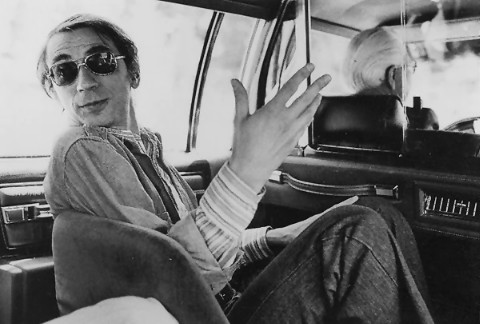

“Frisberg isn't much of a singer, but he is an excellent pianist and a very fine songwriter, and one can forgive the quality of the vocals on his own records, where he sometimes sounds like an older and jazzier Randy Newman. 


He studied journalism in college and after military service made his way to New York in 1957, where he worked as an intermission pianist in clubs before accompanying the likes of Ben Webster, Bud Freeman and Bobby Hackett. He arranged a beautiful album for Jimmy Rushing, The You And Me That Used To Be (RCA, 1972), by which time he had moved over to Los Angeles and begun making his own records, which subsequently emerged on Concord and Fantasy. His songs are a long drink of American wry, and beautifully pitched: they include 'My Attorney Bernie', 'Peel Me A Grape', 'Blizzard Of Lies', 'Quality Time', 'Do You Miss New York?' and his lyric for Bob Dorough's tune 'I'm Hip'. 


He has done his best to disprove the contention which a supply sergeant in the air force gave him: 'Jazz is okay, but it ain't got no words.'”

- Richard Cook’s Jazz Encyclopedia


Steve Larson concludes the brief annotation he wrote on Dave Frishberg for the Barry Kernfeld, ed, New Grove Dictionary of Jazz by noting that “Frisberg’s broad experience is reflected in his eclectic musical style and the wry wit of his lyrics.”


The following obituary by Matt Schudel, which appeared in the November 18, 2021 edition of The Washington Post, does justice to both by way of explanation.


“Dave Frishberg, a jazz pianist and singer-songwriter whose playful lyrics and inventive melodies about romantic languor, annoying hipsters and too-slick lawyers became standards beloved by wry sophisticates and who also gained an unlikely following among the Saturday-morning cartoon crowd with his whimsical look at how legislation is passed, “I’m Just a Bill,” died Nov. 17 at a hospital in Portland, Ore.


The death was confirmed by his wife, April Magnusson, who declined to specify the cause.


Mr. Frishberg began his career as a versatile pianist who wrote advertising jingles on the side. In the early 1960s, while working with such jazz stars as saxophonist Ben Webster, drummer Gene Krupa and singer Carmen McRae, he began to write songs in a distinctive style that set him apart from other composers of the time.


“They are new American songs,” jazz critic Whitney Balliett wrote in the New Yorker in 1986, describing the broad musical and emotional terrain covered by Mr. Frishberg. “Some are extremely witty, some are extremely funny. Some are fits of nostalgia. Some are lamentations. Some are cautionary. Some are highly satirical. Some are love songs in disguise.”


Shimmering moonlight and kisses in the rain never show up in Mr. Frishberg’s lyrics. Instead, he was more likely to take a sardonic view of the demands of love. When singer Fran Jeffries asked him to write a slinky song in 1962, Mr. Frishberg came up with his first well-known song, “Peel Me a Grape,” which is suffused with a feeling of haughty allure:


Pop me a cork, French me a fry …

Chill me some wine, keep standing by

Just entertain me, champagne me

Show me you love me, kid glove me

Best way to cheer me, cashmere me

I’m getting hungry, peel me a grape.


The song has been recorded by more than 80 performers, including Anita O’Day, Dusty Springfield and Shirley Horn, and it became a signature tune of cabaret singer Blossom Dearie and, more recently, jazz star Diana Krall.

Mr. Frishberg ignored musical fads and changes in technology, preferring to use pencil and paper to piece the words and music together, while sitting at his piano. “I write songs as if we were in 1936,” he once said.


“In the pop and jazz sphere,” New York Times critic Stephen Holden wrote in 2011, “the level of craftsmanship in Mr. Frishberg’s songs is equaled only by that of Stephen Sondheim. Every phrase is chiseled, each word sealed into place.”


He usually wrote both the music and lyrics, but he sometimes collaborated with other songwriters, including Johnny Mandel. In 1966, Mr. Frishberg added words to a tune by jazz musician Bob Dorough and came up with “I’m Hip,” which remains a timeless put-down of pompous trend chasers:


Like dig, I’m in step

When it was hip to be hep, I was hep

I don’t blow, but I’m a fan

Look at me swing, ring-a-ding-ding

I even call my girlfriend Man, 'cause I’m hip


Mr. Frishberg updated the lyrics over the years, adding a new line near the end — “Better show this to Quincy” — as if the self-congratulatory hipster were tight with music producer Quincy Jones.


In another of his songs, “My Attorney Bernie,” Mr. Frishberg satirized a Hollywood stereotype who’s “got Dodger season boxes and an office full of foxes.” (He also managed to rhyme “ventures” with “counterfeit debentures” in that song.) He strung a series of insincere clichés together for “Blizzard of Lies,” a rueful look at modern life: “You may have won a prize, won’t wrinkle, shrink or peel, your secret’s safe with me, this is a real good deal.”


Few of Mr. Frishberg’s songs were written in the first person or delved into his personal experiences. “Every song you hear today is about the way the songwriter feels … about some great epiphany,” he told the Record newspaper of Bergen County, N.J., in 1994. “Those kind of songs are boring. They really are.”


At times, Mr. Frishberg cultivated a wistful, retrospective mood, as in “The Dear Departed Past,” where he longs for a time “when basketballs had laces” and “when every sky was bluer … when every friend was truer.” He once composed a song, “Van Lingle Mungo,” that consisted entirely of the names of 37 long-retired baseball players, dropped like jewels into a lilting Brazilian rhythm.


After years as a sideman in jazz groups — which inspired his tune “I Want to Be a Sideman” — Mr. Frishberg began to perform as a singer in the 1970s, always accompanying himself on piano. He had a reedy, nasal voice with little resonance or range, but he became an engaging and laconic interpreter of his own songs. He was nominated for four Grammy Awards and often appeared in concerts, clubs and cabarets.


Yet, of the all the songs he wrote, the one probably best known to the public was composed for the children’s educational television series “Schoolhouse Rock!” “I’m Just a Bill,” sung exuberantly by Jack Sheldon, offers a whimsical look at how legislation is passed:


Well, it’s a long, long journey to the capital city,

It’s a long, long wait while you’re waiting in committee.

But I know I’ll be a law someday.

At least I hope and pray that I will,

But today, I am still just a bill.


David Lee Frishberg was born March 23, 1933, in St. Paul, Minn. His father, a Jewish immigrant from Poland, owned a clothing store, where his mother was the bookkeeper.


Mr. Frishberg took an early and eclectic interest in music, listening to an older brother’s boogie-woogie jazz records and to the comic operas of Gilbert and Sullivan. He was 8 when he began to study classical piano.


“Then one day I put a Mozart piece into conga rhythm — da da da-dum, da da da-dum,” he recalled to the New Yorker in 1986. “I played it at my lesson, and I was bawled out. I couldn’t believe that doing such a thing was wrong, so I quit practicing and eased out of the lessons.”


He continued to play piano and began working professionally while still in high school. He took music courses at the University of Minnesota, where he majored in journalism. After his graduation in 1955, he spent two years in the Air Force in Utah and began to write advertising jingles for radio. He moved to New York in 1957 and was soon working with notable musicians. During the 1960s, he appeared regularly in jazz clubs and was the pianist for several years in a much-admired group led by saxophonists Al Cohn and Zoot Sims.


In 1971, Mr. Frishberg moved to Los Angeles to write for a short-lived TV comedy sketch show, “The Funny Side,” hosted by Gene Kelly. He wrote for other television productions and spent two years as a pianist with Herb Alpert and the Tijuana Brass. By the time he made his first return visit to the East Coast, he had written “Do You Miss New York?,” a widely recorded song with a bittersweet tone of regret: “Do you miss the scene? The frenzy, the faces. And did you trade the whole parade for a pair of parking places?”


To escape the congestion and high prices of Los Angeles, Mr. Frishberg moved with his growing family to Portland in 1986. He stopped performing after a mild stroke in 2014. Three years later, he published an autobiography, “My Dear Departed Past.”


His marriages to Stella Giammasi and Cynthia Wagman ended in divorce. In addition to Magnusson, his wife of 20 years, survivors include two sons from his second marriage.


When Mr. Frishberg began to write songs, he received encouragement from Frank Loesser, the composer and lyricist of the stage musicals “Guys and Dolls” and “How to Succeed in Business Without Really Trying.”


Loesser and Johnny Mercer were the songwriters he admired most because they “knew that good lyrics should be literate speech that says something in a lyrical way,” Mr. Frishberg told the New Yorker. “They knew that good lyrics come up to the edge of poetry and turn left.”


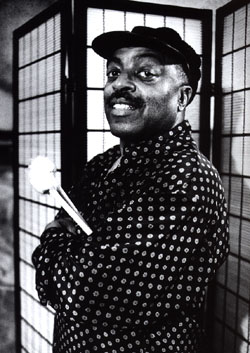
Friday, December 3, 2021

"John Scofield: It's Magic" by Mike Zwerin

 © Copyright ® Steven Cerra, copyright protected; all rights reserved.


The late Paris-based jazz musician and International Herald Tribune writer Mike Zwerin posted a 41-week series entitled Sons of Miles to Culturekiosque Jazznet. In this series, Zwerin looks back at Miles Davis and the leading jazz musicians he influenced in a series of interviews and personal reminiscences. Here is the John Scofield piece in that series. It was published on September 3, 1998 so add 20+ years to any math in the article.


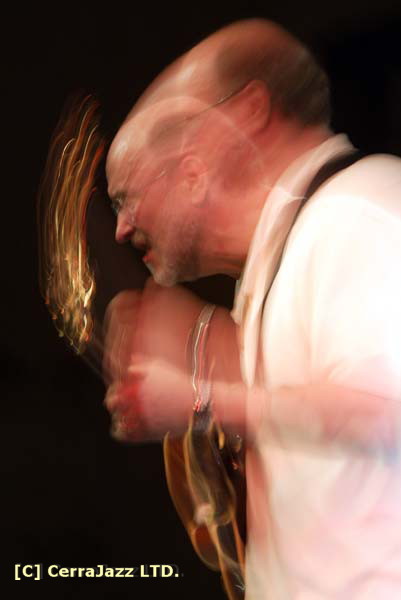
“John Scofield picked up a guitar in 1962 at the age of 11; it was a role waiting to be filled.


Playing electric guitar was about to become a major macho pose, like throwing a touchdown pass or hitting a home run. It was something little boys mimed in the air without a prop. "Look at me, ma, I'm Jimi Hendrix." It proved how masculine you were, that you could distort and feed back and if your father made enough money you could destroy a guitar or two. Burn it. Guitar players took names like Slash.


It was also more than a pose. The guitar would soon overtake the saxophone as the major instrumental voice of our times. Guitar heroes were coming of age, coming out of the woodwork thanks to Chuck Berry, Muddy Waters and Eric Clapton, Keith Richards and on and on. To say nothing of Elvis. It was the pose of coming of age. Like firing a Kalashnikov.


Except for Charlie Christian and Wes Montgomery, with Jim Hall and Jimmy Raney on the sidelines, the jazz guitar was still just part of the rhythm section. In the classics, Segovia was something of a curiosity. If you didn't play rock, forget it. You were a 90 pound weakling.


The young Scofield was knocked out by early Beatles and Ricky Nelson. He watched Peter, Paul and Mary and the Kingston Trio on television and plugged into the folk phase. There were no teachers in tiny Wilton, Connecticut, where he was growing up, so he taught himself. He listened to Delta blues, the so-called "hippy jazz" of Charles Lloyd and early fusion guitarist Larry Coryell. He played with rhythm and blues bands in high school.


At the turn of the decade, Sco's quartet performed for a packed house in the New Morning in Paris after 40 one-nighters in 15 countries in 44 days. At the same time he celebrated - paraphrasing Ronald Reagan - the 10th anniversary of his 29th birthday. It was a good time to take stock.


John Scofield has become arguably the most influential jazz guitarist. Better known, a bigger draw, the guitar megastar Pat Metheny still told me that as far as he's concerned "Sco is the main man." Metheny's main man is a...MAN!


Scofield learned to be at home with difficult articulation in non-guitar key signatures. Expanding Johnny Smith's sweet monotony, he combined John Coltrane's harmonic advances with the textural innovations of Jimi Hendrix.

Not the least of it, he had also learned how to play 40 concerts in 44 days without drugs (he even stopped smoking cigarettes). There's a lot of strength under the surface of this good-natured, soft spoken family man with the high forehead and ready smile. He makes it sound simple:


"Psyching yourself up with dope is dumb. I did that long enough. It doesn't work. Your timing has to be perfect. You want to get a little numb, but not so numb that the music stops flowing out of you. You're always tuning yourself. It's too much work, you find that you think about nothing else and it screws up your body too. It's not practical and you pay too much. So now I just try and keep cool."


If you get stoned too early you come down too fast - too late and it doesn't hit in time. Cool is the operative word here.


Graduating from Boston's Berklee College of Music in the early '70s, he played with Chet Baker, Gary Burton and Charles Mingus; with McCoy Tyner and Dr. John. He was basically a bebopper, "something of a purist." But then Miles Davis "turned me around, said I was bluesy and got me into wah-wah pedals, back-beats and heavy electronics."


His reputation took a quantum leap in the early '80s when he became a collaborator more than a sideman for three years with Davis, who admitted to building tunes from Scofield's improvisations. Rather than feeling ripped off, Sco was flattered.


After he left the band, however, the trumpeter began to bad-mouth the guitarist in the press. He said, in effect, the Sco was too cool; he said he played behind the beat. He said it and said it and said it - though implying it was not really Sco's fault, poor boy. He's white.”


Thursday, December 2, 2021

"Dave Holland: The Power Behind the Throne" by Mike Zwerin

 © Copyright ® Steven Cerra, copyright protected; all rights reserved.


The late Paris-based jazz musician and International Herald Tribune writer Mike Zwerin posted a 41-week series entitled Sons of Miles to Culturekiosque Jazznet. In this series, Zwerin looks back at Miles Davis and the leading jazz musicians he influenced in a series of interviews and personal reminiscences. Here is the Dave Holland piece in that series. It was published on January 28, 1999 so add 20+ years to any math in the article.


“Bass players hold the secret power behind the throne. They control the one absolutely essential element, a role not exactly obvious to everybody. This pleases them a great deal.


Playing bass requires a peculiar personality. You can generalize about it with less danger than most generalizations. Despite the occasional grandstander, they are team players who flourish in the background. Bassists are less competitive than other instrumentalists.


Listeners go to the bathroom during a bass solo. And there has to be some masochism somewhere in anybody willing to lug that coffin around. They are not looking for glory; they know, if you don't, that they already have it. Constructing their central bridge between melody, harmony and rhythm, they are by necessity involved with totality. They control the music.


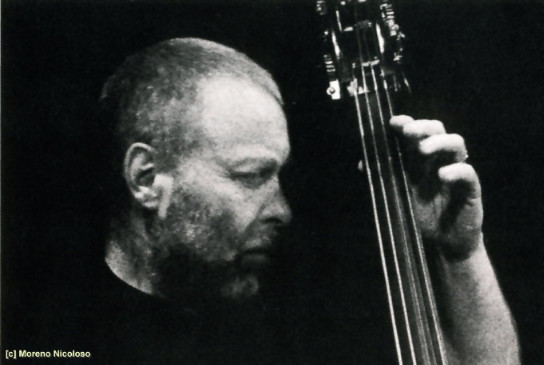
Dave Holland controls it with more intelligence, power, variety and modesty than most. If you're absolutely forced to pick a "best," he'd be a prime candidate. He has made a living in all sorts of contexts including Bach, Trad jazz in his native Britain (he now lives in upstate New York), Eurojazz and M-BASE avant-garde music in New York City. Everything, everywhere, with everybody.


He took a great deal of pride in his years with Miles Davis. A few years after Miles died, he went on the road with the Miles Davis Tribute Band - Herbie Hancock, Wallace Roney, Wayne Shorter and Tony Williams. I asked him what he thought about Miles's "Doo-Bop," an unfinished album completed after the trumpeter's death. It is an example of a new style being called by an unstylistic name - in this case "new jazz swing." It is rap combined with a chord here and there, horns and jazz feeling. Industry spokesmen predicted it would become a "contemporary expression of the jazz idiom" and "give birth to a new generation of progressive jazz musicians." (It did not. Never mind.)


"I'm not a good person to ask about Miles," Holland replied. "Because every time he played his horn, even only one note, magic happened for me. It didn't matter what was under or over it."


Holland's voice resonates like the weathered wood instrument he plays. His verbal cadence swings, punctuated by frequent smiles. He is accustomed to thinking in terms of the bottom of things. So many smart superstructures have rested on his roots: "Whatever you call this music and whatever it is, it's still basically only a variation, a logical extension of the kind of funk James Brown initiated. Music keeps changing. Each generation has to redefine the elements of rhythmic feeling. Things have got to change and we have got to be prepared to recognize those changes."


This reveals a striking capacity for acceptance for someone who once led a band - John Blake, violin, Fareed Haque, guitar, and Mino Cinelu, percussion - which was, on the surface anyway, diametrically opposed to the music we were discussing. They played soft, hypnotic music based on a variety of traditional elements which, Holland says, "stressed the feminine aspect. A certain gentleness, an unaggresive approach which did not go out and punch people in the face and provoke hysteria. I like there to be some calm in the room."


He stopped and then emphasized, a bassist all the way: "It's very important that you do not make me out to be the leader of this group. I put the four people together to begin with, but we were the sum total of our directions. Our strength was diversity, we brought multidimensional diversity to the music. We were all in it together."


Although Miles's "New Jazz Swing" was anything but calm and diverse, Holland considers rap creative when well done and rich and at its best. He tries to "separate the here and now from something that will still be relevant in 50 years." He tends to give optimism the benefit of the doubt:


"Take a Manhattan sidewalk. New York is a concrete city. Yet wherever you find a crack in the concrete, something grows out of it. Maybe it's only weeds, but that sign of nature's urge to create is an expression of life force amidst the barrenness of modern existence."


"Steam also comes out of the cracks in the concrete," I said.


He laughed, and looked at me bemused, as if to say, "if that's the way you choose to look at life," and replied: "That's true. But I think there will always be the need to express nature's positive force. There has never been more or less need, always the same amount. We're battling a lot of negative things at the moment - incredible materialism, for example. There is no lack of obstacles. But we've always had those obstacles.


"I'm an optimist. Because in a way, the more critical things become, the more creativity strives to be expressed. Light can shine brightest in the darkest moments. I don't think we have to worry. A lot of people wish the music was still like it was in the '50s. There's no way that can be. A renewal may not take the form we expect. As artists, we have to be sure to keep an open mind."


Remembering Lord Buckley referring to something "straining the limits of our practiced credulity," I said: "There's a difference between keeping an open mind and liking something just because it's new. People are afraid of being left behind. They feel threatened. If I don't like this music, does that mean I'm losing touch? Does it interest me really, or do I just want to make sure I'm still 'with it?' An 'open' mind can be an empty mind."


"As far as I'm concerned," Holland replied, "an instrument creating sound in a natural unamplified way is going to be more meaningful than a sampled or synthesized sound. But I still play bass-guitar. I played it on a tour with Jack DeJohnette, Herbie Hancock and Pat Metheny. A composition can be structured for an electric instrument. I played it the last year and a half I was with Miles. It was my first instrument, I started on bass guitar.


"But the sound of an acoustic bass hits me very emotionally. My fingers resonating the strings and the wood responding to that is something very special to me. I like nature, and I like natural things. That's a personal point of view. But you have to try and transcend that. I'm not necessarily critical of that other thing. I may just prefer this particular thing. As long as it's done artistically, that's my only criterion. You have to perceive the intention of the music. Music performs many different functions.


"The relevance of any given musical situation means taking the creative flows of the individual musicians and putting them together in a way that makes sense. One thing I learned from Miles is that when a piece is finished it is only the beginning. Every night we would add another chapter. Songs kept evolving to incredible places. These are the kinds of places I'm looking for. I don't really care what they're called."”


Tuesday, November 30, 2021

"JACKIE McLEAN: Sugar Free Saxophone" by Mike Zwerin

 © Copyright ® Steven Cerra, copyright protected; all rights reserved.


The late Paris-based jazz musician and International Herald Tribune writer Mike Zwerin posted a 41-week series entitled Sons of Miles to Culturekiosque Jazznet. In this series, Zwerin looks back at Miles Davis and the leading jazz musicians he influenced in a series of interviews and personal reminiscences. Here is the Gerry Mulligan piece in that series. It was published on September 24, 1998 so add 20+ years to any math in the article.


“PARIS - Jackie McLean was looking for the common tone, to be able to move between all 12 tonal centers with total freedom and under complete control. The listener should know nothing about this. In order for this to work, the force must be emotional not technical.


One night, during his two weeks at the Magnetic Terrace here in Paris, he felt he got pretty close to something he's been searching for for a long time. But those breakthroughs come and go and maybe don't really come at all and after a few days had passed he was no longer so sure. Anyway he's still playing and trying.


McLean is among the few remaining evergreens with enough will and force to motivate themselves night after night despite age, a demanding métier, prejudice, tangents and contrary trends. His alto-saxophone style combines the solid texture of Sonny Rollins's tenor and the fluidity of Bud Powell's piano - shorthand, but true enough as far as it goes. His angular-phrased tough, seductive, sound is as unmistakably recognizable as anybody active today. He calls it "sugar free."


Which may or may not have Freudian implications because he grew up on Sugar Hill, once a noble corner in Harlem which then soured into drugs and shoot-outs. "The streets were clean when I was a kid there," he said, at once proud and sour about it.


"Duke Ellington, Nat Cole and Don Redman lived in the neighborhood. People cared about our neighborhood."


McLean, who was born in 1932, heard Charlie Parker at the age of 14 and "the first time that name came out of my mouth I knew at that moment I was going to be a musician." Five years later, he joined Miles Davis.


Looking back, he wondered: "How did I do it that fast?" He was fast and furious in his early 20s. "When I was strung out on dope my horn was in the pawn shop most of the time and I was a most confused and troublesome young man. I was constantly on the street, in jail, or in a hospital kicking a habit.


"The New York police had snatched my cabaret card and I couldn't work the clubs any more except with [Charles] Mingus who used to hire me under an assumed name. [He can be heard already moving between tonal centers on Mingus's record 'Pithecanthropus Erectus' in the '50s.] The thing that saved my life was a Jackie McLean Fan Club started in 1958 by a guy named Jim Harrison. I didn't have a big name or anything but he collected dues and he'd rent a hall once a month and present me in concert."


McLean played the saxophonist - four years at $95 a week - in the first Living Theater production of the "The Connection," an off-Broadway milestone which cast a new perspective on the nature of make-believe.


The junkie hustling the audience in the lobby turned out to be an actor, the hostile woman in the mezzanine was part of the cast. Some of the actors were addicts, but you weren't sure who. Actors playing characters on stage never looked the same again. "I fell in love with theater then and there," McLean said. "Even my saxophone playing became a lot more theatrical after that."


Remembering how lean and mean he looked in those days, like an early James Dean, and seeing him turn 60 with a girth approaching the late Sydney Greenstreet, it was astonishing how the lust to take risks can be, if anything, greater 35 years later. There has never been and there certainly was not now anything approaching fat or phlegmatic about this man's head.


The following is a story about the old days told without punctuation during a run to a pharmacy to buy a cornucopia of homeopathic medicines (similar runs were once made for cough syrup or a lot worse):


"Sonny Rollins and me were sitting in this club and suddenly the door opened and it's Sonny Stitt and he said 'okay I've been waiting for this,' and he had an alto under one arm and a tenor under another and it was like 'High Noon' or something and he said 'you're both hot stuff from New York and you both think you can play well I'll take on both of you up on the killing stand come on get up there on the killing post both of you.'"


Those were tough and competitive times and survival was day-to-day. Stitt did not survive, while McLean and Rollins were still picking up steam, combining honed intelligence with renewed energy at an age when most men are well into retirement.


It may or may not be coincidence, but both had strong wives who managed their careers. McLean said his wife Dolly "stood up when other women would have crumpled, or killed me. For years, she was the one who worked day jobs to keep us and our three kids together. I really owe her."


Both McLean and Rollins also paced themselves by retiring from full-time playing for years during their middle age. Rollins periodically left for such places as India, upstate New York and the Brooklyn Bridge [sic, it was the Williamsburg Bridge] which connects Manhattan and Brooklyn] to meditate. McLean joined the faculty of the highly rated Hartt School of Music of the University of Hartford in Connecticut in 1970, and he became chairman of its African-American music department.


The department was established, he had a National Endowment for the Arts grant for his chair and he could afford to bring in guest lecturers when he was away. So he "came back on the scene for real. My original mission is still the same. I intend to try and continue to be significant on the instrument.


Not just 'Jackie McLean, oh I remember him.' But to be at the forefront of the horn. I'm ready to kick the doors down."”


Saturday, November 27, 2021

"SONNY ROLLINS : Saxophone Colossus" by Mike Zwerin

 © Copyright ® Steven Cerra, copyright protected; all rights reserved.


The late Paris-based jazz musician and International Herald Tribune writer Mike Zwerin posted a 41-week series entitled Sons of Miles to Culturekiosque Jazznet. In this series, Zwerin looks back at Miles Davis and the leading jazz musicians he influenced in a series of interviews and personal reminiscences. Here is the Sonny Rollins piece in that series. It was published on July 30, 1998 so add 20+ years to any math in the article. 


Sonny Rollins: Saxophone Colossus


“PERUGIA, Italy - Sonny Rollins held or, it sometimes seemed, was held by a press conference during the Umbria Jazz Festival. No fan of the conferential format, he had obviously resolved to be patient with impertinent questions.


Asked how he feels about the growing number of jazz festivals, he answered with the evident: ''They are putting a lot of musicians to work. This is a good thing.''


Rollins was one of the monsters, a quick-witted player with big ears and sturdy roots. More than a spinner of tales, he was an inventor of improvisational language. His robust sound is an immediately recognizable franchise. History, however, has at least temporarily passed him by. You can sense an underlying bitterness along with his considerable intelligence and deep-felt spirituality (he studied in India and Japan for three years).


He adjusted his dark glasses, reflected for a beat, and added: ''We try and make it easier for our children so they won't have to pay the dues we did. This may hurt them in the long run. It has occurred to me that maybe young people are not suffering enough. Don't get me wrong, I'm just saying you reap what you sow. There are so many distractions - Internet, video games, CD-ROM, TV. It's become easier to escape responsibility. As you may have guessed, I'm an anti-technology person.'' He drained a glass of water and said: ''So shoot me.''


He lives with his wife on an isolated farm in upstate New York. Most days he retires to his studio to practice, compose and meditate while she handles the business and the necessities of life. He limits his appearances; this concert in Perugia was rather an event. He and his wife remained mostly in their hotel room, though, relying on room service. From what he said and the way he said it, it would seem that he is more concerned with being in touch with himself than with contemporary music or events.


''Too self-critical'' to listen to his own albums, in recent years he hasn't listened to much music by others either: ''There's so much music in my mind, there's no room for more. I'm trying to create my own music.''


Asked about whether he often thinks about death, the 65-year-old ''Saxophone Colossus'' said he believes in reincarnation. He is trying to live a better life this time around. ''Death is easy,'' he said. ''Living is hard.''


While on the subject, he cited the fabled 1950s quartet with Max Roach, Clifford Brown and Richie Powell (Bud's brother) and said he had been ''terribly shattered'' when Richie Powell and Brown were killed in a car crash. He has summoned Brown's spirit for inspiration ever since. In high school he rehearsed with Thelonious Monk after class, and he played with Miles Davis while still in his teens. He summons their spirits too.


''I think about these people all the time. Since I was blessed to have played with them, and since I am one of the few players from that era remaining, I feel a responsibility to keep my music on as high a level as possible in their honor. So I have an added burden. I must represent them as well as myself.''


''Every now and then,'' he said, he dreams about John Coltrane, which is interesting because, while not exactly competitors, they were rivals. Saxophonists felt somehow obliged to make a choice between them, to sound like one or the other; like the choice between Coleman Hawkins and Lester Young in the '30s.


Folklore has it that Lester ''defeated'' Hawkins in a cutting contest during a jam session in Kansas City. True or not, after that Lester became the prime influence on the following generations (Stan Getz, Dexter Gordon, Branford Marsalis). One of the few successors to have successfully tamed and knit Hawkins's full tone, breathy vibrato and songlike phrases into bebop, Rollins suffered a similar ''defeat'' after recording the classic ''Tenor Madness'' with Coltrane in 1956 (their only track together). Of course all of this is oversimplified. But still.


Trane's ''sheets of sound'' were more modern, free-wheeling and seductive. Rollins continued to develop, restructure and recapitulate themes - very 19th century and very hard to do, like some sort of improvised sonata form. At the same time, as his luck would have it, there was a general decline of melody in popular music. Rock songs were often mere riffs; Miles Davis pared melodies down to three or four notes; melody played no part whatsoever in rap. Sound-bit listeners did not have the patience to wait for melody to recapitulate.


And somewhere along the line, Rollins lost his consistency. Now he'll do what Sonny Rollins used to do, but often overdo it. His melodic fragments can be more fragmented then melodic. Still capable of producing goose-bumps, he can no longer be relied on for it. On stage in Umbria, for example, he took the audience on a tour of Calypso hell in the eye of a hurricane of self-parody on his hit ''St. Thomas'' before reaching full prime-time stride on ''Long Ago And Far Away.''


Meanwhile, back at the conference. Instead of replying ''none of your business,'' he decided to deal with a question about his political preferences; about Bob Dole passing up the opportunity to address the NAACP:


''The problem is beyond racism. It's consumerism. We are destroying our planet to acquire more material goods. Racism is part of this - more goods for me, less for you. And as a black person, racism affects me personally. But consumerism affects my descendents and the entire planet.


''Politicians are only concerned with immediate growth and profit. I don't think I'll vote this year. This business about the lesser of two evils is out of date. I don't want to vote for the evil of two lessers. I'll make my contribution with music. I think it is possible for jazz to reach people on a deeper level than entertainment. We should work to make it more than merely diversionary.''


He finally snapped in response to a question about O.J. Simpson: ''What does that have to do with anything?''


Friday, November 26, 2021

"ROY HAYNES : No Beats to Waste" - Mike Zwerin

 © Copyright ® Steven Cerra, copyright protected; all rights reserved.


Roy Haynes


The late Paris-based jazz musician and International Herald Tribune writer Mike Zwerin posted a 41-week series entitled Sons of Miles to Culturekiosque Jazznet. In this series, Zwerin looks back at Miles Davis and the leading jazz musicians he influenced in a series of interviews and personal reminiscences. Here is the Roy Haynes piece in that series. It was published on October 29, 1998 so add 20+ years to any math in the article. 


Roy Haynes: No Beats to Waste


"Stan Getz liked my beat, he loved to play with Roy Haynes," says Roy Haynes, who likes the sound of his Third Person.


Positive subjective judgments sound more objective from that perspective. In his case, the sound itself implies stature. Lester Young told him: "You should be called the Royal of Haynes." Roy Haynes is the only drummer to have played with (not all at the same time) Louis Armstrong, Lester Young, Charlie Parker and John Coltrane.


Others also tend to refer to him with both names, running them together, syncopated - Royhaynes, accent on the "Ro." It sounds like him. Dorothy Donegan says he's getting to look more like Count Basie drummer Jo Jones every day. Which means to say royal, clean, crispy.


His discreet, flexible tatoo controls the time and space and the dynamic of whatever formation he's part of. He's compact, energy-packed, confident. He chooses his shots. He's a warrior, the battle plan is his: "Remember Town Hall a few years ago? You were there. I put Michel Petrucciani in the pocket. I'm known for putting cats in the pocket. That's what I do." (The "pocket" is the place where the pool-ball of tempo should be shot.)


It started in 1944 at the age of 18 with Frankie Newton and Sabby Lewis in his hometown Boston. His style eventually became so pervasively subversive that, without being known as a leader, or even a "star," he is behind certain key elements common to an eclectic list of people including Art Pepper, Sarah Vaughan, Chick Corea, Thelonious Monk, Eric Dolphy and Gary Burton (Larry Coryell, Steve Swallow and Roy Haynes were the rhythm section for Burton's mid-'60s groundbreaking jazz-rock fusion efforts). From 1961 to 1965, he was Elvin Jones's principal substitute with the John Coltrane Quartet.


Trane described his time as "spreading, permeating." Leaving Charlie Parker to form his own band, Max Roach advised his boss: "Hire Roy Haynes."


The British critic Brian Priestly wrote: "Roy manages to be intelligently insistent and provocative in accompaniment without overpowering the soloist." Jazz Hot magazine put him on its cover when he arrived in Paris in 1954 with Sarah Vaughan. (Roy Haynes was impressed with a culture interested in the drummer, not the star.) "Roy Haynes should be immortalized," said Sonny Rollins. "I can dig his statue somewhere, like the one of Sydney Bechet in Antibes."


Although universally acknowledged as a prime mover by soloists, leaders, critics and other drummers, the general public has never truly appreciated his stature. When I asked him why he thought that was, he looked at me with astonishment: "You think I'm not appreciated? Man, you must be getting out of touch, living here in Paris.

"I was giving a lecture for a workshop in Massachusetts and when they announced 'Roy Haynes,' the kids shouted - kids are so hip these days - they shouted 'Yeah yeah yeah' and cheered and applauded. They just went crazy. I got a standing ovation for just standing there. I hadn't even played yet. It just happened. Boom!"


After hearing him in Chicago one night, a reporter from Down Beat magazine said he didn't know he could play like that. Haynes did not consider this a compliment: "You know, I'd been doing it for a long time. And he wanted to know where I'd learned it. Man, a lot of drummers copped my important stuff. I was there first."


He had the distinct impression that the reporter was surprised he could do an Elvin Jones impersonation so well. But Roy Haynes knew for a fact that Elvin had been listening to him play that way back in the '50s, before anybody else was doing whatever you call it - "spreading the rhythm," "suggesting the beat," "elastic," "melodic," "permeating."


This is the way the most advanced drummers like Jeff (Tain) Watts (with the Marsalis brothers) and Jack DeJohnette play now. Any credit withheld from him is not the drummers' fault, they all admit their debt to Roy Haynes. But it's been going on so long and it just got to him this time. He couldn't resist telling the reporter: "I think you should talk to Elvin about that."


"I'm an uncrowned king," he says, head held high. "I don't have to win any polls to know that." He does not win many. "I'm cool, I know. I've been to the mountaintop."


Along the way, he began to dress like royalty - custom-made suits, Italian shoes, sharp hats. Esquire magazine put him on their best-dressed list. Along with Miles Davis, one of only two African Americans, and only two jazzmen. The New York Times referred to him as "the dapper drummer." he started to suspect that he was better known for his clothes than his drumming. It got to be a "mixed blessing, still is. If I have a hole in my sock, some girl will say: 'Hey, I thought you were supposed to be well dressed.'


"I have a 10-speed bike, quite a few grand-children, and two Doberman pinschers. I have an original 1974 Malcolm Bricklin car. You know, he was De Lorean's buddy. I win prizes with it. I live in Freeport on the south shore of Long Island, not far from where Guy Lombardo used to live. I don't work a lot. I don't have to. I've made myself comfortable. It's good for the mind to play music, but now people are asking me to back up singers and do all-star tours with a whole bunch of horn players. That stuff is not good for the mind. I need time to think and dream. I'm a dreamer.


"Some agent called and asked me to lead a sort of Art Blakey ghost band, he even suggested I get some of the guys from the Jazz Messengers. His point is it would make a lot of money, and he does have a point. But why should I do that? It doesn't mean anything. This cat has got to be joking. Man, I played with Bird, with Trane, I played with Billie Holiday. Art Blakey used to admire me.


My career is catching up with me. I call my own shots. I only play on Roy Haynes dates. I'm the leader. I do what I want to do when I want to do it. When I play, it has to mean something. Let it float like a balloon. I'm talking about jazz. Other people did it, but Roy Haynes did it and did it and did it.


"I don't like to pin compliments on myself, but..." Yes he does: "...But I'm one of the last innovators from the '40s who's still out there saying something new. I couldn't really be myself with Trane or Getz because my job was to accompany them. They came first, that was my role. And it was cool. They didn't need a drummer juggling between his right and left feet and hands getting in their way. But my kids are grown up, my mortgage is paid and now I don't have to worry about making anybody sound good but myself.


"I have a good band now. Young guys, they play the way I like. Anybody else wants me to play with them, it has to be somebody I respect, somebody who wants to take risks like I do. Guys like Pat Metheny" on "Question And Answer," with Dave Holland, bass, Geffen Records. Dig it. This is my religion. It's what I believe in. I don't waste beats. Roy Haynes has no beats to waste."”