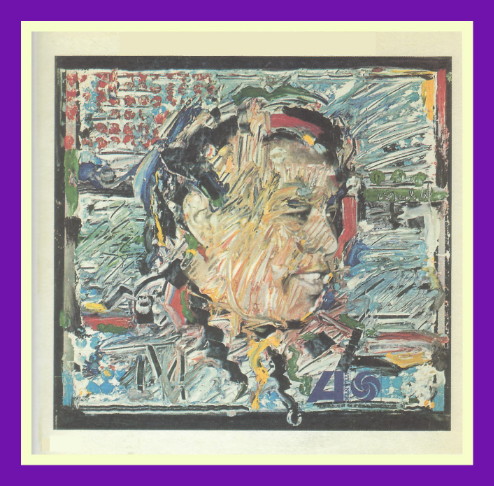
Tuesday, May 3, 2022

Jazz in the Sixties - Duke Ellington in the Sixties

 © Copyright ® Steven Cerra, copyright protected; all rights reserved.


If you were a recent high school graduate looking forward to a career as a Jazz drummer when the 1960s dawned, chances are that when the decade was over you would have moved on to other things.


For in a mere 10 years, the vibrant Jazz scene with its many clubs, concerts and festivals would have been reduced to a shadow of its former self as the burgeoning Rock ‘n Roll styles began to hold sway over the listening and dancing public as the decade progressed.


Ten years earlier, the advent of the 1950s marked the demise of the big bands as the preferred form of Jazz and now, in less than a generation, Jazz had also lost its small group audience and become an “art form” preferred by a select few.


What happened and how it happened in the decade of the nineteen sixties is superbly summarized in the following excerpts from Mark Tucker’s booklet notes to the Mosaic boxed set - Duke Ellington: The Reprise Recordings [Mosaic MD5-193]. In them, Dr. Tucker also explains how the Duke and his orchestra managed to survive the carnage although their existence would also soon come to a close with Duke’s death in May, 1974.


Mark Tucker was a music historian and pianist who, at the time these notes were written, taught at the College of William & Mary in Williamsburg, Virginia. He later went on to assume a similar role at Columbia University until his untimely death in 2000 at the age of 46. His books include Ellington: The Early Years, The Duke Ellington Reader, and (with Garvin Bushell) Jazz from the Beginning.


“‘Jazz in the Sixties’ — the phrase evokes images of musical freedom, rebellion, protest and experimentation. It was a time when artists spurned conventions and set out for uncharted aesthetic territory — uncompromising innovators like John Coltrane, Ornette Coleman and Cecil Taylor; free-jazz virtuosos like Albert Ayler, Archie Shepp and Pharoah Sanders; theatrical avant-garde troupes like the Art Ensemble of Chicago and the Sun Ra Arkestra; eclectic iconoclasts like Rahsaan Roland Kirk, Misha Mengelberg and Willem Breuker. Miles Davis kept pushing restlessly ahead during the decade, exploring new sounds and textures with his quintet featuring Wayne Shorter, Herbie Hancock, Ron Carter and Tony Williams, then going electric to usher in jazz-rock with such landmark recordings as IN A SILENT WAY and BITCHES BREW (1969). Other fusions occurred as musicians drew upon rhythm-and-blues, gospel and soul, producing recordings — like Cannonball Adderley's MERCY, MERCY, MERCY (1966) and Les McCann and Eddie Harris' COMPARED TO WHAT (1969) — that captured a historical moment when jazz seemed to be reinventing itself for the younger generation. As the music reached out and crossed boundaries, fresh influences flowed in from different parts of the globe — Brazil, Africa, the Middle East, India. The important idea was to keep moving, seeking, changing, whether it was Miles pursuing "Directions in Music" (as the phrase appeared on his Columbia albums), Coltrane taking listeners to INTERSTELLAR SPACE, or Sun Ra offering PICTURES OF INFINITY.


With this musical ferment and forward motion taking place against the turbulent backdrop of American social and political events — the civil rights struggle, the rise in black nationalism, the Vietnam war, the birth of the counterculture, the riots, demonstrations, love-ins, freedom marches and assassinations — it's easily forgotten that for many in the jazz world, the main challenge posed by the 1960s was professional and economic survival. 


This was especially true for musicians who had come of age in earlier decades when jazz had enjoyed widespread popularity — when young people danced to it, listened to their favorite bands in theaters and on the radio, and bought the latest recordings of Benny Goodman, Count Basie, or even Dave Brubeck and Gerry Mulligan. But jazz recordings weren't selling as well in the '60s, and teens were dancing to the beat of different drummers. It was too late for older artists to revamp styles and develop new personae, but at least they could try to keep up with changing times. Partly they did so through repertory, covering current hits and show tunes — like Louis Armstrong's HELLO, DOLLY!, Ella Fitzgerald's THESE BOOTS ARE MADE FOR WALKING and Count Basie's theme from EXODUS. They branched out into bossa nova and added rock tunes to their set lists — especially songs by the Beatles. Some may have taken the step reluctantly — a 1965 Gerry Mulligan LP featuring hits by the Beatles, Bob Dylan, and Petula Clark was plaintively titled, IF YOU CAN'T BEAT 'EM, JOIN 'EM. Other accomplished jazz musicians, though, faced with diminishing job opportunities and disappearing incomes, headed for the studios of New York and Los Angeles where they recorded for television and movies. While their younger contemporaries were getting into "the new thing" and aligning themselves with the vanguard, many seasoned players were simply trying to cut their losses and pay the rent.


Those who led and performed with big bands found themselves in a particularly difficult position in the 1960s, aesthetically as well as economically. Swing-era survivors like Duke Ellington, Count Basie, Woody Herman and Lionel Hampton had a core group of followers getting older and grayer; these bands had to tour constantly to reach their audience, just as they'd been doing for decades, and to some extent had to keep playing old tunes and styles to keep fans happy. At the same time, if they sought exposure in the mass media and wished to remain successful recording artists, they had to respond to changing tastes and trends. Nothing could be worse for a jazz musician than to be perceived by the public as "square." Ellington addressed the need to stay current in a 1962 interview with Stanley Dance: "The Twist is bringing people back to dancing, which I think is a very good thing— With everyone in the whole world doing the Twist, you're out of step if you don't do it. I do it. I don't like to be odd." Ellington even registered the pressure to conform in the lyrics to a song from his Second Sacred Concert of 1968, SOMETHING ABOUT BELIEVING: "I want to be hip, I want to be cool/I want to be with it all the way/Because I ain't about to be no fool."


The conflicting generational tugs felt by Ellington, Basie and other swing-era veterans were less problematic for younger musicians associated with big bands in the 1960s. They could forge identities as contemporary musicians in step with the times, whether through the rhythms of rock and soul that animated charts played by Quincy Jones and the Thad Jones-Mel Lewis orchestra, or the adventurous metric experiments and non-western currents found in the music of Don Ellis. But few of these newer ensembles sought to provide full-time employment for their members; as historian Bill Kirchner has pointed out, they often fell into the category of "rehearsal" or "part-time" bands. This is not to diminish their achievements — merely to point out that the paths they followed in the '60s, and the musical options available to them, were quite different from those faced by long-time bandleaders like Basie, Herman and Ellington.


In many ways, Ellington's professional activities during the 1960s resembled those of earlier decades. Constant touring kept the band on the road for much of each year. There were regular visits to recording studios, film projects and television appearances, and for Ellington himself, the usual whirl of interviews, press conferences, award ceremonies and special events that kept him in the public eye. Throughout, there was the steady production of new music, from shorter instrumentals and songs to longer works unveiled in concert halls and at festivals.


A closer look at Ellington in his sixties, however, reveals that his career was picking up speed and becoming more intense at a time when many are planning for retirement. For one thing, the band's international travel increased during these years, not just with repeated, near-annual trips to Europe but also visits to the Middle East, Africa, the Caribbean, Latin America, India and Japan. Also, Ellington became involved with a number of large-scale musical projects that often required intricate juggling of his touring schedule. These included the show My People in 1963, the First Sacred Concert of 1965, the musical Pousse-Cafe in 1966, the Second Sacred Concert of 1968, scores for the films Paris Blues (1960) and Assault on a Queen (1966), and incidental music for the plays Turcaret (1960), Timon of Athens (1963) and Murder in the Cathedral (1966). Ellington added all this to his regular composing and arranging labors, his nightly performances and ceaseless motion.


He did have help meeting these challenges. His invaluable creative collaborator was Billy Strayhorn, the composer, arranger and pianist who had been with the organization since 1939, and who kept working for Ellington up until the time of his death in May 1967, at the age of 51. Strayhorn made major contributions to Ellington's composing and recording projects of the first half of the 1960s, from SUITE THURSDAY and the settings of Tchaikovsky's NUTCRACKER SUITE and Grieg's PEER GYNT SUITE (1960), through a string of albums that followed, among them MIDNIGHT IN PARIS and ALL AMERICAN IN JAZZ (1962), AFRO-BOSSA (1963), DUKE ELLINGTON-MARY POPPINS (1964) and THE FAR EAST SUITE

(1966).


Ellington also derived benefits, both as composer and bandleader, from a certain degree of stability in personnel. This was especially true in the reed section of Johnny Hodges, Russell Procope, Jimmy Hamilton, Paul Gonsalves and Harry Carney, which remained intact from when Hodges rejoined the band in 1955 until Hamilton departed in 1968. Returning veterans, too, such as trombonist Lawrence Brown (1960) and trumpeter Cootie Williams (1962) brought back their vivid colors to Ellington's tonal palette and helped reconnect the band to its storied past. Another key figure was trumpeter and violinist Ray Nance, who had first joined the band in 1940 and stayed, with a few interruptions, until September 1963, putting in another stint in the first half of 1965 and making only sporadic appearances thereafter. Then there was lead trumpeter and high-note specialist William "Cat" Anderson, whose tenure stretched from 1944 to 1971. Together with Strayhorn and the reed section, these four brass players provided ballast to Ellington's orchestra in the 1960s, steadying its course and giving direction during a time of flux and uncertainty.”


What was to follow from about 1962 to 1967 was a series of recordings that Ellington made for Frank Sinatra’s Reprise label, among them Afro-Bossa [1963], which according to Mark “ranks among the best albums he ever made.”


To be continued in a separate blog feature highlighting all of the Duke Reprise recordings.


Sunday, May 1, 2022

Making "Music!Music!Music!" With The Ahmad Jamal Trio [From the Archives]

 © -  Steven A. Cerra, copyright protected; all rights reserved.


I never ceased to be impressed with what Jazz musicians often make out of ditties.


A ditty is a short, simple song.


The original meaning of a “ditty” is a short poem that is intended to be sung. The old French and Latin meanings of the word “ditty” are to compose or to dictate.


Old English music halls, American vaudeville and variety shows, movies, TV and radio broadcasts and, of course, “hit records” have all been sources of ditties, whose simple little melodies are easy to hum, whistle or sing.


Ditties lodge in your head. Because they are easy to recall from memory, children especially love them.


Recently, I heard a cell phone ring that was based on Music!Music!Music! (Put Another Nickel In). Both the Ames Brothers and Teresa Brewer’s had hit recordings of this ditty . The opening and closing refrains to the song are:


“Put another nickel in, in the nickelodeon
All I want is having you and music, music, music!


….


Put another nickel in, in the nickelodeon
All I want is loving you and music, music, music!”


And that’s exactly how I used to sing it as a kid because I couldn't remember the middle portion of the lyrics.


Sometimes, between the opening and closing refrains, I would improvise alternate melodies which may or may not have had any relevance to the original theme.


Who cared, it was fun. Music is suppose to be fun, right?


I was reminded of the joy of ditties when a recent listening to Mosaic Records The Complete Ahmad Jamal Trio Argo Sessions 1956-62 [MD9-246] cued in Music!Music!Music! (Put Another Nickel In) on my CD changer.


The original version appeared on an Argo LP - Ahmad Jamal at the Pershing: But Not For Me [667]. The LP was recorded on January 16-17, 1958 in the Pershing Lounge which was located in the Pershing Hotel, a venerable institution located on East 64th Street, west of South Cottage Grove Avenue.


Joining pianist Ahmad Jamal were Israel Crosby on bass and drummer Vernel Fournier [with a name like that, would you be surprised to learn that Vernel was from New Orleans?].


The original LP is still around the house somewhere, but I would imagine that it is almost unplayable as I practiced to it constantly trying to mimic Vernel Fournier’s big, meaty brushwork sound. [I found out later that using an 8” deep snare drum really helps to achieve that effect].


This version of Ahmad’s trio was together from around 1958 to 1961 when both Israel and Vernel left to perform with pianist George Shearing’s quintet [Sadly, Israel passed away a year later in 1962].


Ahmad, Israel and Vernel made a number of wonderful recordings, all of which are collected in the Mosaic set. Their style of performing together was characterized by intricate arrangements and lots of “space,” the latter created when Ahmad laid out for a few measures and then entered back into the flow of the music with light, rhythmic figures and/or explosions of bombastic bass. He seemed to be a musical boxer who bobbed and weaved his way into the pace of the improvisations.


Jamal, Crosby and Fournier [not a law firm] always seemed to especially weave their magic on musical ditties which they reclaimed from near oblivion and turned into cooking, Jazz jaunts.


Ditties such as Billy Boy, Taboo and Music!Music!Music! (Put Another Nickel In) took on a new life when “flavored” with the trio’s riffs, vamps, counter melodies and a host of other musical devices.


Len Lyons captured some of the unique characteristics of Ahmad's style and the classic Jamal-Crosby-Fournier trio sound in this excerpt from his The Great Jazz Pianists: Speaking of Their Lives and Music [New York: DaCapo, 1983, pp. 114-115].


“A man of dignified dress and manner, Ahmad Jamal appears to be as meticulous and disciplined as his music. His piano playing gained him a select following of musicians in the early fifties in Chicago, but he was virtually unknown by the public until 1958, when he recorded At the Pershing (on Chess) with bassist Israel Crosby and drummer Vernel Fournier. Jamal’s light touch and carefully planned trio arrangements showed the power that could be achieved with only a few well-placed notes. With his crisp, precise attack, he builds a solo dramatically, as can few other pianists using the same, spare ingredients.


Jamal’s penchant for understatement influenced many musicians, among them Miles Davis. Jamal is best known for his treatments of "But Not for Me," "Surrey with the Fringe on Top," "Poinciana," and his own composition, "Ahmad's Rhumba." This last piece was recorded in 1956 in a big band version by Miles Davis and Gil Evans, who built their orchestrations from Jama’s piano score. Quite often Jamal’s interpretation of a composition sounds definitive, for reasons he explains below. An example is the simple folk melody "Billy Boy," which Red Garland popularized in 1956, following Jamal's conception of the song faithfully.


In 1959 Jamal disbanded his trio in order to make a pilgrimage to the holy places of Islam. After returning to the States later that year, he opened the Alhambra in Chicago, a "dry" nightclub which folded the following year. Dissatisfied with the musician's erratic lifestyle, Jamal virtually retired from music, except for sporadic recording, from 1962 to 1965. He then regrouped with Jamil Nasser on bass and Frank Gant on drums, recording for Impulse from 1969 to 1973. In 1974 Jamal became Twentieth Century-Fox's only jazz artist, and his recorded playing changed noticeably. Unfortunately he often submerged the piano within string and horn sections or depersonalized his playing by using an electric piano, essentially undermining the selectiveness he had exhibited in his trio work. But Jamal did continue to perform in nightclubs, where his playing displayed more favorable divergences from his earlier style. In short. “the space” (that is a misnomer according to Jamal) that had been a constant feature of his style was suddenly filled in with harmonic changes. That stylist change … is a result of greater self-assurance.”


Saturday, April 30, 2022

Mark Christian Miller's "Music in the Air"

 © Copyright ® Steven Cerra, copyright protected; all rights reserved.


“I am a big fan of vocal Jazz artists such as Bobby Troup, Bob Dorough, Dave Frishberg, Blossom Dearie and Mose Allison who can write hip, slick and cool Jazz melodies and create clever lyrics to sing them with.


The members of this club usually play a little piano or, at least, know their way around one, but their real instrument is their voice which they use to embellish and enhance lyrics much the same way a Jazz instrumentalist does.


Many of them achieve the ultimate in Jazz expression - an almost instantly recognizable sound. A few notes and/or a few bars and you know it's them.


Words register in the mind differently than sounds and a clever wordsmith can leave me with lyrics that I can memorize and repeat a little more easily than an instrumental solo by Bird, Diz or Bud [although it is easier with those that play fewer notes such as Bix and Miles, or Prez and Ben Webster, for example].


These are Jazz singers per se as distinct from song stylists such as Billie, Ella, Sassy although categorization can be a dangerous thing so I think I’ll stop here because no one ever used their voice to scat sing better than Ella or Sassy. I mean when they get it going, you can hear the chord progressions as they actually improvise on the changes - talk about Jazz singing!”

- The Editorial Staff at JazzProfiles.


In an earlier posting about Mark Christian Miller’s Crazy Moon, I commented as noted in the lead-in quotation as to how and why I considered Mark Christian Miller’s vocal interpretations to be part of a select group that sings to me, and not at me, in an way meant to convey the meaning contained in the lyrics of a song.


With Crazy Moon, Mark’s music started out with an offhand, elegant excellence and he has simply kept it up in Music in the Air, which is due to be released on May 23, 2022.


For one who’s delivery is so understated, Mark creates an unusually potent cocktail of atmosphere and musicality.


Though a minimalist who uses a relatively small sonic canvas, Mark’s work is never perfunctory; however he interprets the lyrics of a song, he never loses the ability to create vivid portraits for the listener.


There is no faux sentimentality or unnecessary embellishment in his work.


While thinking about what I was going to write in a posting after experiencing Music in the Air, I was reminded of this quotation by Jazz guitarist Anthony Wilson which encapsulates my feelings and thoughts about Mark’s latest recording:


“As the music played, I remained pleasurably aware of the grain of emotion, heart, musical honesty and beauty woven throughout this album. And all along the way, the little, subtle things continued to accumulate, creating a harmonious, luminous whole.”


Mark Christian Miller is a master of “the little subtle things” from the songs he chooses to how he chooses to sing them to the musicians he chooses to accompany him.


In this regard, he is well served by Jameison Trotter on piano, who also serves as the principal arranger for the date, with the strong pulse by Mike Gurrola on bass and the sensitive drumming of Kevin Winard rounding out the rhythm section. Bassist and educator Chuck Israels often refers to wanting to hear “wedding bells” between the bassist and the drummer and that is certainly the case here as Mike and Kevin “lock in” to form a strong and “tight” rhythm section.


“Horns” are supplied by Danny Janklow on alto sax and Larry Koonse on guitar and they alternate to provide solo relief and/or a unison complement in each arrangement; Mark also phrases in unison as part of some artfully constructed shout choruses throughout the album.


With the number of club, concerts and studio recording venues, Los Angeles is home to a bevy of fine musicians and Mark has selected wisely by asking Jameison, Danny, Larry, Mike and Kevin to join him on this recording.


Listening to Music in the Air, I was also reminded of this reference by Dave Frishberg as contained in Randy L. Smith’s recently published Talking Jazz: Profiles, Interviews and Musings from Tacoma to Kansai:


Do you feel you're the best person to sing your own songs?


“Often, yeah. I'm not saying that in some kind of a cocky way, but I don't like to hear singers attempt to bring humor to my songs. I'd prefer to just let the song work, but a lot of singers enjoy performing when they're singing — that's part of the deal — I think that a lot of my songs work best when given my deadpan delivery. Like, you know, Blossom Dearie sings my songs — I like the way she does it, because she's kind of deadpan about it, and she's showing you the song rather than herself singing it.”


“Deadpan” is not a word that’s in common usage today, but in the context of the above quotation, Dave is giving Blossom high praise for singing his songs without exaggeration and overexpression so as not to obscure what the lyrics are meant to say.


It’s not an easy thing to do: patience, maturity and insight are required to sing a song in this manner and Mark accomplishes this “… showing you the song rather than himself singing it” throughout Music in the Air.


Mark’s latest is scheduled for release on May 23, 2022 and you can secure your copy by going here.


James Gavin, one of the leading authorities on singers and the song, wrote the following insert notes for the recording in which he offers more details about Mark and the music and I thought I would share them with you “as is.”


“When Mark Christian Miller sings he's talking to you, with the warmth, clarity, and intimacy of a fine conversationalist. Underneath it all is a gentle jazz pulse that makes his singing float on air. He has an effortless rapport with musicians, for he knows how to listen.


Born in Storm Lake, Iowa but a longtime resident of Los Angeles, Mark is a familiar and admired voice on the West Coast jazz circuit. Back in the '90s, when he was learning his craft, two of the city's veteran pianists, Page Cavanaugh and Joyce Collins, embraced him. Years later he's still surrounded by some of L.A.'s most gifted players. On this album, Mark's third, pianist and arranger Jamieson Trotter brings every song a fresh point of view; his charts are full of rhythmic and melodic surprise, but like Mark he knows the impact that space can have.


In his hands, the rangy "Lullaby of the Leaves" sounds easy; he nails its wide intervals and makes them swing. Mark and Jamieson created the "vocalese" passage. They crank up the playful menace of "Too Darn Hot," from Cole Porter's Kiss Me, Kate; Kevin Winard's airy, graceful drumming has power in reserve. The mysteriousness of "I Wished on the Moon" is propelled by Mike Gurrola's tiptoeing bass; Mark enhances it with a recitation drawn from the 1956 poem by Pablo Neruda, "Ode to a Beautiful Nude."


The jazz standards on this album show Mark's ability to glide over hip changes and shifts in time. "If You Never Fall in Love with Me'' is based on "Del Sasser," an instrumental by Cannonball Adderley's bassist, Sam Jones. Alto saxophonist Danny Janklow contributes a breezy solo; on Duke Ellington's "Prelude to a Kiss" he changes the mood to midnight-blue. "If You Could See Me Now," the Tadd Dameron torch song, spotlights guitarist Larry Koonse with a silky, elegant solo. Mark discovered "Music in the Air" on Jon Hendricks's 1959 album A Good Git-Together; Hendricks wrote the words, set to "Wildwood," a composition by the bebop saxophonist and composer Gigi Gryce. Mark saunters through it with the happy-go-lucky grace that the lyric demands.


He turns to introspective '90s pop with Warren Zevon's "Mutineer," in which a rough voyage at sea becomes a metaphor for a man's troubled foray into love. Jamieson Trotter's piano chords suggest a storm brewing, while Mark, with his trademark understatement and believability, takes us inside that ship as it navigates the dark.


While completing the music program at Los Angeles City College and singing in an Honors Concert, Mark Christian Miller came to the attention of Los Angeles Jazz Society founder Teri Merril-Aarons who began hooking him in top venues with the best accompanists in town. His frequent collaborator was pianist Gildo Mahones (Lambert, Hendricks & Ross, Lorez Alexandria, Lou Rawls.) After meeting the legendary Page Cavanagh at a jam session, Miller began booking, recording, and performing with Cavanaugh. Miller shared the bill in a series of performances with Anita O'Day. Scott Yanow in Music Connection Magazine called him "A superior vocalist, one of LA's finest."


In recent years Miller has also worked as a music booker and promoter and programmed the popular summer music series at Descanso Gardens for 12 years. He has worked in this capacity with the Playboy Jazz Festival at the Hollywood Bowl, The Dubai International Jazz Festival, Blues Alley in Washington, DC, Jazz Alley in Seattle, the City of West Hollywood and the prestigious LA Made series at the Grand Central Library in Los Angeles where he worked with Hubert Laws. He was Associate Producer of four LA Vida Music Festivals at the Ford Amphitheater in Hollywood and has booked hundreds of evenings of music in luxury hotels and upscale restaurants and nightclubs.


In addition to his career behind the scenes, Miller continues to perform regularly in Southern California and Seattle and made his New York debut at Midday Jazz Manhattan at St. Peter's church. Miller studied piano at Los Angeles City College, and privately with Jane Getz and Joyce Collins. He continues to evolve as a pianist, informing his vocals with a solid fundamental knowledge of chord function and theory, and performs occasionally at the keyboard.


Jazz History Online named his critically acclaimed 2015 release Crazy Moon one of the year's 15 best albums and the record spent four months on the national charts.


Crazy Moon:


"Miller's voice — cheerful, positive — is one of the warmest and most welcoming voices in jazz." 

- Bruce Lindsay, All About Jazz


"Your singing is joyful, swinging, and a pleasure to hear."

 - Michael Feinstein


"Mark's voice is clear, tuneful and mature, while his interpretations of lyrics are insightful."

- Bruce Crowther, Jazz Mostly


"(Miller's) tone is well balanced and warm... A solid outing by a solid vocalist."

 - C. Michael Bailey, All About Jazz


"...as sharp as a sharkskin suit..." 

- George W. Harris, Jazz Weekly 


Friday, April 29, 2022

Miles Davis & Bob Dorough (1966) Nothing Like You (audio only)


Nothing like you has ever been seen before Nothing like you existed in days of yore Never were lips so kissable Never were eyes so bright I cant believe it possible That you bring me such delight Nothing can match The rapture of your embrace Nothing can catch The magic thats in your face Youre like a dream come true Something completely new Nothing like you has ever been seen before Nothing like you Nothing like you has ever been mine before Kisses Ive known but none so divine before No one has your magnificence Who can describe your charms Id like to make my residence Forever in your arms I never knew How wonderful life could be No one but you Could ever do this to me Call me a fool in love One thing Im certain of Nothing like you has ever been seen before Nothing like you Nothing like you Nothing like you has ever been seen before!

Thursday, April 28, 2022

Oscar Peterson - The Canadiana Suite [From the Archives with Revisions]

 © -  Steven A. Cerra, copyright protected; all rights reserved.


Way back when, I never knew much about the comings-and-goings of Jazz artists on Jazz record labels.


What I did “know” was that pianist Oscar Peterson [OP] had always recorded for the various record companies owned by Norman Granz.


Which is why it came as something of a shock when I purchased Oscar’s Canadiana Suite a double-fold LP and found that it was issued in 1964 on Limelight as LM 82010.  It was one of the last recordings by Oscar’s trio featuring Ray Brown on bass and Ed Thigpen on drums.


I learned much later that Norman Granz sold his Verve and associated labels to MGM in 1960, but Oscar had to remain with Verve for a few more years due to his contract commitments.


Norman would return to recording Jazz about a decade later when he formed the Pablo Records label and Oscar would return to working with him in this new setting, both with his own trio and quartet and as a guest on recordings  headed-up by other Jazz artists.


Canadiana Suite has remained as one of my favorite OP recordings because his playing on the album is so understated. Oscar has phenomenal technique and is such an intense performer that I often feel overwhelmed when listening to his earlier recordings. They just take my breath away. On course, his musicianship is marvelous to behold, but sometimes I wish there wasn’t so much of it.


With his Canadiana Suite, my wish came true.


Here’s some background information on the recording which continues to be available both as a CD and as an Mp3 download.


“Oscar needs space; he perversely loves the cold of Canada. He is Canadian.”
- Gene Lees, Oscar Peterson: The Will To Swing


“Peterson's contract with Verve ran out in 1964 and he left the company. He signed with Limelight, a new subsidiary of Mercury that would prove to be desultory and ineffectual and eventually was closed down. The Limelight albums are not rated among his best, although one is notable as his first substantial venture as a composer. This was the Canadiana Suite. Oscar sent me a test pressing in New York and asked me to write the liner notes, which I did.”
- Gene Lees, Oscar Peterson: The Will To Swing


“The pieces that make up Oscar's Canadiana Suite, recorded first in 1964, proceed across Canada from east to west, which is the way the country thinks, in the precise sequence of the railway journey from the Adantic to the Pacific: Ballad to the East, Laurentides Waltz (les Laurentides is the French name for the Laurentian Mountains of Quebec, and anyone born and raised in Quebec, like Oscar, tends to think of them that way), Place St. Henri, Hogtown Blues (Canadians traditionally dislike Toronto and have since time out of mind called it Hogtown), Blues of the Prairies, March Past, which refers to the Calgary Stampede parade, and Land of the Misty Giants (the Rocky Mountains). Those pieces are like views from a train window; or perhaps memories of a father's descriptions of the land when he would come home from his journeys and supervise his son's piano lessons.”
- Gene Lees, Oscar Peterson: The Will To Swing


“There are, I suppose, two reasons why I was asked to write the notes for Oscar Peterson's Canadiana Suite.


First, Oscar and I are old friends. While I was editor of Down Beat I would, whenever he and the trio appeared in Chicago, spend entire evenings listening to them. Afterwards, Oscar and I would often argue until dawn — about music, politics, women, anything. Oscar loves debate, and so do I.


The second reason is that Os and I are both Canadians. I met him 16 years ago; and knew about him long before that. Several of my friends went to high school with Oscar in Montreal. I know how deeply he feels about Canada.


It is difficult to sound pro-your own country without sounding anti-somebody else's. Os isn't anti-anything, except perhaps anti-nonsense. But he is deeply pro-Canadian, which is why Canada is perhaps the only subject on which we've never been able to work up a good argument. Oscar feels Canada, that vast and mostly empty place (empty in spite its great cities) whose very solitudes become a part of your aesthetics and your pride. There is reassurance in knowing, as you sit in some excellent restaurant in Toronto or Montreal and Vancouver turning a wine glass in your hand, that not very far away you can find empty land — land as yet unscarred by billboards and beer cans, Kleenex and Dixie cups. There is such ineffable dignity in the spreading emptiness that is never far away. I believe Canadians are a lonely people; and secretly proud of their loneliness. It was inevitable that Oscar would try to express some of this in music.


Canada has been celebrated in art in the past, but mostly by painters. Its actors and musicians and many of its writers, have always left, to find their fortune and expression in France or England or the United States. Oscar is one of the first of what I think of as a new breed of Canadian artists—as is the great concert pianist Glenn Gould. They are ones who stayed. They let their fame go out from Canada, instead of themselves going. This only heightens the respect I have for them on musical grounds. Oscar has always lived in Canada, and in recent years has helped redress the balance of Canadian artists lost to other countries by inducing his co-workers in the Trio—Ray Brown, indisputably the greatest of all jazz bassists, and the superb drummer Edmund Thigpen —to take residence in Toronto.


There is one minor question to be cleared up before we get on to the music. Isn't it odd to paint a portrait of Canada in jazz, an indigenous art of the United States? No. It is no more odd for Oscar to portray Canada in terms of jazz than it is for Aaron Copland to portray the Appalachian Mountains in terms of European classical music. Music is an international language, jazz included.


Oscar's suite is divided into eight parts, which take you on a journey from the Atlantic coast westwards to British Columbia, where the Rocky Mountains plunge into the Pacific. That's five days by train, by the way.


Ballad to the East is a sketch of the Maritime Provinces of Nova Scotia, New Brunswick, and Prince Edward Island. Oscar visited there for the first time shortly after the suite was completed. Previously he knew it only from paintings and photographs. "I saw it in my mind in terms of the color blue,” he said.


Laurentides Waltz projects Oscar's impressions of the Laurentians, the pine-covered rolling mountain range of Quebec, which begins thirty miles or so north of Montreal. Laurentides is the French name for the range; Oscar was born and raised in French Canada. "I've been in the Laurentians mostly in the skiing season,” Oscar said, "and it's always been a happy, swinging kind of place, with a crisp effect. This is the most seasonal section of the suite—it is supposed to be a winter scene that you're facing." Curiously, I have visited the Laurentians mostly in summer, when the swimming in mountain lakes is marvelous, and I find Oscar's waltz equally apt in describing the mountains in that season. His brilliant piano runs may evoke the weaving line of a descending skier for some; I see in them the wings of spray from water skis.


As for Hogtown Blues-—well, a lot of Canadians dislike Toronto, as many Americans dislike New York, and for similar reasons. They say the city is all business and hustle, with no heart, and they call it "Hogtown.” "But I think of Toronto lovingly," Oscar said. "I tried to capture an impression of it by using an expansion type blues. It is fairly simply stated at the start. Using the harmonic content of the melodic line, I tried to give a feeling of the expansion this city is going through, and attempted to use the solos to typify the moods of the place at various times."


This selection brings us to the end of Side One— and the end of Eastern Canada. From here on, you're starting to get into the west, and the musical transition is made suddenly with Blues of the Prairie.


"Here, too, a blues form is used,” Oscar said. "But this obviously refers to the expansiveness I saw in the prairies. The lope is to give the impression of horses and cowboys. It is set at dusk. We tried to give a rolling feeling to the music, which doesn't have the dynamic peaks in the melody that you'll find in some of the other sections."


Wheatlands needs no textual explanation. You can see the shimmering of the wheat in the wind within a few bars of the opening. This is awesomely flat country where, they say, if you stand on a railway embankment six feet high, you can see 50 miles.


March Past describes the parade that precedes the Calgary Stampede, one of North America's biggest rodeo events. Oscar got the impressions that gave rise to it from watching the parade on television. "This is a happy time Canada feeling," he said.


There are more impressive mountain ranges in the world than the Canadian Rockies. The Andes are bigger; but the Andes are a cold and ruthless blue. No range in the world has as much color, and none is more beautiful, than the Rockies. Oscar has portrayed them in Land of the Misty Giants. "Here," he said, "the feeling of the music is somewhat like that of the Eastern provinces, except that the scene as you approach is much more imposing. Yet there is an almost ethereal quality to the Rockies. That's what I tried to show, and that's the reason for the title."


Oscar Peterson's Canadiana Suite was a year in preparation. He composed it on the road and at home in Toronto. "Obviously," he said, "it was conceived in personal terms. But it was left very loose, to permit the freedom of jazz in performance. I want to hear the different reactions and feelings that Ray and Ed and I get each time we do it."


The work was first performed on the Wayne and Shuster television show, which originates in Toronto. Its concert premiere was at the Charlottetown, Prince Edward Island, Centennial in the summer of 1964.”


—Gene Lees


Oscar, Ray and Ed perform Place St. Henri from the Canadiana Suite on the following video.


Tuesday, April 26, 2022

Charles Mingus: A Jazz Giant’s Glorious Excesses by John Edward Hasse

 © Copyright ® Steven Cerra, copyright protected; all rights reserved.

Born 100 years ago this month, bassist Charles Mingus created music that was singularly bold, beautiful and original.


The following appeared in the April 19, 2022, Wall Street Journal.


—Mr. Hasse is curator emeritus of American music at the Smithsonian Institution. His books include “Beyond Category: The Life and Genius of Duke Ellington” (Da Capo) and “Discover Jazz” (Pearson).


“In a musical genre known for its outsiders and nonconformists, bassist-bandleader Charles Mingus cut a larger-than-life figure with his stocky frame, forceful independence, and volcanic temper. He was known for stopping performances to scold a musician or upbraid a loud audience. He could turn violent, once knocking a tooth out of his trombonist. “He was a man of excess,” said his widow, Sue Mingus.


However colorful Mingus’s life, it’s not the sensational aspects of his story that make him endure. Like singer Billie Holiday and saxophonist Charlie Parker, what makes Mingus matter is his music. The musical polymath Gunther Schuller called him “one of the greatest composers of the 20th century.” But even that encomium doesn’t adequately encompass him.

Born April 22, 1922, in Arizona and raised in Los Angeles, Mingus studied trombone, then cello, and finally switched to the bass. His stepmother took young Charles to her Holiness church, whose tambourines, handclapping and call-and-response left a big impression on the youngster, as did the classical music he heard at home. But when he encountered the music of Duke Ellington, it was his Road to Damascus moment.


Mingus polished his playing in Los Angeles and went on the road with the big bands of Louis Armstrong and Lionel Hampton. In 1951, he settled permanently in New York. In 1953, he performed in a legendary Toronto concert with bebop masters Dizzy Gillespie and Charlie Parker and joined the orchestra of his idol Duke Ellington, who nevertheless fired him after a week or two for unruly behavior.


By this time, he was a virtuoso jazz accompanist and soloist who freed his bass from providing harmonic underpinnings so he could play melody and countermelody.


Mingus increasingly became driven to compose—notably, beginning in 1955, as the maestro of his own Jazz Workshop. He was deeply influenced by Ellington’s music. Like his hero, Mingus didn’t write for anonymous trumpets, trombones and saxophones, but rather for his own pool of musical personalities, each with his own soundprint. “The seeming paradox of Mingus,” wrote critic Nat Hentoff, “is that so forceful a personality can create situations which so irresistibly propel his sidemen to be so fully themselves.” Like Ellington, Mingus wrote almost exclusively for his band, initially a quintet. He delighted in surprising listeners with sudden changes of tempo, meter and key.


But while Ellington was wont to rely on written scores, Mingus liked to introduce his musicians to new tunes by singing or playing the parts on bass or piano. His method worked because he honed his own brilliant ear and because he chose players with superb aural recognition and recall. Sometimes leading from only a half-completed score, Mingus went beyond Ellington in challenging his players to render emotional effects and to play with a high degree of spontaneity and unknowns (what’s the structure?), which he called “organized chaos.” His pieces have no fixed form and could vary markedly from performance to performance.


His music covers a wide range, from love to protest, from three-minute gems to 30-minute album sides. The aggressive “Haitian Fight Song,” like much of Mingus’s work, doesn’t politely invite you to listen; it grabs your ears and insists. A highlight of his 1959 masterpiece album, “Mingus Ah Um,” the electrifying “Better Git It in Your Soul” offers a driving 6/8 beat, collective improvisation and raucous gospel shouting that’s also part of “Wednesday Night Prayer Meeting.” There are also the sensuous Flamenco rhythms of “Ysabel’s Table Dance,” the warmth of “Peggy’s Blue Skylight,” and the Harlem rent-party fun of “Eat That Chicken.”


Angered by profound racial discrimination, he became a fierce civil-rights advocate. His “Fables of Faubus” mocks Arkansas Gov. Orval Faubus, who in 1957 ordered National Guard troops to block the integration of Little Rock’s public schools. In one version of “Fables,” Mingus and his longtime drummer Dannie Richmond cry out caustic lyrics, calling Faubus a fool, ridiculous and sick.

Mingus ingeniously blended improvisation and composition as well as tradition and innovation. Keenly aware of jazz history, he wrote pieces honoring such legends as composer-pianist Jelly Roll Morton and saxophonist Lester Young, the latter through the slow, haunting “Goodbye Pork Pie Hat,” which became a standard and is included on “Mingus Ah Um.”


His provocative 1971 autobiography, “Beneath the Underdog,” written mostly in the third person, mixes fact and fantasy and remains a riveting read. At the time of his death in 1979 — at 56, of ALS — he was working with singer Joni Mitchell on an album, “Mingus,” featuring her lyrics set to his music. Musicologist Andrew Homzy discovered “Epitaph,” Mingus’s magnum opus for 32 musicians, and Gunther Schuller conducted the two-hour work in 1989. For decades, Sue Mingus has worked tirelessly to keep his music and spirit alive, masterminding three ensembles: Mingus Dynasty, Mingus Orchestra and Mingus Big Band.


Because of its originality, boldness and beauty, there’s nothing like Charles Mingus’s music.”