Tuesday, May 17, 2022

Harold in the Land of Jazz [From the Archives]

 © Copyright ® Steven Cerra, copyright protected; all rights reserved.


The “Harold” in the title of this piece is tenor saxophonist Harold Land [1928-2001]. If you were an Los Angeles based Jazz fan or musician, “Harold” would have been enough as he was a widely-respected player in this city’s Jazz scene for over half-a-century, although, sadly, not as well known outside of it.


At a round-table discussion on West Coast jazz held in 1988, Buddy Collette offered a few words about fellow saxophonist Harold Land:


"Harold"s been one of the finest tenor players I've heard and I have hardly heard a write-up about what this man has been doing through the years. . . . I've known him for 30 years, 35 years, and he's been playing jazz morning, noon and night. ... In New York he would have gotten more."


"It is all too telling that Harold Land is best remembered in the jazz world for the brief time he was performing on the East Coast with the Clifford Brown/Max Roach Quintet. Land's thirty-five years of exceptional work since that time are often treated as an elaborate footnote to this early apprenticeship. The recordings, however, tell no lies. They document Land's major contributions to jazz both during and after his work with Brown and Roach. They reveal that he was one of the most potent voices on the West Coast scene throughout the period.


Those aware of Land's origins in Houston, Texas, where he was born on February 18, 1928, often hear a lingering Texas tenor sound in his playing. In fact, Land and his family spent only a few months in the Lone Star State. Soon his family moved to Arizona, and just a few years later they settled in San Diego. At an early age Land began taking piano lessons, at the instigation of his mother, but switched to tenor after hearing Coleman Hawkins's influential 1939 recording of "Body and Soul.""
- Ted Gioia, West Coast Jazz, Modern Jazz in California, 1945-1960


After gaining experience with local bands in San Diego he moved to Los Angeles, where he joined the quintet led by Clifford Brown and Max Roach as a replacement for Teddy Edwards. He was with this band for 18 months, but left to play with Curtis Counce (1956-8). Land then led his own groups, or shared leadership with Red Mitchell (1961-2) and Bobby Hutcherson (1967-71); in the 1950s and 1960s he also worked with the Gerald Wilson Big Band. From 1975 to 1978 he led a quintet with Blue Mitchell, and thereafter has worked as a freelance, mainly in California but also touring overseas.

It seems that the only two people who did not lament tenor saxophonist Harold Land’s continuance with the initial version of the legendary quintet led by drummer Max Roach and trumpeter Clifford Brown were Harold and me.

When I asked Harold about his decision to quit the group and return to Los Angeles for family reasons, he said: “Do you know how often I get asked that question? I have no regrets. For the last 45 years I’ve been in the California sunshine near my family and friends. Going on the road is a drag, nothin’ but hard times. The work here has been all right over the years and I’m happy sleepin’ in my own bed at night.”

I really enjoyed having Harold’s unique tenor sax sound, a sound that was so different than many of the Lester Young inspired tones on the West Coast Jazz scene, within driving distance and it was always a gas to hear him play in Jazz clubs or concert venues as a member of Gerald Wilson or Oliver Nelson’s big bands or as the co-leader in groups he fronted with trumpeter Red Mitchell, vibist Bobby Hutcherson and trumpeter Blue Mitchell.


Sadly feature articles about Harold in Jazz publications were a rarity, but I did find this in -


down beat
June 6, 1960
A VOICE IN THE WESTERN LAND
by John Tynan

“Harold  Land, one of the  towering figures on contemporary-jazz tenor saxophone and standard-bearer of the new jazz on the west coast, isn't out to prove a thing to anybody but himself.

Living in Los Angeles since he left the Max Roach-Clifford Brown Quintet some four years ago, the quiet, serious Land has been content to take his chances with the rest of the jazz branch of Local 47, AFM, and take his gigs where he finds them. Currently leading a quintet at Los Angeles' Masque club, he is decidedly optimistic about the present state of modern jazz in the southern slice of the Golden State.

Since his Roach-Brown days, Land said, the music and the musicians in the L.A. area have taken an upward turn. "It has improved," he commented, "especially in recent months. The few new jazz clubs that have opened have helped a lot; also the jazz concerts we've had recently have done much to re-stimulate interest."

During the last couple of years Los Angeles has become notorious among musicians as a jazz graveyard where night-club work is concerned. Land, however, somehow has managed to work with reasonable consistency in this drought.

"Having a place to play makes a world of difference to the musician — because just playing at home just doesn't make it at all," he commented dryly. "The musicians of Los Angeles have had so few places to play jazz; that's been one the biggest holdbacks. It meant that the few sessions that were going on would be dominated by just the few cats who showed up early and this made the sessions less enjoyable for the rest.

"Also, this situation made it very hard to keep a group together."

Land is frank in admitting his inclination to take things for granted in the development of jazz in Los Angeles. "There have been important changes in the playing of local musicians," he said, "but being so closely involved with my own playing, possibly I've been inclined to take these changes in stride."

In Land's view, Los Angeles musicians generally "seem  more conscientious than they were five years ago." Why? "It's rather hard to say, but for one
thing, there are countless musicians being influenced by what they hear from the east coast."

And is this increasing influence restricted only to the Negro jazzmen?
"No, I can hear this influence in the playing of both white and colored musicians."

In Land's view, Miles Davis and his more recent associates have been the most important influences on jazz musicians generally in recent years, "Miles, 'Trane, Cannonball and the 'Rhythm Section' (Philly Joe Jones, Paul Chambers, and Red Garland) have been the main influence," he said.

Why?

"For one thing, it's in the way they work as a unit. This is outstanding. Then, too, each individual's playing is important. As a matter of fact, the individuals' influence has been the most important factor, in my opinion.

"You could possibly say that these are the most influential men in jazz today, as I see it."

While not exclusively signed with any record company, Land can count albums under his own name on Contemporary Records (Harold in the Land of
Jazz) and High Fidelity Records (The Fox). Moreover, he has played as side-man on more jazz LPs than he can count.

Today he sums up his aim succinctly: "I want to get said as much as I possibly can on the instrument in my own group or in any group where I could be happy. Or to be playing in a group where all the musicians would be completely in accord; to me this is the ultimate in playing."

"Yet," Land added with more than a suggestion of wistfulness, "that's only happened once—with the Max Roach-Clifford Brown Quintet. That was the happiest musical family I've ever been in. With Max, Clifford, Richie Powell, and George Morrow, every night was more exciting than the one before.

"It can happen again. But it hasn't happened completely as yet with the musicians I've been working with."

Land's search for the perfect empathy may well be as elusive as he contends, but observers have noted a remarkable musical rapport between the tenorist and the drummer with whom he apparently prefers to work, Frank Butler. Still, Land refuses to commit himself on this point for fear of offending other musicians.

Since his days with Roach and Brown, Land now feels that he has matured. "I have more to offer," he said. "I've learned a bit more since then."

For all his love of big-band sounds, he is happiest, he said, playing with small groups because of the blowing freedom this affords. But "a serious big band is beautiful," he remarked, "and I guess Gil Evans, Ernie Wilkins, and Quincy Jones are among my favorite arrangers. And don't leave out Gil Fuller and John Lewis and their charts for Dizzy Gillespie's big band years ago. This has been a long time ago, but age doesn't make any difference. They were good then, and they're still good."

Land is a typically west coast jazz son. Born in Houston, Texas, 31 years ago, he was reared and schooled in San Diego, Calif., which he left for Los Angeles eight years ago to seek his fortune. While pecuniary fortune may have eluded him thus far, he ranks today among the highest artistic earners in the top tenor bracket.”

Fortunately Harold does have a considerable discography and I thought it might be fun to focus on Harold in the Land of Jazz Contemporary 162-2, OJCCD 162-2 one of his earliest recordings as its always been among my favorites for a variety of reasons including [1] his front line pairing with Swedish-born trumpeter Rolf Ericsson, [2] a hard-driving rhythm section made up of Carl Perkins, piano, Leroy Vinnegar, bass and Frank Butler, drums, [3] six intriguing original compositions by Harold, Carl Perkins and pianist Elmo Hope, [4] some sophisticated hard bop arrangements by Harold and Elmo, including their take on the standards Speak Low and You Don’t Know What Love Is, and last but not least, [5] the following informative and instructive liner notes by Nat Hentoff, whose collective writings were one of my earliest sources of information about Jazz.


As an added feature, I’ve posted individual videos of the 8 tracks in the order that they appear on the CD version of the recording at the end of Nat’s notes so that you can sample the music on this recording at your leisure.


IN VIEW OF THE CURRENT VOGUE among musicians of such terms as "earthy" and "roots" when appraising the authenticity of a jazzman, I cannot resist noting the aptness of Harold Land's name in this alfresco context. His playing is as deeply rooted in jazz tradition as anyone's now in jazz. His capacity for communicating the blues, his wholeness of pulsation and his insistence on "keeping the emotion free" when he plays — all these elements make him a modernist whose language would not be alien to Sidney Bechet or Tommy Ladnier or Speckled Red.


Harold's reputation among musicians has been increasing rapidly in the past three years, and most jazzmen returning East after a Western campaign would agree with John Tynan of Down Beat that "Land ... of current California tenorists, consistently proves his leadership in the realm of ideas and uninhibition." British critic Tony Hall extends his accolade beyond state lines when he describes Land as "one of the most satisfying, soulful, exciting, inventive and highly personal tenors in jazz today."


It's to be hoped that this beginning chorus of international hosannas — and this, his first LP as leader — will finally bring Harold some of the wider public recognition and attendant gigs his jazz quality merits. Several months ago, Vic Feldman wrote to me his conviction that Land "is for my money the best tenor on any coast. The other day he told me that he is seriously thinking of taking a day job if nothing more happens soon," Some weeks later, during a time when his future didn't seem quite as bleak, I asked Land what advice he might have for a young musician, and his quick answer nonetheless was: "Be a plumber." Yet, when you hear him play, it will become insistently evident, I feel, that were Land given a chance to start life again, he'd wind up with some kind of horn, if only a vocationally, because jazz is so unselfconsciously essential a part of his self-expression.


Harold was born December 18, 1928, in Houston, Texas, but from the age of five, he was raised in San Diego. His interest in music didn't become activated until high school, "Colernan Hawkins and Body and Soul had a lot to do with drawing me in," he recalls. When he was about 16, his family bought him a saxophone; he took private lessons for a little over half a year; and "ever since, I've learned it on my own." In 1946, as he came out of high school, Land started playing professionally around San Diego. "I played clubs, casuals, every type of gig —picnics too." Lucky Thompson meanwhile became a strong influence because of "his fluidity and his beautiful, big, round sound," Around 1948, Land heard Charlie Parker and was intensely drawn to his "completely new approach in terms of phrasing, sound and harmonic conception, and yet I also realized that all this was just his inner voice - there was no way for it to come out any other way."


In 1954, Land moved to Los Angeles and "it was crackers and peanut butter for quite a while." Later that year, however, Clifford Brown brought Max Roach to a jam session in Los Angeles because he'd heard a tenor he liked. Max hired Land, and Harold stayed with the Roach-Brown unit a little over two years. He left the group and returned to the Coast when his grandmother, to whom he was closely attached, was stricken with what turned out to be a fatal illness.


Land feels his time with Roach and Brown was valuable in broadening his scope. "Working side by side with such a tremendous musician as Clifford Brown," explains Land, "was inspiring each night. He was such a master of phrasing." Back in Los Angeles, Land has worked with the Curtis Counce unit (with whom he appears along with Carl Perkins and Frank Butler on Contemporary CS 526 and CJ 559) and has headed his own group intermittently.


The late Carl Perkins (born August 16, 1928 in Indianapolis, died March 16, 1958 in Los Angeles) is described by his childhood friend, Leroy Vinnegar, as "the kind of musician who played right with you; who played the things you heard. He not only played the chords, he played the beauty in the chords — his own way. And his time was perfect. In that respect he was what you'd call a rhythm section pianist. A man with time like Carl's was so important to a bassist, because you're supposed to play those changes together.”


Harold Land, who selected Perkins, as he did all the musicians for this set, spoke of Carl as "a completely individual player who was also able to provide such warmth in his accompaniment. His chord constructions were beautiful; his solos were always interesting; he knew how to use space so that his phrasing too was beautiful. And there was no end to the funk in his playing."


Bassist Leroy Vinnegar, who has appeared frequently on Contemporary and whose first album as a leader is Leroy Walks! (Contemporary C542) was born July 3, 1928, in Indianapolis; has been in Los Angeles since 1954; and has worked with Barney Kessel, Art Tatum, Stan Getz, a year and a half with Shelly Manne, as well as heading his own units.


Drummer Frank Butler, whose initial recording appearance was on the first volume of The Curtis Counce Group (Contemporary C3526) was born February 18, 1928, in Wichita, Kansas; was raised in Kansas City; worked in San Francisco for a time from 1949. playing with Dave Brubeck and Billie Holiday, among others; moved to Southern California and a stay with Edgar Hayes; traveled the country with his own trio; played with Duke Ellington in 1954; and later worked with Perez Prado and Curtis Counce. "Frank," notes Land, "is completely relaxed at all tempos and at the same time, provides a constant spark. He's an authentic individualist."


Trumpeter Rolf Ericsson was born in Stockholm, Sweden, August 29, 1927, and came to the United States in 1947 where he worked with Benny Carter, Charlie Barnet, Elliot Lawrence, Charlie Ventura and Woody Herman. He was back in Sweden from 1950-1952; and during his second American stay, he played with Charlie Spivak, Stan Kenton, Howard Rumsey's Lighthouse All-Stars, Harry James, and Les Brown. He toured Sweden with an American combo in the summer of 1956, and has been working in the States since. "I like the way Rolf plays," says Land, "because of his conception and the fact that he too plays with a spark."


Speak Low is a song that Land has liked for a long time, and he used to play it often with the Max Roach group.


Delirium is by Harold, and its title was suggested to him by the seemingly unending flow of sixteen bar phrases. There is, then, a quality of corybantic "delirium" to this concept of phrases into infinity.


You Don't Know What Love Is is one of Harold's favorite ballads. His interpretation, for this listener, is a moving experience in controlled intensity and in a jazzman's ability to make the most familiar standard an urgently personal statement.


Nieta is by Elmo Hope, the pianist-composer-arranger, who collaborated with Land on the arrangements for the album. The song intrigues Land because "the chords in the channel are like the surrounding eights, but he changes the melody so it doesn't sound that way. Hope is another man who hasn't yet been sufficiently recognized. You'll hear in this song how differently lie can set his progressions from most other writers,"


Carl Perkins' ironically titled, Grooveyard, Land feels, "expresses a great deal of the essence of Carl's style — the voicings of the chords, the way the melody is constructed, and the way he phrases." Perkins' work in this, his last composition, is a particularly cogent example of how thoroughly a player can be rooted in jazz tradition — and in the current "soulful" extension of that tradition — and yet be strikingly personal. The same is true of Land. "After all," says Land, "what 'soul' means is the expression of your own soul through everything you've lived and felt."


Lydia's Lament, also by Land, is named for his wife. "I guess it refers to her sadder moments. The idea of the song was that I just wanted to try to portray a mood of some depth and sadness."


Smack Up, another by Land, received its title because the first phrase brought the words "smack up" to Harold's mind. All he feels is necessary to say about its structure is that "the middle goes into a sort of minor movement. His playing here, as throughout the set, indicates his continuing search for what he terms "a freer way of playing tenor, one that's more emotionally stimulating and more adventurous than, let's say, the 'four brothers approach." Land would not call either his playing or the collective work of the group an example of any "hard school" of jazz. "The term has no meaning to me," he adds, "because I can't think of any approach that's warmer than what we believe in."”

[N.B.: Promised Land the 8th track on the CD was not included on the original LP]


By NAT HENTOFF May 10, 1958
Nat Hentoff is the well-known jazz critic and author, He writes regularly on both jazz and non-jazz subjects for a host of magazines, has also co-authored two books: Hear Me Talkin' to Ya & The Jazz Makers (with Nat Shapiro) both published by Rinehart. 


Cover photo hy Walter Zerlinden         
Cover design by Guidi/Tri-Arts


Sunday, May 15, 2022

CHARLIE VENTURA REMEMBERED by Gordon Jack [From the Archives]

 © -Steven Cerra, copyright protected; all rights reserved.


Gordon Jack’s remembrance of saxophonist Charlie Ventura first appeared in the December 2013 edition of JazzJournal. The magazine’s website is www.jazzjournal.co.com/

Gordon is the author of Fifties Jazz Talk: An Oral Retrospective [LanhamMaryland: The Scarecrow Press, 2004].

As always, the editorial staff at JazzProfiles is very grateful to him for allowing us the opportunity to share his fine writing about Jazz musicians with the readers of this blog.

© -Gordon Jack/JazzJournal, copyright protected; all rights reserved.

“The list of Italian-American tenor players who have made contributions to the music is a long and impressive one. A partial group would include Carmen Leggio, Joe Lovano, Don Menza, Vido Musso, Salvatore Nistico, Antonio Pestritto (Tony Pastor), Joseph Filipelli (Flip Phillips) and Charlie Venturo who changed his name to Ventura.

Charlie Ventura who was the fourth of 13 children was born in Philadelphia on December 2nd. 1916 and three of his brothers – Ben, Ernie and Pete – all became professional musicians. Initially studying guitar he taught himself to play the tenor after hearing Chu Berry with Cab Calloway’s orchestra. In 1941 he joined the house band at the Downbeat club performing there with Red Rodney, Buddy DeFranco and his good friend Bill Harris. Roy Eldridge who was playing at the famous Earle Theatre nearby sat in one night and was so impressed he recommended Charlie to Gene Krupa. He joined the band in late 1942 at the State Theatre in HartfordConnecticut and was helped by his colleagues in the section because his sight-reading at the time was a little below par. “They treated me royally” he was to say later. He was not allocated any solos until one night at the Meadowbrook club in New Jersey, Eldridge who had become a big fan asked Krupa to let him play something. The leader was so pleased with what he heard that Ventura together with the trumpeter soon became one of the most heavily featured soloists in the band. Unfortunately in May 1943 when they were appearing at the Golden Gate Theatre in San Francisco the leader was convicted on a drugs possession charge forcing him to disband temporarily.

Krupa was cleared on appeal and reformed in June 1944 when he again recruited Ventura together with Don Fagerquist, Joe Triscari, Teddy Napoleon and singer Buddy Stewart. The band performed forward-looking charts by Ed Finckel, George Williams and the young Gerry Mulligan who was added to the arranging team a little later.  By now his mature virtuoso approach was in full bloom - still inspired by Chu Berry - but on up tempo numbers at which he excelled there was some Ben Webster and perhaps a hint of Illinois Jacquet. He can be heard on titles like Leave Us Leap, Calling Dr. Gillespie, Blue Lou, I’ll Never Be The Same, It’s Up To You and Lover. Pretty much the star of the show he was also featured in a band within a band – Gene’s trio with Teddy Napoleon - on bravura performances of 10, Ritchie Drive (Krupa’s address in Yonkers), Wire Brush Stomp, Body And Soul and the hugely popular Dark Eyes which became Charlie’s calling-card for years. An indication of things to come with his own Bop For The People group can be heard on What’s This which has vocalists Buddy Stewart and Dave Lambert in an extended scat routine. (Properbox 1101-1104).

By now his ability had been acknowledged by the wider public when he won the 1945 Downbeat poll on tenor followed by Esquire magazine’s New Star Award a year later. His colleagues too knew just how good he was. Red Rodney told Ira Gitler in his book Swing to Bop – “Charlie Ventura was a great, great tenor player.”

In 1945 he briefly joined JATP when he appeared in Los Angeles with Howard McGhee, Joe Guy and Illinois Jacquet performing How High the Moon and Lady be Good. That was the year he made his debut as a leader with Howard McGhee producing a fine ballad reading of Ghost of a Chance for Sunset - a small local label. A few months later he was again in the studio this time for Savoy with his own quartet featuring Arnold Ross, John Levy and Specs Powell. Charlie Comes On has some exciting call and response passages with Powell, typical of his work with Gene Krupa and he also revisits his hit Dark EyesJack Pot is an up tempo theme-less romp based on that old jam session favourite Stompin’ at the Savoy which finds Ventura particularly inspired (Properbox 1261-1264).


Early in 1947 he was booked for two months at the Three Deuces in New York where he took over from Georgie Auld’s sextet. He had Ralph Burns, Chubby Jackson, Dave Tough and the irrepressible Bill Harris with him who were all available because Woody Herman had just disbanded the First Herd. Jackson had left and been replaced by Bob Leininger when Jerry Newman recorded twelve titles at the club which have subsequently appeared on the HighNote label. Dave Tough makes an important contribution with his relaxed and unhurried approach to the drums, brilliantly adapting his big band approach to the demands of Ventura’s small group. Free of the need to grandstand which was sometimes necessary when he appeared with Krupa, the leader has several telling moments especially on a moving version of The Man I Love (HCD 7066).

That restraint is also apparent a few months later on a booking at Chicago’s Hotel Sherman with Kai Winding. Only four titles have been released on CD and a bonus is the performance of vocalist Buddy Stewart a colleague from the Krupa band. He won Downbeat’s award as a new star in 1948 and can be heard on Pennies From Heaven, Eleven Sixty and East of Suez (Properbox 1261-1264).The latter co-composed by Lou Stein and Ventura became something of a hit thanks to regular air-play by Symphony Sid Torin. Eleven Sixty finds Stewart singing wordlessly in unison with the horns much as Jackie Cain and Roy Kral were to do later with Charlie’s famous eight piece group. The vocalist whose sister was married to Stan Getz was destined for a very bright future but he was killed in a car accident in New Mexico in 1950. The jazz community held a benefit for his family at Birdland and Charlie Parker, Dizzy Gillespie, Lester Young, Ella Fitzgerald, John Coltrane, Harry Belafonte and Charlie Ventura were just a few of the stars who participated in a six hour event.

In 1948 Charlie formed a group with his brothers (Ben - baritone, Ernie – tenor, Pete - trumpet) for a series of club dates at Chicago’s Blue NoteTootie’s Mayfair in Kansas City and Club Bengazie in Washington D.C.  Later that year he organised the small band he is most associated with – Bop For The People - with Boots Mussulli, Norman Faye (soon replaced by Conte Candoli), Bennie Green, Roy Kral, Jackie Cain, Kenny O’Brien, and the nineteen year old Ed Shaughnessy. (Jackie Cain and Shaughnessy were to make their recording debuts with Ventura). The band broke attendance records at the Royal Roost but with Green and the leader as primary soloists it was anything but a hard-core bebop group. They were both sympathetic to the new harmonic language but their rhythmic approach – and this is not a criticism – still reflected the earlier swing era. This made for a stimulating contrast with Mussulli, Candoli and Kral who took their inspiration exclusively from the Charlie Parker and Dizzy Gillespie school both harmonically and rhythmically.

Kral did most of the writing and the clever blending of the horns with Jackie and Roy’s voices gave the ensemble its unique appeal. It lasted nearly a year recording an impressive body of work and titles like Lullaby In Rhythm, ‘Deed I Do, East Of Suez, High On An Open Mike, Birdland and Euphoria were excellent examples of early vocalese.  Incidentally, Gene Roland’s Birdland is a blues with a Honeysuckle Rose bridge - not to be confused with the well- known Joe Zawinul original of the same name. Euphoria is an intriguing contrafact of S’Wonderful.  Even novelty numbers like Barney Google, Yankee Clipper (a hymn to Joe DiMaggio) and their brilliant reconstruction of I’m Forever Blowing Bubbles have a high level of musicality. Occasionally Charlie switched to the baritone and his full, rich sound reminiscent of Leo Parker is particularly impressive on If I Had You. Their May 1949 Pasadena concert where they shared the stage with Erroll Garner, Roy Eldridge, Teddy Edwards and Jimmy Witherspoon is still available on Properbox 1261-1264 and is rightly considered to be a classic. In 2006 Jazzwise asked John Surman to nominate the record that “Changed his life” as a young musician. He chose Ventura’s Pasadena concert which may surprise some members of the jazz police.


In 1948 Downbeat voted Bop For The People the number one small group in jazz. The following year they won the Orchestra World and Metronome polls with Ventura coming top in Metronome’s tenor section. This represented the pinnacle of Charlie Ventura’s career because never again was he to enjoy so much popular success. 1950 heralded the arrival of Stan Getz as a perennial Downbeat poll winner and of course the fifties saw a new school of jazz emerging on the west coast with an emphasis on cool, understated playing. Critics seemed to decide Charlie’s earthy more rhapsodic approach was no longer relevant

He did keep busy. In December 1950 he opened his own club – Ventura’s Plantation – in Lidenwald , New Jersey not far from Philadelphia. Initially he worked with a quintet featuring Conte Candoli and a little later he played there with Teddy Napoleon, Chubby Jackson and Buddy Rich who were known as The Big Four. The club survived until 1954 when Charlie’s quartet with Mary Ann McCall was booked on a nationwide tour called “A Festival Of Modern American Music” with Stan Kenton, Shorty Rogers and Art Tatum. After that he moved around the country appearing mostly as a single in MinneapolisAtlantic CityDenver (working there with Johnny Smith), and WindsorConnecticut.  A good example of his mid- fifties work can be found on High On An Open Mike which has some of his specialities like Euphoria, East Of Suez and Dark Eyes together with two versions of Bernie’s Tune and a poignant alto statement on Cry Me A River (Fresh Sound Records FSR-CD 314). Peter Ind worked with him at the Colonial Tavern in Toronto and in a JJI interview (June 1996) he told me,” Charlie was easy-going and very pleasant. Like most of the guys from that earlier generation he was less demanding and very appreciative.”

In the late fifties Ventura moved to Las Vegas often appearing at the Tropicana and the Thunderbird Lounge with Carl Fontana. One night in 1958 at the Copa Room at the Sands he fell off the stage, breaking five ribs. Charlie, together with Fontana and Margaret Whiting had been booked for a Stars Of Jazz broadcast in Los Angeles so Vido Musso took his place. I believe he also worked in Vegas with Jackie Gleason but I have been unable to confirm this although they often recorded together. In the sixties he was usually to be found at the Metropole in NYC with Gene Krupa. Kenny Berger who heard him there told me, “I used to love it when he’d play Body And Soul on the bass saxophone… he sounded great.” From 1972 to 1975 he worked as a disc-jockey on a radio station in Camden New Jersey and on one notable occasion in 1974 he performed with Teddy Wilson at Michael’s Pub in NYC. Health difficulties and severe dental problems began to restrict his performances until he moved eventually to Florida to live with his brother Ben where he earned a living repairing instruments.

Stan Levey who worked with him at the Spotlight club in the forties told me in a JJI interview (September 1999) “Charlie was straight down the middle and a nice guy but over the years he got taken for a ride and ended up broke.” The last word though on this unsung giant of the tenor who died on the 17th. January 1992 should come from Conte Candoli who told me, “Charlie Ventura was one of the greatest sax players who ever lived. He was very under-rated but not by musicians who knew how great he was.””


Friday, May 13, 2022

The Blues is a Story by Joe Williams as told to Barbara Gardner

 © Copyright ® Steven Cerra, copyright protected; all rights reserved.


From the About the Writer insert in Down Beat magazine:


“Barbara Gardner is a young Chicago writer who was born in Black Mountain, N. C. She was educated at Talladega College in Alabama, where she took a double major — English literature with a journalism minor, and education with a sociology minor.


In 1954 she moved to Chicago. She has an almost encyclopedic knowledge of jazz musicians. "I don't know how it happened. I just seemed to meet them all the time," she says. "And of course I was intensely interested in the music ever since I can remember."


Julian and Nat Adderley were her good personal friends and her first appearance in Down Beat in the October 15, 1959 edition featured her interview with them.


Shortly thereafter, she moved onto this piece with vocalist Joe Williams.


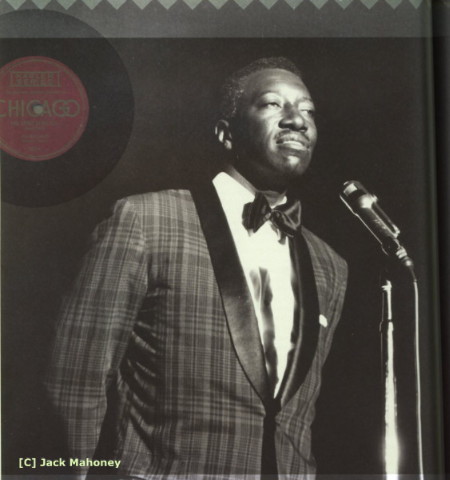
I doubt you’ll ever come across a more poignant explanation of the blues than the one contained in the following description of its origins and meaning by Blues Belter Joe Williams which appeared in the March 31, 1960 edition of Down Beat.


“There is music, wrung from heavy hearts, shouted defiantly or wailed pitifully — but lasting. Rooted deep in millions of enslaved people, the blues smoldered, sputtered for centuries, and burst into a globe-encompassing flame of recognition. Today, everybody knows the blues, because at one time or another everybody gets the blues — or the blues gets them.


I know about the blues. To me, the blues is a story — a story of heartbreak and sorrow. Yet at times it is a story of hope and faith. I am a blues singer — a storyteller — and I can't tell you why.


I can remember stories, terrible stories from the days of slavery, of children being torn from the arms of their mothers, and families and lovers being separated by force. These yearning, lonely people could speak little English. They could only stammer, parrot-like, jumbled phrases they picked up from their masters.


Lacking even this, they often found expression for their misery through moans and wails, cries and shrieks. This might have been the start of the whole thing, the start of something big, so to speak. The unleashed desire to scream as loud as you could for your loved one to be back with you, and the yearning to be free, helped greatly to lay the foundation of the blues.


The blues have been faithful to that beginning. They have recorded graphically the long, agonizing struggle of a people to adjust, to adapt, to find happiness in an alien land. Yet, not only the hard times and ill treatment have been preserved. The good times and high hopes have maintained their place in the blues.


What began as an expression of the downtrodden Negro now belongs to the world. It is a universal language. The only discriminating feature of blues and blues singers is that the message and the interpretation must have "soul." Until recently, the tune had to be "funky." I haven't heard "funky" so much lately, so apparently they have "funked" out and "soul" is the new ingredient.


I can't accept the belief that soul is given to one particular group of people. Soul is the feeling that a man or woman imparts either vocally or instrumentally. The ability is not given to everyone. But when it is, it is given irrespective of race or color.


The early blues told of hollow logs, lonesome train whistles, howling dogs, muddy water and loneliness. Of these, only loneliness remains in modern times. The same heartache that drove the old timer to lay his head "on some lonesome railroad track" now drives him to stretch out on the couch of the local psychiatrist.


Of course, there is blues expression in modern tunes. Unfortunately, the writers and critics have failed in the main to recognize it. Ray Charles is the blues master of this age. When he sings about "Maryann," every man listening — whether he is a college boy or a steel worker — understands just what he's saying.


What man has not at one time in his life pleaded with his girl at least once, "Let me take you home tonight, baby, I'll make everything all right." People say these things in the way that is most natural to them, but the same requests are always essentially the same.


This newly found identification has resulted in a sharp surge of interest in the blues. Today, in the fast missile age. blues are becoming more popular because people are beginning to realize that many of these situations in songs touch on their own problems.


For years the blues singers were not able to get their stories across because the blues had not been understood. But more and more now, the lyrics are becoming clearer and people can understand what is being said; they are getting the story.


The blues have always been a personal vehicle for me. Many people believe that there can be no happy blues. I read all kinds of messages of happiness and hope from the blues. Even when the tune is unhappy, as in the familiar 

"Trouble in Mind" lyric, there is the anticipation that "the sun's gonna shine in my backdoor someday."


To me, this is strength.


The blues should sound good. It should sound sincere. Even if it is a happy blues, and the situation in the song itself is preposterous, I think it should ring true and be sung with sincerity. For, after all, sincerity and feeling are the key factors in transforming a ballad or a popular tune into a blues work. Again I must return to Ray. His perfect blues treatment of the ballad "Come Rain or Come Shine" is one of the best examples.


Duke Ellington is another great blues man. He is one of the best blues storytellers you will ever hear. Ellington polishes his blues with shellac and satire, but if you listen to his music and his lyrics, the main ironic, unhappy situations are there.


Unfortunately, there are few women blues singers who are projecting the message today. The queen of these is Dinah Washington.


There are no words to describe the wonderful warm feeling she emits when she sings. The lyric becomes so personal that you remember each and every incident in your own life vaguely similar to the situation she sings about.


It is strange that with the great interest in blues at this time, there is still talk of jazz and blues as a dying art. It is my belief that as long as singers are able to strike a vibrant chord within the hearts of people, the art will live. The blues is like a woman, full of new discoveries everyday.


The blues and I have been together for 20 years now. I have had some very good times, some very good days, and I have had some pretty low days, days when I couldn't get a job. But always, singing the blues. I had hopes and dreams of that better tomorrow.


The first inspiration to sing the blues came to me from Big Joe Turner, back in the early 1930s. If you have any doubts about modern-day blues, listen to Big Joe sing "Chains of Love."


The better tomorrow began for me when I joined the Count Basie organization. Here is the swingingest band in the world, and the entire group to the last man enjoys his work. I am sure we all enjoy our work or we could never suffer the hard knock we encounter.


We're forever pulling up roots. We're like a band of gypsies. We have a suitcase packed all the time and usually we never get to everything in the suitcase. We're forever traveling, moving on. Sometimes, we're not ready to move on, but it's our work, and a man has to follow his work. So I go where I'm told to go and sing what I'm told to sing.


Count Basie, his magnificent orchestra and the boy singer constitute a top attraction. People come to hear what we have to say. So the band is still and I'm still singing and — there it is!”


Monday, May 9, 2022

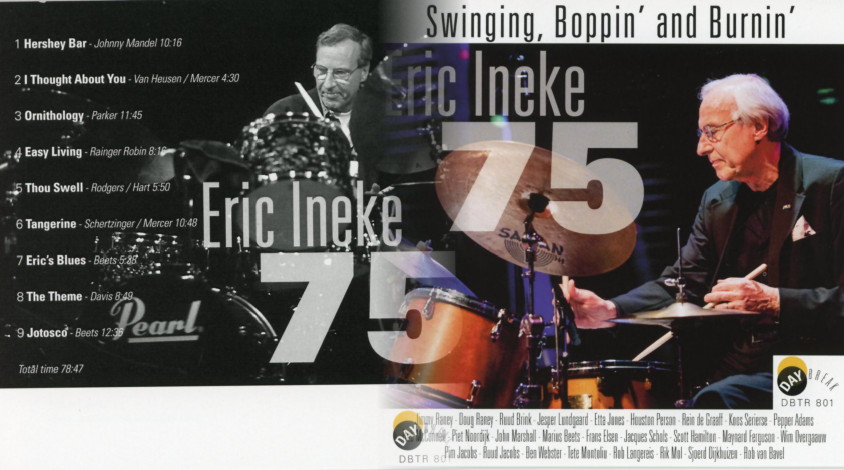
Eric Ineke 75 ‘Swinging, Boppin’ and Burnin’ - Liner Notes

 © Copyright ® Steven Cerra, copyright protected; all rights reserved.


It was a privilege and an honor to be asked to write the liner notes to Eric Ineke 75 ‘Swinging, Boppin’ and Burnin’ - Daybreak DBTR 801. Happy 75th birthday, Eric.


“Eric is a great musical companion. Always swingin’, high energy and super positive. He will never let you down on stage. You can take on the world with him. He is rightfully a living legend in the Netherlands.”

- Ben van den Dungen, tenor saxophonist


‘Eric is a beautiful person, a super swinging and energetic drummer and I’m very happy (and lucky) to have known and played with Eric for more than 30 years!”

- Rob van Bavel, pianist


“Playing with Eric never has a dull moment and he is always giving his utmost. There are moments that I can really play everything that's in my head thanks to him. Sometimes it feels like jumping off a cliff but knowing that he's always there to catch me. He inspires me constantly with all his rhythmical inventions.

The best moments are when we are starting to play freely 'around the beat.’ Then it is really happening. It is like flying! In this world, full of fake Jazz, it's good to have people like him around: always telling the truth on his instrument; always playing the real thing.

After a fifty year career I don't know how long I will keep playing but I sincerely hope that Eric will be my drummer. Till the end.”

- Rein de Graaff, pianist


If you look at a list of the iconic Jazz musicians he has worked with over the past 50+ years, Eric Ineke is almost in a class by himself. With the exception of Roy Haynes, few, if any, other Jazz drummers have had such a long and varied career. [Louis Hayes could also be added to this small, but distinguished group.]


More specifically, I can think of no other Jazz drummer who has performed with such a vast array of Jazz artists both in his native Holland and other European countries and with those visiting The Netherlands from America.


Fortunately, you don’t have to look far for a listing because these are all enumerated in his autobiography The Ultimate Sideman [2012] in which “Jazz Master drummer Eric Ineke talks about the artists he has played with in a conversation with saxophonist Dave Lieberman.”


As Dave notes in his Preface: “Each explanation he gives is like he plays: lucid, to the point and very precise. And swinging of course! Eric has an immense understanding and knowledge of music.


Wouter Tukenburg, Jazz Department head at The Dutch Royal Conservatoire agrees: “Eric is a great teacher and can communicate it all on a drum kit. When Eric talks about music, you hear the music and you’re in it. Eric connects the past to the present to the future.”


In many ways, Eric’s career is really a history of Jazz, especially in the second half of the 20th century when so many of the original masters were still active.”


And yet, Eric continues to be active in the 21st century as since 2006, he has led his own quintet, The JazzXpress, in which his driving time-keeping can be heard in support of some of Holland’s finest, young Jazz musicians. I guess given his many years of experience it was only a matter of time before The Ultimate Sideman was enlisted by the group of younger musicians that formed the JazzXpress to become The Ultimate Bandleader.


Eric lists as his favorite drummers playing in the style of Philly Joe Jones and Elvin Jones.


To my ears, Eric keeps time in a manner that is best described as Philly Joe Jones-lite. Like Philly, his time-keeping is very insistent, but his accents, background figures and fills are more spaced-out. He’s not as busy as Philly which serves to make his time-keeping sound even more firm and resolute.


Jazz horn players [in the broadest sense including pianists, guitarists and vibraphonists], whose orientation to the music is based on melody and harmony, can have a difficult time working with drummers, because although drummers can be “melodic” [think Shelly Manne], their involvement is primarily with rhythm.


Therein lays the rub. 


The melody and harmony guys are often of the opinion that Jazz drummers are not aware of what they have to deal with to make the music happen.


If a drummer is too forceful, too loud, or too busy, they can become distracting to horn players and make it difficult for them to concentrate on their improvisations or their ability to play the arrangements.


Sometimes drummers rush or drop [lag] the beat or even override it to push the music in a direction the soloist doesn’t want to go.


They may use cymbals that are not “harmonic;” the overtones don’t blend in well with the other instruments.


There are some drummers who absolutely abhor the use of brushes [mainly because they don’t know how to play them] while preferring instead the use of drum sticks at all times: nothing like a few “bombs” going off in the middle of a quiet, bossa nova.


Some drummers are in love with their techniques. I mean, after all those hours of practicing those drum rudiments, you gotta show people what you got, right?


Or then there is the drummer who shows up to a trio gig with a veritable arsenal of cymbals and drums all set up in such a way so that they can cut through big band volume levels. Talk about overplaying!


Because they can be disproportionately domineering, when it all goes wrong for a drummer, they can really irritate other Jazz musicians. 


And then there are drummers like Eric Ineke who always seem to fit in, whatever the musical context: hence the terms of respect and endearment – “The Ultimate Sideman” – being accorded to him by many of his fellow Jazz musicians.


For a drummer, being considered in this manner doesn’t just happen. You have to work at it and earn such praise.


Such an appellation is based on merit.


As a drummer, Eric is always listening, always trying to find ways to unobtrusively swing.  He plays what the music calls for. His first choices are always based on enhancing the expression of the music by working closely with the other musicians in the band.


Eric has “chops” [technique], but doesn’t choose to show them off. He knows he can get around the instrument, but he’s not trying to impress anyone with flashiness. 


Eric is the prototypical “engine house;” his drums set things in motion. When you listen to the sound of his drums, it’s like listening to the smooth blend of a quietly humming motor. The engine just purrs along and so does the music when Eric’s in the drum chair.


When called for, he can also “gun the engine,” what he refers to as “… kicking the soloist in the a**,” or throttle back on the engine, which he does to help things settle into a groove.


He’s always thinking back there, always aware of how things need to sound for different tenor saxophonist like Joe Henderson, or Dexter Gordon, or Hank Mobley, or how best to have a “conversation” with an instrumentalist while trading “fours” and “eights” with them, or even what bad habits or tendencies in the playing of others he might need to disregard in order to keep the music honest and swinging.


What comes across in each of the following tracks is how constantly aware Eric is of what he is playing and how he articulates it in relation to what the other musicians are doing. [Except as otherwise indicated, these tracks are drawn from the Dutch Radio Archives].


1. Hershey Bar [February, 1982] - Guitarists Jimmy Raney/Doug Raney Quartet featuring  Ruud Brink - tenor sax and Jesper Lundgaard - bass. This tune by Johnny Mandel was written before he gained fame as a film composer and songwriter. Its original title was Music To That Effect. It’s from the famous 1951 Stan Getz/Jimmy Raney recording at Storyville in Boston with the great Tiny Kahn at the drums. Eric commented that “it is one of my all time favorite albums.” Like Tiny’s playing on the original, Eric’s drumming is understated to allow for the mellow sound of the guitar to come through. This performance is a perfect example of Eric’s understanding that a drummer is first and foremost an accompanist.


2. I Thought About You [March 1993] - Etta Jones - vocal, Houston Person - tenor sax, Rein de Graaff -piano and Koos Serierse - bass. This features Eric in perhaps the most common musical setting of his long career - working with pianist Rein de Graaff backing a visiting American Jazz performer. Eric does exactly what he is supposed to do when accompanying a vocalist; lay down the time, keep it swinging and stay out of the way.


3. Ornithology  [December, 1993]- Pepper Adams - baritone sax, Piet Noordijk - alto sax, Rob McConnell -valve trombone, Rein de Graaff - piano, Koos Serierse - bass. Based on the How High The Moon, this Charlie Parker composition finds Eric effortlessly navigating the tune’s fast tempo while keeping things under control. And the 12 minute length of this uptempo Bebop anthem speaks to Eric’s strength and stamina. Notice how he sensitively switches to brushes to bring down the volume during Rein’s piano solo before switching back to sticks, all the while maintaining a quiet intensity. The track also features Eric trading 8 bar solos with the horns before the group returns to the closing melody.


4. Easy Living [December, 2003]- John Marshall - trumpet, Rein de Graaff - piano and Marius Beets - bass. This track is a fine example of Eric’s ability to play quietly and still “burn.” When John and Rein double the tempo during their solos they know they have the freedom to explore because of Eric’s mastery of time.


5. Thou Swell [1989] - Frans Elsen - piano, Jacques Schols - bass. Here we have an opportunity to listen to Eric’s tasty brushwork in a trio setting which includes 8 bar and 4 bar trades with Frans. Eric’s performance reaffirms the Jazz drummer adage: “Anything you can play with sticks you can also play with brushes.”


6. Tangerine [April, 2004] - Scott Hamilton - tenor sax, Rein de Graaff - piano, Marius Beets - bass. Once again, Eric in a familiar setting as a member of Rein de Graaff’s trio, this time with Marius Beets on bass, backing an American hornman visiting Holland. And I must say of all the recordings I’ve listened to over the years in this format, Scott Hamilton and Rein’s trio blend together almost seamlessly. Eric locks in with Marius to create an almost palpable pulse. The time never deviates: you can set your watch to it. And when Eric talks about “swing,” his playing on this track is what he’s describing. More 8 bar and 4 bar trades featuring Eric who constructs them in such a way that you can hear the melody as he rhythmically plays over it. This one swings so hard that you almost don’t want Scott and the trio to take it out.


7. Eric’s Blues - [April, 1968] Maynard Ferguson - trumpet, Pim Jacobs - piano, Wim Overgaauw - guitar, Ruud Jacobs - bass. An uptempo tour de force featuring trumpet pyrotechnics by the legendary Maynard Ferguson. Eric has a chance to really “stretch out” on this one as he trades 5 choruses of 12 bars each with Maynard. And speaking of legends, Pim, Wim and Ruud certainly belong in a Dutch Jazz Hall of Fame. (Eric tells me that this tune was just improvised with no name and that when Marius and he were editing this Marius said, “why not call it Eric’s Blues?”)


8. The Theme [May, 1972] Ben Webster - tenor sax, Tete Montoliu - piano, Rob Langereis - bass. Swing era tenor sax icon Ben Webster growls, slurs, honks, shouts and trills his way through this tune, which was often used by Beboppers to close their sets, only to then give way to the amazingly fluid and funky technical runs of Modernist pianist Tete Montoliu’s solo before Eric amps up the excitement by trading 4’s with Ben to close this crowd pleasing performance.


9. Jotosco.  The JazzXpress [May, 2007] featuring Rik Mol - trumpet, Sjoerd Dijkhuizen - tenor sax, Rob Van Bavel - piano, Marius Beet  -bass. What better way to close this tribute to Eric Ineke on the occasion of his 75th birthday than to feature him in an extended solo in an uptempo burner. Aside from demonstrating his technical mastery of the drums, his performance on this track shows his incredible resilience in being able to negotiate the band through a 12 minute performance, including 3 minutes of his own solos, while keeping it all together. No train wrecks while Eric’s in the Engine Room!


To paraphrase Dave Liebman: “Adding his own personality and musicianship to each musical situation creates a feeling of buoyancy when Eric plays, even beyond swinging. This musical personality along with a positive and uplifting persona puts anyone playing with him at ease. Eric is a sweet man who can really play. What more can you ask for!?”


Happy Birthday 75th birthday, dear friend, and best wishes for many more.


Steve Cerra

www.jazzprofiles.blogspot.com