Tuesday, June 1, 2021

The Real Ambassadors by Ricky Riccardi and Mosaic Records with an Introduction by Stephen A. Crist - Part 1

 © Copyright ® Steven Cerra, copyright protected; all rights reserved.


HIGH HOPES FOR BROADWAY


“In 1959, while Brubeck's manager was obsessively planning a tour to Australia and New Zealand, Dave and Iola Brubeck were intently focused on their dream of producing a musical on Broadway. This never came to pass, although music from The Real Ambassadors was recorded in 1961 and subsequently released as an album (Columbia CL 5850), and a concert version (with Iola as narrator) was performed at the Monterey Jazz Festival in September 1962.


Dave and Iola Brubeck conceived the idea in 1956 of writing a musical together." During the first couple of years, they shared their plans with only a select group of close associates. For instance, toward the end of 1957 Dave sent to George Avakian (the executive who had signed him to Columbia a few years earlier) "the story outline, the first act of the book, lyrics, and a list of the tunes," and asked for his advice "about where we

go from here." At that time, the show's working title was World Take a Holiday. He told Avakian, "It is still in the beginning stages, and will be rewritten and revised probably many times before we get a version we think ready for production."


During most of the next several months, the Quartet was on tour in Europe, Asia, and the Middle East. Shortly after their return, Dave mentioned to his brother Howard their plan to discuss it with the president of Columbia, Goddard Lieberson, and their hope "that he will show some interest in" their show. He also confessed his weariness from "this constant touring," and said he intended to concentrate on composition as his plan of escape from the itinerant lifestyle. The linchpin was the new musical: "If we can just see this first show in production, I will be encouraged to develop this field of writing."


Central to the Brubecks' vision for their project was a starring role for Louis Armstrong. By their own testimony, they designed the show around him. One week before Thanksgiving in 1958, Dave told his booking agent, Joe Glaser, who represented Armstrong as well, that he and Iola "have been working night and day on [the show] and have rewritten it." He dreamed of "owning a nightclub jointly" with Armstrong, "while the play is running on Broadway, with me performing the early part of the evening at the club and Louis coming in for one set after the show." After the Christmas holidays, Brubeck met with Armstrong in Chicago and evidently reported back to Glaser that Armstrong was interested in the show. One week after New Year's, however, Brubeck requested Glaser's "frank appraisal" and said he wanted "Louis to do the show only if he believes in it." The idea was for it to be produced on Broadway during the 1959-1960 season. Brubecks manager, Mort Lewis, was so optimistic about its prospects that he included an exit clause in the agreement for the November 1959 "Jazz for Moderns'' tour, in the event that Brubeck "cannot possibly make the tour this year because of the Broadway show."


As the year wore on, the Brubecks did their level best to get the show on Broadway. They reached out beyond their inner circle, initiated innumerable new contacts, and followed up every lead. In late March, their spirits were still high. Lewis told his colleague in Australia that the


Brubecks' show was "at present being submitted to a few Broadway producers," and "from the looks of things, it will be produced sometime soon." He confided, moreover, that "this very success may. .. mean the end of the Quartet as we know it." The same day, Iola informed her close friend, "This summer we will go to New York (all of us), and Dave and I will concentrate on trying to snag a producer to do our 'bang up' musical." With a light touch, she added, "We are proud of it, if we did write it ourselves."


Three months later, Dave went so far as to approach Jerome Robbins, the famous choreographer, whose work with Arthur Laurents, Stephen Sondheim, and Leonard Bernstein on West Side Story was all the rage around that time. In the draft of this remarkable letter, written in Oakland on June 20, Brubeck makes reference to his own use of "odd rhythm patterns," just days before the first Time Out recording sessions in New York:

To come directly to the point of this letter, I would like very much to talk to you and play for you some of the music I have written for a Broadway production starring Louis Armstrong and Carmen McRae. I have the assurance of Mr. Joe Glaser, Armstrong's manager, that Louis will be available to me for a Broadway production, as both he

and Louis have heard and approved of the score___I think you will be

interested in the manner I have treated the chorus and the dance. For example, I have superimposed rhythms in the crowd scenes to create a feeling of mass movement, and of tensions, of mass forces pulling against each other. In an "Around the World" ballet sequence I have employed odd rhythmic patterns based on the folk music of various countries of Europe, the Middle East, India and Africa.... The time is now ripe for a jazz show on Broadway, and I think mine is ready.... I plan to make some positive moves toward production this summer.


The second recording day for Time Out was July 1, less than two weeks after Brubeck penned this letter. In addition to the artist job sheet for that session (2:30-7:00 p.m.), there are two more pages with the same job number, for a three-hour session on July 2 (1:30-4:30 p.m.), marked "experimental takes." Eleven of the sixteen tunes listed are from The Real Ambassadors.™ This evidence suggests that the show was actually more important to the Brubecks in 1959 than was Time Out, At all events, they were deeply involved with its creation and promotion at exactly the same time as Brubeck's most famous album was taking shape. Paradoxically, although it never really got off the ground, The Real Ambassadors was the endeavor that occupied first place in Brubeck's affections and to which he devoted the greatest amount of time and effort — instead of the project that ultimately became one of the best-selling albums in jazz history.”

- Stephen A. Crist, Dave Brubeck’s Time Out [2019]


In addition to our Italian-American heritage, Ricky Riccardi and I share two other passions in common: [1] our general love of all things Jazz and [2] our respect and unending affection for the music of Louis Armstrong.


As the Director of Research Collections for the Louis Armstrong House Museum and the author of What a Wonderful World: The Magic of Louis Armstrong's Later Years and Heart Full of Rhythm: 'The Big Band Years of Louis Armstrong, Ricky has obviously taken his adoration of Pops a few steps further.


[The Louis Armstrong House Museum is based in Queens, New York which also places him closer to terrific Italian food than those of us who live on the Left Coast can generally access, but I won’t hold that against him.]


Among his recent services to the memory of Pops and his music are Ricky’s comprehensive and readable booklet notes to the recently released Mosaic Records set The Complete Louis Armstrong Columbia and RCA Victor Studio Sessions, 1946-1966 [MD7-270]. For order information on the set, please go here.


Included in Ricky’s narrative, are many original observations about the background to the development and recording of the music and lyrics to Dave and Iola Brubeck’s The Real Ambassadors which featured Pops along with Carmen McRae, Lambert Hendricks and Ross and the musicians from Dave Quartet and Louis’ All-Stars.


As frequent visitors to the blog will attest, The Real Ambassadors is a subject that is near-and-dear to the heart of the Editorial Staff at JazzProfiles and therefore any additional information is always welcome [scroll down to “Labels” in the blog sidebar to locate previous postings on the subject].


So we wrote to Ricky and to Michael Cuscuna at Mosaic and asked if we could include Ricky’s narrative on “the opera the Brubecks wrote for Pops” [a play on Louis’ reference] and both kindly gave their permission.


Having listened and re-listened to the music in this boxed set, enjoyed the booklet photographs and learned so much about the music of Louis Armstrong during these recordings from the later years of Pops’ career thanks to Ricky’s annotations, if you are a fan of Louis Armstrong, this set belongs in your collection. [I paid full price for my set.]


© -Ricky Riccardi/Michael Cuscuna/Mosaic Records, copyright protected; all rights reserved; used with the author’s permission.


THE REAL AMBASSADORS


SEPTEMBER 12, 13, 19 AND 20, 1961


"[George] Avakian's work with Armstrong brought him to new heights of popularity, but with that came an almost pathological scorn from many critics and even some musicians who now publicly stated their disappointment over Armstrong's musical choices, his smile, his showmanship and stage persona, his sense of humor, his trumpet playing, his commercial appeal, his lack of political activism and more. Much of these criticisms emanated in the United States, as Armstrong remained a God-like figure — and "ambassador of goodwill" -— overseas.


Finally, in September 1957, Armstrong could not keep quiet any longer and put his career on the line to speak out against President Dwight Eisenhower and Arkansas Governor Orval Faubus for the way they handled the Little Rock Central High School integration crisis. His comments drew severe criticism from many public figures, both black and white, and an astonishing silence from the jazz community — except for Dave Brubeck and his wife Iola, who were supremely inspired by Armstrong's stand. At a time when many young jazz musicians viewed the elder trumpeter as an out-of-date "Uncle Tom" figure, Brubeck — a Civil Rights advocate who performed with an integrated combo — saw something else: an American genius who broke down barriers for his race and who was America's greatest Ambassador of Goodwill. "I think that's what we really tried to overcome when we wrote THE REAL AMBASSADORS because before we got into this project we didn't really know Louis that well," Iola Brubeck recalled, "but we sensed in him a depth and an unstated feeling we thought we could tap into without being patronizing."


Soon after Little Rock, Dave and lola sat down and wrote a script and the score for what they envisioned to be a full-blown Broadway musical to be titled, World, Take a Holiday, a phrase that crops up in the song KING FOR A DAY.


Unfortunately, both Armstrong and Brubeck were too busy to tackle the project in 1957 or 1958 but both ended up in Chicago in late December 1958. Brubeck saw an opportunity, but found it difficult to get to Armstrong.


"...Louis' road manager wouldn't give me access when I wanted to discuss the project with him in Chicago, so I found out the number of Louis' hotel room, sat in the lobby until room service came and hollered, 'Hi, Louis' when the door opened. Louis invited me in, ordered me a steak and thought the idea was interesting. I gave him copies of the tunes to listen to on the road; and at the session, he was the first one in the studio and last guy to leave." Brubeck even managed to show him the song LONESOME, with Armstrong reciting the lyrics with great emotion.


Less than a week later, on January 2, 1959, the Brubecks watched Armstrong's appearance on the ABC television program You Asked For It. When host Jack Smith referred to him being called an "Ambassador of Goodwill," Armstrong responded with the following monologue:


"Say, Jack, I think you're wrong about ME being the ambassador. I think JAZZ is the ambassador. One might be the courier that takes the message over there, but it's jazz that does the talking. That's the good thing about our kind of music: it speaks in every language and it's understood by everyone that wants to listen. My horn and me have traveled from Sweden to Spain and when I played Berlin, a lot of them cats jumped down first to hear of Satchmo! Which proves that music is stronger than the nation. I don't know much about politics, but I know these people in foreign countries hear all kinds of things about America, some good, some bad. I'm pretty sure what comes out of this horn makes them feel better about us. One thing's sure: they know a trumpet ain't no canon! This horn is my real boss. It's my living and my life. I've got a lot of high notes in me that haven't been blown yet. Yeeaaah."


The Brubecks could not believe what they were hearing since many of those same themes were in World, Take a Holiday. They immediately turned on their tape recorder and began recording a series of "audio letters" to Armstrong, explaining why they wrote the musical with Armstrong in mind and offering demo performances of the original score. (These priceless recordings survive today at the Louis Armstrong House Museum in Corona, Queens and as part of the Brubeck Collection at the Wilton Library in Connecticut). Armstrong was thrilled, but they had a problem: "All of the producers I took it, thought it was great, but they'd give me all these excuses," Dave Brubeck recalled. "You weren't supposed to have a message. I forget the word they used, but it meant you weren't entertaining. We couldn't lecture the American public on the subject of race."


The Brubecks figured it might be easier to convince people of the merits of the play if they recorded the score first. Carmen McRae and Lambert, Hendricks and Ross agreed to participate, but Armstrong's punishing schedule didn't have any free time and Joe Glaser proved to be a tough negotiator. Two years went by before Glaser and Armstrong finally signed, Columbia Records agreeing to support the project after Brubeck's incredibly successful TIME OUT album and the popularity of the single TAKE FIVE, which reached number 25 on Billboard's "Top 100" in May 1961.


In the intervening years, Armstrong's real-life adventures once again almost eerily paralleled the Brubeck's late 1950s script, which seemed to predict Armstrong's future. In October 1960, the State Department sent Armstrong on a tour of Africa, the only State Department—sponsored tour of his career. In the Congo, Armstrong's mere appearance inspired a temporary halt to a civil war in Leopoldville as the trumpeter was carried into the stadium on a throne like a king. "Having been around the world numerous times, and as a representative of the State Department, this man with his trumpet is able to overcome barriers between peoples in a way beyond the capacity of polished diplomats," read a syndicated editorial published in November 1960. The Brubecks, who based their plot on Armstrong visiting Africa, being mistaken for an Ambassador and eventually declared "King for a Day," must have been shocked to see their fictional story play out as reality.


Brubeck was finally able to set up a series of sessions in September 1961. Armstrong recorded his numbers with Lambert, Hendricks and Ross on September 12 and his duets with Carmen McRae on September 13, in addition to a first pass at SUMMER SONG. He brought the All Stars with him for two separate sessions on the 19th and concluded with just Brubeck's rhythm section on the 20th, completing quite possibly the most challenging album of his career.


Due to time constraints, the finished album didn't include all the material Dave and Iola Brubeck wrote for the production. A finished copy of the complete World, Take a Holiday script survives, as does a scaled-down version prepared by Iola Brubeck for the only live performance of the work at the Monterey Jazz Festival. Taking a page from her book, the following section will not only discuss the making of the music but will also include plot summaries to provide better context for how the songs were sequenced.


The album's dynamic opener was EVERYBODY'S COMIN', a reworking of EVERYBODY'S JUMPIN' from TIME OUT. With lyrics by Iola, the song now served as an overture featuring Lambert, Hendricks and Ross alerting listeners to what they were about to hear and who they were about to hear from, with Armstrong joyously punctuating the message with various utterances of "Yes, yes!" On the previously unissued take 2, we even get to hear Armstrong respond with his horn, an always welcome sound that was eliminated as the takes went on.


At this point in the stage production, Iola wrote a touching description of Armstrong's character, "Pops": "The music which poured from his horn became his identity — his passport to the world — the key to locked doors. Through his horn he had spoken to millions of the world's people. Through it he had opened doors to presidents and kings. He had lifted up his horn, as our hero would say, and just played to folks on an even soul-to-soul basis. He had no political message, no slogan, no plan to sell or save the world. Yet he, and other traveling musicians like him inadvertently served a national purpose, which officials recognized and eventually sanctioned with a program called cultural exchange."


Indeed, the song CULTURAL EXCHANGE brings us directly into the politically charged environment of the "Jazz Ambassadors." In November 1955, the New York Times picked up on Armstrong's importance overseas, with Felix Belair writing, "America's secret weapon is a blue note in a minor key," adding, "its most effective ambassador is Louis 'Satchmo' Armstrong." The State Department paid attention and with prodding from Adam Clayton Powell, Jr., began sending jazz musicians overseas on official state department tours, beginning with Dizzy Gillespie's trip to Southern Europe, the Middle East and South Asia in March 1956 (the track references 1957; Iola apologized for the error in the liner notes). In Greece, students had recently stoned the U. S. Information Service office, but they cheered the arrival of Gillespie. All of that is described in the lightning fast intro to CULTURAL EXCHANGE by Lambert, Hendricks and Ross, originally named DIZZY DITTY. The previously unissued take 3 gives us a tantalizing glimpse at these three geniuses in action, discussing how to properly word "restored" and later, the titular "cultural," almost nailing it in this early attempt.


Eventually Armstrong ambles up to the mike (his part was recorded at a different session) to sing the pointed lyrics about how "The State Department has discovered Jazz / It reaches folks like nothing ever has." The Brubecks also got in a few comedic lines, such as "And when our neighbors call us vermin / We send out Woody Herman!" The lyrics also feature verbal responses from Trummy Young, who contributes some excellent moments throughout the album as a foil of sorts to the character of "Pops." Armstrong takes a full chorus of trumpet, playing the melody up an octave in jaw-dropping fashion. To illustrate the difficult nature of the material, we have included the previously unissued take 2, the first full take to be completed. Armstrong humorously messes up the lyrics twice and he sounds like he's still warming up on the trumpet, but he proved to be a fast learner, completing much of what's heard on the master on his very next attempt.


At this point in the script, Pops and his band were booked on an official State Department-sponsored tour, much to his unease. This was an especially autobiographical turn as Armstrong originally didn't want to do anything for the State Department, venting to a friend in 1959 that he was a musician, not a politician and didn't want to be pestered with questions on issues such as race. "I said, 'Well, what do you want me to tell these people when I go over there? It's all right? Bullshit!" Armstrong said. He knew there'd be questions about Russia and politics and that was something he did not want to discuss. "You see, I told them, you want to go through that kind of shit, have [United States Secretary of State John Foster Dulles] do the talking, we do the blowing, that's all. I ain't going to make no speech for shit." All of these quotes come from the middle of a six-month tour of Europe from 1959, Armstrong stating, "And then they ask me, 'Did the State Department send you?' And I say, 'You know no state department sent me over here. It's the fans.'"


Iola Brubeck took these private statements and accurately summed them up in her script: "For in addition to his undeniable musical gifts, he possessed a gift equally as rare — the ability to keep opinions to himself and observe in silence. He had taken great pains to create a dazzle-toothed, shimmering public image, which could possibly become tarnished if he were to speak what was on his mind." The only half-truth in the script was the line, "After all, through the years he had gained the admiration of not only the public, but the critics," since critics had been hammering Armstrong for decades.


But the line was mainly intended to cue GOOD REVIEWS, a cute number that serves as our introduction to Carmen McRae, humorously dissecting the role critics play on an artist's psyche. The session tapes reveal that at the September 13 session, Armstrong took the trumpet solo by himself but perhaps finding it to be a bit empty, Brubeck and producer Teo Macero had the entire All Stars band take the instrumental interlude on September 19, splicing it in as best they could to the earlier attempt. We've included take 7 from the first session, as well as an unissued insert with the All Stars doing their best to keep up the momentum of the playback. The session tapes also contain two hilarious, though unused tags that are being issued for the first time.


REMEMBER WHO YOU ARE gets us back into the ambassadors realm as it's based on a briefing Brubeck received before his 80-city, 14-country State Department tour of 1958, the government's not-so-subtle reminder to the musicians that they were representing the United States and shouldn't go off spouting any political opinions — even though many of the African American "ambassadors" still received inhumane treatment at home (both Armstrong and Brubeck dealt with resistance as the leaders of integrated combos, as well). The lyrics sung by Trummy Young more than hint at what Armstrong had to go through on a daily basis, giving nearly constant interviews to the press while overseas: "Never face a problem, always circumvent / Stay away from problems, be discreet / When controversy enters, you retreat." This one took 15 takes to complete, most of them breakdowns, but the complete takes did offer different trumpet breaks by Armstrong, including the excellent one heard on the previously unissued take 6. 


With MY ONE BAD HABIT, the shift of the production pivots, something that could be a little jarring when listening to the original LP. In Dave and Iola Brubeck's script, though, this was the formal introduction of McRae as Pops' new singer, "Rhonda." Perhaps realizing that satirical and pointed messages about politics and race weren't commercial enough, the Brubecks threw in a love story subplot, with Iola writing in the script, "From the moment the new vocalist joined the band, her predatory eyes had not wavered from their principal target: our hero." Dave Brubeck actually got the idea for the song from a backstage conversation with Ella Fitzgerald. Asked how she was doing, Fitzgerald responded, "Well, Dave, my one bad habit is falling in love." That's all Brubeck needed to hear, writing the song and giving Fitzgerald co-composer credit. McRae is at her sassiest here, an excellent showcase for her considerable talents, while Brubeck's quartet is suitably funky.


In the envisioned show — and on the album— McRae's sexy showcase would be followed by SUMMER SONG, Armstrong's tender reflection on falling in love in the August, if not quite September, of his years (and also a way of acknowledging that he was 21 years older than McRae). Even without any connection to the plot, the song inspired one of Armstrong's greatest vocals, as he brings the perfect blend of wisdom and warmth and even pathos that would infuse later works like WHEN YOU WISH UPON A STAR and WHAT A WONDERFUL WORLD. Dan Morgenstern was present when Brubeck first went over SUMMER SONG with Armstrong and remembered, "Brubeck was totally overwhelmed. As a matter of fact, tears came to his eyes when he heard Louis do this thing and the record of it is marvelous." Armstrong's friend Jack Bradley, who photographed the sessions, described it as "a lovefest, especially between Dave Brubeck and Louie. Dave would run up and hug and kiss Louie after every take. It was a wonderful session and it went well considering they didn't have time to rehearse."


Rumor always had it that Armstrong accomplished SUMMER SONG in one take, but the session tapes tell another story. With time remaining during the September 13 session devoted to Armstrong's duets with McRae, Brubeck called SUMMER SONG. Armstrong was somewhat unfamiliar with the melody and had to work some phrases out on his first attempt, but by the previously unissued take 2, he was able to turn in a beautiful rendition of the challenging song. Brubeck called an insert to iron out the ending, but still must have thought he could do better. On the final day of recording, Brubeck and Macero called for a SUMMER SONG remake in a higher key, now with the addition of Billy Kyle on second piano. We have included a complete sequence where Armstrong sings the hell out of it, but it breaks down twice, the first time due to a barely suppressed belch! Still, they carried on with insert takes, making it to the finish line, though Brubeck's comping is a little too busy at times. We have combined both of these previously unissued attempts into one track to create a super-sized document befitting this especially epic entry in the Armstrong canon.


One further attempt resulted in much of what became the master, as they made it through it in one shot, Brubeck simmered down a bit and nobody belched. As Chip Stern wrote of the issued take, "On his poignant performance of SUMMER SONG, you can hear the elder Armstrong accepting the inevitability of death and looking ahead towards his final peace, even as he casts a parting glance at all of his remarkable achievements." A prized possession in the Brubeck household was a copy of the score to SUMMER SONG, on which Armstrong wrote, "To Mrs. Brubeck, Am very happy. Satchmo Louis Armstrong." As Iola wrote in the original liner notes, "So are we."


After such a moving performance, the plot of the show dropped the love story and went back to the ambassadorial theme, with "Pops" triumphantly conquering his State Department tour, but, starting to "feel the power that was in his horn," he began spending his time on the plane daydreaming about what he would do if he was KING FOR A DAY. The result was one of Armstrong and Young's finest duets, thanks to the clever lyrics, the swampy New Orleans beat, and the hamming-it-up by the two pals (especially during the section about jazz royalty Duke Ellington, Count Basie, King Oliver and Earl Hines). Once again, Armstrong had to work hard, remarking after one take, "That was a real tongue twister." Brubeck asked, "Pops, what do you want to do next?" A game Armstrong replied, "I don't care, you call 'em." Brubeck said, "I was thinking of your lip." Armstrong answered, "It ain't the lip, it's the lyrics. You don't have to worry 'bout my chops." In the studio, Armstrong played a full chorus of melody up front, which was edited down to just 12 bars on the record. The musicians only made it all the way to the end through take 5, which is heard on the album, but we have included take 4 because of the extra trumpet playing at the start and the hilarious way it breaks down during the royalty section.”


To be continued in Part 2.


Saturday, May 29, 2021

Hall Overton by Art Lange

 © Copyright ® Steven Cerra, copyright protected; all rights reserved.


Here’s another essay from Art Lange’s “A Fickle Sonance” column on the www.pointofdeparture.org website, an online musical journal which is published and produced on a monthly basis by Bill Shoemaker and Troy Collins, respectively. I highly recommend that you visit their page and check out the archives which date back to 2005 for a wealth of interesting articles and information on Jazz and related topics as well as many interviews and essays of a general nature on all aspects of American culture.


Art Lange is an adjunct professor at Columbia College in Chicago. He has had a long association with Jazz and the creative arts most especially from 1981-84 when he was Associate Editor, and from 1984-88, Editor of Down Beat magazine. He also published and edited Brilliant Corners: a magazine of the arts, from 1975-77 and was a founding member, and was elected the first President of the Jazz Journalists Association.


Although the 50th anniversary of the Monk at Town Hall [1959] has come-and-gone by 12 years as of this writing [2021], I was particularly intrigued by the extended references to composer-arranger-educator Hall Overton in Art’s commemoration which was published in Issue 22 - April 2009 of the POD website. Especially so since I hardly knew anything about Hall other than his work with Thelonious on the 1959 Town Hall Concert. I suspect that I am not alone in this regard.


As pointed out in Art’s article, Hal’s collaboration with Monk on this important recording was close and the two shared a thorough working relationship.


So it’s a privilege to host more of Art’s insightful writing on these pages and to lessen the mystery associated with Hall Overton and his career in music subsequent to his time with Monk at Town Hall.


“The 50th anniversary of Thelonious Monk’s Town Hall concert (February 28, 1959) has come and gone, with some notice in the press and some musical activity – trumpeter Charles Tolliver put together a tentet to perform the original charts with as much fidelity as possible (solos, of course, notwithstanding), and pianist Jason Moran used the occasion to present a multi-media event that apparently (I didn’t see it) alluded to the concert in musical and symbolic fashion without attempting a literal recreation, while including excerpts of rehearsal tapes, photos, and other found material from the W. Eugene Smith archive uncovered several years ago. 


(In case you missed it, Smith was a well-known photographer and jazz fan who shared a several-story loft on Sixth Avenue with painter David X. Young and musicians Dick Cary and Hall Overton. Between 1957 and ’65 he made approximately 4,000 hours of surreptitious tape recordings at the loft, everything from hours of cats meowing and random street sounds to historically invaluable jam sessions, rehearsals, and conversations – most importantly, those in preparation for the Town Hall concert. The tapes are in the process of being preserved and archived by the Center for Documentary Studies at Duke University. According to Ben Ratliff [New York Times, March 10, 2005] and others who have listened to at least a portion of the relevant material, the tapes of Monk and arranger/orchestrator Overton discussing the music and sounding out details at two pianos reveal just how much of a collaboration it was, and the intimate and thorough working relationship the two shared.)


The ’59 concert, as everyone knows, was a huge success; the recording (Riverside/OJC) is one of jazz’s greatest treasures. Overton subsequently worked with Monk on his Philharmonic Hall concert of December 1963 (available on Columbia), and a third (unrecorded?) performance in 1966 (Martin Williams’ down beat article “Rehearsing with Monk,” which chronicles a rehearsal for this concert, has been reprinted in both his Jazz Heritage [Oxford] and Jazz Masters In Transition [Da Capo] collections). 


On a personal note, my small link in this chain occurred in 1986 when, as a member of the Chicago Jazz Festival programming committee, I suggested we present a recreation of the Town Hall concert. I contacted trumpeter and score-scholar Don Sickler, who was in charge of the Monk estate and let us know that only the 1963 charts were available at that time. We put together as close an ensemble to that of the Philharmonic Hall concert as we could, with three-fourths of the saxophone section present – Charlie Rouse, Phil Woods, and Steve Lacy – along with trombonist Eddie Bert. We wanted to have Pepper Adams, who played in ’59 but not ’63, play the baritone sax part, but he was too ill to participate and in fact passed away two weeks after the festival. (If you’re curious to know, we had Mal Waldron in the piano chair.) 


Like Martin Williams, I was privy to a rehearsal, though never wrote about it – the commitment and enthusiasm of the musicians was certainly worth documenting, but several of the stories I heard in between run-throughs are better left unpublished. The next night, out in Grant Park at the free-to-the-public festival, I was emcee, and had to literally beg the stage manager not to cut off the performance at the appointed closing time – a big deal in heavily unionized Chicago – so that the band could conclude with “Four in One,” the hardest chart of all and the one they had sweated bullets over getting right in rehearsal. We went overtime; it was a phenomenal night.


So all of this – the 50th anniversary revisitations, the ’86 miracle, the ’66, ’63, and ’59 concerts – is now history, and what remains? The recordings, blissfully, thankfully. Monk’s genius, which is manifest and lasting. 


But what about Hall Overton? 


Shouldn’t this have been an opportunity to remind ourselves of who he was, and of his not-inconsiderable accomplishment? True, he receives credit, usually a line or at most two, in every article about Monk’s big band experiences. But what about his career separate from this, his most famous footnote? There is almost nothing written about him– or, if it exists, nothing accessible, online or off – beyond a basic, one-page bio. I know, I’ve looked. That bio shrinks his jazz credentials, other than the Monk connection, down to a single sentence, mentioning a few names he once performed with: Stan Getz, Duke Jordan, Jimmy Raney, Teddy Charles. And even that contains an error; to my knowledge, he never recorded with Duke Jordan, but one of his sessions happened to share an LP with one of Jordan’s sessions. Then there is a vague reference to his “classical compositions,” and a detail about an opera, Huckleberry Finn, performed just before he died in 1972. No discography, no list of compositions. If you search around, you might find a very warm remembrance of Overton as a teacher by the pianist Jack Reilly ( www.sequenza21.com/2006/07/hall-overton-ashes-to-ashes.html).  And that’s about it.


The internet is loaded with names of successful musicians who studied with him, either at the Juilliard School or privately, most notably Steve Reich, who, like Reilly, has nothing but praise for him as an instructor of music, specifically composition. A great teacher he may have been, but his reputation shouldn’t be limited to that. Overton, and the music he left behind, deserve much more. His career in American music is all-but-unique in the way he balanced – as a performer and creator – jazz and classical music without diluting or confusing them. His jazz résumé, Monk aside, is impressive on its own; I happen to feel his compositions – those few I’ve been able to hear – are something special.


Where to begin? Well, in 1953 Overton was thirty-three, out of the Army, with degrees from Chicago Musical College and Juilliard, and had begun teaching at the latter. Among his students were drummer and vibist Teddy Charles (formerly Cohen) and guitarist Jimmy Raney. Both were young professional musicians with recording contracts; working with Overton expanded their vision (Charles called Overton his mentor). In January, Charles, Overton, and drummer Ed Shaughnessy recorded four remarkable original pieces under the title New Directions (Prestige) – remarkable because they’re not really jazz, but constructions that explore new methods of organization from an improvisational perspective, equally informed by classical procedures. (You can’t call them Third Stream, Gunther Schuller wouldn’t coin the term for several years.) Though all four pieces are attributed to Overton, liner note annotator Ira Gitler said that one, “Metalizing,” was devised by Charles. None of the pieces “swing” in a conventional way; the rhythms are sometimes regulated by a snare drum pattern or predetermined melodic material, but for the most part jostle through freely phrased development of motifs, which provides momentum. Typically, the piano (Overton) and vibes (Charles) engage in complimentary linear counterpoint; in “Antiphony” their lines take on a modal cast, with the kind of large intervals favored by Webern and Eric Dolphy, and in “Decibels'' the three-part interaction never resolves into a single-minded composition, but maintains its jazz identity as a trio conception. “Metalizing” includes timbral juxtapositions – the piano is pedaled so chords resonate, Shaughnessy focuses on cymbal washes, Charles switches from vibes to xylophone and glockenspiel to alter colors. Nothing in jazz was comparable at the time.


Overton’s association with Raney was more traditional, but hardly routine. In April ’53 they recorded four tunes – Monk’s “ ‘Round Midnight” and three Raney originals with elongated, twisting Tristano-like themes (one is dedicated to “Lee”) – inspiring fluid, inventive solos from Stan Getz and Raney’s guitar striking like a snake uncoiling. Thirteen months later, in a quartet setting Raney replaced the saxophone by overdubbing his guitar; they recorded again nine months after that, adding trumpeter John Wilson for a program of mostly standards. In all three sessions, Overton offers modest, restrained, almost unobtrusive solos. He once remarked that Bud Powell, Monk, and Horace Silver were his three favorite pianists, but you won’t hear their echoes here. Never flashy, his comping is always supportive, but his improvisations remain in a comfort zone, examining melodic variables of the chord voicings, feinting at harmonic implications, but never venturing too far afield. Moreover, his even-noted phrasing seldom splurges into double-time or exaggerated accents. This remains consistent in sessions with Phil Woods and even a rare two-piano date with Dave McKenna (for Bethlehem), up until 1960, after which he seems to have curtailed his jazz gigs, perhaps due to a heavy teaching schedule. One exception, however, is a woefully forgotten ’57 trio recording with Teddy Charles and bassist Oscar Pettiford, Three For Duke (Jubilee), where he exhibits a crisp, almost stabbing touch and broad, bright, clashing voicings, especially on “Main Stem.” In this album of Ellington covers, Overton adopts some of Duke’s keyboard aggression, and makes the connection to Monk’s attack that much more obvious.


During this same period, somewhere between 1954 and ’57, Overton composed a string quartet, his second, for the Beaux Arts Quartet (recorded for CRI). It features lovely melodic writing – winding chromatic contours, with the flavor of Roy Harris-school of American modality blended with a tinge of Debussy/Ravel and a jolt of Bartok. Overton’s attitude towards the difference between improvisation and composition is revealed here; more of his personality emerges though his ability to control the relationship of all four instruments. He weaves them together, finds common harmonizing agents in a melancholy vein, then in the second movement allows quicker adjustments, abrupt modulating shifts, extensions of motifs. Every detail is finely crafted and flows together, concluding with a descending theme adapted from the Allegro of Bartok’s Music for Strings, Percussion and Celesta. This is a wise and wonderful score.  


Bartok’s music was an important prototype for jazz musicians, mid-century; William Russo once told me how he and Lee Konitz devoured the string quartets during the time he was composing An Image, likewise, Jimmy Raney dedicated a movement of his Suite for Guitar Quintet to his inspiration. Overton’s debt to Bartok returns in the concise Sonorities, composed in the early ‘60s for John Lewis’ Orchestra USA (Columbia), where big band-style riffs are set against string glisses and indistinct harmonies. After this introductory section, Richard Davis’ bass leads into a fantasy of varied and fragmented orchestral comments, with edgy confrontations set against a laid back mood, and no continuous melodic development. Possibly that same year (1962?), Overton composed his Symphony No. 2 in One Movement (Louisville/First Edition); the first had been commissioned by the prestigious Koussevitzky Foundation. Once more, his sensitive palette of colors is on display; quiet brass and winds cooling a hazy harmonic string opening, with vibes and percussion prevalent – an acknowledgement of his old friend and collaborator? The music searches for resolution, through a sequence of rising and falling declarations until suppressed by a busy, interactive environment; instruments come and go as textures thin out and thicken, building towards an ultimate conclusion with the kind of tense counterpoint William Schuman provoked in his symphonic writing.


The last work Overton apparently completed was Pulsations (1972, CRI), which perhaps surprisingly returns to his early ‘50s disruption and dislocation of jazz and classical procedures. Brisk rhythms and isolated “solos” suggest the loose syncopation and spontaneity of jazz, instruments chatter, a bass line accompanied by drum kit slides into a Schuller-like noirish feel – and then suddenly Stravinsky takes over. Brusque trombone and staggered brass, calming but ominous string sighs, all small, abstracted, yet recognizable similarities to The Rite of Spring impede the music’s progress. The jazziness returns as tempos quicken. There’s an amusing, entertaining veneer to Pulsations (the moody middle section notwithstanding) in contrast to the earlier compositions’ serious, conscientious demeanor. It suggests Hall Overton was a complex figure, capable of alert, if low-key, meticulousness as a collaborative jazz artist, and a deep, discursive imagination in a more formal mode of expression. It’s a shame that of his classical works, only a brief, moody, but striking piano piece, Polarities, is available on CD – and that only a handful of examples were recorded at all, now neglected remnants of the LP era. It’s not surprising we don’t really know who Hall Overton was, but it’s time we had a chance to become better acquainted.”

Art Lange©2009


Friday, May 28, 2021

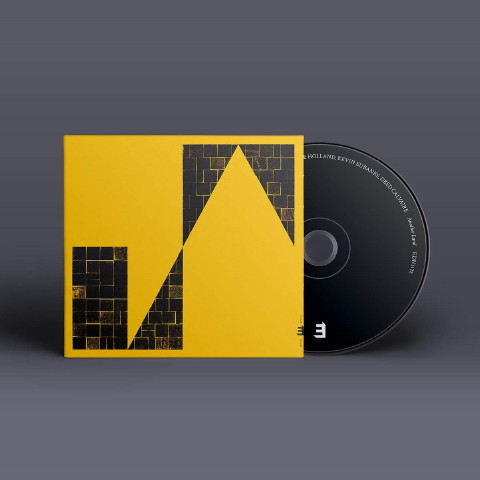
‘Another Land’ by Dave Holland Review: Songs for a Summer Afternoon

 © Copyright ® Steven Cerra, copyright protected; all rights reserved.


“Holland has been spoken of in the same breath as the legendary Scott LaFaro; he shares the American’s bright, exact intonation, incredible hand speed and utter musicality.” 

- Richard Cook and Brian Morton, The Penguin Guide to Jazz on CD, 6th Ed.


“Liberated from the physical work of playing with high action, jazz bassists rapidly expanded their technique during the 1950s and 1960s. Extending a concept begun by Red Mitchell and Charles Mingus, Scott LaFaro developed a rapid fingering and plucking system, and found the perfect place to use it when he joined the Bill Evans Trio in 1959, with Paul Motian on drums. Together, the three musicians invented a style of jazz in which no one was required to spell out the tempo with an explicit beat. This gave LaFaro the freedom to invent a new kind of "conversational" bass accompaniment, made up of short melodic figures and phrases rather than of a steady pulsing line. Like Blanton, LaFaro died (in an auto accident) only two years after becoming a major influence in jazz, but his recordings continue to inspire jazz bass players (LaFaro with Bill Evans Trio, Waltz for Debby Riverside/OJC]).”

- Bassist Bill Crow, Bill Kirchner, ed., The Oxford Companion to Jazz


“In whatever setting he performs, Holland can play with lightning speed, rhythmic precision and perfect intonation. His solos are marked by a clean, clear rounded tone and by thoughtful control and development of ideas. His style and dexterity put him on a level with Scott LaFaro and Gary Peacock.”

- Ed Hazell, Barry Kernfeld, ed., The New Grove Dictionary of Jazz


The jazz bassist reunites with guitarist Kevin Eubanks and drummer Obed Calvaire on an easygoing album.

By Martin Johnson

Copyright ©2020 Dow Jones & Company, Inc. All Rights Reserved. 

Appeared in the May 24, 2021, print edition as 'Songs for a Summer Afternoon.'

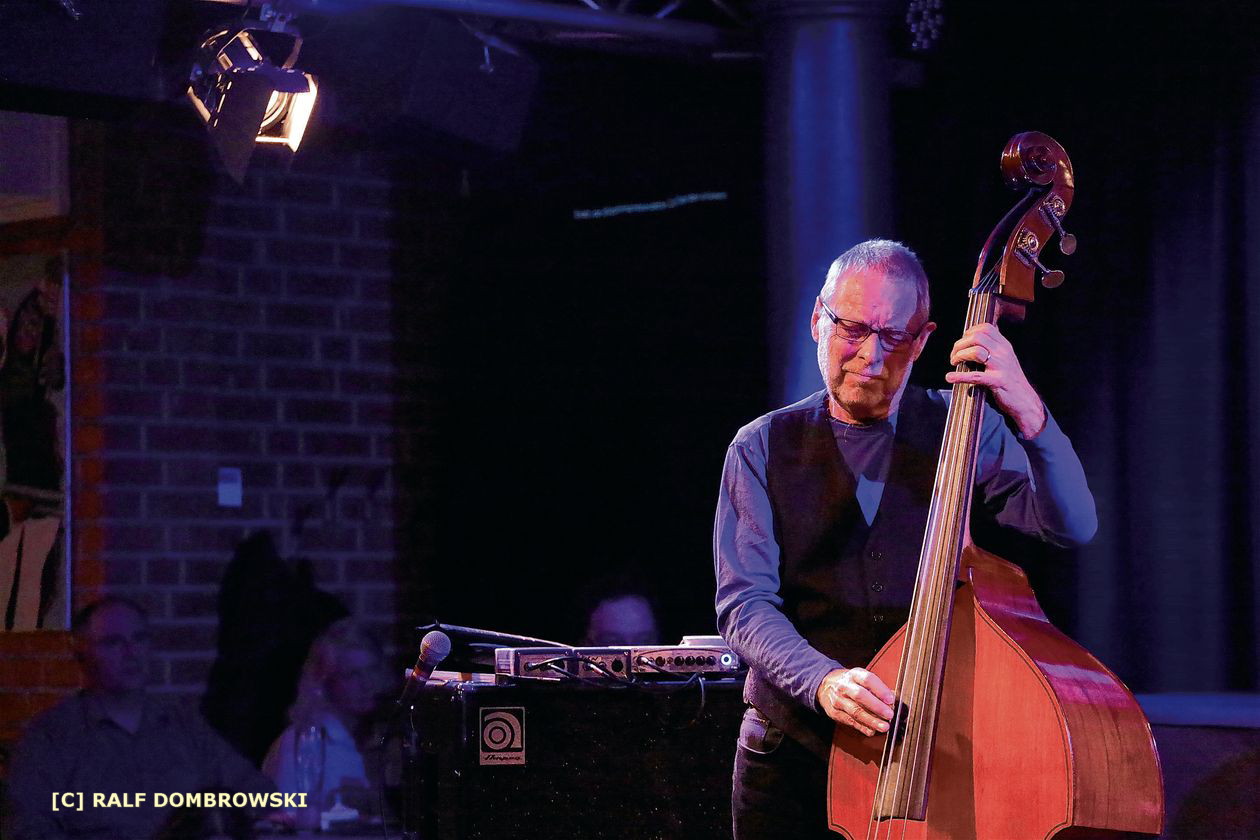
“Dave Holland is one of jazz’s leading bassists, and he has made dozens of superb recordings; most of them, usually in quartet, quintet or big band settings, present exuberant and vivacious music. On his new album, “Another Land” (Edition, May 28 release), he showcases a more intimate approach. His previous ensembles were often among the elite, and for good reason—they combined an old-school approach to structure (a rhythm section with big interlocking pieces) with of-the-moment solos propelled by a sense of harmonic freedom. “Another Land” features a trio and puts these values to work in a more discreet way.

It reunites Mr. Holland with guitarist Kevin Eubanks, who played on two of the bassist’s best recordings, “Extensions” (ECM, 1990) and Prism (Dare2, 2013). The two have a seemingly intuitive connection in moving between and within different grooves and styles, and that forms the foundation of this trio; veteran drummer Obed Calvaire offers concise accents and gentle thrust to the music. The three musicians have toured together from time to time, creating memorable performances. The trio’s week at the Village Vanguard in 2016 produced one of the best live shows I’ve seen—its set moved seamlessly, changing moods and rhythms astutely.

It was from their tours that the trio developed the repertoire for “Another Land.” The recording leads with Mr. Eubanks’s “Grave Walker,” and thanks to him and Mr. Holland, the piece feels like it is about to embrace the louder, more aggressive power-trio aspect of the instrumentation and produce music worthy of an action-adventure film soundtrack. Yet for all of the revving up, it quickly settles into a more relaxed groove, as if the excitement is being related in a lively conversation punctuated by laughter rather than fireworks.

The title track follows and sets the mood for the rest of the program. Mr. Holland’s warm bass tones and Mr. Calvaire’s deft brushwork provide the bed for a complex, introspective solo from Mr. Eubanks, his bandmates embellishing their support; it’s music for a lazy summer afternoon that offers more than just a vibe. “Gentle Warrior,” written by the drummer, is aptly named, and it features Mr. Eubanks’s most accomplished solo of the set. The guitarist, who was well known to jazz fans as a virtuoso before he spent 15 years as Jay Leno’s foil and bandleader on “The Tonight Show,” is not a flamboyant player; instead, his solos probe the weave of a tune rather than break its fabric. Most of the compositions here are highlighted by solos, but Mr. Eubanks’s “20 20” begins with a stellar ensemble section that feels improvised. And behind the guitar and bass solos, Mr. Calvaire is forceful in his accents and driving rhythms.

“Mashup,” the first single, is the exception to the recording’s serene mood. It’s an up-tempo jam, and a stellar showcase for Mr. Calvaire’s dynamic percussion. Mr. Holland’s “Passing Time,” which follows, returns to the almost pastoral sensibility that pervades the album. The group interplay is again a highlight as Mr. Eubanks’s solo flows seamlessly into a duet with the ensemble’s leader. In the promotional materials that accompany the recording, Mr. Holland speaks of their live shows as blues jams, and the final track, “Bring It Back Home,” offers overt blues references in both the basslines and the guitar licks, yet it doesn’t feel like a rehash. The band has taken something familiar and made it new.

The music here doesn’t just recall the template of other Holland-led groups. Some of the tracks evoke Gateway, a collective trio that joined Mr. Holland with guitarist John Abercrombie and drummer Jack DeJohnette for two recordings in the mid- and late ’70s, and then reunited for two more in the ’90s. The rapport was similar, albeit with a different range of styles; Gateway lacked the assertive rhythm that has been Mr. Holland’s signature in his own ensembles.

The bassist received his first big break at age 21 when Miles Davis tapped him to replace Ron Carter in his celebrated second quintet, and Mr. Holland participated in the late-’60s Davis ensembles that electrified jazz. But this narrative omits crucial information from the 74-year-old’s formative years. As a teenager in England, Mr. Holland was pursuing bass guitar and angling to play in rock bands when he picked up albums by Ray Brown and Leroy Vinnegar at a record store. These recordings pushed the acoustic bass into a more intermediary role between the front and the back line instruments, creating an easygoing shifting rhythmic floor to the music. He put aside his interest in bass guitar and bought a double bass to explore this inspiration. Although Mr. Holland’s music sounds nothing like Brown or Vinnegar’s, his big bold tone and articulated structures have become his defining elements in a wide range of bands and a cornerstone to his long-running success.”

—Mr. Johnson writes about jazz for the Journal.


Wednesday, May 26, 2021

Portrait (Live)

Cheryl (Live)

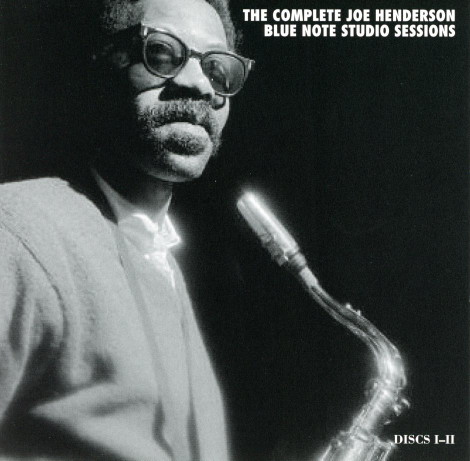
Joe Henderson: The Complete Blue Note Studio Sessions

 © Copyright ® Steven Cerra, copyright protected; all rights reserved.


In Down Beat, the guitarist John Scofield was quoted explaining what's so special: "Joe Henderson is the essence of jazz..... He embodies musically all the different elements that come together in his generation...He has one of the most beautiful tones and can get as pretty as Pres or Stan Getz... He can float but he can also dig in... He's got his own vocabulary, his own phrases, he plays all different ways, like all the great jazz players... Who's playing better on any instrument, more interestingly, more cutting edge yet completely with roots than Joe Henderson? He's my role model in jazz."


“Dignity is the word for him - intelligent, swinging, hip, modest and worthy are others.

He had no complaints. He made a good living, he owned a house, took care of his medical bills, and his family. He was respected for doing what he enjoys. Not too many people can say that.”

- Mike Zwerin, Culturekiosque Jazznet


“Mr. Henderson was unmistakably modern. ''Joe had one foot in the present, the other in the future, and he was just a step away from immortality,'' said the saxophonist Benny Golson. His tenor saxophone sound was shaded, insinuating, full of layers, with quicksilver lines amid careful ballad phrases and short trills. He had a clean, expressive upper register and a talent for improvising in semi-abstract harmony, and when the far-out years for jazz arrived in the mid-60's, led by musicians like John Coltrane and Miles Davis, he was well positioned to take part. He made a series of records for Milestone that used studio echo, Alice Coltrane's harp, violins, wood flutes and other exotic accouterments.


But Mr. Henderson's greatest strengths were more traditional: the ballad, the uptempo tune, the standard. And by the early 1990's, when he was a respected elder, he made some of his greatest statements on a series of well-produced, nearly theatrical albums for Verve Records.”

- Ben Ratliff, Obituary, New York Times


“Joe Henderson became one of the surviving jazz icons in the 1990s, and as a consequence his back pages - long neglected by-reissues - were extensively released on CD. He's a thematic musician, working his way round the structure of a composition with methodical intensity, but he's also a masterful licks player, with a seemingly limitless stock of phrases that he can turn to the advantage of any post-bop setting; this gives his best improvisations a balance of surprise, immediacy and coherence few other saxophonists can match. His lovely tone, which combines softness and a harsh plangency in a similar way, is another pleasing aspect of his music”

- Richard Cook and Brian Morton, The Penguin Guide to Jazz on CD 6th Ed.


“If in the 1990's there is a consensus on anything in jazz, it is that Joe Henderson is one of the music's premier living soloists. From the time of his first recordings (1963) until now, Henderson has been a totally distinctive improviser by any and all criteria: melodic inventiveness, harmonic sophistication, rhythmic sureness, a totally personal sound, and arresting powers of communication. He is also a composer of substance who has added a sizeable number of pieces to the jazz repertoire.”

- Bill Kirchner, insert notes to The Joe Henderson Big Band [Verve 314 533 451-2].


Over the years, Blue Note Records, Michael Cuscuna at Mosaic Records and Bob Blumenthal have become an unbeatable team when it comes to licensing, reissuing and annotating the iconic Jazz that Alfred Lion and Frances Wolff produced in the 1950s and 1960s.


The finished products are beautifully packaged sets marked by enhanced audio quality, superbly researched and written booklet notes and distinctive black and white photographs of the musicians performing at the original recording dates.


It’s important to keep in mind that these are limited edition sets so when they are gone, they are gone. You can find out more about Mosaic and related order information for the Henderson 5 CD set [MD 271] by going here.


We wrote to Michael and Bob to ask their permission to feature the initial pages of the booklet notes to give you a taste of what’s on offer here and they kindly consented to allowing us to share the following excerpts with you.


© -Bob Blumenthal/Mosaic Records, copyright protected; all rights reserved; used with the author’s permission.


“From the moment he emerged in 1963 until his death in 2001, Joe Henderson was one of the most distinctive and consistently inspired voices in jazz. His bold yet wizened sound coupled with an effortless attack and flawless flow of ideas across the harmonic and rhythmic spectrum, plus a rare knack to naturally command the widest variety of musical contexts, made Henderson a musician whose every appearance was significant. This was true of his early recording career at the center of Blue Note's early '60s successes, and extended to the more irregular middle period of his career as well as the ultimate commercial success he finally achieved in the 1990s.


Henderson was an elusive and somewhat mysterious figure. Associates were known to refer to him as The Phantom, an individual hard to get to know and often hard to find. His efforts to maintain a working band were fitful at best, and while releasing some exceptional albums of his own in 1971 he chose to spend an anonymous year in the ranks of Blood, Sweat and Tears. I had two telephone conversations with Henderson at his later, popular peak, one in 1993 as a columnist for the Boston Globe and a second five years later for liner notes to ULTIMATE STAN GETZ, a Verve anthology that Henderson had selected. In both instances he could not be found at the appointed hour, finally responded to numerous messages at the very edge of my deadlines, and then proved friendly, forthcoming and willing to extend the conversation well beyond my expectations.


While generally upbeat and willing to express appreciation of musicians from diverse generations, Henderson was not above expressing his displeasure with younger players who showed up uninvited at his recording sessions or displayed a commitment to improvisation that, in his view, implied an indifference to the underlying material. ""It hit me at a recent concert," he said while discussing Getz, "that young guys who took this approach were playing on the same bandstands where Stan, Ben Webster, Bill Evans, Miles Davis and other giants played. Did they deserve to lie there? And should I be lending my support by being there with them?"' In our earlier discussion, he indicated that the popularity of his compositions also raised problems with players young and old. "Inevitably, new ideas come to you after you've recorded a piece. A year or two pass, and the tune becomes what it should have been on the record. Meanwhile, other people have learned the tunes off the record, or transcribed them, and what they play isn't the tune as I've come to know it."


Henderson was far more generous, to me and to early authors of liner notes, in recollections of his formative years. He was born in Lima, Ohio on April 24, 1937, one of 15 children in a family that encouraged the study of music. (His brother Leon, also a tenor saxophonist, was heard on Blue Note as part of the Kenny Cox group.) He began to take the saxophone seriously around the age of 13, "I had had a saxophone for three years, and was supposed to be studying technique in books," he told me, "but I was more interested in obtaining a familiarity with the instrument so that I could play things that didn't just leap out of the book." He credited Herbert Murphy, his teacher, for familiarizing him with the instrument; pianists Richard Patterson and Don Hurless for providing a working knowledge of the piano; and drummer John Jarette for suggesting which records to take seriously in an older brother's substantial collection.


Henderson's early idols might surprise some of his fans. “In the beginning, Stan [Getz] was the guy I wanted to be when I grew up," he confessed. "He captured the lion's share of my attention for three or four years...when I was just zapping up ideas like an ink blotter. I started doing things Stan's way just to see what it felt like; and it didn't take me too long to change a note here, a note there. Pretty soon this thing was uniquely my own." In later years, when both saxophonists lived on the West Coast, Henderson and Getz became what the former described as "part of a mutual admiration society." Henderson also began to take composing and arranging seriously in high school, as he explained to Leonard Feather, because "I was originally under the influence of the Stan Kenton band — the one with Lee Konitz in it." Konitz is another early favorite who would return Henderson's appreciation, as documented on the classic 1967 LEE KONITZ DUETS.


After graduating from high school in 1955, Henderson attended Kentucky State College for a year before transferring to Wayne State University in Detroit. He described his immersion in that jazz haven to Nat Hentoff as "the real awakening for me." Among other things, it marked his reconsideration of Charlie Parker. "Just before I moved to Detroit I got back to Bird," he told me in our second interview. "At that point, I had the knowledge to appreciate him for being the god that he really was...Then I spent about eight years trying to play Bird tunes with total accuracy, which is like playing etudes." It no doubt helped that, like many other young Detroit musicians, he began studying with Larry Teal and playing with the professorial Barry Harris.


Henderson served in the Army between 1960 and 1962, winning honors in a talent show and participating in a tour of three continents with a military band for which he wrote arrangements and played occasional bass as well as tenor. He received his discharge in August 1962 after a final period of service in Baltimore, and quickly headed to New York. Kenny Dorham described Henderson's arrival in the liner notes to PAGE ONE as follows: "[His] first stop was at a party at a friend's place (saxophonist Junior Cook) where I was introduced to this bearded, goateed astronaut of the tenor sax. Later I suggested that we go down to see Dexter Gordon, who was headlining at the Birdland Monday night 'Jazz Jamboree'... 'Long Tall Dexter' 'asked the young man if he'd like to play some. Minutes afterward...the saxophonist was off and soaring his lyrical way to new heights on a Charlie Parker blues line. At the end of the chorus (and I do mean 15 or 20) there was a warm and exhilarating applause tor Joe, and as for Dex, sitting on the side, he looked "gassed."'


Dorham became a mentor to Henderson, guiding him through the intimidating New York scene and employing him as the second horn on gigs. Henderson, already a longtime fan of the trumpeter's, told Nat Hentoff "We have some kind of vibration going. Even when we play unison lines, it seems we breathe at the same time." It was Dorham who brought the young unknown to the attention of Blue Note, where Henderson made all of his albums as a leader and most of his appearances as a sideman in the years that would become the first chapter of his recorded history. This collection contains all of Henderson's own Blue Note albums and the pair he made with Dorham, plus a sampling of the original compositions he contributed while recording with others.”


Monday, May 24, 2021

COLEMAN HAWKINS: LOVE SONG FROM "APACHE"

What story can bring together Coleman Hawkins (who many consider to be the trunk of the Tenor Saxophone tree), the actor Burt Lancaster, contemporary jazz greats Charlie Haden and Cassandra Wilson, David Raskin (the “Grandfather of Film Music”), and Johnny Mercer, one of the greatest lyricists of all time? Well, it’s the story of THIS track. It starts with the 1954 movie, based on a 1936 novel and starring Lancaster, which ended up grossing over $10 million. Raskin had done the music for the film, and wrote the song, originally titled “My Love and I.” Next comes the September 1962 Impulse! Records date at Rudy Van Gelder’s studio in Englewood Cliffs, New Jersey. Bob Thiele, producer and head of Impulse, brought sheet music to the session, including the song, which had not to that point been performed outside the movie score. Hawk, Tommy Flanagan, Major Holley, and Eddie Locke casually looked over the music, tried out a few chords, and then proceeded to lay down one of the most hauntingly beautiful tracks. Ever.

Charlie Haden, a twentysomething bass player from Iowa, picked up the album and was mesmerized. He decided to include the track on his 1993 Quartet West CD Always Say Goodbye. But that wasn’t enough. He wanted to do the track with a singer, so asked his friend Rick Starr from Hollywood Sheet Music to find some lyrics to the song. None turned up. Haden was about to call David Raskin’s estate to see if he could get the rights to commission a lyricist, when his friend Rick found the lyrics in a forgotten vault (the movie version was instrumental). And who had written said unused lyrics? Yup, Johnny Mercer, one of the greatest lyricists in filmmaking history! Haden enlisted Cassandra Wilson to sing the song on Quartet West’s 2010 CD Sophisticated Ladies. So…. check out this track. If it doesn’t bring tears, I don’t know what will.

With appreciation to The Central Pennsylvania Friends of Jazz Blog.

My Love And I / Charlie Haden Quartet West - 5 - Sophisticated Ladies / ...