Saturday, July 30, 2022

Dexter Gordon - "Landslide" - The Blue Note Years Part 10

© Copyright ® Steven Cerra, copyright protected; all rights reserved.
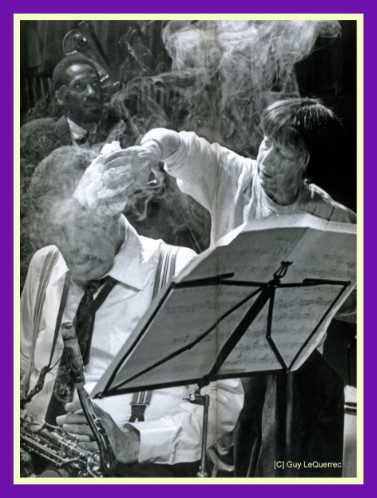


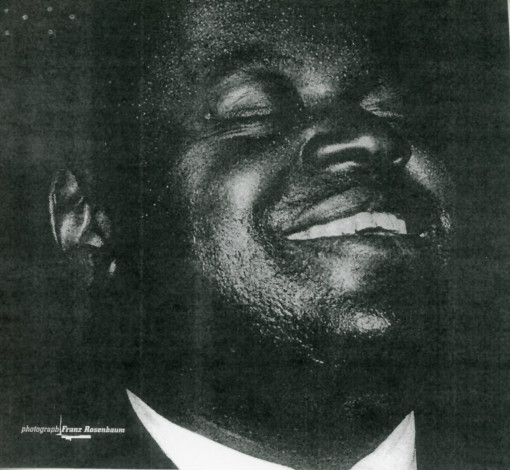
“Dexter Gordon was a year or two behind me [at Jefferson High School in Los Angeles, CA], but my impression was not unlike many others', I guess. As you know, Dexter was quite tall, and he talked slowly, moved slowly, always had a big, beautiful smile on his face. Due to the fact that he was a little younger than me and his musical training started undoubtedly a little later in his life than some of the rest of us— He had all of the soul and dedication and feeling and total commitment to jazz that a person could have, but his training was a little late, so he was what we might call second-string. But when it came to sincerity, he was totally committed. And his playing always reflected his bodily actions in a sense. Even today, when you listen to his records, it's always laid-back just a little bit, as though, "Look, I'm not in a hurry. I'm going to say what I want to say, how I want to say it, and nobody can rush me." But, you know, Dexter loved this thing so much that it was his life. If you love anything, you just live it, sleep it, and eat it. And it seems to me that I've heard Marshal say that Dexter told him once, as a very young man—Marshal [Royal] said that Dexter's ambition was to become a junkie. He was so committed to music—well, jazz music—and he felt that the epitome of being what he wanted was to be a junkie musician. In other words, I guess he felt that the dope was going to help him be a more completely formed musician. And Dexter apparently experimented a little too much with narcotics.”

- Jack Kelson [multi-reed artist aka Jackie Kelso], oral interview in Central Avenue Sounds: Jazz in Los Angeles


“My enthusiasm for Gordon's playing on this LP knows very few bounds. It is not enough to say that he plays as well as he ever did, for he plays better and on some tracks shows a sustained emotional cohesion and directness that is rare. …


I take deep pleasure in the periodic rediscovery that players like Jack Teagarden, Emmett Berry, Pee Wee Russell, Coleman Hawkins, Buck Clayton, Ben Webster (I am not naming enough of them) are still committed and creative jazz musicians. I take the same kind of pleasure in hearing Dexter Gordon on this LP.”

- Martin Williams, Downbeat review of Doin’ Alright
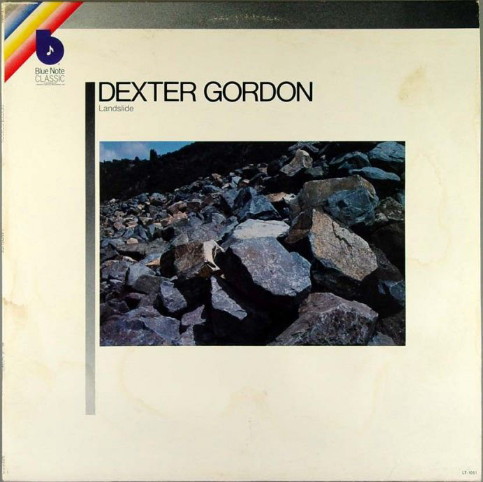


Recorded in 1961 and 1962, but not released until 1980, Landslide [LT-1051/CD TOCJ-50289] is the last of the three Blue Note recordings belately issued following Dexter Gordon’s 1961-1965 association with the label.


Perhaps not as well known as the above cited Martin Williams or the often recognized Ira Gitler, Nat Hentoff and Leonard Feather, Robert Palmer has long been a favorite of mine among Jazz critics for his educational and informative commentaries. After reading them, I always come away having learned something new about the music and its makers.


Aa a case in point, “storytelling” is commonly used as a reference point regarding Jazz soloing, but rarely is it explained, if it is explained at all, as well as Mr. Palmer’s description of it in the following insert notes to Landslide.


“Dexter Gordon is a weaver of spells and a teller of tales. He begins weaving his spell even before he's played a note, with his radiant, room lighting smile, his velvety speaking voice and the sheer magnetism of his presence.


In interviews, he’s often stressed his interest in musical storytelling He once explained his infatuation with the playing of Lester Young by asserting that "Pres was the first to tell a story on the horn” and of the trumpeter Roy Eldridge he remarked. "I used to got the same thing listening to Roy as I did

listening to Lester - the same ‘story' feeling."


"Telling a story" is such a cliche of "jazz talk" that one rarely thinks about what it really means On one level, it's a survival of an altitude common in blues, in which the guitar or harmonica often “talk back to" the singer, or answer his vocal lines, and that attitude in turn is a survival of the close connections between music and speech found in many African cultures. 


Among the many African peoples who speak pitch-tone languages, a musical phrase may literally tell a story, it may have a verbal meaning, which most [native] listeners can easily decipher in its pitch configuration. There’s a great deal of this marvelous tale-telling quality in Dexter Gordon’s playing. He’s an unusually expressive saxophonist and often he quotes the lyrics to a standard before improvising on it, drawing an explicit connection between the import of the words and how he will shape and develop his musical ideas.


Jazz improvising is a “language” in another equally interesting sense. A musician who develops his art in the way Dexter did - studying harmony and theory initially, picking up pointers from older musicians while serving an apprenticeship during big band section work, listening to the idioms recorded masterpieces and studying their details and construction - eventually creates his own individual style out of these diverse influences and experiences.


But the original influences are never entirely subsumed in an individual’s particular stylistic synthesis. A musician will retain phrases, personal timbers, and even entire solos associated with the many players he has listened to somewhere in the recesses of his memory, just as he retains the melodies and chordal layouts of a number of standard tunes and jazz compositions. In the course of an improvisation, which is a kind of spontaneous composition using a prearranged framework, the musician will draw on the information he has filed away in his memory bank. When the listener “hears the influence of” another player, what he’s actually hearing are either ideas found in the work of the other player or the improviser’s personal but still recognizable transformation of those ideas. In this sense, a superior, seasoned jazz improviser “tells a story” every time he solos, a story of the music’s rich traditions and of his own encounters with the bearers of these traditions.


There’s an interesting example of this aspect of Dexter’s story telling on “Love Locked Out,” the second of seven previously unreleased performances on this welcome new album. Dexter has never been thought of as a Coleman Hawkins disciple. He himself says that he loved Lester Young's playing more than that of any other tenor saxophonist, and of course his style was shaped further by Charlie Parker and the advent of bebop; he was the first really authoritative tenor stylist. But as we’ve noted a Jazz musician absorbs something from just about everything he hears, and like any other young saxophonist of his era Gordon listened carefully to Coleman Hawkins the undisputed tenor boss before Lester Young and a major architect of jazz ballad playing. Hawk's way with a ballad entailed various combinations of warm melodic exposition with arpeggiated playing; he would '”spread" a chord by stating its notes in sequence, almost as one might do when practicing an instrumental exercise. In his ballad performance "Love Locked Out", Dexter begins with a very straightforward melodic exposition, employing a plaintive, veiled sound, and then, as he begins to develop the melody, he works his way through a succession of arpeggiated phrases clearly acknowledging Hawkins’ contribution to ballad playing and to his own evolution.


I’ve emphasized this aspect of Dexter Gordon’s music because Landslide, drawn from three different 1961-62 sessions, gives a particularly good account of it. When Dexter is at work, he seems to access the material in his memory bank very directly, so that his playing reflects with unusual honesty the mood he’s in at the moment. I’ve heard him, for example, quote a single fragment - “Here Comes The Bride,” say - two or three times in the course of a single evening, and return the following night to find him in a very different frame of mind. For this reason, Dexter Gordon albums drawn from a single session tend to have a unity of mood, to present their own distinct perspective on the Gordon style. This album has more variety. Gordon is caught on three different days, telling different kinds of stories.


The early sixties must have been an uneven period for Gordon emotionally. After establishing himself as a modern master in New York during the forties, he spent much of the fifties back in his native California, where he had to overcome both a drug habit and the indifference of a jazz public that was preoccupied with the so-called “cool school.”


He returned to New York in the early sixties to record some of the finest albums of his career for Blue Note. Landslide, written by Dexter with fellow tenor saxophonist Harold Land in mind, is an unreleased tune cut at the second session of these albums: Dexter Calling. Making these albums, after having recorded very sporadically for a decade, must have been extremely satisfying, and in concert and at occasional night club appearances, Dexter was very warmly received. But the cabaret card law, which forced entertainers working in places that served liquor to apply for cards and routinely denied cards to anyone who had been in trouble with the law, especially on drug-related charges, kept Dexter from working steadily. In the study of Gordon included in Jazz Masters of the Forties, Ira Gitler suggests that Dexter’s failure to obtain a cabaret card was one of the main reasons he left for Europe later in 1962 and decided to stay there.


After the exuberant, hard-toned tenor solo on Landslide, the saxophonist’s work on the next three numbers sounds somewhat subdued. In part this difference can be ascribed to the difference in the accompanying groups. Landslide features the extroverted rhythm section of Kenny Drew, Paul Chambers and Philly Joe Jones. On Love Locked Out, You Said It and Serenade in Blue, Willie Bobo, better know as a conga player, is on trap drums; Bobo also plays traps on Blue Note Sessions by Grant Green and the much underrated tenor saxophonist like Ike Quebec during this period [Herbie Hancock’s Inventions and Dimensions, too.] Sir Charles Thompson [pianist], who now lives and works in Switzerland, had appeared on several Blue Note Sessions during the forties and returned to the studio to record for the label in a 1959 Ike Quebec date. Together with bassist Al Lucas, Bobo and Thompson provided spare backing on this date, and on the two ballads played gently and sadly, with deep feeling.


You Said It, a Tommy Turrentine composition recorded several months later by the trumpeter’s brother Stanley Turrentine and available on Jubilee Shouts [Blue Note BN LA 883], is more “up.” Dexter’s solo begins with tumbling strains that cascade downward, pulling at times against the forward push of the rhythm, and then opens out into expansive, intelligent eight-note patterns. The tune’s composer, making his only appearance of the set, solos briefly and Thompson’s solo includes reminders of both Bud Powell and Thelonious Monk.


Phill Joe Jones is back on drums, the estimable Sonny Clark is the pianist and Ron Carter’s bass provides a big, hard bottom. Dave Burns, the trumpeter, has been featured on three, earlier Blue Note sessions - James Moody 1948, George Wallkington 1954, Leo Parker in 1961. A veteran of the early Dizzy Gillespie big bands, he is an individual, assured player and this date provides a welcome chance to hear him improvise at some length.


The material is varied and cleverly arranged, Dexter plays with a tougher tone and a more aggressive attack than on the previous session. Blue Gardenia sounds like a small band version of a big band arrangement, with its harmonized verses and unison bridge. 


Six Bits Jones is in 6/8, although the way Philly accents it makes it sound almost like a straight waltz at times.

Here Dexter echoes Burns’ theme statements of the minor key melody in chase fashion before jumping into the first solo, one of the best of the album. The way he cuts across the bar lines, building his improvisation out of chunky phrases of unequal lengths and making use of his lower buzz-saw register, is a delight.


Second Balcony Jump was recorded by Dexter again two months after this session and issued on his classic Go [Blue Note BST 84112]. But this version doesn’t take a back seat to the later one. Dexter’s sound is scorching, and he swaggers through his solos, scattering blues riffs, downturned inflections, jagged runs, and bottom-of-the-horn honks. Yeah! Here Dexter isn’t just telling a story, he’s preaching it, weaving that almost mystical spell of his. This performance alone is worth the price of admission.


It’s our great good fortune that Dexter decided to return from Europe, after a decade in exile, so that we could hear more like this.”

- Robert Palmer


Dan Morgenstern Sessions Notes from the Boxed Set Booklet -


(B) MAY 9,1961


LANDSLIDE, the session opener, was not issued until years later Dexter named this 32-bar original at the time of release because the line reminded him of Harold Land. It opens with three tenor choruses at a medium-up tempo. Drew's crisp, light touch is prevalent in a solo that includes some cleanly executed octave doubling, with prominent and typical Philly Joe rimshot accompaniment. Chambers takes a pizzicato solo that shows why he was in such demand in the studios; immaculate conception and beautiful sound. Dexter's concluding theme statement is authoritative, climaxing with a high note—as always, in tune.


(C) MAY 5,1962

Almost a year has passed. The supporting cast assembled here for Dexter is somewhat odd, and the session didn't yield enough material for an album; the three acceptable tunes were shelved and did not see the light of day until 1980. They proved worth waiting for, after all. Trumpeter Tommy Turrentine, born in Pittsburgh in 1928, is the oldest brother of tenorman Stanley. He hit the road with Snookum Russell's territory band in 1 945, graduated to Benny Carter a year later, and spent two years with trumpeter George Hudson's St. Louis-based outfit. His big-band days over, he joined Earl Bostic, then emerged with Charles Mingus in 1956, and worked with Max Roach and Lou Donaldson. His recording career peaked around the time of this date. Pianist Sir Charles Thompson, born in Springfield, Ohio in 1918, started on violin, turned piano pro at 17, toured with territory bands, and came to California in 1940, where he hooked up (and recorded) with Lionel Hampton. In New York, he was in Lee and Lester Young's band on 52nd Street, where he joined Coleman Hawkins for a round-trip to the west coast; back in the Apple, in 1945, he presided over a record date that included Charlie Parker and a young Dexter Gordon. He then hooked up with Illinois Jacquet, did frequent gigs as a soloist, recorded for his fan John Hammond at Vanguard and Columbia, and had recently returned from a European tour with Buck Clayton at the time of this session. Bassist Al Lucas, born in Windsor, Ontario in 1916, spent most of the '30s touring with the Sunset Royals, then worked in New York with Coleman Hawkins, Stuff Smith, Mary Lou Williams, Eddie Heywood, Ellington (briefly), Erroll Garner and Jacquet before settling into studio work. (He'd appeared on Blue Note with James P. Johnson.) Lucas died in 1983. Drummer Willie Bobo was born into music as Machito's band boy, played with Perez Prado and Tito Puente and Mary Lou Williams (who named him Bobo) and did long stints with Cal Tjader and Herbie Mann before leading his own groups from 1963 until his death 20 years later.


SERENADE IN BLUE, from the prolific pen of Harry Warren, was introduced by Glenn Miller's band in the 1942 film "Orchestra Wives." This is the tender Dexter, but even at his most gentle, there's a firmness to his phrasing that keeps his ballads from becoming somnolent. This tune has a particular!!/ well-wrought bridge that is stunningly reshaped by Dex in his second chorus, where he also goes way low during the first four bars. He had remarkable range—remarkable for the fullness and accuracy of both his top and bottom notes. The extended ending is lovely, as is this entire all-Gordon performance.


YOU SAID IT is by Tommy Turrentine, in minor, and sounds a bit like the title repeated three times. After the unison head, Dexter dips into low range; his solo is phrased more tightly than usual, making little use of space. The composer expresses nice ideas from a Fats KD Brownie bag, slightly shaky in execution, and Sir Charles pares things down, in his epigrammatic be-bop-Basie style. Bobo's accents sometimes reveal his Latin ancestry.


LOVE LOCKED OUT is a great 1933 Ray Noble tune—Dexter's reservoir of good songs was deep. Throughout this performance, he uses his sound and range with impressive imagination—what a craftsman he was, and what care he took with every note's shape and duration and color. He opens in a warm and pensive mood, well backed by Lucas, as he unfolds the melody, then embellishes it with arpeggios. Sir Charles takes the second bridge, showing that he can do a Teddy Wilson, and when Dexter returns, he comes close to singing the melody, going way up, with that great control and sound. Another ballad masterpiece.


(E) JUNE 25,1962


Except for Philly Joe Jones, all new faces surround Dexter here, but this is another session that failed to meet Alfred Lion's expectations and remained shelved for almost 20 years. Trumpeter Dave Burns, born in New Jersey in 1924, was thoroughly schooled in music before joining the Savoy Sultans in 1941 and leading a band in the U.S. Army. Upon discharge in 1946 he became a member of Dizzy Gillespie's big band, spent some rather anonymous time with Ellington, and was featured with James Moody's fine little band from 1952 to 1957. At the time of this date, he was with the Billy Mitchell-Al Grey group. Pianist Sonny Clark, born in 1931 in a small Pennsylvania town, started on piano at four and added bass and vibes while in high school in Pittsburgh. His professional career got under way in California in 1951, where he worked with Wardell Gray, Vido Musso, Oscar Pettiford, and Buddy Defranco (1953-56), with whom he visited Europe. He came to New York with Dinah Washington in 1957 and formed his own trio, also recording prolifically. He had less than seven months to live after this date. Ron Carter, the baby of this band, was born in 1937 in Ferndale, Michigan, took up cello at ten, attended Cass Tech in Detroit, where he took up bass, played his first professional gigs in 1955, and graduated from the Eastman School of Music in 1959, the year he joined Chico Hamilton. Work and recordings with Bill Evans, Cannonball Adderley, Eric Dolphy, Jaki Byard and Mal Waldron preceded his 1963 hiring by Miles Davis.


BLUE GARDENIA, the theme from the eponymous 1953 film, written by Bob Russell and Lester Lee, was put on the map by Nat King Cole and Dinah Washington. Dexter and company take it above the customary ballad tempo — a Basie-like mid tempo — and the arrangement reshapes the bridge. Philly Joe's accents add much to the total effect. Dexter starts his solo down low and phrases Bird-like on the last eight of the first chorus, then spaces his phrases out as the rhythm section settles into a backbeat feel. He enlists a million-dollar baby to launch the bridge. Burns is also relaxed, offering some tasty, laid-back phrasing without resorting to double-timing. Clark tips his cap to the melody at first, then goes for himself, and young Ron takes a half chorus before the ensemble recaps the arranged bridge and takes us home.


SECOND BALCONY JUMP, by trombonist-arranger Gerald Valentine, was launched in Earl Hines' 1942 band; Billy Eckstine took it (and Valentine) along when he left Fatha to go out on his own, and it was in the Eckstine band that young Dexter became fond of this riff-based number; the title refers to the Apollo Theatre's lowest-priced and most responsive section. The tempo's nice — not too fast and Dexter's in a happy mood and on a quoting kick. The last eight of his second chorus are special, and on the third, he's thinking about Lester Young. Burns proves himself a subtle thinker on his two-chorus solo, Philly is right there with him. The drummer's almost too responsive to Clark, who should have gotten more than one chorus to play. Drum fills and a drum bridge feature in the closing segments.


SIX BITS JONES is by the gifted arranger-composer Onzy Matthews, with whom Dexter was acquainted in California. Ifs in 6/8. Dexter echoes Burns' lead, then starts his solo with an incisive repeated phrase (as always, he responds to the minor mode) and builds from there. Burns joins him for the handover, then solos well (but with low chops) in a Chet Baker mold. Clark makes the most of his single chorus, painting with dark hues, and Philly Joe was listening. A horn interlude leads back to the theme; this time, Dexter plays a written counterline. A call-and-response routine fades out the piece.


Thursday, July 28, 2022

West Coast Jazz Box

© -  Steven A. Cerra, copyright protected; all rights reserved.


“There was something special about the West Coast jazz scene of the Fifties and early Sixties. Those of us privileged enough to have lived through that era — to have heard favorite musicians holding forth at the Lighthouse, the Haig, the Black Hawk, or Zardi's (or later, at places like the Jazz Workshop, the Renaissance, or Shelly's Manne-Hole) — tend to smile broadly whenever someone's comments or a snatch of music conjures up that scene.” 
- Bob Gordon, author Jazz on the West Coast


Because I was “there” and had a professional involvement with it as a musician, I often get asked about what recordings to buy that feature the West Coast style of Jazz which existed mainly in California from 1945-1965.


My recommendation is pretty straightforward - West Coast Jazz Box: An Anthology of California Jazz - a 4 CD collection that was issued by Fantasy in 1998 [4CCD-4425-2].


The musical selections in the set are a comprehensive representation of all facets of the styles of West Coast Jazz that were played during this twenty year period and the following booklet annotations about the music by Bob Gordon, author of the definitive Jazz on the West Coast, and by the boxed set’s producers Ralph Kaffel and Eric Miller are unsurpassed in providing a brief synopsis of this “moment in time” in the history of Jazz.


Bob Gordon


“I may as well own up to this at the beginning: there is no general agreement upon the definition of the term "West Coast Jazz." The phrase has been bandied around for over four decades now, but as with many a catch phrase, it seems to mean pretty much what a given speaker wants it to mean. Like the word "jazz" itself, most everybody has a vague idea of what the term encompasses, but when it gets down to particulars, the arguments begin. So if you've already glanced at the listings for this album and decided that a particular performance doesn't fit your idea of West Coast Jazz, not to worry: you'll probably enjoy it anyway, whether or not you believe it's truly West Coast Jazz.


My personal preference for such a definition has always been: "That music produced by jazz musicians residing at the time on the West Coast."This seems to me the only definition inclusive enough to include the entire scene, from Dexter and Warden's Central Avenue duels, to musicians like Dave Brubeck, Gerry Mulligan, and Shorty Rogers, to the experiments of Ornette Coleman.


As to the origins of the term, nobody — to my knowledge, anyway — has ever taken credit (or accepted blame) for coining the phrase. When it first came into general use, the vocal wars between the boppers and moldy figs were beginning to wind down, and it's possible the trade journals felt the need for a new cause celebre to boost circulations. This cynical view, however, fails to acknowledge that in the first half of the Fifties, at least, there did seem to be certain stylistic differences between much of the jazz being produced in California and much of the jazz emanating from the East Coast. (I've emphasized "much" in both cases because many musicians from both coasts stubbornly refused to fit into their assigned pigeonhole.)


Basically, the differences were these: many of the West Coast musicians took their inspiration from such "cool" influences (there's another one of those damned terms) as Lennie Tristano and the Miles Davis Birth of the Cool band, while the mainstream of jazz in New York City could easily be recognized as a direct descent of bebop. As long as one remembers that such generalizations are generalizations — that there was cool jazz being played in New York and fire-breathing bebop being performed in Hollywood — the distinction can be useful. In any case, by the end of the decade, such differences became ever less apparent.


The musicians, of course, were loath to be so pigeonholed. Shelly Manne can be heard on a "live" recording introducing the members of his working band—one of the hottest units on either coast at the time—as a "West Coast Group." Shelly then goes on (in a native New Yorker's accent that he was never quite able to shake) to list the hometowns of his musicians: Joe Gordon (Boston, Massachusetts), Richie Kamuca (Philadelphia, Pennsylvania), and Monty Budwig (Nyack, New York), gleefully saving Victor Feldman (London, England) for last. Rarely has a musician's disdain for such labels been as forcefully, if tactfully, expressed.
And yet, and yet...


There was something special about the West Coast jazz scene of the Fifties and early Sixties. Those of us privileged enough to have lived through that era—to have heard favorite musicians holding forth at the Lighthouse, the Haig, the Black Hawk, or Zardi's (or later, at places like the Jazz Workshop, the Renaissance, or Shelly's Manne-Hole)—tend to smile broadly whenever someone's comments or a snatch of music conjures up that scene. This set should bring back fond memories for those already familiar with West Coast jazz, and perhaps it will provide some feeling for the ambiance of the period for those to whom the term is just a phrase remembered from the jazz histories.”


Ralph Kaffel 1998
I've wanted to assemble this compilation of West Coast jazz classics for many years now, but something always came up to dislodge it from its place on the year's release schedule.


The publication of Robert Gordon's Jazz West Coast (1986) and Ted Gioia's West Coast Jazz (1992) served as pointed reminders to quit procrastinating and get down to business. This year, we did.


Eric Miller and I finally decided that nothing would keep us from making this long rumored project a reality. Eric, Bob Gordon, and I — each with our own personal favorites — were responsible for selecting the contents. My own criteria were simple: to pick the tracks which not only had made a musical impact, but were solid sellers that enjoyed substantial radio play. For example, I still remember vividly the excited anticipation of initial releases by artists like the Chico Hamilton Quintet and Hampton Hawes, or the latest from the Lighthouse All-Stars, following their previews on KNOB-FM (the "Jazz KNOB" in Long Beach).


At this point I must confess to more than a little "partisanship" with respect to this music. My first job in the record business, circa 1956, was as a salesman for California Record Distributors in Los Angeles, a wholesale distributor owned, as it happened, by Contemporary Record's owner Lester Koenig. Richard Bock's Pacific Jazz Records was one of the distributor's most important labels. I always looked forward to attending the recording sessions at Contemporary's Studios (actually, the warehouse) on Melrose Place and at Pacific Jazz Studios on Third Street.


Koenig and Bock were very different personalities with unique approaches to recording and running their businesses, but I had the same great admiration for both of them and for the music they were producing.


Acquiring the Contemporary catalog in 1984, therefore — and keeping it in print, for the most part — was a major thrill for me on a personal level, as was the ability to work with Dick Bock on a few projects in the 1980’s, an association unfortunately brought to a halt by his untimely passing.


I'm sure that Lester and Dick would have enjoyed The West Coast Jazz Box, made possible to a large extent by their passion for the music.”


Eric Miller 1998


“Los Angeles had a vibrant jazz scene in the 1950s and '60s. I hung out a lot at Sam's Record Shop (the Birdland of jazz stores) at 5162 West Adams Boulevard, and Sleepy Stein did his KNOB-FM jazz show from just behind Sam's storefront windows.
Within 20 blocks of this store (and my house) were located some two dozen jazz clubs, where many of the artists in this collection played. The clubs included the It Club, the Zebra Lounge, the Parisian Room, and the Intermission Room.


Norman Granz presented his Jazz At The Philharmonic concerts twice a year in L.A. His artists included Ella, Oscar, Hawk, Pres, and Art Tatum, to name just a few. Sundays were my days for the Lighthouse, in Hermosa Beach, when I could borrow the car.


The bustling Hollywood club scene included Shelly's Manne-Hole, the Renaissance, Donte's, and Gene Norman's Crescendo and the Interlude.


Beside Contemporary and Pacific Jazz, great jazz was produced and recorded by the fledgling Hifijazz label under the direction of David Axelrod; Nocturne Records, co-owned by musicians Harry Babasin and Roy Harte; the aforementioned Normans, Granz and Gene; and the Tampa, Andex, and Mode labels.


Some 400 miles to the north, jazz was just as active in San Francisco, with its pioneering Fantasy Records — whose roster included Dave Brubeck, Gerry Mulligan, Cal Tjader, and Vince Guaraldi — as well as live jazz at the Black Hawk, the El Matador, the Jazz Workshop, and many more.


All things considered, I appreciate those years more and more with the passage of time, and see them as the "52nd Street days" of West Coast Jazz.”


The following video includes images and graphics from West Coast Jazz Box: An Anthology of California Jazz [Fantasy 4CCD-4425-2] as set to the track from the boxed set by alto saxophonist Lennie Niehaus performing Whose Blues with Jack Montrose, tenor sax, Bob Gordon, Baritone sax, Monty Budwig, bass and Shelly Manne, drums.


Tuesday, July 26, 2022

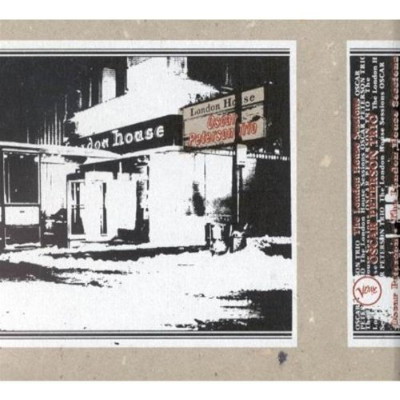
Oscar Peterson at the London House, Summer of 1961

 © Copyright ® Steven Cerra, copyright protected; all rights reserved.

“There was a time when a cohesive, relatively long standing jazz band was recorded live for the sake of the music, pure and simple. Miles Davis at the Blackhawk and Plugged Nickel, Shelly Manne at the Blackhawk, Coltrane at the Village Vanguard, all manner of groups at Carnegie Hall (e.g., Dave Brubeck, Dizzy Gillespie, Duke Ellington, you name it). Nothing contrived. The notion of a "concept" for recording was obvious: Here was a great band in a great locale, playing what they always play. Guest stars were great, but it was the band that mattered most.

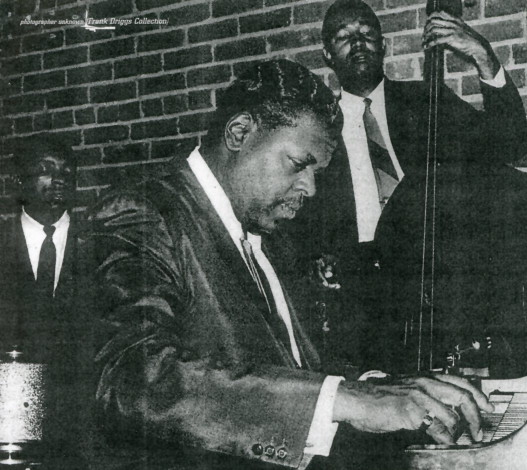
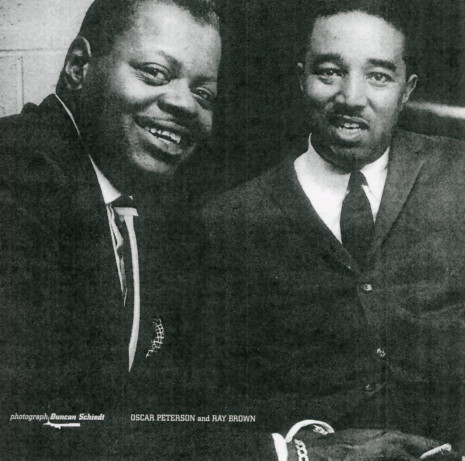
In fact, the idea of recording live seems like a dated way to present a working band. One of the great on-site recording dates that's come and gone was the Oscar Peterson Trio (featuring Ray Brown and Ed Thigpen, clearly the pianist's best group) live at Chicago's London House (also come and gone).” 

- John Ephland excerpt from insert notes to The Trio Verve 539 063


“Peterson's Best

It's amazing how the clink of cocktail glasses, the cash register's jingle, and the voice of some loudmouth can be so annoying when you're actually at a jazz club, and so endearing when you're listening to a recording of a live performance. Listening to Verve's new five-CD set Oscar Peterson Trio: The London House Sessions ($80) won't solve this mystery, but every sound on this set is joy, whether it comes from Peterson and his trio or not. Peterson was a great entertainer who spun radiant, crystalline sounds out of the piano seemingly without effort. And while he usually locks into a bouncy groove, he can, with a seamless flourish, turn a tune on a

dime, shifting from something that makes you smile to something that stirs your soul. From his upbeat "I've Never Been in Love Before" to a contemplative version of "Confirmation," Peterson hits two extremes and makes every stop in between. Recorded at Chicago's London House in 1961, this is Peterson at his best. It just might be one of those rare occasions when listening to the recordings is better than being there.” 

— Ed Brown


“And yet, in the late 1960s, I had a number of piano playing friends who assured me that Oscar was really a different pianist than the one who was making LP’s by the fistful for Norman Granz and that what he really had to offer was being put on display in a series of six recordings that he made for the MPS label which was based in Germany one of which was entitled - The Way I Really Play! [The exclamation point is mine.]


I sought out these LP’s and after listening to them, it didn’t take me long to agree that there was indeed another Oscar Peterson, one who seemed to perform differently when he was doing so - Exclusively For My Friends - which is the title of the 4 CD set of the MPS albums that was issued by Verve in 1992 [314 513 830-2]


Oscar had told me on several occasions that his best playing had been done in private. I had heard him play with a wonderful muted pensiveness, and nothing on record - even the London House records themselves - equaled what I used to hear in the late-night sets at the London House.


So when Oscar told me that he believed these German recordings were the best he had ever made, my eyebrows rose. He said he wanted me to write liner notes for at least two of the albums, both containing only solo performances. 

- Excerpt from the JazzProfiles feature Oscar Peterson - In The Black Forest


I rarely take exception to Gene Lees’ opinions, but after re-posting the feature on Oscar Peterson’s recordings on MPS [aka “Black Forest recordings”], which Gene believes are superior to the 1961 London House recordings, I decided to revisit the London House sides, the result of which is the following feature. Actually, before he heard the MPS sides, Gene, too, held a different opinion as is reflected in the following quotation excerpted from his Oscar Peterson: The Will to Swing [1988]:


Richard Palmer, in his eighty-page 1984 monograph titled Oscar Peterson, [Jazz Master Series] wrote: "I have the highest regard for Granz; and over the 35 years of his close association with Oscar, there is no doubt that he has been a wise and creative influence on the pianist. But I don't think it can be denied that nearly all the '50s studio dates fail to present Peterson and his groups at their absolute best. Oscar more or less admitted this when he remarked that many people felt that 'the delicate and communicative rapport that they sensed in our in-person appearances was usually lost in the mechanical and cold confines of the studio' and 'I am inclined to agree to the extent that our group performs much better ... [when] a live audience is present.'" And the London House recordings, despite the unfortunate piano, attest to this.”


As to the “unfortunate piano,” when I asked pianist Tom Ranier if the piano on the Oscar Peterson London House recordings was out of tune he responded: WAY out!  And gets worse as the sets go on. Nevertheless some of the greatest ever IMHO.”


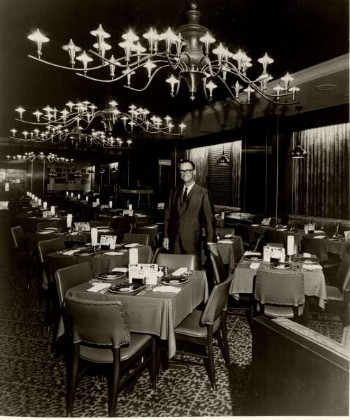
From 1955 when it first welcomed Jazz [it opened its doors in 1946] until its closing in the early 1970s when the interest in Jazz began to wane nationally, the London House at the corner of Wacker Drive and Michigan Avenue was a stalwart venue for both domestic and touring Jazz groups.


Those who were familiar with the club talk about it with the same reverence usually associated with Birdland in New York, the Black Hawk in San Francisco and Shelly’s Manne Hole in Los Angeles [Hollywood].


Over the years, “live” [in performance] recordings were made at the London House by a host of Jazz artists including Johnny Pate, Billy Taylor, Marian McPartland, Gene Krupa, Sarah Vaughan, Bobby Hackett, Teddy Wilson and Earl “Fatha” Hines, Tyree Glenn, Dorothy Donegan, Henry “red” Allen, Charlie Shavers, Coleman Hawkins, The Three Sounds, Barbara Carroll and “Brother” Jack McDuff.


Perhaps one of the most artistically satisfying of all the performances recorded at the club were those made with the Oscar Peterson Trio over a span of time from July 11 - August 6, 1961.


Although it became commonplace in later years with advancements in on-location recording equipment and techniques, it should be kept in mind that 1961 was definitely “early days” as far as on site recordings were concerned.


But despite its technical and acoustic drawbacks [tinkling glasses, loud blenders, ringing telephones, talking audiences, AND out-of-tune pianos]] the movement to record Jazz in this format was whole-heartedly supported by Jazz musicians who had long maintained that they sounded better in performance before an audience than in the “controlled environment” of a sterile and often cavernous recording studio.


Michael Ullman’s booklet notes to the London House boxed set offers a number of these salient observations including an excellent comparison between the similarities and differences of the styles of Oscar and Art Tatum; why Oscar departed from the piano-guitar-bass trio format and opted to include a drummer instead of a guitar and why that drummer was Ed Thigpen; why the inspiration of an audience produces a different Oscar Peterson performance as compared to those recorded in a studio.


 “Oscar Peterson has been playing piano professionally for about fifty years and for much of that time he has been compared to Art Tatum. It's a comparison he has done nothing to discourage. Peterson meant his version of Ill Wind in this collection to be a tribute to his early idol: ‘It's a musical reminder of the way he would handle this type of thing', Peterson told critic Dom Cerulli in the Sixties-: ‘We used to discuss this it great length,’ he added.


Probably they were discussing the way each pianist introduces a tune freely, ranging over the piano in out-of-tempo swirls and glittering scales while offering the wary listener only an occasional glimpse of the melody. Both pianists like to approach a ballad obliquely, fluffing their feathers and flaunting their colors like jungle birds trying to impress an impassive potential mate. Both artists are technical marvels, tirelessly inventive players with astonishingly broad repertoires. Peterson likes to talk about his debt to Tatum, whom he calls one of his two best friends, the other being his father. Why, then, is Tatum, who is the favorite of dozens of celebrated pianists, including Tommy Flanagan and Hank Jones, still an acquired taste for many listeners where Peterson is one of the music's most popular figures? And why was Tatum most effective playing solo and Peterson at his best playing with a trio? 


'For all of their similarities, and despite Peterson's admiration of his elder, they use their techniques differently. Listening to Tatum can be mind-boggling, even scary. In the middle of a ballad or mid-tempo piece, Tatum will pull the rug out from under you, seeming to abandon the beat while transforming the harmonies of a popular piece in unsettling ways, only to return to both the beat and more predictable chords when all hope seems lost. He plays cat-and-mouse with every aspect of a song; sometimes the listener feels like the mouse. With Peterson, you always know where you are, that you're in safe hands. Even at his most impressive, he's reassuring. His rhythms are insistent, his devices more decorative or engaging than disorienting. In a place where Tatum would follow a series of brilliantly executed runs with a chorus of manic, celebratory stride [piano], Peterson would offer repeated riffs that owe more to Basie's big band than to James P. Johnson or Fats Waller. The results are more predictable but also more comfortable.


The two pianists were, after all, raised in different eras. Tatum grew up with the stride players, who provided their own oom-pah or walking bass lines, and he dipped into the repertoire of Waller and others until the end of his life. Peterson came to the music towards the end of the Swing Era, when bop was first being heard: His early hero may have been Tarum, but he heard the big bands as well. ("My roots go back to people like Coleman Hawkins, harmonically speaking,' he told interviewer Len Lyons in the Seventies.) Peterson has such a wealth of technical devices and capabilities that one tends to forget that he rarely does more than flirt with stride's oom-pah bass or its repertoire. (An exception is his 1975 "Honeysuckle Rose", which he recorded in a duet with Joe Pass.) Even when he is playing more modern tunes, such as Bobby Timmons's Moanin' his models are Swing Era or early bop players. He uses the sweeping scales we hear in Tatum but also block chords like those of Nat Cole or Milt Buckner. His chomping left-hand chords and passages in tenths are in the tradition of Teddy Wilson; his percussiveness is a link to Bud Powell. At his best, Peterson is a lyrical player as well as a powerhouse.


The bebop numbers he chose to play here are all especially tuneful, among them Scrapple From the Apple, Daahoud, and Confirmation. He cares about touch: His favorite pianists, including Tatum, Cole and, a near contemporary, Hank Jones, all have light, pearly sounds and clean as well as dashing techniques. It's a sound we hear on the early choruses of Peterson's two takes of On Green Dolphin Street.  


Tatum’s flights of fancy were sometimes so unexpected that they could freeze any accompanists he had. No wonder he usually played alone. Peterson is a blusier player and, when he wants to be, as in the ballad In the Wee Small Hours of the Morning, a more intimate, restful player. In certain situations, Peterson may play as many notes as Tatum did, but he naturally leaves room for a bass line - and he isn’t so unpredictable that an alert rhythm section can’t follow him. The rhythm section anchors Peterson’s playing. When that rhythm section consisted of Ray Brown and Ed Thigpen, it also inspired him.


"The Trio" as Peterson, Brown, and Thigpen were known, came together in 1959, two years before these live recordings took place at London House in Chicago. Brown had been playing with Peterson since 1950. (Their first recording session together, in March, began with the appropriately named "Debut", a series of duet records followed.) Then Peterson, perhaps with the famous King Cole Trio in mind, added a guitarist - first Barney Kessel, then Irving Ashby, and finally Herb Ellis. Peterson replaced Ellis in 1959 with drummer Ed Thigpen, he said, for reasons of "ego" In the same conversation with Lyons, he elaborated:


“There was a lot of talk about my virtuosity on the instrument, and some people were saying, "Oh, he can play that way with a guitar because it's got that light, fast sound, but he couldn't pull off those lines with a drummer burnin' up back there" . . We chose Ed Thigpen because of his brushwork and sensitivity in general.”


Peterson first heard his drummer-to-be while the latter was in the army. But Thigpen was a veteran in another sense as well, having worked with Cootie Williams and Bud Powell, among others. When he became available to Peterson, the Trio was formed.


It was an instant, and one suspects inevitable success. There should have been no doubt - about Peterson's ability to play with a drummer - he had taken part in countless live sessions with drummers and played as a sideman on dozens of studio recordings. His bassist was a star in his own right, and his drummer would soon become one. Thigpen may have been chosen for his sensitivity with brushes, but he also had - and has - a bright, swinging style on mid- and up-tempo pieces. He has a cheerful as well as propulsive sound: Listen to the joyous bounce of his cymbals on 'Scrapple From the Apple.' Brown had already been featured with the Dizzy Gillespie big band and had toured with Ella Fitzgerald. One of the greatest jazz bassists, he was also the first bassist in the Modern Jazz Quartet. He plays the fastest lines with a huge, rich sound. He's steady as a rock and he's an inventive, witty soloist, as we can hear on Tricrotism. This trio recorded almost incessantly from their onset in 1959, making albums of Cole Porter, Ellington, and Gershwin material, as well as a half dozen assorted records, all in their first year. There's a lot of Peterson to choose from.


Still, the London House sessions stand out. Peterson is a tough self-critic; he had the final say on which of his recordings would be released during his tenure with Verve (ending in 1962). Eventually there was enough material selected from the London House engagement to make four LPs.They're all included here: The Trio (V6-8420), The Sound of the Trio (V6-848D), Put on a Happy Face (V6-8660), and Something Warm (V6-8BB1). With this collection, the available music from those sets is almost doubled. When Lyons asked the pianist what his favorite albums were amongst all he had recorded, Peterrson started a short list with The Trio.


One can hear why Like most jazz musicians, Peterson tends to be inspired by nightclub audiences. He lets go, playing longer versions of standards than he might otherwise, wowing the crowd with buoyant, powerful riffing. He's more showy here than in the studio and more dramatic. At times he sounds sportive, even satirical. (At least that's how I hear the exotic splashes of color at the beginning of On Green Dolphin Street. The melody is virtually lost in waves of decoration until suddenly Peterson plinks it out with the glassy spareness of Ahmad Jamal. The contrast is comical as is his later quotation of Tenderly.)


There are of course disadvantages to a live recording: The ballads sometimes take place over the audible shuffling of silverware, and the microphones also pick up a ringing telephone and an occasional nonmusical conversation. At the end of one set, Peterson praises his fans: "We would like to thank most of you for being a wonderful audience. There's one in every crowd” But usually the audience brings out the best in the trio.


There are plenty of highlights, moods ranging from the ripping exuberance of the up-tempo Swamp Fire to the easygoing bluesiness of Better Luck Next Time to the comparative sobriety of quieter numbers, such as Peterson's own The Lonesome One with its hints of "Here's That Rainy Day".


Few listeners think of Peterson as a ballad player, but his most touching performances are frequently his most modest renditions of sophisticated tunes, such as the version of 'In the Wee Small Hours' included here. (He follows it up with a jaunty Chicago that sounds glib by contrast. We can excuse him because of his need to pay tribute to his host city.) He's equally affecting on Jim, which he begins with an expansive solo introduction. It's a performance that shows the sensitivity of his band members. At one point in his improvisation, the pianist is strumming with his left hand while playing thirds with his right. He plays an ascending arpeggio, followed by a bluesy descent. Meanwhile Brown is dancing about lightly and Thigpen swishing with brushes. With a repeated passage, Peterson gives the subtlest hint that he wants more energy, and Thigpen responds instantly, providing a more buoyant, rocking beat for the next few choruses until Peterson suggests that he wants to return to the original mood.


Peterson features Thigpen on Thag's Dance, a piece he wrote to display his drummer's brushes. Brown gets his feature too: Oscar Pettiford's knotty bebop line, "Tricrotism" (Evidently Peterson used to tease Brown by saying that Pettiford, a great bebop bassist whom Brown idolized, was in the audience - even when he wasn't. Brown paid his boss back by telling him at various gigs that Tatum was sitting at the bar. One night Tatum actually was, and Peterson froze, ending his set abruptly.) Peterson can play ballads, but he is rarely wistful for long. I Remember Clifford is Benny Golson's touching tribute to his friend, the late Cliiiord Brown. Peterson evokes something of its tender spirit - for a while. Then launches into double-time choruses that prove exciting ii not particularly germane to the composer's intentions. 


Peterson for the most part is irrepressible even if controlled. He may surprise his audience, but he never seems to surprise himself, working up steadily to his most excited moments, churning through choruses that lead him seemingly inevitably to the riffing of his climaxes. 


Peterson likes to play the blues as well as standards; he plays them cheerfully. On the other hand, he can turn virtually any song into a crypto-blues, including the unlikely Sometimes I'm Happy, to which he adds crushed notes and thumping, repeated phrases. Bluesy, exciting, full of singable lines, the issued version of "Sometimes I'm Happy' is one of Peterson's most successful performances. Now we have a second version.


There's a bonanza of previously unissued material, including a magisterial performance oi Sophisticated Lady, Clifford Brown's "Daahoud" and, for a change in meter, The Gravy Waltz, to say nothing of a bunch of new versions of Billy Boy, which Peterson uses as background music while he thanks the audience. The LPs from London House have been among the most treasured collector's items of generations of Oscar Peterson fans. There's twice as much to treasure here, and a lot to celebrate.”


Michael Ullman, April, 1996