Friday, August 27, 2021

More Impulse! - Oliver Nelson - "The Blues and The Abstract Truth"

 © Copyright ® Steven Cerra, copyright protected; all rights reserved.


The editorial staff has previously written about Askey Kahn’s The House That Trane Built: The Story of Impulse Records which you can access by going here. 


With so many recordings now available wholly or in part for sampling on Youtube, I thought it might be fun to return to Ashley’s book and dig a little deeper for annotations about some of my favorite Impulse! LPs and to populate them with audio links via YouTube.


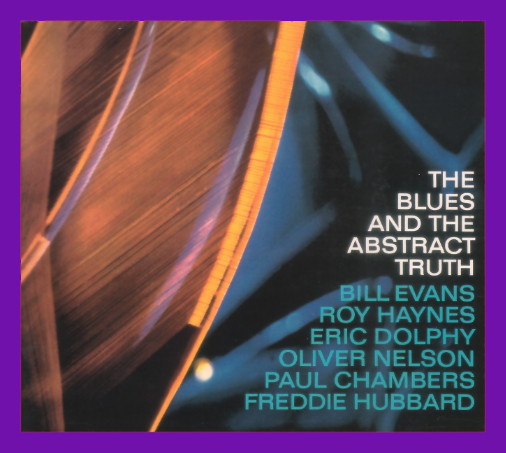
Having started with Gil Evans’ Out of the Cool [A(S)4] issued in 1961 as the fourth album released by the label, let’s continue with the backstory for the album that succeeded it in that same year - Oliver Nelson’s The Blues and The Abstract Truth [A(S)5].


“STOLEN MOMENTS, written in I960, is a 16-bar composition derived from blues in C minor. The tune consists of three melodic ideas which extend the basic blues form. The divisions within the piece would then be 8 bars, 6 bars and 2 bars. In order to add contrast, the harmonic progressions for the solos are minor blues 12 measures in length. Freddie Hubbard begins with a very sensitive and soulful trumpet solo, followed by Eric Dolphy on flute and a tenor solo by myself. Bill Evans completes the series with a beautiful piano solo. After the final statement of melody, the piece ends quietly.”

- Oliver Nelson, composer


Another Arranger


Producer and label head Creed Taylor had already approached Oliver Nelson to record an Impulse title during the label's long gestation period in 1960. In mid-February 1961, as Impulse's four-title debut made it to market, the producer focused on Nelson, a multi-reedman, composer, and arranger whom he had come to know as a dependable saxophonist with a sense of balance.


Oliver was another story. He was very special—melodic. He understood voicing like nobody else. He had done some dates with me before at Webster Hall [studio], as part of a sax section — he, Al Cohn, and Zoot Sims. There was something different about him at that point. He could blend in with a section, but at the same time he had a sound that was so strident. When he played a solo he was unmistakably Oliver Nelson.


With a handful of unusually angular compositions requiring a septet, Nelson recorded an album that received the full Impulse treatment: state-of-the-art sound (thanks to Rudy Van Gelder,) mood-setting cover portrait (courtesy of Pete Turner), and a cryptic title the producer himself concocted. The Blues and the Abstract Truth [A(S)-5] became Impulse's first title after the label's explosive debut, and yielded a second substantial jazz radio hit with the mood-setting Stolen Moments.


Nelson himself wrote the album's liner notes, explaining the motivation and structure behind his tunes, praising his sidemen, and confessing that when he had first arrived in New York City, "I believed I had my own musical identity" until falling under the spell of two tenor saxophonists he "could not deny"—Sonny Rollins and the man Taylor had already pegged as Impulse's next project: John Coltrane.


Oliver Nelson / The Blues and the Abstract Truth Impulse A(S)-5 DATE RECORDED: February 23, 1961 DATE RELEASED: August 1961

PRODUCER: Creed Taylor


"That's my title. If the blues is a truth, why not then add 'the abstract truth'? The word 'the' was supposed to be there—'The Blues,' you know? It was like, pardon the term, our white brothers dropped the 'the.' Still—it just worked."


Creed Taylor, familiar with Oliver Nelson's recordings as a leader on Prestige, was attracted by an unusual aspect of the saxophonist's personality.


"Oliver was so articulate, personally, that we could talk about a lot of things. He had a background in the history of music—classical or whatever. We both had the same hobby, by the way: H.O. trains. Oliver built a logging camp in his basement and I built the Norfolk & Western railroad, which went from Norfolk to Columbus, Ohio, in mine. Coal trains—not Coltrane. Oliver and I had a lot in common, SO it enabled us to talk about music in a comfortable way."


Contracted to a one-record deal while he continued to record for Prestige, Nelson brought a band of young scene-makers—some established, some very new—to Rudy Van Gelder's studio for his Impulse debut: saxophonist and flutist Eric Dolphy, pianist Bill Evans, baritone saxophonist George Barrow, bassist Paul Chambers, drummer Roy Haynes, and trumpeter Freddie Hubbard.


"Me, Phil Woods, Oliver —all those guys were playing with Quincy," remembers Hubbard. "So I had a chance to hang out with them, and then Oliver asked me to do the date with him. Oliver liked me because at the time I was practicing with Coltrane. He would be writing even while he was with Quincy... and he had a way of writing for saxophones, close notes among the reeds.


"He got some voicings, man, that were out of this world! Like when he did [sings Stolen Moments], he had the baritone up above the tenor; to have a baritone voiced that high is unusual. And he had the alto below the tenor, and he had me playing the lead."


In fact, Hubbard received the honor of the first solo on the album, though the trumpeter recalls a few misgivings as the tapes rolled.


"I didn't know it would sound that good because he didn't turn me up as loud as I thought I should have been. But he wanted me to blend with the horns instead of being out front. I remember the fact that I said, 'How is this rhythm section going to gel?' I mean, Roy Haynes doesn't play heavy and it seems like Paul Chambers was always on top with a big sound. So Roy would just lay back behind him, and I didn't hear Bill Evans until the playback because he played so quiet."


Taylor was as enthused by Nelson's sidemen choices as he was by the arranger's enthusiasm. "Everything Freddie Hubbard played knocked me out. And what can you say about Bill Evans? He was in great shape playing-wise. And Oliver was very animated. He wouldn't just give a downbeat or count the band off, he would leave the floor! Jump up in the air and come down right on the downbeat. I'm sure his blood pressure went through the ceiling every time he conducted or played. I don't mean out of control, but he just felt every ounce of what was happening." And the tunes?


Stolen Moments was a given — just, whew!" Taylor enthuses." Cascades was the most unusual piece and Yearnin’ was just fantastic. I had never heard anything like it before, but I understood it. 'Hoe-Down' was kind of weird, I felt...."


"He had this song on there, Hoe-Down, that I'll never forget," says Hubbard. "I said, 'Man, what is this song?' [Sings melody.] To me it was kind of out of context, but he took a lick that I had stolen from Trane and he put that on the bridge. [Sings.] He built it off of that line, Oliver wasn't so much of a soloist as he was a writer, so he would take bits and parts of people's stuff."


Released in the spring of 1961, The Blues and the Abstract Truth proved career-defining for Nelson, an instant hit on jazz and even non-jazz radio, and eventually led the in-demand arranger to move to Los Angeles in 1967. Taylor:


"I don't think the word 'crossover' had become part of the language at that point, but I know all the jazz stations at the time really went for it, and other pop stations, which are not around anymore, went full steam ahead on it too. Oliver was such a unique talent and I hated to see him go to Hollywood, where he kind of evaporated."”



Thursday, August 26, 2021

More Impulse! - Gil Evans "Out of the Cool"

 © Copyright ® Steven Cerra, copyright protected; all rights reserved.


The editorial staff has previously written about Askey Kahn’s The House That Trane Built: The Story of Impulse Records which you can access by going here. 


With so many recordings now available wholly or in part for sampling on Youtube, I thought it might be fun to return to Ashley’s book and dig a little deeper for annotations about some of my favorite Impulse! LPs and to populate them with audio links  via YouTube.


Let’s start with Gil Evans’ Out of the Cool which was issued in 1961 as the fourth album released by the label [A(S)4].


OUT OF THE COOL


DATE RECORDED: November 18, 3O, and December 10, 15, I960

DATE RELEASED: February 1961 PRODUCER: Creed Taylor


“Though a familiar name in the jazz world through most of his career, arranger Gil Evans's recorded output was always limited; 1961 was a marked exception.


In October 1960, the Jazz Gallery, a new theater-sized venue in Manhattan, was the site of an unusually generous six-week engagement for Evans. It was his longest gig as a leader up to that point, enabling him to assemble a working group featuring such rising and risen stars as trumpeter Johnny Coles, saxophonist Budd Johnson, trombonist Jimmy Knepper, guitarist Ray Crawford, bassist Ron Carter, and drummer Charlie Persip. The extended gig also served as the launch point for Evans's debut on Impulse.


With the addition of drummer Elvin Jones on loan from John Coltrane's quartet, Evans took his fifteen-piece lineup into the studio and, as he later reported, "made the album in an afternoon." As Evans biographer Stephanie Stein-Crease writes, the album actually resulted from four visits to Rudy Van Gelder's studio; the three previous sessions were essentially rehearsals.


That Taylor had the insight and patience (and budget!) to allow Evans such license says much of the producer's confidence in the arranger's ability to eventually find his mark. Taylor recalls the album's fifteen-minute-plus centerpiece: " la Nevada' was not only original but was totally spontaneous  - Gil started noodling at the piano for a while, and he started this thing, and the rhythm section started doing something and then something sparked in Gil.


The other pieces were a little more arranged. But we didn't get any of them down until he got whatever it was on la Nevada' out of his system."

"La Nevada" was actually based on a 1959 tune Evans had called "Theme," but they had found their groove. In rapid succession, Evans and the group nailed the rest of the album—' the haunting ballad "Where Flamingos Fly," with an evocative Knepper solo; the tension-filled bass vs. horn section duel of "Bilbao," featuring Carter; George Russell's blues-based "Stratusphunk"; and Evans's own "Sunken Treasure," highlighted by the Spanish feel in Coles's pained phrasing.


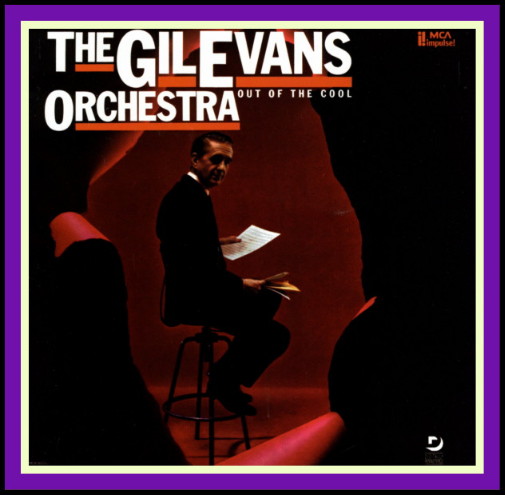
Upon its release in early 1961, Out of the Cool (a title chosen by Taylor, slyly referencing Evans's involvement with Miles Davis's historic Birth of the Cool sessions), with a cover photo of Evans throwing a cool glance over the shoulder (shot by noted portraitist Arnold Newman), peeled away layers of obscurity and pushed the arranger into the mainstream. Before the year was out, Miles Davis's hugely successful Sketches of Spain, arranged by Evans, elevated Evans's reputation to a career high point.


"When he is not concerned with the requirements of a specific soloist (and sometimes even when he is)," enthused John S. Wilson in the New York Times, speaking of Out of the Cool, "Mr. Evans can weave patterns of colors, rhythms and dynamics with an individuality of approach and sureness of touch that have been matched in jazz only by Duke Ellington."


Beyond that, Wilson added, "Out of the Cool must set some sort of high standard for an introductory disk from a new label."


Wednesday, August 25, 2021

Matt Dennis - "'Scuse Me While I Disappear" - by Gene Lees [From the Archives]

 © -Steven Cerra, copyright protected; all rights reserved.


"Matt Dennis had an ability to write the most beautiful and sophisticated melodies, and yet they were never hard to sing. He was also a gentle, lovely man."
- Julius LaRosa
There are those few musicians who also happen to be singers who also happen to write the songs they [and others] sing, and do all three magnificently well. They are a select group and they are very special, indeed.


One such musician–singer-songwriter was Matt Dennis and he was so exceptional that the editors of JazzProfiles had to turn to the Gene Lees  for this treatment on Matt simply because there is none better.


Gene’s profile on Matt appeared in the May 2002 of his Jazzletter. [Vol. 21 No. 5]


© -Gene Lees, copyright protected; all rights reserved; used with permission.


'Scuse Me While I Disappear
“David Raksin, whose song with Johnny Mercer's lyrics, Laura, is one of the great classics, said, I write all kinds of music, including concert music. I think that our country's greatest musical gift to the world is not concert music, and not jazz ‑ and I love jazz. Our greatest contribution is the American popular song." David was talking about what is now seen as a golden era, roughly from 1920 to the end of the 1950s. He said, "It is the most incredible flowering ever of that kind of music."
One of the greatest practitioners of the songwriter's art in that time was Matt Dennis, whom we had the misfortune to lose recently. The body of his work was not large, compared with that of, say, Cole Porter or Jerome Kern, in part because he was not a creature of the Broadway musical theater or part of that group, like Harry Warren and Johnny Mercer, who wrote mostly for films. But what he did write is unfailingly exquisite: Let's Get Away It All, Will You Still Be Mine, Everything Happens to Me, Violets for Your Furs, The Night We Called It a Day, Junior and Julie, We Belong Together, all written with lyricist Tom Adair, and Angel Eyes, with lyrics by Earl K. Brent. It was written for the movie Jennifer, with Ida Lupino and Howard Duff. Some of Matt's songs have lyrics by his wife, singer Ginny Maxey.
One of my close friends, and one of the best singers to emerge in the generation influenced by Frank Sinatra, is Julius La Rosa. He said, "Matt Dennis had an ability to write the most beautiful and sophisticated melodies, and yet they were never hard to sing. He was also a gentle, lovely man." Sometimes when La Rosa and I are talking on the phone, he (or I) will sing an opening phrase of a Matt Dennis song, and continue through the whole thing, in unison, laughing. So steeped were we in Matt Dennis songs in our high‑school years.

Back around 1960, when I was editor of Down Beat, Mel Torme was playing Chicago, where the magazine's head office was located. Mel asked me to go along with him on a disc jockey interview. The disc jockey said, "Don't you think the singing of Matt Dennis was influenced by yours?"
Mel flared slightly. He said, "I've heard that before, and it's not true. If anything, I was influenced by Matt Dennis."
In fact it is difficult to estimate the reach of the influence of a career in the arts. Obviously I was influenced by all the great songwriters, but certainly Matt Dennis and Tom Adair were a powerful force in my becoming a songwriter. One of the factors in great songwriting is an appropriate match of a melodic interval with what would be the natural inflection if you were speaking the lyric. La Rosa points out that The Night We Called It a Day is a superb example of the up of intervals. And the octave leap on the opening phrase, "The was a moon (out in space)" sort of makes you look up, lending a visual dimension to the song. In fact, that is a very visual song. It is also a very literate one. It was in that song that I first encountered the phrase "the song of the spheres." I first heard the song among the four "sides" Frank Sinatra recorded for RCA Victor's Bluebird subsidiary with arrangements by Axel Stordahl: The Night We Called It a Day, The Lamplighter's Serenade, The Song Is You, and Night and Day. I became an instant fan of Frank Sinatra, Matt Dennis, and Tom Adair.  That has never changed.
Matt recalled to Ed Shanaphy, the editor of Sheet Music Magazine: "I will never forget when I first played and sang The Night We Called It a Day for Tommy Dorsey, backstage at the old Paramount in NYC. Tommy was seated next to Harry James and Ziggy Elman. As I ran the song over, I noticed Tommy looking at Harry and Ziggy and nodding their heads in approval.
'When Tommy decided he really did like my tune, I rearranged my own chart for Frank and the Pied Pipers. What was not expected, however, was Frank and Tommy were not getting along too well. Frank was reaching a popular level and wanted to leave the band and go on his own."

Sinatra's departure from Dorsey, who had a firm contract with him, is by now one of the legends of show business.
Matt said, "So I decided to re‑arrange it again to fit Jo Stafford as the soloist. As fate turned out, later in 1944 TD's recording came out of The Night with Jo Stafford and a good cut, too. Frank did record the song on his own and fortunately it became a collector's item. F. S. recorded and certainly performed it over and over during all the ensuing years, keeping the tune very much alive."
Matt had an impact on Jo Stafford's career as well. Jo's entire interest was group singing, and she became a star half by accident because of Matt's song Little Man with a Candy Cigar, with lyrics by Frank Kilduff. She heard it, went to Dorsey and said, "Tommy, this is the first time I've ever done this, and it'll probably be the last, but I want a favor of you. I want to do the record of Little Man with a Candy Cigar solo." He said, "You've got it." From then on he assigned her to solos, and of course she became a major artist, all of it starting with Matt's song.


A few years ago, Jo told me she had been driving and heard one of those Sinatra Bluebird tracks on the car radio, and impulsively said to herself, "My God, could he sing." Indeed. And so could she.
Knowing how much I admired Tom Adair, Matt at one point offered to introduce us, but I moved too slowly, and Tom Adair died. I hope he knew how much I loved his work. Maybe Matt told him; I would like to think so.
Tom Adair was born in Newton, Kansas, on June 15, 1913, and went to Los Angeles Junior College in 1932 and '33. He wrote scripts for television and movies, as well as night‑club material. He was a sitcom writer on My Three Sons, The Munsters, My Favorite Martian, and other shows. For Matt's tunes, he wrote lyrics for Let's Get Away from It All, Everything Happens to Me, Violets for Your Furs, The Night We Called It a Day, and Will You Still Be Mine, as well as There's No You (with Harold S. Hopper) and In the Blue of Evening (with Alfred D'Artega).
Matt was born into a vaudeville family in Seattle, Wash­ington, on February 11, 1914, and went to San Rafael High School in California. His father was a singer and his mother a violinist. Matt made his professional debut in the family act, called the Five Musical Lovelands. In 1933, in San Francisco, Matt joined the Horace Heidt band on piano. Later he and Dick Haymes had a band, with Haymes in front and Matt as its organizer. Then he became known as an arranger and accompanist for singers, and sometimes as a vocal coach. He held all three roles with Martha Tilton.


In the late 1930s and early 1940s, there were a number of sister vocal groups, including the Boswell, Andrews, DeMar­co, Clark, Dinning, and King Sisters. Jo Stafford and her older sisters, Pauline and Christine, became active as the Stafford Sisters. They had their own radio show on Los Angeles radio station KHJ. They replaced Jo with another girl when Jo joined an eight‑voice group called The Pied Pipers.
Matt's association with Jo went back to the days with her sisters. Matt told Ed Shanaphy in a letter: "I used to accom­pany (the Stafford’s) ‑ fine singers of the blues, and good pop songs. Then Jo organized the group of singers that Tommy Dorsey hired for his summer radio series in the East, naming them The Pied Pipers.
"Prior to that I continued playing piano for the group in appearances in and around L.A. during which I seriously started writing songs. Jo heard my songs and set up an audition for me with Tommy Dorsey at the Palladium Ballroom, which led me to a contract with Dorsey, writing songs which he wanted to publish, and did most successfully ‑ glad to say. Jo, the Pied Pipers, and Sinatra all started singing and recording my current songs, Let's Get Away from It All, Everything Happens to Me, Will You Still Be Mine, The Night We Called It a Day, and others."
Everything Happens to Me and Let's Get Away from It All were recorded February 7, 1941. In fact Dorsey recorded 14 of Matt's works in that one year, including a little‑remem­bered patriotic song called Free For All, recorded on June 27, and Violets for Your Furs, recorded on September 26. Sinatra would retain a taste for and powerful loyalty to the Matt Dennis tunes throughout his career. He would re‑record Violets for Your Furs, Angel Eyes, and Let's Get Away from It All, for example, during his period with Capitol Records, when he had become the biggest superstar in the history of American show business.
With the U.S. entry into World War 11, Matt served in the U.S. Army Air Force, with the Radio Production Unit and the Glenn Miller USAAF orchestra. He spent three and a half years in the Air Force. When the war ended, he settled in New York City and became an arranger and sometime performer on a number of network radio shows. And when his friend Dick Haymes got his own radio show, Matt became its music director.
In 1955, Matt starred in his own NBC‑TV series, doing some of the very first coast‑to‑coast color shows. "I replaced Eddie Fisher that year. I had Monday, Wednesday, Friday, and Vaughn Monroe had Tuesday and Thursday," Matt said. "Then in December I joined the new Ernie Kovacs five-­mornings‑a‑week show with Ernie, Edie Adams, and myself "
Matt was a very fine pianist, and a sympathetic teacher who wrote a piano method, available from Mel Bay.
I was always enthralled by Matt's singing. He had a light and airy voice, which indeed was not unlike that of Mel Torme’, for reasons already noted in the disc jockey interview I mentioned. He made an estimated six albums, far too few.


One of them I treasured for years was on Trend Records. It contained all of Matt's well‑known tunes and a few that were not so known. Alas, I no longer have it. And my local “record” store, which is always very accommodating, finds nothing by Matt in American CD reissues.


Since Gene wrote this tribute to Dennis, all of Matt’s records have found their way to CD reissue including the Trend Matt Dennis Plays and Sings Matt Dennis which has been released as Fresh Sound 385 and contains the following of his “well-known tunes:”
1. WILL YOU STILL BE MINE?
2. JUNIOR AND JULIE
3. THE NIGHT WE CALLED IT A DAY
4. WE BELONG TOGETHER
5. ANGEL EYES
6. VIOLETS FOR YOUR FURS
7. EVERYTHING HAPPENS TO ME
8. COMPARED TO YOU
9. THE TIRED ROUTINE CALLED LOVE
10. IT WASN'T THE STARS
11. WHEN YOU LOVE A FELLOW

John Bush offered this review of the recording on www.allmusic.com:
“Recorded at the Tally-Ho in Hollywood, Matt Dennis Plays and Sings Matt Dennis is a program of what visitors to his supper-club sets could expect from one of the best lounge singers in an era before the term became a dirty word. Accompanying himself on the piano with bass and drums for backing, Dennis sings 12 of his own tunes, including an avalanche of standards — "Will You Still Be Mine," "The Night We Called It a Day," "Angel Eyes," "Violets for Your Furs," "Everything Happens to Me," and "Let's Get Away From It All." Though his voice doesn't quite match his notable composing skills, Dennis uses his narrow range and soft, high-tenor tone to craft a sensitive vocal style. His deft sense of humor also comes in handy during several hilarious offsides to the audience and listener, often in the middle of a line. Virginia Maxey duets with him on "We Belong Together" and "When You Love a Fella."
Matt told Ed Shanaphy: "Looking back, I'm very proud to have had the success I've had ... and pleased that most of my tunes are still around the world after all these years, and also that I'm still around today, able to enjoy the pleasure of hearing some of my songs at this late date. Hallelujah."
Matt died June 21 in a hospital in Riverside, California, of natural causes. He was 89. He's gone. But the music isn't.


Tuesday, August 24, 2021

Pre Birth of the Cool - Claude Thornhill

 © Copyright ® Steven Cerra, copyright protected; all rights reserved.


I found the following in the Down Beat online archives [http://downbeat.com/news/detail/pre-birth-of-the-cool-claude-thornhill visited 8/11/2021] and wanted to share with you its many insights into how the commonly referred to “Birth of the Cool” or just “Cool School” jazz sound evolved primarily through the work of pianist and bandleader Claude Thornhill and his close arranging associate, Gil Evans.


“In the decades following World War II and the decline of the swing era, the query “Will the big bands ever come back?” was bandied about by older critics and jazz fans. The notion of a large ensemble has become cool again, with younger composers and arrangers such as Darcy James Argue reinventing the concept and adapting it to contemporary instrumentation. 


With that in mind, it’s worth taking another look at a bandleader whose impact started 70 years ago and continues today [June 25, 2012] — Claude Thornhill.


Thornhill’s 1940s big band helped shape the sound of modern jazz, and orchestral bop and ethereal ballads tinged with classical influences set the stage for masterpieces by Miles Davis and helped to inspire the West Coast or “cool jazz” movement of the 1950s. Thornhill and collaborator Gil Evans created a beautifully colored and sophisticated tapestry of music that would be referenced and known around the world.


The birth of the cool began in Thornhill’s hometown of Terre Haute, Ind., a city on the Wabash River where Thornhill was born Aug. 10, 1908. The shy-but-gifted boy was a prodigal pianist, playing as a teenager in movie houses, on riverboats and with local orchestras. The Terre Haute Star, somewhat prophetically, called him “years ahead of his time in the playing of modern popular music.” Thornhill later claimed that he had attended various conservatories, but his talent flourished locally in a city with a top-flight classical symphony and vibrant musical culture.


Thornhill left Terre Haute by the end of the 1920s and spent the next decade making a slow but steady climb to bandleader. He became good friends with a young, up-and-coming clarinetist named Artie Shaw, who described him as “a funny-looking gent, with a potato nose and round Germanic face…It wasn’t easy for him to express himself. But he was more guileful than he appeared, because he generally got what he wanted.”


Thornhill worked as an arranger and pianist with Ray Noble, as well as the first big bands of Benny Goodman and Glenn Miller. He played on several early Billie Holiday recordings, and he also gave Maxine Sullivan her first hit with an arrangement of “Loch Lomond.” A stint with popular light-classical music maestro Andre Kostelanetz’s radio orchestra would influence Thornhill’s later use of tonal color—and a Hollywood gig with bandleader Skinny Ennis was his key introduction to Evans.


By 1939 Thornhill was ready to start his own band, and he worked hard to develop an original sound—one that would evolve over the next 10 years, described by jazz writer Ira Gitler as “vibrato used sparingly to heighten expressiveness; trumpets and trombones that could imitate French horns; unison clarinets suggesting strings, and a masterful control of dynamics, which made the band sound strong when playing softly.” It evoked classical composers like Ravel, Berlioz and Thornhill’s beloved Debussy. The sound, as Gil Evans later remarked, hung like a cloud—or else it seemed to glide like one.


Thornhill’s most famous tune was one that he originally wrote as part of a suite for Ray Noble’s band in the 1930s, called “A Fountain In Havana.” In 1940, in need of a band theme, he pulled the composition out and gave it a new title that made its future as a holiday classic: “Snowfall.” Evocative and ethereal, “Snowfall” embodies its author’s lyrical, melancholy temperament. Another Thornhill composition, “Portrait Of A Guinea Farm,” reveals the composer’s notoriously quirky sense of humor and a willingness to venture into musical realms beyond the conventional confines of big-band music.


“Snowfall” and “Portrait Of A Guinea Farm” were both recorded in 1941, a significant year for Thornhill, because Evans joined his band. Evans was a brilliant arranger who expanded on Thornhill’s innovations in instrumentation and arrangement and added increasingly advanced harmonies. Evans, who became famous for his work with Davis, offered much of the credit for his sound to Thornhill, saying that he had given him a musical vision and an orchestra within which Evans was able to create something even more interesting and complex. An early example of Evans’ work with the Thornhill band is a breakthrough Thornhill-Evans tune called “Buster’s Last Stand.” Jazz writer Allen Lowe described “Buster’s Last Stand” as “a bravura swinger, unlike anything else of its time, a creation way outside of Swing Era conventions, block-voiced with feathery lightness and kicked along with the momentum of a tin can along a curb.”


In 1942, with America fully immersed in World War II, Thornhill broke up his band and joined the Navy. He spent some time playing piano with Artie Shaw’s Naval orchestra, but the two men’s friendship became strained, and Thornhill eventually left to lead his own band. By war’s end he wanted to reform his civilian orchestra, and because he was so liked and respected, he managed to get many of his former musicians back, including Evans.


The war had taken a toll on Thornhill, however, and more and more of the writing duties fell upon the shoulders of Evans. Given creative license by Thornhill, Evans took the orchestra in a more modernistic direction, incorporating bebop’s revolutionary new sounds into his charts. 


Up-and-coming musicians such as Lee Konitz, Red Rodney and Gerry Mulligan all did stints with the band, and they recorded several bebop anthems (such as “Anthropology” and “Donna Lee”) that have become iconic moments in the Thornhill legacy. One such moment was “Robbins’ Nest,” which jazz writer Whitney Balliett described as “a classic instance of how the Thornhill band almost completely circumvented the big-band clichés of riffs, call-and-response patterns and empty counterpoint…There is a lot of fast and subtle rhythmic footwork on the recording, and Thornhill’s use of dynamics is exhilarating. Yet everything is quiet.” “Robbins’ Nest” and other 


Thornhill recordings from this period point the way to the cool-jazz movement of the 1950s, founded with Davis’ Birth Of The Cool recordings at the end of the 1940s. Many of the tunes were recorded by a circle of musicians that included former members of the Thornhill orchestra.


At the same time, Evans continued the Thornhill tradition of classical influences and adaptations, and anticipated his own later work with Miles Davis on albums such as Miles Ahead and Sketches Of Spain through pieces like Tchaikovsky’s “Arab Dance” and Sebastián Iradier’s “La Paloma.” These recordings also foreshadow the rise of the 1950s Third Stream movement, in which composers and musicians began to consciously combine aspects of jazz and classical music into a single form.”


Saturday, August 21, 2021

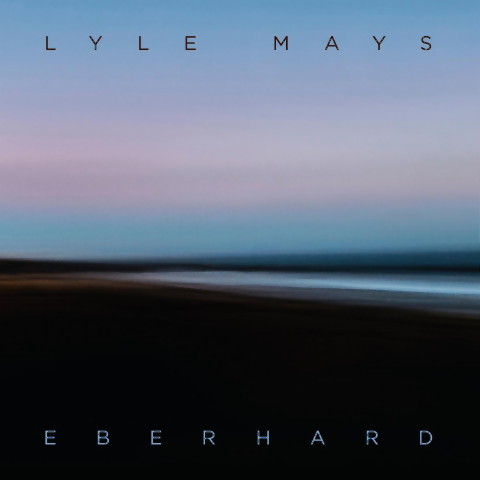
Lyle Mays - "Eberhard"

 © Copyright ® Steven Cerra, copyright protected; all rights reserved.


“The first time I saw Lyle was at a place called Harry Hope’s in Cary, Illinois—the same town where I went to high school, actually. He was playing with Pat [Metheny], and it was just the quartet at that time. Lyle blew me away. He had this thing; his synthesizer playing, his piano playing, and everything was just incredible. I saw them again at the Bottom Line in New York and at the College of DuPage in Illinois.


One reason I guess I got the gig [with the Pat Metheny Group in 1983] was because I made Lyle real comfortable when he soloed. When [I auditioned for the band in December ’82], we ended up jamming as a quartet—Pat, Lyle, Steve [Rodby], and me—for … God, it must have been 10 or 12 hours. It was a totally natural thing.


The word “genius” seems to be used for everybody now. If you can play at 300 beats per minute, you’re a genius, you know? But Lyle was one. And not only musically. I mean, the guy could literally hear anything and write it out. But he was also one of those guys that, you know, you’d give him a Rubik’s Cube and in like a minute, he’d give it back to you completely solved.. And then he got into chess, and I think he beat the Montana state champion or something. Then he starts getting into Legos, and all of a sudden he’s an architect. We’d be on tour in the ’80s and he was teaching himself C++—next thing you know, he’s showing us all these software programs he’d created.


He was also really athletic. He was a thin guy, but his hand-to-eye coordination was amazing. And when we were doing that More Travels video [released in 1993], it was in the Cyclorama Building in Boston. They’d rented a circus, bears and jugglers and all that stuff, and at one point this juggler gives his stuff to Lyle and Lyle’s juggling five balls at once. And the guy looks at him like, “What?” He was just that way. Everything came easy to him.


A lot of people would think he wasn’t that friendly. Sometimes after a gig, if he was going somewhere and someone approached him, he might not have time to speak to them. But it was never out of rudeness. It was just that … you know, he was on a mission. He had so much going on in his mind.

In a lot of ways, Lyle never got his due. And I don’t know if it bothered him. His contributions were major, but it was called the Pat Metheny Group and it’s easy to get sort of overwhelmed when it’s one name and one image. But he and Pat always had a good relationship, as far as I know.


Over this pandemic I’ve been going through all these CDs, stuff that I’ve never released. There’s a weekend at the Green Mill [in Chicago] with my quintet with Lyle playing piano from June of ’92, and it’s unbelievable. With his ears, he could play anything.


The last time I was in touch with him was by text in the summer of 2019. I said, “Man, let’s talk!” And he goes, “Well, you know, my mouth is sore, something’s up with my tongue, let’s just text.” I had no idea what was going on. I still can’t believe he’s dead.


When Lyle died, I posted an old picture of him with my little daughter at the piano on my Facebook page. She was two-and-a-half, three years old. He could be so kind.

- Paul Wertico, PUBLISHED FEBRUARY 8, 2021, JazzTimes


“Mays sometimes seems more like a technician than a musician. He got his start in Woody Herman's band in 1975 but then joined fellow Midwesterner Pat Metheny in the guitarist's quartet, and that association has endured ever since. Mays is Metheny's main co-writer and handles all the keyboard orchestration on his many records: he was an early starter in getting state-of-the-art synthesizers into jazz-orientated music, and he clearly has great knowledge of their use. Much of what he does on Melheny's records is deft and suitably beguiling,...”

- Richard Cook’s Jazz Encyclopedia  


“Although Metheny is a masterful technician (teaching guitar at the Berklee jazz conservatory while still in his teens), his playing avoids the empty demonstration of finger facility so common among  jazz-rock guitarists. Instead, he has refined a lucid, melodic style that ranks as the most incisive approach to the electric guitar since Wes Montgomery. The addition of the superlative keyboardist Lyle Mays to Metheny's band in 1976 spurred an especially fruitful partnership documented on recordings for the ECM and Geffen labels.”

- Ted Gioia, The History of Jazz


“Lyle was one of the greatest musicians I have ever known. Across more than 30 years, every moment we shared in music was special. From the first notes we played together, we had an immediate bond. His broad intelligence and musical wisdom informed every aspect of who he was in every way. I will miss him with all my heart.”

- Pat Metheny, guitarist and bandleader


According to Robert Ham February 13, 2020 obituary in Down Beat magazine, “Mays was born in Wausaukee, Wisconsin, on Nov. 27, 1953, to a musical family. While his parents held steady day jobs, both harbored a deep love of music and played instruments: His father was a self-taught guitarist, and his mother played piano and organ, mostly in church. Mays followed suit, taking piano lessons from a local teacher, and eventually began playing organ in his hometown church as a teen.


Around the same time, he became an ardent jazz fan after coming across Bill Evans’ At The Montreux Jazz Festival, a live trio album on the Verve imprint that featured bassist Eddie Gomez and drummer Jack DeJohnette. According to Steven Cantor, the co-producer of Mays’ first two solo albums (a 1986 self-titled LP and 1988’s Street Dreams), “He was completely mystified by [the live Evans recording]. He couldn’t understand it at all. But given his interest in music and that he was playing piano at the time, it became something that he had to figure out.”


Lyle spent a lifetime “figuring things out” which may have led to Gary Giddins’ reference to him as a “precious pianist.” Precious, here, is used disapprovingly to mean someone who is behaving in a way others perceive to be over-sensitive. In other words, they are behaving as if they are precious. [see the review  “Beyond Romance” in Giddins, Rhythm-a-ning [1985].


But in the larger sense, Lyle’s work with Metheny pushed Pat’s music into formats that featured synthesizers which Mays orchestrated to embellish the music well-beyond the sound of a guitar, piano, bass and drums quartet.


As Ham goes on to explain: “While Mays’ first professional gig out of college was playing with Woody Herman’s band, it was his work with Metheny that defined the next 30 years of his career. The two first met at a jazz festival in Wichita, Kansas, during 1974. But it would be several years before they regularly began performing and recording together, starting with Metheny’s 1977 album Watercolors. From there, Mays became the longest tenured member of the Pat Metheny Group, co-writing much of the band’s material and blending acoustic piano with an ever-growing array of synthesizers to add misty textures and whimsy to their sessions. [Emphasis mine].


Mays and Metheny’s creative partnership extended outside the band, as well. 1981 saw the release of their duo album, As Falls Wichita, So Falls Wichita Falls, and Metheny had a hand in producing some recordings where Mays took top billing: 1993’s Fictionary (with bassist Johnson and drummer DeJohnette) and 2000’s Solo (Improvisations For Extended Piano). Some insight into what made their relationship so fruitful can be found in an interview Mays gave to Down Beat for the March 1993 edition, around the time Fictionary was released.


“We had just finished a tour, when Pat approached me and said, ‘You should go into the studio. I really think your playing is the best I’ve heard you play,’” Mays told writer Martin Johnson. “I was like ... thanks [shrugs]. I was almost resistant to the idea, though. I hadn’t prepared a record.


“On the first two records I did [Lyle Mays and Street Dreams], I spent a lot of time in preproduction orchestrating things. [Emphasis mine.] It wasn’t even on my mind to do an acoustic record. I have to give Pat credit; he kind of talked me into doing it.”


Looked at with this as a backdrop - Lyle’s work on Eberhard is a natural extension or, if you will, a continuation of “I spent a lot of time in preproduction orchestrating things,”


The mind of a musician like Lyle Mays “sees and hears” music as a complexity that requires orchestration to display it in its fullest expression.


Synthesized keyboards combined with the studio’s sound channels and mixing boards becomes the ultimate instrument for Lyle and he does indeed play them preciously in order to create music. If, as Louis Armstrong said - “Jazz is who you are” - making music through this combination of instrumentation and audio devices is who Lyle Mays was and you can hear the penultimate expression of his evolved musical identity on Eberhard. 


Antje Hübner of hubtone is handling media release and she sent along the following Press Kit which will provide you with detailed information about Lyle and the forthcoming Eberhard recording, as well as, a preorder link.


11-Time Grammy Award-Winning Jazz Pianist 

LYLE MAYS 

(Pat Metheny Group)

Releases Final, Posthumous Musical Offering

EBERHARD


CD, VINYL, DIGITAL FORMATS AVAILABLE WORLDWIDE ON 

AUGUST 27, 2021. 

EBERHARD IS AN INDEPENDENT RELEASE.

WWW.LYLEMAYS.COM

PRE-ORDER HERE.


Lyle Mays - piano, keyboards, synthesizers

Bob Sheppard - sax and woodwinds

Steve Rodby - acoustic bass

Jimmy Johnson - electric bass

Alex Acuña - drums and percussion

Jimmy Branly - drums and percussion

Wade Culbreath - vibraphone and marimba

Bill Frisell - guitar

Mitchel Forman - Hammond B3 organ, Wurlitzer electric piano

Aubrey Johnson - vocals (featured)

Rosana Eckert - vocals

Gary Eckert - vocals

Timothy Loo - cello (principal)

Erika Duke-Kirkpatrick - cello

Eric Byers - cello

Armen Ksajikian - cello


The Lyle Mays Estate is elated to announce the release of a thirteen-minute “mini symphony” entitled Eberharda composition completed by Mays in 2009 for the Zeltsman Marimba Festival, and recorded in the months before his passing on February 10, 2020, with a slate of notable names in jazz including Bill Frisell, Alex Acuña, and Bob Sheppard.


Due out on August 27, 2021, Eberhard is a long-form, multi-section work that is Lyle’s self-professed dedication to the great German bass player Eberhard Weber, a composer whose influence loomed large on Mays and his long-time collaborator Pat Metheny in the forming of the 11-time Grammy-Award winning Pat Metheny Group during the mid 70’s and throughout their careers. According to Steve Rodby (bass player of the Pat Metheny Group and Lyle’s best friend) who did double duty on this recording as co-associate producer and acoustic bassist, “…though he called it his ‘humble tribute’ to Eberhard, it is still 100 percent Lyle in every way.” 


A steady, lilting marimba (Wade Culbreath) ostinato offers an ample bed for Eberhard’s ethereal opening piano melody, performed, of course, by Mays. Lyle’s unmistakable orchestrational style is immediately on display as various shakers, rainsticks, and atmospheric synthesizer pads quietly make their way into the texture, rising and falling organically as an electric bass theme (played by longtime James Taylor cohort, Jimmy Johnson) emerges. Wordless vocals, a hallmark of the music of the Pat Metheny Group, supplied here by jazz singers Aubrey Johnson (Lyle’s niece and co-executive producer), Rosana Eckert, and Gary Eckert, are introduced—first as accompaniment to the bass melody and later as melodic “instruments.” 


Vocal features give way to Bob Sheppard’s woodwind section, which gives way to cello section underscores (led by principal Timothy Loo), and soon the whole ensemble, including star drummer/percussionists Jimmy Branly and Alex Acuña, Steve Rodby (acoustic bass), Mitchel Forman (Hammond B3 Organ/Wurlitzer piano), and Bill Frisell (guitar) have made appearances. All sixteen instrumentalists/vocalists rarely play at the same time, instead playfully weaving in and out for various features (notably by Mays, Jimmy Johnson, Aubrey Johnson, and Culbreath) and accompanying textures. In a piece already abundant with aural decadence, Bob Sheppard’s extended tenor saxophone solo, which brings Eberhard to its climax, is perhaps the most thrilling. The piece ends as it began, with a sparse recapitulation of the introduction, rewarding the listener with the feeling of having experienced an incredible musical odyssey.


In typical Lyle fashion, this music reflects and honors his far-reaching influences, most obviously the bass playing and compositional style of Eberhard Weber (with whom Lyle recorded on two occasions), but continuing on through Philip Glass’ minimalism, Indonesian Gamelan ensemble, Brazilian music (notably the percussive and speech-like vocal techniques of Lyle’s friend and collaborator Naná Vasconcelos), to the blues, and to classical forms and structures. As in all of his compositions, Mays’ propensity for exploiting compositional material (or, its “DNA”) to the fullest extent is ever constant throughout Eberhard. Like a scientist, he would take a simple melodic, harmonic, rhythmic, or other kind of idea and experiment with it until he had discovered all of the different forms it could take—melody, counterline, background pad, bassline, rhythmic motif, and more—often using the same ideas in a wide variety of ways. Eberhard is utterly intentional, containing layer upon layer of depth, complexity, love, and care for the listener to discover. 


While technically a posthumous release, Mays was engaged in the making of Eberhard from beginning to end—serving as composer, arranger, performer (piano, keyboards, and synthesizers), producer, and executive producer, and was actively involved in all of the recording and mixing sessions, which took place in Los Angeles during the latter half of 2019.


Fans will know that Lyle had been on hiatus from his enormously successful touring and recording career with the Pat Metheny Group and as a solo artist  (Eberhard will be his seventh release as a leader) since 2011, choosing instead to pursue his myriad non-musical passions. Then, “Lyle’s health took a bad turn in 2019, and at about the same time, he decided to try to get Eberhard recorded. The relationship between those two events is complex. What’s clear is that he would continue writing and extending this music, as was always his process: to try to find every bit of what the material suggested, every note and harmony, and sound it evoked for him. He added parts, expanded orchestration, imagining it all on an even grander scale,” Steve Rodby explains. “The result is this recording, and what he was able to hear in his final days. This wasn’t meant to be Lyle’s last piece of music, and if he had lived longer, he had plans for more.” 


PRESS CONTACT

Antje Hübner

hubtone PR

New York | Hamburg

+1-917-3101245

+49-174-5846063

antje.huebner@hubtonepr.com

www.hubtonepr.com